

Easy Steep Bank Garden Ideas for a Beautiful and Low-Maintenance Yard
Dealing with a steep bank in your garden might feel overwhelming at first, but honestly, it doesn’t have to be. With a little creativity, you can turn that tricky slope into a charming and practical space—and it doesn’t have to cost a fortune.
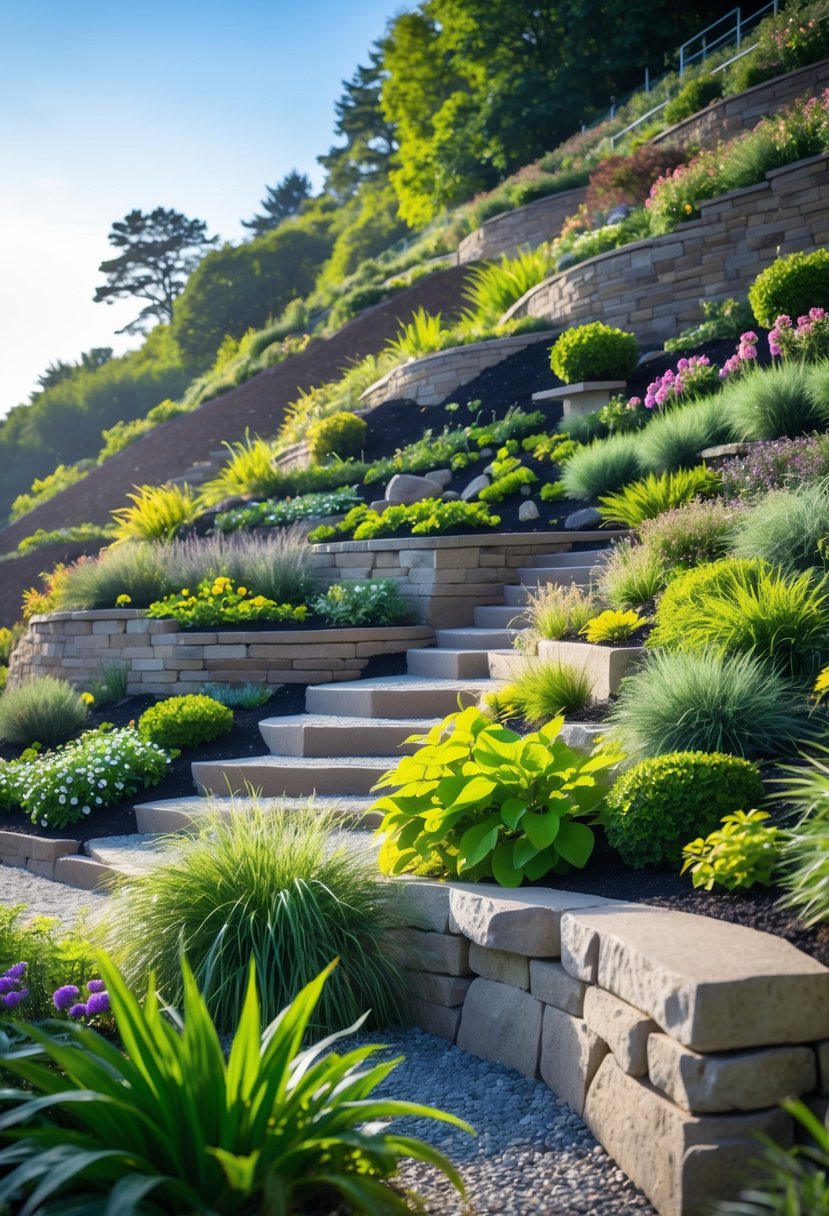
Easy steep bank garden ideas help you get more out of your yard, stop erosion, and add some beauty. Just a few simple steps and good choices can turn any steep spot into a lovely part of your outdoor space.
1) Create terraced planting beds to control erosion
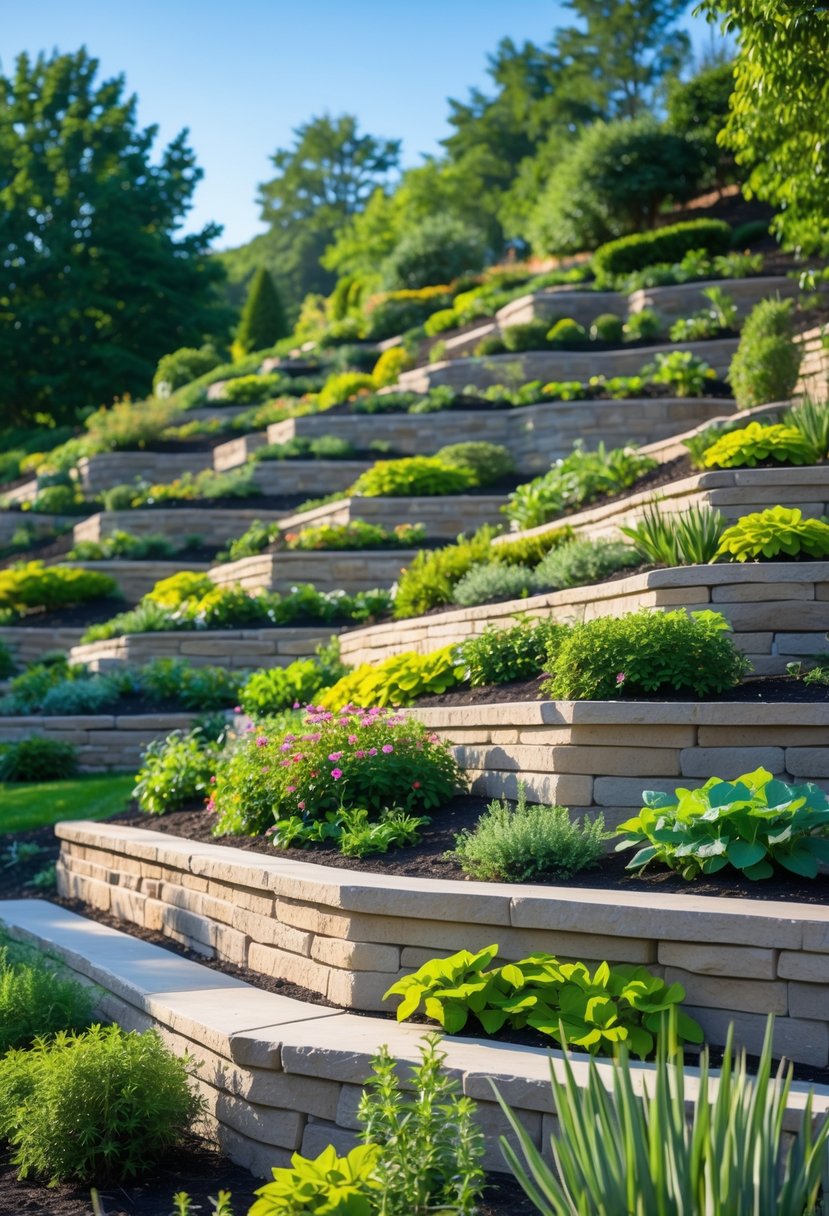
Terraced planting beds make it way easier to manage a steep bank. You build flat steps right into the slope, so soil stays put when it rains.
These terraces also help water drain better. Plants get what they need without flooding.
Use wood, stone, or blocks for the terrace walls. Each material gives you a solid base and neat planting spots.
If you want to try this, check out this terraced garden bed guide.
2) Use cascading plants like creeping thyme
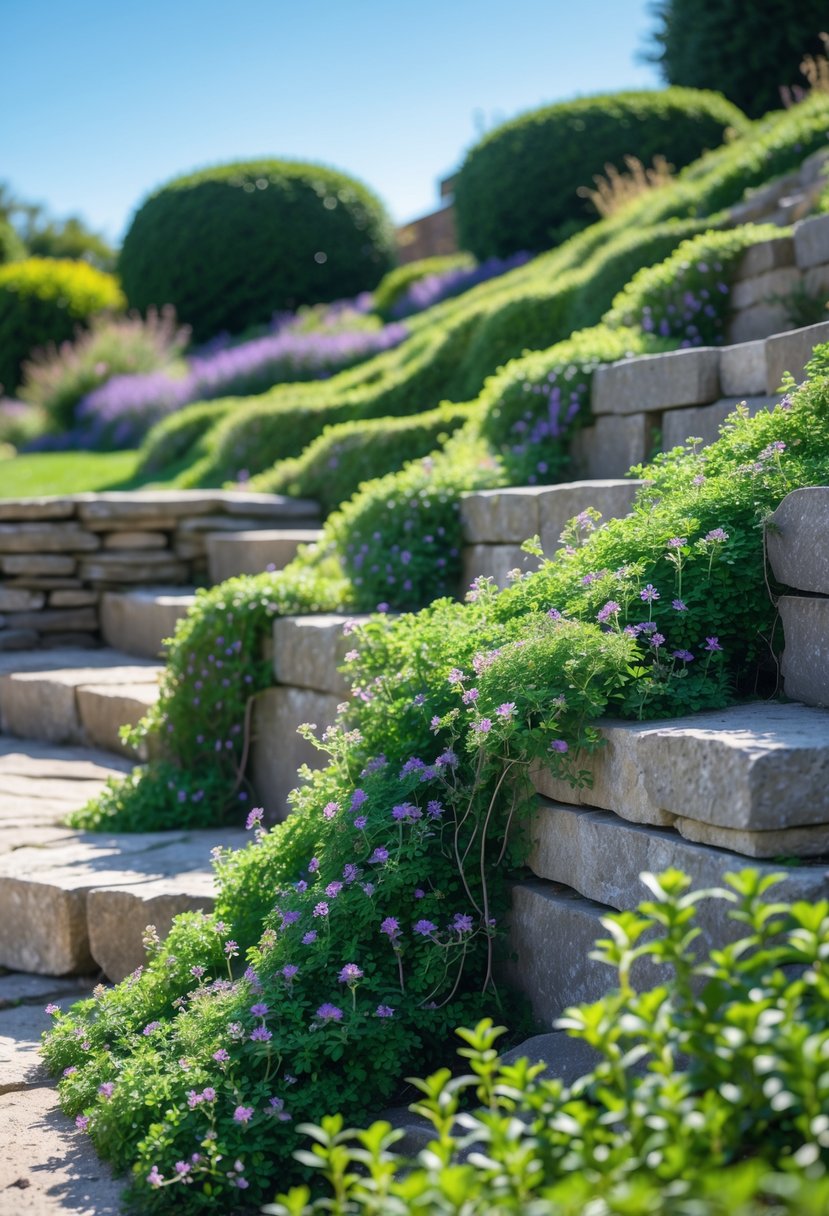
Cascading plants like creeping thyme can cover steep banks without much fuss. They spill over slopes, giving your garden a soft, wild look.
Creeping thyme barely needs attention and grows in poor soil. It holds soil in place, which is a lifesaver on slopes.
When it blooms, you get both color and a lovely scent. These plants also help crowd out weeds.
Want more info? See how creeping thyme works on slopes here.
3) Install stone retaining walls for structure
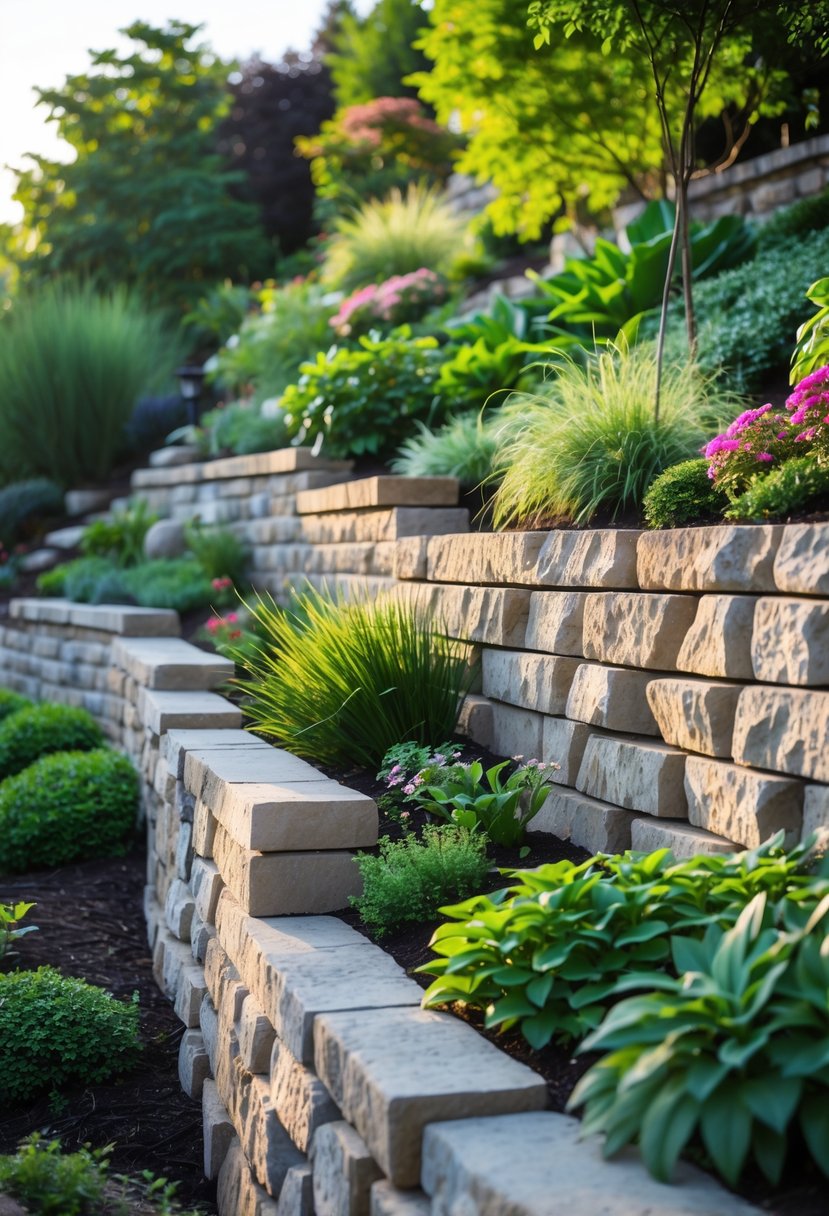
Stone retaining walls give a steep bank strong support. They keep soil from sliding and let you make flat planting spots.
Using natural stone brings a rustic, timeless feel. Stones blend nicely with plants and other features.
Building a stone wall takes some elbow grease, but it lasts for years and doesn’t need much upkeep. There are tons of design ideas out there to fit any style or budget.
Need inspiration? Check out stone retaining wall options for sloped yards at upcycledaroundtown.com.
4) Plant low-maintenance ground covers such as sedum
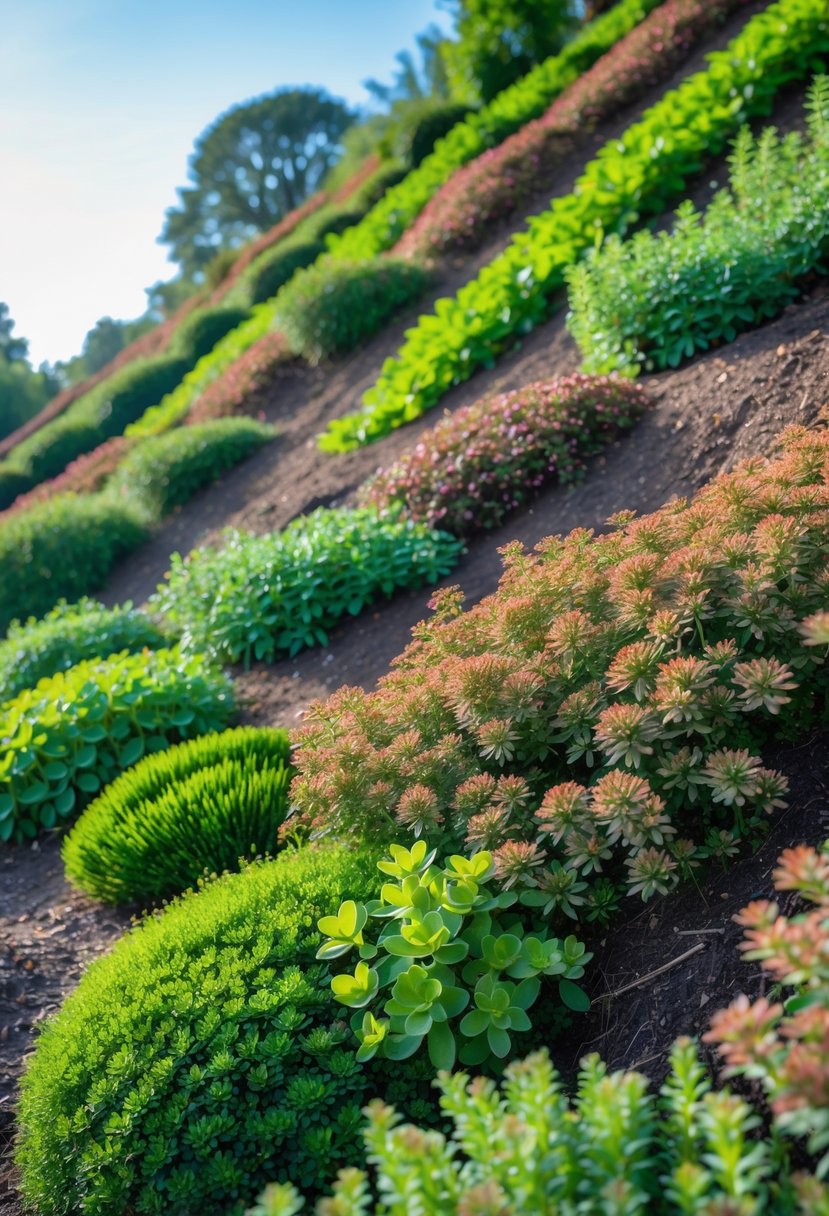
Sedum is a solid pick for a steep bank garden since it’s easy to care for. You won’t have to water it much—it loves dry spots.
This plant hugs the ground and spreads fast, so it keeps soil in place. Sedum comes in a bunch of colors and textures, which keeps things interesting.
Plant it in clusters for a thick, tidy carpet that’s almost no work. Sedum even puts out tiny flowers for a pop of color during the season.
Curious why sedum is so perfect for low-maintenance ground cover? Garden Down South has more info.
5) Build winding pathways for easy access

Winding pathways make it much easier to get up and down a steep bank. Straight, steep paths are tough—curves just feel more natural and safer.
Use gravel, bricks, or wood for your paths. Adding steps or small retaining walls gives extra support where it’s really steep.
A winding path isn’t just practical; it makes your garden feel inviting. It guides you and your guests through the space, showing off different plants and views along the way.
Need ideas for paths on slopes? Check here.
6) Add lavender for color and fragrance

Lavender works well on steep banks because it’s easy to grow and keeps its shape. Those purple blooms really liven up a garden.
You’ll get a fresh scent too, which makes relaxing outside even better. Lavender fits nicely in borders or mixed with other plants.
It likes well-drained soil, so it’s right at home on slopes that dry out. Planting lavender adds beauty and a calming smell to your space.
Want more lavender landscaping ideas? Check out positivebloom.com.
7) Place large boulders as natural focal points

Large boulders make strong focal points on a steep bank. They break up the slope and add a natural vibe.
Place a few well-chosen boulders for balance. They look great with plants and help control erosion.
You’ll find boulders in all shapes and colors, so you can match your style. Grouping them creates a striking display.
For more boulder ideas, see landscaping with large boulders from garden.eco.
8) Incorporate steps made of natural stone
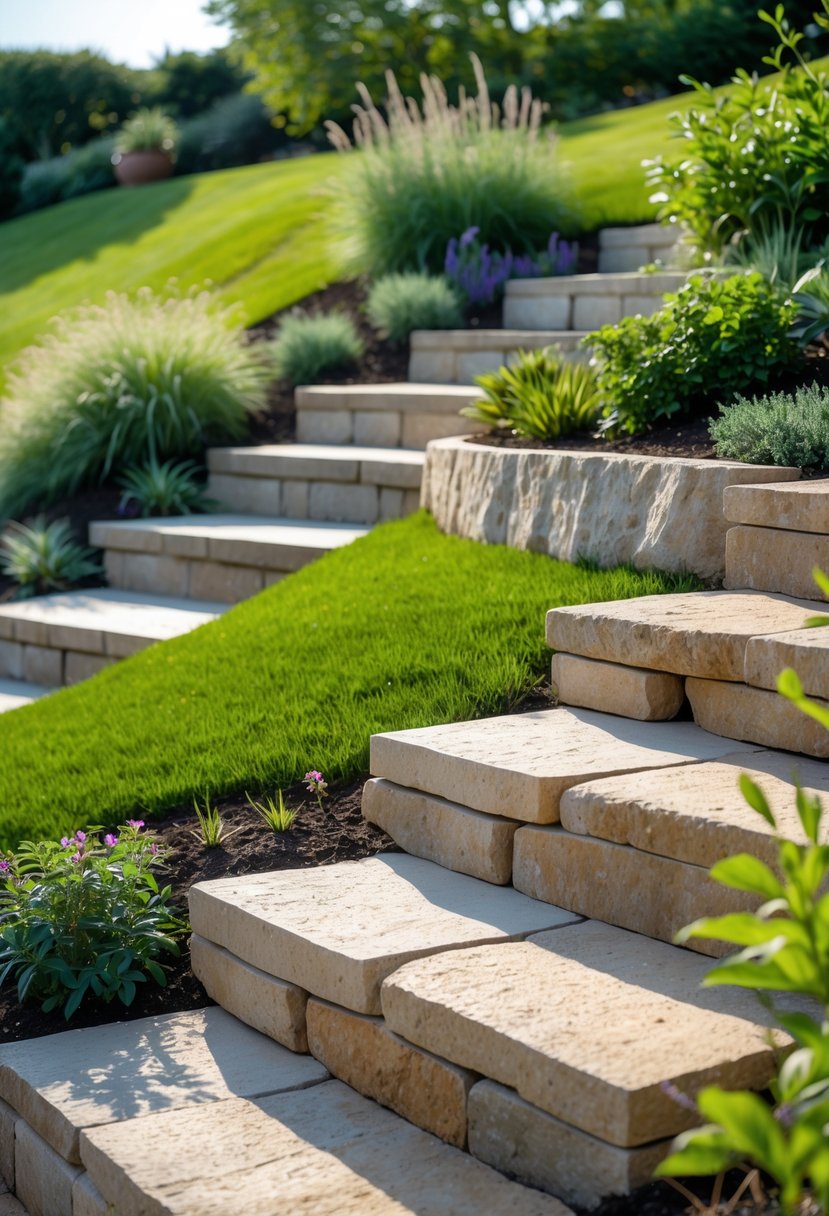
Natural stone steps add instant charm to a steep bank garden. They blend right in with plants and the landscape.
Stone steps hold up in all kinds of weather. You won’t need to fuss over them much.
Pick stones that fit your garden’s look. Whether rough or smooth, stone steps always look classic.
For step designs and stone choices, check out 42 Lovely Stone Garden Steps Ideas.
9) Use mulch layers to retain moisture

Mulch keeps soil moist, which is a big deal on a steep bank. Lay down cardboard or newspaper first to block weeds and help the soil hold water.
Pile on a thick layer of organic mulch like wood chips or straw. This protects your soil from drying out and stops erosion.
If you use drip irrigation, just lay mulch over the tubing. Water reaches your plants, but the soil stays damp longer.
Want more details? Here are some tips on how to mulch a very steep bank.
10) Design a rock garden with drought-tolerant plants
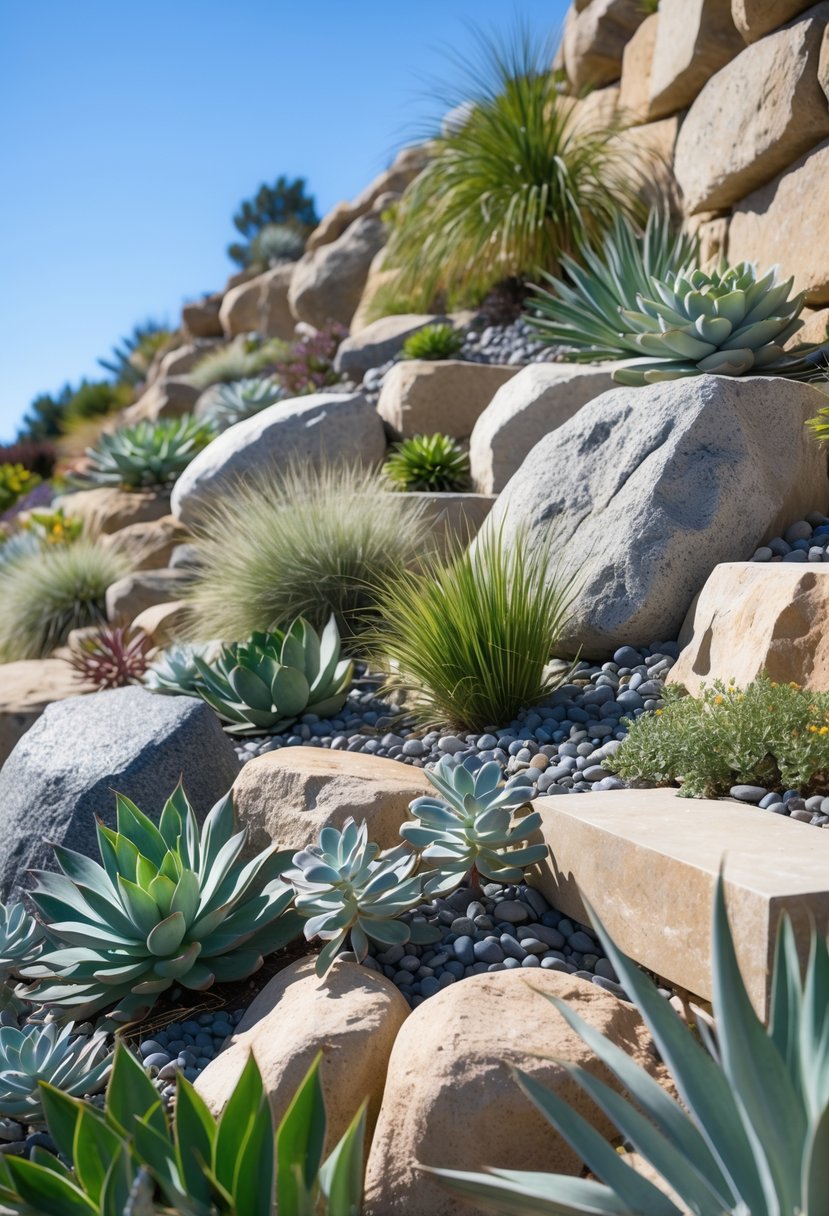
Rocks and stones can turn a steep bank into a natural-looking garden. They hold soil in place and make things more interesting to look at.
Pick drought-tolerant plants like succulents, lavender, or sedums. These plants barely need water and thrive in dry, rocky soil.
Tuck your plants between the rocks for a balanced look. This kind of garden is easy to care for and still looks good in hot weather.
Need more rock garden ideas? Check here.
11) Plant ajuga for vibrant ground coverage

Ajuga covers steep banks in no time. It spreads quickly and keeps soil from sliding away.
Ajuga thrives in shady spots but handles some sun too. Its colorful leaves look good all season.
This plant needs little care and helps block weeds on tough slopes. Want a quick guide? Here’s how to grow and care for ajuga groundcover.
12) Add raised beds for easier gardening
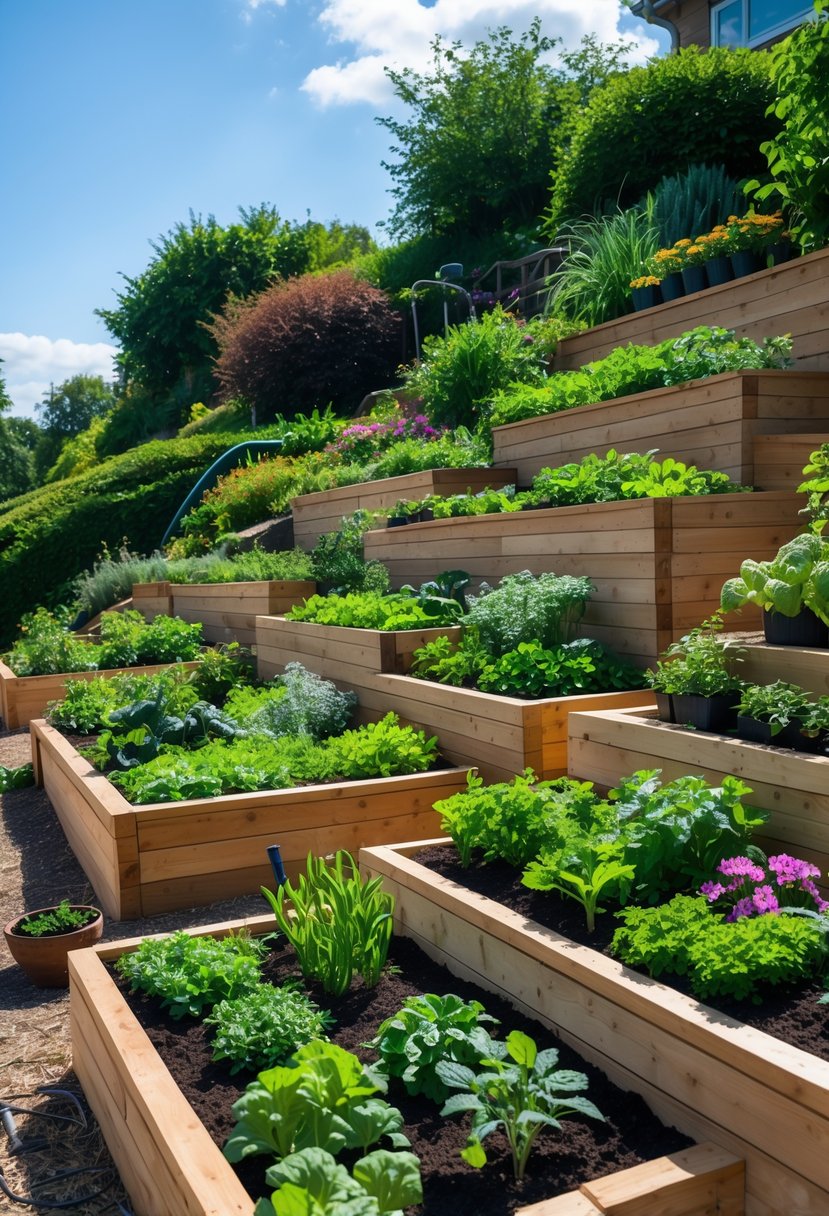
Raised beds work really well on steep slopes. They keep soil in place and stop erosion.
Build them in tiers to match the slope’s shape. Gardening gets easier because you don’t have to bend as much.
With raised beds, you control soil quality and drainage. That means healthier plants.
Use wood, stone, or whatever fits your garden style and budget. For ideas on building raised beds on slopes, check this out.
13) Use native grasses to stabilize soil

Plant native grasses to help hold soil on a steep bank. Their roots dig deep and spread out, keeping everything stable.
Native grasses blend right in with your local environment. They need less care and stop erosion on their own.
Some types have super strong roots that really grip the soil. Native grasses are an easy way to make your steep bank green and sturdy.
Want more info? Learn about using native grasses to improve soil cohesion on embankments at this guide.
14) Install drip irrigation for water efficiency
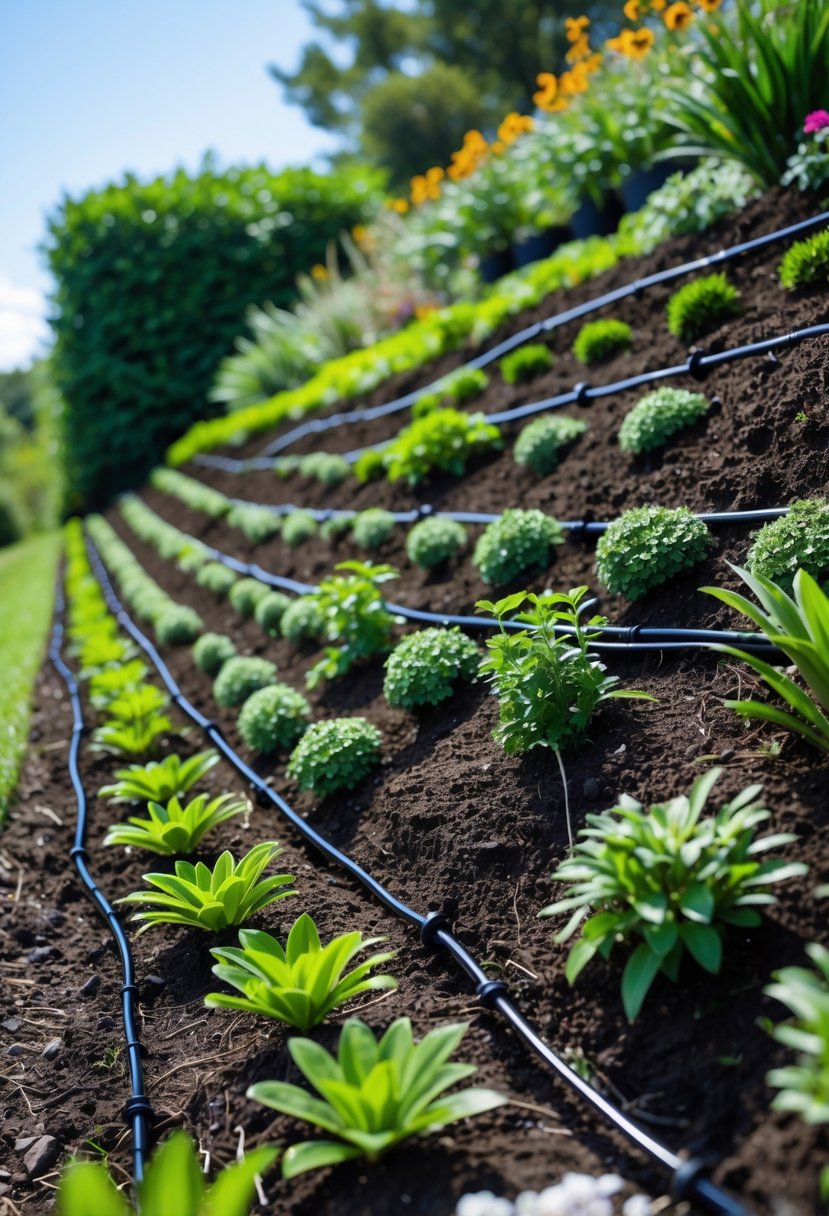
If you install drip irrigation, you’ll water your steep bank garden without wasting water. The system sends water slowly and right to the roots, so you get less runoff and better absorption.
Set up drip lines along the slope so every plant actually gets enough moisture. It saves you time since you don’t have to stand there with a hose.
Drip irrigation keeps your plants healthier because they get the right amount of water. It’s especially handy in warm or dry climates and can reduce water use a lot.
Want more inspiration? Check out some drip irrigation ideas for gardens here.
15) Create a small seating area with a bench

Add a bench to your steep bank garden and you’ll have a quiet spot to unwind. Pick a sturdy bench that fits your space.
Put it on a flat or terraced area for safety and comfort. Toss on a few cushions if you want extra coziness.
Surround the bench with potted plants or flowers to make it cozy. It’s nice to enjoy your garden up close and take a break while you work.
Even a simple bench can turn a tricky slope into a peaceful retreat. For more ideas, check out small peaceful seating spaces in your garden.
16) Plant ferns in shaded, moist areas

Ferns thrive in steep bank gardens, especially if you’ve got shady spots. Plant them where the soil stays moist, but don’t let it get soggy.
That way, ferns grow strong and keep their color bright. They love dappled sunlight or full shade, but direct sun? Not so much—it can dry them out or scorch the leaves.
Mulch helps the soil stay damp longer. Picking the right fern matters, too.
Ostrich or maidenhair ferns do well in these conditions and add cool texture to your garden. If you want more tips, here’s a guide on fern landscaping for shady gardens.
17) Use ornamental grasses for texture

Ornamental grasses add texture to your steep bank garden and move gently in the breeze, giving a soft, wild vibe.
There are so many shapes and colors to pick from, so you can match your garden’s style easily.
These grasses don’t need much fuss and handle tough slopes well. When you use ornamental grasses, you help stop erosion and make your garden feel lively.
Try mixing different types for more variety and interest all year. If you want more ideas, here’s a guide on ornamental grasses for landscaping.
18) Incorporate wildflowers for seasonal color

Planting wildflowers on a steep bank instantly brightens your garden in every season. Wildflowers bloom in different colors and at different times, so your slope always feels fresh.
You barely need to fuss over them once they’re growing. Wildflowers help prevent soil erosion, too, so your bank stays put.
They attract bees, butterflies, and other pollinators, which is great for your local ecosystem. For easy tips to plant wildflowers on slopes, check out this guide on planting wildflowers on a steep bank or slope.
19) Add a small water feature to enhance tranquility

Pop in a small water feature on your steep bank and suddenly the space feels calm. The gentle sound of water helps you relax and enjoy the garden more.
You don’t need a big setup—something simple, like a bubbling birdbath or a small fountain, works even in a tight spot.
Water features draw in birds and wildlife, making your garden feel more alive. If you’re curious, explore easy water features here.
20) Create a layered planting scheme with shrubs
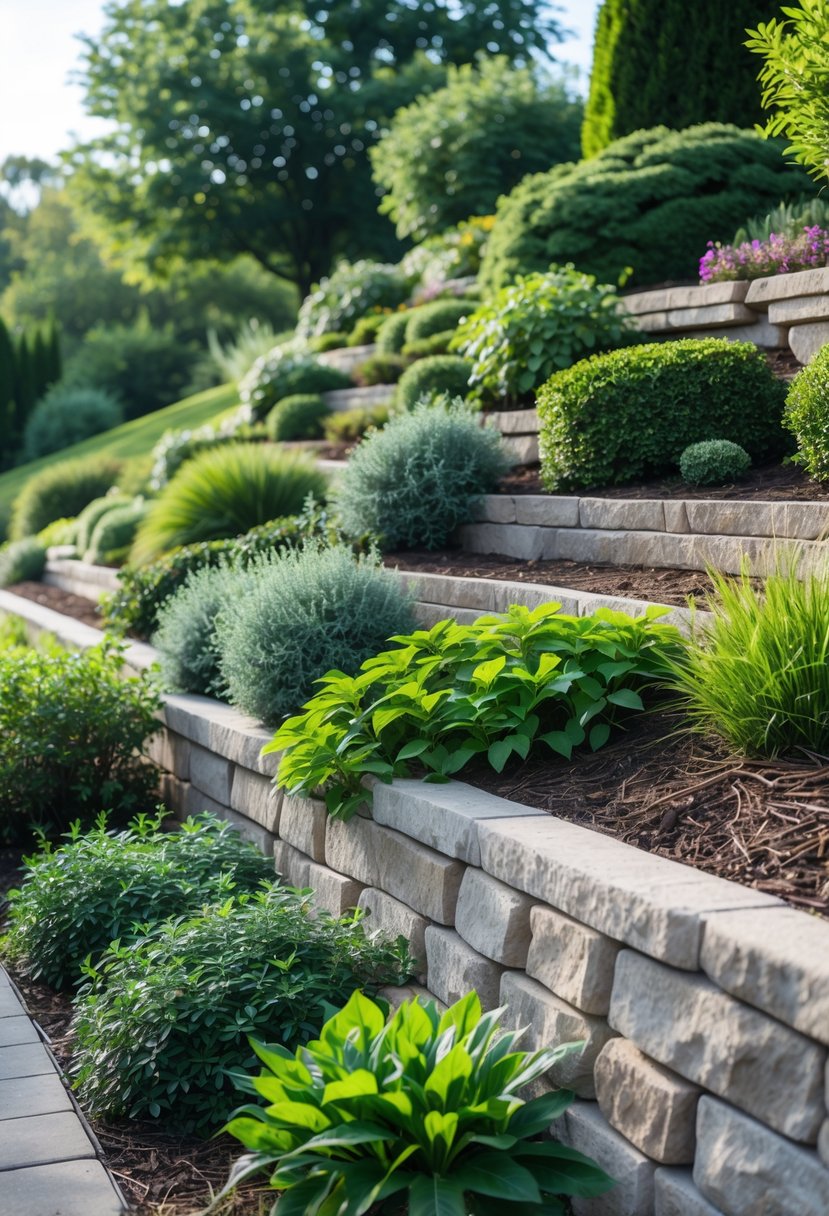
Layering shrubs on your steep bank can transform the look. Start with low-growing plants at the front to cover the soil.
Add medium-sized shrubs in the middle to build some height. Put taller shrubs or small trees at the back for depth.
This approach protects the soil and stops erosion. Mixing different colors and textures keeps your slope bright all year.
Pick plants that suit your climate and don’t need much care once they’re settled. You’ll get a slope that’s both pretty and practical.
If you want more info, check out layering shrubs and this layered landscaping ideas and designs page.
21) Use hardy evergreen shrubs for year-round interest
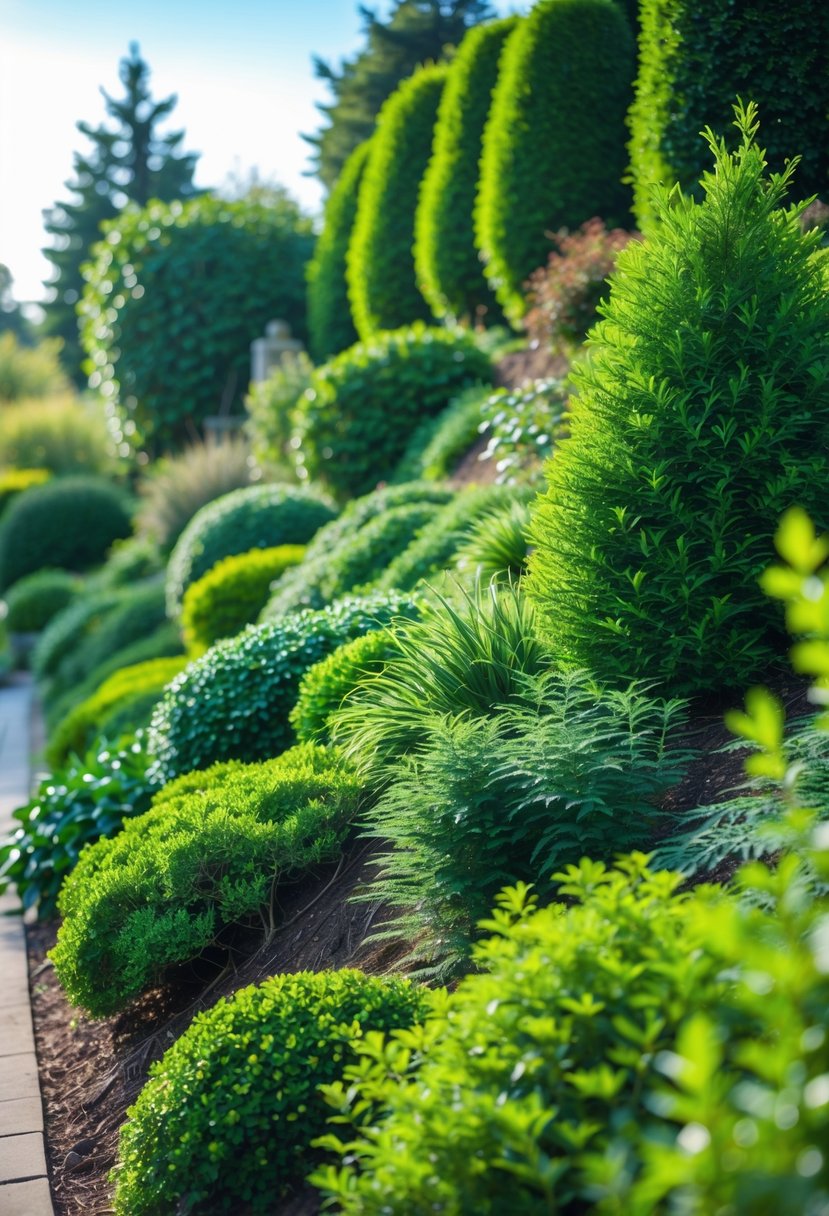
Plant hardy evergreen shrubs to keep your steep bank green all year. These plants hold their leaves in winter, so your garden always has color and shape.
Evergreens help stop soil erosion by holding the ground with their roots. Many types need little maintenance, so you won’t have to fuss over them.
Pick the right evergreens for a tidy look in every season. For ideas, check out this list of easy evergreen shrubs to grow.
22) Place garden lighting along pathways

Add garden lighting along your steep bank’s paths to make them safer. Lights show you and your guests the way, especially after dark.
Go for solar-powered lights if you want an easy setup—no wiring needed. They soak up sun during the day and glow softly at night.
Lighting brings a warm, welcoming vibe to your garden. It highlights the shape of the paths and makes the space pop.
If you need inspiration, check out garden path lighting ideas.
23) Add a multi-level deck for views
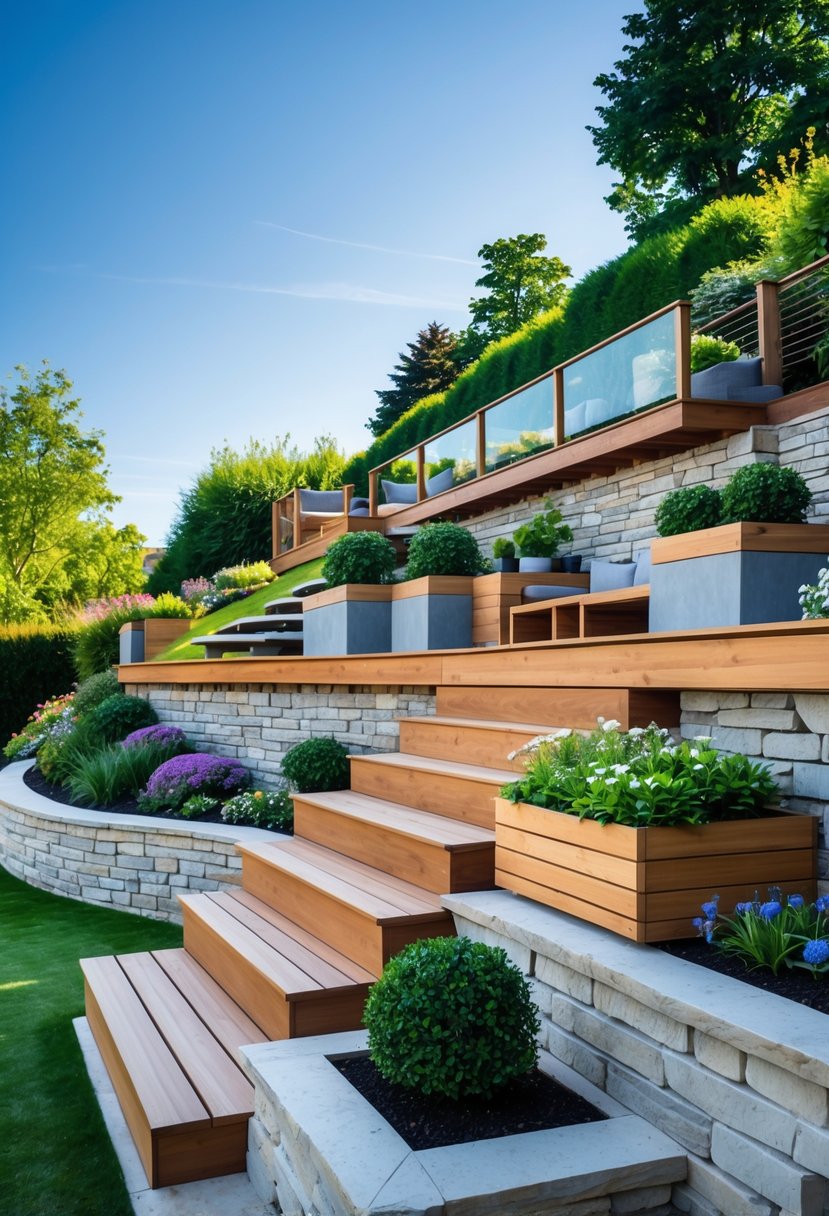
A multi-level deck lets you use your steep bank’s slope to the fullest. You can make separate spaces, like a cozy seat on one level and a dining nook on another.
Each deck level gives you a different view of your yard or whatever’s beyond. It adds style and makes the space feel bigger.
Building a multi-level deck takes some planning, but it can become a great place to relax or hang out with friends.
Want more? Check out creative multi-level deck ideas for sloped yards.
24) Use mulch pathways to reduce maintenance
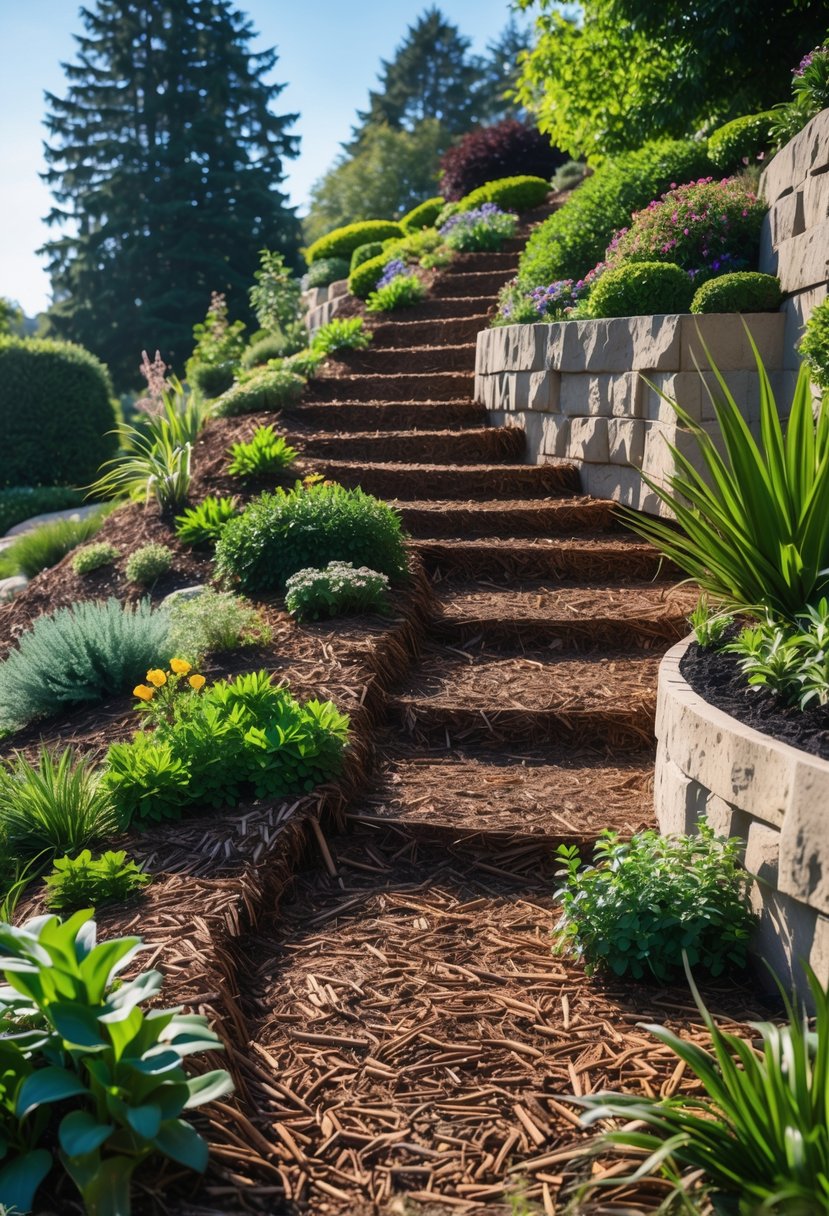
Mulch pathways keep your steep bank garden neat and low-maintenance. They stop weeds and help the soil hold moisture, so your plants stay happy.
Pick from different mulch types like wood chips or recycled glass for a colorful, easy-care path. Just watch out—some mulches can get slippery if lots of people walk on them.
Mulch also helps stop soil erosion on slopes. It’s a simple way to make paths that look natural and save you time.
Want more ideas? Check out 24 Mulch Pathway Ideas for Natural Garden Navigation.
25) Plant succulents in rock crevices

Use rock crevices as natural pots for succulents. These little gaps catch soil and moisture, creating a snug spot for plants.
Succulents like echeveria and sempervivum are perfect here since they don’t need much water and the rocks keep their roots dry.
Planting succulents in crevices adds texture and makes your steep bank look unique. It’s an easy way to use every bit of space and create a charming garden.
For more tips, check out ideas for planting succulents in rocks.
Key Principles For Easy Steep Bank Gardens
When you tackle a steep bank, focus on keeping the soil in place and managing water flow. These steps prevent erosion and help your plants stay healthy.
Using the right tricks makes slope gardening a lot easier in the long run.
Soil Stabilization Methods
Choose plants with strong roots to keep soil from washing away. Ground covers like creeping thyme or sedum spread fast and really help stop erosion.
Try terracing—build flat steps or beds into the slope. This slows water and gives you planting spots.
Mulch protects the soil surface and holds in moisture. Some gardeners use logs or rocks as natural barriers to support the soil and add a bit of style.
Honestly, the goal is to make the slope stable without tons of heavy construction.
Water Drainage Solutions
Water rushes down steep slopes, so you’ve really got to manage it or you’ll end up with lost soil and unhappy plants. Try installing winding paths or channels—these slow the water down and guide it away from trouble spots.
You might want to add rain gardens or retention basins at the bottom to catch runoff. If you plant things that can handle wet roots near those areas, you’ll have a much easier time keeping the moisture balanced.
Good drainage keeps your plants from drowning or washing away after a heavy rain. I’ve found that hardy, native species usually handle both dry spells and soggy days better than most.
For more inspiration, check out this guide on banks and slopes.
Maintaining Your Steep Bank Garden
If you want your steep bank garden to thrive, you’ll need to plan for regular care. It’s also smart to make sure you can move around safely—nobody wants to take a tumble while weeding.
Adapt your maintenance for each season. Create paths that let you reach every part of your garden without risking a fall.
Seasonal Upkeep Tips
Spring and summer bring their own challenges. Watch your watering, especially if the slope drains fast. Water deeply but not too often—this encourages plants to grow strong roots.
Mulch around your plants to hold in moisture and keep weeds at bay.
In autumn, rake up fallen leaves so you don’t end up with mold or extra pests. It’s also a good season for pruning dead or wild branches.
Winter care really depends on your plants, but you can protect them with burlap or add extra mulch to prevent frost damage.
Check your slope regularly for erosion or soil slipping away. If you spot small trouble, add more plants or top up the soil before it gets worse.
Safe Access and Pathways
Making your steep bank easy and safe to walk on really matters. Try using switchback paths that zigzag—these paths cut down on steepness and help you avoid slipping.
Gravel, mulch, or some well-placed stepping stones work great for traction. I’d suggest installing handrails or even a low fence if you want a little extra support.
Keep your paths clear of weeds and debris. That way, you won’t trip or struggle to get through.
If you mow as part of your routine, make those paths wide enough for your mower. It’s just easier that way, and you won’t risk hurting yourself or crushing your plants.
Want more ideas? Take a look at landscaping a sloping bank for extra tips on pathways and safety.


