

Budget-Friendly Garden Ideas on a Hill: 25 Easy and Creative Tips for Every Gardener
Got a garden on a hill? You might feel like it’s tough to make it look good without spending a ton. Sloped yards can be a hassle, but with the right ideas, you can totally turn your hillside into a beautiful and practical spot.
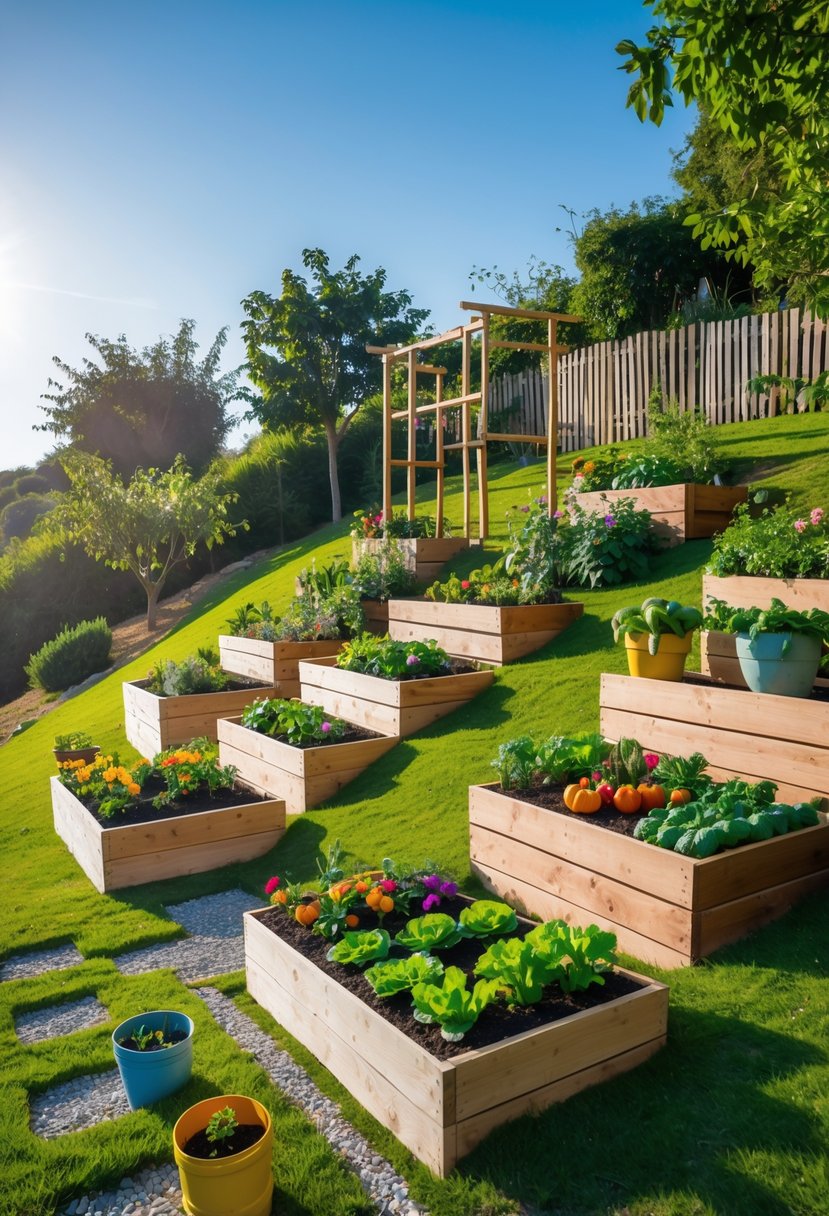
Budget-friendly garden ideas on a hill help you upgrade your outdoor space without emptying your wallet. These easy tricks let you work with the slope and actually enjoy your garden.
1) Build terraced garden beds to prevent erosion and create flat planting areas
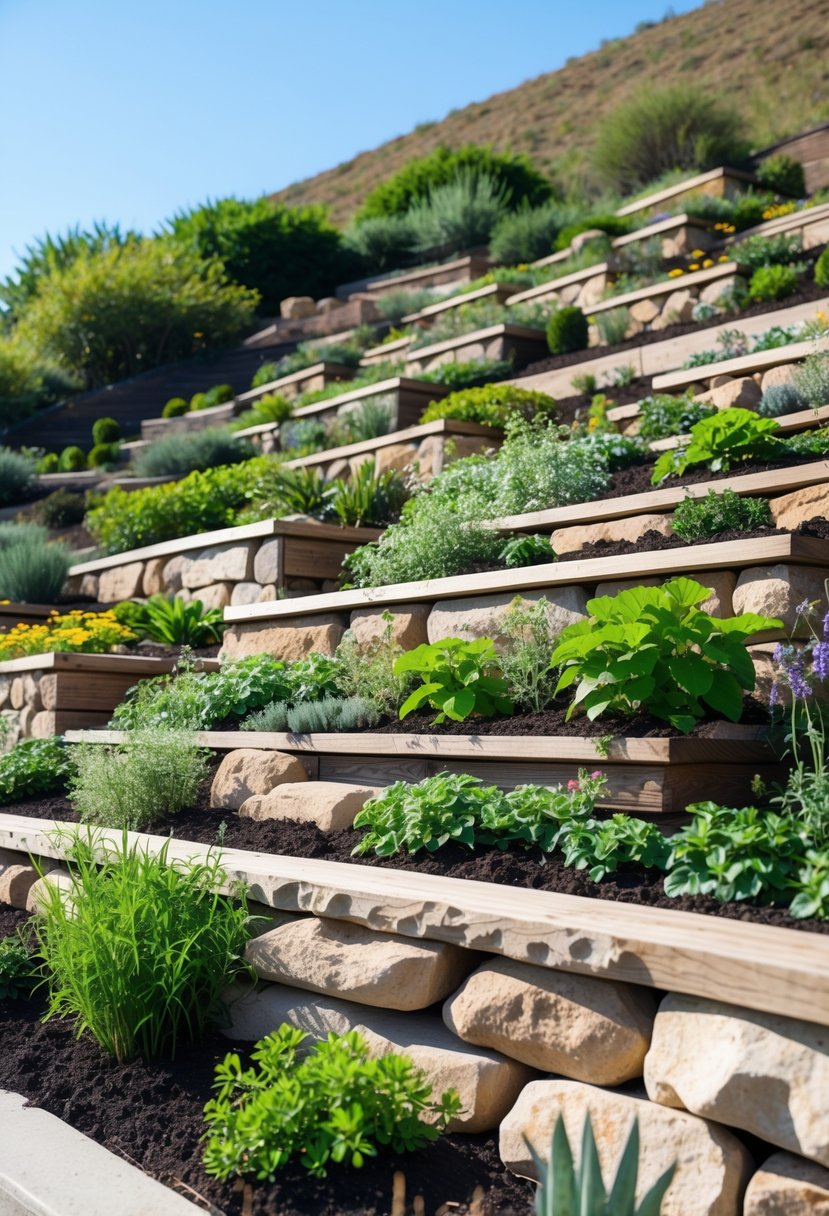
Terraced beds can stop soil from sliding away if your garden sits on a hill. They break up the slope into flat steps, so planting gets way easier.
Try building terraces with wood, stone, or even old bricks. These materials hold the soil in place.
Terraced beds help water drain better, so your plants get what they need without drowning. Making terraces is a clever way to turn a tricky hill into a useful garden.
You can check out step-by-step guides on how to build terraced garden beds if you want more details.
2) Use stone retaining walls for natural slope support
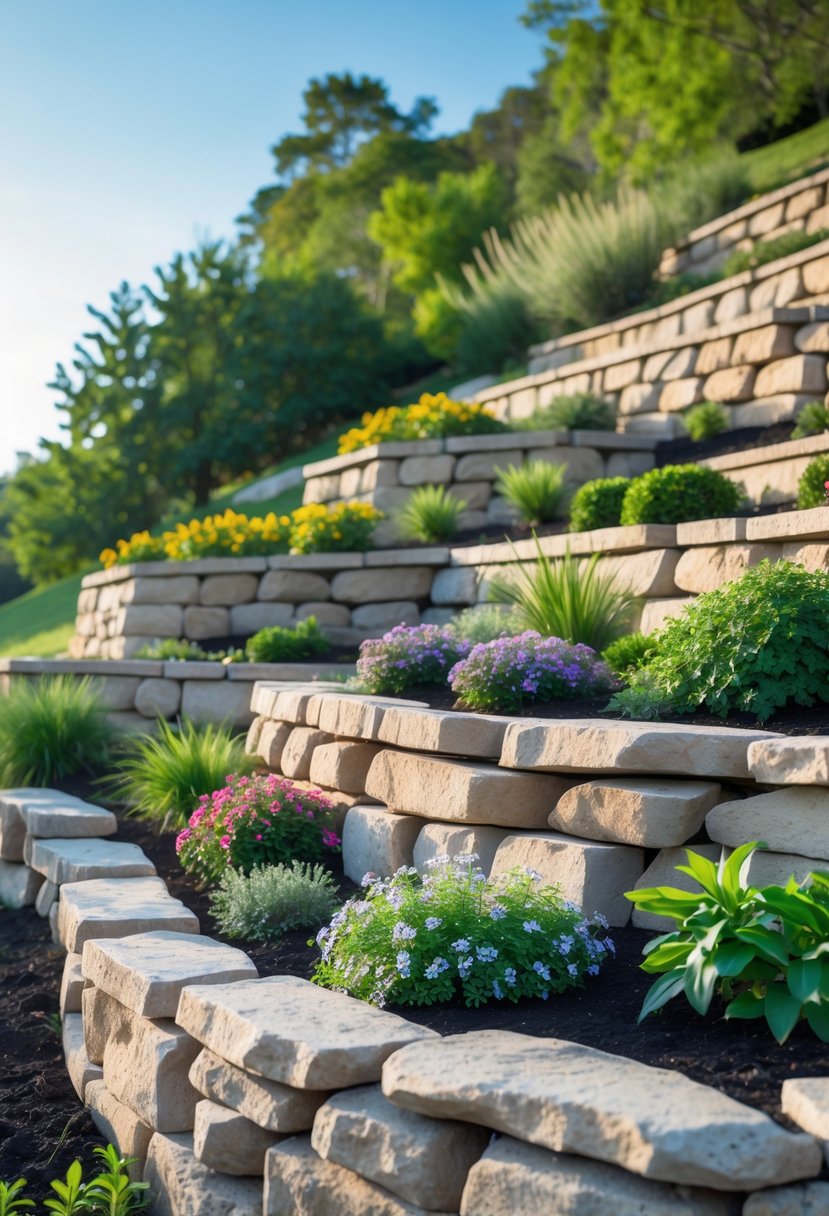
Stone retaining walls give your hillside garden solid support. They stop soil from eroding and keep the slope steady.
Natural stone just fits with the outdoors, right? It gives your garden a rustic, easygoing look and doesn’t have to cost much.
Stack the stones or leave some gaps for texture if you want. Stone walls also carve out flat spots, perfect for planting or maybe just hanging out.
For more inspiration, check out creative stone retaining wall ideas.
3) Plant ground covers like creeping thyme to stabilize soil
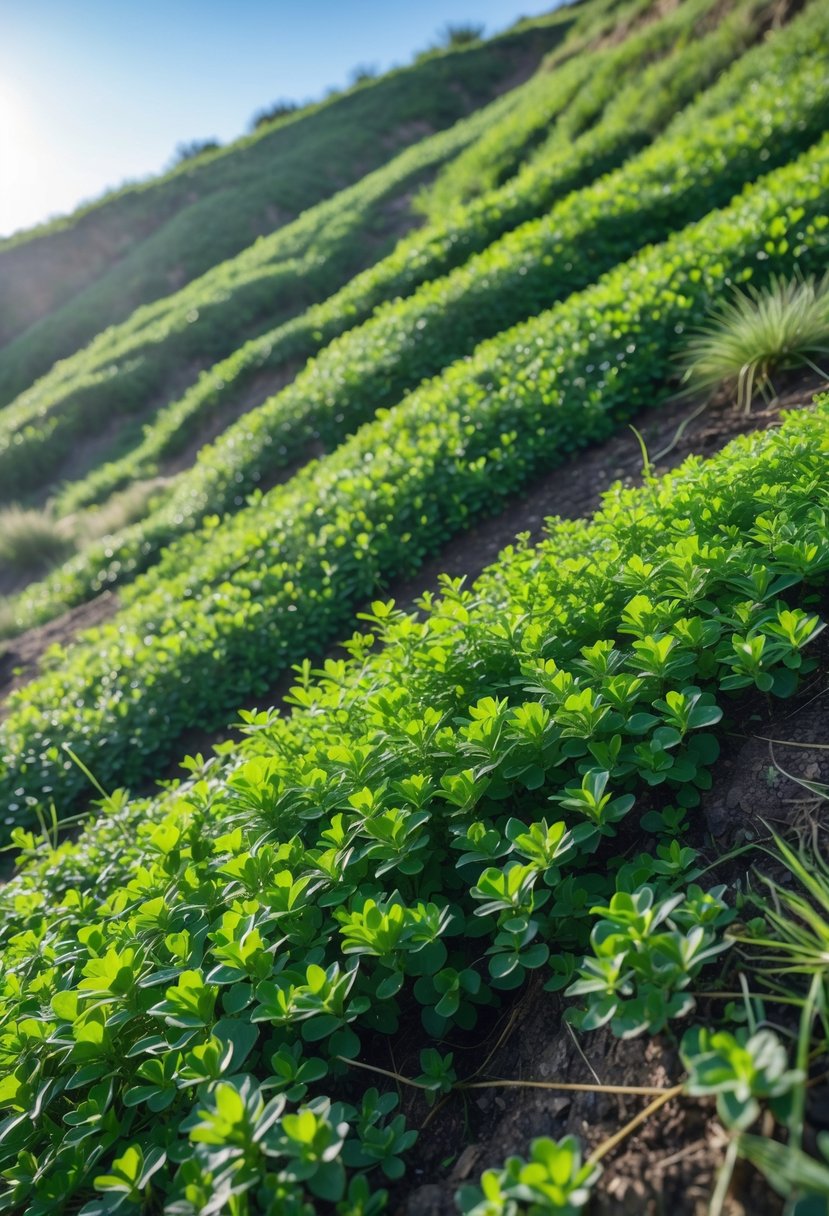
Ground covers like creeping thyme can keep your hillside from washing out. Their roots hold the soil tight.
Creeping thyme hugs the ground and spreads fast, filling bare spots. It handles sun and rough soil, so it’s perfect for slopes.
Plus, it smells great and pops with tiny purple flowers that attract bees and butterflies. It’s a simple, cheap way to keep your hillside neat and green.
If you want more info on using creeping thyme for soil control or just want some budget ideas, check here.
4) Install gravel paths to reduce mud and improve access
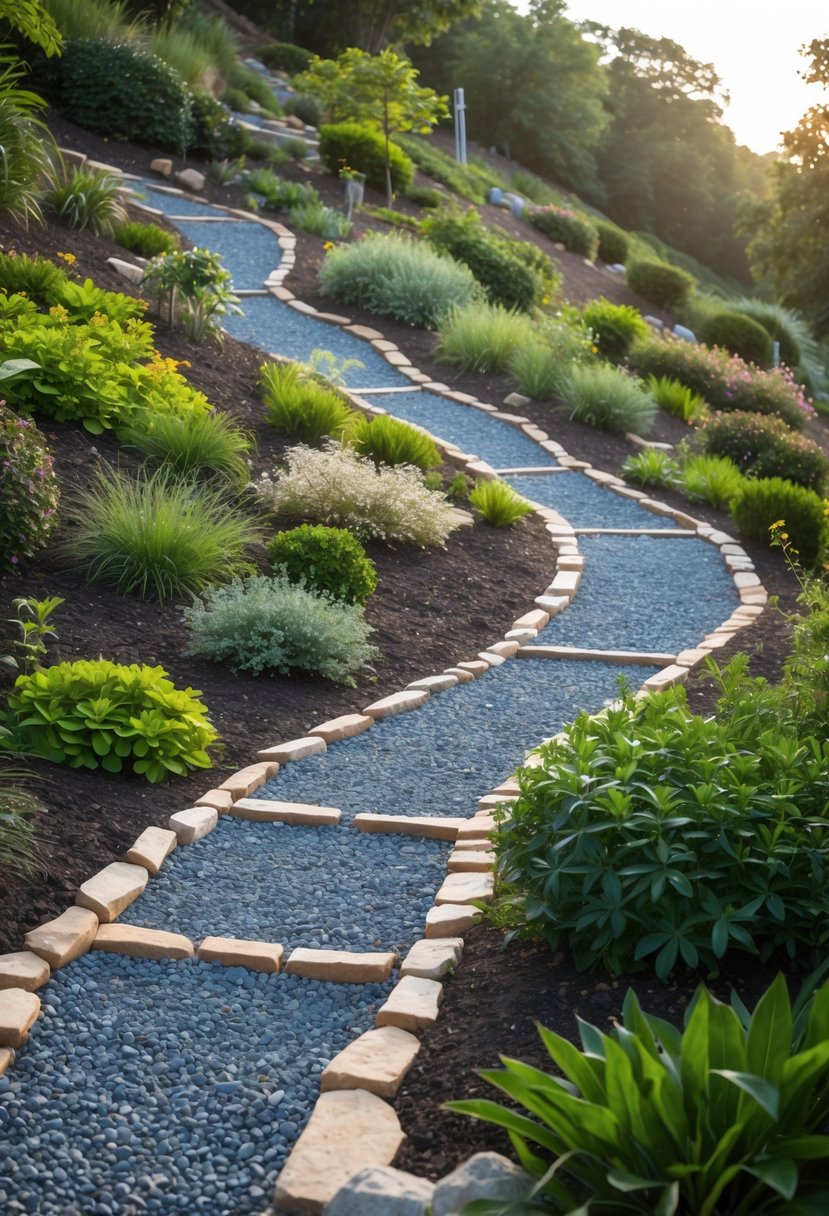
Gravel paths work wonders on hills. They keep your garden tidy and help you avoid tracking mud everywhere.
When it rains, gravel stops mud from forming, so you won’t drag dirt inside. That makes your outdoor space usable year-round.
Lay gravel paths along the slope for safe routes. If you build a good base and add drainage, water won’t pool, and your garden stays protected.
Gravel is cheap and easy to install, so it’s a smart pick if you’re on a budget.
Want to try it? How to lay a budget-friendly gravel path gives you a clear starting point.
5) Create a rock garden with drought-tolerant plants on steep areas
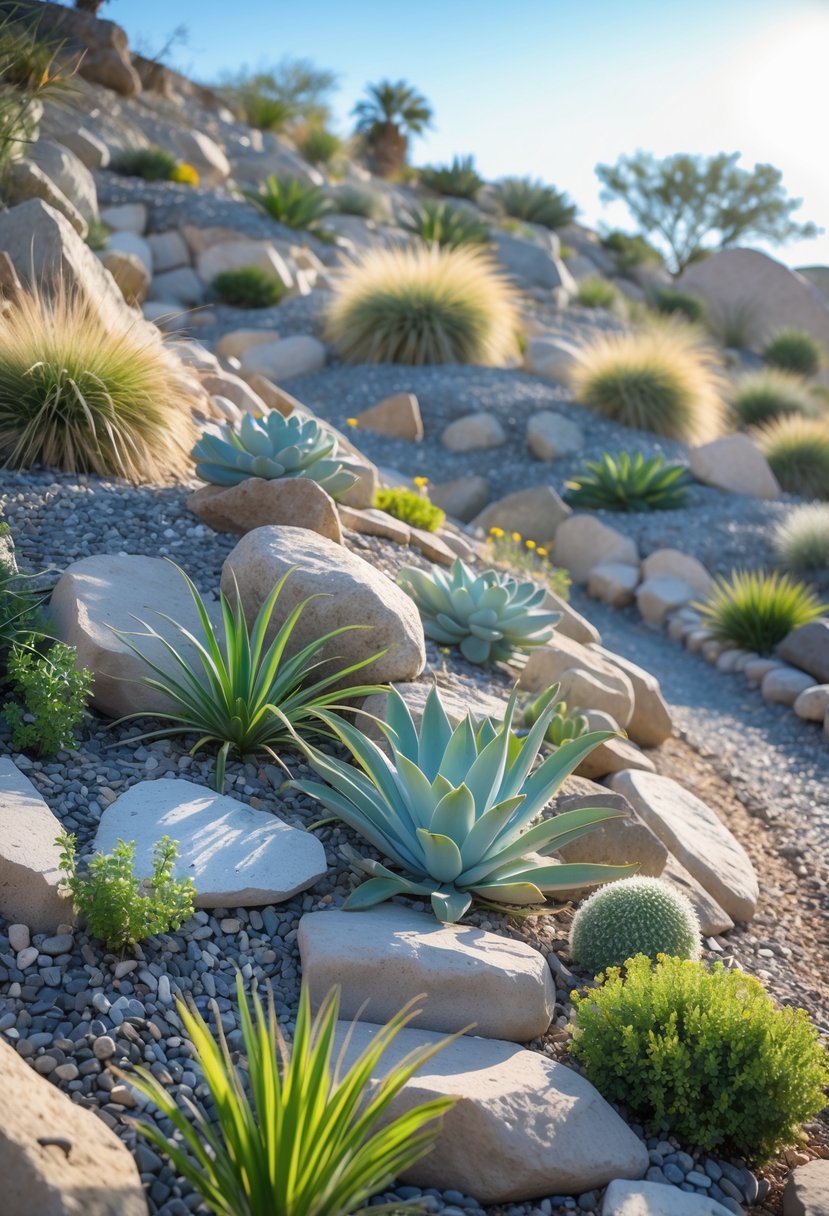
Steep parts of your hill can become a low-maintenance rock garden pretty easily. Rocks hold the soil and fight erosion.
Go for drought-tolerant plants like succulents, lavender, or sedums. They barely need water and love rocky, well-drained soil.
A rock garden brings a natural vibe and cuts down on work. It also saves water, which is awesome for dry or sunny slopes.
Need more ideas? Check out stunning rock garden ideas for slopes.
6) Add native shrubs to anchor soil and blend with the environment
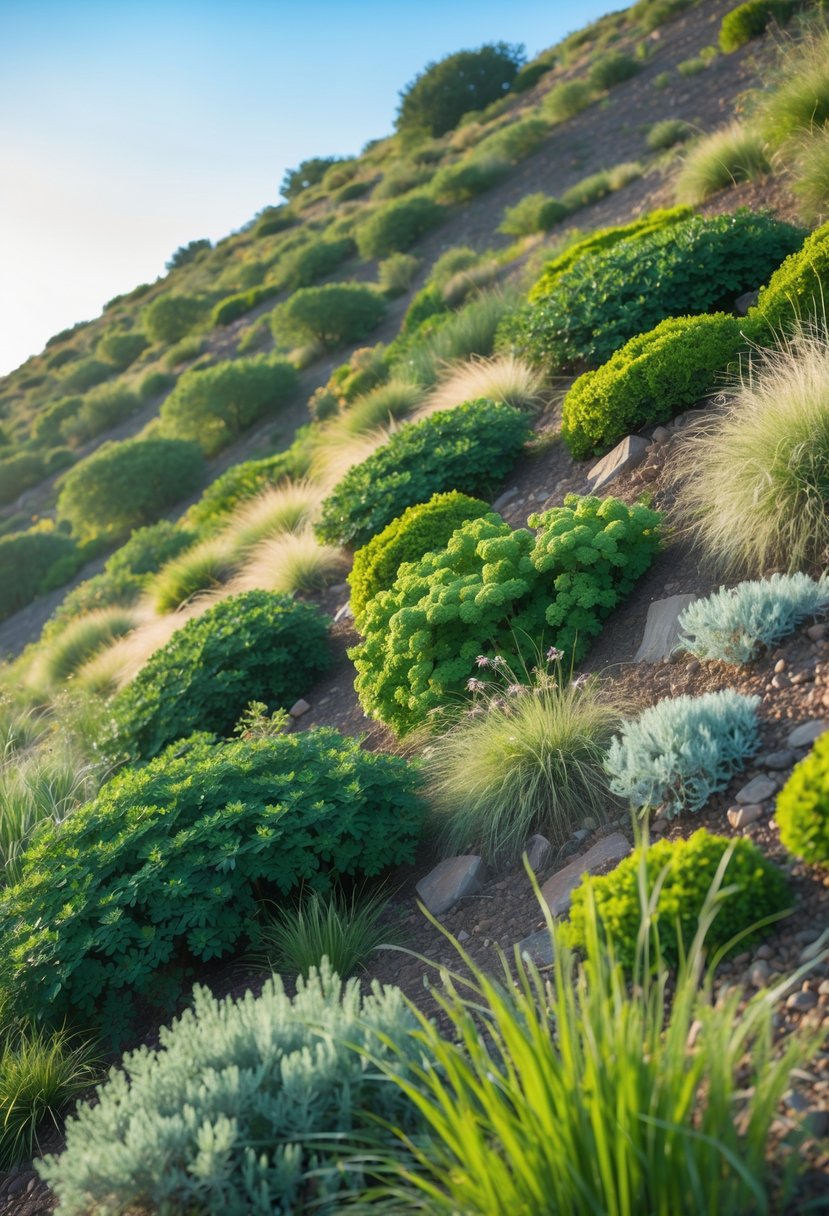
Native shrubs can really help hold your hillside together. Their roots grip the soil and prevent erosion and runoff.
These plants just fit in with the local landscape. They need less water and care since they’re made for your climate.
That means you save money and effort, and your garden still looks good all year. Native plants bring in local wildlife too, which is always a plus.
If you’re curious about which shrubs to use, check out native shrub garden ideas.
7) Build wooden steps to safely navigate steep sections
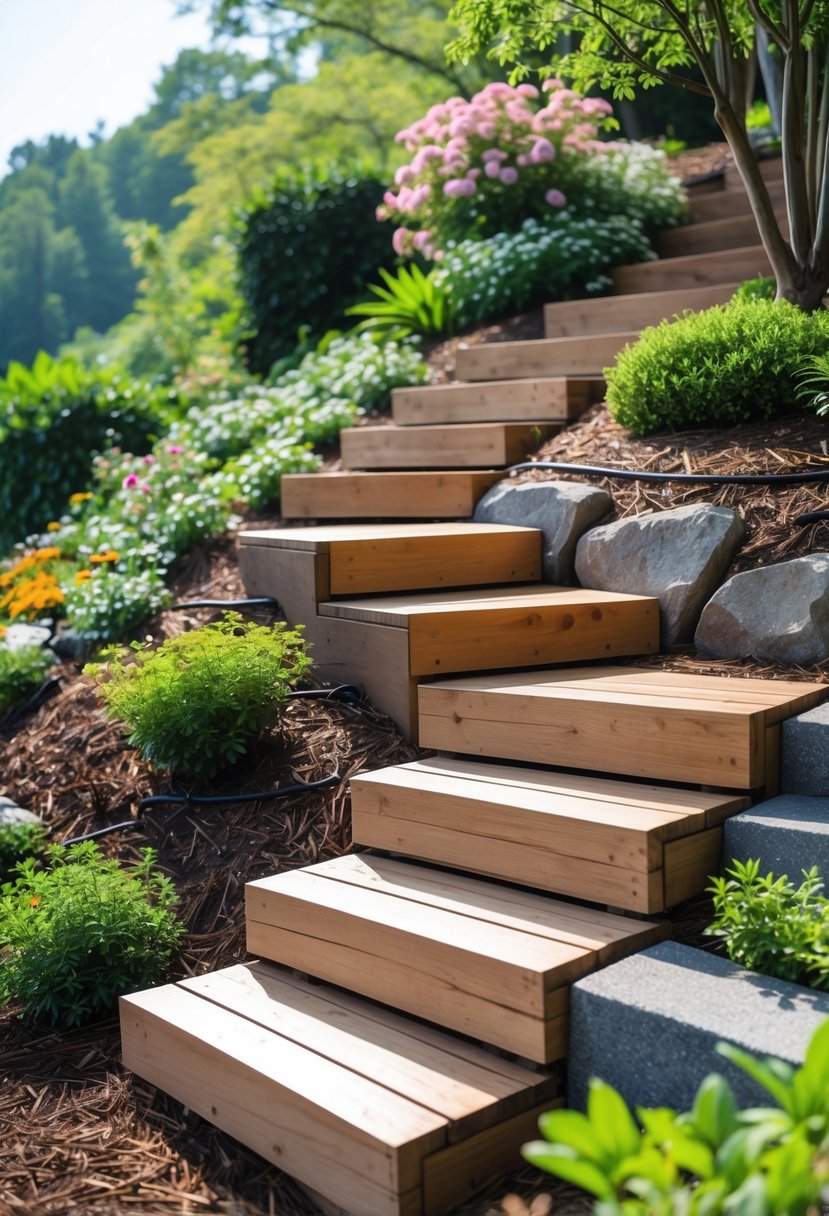
Wooden steps make it way easier and safer to get up and down a steep hill. Wood feels natural and works with any garden style.
You don’t have to spend a fortune—recycled wood or pallets work great and keep costs down. With a bit of planning and a few tools, you can build sturdy steps that add both charm and practicality.
If you want to try this, check out guides on building wooden stairs on a slope for some good pointers.
8) Use drip irrigation to conserve water on sloped gardens
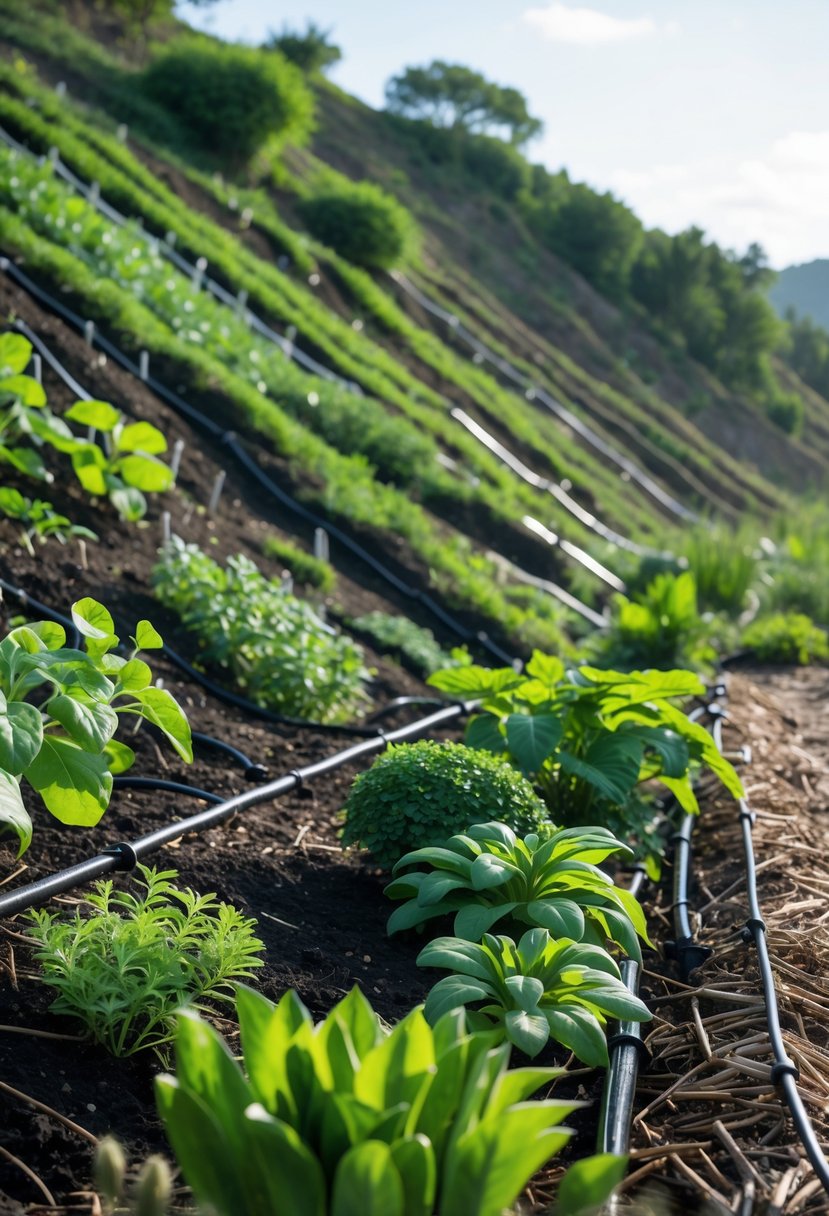
Drip irrigation makes watering hill gardens way easier. It sends water straight to the roots, slowly and directly.
This system helps stop runoff and keeps soil from washing away. You’ll also save water since drip systems use less than sprinklers.
Your plants get steady moisture, so they stay healthier. Setting up a drip system isn’t too hard or expensive—there are tons of step-by-step guides out there.
Using drip irrigation helps your hillside garden thrive and saves money and water. If you need more info, check here.
9) Incorporate rain barrels to collect runoff for watering
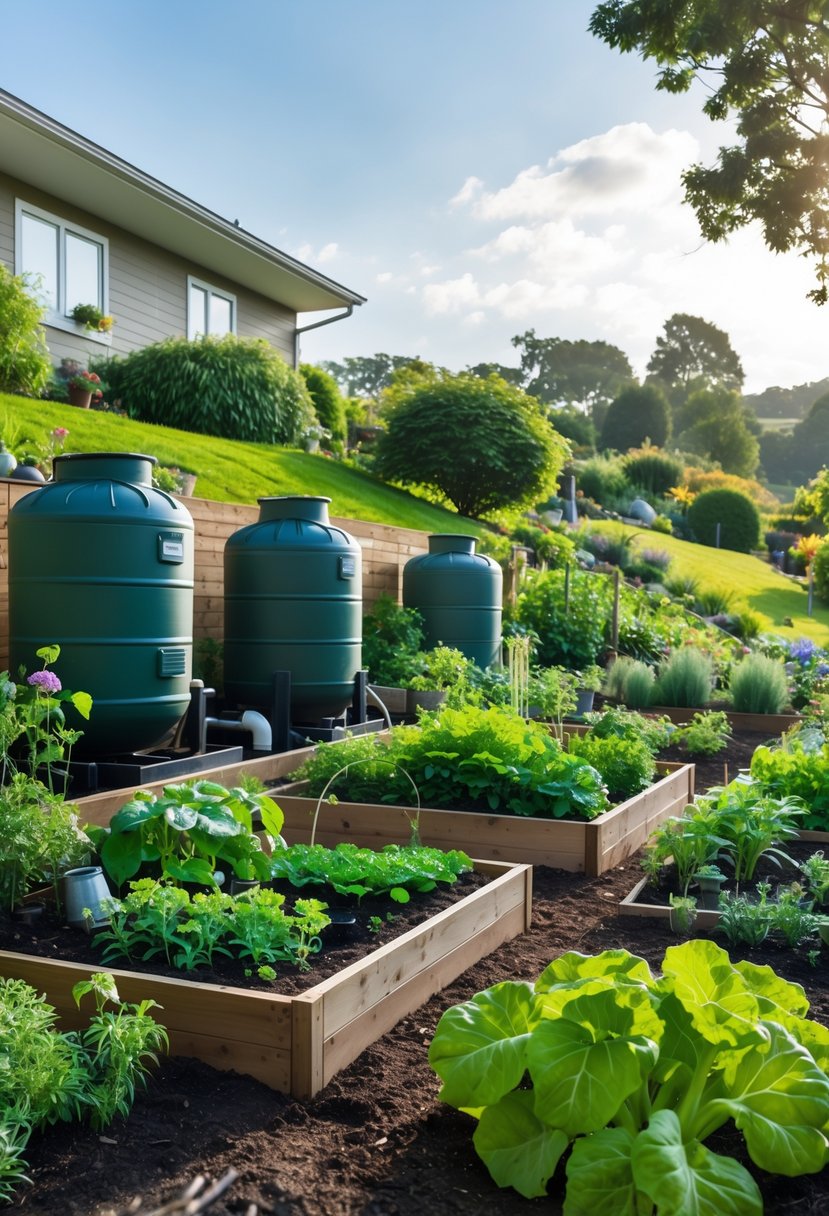
Rain barrels can help you save water on your hillside garden. They collect runoff from your roof or other surfaces.
Use this water for your plants and you’ll cut down your water bill. It also stops extra runoff from causing erosion on steep slopes.
Rain barrels are cheap and easy to set up. Plus, they give you chemical-free water that’s awesome for your garden.
Need a how-to? Here’s a guide on installing rain barrels to capture and reuse runoff water.
10) Plant ornamental grasses for texture and erosion control

Ornamental grasses work wonders on hills. Their dense roots grab the soil and help prevent erosion.
You can find so many types, each adding texture and movement to your garden. These grasses are super low-maintenance, so you won’t spend much time or money on care.
They look great all year, with shapes and colors that change with the seasons. Try ornamental grasses to boost both style and function in your sloped garden.
Want to know more? Check out the best grass for erosion control here.
11) Use mulch generously to retain moisture and reduce weeds

Mulch keeps your hillside garden moist for longer. You’ll water less, so you save time and cash.
It also blocks sunlight, which means fewer weeds. Spread 2 to 3 inches of something organic—think straw, bark, or leaves—around your plants.
This helps the soil stay cool and protects roots from drying out. Mulching is a super simple way to keep your garden healthy without a lot of extra work.
If you’re curious, learn more about how mulch can improve your garden at positivebloom.com.
12) Install trellises on terraces for vertical gardening

Adding trellises to your hill’s terraces lets you grow up, not just out. Use wood or recycled stuff to keep it cheap.
Trellises help plants climb, which means better air flow and fewer diseases. They also make your garden look lively and tidy, especially with climbing flowers or veggies.
Try planting vines or beans on your trellises to use that vertical space. If you want a simple how-to, check this step-by-step guide to installing garden trellises.
13) Use reclaimed wood for budget-friendly garden structures

Save money by choosing reclaimed wood for your garden projects. Build raised beds, benches, or even a small retaining wall on your hill with it.
Reclaimed wood is eco-friendly since you’re reusing old materials instead of buying new. That means less waste and a garden with a character all its own.
Before you get started, always check for nails or damage. Sand and treat the wood to help it stand up to the weather.
Reclaimed wood lets you create sturdy, budget-friendly features without breaking the bank. Want more ideas? Check out 10 Garden Ideas Using Reclaimed Wood.
14) Create wildflower patches for low-maintenance color
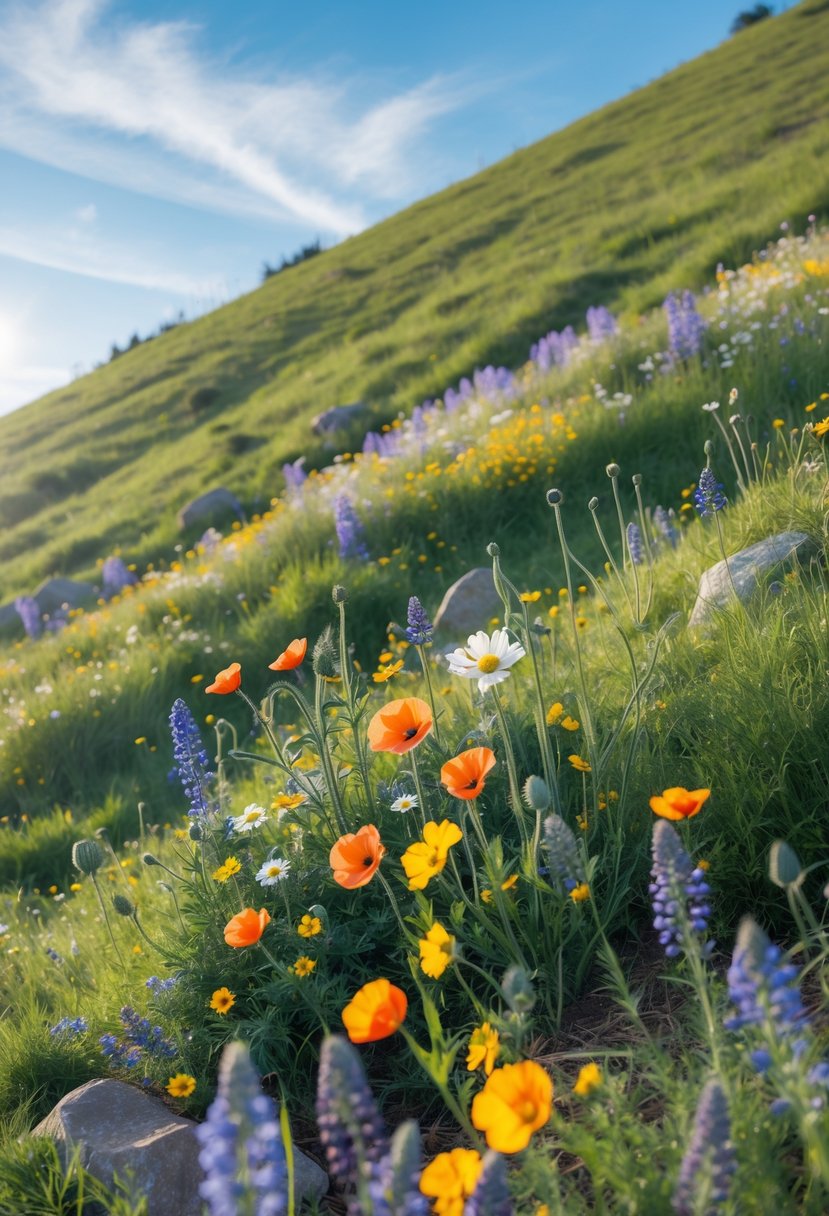
Try adding a wildflower patch to your hill for bright color with hardly any upkeep. Wildflowers thrive in sunny, well-drained spots—hills are perfect for them.
Once you scatter the seeds, these flowers mostly handle themselves. Bees, butterflies, and other helpful insects will start showing up.
You won’t need fancy tools or much watering after they get established. Wildflower patches are a budget-friendly way to liven up your garden and help local wildlife.
Want to start your own patch? Here’s a guide on how to create a wildflower patch in your garden.
15) Add a small seating area with natural stone benches

Make a cozy spot in your hill garden by adding natural stone benches. Local stone blends right in and usually won’t set you back much.
A small stone bench gives you a comfortable place to sit and soak in the view. It’s sturdy and sticks around for years with barely any work.
Try putting the bench near a shady tree or tucked in a quiet corner. Natural stone helps the seating area feel like part of the landscape and it’s a simple, budget-friendly way to upgrade.
Curious about more options? Check out small stone benches for your garden here.
16) Plant lavender for fragrance and erosion resistance
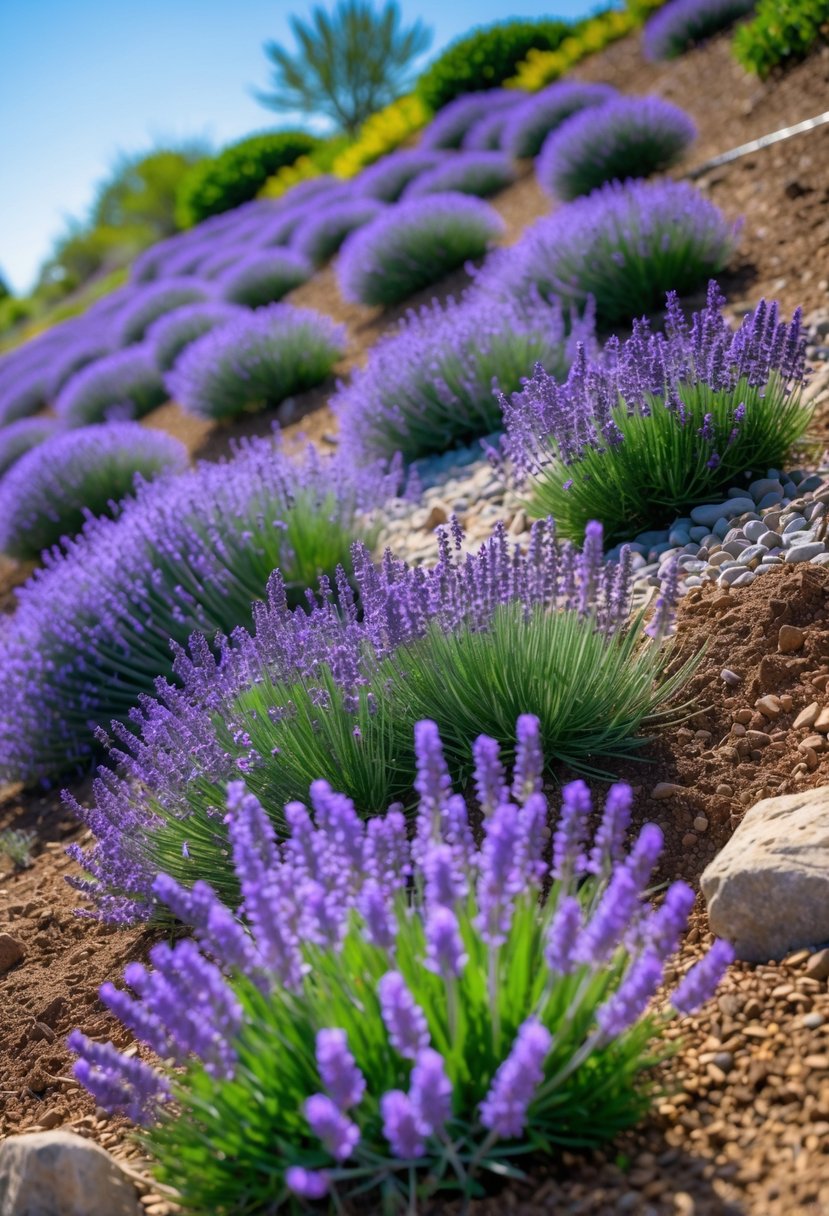
Lavender fits right in on a hill, smelling amazing and helping keep soil where it belongs. Its roots grab the soil and cut down on erosion.
Lavender is tough, barely needs water, and is easy to care for. Plus, the purple blooms pull in bees and butterflies and make your garden feel alive.
Planting lavender means your garden smells great, looks good, and your hill stays put. It’ll save you time and money since it needs little water or fuss. Want more? Check out these lavender landscaping tips.
17) Use native ferns in shady slope spots

Add native ferns to the shady parts of your slope for a lush, natural vibe. Ferns love the shade and do best in cool, moist spots.
They cover the ground and help stop soil from sliding away. Native ferns are easy to care for and blend right in with your landscape.
They bring texture and green color all year, which is always nice. When you use native plants, they’re more likely to thrive with less effort.
Mix up a few different types for extra interest. Your hillside will look good and stay healthy. Want to dig deeper? Check out this detailed guide.
18) Introduce edible plants like herbs on terraced levels

Planting herbs on your terraced garden is a clever way to use the space. Herbs like basil, mint, and thyme fit into small spots and don’t need much care.
Terraces help control water, so your herbs stay happy. You can grow them in containers or right in the soil on each level.
Fresh herbs bring flavor to your food and a nice scent to your garden. They don’t take up much room, either. If you’re curious about more options, check out budget-friendly herb garden tips for small spaces.
19) Build a simple dry creek bed for drainage and interest

Got water runoff or soggy spots on your hill? Try making a dry creek bed to manage drainage. It steers extra water away and keeps your soil from getting waterlogged.
You just need stones, gravel, and some basic tools, so it’s easy on the wallet. Plus, it adds a natural, eye-catching feature to your yard.
Plan the path, dig a shallow trench, and lay down landscape fabric. Fill it with gravel and finish with bigger rocks along the sides.
A dry creek bed controls erosion and makes your hill look tidy and cared for. Want to build one? Check out this page.
20) Use recycled bricks to edge flower beds

Edge your flower beds with recycled bricks for a smart, sturdy border. Bricks keep soil where it belongs and give your plants a clear edge.
They’re tough and hold up well, even on sloped ground. You can often find old bricks at construction sites or salvage yards for not much money.
Lay them flat or stand them on their sides, depending on what look you like. This eco-friendly choice adds charm without blowing your budget. Need more inspiration? Check out recycled garden edging ideas.
21) Plant hardy succulents in rock crevices

Save a few bucks by planting hardy succulents in the cracks and crevices of rocks on your hill. These plants barely need water and thrive in tight spaces.
Succulents like echeveria and sempervivum settle right into rocky spots. Their roots help hold the soil and stop erosion.
Tucking succulents into rock crevices adds natural beauty with almost no effort. Your hill garden will look unique, and you won’t spend much. Looking for more ideas? Check out these succulent rock garden ideas.
22) Add a butterfly garden with nectar-rich plants

Draw butterflies to your hill by planting nectar-rich flowers like coneflowers and black-eyed Susans. These easy plants come back every year, so you save money in the long run.
Butterflies also need host plants for their caterpillars. Toss in some milkweed or parsley to complete the setup.
Put your butterfly garden in a sunny spot—those little guys love the warmth. For more tips, check out these budget-friendly butterfly garden essentials.
23) Create a tiered vegetable garden with wooden boxes
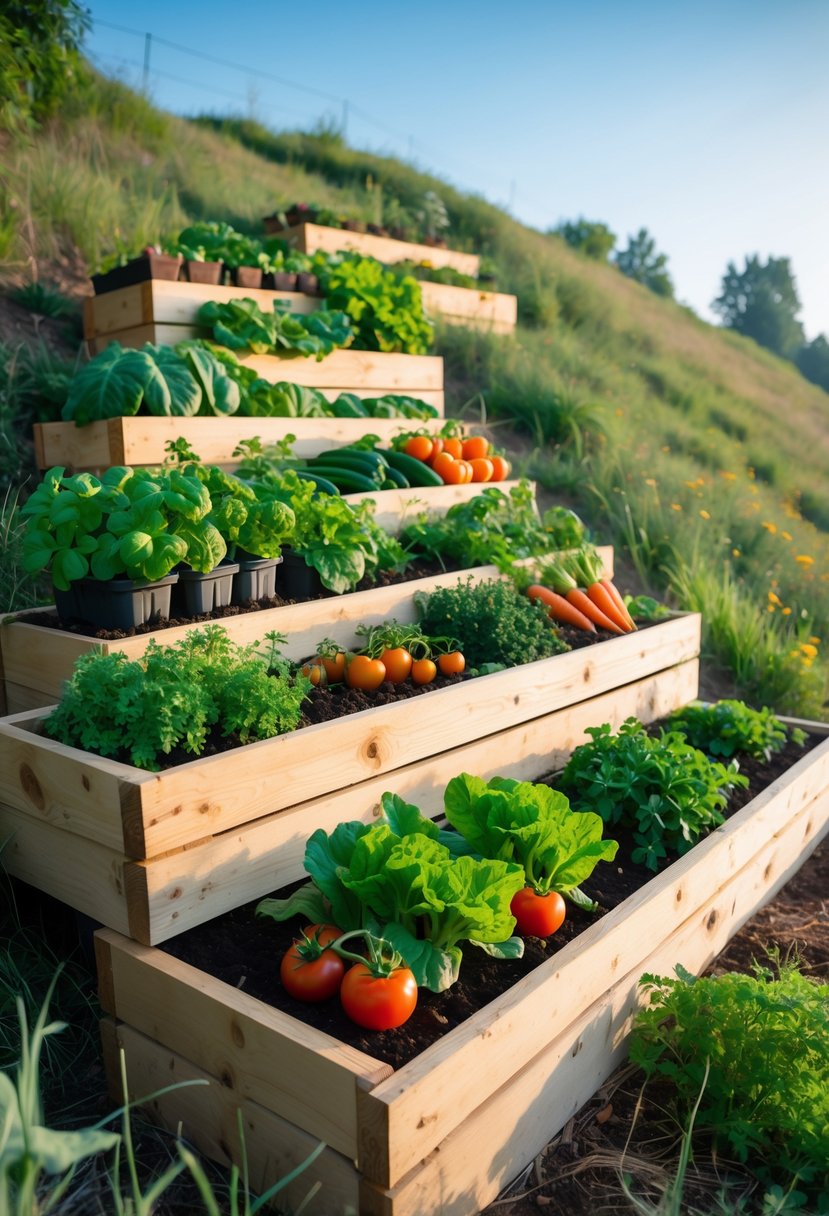
Build a tiered vegetable garden with simple wooden boxes. This setup gives you flat spots to plant on a hill and keeps soil from washing away.
Wooden boxes stack easily and let you arrange your garden in steps. Grow veggies like lettuce, tomatoes, or herbs in each level.
Using wooden boxes is easy on your wallet, especially if you find recycled wood. Want to see how others do it? Check out wood garden box ideas and tiered garden ideas on a budget.
24) Place solar garden lights along paths for ambiance
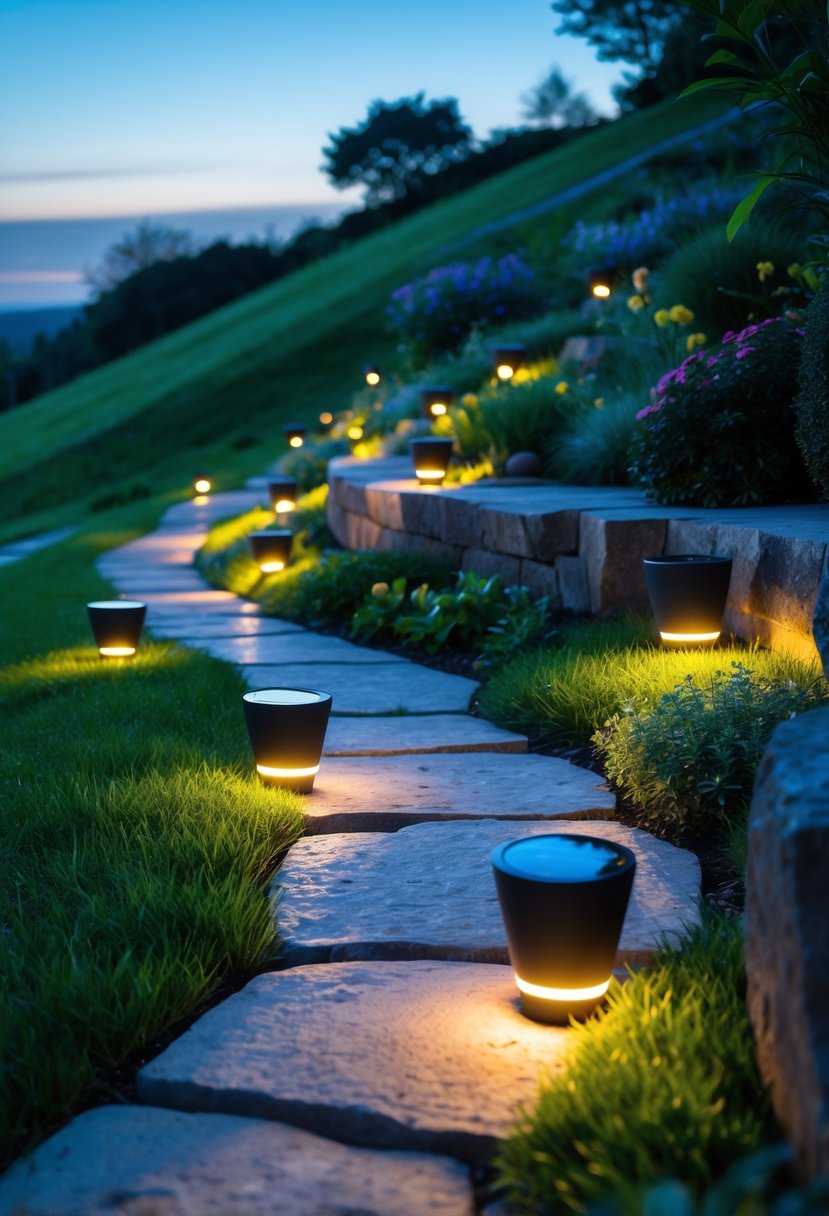
Brighten your garden paths with solar garden lights. They run on sunlight, so forget about wiring or extra bills.
Solar lights give off a soft glow, making nighttime strolls safer and a bit more magical. They add a cozy, welcoming touch to your outdoor space.
Line them along slopes or tricky spots to guide your way. There are plenty of styles to fit your garden and your budget.
Want more ideas? Check out creative solar lighting for your yard here.
25) Use mulch pathways made from wood chips

Make easy, budget-friendly paths on your hill with wood chips. They help stop soil erosion and make walking safer on slopes.
Wood chips blend right in with the natural look of your garden and give it a warm, inviting feel. These paths are simple to put in and cost less than stone or brick.
Over time, wood chips break down and boost your soil’s health. If you want something natural and low-maintenance, wood chip mulch paths are a solid pick.
Looking for more info? Check out wood chip garden path ideas.
Understanding the Challenges of Gardening on a Hill
When you garden on a hill, you run into some pretty unique problems. Soil tends to slide away, and water just refuses to stay put.
You also have to notice how sunlight hits different parts of your slope. That alone changes which plants will actually thrive.
Soil Erosion and Drainage Considerations
Soil erosion is a real headache on hills. Rain can strip away the topsoil—the good stuff your plants need.
You can fight this by adding terracing or planting groundcovers like creeping thyme or clover. Their roots help keep soil from moving.
Drainage gets weird on slopes. Water rushes downhill, leaving some spots bone dry while others turn soggy.
Try building small retaining walls or laying down mulch to help water stick around longer. Pick plants that love well-drained soil so they don’t drown.
Sunlight and Microclimate Factors
Sunlight just isn’t equal on every part of a hill. The way your hill faces totally changes how much sun each spot gets.
South-facing slopes soak up more sun, which works great for sun-loving plants. North-facing parts usually stay cooler and damp, so shade plants do better there.
Hills also make their own little microclimates. The top can get blasted by wind, while the bottom stays more sheltered.
You can use this to your advantage by picking plant spots based on what they need—wind, heat, or shade. Tweak your plan to fit these quirks and you’ll have better luck.
For more tips on handling soil and sunlight issues, see hillside landscaping ideas on a budget.
Design Strategies to Maximize Your Budget on Sloped Landscapes
You can make a sloped garden look good without spending a fortune. Focus on smart building tricks and picking the right materials.
If you build things yourself and use budget-friendly materials, you’ll save money while keeping your garden safe and looking nice.
DIY Terracing and Retaining Solutions
Terraces let you carve out flat spots for planting, which helps stop soil from sliding downhill. You don’t need fancy tools—just some effort and basic supplies.
Try using wooden sleepers, bricks, or big stones to build retaining walls. They’re usually cheap and easy to find.
Put gravel or sand behind the walls to help with drainage and keep water from causing problems.
Make each terrace wide enough for your plants and easy to reach. Toss on some mulch or ground cover to hold soil in place and cut down on chores.
Doing the terracing yourself saves on labor and lets you shape the garden just how you want it.
Choosing Low-Cost, Slope-Friendly Materials
When you’re working with a slope, it makes sense to pick materials that don’t break the bank. Gravel and crushed rock do a great job for paths and drainage, plus they help stop erosion.
If you’re choosing plants, go for native varieties or drought-tolerant species. These need less water and attention, so you’ll save money and time down the road.
I really like using recycled materials—old bricks, stones, or even scrap wood. They add a little character, and you won’t have to spend much.
Here’s a quick list of budget-friendly materials to try out:
- Gravel or crushed stone for paths
- Recycled bricks or pavers for borders
- Pressure-treated wood for retaining walls
- Native grasses and shrubs for easy care
You can use these materials to keep your slope stable—and your wallet happy.


