

Unique Garden Ideas on a Hill: 25 Creative Ways to Transform Your Sloping Yard
Gardening on a hill can feel a bit daunting at first, but honestly, it’s a golden opportunity to do something really cool. A sloped yard doesn’t have to hold you back—actually, it can spark some truly unique garden ideas you’d never get on flat land.
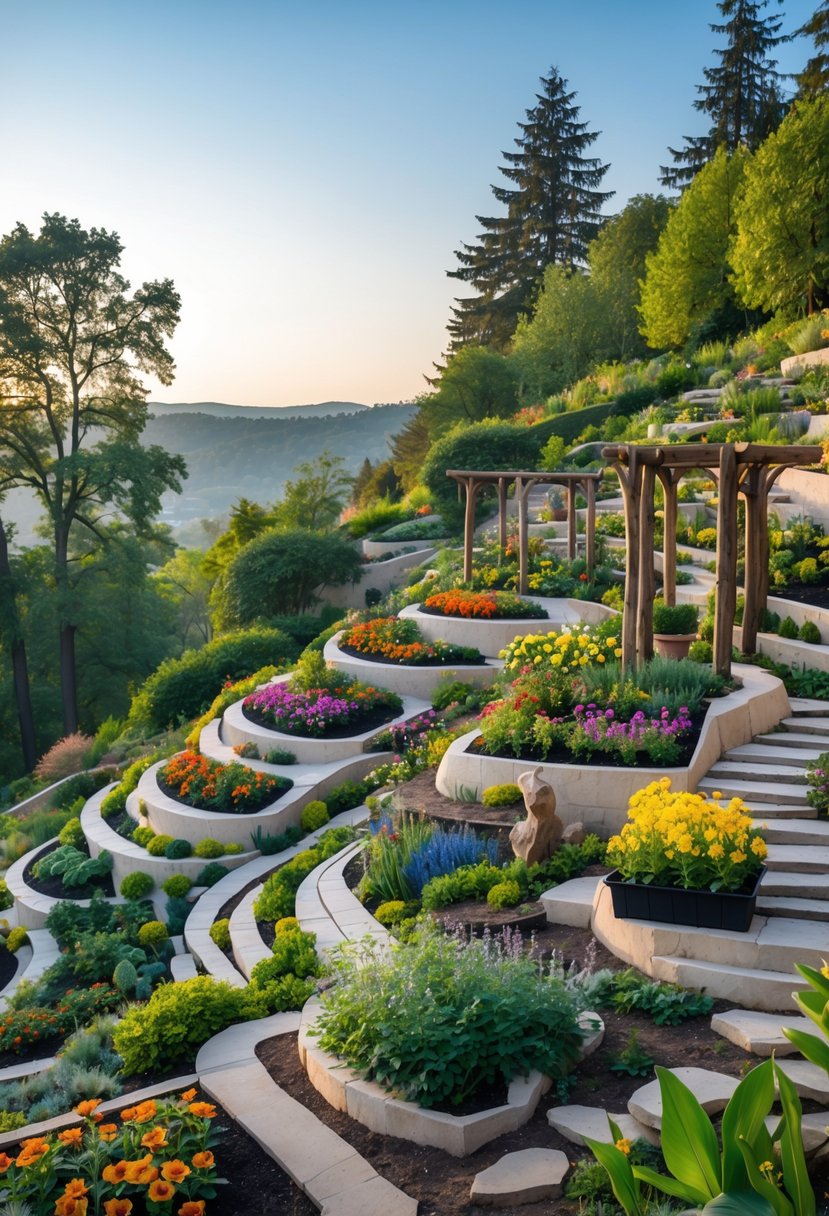
You can turn your hillside into a stunning outdoor space that balances practicality and style. With the right approach, your garden will make the most of the natural slope while adding interest and charm to your yard.
1) Create terraced garden beds using natural stone retaining walls
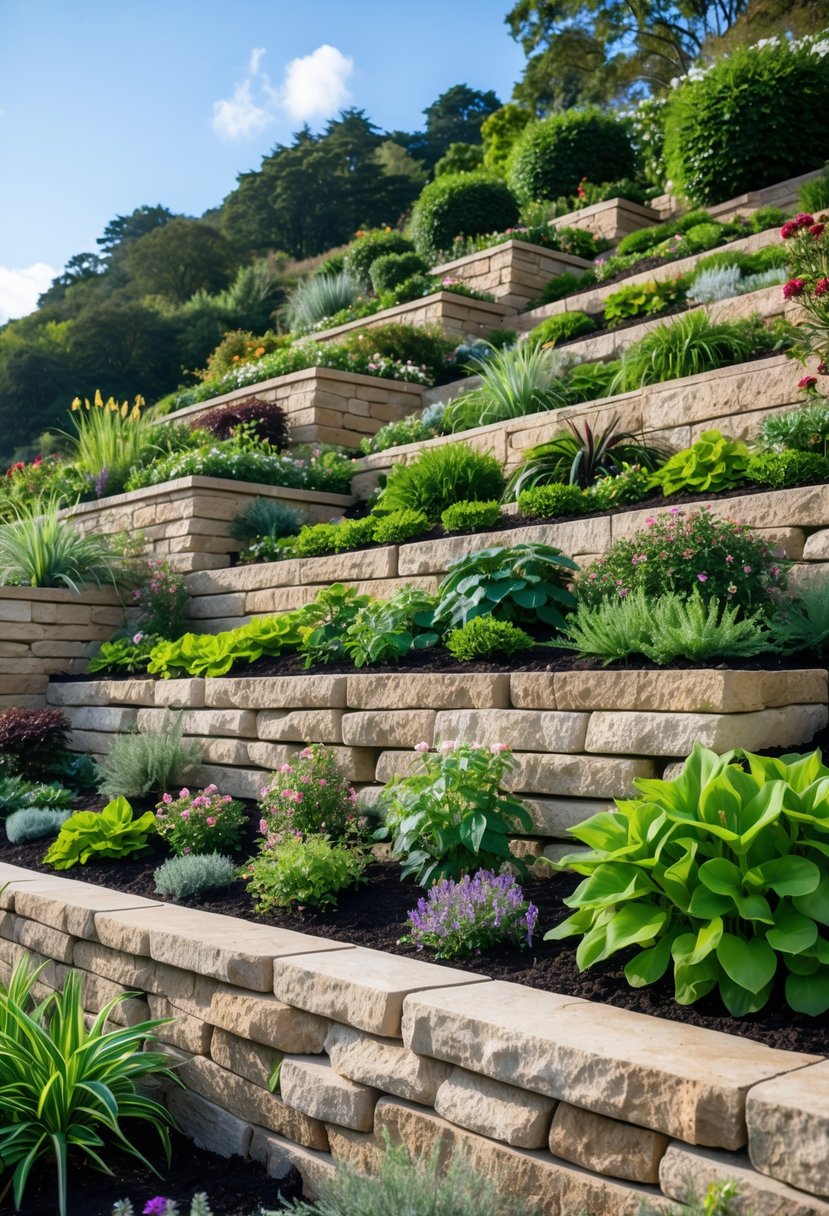
Try building terraced beds to transform a hill into a beautiful garden. Use natural stone retaining walls to keep the soil where it belongs and protect your plants.
Stone walls bring a classic vibe and last for ages. Their natural textures fit right in with flowers and greenery.
Terraced beds give you flat places to plant, even on a slope. Gardening gets easier, and water soaks in better. If you’re curious about stone walls, check out more creative ideas here.
2) Install cascading water features to add movement and sound

Add a cascading water feature to your hillside and suddenly, the whole garden feels more alive. Water running down the slope brings gentle movement and soothing sounds.
Small waterfalls or streams look right at home on a hill. They grab your attention and help muffle noise from the street.
Pick natural rocks so the water blends in with the rest of your garden. Just remember to clean the pump now and then to keep things fresh.
For a step-by-step, see how to build a cascading waterfall on a sloped yard.
3) Plant ornamental grasses for texture and erosion control

Ornamental grasses can add a ton of texture to your hillside garden. Their shapes and colors make everything look lively, no fuss required.
These grasses root deep and grip the soil, so they’re great for stopping erosion after a heavy rain.
Mix them up with flowers or shrubs for a natural look. Once they’re established, most types barely need any care.
Try them out if you want a hill that’s both pretty and sturdy. For more details, check out info on grasses for erosion control here.
4) Design winding gravel pathways for easy hillside access

A winding gravel pathway makes climbing a hill much less of a workout. The curves slow the climb and just look good, honestly. Try adding switchbacks or landings to break up the slope.
Gravel drains well and is easy to put in. Line your path with plants or stones for a tidy finish. This kind of path just fits a hillside, and it helps you actually use your outdoor space.
For inspiration, check out creative hillside landscaping tips.
5) Incorporate native drought-tolerant plants suited for slopes

Go for native plants that don’t need much water, and your slope will thank you. These plants know the local soil and climate, so they thrive with minimal effort.
Pick species that hold the soil together and fight erosion. Put drought-tolerant ones higher up, and save the bottom for plants that like more moisture. For more, see native drought-tolerant plants for slopes.
You’ll also attract local wildlife, so your garden feels like it belongs.
6) Use raised beds to increase soil depth and stability

Hillside soil can disappear fast after a storm. Raised beds let you add more soil exactly where you want it. Your plants get deeper roots and the soil stays put.
Raised beds drain better, too. Water moves through, so nothing gets soggy. Use wood, stone, or even recycled materials to match your look and budget.
When you raise your beds, gardening gets simpler and your plants get a sturdier home. For more options, check out creative raised garden bed ideas.
7) Add multi-level seating areas to enjoy panoramic views

Try setting up seating areas at different heights on your hill. You’ll get new views and make the space feel bigger.
An elevated patio or a simple bench can become your favorite spot for a break. Swings, stone seats, or lounge chairs all work.
Multi-level seating helps divide your garden into cozy hangouts. Suddenly, your hillside is perfect for dinner, reading, or just chilling with friends.
For more, see multi-level garden seating designs that fit your hill here.
8) Build rock gardens with alpine plants for rugged charm

Rock gardens with alpine plants bring a rugged edge to your hillside. These tough little plants handle rocky, dry spots like champs. They thrive between stones and barely need any fuss.
Start with big rocks and fill in with smaller stones. Pop in hardy alpine plants like creeping phlox or rock cress in the gaps. The result? A wild, natural look that just works on a slope.
Rock gardens help fight erosion, too. They give your yard a peaceful, mountain vibe. For more, check out alpine garden ideas.
9) Plant a mix of groundcovers to reduce soil erosion

Plant a mix of groundcovers to slow down soil erosion on your hill. Different plants root and spread in their own ways, so together, they hold the soil better.
Try creeping thyme, sedum, or creeping juniper for a strong root network. When rain comes, this mix helps keep everything in place.
You also get more color and texture on your slope. It’s a simple fix that looks good, too. For more, check out ground covers that prevent erosion.
10) Install dry creek beds to manage water runoff creatively

Put in a dry creek bed to handle water runoff on your hillside. It’s a clever way to guide rainwater away from spots where it could erode the soil.
Use rocks and pebbles to shape a stream that usually stays dry. It looks good and adds a natural touch.
Dry creek beds protect your garden during heavy rain and look nice the rest of the time. For a how-to, check out this DIY dry creek bed construction guide.
11) Create a Mediterranean-style garden with lavender and rosemary

Bring a Mediterranean vibe to your hillside with lavender and rosemary. These herbs love sun and dry soil—perfect for a slope.
Lavender gives you soft purple blooms and a calming scent. Rosemary smells fresh and doubles as a kitchen staple.
Use terracotta pots or natural stone for an authentic touch. Group the plants together for a fragrant, relaxing spot that really suits a hillside. For more, see Mediterranean garden tips with lavender and rosemary.
12) Add colorful cottage garden spots with foxglove and hollyhocks

Brighten up your hillside with foxgloves and hollyhocks. Their tall, colorful spikes give you that cottage garden feel.
Foxgloves are easy to grow and often reseed themselves, so they’ll keep coming back. Hollyhocks add height and a bit of old-school charm.
Mix these flowers for spots full of color and texture. They love the sun and make your garden feel cozy and inviting. For more, see ideas for cottage garden spots with foxglove and hollyhocks.
13) Use espaliered fruit trees along terraced walls

Try saving space on your hill by growing espaliered fruit trees along your terraced walls. These trees grow flat against the wall, so you don’t lose much room. If your terrace is narrow, this method just makes sense.
Espaliered trees actually add a really neat, decorative vibe to your garden. You can train apples, pears, or other fruit trees to grow in simple patterns. It’s a win-win—your garden looks better and produces more fruit.
Pick a sunny spot with good soil. Use wires or trellises to support the trees as they grow. Your espalier fruit trees will thrive along those terraced walls. If you want more inspiration, check out some espalier fruit tree projects.
14) Integrate sculptures or art pieces for focal points

Try using sculptures or art pieces to give your hill garden a clear focal point. Put a sculpture where it catches the eye, and suddenly the space feels more inviting.
Pick art that fits your garden’s style and the natural surroundings. This way, your sculpture blends in and feels like it belongs there.
Set sculptures on pedestals or rocks to give them some height. It draws attention and creates a strong visual impact.
Art in the garden can spark conversation and add a personal touch. If you need ideas, check out these garden sculpture placements.
15) Design a modern hillside garden with sleek, geometric plants

Go for a modern look on your hillside by picking plants with sharp, clean lines. Succulents, agave, or boxwoods shaped into simple forms work great. These plants bring a neat, structured feel to your garden.
Try arranging plants in geometric patterns—squares or triangles, maybe. This layout fits the slope and adds visual interest.
Add hardscape elements like concrete or stone pathways for that modern vibe. It also helps with soil erosion and makes your garden easier to walk through.
If you want more ideas, check out modern hillside garden designs with sleek decks and plants at twinflamegalaxy.com.
16) Include edible terraces with herbs, berries, and vegetables

Turn your hill into a productive space by building edible terraces. These flat, stepped areas stop soil erosion and make it easier to grow your favorite herbs, berries, and veggies.
Terracing lets you organize plants by type and care needs. Imagine grabbing fresh mint, strawberries, or tomatoes just a few steps from your door.
Edible terraces also give your garden a tidy, attractive look. You get beauty and fresh food in the same spot. For inspiration, see edible terrace garden designs.
17) Plant shade-loving ferns and hostas in lower slope areas

If your hill has shady spots, use the lower slope for ferns and hostas. These plants love low light and fill empty spaces with lush green leaves.
Ferns give you texture, and hostas come with all sorts of leaf shapes and colors. Both need moist, well-drained soil to really thrive. Planting these shade lovers together creates a peaceful, cool area.
Their roots hold the soil in place and help prevent erosion. Plus, they add beauty to your garden. For growing tips, check out a guide on creating a shade garden with ferns and hostas.
18) Build stone steps with integrated lighting for safety at night

Build stone steps on your hill to give your garden a natural, classic look.
Add integrated lights to the steps so you can see clearly after dark. It makes walking safer and helps prevent trips or falls.
Pick small lights built into the risers or along the sides. They’ll light up your path without being harsh or glaring.
This simple upgrade keeps you safe and makes your garden feel warm and welcoming at night. For more inspiration, check out creative hillside steps with lighting.
19) Plant butterfly and pollinator-friendly flowers like coneflowers

Brighten your hill garden by planting coneflowers. They’re easy to grow and attract butterflies and bees.
Coneflowers show off pretty, daisy-like blooms in all kinds of colors. They offer nectar that keeps pollinators healthy.
Planting coneflowers supports local wildlife. Your garden will buzz with bees and flutter with butterflies.
If you want more info about using coneflowers to attract pollinators, check out this guide on growing coneflowers to attract butterflies and birds.
20) Use evergreen shrubs to provide year-round structure

Try using evergreen shrubs on your hill to keep things looking good even in winter. These plants hang onto their leaves, so you always get some green color.
Evergreens give your garden shape and structure, making natural borders or focal points. They also pair nicely with plants that bloom in warmer months.
Pick shrubs that fit your hill’s sunlight and soil. For ideas on the best types to try, check out this list of evergreen shrubs for year-round interest.
21) Add bird baths and feeders to attract wildlife

Make your hill garden lively by adding bird baths and feeders. Birds will visit to drink, bathe, and snack, bringing natural beauty and peaceful sounds.
Pick a bird bath that fits your garden’s look. A sunken bird bath blends in with the land, while raised or decorative ones stand out.
Put feeders with seeds or nectar nearby. You’ll attract all sorts of birds to enjoy your garden. Adding these features creates a welcoming spot for wildlife.
For more ideas, see unique bird bath garden ideas to transform your outdoor space.
22) Design a sensory garden with fragrant and textured plants

Create a sensory garden on your hill by adding plants that smell good and feel interesting. Lavender or rosemary bring calming scents to the air.
Textured plants like soft lamb’s ear or rough ornamental grasses invite you to touch and explore.
These plants make your garden more enjoyable by waking up your senses. Mixing colors, scents, and textures keeps things exciting all year.
For more tips on designing a sensory garden, check out ideas for fragrant and textured plants that engage all your senses.
23) Install retaining walls with built-in benches

Add built-in benches to your retaining walls to make your garden practical and cozy. These benches give you a comfy spot to relax and help hold the soil on your hill.
Built-in seating saves space since it’s part of the wall. Toss on a cushion or pillow for extra comfort. Using stone or concrete for the wall and bench creates a strong, lasting feature.
If you need storage, pick a bench that lifts up to stash garden tools or cushions. It’s a clever way to keep things tidy while enjoying more seating outdoors. Learn more about bench designs for retaining walls here.
24) Create a rock cairn or zen garden at a prominent hill spot

Try adding a rock cairn to a clear spot on your hill. Cairns—simple stacks of stones—bring a natural, calming feel to your garden.
A zen garden uses rocks, gravel, and sand to create peaceful patterns. It works well on slopes and hardly needs any maintenance.
Choose a flat, visible spot so your cairn or zen garden becomes a natural focal point. It highlights your hill’s shape and gives your garden a unique touch.
Want to learn more? Check out rock cairns and zen gardens for hills at Gardening Know How and Garden Design.
25) Use stepped planters to create visual interest

Stepped planters just make sense on a hill—they fit right in with the slope. You can build them out of wood, stone, or even bricks, and the layers really pop.
Each step holds its own plants or flowers. That means you get color and texture at different heights, so your garden doesn’t feel flat or boring.
These planters help with soil erosion too. They actually slow down water and keep soil in place, which makes the whole space easier to care for.
If you want to keep your hillside tidy and beautiful, stepped planters are a smart move. Need more ideas? Take a look at some creative ways to landscape a steep hill.
Essential Considerations for Hillside Gardens
When you’re dealing with a sloped yard, keeping soil where it belongs is a big deal. You’ll also want your garden to be easy to walk through—nobody likes slipping around or hiking up a steep path.
Soil Stability and Erosion Control
Water runs off slopes fast, and that can wash away your soil before you know it. Build terraced beds or set up retaining walls to hold things together.
Add mulch or plant groundcovers like ornamental grasses. They’ll protect the soil from heavy rain and slow down erosion.
Try using native plants with tough root systems—they’re great at keeping soil locked in. Rock gardens or small water features can help slow water, too.
Don’t leave bare patches, and after a big rain, take a quick look to see if anything needs extra support.
Accessibility and Pathway Design
You want your hillside garden to feel safe and easy to walk through. Plan out paths with gentle slopes, and use sturdy materials like stone or wood for steps.
Add handrails or low walls where things get steep. It’s just more comfortable that way.
Try winding your paths instead of going straight up. It’s a little easier on the legs and looks more natural.
Go for non-slip surfaces and keep paths wide enough so you’re not squeezing through. A bit of lighting goes a long way if you like evening strolls.
Keep path edges clear and check them now and then so everything stays tidy.
You can find more tips on hillside pathways and erosion control in this guide: 20 Stunning Garden on a Hill Ideas.
Maximizing Visual Impact on Sloped Landscapes
If you want your hillside garden to stand out, pay attention to how you arrange your plants and shape the terrain. Playing with plant layers adds depth and color, and terraces bring structure while helping with erosion. These tricks really work together to show off your garden’s best parts.
Layering Plants for Depth
Start with tall plants—think ornamental grasses or small trees—at the top or back of the slope. They set the stage and pull your gaze upward.
Then, fill in the middle with medium-height shrubs and flowering plants. Pick out colors and textures that mix things up but still look good together.
At the bottom or front, go with ground covers or low flowers. They soften the edges and fill in any gaps, so you don’t end up with bare spots.
This kind of layering gives your garden a more natural vibe. It also adds movement and makes the slope feel alive instead of just… sloped.
Incorporating Terraces for Structure
Terraces give structure to a sloped yard by turning steep hills into flat, usable areas. People usually build them with retaining walls or natural stone—here’s a simple guide for beginners.
You can use each terrace for different plants or even add little garden features. This setup makes caring for your garden less of a chore and helps keep soil from running off.
Pick materials like wood, stone, or concrete blocks that feel right for your garden’s vibe. Just double-check that the walls stay sturdy and drain water well.
Don’t forget to add stairs or winding paths between terraces. You’ll thank yourself later when you can actually reach every part of your garden.
Terraces can look modern, formal, or even a bit rustic—it all depends on your design and material choices.
If you want more hillside inspiration, check out 20 Stunning Garden on a Hill Ideas to Transform Your Sloped Yard.


