

Can You Revive Black Bamboo? Tips for Restoration and Care
Many gardeners face the challenge of reviving bamboo that seems to be wilting or browning. You can absolutely revive black bamboo with the right care and attention.

Identifying the issue is the first step. Whether it’s overwatering, lack of sunlight, or pests, understanding the problem will help you take action.
With a few simple adjustments, you can encourage your black bamboo to bounce back and thrive once more.
Stay tuned as we explore proven methods to restore your bamboo’s health and vitality. From proper watering techniques to creating the ideal environment, you’ll learn everything you need to help your plant flourish again.
Understanding Bamboo Plant Needs

To keep your bamboo healthy, it’s important to understand its needs. Bamboo plants thrive in environments that offer the right care.
Light Requirements
Bamboo loves sunlight but not too much direct exposure. A spot with partial shade is ideal. Too much sun can lead to leaf scorch.
Watering Techniques
Your watering routine matters. Bamboo needs consistent moisture but does not like soggy roots.
Water when the top inch of soil feels dry. Adjust this in cooler months.
Soil Quality
Well-draining soil is essential. A mix that retains some moisture while allowing excess water to escape works best.
You can use potting soil combined with sand or perlite for drainage.
Fertilization
Bamboo benefits from regular feeding. Use a balanced fertilizer during the growing season. This helps promote healthy growth and green leaves.
Temperature and Humidity
Bamboo prefers warmer temperatures and higher humidity. Keep your plant in an area where it won’t be exposed to cold drafts.
Caring for your bamboo involves paying attention to these factors. By meeting your bamboo plant’s needs, you can help it thrive and recover from any decline in health.
Identifying Problems with Your Bamboo

Understanding what’s wrong with your bamboo plant is crucial for bringing it back to life. By closely examining your plant, you can pinpoint the issues and take steps to fix them.
Identify the Problem
Start by observing your bamboo closely. Look for any immediate signs that stand out. Wilting stems and yellowing leaves are common indicators of trouble.
Check the soil too. If it feels too wet or too dry, that might be your issue.
Keep in mind that nutrient deficiencies can also play a role. If you notice discolored leaves, it could mean your plant isn’t getting enough vitamins or minerals.
Take a moment to assess every aspect of your bamboo’s care routine.
Common Issues
Several problems can affect bamboo plants. Here are a few of the most frequent issues:
- Overwatering: Too much water can lead to root rot. Make sure your plant has well-draining soil.
- Underwatering: Bamboo needs enough moisture. If the soil is too dry, it can cause decline.
- Pests and Diseases: Infestations can sap your plant’s strength. Common pests include aphids and spider mites.
- Mold: Mold can form in overly damp conditions, harming the plant.
Identifying these common issues early is key to successful recovery.
Signs of a Dying Bamboo Plant
There are clear signs that your bamboo may be dying. Watch for:
- Yellowing Leaves: This often shows that your bamboo isn’t getting what it needs, whether it’s water or nutrients.
- Wilting Stems: This usually indicates stress from improper watering.
- Brittle or Falling Leaves: If leaves are falling off easily, your plant might be under serious stress.
Address these signs promptly. If you suspect a nutrient deficiency, consider adding fertilizer to the soil. The sooner you act, the better chance your bamboo has for recovery. Keep an eye out, and you’ll be able to help your plant thrive again.
Reviving Your Bamboo
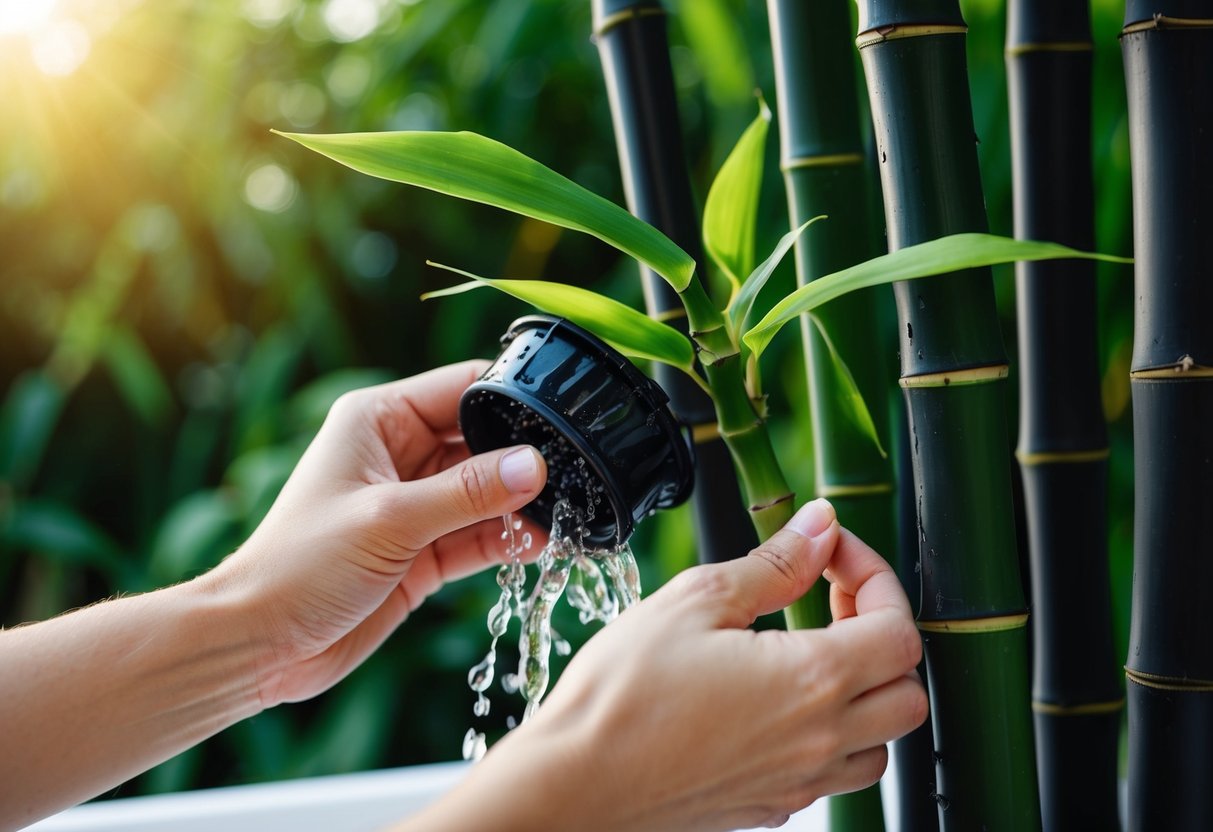
Reviving your bamboo can be rewarding with the right care. Focus on adjusting your watering habits, improving soil quality, and utilizing effective pruning techniques to bring your plant back to health.
Adjust Watering
Getting your watering right is key. Bamboo prefers soil that is moist but never soggy.
Water your plant deeply, allowing excess to drain away. If you notice yellowing leaves, it might be a sign of overwatering. Adjust by allowing the top inch of soil to dry before watering again.
Use well-draining soil to prevent root rot. Check if your pot has drainage holes; this helps excess water escape.
Remember, consistency is crucial. You want to keep the moisture levels stable without drowning your plant.
Improve Soil Quality
Next, focus on the soil. Bamboo thrives in well-draining soil rich in nutrients.
Mix in organic materials like compost to boost soil health. This provides a good balance of nutrients and improves drainage.
If your soil is compacted, consider repotting with a fresh mix. You want to ensure your bamboo has room to grow and absorb water effectively.
Fertilizing sparingly with an organic fertilizer can also help. Choose a nitrogen-rich fertilizer to aid in new growth. Be careful not to over-fertilize, as this can harm your plant.
Pruning Techniques
Pruning is an important step in reviving your bamboo. Start by removing any dead or yellowing leaves. This helps the plant direct energy to healthier parts. Use clean, sharp scissors to make neat cuts.
Trim back any weak or spindly stems as well. This encourages new growth and allows your bamboo to look fuller.
Remember, pruning can be a bit daunting, but it is crucial for the overall health of your plant.
If you’re unsure where to start, focus on the lower leaves and thin out crowded areas. This opens up sunlight and air, which are vital for growth.
Preventative Measures for Healthy Growth

To keep your black bamboo thriving, focus on proper care. A little attention can prevent common issues.
Watering: Balance is Key
Make sure to avoid overwatering and underwatering. Regularly check the soil’s moisture level. Water your plant when the top inch is dry. Yellow bamboo leaves often indicate too much water.
Soil Quality Matters
Use well-draining soil to prevent root rot. A mix of potting soil and sand works well. This helps remove excess water.
Watch for Pests and Diseases
Keep an eye out for insects and diseases. Regularly inspect your bamboo for signs of trouble, such as stunted growth or drooping leaves. If you notice pests, treat them promptly.
Pruning and Maintenance
Regularly prune dead or yellowing parts of the plant. This encourages new growth and keeps your bamboo looking its best. It also helps your plant focus its energy on healthy stems.
Positioning Your Bamboo
Choose a spot that gets plenty of light. Too little sunlight can weaken the plant, leading to poor growth. If indoors, rotate your bamboo to ensure even light exposure.


