

How to Attach Bamboo to Wood: A Simple Guide for DIY Enthusiasts
If you’re looking to enhance your outdoor space with a touch of natural beauty, attaching bamboo to wood can be a great choice. To securely attach bamboo to a wooden surface, you can use wood screws and pre-drilled holes every 12 inches. This method is not only effective but also ensures that your bamboo remains stable and visually appealing.

Using bamboo is an eco-friendly option that supports sustainability. As a renewable resource, bamboo grows quickly and contributes less harm to the environment compared to other materials. By incorporating bamboo into your fencing or garden structures, you can create an aesthetically pleasing area while making a responsible choice that benefits the planet.
With a few simple tools and materials, you can easily attach bamboo to wood and enjoy its charm for years to come. Whether you’re building a fence, creating a privacy screen, or adding some flair to your garden, bamboo offers a fantastic way to enhance your outdoor living experience.
Preparing to Attach Bamboo to Wood

Before you start, it’s important to gather the right materials and carefully plan your project. This will help ensure a smooth process and a sturdy attachment.
Gathering Materials
First, collect all necessary materials. You will need bamboo poles, which can be found at home improvement stores or online. Make sure they are dry and sturdy.
Next, gather your tools: a measuring tape, screws, and a hammer. You may also want to have staples handy for securing bamboo fencing rolls or similar projects. A wrench might be useful for tightening screws if they’re in tight spots.
Remember to wear safety gear, like gloves and goggles, while working. Having everything prepared will make your project much easier and enjoyable.
Measuring and Planning
Accurate measurements are key to a successful attachment. Use a measuring tape to determine the length of bamboo you need. Double-check your dimensions to avoid mistakes.
Plan how you will attach the bamboo to the wood. If you’re using screws, mark the spots where you want to drill into the wood. Place the bamboo in position and ensure it fits well before securing it.
For bamboo fencing rolls, make sure you plan the layout so it looks good and functions well. This careful preparation will pay off when you start attaching, making the task much simpler.
Installing Bamboo Fencing on a Wood Fence

Attaching bamboo fencing to a wood fence is a great way to enhance your outdoor space while being eco-friendly. The installation process is straightforward, and you’ll need just a few tools and materials to get started.
Securing Bamboo Poles
Begin by measuring the height and width of your fence. Choose bamboo poles that fit those dimensions. You can use 3 to 4-inch screws for a secure hold.
- Pre-drill holes into the bamboo poles to prevent splitting.
- Position the poles against your wooden fence, ensuring they are straight and evenly spaced.
- Use a level to check for straightness.
- Attach the poles to the wood using your screws, making sure they are firmly secured.
This method will create a strong base for your new bamboo fencing that can withstand various weather conditions.
Adding Bamboo Fence Panels
After securing the poles, it’s time to attach bamboo fence panels. These panels offer a natural, stylish look for your yard.
- Start at one corner and attach the first panel to one of the poles.
- Use screws or strong staples to fix the panel. Be sure to alternate the top and bottom for a tight fit.
- Continue adding panels, overlapping them slightly to ensure coverage.
Make sure to check for levelness and adjust as needed. This approach not only enhances your fence’s appearance but also contributes to its durability, making it a wonderful choice for any homeowner looking for an eco-friendly bamboo fence.
Enhancing Privacy and Aesthetics
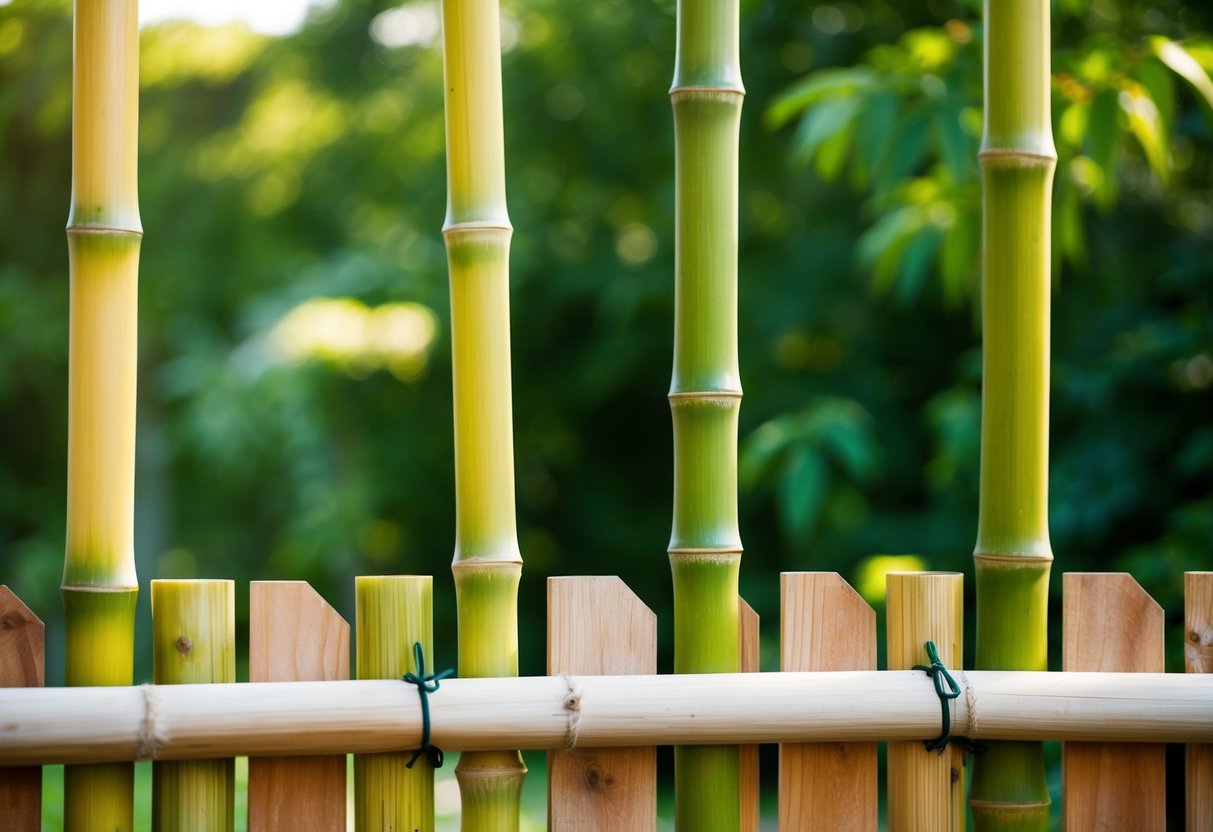
Adding bamboo to your space not only ramps up privacy but also boosts the aesthetic appeal of your yard. Using bamboo as a privacy screen can create a calming, natural atmosphere while ensuring safety and durability.
Creating a Privacy Screen
To create an effective privacy screen, start by choosing the right thickness of bamboo. Thicker poles provide better coverage, blocking unwanted views. Arrange the bamboo panels closely together to form a solid barrier.
Consider attaching the bamboo to a frame or existing fence for extra support. This method enhances stability, especially during windy conditions. You can also add greenery around it to complement the natural look, which will improve privacy even more.
For the best results, make sure the bamboo is securely fixed to prevent gaps. This ensures that your space feels secluded, enhancing your relaxation.
Maximizing Durability for Longevity
To ensure your bamboo lasts, it’s vital to treat it against moisture and pests. Applying a protective sealant will guard against environmental damage.
Regular maintenance, such as checking for cracks or rot, will help you spot problems early.
Positioning your bamboo in a location with some shade can also extend its life. Excessive sunlight can deteriorate the material more quickly.
Additionally, using durable fasteners when attaching bamboo can help maintain its structure longer, keeping your privacy fence looking great.
Alternative Methods for Different Fence Types

When it comes to attaching bamboo to various fence types, there are practical methods tailored to each structure. You can use specific techniques for chain-link fences or create a freestanding bamboo fence. Both approaches offer a stylish addition to your outdoor space.
Attaching Bamboo to Chain-Link Fences
To attach bamboo fencing to an existing chain-link fence, start by gathering your materials. You’ll need bamboo rolls, mounting screws, or galvanized wire.
Begin by positioning the bamboo roll against the chain-link. Use mounting screws or wire ties to secure the bamboo.
It’s helpful to trim the bamboo to fit any gaps or uneven areas. You can create a clean look by aligning the top of the bamboo with the top of the chain-link.
Using wire also allows for flexibility, letting the bamboo maintain strength against wind. This method not only enhances privacy but also reduces your carbon footprint with eco-friendly materials.
Building a Freestanding Bamboo Fence
If you’re looking for more flexibility, consider building a freestanding bamboo fence. This option is perfect if you don’t want to alter your existing structure.
Start by deciding the height and width of your fence. You will need bamboo poles, a hammer, and wood stakes.
First, dig holes for the wood stakes at each corner. Next, secure the bamboo poles between these stakes using screws or durable staples to hold them together.
This design can create a beautiful backdrop in your yard. Plus, you can paint or decorate the bamboo as you like.
Remember to check for stability often, especially in windy conditions.


