

Is Japanese Knotweed Worse Than Bamboo? Exploring Invasive Plants’ Impact
If you’re a homeowner, you may have heard the terms Japanese knotweed and bamboo tossed around in gardening discussions. Both plants are known for their rapid growth and invasive nature, but how do they compare when it comes to damage?
Japanese knotweed is often considered worse than bamboo due to its ability to cause serious structural damage to properties.

While bamboo can spread quickly and create issues, knotweed is notorious for ruining foundations and other structures. This makes it a real nightmare for homeowners who want to maintain their property value.
In this article, you’ll learn about the characteristics of both Japanese knotweed and bamboo, why their invasiveness matters, and what you can do to protect your home. Discover the best ways to handle these tricky plants and ensure your garden remains a beautiful space.
Understanding Japanese Knotweed and Bamboo

Both Japanese knotweed and bamboo are known for their distinctive features and growth habits. Understanding these differences can help you manage them effectively in your garden or property.
Biology and Identification
Japanese knotweed, or Fallopia japonica, has hollow, jointed stems that resemble bamboo but with notable differences. Its stems are typically stout and can grow up to 10 feet tall. The leaves are large, rounded, and pointed at the tips. In contrast, bamboo stems can vary in appearance, often being thinner and growing in clusters.
To identify these plants, look for the growth patterns. Japanese knotweed produces leaves along its stem and has a distinctive zigzag growth. Clumping bamboo keeps its leaves mostly at the top, while running bamboo spreads quickly through a robust rhizome system, extending underground. Recognizing these traits is crucial for proper management.
Growth Patterns and Characteristics
Japanese knotweed is an invasive plant, known for its aggressive growth. It spreads through rhizomes, underground stems that can extend up to 10 feet deep. This root system allows it to invade neighboring properties easily, causing potential damage.
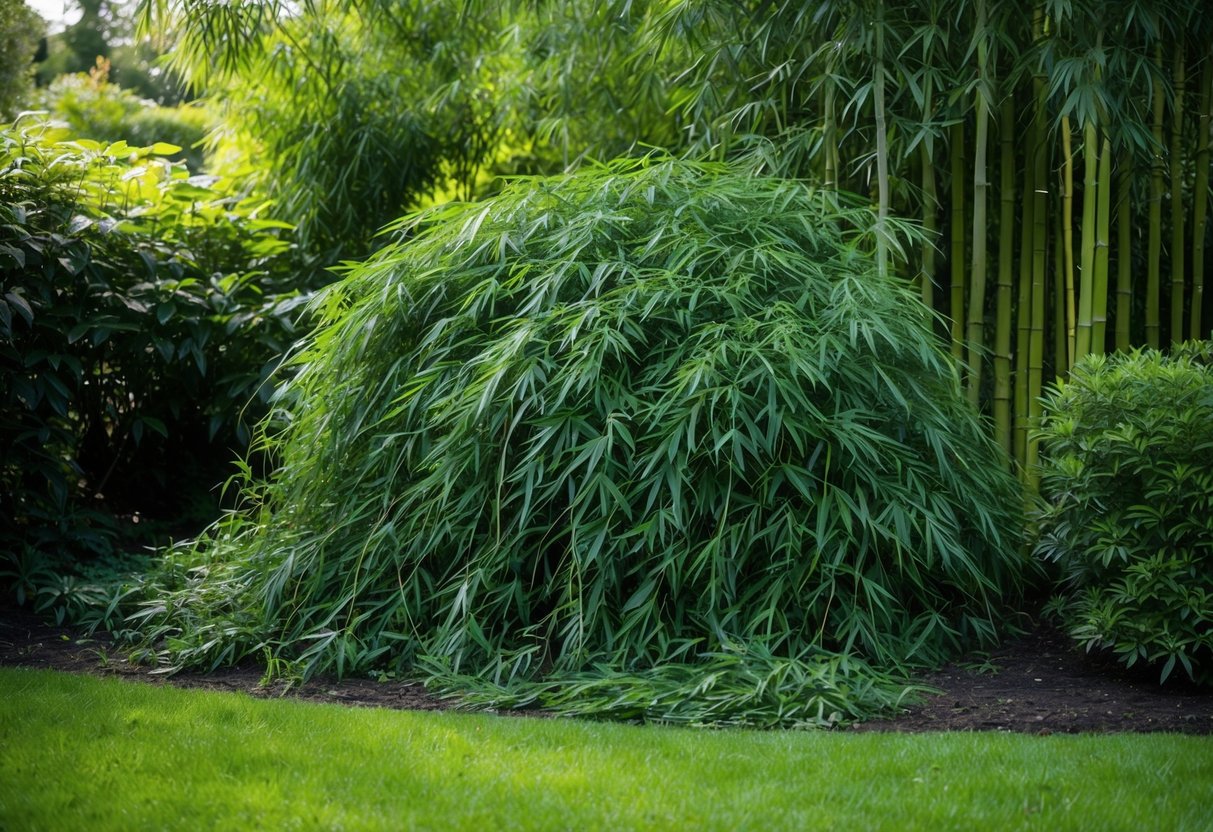
Bamboo growth varies between clumping and running types. Clumping bamboo grows in a tight mass and is less invasive, while running bamboo spreads widely and can encroach on other areas. The root systems of running bamboo are extensive and aggressive, making them more challenging to control. Understanding these characteristics can help you decide how to handle either plant in your space.
Environmental and Structural Impacts

Japanese knotweed and bamboo can both significantly affect your environment and property. Their growth patterns and impacts on ecosystems can be serious for homeowners and local wildlife.
Effects on Local Ecosystems
Japanese knotweed is one of the most problematic invasive plants. It can quickly outcompete native flora for sunlight, water, and nutrients. This aggressive growth stifles biodiversity in local habitats.
Bamboo also poses risks, especially running bamboo varieties. Its root systems can spread rapidly, making it hard for other plants to thrive. This can lead to reduced plant diversity, which is essential for a balanced ecosystem.
Both plants can disrupt local wildlife by changing the food sources available. When native plants decline, many animals may struggle to find food and shelter.
Threat to Building and Landscape Integrity
Japanese knotweed’s roots can penetrate deeply into the ground, causing potential damage to your home’s foundations. The plant’s vigorous growth often leads to structural issues with concrete walls and paths.
Bamboo, particularly running varieties, can also threaten your property. Its roots spread horizontally and can compromise underground infrastructure. This may lead to costly repairs.
If you notice either plant in your yard, it’s important to act quickly. Ignoring these plants can lead to extensive damage over time, affecting both your landscape and your home’s integrity. Keep an eye on these invasive plants to protect your space.
Removal and Management Strategies
Managing Japanese knotweed and bamboo infestations requires careful planning. Knowing the best approaches and legal aspects can help you protect your property and finances.
Professional Approaches to Knotweed and Bamboo
When dealing with knotweed or bamboo, hiring a professional is often your best bet.
A knotweed removal contractor can assess your property, perform a thorough knotweed survey, and determine the extent of the infestation.
Using specialized techniques, they can employ herbicides or recommend excavation methods to remove the plants effectively. Additionally, installing root barriers can prevent new growth from spreading in the future.
Remember, professionals have the tools and experience to manage these invasive plants safely and competently.
Legal and Financial Considerations
You should be aware of potential legal issues surrounding knotweed. If you own property with a knotweed infestation, you may face liability if it spreads to neighboring properties. Many areas have regulations that require you to disclose invasive plants when selling your home.
Financially, treating these infestations can be costly. It’s wise to seek quotes from several professional services and consider ongoing management strategies.
Investing in proper treatments can save you significant repair costs down the line. Make sure to keep records for any treatments or agreements you have, as these might be useful for future property transactions.
Challenges and Best Practices for Homeowners

Dealing with invasive plants like Japanese knotweed and bamboo presents unique challenges for homeowners. Understanding prevention, early detection, and the legal implications of infestations is essential.
Prevention and Early Detection
Preventing the growth of Japanese knotweed and bamboo starts with proper landscaping.
Be cautious when planting any new species. Avoid introducing invasive plants, especially in areas near property boundaries.
Regularly inspect your yard for signs of these plants. Look for distinctive features of Japanese knotweed, including its bamboo-like stems and heart-shaped leaves. If you spot any, act quickly to control its spread.
Consider working with a chartered surveyor for a professional assessment. They can help you understand your property boundaries and recommend best practices for managing invasive plants. Keeping your garden neat also reduces the chance for aggressive growth patterns.
Legal Implications of Property Infestation
An infestation of Japanese knotweed on your property can lead to serious legal issues. Neighbors may file nuisance claims if the plant spreads onto their land. This can complicate your relationships and impact property values.
In areas with new build developments, lenders might impose restrictions if knotweed is present. Existing infestations can also hinder potential buyers’ interest if you want to sell your property.
Understanding local laws about invasive species is crucial. Familiarize yourself with your obligations regarding property boundaries and control measures to avoid penalties. Regular consultations with chartered surveyors can clarify legal implications and guide you in handling infestations effectively.


