

Simple Garden Ideas On A Slope 25 Easy Tips To Transform Your Yard
Gardening on a slope might look tricky at first, but honestly, it gives you a cool opportunity to make something beautiful outside. A sloped yard doesn’t have to limit you—there are actually tons of simple ideas that work well for uneven ground.
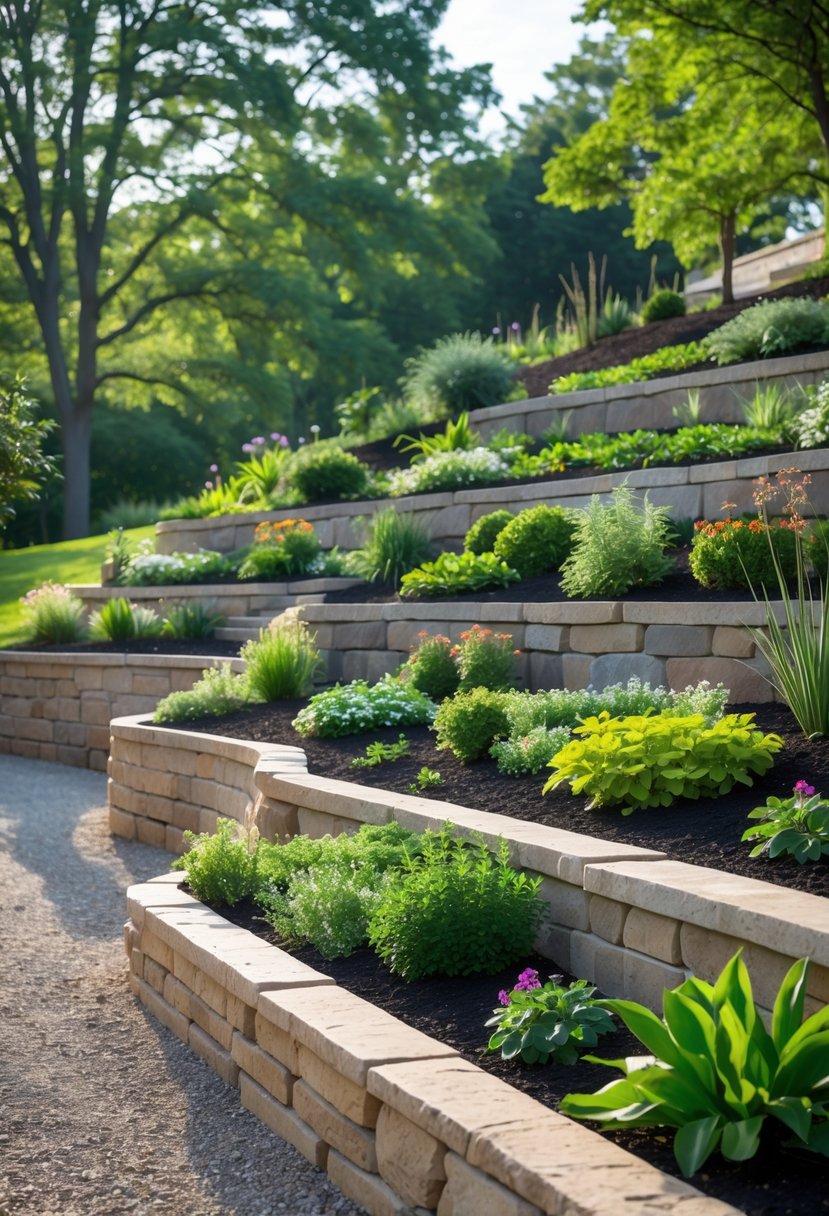
You can turn your sloped garden into an attractive, practical space with some easy ideas. With the right approach, your yard can feel cozy and inviting—totally your style.
1) Create terraced garden beds to manage erosion
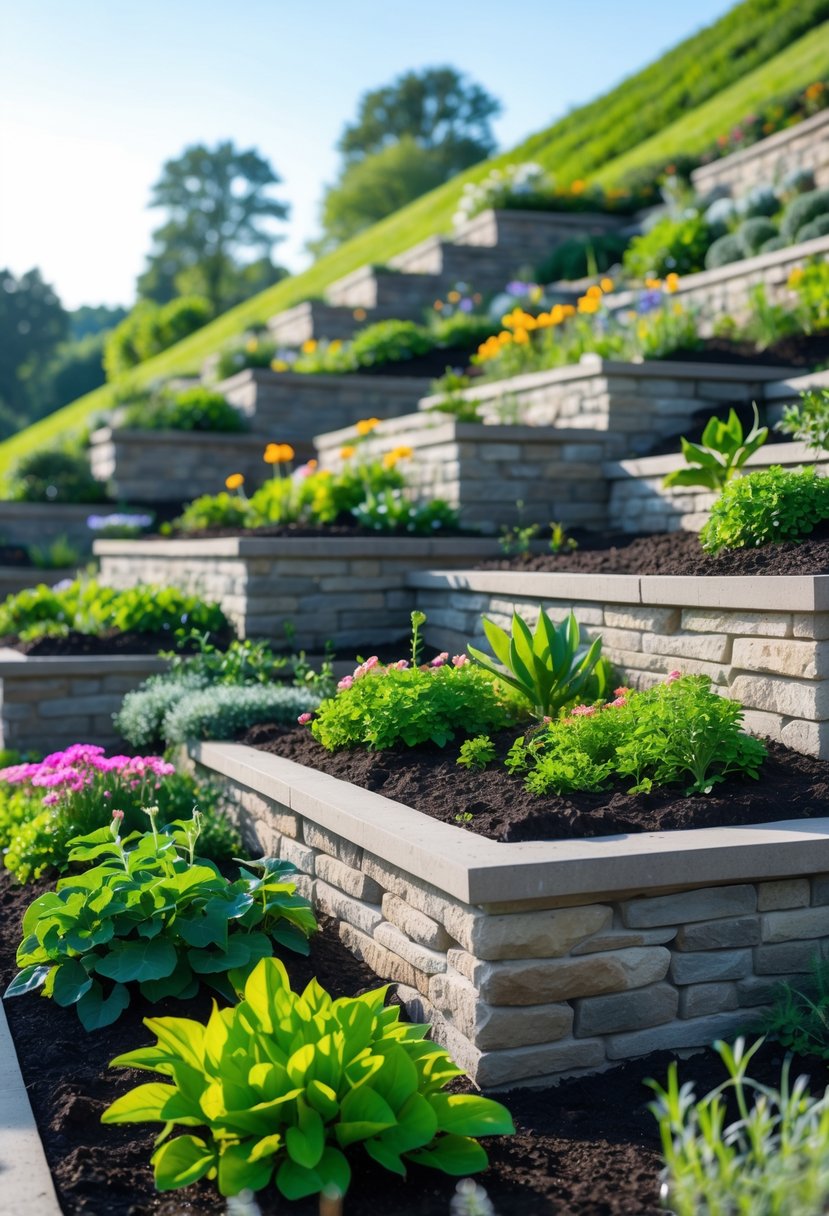
If your garden sits on a slope, terraced garden beds can really help. These beds are basically flat steps cut into the hillside. They keep rain from washing away your soil and protect your plants.
You get more room to plant, too. Each level holds soil better and lets water drain slowly, so your garden stays healthy and tidy.
Start by figuring out how many terraces your slope needs. Building them takes some effort, but it makes your garden easier to care for and keeps erosion in check.
Want to learn more about building terraced garden beds? Here’s a handy guide.
2) Use stone retaining walls for structure and charm
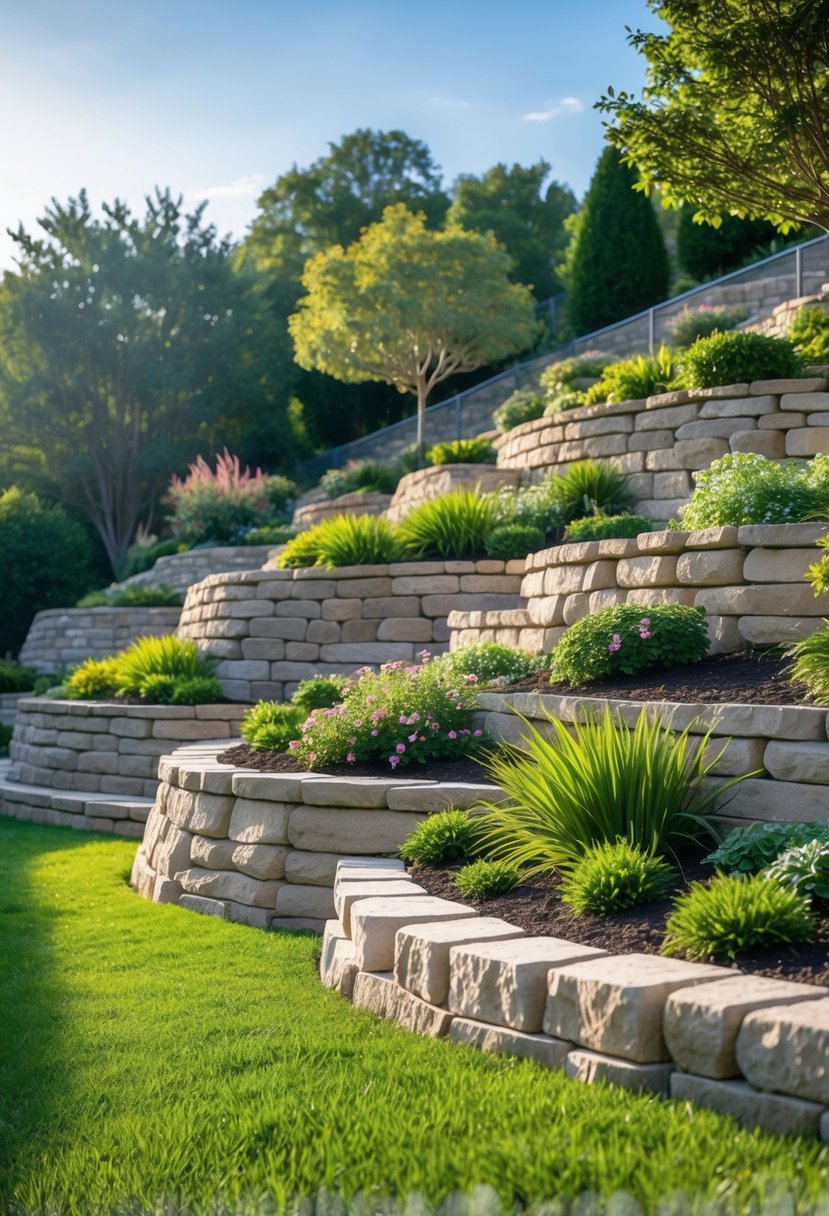
Stone retaining walls bring both function and style to a sloped yard. They hold back soil and stop erosion, giving you flat spaces to plant or just hang out.
Natural stone gives your garden a rustic vibe that pairs well with greenery. You can pick from stacked or dry-stacked styles, and using local stone keeps things affordable and blends in nicely.
Curious about more stone wall ideas? Take a look at these retaining wall inspirations for sloped backyards.
3) Plant deep-rooted groundcovers like creeping thyme
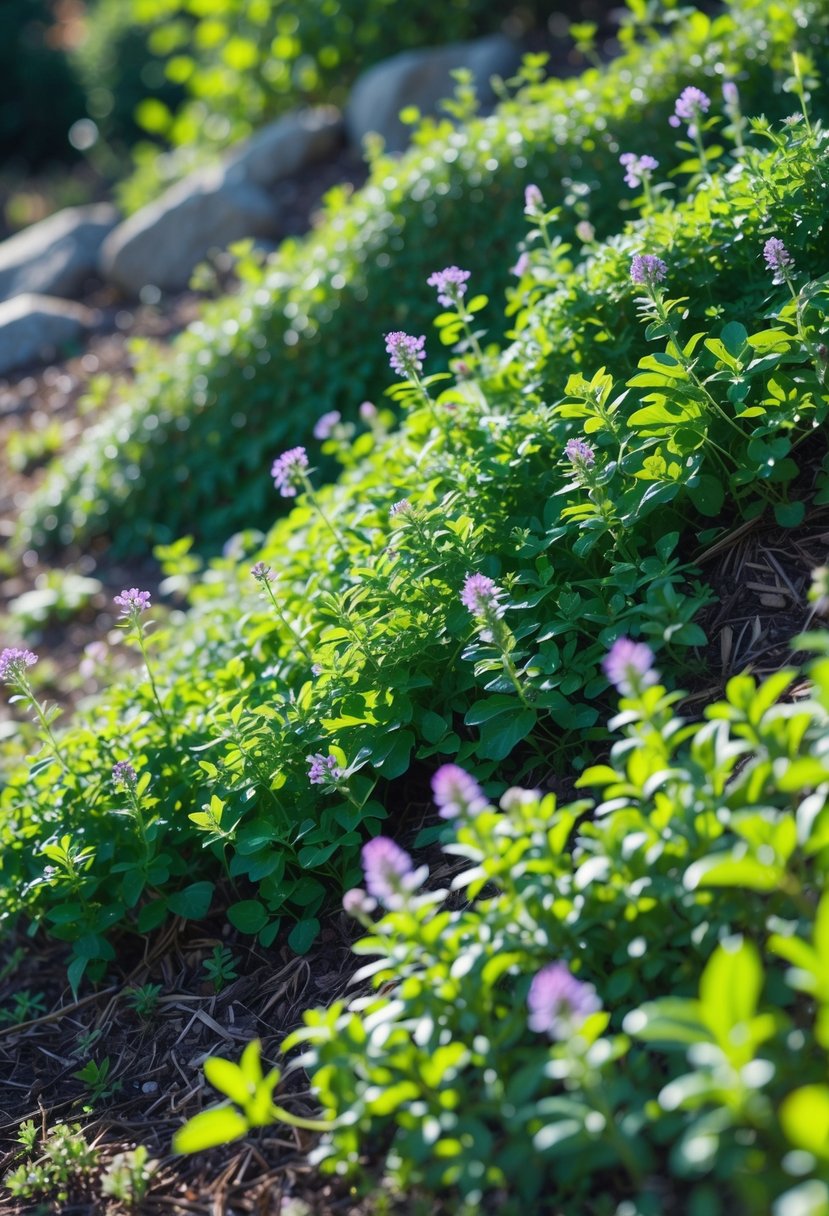
Creeping thyme is a great pick for covering slopes. It grows thick and puts down deep roots, helping stop soil from washing away.
This plant is low-maintenance and spreads fast, so you get a fragrant, green carpet that draws in bees. Plant it where the sun hits and let it do its thing.
Looking for advice on growing creeping thyme? Here’s a planting guide you might find helpful.
4) Incorporate native grasses to stabilize soil
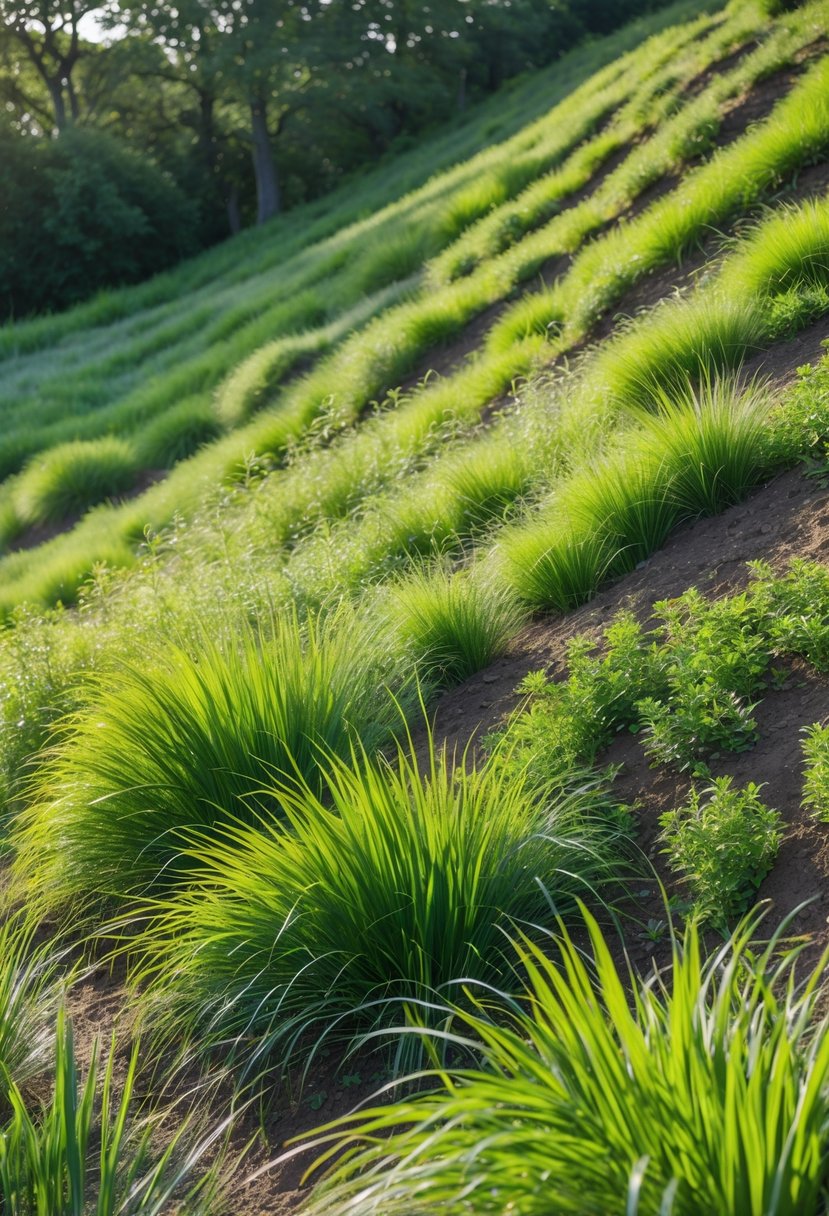
Native grasses do a solid job keeping your slope’s soil in place. Their roots grow deep and wide, holding everything together.
Planting these grasses slows down water runoff and helps the soil soak up rain. Pick ones that grow naturally in your area—they’re easier to care for and way more effective.
Need help choosing? Here’s a guide to native grasses for stabilization.
5) Add stone steps for easy slope access
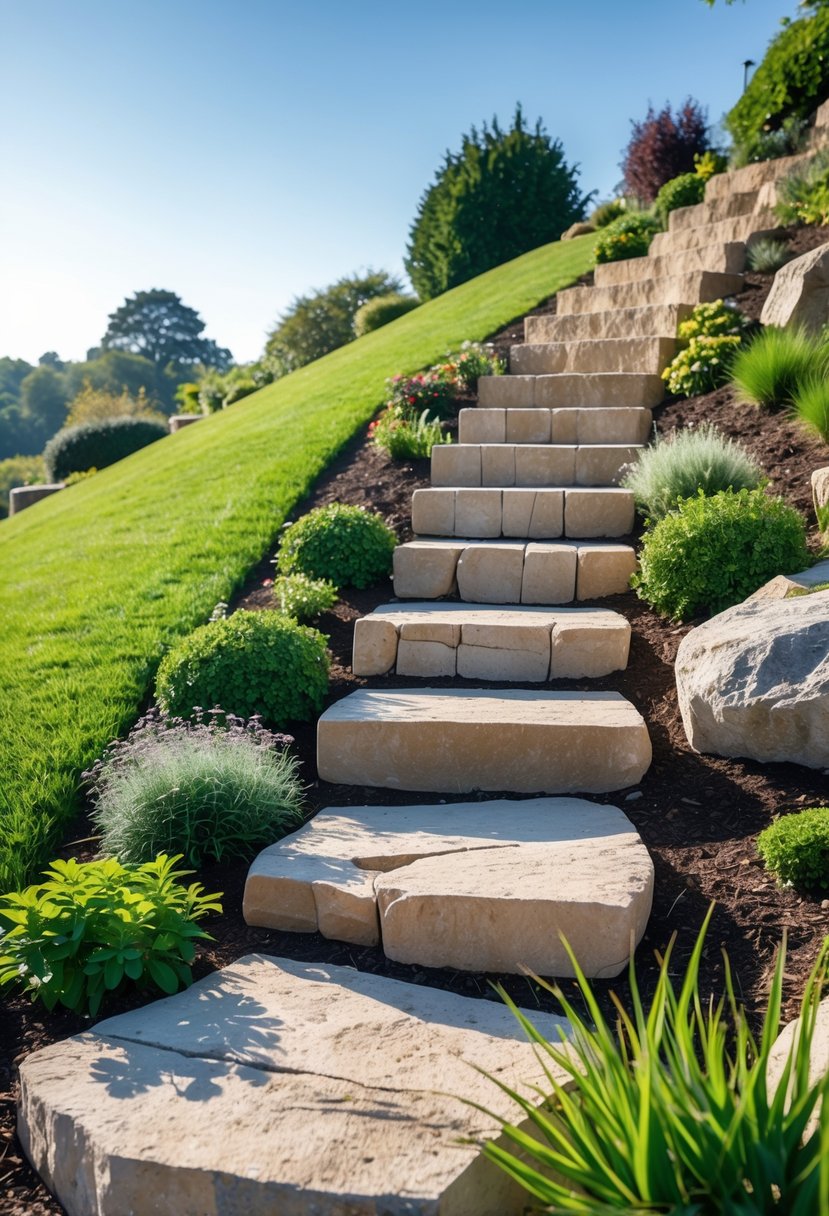
Adding stone steps makes it way easier to walk up and down your slope. Natural stone slabs create a sturdy path that looks good and lasts.
Stone steps help stop slipping and erosion, and they clearly mark out walkways for safety. Building them can be a fun DIY project if you’re feeling handy.
Need some inspiration? Here are ideas for stone steps and a step-by-step guide to get you started.
6) Build a rock garden with drought-tolerant plants
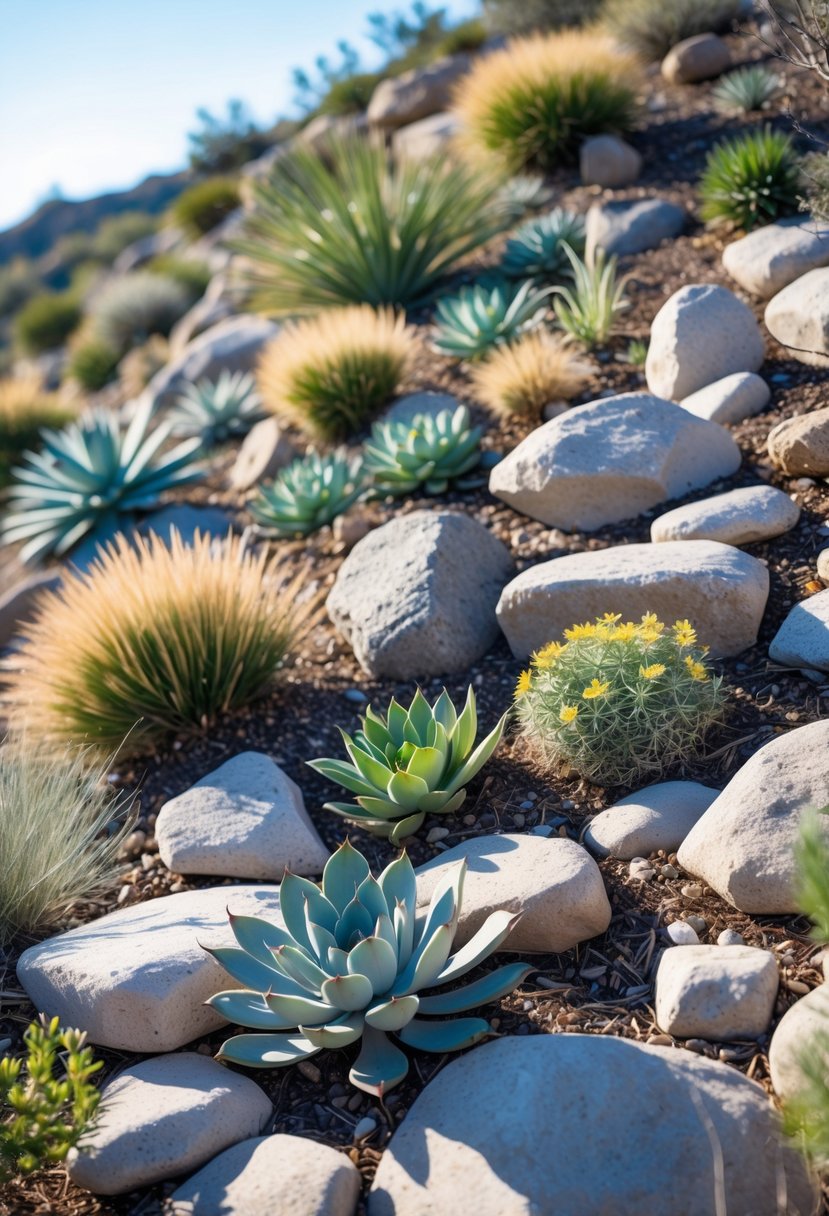
A rock garden on a slope looks awesome and needs little water if you use drought-tolerant plants. These plants thrive in well-drained soil—perfect for sloped spots.
Try succulents, herbs, or ornamental grasses. Place rocks to control erosion and give your garden a natural look.
Rock gardens are pretty low-maintenance and add lots of texture. You can really make it your own with easy-to-care-for plants. Want more? Check out these rock garden tips for slopes.
7) Use colorful flowering shrubs on slopes
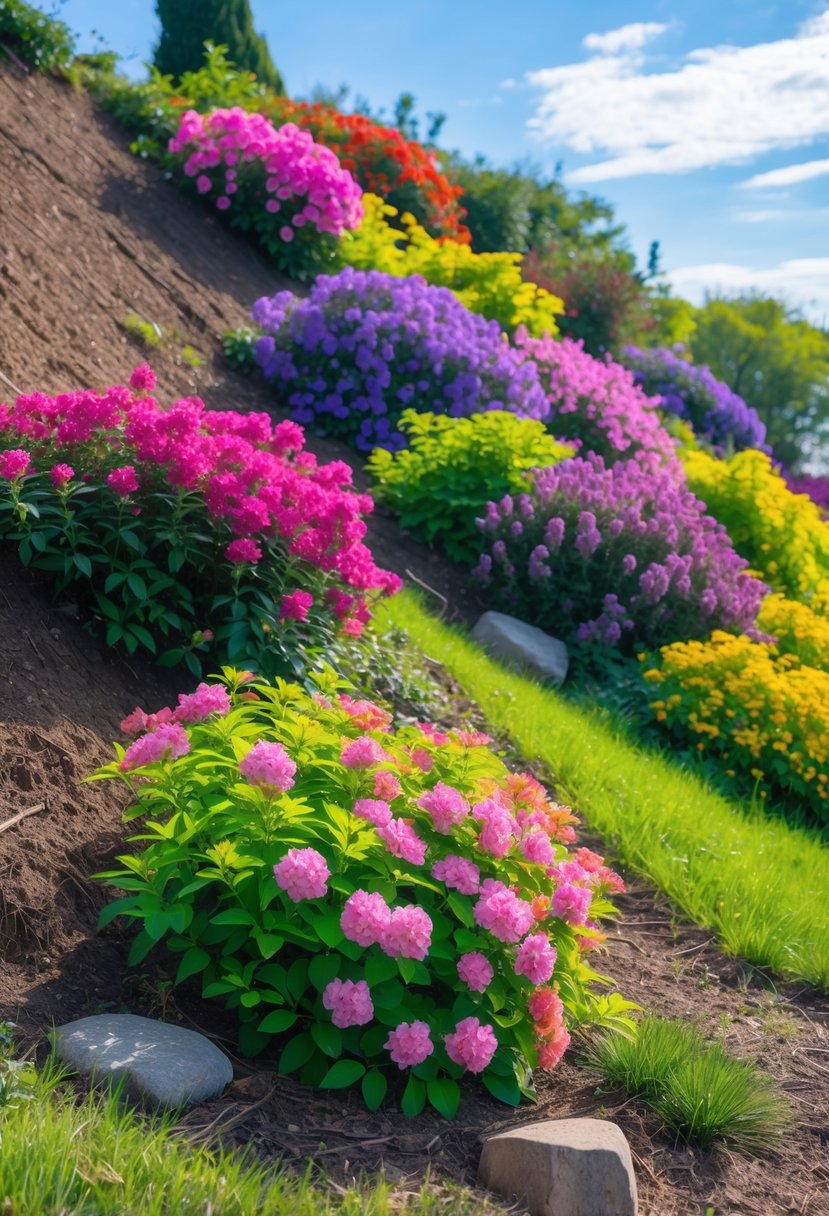
Brighten up your slope by adding colorful flowering shrubs. They look great and help keep the soil in place, which cuts down on erosion.
Pick shrubs with strong roots that handle slopes well. Many have flowers or berries that draw in birds and pollinators, making your garden lively.
Flowering shrubs look awesome near retaining walls or terraced beds. Try azaleas, hydrangeas, or spirea for a nice mix of blooms and greenery.
Need more ideas? Here’s a guide to shrubs for slopes and erosion control.
8) Create a cascading water feature
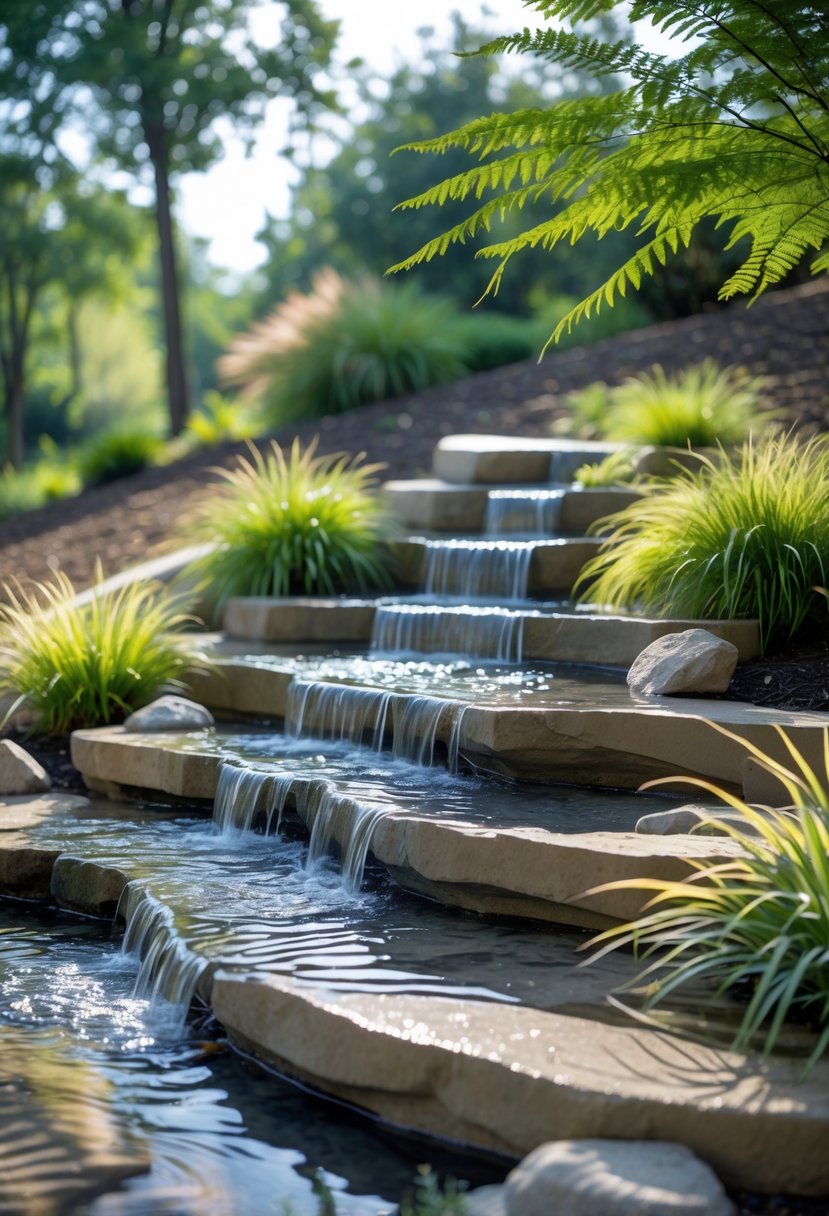
A sloped yard is perfect for a cascading water feature. Water naturally flows downhill, so you can build a waterfall or stream with less hassle.
A waterfall or tiered fountain adds soothing sound and movement. It also helps manage water flow and keeps soil from washing away.
All you really need are some rocks, a pump, and a liner. Stack flat rocks so the water flows smoothly from one level to the next. It’s a great way to make your garden feel peaceful.
Want to design your own? Here’s a guide to cascading waterfalls on slopes.
9) Plant lavender for fragrance and erosion control

Lavender looks and smells amazing on a slope. The roots help hold soil in place, so you get color, fragrance, and erosion control all at once.
This plant loves well-drained soil and lots of sun—pretty much what a slope offers. Plus, lavender is easy to care for and brings in bees and butterflies.
Want to know more? Here’s how to plant lavender on a slope.
10) Install wooden raised beds following the slope
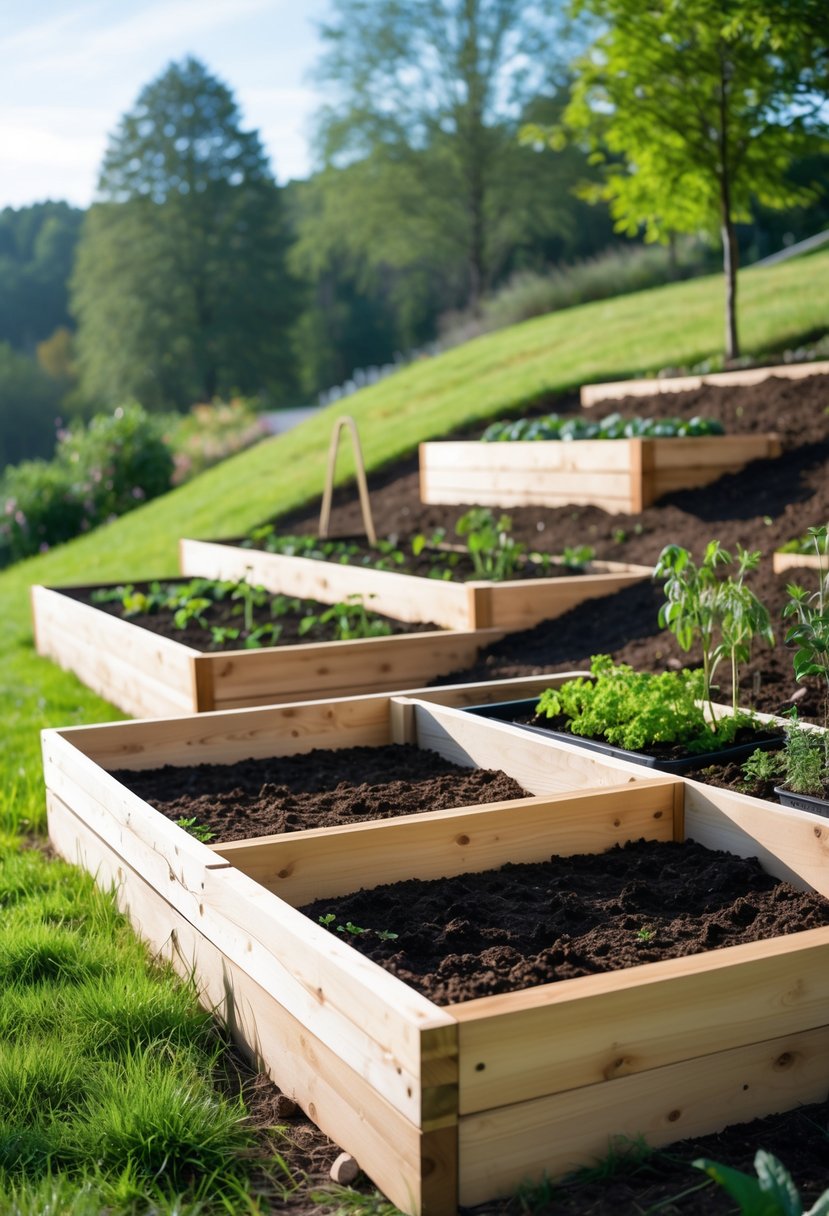
Building wooden raised beds along your slope keeps your garden neat and organized. You don’t need to dig much—just follow the natural line of the hill.
Start by measuring your slope and marking out beds with stakes and string. Build each bed level from side to side, then fill with good soil and compost.
Raised beds help control water runoff and erosion. They also make planting and maintenance easier.
Want to try it? Here’s a guide on installing raised beds on a slope.
11) Mix ferns and hostas in shaded slope areas
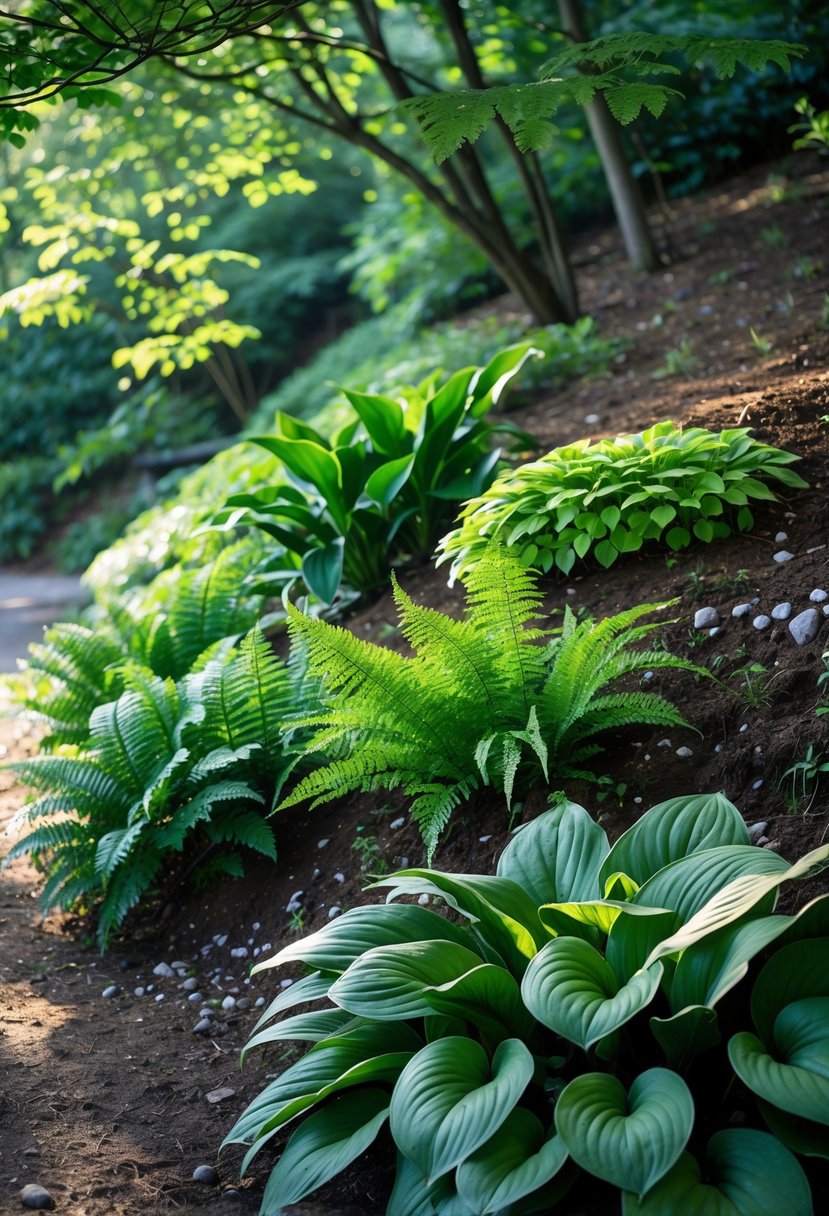
If your slope gets a lot of shade, ferns and hostas work really well together. Ferns bring soft, feathery leaves, while hostas add bold, broad foliage.
When you plant them together, their roots help hold the soil and prevent erosion. Try adding a small water feature to attract birds and make your shaded slope feel peaceful.
Mix different varieties for more color and shapes. Interested in more ideas? Check out this shade garden guide with hostas and ferns.
12) Use mulch to retain moisture and reduce weeds
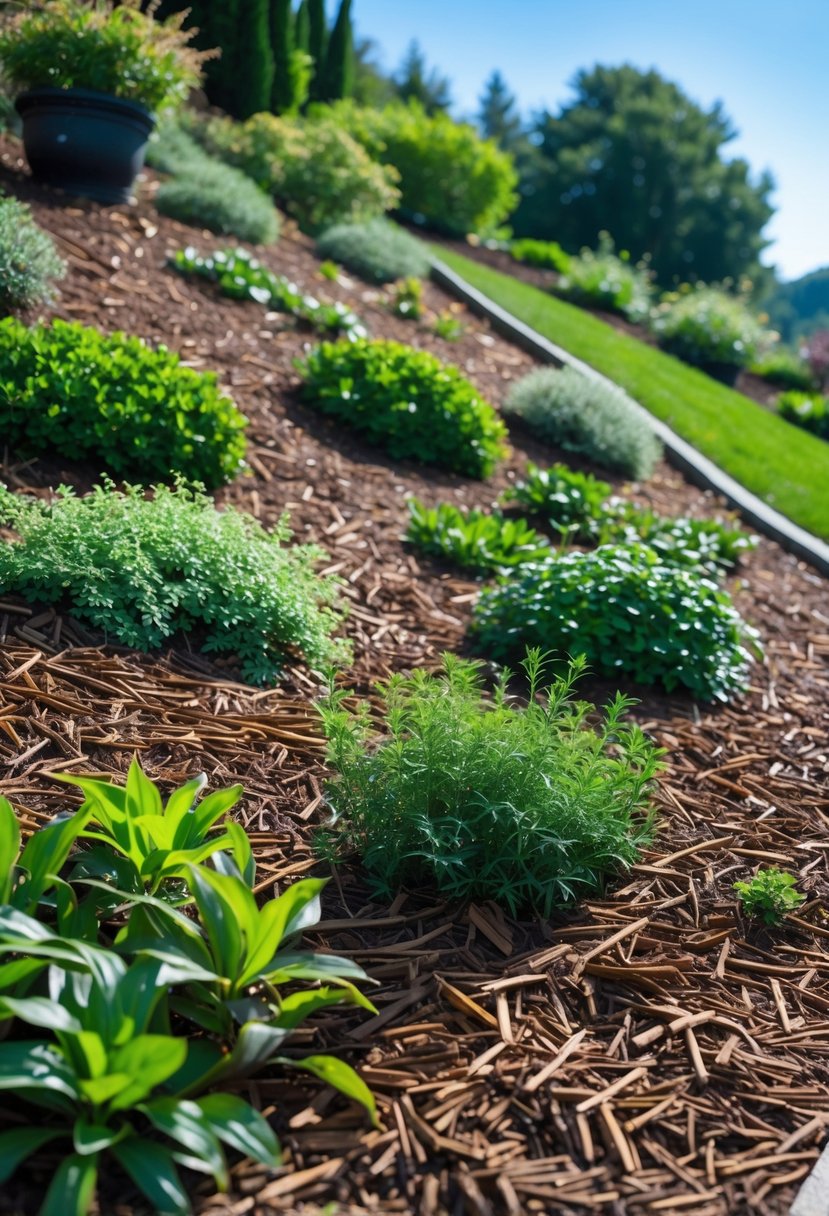
Mulch is a lifesaver for slope gardens. It keeps moisture in, so you don’t have to water as much.
It also blocks sunlight, which stops weeds from popping up everywhere. Spread 2–3 inches of organic mulch like bark or straw around your plants, but don’t pile it right against stems.
Mulch keeps things looking tidy and your soil cool. Want more advice? Here’s a guide on mulching for moisture and weed control.
13) Add benches or seating at flat slope areas

Try adding benches where your slope flattens out a bit. These spots let you pause, soak in the view, and just relax for a while.
It’s usually easiest to build flat seating areas on a slope with wooden decks or even stone walls. Both options make comfy, level spaces where you won’t feel off-balance.
When you set benches along your garden path, you break up the slope and make the space feel more welcoming. It’s a simple trick, but it really adds both style and function.
If you want some inspiration, check out how to add benches in sloped yards.
14) Plant succulents in shallow, rocky spots
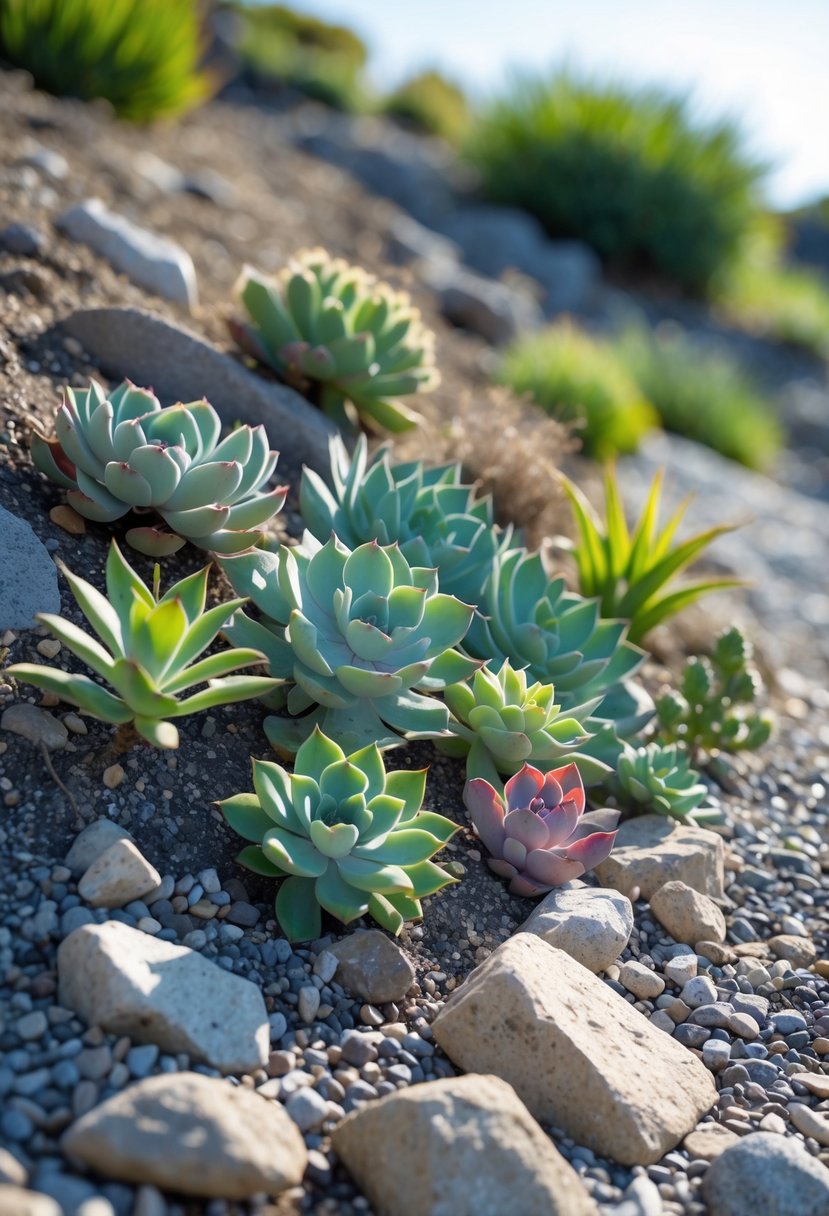
Use those shallow, rocky parts of your slope to plant succulents. These little guys thrive with just a bit of soil and love good drainage, so rocks actually help keep them happy.
Succulents come in all sorts of shapes and colors, so you get a lot of interest without much fuss. Mix and match for a look that feels easy and natural.
They also help hold soil in place, which is handy for stopping erosion. Try tossing in some smooth river stones for a tidy look and extra protection. Want more ideas? Take a peek at these succulent rock garden ideas.
15) Create a pathway with natural stepping stones

Lay down some natural stepping stones to make a simple pathway up or across your slope. This gives you a safe way to walk and adds a nice, earthy vibe.
Place each stone to follow the curve of the hill. That way, you guide your steps and keep the soil from washing away.
Flagstone or river rock blend in beautifully with surrounding plants. If you tuck a bit of moss or small plants between the stones, your path feels even cozier.
Stepping stones are an easy, affordable way to make your garden more fun to wander. For more tips, check out garden paths with natural stepping stones.
16) Use ornamental grasses for texture and movement

Add some ornamental grasses to your slope for texture and gentle movement. They sway in the breeze and instantly make your garden feel alive.
Ornamental grasses are easy to care for and don’t need much water. You can find them in all sorts of sizes and shapes, so it’s not hard to pick one that fits your space.
Planting these grasses helps prevent soil erosion, too. They soften up the edges and add color with barely any effort. Want inspiration? Check out ornamental grasses for texture and movement.
17) Plant small trees like dwarf pines for vertical interest

Give your sloped garden some height by planting dwarf pines or other small trees. They don’t take up much space, but they add a nice vertical line.
Dwarf pines are super easy to look after and stay compact. They keep your garden green all year, even in the coldest months.
Mix dwarf pines with low-growing plants for a layered look that keeps things interesting. For more ideas, check out popular pine trees for small gardens.
18) Incorporate edible plants like herbs in terraced beds

Turn a slope into something useful by building terraced beds. These flat steps help keep soil and water in place.
Herbs are a smart pick for these beds. They’re easy to grow and don’t need much space.
A terraced herb garden looks pretty and gives you fresh flavors for your kitchen. You can plant them in pots or right in the ground.
Keep your herbs close so you can grab some for cooking or tea whenever you want. That way, your slope is both lovely and practical.
Need more ideas? Check out terraced herb garden ideas from SharonSable.
19) Use garden edging to define plant areas

Mark out your plant areas on a slope with garden edging. It keeps things neat and stops plants from spreading too far.
Edging helps hold soil in place where you need it. That’s key for stopping erosion on sloped ground.
Try wood, stone, or metal for a tidy, attractive border. If you need more ideas, check out creative garden edging tips for slopes.
20) Build a dry creek bed to handle runoff

A dry creek bed can help direct water off your slope, stopping erosion and puddles. Dig a shallow channel and line it with stones or gravel so water flows safely during heavy rain.
It looks natural and adds a bit of charm, honestly. Once you set it up, it barely needs any upkeep.
Plant some shrubs or grasses nearby so the creek bed blends in. For easy steps, check out how to build a DIY dry creek bed for garden drainage.
21) Plant evergreens for year-round color

Keep your slope colorful all year by adding evergreens. These plants hold onto their leaves, so your garden never looks empty in winter.
Evergreens also help keep soil from washing away on slopes. Their roots hold the ground together.
Pick small evergreen plants that fit your space. They don’t need much care and always add steady color. If you want more options, check out this guide to evergreen ground cover options for year-round color.
22) Add wildflowers for natural pollinator support

Wildflowers are perfect for slopes since they grow with almost no fuss. Plant native wildflowers and you’ll attract bees, butterflies, and other pollinators that keep your garden healthy.
Wildflowers add a burst of color and adapt to tough spots. You won’t spend much time watering or weeding, which is a bonus.
By planting wildflowers, you support local wildlife and make your garden more eco-friendly. For more ideas, check out wildflower garden tips.
23) Create a mix of perennials for season-long bloom

Keep your slope garden lively by planting a mix of perennials that bloom at different times. That way, something’s always in flower as the seasons roll by.
Choose plants with different heights and colors to keep things interesting. Perennials give your garden structure and come back every year.
If your perennials take a break, fill gaps with annuals. Mixing both makes your garden feel full and cheerful. For more tips, check out mixing perennials and annuals for season-long blooms.
24) Layer plants by height following the incline

Try planting taller plants at the top of your slope for a natural look. They’ll stand out and draw the eye.
Put mid-height plants in the middle. They help blend everything together.
At the bottom, go with groundcovers or small plants. These hold soil and add color without blocking your view.
Layering plants like this helps manage water flow. Each height uses water differently, which can help stop erosion. If you want to learn more, check out this easy slope garden plan.
25) Use bamboo screening for privacy and greenery

Try bamboo screening to add privacy to your sloped garden. Bamboo grows fast and quickly makes a green wall that keeps out prying eyes.
Besides privacy, bamboo brings a lush, fresh vibe—almost like you’ve got your own mini retreat.
Bamboo screens are great for slopes since they add height without eating up space. You can pick different styles to match your garden’s look. For more ideas, check out bamboo privacy options here.
Understanding Slope Soil and Drainage
When you garden on a slope, you really have to pay attention to soil and water. Keep the soil from washing away, and figure out how water moves down the hill. That’s how your plants stay healthy and your garden keeps looking good.
Soil Erosion Control Tips
Soil erosion kicks in when water rushes down a slope and grabs soil on the way. To fight this, plant ground covers that spread fast and hug the earth.
Creeping thyme or ivy do a great job here—their roots grip the soil and keep it steady.
Try building terraces or small retaining walls. These steps slow water down and stop soil from washing away.
Mulch helps too. It keeps the soil moist and shields it from erosion.
Plant some deep-rooted shrubs at the bottom of the slope for extra support.
If you can, avoid walking a lot on the slope. It loosens up the soil and just makes erosion show up faster.
Drainage Solutions for Sloped Gardens
Good drainage means water leaves without causing headaches. Direct it with channels or swales—those shallow ditches that guide runoff where you want it.
Add rain gardens or little basins along the slope. These soak up extra water and keep things balanced.
Mulch and organic compost can improve how your soil handles water. They help water drain better and give plants what they need.
Leave some gaps in the soil so water can soak in. If the soil gets packed down, water just pools up or causes more erosion.
Design your drainage to fit how water naturally moves through your space. That way, your slope garden stays healthy and way easier to manage.
For more tips, check out managing water runoff on slopes.
Easy Planting Strategies for Slopes
Working with a slope? Pick plants that don’t need much fuss, and place them where they’ll do the most good. The right mix of plants in smart spots can really make your slope pop—without a lot of extra effort.
Choosing Low-Maintenance Plants
You’ll want plants that can handle slope conditions like wind and water running off. Deep-rooted types hold the soil together and help stop erosion.
Shrubs, ground covers, and native grasses all work pretty well.
Some solid picks:
- Creeping juniper – spreads out wide and locks down the soil
- Sedum – shrugs off drought and grows easily
- Daylilies – tough perennials with bright flowers
- Ornamental grasses – fight erosion and barely need any care
Skip plants that want lots of watering or constant trimming. Native species are usually the best bet—they already know how to thrive in your local weather and soil.
Plant Placement Techniques
Planting on a slope takes a bit of thought if you want to keep water and soil in check. I usually start at the top and move downward, which helps slow the water as it travels.
If the slope feels too steep, try adding terraces or stacking some stone walls. These can give you flat spots and make life a lot easier when planting.
Put your taller plants up top or maybe in the middle, so they don’t end up blocking the sun for the little guys. On those really steep bits, ground covers do a great job holding soil in place and keeping weeds at bay.
Grouping plants together? That’s a solid way to build a natural barrier against erosion.
I also like to mulch around plants. It keeps moisture where you want it and shields roots when the rain comes down hard.
If you want more ways to make slope gardening less of a hassle, check out these smart placements.
For even more ideas, you might want to look into how to design a slope garden that thrives with minimal effort.


