

Budget-Friendly Garden Ideas on a Slope: 25 Easy and Creative Tips
Got a sloped garden? You might feel like it’s tough to make it look good without spending a fortune. The truth is, you really don’t need a big budget to turn your yard into something special.
With a few affordable ideas, you can transform that tricky slope into a cozy, useful spot.

Slopes can actually be fun to work with once you get started. A bit of planning and some wallet-friendly choices can help you create a relaxing garden that feels like you.
Let’s dive into some ways you can spruce up your sloped yard—without draining your savings.
1) Build terraced raised beds using reclaimed wood

Grab some reclaimed wood and build terraced raised beds right on your slope. This stops your soil from washing away and makes gardening a whole lot easier.
You can often find old pallets, fence boards, or leftover scraps for free or cheap. Hunt around your neighborhood or backyard—you might be surprised what you find.
Terracing lets you grow different plants on each level. You get flat spots that hold water better for your veggies or flowers.
Want step-by-step help? Here’s a DIY Raised Garden Beds guide that breaks it all down.
2) Create pebble pathways for easy slope navigation

Pebble pathways make it way easier to get around on a slope. They give you solid footing, even if the ground is uneven or a bit slippery.
Just dig a shallow trench and fill it with smooth pebbles. Add some edging if you want to keep things tidy.
You can pick pebbles in different colors, so your path feels like it belongs in your garden. These paths don’t cost much and barely need any upkeep.
They also drain well, which helps keep erosion in check. If you want more inspiration, look up cheap DIY garden path ideas.
3) Plant groundcovers like creeping thyme or sedum

Creeping thyme is perfect for covering slopes. It spreads fast, smells good, and those little flowers? Super cute.
Sedum works great too. It grows low and thick, holding soil in place with almost no fuss.
Both plants need barely any water or attention, so you save money and time. They keep your slope tidy and you won’t have to mow.
Check out 12 Backyard Ground Cover Ideas for Low Maintenance if you want more options.
4) Use stacked stone retaining walls for natural terraces
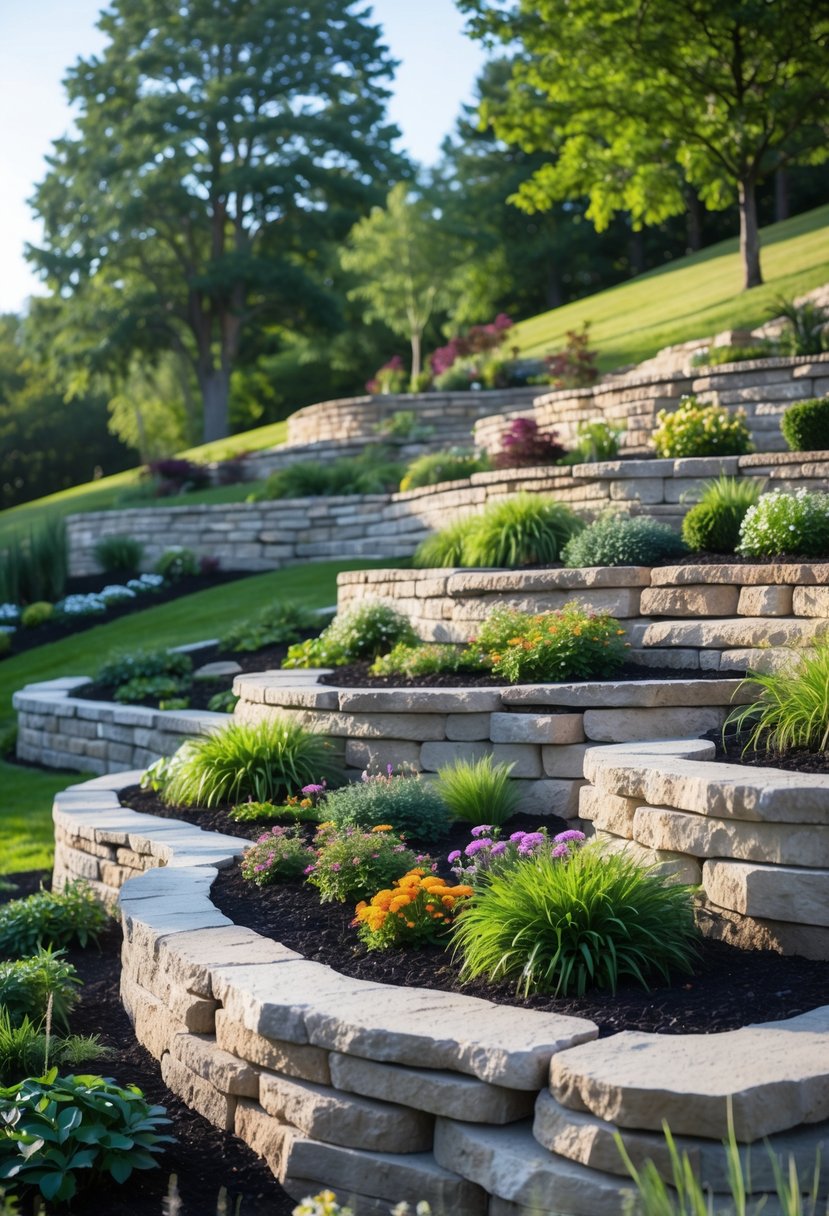
Stack up some stones to make natural terraces on your slope. If you use rocks you find nearby, it barely costs anything.
Skip the mortar for a rustic look and better drainage. The uneven stones add a cool, natural vibe to your garden.
These walls cut down on erosion and give you flat spots for planting or just hanging out. They’re pretty easy to build and add a lot of charm.
Need ideas? Check out stacked stone retaining walls.
5) Incorporate native drought-resistant plants

Native drought-resistant plants make a lot of sense for slopes. They’re used to your local weather, so you don’t have to water or fuss over them much.
These plants keep soil in place and blend right in with the landscape. Plus, they help out birds and pollinators in your area.
You’ll spend less on water and supplies. Want more? Here’s a budget-friendly drought-tolerant landscaping guide.
6) Install metal raised beds for durable gardening
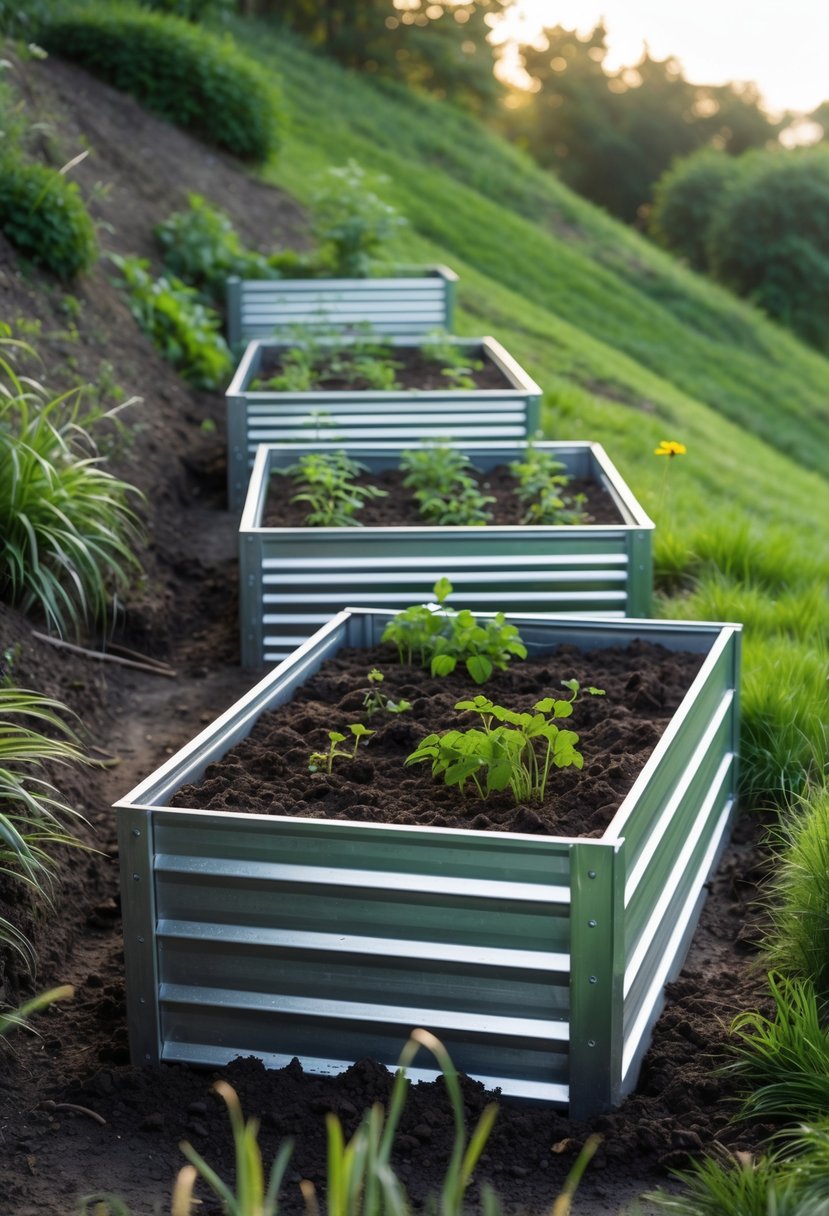
Metal raised beds keep soil where you want it. They also stand up to rain and rough weather, so you don’t have to worry about erosion.
Galvanized steel beds last for years and barely need any care. Just fill them with good soil and your plants will love it.
They give your garden a tidy, modern feel. If you want to build your own, here’s a step-by-step guide.
7) Add a cozy garden bench on leveled areas

Level out a small area on your slope and set up a garden bench. You don’t need much space to make a comfy spot for sitting.
Pick a simple wood or metal bench that fits your budget. Toss on a couple of pillows if you want extra comfort.
A bench gives you a place to relax and enjoy the view. It’s an easy way to add some charm without spending too much.
Want more ideas? Check out 23 creative garden bench ideas for every style and budget.
8) Use mulch to prevent soil erosion

Mulch is your friend when it comes to protecting slopes. It covers the soil and keeps rain from washing it away.
Use organic mulch like wood chips, straw, or shredded leaves. These hold in moisture and keep things in place.
On steeper slopes, heavier mulch like wood chips works best. It doesn’t slide off as easily.
Mulch makes your garden look neat and saves you money. For more info, see mulch for erosion control ideas from MulchSmartKC.
9) Plant colorful ornamental grasses

Ornamental grasses can really liven up a slope. There are so many colors and shapes to pick from, and they look good all year.
They don’t need much water and are super low-maintenance. Their roots dig deep, helping keep soil in place.
Try grasses like pampas or foxtail for extra texture and color. They make your garden interesting and easy to care for.
You can find more about using ornamental grasses at BackyardBoss.
10) Include hardy shrubs like lavender or rosemary

Lavender and rosemary are tough shrubs that thrive on slopes. They handle dry spells and don’t need much water.
Both plants keep your garden simple to care for, and they add color too. Rosemary even does double duty in the kitchen.
If you’ve got pets, these shrubs are safe for them. They’re a smart pick for a dog-friendly yard.
You’ll save on water and time. For more hardy plant ideas, see sloped backyard inspiration.
11) Build a small rock garden with succulents

Try making a small rock garden on your slope. Succulents are perfect for this—they don’t need much water and love rocky soil.
Arrange the rocks to hold soil and create little nooks. Plant different succulents between the stones for texture and color.
This garden is cheap and doesn’t need much care. It looks tidy and saves water.
Want to get started? Check out these succulent rock garden ideas.
12) Create a tiered veggie patch with simple wooden boxes
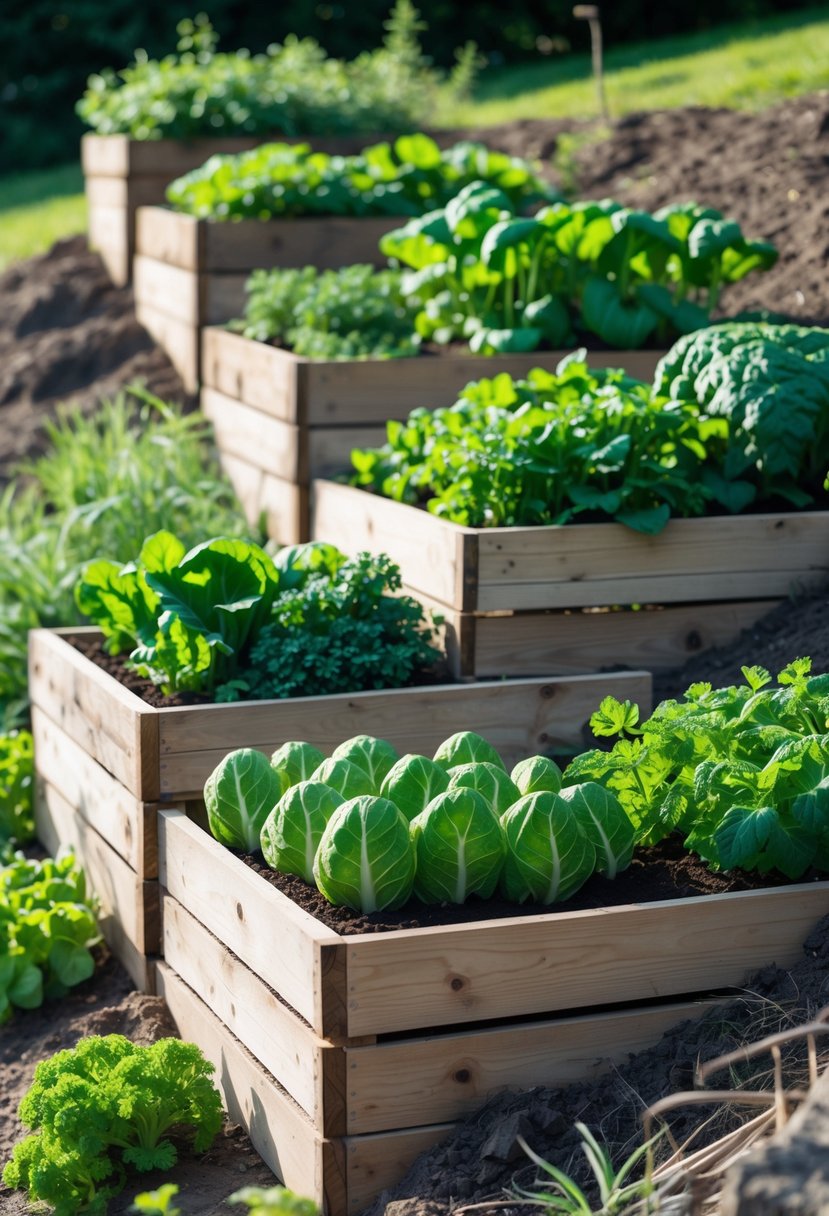
Stack some wooden boxes to make a tiered veggie patch on your slope. This setup helps you use the space and keeps plants easy to reach.
Wooden boxes are cheap and simple to build or buy. Paint them if you want to add color and protect the wood.
Fill each box with soil and plant your favorite veggies or herbs. You’ll get better drainage and a neat, organized look.
For more ideas, look at these 25 tiered garden ideas on a budget.
13) Use recycled pallets for DIY planters
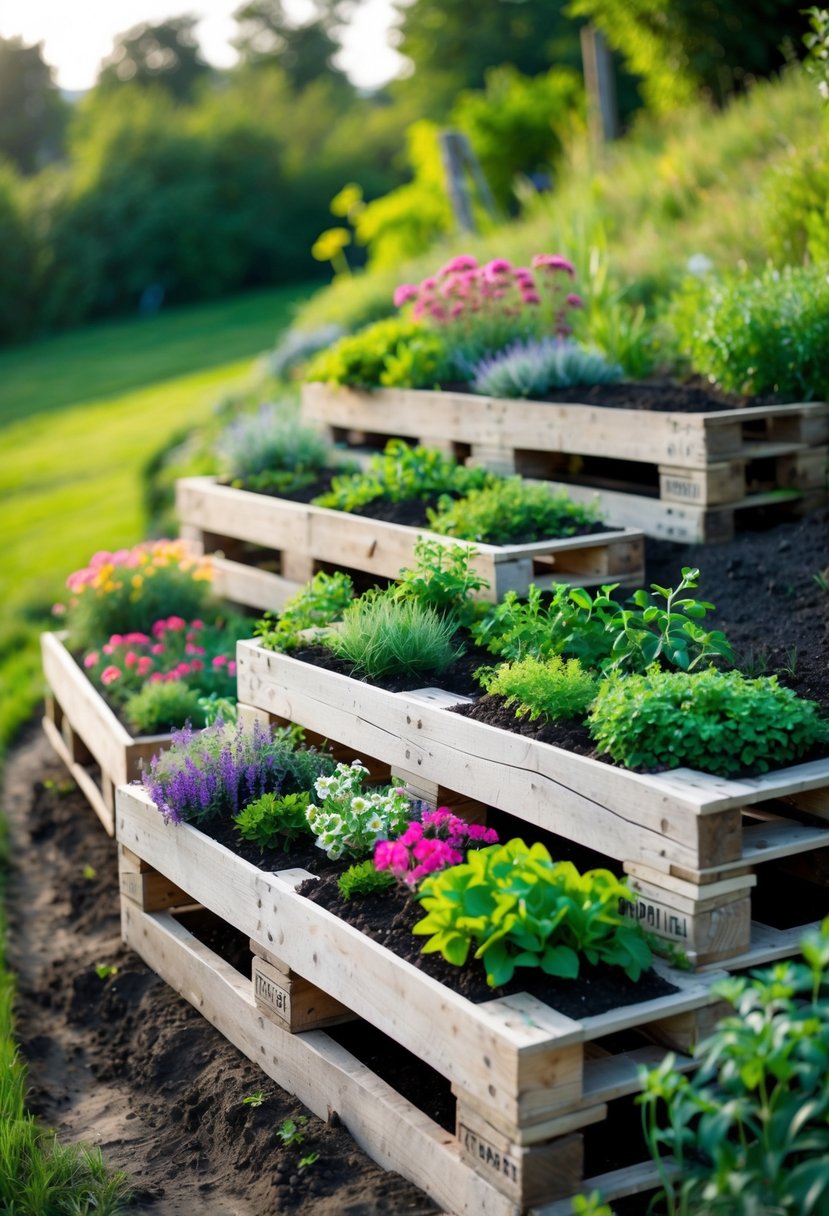
Grab some old pallets and turn them into simple planters that fit your sloped garden. Pallets are everywhere, and honestly, people often give them away for free.
Using pallets saves you money and adds a rustic, homey vibe. You can set them up vertically or horizontally, depending on what you like or how much space you have.
These planters are great for flowers, herbs, or even small veggies. They also help fight soil erosion by keeping your plants anchored on a slope.
If you’re looking for more ideas, check out 40 creative ways to recycle pallets into garden projects.
14) Add solar garden lights along paths

Brighten up your garden paths with solar garden lights. They’re super easy to install since you don’t need to mess with wiring or electricity.
Solar lights soak up the sun during the day and then give off a gentle glow at night. This makes your sloped garden safer and honestly, a bit more magical.
Pick simple designs that fit your style, or even make your own using jars or recycled stuff. There are plenty of affordable options out there.
Adding solar lights makes your garden feel cozy after dark and shows off the curves of your slope. Want more ideas? Check out these budget-friendly solar light projects.
15) Plant berry bushes on lower slopes

Use the lower part of your slope for berry bushes. This spot usually has more moisture and better soil, which berries love.
Berry bushes keep soil from sliding away with their roots. That means less erosion and a prettier slope.
Go for easy types like blueberries, raspberries, or blackberries. You’ll get fresh fruit and a splash of color at the same time.
Need tips for growing berries? Check out this berry bush garden guide.
16) Install a drip irrigation system to save water

A drip irrigation system gives water right to your plants’ roots, slowly and directly. This stops water from running off, which is a big deal on slopes.
You can set up a system without spending a lot. Tons of guides show how to make DIY drip irrigation with simple stuff.
Drip irrigation saves water by cutting down on evaporation and runoff. Your plants stay happy and you don’t have to work as hard.
For step-by-step help, check this DIY drip irrigation system guide.
17) Use terracotta pots for easy modular planting

Try terracotta pots for a simple, modular garden on your slope. Just arrange them at different heights to hold your plants.
You can change your garden’s look anytime by moving the pots around. No digging or heavy lifting needed.
Terracotta pots are light and let roots breathe, which keeps plants healthy. The warm, earthy color looks great in any garden.
For more creative pot ideas, check here.
18) Incorporate rain chains for slope water flow

Use rain chains to guide water down your slope gently and in style. They swap out boring downspouts and slow water flow, helping to prevent erosion.
Rain chains look good and sound soothing as water trickles down. It’s surprisingly relaxing.
Make sure your rain chain leads water into a basin or garden bed to catch and use it. This helps water soak in instead of rushing away.
For inspiration, see these creative rain chain garden ideas.
19) Create a wildflower slope meadow for low maintenance
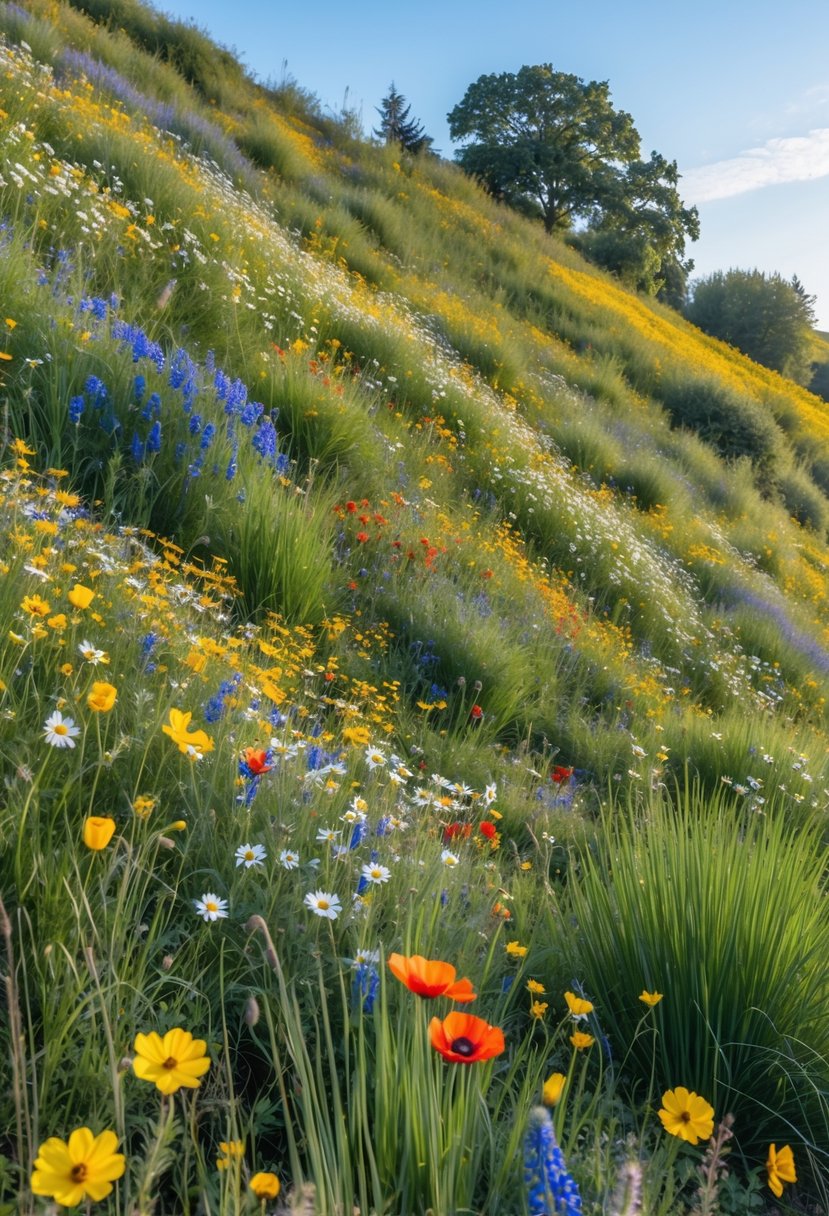
Turn a slope into a stunning wildflower meadow that barely needs attention. Wildflowers thrive on steep or bumpy ground where mowing just isn’t practical.
Pick native or well-suited wildflowers for your area. They’ll attract pollinators like bees and butterflies, bringing your garden to life.
Once wildflowers settle in, you don’t need to water or weed much. The color and movement last all year. For planting tips, check out American Meadows’ guide.
20) Plant fruit trees in strategic pockets

Plant fruit trees in stable, sunny spots on your slope. South-facing areas usually get more warmth, so your trees will thank you.
Go for sturdy fruit trees like apples or pears—they handle slopes just fine. They look good and give you fresh fruit, which is a win-win.
Plant trees closer together to help keep soil from washing away. This keeps your garden strong and prevents erosion.
Need advice on planting fruit trees on slopes? Check this fruit tree planting advice or upward sloping garden ideas.
21) Use logs or timber as natural steps

Use logs or timber to build natural steps on your slope. These materials blend right in and give your garden a cozy, rustic touch.
Arrange logs or stack them for sturdy steps. Timber like planks or old railway sleepers works great too.
Both options are easy on the wallet. You might even find leftover logs or pallets to reuse.
Natural steps add charm and help stop soil from sliding away. For more inspiration, check out natural timber garden steps here.
22) Add a vertical herb garden on a slope wall

If your slope has a bare wall, turn it into a vertical herb garden. It saves space and keeps your favorite herbs within reach.
Attach planters or pallets to the wall. Herbs like thyme, rosemary, and basil love growing this way.
Vertical herb gardens add a splash of green and look fantastic on a slope. They’re budget-friendly, too, and perfect for fresh herbs without taking up precious ground.
For building tips, check these DIY vertical herb garden ideas or vertical gardening hacks.
23) Build a sloped pathway with flagstones

Lay out flagstones to make a nice, sturdy path on your slope. Leave a little space between each stone for easy walking.
Mix in some small gravel between the stones to save money and add some texture. It helps with drainage, too.
Mark your path with a garden hose or spray paint before you start. Adding curves makes the walk easier and the slope feel less steep.
For budget ideas, see these sloped garden paths.
24) Plant shade-tolerant ferns in shaded nooks
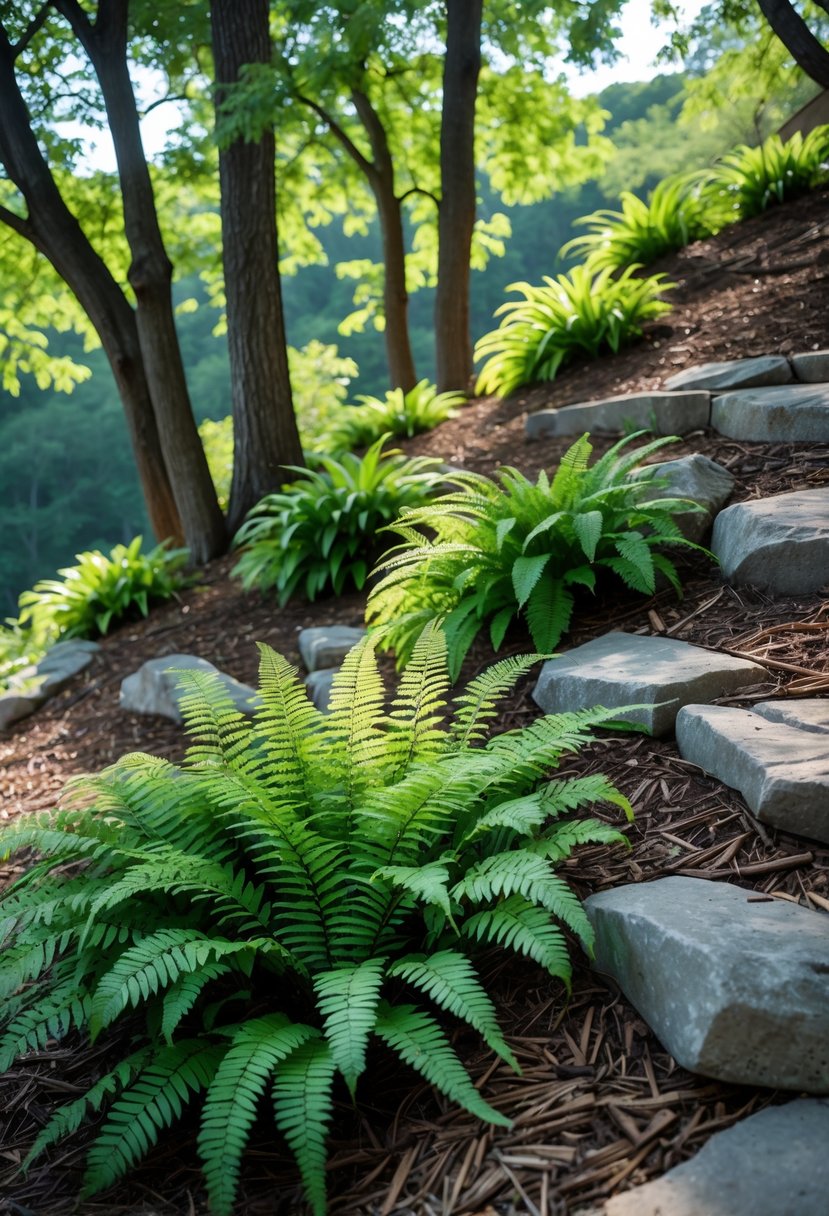
Got shady spots on your slope? Ferns are perfect for those areas. They grow in low light and bring a soft, green vibe to your garden.
Plant ferns in small, shady corners where other plants might struggle. They’re low-maintenance and help hold soil in place.
Ferns don’t need much water, which saves you time and effort. Try mixing different types to create a lush look.
For care tips, check this guide on shade-loving ferns.
25) Arrange ornamental rocks for natural edging

Use ornamental rocks to create natural edging on your slope. Rocks keep soil where it belongs and look great without much effort.
Pick rocks that match your garden’s style. Arrange them in lines or clusters to shape your beds.
This method is affordable and fits right in with plants. It’s an easy way to define spaces and keep things tidy.
Want more ideas? See how others use stones for garden edging here.
Understanding the Challenges of Sloped Gardens
Sloped gardens really aren’t like flat yards—water, soil, and plants all act differently on an incline. You’ll need to manage soil erosion and water drainage carefully if you want your garden to stay healthy and stable.
Erosion Control Techniques
Rain or wind can wash soil down a slope. When that happens, planting gets trickier, and you might notice mud piling up at the bottom of your garden.
If you want to control erosion, try a few things:
- Build terraces to create flat spots that slow water down.
- Plant ground covers like creeping thyme or clover. They’ll hold the soil together.
- Toss on some mulch to shield the dirt from heavy rain and help it hold moisture.
- Put up retaining walls using rocks or wood to keep soil in place.
These tricks help your soil stay put, and honestly, your plants will thank you for it.
Water Drainage Considerations
On a slope, water rushes downhill fast. If it pools or runs off too quickly, you end up with a mess.
To manage drainage, you might want to:
- Dig swales—those shallow channels that steer water away from your plants.
- Set up drip irrigation so water goes deep, not just sliding off the surface.
- Keep from compacting the soil, since loose dirt soaks up water better.
- Spot places where water gathers and toss in some gravel or stones to help it move along.
Thinking about how water flows can make a big difference. It keeps your plants happier and your soil where it should be.
If you’re looking for more budget-friendly ways to handle a sloped garden, check out these sloping garden ideas on a budget.
Tips for Maximizing Space on a Budget
Getting the most out of your sloped garden? You’ll want to think vertically and pick plants that fit your conditions.
Throwing in vertical structures gives you extra planting space without taking up more ground. Ground covers can help control erosion and add color, plus they’re usually easy on your wallet and don’t need much fuss.
Creative Use of Vertical Elements
Walls, fences, and even basic frames work great for growing upwards. You can try vertical planters—think hanging pots or stacked crates—for herbs, flowers, or small veggies.
Add trellises or lattice panels so vines and climbing plants have somewhere to go. It saves ground space and honestly, a living wall just looks cool.
Try DIY vertical gardens with recycled stuff like pallets or old shelves if you want to save money. These options let you grow more without buying pricey racks.
Just make sure your vertical setups get enough sunlight. It’s a pretty simple way to boost your harvest and keep things tidy.
Affordable Ground Cover Solutions
Ground covers do a great job stopping soil erosion on slopes. They also cut down on weeds, which is always a plus.
If you want something low-maintenance, try creeping thyme, clover, or sedum. These plants give you a green carpet without much fuss or cost.
Mulch or gravel around your plants keeps moisture in and weeds out. Honestly, that saves you both time and money.
Go for native or drought-resistant ground covers if you want to use less water. Their strong roots really hold up on slopes.
Try planting in layers. Mix ground covers with small shrubs or flowers to make things more interesting.
You’ll fill out your garden space without spending a fortune. Not bad, right?
Need more ideas? Check out budget-friendly garden ideas on a slope.


