

Simple Rock Garden Ideas on a Slope: 25 Easy and Creative Tips for Your Yard
Got a sloped spot in your yard? A rock garden can really turn that tricky space into something special. Slopes can feel like a challenge, but with the right ideas, you’ll find it’s not so hard to create a beautiful feature.
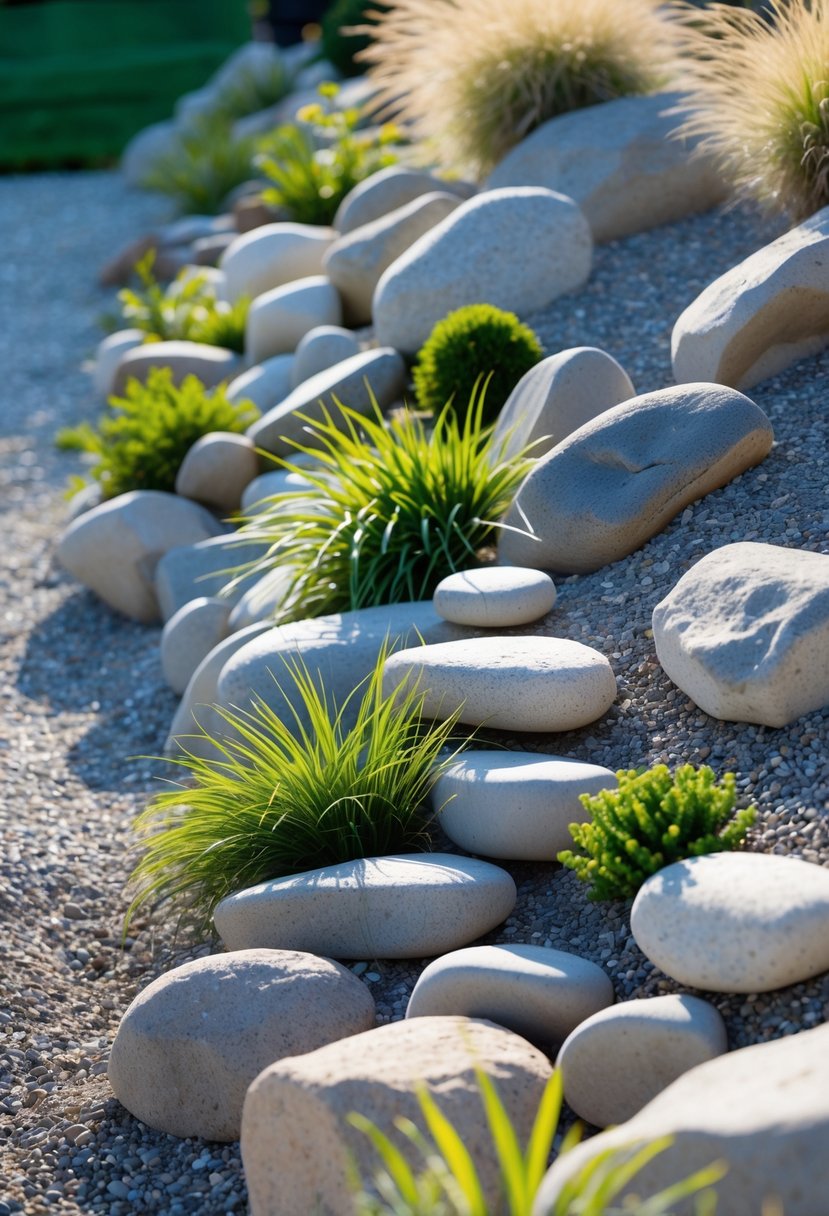
Simple rock garden designs on a slope help you tackle uneven ground and add a natural, low-maintenance highlight to your yard. You don’t need fancy skills or tools to get started. Just pick your style and favorite plants.
1) Build terraced rock beds to prevent soil erosion
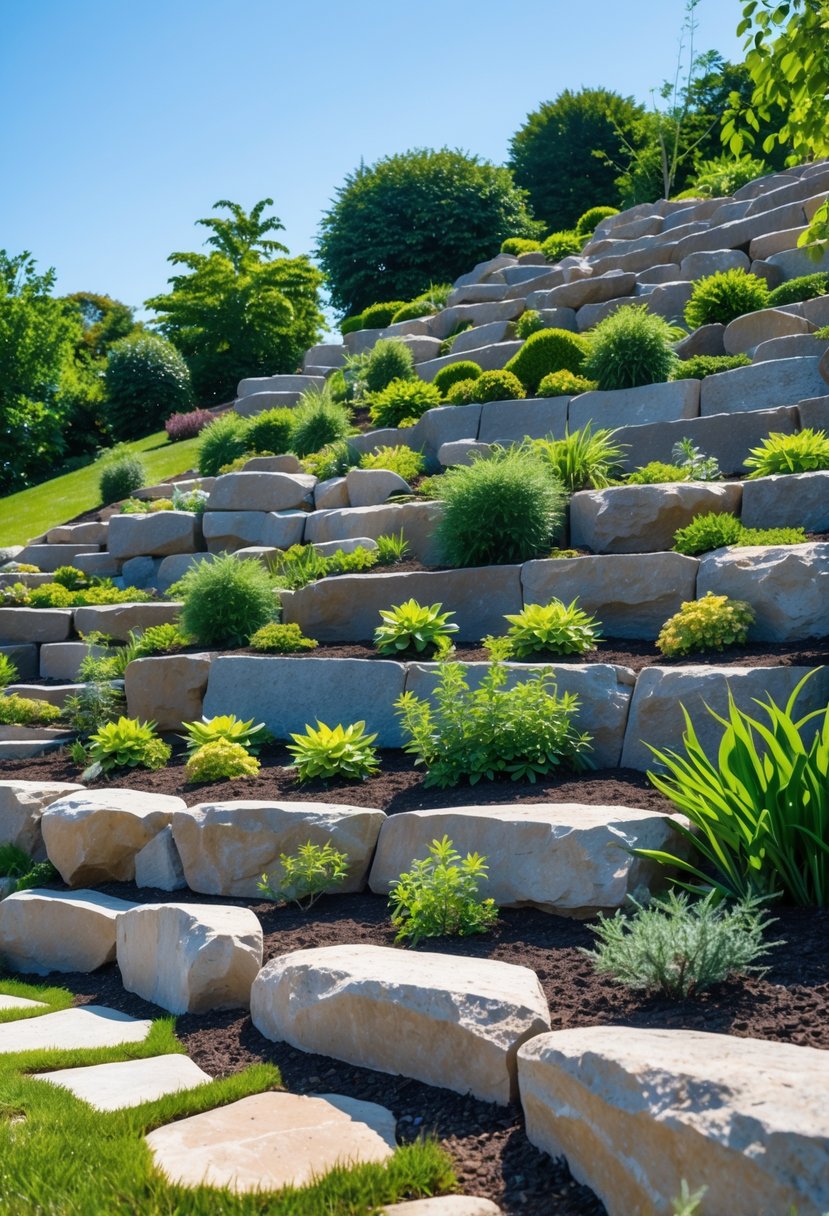
Try using terraced rock beds to keep soil from sliding away on your slope. Stack rocks to form flat steps that slow down water and hold soil in place.
Terraces also give you room to plant flowers or shrubs. The rocks act as walls, keeping soil and moisture where you want them.
You don’t need special tools—just sturdy rocks and a bit of patience. If you want more details, check this guide to hillside rock gardens.
2) Use succulents for drought-tolerant plantings
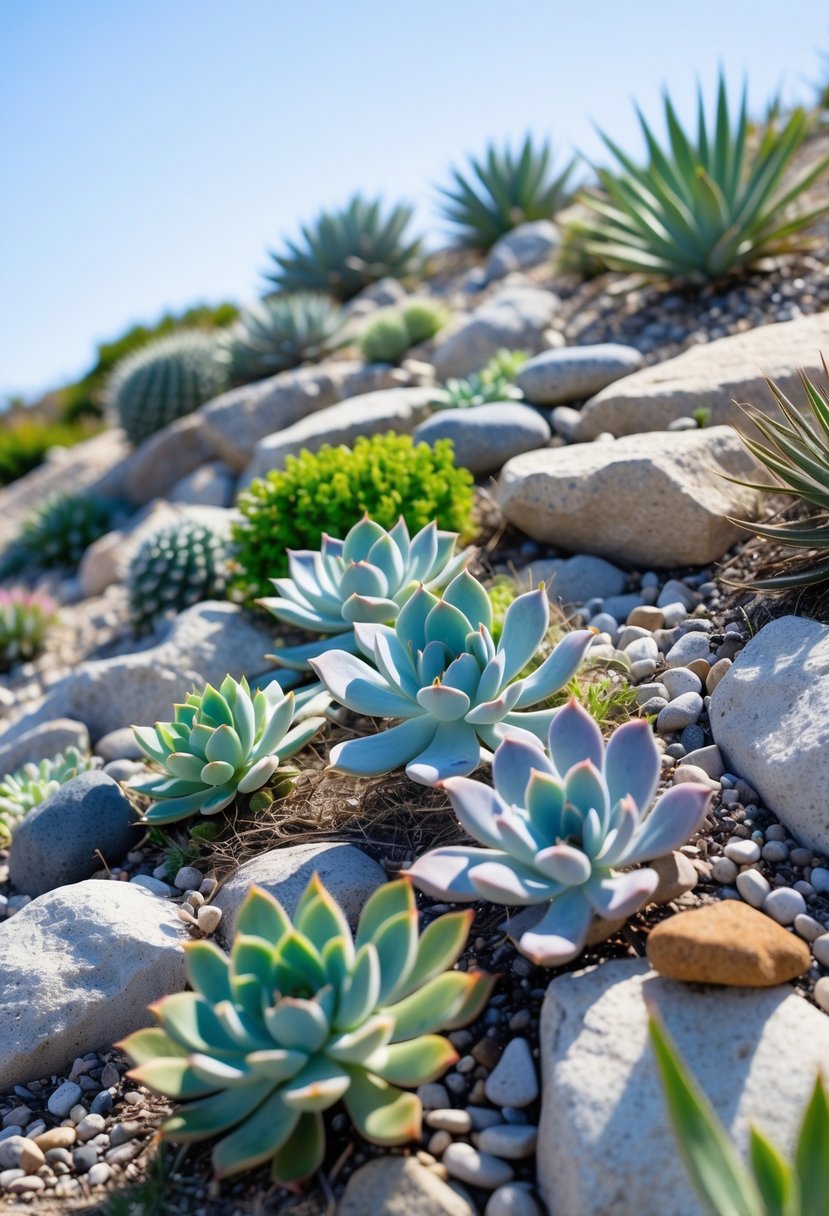
Succulents thrive on slopes since they barely need water. If you’re in a dry area or just want a low-maintenance garden, these are a solid pick.
They come in all sorts of shapes and colors, so you can make your slope pop. Mix them with rocks for a natural look that holds soil steady.
Succulents store water in their leaves, so they handle tough conditions well. Your garden stays healthy with almost no extra work. For ideas, see these succulent rock garden ideas.
3) Incorporate alpine plants for a natural look

Use alpine plants to give your rock garden a wild, mountain feel. These tough little plants handle rocky, sloped ground with ease.
Alpine plants offer lots of shapes and colors, so your garden won’t look boring. Mix them with stones to mimic a mountain landscape—right in your own yard.
They don’t need much water or fertilizer, so you can relax and enjoy the view. Want some inspiration? Check out more alpine garden ideas here.
4) Create natural stone steps for accessibility
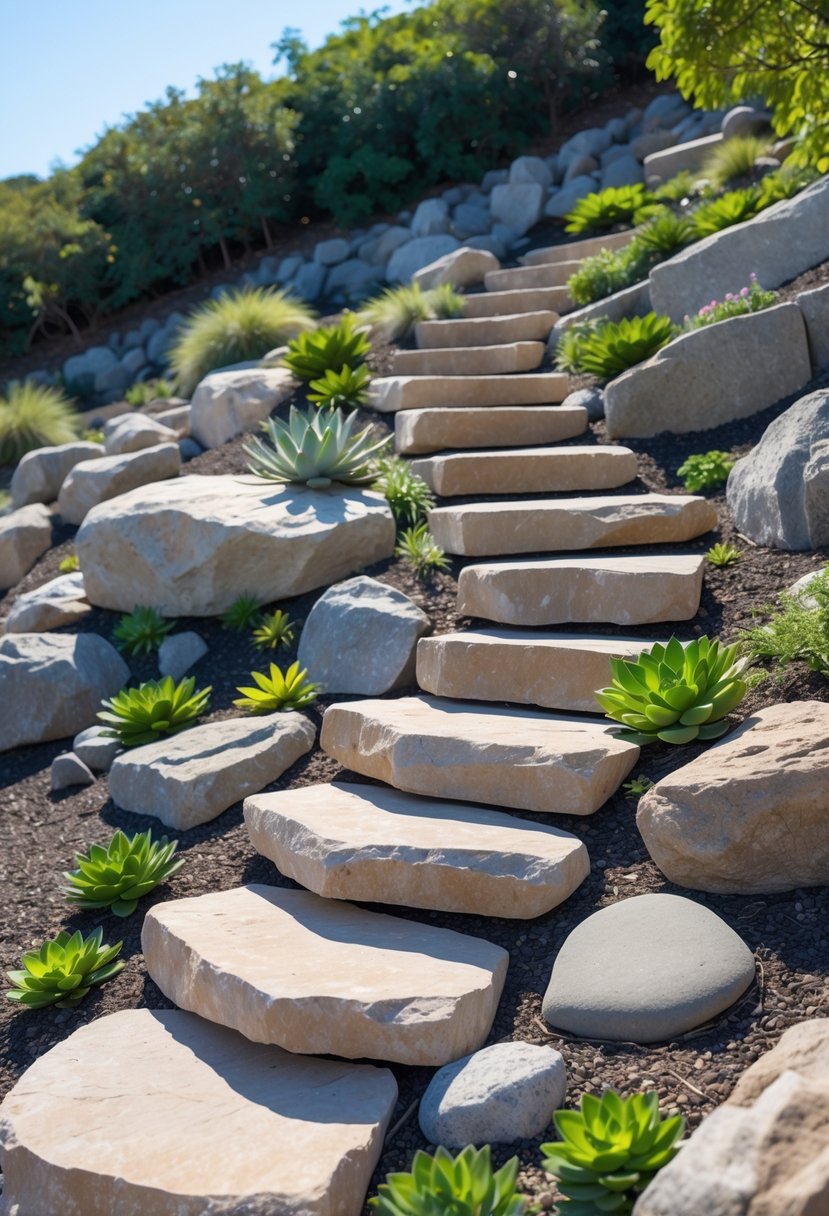
Build natural stone steps to make your slope easy to walk on. These steps keep you steady and safe as you move up or down.
Pick stones that fit together and suit your garden’s style. Sometimes, you’ll need gravel or sand underneath to keep things solid.
Make each step level and spaced so walking feels natural. The steps add a rustic vibe, too.
Need a little guidance? Here’s a handy DIY guide for stone steps on a slope.
5) Layer rocks from large at the bottom to small on top
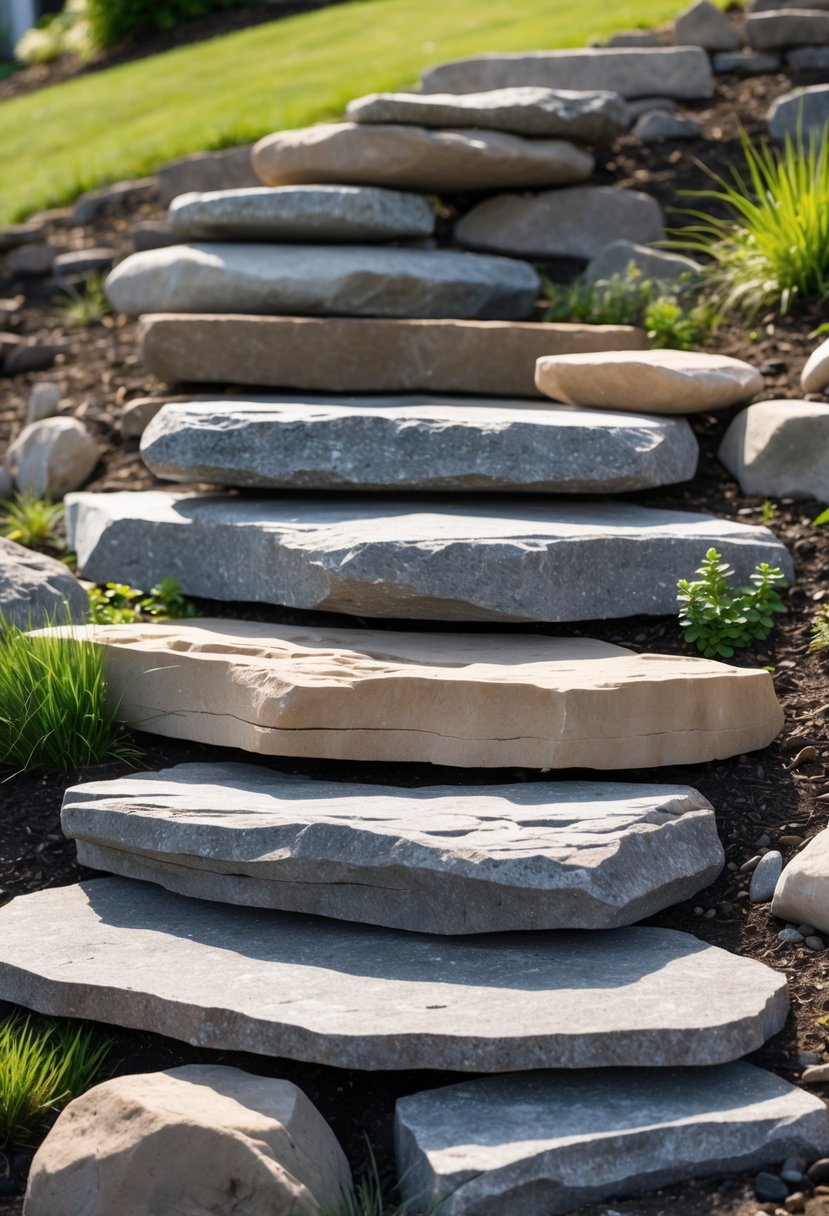
Start your rock garden with the biggest rocks at the base. These anchor the soil and keep your garden steady.
As you go up, use smaller rocks. This looks more natural and gives you spots to tuck in plants.
Stacking rocks this way helps your garden survive heavy rain and keeps things balanced. Want more tips? Check out rock garden landscaping on a slope.
6) Add creeping thyme between rocks for color
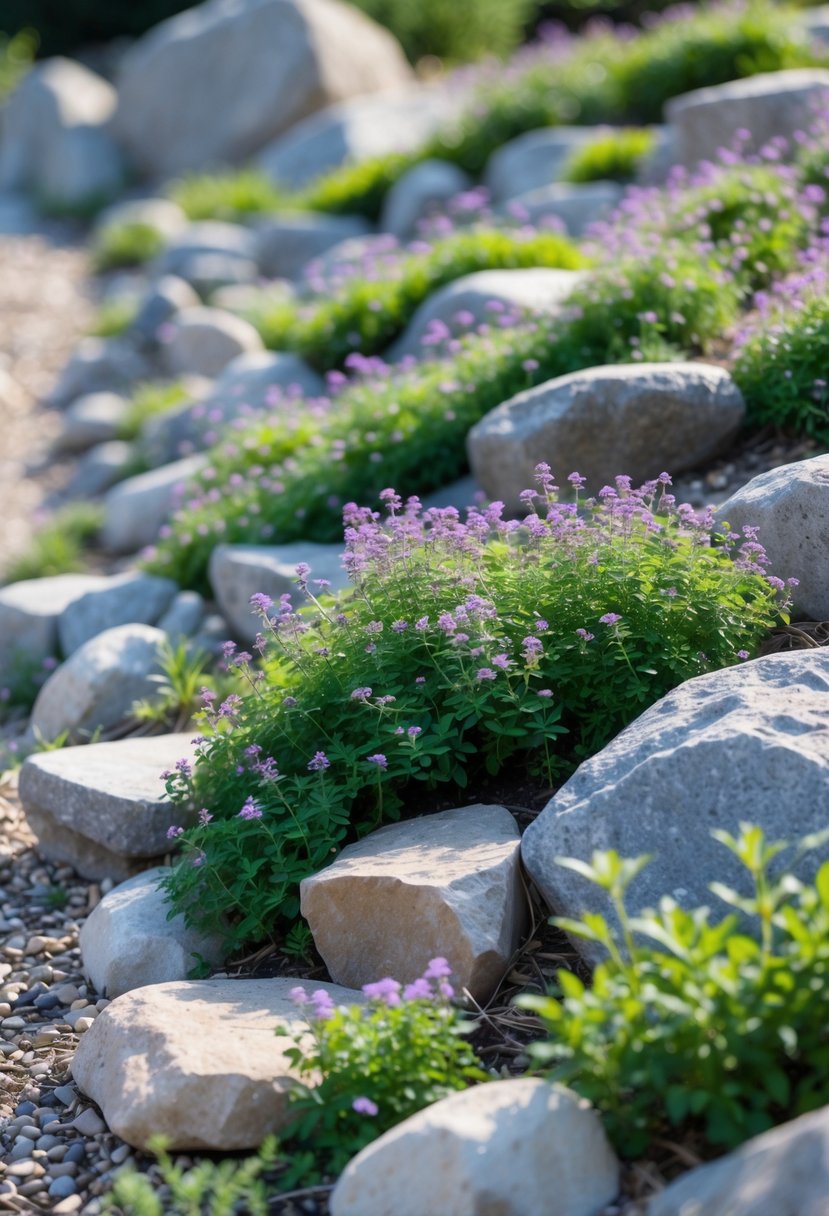
Plant creeping thyme between your rocks to add color and texture. This low-growing plant fills gaps and doesn’t need much attention.
Creeping thyme pops with tiny flowers and loves sunny spots. It also helps block weeds from taking over.
Your slope will look softer and more inviting with thyme in the mix. Curious about more ways to use it? Check out creative thyme seed ideas for your garden.
7) Use flat stones as natural seating areas

Lay down some flat stones to make natural seating on your slope. These work as benches or just spots to sit and enjoy your handiwork.
Put the largest, flattest stones where you want a seat. That way, they’re sturdy and comfy.
Stone seats blend right in with the garden. You don’t need extra furniture, and the space feels relaxed and welcoming.
Want more stone seating ideas? Take a look at backyard inspiration with stones.
8) Plant lavender for fragrance and texture
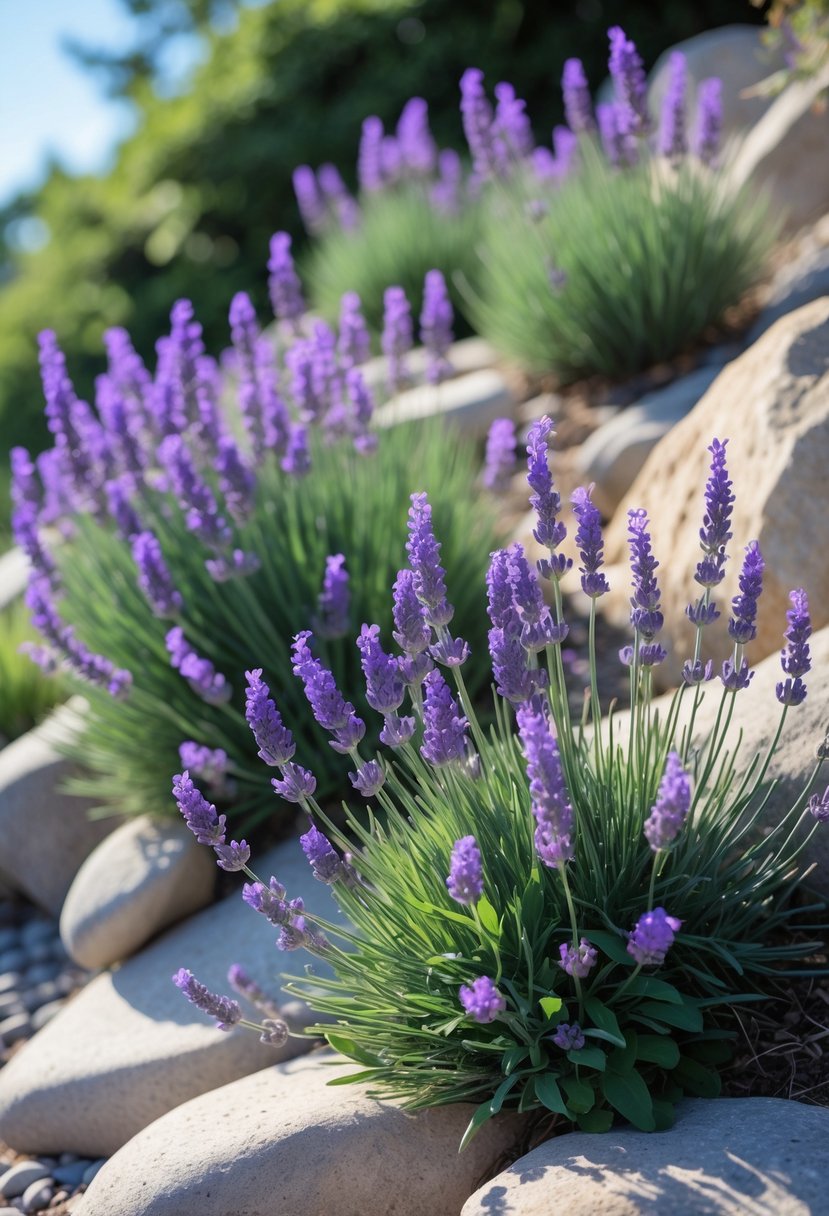
Add lavender to your rock garden for a burst of fragrance and soft color. The purple blooms look amazing against rocks and fill your yard with a calming scent.
Lavender loves slopes because it prefers well-drained soil. Rocky ground helps water drain fast, which this plant really enjoys.
Try planting lavender around big stones or along paths as a natural border. It’ll add color and keep things tidy.
Lavender also attracts bees and butterflies, so your garden feels alive. For more inspiration, check out these lavender rock garden ideas.
9) Install drip irrigation to reduce water waste

Set up drip irrigation to save water on your rock garden slope. This system gives water straight to the roots, so you avoid runoff.
Drip irrigation works better than sprinklers on slopes since it controls water flow and keeps plants healthy.
You’ll waste less water and your plants will thank you. It also cuts down on evaporation, so you get more bang for your buck.
Want to know how to set it up? Check out DripWorks for tips.
10) Combine flowering perennials with evergreens

Mix flowering perennials with evergreens to give your rock garden both color and structure. Evergreens keep things green all year, acting as a steady backdrop.
Perennials add bursts of color when they bloom, so your garden feels lively in every season.
Choose low evergreens that won’t hide your flowers. Pair them with hardy perennials that can handle the slope’s drainage and sun.
Try layering the plants so flowers really stand out. This trick adds interest and texture without much fuss.
Want more plant combos? See Garden Design’s guide to rock garden plants.
11) Arrange moss around shaded rocks
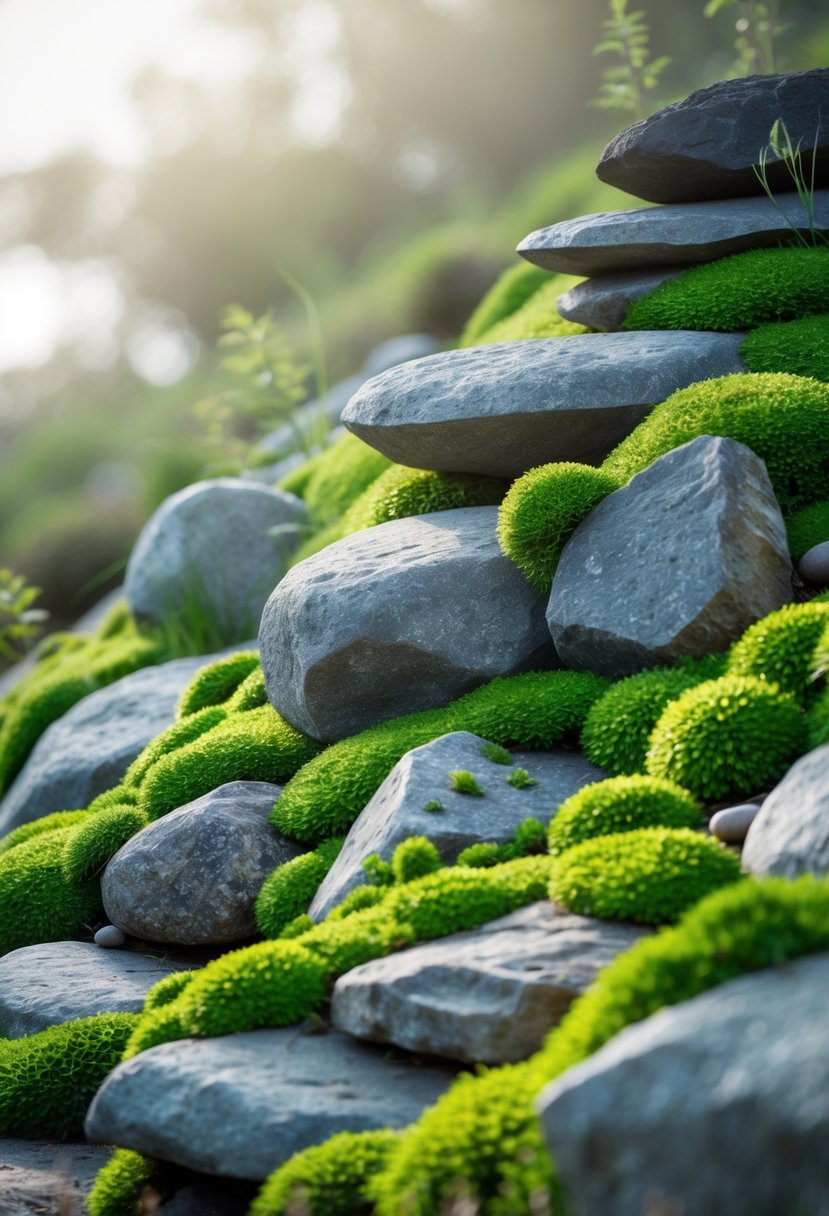
Tuck moss around rocks in shady spots for a soft, lush vibe. Moss thrives where the sun doesn’t shine much and brings a gentle green touch to your garden.
Pick smooth rocks that blend with moss, and gently lay the moss at their base. It helps keep the soil moist and stops erosion.
Moss makes your rock garden feel peaceful and natural. If you want a chill, low-maintenance option, this is it.
For more, check out gardens with moss and shade-loving plants.
12) Use boulders as focal points
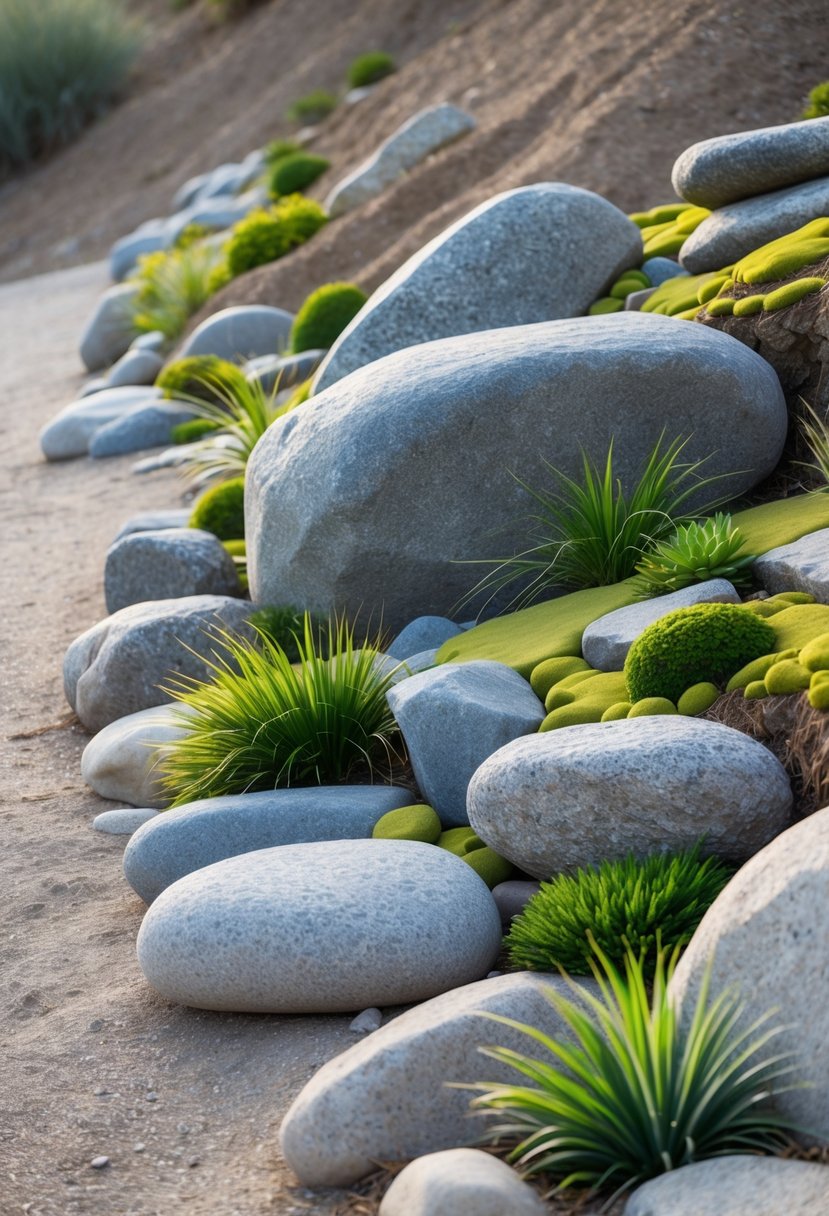
Place large boulders on your slope to create striking focal points. Boulders naturally grab attention and give your garden a wow factor.
Set boulders firmly into the ground so they look like they belong there. Pick spots where you want to guide the eye or highlight a special feature.
Mixing different sizes of boulders adds depth and texture. You can group them with plants or smaller stones for a balanced look.
If you want more ideas, take a peek at landscaping with boulders that really stand out.
13) Plant sedum for ground cover

If you want easy-to-grow ground cover for a slope, sedum is a solid pick. It spreads fast and fills spaces with colorful, low-growing plants.
You won’t need to fuss over watering much. Sedum thrives in sunny spots, even where other plants might give up.
Try using sedum mats or planting clusters to prevent soil erosion. The mix of colors and textures can really liven up a slope and keep things looking tidy.
Need ideas? Check out some sedum ground cover inspiration to get going.
14) Add a small water feature for soothing sounds
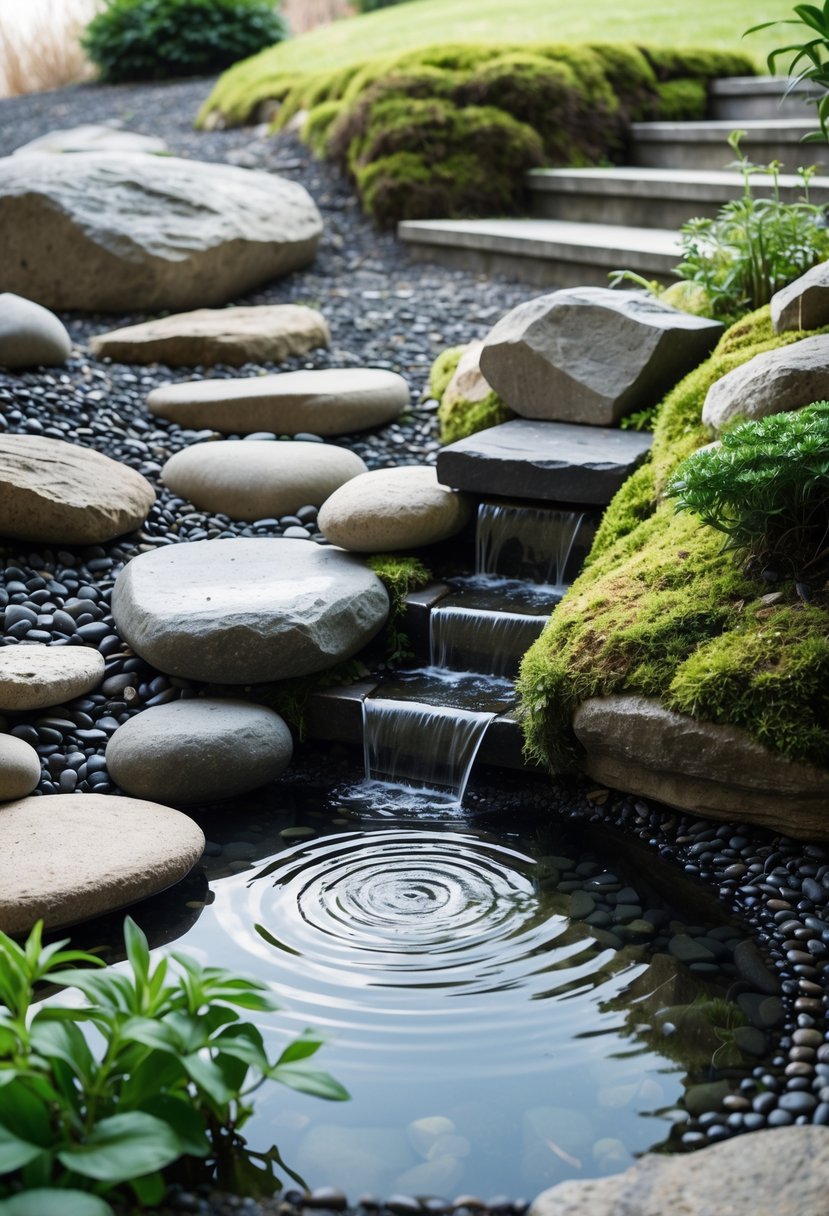
Adding a small water feature to your slope garden can totally change the vibe. A tiny waterfall or a simple fountain pairs nicely with rocks and plants.
The sound of flowing water brings a peaceful touch, and it can help block out annoying noises from the street or neighbors.
Pick a design that fits your garden—nothing too complicated. You can tuck the feature into a wall or nestle it among rocks for easy upkeep.
Need inspiration? Look up ideas for small garden waterfalls to help your slope feel even more relaxing.
15) Use sandstone for warm-toned rocks

Try using sandstone if you want to add warmth to your slope rock garden. Those gold, rust, and tan tones just blend right in with the plants and earth.
Sandstone holds up well against weather and water, so it’s a durable pick for slopes.
Use sandstone for paths or as edging to give your garden a tidy, natural look. Toss in a few sandstone boulders if you want some eye-catching spots.
The result? Your rock garden feels cozy, inviting, and still super easy to care for.
Check out sandstone landscaping tips if you want more ways to use warm-toned rocks.
16) Place ornamental grasses for movement

Ornamental grasses bring soft texture and gentle movement to a slope rock garden. When the wind picks up, those leaves sway and make the space feel calm.
Try grasses like Blue Fescue or Fountain Grass. They’re easy to grow and look great with rough rocks.
Group them around your stones to fill in empty spots. This way, your garden feels lively without adding much work.
Ornamental grasses help break up the hard look of rocks and add a fresh, natural vibe. For more inspiration, check out ornamental grasses for rock gardens.
17) Create a dry creek bed to manage runoff
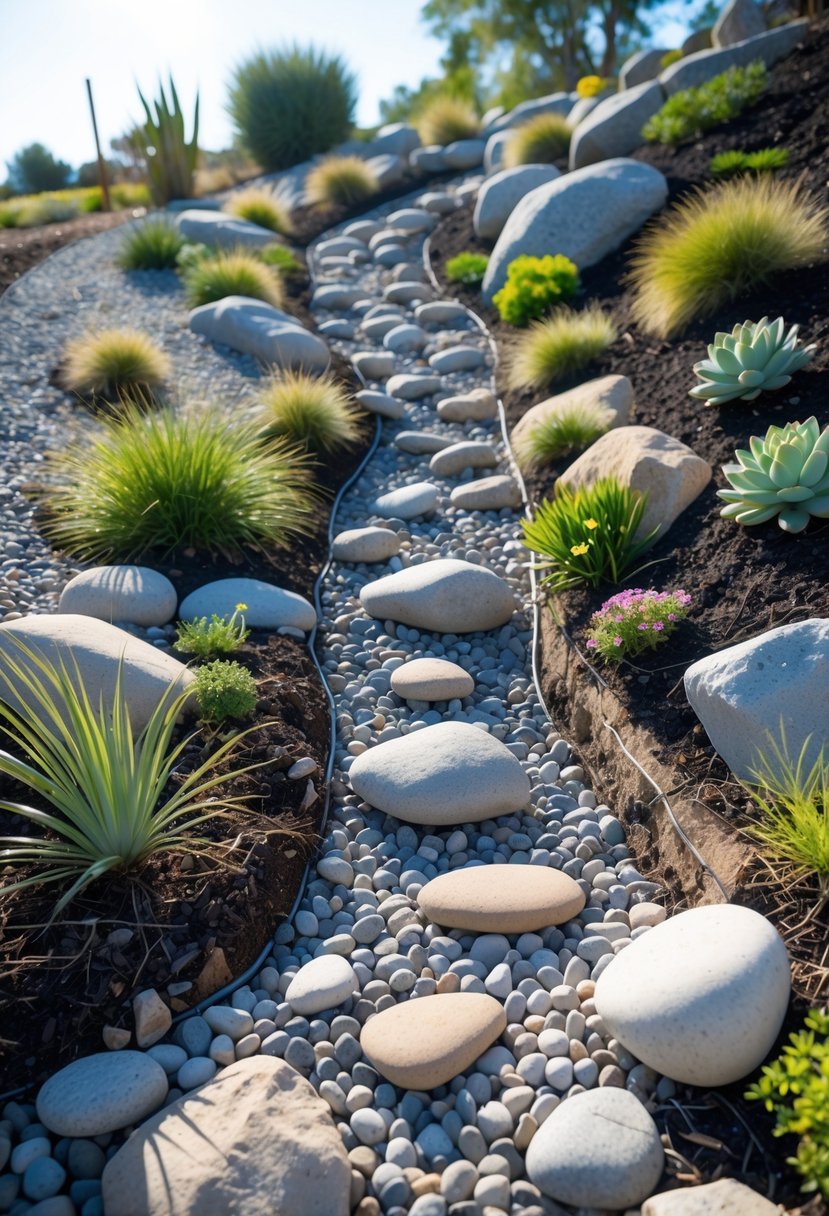
A dry creek bed is a smart way to handle water runoff on a slope. Build it with rocks and pebbles that slow down and guide water, stopping erosion and keeping your garden safe after rain.
It also gives your rock garden a more natural look. Just line up the rocks along the usual water path and you’re pretty much set.
This feature helps you control water flow and gives your slope a clean, finished look. For how-to’s, check out tips on building a dry creek bed for drainage.
18) Mix in herbs like rosemary and oregano

Mixing in herbs like rosemary and oregano works great in a rock garden on a slope. They love rocky, dry soil and don’t need much water.
Their fresh scent and good looks fit right in among the rocks. Rosemary grows upright, adding a little height, while oregano spreads out to fill spaces.
Planting these herbs means you get fresh ingredients for cooking just outside your door. They also help keep your garden lively and easy to care for all year.
For more on growing herbs in rock gardens, check out biggergarden.com/front-yard-landscaping-ideas-with-rocks.
19) Use flagstone for pathway edging

Flagstone makes a great border for pathways on a slope. The flat stones create clear edges that keep gravel or soil where you want it and help stop erosion.
Flagstone edging also looks natural and stylish, blending with plants and rocks nearby. It’s tough and doesn’t need much upkeep.
Need ideas? Check out flagstone edging designs for your garden paths.
20) Plant drought-resistant ornamental grasses

Drought-resistant ornamental grasses add texture and color to your slope rock garden. These grasses hardly need any water or fuss, so they’re easy to maintain.
They hold the soil in place and prevent erosion on the slope. Most stay compact, which makes them perfect for tucking between rocks or along paths.
Pick the right grasses and your garden will look good, even during dry spells. Fountain grass and blue fescue are top choices for adding soft movement and interest.
Want more ideas? Check out this guide on drought-tolerant ornamental grasses for water-wise landscaping.
21) Build retaining walls with natural stone

You can build retaining walls from natural stone to manage a slope in your garden. These walls hold back soil, stop erosion, and look great.
Natural stone walls blend in with plants and rocks, giving your garden a cozy, rustic vibe.
Building these walls isn’t as hard as it sounds. With a few tools and some stones, you can make a sturdy wall that lasts for years.
For more tips, see this guide on building a natural stone retaining wall.
22) Add shallow pools for birds
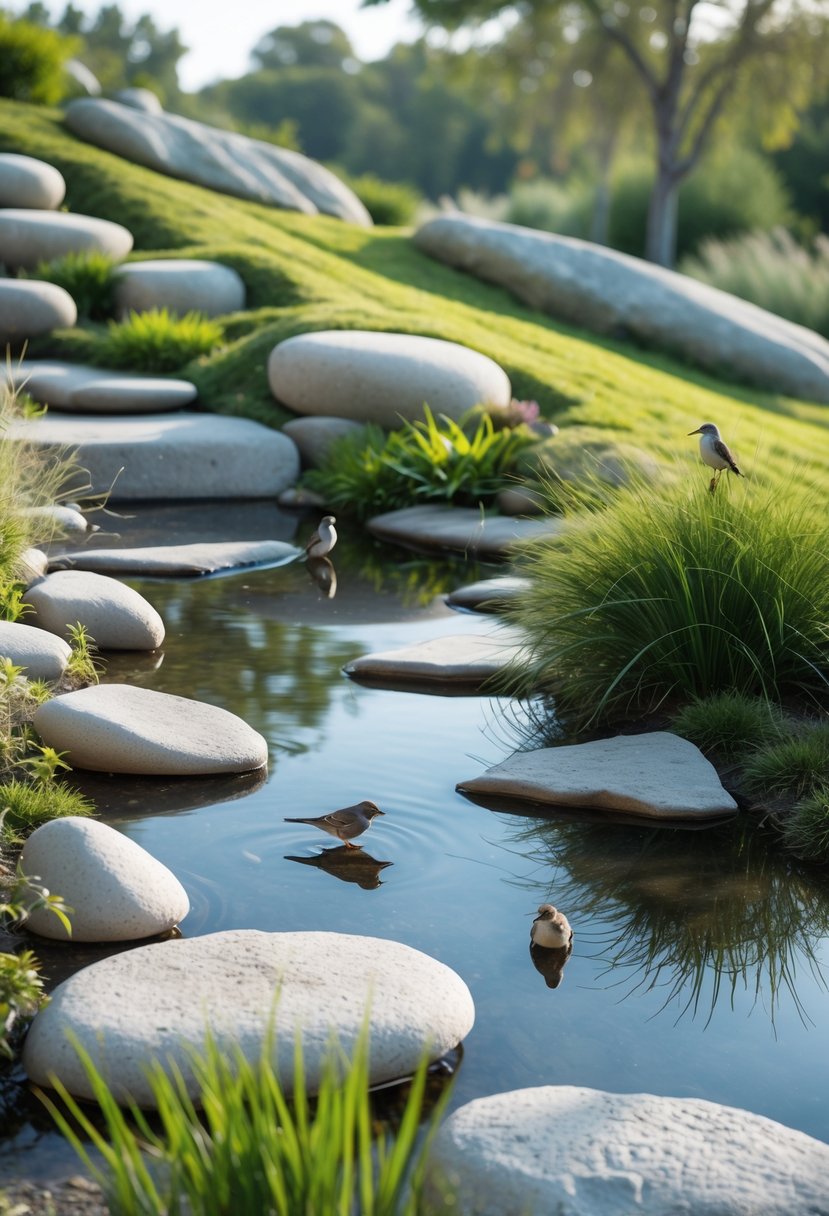
Shallow pools can bring birds right into your slope garden. Birds love a clean spot to drink and splash.
Put the pools where they won’t mess with plants or cause water to run off downhill. You can use simple containers or make small rock basins that blend with your style.
Shallow pools also add a peaceful vibe. Watching birds visit just makes the garden feel more alive.
If you want to see how water features and rocks work together on slopes, check out these stunning rock garden ideas for landscaping on a slope.
23) Include daylilies in sunny spots
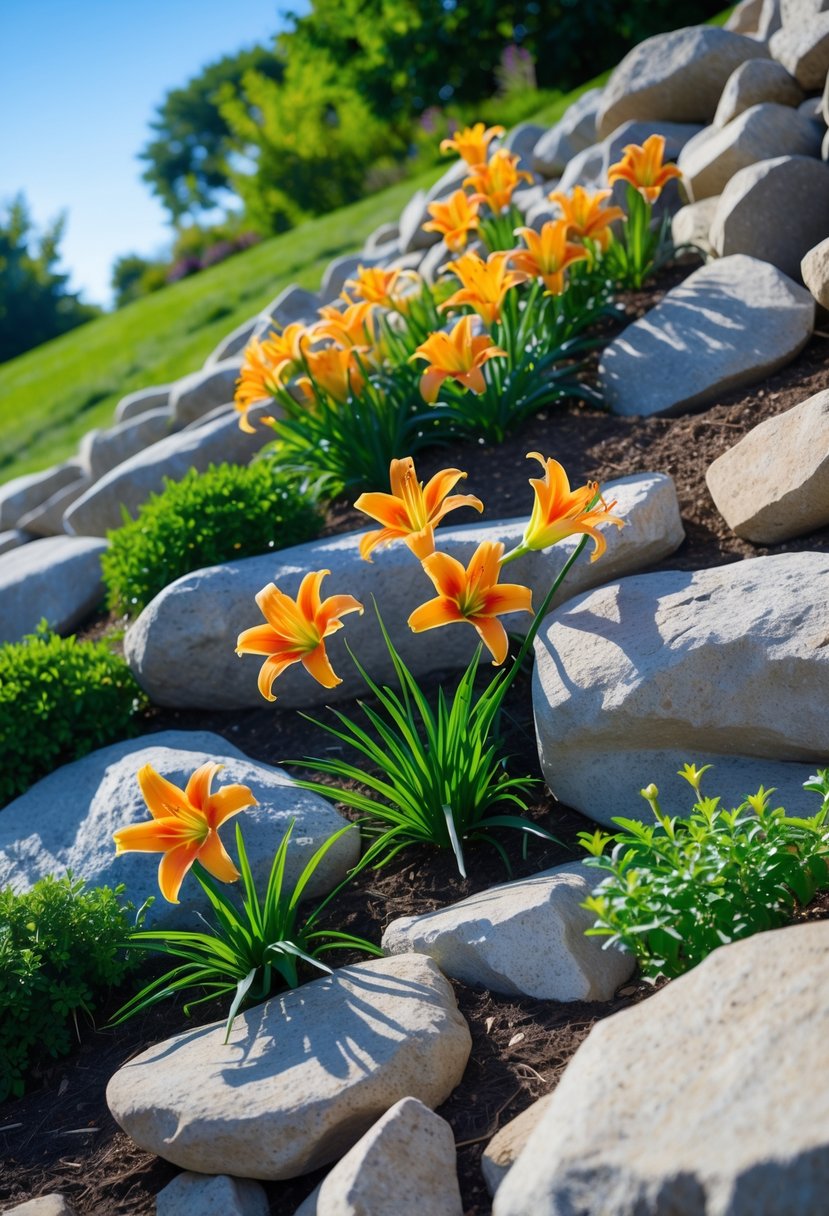
Daylilies work wonders in sunny spots on your slope. They bloom in loads of colors and add bright pops to your rock garden.
These plants are tough and don’t ask for much care. You get to enjoy their flowers with hardly any effort.
Plant daylilies where they get full sunlight. They help soften the rocks and give your garden a lively look.
Their blooms show up mostly in the morning and keep coming all season. You’ll get color for months without much fuss.
For more ways to use daylilies, check out landscaping ideas with daylilies.
24) Use river rocks for smooth texture contrasts
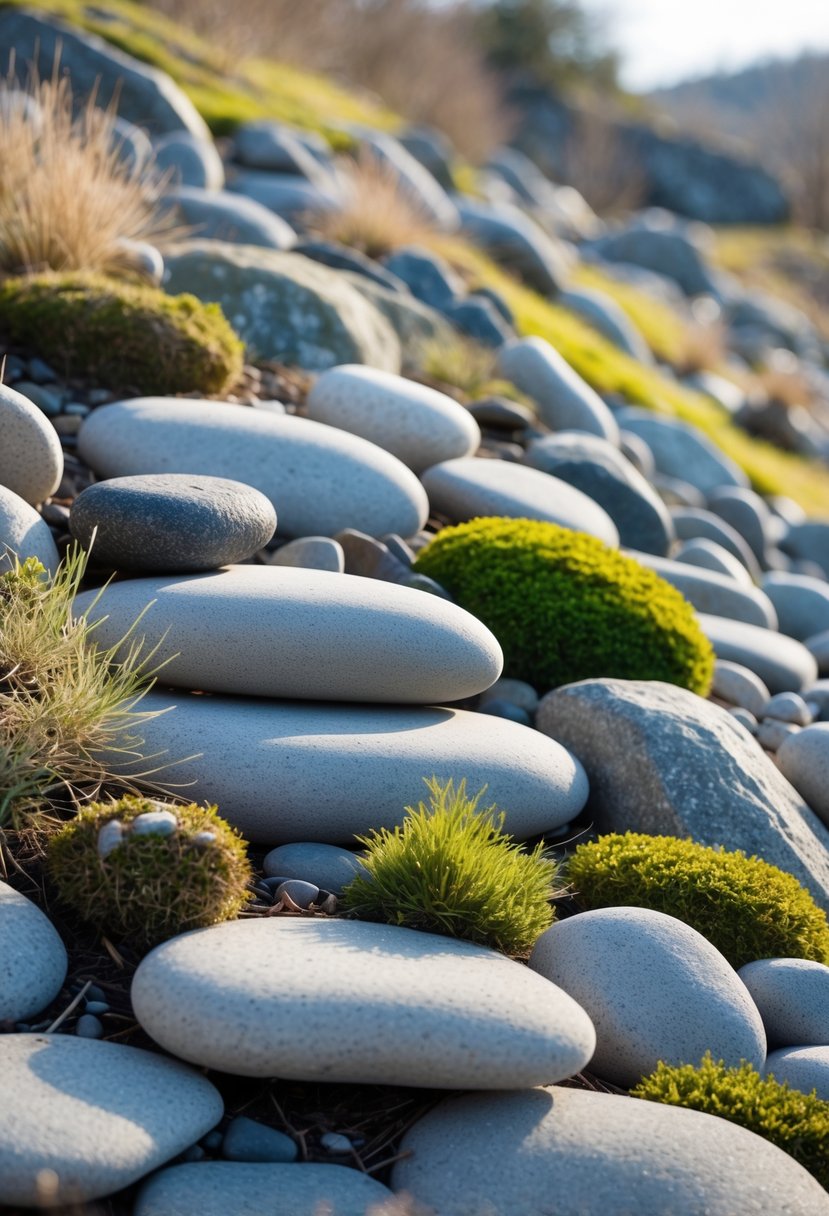
River rocks add a lovely touch to a slope garden. Their smooth, rounded shapes bring a calm, natural feel.
Mix them with rougher stones or plants to create interesting texture contrasts. It really makes the garden pop.
River rocks also slow down water flow and help keep soil from sliding away. They add both style and function—pretty handy, right?
For more ideas, check out river rock landscaping tips.
25) Incorporate miniature conifers for year-round structure

Miniature conifers add structure to a slope rock garden all year long. Their small size fits tight spaces without crowding.
They stay green even in winter, so your garden never looks dull. You can pick from different shapes and colors for extra interest.
These trees are slow-growing and easy to care for. You won’t need to prune much or worry about them taking over. Adding dwarf conifers keeps things neat and balanced.
Want more ideas? See the benefits of dwarf conifers in rock gardens here.
Preparing and Planning Your Sloped Rock Garden
If you want a stable and good-looking rock garden on a slope, start by checking your land and picking the right rocks. These steps help stop soil erosion and make your garden last.
Assessing Your Slope’s Conditions
Check how steep your slope is before you start. Steeper slopes need stronger support, maybe even terracing or retaining walls.
Look at your soil type too. Sandy or loose soil drains fast but can wash away if you don’t anchor it. Clay soils hold water but might cause drainage headaches.
Watch how water moves during rain. This tells you where to put rocks and plants to slow down runoff.
Notice sunny and shady spots—these matter for choosing the right plants.
Choosing the Right Rock Types for Stability
Start by picking rocks that really fit your slope’s size and shape. Flat, wide rocks make the best choice for building terraces or steps.
If you spot rounder rocks, they’re handy for filling gaps and helping water move through. I’d avoid those super smooth stones—they just slide around too much, especially when it rains.
Go for rocks that feel heavy in your hands. They’ll stay put during storms. Local rocks usually blend in better and handle the weather pretty well.
Try mixing big boulders with smaller stones. Big rocks hold back the soil, and the smaller ones fill in spaces, blocking erosion.
This layered look makes your garden feel stronger and, honestly, more natural. Want more ideas? Take a peek at how to make a rock garden on a slope.
Maintaining a Healthy Rock Garden on a Slope
If you want your rock garden to thrive, you’ll need to manage water flow and keep soil movement in check.
A little attention here keeps your plants strong and stops damage to your garden’s structure.
Water Drainage Solutions
Good drainage really matters. Guide water away from your plants to prevent soggy roots.
Try placing rocks so they help water move down the slope instead of pooling up. It’s not rocket science, but it works.
Scatter gravel or small stones around your plants. This lets water pass through more easily.
You could even carve out shallow channels or swales and line them with rocks to direct excess water. Just watch out for flat spots where water might collect and cause root rot.
Using drought-tolerant plants means you’ll water less. Mulch with small stones to keep soil moist, but not soaked.
This combo really helps your garden drain well—and your plants will thank you for it.
Preventing Erosion
Erosion can wash away soil and plants on a slope. To slow down water flow, try using big rocks as barriers.
Stack these rocks into small walls or terraces. That way, you help keep the soil where it belongs.
Plant ground covers like creeping thyme or sedum. Their roots actually hold the soil together.
These plants grow low and spread out fast, so they cover up bare spots before you know it.
Add mulch or gravel between the rocks to shield the soil from heavy rain. It’s a small step, but it really makes a difference.
Take a look at your garden now and then for bare patches or any soil moving around. If you spot trouble, fix it quickly so things don’t get out of hand.
If you want more inspiration for your slope garden, check out rock garden ideas on a slope.


