

Budget-Friendly Rock Garden Ideas On A Slope 25 Creative Tips For Easy Landscaping
Building a rock garden on a slope is a surprisingly good way to upgrade your yard without blowing your budget. It controls soil erosion and brings a natural, eye-catching vibe to your space.
You don’t need to be a pro to pull this off. Honestly, it’s a clever fix for those awkward, tricky spots in your yard.

Budget-friendly rock garden ideas on a slope let you turn uneven ground into a beautiful, low-maintenance spot with just a few simple materials. With a little planning, you can make a garden that matches your style and wallet, and actually enjoy being outside more. If you’re looking for more inspiration, take a peek at these sloping garden ideas.
1) Create a tiered rock garden using salvaged stones for natural steps

Stack salvaged stones to build natural steps up your slope. This holds the soil and makes planting way easier on steep ground.
Start with the biggest stones at the bottom for stability. Use smaller rocks as you go higher for detail and visual interest.
Plant tough, drought-resistant greens between the stones. They’ll add color and keep erosion in check without needing much from you.
If you use stones you already have or can gather nearby, you’ll save cash and help the environment. For more tips, check out ideas for sloped yards.
2) Use drought-tolerant plants like sedum and succulents between rocks
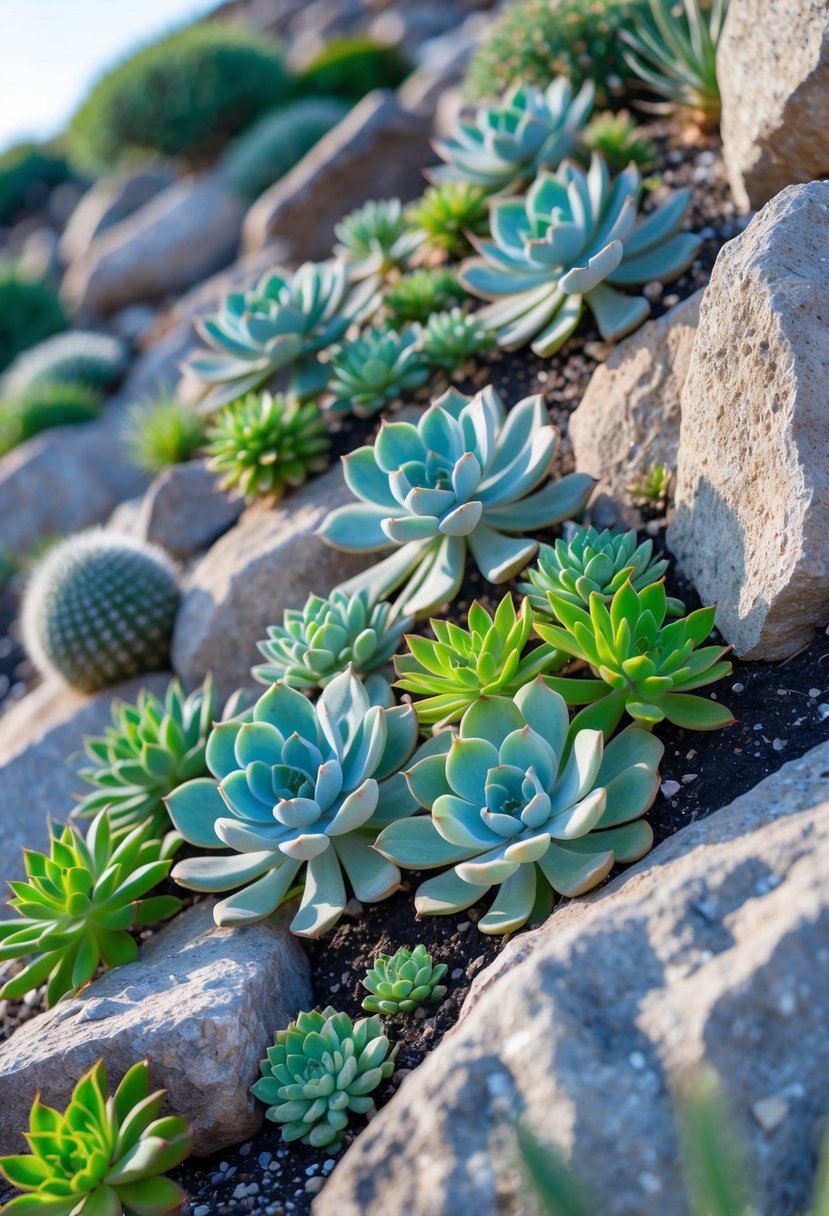
Pick drought-tolerant plants like sedum and succulents for your sloped rock garden. They barely need water or attention, which is honestly a relief.
Sedums come in loads of colors and shapes, keeping your garden lively. Succulents tuck right into the spaces between rocks.
These plants lock in the soil and stop erosion. They’re easy on the eyes and your wallet, too.
Try mixing different kinds for a fun, low-maintenance look. Want more info? Check out Plant Decor Haven.
3) Build a small stone retaining wall to prevent soil erosion
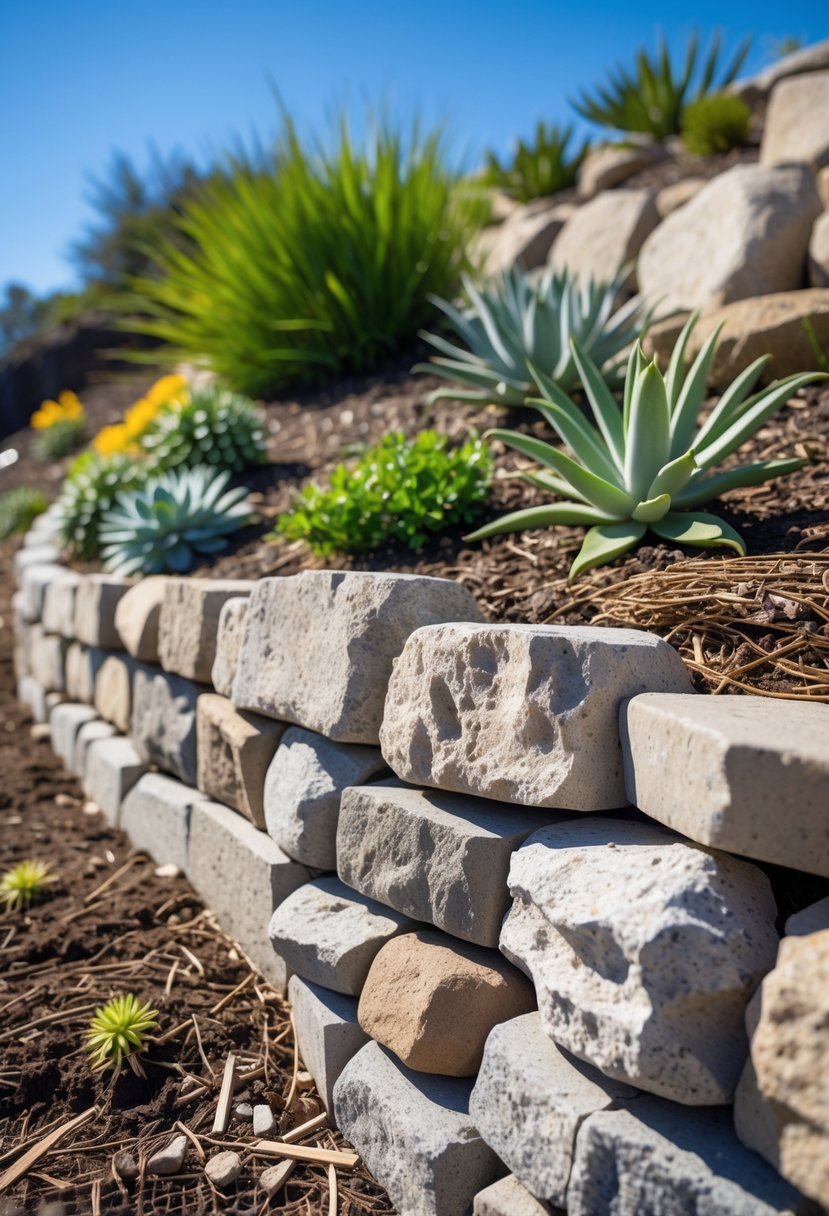
Stack a small stone retaining wall to keep soil from sliding down your slope. This keeps your rock garden tidy and solid.
You really don’t need fancy materials. Local stones or reclaimed rocks work just fine.
Set the stones tightly to form a sturdy barrier. That’ll slow water down and keep dirt where it belongs.
A stone wall also brings a natural touch to your garden. It’s practical and looks pretty good, too.
For budget tips, see building a stone retaining wall.
4) Incorporate rusted metal raised beds for terraced veggie planting
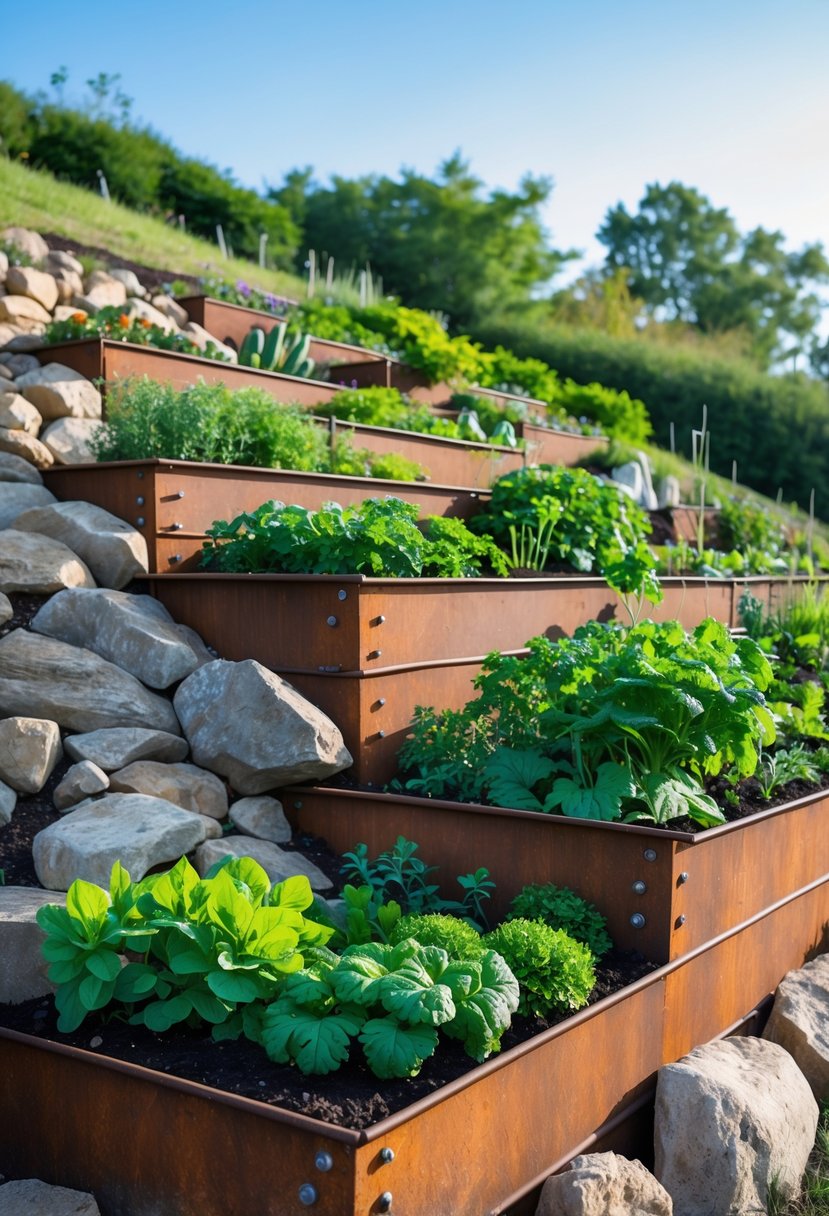
Try rusted metal raised beds to create terraces on a slope. They’ll hold the soil and make planting way simpler.
Rusted metal gives a cool, rustic vibe that pairs well with rocks. Plus, it holds up well outdoors.
Layering raised beds lets you grow veggies in tiers. It’s easier to water and harvest, honestly.
Metal edges help define your garden, so it stays neat and low-maintenance. For inspiration, check out rusted metal garden borders.
5) Arrange flat stones as stepping paths through your garden

Lay down flat stones to make stepping paths across your slope. These paths make it easy to get around without trampling your plants.
Pick wide, steady stones that won’t wobble underfoot. Space them so you can walk comfortably.
Paths add a bit of charm and slow down water runoff, which helps your plants out. Using flat stones is a smart, budget-friendly move. Want more? Check out inexpensive stepping-stone walkway ideas.
6) Plant creeping thyme or moss between rocks for a lush look

Tuck creeping thyme or moss between your rocks for a soft, green finish. These plants fill in gaps and make the whole area feel more alive.
Creeping thyme stays low and spreads out, plus it smells great if you brush against it.
Moss is perfect for shadier, damp spots and adds a deep green carpet. Both options are affordable and really boost the look of your rock garden.
For more on creeping thyme, check here.
7) Use local river rocks for an authentic, budget-friendly feel

Grab local river rocks to save money—no pricey shipping needed. They blend right in with the natural surroundings.
River rocks come in all kinds of shapes and colors, so you’ll get a unique garden every time.
They slow down water and help prevent erosion. Plus, you barely have to do anything to keep them looking nice.
If you want more ideas, check out river rock landscaping guides.
8) Add a colorful mixed gravel base for contrast and texture

Spread a mix of colorful gravel on your slope for instant texture and contrast. Try different sizes and shades for a more interesting look.
The mixed gravel makes your plants and rocks pop, and it keeps things tidy with almost no effort.
It’s affordable and easy to switch out if you want a change later. For more inspiration, see these budget-friendly small gravel garden ideas.
9) Create a dry creek bed with various sized rocks to manage rainwater

Shape a dry creek bed with rocks of all sizes to guide rainwater down your slope. Mix small, medium, and big rocks for a natural look.
Set larger rocks at the edges or curves to keep everything in place. Fill the middle with smaller pebbles so water flows where you want it.
This setup controls runoff and adds a cool feature to your yard. River rocks work especially well since they look right at home in a creek bed.
Want to learn more? Check out best rock choices and tips.
10) Place larger boulders as focal points in your sloped garden

Use big boulders as statement pieces on your slope. These huge rocks draw attention and anchor the whole garden.
Bury part of each boulder for stability. Place them solo or in small groups along paths or near planting beds.
Boulders also help with erosion if you pair them with ground covers or landscaping fabric. Just a few well-placed stones can make your sloped garden look grounded and impressive.
For more ideas, see landscaping with boulders.
11) Use recycled bricks or concrete blocks to build retaining walls

Save on costs by choosing recycled bricks or concrete blocks for your retaining walls. You can usually find these at recycling centers or construction sites.
Recycled bricks and blocks are tough and keep soil in place. They also give your rock garden a cozy, rustic look.
Build your own wall with these materials and keep your project on budget. Plus, you’ll be helping the planet by reusing what’s already out there. For more ideas, check cheap bricks and blocks here.
12) Plant alpine plants that thrive on slopes like dianthus or creeping phlox

Try adding alpine plants like dianthus or creeping phlox to your slope. These little guys love rocky, well-drained soil, so they’re right at home in a sloped rock garden.
Dianthus pops with bright blooms, and creeping phlox spreads out in a soft, flower-filled carpet. Both are tough, low-maintenance, and don’t mind dry spells.
When you plant alpine varieties, their roots help anchor the soil and reduce erosion. Plus, they bring a bit of life and color to those tricky uneven spots—without asking for much attention.
For more inspiration, take a look at this pretty rock garden idea with colorful alpine plants.
13) Mix in ornamental grasses for vertical interest and movement

Add some ornamental grasses to your slope for a bit of height and texture. They sway in the wind and give your garden a lively, natural vibe.
Try Blue Fescue or Feather Reed Grass—both handle slopes well and help keep soil in place.
Ornamental grasses bring color and contrast to rocks and other plants. They also make everything look fuller, almost like the garden just grew that way on its own.
Need more ideas? Check out ornamental grasses for rock gardens.
14) Incorporate a simple bench nestled among rocks for a cozy nook
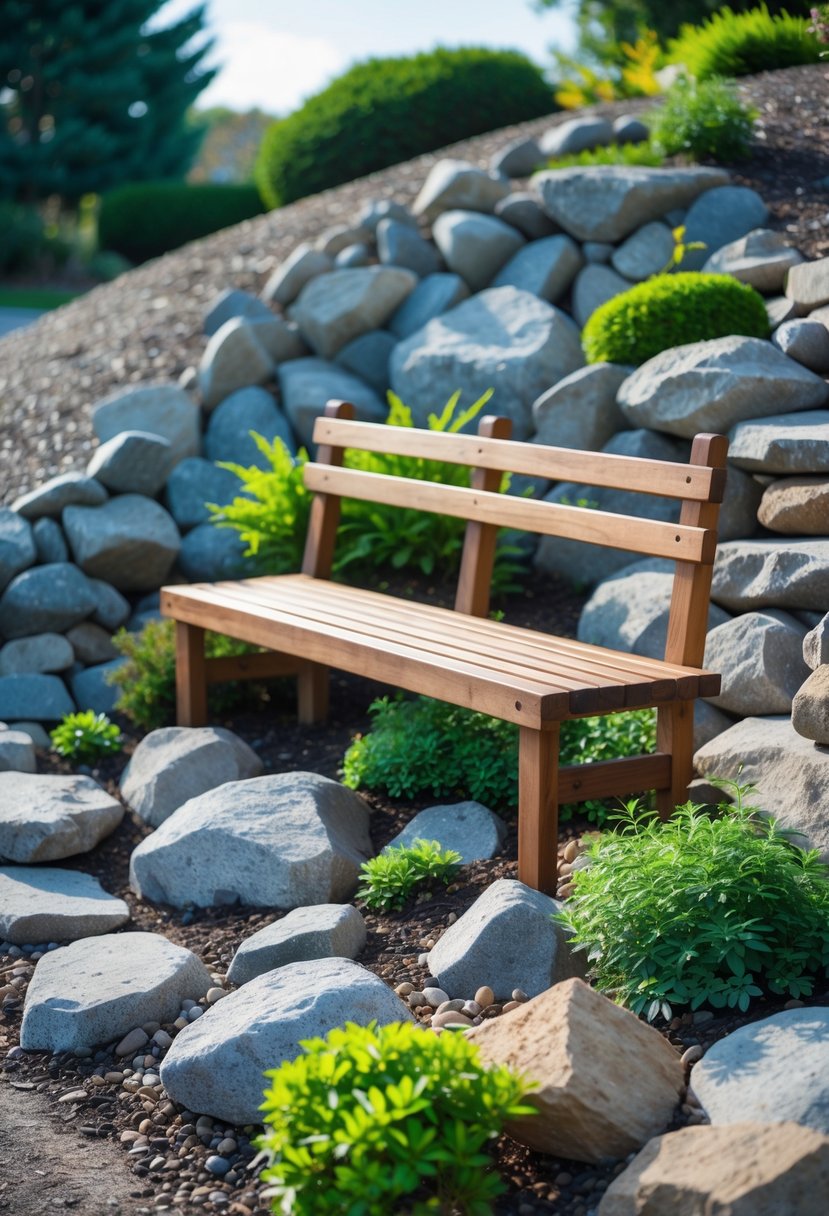
Set up a simple bench right among the rocks for a peaceful spot to sit. The rocks kind of wrap around the bench, making it feel tucked in and private.
It’s a perfect place to enjoy the view or just take a break. Pick a bench made of wood or stone to keep that natural look.
If you plant a few things nearby, you’ll soften the edges and make the nook feel even cozier. Honestly, this little seating area might just become your favorite place outside.
Want more ideas? See creative options to build a rock bench nook.
15) Add small solar garden lights to highlight rock features at night

Brighten up your slope after dark by placing a few solar garden lights near the rocks. These lights soak up sun during the day and come on by themselves at night.
They highlight the shapes and textures of your rocks, making the garden pop in the evening. Plus, they light up paths or uneven spots, so it’s safer to walk around.
Solar lights are super easy to move and install since you don’t need to mess with wires. Try shifting them around until you find the best spots to show off your favorite features.
For more simple ideas, check out affordable DIY ideas to brighten your garden.
16) Use quick-draining soil amendments for better plant health

If you want your plants to thrive on a slope, focus on good drainage. Mix in soil amendments like sand, compost, or expanded shale so water moves through quickly.
This prevents soggy roots and stops rot before it starts. Air will flow better too, so your plants get the moisture and oxygen they need.
Looking for advice? Here’s a handy guide on improving soil drainage with amendments to help you pick what’s best for your slope.
17) Lay out a rock mosaic pattern as a unique design element

Try making a rock mosaic to give your sloped garden some extra personality. Pick stones in different colors and shapes to create simple patterns or even fun designs.
Sketch your idea out first, or just go with the flow and arrange rocks on the ground. Use adhesive or mortar to keep everything in place.
A mosaic pattern will really brighten up your space and make it stand out. It’s a creative way to work with what nature gives you.
Want to try it? Here’s a step-by-step guide for making mosaic rocks.
18) Plant native wildflowers around rocks for easy maintenance

Fill in your slope with native wildflowers around the rocks. These flowers already know how to handle your local weather and soil, so they barely need any help.
Native wildflowers attract bees and butterflies, making your garden buzz with life. It’s a win-win for you and the pollinators.
Pick types that grow well in rocky spots for the easiest care. Your garden will stay colorful and low-maintenance without much fuss.
Need ideas? Check out this guide on using native wildflowers in rock outcrop areas.
19) Use landscape fabric under rocks to reduce weed growth

Lay down landscape fabric before you add rocks to help stop weeds. The fabric lets water and air through but blocks weeds from popping up.
It’s a simple way to keep your rock garden tidy. Unlike plastic, landscape fabric won’t trap water and cause problems.
Overlap the edges when you lay the fabric on the slope. Cover the whole area before you start placing rocks.
Want more info? Learn about the benefits and installation at DIY Project, Pros, Cons: Landscape Fabric Under Landscape Rock.
20) Incorporate lavender or rosemary for fragrance and low water needs

Add lavender or rosemary to your rock garden if you want something that smells amazing. Both herbs have a lovely scent and make the whole space feel a bit more relaxing.
They don’t need much water, so they’re perfect for slopes where watering can be a hassle. It’s nice not having to fuss over them too much.
Lavender and rosemary bring color and texture to your rocks. Mix them in for a fuller, more inviting garden that’s still easy to care for.
Try planting them in groups or near paths to enjoy the fragrance whenever you walk by. You’ll get that fresh scent all season.
Check out 15 Lavender Garden Ideas That’ll Make Your Yard Smell Like Heaven for more inspiration.
21) Build mini terraces with salvaged railroad ties to create flat planting spots

Use old railroad ties to build mini terraces right into your slope. The ties make sturdy, natural-looking walls that hold back soil and give you flat spots for planting.
Stack the ties to break up the slope into manageable sections. This helps fight erosion and adds some fun structure to your garden.
Look for weathered ties since they’re safer to use. Add gravel or stepping stones between terraces for easier access and a little extra charm.
Need ideas? Here’s a guide on terracing with railroad ties.
22) Add mulch between rocks to retain moisture and prevent weeds

Spread mulch between the rocks to help the soil hold moisture. That way, your plants won’t dry out so fast.
Mulch also keeps weeds down, so you’ll spend less time pulling them. Go for organic mulch like wood chips or bark for a natural look.
Just put down a 2-inch layer between the rocks, but don’t pile it too high. This keeps things tidy and healthy.
Looking for tips? Here’s a guide on how to mulch over rocks.
23) Use stacked slate tiles for a sleek, modern rock wall effect

Try stacked slate tiles for a modern, smooth look on your slope. The flat, thin tiles fit together neatly, making a rock wall that’s both strong and stylish.
Slate comes in all sorts of colors and textures, so you can pick what fits your vibe. It also pairs well with plants or lights for extra interest.
If space is tight, stacked slate tiles are a great choice. You can build a sharp-looking wall without breaking the bank.
Want more sleek ideas? Check out earthstona.com for inspiration.
24) Install a rain barrel to collect water for your slope garden

If you want to save water, try installing a rain barrel to catch runoff from your roof. That way, you get a free and easy water source for your slope garden.
Rain barrels usually fit right under your downspout, and you can set them up without much fuss. Just hook up a spigot or a hose, and you’re set to water your plants whenever you need.
When you use collected rainwater, you don’t have to rely only on tap water. Honestly, it’s a clever and budget-friendly way to keep your garden thriving without running up your water bill.
If you’re curious about the details, check out this rain barrel guide to learn how to build and take care of your own system.
25) Plant creeping juniper to stabilize soil and add greenery

Try planting creeping juniper if you need to keep soil in place on a slope. This plant spreads out low and wide, creating a natural green cover that stops erosion in its tracks.
Creeping juniper doesn’t ask for much. It thrives in full sun and well-drained soil, which makes it a solid choice for sloped rock gardens.
The blue-green leaves add color, and they shift with the seasons for a bit of extra interest. Not only does it look good, but it also helps keep your hillside steady.
If you want more advice, you can find tips on planting creeping juniper on slopes with a quick search.
Understanding Slope Challenges
Working on a sloped garden means you have to pay attention to how water moves and where sunlight hits. These things shape your soil and decide which plants will actually do well.
Soil Erosion and Drainage
Rainwater can quickly wash away topsoil on a slope, which makes soil erosion a real headache. When you lose topsoil, your plants struggle to grow.
You can use rocks, mulch, or even build retaining walls to keep the soil from sliding away. Terracing is another solid move—it breaks up the slope into flat steps and slows down water.
You should also think about drainage. If water pools up around your plants, you might end up with root rot. It’s best to create paths so water drains naturally.
Gravel or porous stones help water soak in, instead of just running off and taking your soil with it.
Sunlight and Plant Selection
Sunlight on a slope isn’t always predictable. South-facing slopes usually get more sun, which is perfect for sun-loving plants like succulents or herbs.
On the other hand, north-facing slopes stay cooler and don’t get as much direct light. For those spots, try shade-tolerant plants such as ferns or hostas.
Plants with deep roots can help hold the soil together, too. Sedums and creeping thyme are low-maintenance and can handle tough conditions, while adding pops of color.
If you know your slope’s light and moisture patterns, you’ll have a much easier time picking plants that actually thrive.
For more ideas that won’t break the bank, take a look at this guide to sloping garden ideas on a budget.
Maintenance Tips for Sloped Rock Gardens
Taking care of a rock garden on a slope means you have to focus on smart watering and using mulch well. You’ll also want to plan a few simple seasonal tasks to keep things looking tidy and healthy.
These steps help control erosion and keep your plants strong, and honestly, they save you trouble down the line.
Watering and Mulching Strategies
Watering can be tricky on a slope since water just wants to run downhill, taking soil and nutrients with it. Try using drip irrigation or soaker hoses to deliver water slowly right at the roots.
This method really cuts down on runoff and helps your plants get what they need.
Mulch makes a big difference, too. Spread a layer of shredded bark or small rocks around your plants. Mulch keeps moisture in and weeds out, plus it gives the garden a natural vibe.
Check your mulch every few months. If you notice it’s thinning, especially after heavy rain, just add a bit more to keep your soil protected and healthy.
Seasonal Upkeep for Budget Gardens
In spring and fall, set aside a bit of time to clear out dead leaves and debris. That way, you’ll keep pests away and your garden stays tidy—without spending extra cash.
Go ahead and trim back plants that have gotten too big. This keeps things neat and actually encourages new growth.
Pull out weeds by hand before they get a chance to compete with your plants. It’s honestly one of those chores you’ll thank yourself for later.
Keep an eye on your rocks and soil. If you spot any erosion or see rocks shifting around, just nudge them back or toss in a bit more soil.
Fixing these little things right away prevents bigger headaches down the road. Plus, your garden keeps looking great, and you don’t have to shell out more money.
Want more ideas for keeping up your sloped garden? Check out this low-maintenance rock garden guide.


