

Budget-Friendly Steep Bank Garden Ideas: 25 Creative Tips for Easy Landscaping
If you’ve got a steep bank in your yard, you might be scratching your head about how to make it look good without spending a fortune. Working with a slope can feel tricky, but honestly, it’s a chance to get creative and make something special.

You really can turn a steep bank into a beautiful garden space using smart, budget-friendly ideas that actually fit your style and needs. With a little planning, you’ll control erosion, save space, and boost your outdoor area’s value—without emptying your wallet.
If you want more ways to improve your sloped yard on a budget, take a look at budget-friendly steep hillside landscaping ideas.
1) Create terraced planting beds to control erosion and add dimension

Try building terraced planting beds to make a steep bank more useful. Terraces stop soil from washing away when it rains.
They also add layers and depth, making your garden way more interesting. You’ll get extra space for plants too.
Go with simple stuff like wood or stone to keep things cheap. With some planning, you’ll improve drainage and give your garden a tidy, organized look.
If you want to try it, here’s a step-by-step guide for building terraced garden beds on a slope.
2) Install retaining walls using natural stone for stability and style

Use natural stone to build retaining walls that keep soil in place on steep banks. These walls stop erosion and give you flat spots for planting or walking.
Natural stone lasts ages and gives your garden a timeless, earthy vibe.
Honestly, building these walls can be pretty fun. Grab the right stones, make sure you have good drainage, and you’re set.
If you want a guide, check out retaining walls for your garden at Landscaping Duty.
3) Use native drought-tolerant plants to minimize watering
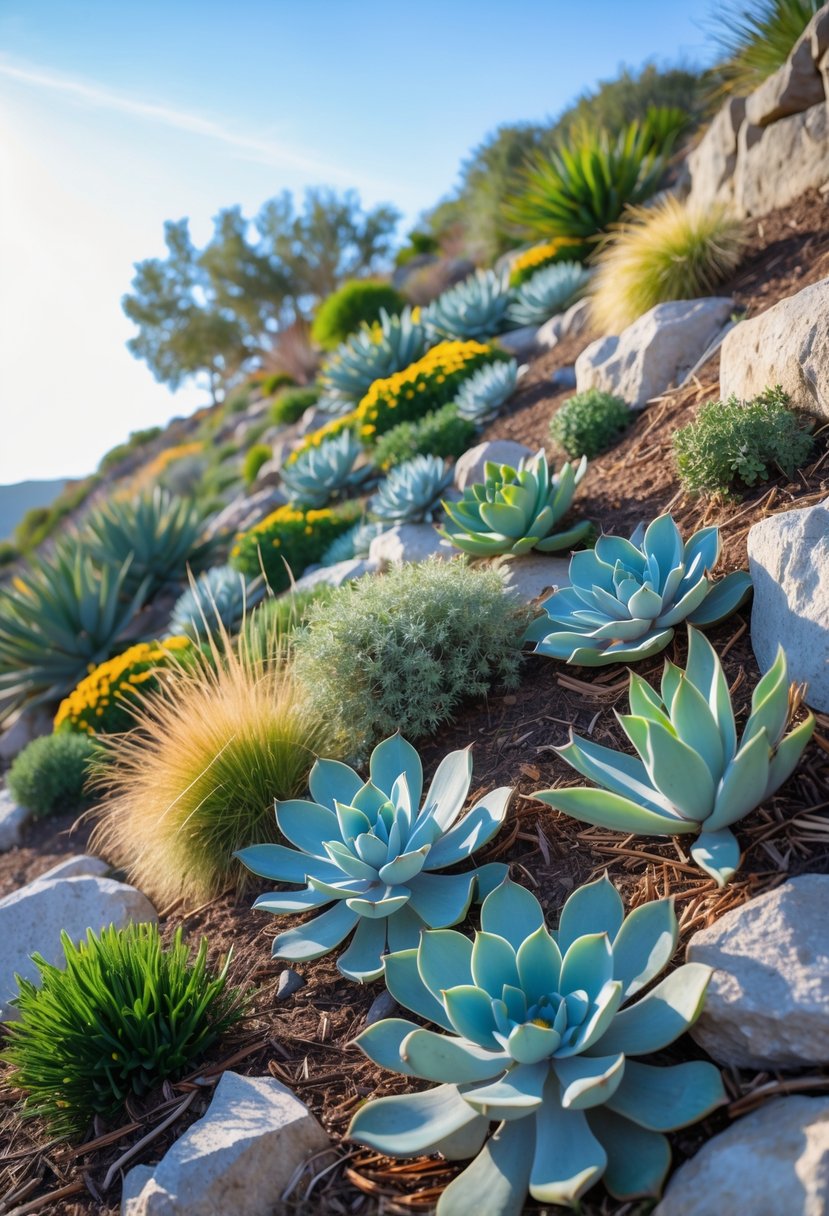
Pick native plants for your steep bank garden to save on water and effort. These plants already handle your local weather and soil, so they thrive with less fuss.
Drought-tolerant plants don’t need much watering, which is perfect for fast-draining slopes. They also attract local wildlife—think birds and bees.
You won’t need as many chemicals or fertilizers with native plants. The result? A healthy, low-maintenance garden that stays nice even in dry spells.
If you’re curious, here’s a guide on creating drought-resistant gardens with native plants.
4) Build stone or timber steps for easy slope navigation

Add stone or timber steps to help you get up and down a steep slope safely. Steps make the garden easier to enjoy and look neat too.
Stone steps last forever, while timber steps are lighter and quick to build if you’re into DIY.
Use pressure-treated wood for timber steps so they don’t rot. Make sure both stone and wood steps are level and secure to avoid any mishaps.
If you’re looking for ideas, check out how to build stone steps on a slope and easy wood step designs online.
Here’s a handy link for how to build stone steps on a slope.
5) Plant ground covers like creeping thyme to reduce soil erosion

Try using creeping thyme as a ground cover on steep banks. It grows low, spreads fast, and holds soil in place.
Creeping thyme forms a dense mat that shields the soil from rain, keeping your slope stable.
It’s low-maintenance and brings pops of color with its tiny flowers. It also blocks weeds, so your garden stays neat with less effort.
Find more plants like creeping thyme for erosion control here.
6) Add mulch layers to retain moisture and suppress weeds

Mulch is a super affordable way to help your steep bank garden. Spread 2-4 inches of organic mulch like straw, bark, or compost around your plants.
Mulch keeps soil moist longer, so you’ll water less. It also blocks sunlight from weed seeds, which means fewer weeds popping up.
Don’t pile mulch right against plant stems—no one wants rot or bugs. Mulching makes your slope look tidy and keeps plants happy.
If you want more info, here are some mulch benefits and methods.
7) Design winding gravel pathways for visual interest and access

Winding gravel pathways add a little magic to a steep bank. They make it easier to walk up and down and give your garden a relaxed, flowing feel.
Gravel is budget-friendly and works well on slopes. It helps with drainage and keeps you from slipping.
Curved paths feel way more inviting than straight ones. Add plants along the edges for extra color and life.
Simple borders like wood or stone keep gravel in place. For inspiration, check out these budget-friendly gravel path ideas.
8) Incorporate rain gardens to manage water runoff effectively
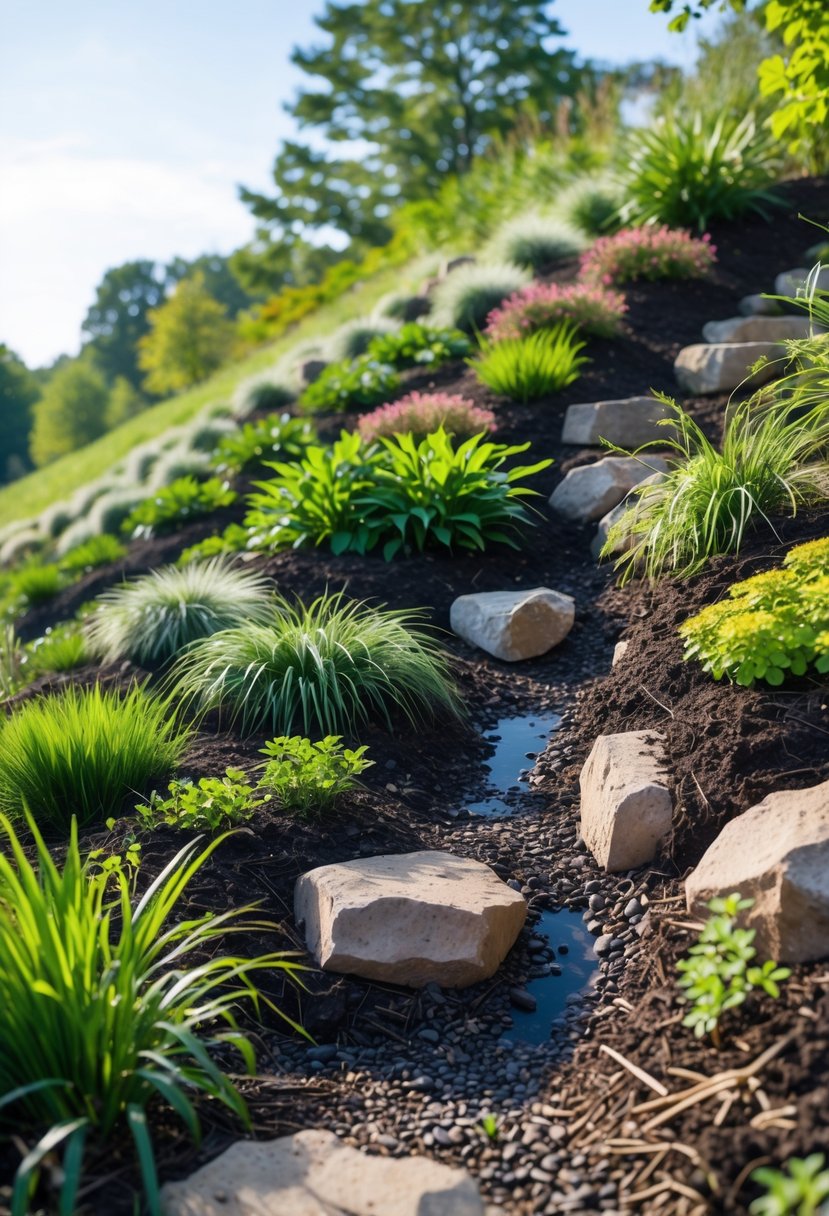
Set up a rain garden on your steep bank to soak up rainwater. This trick helps stop runoff and keeps erosion under control.
Rain gardens use plants that love wet soil, so they drink up extra water and keep things in place. They also bring more color and wildlife into your garden.
You can start small—just pick a spot where water collects from your roof or driveway. Over time, expand your rain garden to handle more runoff naturally.
Want more ideas? Here’s how to design a rain garden that manages runoff.
9) Use raised planter boxes on flat terraces for easy planting
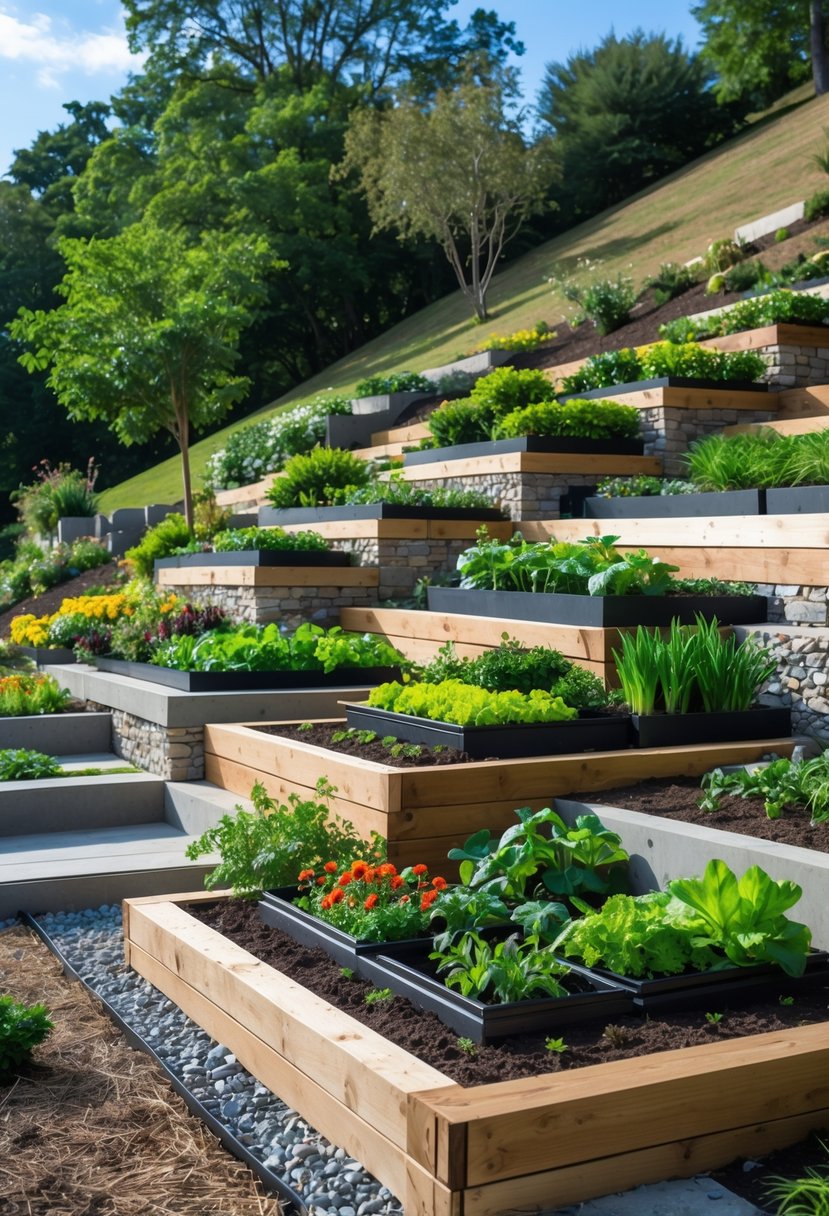
If you’ve got flat terraces on your steep bank, try raised planter boxes. They give you even, easy-to-manage spots for growing plants without worrying about soil sliding away.
Raised planter boxes make gardening simpler since you don’t have to bend so much. You can also control the soil quality better.
Build boxes cheaply from wood, pallets, or recycled stuff. They fit perfectly on terraces and keep your plants tidy and healthy.
Add mulch or gravel around the boxes to cut down on weeds and help drainage. It keeps everything looking sharp.
For more, check out DIY raised planter box ideas for small gardens.
10) Install drip irrigation to save water on steep slopes

Use drip irrigation to save water on steep slopes. This system sends water straight to the roots, which means less waste and healthier plants.
You can control water pressure easily on a slope. Pressure regulators and special emitters help water flow evenly—no more runoff.
Setting up drip irrigation is affordable and honestly, not that hard. It uses way less water than sprinklers, so you save money and help the planet.
Need a guide? Here’s how to set up drip irrigation on a slope.
11) Add boulders and rock features to create focal points
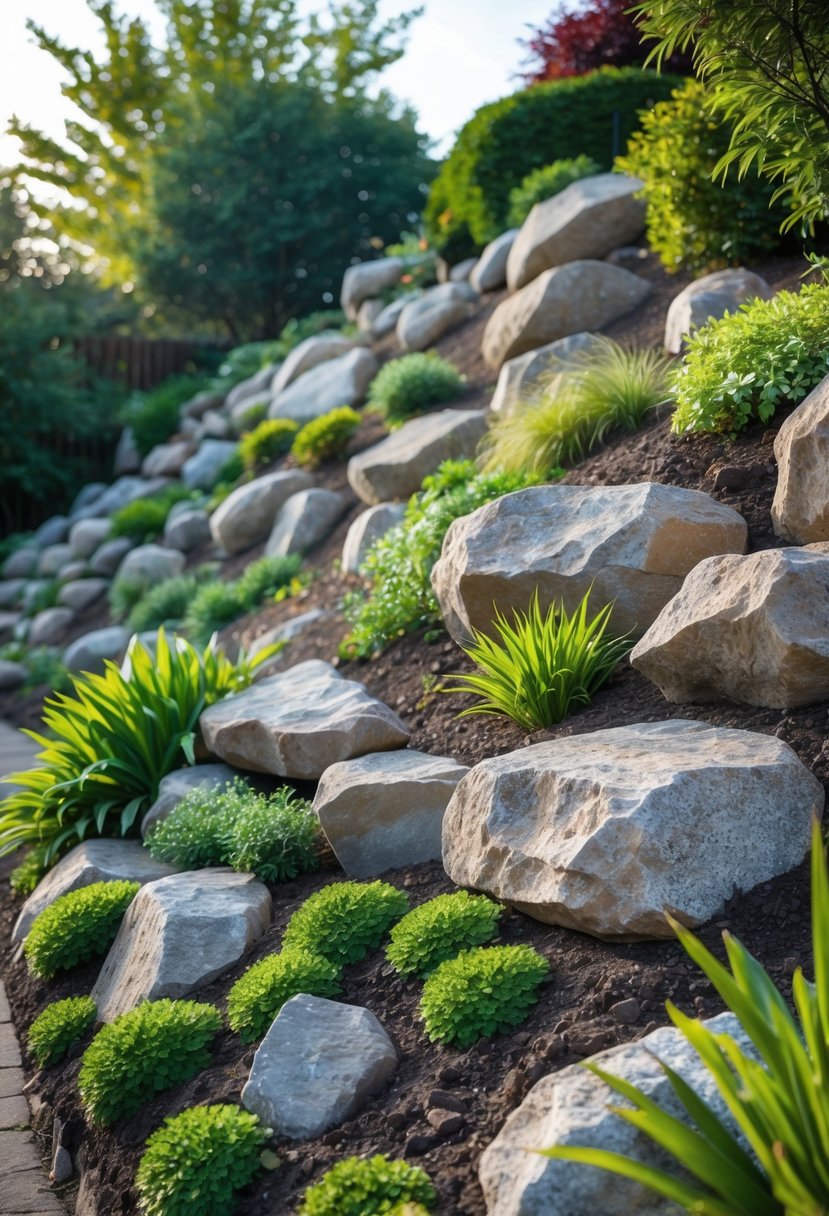
Add boulders to your steep bank garden for instant visual impact. Big rocks help shape the space and give it structure.
Place a few boulders in key spots to create natural focal points. They draw the eye and add texture without a ton of effort.
Rocks also help stabilize soil on slopes. If you want simple beauty and a little function, boulders are a solid choice.
Need ideas? Check out these rock garden ideas on a slope for inspiration.
12) Choose tall ornamental grasses for movement and texture
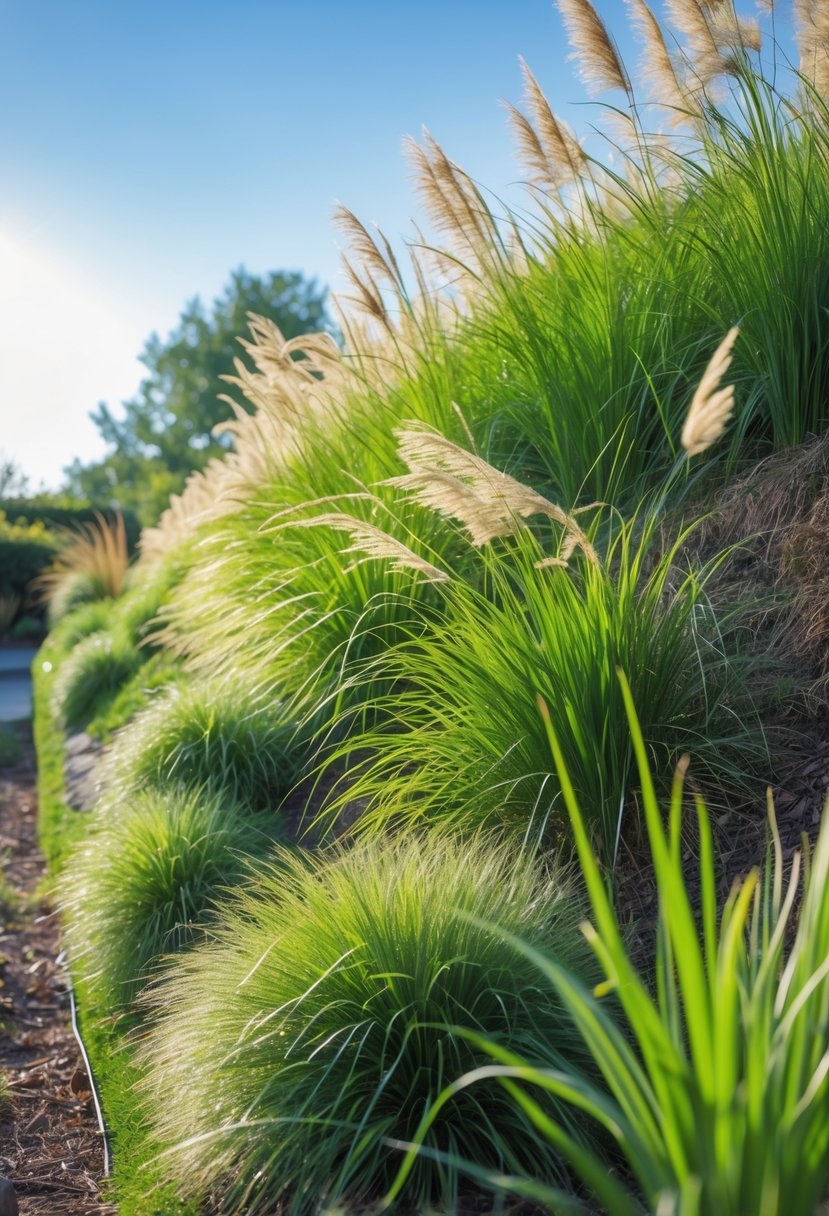
Tall ornamental grasses bring movement to a steep bank garden. When the wind picks up, the grasses sway and the whole space feels alive.
Try varieties like Miscanthus or fountain grass. They grow tall, add texture, and don’t demand much care.
These grasses soften the look of a steep slope. They also make a natural backdrop that lets your other plants shine.
If you want more planting ideas for steep spots, check out designing with ornamental grasses.
13) Use flowering shrubs like lavender for color and fragrance

Lavender just works wonders on a steep bank. Its soft purple pops against green leaves.
You’ll catch that fresh, calming scent every time it blooms. Lavender tends to put on a show all summer, so you get months of color.
Its compact size fits well on slopes. Plant it in clusters to make a border or draw the eye to a special spot.
Lavender teams up nicely with other flowers and brings butterflies, so your garden feels lively. For inspiration, see lavender garden ideas.
14) Construct gabion walls filled with rocks for rustic support
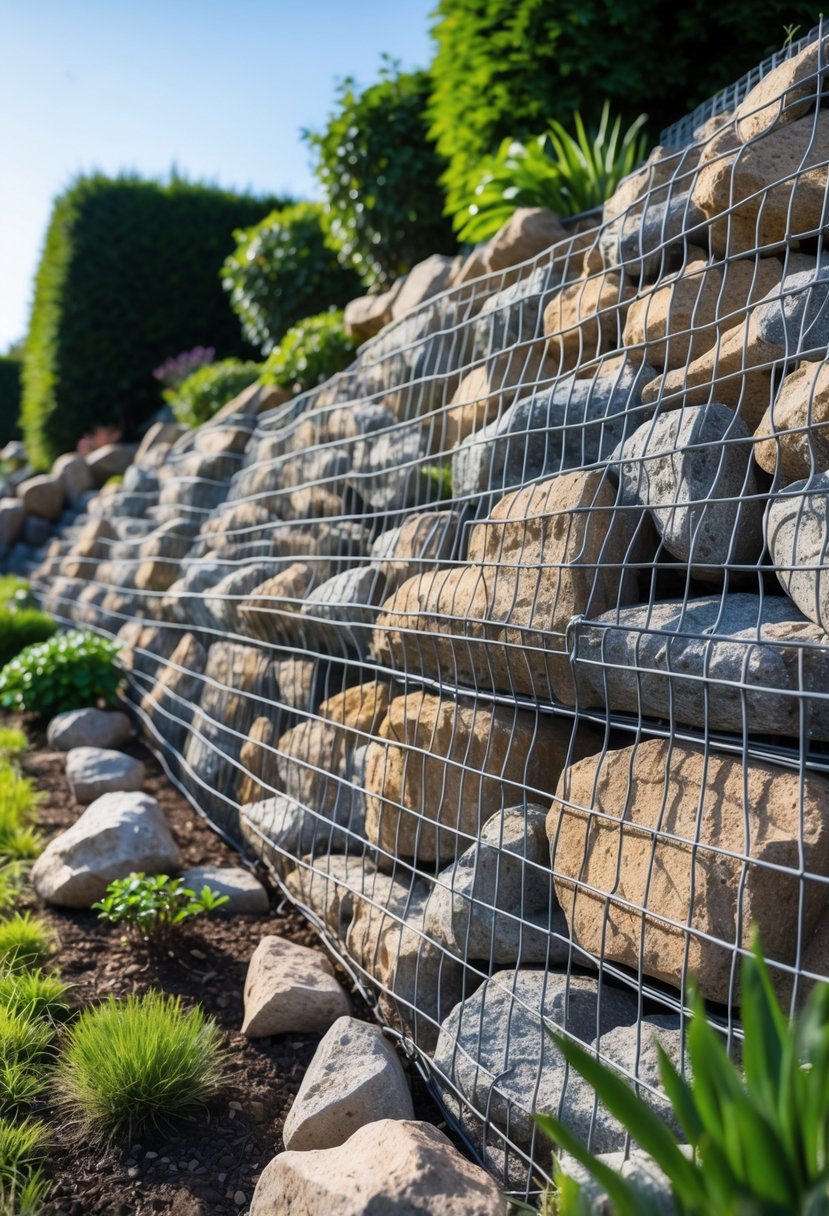
Stacking gabion walls with wire baskets and rocks gives your steep bank a rustic vibe. These walls look natural and sturdy.
Gabions hold soil in place without using concrete. They’re tough and last for years.
You just need wire cages and some stones or gravel, which keeps things affordable. The installation process is pretty straightforward—no fancy skills needed.
Water drains through gabion walls, so they help fight erosion. That’s a big plus on steep ground.
If you want to try this, check out a DIY gabion retaining wall guide.
15) Plant layered shrubs and perennials for depth and variety

You can add depth to a steep bank by layering shrubs and perennials. Put the tallest shrubs at the top or back.
Use medium-height plants in front of those. Finish with low-growing perennials along the bottom or edge.
This approach creates visual interest and cuts down on erosion. Mixing plant heights gives your garden more texture and makes it feel full.
For a quick how-to on grouping plants by height, see layered garden design.
16) Create a dry creek bed to handle excess water flow

If water rushes down your steep bank, a dry creek bed can steer it safely. Dig a shallow channel and line it with stones and gravel.
Water flows through the bed during heavy rain, but it stays dry most of the time. This setup keeps erosion in check.
A dry creek bed also gives your garden a natural, relaxed look. You can build one without spending much, and it’s pretty low maintenance.
For step-by-step help, see how to create a dry creek bed on a budget.
17) Incorporate seating areas on flat terraces to enjoy the view

Adding seating areas on flat terraces gives you a place to relax and take in the view. Simple benches, comfy chairs, or built-in seats with cushions all work.
Put your seating where you can see the best parts of your garden. It makes the space feel welcoming.
Natural materials like wood or stone help the seating blend in. They’re affordable and keep things cozy.
For more inspiration, take a look at steep hillside landscaping ideas.
18) Use succulents on rockier parts of the slope for low maintenance

Plant succulents in the rocky spots on your slope. They thrive with little water or fuss, which is perfect for tough areas.
Succulents add pops of color and interesting shapes. They don’t need much soil, and they blend right in with rocks.
Because they handle dry conditions, you’ll spend less time watering. That makes your steep bank easier to care for and saves money.
Try mixing different types for a more playful look. For ideas, see succulent rock garden ideas and tips for starting a succulent garden.
19) Add solar garden lights along pathways and steps

Brighten up your steep bank garden with solar garden lights. They install easily since you don’t need to mess with wires.
These lights soak up sunlight during the day and glow at night. They’ll guide you safely along paths and steps.
You’ll find plenty of styles to match your garden’s look. Solar lights are eco-friendly and won’t bump up your electric bill.
For more creative lighting ideas, check out solar light paths.
20) Plant edible herbs like rosemary and thyme on terraces
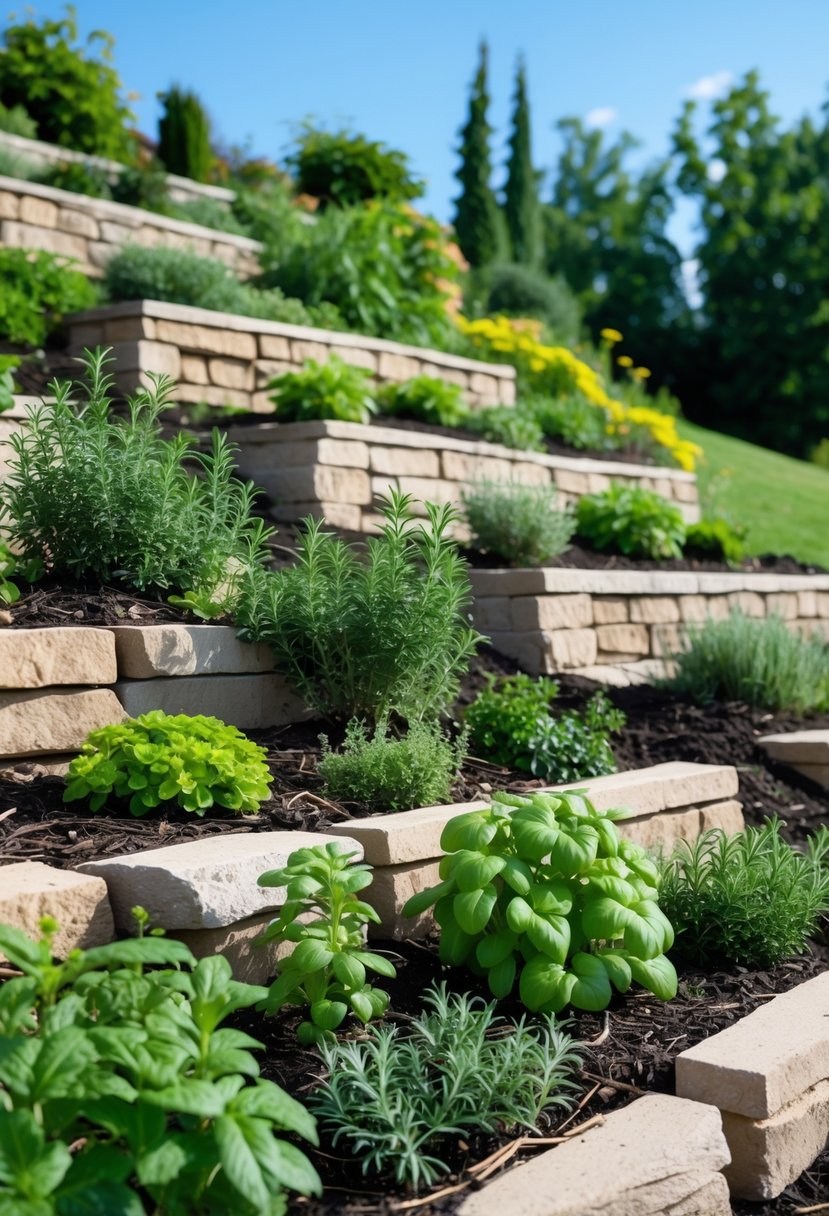
Make your terraces work for you by planting edible herbs like rosemary and thyme. They love full sun and well-drained soil, which terraces usually offer.
Rosemary and thyme are tough and don’t need much water or fertilizer. You can grow them close to your kitchen for easy snipping.
These herbs smell great and look good on a bank. For more growing tips, check out how to grow thyme and rosemary together.
21) Create butterfly-friendly zones with native wildflowers

Brighten your steep bank by planting native wildflowers that attract butterflies. These flowers offer nectar and places for caterpillars to grow.
Pick varieties that suit your area’s climate and soil. They’ll thrive with little extra work or cost.
Create small wildflower patches to invite butterflies and add color. You’ll also help local wildlife.
Need plant ideas? See butterfly garden tips for the best native choices.
22) Install a simple wooden pergola for shade and structure
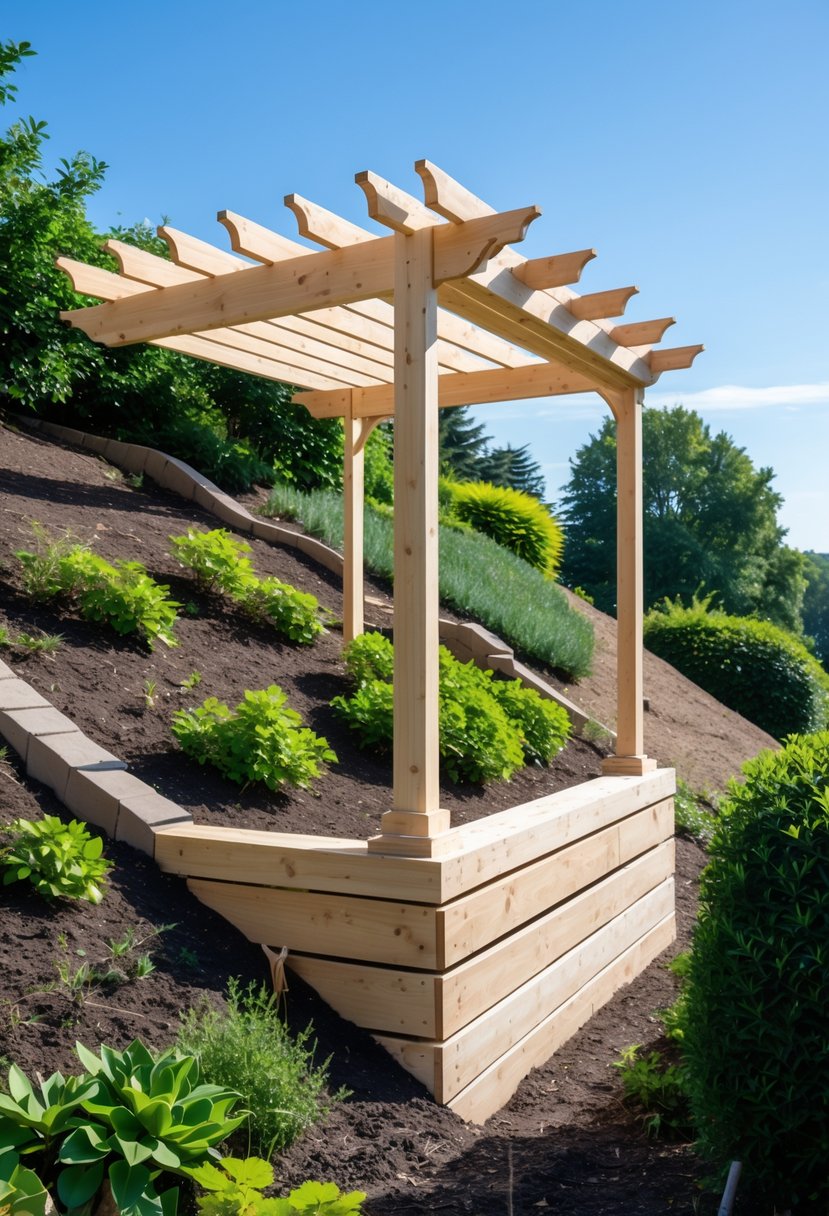
A wooden pergola adds shade and a bit of style to your steep bank. It creates a cozy spot to unwind—no complicated building needed.
Use affordable wood or recycled pallets to save money. Simple designs mean you don’t need special tools or skills.
A pergola gives your garden some vertical interest. It’s also great for growing vines or climbing roses.
For more ideas, check out 20 Budget-Friendly DIY Pergola Ideas.
23) Use fast-growing ground covers like creeping juniper

Stop soil erosion on steep banks by planting fast-growing ground covers like creeping juniper. Creeping juniper spreads out quickly and forms a dense mat to hold soil in place.
It’s tough and low-maintenance, thriving in lots of conditions. If you want an easy-care option, this one’s hard to beat.
Creeping juniper keeps your garden green and tidy all year. For more on its benefits and care, see how to grow creeping juniper as a ground cover.
24) Incorporate rain chains to guide water with style
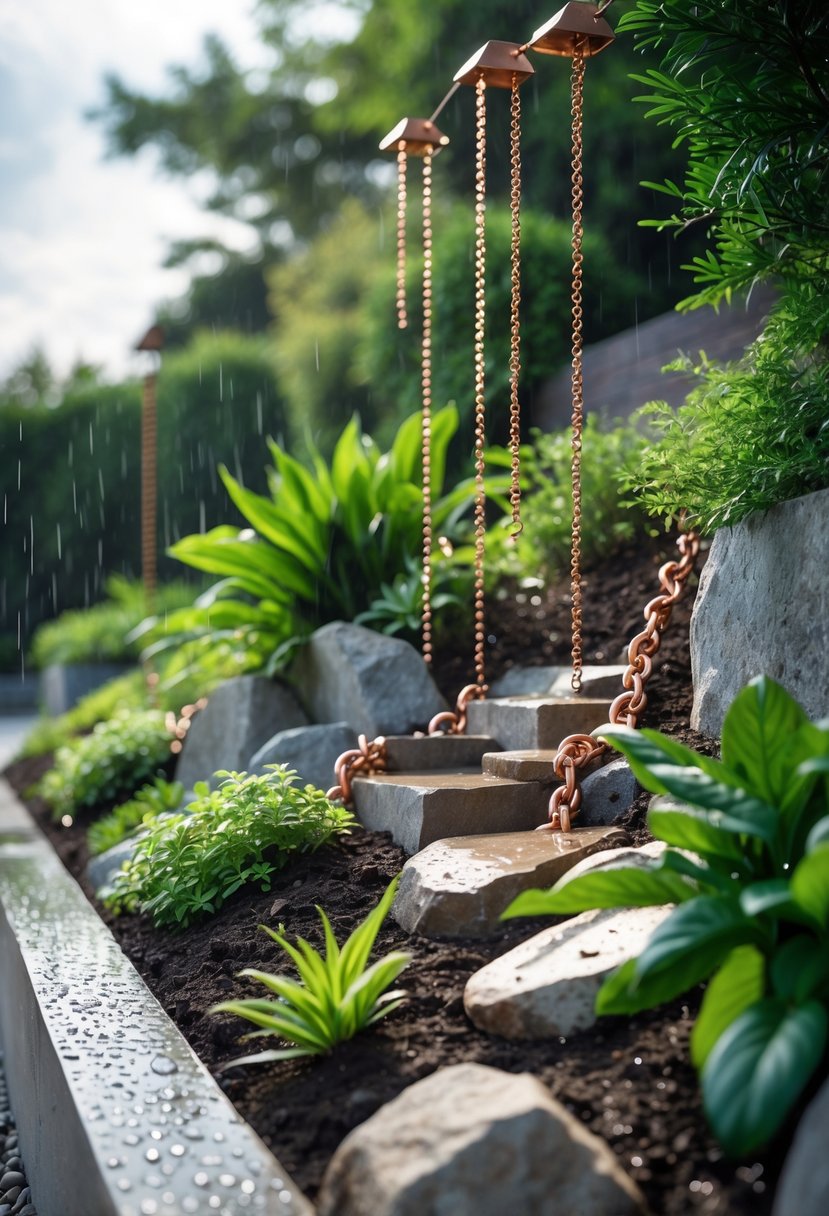
Use rain chains to guide water down your steep bank with some flair. They direct rainwater from your roof or gutters right where you want it.
Rain chains come in all sorts of designs, so you’ll find one that fits your vibe. As water trickles down, you get a gentle sound that makes the garden feel peaceful.
Besides looking good, rain chains help prevent soil from washing away. Try hanging a few together for a stylish and useful touch.
For more ideas, check out these creative rain chain garden ideas.
25) Add bird feeders and houses to attract wildlife

Try adding bird feeders and houses to your steep bank garden. They bring in birds and make the space feel alive, and honestly, it doesn’t cost much at all.
DIY feeders or birdhouses keep things affordable and fun. Put them where birds can spot them but still stay safe from any sneaky predators.
Plant some native shrubs or flowers nearby and you’ll notice more birds and even a few insects showing up. It’s a simple way to turn your garden into a mini wildlife haven.
If you want more ways to bring in wildlife, check out these budget-friendly backyard tips. There’s always something new to try.
Planning A Steep Bank Garden On A Budget
Start off with a clear plan—it’ll save you money and a lot of hassle later. Figure out the slope’s shape and how much sun hits different spots, so you can pick plants and features that actually work there.
A simple layout and a few design ideas can turn even a tricky bank into something useful and pretty. You don’t need to spend a fortune.
Assessing Slope and Sunlight
Walk along your steep bank and check how steep it feels in each area. Mark out where the slope gets really sharp and where it’s a bit more gentle.
This helps you figure out good spots for terraces or paths, which can keep soil in place. Use a level or just an angle finder app on your phone to measure the slope if you want to get technical.
Watch how the sunlight moves through the day. Does the bank get blasted with sun, or does it stay shady? Some plants love sun, others don’t, so this matters more than you’d think.
Write down which areas get shade or sun. That way, you can match the right plants to each spot and let your garden work with nature, not against it.
DIY Layout and Design Tips
Grab some stakes and string and mark out where you want terraces or planting rows. It doesn’t need to be fancy—just enough to give you a sense of space.
You can make flat planting spots by stacking cheap materials like railway sleepers or old stones for low retaining walls.
Lay out natural paths with mulch or gravel. This lets you get around without trampling the soil.
Plant ground covers on the steepest parts to keep the dirt in place and add a splash of color. Try grouping plants by height or sun needs if you want things to look tidy.
Here’s a quick checklist:
- Use local or recycled materials if you can
- Set up easy watering with drip hoses or soakers
- Try raised beds to make planting and soil control simpler
These steps help you turn a tough bank into a garden that’s both nice to look at and easy on your wallet. If you need more ideas, check out budget-friendly steep hillside landscaping.
Soil Solutions For Challenging Slopes
If you’re dealing with a steep slope, you’ve got to keep the soil in place and improve its quality. Otherwise, plants won’t stand a chance.
You can use simple, cheap tricks to handle these problems.
Erosion Control Methods
Erosion can ruin a steep bank fast. Try mulching with straw or wood chips to shield the soil from rain and hold in moisture.
Plant some ground covers like creeping thyme or clover. Their roots lock the soil down and slow water as it moves.
If you want a more permanent fix, build retaining walls or terraces with wood, stone, or concrete blocks. These catch the soil and give you flat spots for planting.
Adding drainage pipes or swales can help too. They move water away and lower erosion risk, especially if your slope gets a lot of rain.
Soil Improvement On A Budget
You can fix poor soil on slopes without spending much. Just mix in some compost or well-rotted manure.
This simple step adds nutrients and makes the soil feel better to the touch.
If you want something quicker, try using mulch. It helps keep moisture in and shields the topsoil from drying out.
Cover crops like rye grass or clover? They’re fantastic. They grow, improve the soil, and also stop erosion.
Don’t toss out old leaves or lawn clippings. Recycle them as mulch or compost instead.
You’ll save money and give your soil a real boost.
Got rocky or sandy slopes? Add organic matter a bit at a time.
Your plants will root better and grow stronger as the soil improves.
Want more ideas for tricky slopes? Check out these budget-friendly tips at landscaping a steep slope.


