

Beautiful Steep Bank Garden Ideas: 25 Friendly Tips to Transform Your Slope
Got a steep bank in your yard? You might be scratching your head, wondering how to make it look good without turning maintenance into a nightmare. Slopes can feel intimidating to tackle, but with the right ideas, you can actually turn them into beautiful garden spaces that give your outdoor area a lot more character.
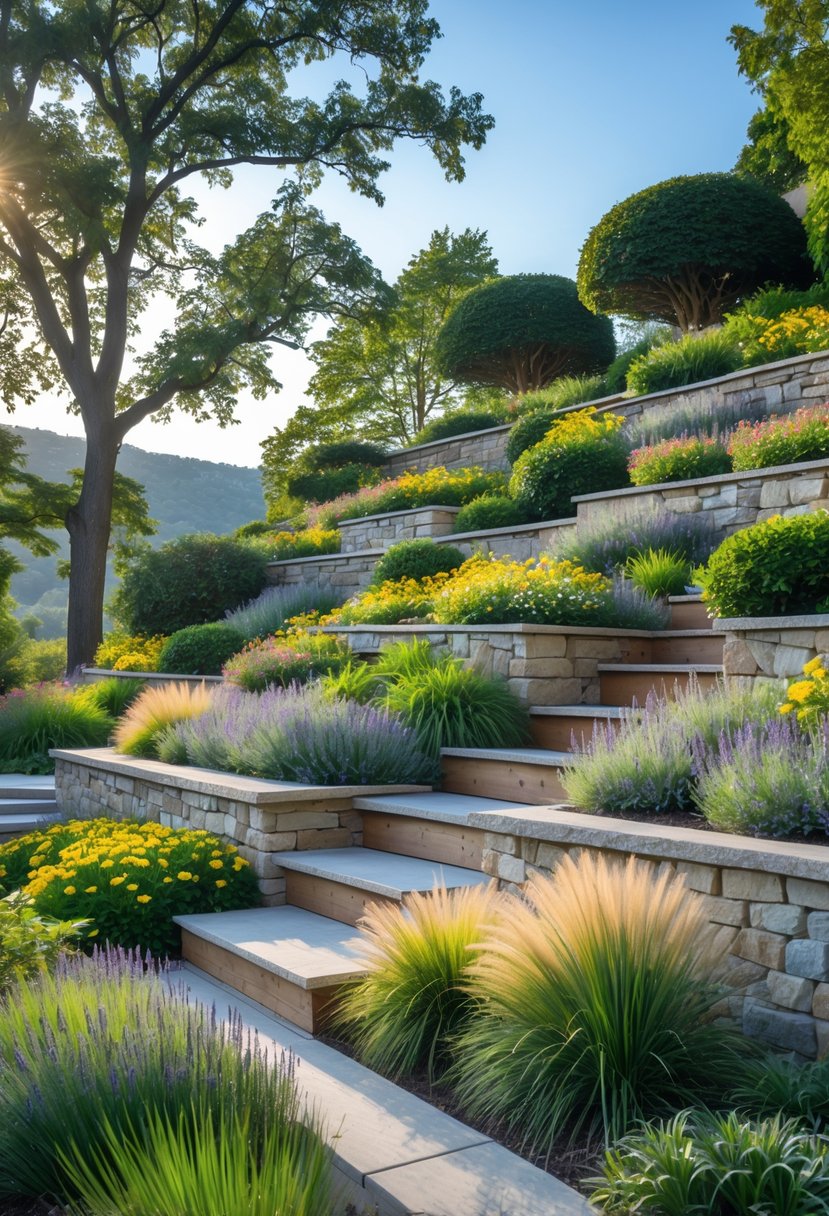
Beautiful steep bank garden ideas help you create a colorful, functional space that fits your style. Whether you’re after something simple or want to get a little creative, there are plenty of ways to work with the slope instead of fighting against it.
1) Terraced garden beds to control erosion

Terraced garden beds slow down water on a steep slope. That keeps soil where it should be and protects your plants.
Creating flat steps gives you more room to plant flowers or veggies. You can build terraces from wood, stone, or whatever materials you like.
Terraces boost drainage, so you won’t deal with water pooling or soil washing away. This approach makes a tough slope look tidy and manageable.
If you’re curious about building terraces, check out these terraced garden beds for more ideas.
2) Plant creeping thyme as ground cover

Try creeping thyme for covering steep banks. It grows low, spreads fast, and locks in the soil to keep erosion away.
Creeping thyme loves the sun and, when it’s happy, forms a fragrant, colorful carpet. It’s easy on the eyes and the nose.
Tiny flowers pop up and attract pollinators. Plus, it barely needs any fussing over—perfect if you want low-maintenance beauty on your slope.
If you want to dig deeper, check out this creeping thyme ground cover guide.
3) Use lavender for color and scent

Lavender just works on a steep bank. Its purple blooms pop against the slope and give your garden a soft, dreamy vibe.
You get that calming scent, too—so nice when you’re outside. Lavender is easy to care for, which is always a win.
Plant it along paths or edges for fragrant borders. Mixing lavender types can make things even more interesting.
For more inspiration, check out these lavender garden ideas.
4) Build winding stone pathways

Add winding stone pathways to make your steep bank easier and safer to walk on. It’s way more fun to explore your garden this way.
Pick natural stones, pavers, or stepping stones that blend with the landscape.
Curved paths look softer and more welcoming than straight lines. You can even tuck little resting spots or plant beds along the way.
Need ideas? These stone garden path ideas might spark something.
5) Install retaining walls with natural stone

Use natural stone for your retaining walls. Stone gives your steep bank garden both strength and a timeless look.
Natural stone walls hold soil in place and stop erosion. You get to pick shapes and sizes to match your style.
These walls last for ages and barely need any upkeep. They make your garden safer, too. Want more? Here are some natural stone retaining wall ideas.
6) Incorporate rock gardens with succulents

Add a rock garden with succulents to dress up your slope. Rocks keep soil steady and fight off erosion.
Succulents don’t need much water and love rocky spots, so they’re perfect for tough banks.
Mix up rock sizes and colors for a natural look. Go wild with different succulents—shapes and colors make things pop without much effort.
Try this simple project if you want to start small.
7) Add cascading sedum for texture

Cascading sedum brings texture and color to any steep bank. Sedums spill over edges, making your garden look soft and a bit wild.
These plants are drought-tolerant, so dry slopes don’t faze them. They cover soil tightly and prevent erosion.
Try planting sedum mats or low-growing varieties along the slope for a lush, layered feel.
Adding sedum is an easy way to get cool shapes and colors without much work.
8) Create multi-level seating areas

Turn your steep bank into a spot for multi-level seating areas. You’ll get great views and different places to hang out.
Build small retaining walls from stone or wood to carve out flat spots for benches or chairs. This also keeps soil where it belongs.
Add cushions or weatherproof furniture to make things comfy. Multi-level seating can turn a tricky slope into your favorite place to relax. For step-by-step ideas, check out terracing ideas for steep backyard hills.
9) Plant drought-tolerant shrubs

Pick drought-tolerant shrubs to make your steep bank easy to manage. These plants need less water, so you save time and don’t have to worry during dry spells.
Shrubs like lavender and creeping juniper thrive on slopes. They help hold soil in place and stop erosion.
Many of these shrubs have beautiful flowers or fragrant leaves, which attract bees and butterflies. For more plant options, see drought-tolerant plants for slopes.
10) Use ajuga for vibrant foliage

Ajuga adds color and texture to any steep bank. This plant, also called bugleweed, grows low and spreads fast—great for covering slopes.
Its leaves come in green, purple, and bronze, so your garden feels lively with almost no effort.
Ajuga forms a thick mat that holds soil in place and keeps weeds out. If you’re after easy landscaping, ajuga is a solid bet for your steep bank. Learn more about using ajuga.
11) Build wooden steps for steep access

If your garden’s steep, wooden steps make it way easier to get around. Use pressure-treated wood so the steps last outside.
Wooden steps bring a natural touch that works well near decks or patios.
You just need some basic tools and a bit of effort to build safe, sturdy steps. Paint or stain the wood to match your garden’s style.
Here’s a handy guide if you want to try building wooden garden steps yourself.
12) Add native grasses to stabilize soil

Try native grasses to keep your steep bank’s soil right where it belongs. These grasses have tough roots that grip the soil and stop erosion.
Native grasses like buffalo grass and big bluestem fit right in because they’re used to your area’s weather. They also look good—there’s something about their movement in the breeze.
Planting native grasses means less watering and care. It’s a smart, low-maintenance way to protect your slope.
If you want more info, check out this guide to native grasses for soil stabilization.
13) Create rain gardens to manage runoff

Try using rain gardens to control water that rushes down your steep bank. These gardens catch rainwater and let it soak into the ground instead of running off.
Rain gardens help hold your soil in place. Fill them with plants that love wet conditions—they’ll make your garden look vibrant and healthy.
It’s a simple, eco-friendly way to manage water and add beauty to your slope. Want to dig deeper? Learn more about rain gardens for managing runoff here.
14) Use ornamental grasses for movement

Ornamental grasses work wonders on steep banks. They sway in the wind, giving your garden a lively, easygoing vibe.
These grasses come in all sorts of sizes and colors, so you’ll find something that fits your taste. They also help hold soil in place, which is a real bonus for slopes.
Plant them in bunches for a soft, flowing look that shifts with the seasons. Want more ideas? Check out landscaping with ornamental grasses.
15) Expand with raised herb planters

Add raised herb planters to your steep bank for a tidy, practical touch. These planters keep your herbs neat and off the dirt, making watering and harvesting a breeze.
Raised planters stop soil from washing away. Build them from wood, stone, or even recycled stuff—whatever matches your style.
Grow basil, rosemary, thyme, or any herbs you love. Even on uneven ground, your herbs will thrive.
Give it a try and see how much more useful and attractive your steep garden becomes. For more inspiration, check out raised herb planters here.
16) Incorporate colorful wildflowers

Planting wildflowers brings a natural, cheerful look to your steep bank. Their bright colors attract bees and butterflies, making your garden buzz with life.
Wildflowers don’t ask for much care. They handle slopes well, especially where mowing is a pain.
Mix different wildflowers for a bold, varied garden. You’ll support local wildlife and enjoy a burst of color. If you want more ideas, check out creative wildflower garden ideas.
17) Grow ferns for shaded slopes

Got a shady slope? Ferns are your friend. They thrive in low light and create a soft, green layer that keeps soil from slipping away.
Pick from options like Autumn Fern or Lady Fern for different shades and textures. They hardly need any fuss and really freshen up difficult spots.
Planting ferns adds life to your slope without much hassle. Your garden will feel peaceful and lush, even where the sun barely reaches.
Need more ideas? Here’s a guide on best ferns for shade.
18) Plant daylilies for easy care

Daylilies make life easier on steep banks. Plant them and they’ll do well with just a bit of water now and then.
They’re tough—happy in all sorts of soils and sun. Their roots grip the slope, keeping soil in place.
You’ll get bright flowers that bloom over and over. If you want a good-looking garden with little effort, daylilies are a solid pick.
For more creative ideas, check out landscaping with daylilies.
19) Install drip irrigation systems

Drip irrigation makes watering your steep bank simple. It sends water straight to the roots, helping prevent erosion.
Set up drip lines across the slope to keep moisture even. You’ll save water and your plants will thank you.
Try pressure-compensating drippers on steep areas for steady flow. Install drip irrigation before planting to give your garden a strong start.
Want more info? Check out 7 Smart Irrigation Layout Ideas for Slopes That Prevent Erosion.
20) Add birdhouses for wildlife

Bring more life to your steep bank by adding birdhouses. These cozy shelters give birds a safe place to rest and nest.
Pick birdhouses that match your garden—rustic wood or maybe a splash of color. Hang them at different heights for extra charm.
Birdhouses invite birds in, making your garden feel lively. Watching them stop by is always a treat.
Need ideas? Check out birdhouse designs that fit your garden’s vibe.
21) Use mulch to retain moisture

Mulch keeps moisture in your steep bank garden’s soil. Your plants get the water they need to stay healthy.
It also slows down how fast the soil dries out. That means less watering for you and happier plants.
Mulch stops weeds from taking over. Your plants won’t have to fight for water or nutrients.
Using organic mulch feeds your soil as it breaks down. It’s a quick way to keep your garden looking good and growing strong.
Want tips? See how to mulch a steep bank effectively.
22) Create a waterfall feature

Turn your steep bank into a peaceful spot with a waterfall. The slope lets water tumble over rocks, creating a calm, soothing sound.
Building one isn’t as hard as you might think. Go for a natural look with rocks or try a modern style—whatever suits you.
A waterfall keeps your garden fresh and might even draw in birds and wildlife. Want more? Learn about water features for slopes at dopegardening.com.
23) Plant creeping juniper for coverage

Cover your steep bank with creeping juniper for easy, lasting results. This low-maintenance plant spreads out and shields your soil, stopping erosion.
Creeping juniper stays green all year and handles rocky or dry spots like a champ. Plant them closer together on steep slopes to lock in the soil.
They look good and barely need any care once they settle in. If you want a tidy, natural hillside, creeping juniper is a smart pick.
For more, check out this creeping juniper landscaping guide: https://greg.app/creeping-juniper-landscaping-ideas/.
24) Add solar landscape lighting
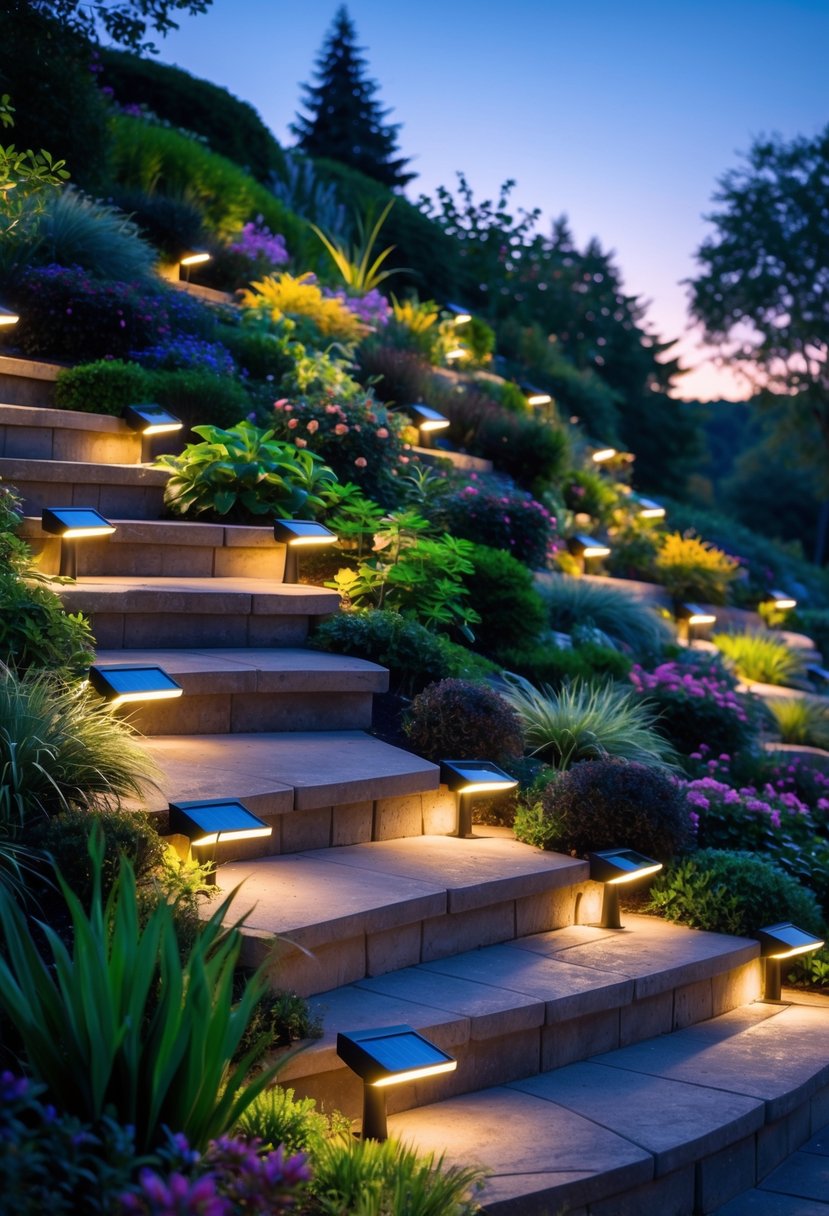
Solar landscape lighting brightens your steep bank without the hassle of wires. These lights soak up the sun by day and glow gently at night.
Line your paths or spotlight your favorite plants. Solar lights are easy to pop in and don’t add to your energy bill.
Try different styles—spotlights, path lights, whatever fits your mood. This simple update lets you enjoy your garden long after sunset.
Want more ideas? Find solar lighting inspiration here.
25) Use boxwoods for structured hedges

Boxwoods make neat, structured hedges on steep banks. Their thick leaves keep their shape, so you get crisp lines and tidy edges.
Boxwoods stay green all year, even in winter. Your bank will look sharp no matter the season.
Shape them into simple, classic forms for a calm, polished vibe. Want more boxwood ideas? Check out boxwood landscaping.
Design Principles for Steep Bank Gardens
Designing a garden on a steep bank takes some planning. You’ll need to figure out how water moves, pick plants that keep soil in place, and make sure your garden stays safe for everyone. The right design steps help you build a garden that looks great and holds up over time.
Understanding Slopes and Drainage
A steep bank really controls how water flows. Water rushes downhill, and if you don’t slow it down, you’ll lose soil fast.
Add terraces, rocks, or mulch to slow runoff. That makes a big difference.
Drainage matters a lot. If water just pools at the bottom, you’ll get erosion or sick plants.
Try building small channels or using gravel beds to guide water where you want it. Know how steep your slope is and watch where water collects—that’ll help you decide how to keep your garden safe.
Choosing the Right Plants
Picking plants for a steep bank is a whole different game. You need strong, deep roots to keep soil in place.
Native plants usually work best—they’re used to your climate and soil.
Look for groundcovers, grasses, and shrubs with good roots. Creeping juniper, daylilies, and ornamental grasses all help hold soil steady.
Group plants by water needs so you don’t waste water or end up with thirsty plants next to ones that like it dry.
Ensuring Stability and Safety
Safety matters a lot on steep banks. Sometimes you’ll want to add terraces or retaining walls to keep soil from sliding.
These structures create flat spots, which make your garden easier to look after and less dangerous. If you’re adding walkways, go for non-slip materials on paths and steps.
Double-check that your slopes aren’t too steep to walk on. Clear away loose stones that someone could trip over.
Mulch helps your plants by locking in moisture and keeping the soil steady during heavy rain. It’s a simple step, but it really makes a difference.
For more on these ideas, see Steep Bank Garden Ideas.
Creative Features to Transform a Steep Garden
You can turn a steep garden into something both eye-catching and practical. Focusing on how you shape the land and what you add can bring out the best in your space.
Smart design choices do more than just look good—they help stop soil erosion and make your garden safer. Plus, they make everything easier to use.
Terracing With Natural Materials
Terracing handles a steep slope better than almost anything else. You break the hill into flat, level steps where you can plant, walk, or just sit for a while.
Try using natural materials like stone, wood, or bricks for the terraces. Stones last a long time and feel solid, but wood has a nice way of blending in with plants.
Build strong retaining walls on each terrace to hold the soil in place. You can plant groundcovers or grasses along the terrace edges to soften the lines.
Pick plants with sturdy roots—they help keep the soil from washing away. Mix in shrubs, flowers, and maybe even some vegetables on each level.
This layering creates a garden that feels full and interesting. Terracing doesn’t just manage water flow; it also gives you garden beds that are easy to reach.
Suddenly, those steep banks turn into useful garden zones you’ll actually want to spend time in.
Incorporating Pathways and Steps
Adding pathways and steps lets you reach every part of your steep garden safely. Materials like flagstone, gravel, or wood all work for paths.
If you curve the paths, the slope feels less harsh and a bit more inviting. Build steps wide enough for comfortable walking, and if the slope’s really steep, add handrails for extra safety.
Plant low flowers or moss between stones for a softer, more natural look. Let your paths and steps match your garden’s style—whether that’s rustic, modern, or something in between.
They guide foot traffic, which helps protect your plants and soil. Well-designed walkways make your garden easier to wander, and honestly, they add a lot of charm.
Highlighting Water Elements
Water features bring calm and a touch of beauty to a steep garden. Small waterfalls or streams can flow right down the slope, using gravity in a way that feels natural. They really show off the shape of the hillside.
Try to put water elements where you’ll actually see and hear them. A simple rock-lined pond or a few small pools can catch rainwater and cut down on runoff.
If you add water plants like lilies or reeds, you’ll soften the look and give local wildlife a boost. Water features also grab attention and make your garden feel special.
Use water wisely in your design to slow runoff and keep the soil moist for your plants. Honestly, it’s a great way to turn a steep bank into a peaceful spot you’ll want to visit again and again.
For more inspiration, take a peek at guides on adding water elements in sloped gardens.


