

Creative Garden Ideas On A Hill: 25 Fun Ways To Transform Your Sloped Yard
Gardening on a hill? It can seem tricky at first, but honestly, you get some cool opportunities that flat yards just don’t have. Why fight the slope when you can turn it into something unique and totally your own?
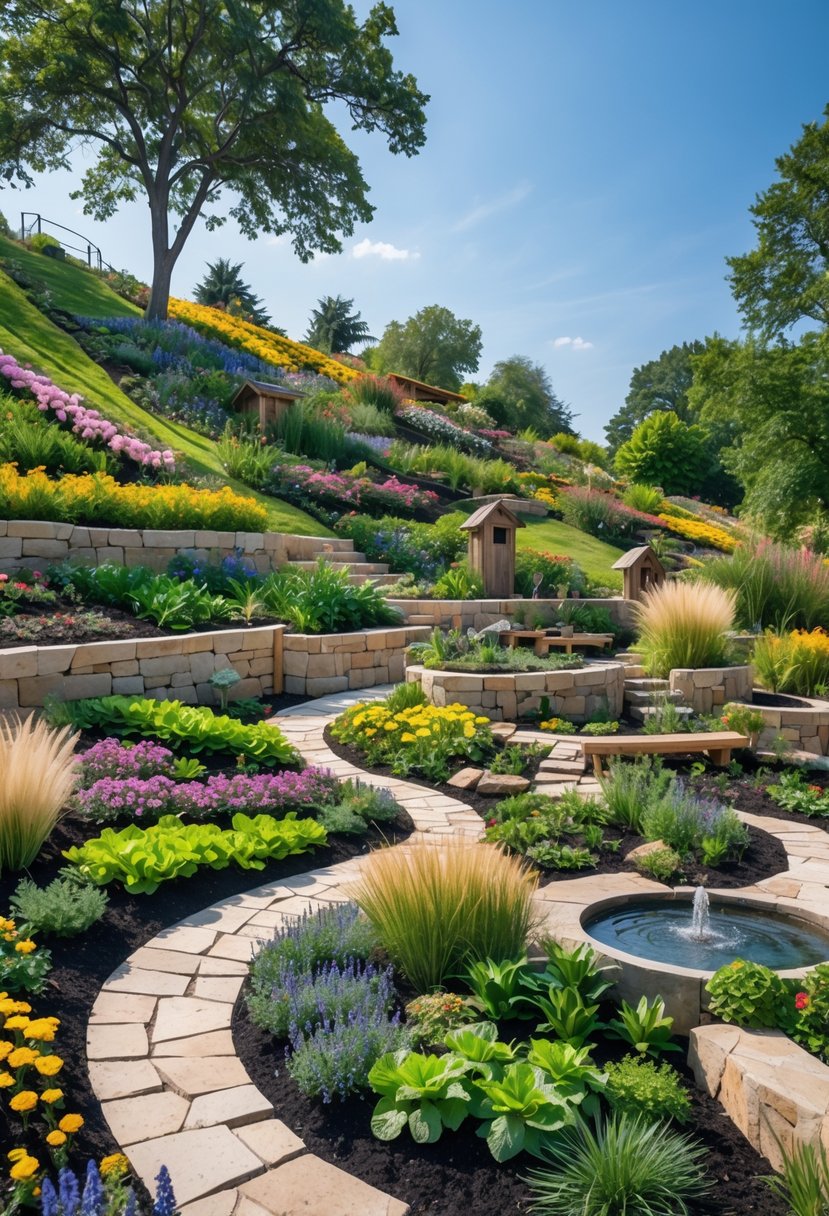
Creative garden ideas on a hill let you turn slopes into beautiful, functional outdoor spaces that fit your style. With a bit of planning, your hillside can become a peaceful retreat or a lively area full of plants and winding paths.
1) Build tiered retaining walls with natural stone
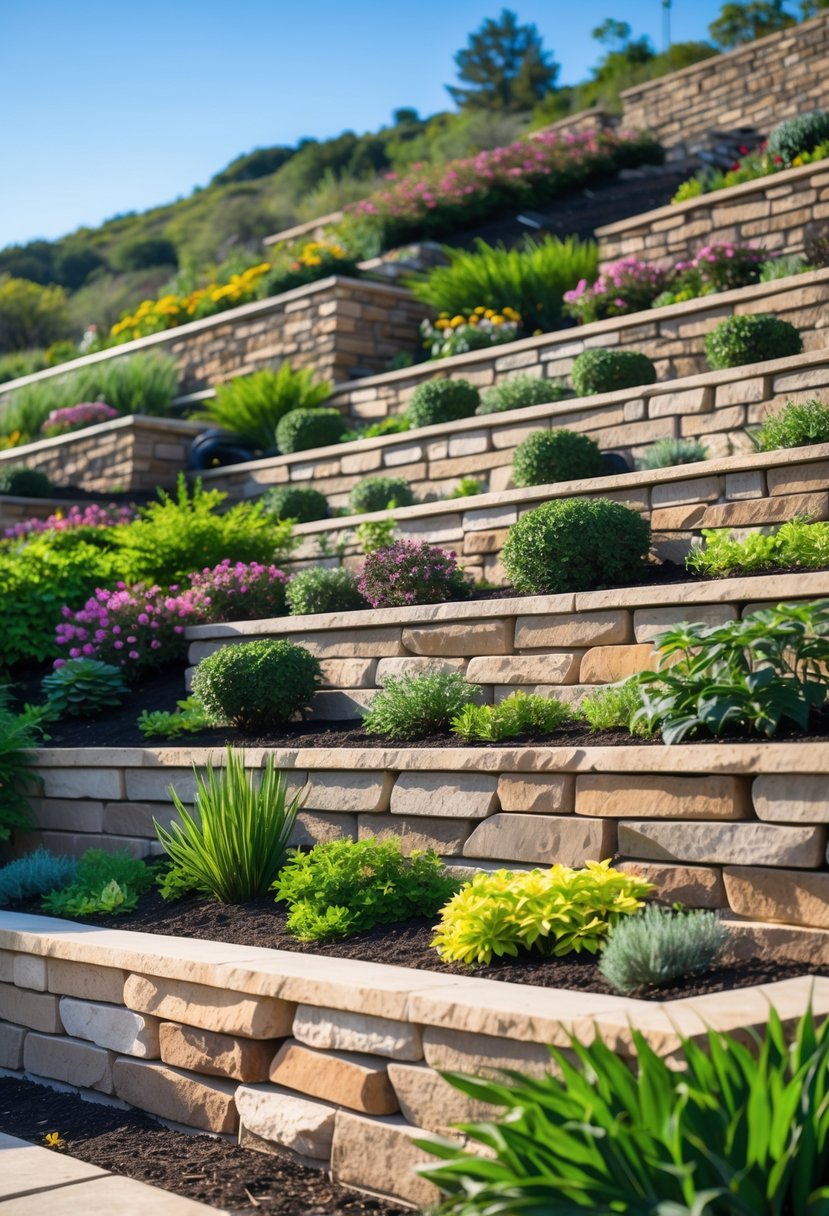
Try building tiered retaining walls to transform your sloped garden into layered spaces. Natural stone brings a warm, earthy vibe that just feels right with greenery.
These walls hold back soil and create flat spots for flowers or veggies. Each tier turns into its own mini garden, which keeps things organized and visually interesting.
Natural stone comes in all sorts of colors and shapes, so you can really make the design your own. It lasts for ages and pairs well with stairs or garden paths.
For inspiration, check out natural stone retaining wall ideas.
2) Plant cascading lavender and rosemary for Mediterranean charm

Want a Mediterranean vibe? Try planting lavender and rosemary on your hill. These herbs thrive on slopes and spill down beautifully.
Lavender pops with purple blooms, while rosemary brings lush green and an amazing scent. Together, they look and smell fantastic.
You could group these herbs in terracotta pots or line them along the hill’s edge. That keeps things tidy and makes it easy to grab herbs for cooking.
Need more ideas? Check out creative ways to grow lavender and rosemary on slopes.
3) Create a winding flagstone pathway

Lay out a winding flagstone pathway to make your hill garden easier to wander. A curvy path feels more gentle and just looks inviting.
Flagstones come in lots of shapes and colors, so you can go simple or rustic. Arrange them to fit your style.
The stones blend right in with the plants and grass, tying everything together. For ideas, check out creative flagstone path designs.
4) Install wooden steps with built-in lighting
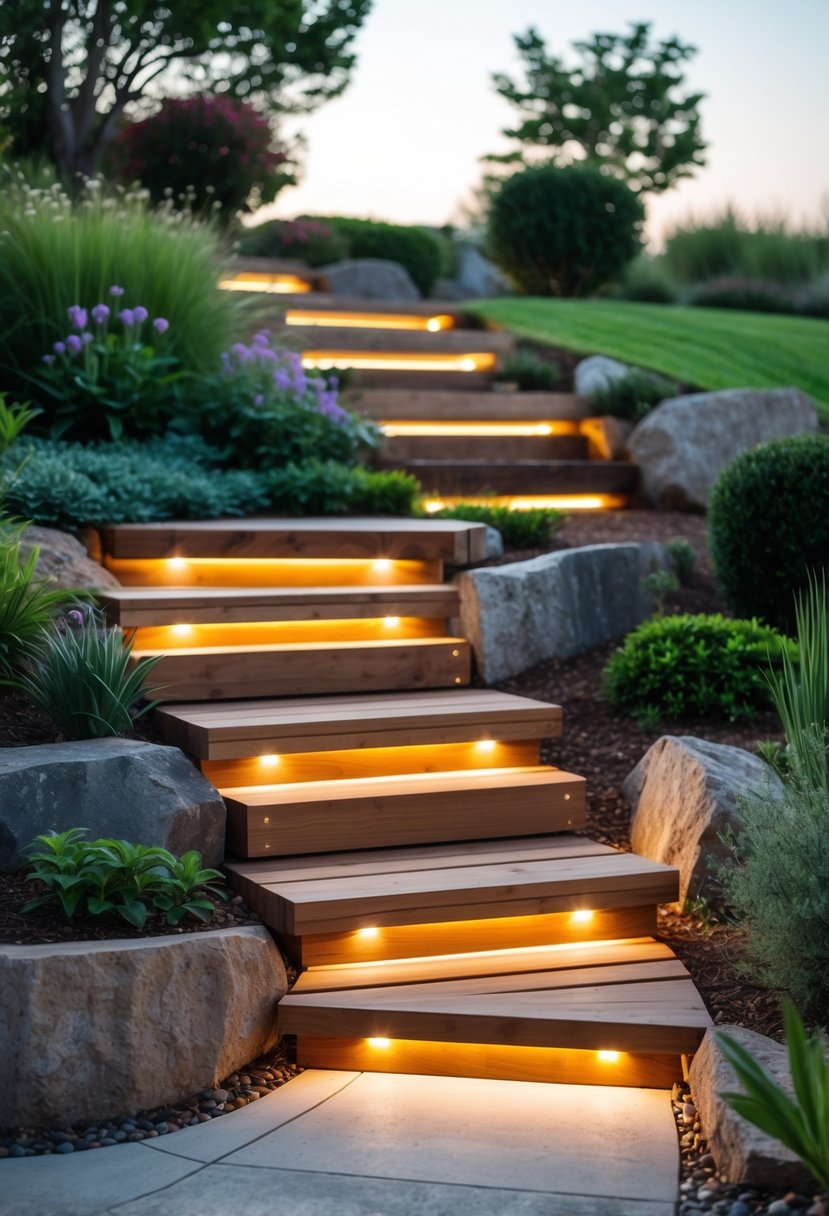
Add wooden steps to your hill to make climbing easier. Built-in lighting lets you see the steps at night, which feels safe and looks cool.
You can use small LEDs on the side or under each step. They barely use any energy and last a long time.
This setup adds a modern touch but still keeps that natural wood feel. It’s a simple way to light up your hillside without a bunch of extra wiring.
For more ideas, see wooden garden steps with lighting.
5) Design a cottage-style garden with foxgloves and hollyhocks

Bring a cozy vibe to your hill by planting foxgloves and hollyhocks. These tall flowers add height and a sweet cottage feel.
Put foxgloves and hollyhocks toward the back of your garden beds so their colors really pop. Let shorter plants fill in front.
Mix in daisies or lavender in the middle for a soft touch. Let creeping thyme spill onto paths for a relaxed, lived-in look.
This style is pretty easy to care for and just feels inviting. Enjoy a patchwork of colors and textures as the seasons change.
Want more tips? Visit english cottage garden ideas.
6) Use terraced raised beds for vegetable planting
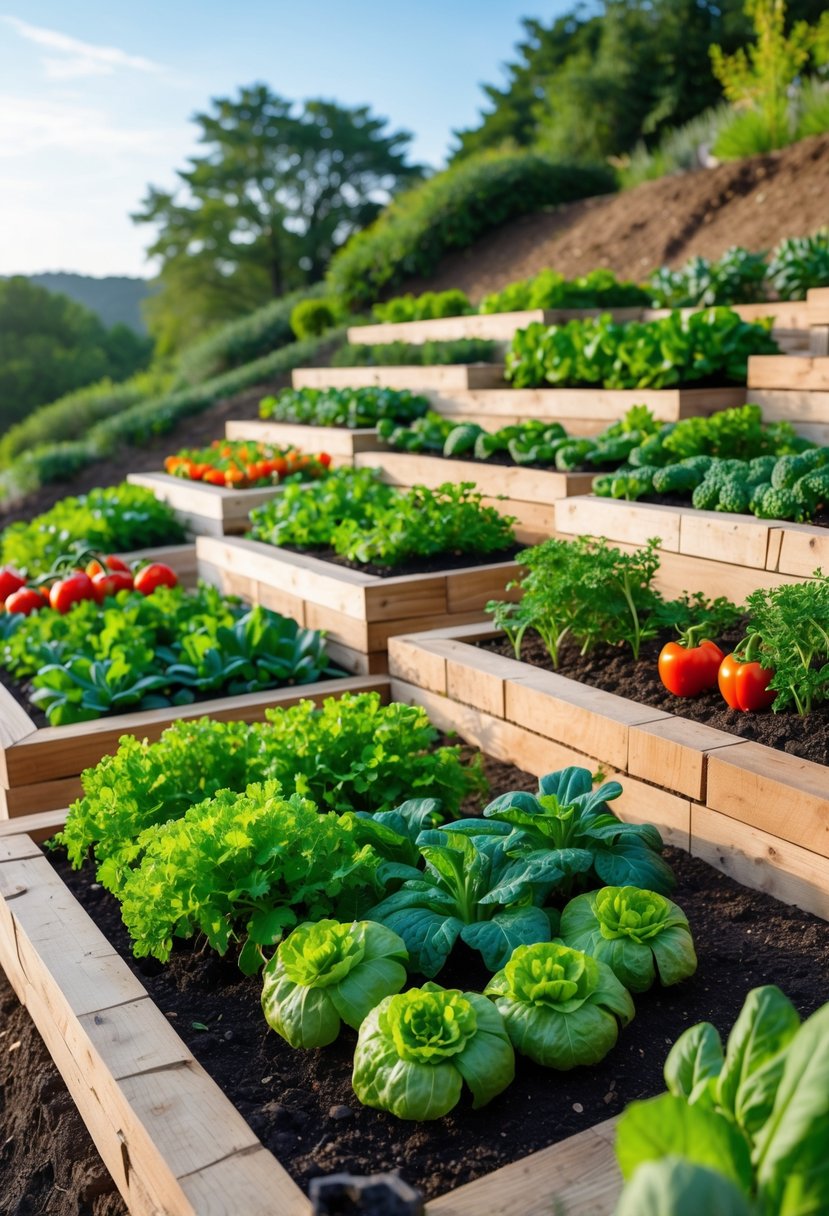
Terraced raised beds work wonders for growing veggies on a hill. They create flat growing spaces and stop soil from sliding away.
Build terraces with wood, stone, or whatever materials you like. It makes reaching your veggies easier and keeps everything neat.
Plus, you get more planting room without needing more land. If you want to dive in, check out terraced raised garden bed ideas.
7) Incorporate native grasses to prevent erosion
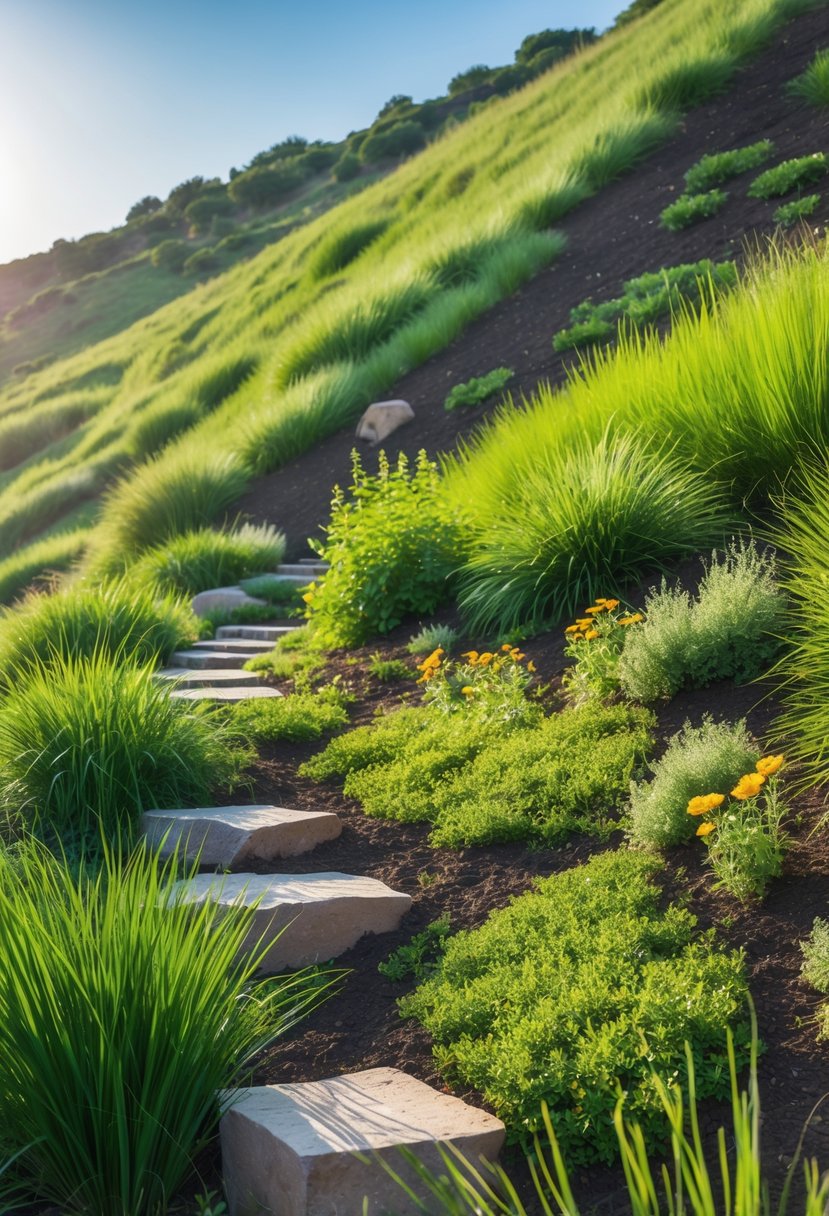
Try planting native grasses on your hill to fight erosion. These grasses have strong roots that hold the soil in place.
Plant them in clumps along the slope to slow down water runoff. That way, rain won’t wash your dirt away.
Native grasses usually need less water and care, too. They just fit right in with the natural landscape.
For more on using native grasses, check out this guide on landscaping sloped exteriors with native plants.
8) Add a rock garden with succulents and alpines
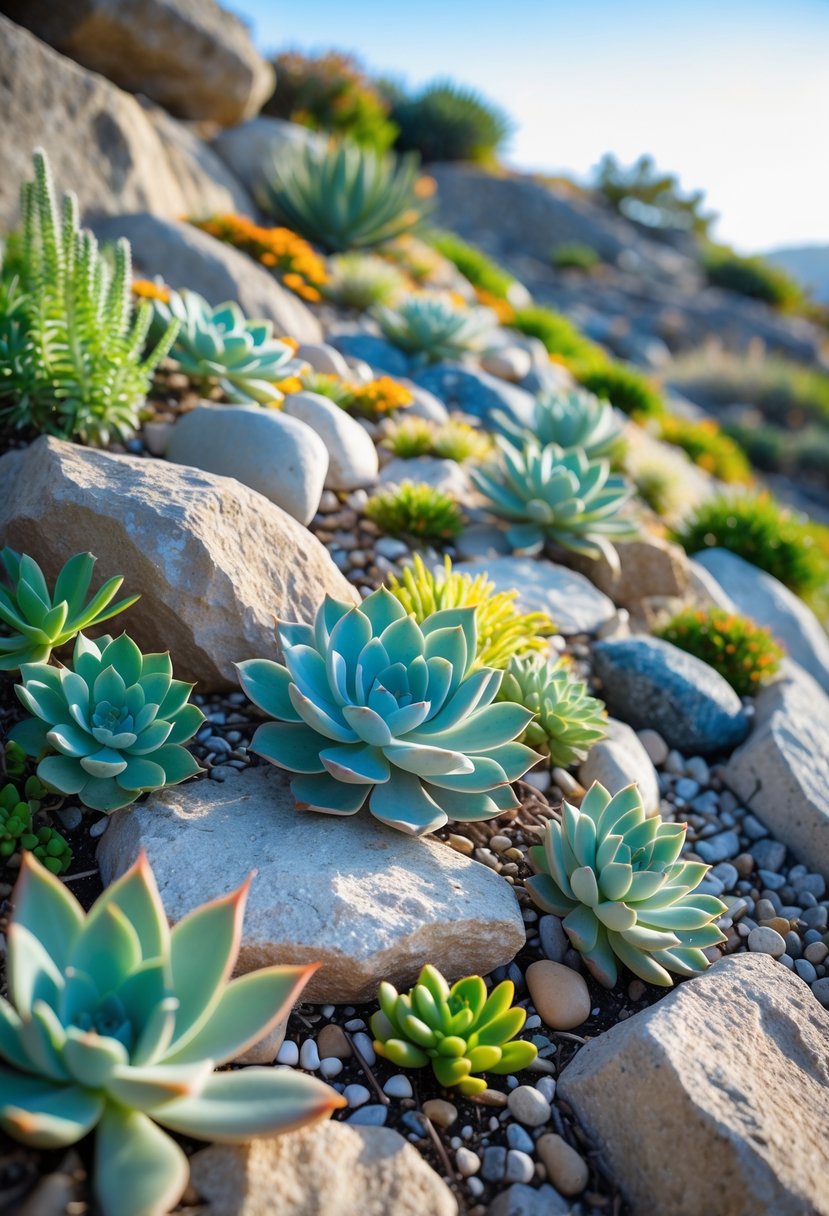
Use rocks to create a low-maintenance garden on your hill. Add succulents and alpine plants for a rugged, natural look.
These plants barely need water and love sunny, dry spots. Rocks help keep the soil where it belongs and add texture.
Mix up the sizes and shapes of stones for a fun design. Succulents come in so many colors and shapes, and they look great with tough alpine plants.
If you want more, check out succulent rock garden ideas.
9) Create a whimsical fairy garden with miniature houses
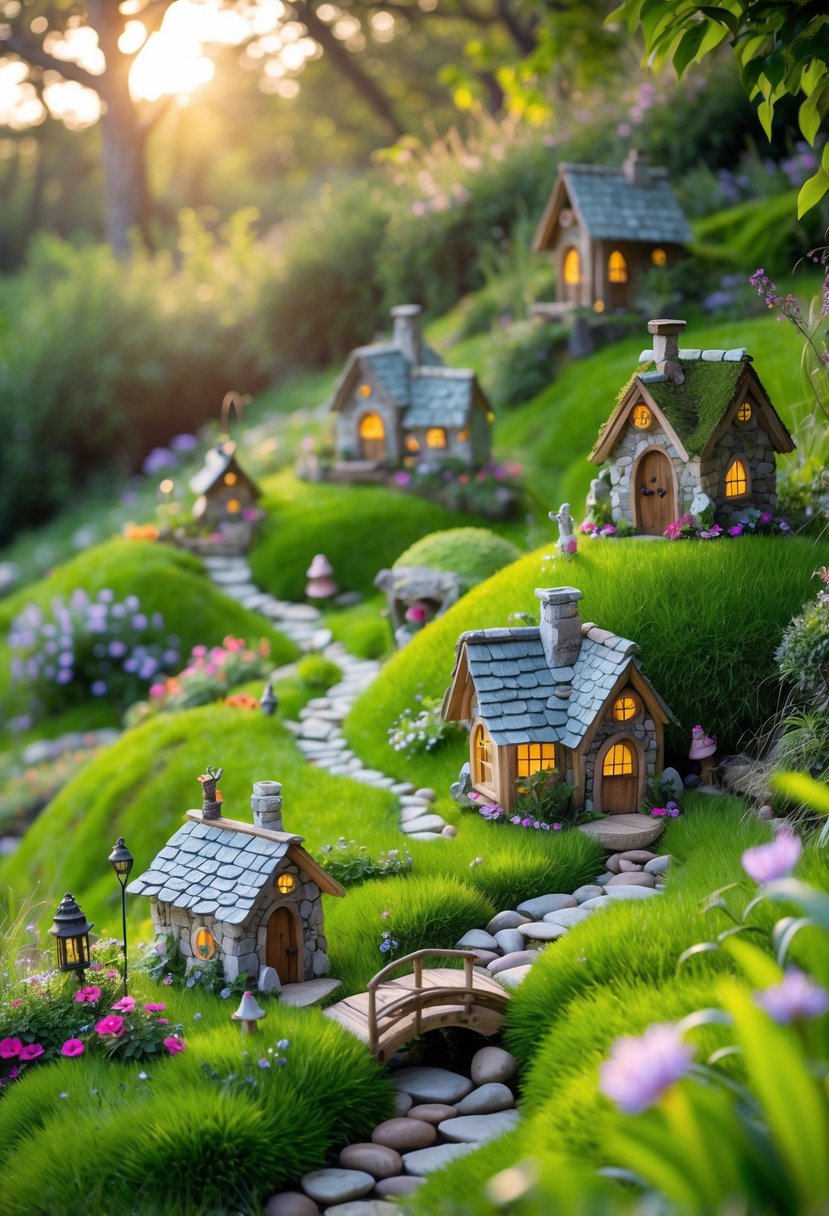
Bring a bit of magic to your hillside by making a fairy garden. Set up small fairy houses to build a tiny village where imagination can run wild.
Scatter tiny plants, pebbles, and little paths around the houses. These details make the fairy garden come alive.
You can use things you find at home or in nature. Fairy gardens are simple to build and give your hill a playful, inviting feel.
Find more ideas for miniature houses and decorations here.
10) Plant fruit trees on level terraces
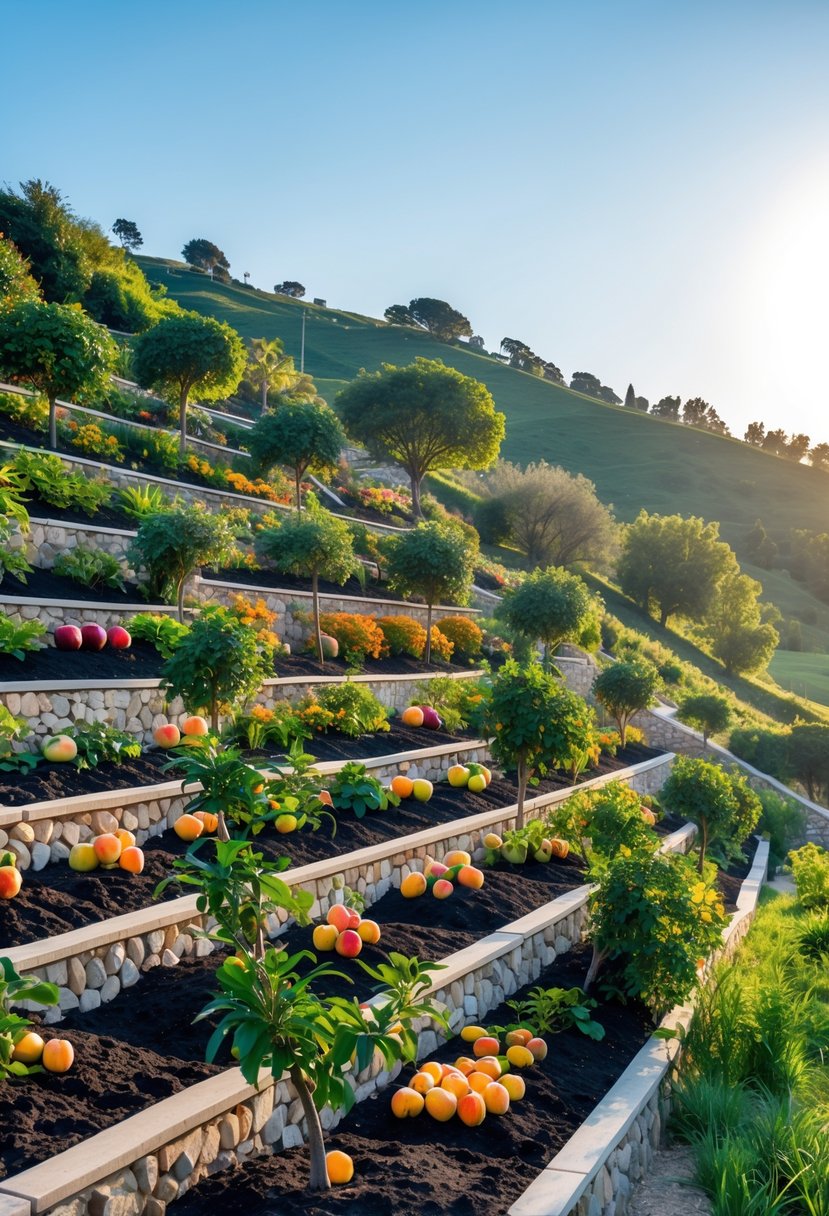
Plant fruit trees on flat terraces you’ve built into your hill. The terraces prevent erosion and help your trees grow strong roots.
Each level can hold different fruit trees—apples, oranges, cherries, you name it. Terraces also make it easier to manage water so your trees don’t get too much or too little.
Having separate levels keeps things organized and makes harvesting less of a hassle. Building terraces takes some work, but the payoff is a healthy, productive fruit garden.
Find tips and ideas for planting fruit trees on terraces at itsoverflowing.com.
11) Build a small pond at the lowest point for water management
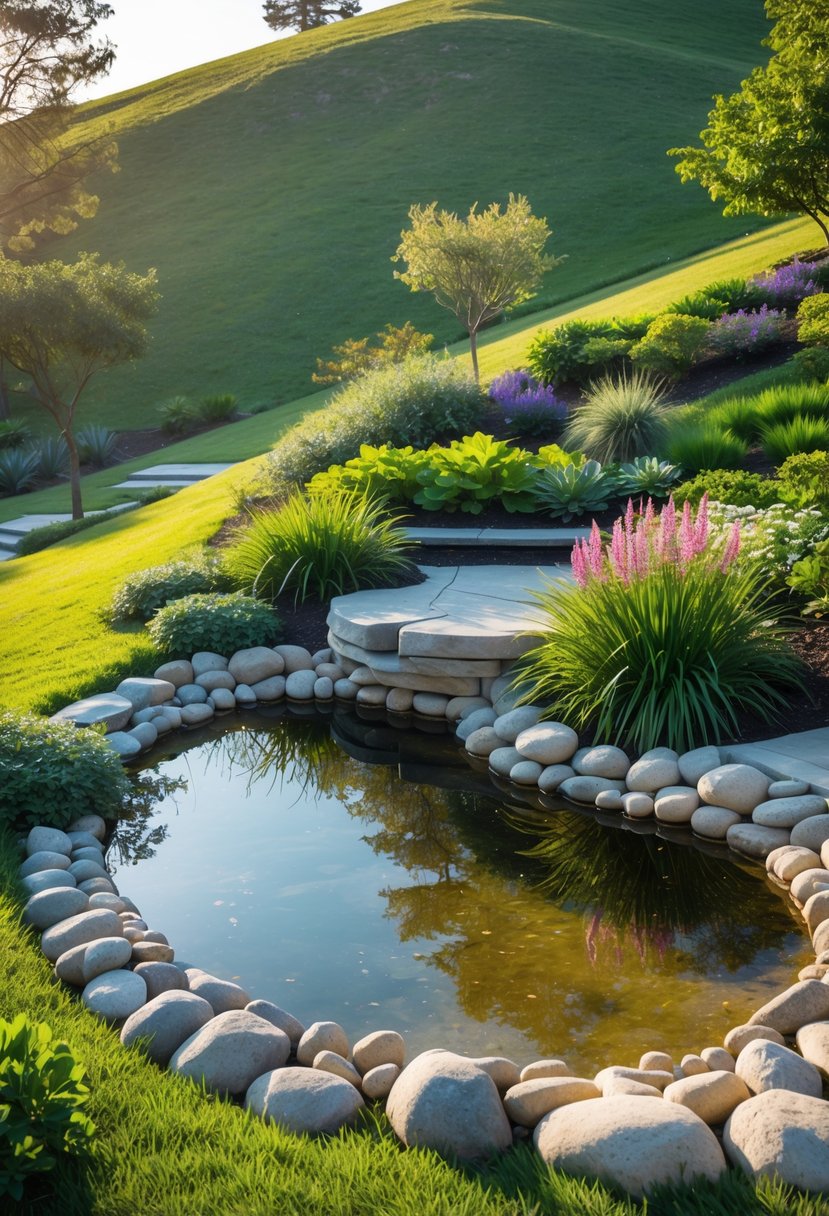
Put a small pond at the lowest spot in your hill garden to manage water runoff. The pond catches rainwater before it can rush downhill and cause problems.
You can use that water for your plants when things get dry. Plus, a pond brings a peaceful vibe and attracts birds and insects.
Small ponds fit into tight spaces and help keep your garden healthy. For more designs, check out small garden pond ideas for compact spaces.
12) Use espalier fruit trees along a slope

Try espalier fruit trees to make the most of your hill garden. Train these trees flat against a fence or trellis—perfect for a slope.
Espalier trees save space and look neat, so they won’t block your paths or views. Lots of fruit varieties work well with this method.
They add a tidy, artistic touch to your garden and aren’t too hard to care for once you get the hang of pruning and tying the branches.
If you want to try it, check out espalier fruit tree guides like this one from Complete Gardening.
13) Install a rope bridge over a terraced section
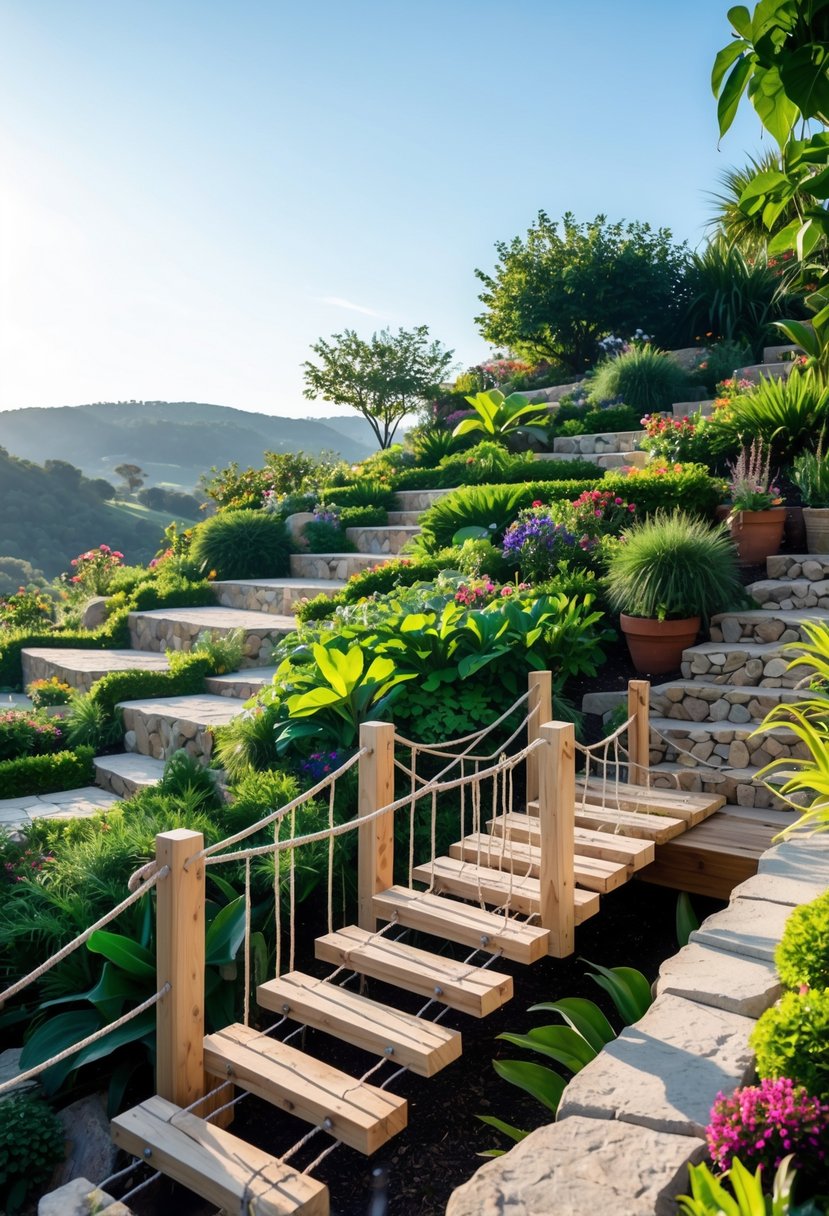
A rope bridge brings a playful, natural vibe to any hill garden. It connects terraced areas, letting you move between levels while keeping things open and airy.
Grab some sturdy ropes and wooden planks for a safe, straightforward design. Walking across, you get to enjoy the view from a new angle.
Honestly, building one is a fun DIY project. You don’t need much space or heavy materials, and it adds a lot of charm. For some extra ideas, take a look at DIY rope projects for your yard.
14) Plant colorful ground cover like creeping thyme
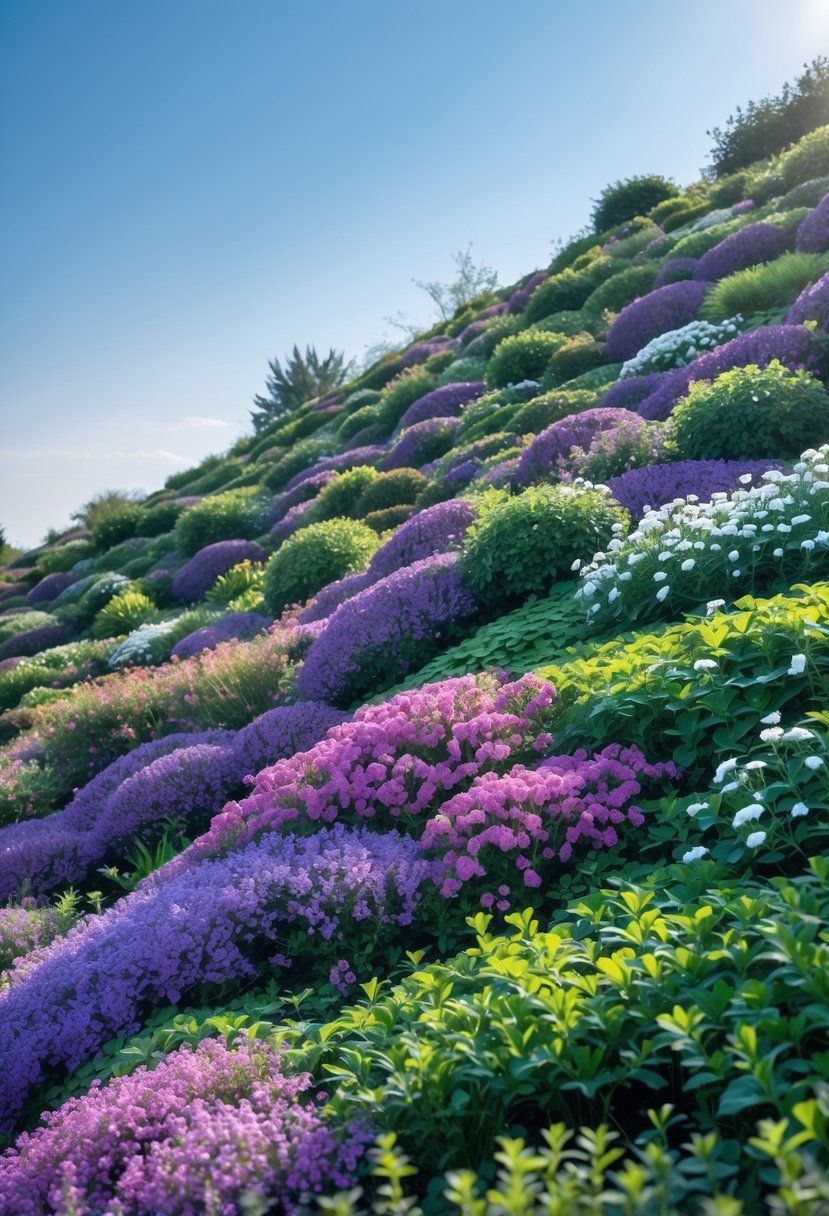
Add color and texture to your hillside with creeping thyme. This low-growing plant spreads out and forms a soft carpet over bare spots.
Creeping thyme blooms with tiny flowers that bring in bees and butterflies. It’s drought-tolerant and barely needs any attention, which is perfect for slopes.
Planting creeping thyme helps prevent soil erosion. You can tuck it between stepping stones or along paths for both beauty and function. For more ideas, check out creeping thyme landscaping.
15) Design curved garden beds following the hillside contour
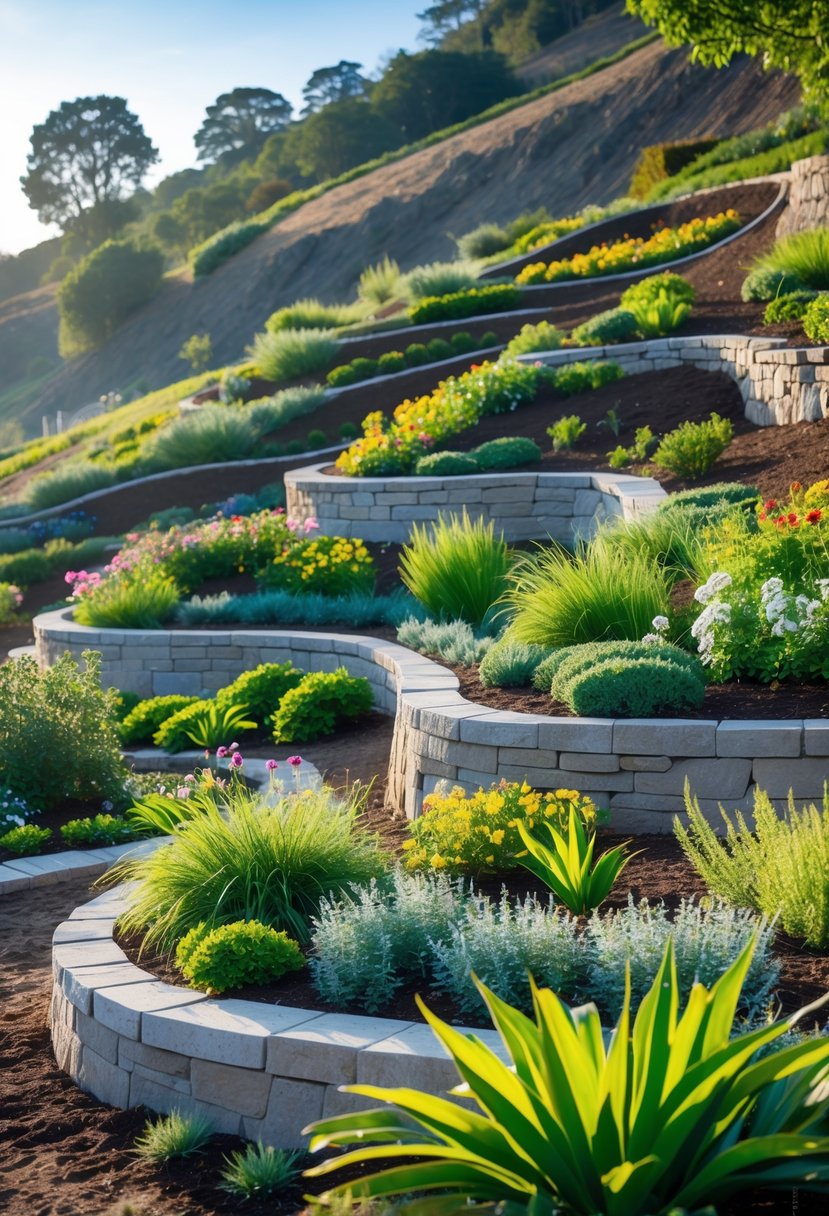
Try making curved garden beds that follow the natural lines of your hill. This gives your garden a softer, more flowing look.
Curved beds slow down water and help prevent erosion. Mix in flowers, shrubs, or ground covers for a practical and pretty effect.
Using curved raised beds means you get more planting space and can play with different heights. Build them from stone, wood, or metal for a bit of character. If you need inspiration, check out some curved garden bed ideas.
16) Add benches made from reclaimed wood
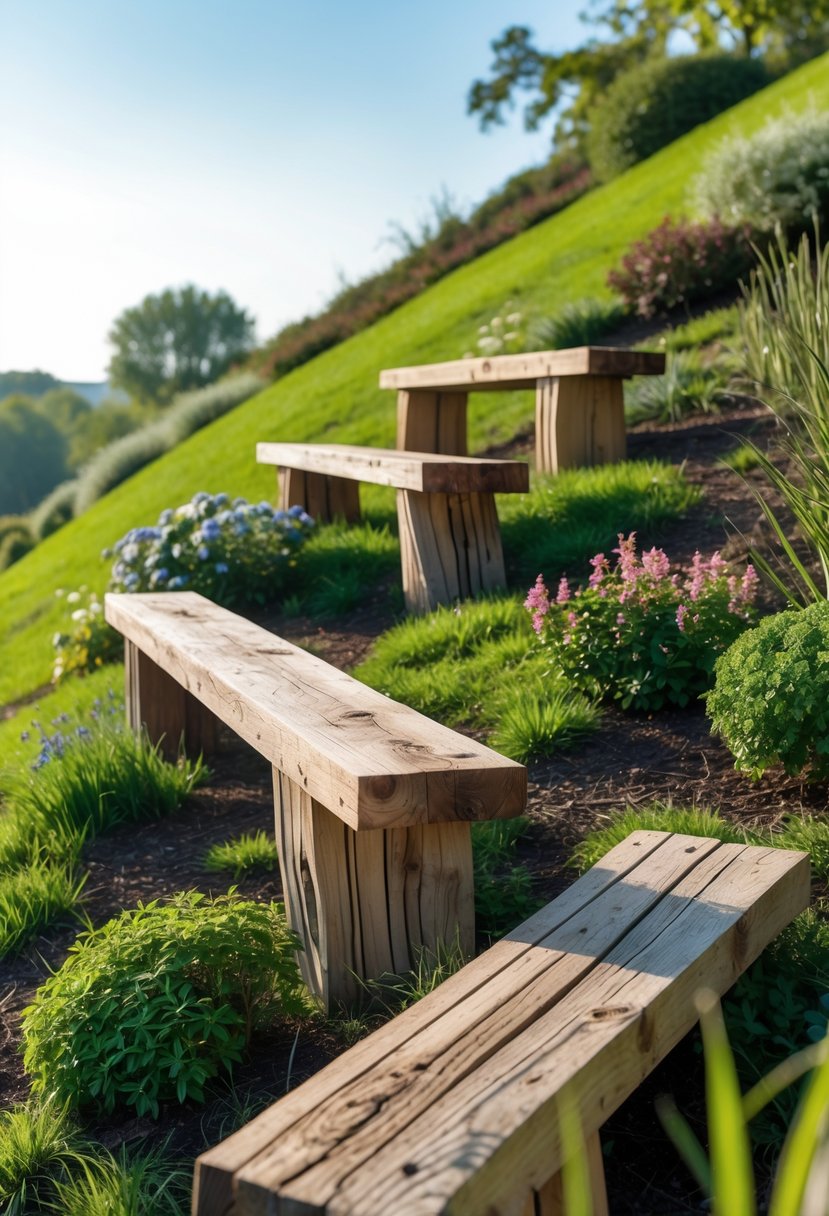
Set out benches made from reclaimed wood to give your hill garden a cozy, rustic feel. They’re affordable and have a story to tell.
Reclaimed wood keeps old materials out of the landfill. These benches just seem to fit right in with the plants and soil.
Build or buy a reclaimed wood bench, and you’ll have a comfy spot to soak in your garden views. If you want ideas, check out some reclaimed wood bench styles.
17) Incorporate a wildflower meadow section

Turn a section of your hill into a wildflower meadow. Once it’s established, it brings color and beauty without much fuss.
Wildflowers attract bees, butterflies, and other pollinators, keeping your garden lively and healthy.
Use a mix of native wildflowers—they’re used to your local weather and don’t need much water. A wildflower meadow can make your hillside feel vibrant and natural.
For more creative hillside ideas, check out this guide on turning slopes into blooms.
18) Create a children’s adventure path with stepping stones

Make a playful adventure path with stepping stones on your hill. Pick stones in bright colors or animal shapes to spark kids’ imaginations.
Space the stones so kids can jump or balance from one to the next. It keeps them active and curious in the garden.
Add numbers or letters to turn the path into a learning game. Your outdoor space becomes a safe, creative playground.
Check out more fun ideas for stepping stones in a children’s garden play area.
19) Use driftwood art as a natural sculpture

Bring a bit of the wild to your garden by using driftwood as natural sculptures. Driftwood gives your hillside a rustic, organic feel and you don’t have to do much to make it look good.
Pick out pieces that catch your eye and arrange them into simple shapes or artful stacks. They blend in nicely with rocks and plants.
These sculptures add a unique, personal touch to your garden and connect it to nature. For inspiration, check out driftwood garden art ideas.
20) Install drip irrigation to conserve water
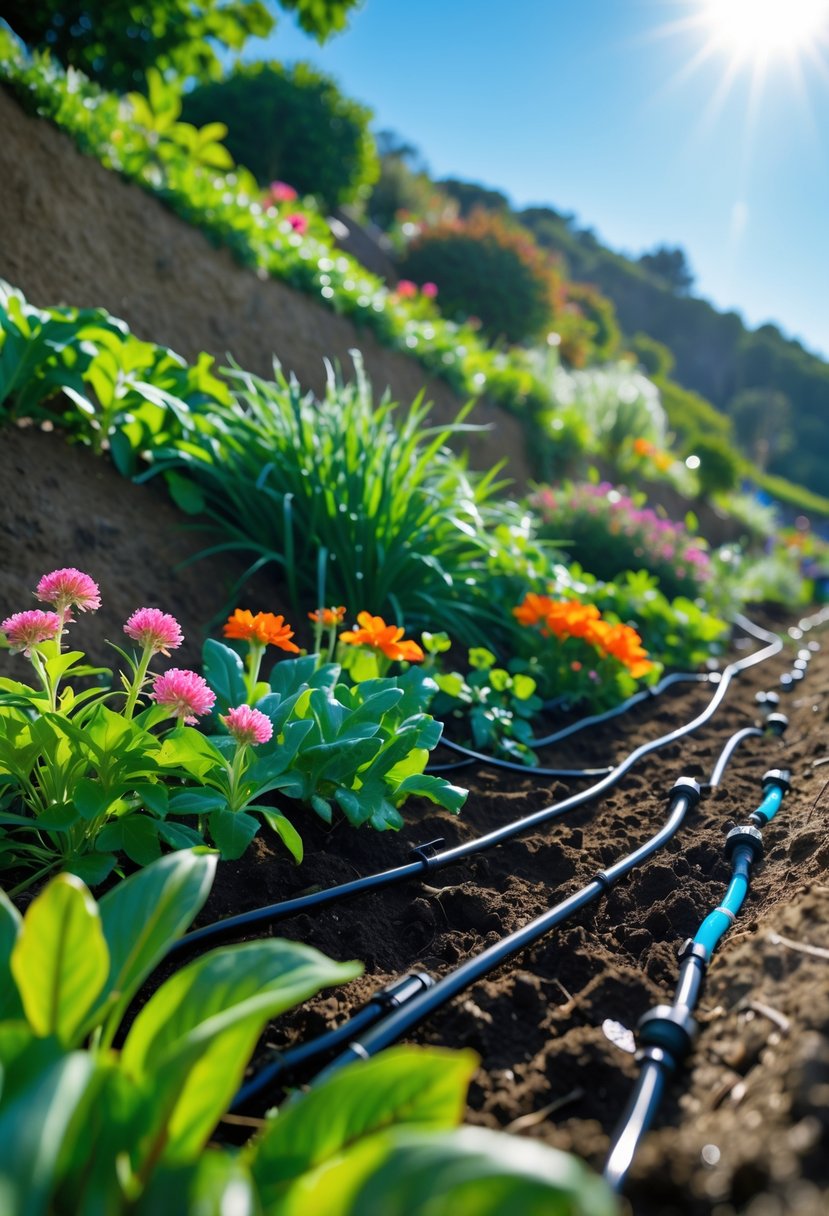
Save water by setting up a drip irrigation system on your hillside. This system sends water straight to your plants’ roots, little by little.
Drip irrigation helps cut down on runoff and erosion—big headaches on slopes. Your plants get the moisture they need, and you don’t waste water.
With adjustable emitters, you can give each plant just the right amount. It’s a smart way to keep your garden healthy and green. If you’re not sure how to set it up, look for tips on drip irrigation for slopes.
21) Plant shade trees like maples at the hilltop
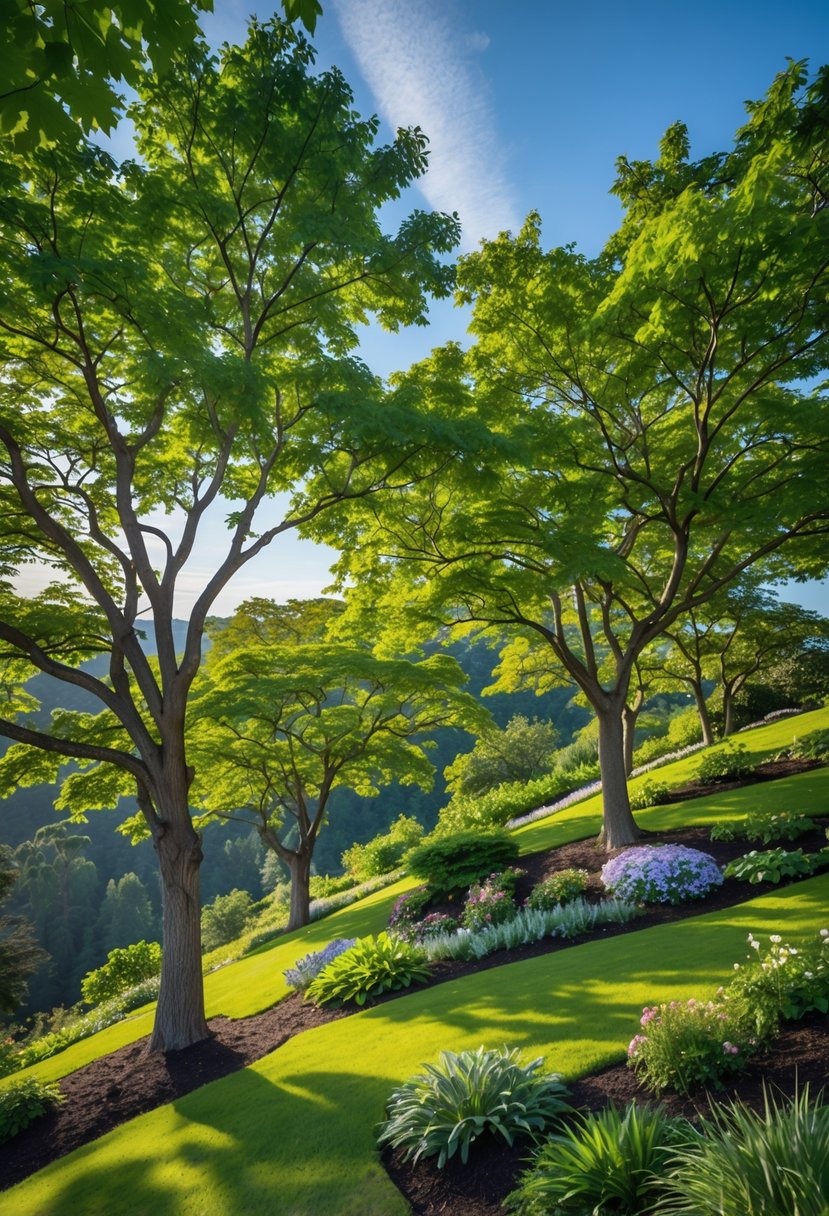
Plant shade trees like maples at the top of your hill to help keep the soil in place. Their roots grip the ground and fight erosion.
Maples also create cool, shady spots for plants down below. You can fill the area underneath with shade-loving flowers or ground covers.
These trees bring beauty with their broad leaves and changing colors. Your hilltop garden will look lively and welcoming all year. For ideas on what grows well beneath maples, check out this guide.
22) Build a herb spiral for compact gardening

Try building a herb spiral to save space on your hill. The spiral shape goes upward, so you can fit more herbs in a small area.
Different spots on the spiral get different amounts of sun and moisture. That means you can grow basil, thyme, rosemary, and more—all in one place.
A herb spiral makes it easier to reach your plants and looks really charming. If you want a step-by-step, check out this guide.
23) Use ornamental grasses for texture and movement
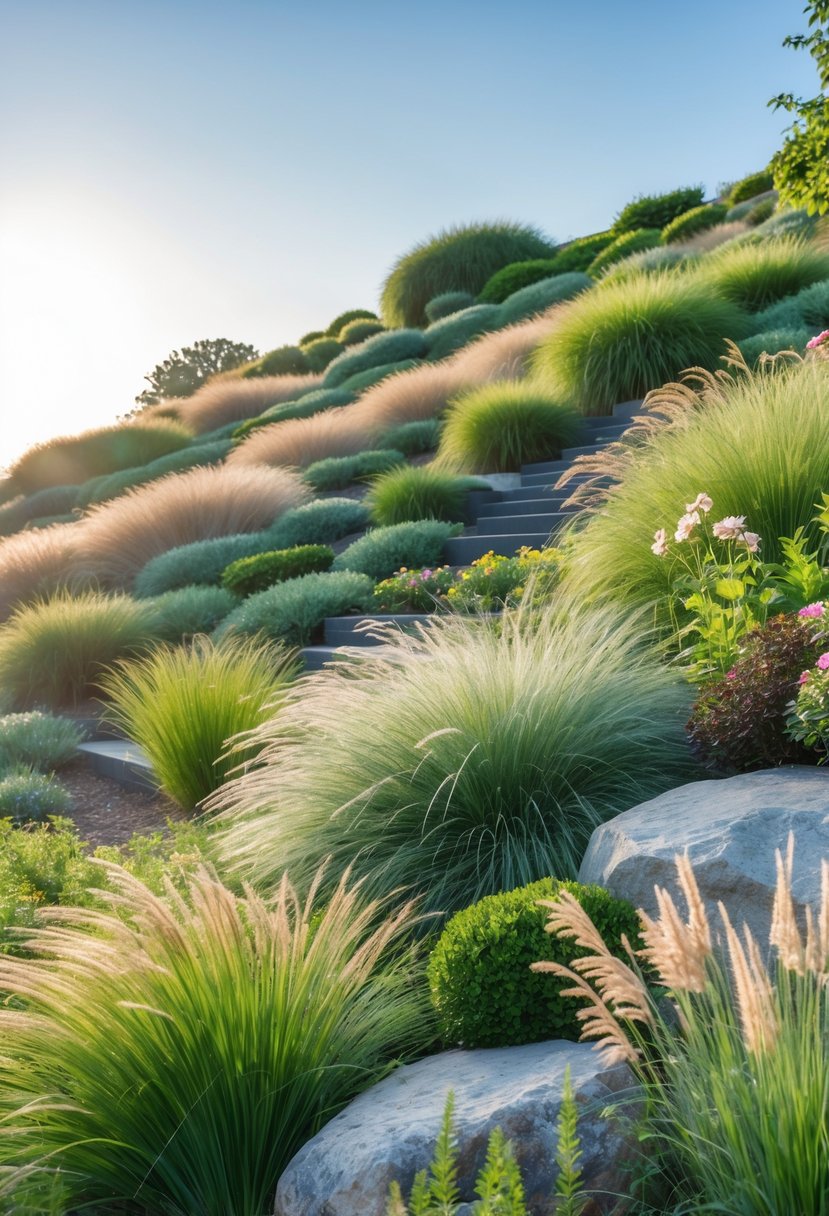
Ornamental grasses bring gentle movement to your hillside when the wind blows. Their soft sway adds life and a sense of calm.
You’ll find these grasses in all sorts of sizes and shapes, so they fit almost anywhere. They add texture and color, and they look good year-round.
Mix them with flowers or other plants for a more natural feel. They need very little care and handle dry spots well—ideal for tricky slopes. If you’re curious, dive into more ornamental grass ideas here.
24) Grow a mix of perennials and annuals in layers

Layer perennials and annuals on your hillside for a garden that’s full of life. Start with tall perennials at the top or back, then add medium-sized plants in the middle.
Put low-growing annuals at the front edge or bottom. This setup gives you color and texture at every level.
Mixing perennials with annuals keeps your garden blooming all season. Perennials give structure, while annuals fill in with bursts of color. For more about mixing them, check out these tips.
25) Create a butterfly garden with milkweed and coneflowers
Bring butterflies to your hillside by planting milkweed and coneflowers. Milkweed is a must for monarchs, and coneflowers add pops of color plus nectar.
Plant these flowers in clusters—makes it easier for butterflies to spot them. Add a few more nectar-rich flowers nearby and you’ll have butterflies visiting all season.
This turns your garden into a lively, colorful hangout for pollinators. For more on pairing milkweed with other flowers, check out these butterfly-friendly tips.
Design Principles for Sloped Gardens
Managing a sloped garden isn’t always easy. You have to balance keeping the soil in place with making the space look good. Walking around should feel safe, not like a workout.
Careful planning makes those hillsides a lot more enjoyable.
Terracing for Erosion Control
Terracing breaks up a steep slope into flat, step-like sections. This stops rain from washing all your soil away.
Use wood, stone, or concrete to build the walls that hold each terrace. Each level slows down water and gives plants a steady place to grow.
Plant deep-rooted shrubs or ground cover on the terraces to make the slope stronger. This setup gives you more room for flowers or veggies, too.
Make sure terraces drain well. Water shouldn’t pool on top or behind the walls—otherwise, you’ll have problems. Add gravel or drainage pipes behind the walls to keep water moving where it should.
Pathway Planning and Safety Tips
Paths on a slope should feel safe and easy to walk on. Try to avoid steep, straight paths—they’re just asking for trouble, honestly.
Instead, wind your paths with gentle curves. It’s easier on the legs and looks way more inviting.
Add gravel, stepping stones, or pavers for stable footing. Railings or even low walls can give you a little extra support, especially if you’re carrying something or it’s wet outside.
If you’re dealing with a really steep spot, steps might work best. Just make sure each step is the same height and wide enough for your feet—no one likes a surprise misstep.
Good lighting along the path makes a big difference at night. You and your guests will feel more relaxed heading out after dark.
Terracing and hillside landscaping ideas explain how to balance erosion control with style.
Safe hillside pathway advice offers tips for path design and materials.
Planting Strategies for Hillside Gardens
Hillside gardens need plants that can handle sun, wind, and uneven soil. Choosing the right ones helps prevent erosion and keeps your garden looking good.
Arrange your plants thoughtfully. It adds depth and brings out color on the slope.
Choosing Drought-Resistant Plants
Hillsides often lose water fast, so pick plants that don’t need much. Native species or plants known for drought tolerance—like lavender, sedum, or rosemary—are great choices.
These types survive well on slopes since they don’t beg for constant watering. Deep-rooted plants work best since their roots grab the soil and hold it in place.
Mix in flowering plants with grasses if you want more texture and color, and you won’t have to worry about extra watering.
Layering for Visual Interest
You can create layers by planting in rows or building terraces. This approach helps with soil retention and, honestly, it just makes your garden more interesting.
Put taller plants—think ornamental grasses or small shrubs—at the top or back of the slope. I like to place medium-height plants in the middle.
Add low-growing ground covers or creeping plants near the bottom or front. This setup draws your eye down the slope and, as a bonus, keeps weeds in check.
Try mixing up textures and colors in each layer. It gives everything a more natural, relaxed vibe.
With a layered garden, you’ll catch blooms and fresh foliage at different times of the year. Want more inspiration? Check out creative tips for sloped landscapes.


