

Low-Maintenance Garden Ideas on a Hill for Effortless Outdoor Beauty
Gardening on a hill? Yeah, it can feel like a hassle with all that slope and uneven ground. You might think it’ll eat up your weekends just to keep plants alive and your yard looking halfway decent.
But honestly, with a few clever ideas, you can pull off a garden that’s both gorgeous and super easy to care for.
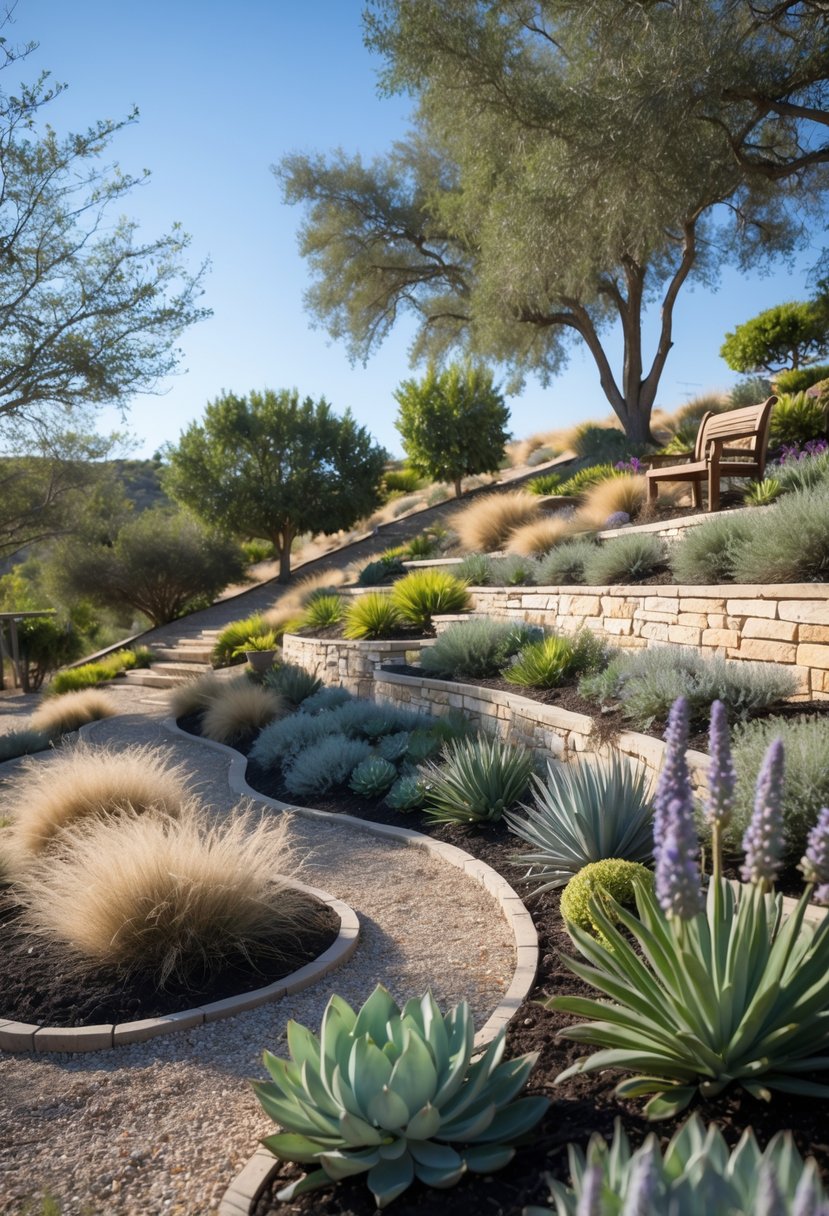
Low-maintenance garden ideas on a hill let you enjoy your outdoor space without endless chores. These ideas focus on smart plant choices and simple designs that keep your slope steady and cut down your workload.
You’ll find ways to turn your hillside into a relaxing, manageable place to hang out.
For more inspiration, check out 18 Slope Garden Ideas for Planting on Hillsides or Other Uneven Ground.
1) Plant creeping thyme for a fragrant low-maintenance groundcover
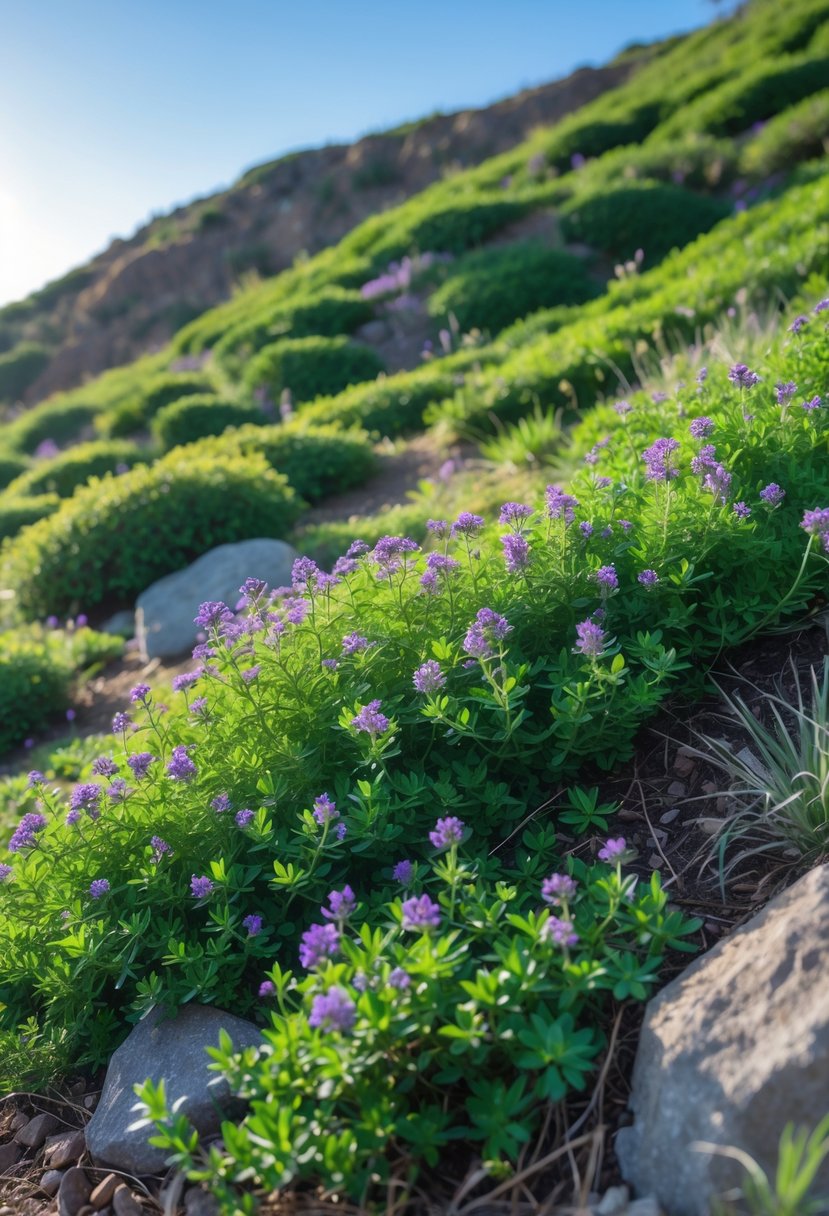
Creeping thyme works wonders for a hill garden because it grabs onto soil and keeps weeds away. It grows low and spreads fast, making a soft, green carpet that smells amazing.
Once it settles in, you barely need to water it. Plus, it brings in bees and other pollinators, which is always a win for your garden.
You can even walk on it—it doesn’t mind a little foot traffic. Want more tips on planting and caring for creeping thyme? It’ll make your hill garden a breeze to maintain.
Creeping thyme: planting, growing, and caring
2) Use sedum varieties to stabilize steep slopes
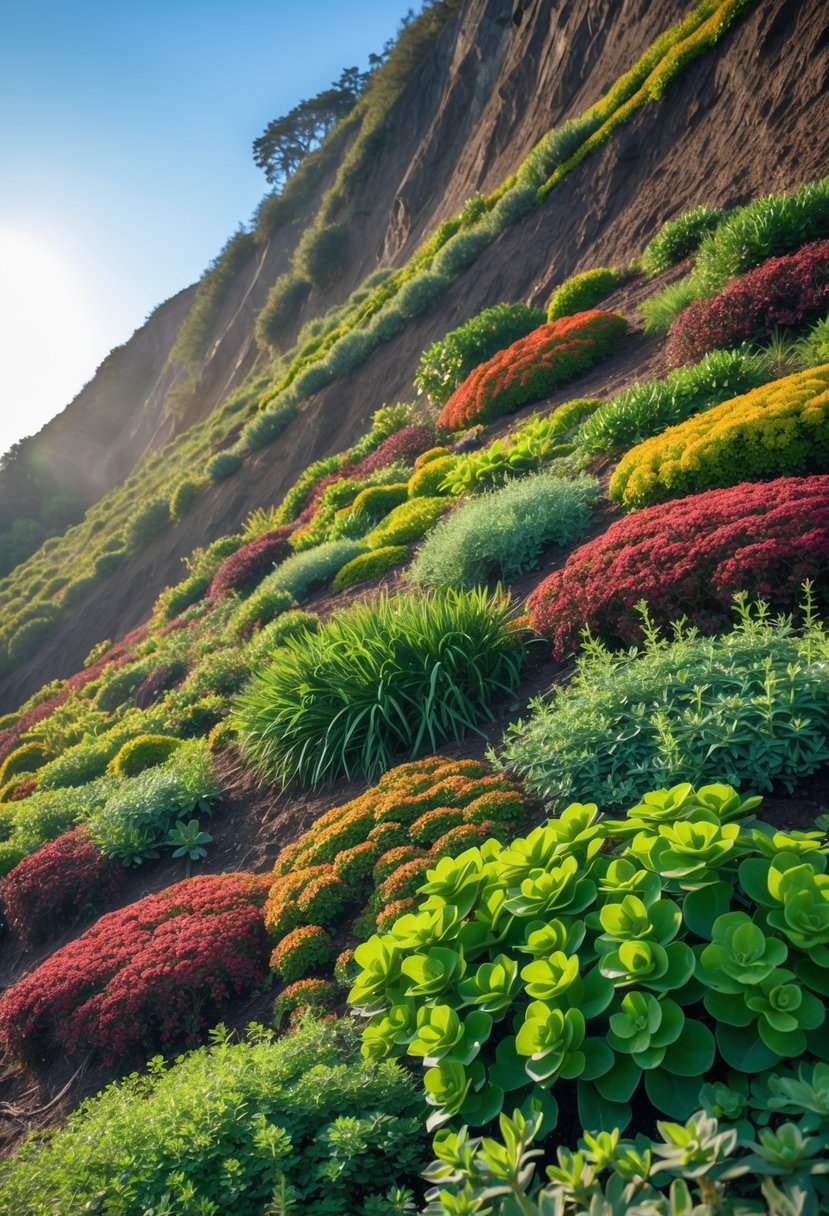
Sedum helps keep soil in place on steep hills. These plants spread out fast and form thick mats that fight off erosion.
You don’t have to water sedum much since it stores water in its chunky leaves. It thrives in full sun, so it’s perfect for those tough, dry spots.
Many sedum types show off little star-shaped flowers that attract bees and other helpful bugs. They add a pop of color—and you barely have to fuss over them.
Sedum gives your hillside a neat, natural vibe and saves you time. Want more info? Check out The Garden Magazine.
3) Incorporate creeping phlox for vibrant spring color
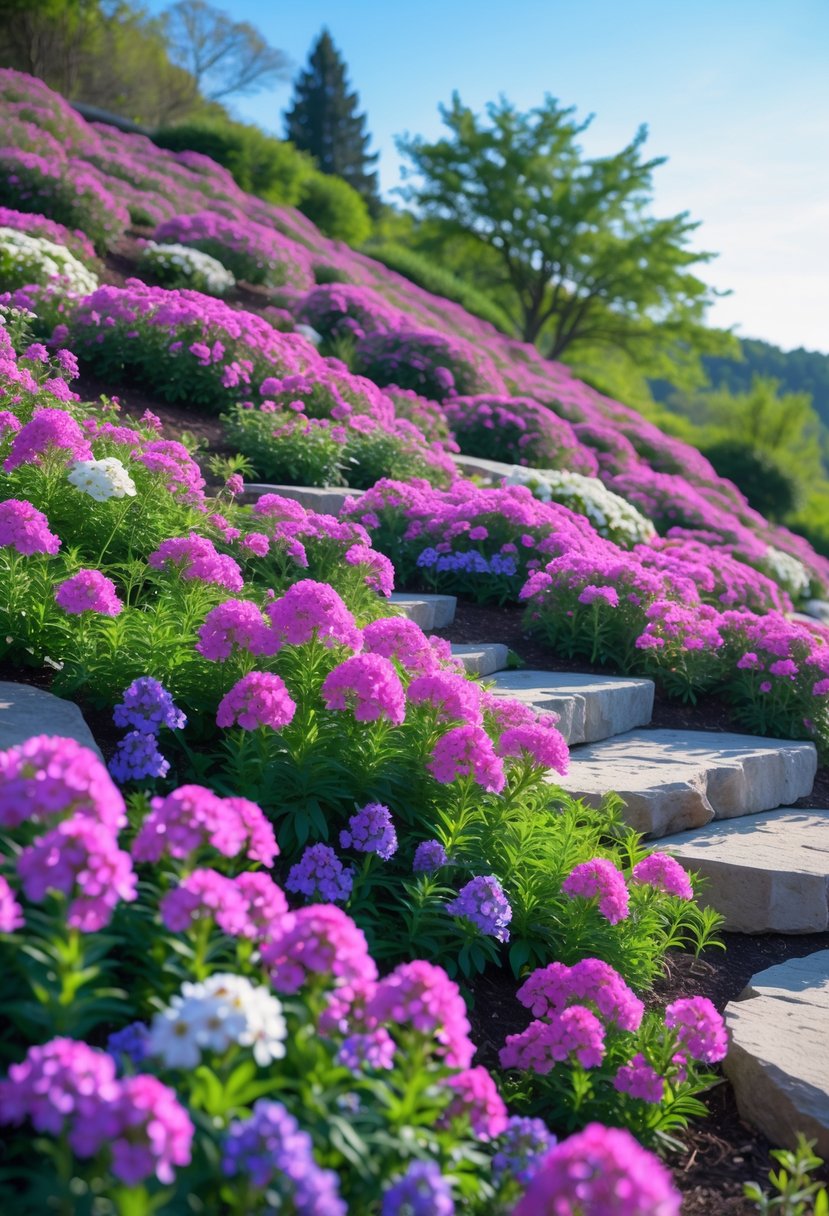
Creeping phlox brings a burst of color to a hillside garden. It spreads easily and forms a thick mat of flowers each spring. You’ll get pink, purple, white, or blue blooms that light up your slope with almost no effort.
This plant holds soil in place and helps control erosion. It loves sunny spots with well-drained soil.
Once it’s in, you don’t need to fuss over it much. That’s ideal for a low-maintenance hill garden.
If you want to dive deeper into using creeping phlox, check out this guide.
4) Choose sweet alyssum as a hardy hillside flower
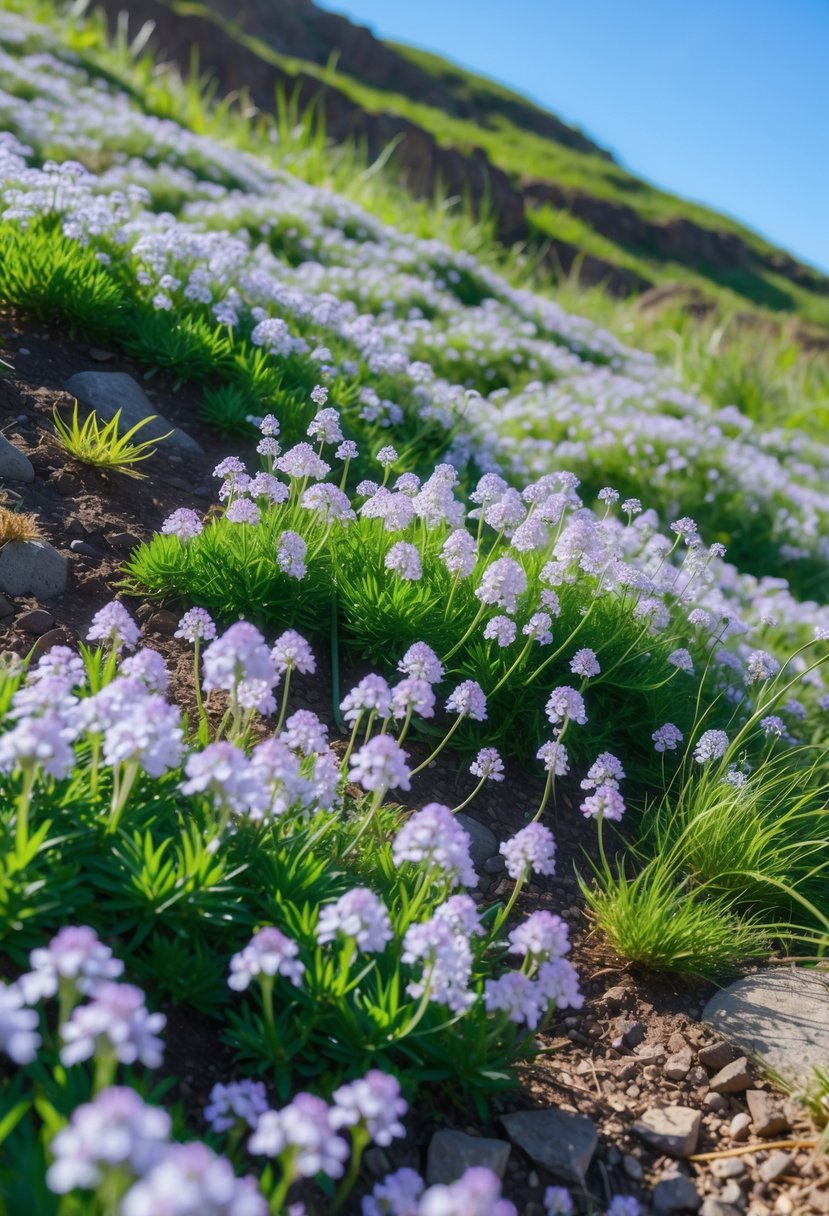
Sweet alyssum works well on hillsides. It grows in poor soil and doesn’t need much water once it gets going. That means less work for you.
Its tiny, fragrant flowers form a soft carpet of color. Alyssum also helps hold the soil, keeping your hill looking tidy.
You can plant it along borders or just let it wander. It also brings in good insects, which helps your garden thrive. For more about sweet alyssum, check out this guide.
5) Build stone terraces to prevent erosion and add structure
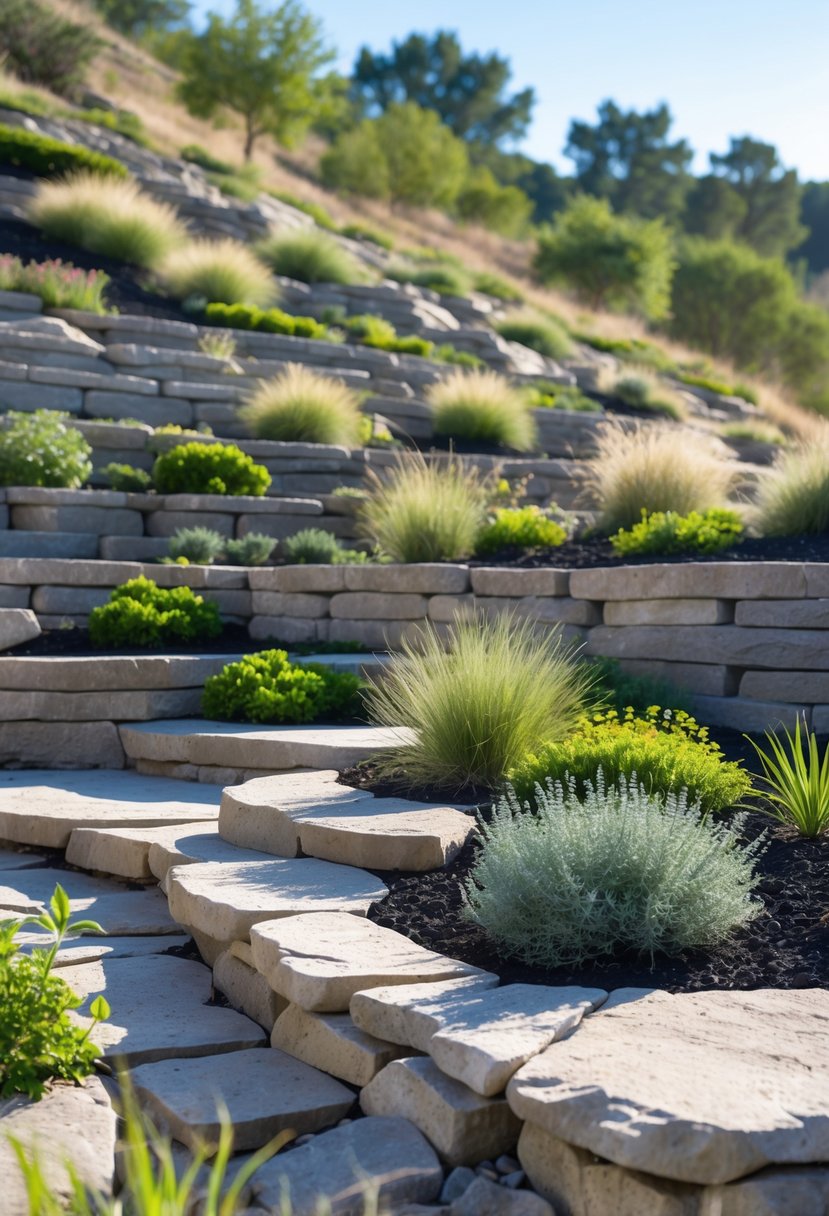
Stacking up stone terraces stops soil from sliding down your hill. These terraces create flat spots that hold water and soil where you want them.
Stone gives your garden a natural, sturdy edge. You can tuck herbs or flowers between the rocks for extra pops of color and a fresh scent.
Stone stairways make it easier to get around your garden. With a few tools and some patience, you can build strong terraces that look great and keep your garden healthy. For step-by-step help, see how to terrace a slope with stone.
6) Install drip irrigation to conserve water and reduce upkeep
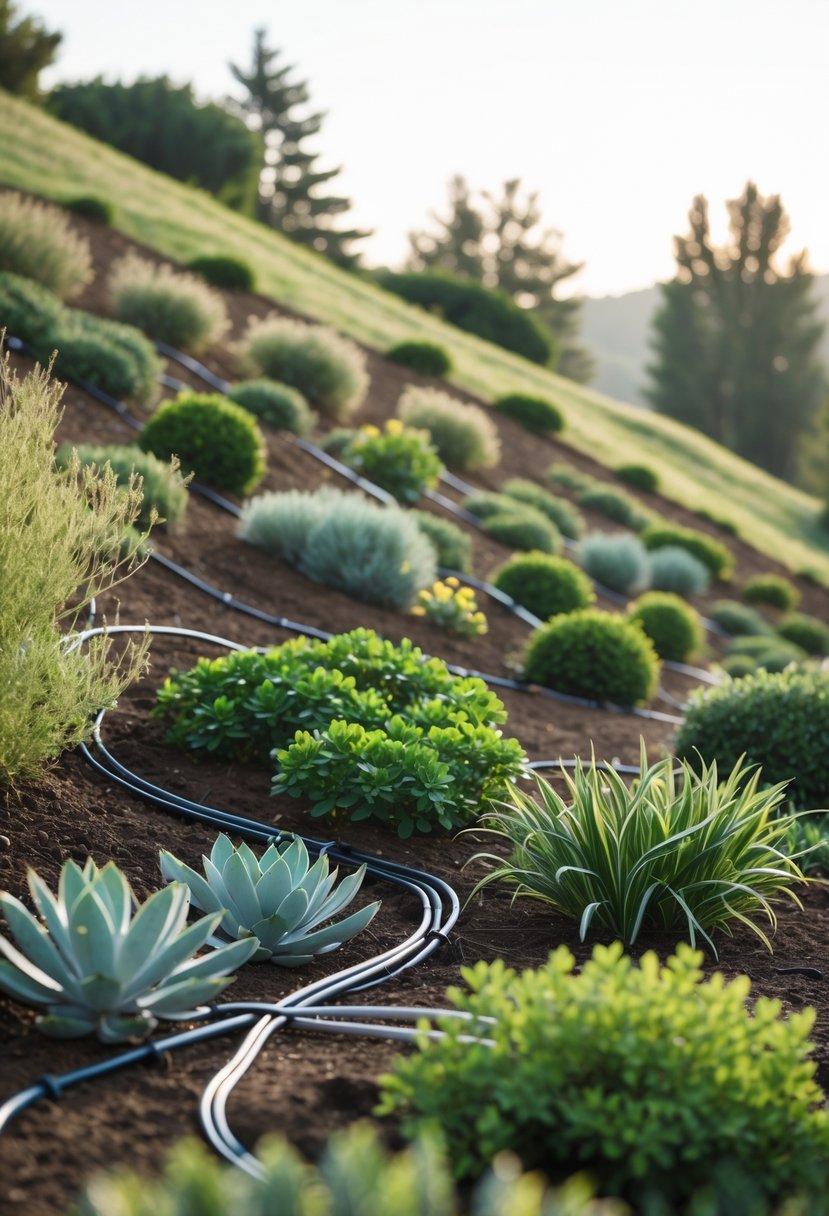
A drip irrigation system makes watering a hill garden so much easier. It sends water straight to your plants’ roots, so you waste less and your plants stay healthier.
Drip irrigation also saves you time. You can put it on a timer and forget about daily watering.
Since the water goes right into the soil, you help stop erosion too. For more on setting up drip irrigation, check out this guide.
7) Use native shrubs like mountain laurel for natural hillside beauty
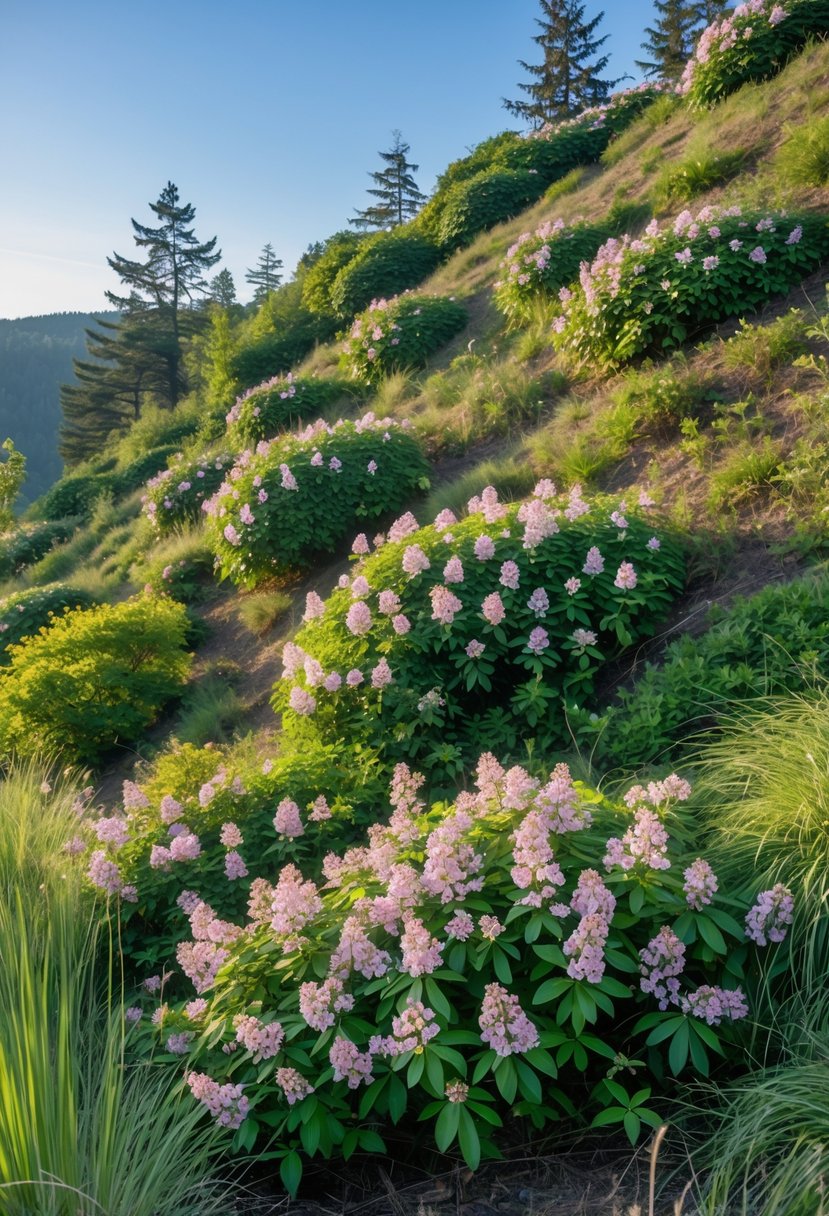
Try using native shrubs like mountain laurel—they bring real charm to your hillside garden. These plants already know how to handle your local soil and weather, so they need less pampering.
Mountain laurel thrives in partial shade, with evergreen leaves and lovely flowers. It holds the soil on slopes, keeping everything in place.
Plant mountain laurel along paths or near places you like to sit. Mixing it with other native plants gives your hillside a lively, healthy look. Need more ideas? Check out mountain laurel planting tips.
8) Plant ornamental grasses such as blue fescue for texture
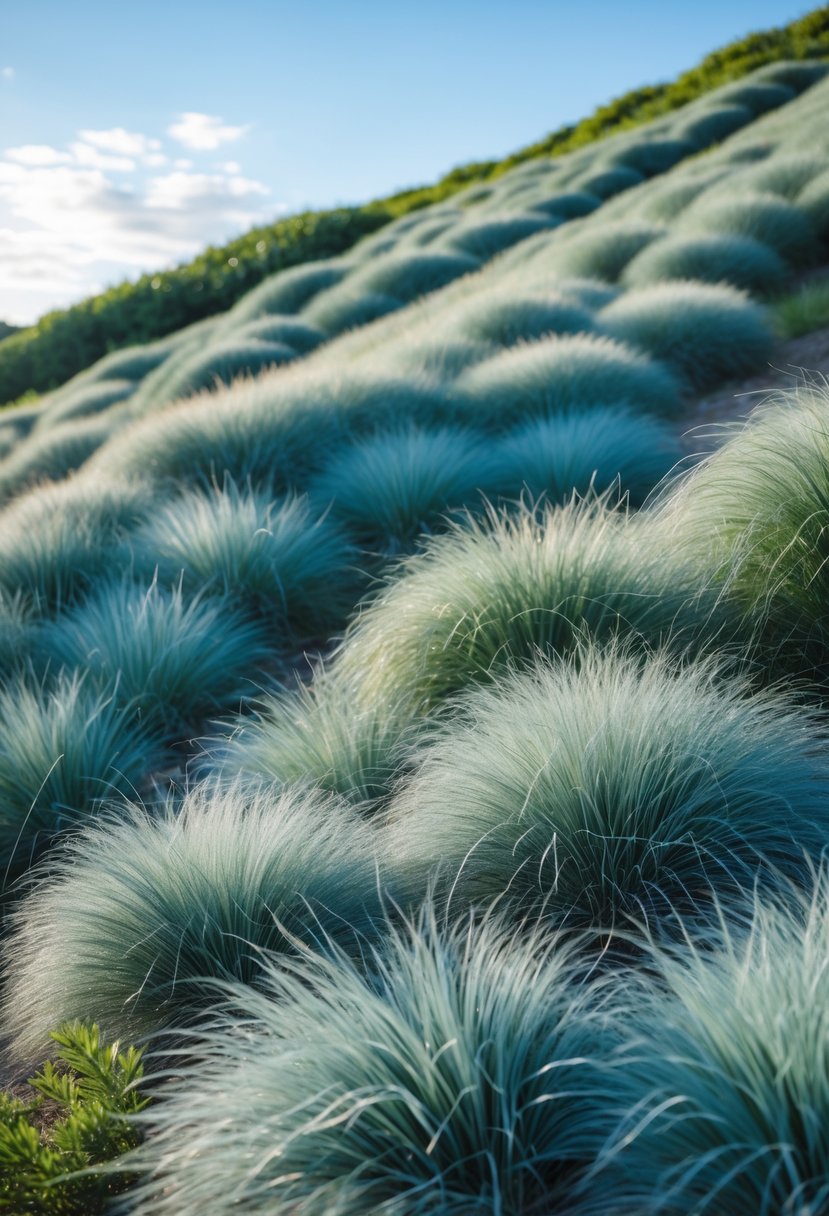
Ornamental grasses like blue fescue add texture and interest to a hillside garden. Blue fescue’s silvery-blue blades really stand out and you barely have to do anything to keep it happy.
This grass grows in small clumps, so it’s easy to manage even on slopes. It shrugs off dry spells and handles a mix of conditions.
Blue fescue brings color contrast and a soft, swaying look to your garden. Use it along edges or in tricky spots where other plants struggle. Growing blue fescue just makes sense for a low-maintenance hill.
Want more info? Read about blue fescue’s care and perks at Blue Fescue: How to Plant and Care for Blue Fescue Grass.
9) Add rock gardens featuring drought-tolerant plants
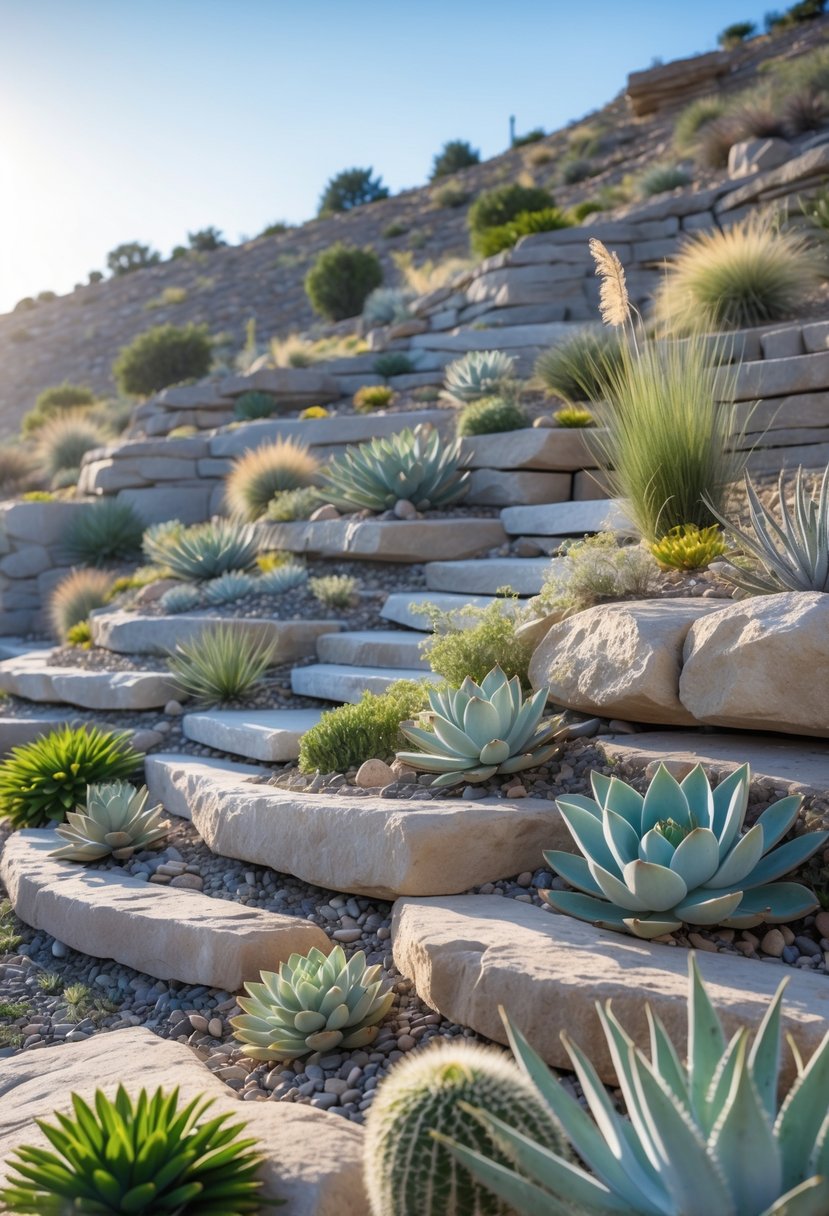
Rock gardens are a smart way to make your hillside look good and keep things simple. Rocks help control erosion and bring a rugged, natural style.
Pick drought-tolerant plants like succulents, lavender, and sedums. These plants don’t need much water and love rocky soil.
With these choices, your garden stays colorful even when it’s dry. It’s an easy fix for a pretty, low-maintenance hill.
Try filling gaps between rocks with low-growing perennials and ground covers. They keep weeds down and cut back on extra chores.
For more plant ideas, check out 15 Drought-Tolerant Plants for Rock Gardens.
10) Apply mulch to retain moisture and suppress weeds
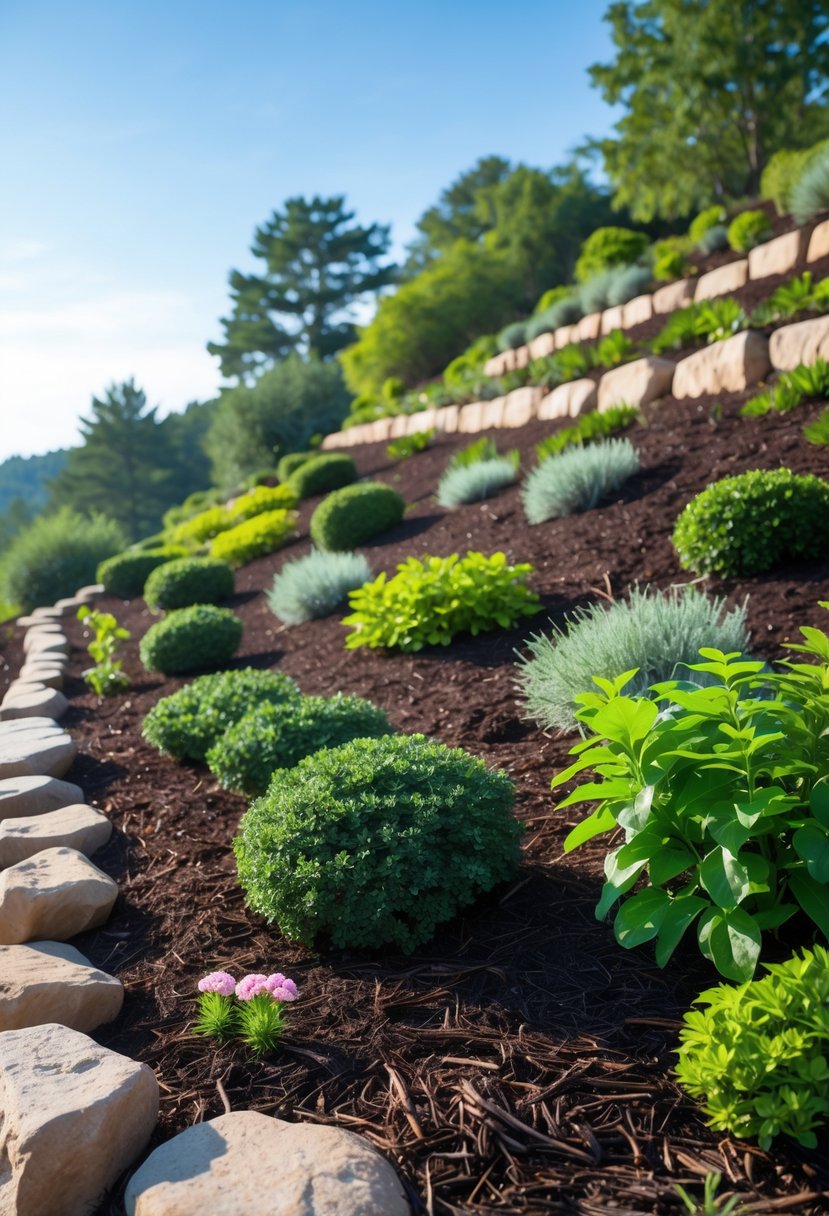
Mulch makes caring for your hill garden much simpler. It keeps soil moist by holding water near the roots, so you don’t have to water as often.
Mulch also blocks weeds, saving you time on cleanup. Go for coarse mulch like shredded bark or leaf mold—it stays put better on a slope. Mixing different sizes helps it lock together and not wash away during rain. Heavy pine bark mulch is a budget-friendly option for the short or medium term.
Cover your plants with a thick layer for best results.
Want more info? Check out this Gardening on Slopes and Hillsides guide.
11) Grow rock cress for early spring blooms on slopes
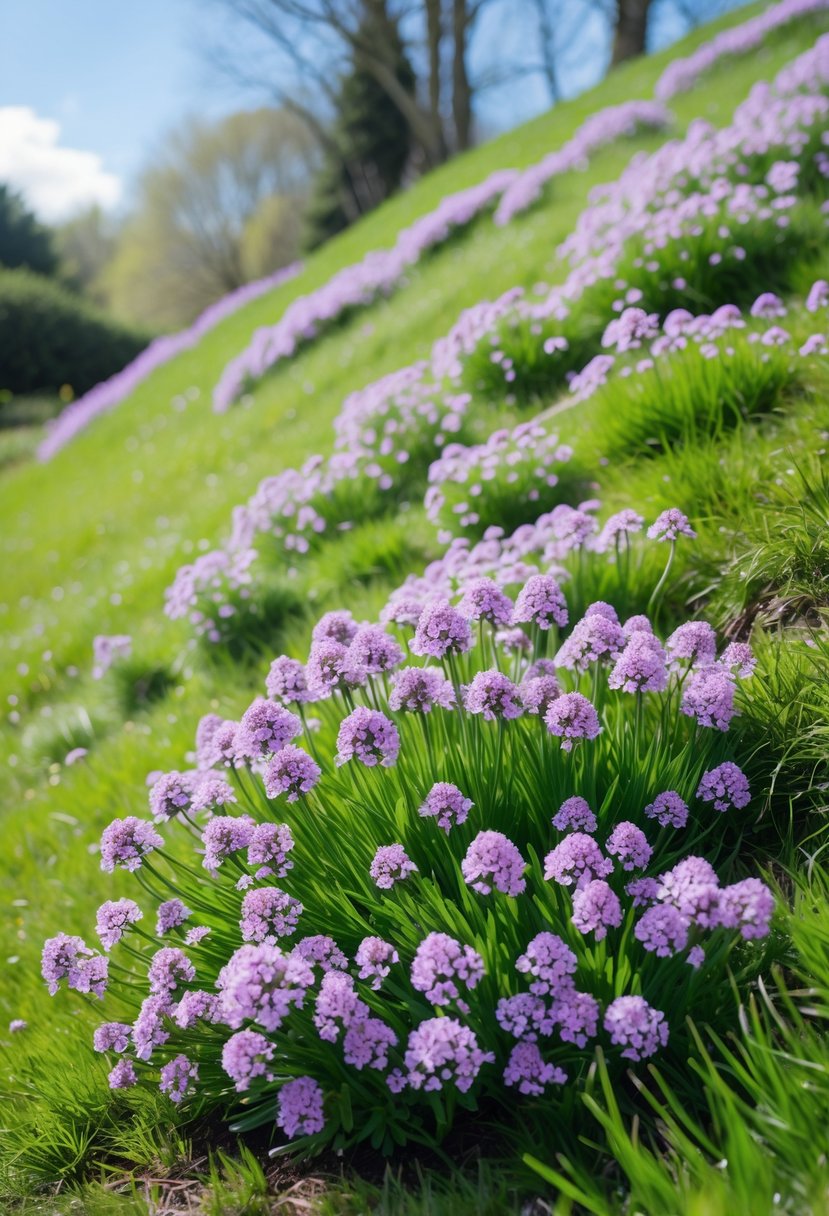
Rock cress works great on hills or slopes—it spreads out and hugs the ground, covering bare spots.
It blooms early in spring, showing off purple, pink, or white flowers when most plants are still waking up.
Once it’s settled, you barely need to do anything. Just give it sunlight and well-drained soil and it’ll thrive. Using rock cress is a simple way to brighten up your garden early in the year.
Want more details? Here’s a rock cress care guide.
12) Use low-growing junipers to hold soil firmly
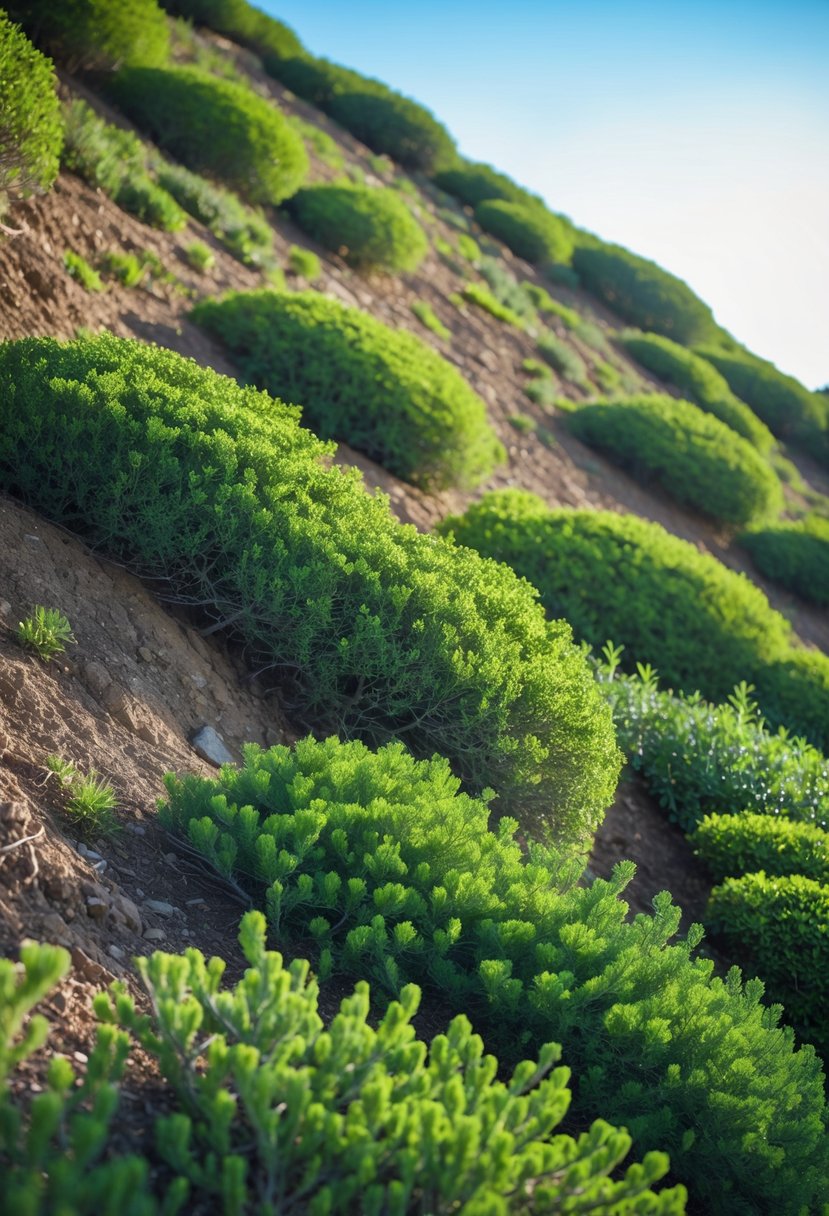
Try low-growing junipers if you want to keep soil steady on your hill. These shrubs spread out and form a thick mat, stopping soil from washing away.
Junipers are super easy to care for and adapt to many soil types. They love full sun but can handle a bit of shade.
Planting them on slopes cuts down how often you need to mulch or water. That just makes your hillside garden easier to manage—and honestly, it looks pretty great too.
If you want more tips on planting junipers for erosion control, check this guide on Junipers on Hillsides.
13) Incorporate hardy ferns in shaded hillside areas
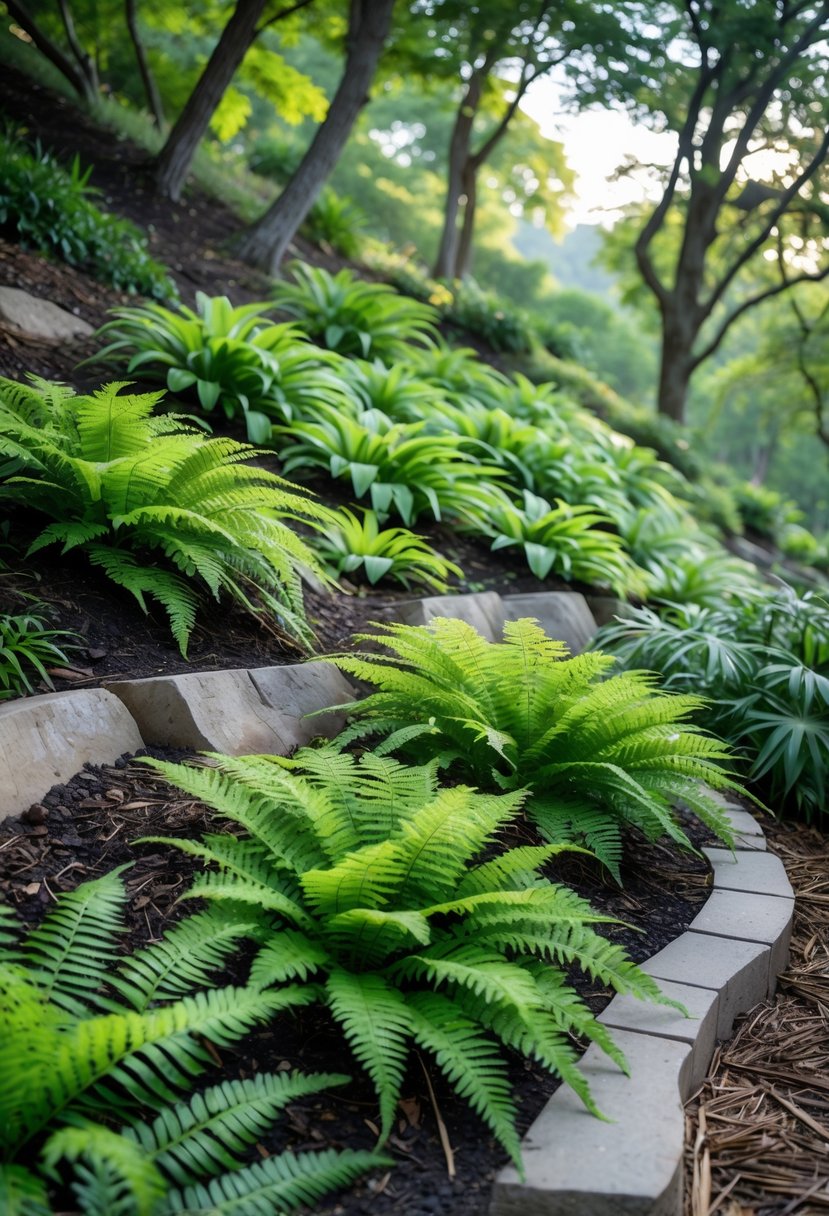
Use hardy ferns to add life to shady slopes. These tough plants barely need care once they settle in.
Ferns hold soil in place, which helps prevent erosion on hillsides. They thrive in low light, so they’re perfect for shady garden spots.
Ferns create a calm, natural vibe that blends with almost anything. Since they don’t need much watering or trimming, they save you time.
Try Autumn Fern or Lady Fern if you want different colors and textures. For more ideas, check out this guide on low-maintenance ferns for shade gardens.
14) Plant lavender for minimal water needs and lovely scent
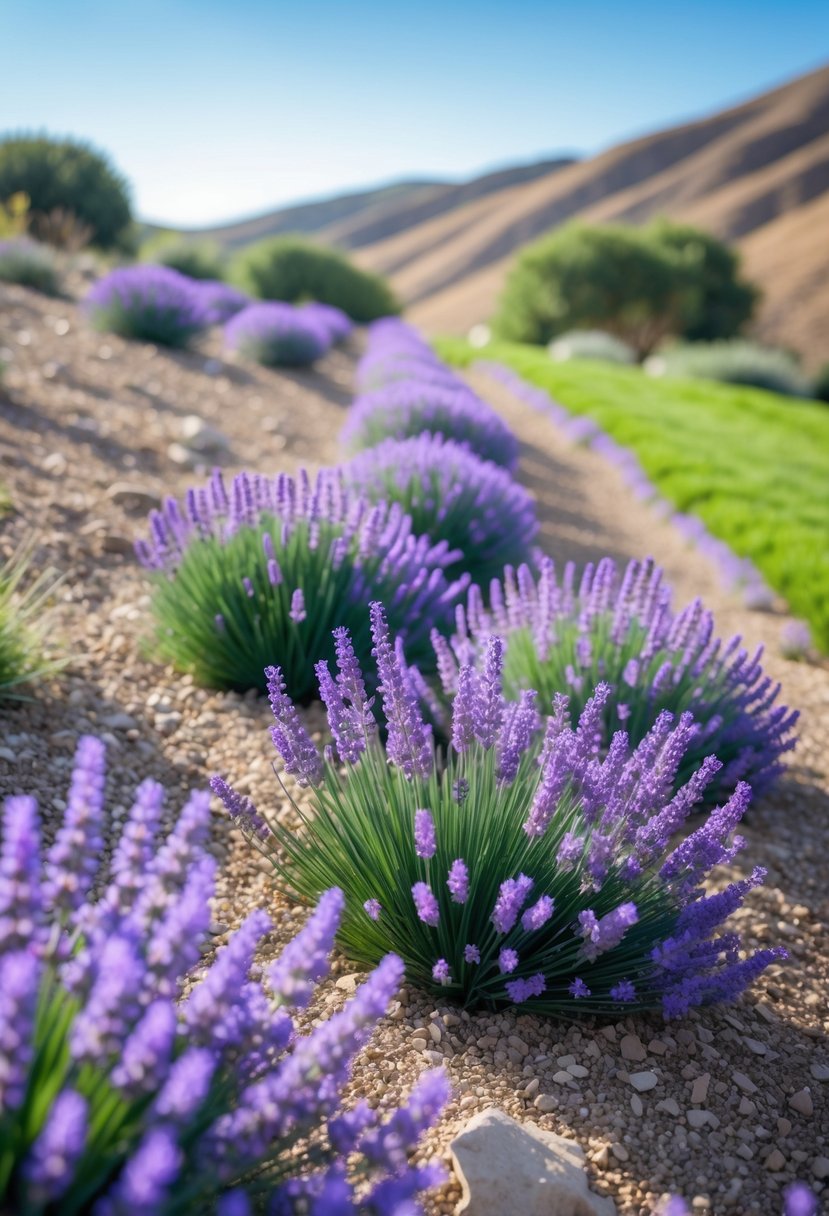
Lavender just works for hillsides because it barely needs any water. It likes dry soil and sunny spots, so you can skip a lot of the usual garden fuss.
You’ll enjoy its fresh, calming scent. Lavender flowers bring in pollinators like bees and butterflies, and their strong smell can even keep some pests away.
This plant stays good-looking all year. Whether you plant it in beds or pots, lavender adds color without much effort.
Try growing lavender for a beautiful, low-maintenance hillside garden. Learn more about growing lavender with minimal water needs at this lavender plants guide.
15) Create a pathway with gravel for easy hillside access
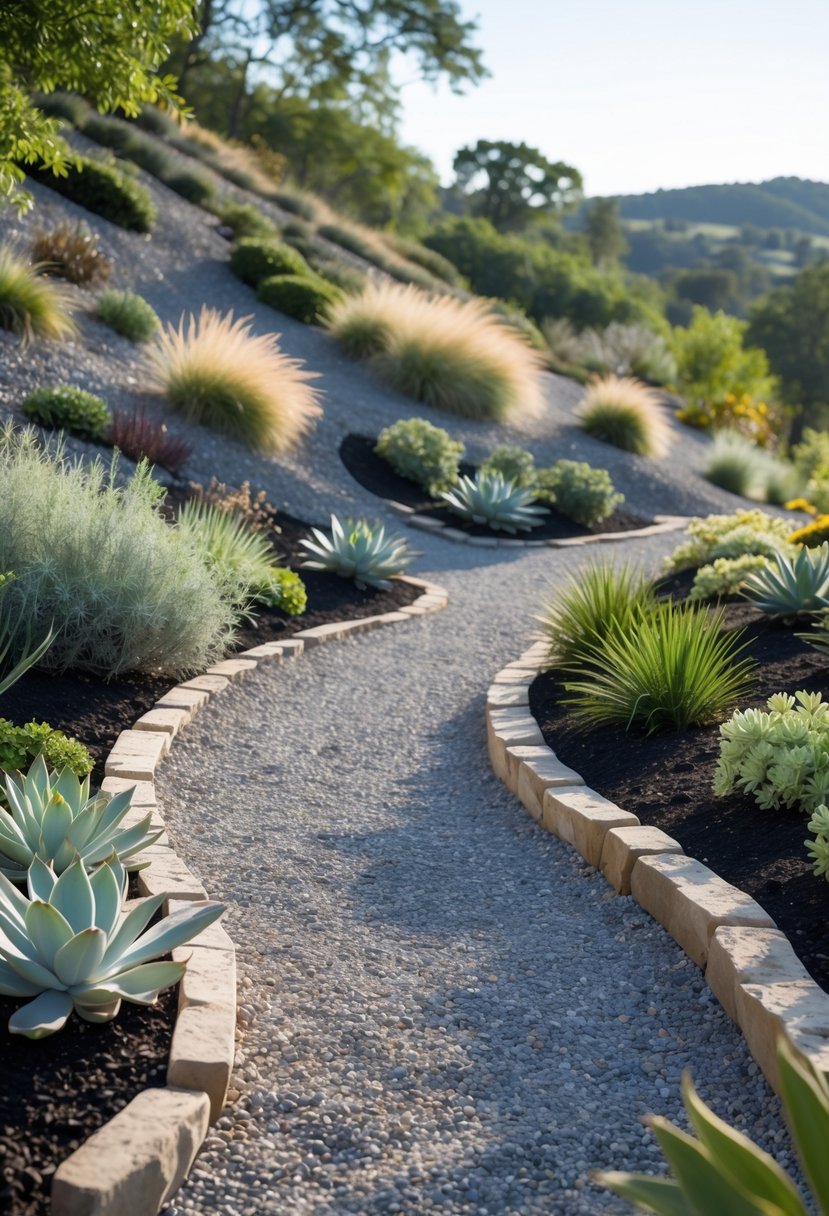
A gravel pathway makes walking on your hill way easier. Gravel is simple, cheap, and low-maintenance—it works well on slopes.
You can shape the path however you want to fit your yard. It helps keep soil in place and saves your shoes when it’s wet.
Line the path with bigger stones or edging to keep gravel from wandering. A gravel path also blends in nicely with plants and the natural look of your garden.
Get more ideas for building gravel pathways for hillsides at this gravel pathway ideas guide.
16) Use hostas in shady spots for easy hillside greenery
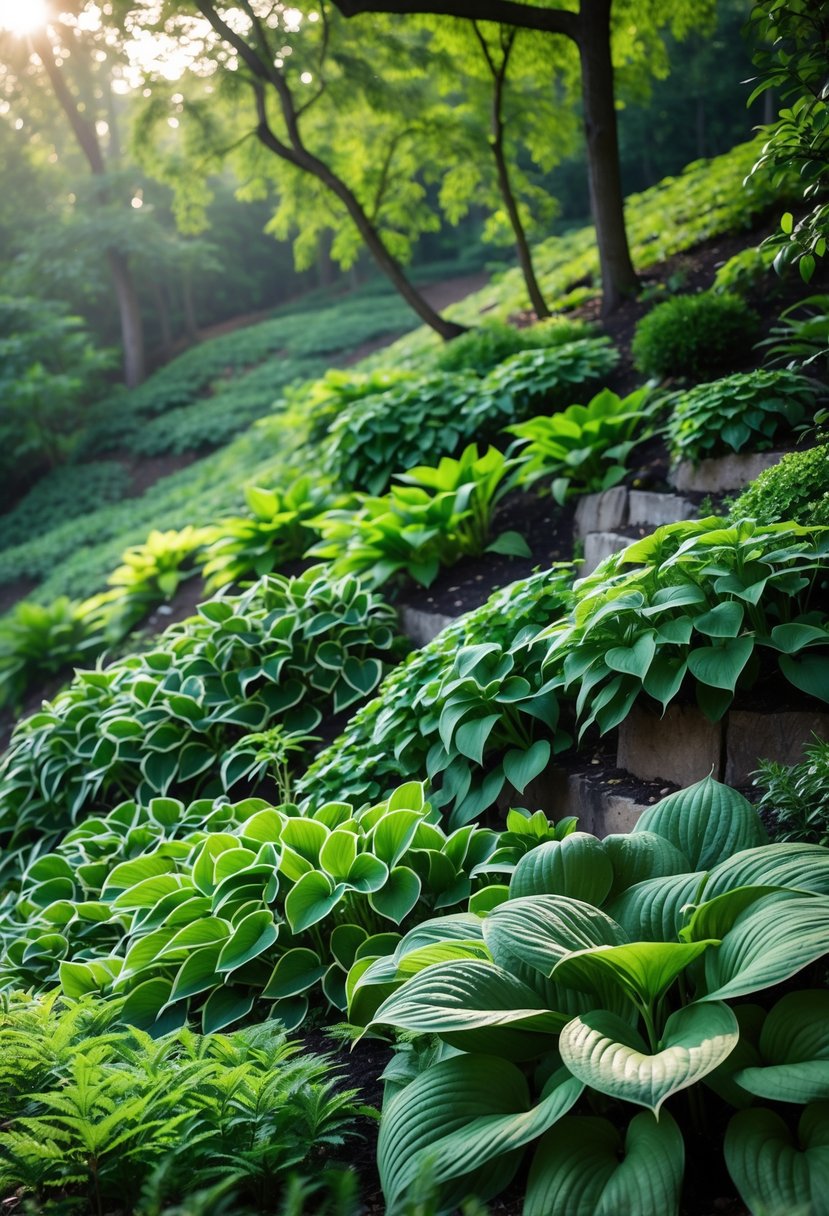
Hostas fit perfectly in shady spots on your hill. They barely need any care and grow where the sun doesn’t reach much.
These plants come in all sorts of sizes and leaf colors, so your slope gets a nice look. You can mix large and small hostas for more texture.
Hostas keep soil steady on hillsides and help stop erosion. Pair them with ferns or wild ginger for a simple, low-maintenance garden.
For ideas on planting hostas in shade, check out this guide on hosta garden design.
17) Add dwarf conifers for year-round color and stability

Bring in dwarf conifers for steady greenery all year. These small evergreens grow slowly, so you won’t have to fuss over them, and they won’t take over your space.
Their roots hold the ground and help prevent erosion. You can choose from lots of shapes and colors to suit your style.
Dwarf conifers work well in tight or rocky spots. They add texture and interest, even in winter when most plants fade.
Check out more ideas for dwarf conifers in small garden spaces.
18) Mix in black-eyed Susans for bright, resilient flowers
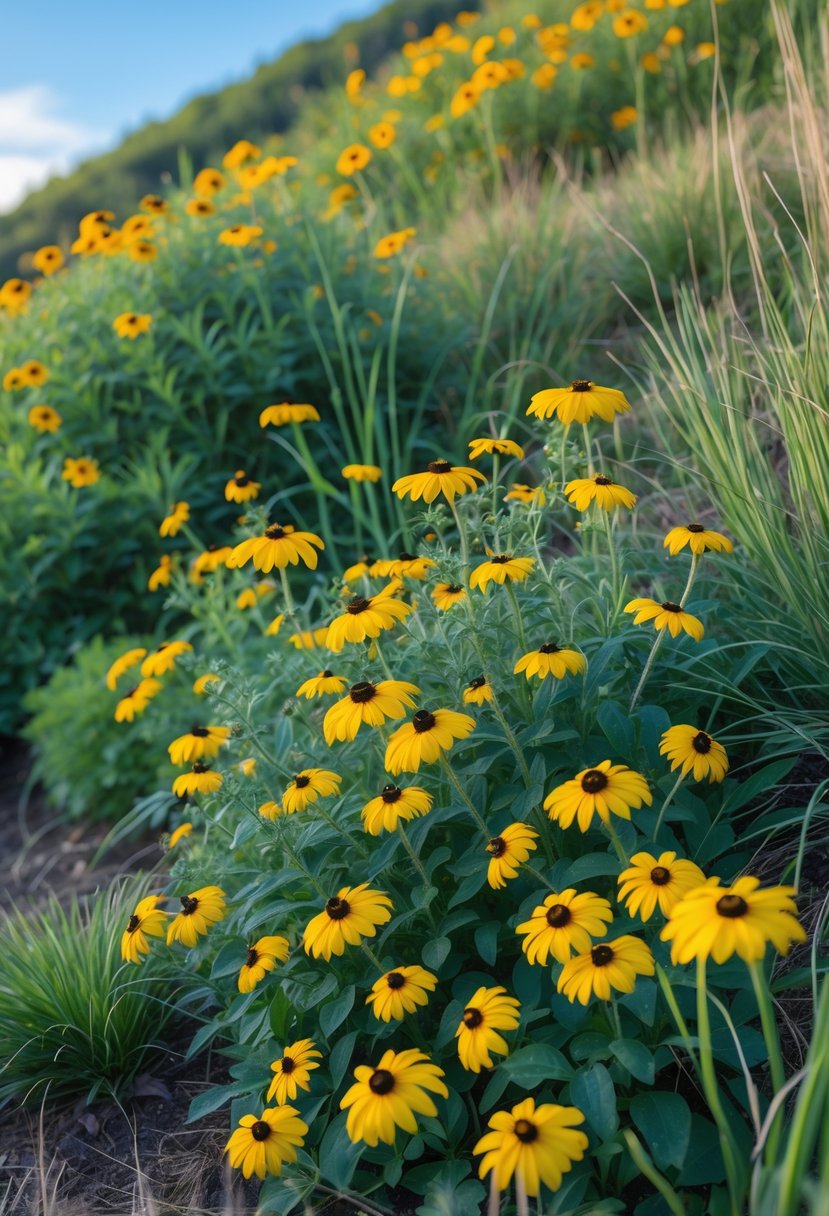
Add black-eyed Susans to your hill garden for bright yellow color and easy care. These flowers love full sun and dry soil, so they’re perfect for slopes.
They hardly need water once they’re settled, so you can just let them do their thing. Their blooms attract bees and butterflies, which keeps your garden lively.
Mix black-eyed Susans with other tough plants for a strong, low-maintenance combo. Find ideas for pairing black-eyed Susans with other plants here.
19) Deploy native wildflowers to attract pollinators with little care

Planting native wildflowers on your hill draws in bees, butterflies, and other pollinators. These flowers need almost no care once they’re established since they’re used to your local climate and soil.
Wildflowers add natural color and support the local ecosystem. You won’t have to spend much time watering or weeding, which is a win for a low-maintenance hill garden.
Choosing native species helps pollinators find the food they need. You can find lists of easy native wildflowers for pollinators in this guide on growing native wildflowers for pollinators.
20) Plant yarrow for tough, drought-resistant blooms
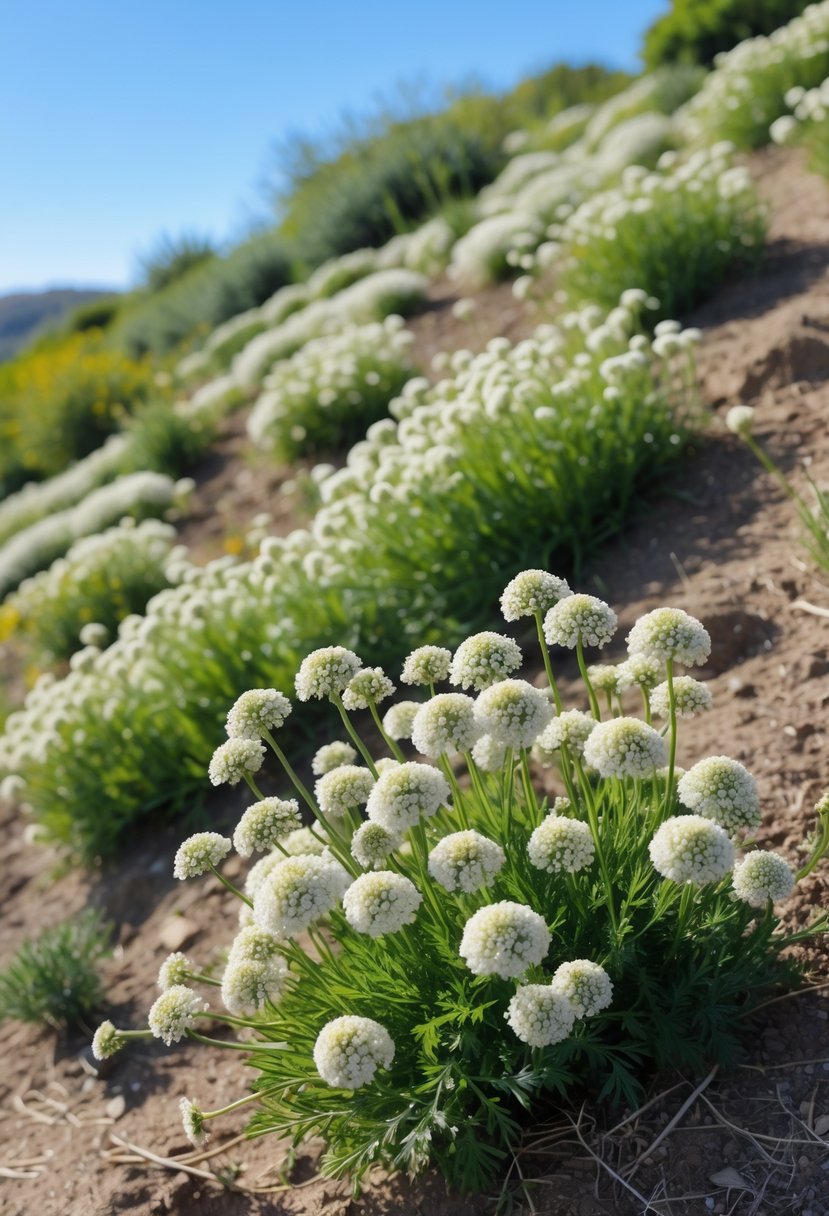
Add yarrow to your hillside garden if you want colorful, low-care flowers. Yarrow grows well in dry soil and barely needs watering once it’s settled in.
Its bright blooms show up in white, pink, yellow, and red, bringing cheer to sunny spots. Yarrow attracts butterflies, so your garden feels more alive.
This plant handles poor soil and tough conditions without trouble. It grows about 2 to 3 feet tall and has feathery leaves for extra texture.
Try yarrow if you want beautiful blooms without a lot of fuss. See more about growing yarrow for drought resistance from Garden Design.
21) Install retaining walls with natural stone for hillside safety
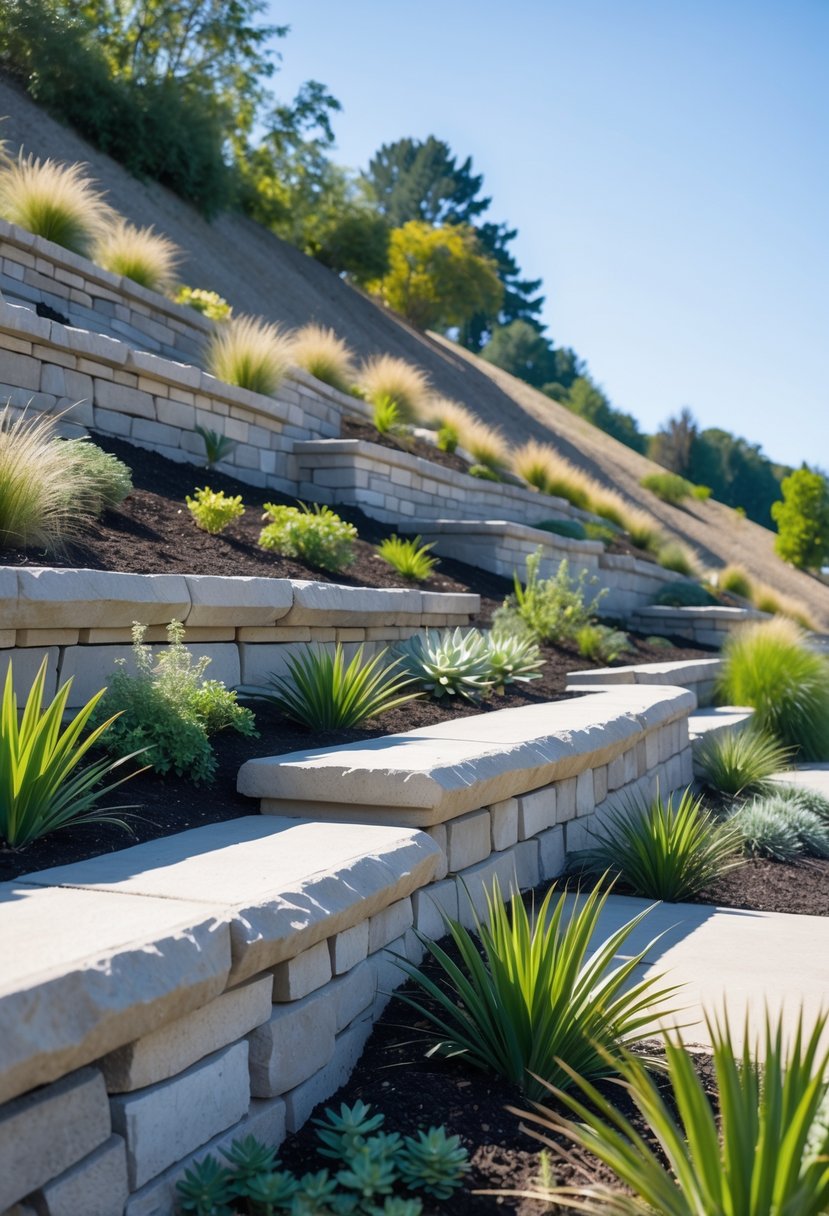
Use natural stone retaining walls to keep your hillside garden safe and steady. These walls stop soil erosion by holding back the earth, especially when it rains hard.
Natural stone looks great and fits right in with outdoor spaces. Stones like limestone or granite last a long time and barely need any upkeep.
Building a dry stack wall with natural stone is a simple, low-maintenance way to add strength to your slope. It also gives your garden a neat, natural look.
Learn more about natural stone retaining walls for hillside gardens at 15 Stunning Retaining Wall Ideas for Your Hillside Backyard.
22) Use corkscrew hazel for an interesting focal point
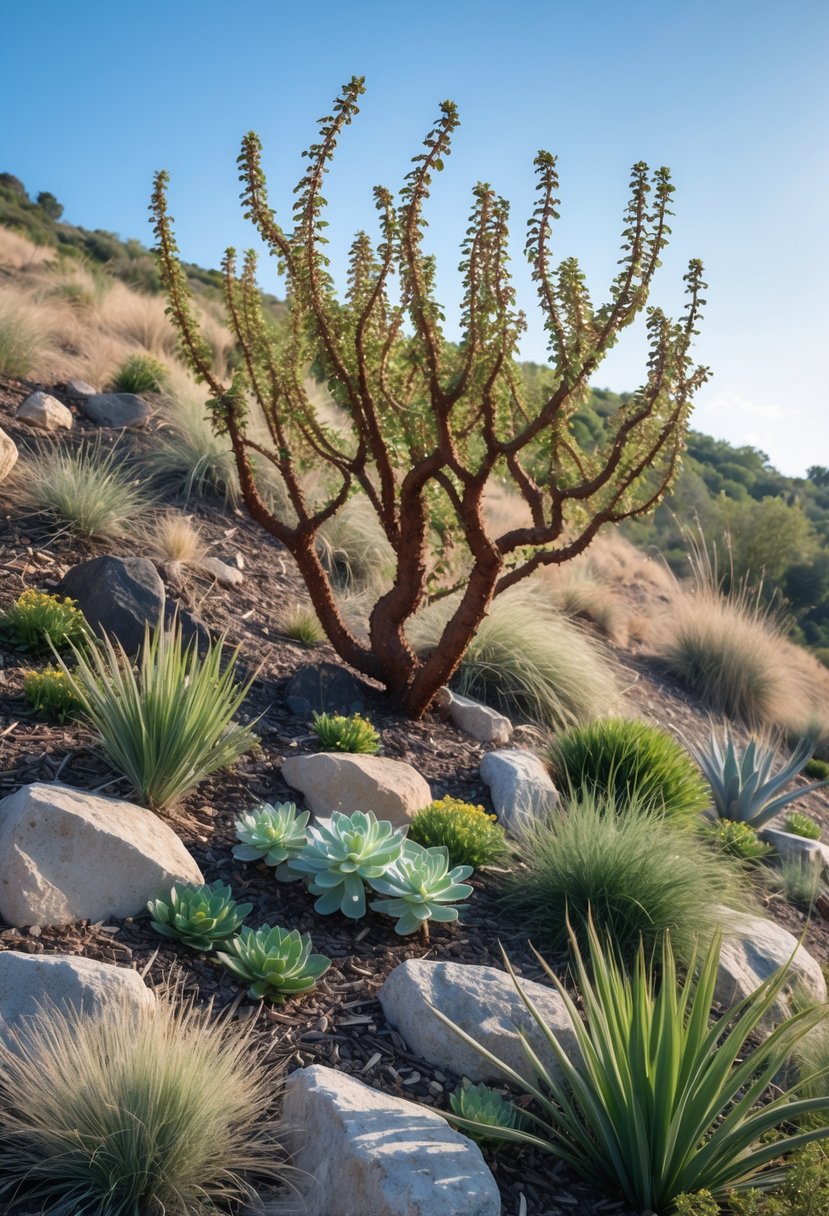
Add a unique touch to your hill garden with corkscrew hazel. Its twisted branches create a cool shape that stands out, especially in winter when everything else looks kind of plain.
This plant is hardy and low-maintenance, so it fits sloped areas well. You won’t have to fuss over it much.
Corkscrew hazel works as a focal point in garden beds or near paths. Its unusual look draws the eye and adds charm all year.
You can learn more about using corkscrew hazel as a garden feature here.
23) Incorporate small roses like miniature or shrub varieties
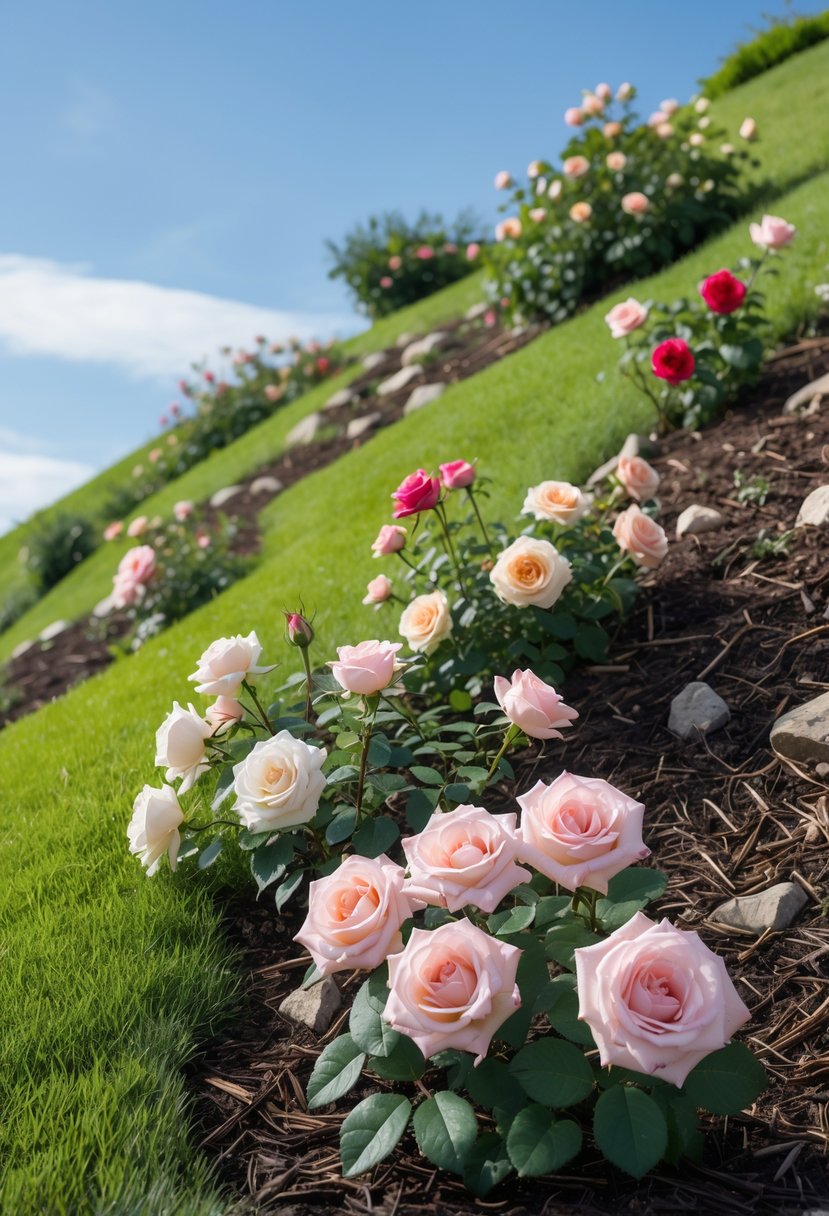
Add small roses like miniature or shrub types to your hill garden for a pop of color without the extra work. These roses stay compact and don’t need much space to thrive.
Miniature roses fit tight spots and can bloom several times in a season. Shrub roses are tough and usually resist pests, so they’re easier to care for.
Planting roses on a slope helps with drainage. They mix well with other low-maintenance plants to keep your garden lively all year.
For more ideas, check out small rose garden tips.
24) Plant vinca minor as a fast-growing evergreen groundcover
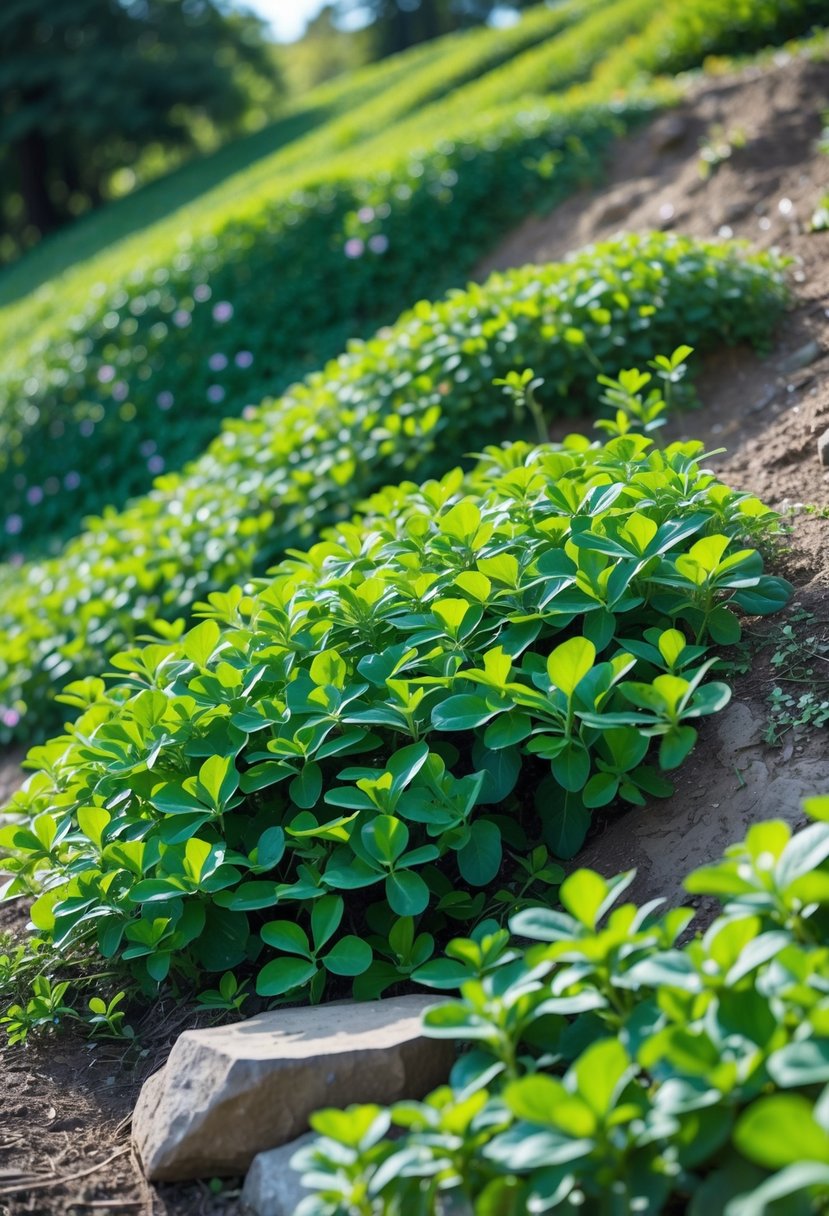
Vinca minor can cover hills in no time. It stays green year-round and grows fast.
You’ll spot its small blue flowers popping up, giving your garden a splash of color. Honestly, you barely have to do anything to keep it happy.
It thrives in shade or partial sun, and it’s pretty forgiving. It even helps keep soil from washing away on slopes.
Since it spreads quickly, you can fill in empty patches without much fuss. If you’re after a low-maintenance way to keep your hillside looking lively, vinca minor is a solid pick.
For extra info, check out tips on growing and caring for vinca minor.
25) Grow sedges for erosion control in moist hill areas
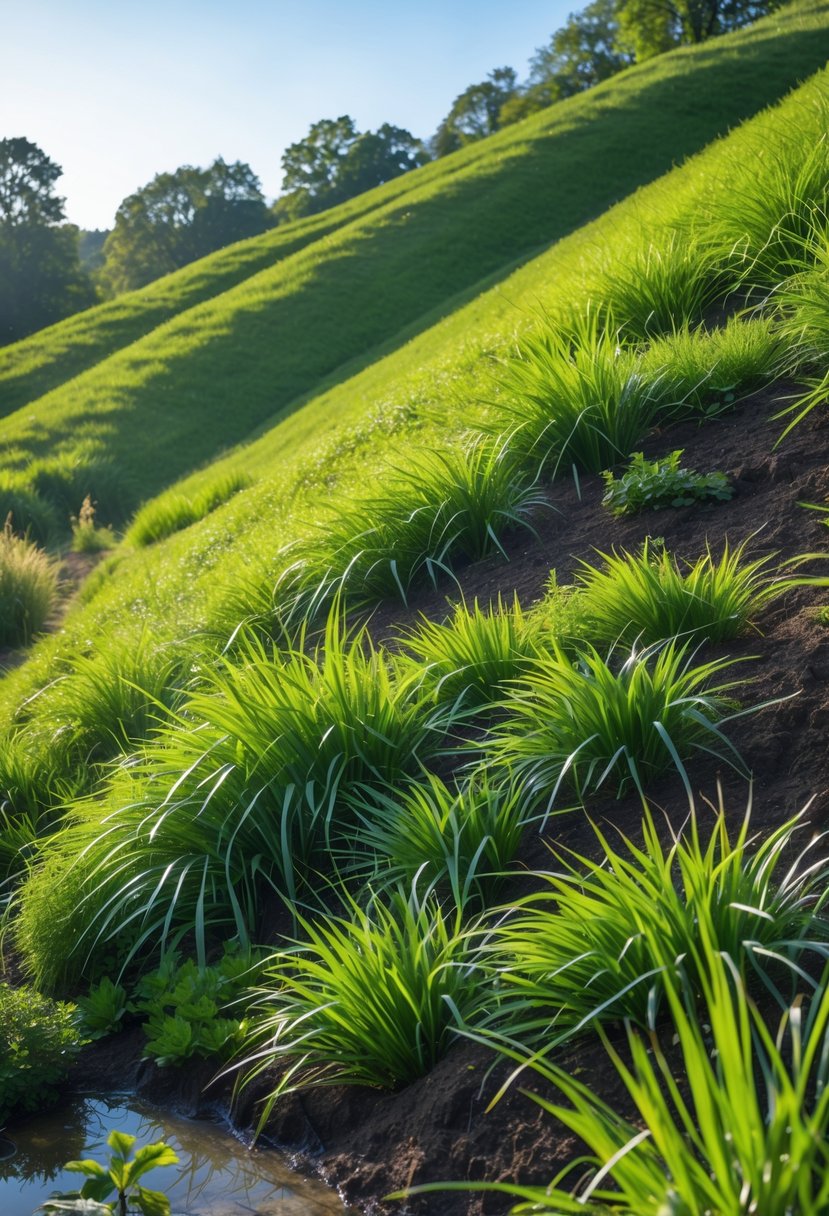
If your hillside gets soggy or has wet spots, sedges handle it like champs. These grass-like plants love moist soil where a lot of others just don’t make it.
Sedges put down strong roots, grabbing onto the soil and holding it in place. Once they settle in, they barely need any care.
You can plant them near seeps or along the edge of a pond to tackle runoff. They add a lush look while protecting your slope.
Curious about which sedges work best? Hoffman Nursery has a handy guide to fresh sedges for wet areas.
Key Considerations For Hill Gardens
Gardening on a hill isn’t always easy. You’ve got to think about soil, water, and which plants will actually stick around.
If you take steps to keep soil from sliding, manage water the right way, and pick sturdy plants, your hillside garden can look good and stay easy to maintain.
Soil Erosion Prevention
Soil erosion is a real headache on hillsides. Rainwater rushes down and can just take your soil with it.
You can stop this by building retaining walls or terraces. These flat steps slow down water and give your plants a place to grow.
Try covering bare soil with mulch or ground covers. That helps shield it from heavy rain.
Plant roots are honestly your best defense. They grab onto soil and keep it from moving. Choose plants with strong root systems that reach out wide and deep.
Creeping thyme or juniper are both good options. Tossing some rocks or stones in trouble spots can help too.
They slow down water and shield the soil underneath.
Drainage Solutions
Drainage is another big deal for hill gardens. You don’t want water pooling at the top or washing everything out at the bottom.
Try digging channels or swales—just shallow ditches that guide water safely downhill. You can fill them with gravel or moisture-loving plants to calm the flow.
Make sure your soil drains well. Clay soils hold water and make erosion worse.
Mix in compost or sand to loosen things up if your soil feels heavy. Installing French drains or gravel beds under large planting areas can help move water away without causing damage.
Choosing the Right Plants
Plants on a slope need to handle wind, sun, and sometimes drier soil. It’s not the easiest spot for picky plants.
Go for native plants whenever you can. They’re already used to your local conditions and won’t need much attention.
A lot of native plants also have deep roots, which helps stop erosion. Low-maintenance choices like succulents, ornamental grasses, and shrubs do well on hillsides.
Once they get settled, they don’t need much water. Try mixing up plant types to make layers—ground covers for protection, shrubs for the middle, and taller plants for structure.
That mix keeps your garden steady and looking good throughout the year. For more plant ideas and inspiration, check out these hill gardening ideas.
Maintaining Your Sloped Garden
Keeping a sloped garden healthy doesn’t have to be a pain. Focus on smart watering and mulch to save time and protect your plants.
These steps help control moisture and stop erosion. Your garden ends up looking great with less effort.
Watering Effortlessly on a Hill
Watering a slope can get frustrating since water just wants to run off. Try using drip irrigation or soaker hoses.
These deliver water slowly, right at the roots. It’s a lot more efficient and keeps roots happy.
Water early in the morning or late in the evening to cut down on evaporation. Don’t overdo it—watering too much at once just causes runoff.
If you’ve got terraces, start watering from the top and let each level soak it up as water moves down. Rain barrels or collecting runoff water can make things even easier and help lower your water bill.
Mulching for Low Upkeep
If you’re dealing with a slope, mulch really becomes your best friend. It keeps soil where it belongs and helps the ground hold onto moisture longer.
Try spreading a 2-3 inch layer around your plants. This protects their roots and cuts down on weeds.
I usually reach for organic mulch like wood chips or bark. These break down over time and feed your soil, which is always a plus.
In tougher spots, you might prefer pebble or gravel mulch. It sticks around even when the rain pours, so you won’t have to redo it constantly.
Just remember to leave a little space between the mulch and your plant stems. That way, you’ll dodge any rot problems.
Check on your mulch every so often, especially after a big rain. If it looks thin, just add more.
Honestly, mulching saves time and water, and it shields your hillside garden from the worst of the elements.
For more ideas on easy care slopes, see low maintenance hillside landscaping.


