
DIY Garden Ideas To Hide A Wall: 25 Creative and Easy Solutions
Got a garden wall that just looks… blah? It’s annoying, right? Sometimes these walls block your view or make your outdoor space feel boxed in.
But you can totally change that vibe with a few simple tricks. A little creativity goes a long way, and suddenly your garden feels way more inviting.
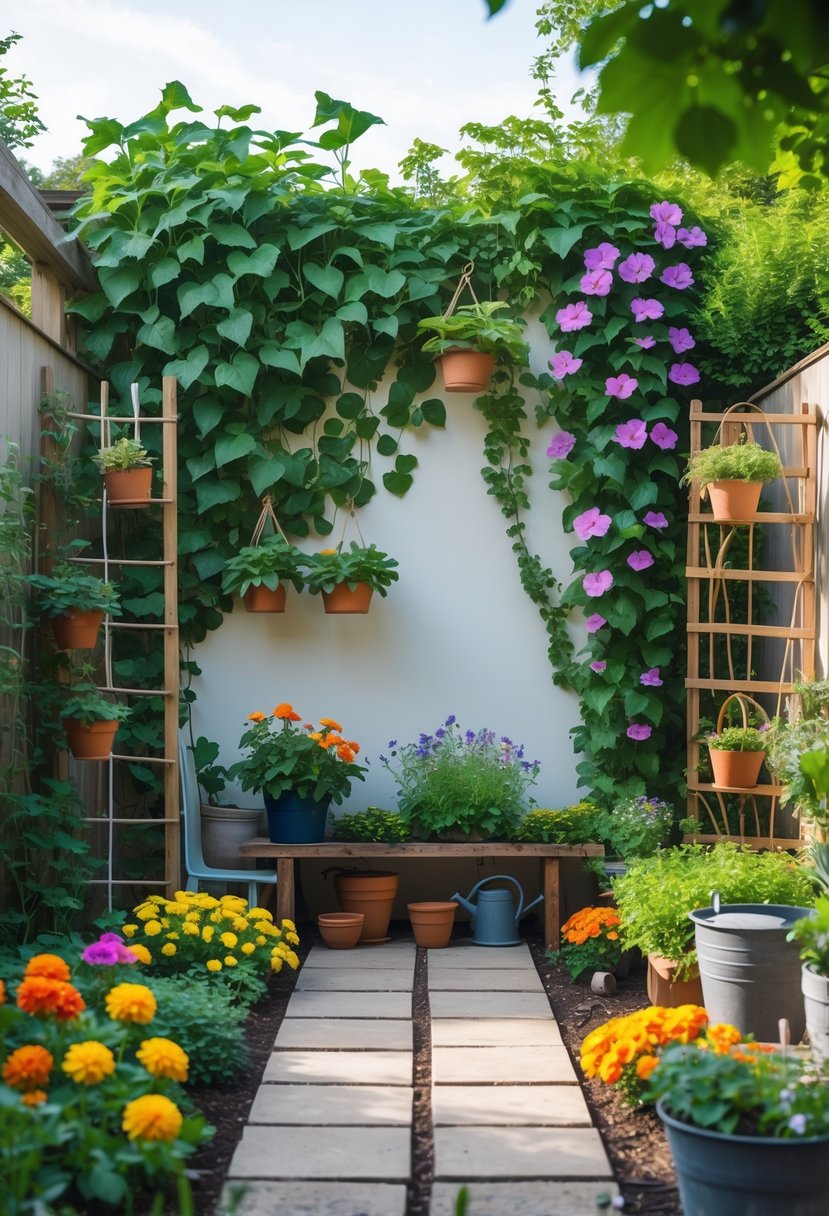
DIY garden ideas to hide a wall help you turn an eyesore into a lovely part of your yard. These projects are usually pretty easy and can make your garden feel more private and welcoming.
With just a few tweaks, you might find yourself enjoying your outdoor space a whole lot more.
1) Install a wooden lattice panel and grow climbing roses

Try hiding a boring wall by setting up a wooden lattice panel. It looks good and gives your plants something to climb.
Climbing roses love lattices. They grab onto the slats and grow upward, creating a natural, ever-changing cover.
Space the slats about 6 inches apart. That way, your roses get enough sun and grow strong. Need help? Here are some easy instructions for installing lattice panels.
2) Build a vertical garden using recycled pallets

Turn a blank wall into a green spot with recycled wooden pallets. Just stand one up, fill the slots with soil or pots, and you’re set.
You can grow herbs, flowers, or even small veggies. Plus, it’s a great way to reuse old pallets.
You don’t need fancy tools or skills. With some basics, you’ll have a vertical garden that brightens your space and uses the wall in a clever way.
Check out more pallet garden ideas if you want extra inspiration.
3) Hang colorful ceramic pots with trailing ivy

Brighten up a plain wall by hanging colorful ceramic pots. Pick bold or warm colors to add a little spark.
Plant trailing ivy in each pot and let it drape down. The green leaves soften the wall and bring a relaxed, natural look.
Use macramé hangers or sturdy hooks to hang your pots. This DIY trick adds a cozy, artistic vibe while hiding the wall.
Try mixing up pot colors and different ivy types. It’s a fun way to personalize your space, and it works great for small gardens or balconies.
Want more ideas? Check out ecocation.org’s creative hanging planter ideas.
4) Create a trellis wall with jasmine vines

Hide a wall by adding a trellis and growing jasmine vines on it. Attach a wire or wooden trellis to your wall—just make sure it’s sturdy.
Plant star jasmine at the bottom. These vines grow fast and smell amazing. As they climb, they’ll cover your wall with green leaves and white blooms.
Space your plants out depending on the wall size. Plastic-coated garden wire works great for shaping your trellis.
For more ideas, see this DIY star jasmine trellis wall.
5) Use bamboo screens for a natural look

Set up bamboo screens to hide a wall and add some zen to your garden. Bamboo is light but strong, so you can install it pretty easily.
These screens give you privacy but still let in some sunlight. They make your space feel calm and laid-back.
Bamboo matches well with plants and garden decor. You’ll find all sorts of styles, from simple rolls to fancy panels.
Check out bamboo privacy fence ideas if you want to see more options.
6) Paint the wall with bright mural art

Cover a dull wall by painting a mural. Pick colors you love and match them to your garden’s vibe.
You can paint flowers, animals, or even a pretend secret door. It adds a playful, lively touch outside.
No need to be a pro—simple designs look awesome and really brighten up a wall. For inspiration, check out easy garden mural ideas.
7) Attach a mirror wall to add depth

Use a mirror wall to make your garden feel bigger. Attach weather-resistant mirrors to your wall for an instant sense of extra space.
Mirrors reflect your plants and light, so even shady spots seem brighter. It’s a neat way to blur the edges of your garden.
Pick outdoor mirrors so they last through rain and sun. Place them to reflect your favorite garden bits for the best look.
Need more ideas? Check out garden mirror tips for outdoor spaces.
8) Mount a collection of outdoor wall planters

Hide a plain wall by mounting a bunch of outdoor wall planters. Mix up the sizes and styles for a more interesting look.
Fill them with flowers or greenery to bring some life to the space.
You can use wood, metal, or recycled stuff for your planters. Mount them at different heights for a nice layered effect.
It’s a simple way to turn a boring wall into a lush, welcoming spot.
For more inspiration, check out creative planter ideas.
9) Add a rustic pergola cover with wisteria

Hide a wall by building a rustic pergola and letting wisteria vines take over. The wood frame feels natural and fits right into any garden.
Wisteria grows fast and makes a gorgeous canopy of purple flowers. It gives you shade and privacy—perfect for chilling outside.
Pick a sturdy pergola design that fits your yard. Want to build one? Check out these rustic pergola ideas.
10) Construct a gabion stone wall against the ugly one

Build a gabion stone wall in front of an ugly wall. Gabions are metal cages you fill with rocks for a sturdy, natural look.
You don’t need concrete—just fill the cages and stack them up. It’s a strong barrier and a cool garden feature all in one.
Gabion walls add texture and style. You can make them any size to fit your space.
Need a step-by-step? Here’s a guide to building gabion walls.
11) Plant tall evergreen shrubs like Leylandii

Want a quick fix? Plant tall evergreen shrubs like Leylandii. They grow fast and stay green all year, so your garden stays private.
Leylandii makes a dense hedge if you plant them close together.
Give them some space to grow tall. They’re low maintenance—just water and trim them now and then.
Curious about what else to plant under Leylandii? Find tips here.
12) Grow bamboo in large planters for quick screening

Use big planters to grow bamboo and make a fast privacy screen. Bamboo shoots up quickly and gets tall, so it’s perfect for hiding a wall.
Planters keep bamboo from spreading everywhere. They’re also great if you don’t want to dig up your yard.
Pick large planters with good drainage. Water your bamboo regularly at first so it gets established.
If you want more details, check out this guide on growing bamboo in containers.
13) Install modular
Climate and Light Requirements
Start by thinking about your climate and how much sunlight the wall actually gets. Some plants love full sun, while others just can’t handle it and prefer shade.
If your garden wall catches a lot of sun, you might want to try drought-tolerant plants like succulents or herbs. A shaded wall? Ferns or ivy could work nicely.
Don’t forget about the wind and rain, either. If your wall sits in a windy spot, stick with sturdy plants or mounted items that won’t blow off.
In wetter climates, use materials that won’t rot or rust. It’s just not worth dealing with soggy, ruined decorations.
Choosing Safe Mounting Options
How you attach things to your wall really matters. You want to use solutions that keep both your decorations and the wall safe.
Pick anchors, hooks, or brackets that fit your wall’s material. If you’re hanging heavy planters or shelves, secure them with the right supports.
Lighter decorations or climbing frames? Adhesive hooks or small nails might do the trick.
Never use nails or screws in walls that can’t handle them. If you’re not sure, ask a local DIY expert or look up guides for your wall type.
A quick checklist can help you figure out what to use:
- Wall material (brick, wood, concrete)
- Weight of what you’re hanging
- Exposure to weather
- Whether you need a drill or just adhesive
It’s a simple way to keep your wall and garden looking good without any headaches.
If you want more inspiration, check out creative ways to hide an unsightly garden wall.
Design Tips for Seamless Integration
When you want to hide a garden wall, pay attention to how colors, textures, and shapes play together. Mixing different plant heights and features adds layers and keeps things interesting.
This approach helps your wall blend in with the rest of your garden, so it doesn’t stick out.
Blending Colors and Textures
Pick plants and materials that fit your garden’s color scheme. Soft greens and earthy tones can make a wall feel less harsh.
If you mix up leaf shapes and textures—think ferns and succulents—you’ll get contrast without making things clash.
Toss in a few flowering plants with gentle colors for a little extra life. Skip the super-bright or bold colors if you want the wall to fade into the background.
Natural stone or wood finishes can make the wall feel like it belongs in the garden.
Incorporating Vertical Elements
Vertical elements pull the eye upward and make the wall look taller, not just like a big flat barrier.
Climbing plants like ivy or clematis add easy height and soften things up.
Try adding trellises, hanging pots, or wall-mounted planters. These give you more spots for plants and add some design flair.
Just make sure everything’s attached securely and isn’t a pain to maintain.
Layering for Depth and Interest
Layering basically means you place plants or features in front of your wall at different heights and distances.
Start with low plants tucked close to the wall, then put taller ones out in front. That way, you create depth without much effort.
It gives the space an inviting vibe instead of just showing off a flat, boring wall.
Mix up shrubs, grasses, and flowers to keep things interesting. When you change up textures and colors, the garden feels more natural and balanced—plus, the wall just kind of fades into the background.


