

Easy Rock Garden Ideas on a Slope 25 Creative Tips for a Stunning Hillside Yard
Got a sloped yard? A rock garden might be the easiest way to add some beauty and interest outside. Rock gardens honestly work great on uneven ground, and they help manage soil erosion while giving your slope a neat, natural look.
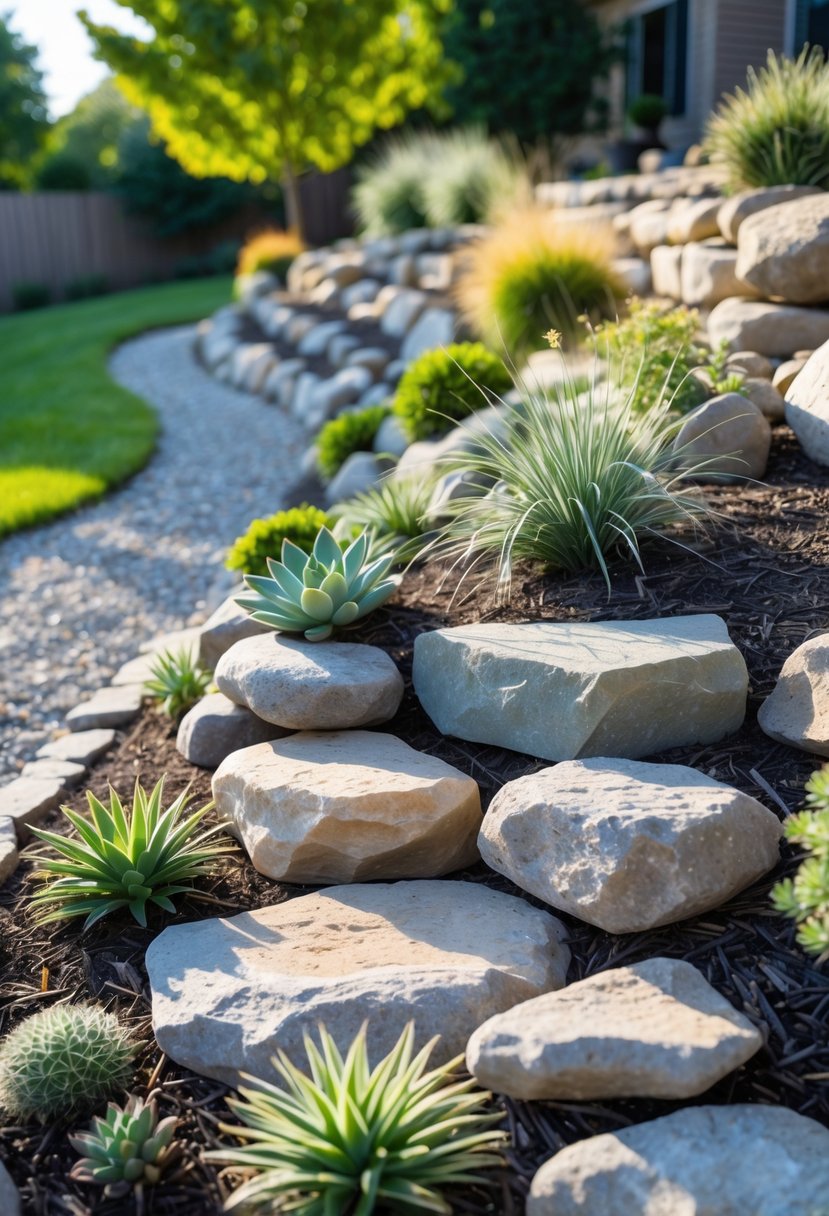
Easy rock garden ideas on a slope let you turn a tricky landscape into something attractive and low-maintenance without much hassle. With just a handful of rocks and some good plants, you can make your yard feel more inviting. It’s a unique garden that fits your space, and honestly, it’s not as hard as it sounds. For more tips, check out easy ways to build a hillside rock garden.
1) Build tiered rock terraces to control erosion
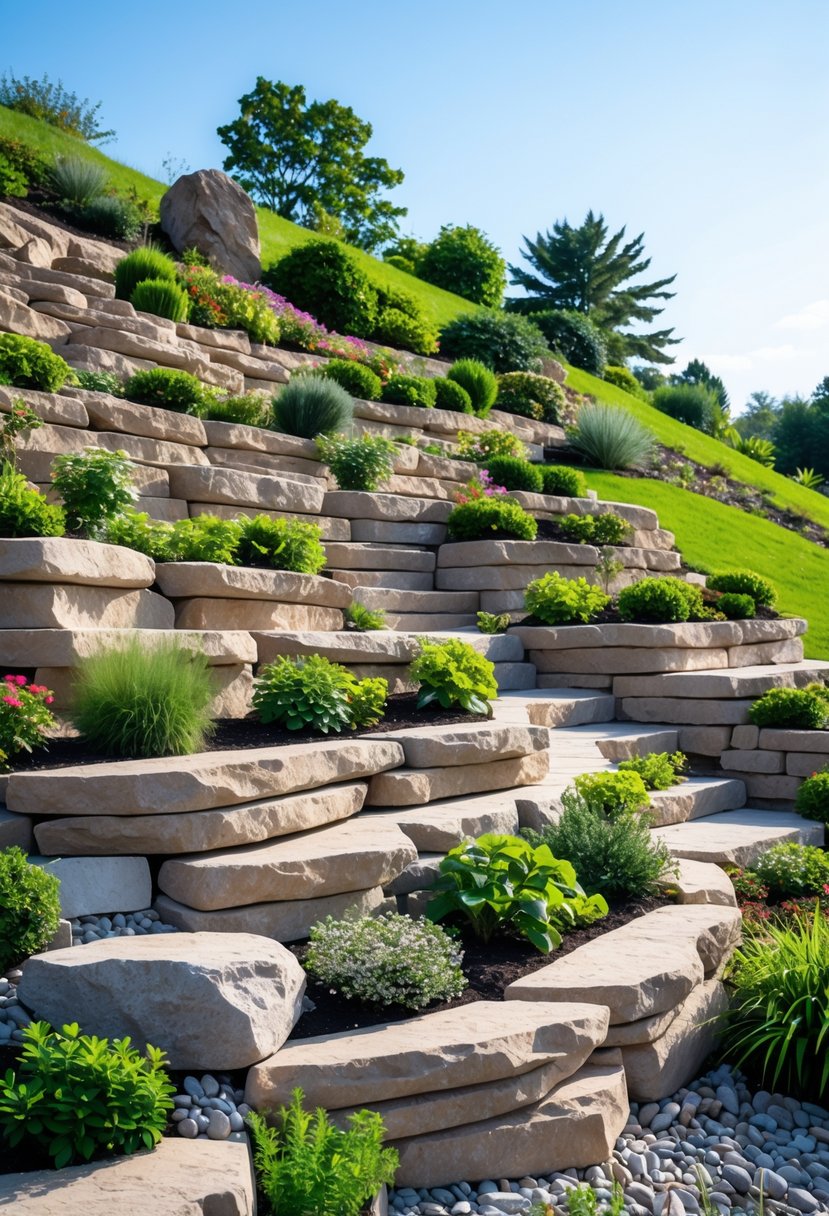
Try building simple rock terraces on your slope to slow down water and keep soil from washing away. These tiers hold soil in place and give you flat spots for planting.
Stack stones to make low walls that follow the shape of your hill. Fill each level with soil and plants that like dry, well-drained spots.
This method makes your garden way easier to care for and cuts back on erosion. Check out a step-by-step guide if you want more details.
2) Use drought-tolerant succulents between rocks

Fill the gaps between rocks with drought-tolerant succulents to add color and texture. These plants don’t need much water, so they’re perfect for slopes where watering gets tricky.
Succulents like Sedum or Echeveria handle sun and dry soil. Their roots hold the soil in place, which helps fight erosion.
You’ll spend less time maintaining your garden if you use succulents. Even in hot weather, your slope will stay green and lively. For more ideas, check out simple succulent rock garden ideas.
3) Create a dry creek bed with river rocks
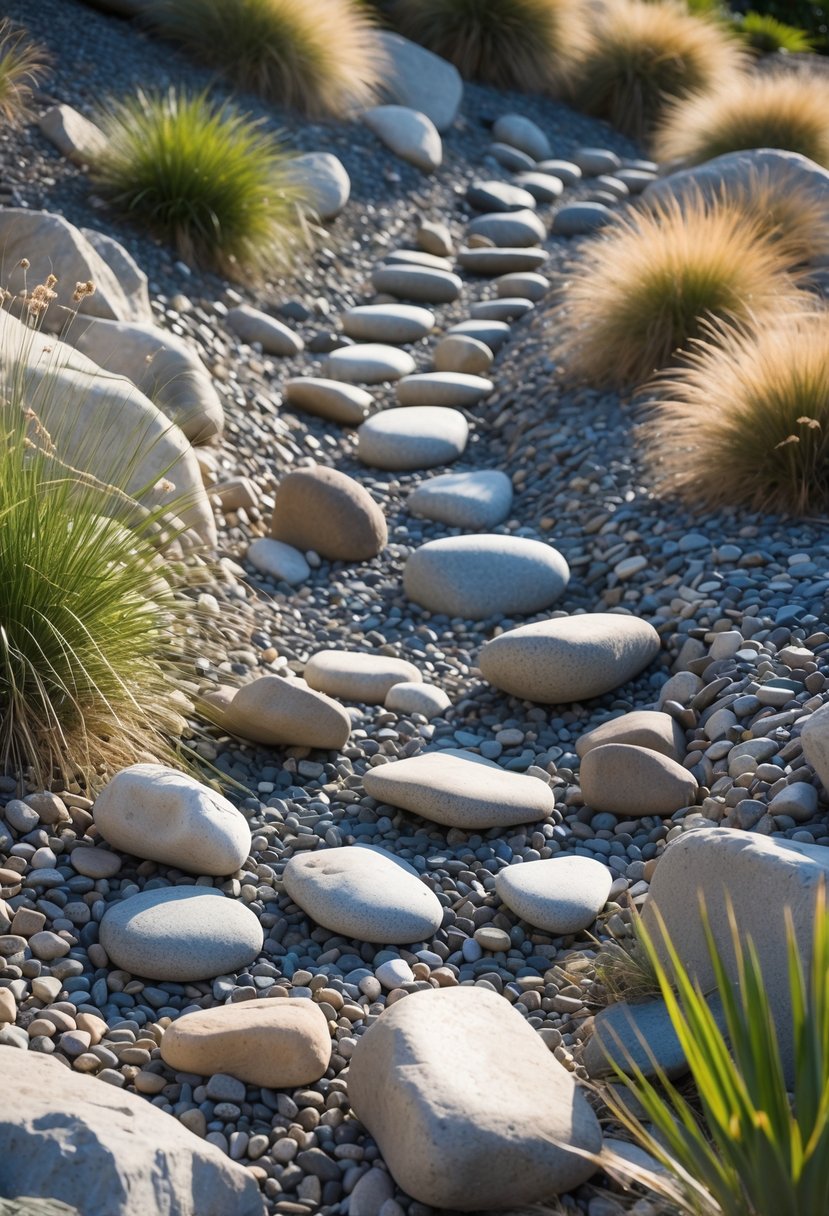
Try using river rocks to make a dry creek bed on your slope. It’ll guide water away and stop erosion, plus it just looks cool and natural.
Dig a shallow trench that follows your slope, then fill it with different sizes of smooth river rocks. Plant a few drought-friendly plants nearby to boost the look and keep things easy.
If you want more ideas, check out this guide on how to create a dry creek bed with river rocks.
4) Place larger boulders as focal points
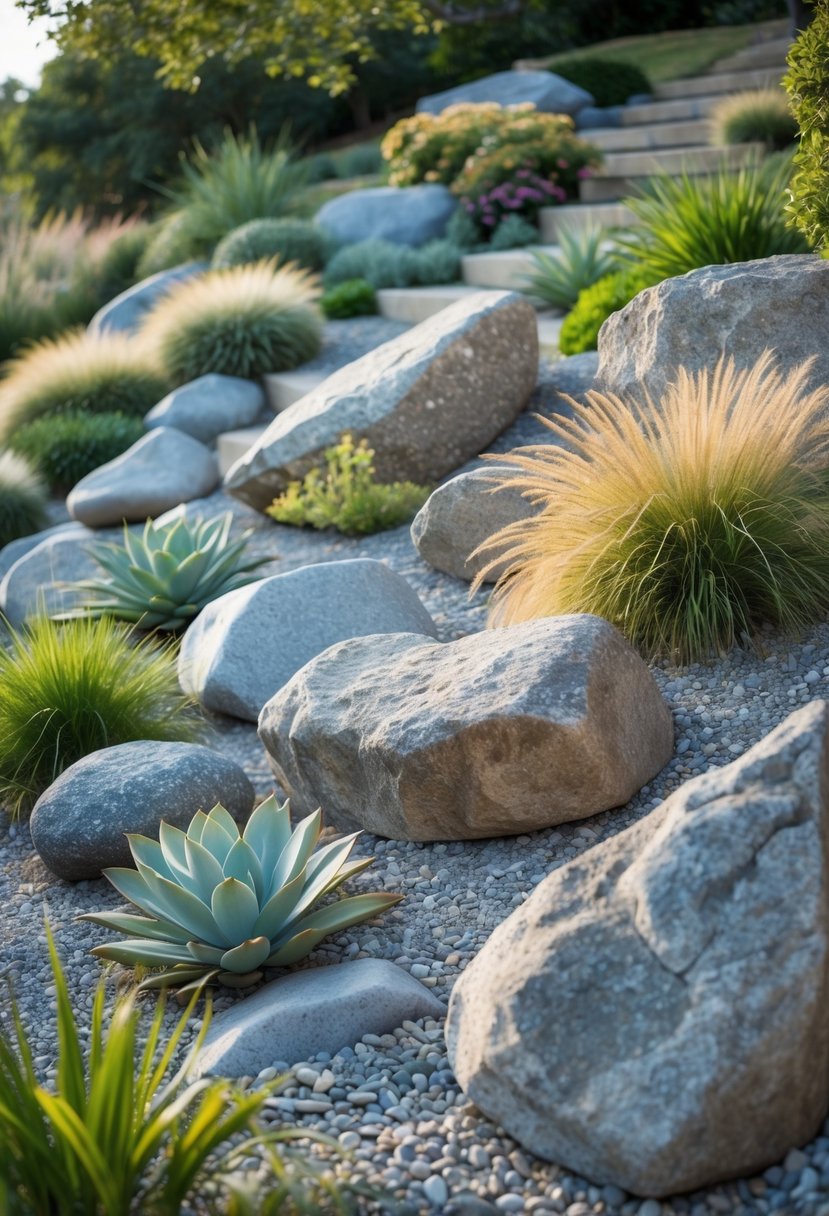
Use big boulders to create strong focal points on your slope. When you sink a large rock firmly into the ground, it gives your garden a natural, grounded vibe.
Boulders break up the space and add texture. They guide your eye and make the whole rock garden more interesting.
Try arranging one or two big boulders with smaller rocks or plants around them. This mix feels balanced and makes your slope look thoughtfully designed.
Want more ideas for boulders? Check out 25 Landscaping With Boulders Ideas To Rock Your Yard.
5) Incorporate alpine plants for high-altitude vibes
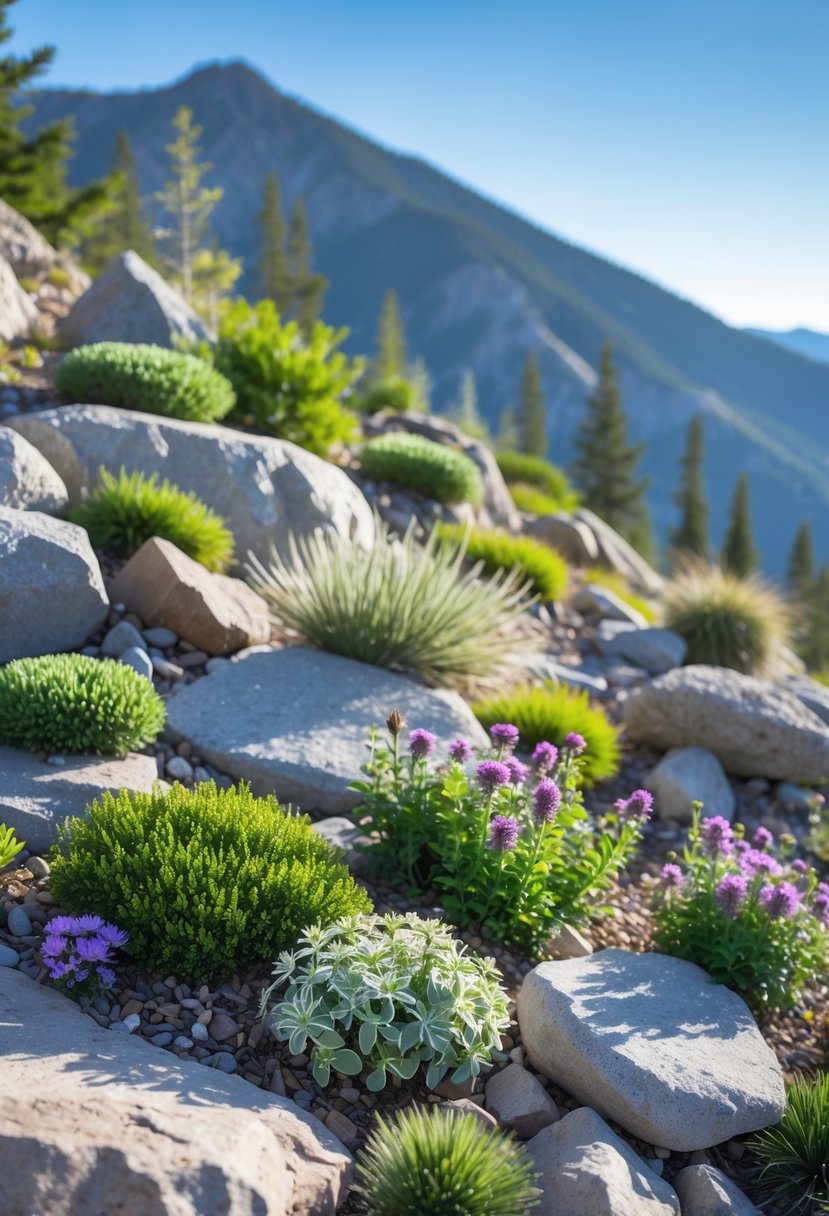
Give your slope a mountain feel by adding alpine plants. These tough little plants love well-drained soil, which makes them perfect for rocky gardens.
Try rock cress, creeping phlox, or lamb’s ears. They stay low, add texture, and don’t need a ton of care.
Alpine plants thrive in sunny, windy, and dry spots. So you’ll spend less time watering and fussing, but your garden still looks fresh and natural.
For extra inspiration, check out these low-maintenance alpine garden ideas.
6) Use gravel mulch to retain moisture
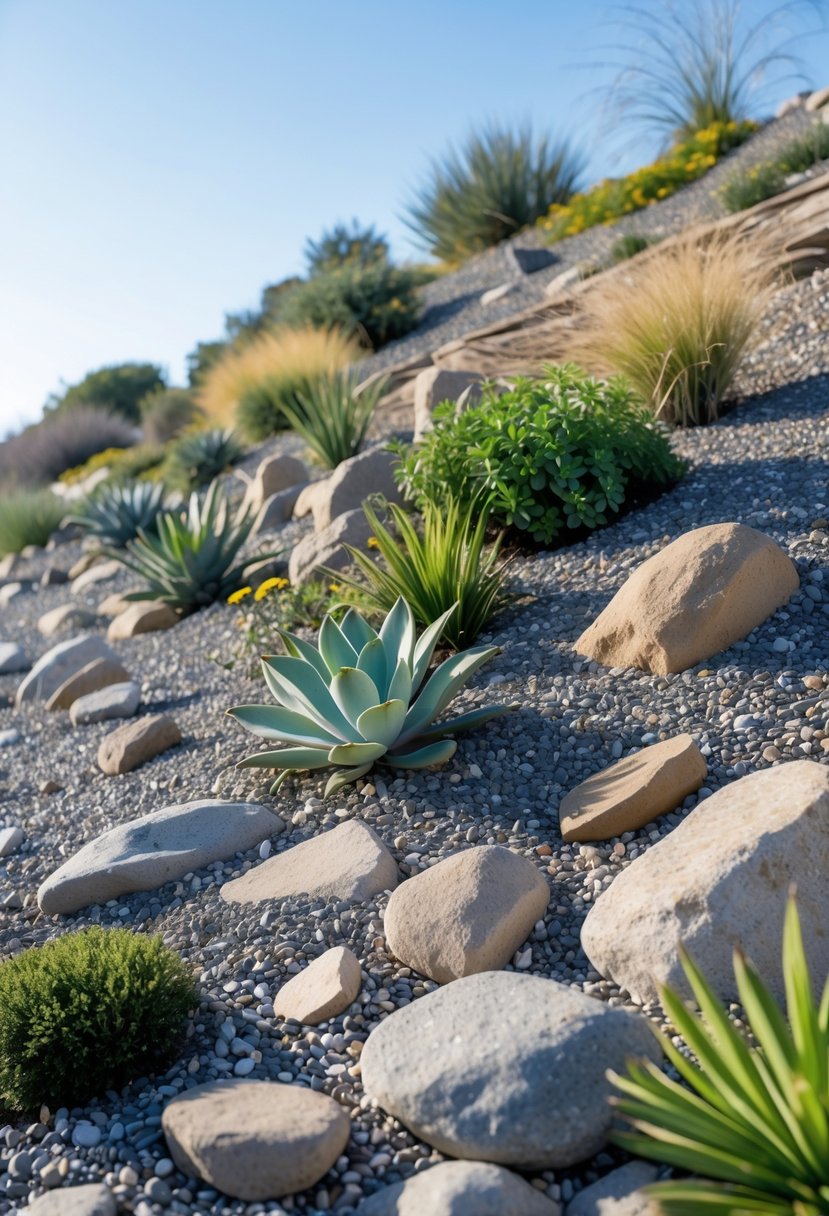
Spread gravel mulch over your slope to help the soil hold moisture. Water soaks in slowly, so your plants stay hydrated longer.
Gravel mulch stops the soil from drying out too quickly. It’s especially good if your slope gets lots of sun or wind.
It’s also super low-maintenance since it doesn’t break down like organic mulch. Gravel stays put and keeps things looking tidy for ages.
For more ideas, check out step-by-step rock garden landscaping tips.
7) Add stepping stones for easy access

Lay down stepping stones on your slope so you can get around your rock garden easily. They make a clear path, so you won’t have to step on soil or rocks to reach your plants.
Pick flat, stable stones for safety. Arrange them to follow the natural shape of the slope or try a fun zigzag.
Stepping stones break up the space visually, too. Use natural stone or gravel around them to keep the look simple and organic. Learn more about adding stepping stones for easy care on a slope here.
8) Plant creeping thyme as groundcover

Try creeping thyme as groundcover for your rock garden slope. It grows low, spreads fast, and helps stop soil erosion.
This plant brings color and texture, and it’s easy to take care of. The little flowers attract pollinators, too.
Creeping thyme loves sunny spots and well-drained soil. Start with seeds or small plants to cover your slope faster.
It creates a fragrant, natural carpet that looks good and helps your garden’s health. Learn more about planting creeping thyme as ground cover here.
9) Install a drip irrigation system

Make watering your rock garden on a slope easier with a drip irrigation system. It slowly delivers water right to your plants, which cuts down on runoff.
Set up drip tubes or emitters around each plant. You could also dig small basins to help catch water and stop it from running downhill.
This system saves water and gives your plants steady moisture. It works even on steep slopes. For more info, check out drip irrigation for slopes here.
10) Mix different sized rocks for texture

Add more interest to your rock garden by mixing rocks of different sizes. Start with bigger stones at the bottom and layer smaller ones on top. This trick adds texture and makes the garden look more natural.
Mixing big and small rocks helps keep soil in place, too. Try a mix of jagged and smooth rocks for extra character.
For more on how to arrange different rocks, check out simple rock garden ideas.
11) Build low stone retaining walls

Use low stone retaining walls to add both charm and function to your sloped rock garden. These walls hold soil in place, stop erosion, and make the slope easier to manage.
Natural stone blends right in and feels sturdy. You really don’t need a lot of fancy tools or experience to build a basic wall.
Be sure to think about drainage and compact the soil behind the wall. That keeps water from building up and pushing the stones out. For tips, see how to build a retaining wall on a slope.
12) Use native grasses on slopes

Plant native grasses on your slope to add texture and movement to your rock garden. These grasses need less water and care since they’re built for your local climate.
Their roots spread out and help hold the soil, reducing erosion on steep hills.
Native grasses blend well with rocks and other plants. Choosing them makes your slope look natural, and they usually thrive with less effort. For ideas, see how to landscape sloped exteriors with native plants.
13) Incorporate colorful sedums

Want to liven up your slope garden? Try planting sedums for bright colors. These low-growing plants come in green, red, pink—honestly, it’s hard to pick a favorite.
They pop against rocks and make the garden look more interesting. Sedums are super easy to care for, so if you’re not into high-maintenance plants, you’ll love them.
Their roots help hold the soil together on slopes, cutting down on erosion. Try tucking sedum mats or clusters between rocks for a soft, colorful vibe.
If you want more inspiration, check out these sedum ground cover ideas.
14) Add a small birdbath among rocks

Place a small birdbath in your rock garden and suddenly it feels peaceful and a bit magical. Birds will show up, and your garden gets a touch of wild charm.
Surround the birdbath with rocks to keep it steady, especially on a slope. It also helps it blend in naturally.
Birds get a spot to drink and bathe, and your garden feels more lively. If you’re feeling crafty, try some easy DIY ideas to build or decorate your own birdbath.
15) Plant lavender for fragrance and color

Lavender’s a classic for adding color and that unmistakable scent to your slope. Planting lavender around rocks softens those hard edges.
It’s easy to care for and loves good drainage, so sloped gardens are perfect. When it blooms, your garden smells amazing—seriously, who doesn’t love that?
Try grouping lavender along the slope for a natural border. The result? A beautiful, inviting rock garden.
Want more tips? Here’s a handy guide on how to plant lavender on a slope.
16) Create winding stone pathways

Winding stone pathways add instant charm to a sloped garden. The gentle curves make it easier to move through the space.
Use uneven stones for a relaxed, natural look that pairs well with plants or grass along the edges. A winding path slows you down, and honestly, that’s kind of the point—enjoy the view.
Want to build your own? Take a peek at these rock walkway ideas.
17) Use flat slate stones for easy walking

Flat slate stones make a smooth path on a slope, so walking feels safer and more comfortable.
Arrange them with small gaps for ground cover, and suddenly your garden looks more natural. Slate’s cool colors blend in well with plants and rocks.
It also helps define different areas in your sloped garden. Level the ground before placing stones, and add gravel or smaller rocks for extra support.
Slate stones let you enjoy your garden without stressing about slipping. Need more ideas? Look up slate steps in terraced gardens for inspiration.
18) Plant low-maintenance junipers

Junipers work great in rock gardens on slopes if you want something easy-going. Once planted, they barely need any care and handle tough conditions like champs.
Pick low-growing types for groundcover. Their roots hold soil together, so erosion doesn’t stand a chance.
They stay green all year and blend easily with rocks and other plants. You don’t have to water them much, which is always a win.
Planting junipers keeps your slope looking good with almost no effort. Dive into growing junipers for more low-maintenance landscaping ideas.
19) Stack rocks to form mini cairns

Stacking flat rocks into mini cairns can be surprisingly fun. Start with bigger rocks at the bottom for stability, then add smaller ones on top.
These little rock towers give your garden a calm, natural vibe. They also mark paths or just add a bit of interest without taking up much space.
Mix up shapes and colors for texture. It’s simple, it’s fun, and your sloped garden ends up looking unique.
Want more ways to use rock cairns? Check out Gardening Know How for ideas.
20) Add solar-powered garden lights

Brighten up your sloped rock garden with solar-powered lights. No wires, no hassle—they just switch on at night.
Put them along pathways or near rocks to show off your garden’s shape. It adds a layer of safety by lighting up steps or uneven spots.
You’ll find solar lights in all sorts of styles, from simple to decorative. They run on sunlight, so you save on electricity.
Try tucking them among rocks for a soft, glowing effect after dark. For more ideas, check out Brilliant Outdoor Solar Lighting Ideas.
21) Plant ornamental grasses to soften edges

Ornamental grasses are perfect for softening the hard edges of rocks on your slope. They add a gentle, flowing look that moves with the breeze.
Try blue fescue or fountain grass for texture and color. These grasses are low-maintenance and fit right in with rock garden designs.
Plant them along the edges to blend rocks with the rest of your garden. The result is a balanced, natural feel that’s easy to keep up.
Looking for more? Here are 45 Ideas To Rock Ornamental Grasses In The Garden.
22) Use moss between rocks for greenery

Tuck soft green moss between rocks on your slope for a natural, lush look. Moss loves shady, damp spots—perfect for places where grass just won’t grow.
It holds soil in place and adds color with almost no fuss. Moss brings a calm, peaceful vibe that works beautifully with stones.
Using moss between rocks is an easy way to add life and texture. Want to see more? Check out moss rock garden tips and landscaping with moss rocks.
23) Build a small rock waterfall feature

A small rock waterfall adds a little magic to your sloped rock garden. The natural slope lets water flow gently, creating soothing sounds.
Arrange rocks to form a path for water, then use a pump to keep it moving. It looks great and helps keep your garden cool and fresh.
Need more inspiration? Check out ideas for making a waterfall on a slope.
24) Incorporate hardy herbs like rosemary

Hardy herbs like rosemary fit right into a rock garden on a slope. Rosemary loves rocky, dry soil and full sun, and you barely have to fuss over it.
This herb brings texture and a lovely scent. Plus, it attracts pollinators, which is always good news for your other plants.
Plant rosemary among rocks or on terraced spots for color and a neat, inviting look. Want more ways to use herbs? Check out herbs in rock gardens.
25) Plant drought-resistant echinacea

Echinacea is perfect for a slope rock garden. It’s drought-resistant, so you won’t have to water it much after it settles in.
The bright, cheerful flowers last all summer and make the garden pop. Echinacea also attracts butterflies and bees, which helps your garden thrive.
It does best in rocky, well-drained soil and loves sunlight. Plant it where it’ll get plenty of rays for the best blooms.
Choosing the Right Rocks and Plants
Choosing the right rocks and plants keeps your slope rock garden strong and beautiful. Pick stones that hold soil in place and plants that don’t mind hillside life.
Selecting Native Plants for Slopes
Using native plants just makes sense—they’re already used to your local climate and soil. They usually need less water and care, which is always nice.
Look for tough, deep-rooted plants to hold soil on slopes. Creeping thyme, sedum, and small shrubs with strong roots work well.
Native plants attract local wildlife like bees and butterflies, so your garden stays lively. When planting, group species by their sun and water needs so everything grows better.
This setup keeps your slope stable and your garden looking fresh without much work.
Best Rock Types for Erosion Control
If you want to stop erosion, go for heavy, rough rocks that won’t budge easily when it rains. Large boulders or flat stones work well for building terraces or walls.
Put the biggest rocks at the bottom of your slope to keep everything steady. Use smaller rocks higher up to fill in the gaps.
Pick rocks that won’t break down fast. Granite, limestone, and sandstone usually hold up well.
Think about the color and texture of your stones too—why not match the look to your yard? Good rock placement slows down water runoff and keeps soil in place, which helps prevent slides and damage.
For more ideas, you can check out rock garden ideas on a slope.
Essential Tips for Designing a Slope Rock Garden
When you design a rock garden on a slope, try to work with the land’s shape. Make sure water flows the way you want it to.
Thoughtful layering and smart water management really help your garden stay healthy and look good.
Creating Natural-Looking Layers
Start by dividing your slope into small, flat sections or terraces. Use larger rocks as borders to hold the soil in place.
Group rocks together and mix up their sizes for a more natural vibe. Plant low-growing stuff like succulents or alpine flowers between the rocks. These plants fill in gaps and soften the harsh edges.
Keep the layers wide enough for roots to spread out. Stone steps or little ledges can add some height and make it easier to get around while you garden.
Water Drainage Considerations
Getting drainage right on slopes really matters. Place rocks to slow down water and keep soil from washing away.
Try making small channels or leaving gaps between rocks. These little pathways help guide water safely down the slope.
Pick plants that can handle dry spells, like drought-tolerant or deep-rooted types. Skip spots where water tends to pool—standing water just wrecks roots and kicks off erosion.
After it rains, watch how water moves across the area. Adjust your rocks if you notice any trouble spots.
If you want even more control, toss some gravel or sand under the soil. That extra layer can boost drainage quite a bit.
You’ll find more tips at How To Make A Rock Garden On A Slope.


