

Creative Garden Ideas on a Slope: 25 Friendly Tips to Transform Your Yard
If you’ve got a sloped garden, you might find yourself wondering how to actually use it. Sloped yards can seem tricky, but honestly, they give you some cool chances to make something unique and beautiful.
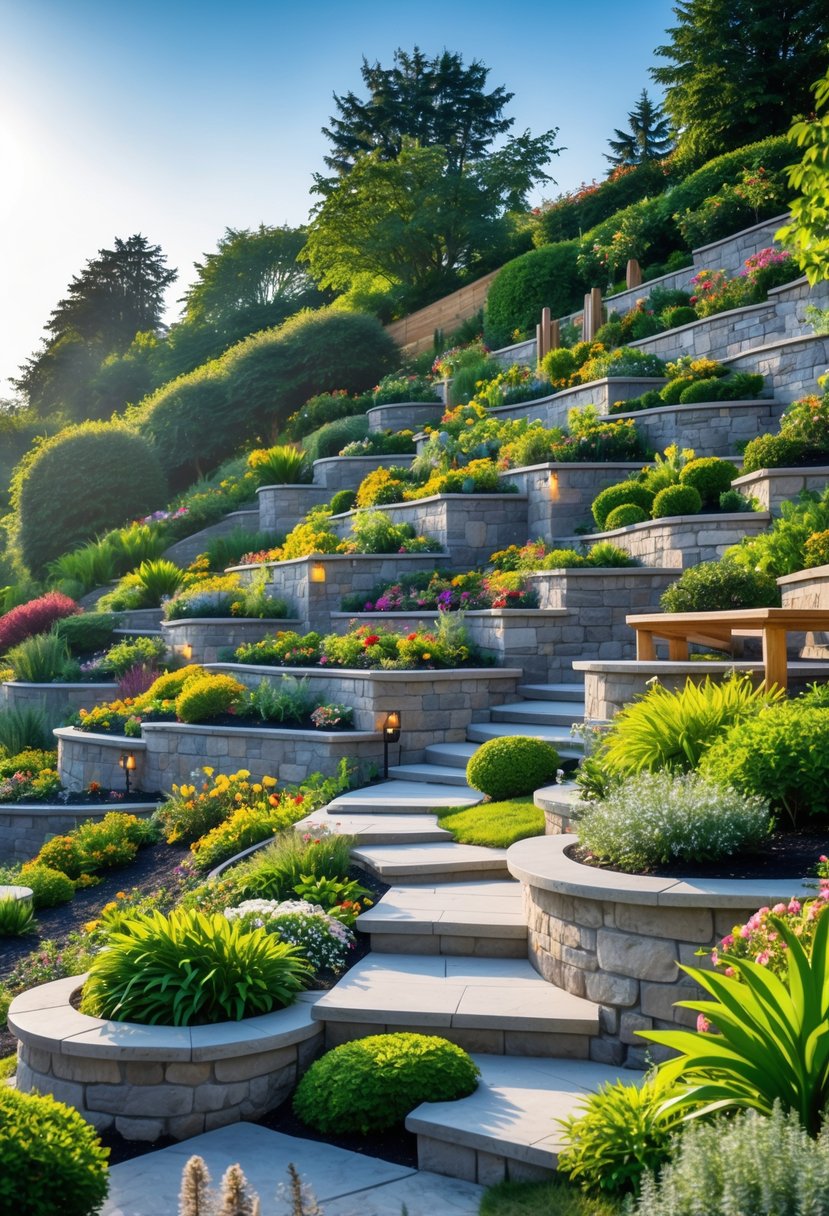
Creative garden ideas on a slope let you turn uneven land into useful, inviting outdoor spaces. With a bit of planning, you can enjoy a garden that looks great and actually works for you, no matter what shape your yard is in.
1) Build tiered terraces with retaining walls
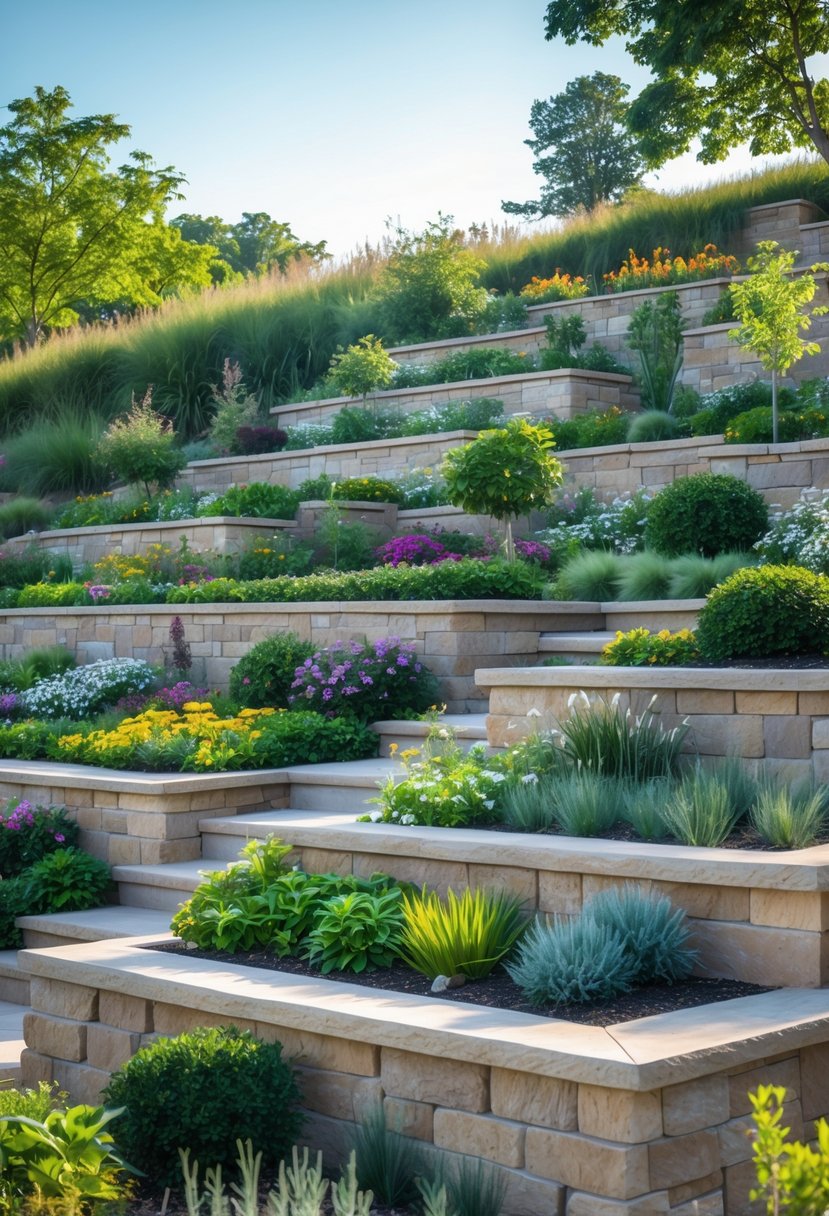
Try building tiered terraces to get the most out of a sloped garden. Retaining walls hold back the soil and give you flat areas to plant or just hang out.
Pick materials like wood, stone, or bricks—whatever fits your taste and your wallet.
Terraces slow down rainwater, so you don’t have to worry as much about erosion. That keeps your garden healthier and makes things easier to take care of.
Add a few levels for more depth and to make walking around easier. Suddenly, that tough yard feels a lot more usable.
Here’s more about retaining walls in sloped yards.
2) Plant cascading ground covers like creeping thyme
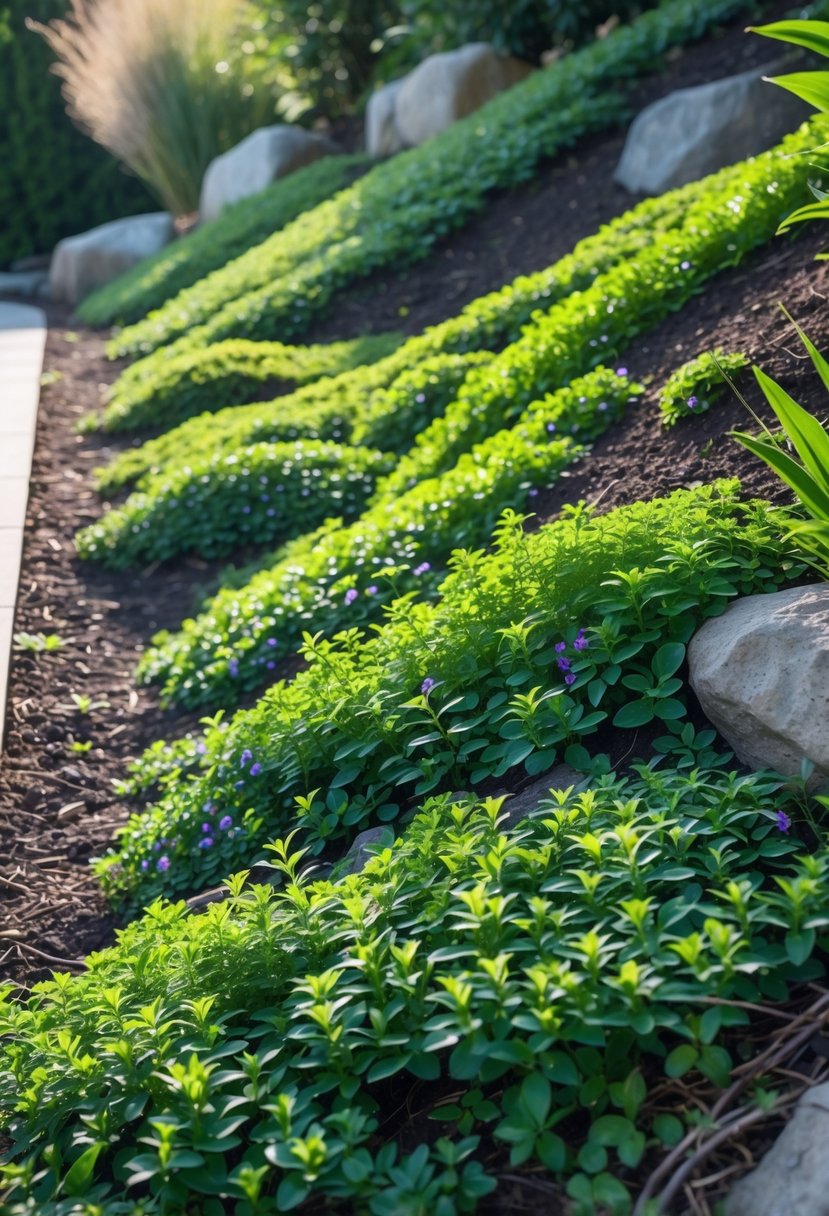
Creeping thyme works wonders on slopes. It spreads out fast and forms a soft, green carpet that holds soil in place. That’s super helpful for stopping erosion.
This plant loves sunshine and well-drained soil. You won’t have to fuss over it much, and the little flowers bring in pollinators, so your garden feels more alive.
Plant creeping thyme near paths or rock gardens for a tidy, natural vibe. Want more? Check out these ideas for creeping thyme on slopes.
3) Create rock gardens with native stones
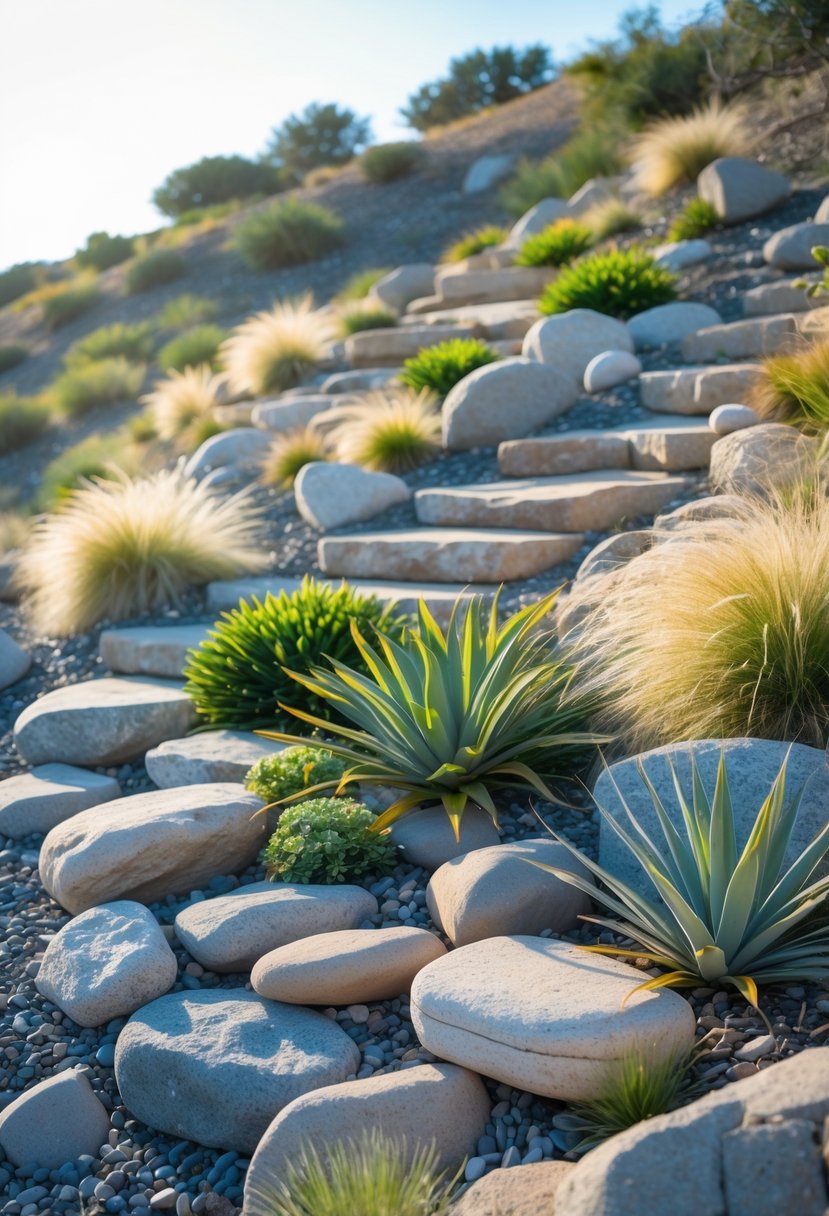
Try using native stones to build a rock garden that actually fits your slope. Local rocks just look right, and they don’t need much upkeep since they’re already used to your weather.
Arrange stones in layers to keep the soil where you want it. Tuck in native plants between the rocks for a garden that stays healthy all year.
When you use local stones and plants, you help the wildlife and save water. A rock garden like this is honestly both beautiful and practical for a slope. Here’s more on creating a rock garden on a slope.
4) Install a winding stone pathway
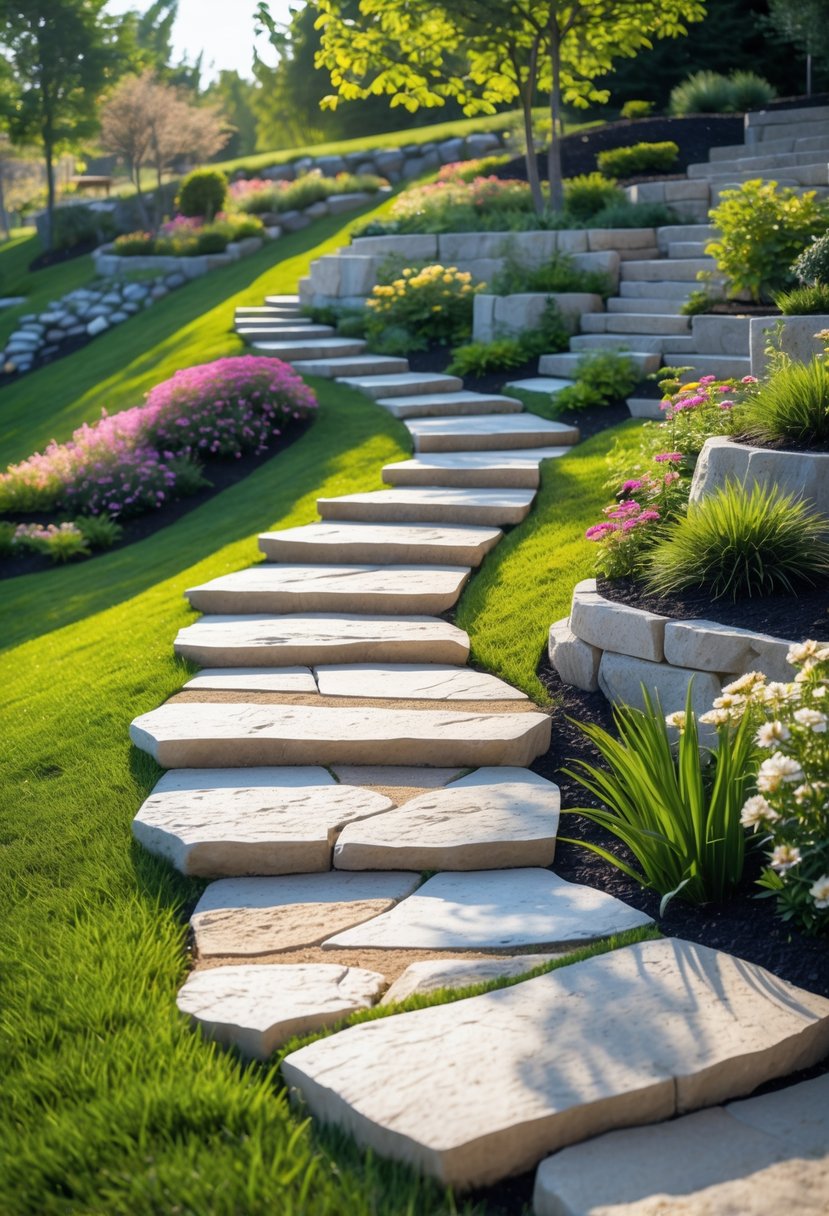
A winding stone pathway works perfectly for sloped gardens. It lets you walk around safely and adds a bit of charm.
Mix up the stone shapes and colors for a more natural look. That way, your path blends right in with the rest of your plants.
Try planting little flowers or grass between the stones to soften things up. That makes the path feel more welcoming.
A path like this doesn’t just look good—it also guides you through your garden in style. Curious? Here are more winding stone pathway ideas.
5) Use raised beds for easy planting
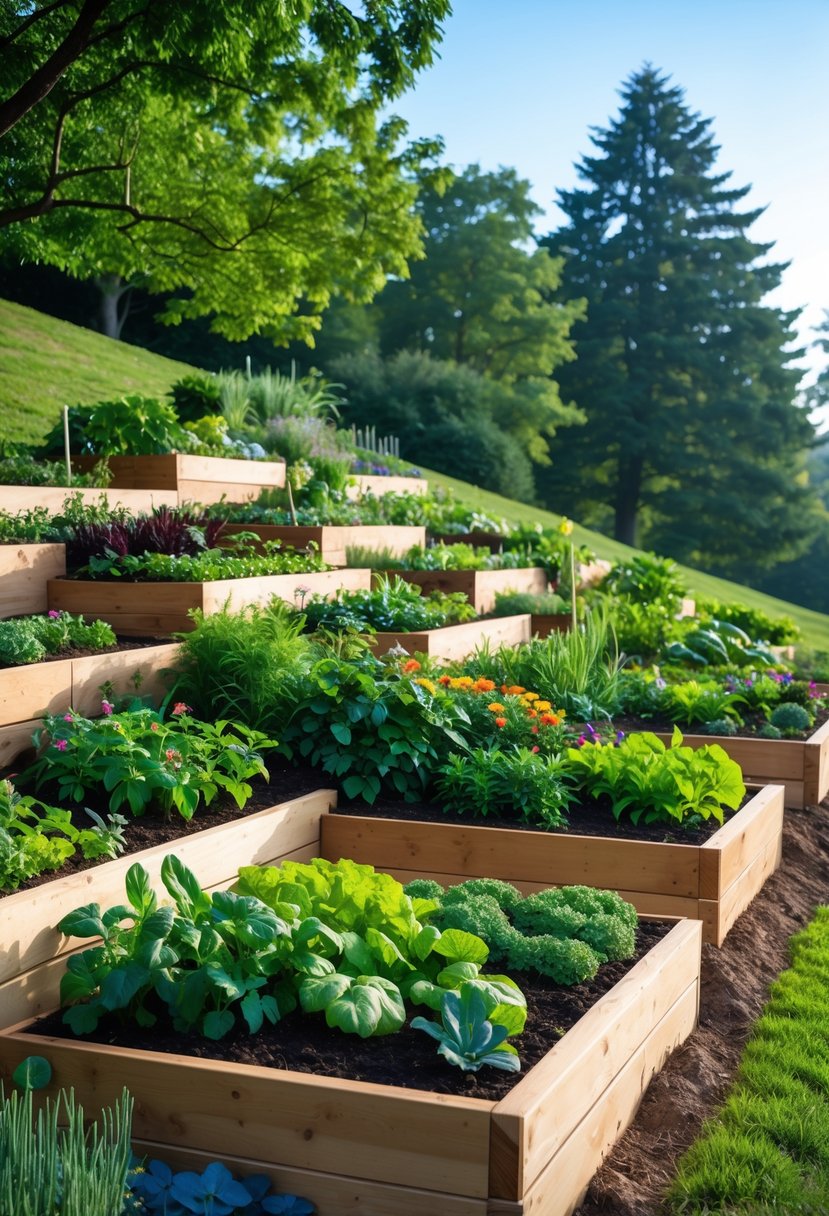
Raised beds make planting on a slope much simpler. They create flat, sturdy spots for your veggies or flowers, so you don’t have to fight with sliding soil.
You can build them out of wood or stone to match your garden’s vibe. Raised beds also help water drain better and stop erosion on hillsides.
The garden looks more organized, and your plants get a boost because the soil and nutrients stay put. Want to try it? Check out these raised bed building guides.
6) Incorporate a water feature like a small waterfall

Add a small waterfall to your sloped garden for a peaceful vibe and some wow factor. Water naturally runs down a slope, so you don’t have to work against gravity.
Try using recycled stuff like old crates or leftover stones to build it. That’s a bit eco-friendly and gives your garden a one-of-a-kind look.
A waterfall keeps your garden feeling fresh and might even attract birds or butterflies. Pick moisture-loving plants around the water to finish it off.
Need inspiration? Check out these small garden waterfall ideas.
7) Add benches on flat sections for rest spots
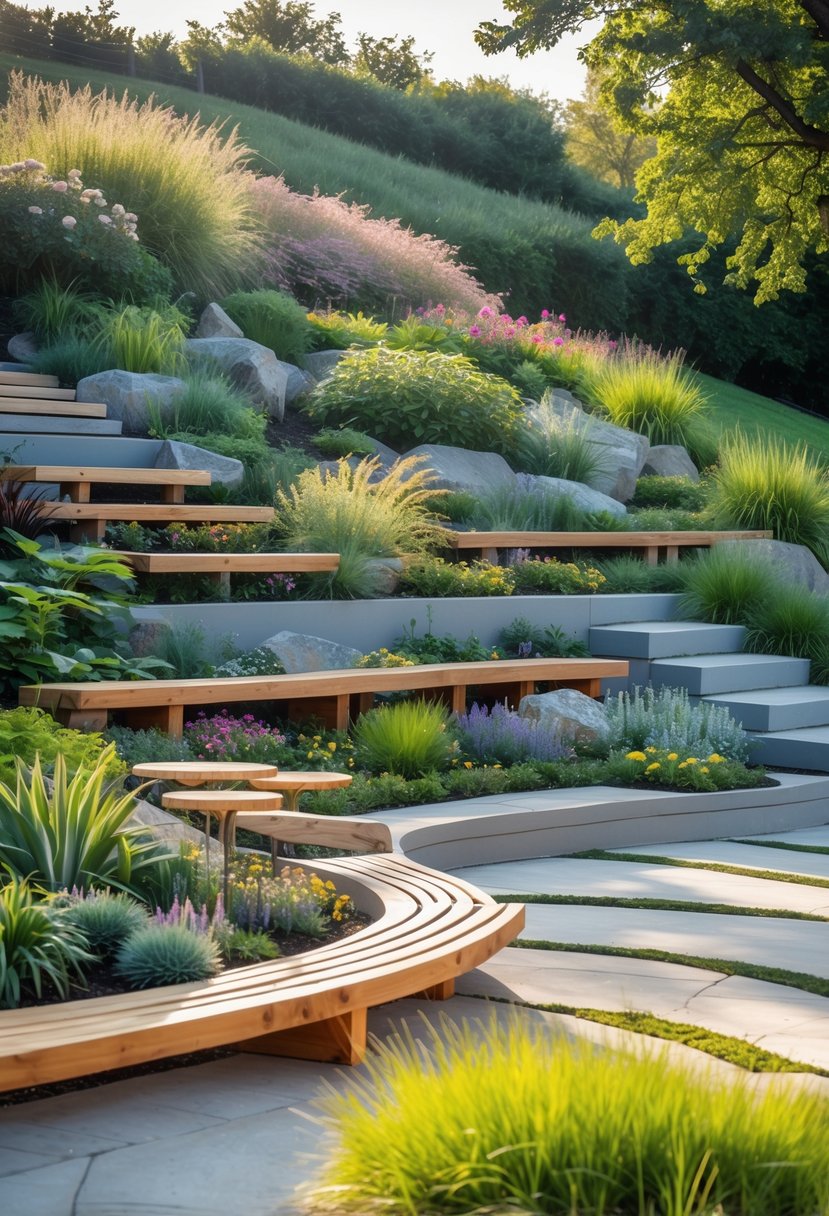
Flat spots on a slope are perfect for benches. You can set up little resting areas and just take in your garden.
Benches let you sit without wobbling on uneven ground. They also break up the slope and make the space feel more relaxed.
Try placing benches under a tree or beside flower beds to make things cozy. If you’re handy, build a simple wooden bench for a personal touch.
Want more bench ideas? Check out these garden bench spots and creative bench ideas.
8) Plant drought-tolerant succulents
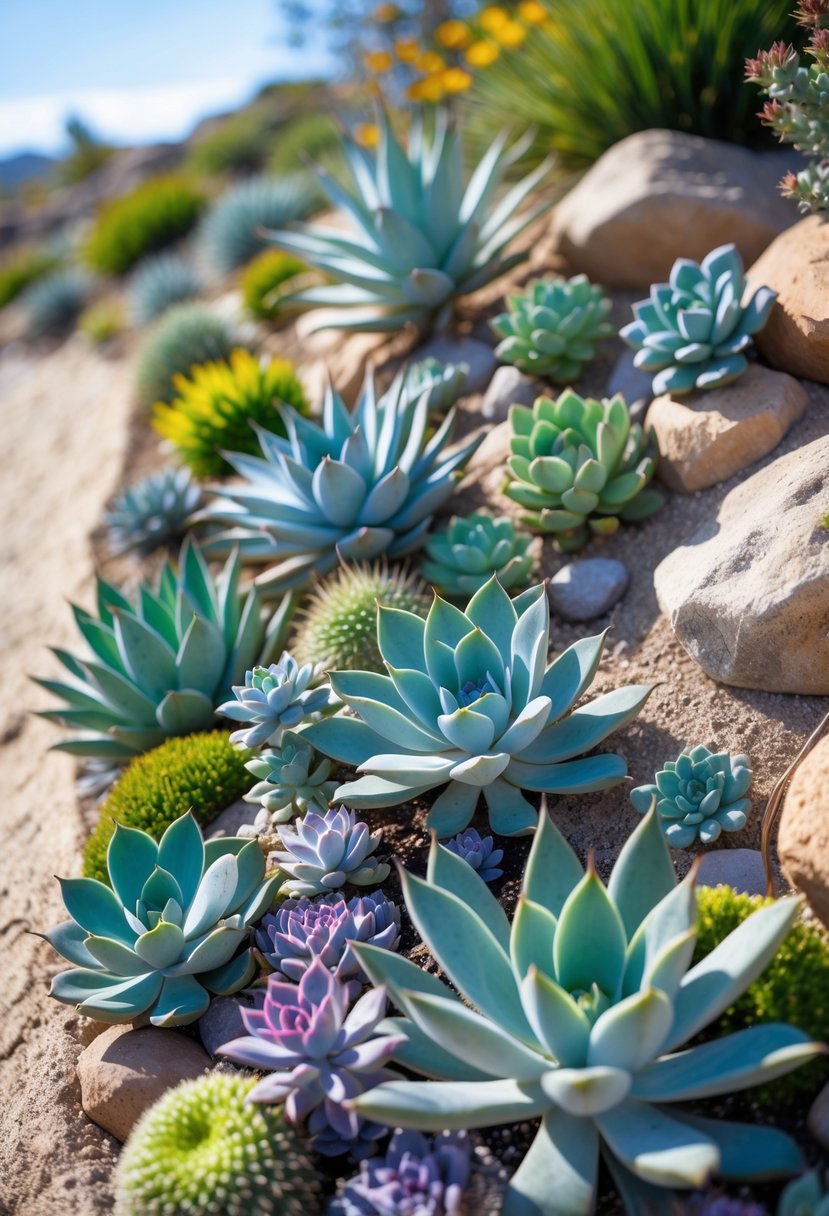
Try drought-tolerant succulents on your slope for a garden that doesn’t need much water. These plants store water in their leaves, so you can skip a few watering sessions.
Succulents like Aloe, Agave, and Jade Plant thrive on slopes and help keep the soil in place. They come in all sorts of shapes and colors, which really brightens up the space.
Going with succulents saves water and keeps your garden looking good, even when it’s dry outside. Want more tips? Check out these succulent garden ideas.
9) Use ornamental grasses for texture

Ornamental grasses bring awesome texture to a sloped garden. Their shapes—some arching, some upright—add movement and interest.
These grasses don’t ask for much and usually handle dry patches just fine. You can mix different colors and heights for a more natural, layered look.
Using ornamental grasses helps break up big empty spots and gives your slope a gentle, flowing feel. Want to see more? Check out ideas here.
10) Create a butterfly-friendly garden with nectar plants

Make your sloped garden come alive by planting nectar-rich flowers. Butterflies love milkweed, coneflowers, and butterfly bush, and these blooms help them stick around.
Mix up your flowers so something’s always blooming. That way, butterflies will have food all season.
Add a few flat stones for butterflies to rest on. These comfy spots make your garden even more inviting.
Need plant ideas? Check out these garden plans for attracting birds and butterflies.
11) Build a dry creek bed for drainage and interest
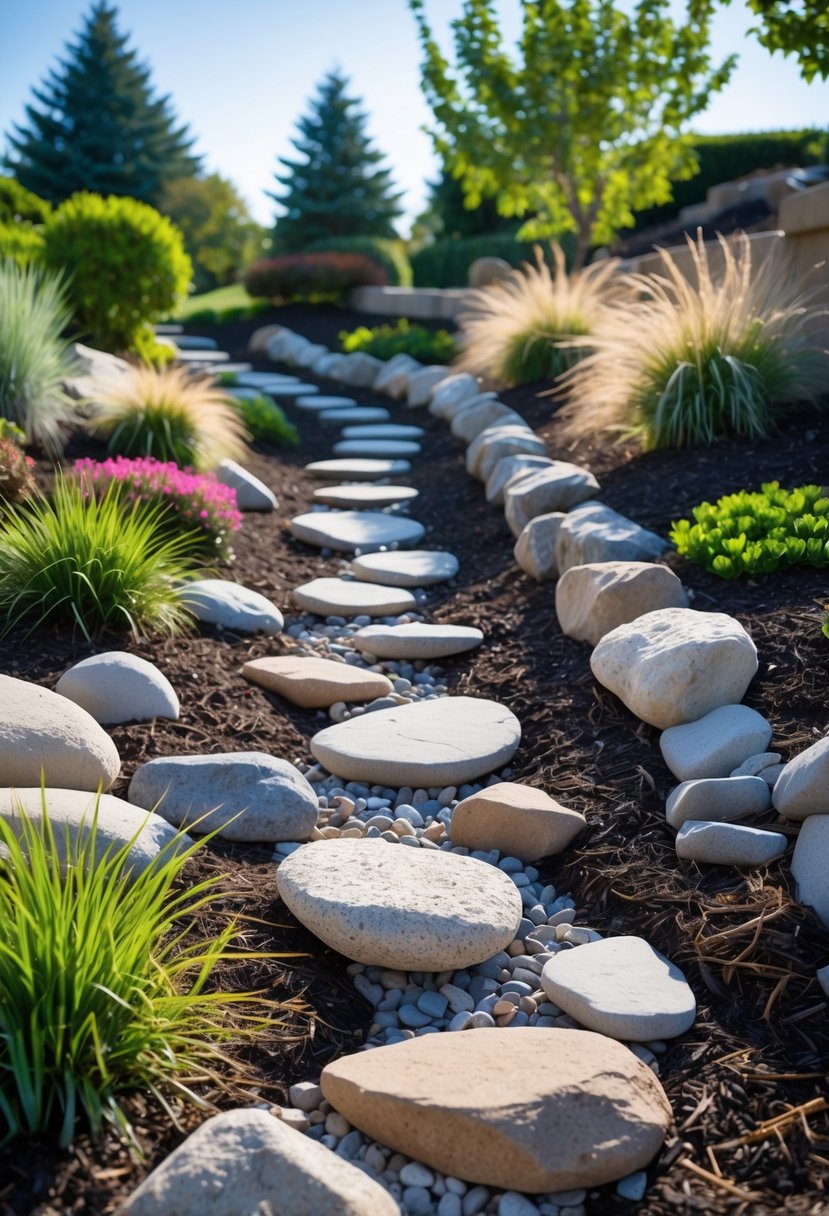
A dry creek bed can help direct water down your slope without washing everything away. Use stones and pebbles to make it look natural.
It adds a cool, eye-catching feature that breaks up your garden space.
Build the creek bed on a slight slope so water flows where you want it. Plant around it for a greener, softer look. Want to make your own? Here’s a DIY dry creek bed guide.
12) Add colorful flowering shrubs

Brighten up your slope with colorful flowering shrubs. Shrubs add texture and help hold soil, so your garden looks lively and stays put.
Pick shrubs that match your climate and slope. Lavender, for example, brings color and a fresh scent. Mix different shrubs for layers of color and height.
Flowering shrubs can attract butterflies and birds, making your garden feel active and fun. Here are 9 Garden Ideas With Flowering Shrubs if you want more inspiration.
13) Install garden lighting along pathways

Brighten up your sloped garden by adding lights along the pathways. It makes it easier to see at night and gives your garden a welcoming glow.
Solar-powered lights are a breeze to set up and they save energy. If you mix up the height of your lights, you’ll add a bit of flair and help guide your steps.
Try light-up tiles for a modern touch near stairs or water features. Good lighting makes your garden safer and honestly, it just feels more inviting after dark.
Need more ideas? Check out these outdoor lighting ideas for sloped gardens and see what fits your style.
14) Use stepped stone stairs to navigate slopes
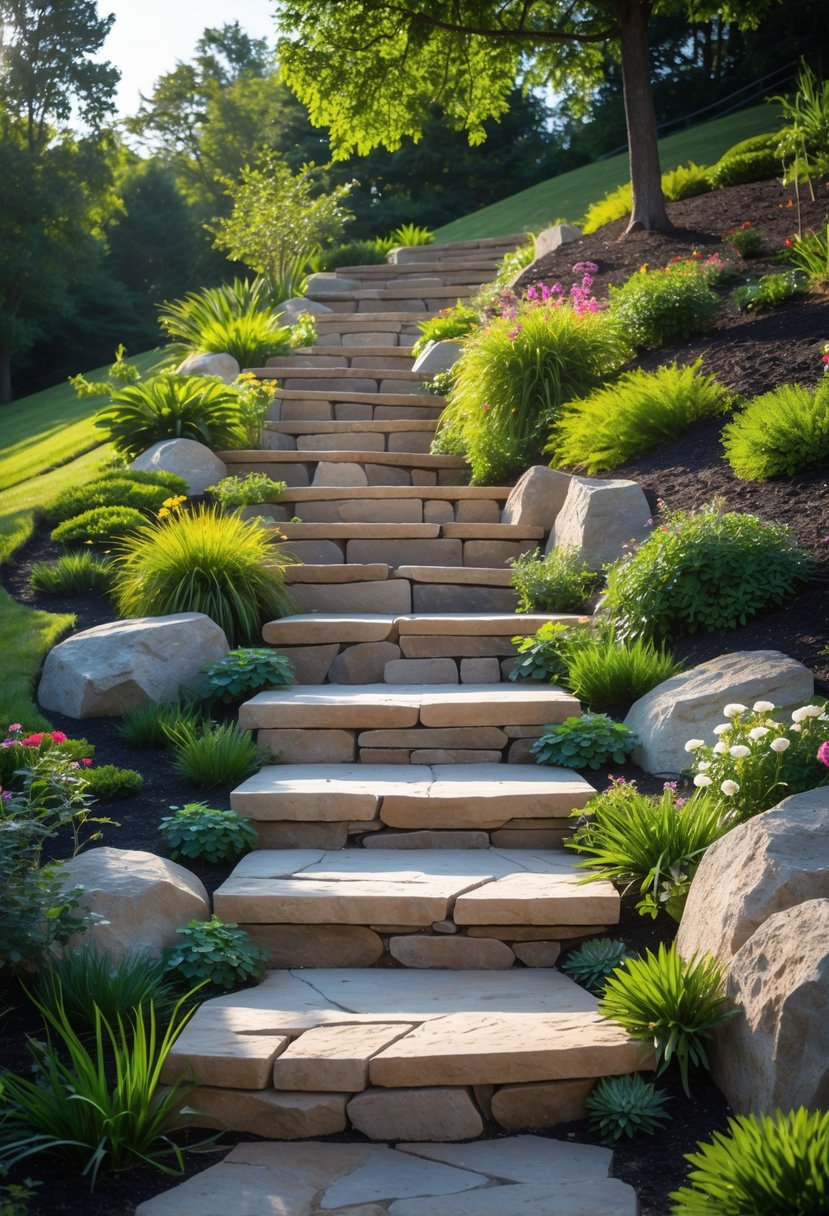
Stepped stone stairs make it much easier to walk through a sloped garden. Natural stone blends right in, so your stairs feel like part of the landscape.
These stairs cut down on slipping and make climbing your garden safer. Plus, they add a bit of charm—there’s something classic about stone steps.
Plant creeping greenery around the edges to soften the look. It keeps things practical and sturdy, but still feels lush and welcoming.
Want to build your own? Here’s a helpful guide on how to build stone steps in your garden area.
15) Create a herb spiral garden

A herb spiral garden lets you get creative with a slope. Build it in a spiral shape that rises up, and you’ll make the most of your vertical space.
This design drains water naturally and creates little zones for different herbs to thrive. Plant basil, thyme, rosemary—whatever you love—in different spots along the spiral.
The curved shape helps your herbs catch sunlight from all angles. It’s practical, but honestly, it just looks cool.
Curious about building one? Take a look at this guide on how to build a spiral herb garden.
16) Incorporate edible plants like strawberries on slopes

Grow edible plants like strawberries on your slope for a space that’s both pretty and productive. Strawberries thrive in slightly sloped spots because water drains away and keeps their roots happy.
Try wall planters or hanging pockets to grow strawberries upwards. It adds interest at eye level and saves space.
You’ll love picking fresh fruit right from your garden. It’s a sweet way to enjoy your hillside and adds life to small sloped garden ideas.
17) Add a small pergola for shade
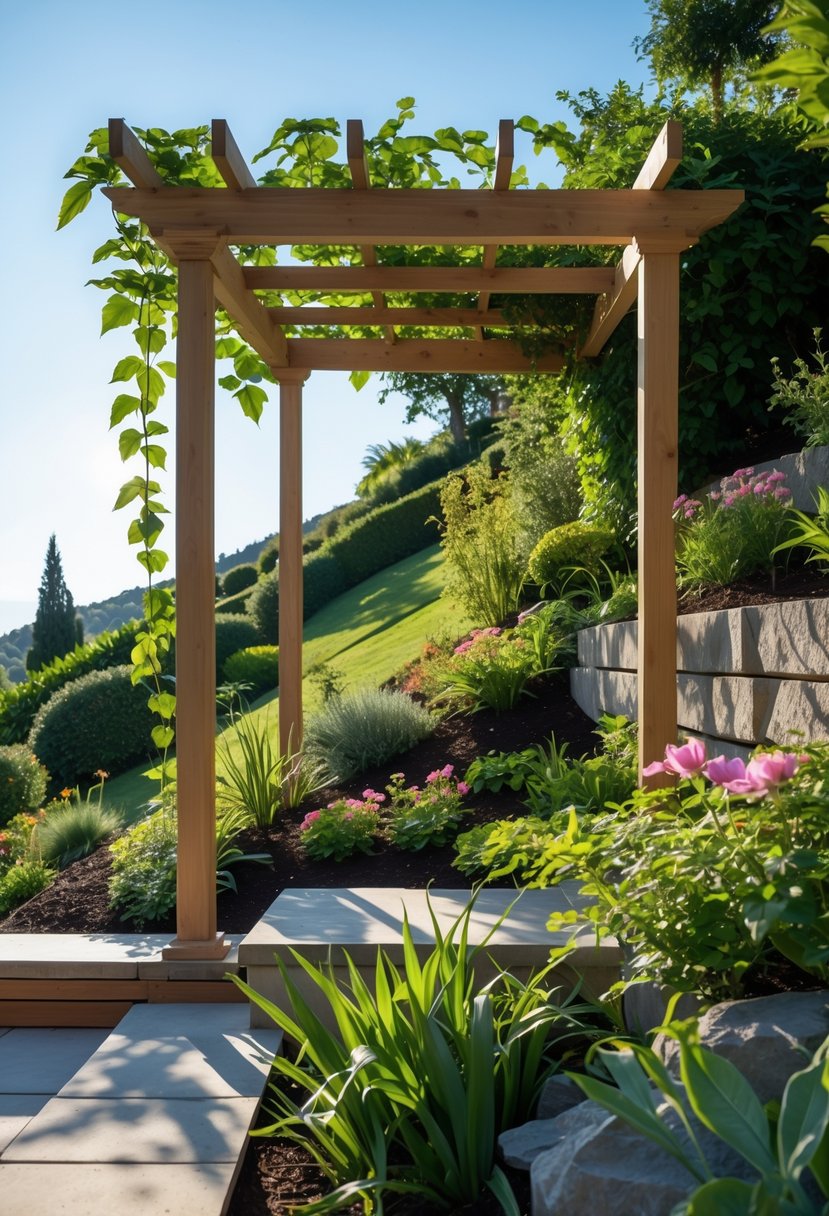
A small pergola adds both shade and style to your sloped garden. It’s a cozy spot to relax when the sun’s a bit much.
Build your pergola on a flat platform cut into the slope. Then, let flowering vines like clematis or sweet peas climb up for color and a little extra privacy.
A pergola won’t block all the breeze or sunlight. It just makes your outdoor space more comfortable and a little more special.
Looking for inspiration? Check out small pergola options for slopes at 20+ brilliant small sloped garden ideas.
18) Use mulch to control erosion

Mulch helps keep soil in place on your slope. It slows water runoff and keeps the soil from washing away.
Go for natural mulches like wood chips or straw. They keep moisture in and stop weeds from taking over.
Lay down landscaping fabric or jute netting before the mulch so it stays put. This little step makes a big difference.
Protect your garden from erosion and help your plants thrive. For more tips, check out ways to keep mulch on slopes.
19) Plant ferns in shady lower slope areas
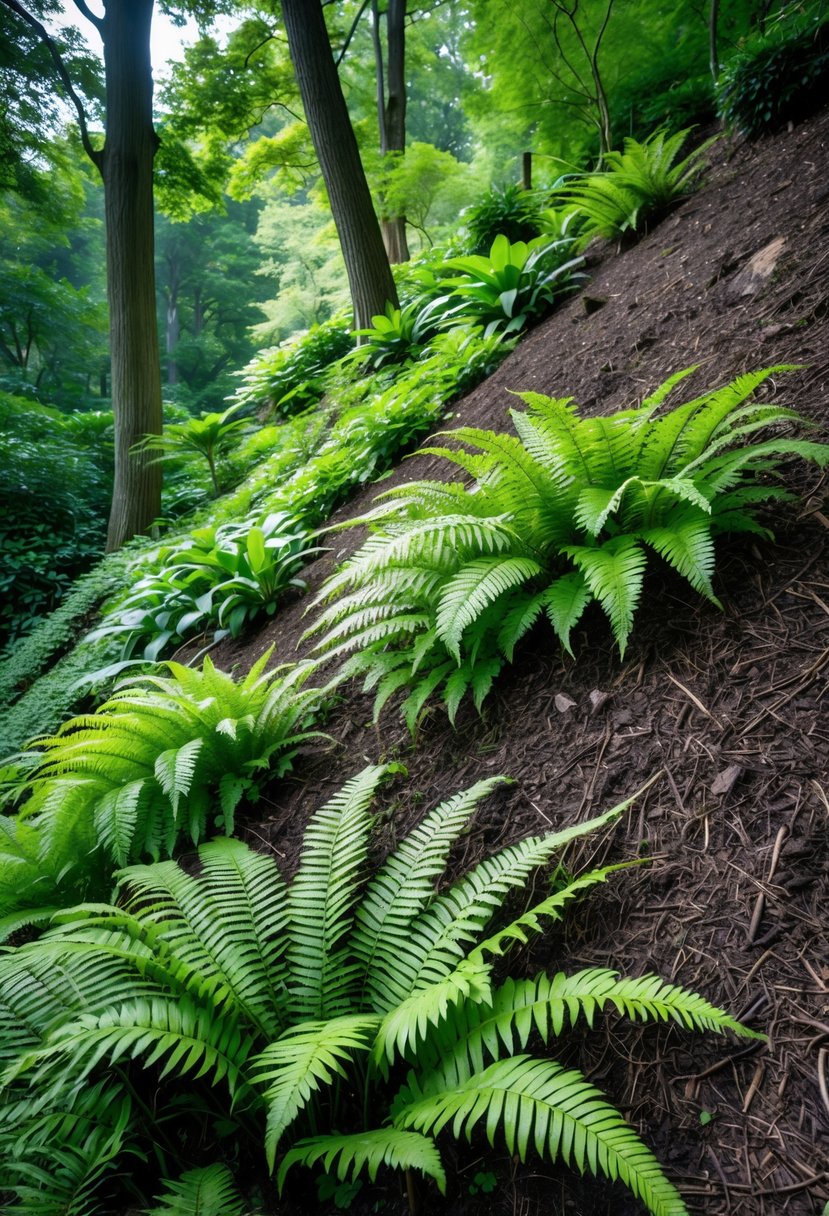
Ferns work perfectly in the shady spots on your slope. They actually prefer areas with less sunlight, so plant them in those lower, dimmer corners.
Mix in a few types of ferns to create a peaceful, green scene. Ferns add soft texture and look great next to rocks or other shade-loving plants.
Keep the soil moist and feed them liquid fertilizer once a month. They’re mostly low maintenance—just a little care goes a long way.
Want more fern ideas? Check out shady spots at moonlightyard.com.
20) Add sculptures or garden art as focal points
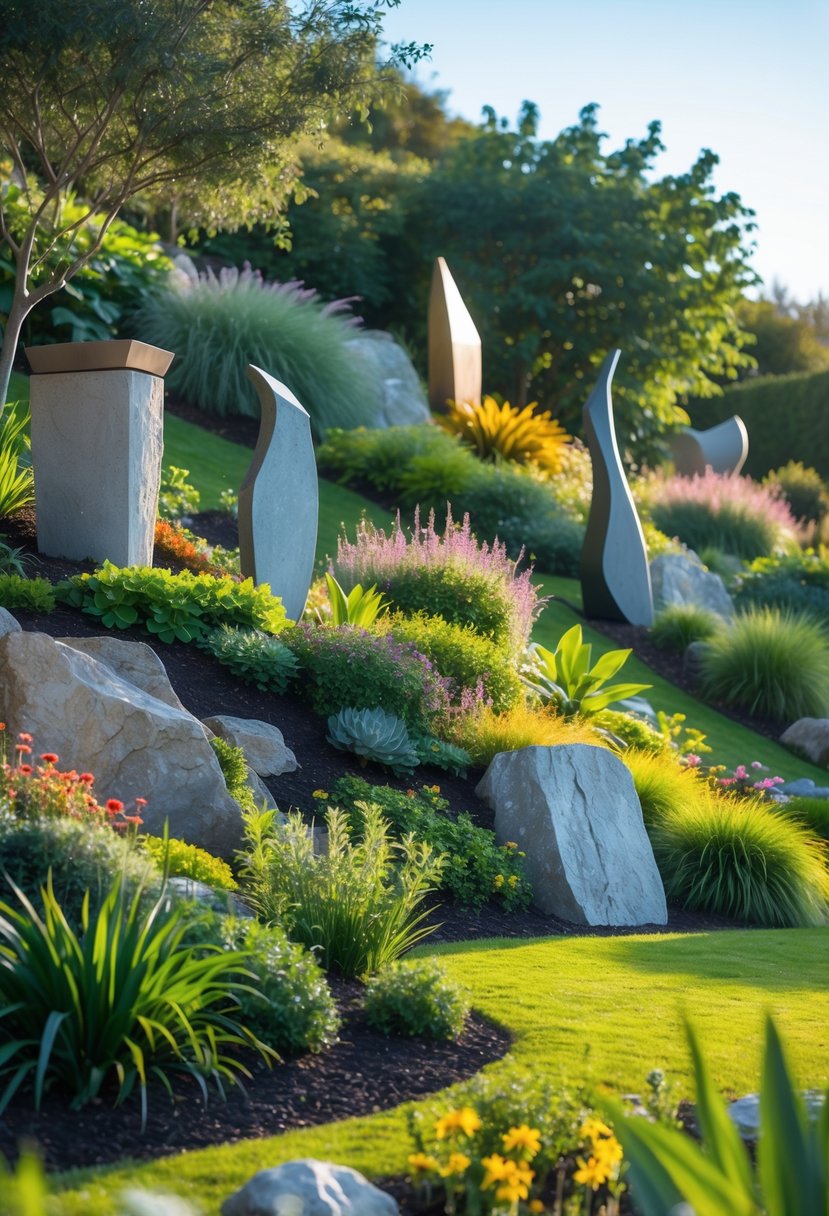
Add sculptures or garden art to create bold focal points on your slope. Place a tall sculpture at the top or bottom to draw the eye and give your space some structure.
Tuck smaller pieces into corners or among plants for a fun surprise. Just keep things balanced—choose art that fits your space so it doesn’t feel crowded.
Art lets you show off your style and keeps your slope interesting all year. Need ideas? Explore garden art sculpture ideas.
21) Install rain gardens to slow water runoff
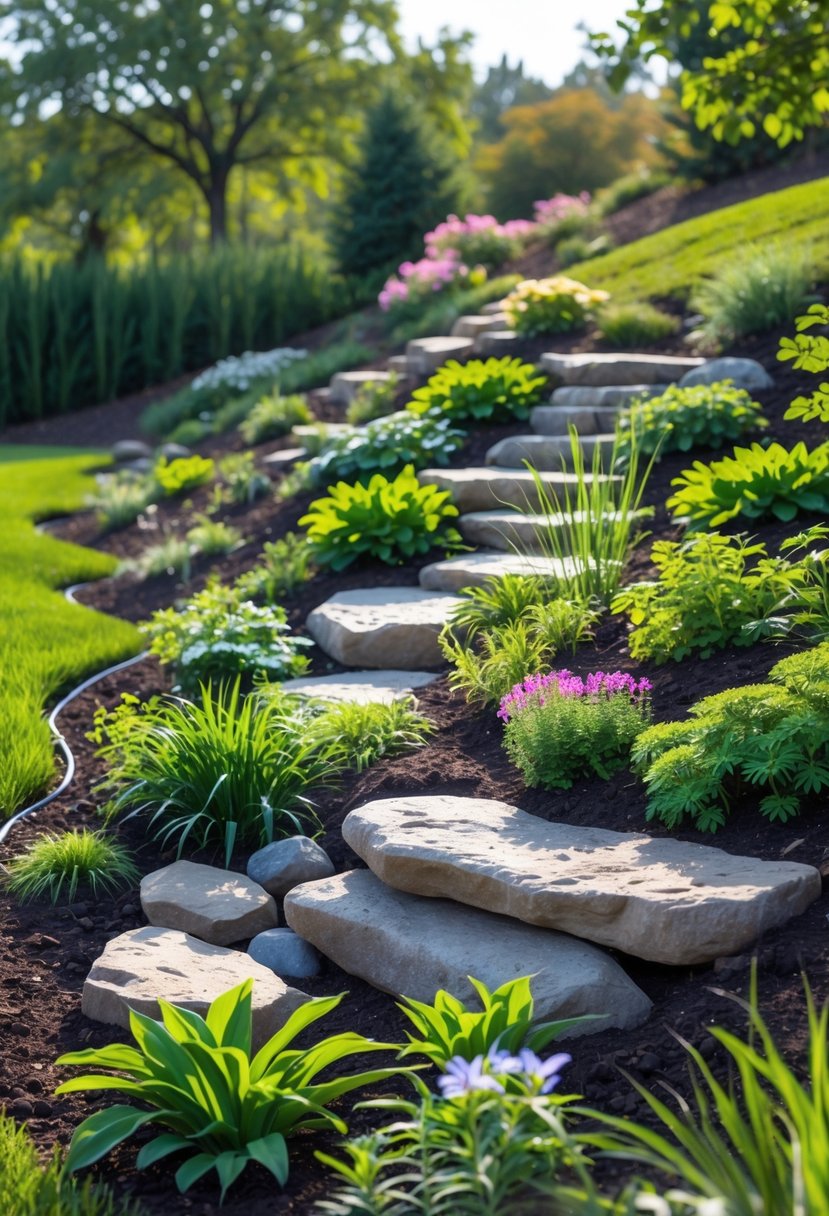
Use rain gardens to catch rainwater as it runs off your slope. These gardens help water soak into the ground, so you cut down on erosion and flooding.
Plant native greenery that loves wet soil. These plants filter water and look good doing it.
Building a rain garden on a slope takes some planning, but it really works. Want to try it? Here’s a guide on how to build a rain garden on a slope.
22) Plant native wildflowers for pollinators
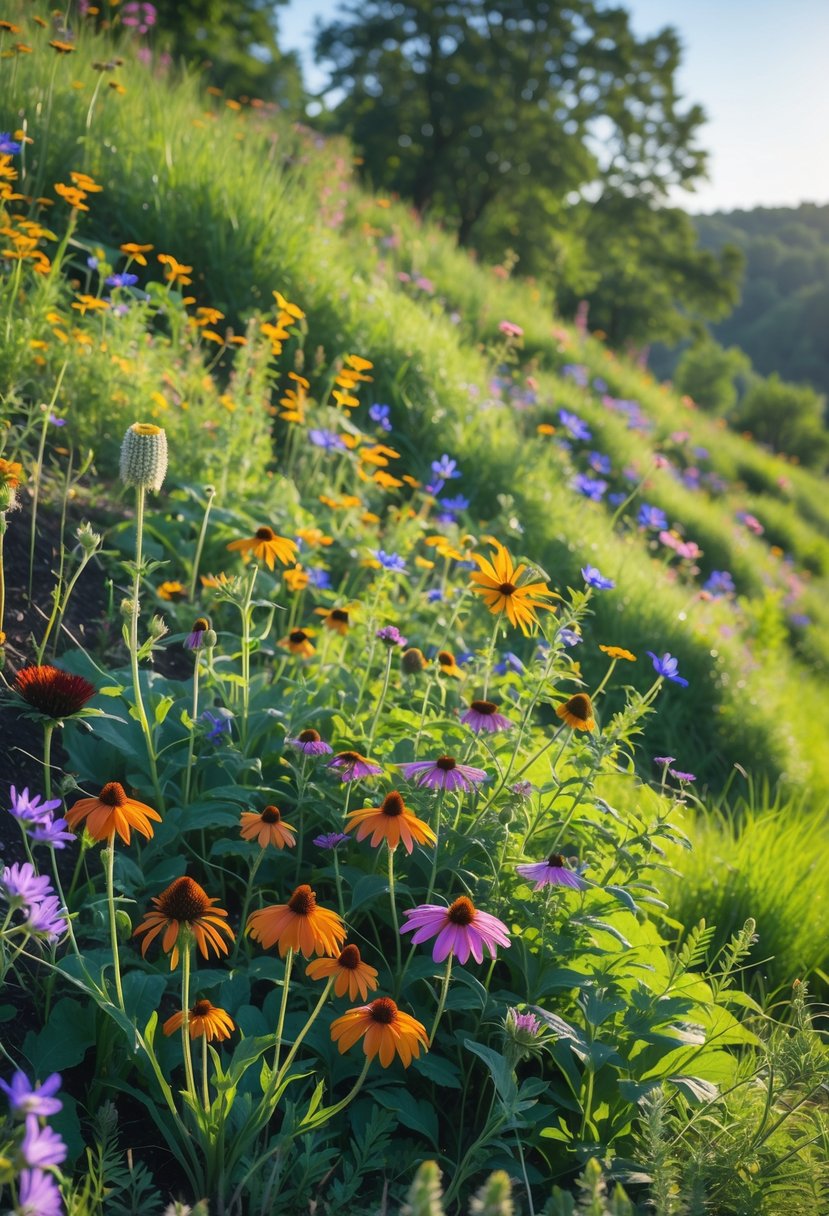
Native wildflowers are a smart pick for sloped gardens. They fit right in with local soil and weather, so you don’t have to fuss over them.
When you plant native flowers, you help feed bees, butterflies, and other pollinators. These little creatures keep your garden and nearby plants healthy.
Wildflowers add color and bring your slope to life. Mix up the species to keep pollinators visiting all season. For more inspiration, check out 37 easy-to-grow native wildflowers that attract pollinators.
23) Make a vine-covered trellis for vertical interest

Build a vine-covered trellis to add height and charm to your slope. It’s a great way to use vertical space if you’re short on flat areas.
As the vines climb, they form a green wall that brings beauty and a bit of privacy. Use wood, metal, or whatever materials match your vibe.
A trellis keeps climbing plants neat and supported. It’s a simple way to turn a plain slope into something special.
Need ideas? Check out easy DIY trellis ideas.
24) Use bold-leafed plants for visual impact

Add bold-leafed plants to make your sloped garden pop. Big, dramatic leaves create strong lines and catch the eye right away.
Try elephant ears, hostas, or banana plants for that lush look. Pair them with smaller, daintier plants for contrast and depth.
Mix up leaf shapes and sizes for a garden that feels lively and balanced. It’s an easy way to boost your slope’s style with minimal effort.
For more ideas, check out creative garden ideas with foliage texture.
25) Build a small fire pit with seating
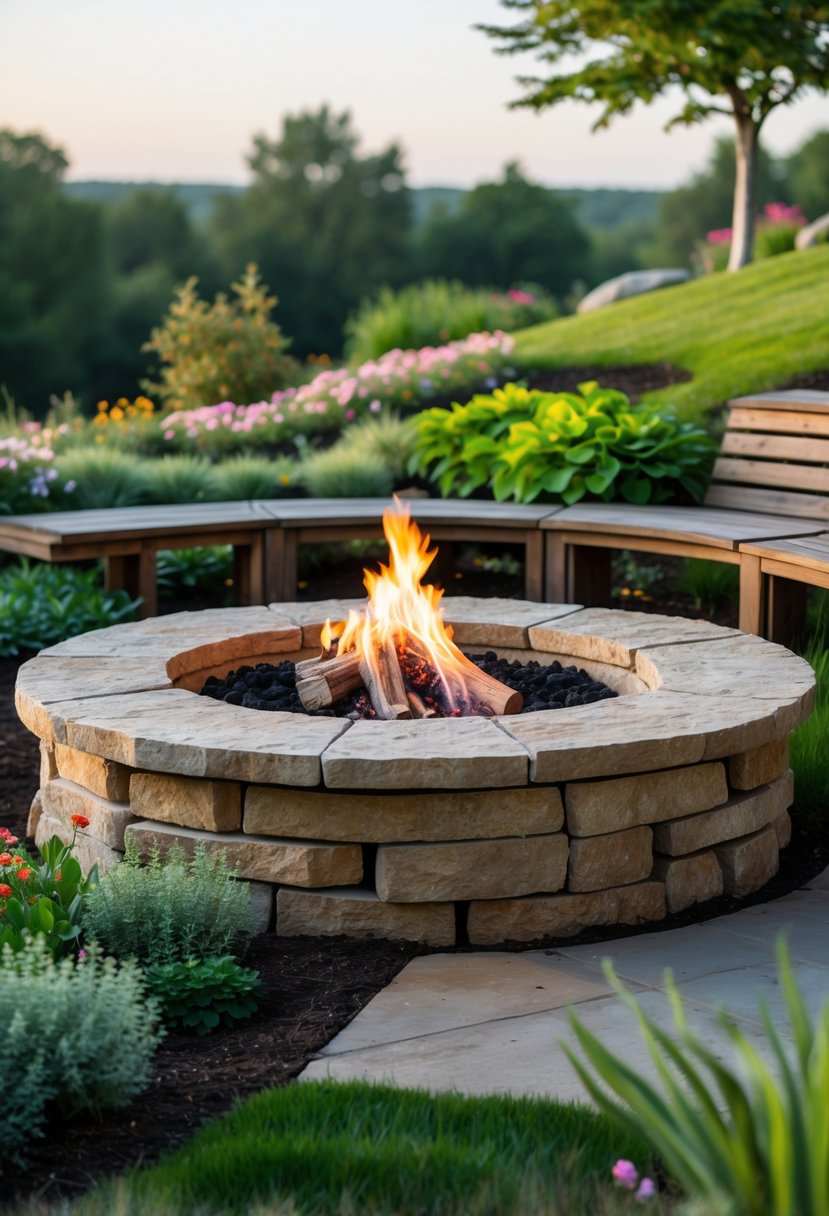
Turn your sloped garden into a cozy hangout with a small fire pit. It’s the perfect spot to unwind or chat with friends on a cool evening.
Arrange seating around the fire pit—natural stone or concrete benches work well and stay stable on a slope.
This setup uses the land’s shape to your advantage and feels like it belongs there. Want more? Check out 20+ Genius Fire Pit Ideas That Work Perfectly on a Sloped Yard.
Design Principles for Sloped Gardens
When you design a sloped garden, focus on the shape of the slope, picking the right plants, and using levels or terraces. These details help you manage water, prevent erosion, and create a garden that’s beautiful and not too hard to care for.
Assessing Slope and Soil Conditions
Take a good look at your slope’s angle and the type of soil you’re working with. Steep slopes drain water quickly and tend to erode faster, so you’ll probably need extra support—think ground cover plants or maybe even a retaining wall.
Feel the soil. Is it sandy or clay-heavy? Sandy soil drains in a flash but doesn’t hang onto nutrients. Clay holds water, which sometimes leads to drainage headaches. Tossing in compost or mulch can really give your plants a boost and help with growth.
Sun and shade matter too. Figure out how much light hits your slope throughout the day. That way, you can actually choose plants that won’t just survive, but might even thrive.
Choosing the Right Plant Combinations
Pick plants that play well together and match your slope’s conditions. Deep-rooted varieties do a great job holding the soil and stopping erosion. Mixing shrubs, perennials, and ground covers adds structure and a splash of color.
Try to group plants with similar water needs. Got a dry slope? Drought-tolerant picks like lavender or sedum are your friends. Shady or damp spots? Ferns and hostas usually do just fine.
Layering by height works wonders. Place low growers at the bottom to keep soil from washing away, and use taller ones further up for some visual interest.
Incorporating Levels and Terraces
Add terraces or steps to slow down water and cut back on erosion, especially if your slope is steep. Terraces break up the hill into flat spots where you can plant more easily.
Build terraces from stone, wood, or concrete—whatever fits your style and wallet. Each level can become its own planting area or even a cozy seating nook.
Paths between terraces make it easier to get around. You’ll feel safer, and managing each section becomes a lot less of a hassle.
Turning your slope into a series of usable spaces just makes the whole garden feel more inviting.
For more ideas on terraces and planting on hillsides, check out 18 Slope Garden Ideas for Planting on Hillsides or Other Uneven Ground.
Erosion Control and Drainage Solutions
Keep your sloped garden in shape by controlling erosion and making sure water flows where you want it. The right materials and systems can really help keep soil in place and protect your plants and structures.
Sustainable Mulching Techniques
Mulch slows down water runoff and helps hold soil on slopes. Go for organic mulches like shredded bark, straw, or wood chips. As they break down, they add nutrients right back into your soil.
Spread mulch thick—aim for 2 to 4 inches—to really cover that bare ground. Just don’t pile it against plant stems, or you might end up with rot. Top off your mulch every year to keep things protected.
Try erosion control blankets made from natural fibers if you’ve got a really steep area. These mats stabilize the soil and help new plants get established by cutting down on weeds and stopping soil from washing away.
Installing Effective Drainage Systems
Good drainage keeps water from pooling and washing soil away. Most slopes do best when you add surface drains like French drains or swales, which guide water safely downhill.
Put drains at the low points or along terraces so they catch runoff early. Try using gravel or a perforated pipe wrapped in fabric—this helps filter out soil.
You could also build retaining walls with drainage built in. These walls hold back soil, but still let water pass through so erosion doesn’t become a problem.
Make sure gutters and downspouts send water away from steep slopes. That way, you won’t end up with extra water flow causing damage.


