

Beautiful Rock Garden Ideas on a Slope: 25 Friendly Ways to Transform Your Yard
Got a sloped yard? Try turning it into a rock garden. It’ll make the space look more natural and interesting.
Rock gardens fit perfectly on slopes. They help control erosion, and the mix of textures really livens up your landscape.
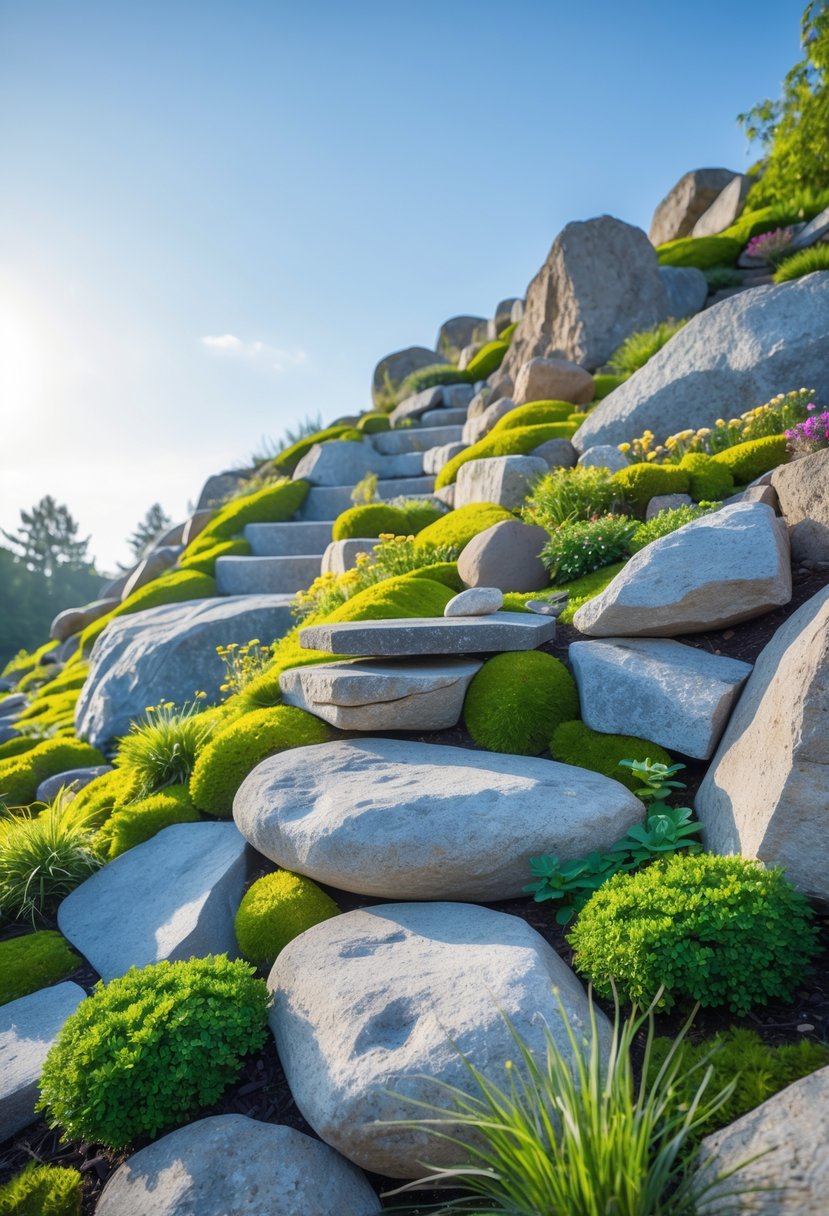
A rock garden on a slope can transform a tricky spot into a charming, low-maintenance part of your yard. With a bit of creativity, you’ll end up with a garden that suits your style and makes your outdoor space more inviting.
1) Terraced rock garden beds for erosion control
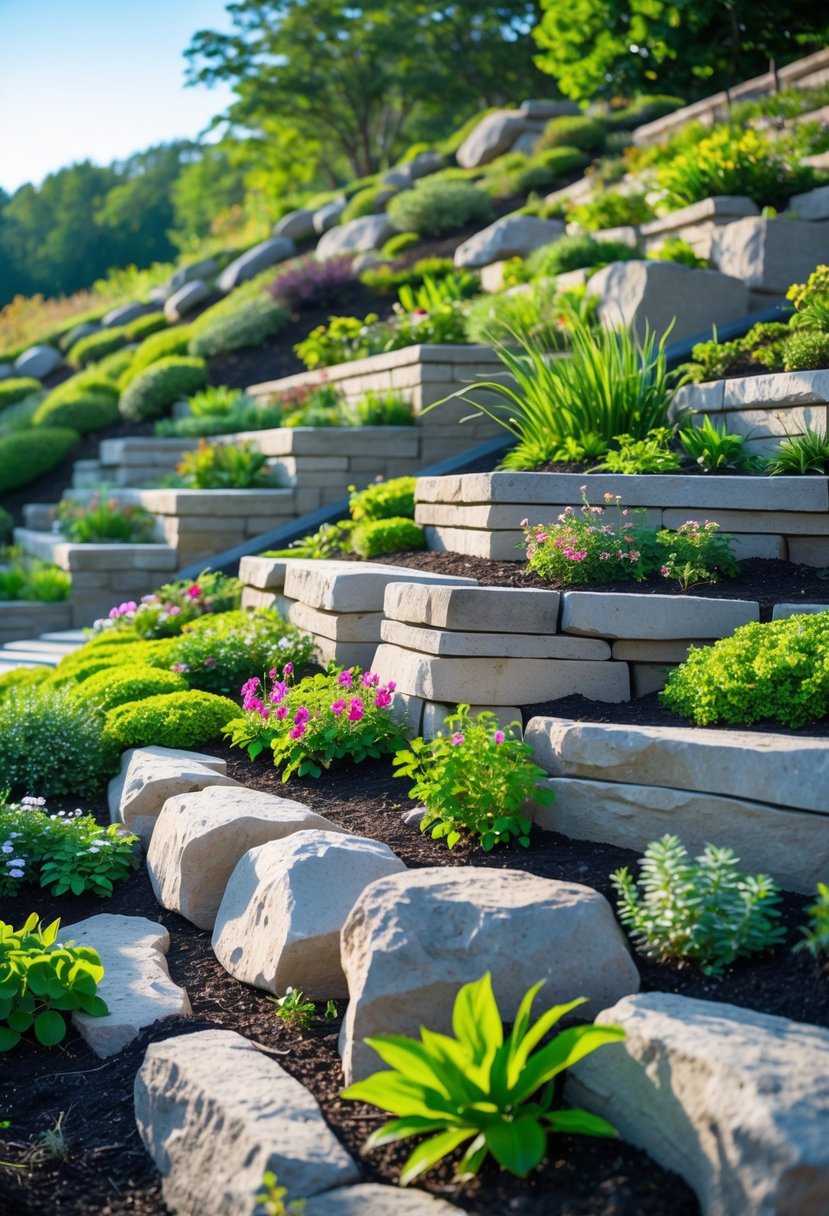
Try building terraced rock garden beds if you’re dealing with a slope. The terraces slow down water runoff and keep soil from washing away.
Use natural stones to hold the soil in place. They look great and add structure.
Terraced beds also give you flat spots for flowers or succulents. Your garden will stay healthy, and the slope will look much better.
For more tips on terraced beds, check out this guide.
2) Succulent clusters between flat stones
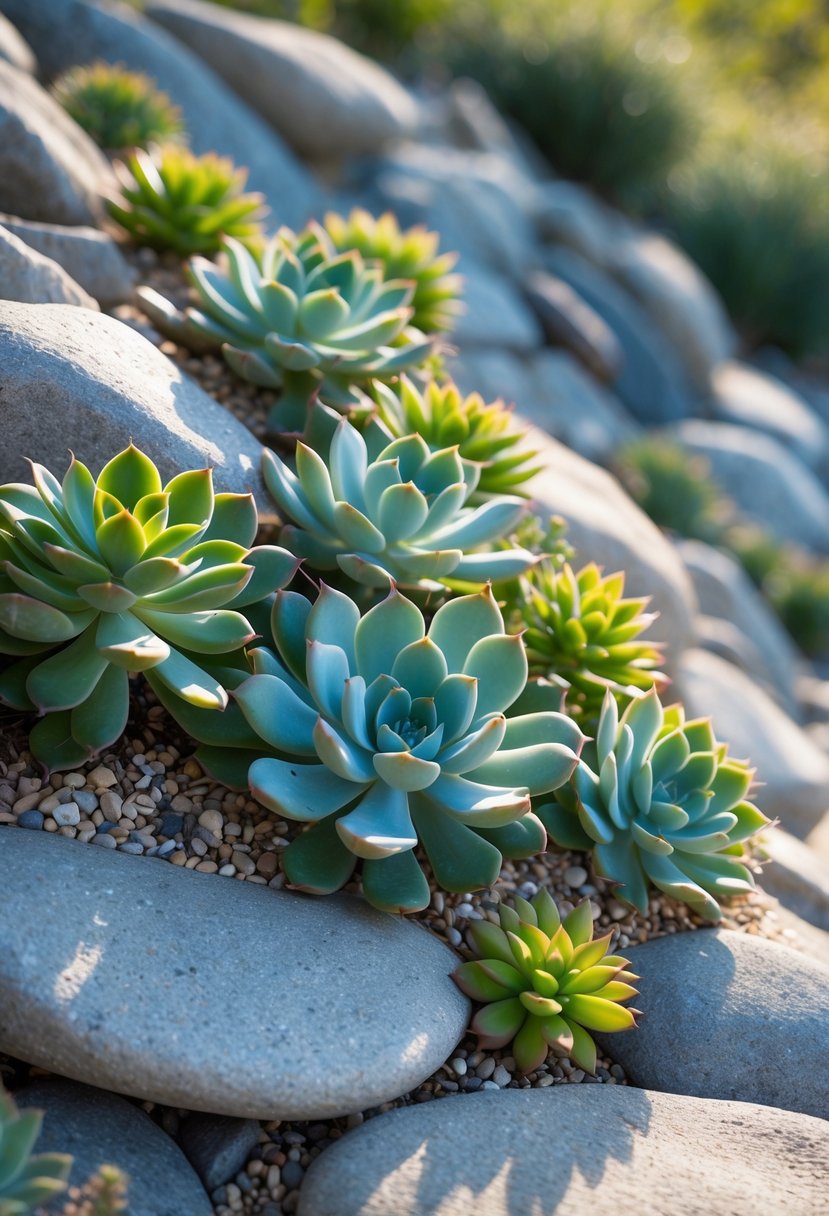
Plant succulent clusters between flat stones for a natural vibe. The stones act like mini shelves and keep your plants in place.
Succulents love good drainage, and rocks help with that. Pick low-growing succulents to fill in the gaps.
This setup works great on slopes since the stones keep soil steady. It adds texture without much fuss.
Want more ideas? Check out rock garden ideas for slopes.
3) Alpine plants nestled in crevices
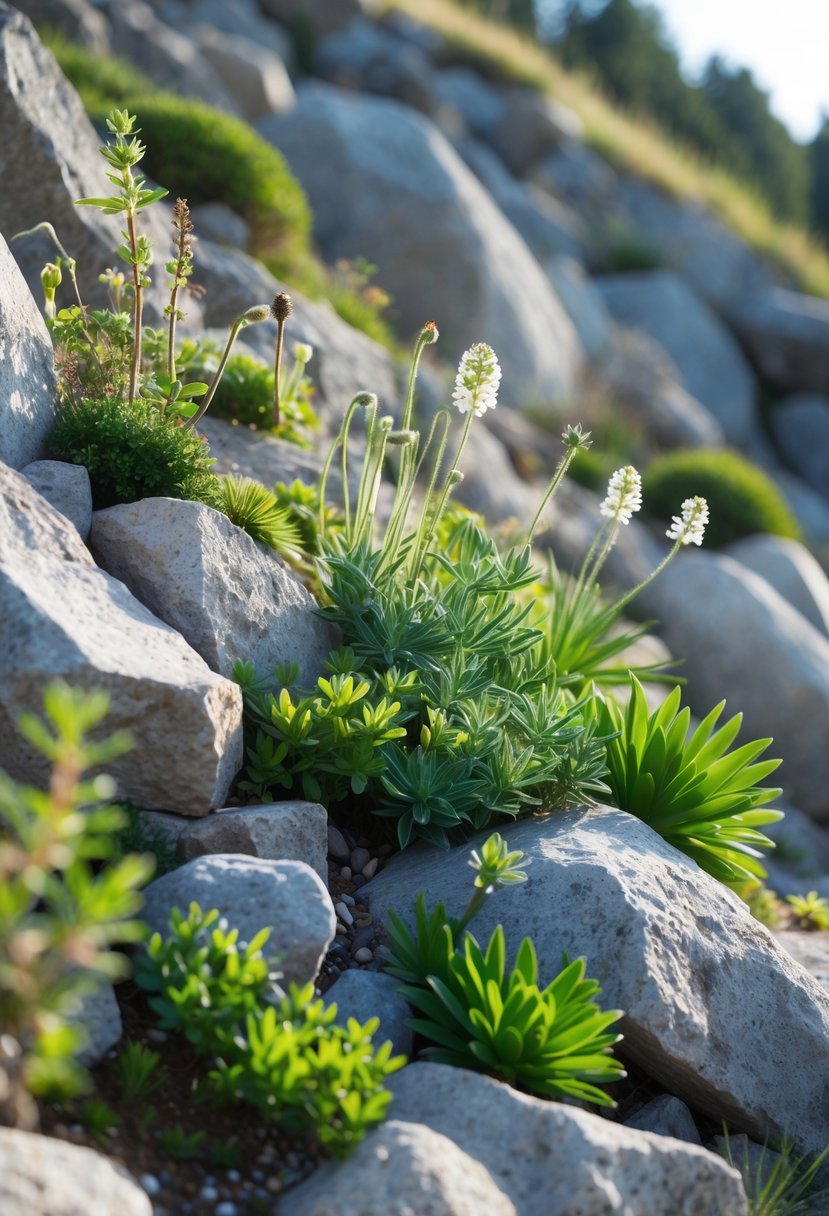
Plant alpine plants in the crevices between stones to create a charming rock garden. These plants love shallow, rocky soil, so crevices are perfect for them.
Alpines are tough and low-maintenance. They thrive in cracks where water drains fast, which keeps them healthy.
Use upright or tilted rocks to make little pockets for your alpines. This adds natural beauty and works especially well on slopes.
Looking for inspiration? Check out crevice gardening ideas.
4) Dry stream bed with river rocks
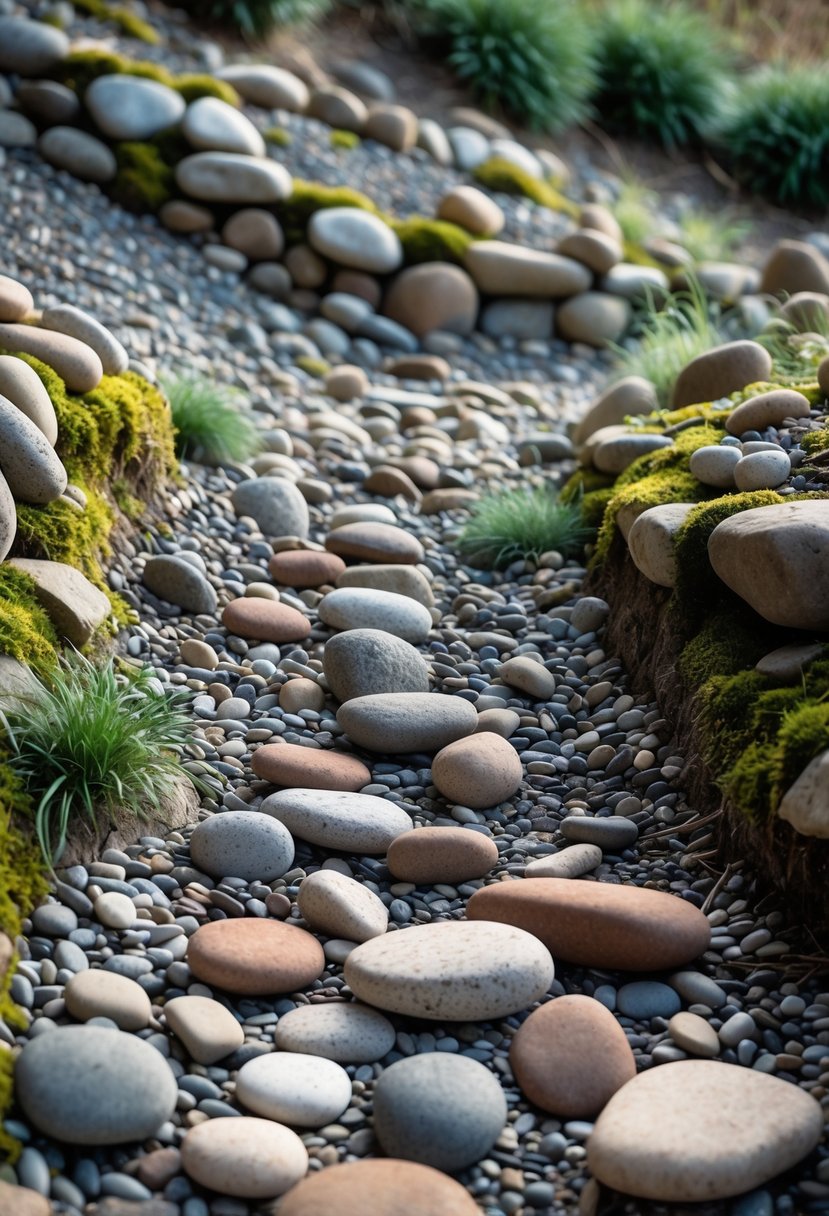
Add a dry stream bed with smooth river rocks to your slope. It looks like water once flowed there, which gives your garden a natural touch.
This feature helps manage water runoff and stops erosion. It also adds some fun texture.
Follow the slope when laying out your stream bed. Mix in plants and shrubs along the edges for extra color.
Use different rock sizes to make it more appealing. It’s a low-maintenance way to add charm.
Need more dry river bed ideas? Here’s a helpful guide.
5) Stepping stone path winding through rocks
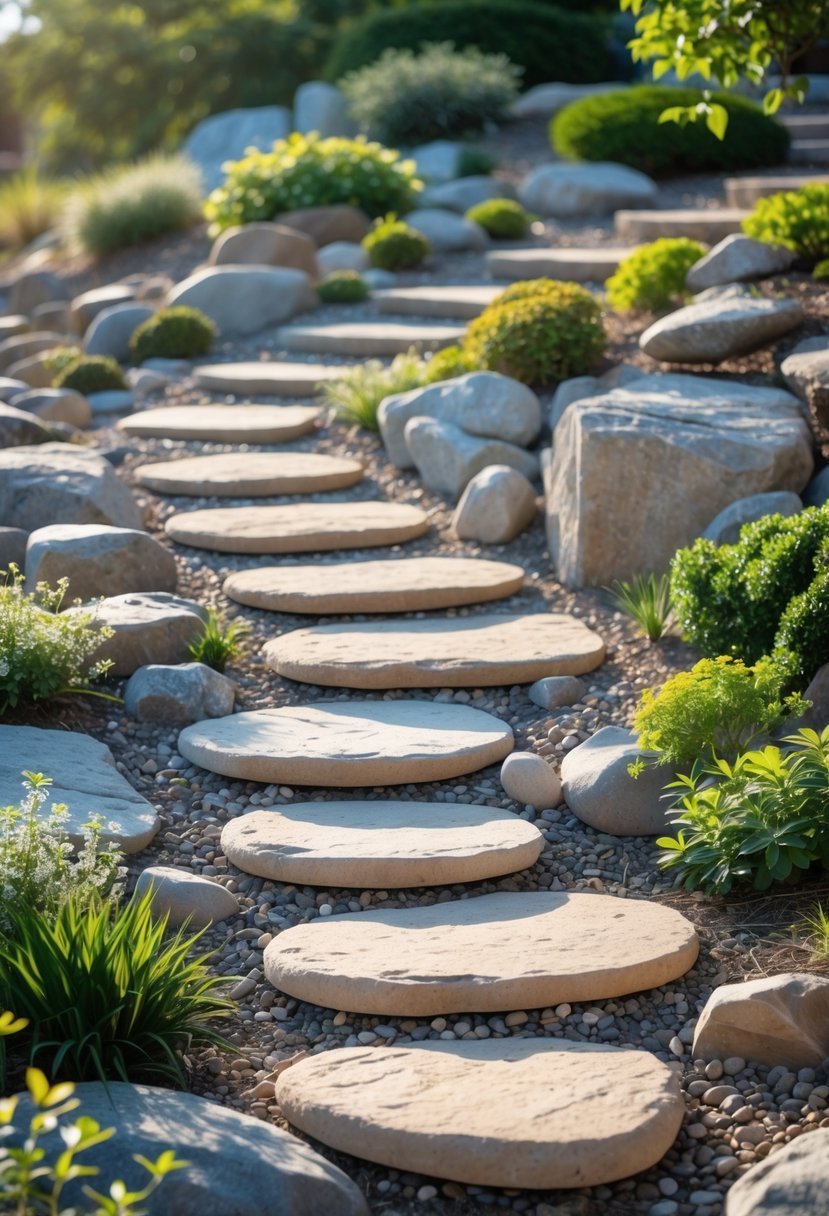
Lay out a stepping stone path that winds through rocks on your slope. It looks lovely and makes it easy to walk without trampling your plants.
Pick stones that feel right for your space. Play with size and shape for a more interesting path.
Add moss or small plants between the stones to soften the look. A winding path also helps slow water and reduce erosion.
Want more walkway ideas? Check out these creative stepping stone ideas.
6) Low-maintenance sedum ground cover
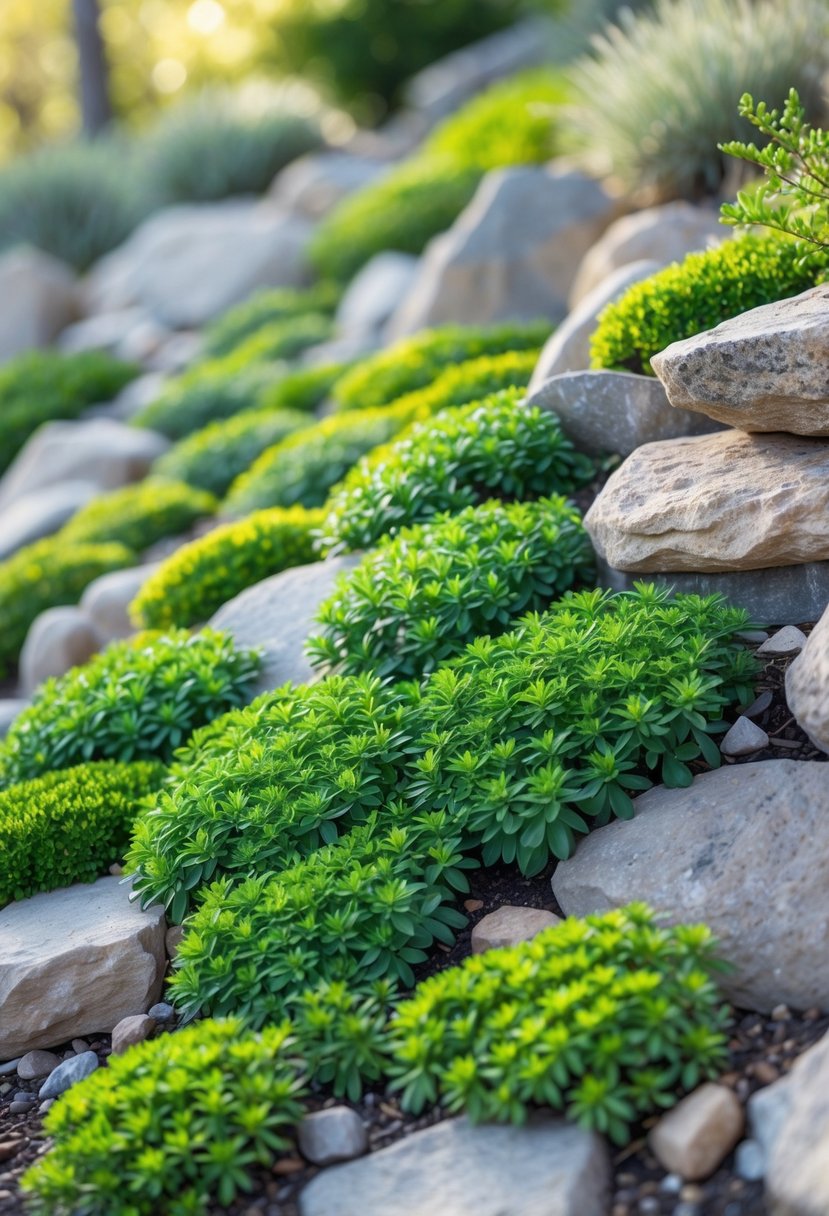
Sedum is an easy ground cover for slopes. It thrives in dry spots and barely needs any water.
Sedum comes in lots of colors and shapes, so you can mix things up. It also helps keep soil in place on slopes.
Plant sedum around rocks or steps for a soft, natural look. It’s an easy way to make your slope both pretty and simple to maintain.
Curious about sedum varieties? Check out these ideas.
7) Mixed rock sizes for natural look
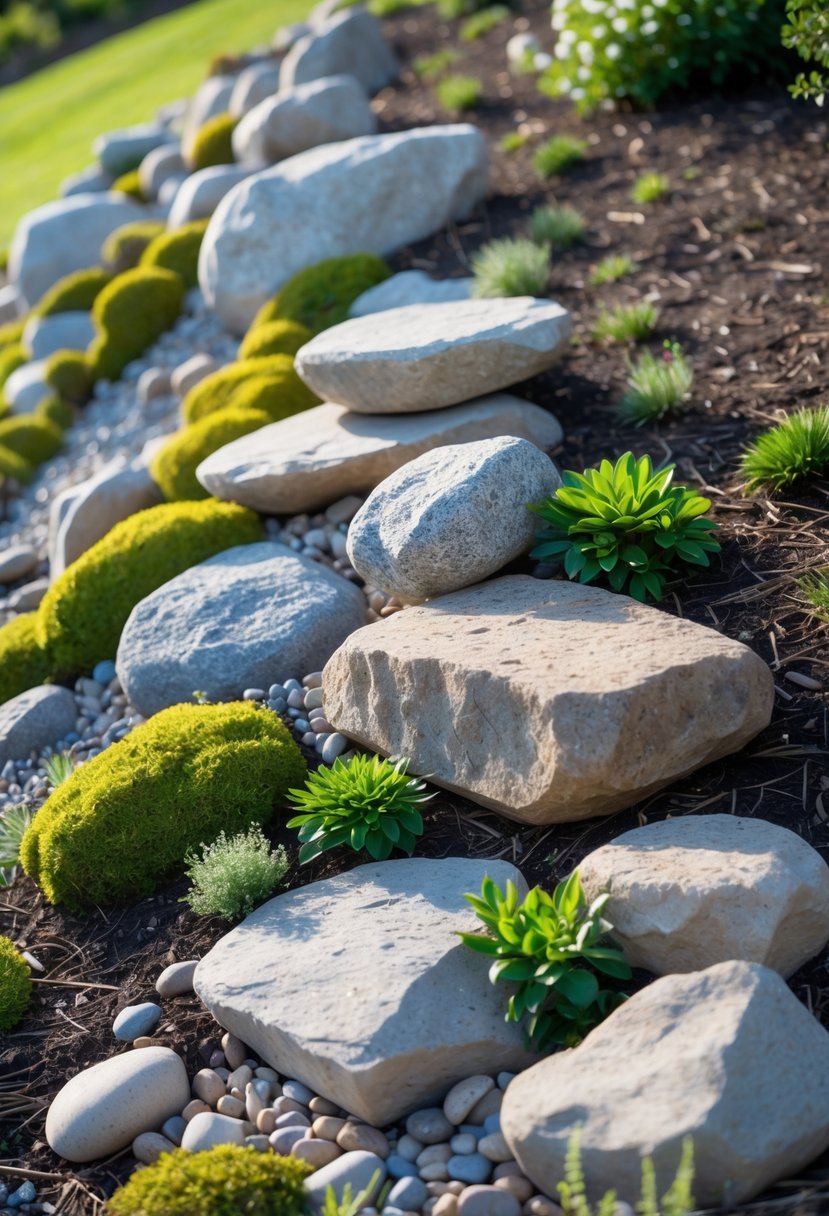
Mix up your rock sizes for a more natural vibe. Use big boulders for a solid base and to keep soil steady.
Fill in gaps with smaller stones or pebbles for texture. This keeps the garden from looking too staged.
Try different shapes and colors, too. It’ll give your rock garden a relaxed, interesting feel.
Need more tips? Take a peek at these gorgeous rock garden ideas.
8) Built-in stone retaining walls
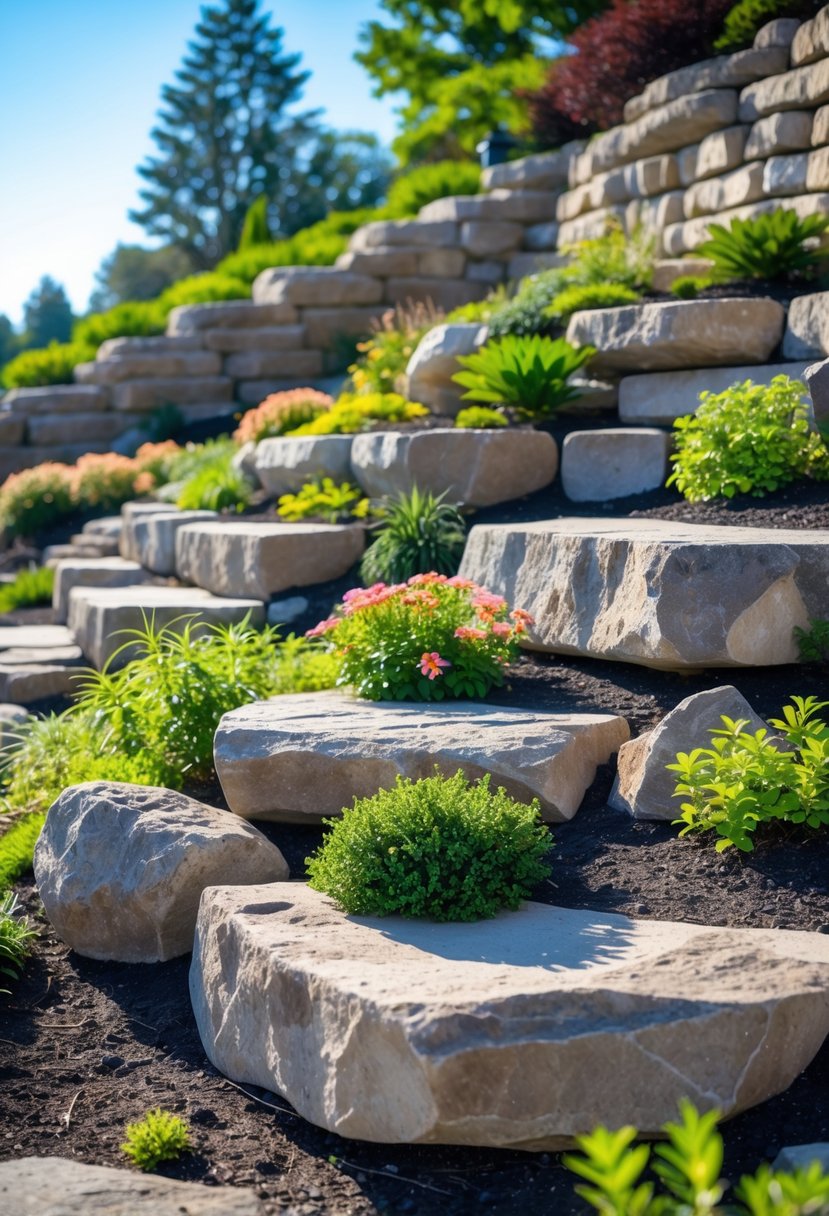
Build stone retaining walls to manage slopes in your yard. They hold back soil and create flat spots for plants or just hanging out.
Use natural stones for a look that blends with your garden. These walls add texture and a bold look.
Add steps or planting pockets for extra interest. Turn a plain wall into a standout feature.
For more inspiration, see these retaining wall ideas.
9) Mini waterfalls using stacked stones
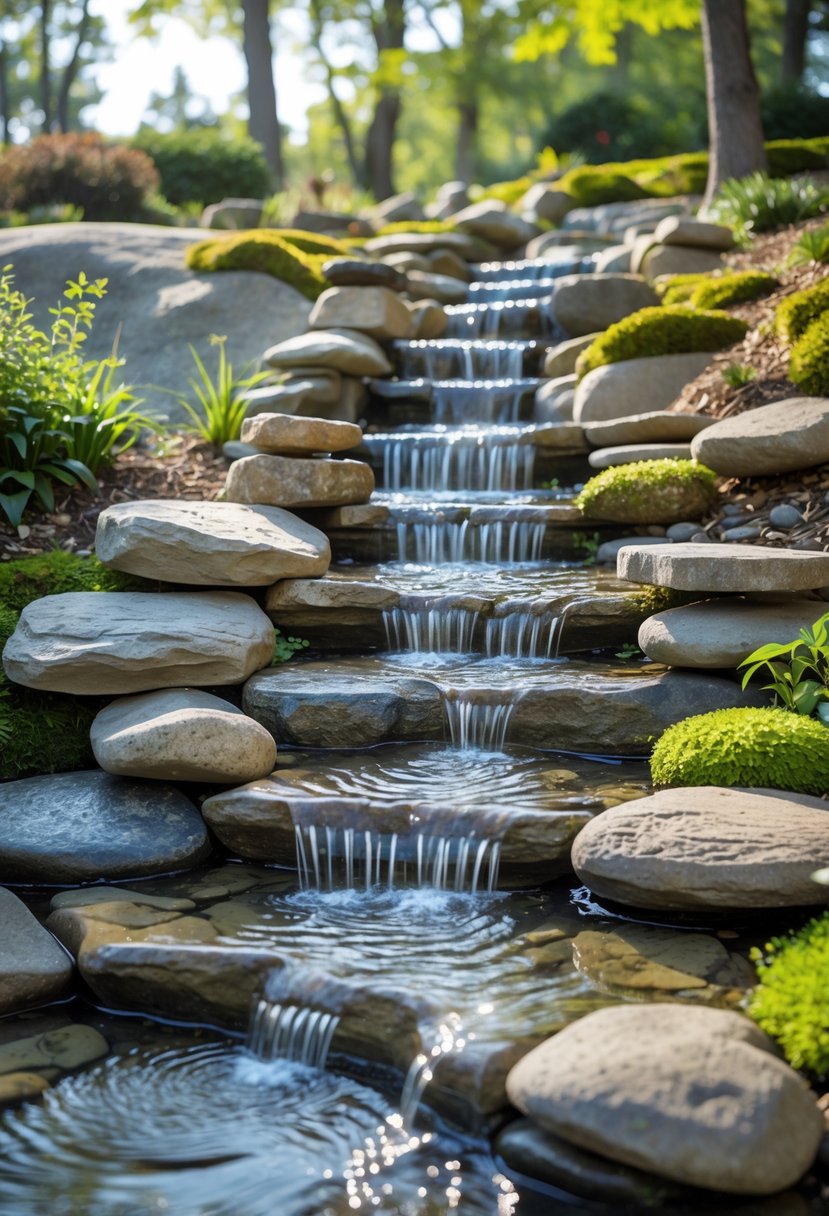
Try making a mini waterfall on your slope with stacked stones. Use flat rocks and let water flow down each layer.
A small pump keeps the water moving. Surround the waterfall with ferns or other plants to soften the edges.
Even in tight spaces, this adds peaceful sound and a natural touch.
Want more waterfall ideas? Check out small garden waterfall ideas.
10) Wildflowers between boulders
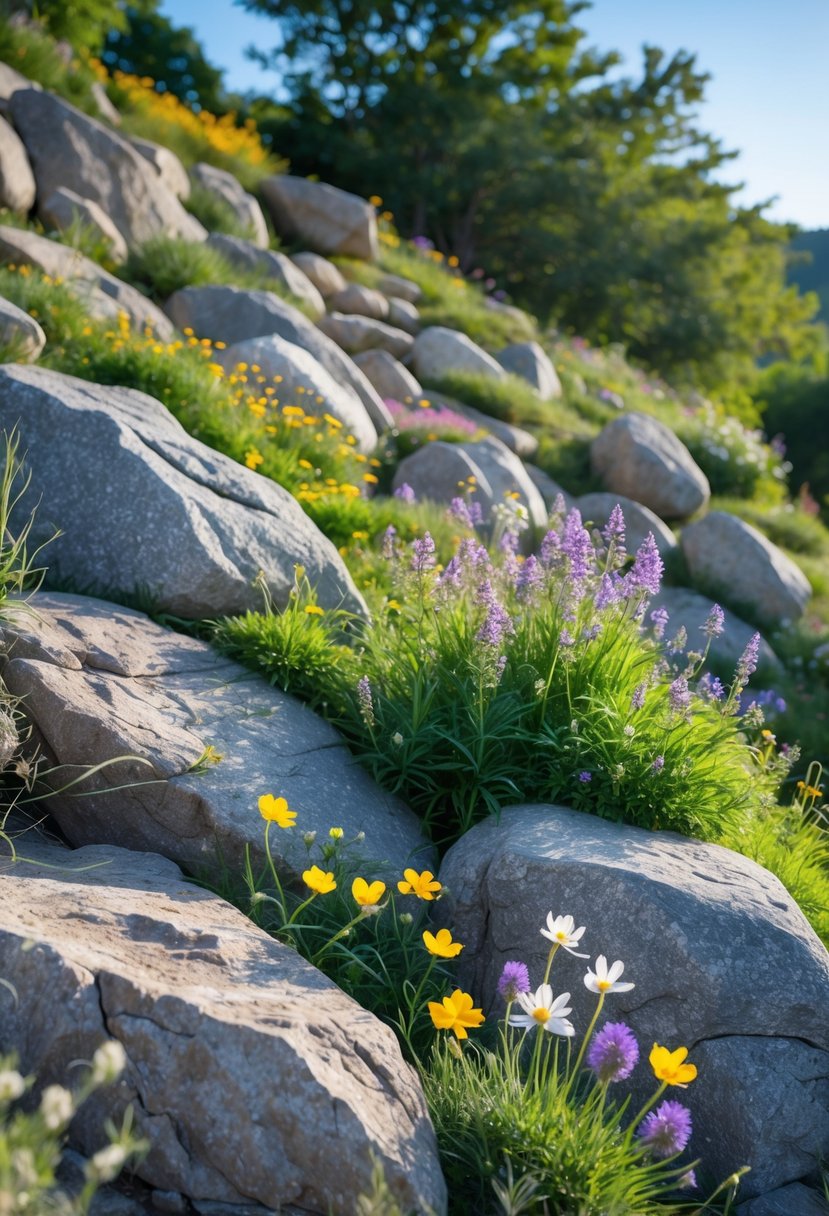
Plant wildflowers between boulders for a burst of color. They brighten rocky spots where grass just won’t grow.
Pick drought-tolerant wildflowers that love rocky soil and don’t need much care. They’ll soften the look of the stones.
Wildflowers attract bees and butterflies, making your garden feel alive. It’s a simple way to freshen up your slope.
For the best flower choices, check out wildflowers that thrive among stones.
11) Incorporating driftwood among rocks
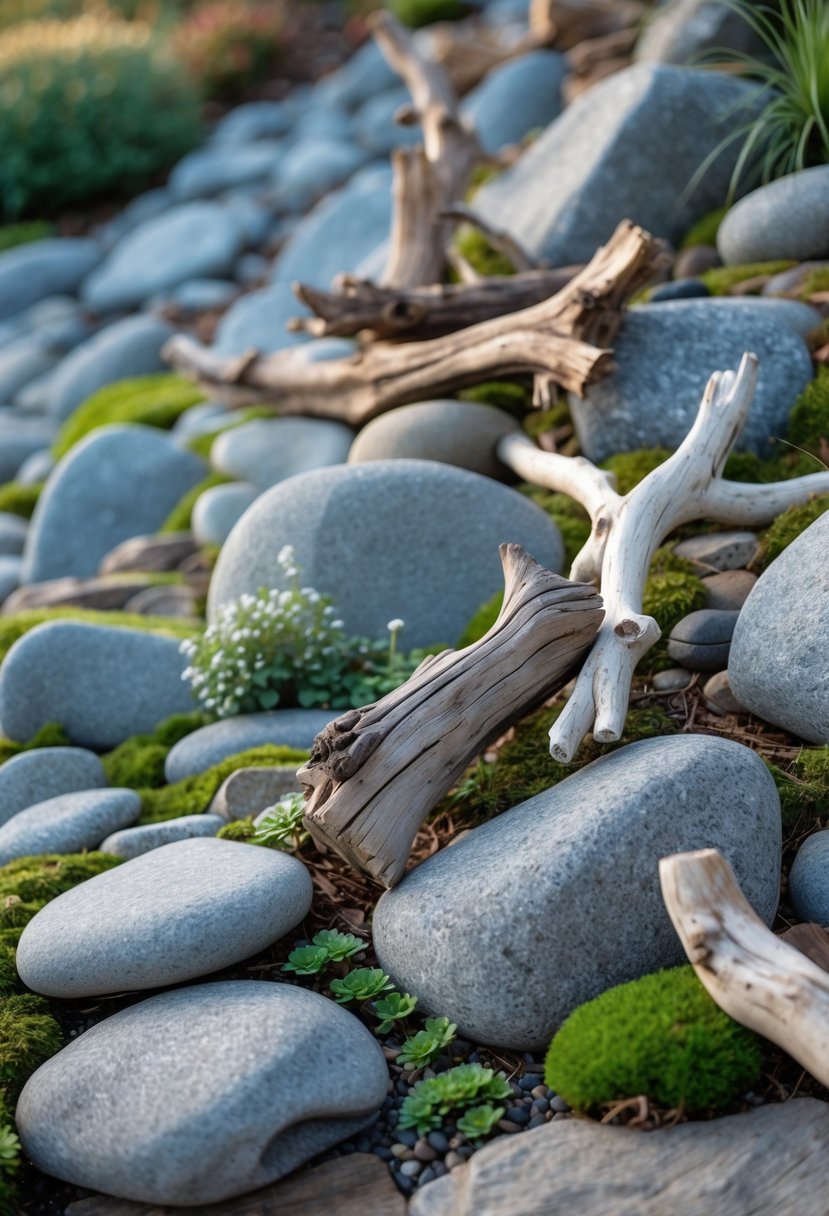
Add some driftwood to your rock garden for a rustic touch. Use it as a sculptural piece or tuck it between the rocks.
Driftwood breaks up the hard look of the stones and brings warmth to your slope. Try a big piece as a focal point, or scatter smaller branches for interest.
It pairs well with plants and rocks, giving your garden extra depth. Mix up the sizes and shapes and see what feels right.
Need more ideas? Here are some driftwood and rock garden inspirations.
12) Vertical rock layers for height variation
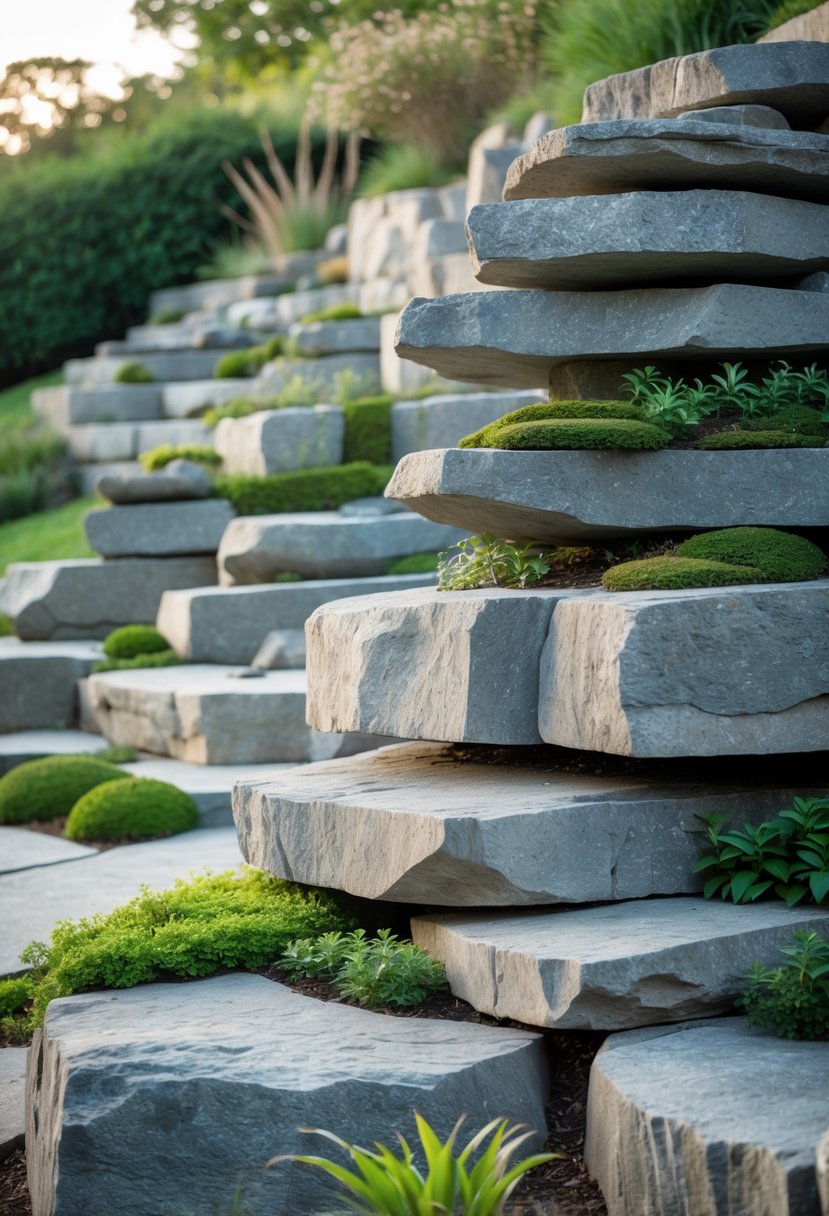
Stack rocks vertically to add height and interest to your slope. This creates natural steps and breaks up the flatness.
Vertical layers help slow water runoff and keep soil in place.
Plant small succulents or alpines in the cracks for greenery and a softer look.
This approach gives your garden a dynamic feel and makes the most of a sloped space. Want more details? Here’s how to build a rock garden on a slope.
13) Using moss to soften rock edges
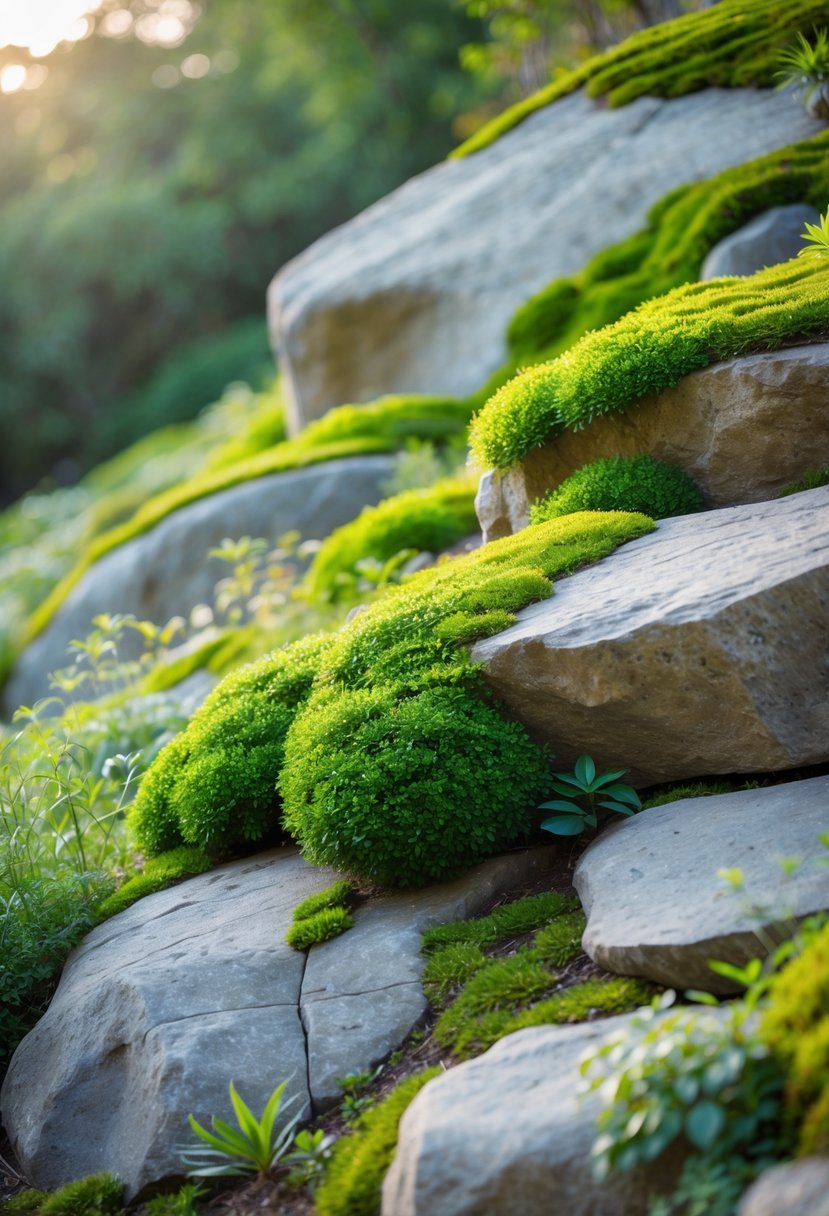
If you add moss to your rock garden on a slope, you’ll instantly soften those harsh stone edges. Moss brings a gentle, natural vibe and helps the rocks blend right into the rest of your garden.
It loves shady, moist spots, so you’ll have the best luck in cooler areas of your yard. Moss also gives you a splash of green that stays fresh almost all year.
Try tucking moss between rocks or draping it over the tops. That simple move adds texture and a sense of calm to your sloped garden.
Curious about moss in rock gardens? Check out lightandlayer.com.
14) Sun-loving cacti tucked into slopes
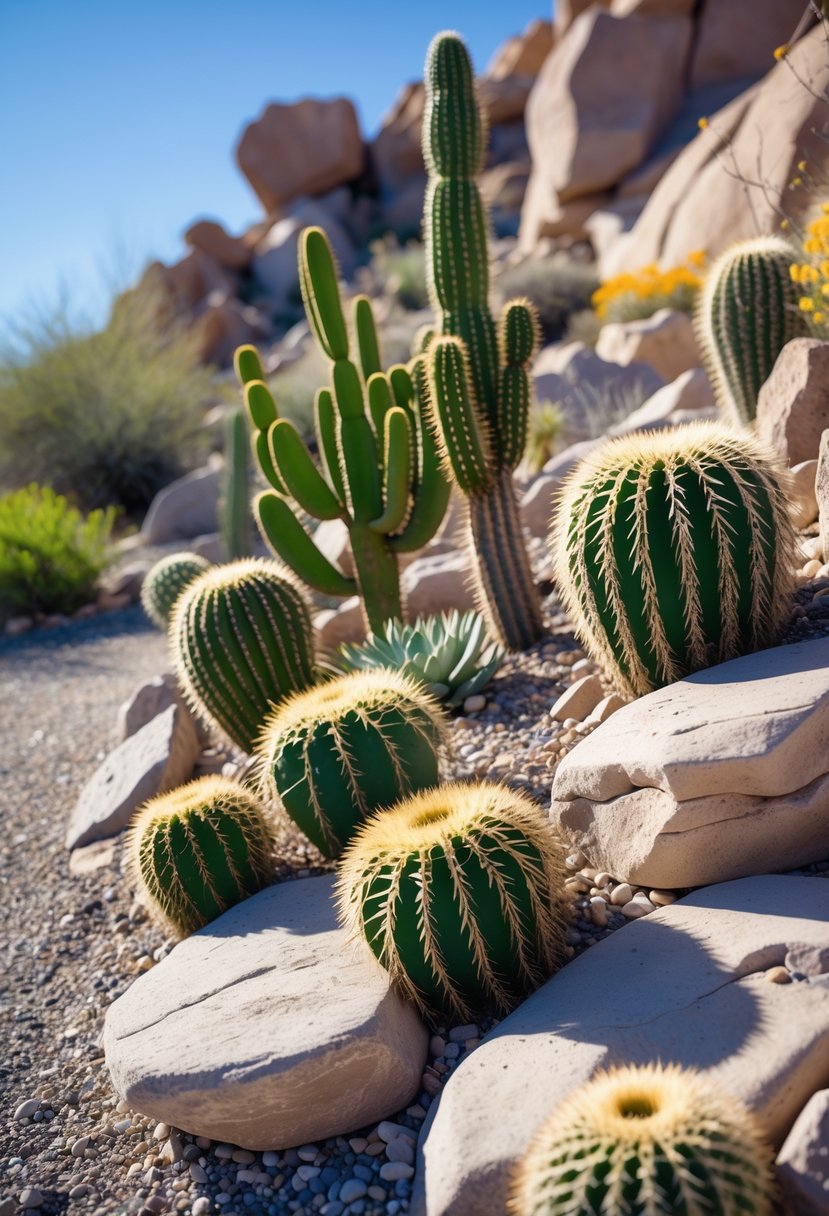
Want a rock garden with a bit of boldness? Place some sun-loving cacti on your slope. Cacti thrive in bright sunlight and barely need any water, so they’re perfect for those dry, tricky spots.
You’ll find cacti in all sorts of shapes and sizes, so mix and match for a fun look. Surrounding them with rocks keeps the soil from washing away and adds some extra texture.
This setup cuts down on maintenance and brings a unique twist to your yard. If you’re looking for more design ideas, check out rock garden ideas with cacti.
15) Native grasses complementing rocks
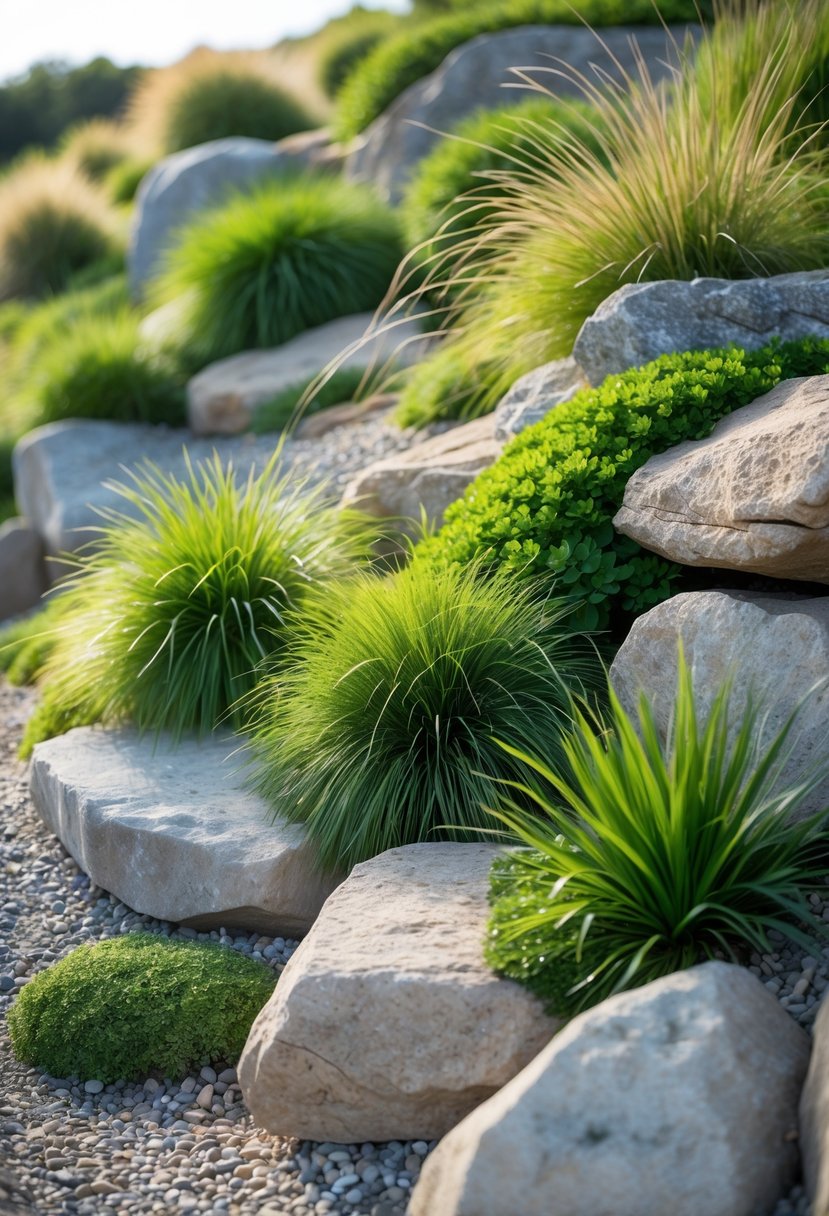
Try using native grasses to add soft texture to your sloped rock garden. These grasses sway in the breeze, making everything feel a bit more alive.
Blue Fescue and Fountain Grass fit perfectly between rocks. They don’t ask for much care and blend right in with the stones.
Mixing rocks and native grasses also helps local wildlife. Your slope will look natural and stay healthy with less effort.
Need inspiration? Check out ornamental grasses for textured rock gardens.
16) Rock garden benches carved from stone
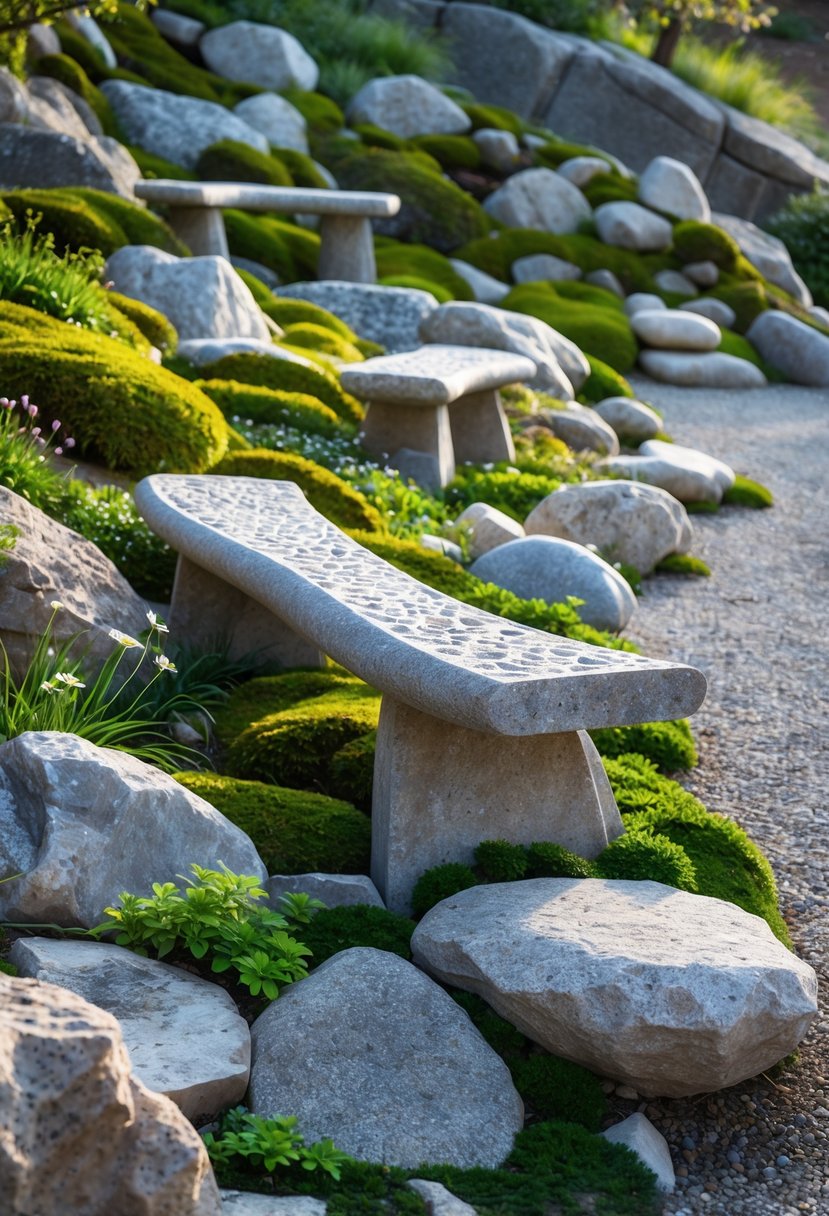
Want something different? Add benches carved from stone to your sloped rock garden. These benches blend right in and give you a sturdy, lasting place to sit.
Stone benches barely need any maintenance. They shrug off weather changes and just keep going.
Set one on a slope and you’ll have a cozy spot to relax and take in the view. For ideas, check out stone benches or see more styles here.
17) Pathways edged with limestone chunks
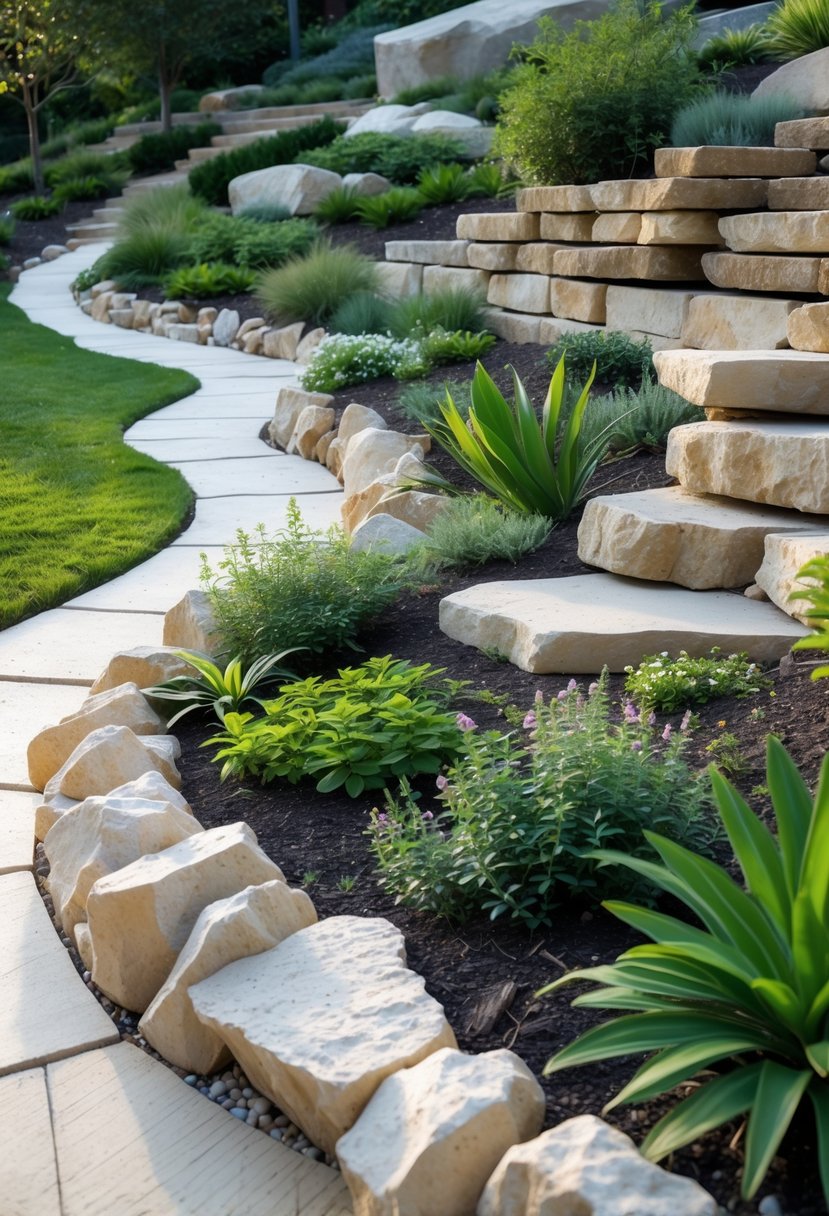
Try edging your slope pathways with limestone chunks. These stones create a natural border that holds soil and mulch where you want them.
Limestone’s rough texture adds charm and really makes your paths pop. It pairs nicely with grasses or succulents, too.
You’ll find limestone in different sizes, so mixing them up gives you a unique look. This edging idea helps define your paths and keeps things neat.
Plant some low-growing flowers or moss between the stones for a splash of color. Suddenly, your slope feels cozy and inviting.
Want more ideas? Explore creative limestone pathway ideas.
18) Colorful flowering rock plants
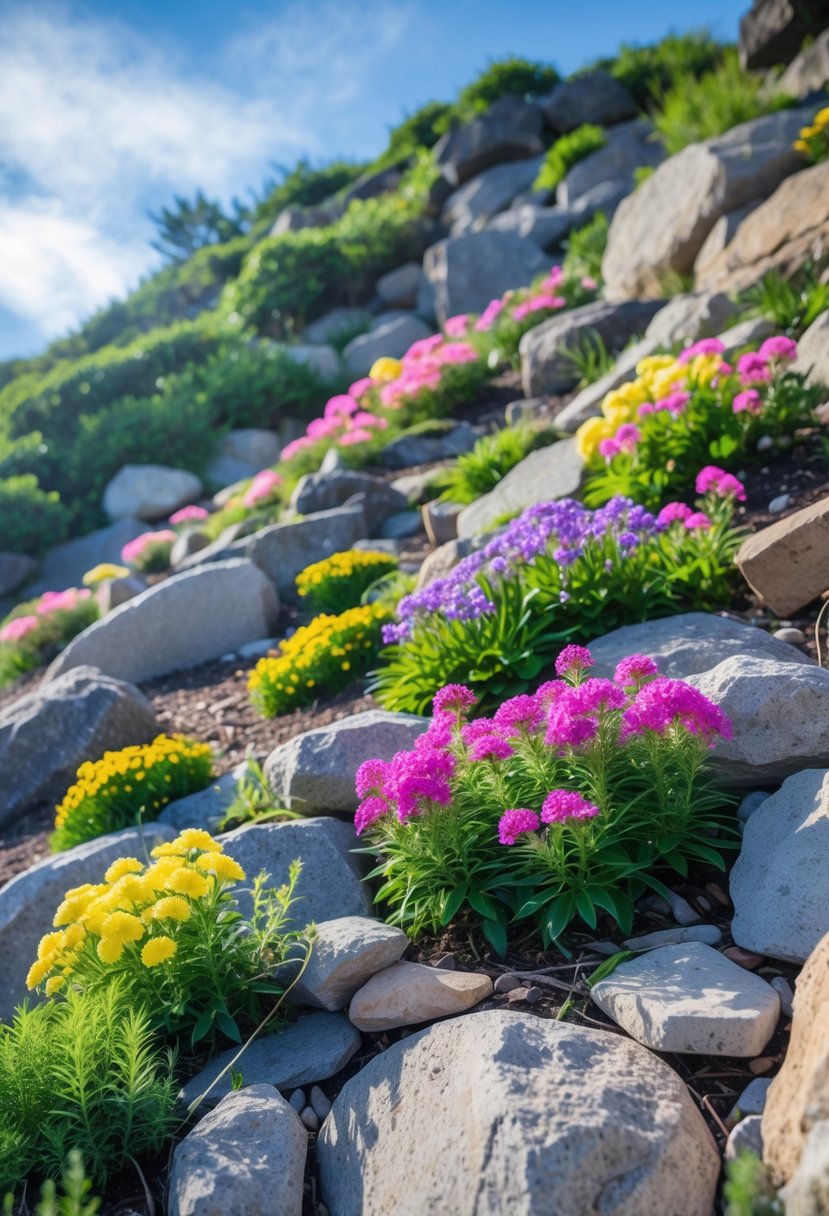
Brighten up your rock garden slope with colorful flowering plants. Rock Cress, Creeping Phlox, and Dianthus bring vibrant pinks, purples, and whites to the scene. These blooms show up in early spring and really wake up the space.
These plants love rocky, well-drained soil. They’re low-maintenance and handle dry spells, so you don’t have to fuss over them.
Mix up colors and textures for the best effect. For more ideas, check out colorful alpine plants for rock gardens.
19) Using slate for flat planting areas
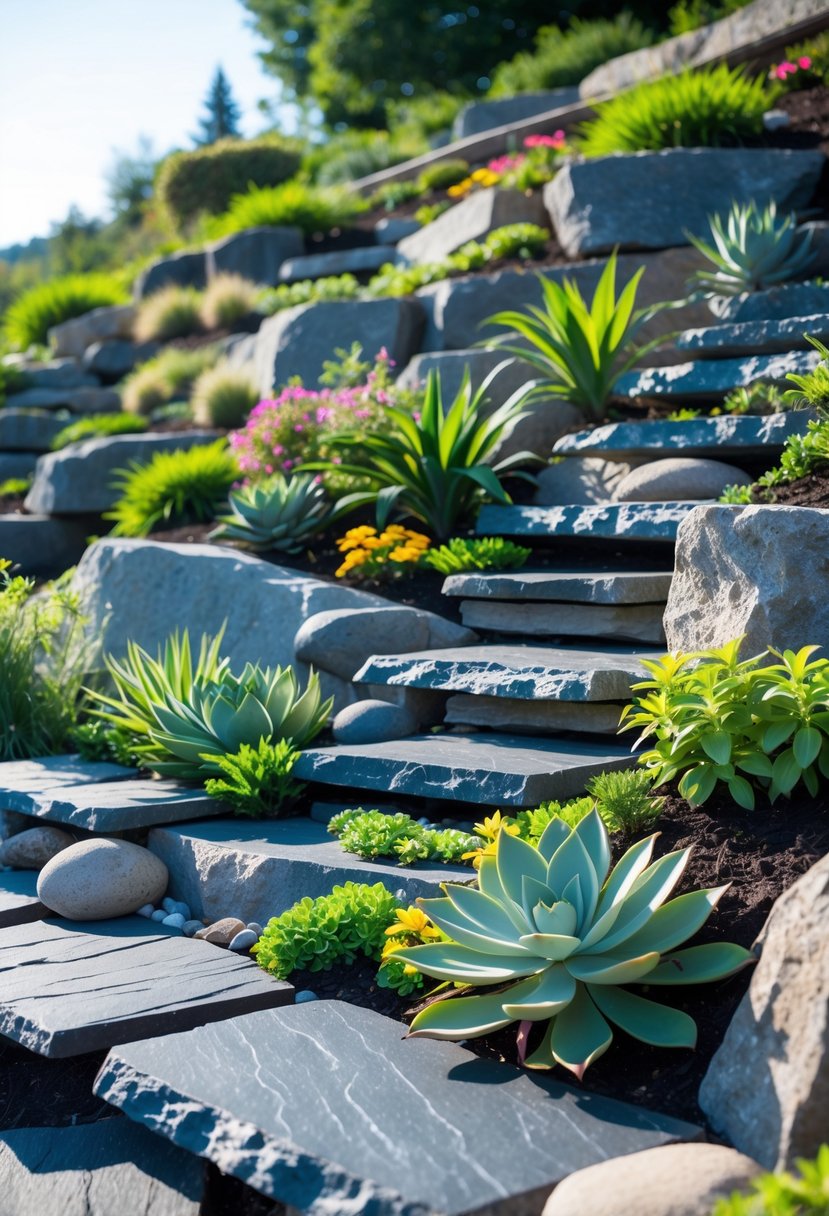
Slate works wonders for flat planting areas on a slope. Its flat, smooth surface makes stable spots for your plants.
It looks great with all sorts of greenery and gives your garden an organized, natural feel. Plus, slate stands up to any weather.
Try arranging slate pieces into small paths or beds. This not only looks tidy but also helps keep soil from slipping downhill.
If you want a low-maintenance way to add structure, slate’s a solid choice. See more slate rock ideas for outdoor gardens here.
20) Small rock pyramids as focal points
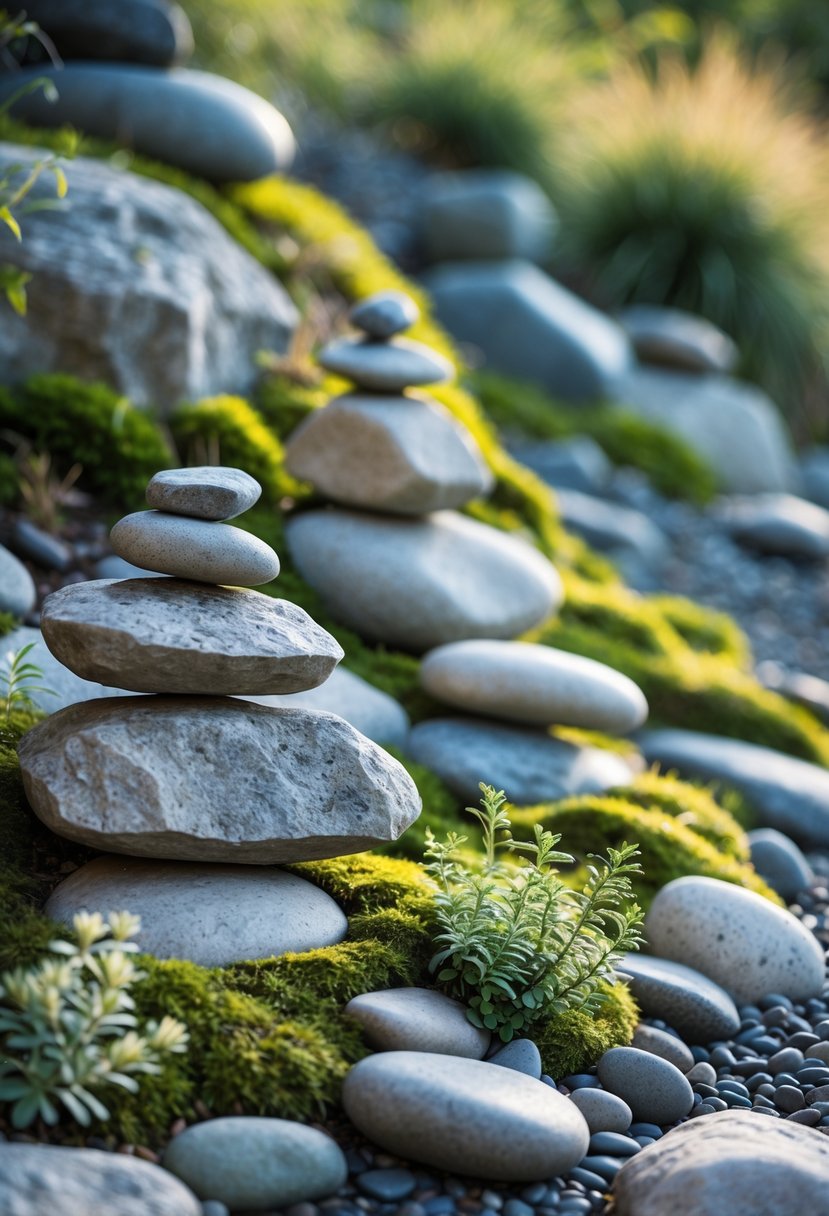
Add a little intrigue by stacking small rock pyramids in your slope garden. They catch the eye without hogging space.
Building a rock pyramid is pretty simple. Start with a wide base and stack up, narrowing as you go.
These pyramids help keep soil where it belongs and add a bit of structure. They work especially well with plants that love rocky, well-drained spots.
Scatter a few pyramids around to create balance and keep things interesting. They add charm without adding chores.
Need more tips? Check out rock garden ideas on a slope.
21) Ornamental grasses swaying among stones
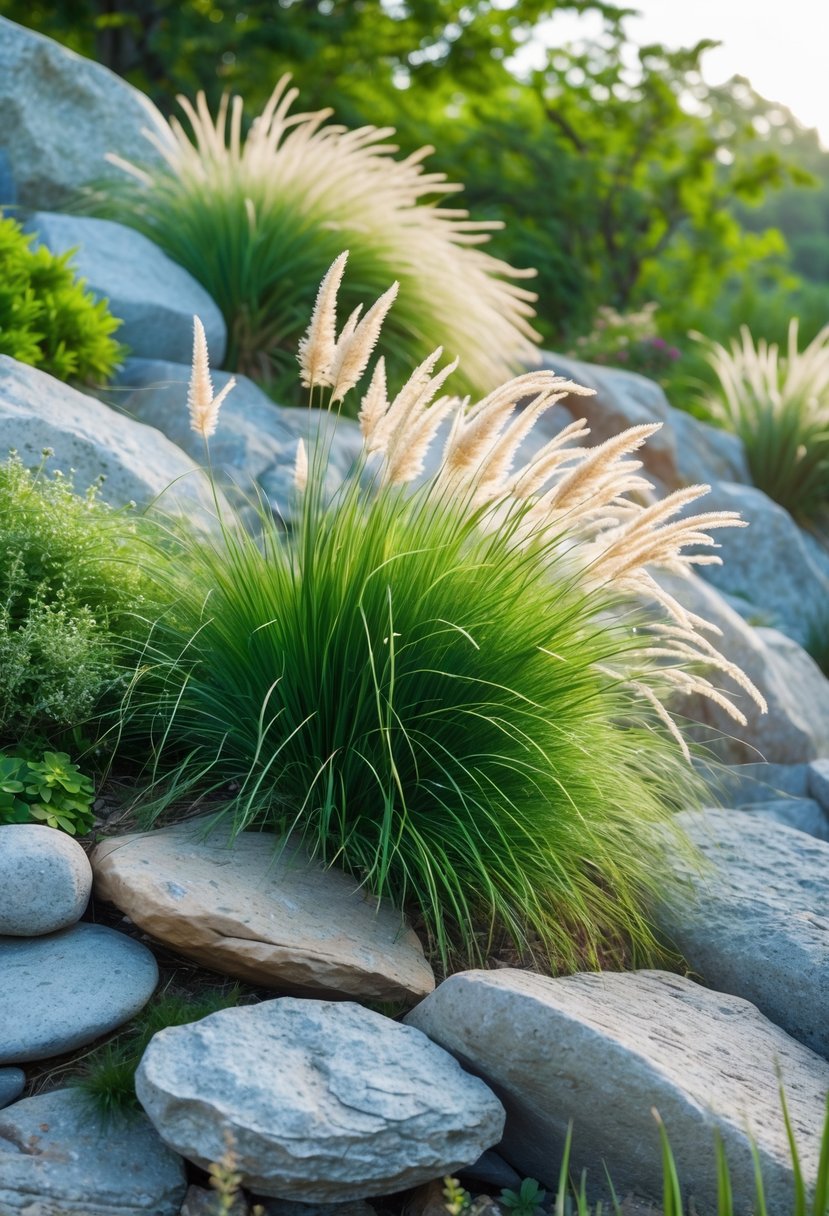
Bring soft movement to your rock garden by planting ornamental grasses between the stones. When the wind blows, these grasses gently sway and make the space feel alive.
Pick grasses like Blue Fescue or Fountain Grass for a mix of color and texture. They grow well on slopes and don’t need much care.
Placing grasses among rocks helps prevent soil erosion. You get both beauty and function in one go.
Try mixing a few grass types for a natural, inviting slope. For more ideas, see how others use grasses in rock gardens.
22) Combining smooth pebbles and rough rocks
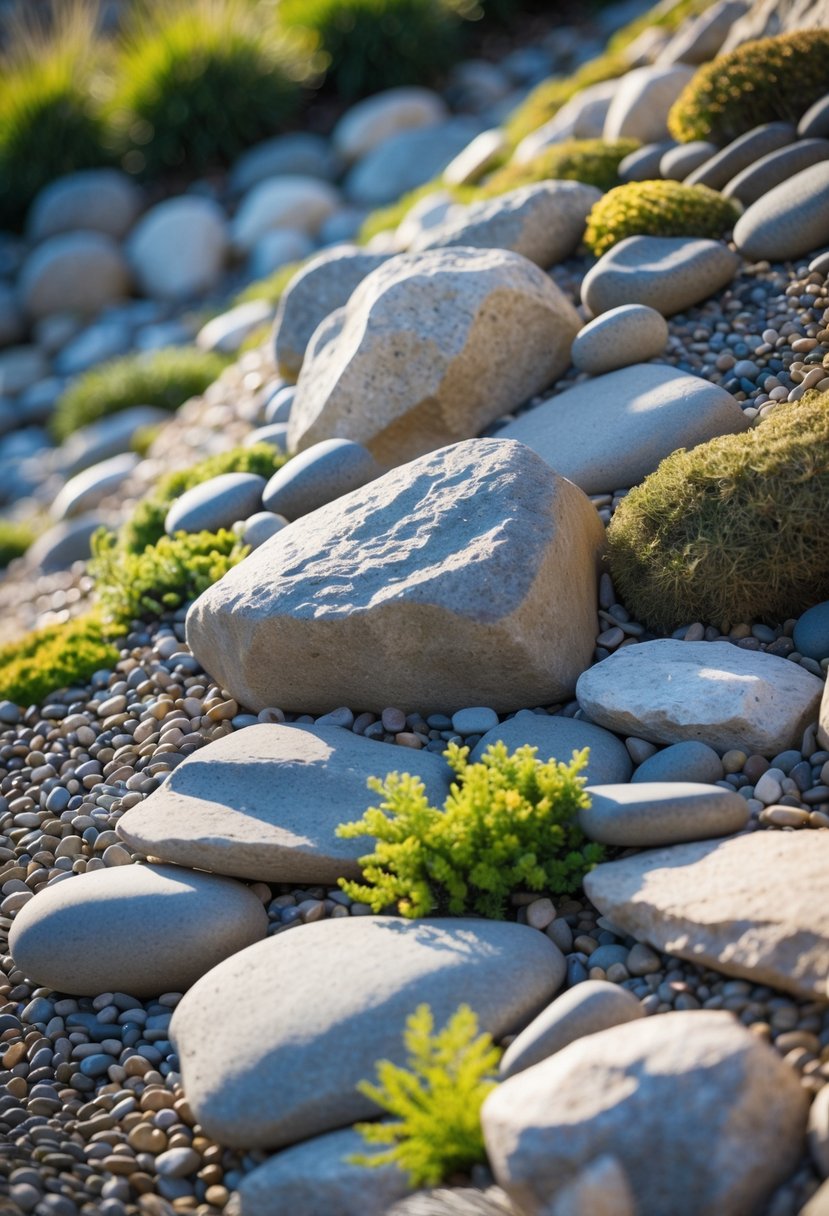
Mix smooth pebbles with rough rocks to create a balanced look on your slope. Smooth stones soften things up, while the rough rocks add texture.
Put bigger rough rocks at the bottom for stability. Then, scatter smooth pebbles around and between them.
This combo keeps soil in place and helps stop erosion. If you tuck in some succulents or small grasses, the garden looks even better.
The mix gives your slope a natural, relaxed vibe. Want more inspiration? Look up rock garden ideas with mixed stones.
23) Raised stone planter boxes
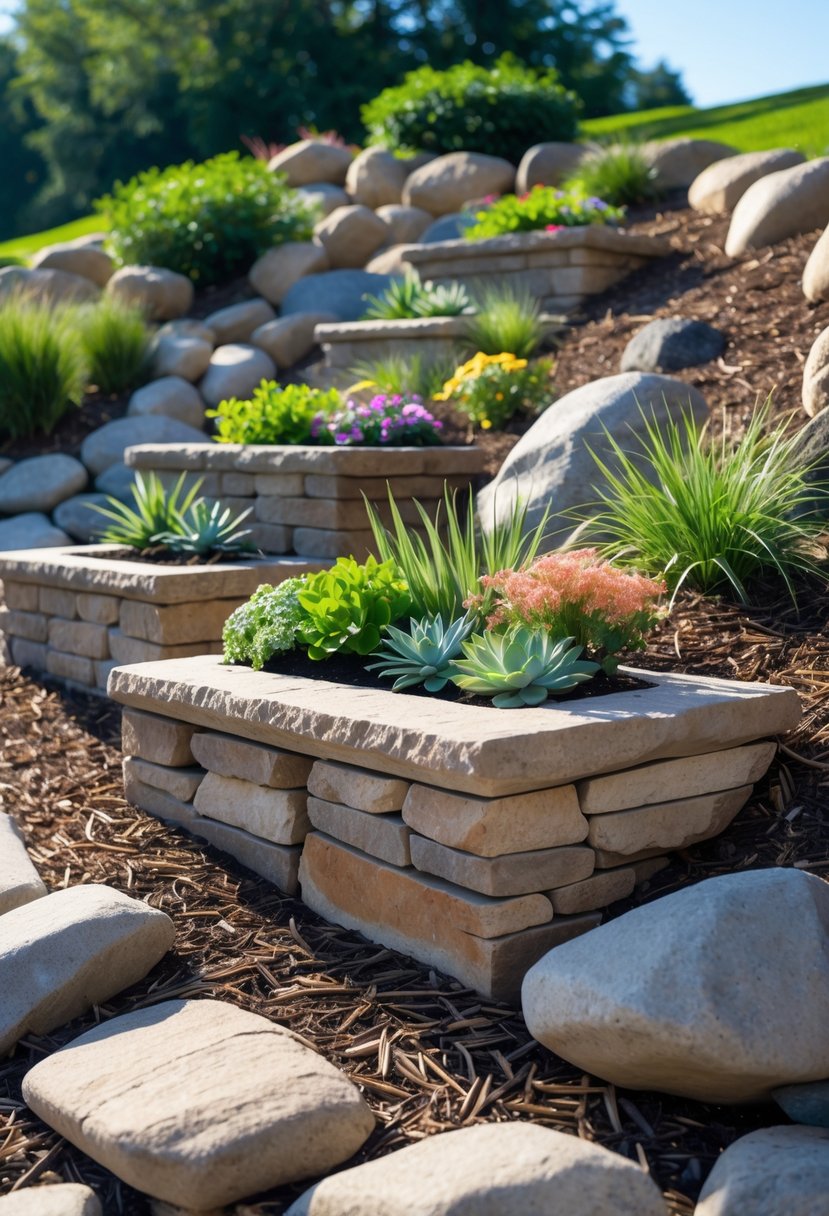
Raised stone planter boxes add structure to your slope and help hold soil in place. They also give you flat spots for planting.
You can stack stones yourself to build these boxes. That makes planting easier and improves drainage on uneven ground.
Stone planter boxes bring a natural look that fits right in. Fill them with flowers, herbs, or succulents to liven up your slope.
If you want to try it, here’s how to build a stone raised planting bed. It’s a simple addition that can totally change your hillside garden.
24) Rock sculptures as statement pieces
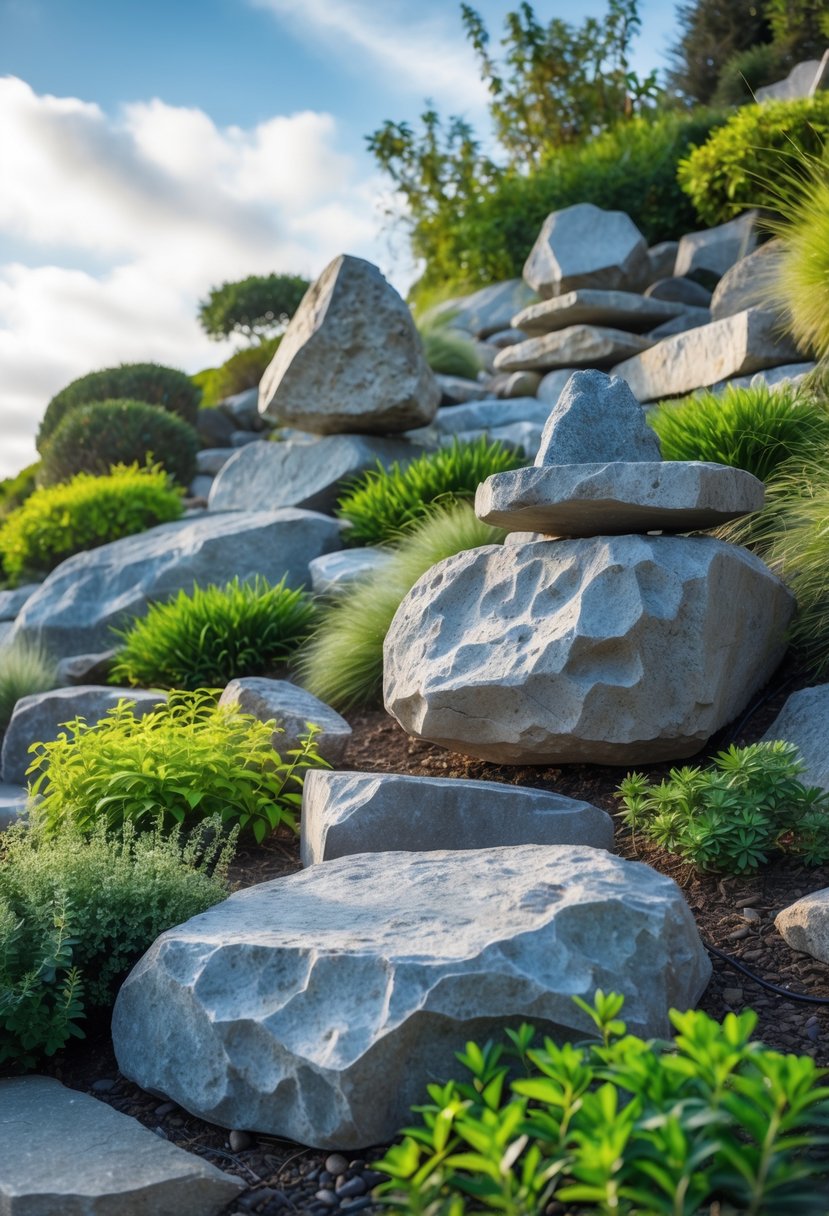
Make your slope garden stand out with rock sculptures. These pieces add personality and become instant focal points.
Try stacking stones into shapes—maybe animals, maybe something abstract. Mixing up sizes and colors gives your sculpture more character.
Rock sculptures play well with plants and show off your garden’s unique style. They’re a creative way to add life to a tough slope.
If you want more ideas, look into rock garden designs that work on slopes.
25) Lavender lining rocky terraces
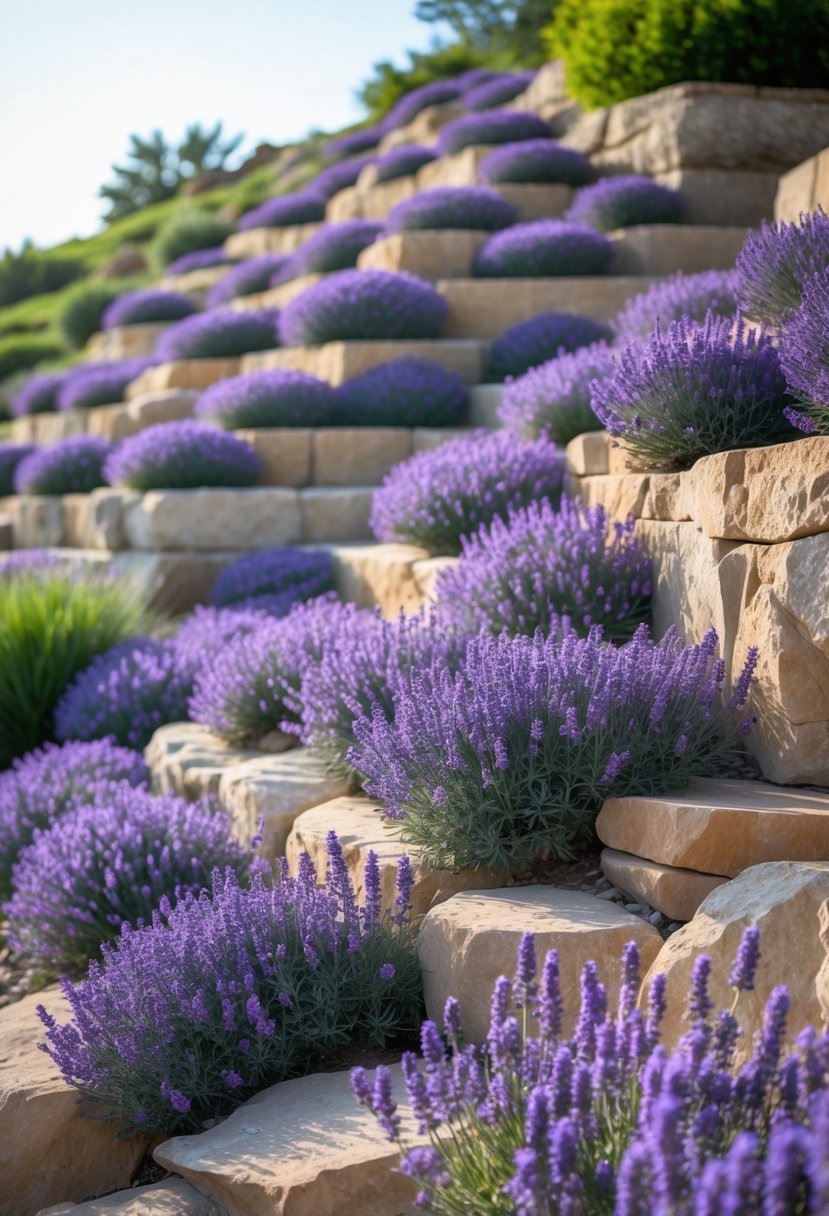
Line your rocky terraces with lavender for color and fragrance. Lavender grows easily in rocky soil and softens the look of the stones.
Its purple blooms add brightness and attract bees and butterflies.
Lavender doesn’t need much water and loves sunny spots, making it perfect for sloped, rocky gardens.
Try planting different types to keep things interesting all season. For more lavender ideas, check out lavender landscaping ideas that work with rocks.
Design Principles for Rock Gardens on Slopes
When you create a rock garden on a slope, use the land’s natural shape to your advantage. Think about how rocks, plants, and paths work together so the garden fits the terrain and invites people to explore.
Blending with the Natural Landscape
Start by picking rocks that look like the ones you already see around your area. If you match the size, shape, and color, your garden just blends right in.
Choose plant species that actually thrive on slopes and among rocks. I always suggest drought-tolerant plants or ground covers—they keep the soil from washing away.
Put larger rocks where the slope changes direction or where you notice erosion happening. That way, your garden feels like it belongs there, not just something you tossed on top.
Arrange plants and stones by following the natural slope and its curves. Forced straight lines or patterns usually just look out of place.
Maximizing Visual Interest with Layers
When you layer your rock garden, it suddenly feels deeper and a lot more interesting. Try mixing up rock sizes, heights, and plant types.
Start with the biggest rocks at the bottom or base of the slope. That gives you a solid foundation.
Plant taller varieties behind or above rocks, and tuck low-growing plants near the edges or between stones.
Mix up your textures and colors. Maybe rough stones next to smooth pebbles, or soft leaves next to something spiky—contrast keeps things lively.
If you terrace the slope with stacked rocks, you get these clear layers. It breaks up the hill into smaller, flat spots that are way easier to care for.
Navigation and Pathway Considerations
Design your pathways to follow the slope gently. Steep or straight paths just make walking harder.
Use flat stones, stepping rocks, or even gravel for paths. You want something firm and not slippery.
Guide visitors toward cool views or focal points, like a bench or sculpture. It’s more fun that way.
Think about drainage when you lay out paths. Rocks along the edges can help keep water from pooling and hold the soil where it belongs.
Curving paths that wind around rocks feel way more inviting and natural. Straight lines? They just look kind of harsh, especially on a slope.
If you want more inspiration, check out these rock garden ideas for slopes.
Choosing the Right Plants and Rocks
Picking the right plants and rocks makes all the difference for a rock garden on a slope. Go for plants that don’t guzzle water and rocks that actually fit your soil and style. Mixing up colors and textures keeps things interesting and natural.
Selecting Drought-Tolerant Varieties
Slopes dry out fast, so you need plants that can handle it. Succulents, ornamental grasses, and alpine plants are all solid choices. They store water or have deep roots, so they survive when conditions get tough.
Some great drought-tolerant plants are:
- Sedum (stonecrop)
- Lavender
- Blue fescue grass
- Creeping thyme
These plants don’t need much watering or fussing over, which is a relief. Their roots also hold the ground together, so you won’t lose soil every time it rains. Make sure your plant picks match your local climate for the best shot at success.
Incorporating Local Stone for Authenticity
Use rocks from your area if you want your garden to fit in naturally. Local stones just work better with your soil and weather, and honestly, they look right on a slope.
Choose rocks in different sizes to build up layers and keep soil where you want it. Put the big stones down low for stability, then add smaller ones higher up for detail. This copies what you see in nature and gives your plants spots to tuck in between the rocks.
Color and Texture Combinations
Mixing up colors and textures really brings a rock garden to life. Imagine setting smooth stones next to rough ones, or planting bright flowers right beside grey rocks.
This kind of variety just makes the space feel a lot more interesting.
Try pairing:
- Green plants with blue-grey rocks
- Fine grasses with big, chunky boulders
- Bright flowers against dark stones
Don’t be afraid to play around with different looks until something just feels right to you.
When you mix things up, every plant and stone stands out more, and the whole garden seems more lively.
If you want more inspiration for using rocks and plants on a slope, check out rock garden ideas on a slope.


