

Low-Maintenance Steep Bank Garden Ideas: 25 Easy and Beautiful Solutions
Gardening on a steep bank can feel a bit intimidating at first. You might wonder how to keep plants healthy or stop erosion from ruining your plans.
But if you use the right approach, you can turn that tricky slope into a beautiful, low-maintenance part of your yard. It doesn’t have to be a ton of work, either.
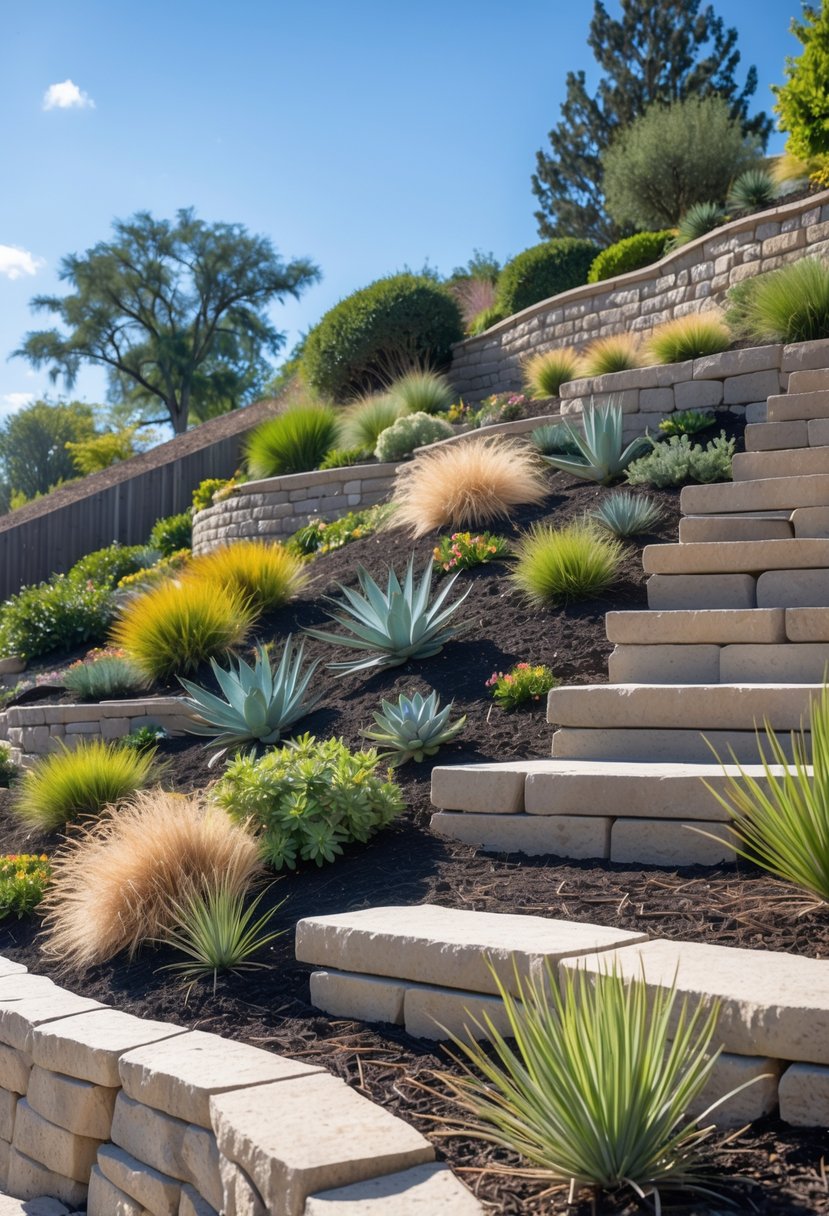
Low-maintenance steep bank garden ideas help you make your garden easier to care for without losing style. These options let you pick plants and designs that stand up to slopes and cut down on the time you spend working outside.
Your garden can still thrive, even if you don’t want to fuss over it every weekend.
1) Terraced stone retaining walls to prevent erosion
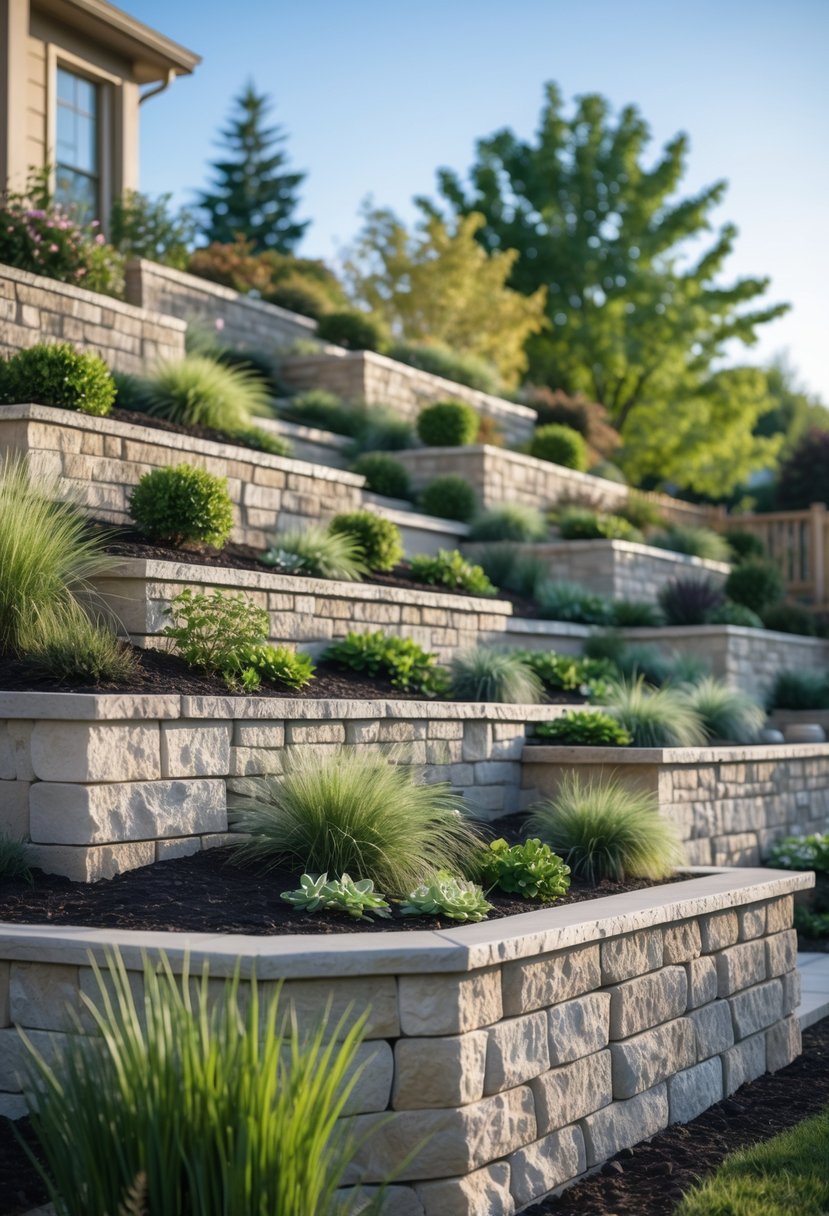
Build terraced stone retaining walls on your steep bank to create flat steps that help stop soil from washing away.
Stone lasts for years and looks natural in the landscape. Try limestone or granite for sturdy walls that won’t budge.
These terraces give you more planting space, too. Add flowers or shrubs on each level for a healthy, layered look.
Need inspiration? Check out this guide on natural stone retaining walls.
2) Cascading creeping thyme for ground cover
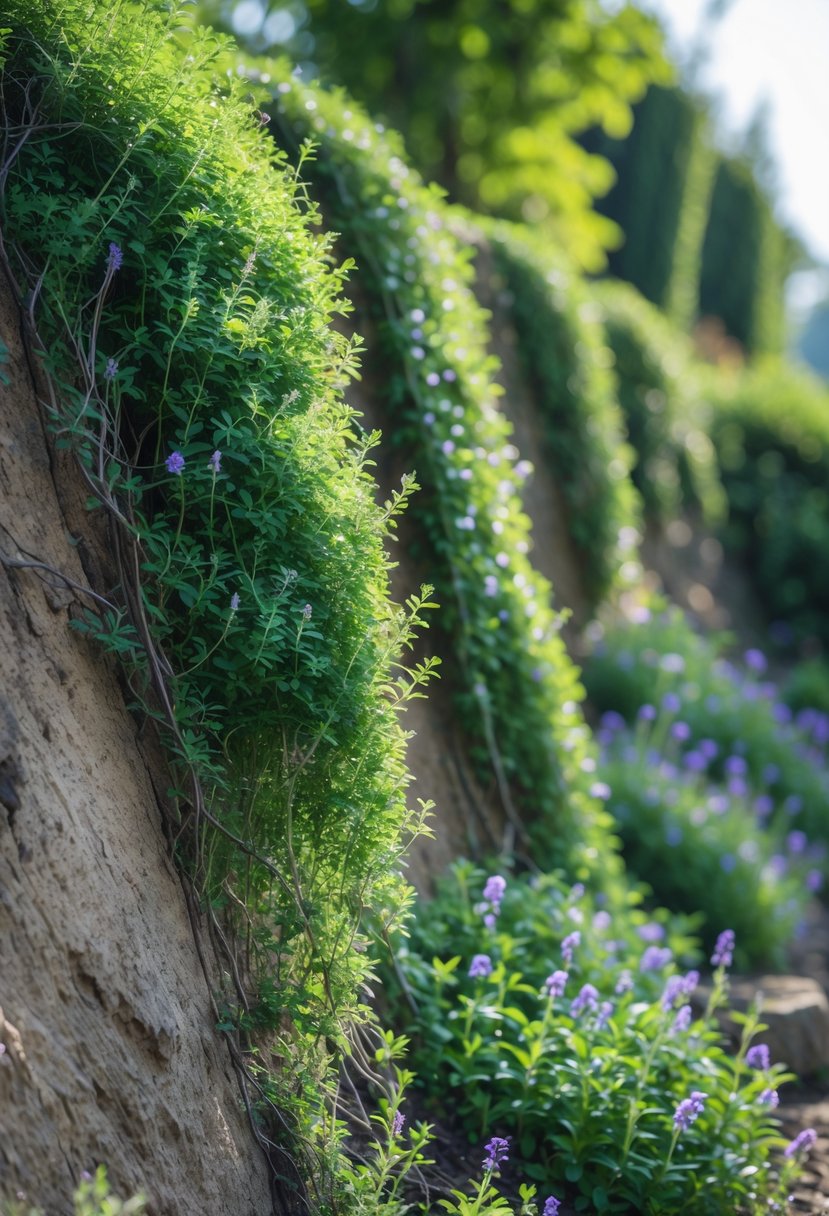
Creeping thyme works well on steep banks because it spreads fast and its roots help anchor the soil.
You get a nice bonus: lovely purple flowers and a fresh scent drifting through your garden.
Creeping thyme doesn’t need much care. It handles sun and drought like a champ, which is perfect for tough spots.
Want more ideas? See these creeping thyme ground cover ideas.
3) Sedum varieties for drought-tolerant planting
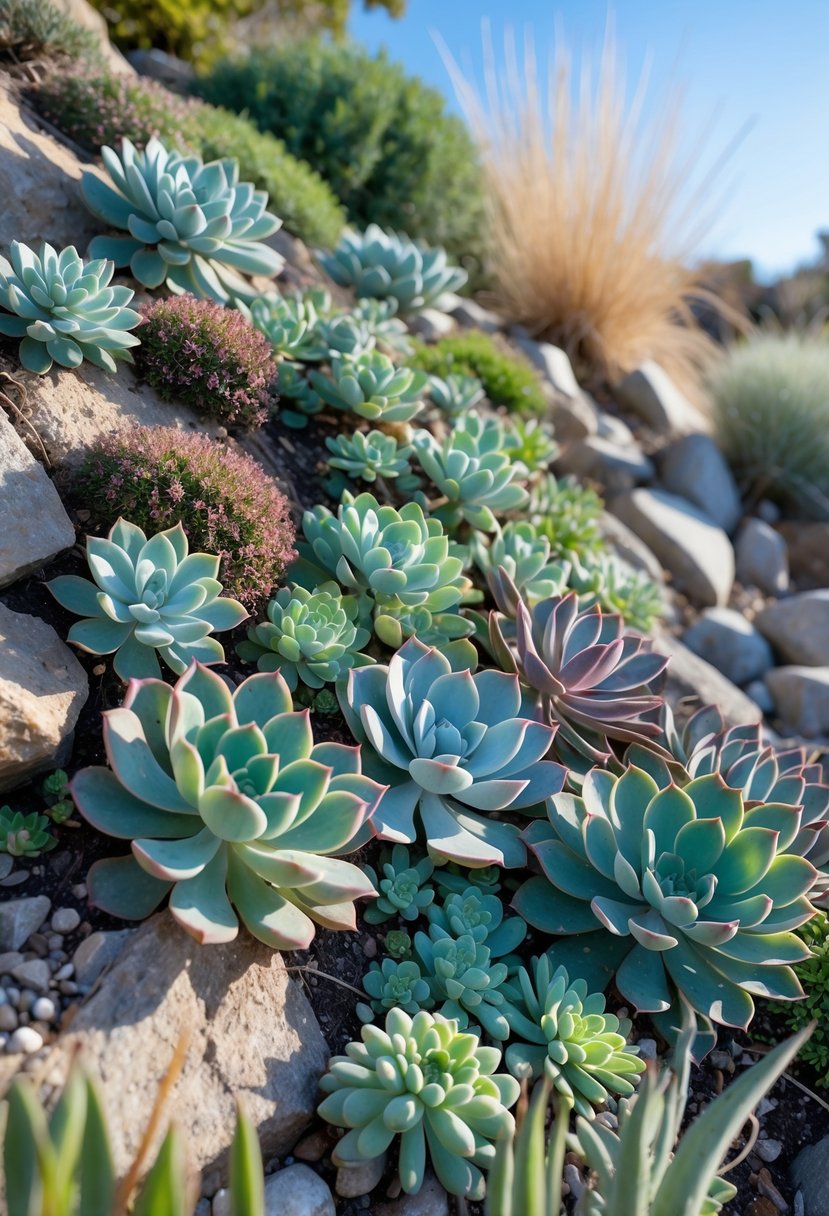
Sedum makes a great pick for steep banks because it barely needs water or care. Choose from ground covers or upright types, depending on your style.
These plants thrive in dry soil and bring pops of color with their flowers and foliage. You might even spot bees or butterflies visiting.
Sedum grows in poor soil and loves the sun. If you want a low-maintenance garden, sedum’s a solid bet.
Check out the best sedum varieties for inspiration.
4) Using lavender bushes for fragrance and slope stability
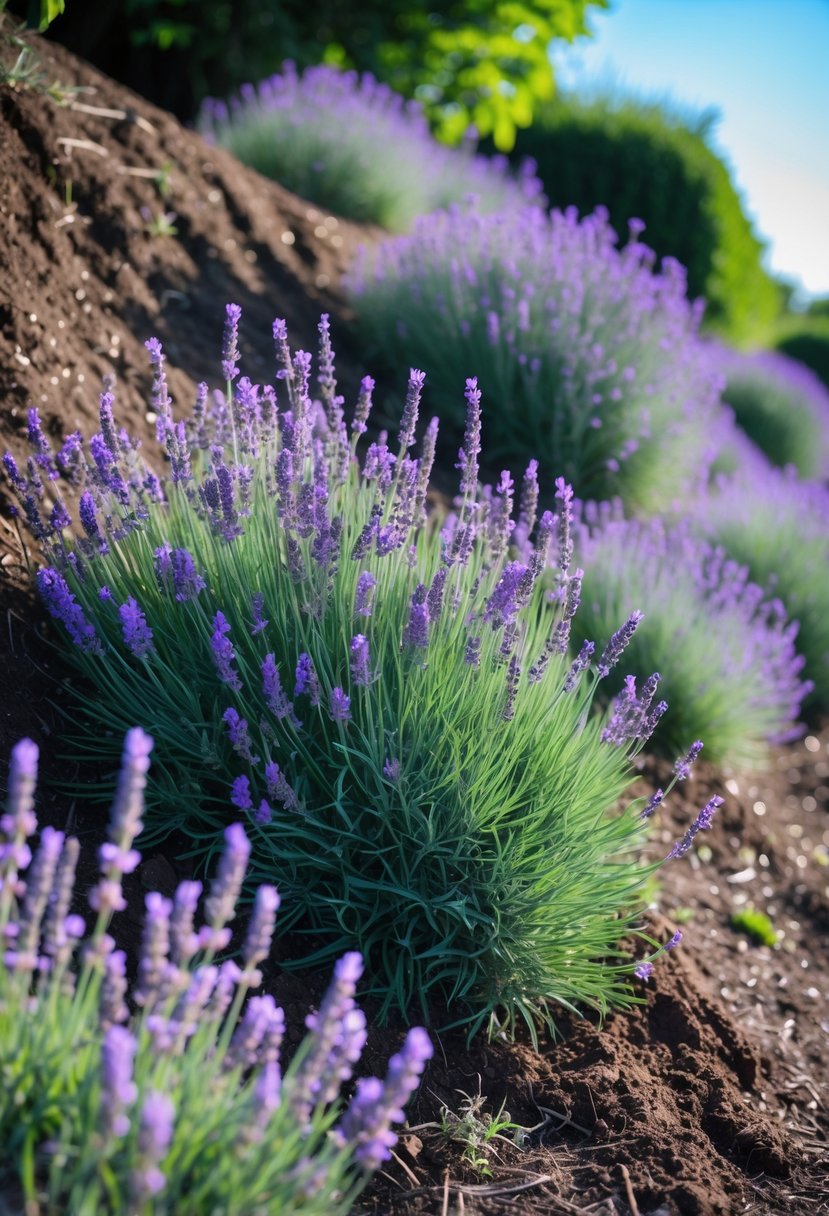
Lavender bushes do double duty on steep banks—they look beautiful and their roots help hold the soil together.
When lavender blooms, it fills the air with a lovely scent and brings in pollinators like bees. That’s always a win for the environment.
Lavender doesn’t ask for much. Plant it in well-drained soil, give it sunlight, and it’ll mostly take care of itself.
Need tips? Here’s a guide on planting lavender on slopes.
5) Ajuga plants for colorful foliage and erosion control

Ajuga grows fast and forms a thick mat that keeps the soil from sliding away on steep banks.
Its leaves come in shades of green, purple, or even variegated patterns. In spring, you’ll spot small blue or purple flowers that really pop.
Ajuga handles both sun and shade and doesn’t need much attention once it settles in.
Want to know more? Here’s an ajuga guide for garden slopes.
6) Rock gardens with native stones for low upkeep
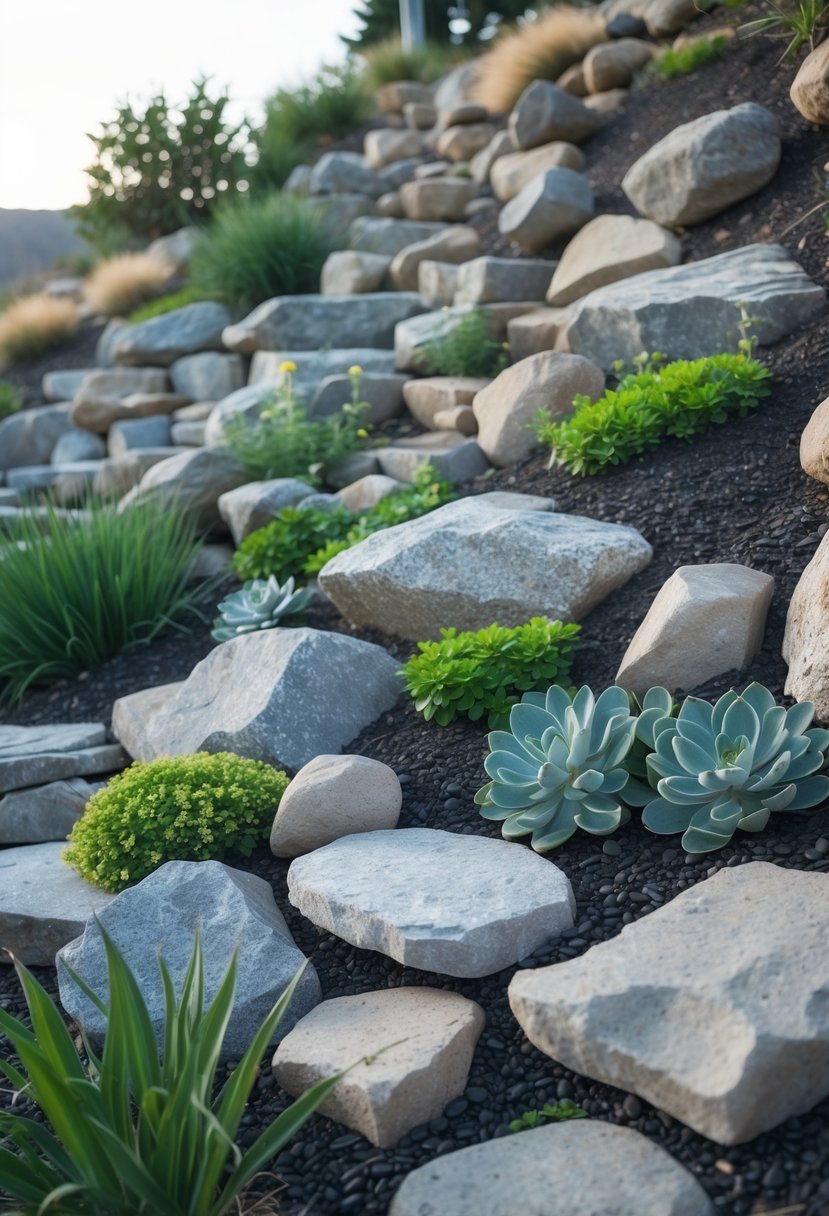
If you use native stones in your rock garden, your steep bank will blend in with the local landscape. These rocks are built for your climate, so they’ll look good for years with almost no effort.
Mix in big boulders and smaller gravel for texture. Add native plants around the rocks to cut down on maintenance even more.
Rock gardens hold soil well and help prevent erosion on slopes. Want ideas? Check out low-maintenance rock garden designs.
7) Mulching with bark chips to retain moisture

Spread bark chips as mulch to keep moisture in the soil on steep banks. This helps your plants stay hydrated, especially when water runs off fast.
Bark mulch also keeps weeds down, so you don’t have to pull them as often. As it breaks down, it adds nutrients to the soil.
Lay down a 2-3 inch layer around your plants. It keeps roots cool and protects soil from drying out.
Need more info? Here’s a guide on how to mulch with bark chips.
8) Planting ornamental grasses like blue fescue

Try blue fescue for a splash of color and texture on your steep bank. Its blue-green leaves really stand out.
Blue fescue barely needs any care and shrugs off drought or poor soil. That’s perfect for hard-to-water slopes.
It grows in tidy clumps that help anchor the soil, and you won’t need to trim it much. For tips, see this guide to low-maintenance grasses.
9) Installing drip irrigation systems for efficient watering

Install a drip irrigation system to save time and water on your steep bank. Drip lines deliver water right to the roots, so your plants get exactly what they need.
Drip irrigation cuts down on waste since it doesn’t spray water everywhere. It also helps prevent runoff on slopes.
Setting up is pretty simple—just tubing, emitters, and a water source. Follow a step-by-step guide to installing drip irrigation to get started.
10) Creating pathways with gravel for accessibility

Lay down gravel to make easy-to-walk paths on your steep bank. Gravel drains well, so you won’t end up with slippery spots.
Pick a fine, compactable gravel for more accessible paths. It shifts less and works better for wheelchairs or walkers.
Add borders to keep the gravel in place and define each path. Building a gravel path breaks up the slope and gives you safe footing.
Need advice on accessibility? Check out tips for making gravel surfaces accessible.
11) Using hardy juniper shrubs for year-round greenery

Juniper shrubs keep your steep bank green all year long. They’re tough and handle drought or poor soil without fuss.
Pick from low ground covers or taller bushes to fit your space. Once you plant them, they barely need any attention.
Their roots hold soil tight, so they help with erosion, too. Plus, that evergreen color looks good in every season.
Want to know more? Here’s a guide on juniper shrubs.
12) Integrating drought-resistant succulents
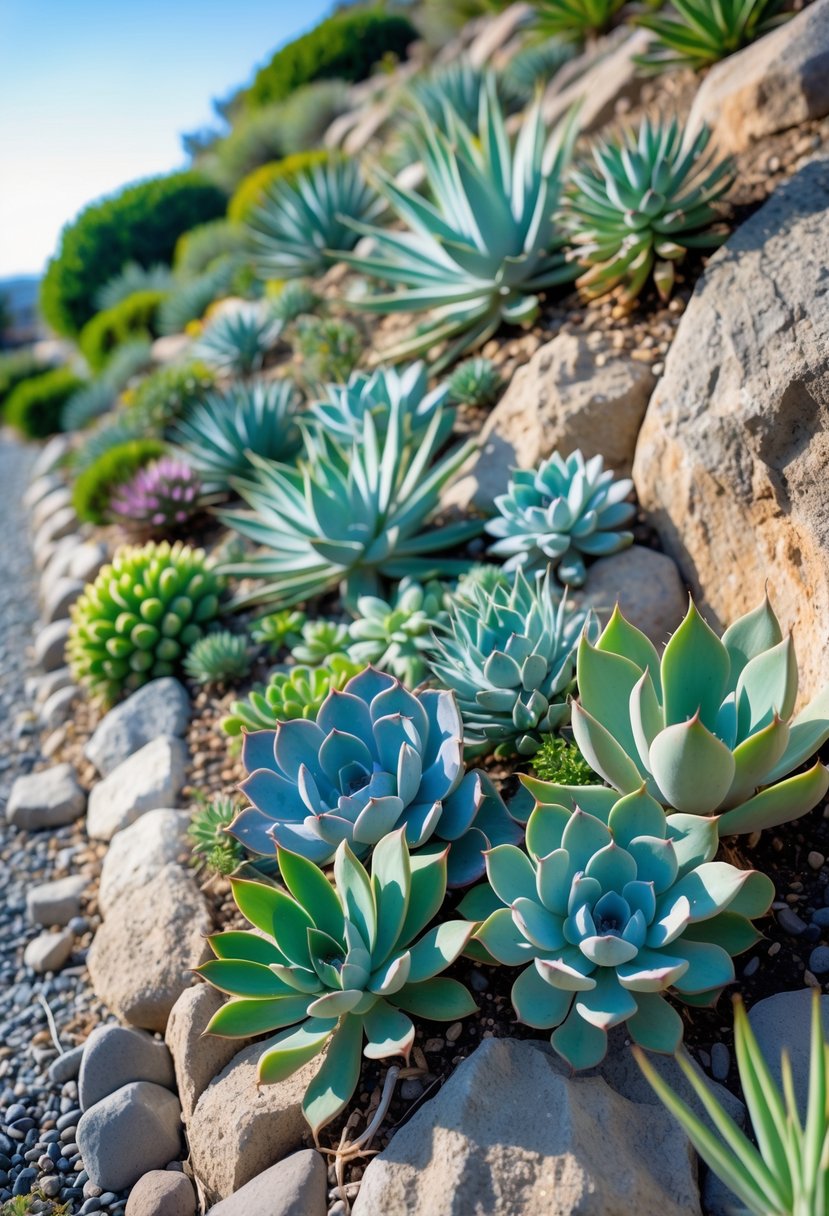
Add drought-resistant succulents to your steep bank for easy care and a fresh vibe. These tough plants thrive in dry, sunny spots and don’t need much water.
Succulents like agave, aloe, and sedum come in all sorts of shapes and colors. They help anchor the soil and look fantastic on a slope.
Watch out for pests like mealybugs—if they show up, neem oil or insecticidal soap usually does the trick.
Using succulents keeps your garden practical and eye-catching without piling on the work. For more design inspiration, check out ideas for transforming your space with drought-resistant succulents.
13) Raised planter beds for easier maintenance
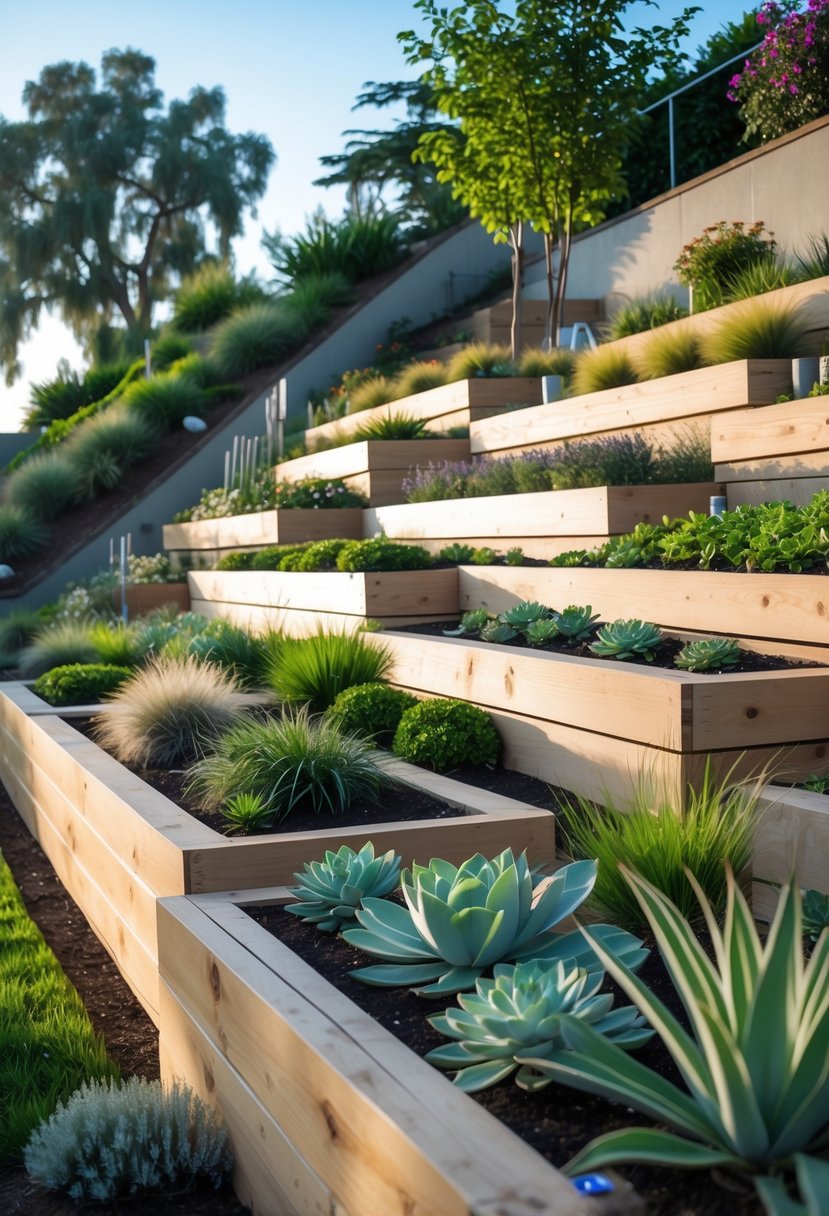
Raised planter beds make gardening on steep slopes so much simpler. You get better drainage and less soil erosion, which keeps your plants happy.
You won’t have to crouch as much, so planting and weeding feel easier on your back. Plus, raised beds give your garden a tidy, organized vibe—kind of satisfying to look at, honestly.
It’s not hard to build raised beds; you can use wood, stone, or whatever materials you like. With a little planning, you’ll have a low-maintenance garden that actually fits your space.
Learn more about raised garden beds for slopes here.
14) Adding large boulders as natural seating and anchors
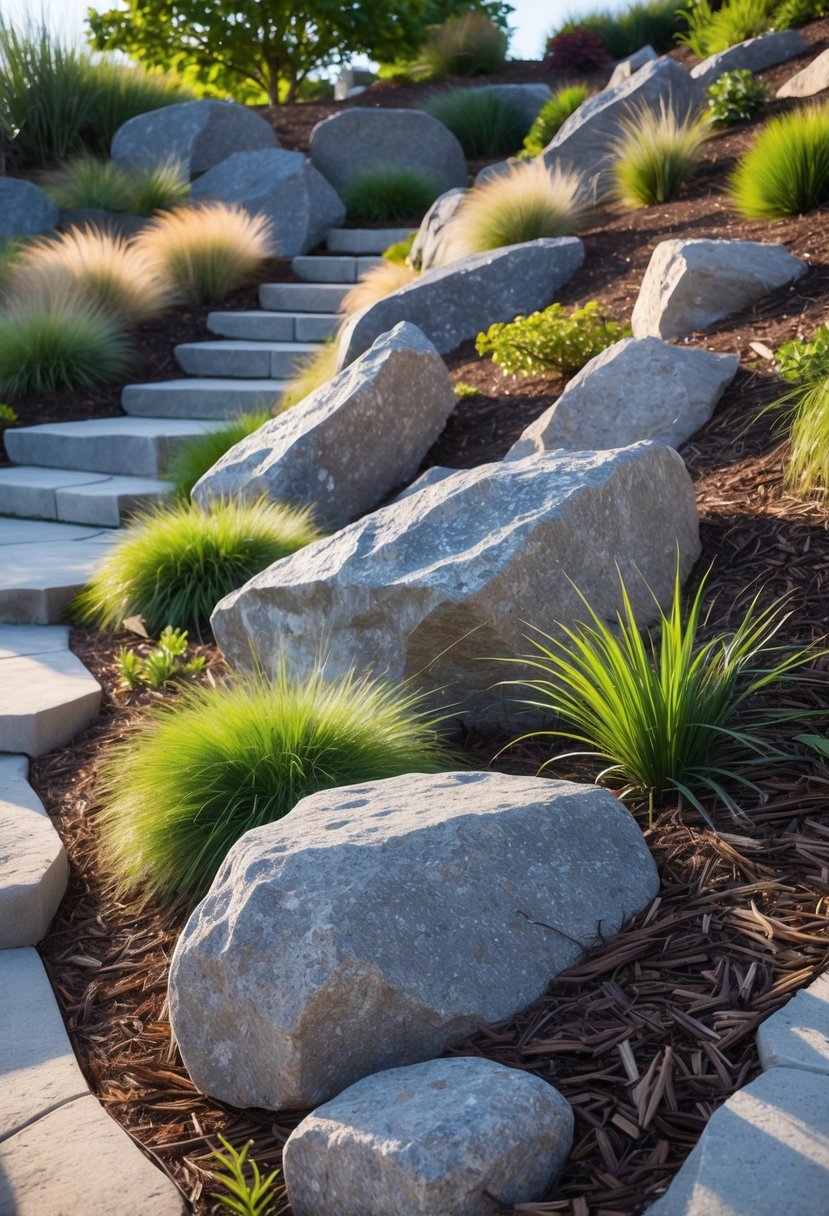
Try adding large boulders to your steep bank for some natural seating. These stones give you a sturdy place to sit—no need to drag out extra furniture.
Boulders also help anchor the soil, so you get less erosion and a safer garden. That’s a win-win.
When you place flat-topped boulders thoughtfully, they add both function and style. They blend right in with your plants and other natural touches.
For ideas on using boulders for seating and stability, check out how to use boulders as natural seating in outdoor spaces.
15) Choosing native wildflowers for seasonal color

Brighten up your steep bank with native wildflowers. These flowers thrive in your local climate, so you won’t have to fuss over them much.
Native wildflowers attract bees, butterflies, and other pollinators, which is great for the ecosystem. It’s a natural way to help your garden and the planet.
If you pick wildflowers that bloom at different times, your garden stays colorful all year. It’s such an easy way to keep things lively without extra effort.
For ideas on which wildflowers need little care, check out this list of native wildflowers to fill out your garden beautifully.
16) Incorporating creeping juniper to cover soil
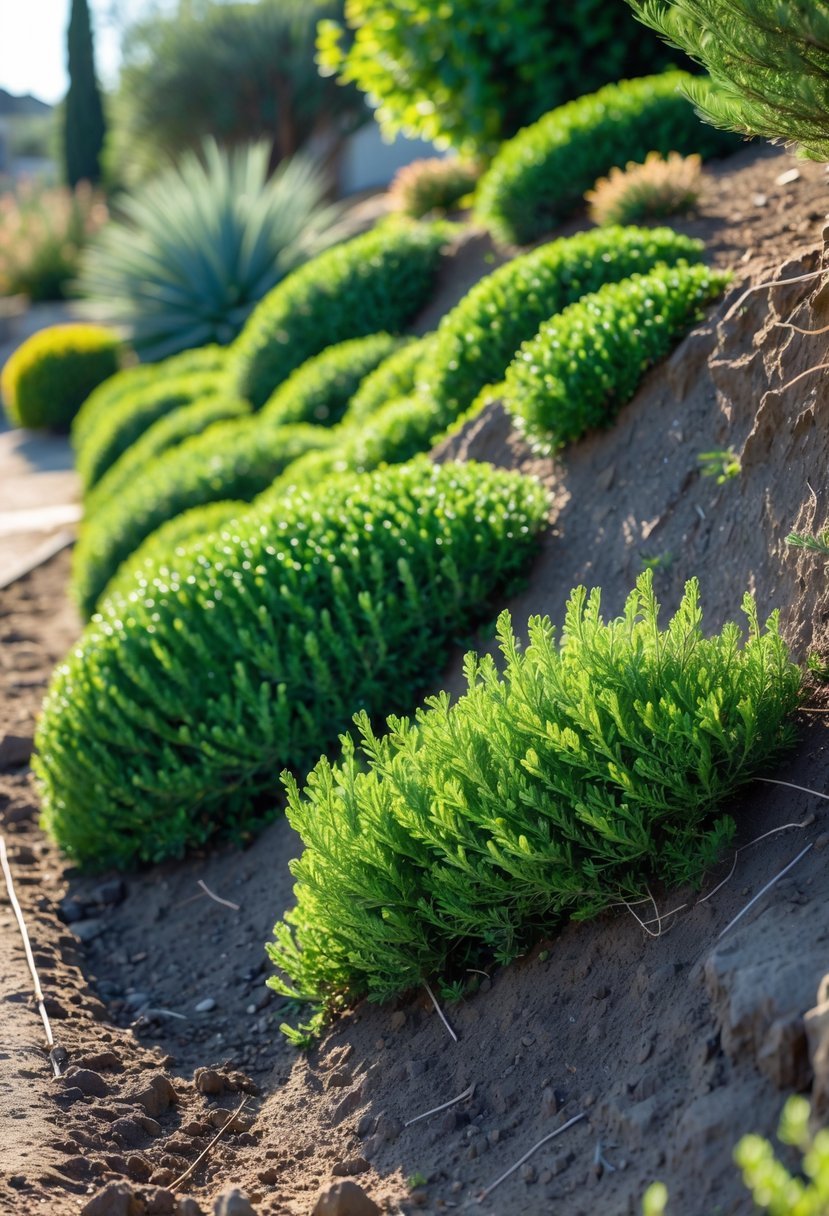
Covering soil on steep banks gets a lot easier with creeping juniper. It grows low and spreads out, holding the soil right where you want it.
Creeping juniper barely needs any care once it settles in. You won’t need to water it often, and it handles dry spells just fine.
It keeps your garden green and textured all year. If you plant it close together on steep slopes, you get even more stability.
This ground cover also blocks weeds, so your garden looks neat with less effort. Learn more about how to use creeping juniper for slopes at how to plant creeping juniper on a slope.
17) Building wooden terraced steps with non-slip treads
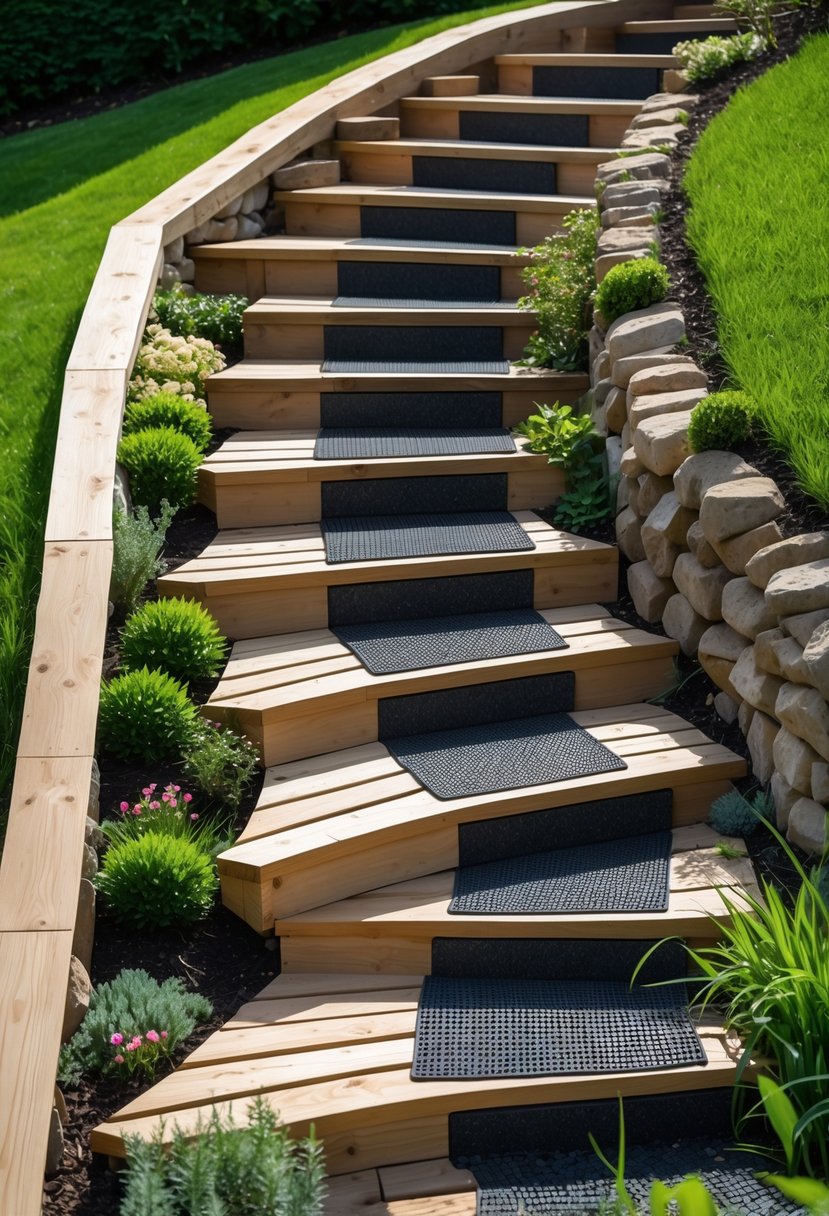
Build wooden terraced steps to make your steep bank safer and easier to walk on. Use pressure-treated wood so your steps last through the weather.
Add non-slip treads to keep the steps from getting slick when it rains. You can grab anti-slip strips or just paint on a non-slip coating.
These treads install quickly and help prevent falls. Check your steps now and then to keep them in good shape.
For more ideas on safe outdoor steps, see this guide on how to make outdoor wooden steps non-slip.
18) Using groundcover vinca minor for fast coverage

Want quick, green coverage for your steep bank? Go with Vinca minor. This evergreen plant spreads fast, forming a thick mat of shiny leaves.
It grows well in shady spots and doesn’t need much care once it’s settled. You’ll get pretty blue or purple flowers in spring and early summer too.
Vinca minor helps control erosion and keeps soil in place. If you want to stop it from spreading too far, just use some edging.
You can learn more about this plant’s uses and care from this Vinca Minor guide.
19) Planting dwarf boxwood for neat hedges

Use dwarf boxwood if you want tidy, low-maintenance hedges on your steep bank. These shrubs stay compact, so you don’t have to worry about them getting out of control.
Plant them about 1 to 2 feet apart for a clean, connected look. Dwarf boxwoods like well-drained soil and some sunlight, but they’re fine with a bit of shade too.
With just a little watering, you’ll get green structure all year. Dwarf boxwood adds a finished look to your garden and keeps things easy.
For more info on these shrubs, check out tips on planting dwarf boxwood hedges.
20) Mixing ferns for shaded slope areas
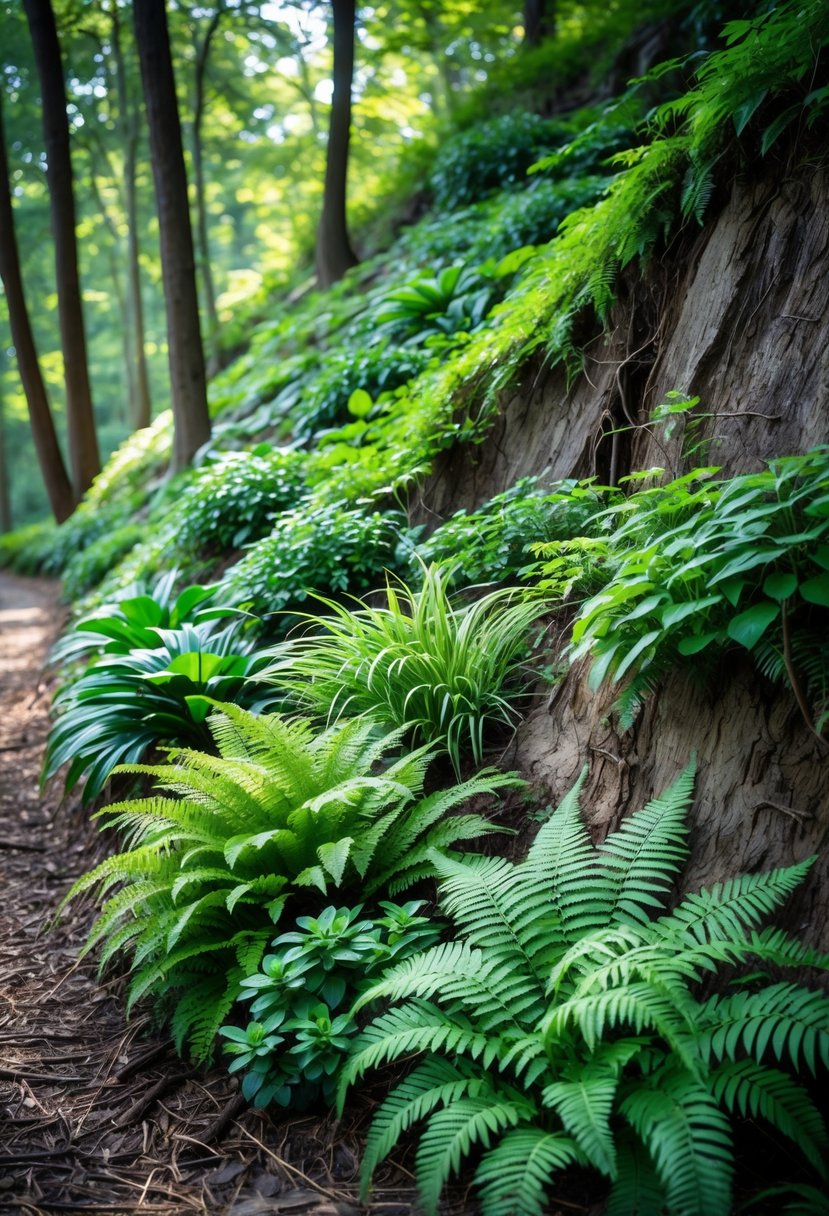
Mix different ferns to create a beautiful look on a shaded slope. Try pairing ferns with different heights and textures for extra depth.
Tall ostrich ferns look great with smaller lady ferns or Japanese painted ferns. This combo gives your steep bank a lush, natural feel.
Ferns thrive in shady, moist spots and need almost no care. They’re perfect for places where mowing or trimming just isn’t worth the effort.
For more tips on ferns in shade, check this guide on low-maintenance ferns for shade.
21) Growing rosemary for scent and erosion prevention
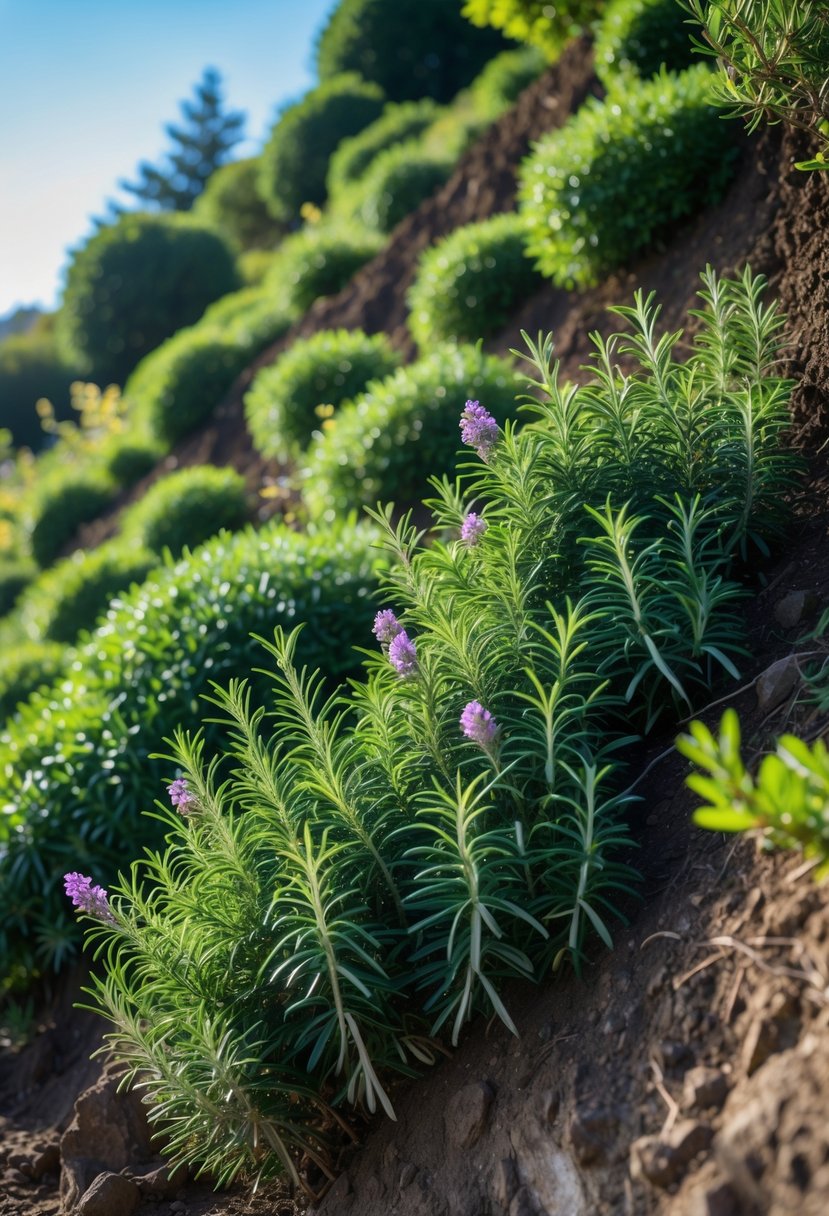
Try planting rosemary on a steep bank to help stop soil from washing away. Its roots grip the soil well, so it’s great for erosion control.
Rosemary is tough and doesn’t need much attention once it’s settled in. Your garden will smell amazing thanks to its fresh scent.
It even adds a splash of blue with its flowers, which is a nice bonus. Rosemary thrives in sunny, dry spots—perfect for slopes.
With minimal watering or trimming, you get a fragrant, sturdy plant that keeps your garden together. Learn more about rosemary benefits for gardens here.
22) Installing rain chains to control runoff

Install rain chains to guide water gently down your steep bank. They look way better than regular downspouts and bring a bit of style to your garden.
Rain chains slow the water, which helps cut down on erosion. Just attach them to your gutter and send the water to a drainage area or rain garden.
They’re easy to set up and only need a little maintenance. For step-by-step help, check this guide.
23) Using ornamental cabbage for winter interest

Add some color to your steep bank in winter by planting ornamental cabbage. These plants have bold, colorful leaves that really pop when everything else fades.
Ornamental cabbage is tough and shrugs off cold weather, so it’s perfect for winter gardens. Just water them regularly and give them a bit of sunlight.
Their rosette shape works well on slopes, helping to keep soil from washing away. For more tips, check out this guide on how to grow ornamental cabbage for a color boost in your winter garden.
24) Adding sedge grass for texture variety
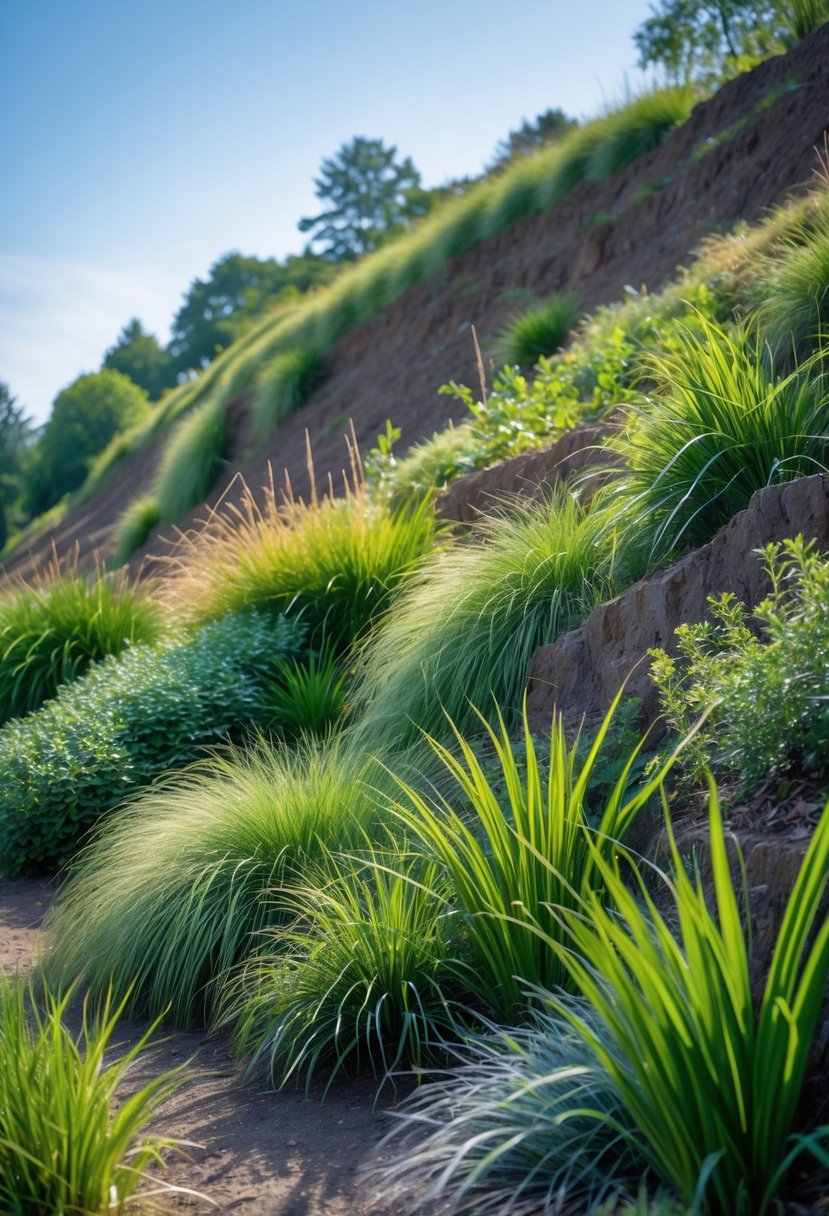
Try adding sedge grass to your steep bank for some interesting texture. Sedges have thin, grass-like leaves that sway in the breeze, giving your garden a softer, natural look.
Sedge grass is easy to care for and comes in colors like green, red, and silver. It also helps fight erosion, so it’s great for slopes.
If you want a tough but attractive plant, sedge is a solid pick. It pairs well with other low-maintenance plants to keep your garden looking fresh with barely any work.
Learn more about adding sedge grass to your garden from this guide on adding sedges and grasses to your lawn.
25) Planting creeping phlox for spring blossoms

Looking for a pop of color that doesn’t need much fuss? Creeping phlox might be exactly what your slope needs.
This plant spreads out on its own, forming a thick, colorful mat every spring.
Pick a sunny spot with well-drained soil. Space the plants about 12 inches apart so they have room to fill in.
You can plant creeping phlox in spring or fall, especially when the weather feels cool. Once these plants settle in, they barely ask for attention and still reward you with soft pastel flowers.
If you want more details, check out how to plant creeping phlox.
Understanding the Challenges of Steep Bank Gardens
Steep banks come with their own set of headaches. You’ll need to keep the soil from sliding away and make sure water doesn’t just rush down the hill.
Think about how you’ll actually move around out there—safety and access matter just as much as plant choices. A little planning goes a long way, so you can design a garden that’s both sturdy and usable.
Soil Erosion and Drainage Concerns
Steep banks lose soil fast, especially after heavy rain. Water just sweeps topsoil away, leaving plants struggling and the slope looking bare.
Strong-rooted plants help keep everything in place. Ground covers and shrubs really shine here.
Drainage can get tricky. You want water to move gently and avoid puddles that turn into muddy messes.
Try adding mulch or rocks to guide the flow. Terraces or small retaining walls can slow water down and hold the soil where you want it.
Access and Safety Considerations
Let’s be honest, walking on a steep bank isn’t always easy. Slopes get slippery, and it’s easy to trip or slide.
Lay down paths with solid surfaces like gravel or stepping stones. Handrails or low walls add a bit of extra security as you move around.
Make sure steps and paths aren’t too steep. Maybe break things up with flat spots where you can pause or work.
If you plan to spend time gardening, think about designing in levels to make life a little easier. It’s not just about looks—it’s about feeling comfortable out there.
Design Principles for Low-Maintenance Steep Gardens
If you want a garden that’s easy to care for, focus on taming erosion and picking plants that don’t need constant attention.
Build layers to slow down water, and use plants that help keep the soil where it belongs.
Layering and Terracing Techniques
Terracing—basically turning your slope into steps or layers—makes a huge difference. Use stone, wood, or concrete blocks to build low walls or steps and create flat spots for planting.
This approach makes it simpler to plant and look after your garden.
Throw down mulch or ground covers on each terrace to keep weeds down and lock in moisture. Pathways between terraces mean you can actually reach your plants for watering or trimming.
Benefits of terracing:
- Cuts down on soil erosion
- Helps water soak in
- Makes planting spots more stable
Don’t feel like you need fancy or tall terraces. Even a few gentle layers can really lighten the workload.
Plant Selection for Slope Stability
Pick plants with tough, tangled roots—they’ll help keep your soil from sliding away. Native grasses, ground covers, and shrubs usually handle local soil and weather better than anything else.
If you want extra stability, try deep-rooted choices like creeping juniper, cotoneaster, or daylilies. You can mix them with low-growing plants like sedum or creeping thyme, which spread out and help block weeds from popping up.
Tips for plant selection:
| Plant Type | Purpose | Maintenance Level |
|---|---|---|
| Ground covers | Soil protection | Low |
| Shrubs | Erosion control | Medium |
| Native grasses | Strong roots | Low |
When you blend these plants together, you get a natural mulch effect. It helps your slope stay healthy and, honestly, saves you some hassle in the long run.


