

DIY Steep Bank Garden Ideas: 25 Friendly Tips to Transform Your Slopes
Got a steep bank in your yard? You might be wondering how to turn it into a nice garden space. Sloped spots can feel tricky, but if you approach them right, you can make something both beautiful and practical.
DIY steep bank garden ideas help you get creative with uneven ground, adding charm and function to your outdoor area.
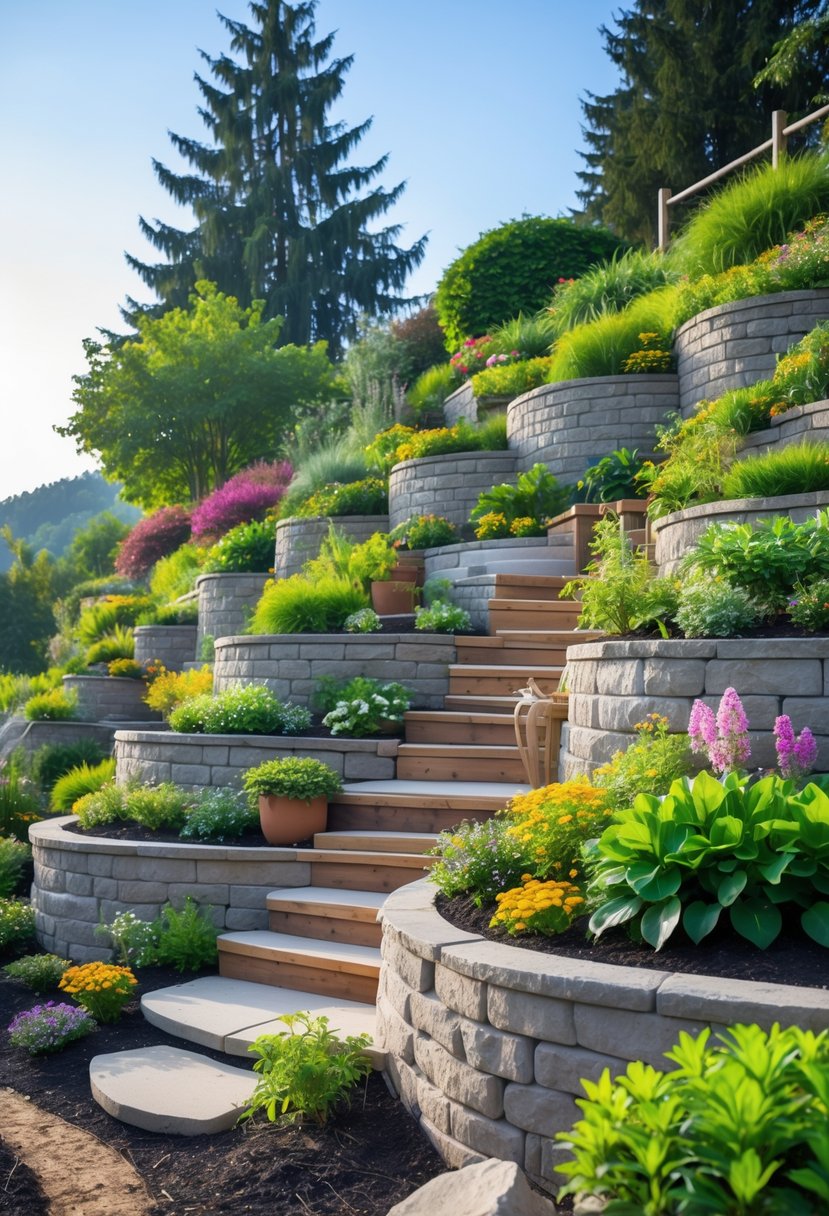
Working on a slope lets you try out plants, styles, and layouts you probably wouldn’t pick for flat land. With a bit of creativity, you can tackle problems like erosion and tough access, all while making your garden look better.
That steep bank? It can actually become a unique, inviting part of your yard. If you want more inspiration, check out these landscaping a steep bank ideas.
1) Build terraced planting beds using retaining walls

If you have a steep bank, try building terraced planting beds to make things easier. Retaining walls keep the soil in place and give you flat spots to plant.
Use wood, stone, or concrete blocks for the walls. Make each level wide enough for whatever you want to grow.
Terraces help with drainage and stop soil from washing away when it rains. They really turn a difficult slope into a useful, attractive space.
Want to learn more? Here’s how to create tiered garden beds with retaining walls here.
2) Install gravel pathways with stepping stones
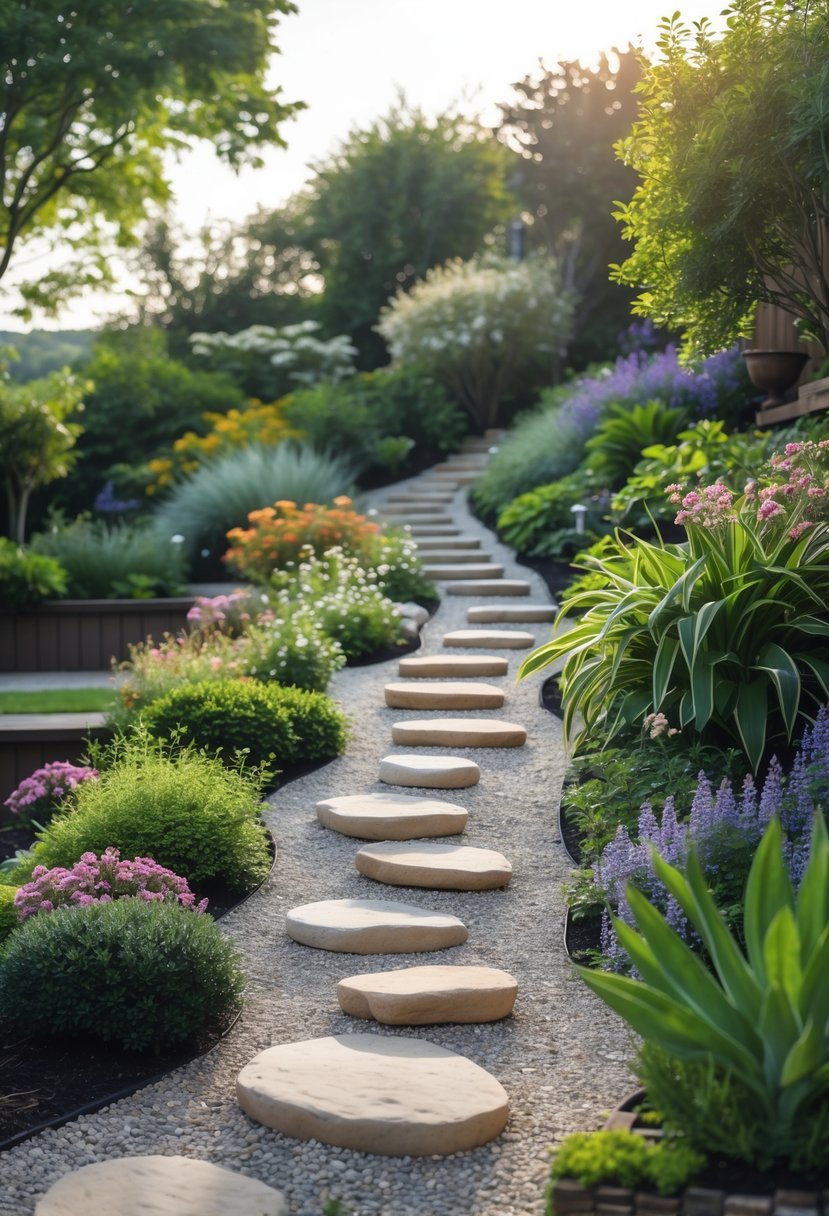
You can make a simple, practical path by mixing gravel with stepping stones. This combo makes walking easier on a steep bank and looks pretty nice, too.
Gravel’s affordable and helps with drainage. Lay stepping stones on top for stable footing.
Space them out to follow the natural curve of the hill. If you plant between the stones, you’ll soften the path and blend it into your garden.
For easy tips, check out how to make a gravel path with stepping stones.
3) Create a rock garden with drought-resistant plants
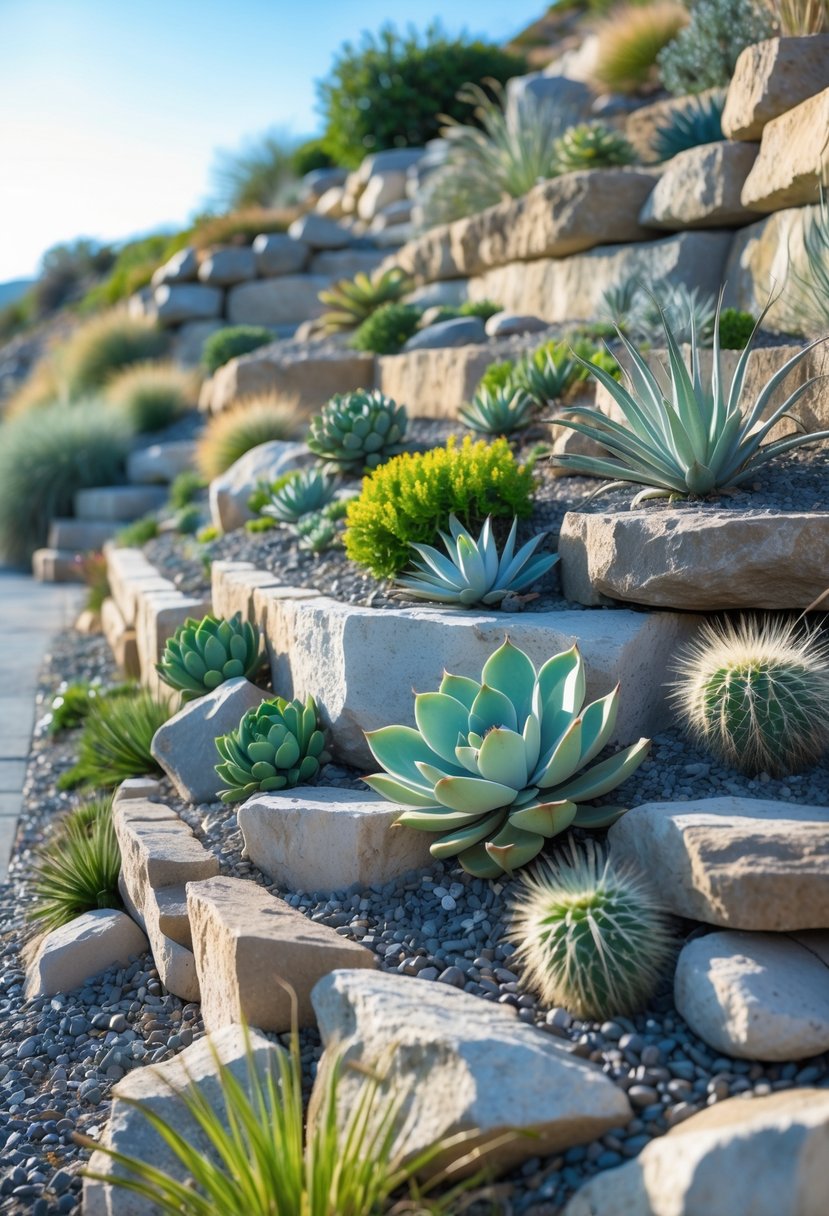
You can turn a steep bank into a beautiful rock garden that barely needs water. Start by arranging rocks in different sizes to make natural-looking terraces.
Pick drought-resistant plants like succulents, ornamental grasses, or small shrubs. These tough plants thrive in dry soil and don’t need much care.
Rock gardens look great all year and are easy to manage. Add colorful plants among the rocks for extra life without a lot of extra work.
Want more info? Check out rock gardens with drought-resistant plants at moonlightyard.com.
4) Plant cascading ground covers like creeping thyme
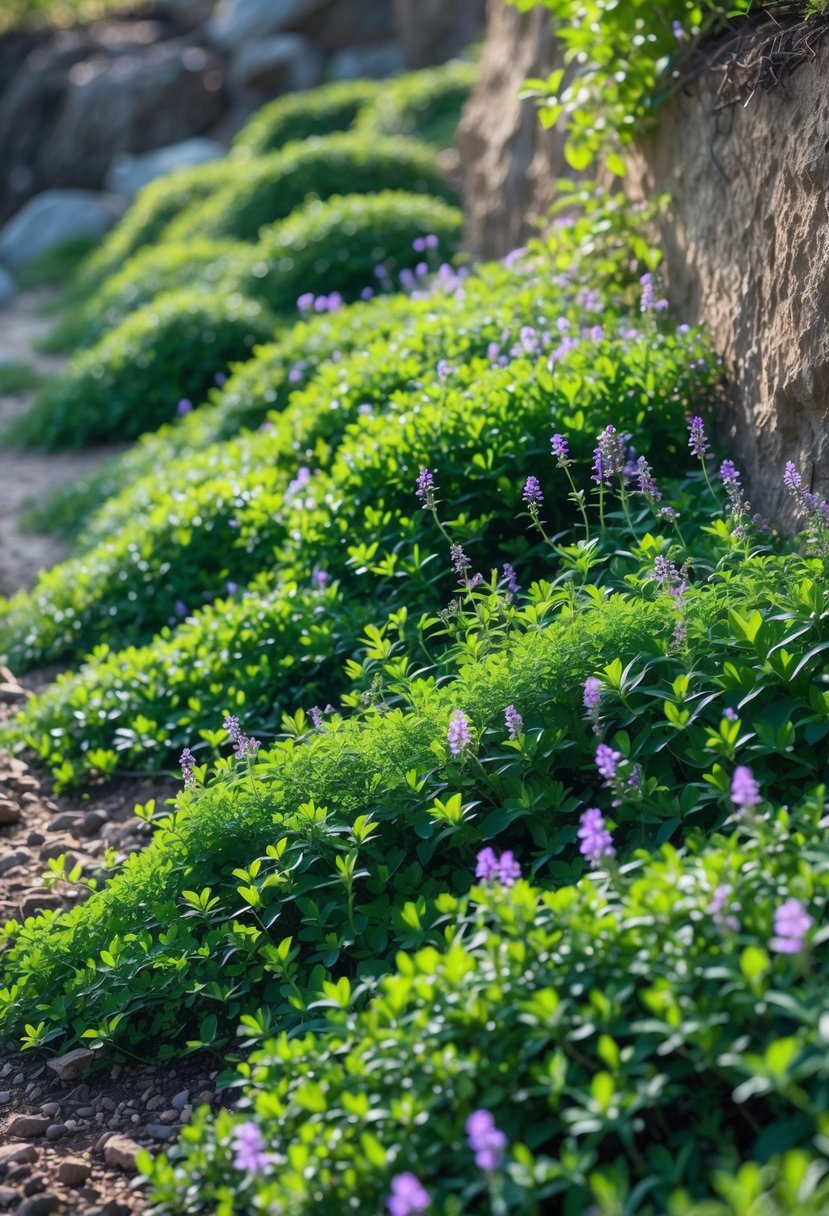
Try creeping thyme for some greenery and pops of color on your steep bank. It spreads fast and forms a low, dense mat that keeps soil in place.
Creeping thyme is super easy to grow. You barely have to fuss with it, and it gives you tiny flowers that attract bees and butterflies.
Because it hugs the ground, creeping thyme also helps keep weeds down. It’s practical and makes your slope look great.
Curious about growing it? Check out how to grow creeping thyme for slope planting.
5) Use sedum varieties for low-maintenance slope coverage
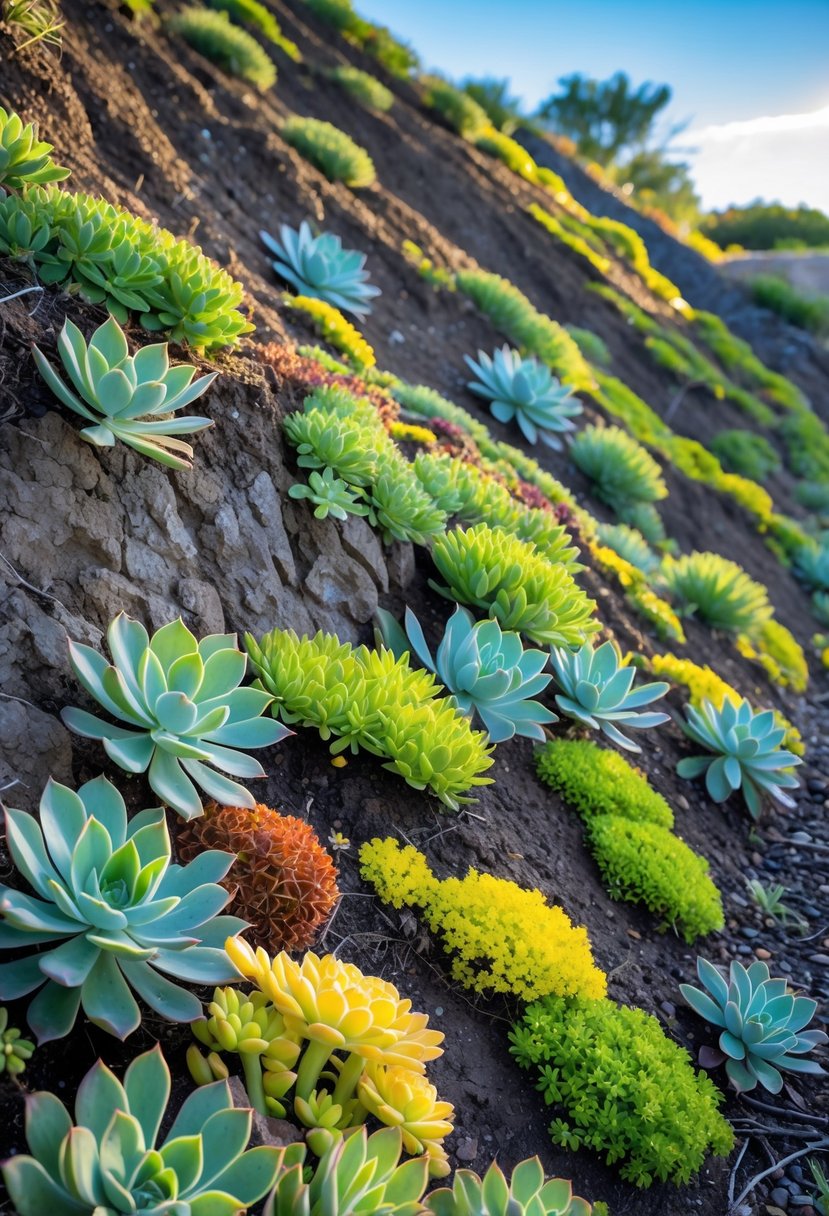
Sedum plants work well for covering steep banks since they barely need any care. Once they settle in, you won’t have to water or mow them much.
These plants handle poor soil and dry spots, making them perfect for slopes. They spread out and form a thick mat that helps stop erosion.
You can pick from tons of sedum types with different colors and textures. That keeps your slope lively all year.
Learn more about using sedum for slopes at garden.eco.
6) Add lavender for fragrance and erosion control
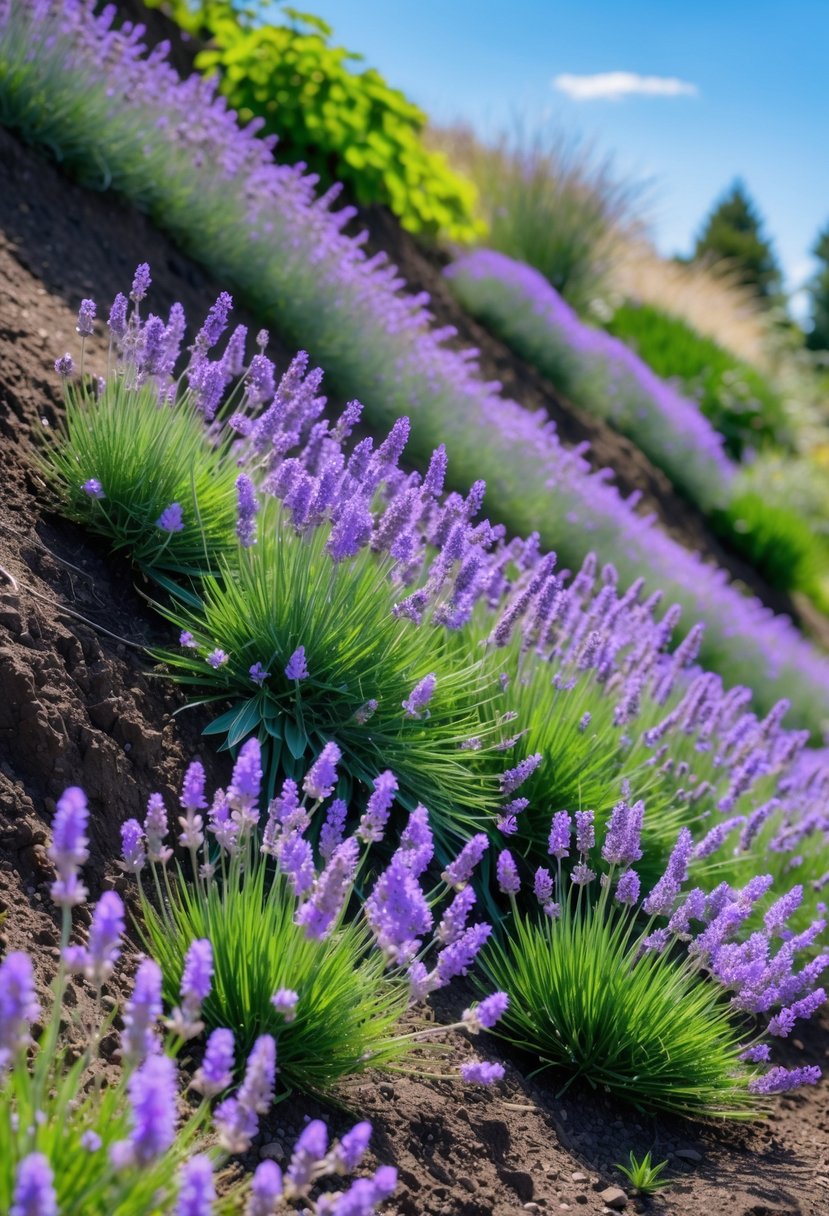
Lavender makes a great choice for steep banks. Its roots hold the soil together, stopping erosion.
You’ll love the wonderful scent it brings to your garden. Lavender’s fragrance is fresh and calming.
Plant lavender in groups to protect it from wind and give your bank a bold look. Plus, it attracts helpful insects like bees.
Using lavender on your slope just makes sense—it’s smart and beautiful. For tips on planting lavender on slopes, check this guide on how to plant lavender on a slope.
7) Construct wooden staircases for easy slope access
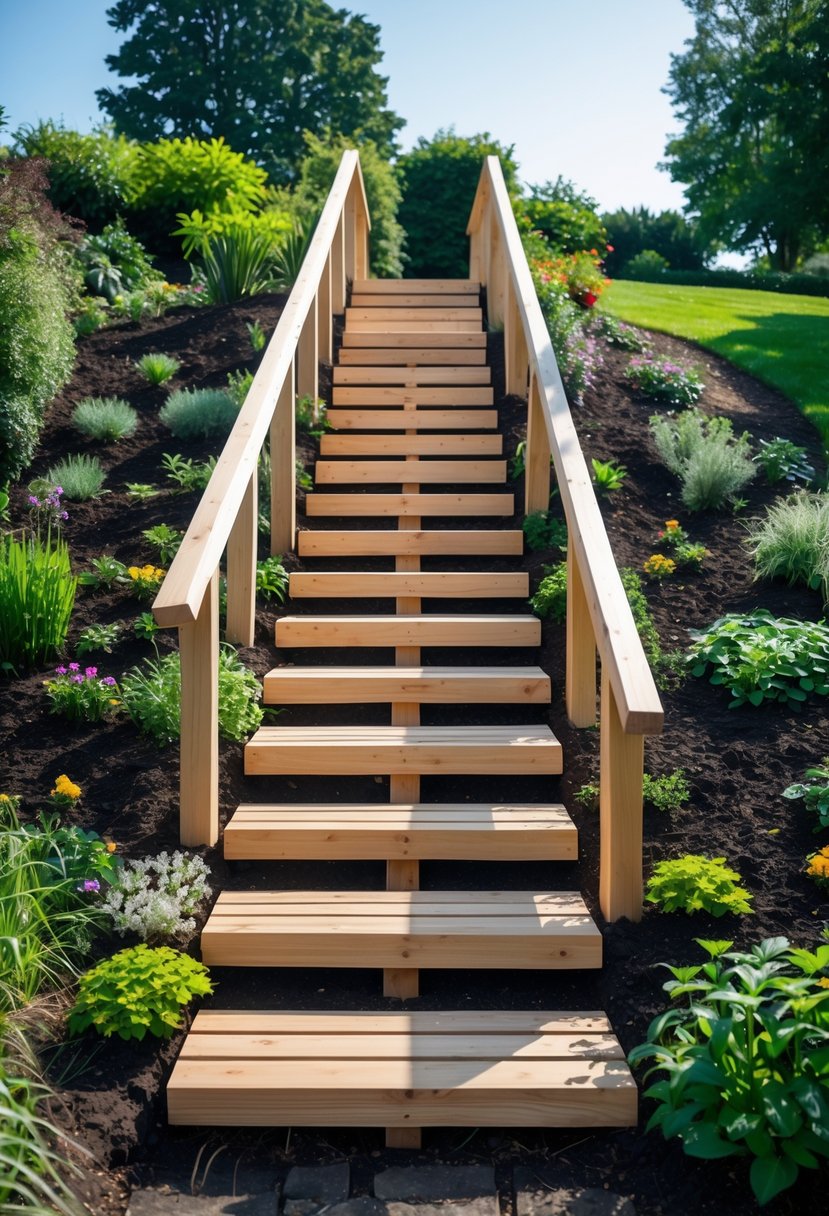
Build wooden stairs to make your steep bank much easier to use. You’ll move up and down safely, without slipping or straining.
Measure your slope to figure out how many steps you need. Use strong wood and anchor everything well for stability.
Wooden stairs add a natural touch to your garden. They blend in with plants and soil, making your space both useful and pleasant.
For more details, check out how to build wooden stairs on a steep slope safely.
8) Incorporate ajuga for colorful ground cover
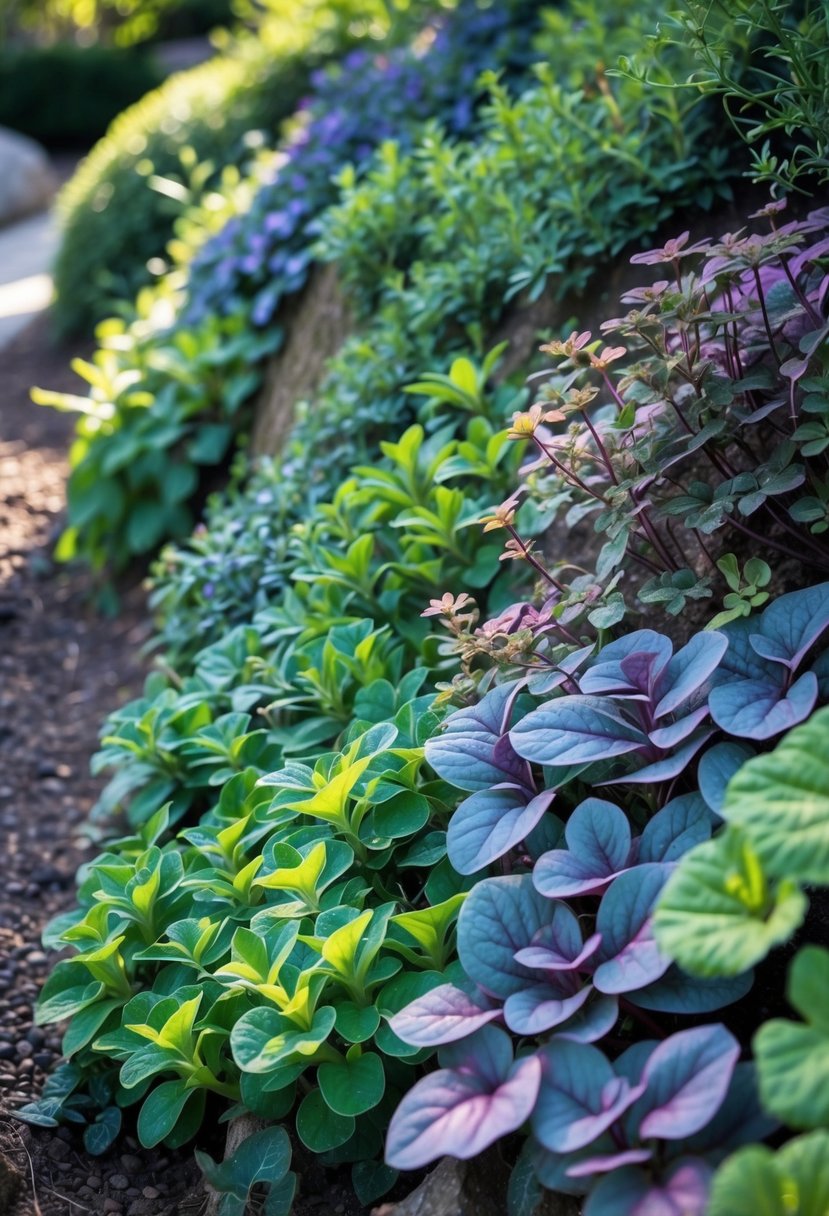
Ajuga brings color and coverage to bare spots on your steep bank. It grows low and spreads fast, forming a thick mat that keeps soil from washing away.
Ajuga thrives in both sun and shade, so it works in lots of spots. The shiny leaves come in different colors, and the little flowers brighten things up.
Once it’s established, ajuga barely needs any care. If you want a vibrant, easy-to-maintain ground cover, give it a try.
Learn more about using ajuga as ground cover here.
9) Use mulch to prevent soil erosion
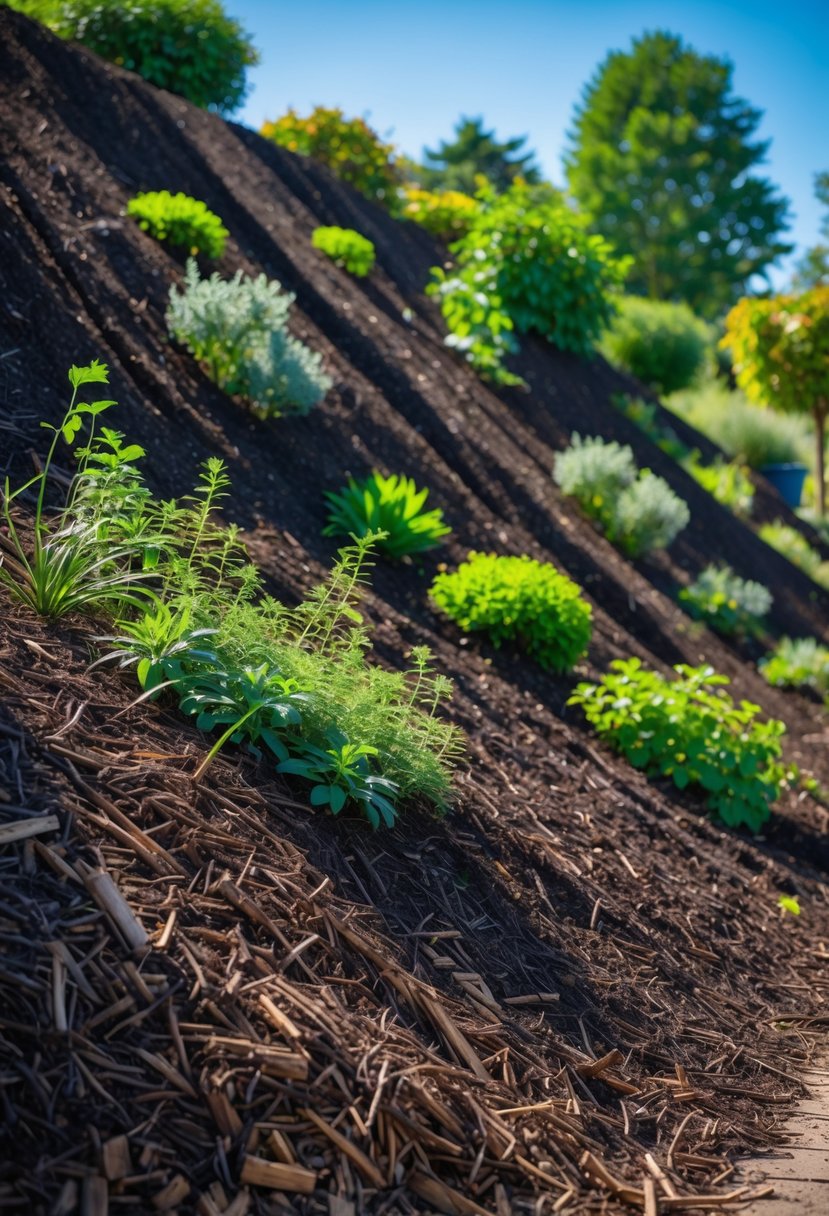
Mulch is an easy way to protect your steep bank from erosion. It covers bare soil and keeps it in place when rain or wind hits.
Try organic mulch like wood chips or straw. It also helps your soil hold onto moisture and blocks weeds.
To stop mulch from sliding down, lay landscape fabric underneath. This keeps the mulch in place and lets water and nutrients reach your plants.
Mulching makes your steep bank look tidy and helps your plants grow stronger. For more tips on mulching slopes, visit how to mulch a steep bank.
10) Design tiered flower beds with native plants

Using native plants in your tiered flower beds just makes sense. They already handle your local weather and soil, so they need less water and fuss.
Create layers with different heights and colors to give your garden depth. This makes your steep bank look more interesting and natural.
Native plants attract local wildlife like bees and butterflies. That helps your garden buzz with life.
Try mixing wildflowers, grasses, and shrubs for the best effect. Want more ideas? Check out this step-by-step guide.
11) Install drip irrigation to maintain slope moisture
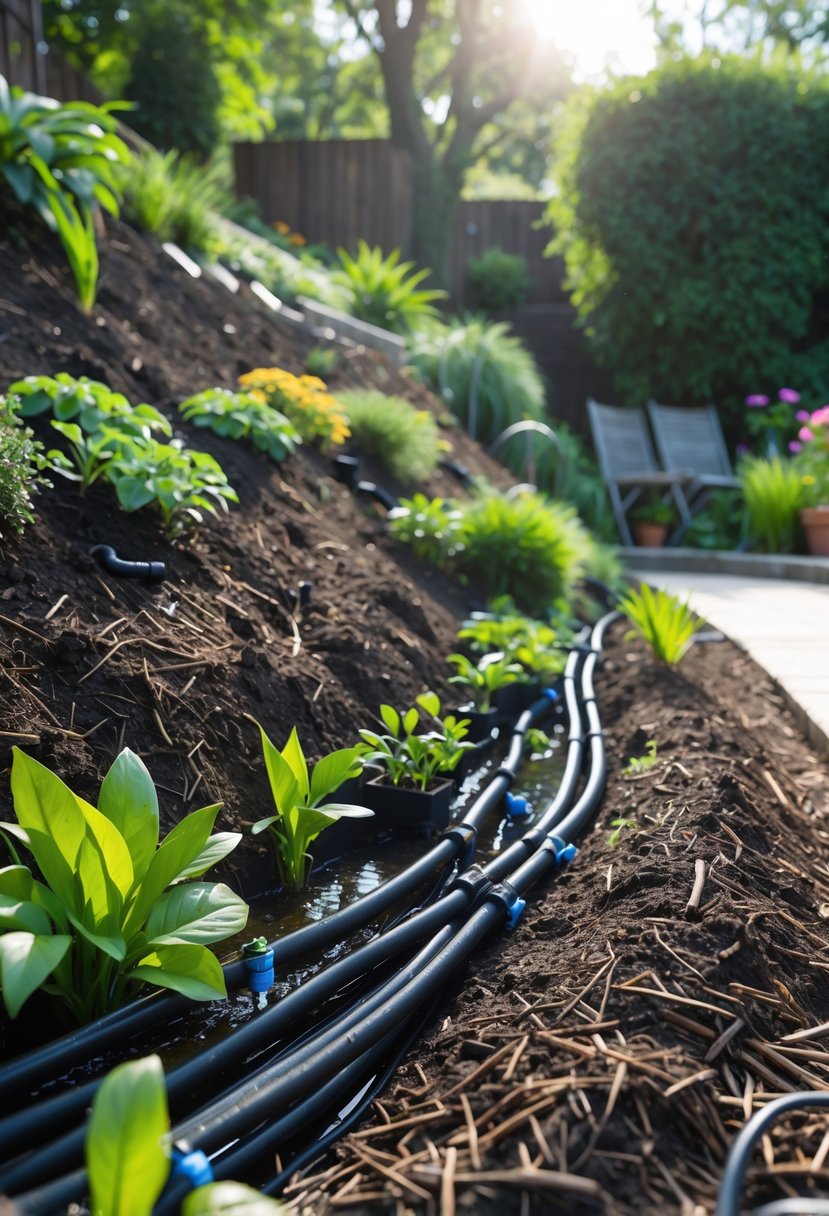
Keep your steep bank garden moist by installing a drip irrigation system. Drip irrigation sends water slowly and right to the roots, which helps avoid runoff on a slope.
Use pressure-compensating emitters for even watering, even on steep sections. Every plant gets what it needs without wasting water.
A drip system saves you time and effort, and your plants stay healthy. If you want more details, check out this guide for sloped gardens.
12) Build small benches on flat terraces
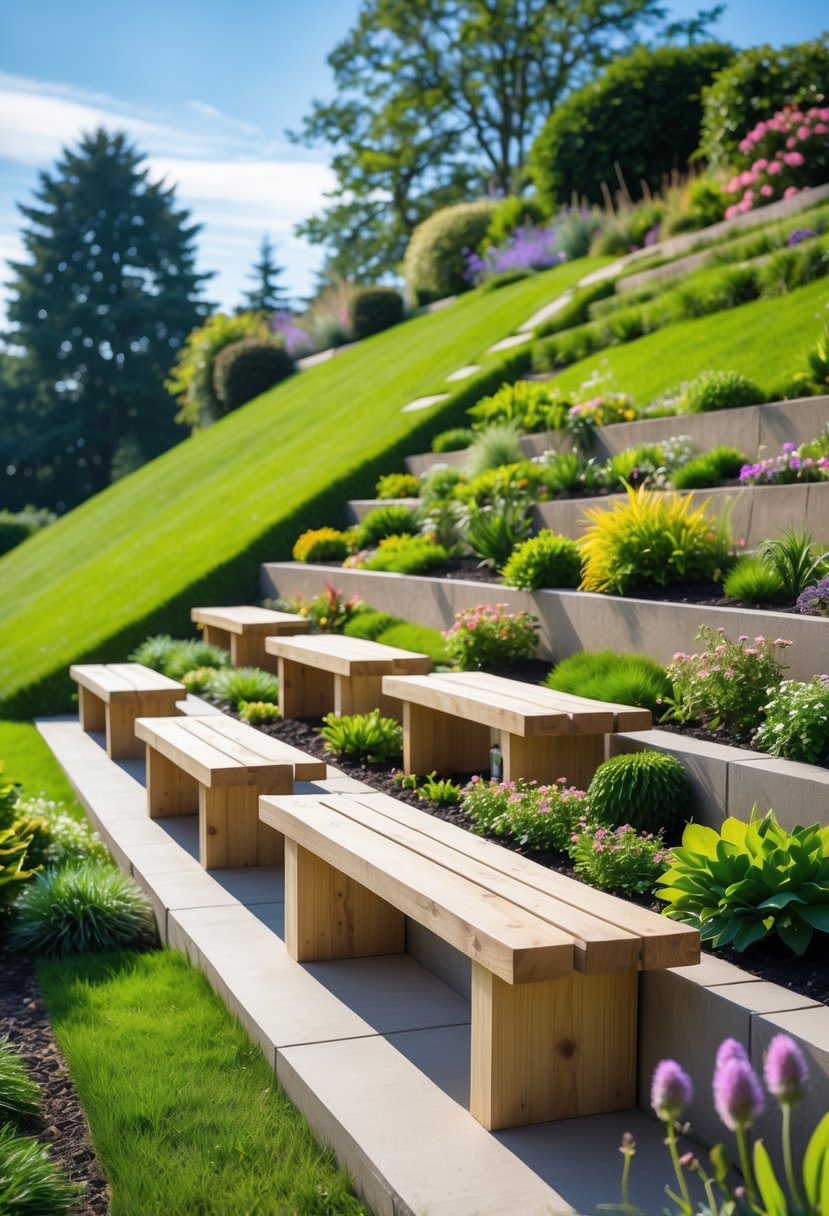
Add small benches to the flat terraces of your steep bank garden. They give you a cozy spot to sit and enjoy your plants.
Benches make the space more useful, too. Pick simple designs that fit the size of each terrace.
Wood or stone benches can match your garden’s style. Adding a bench makes your terraced garden feel more inviting and relaxing.
Need ideas? See this page with easy DIY garden bench ideas.
13) Use large boulders as natural retaining features
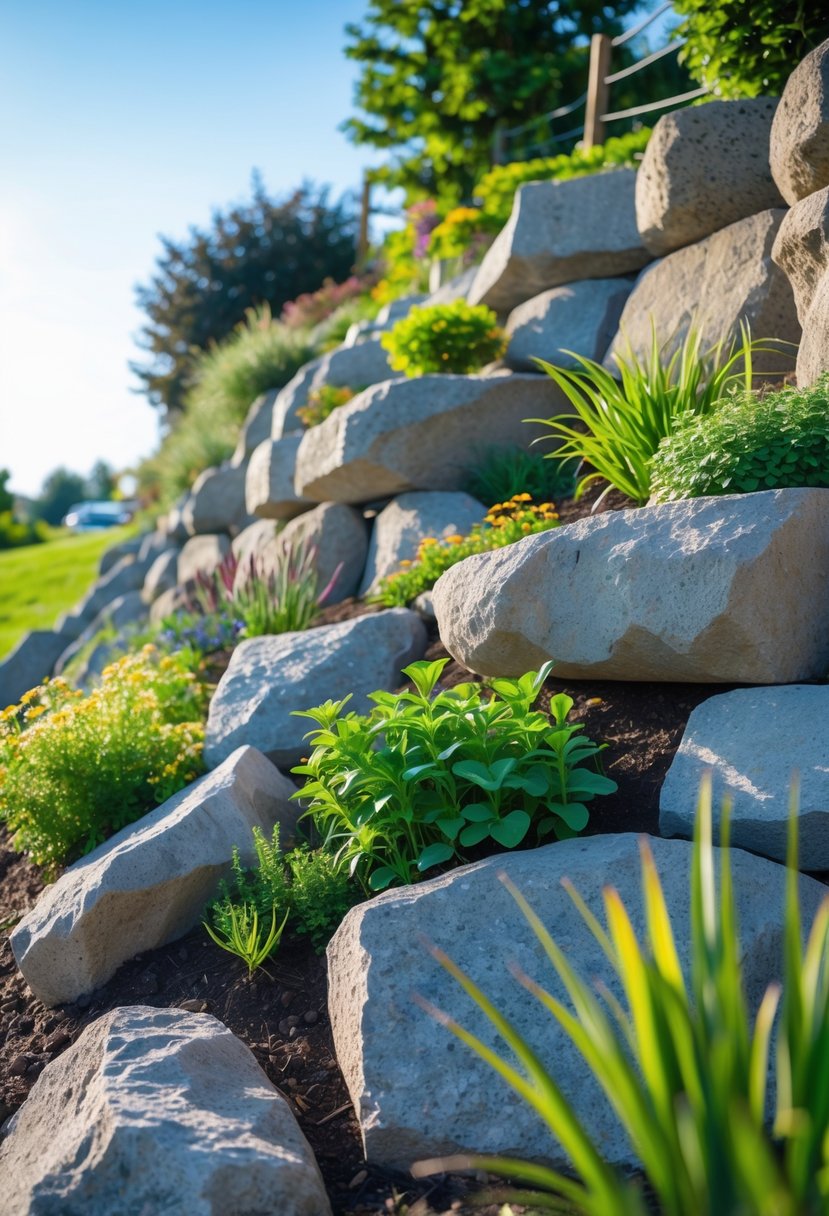
Large boulders work wonders for natural retaining walls on a steep bank. These rocks hold back soil, cut down on erosion, and honestly, they just look awesome.
Boulders give your garden a rugged, natural vibe. They blend in with plants and other landscaping elements without much effort.
If you place boulders with a little care, you can create terraces or flat spots for planting. Suddenly, your steep yard feels a whole lot more manageable—and a lot prettier, too. For more inspiration, check out landscaping with large boulders.
14) Create a dry creek bed for water drainage
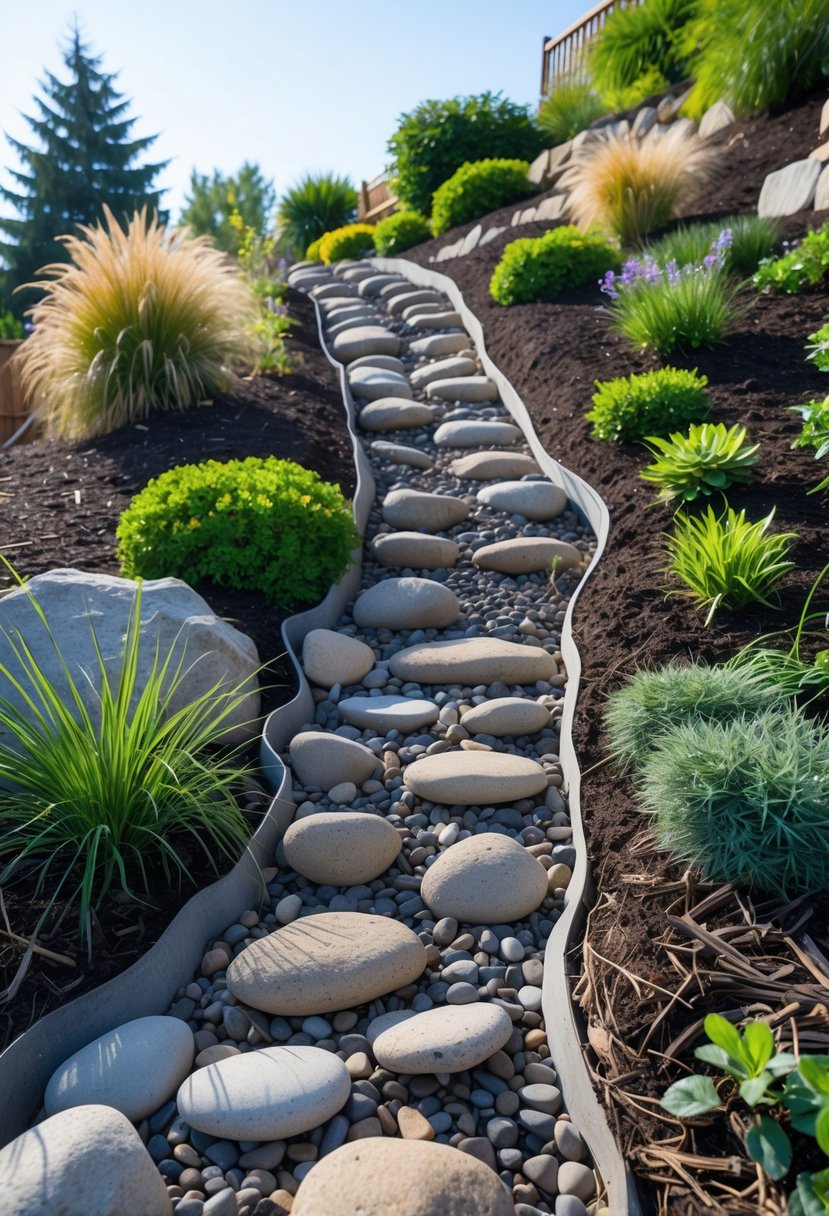
Try building a dry creek bed to guide water safely down your steep bank. It’ll direct rainwater away and keep your soil from washing out.
Stones and gravel make a natural-looking channel that moves water without flooding your yard.
A dry creek bed can double as a unique feature, even when there’s no rain. It just fits right in.
If you want to give it a go, here’s a guide for building a DIY dry creek bed to help with yard drainage.
15) Plant ornamental grasses for texture and movement
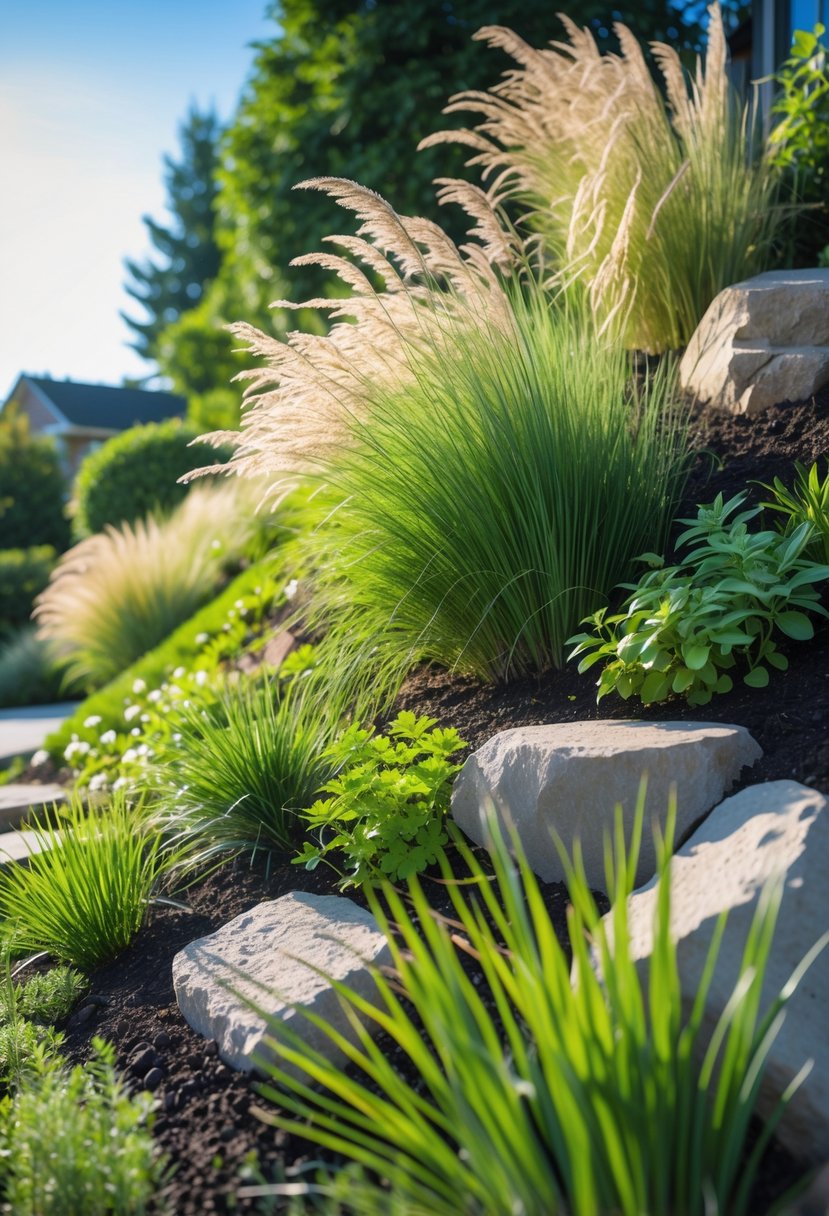
Add some ornamental grasses to your steep bank for instant texture. These grasses sway in the breeze, giving your garden soft movement and a bit of extra life.
Ornamental grasses don’t need much fuss. Their deep roots hold soil on slopes and keep things looking tidy.
Pick a mix of sizes and colors to suit your taste. These grasses make the whole space feel calm and natural, no matter the season. Want more ideas? Here’s how to use ornamental grasses on slopes here.
16) Add bird feeders and houses for wildlife
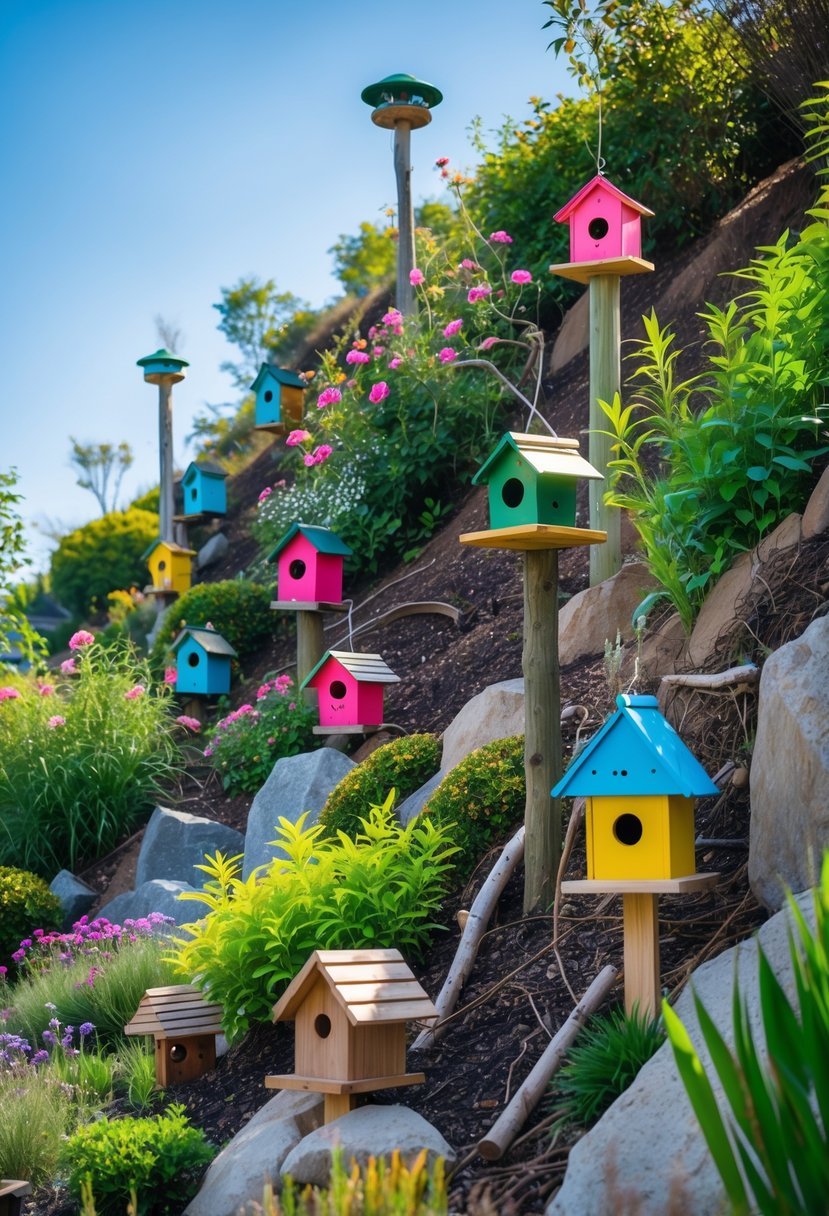
Make your steep bank garden a hangout for birds by adding bird feeders and houses. You’ll attract all sorts of wildlife, and your garden will feel more alive.
Pick feeders that work for the birds in your area. Hang them near bushes or trees where birds feel safe.
Birdhouses give birds a spot to nest and rest. If you put them at different heights, you’ll see more bird varieties.
Native plants around your feeders support local wildlife. Watching birds is honestly one of the best parts of gardening.
Need some ideas? Try these creative bird feeder stations.
17) Use hardy ferns in shady slope areas
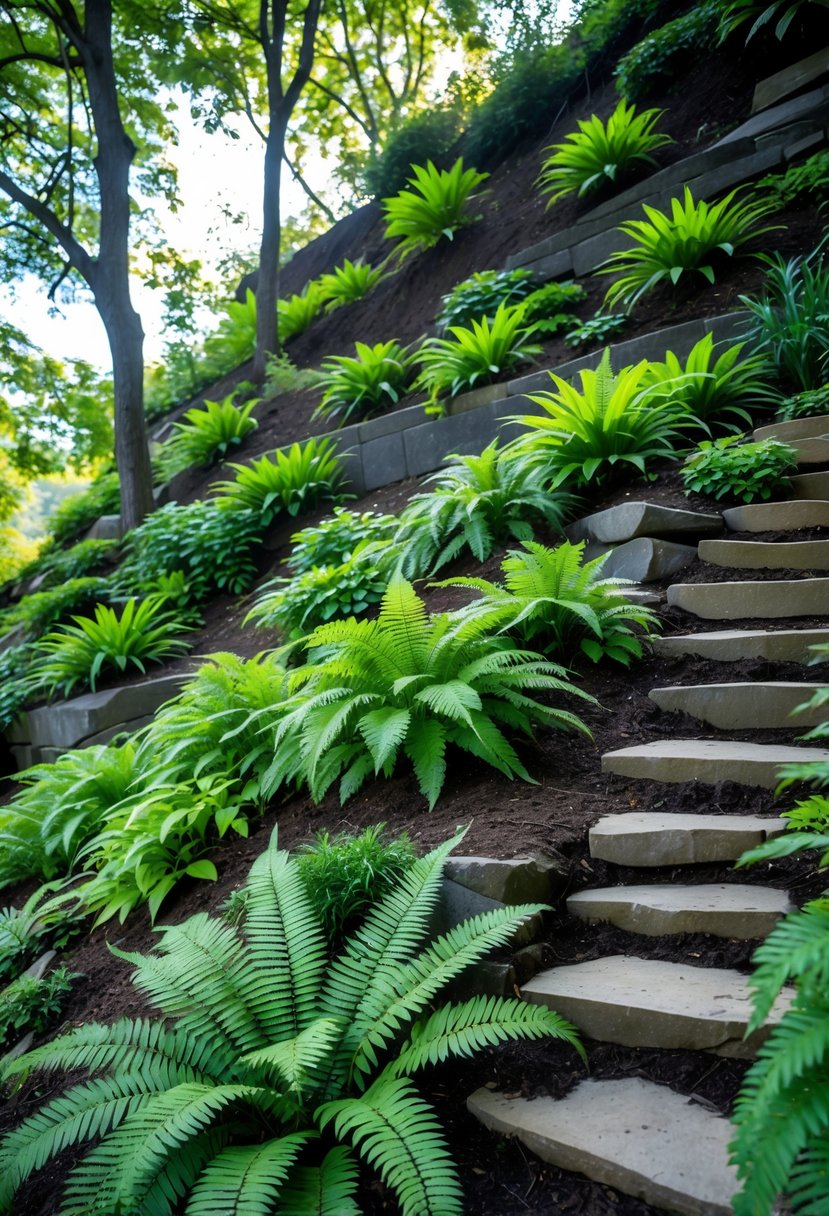
Ferns thrive on shady slopes where the sun doesn’t reach much. You can plant options like ostrich fern or lady fern to cover bare ground and keep soil from sliding away.
These plants bring a soft, green look to your garden. They stay lush with very little care, which is always a plus for tricky slopes.
Keep the soil damp and feed them monthly with liquid fertilizer if you can. Ferns love damp, shady corners and help your slope stay stable and pretty. For more advice, here’s how to garden with ferns on shady slopes.
18) Incorporate flowering shrubs like hydrangeas
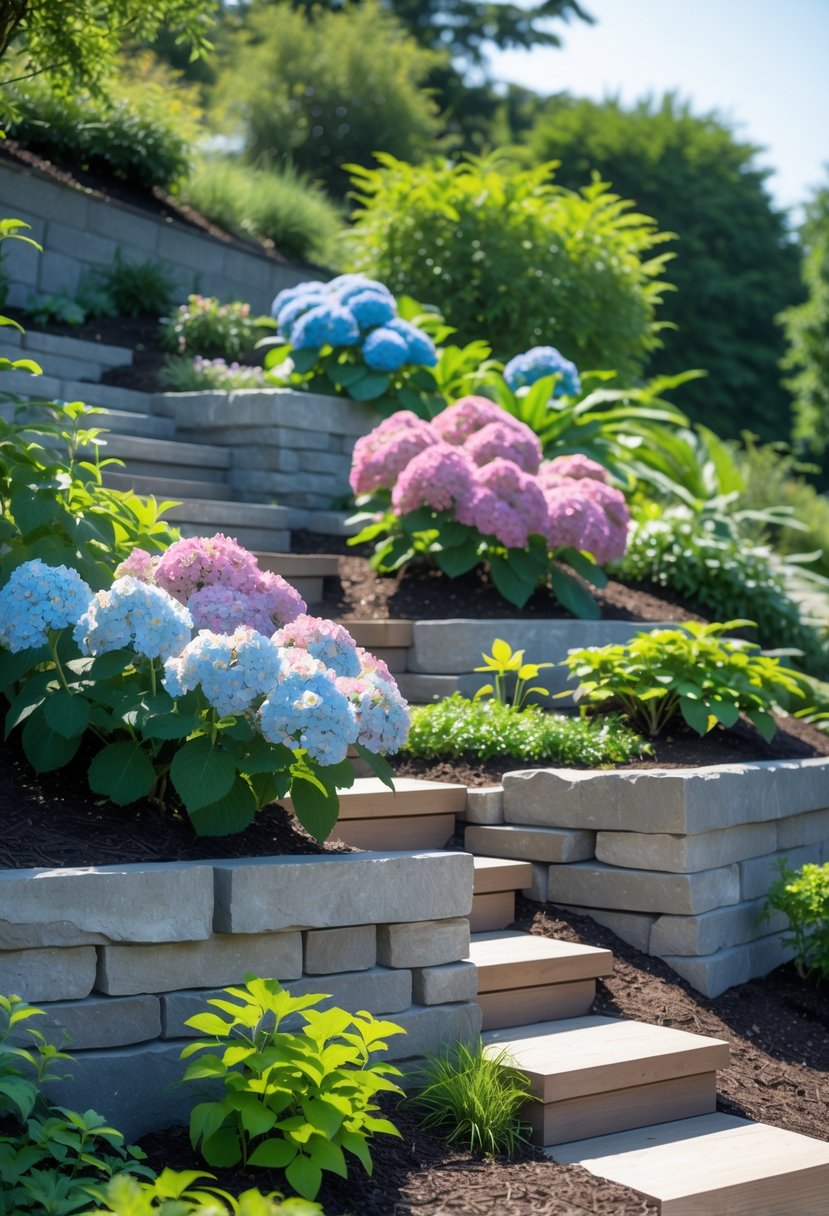
Bring in flowering shrubs like hydrangeas for a splash of color and structure on your steep bank. Hydrangeas have big, colorful blooms that really pop on a slope.
They pair nicely with evergreens, so your garden looks interesting all year. If you group hydrangeas, you’ll get a bold look and help reduce erosion at the same time.
Try mixing in drought-tolerant shrubs if you want to save on watering. For more inspiration, check out these steep bank garden ideas.
19) Create a mix of perennials for year-round interest
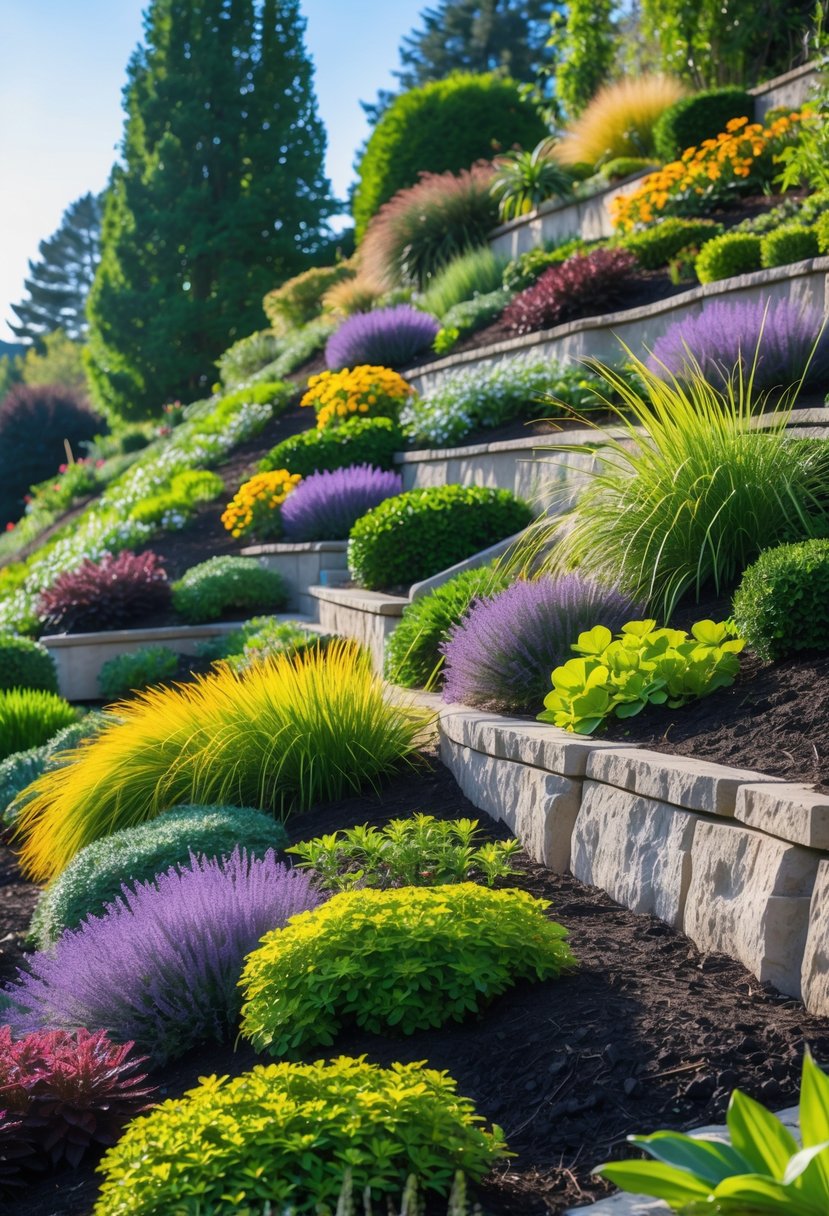
Brighten up your steep bank with different perennials that bloom in various seasons. This way, you’ll always have color and texture somewhere, no matter the month.
Pick plants with different heights and leaf shapes for more depth. Hardy choices like coneflowers, daylilies, and lavender come back every year and look great.
Mixing perennials with shrubs adds structure and helps keep the soil in place. For more tips on combining perennials, check out these ideas for mixing annuals and perennials.
20) Use native wildflowers to attract pollinators
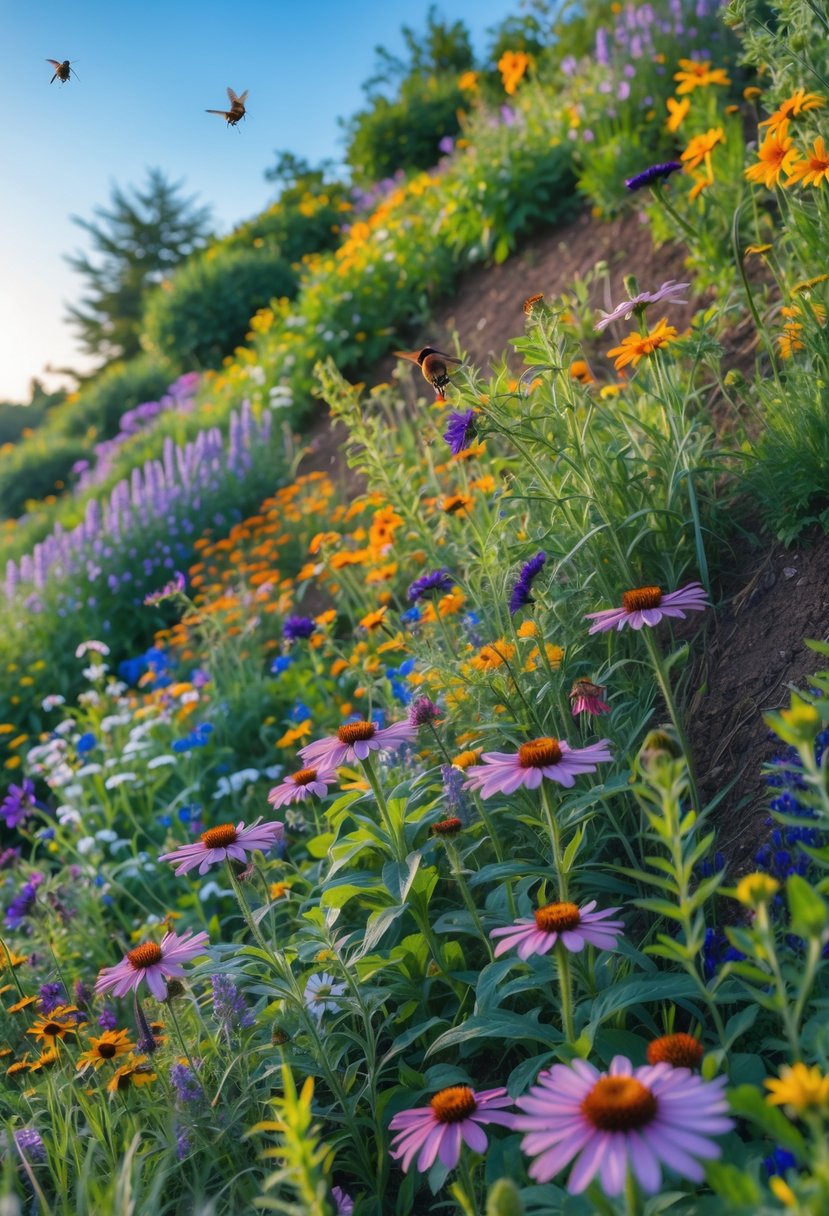
Try planting native wildflowers on your steep bank to draw in pollinators like bees and butterflies. These plants already fit your local climate, so they grow easily and support wildlife.
Native wildflowers send down deep roots, which help keep soil in place and cut down on erosion. You can find plenty of easy-to-grow options that add color and life to your garden. For more, check out ideas for planting native wildflowers to attract pollinators.
21) Install landscape fabric under gravel paths
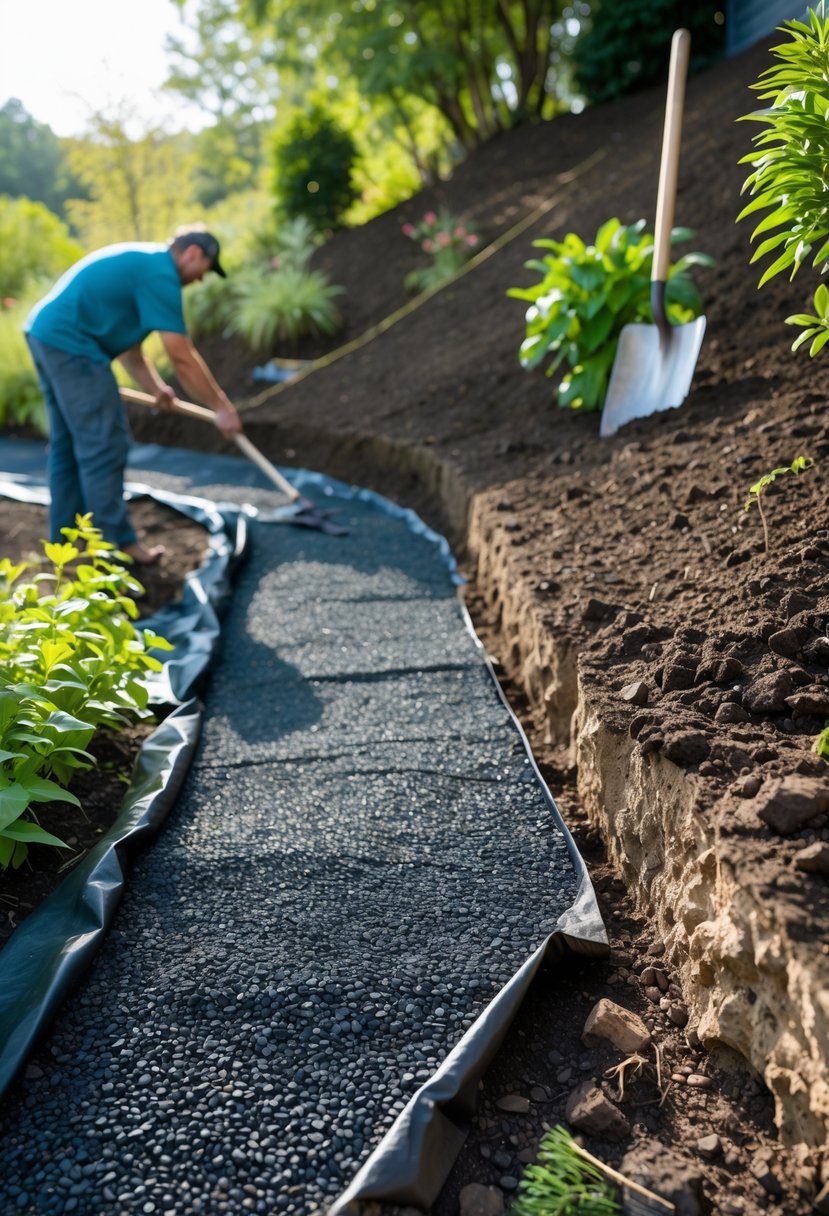
Keep your gravel paths tidy by laying landscape fabric underneath. This stops weeds from popping up through the rocks, so you’ll spend less time pulling them later.
The fabric lets water drain through, which means fewer puddles or muddy messes.
Go for good-quality fabric, lay it flat, and pin it down before adding gravel. Your path will last longer and stay in place.
For a step-by-step, here’s how to install landscape fabric under gravel paths.
22) Add solar garden lights for ambiance
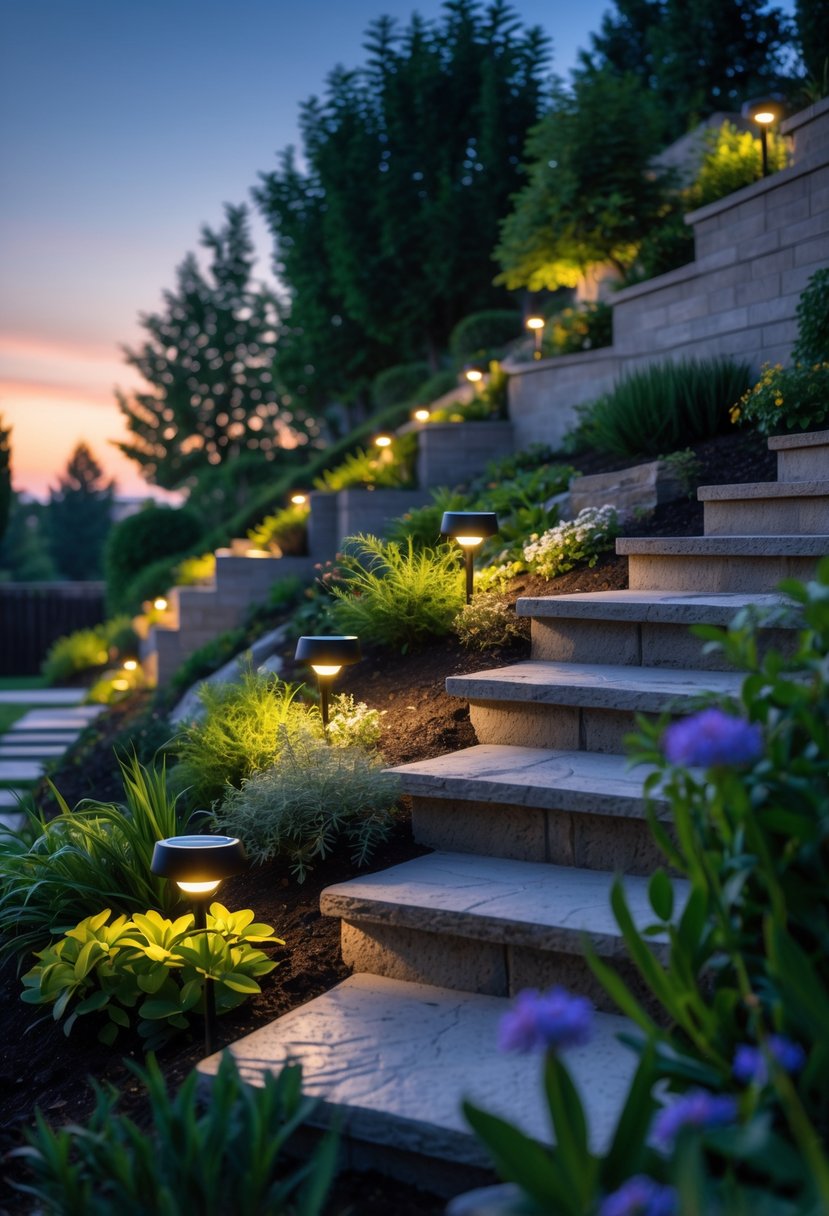
Brighten your steep bank garden with solar lights. They charge up during the day and glow at night—no wiring hassle at all.
Solar lights make your garden feel cozy and inviting. Place them along paths or near plants to softly highlight your favorite spots.
These lights are eco-friendly and save you a bit on the electric bill. There are so many styles, from string lights to spotlights, so you can find what fits your space best.
Need more ideas? Here’s a guide on creative garden ideas using solar lights.
23) Build a rain garden to manage runoff
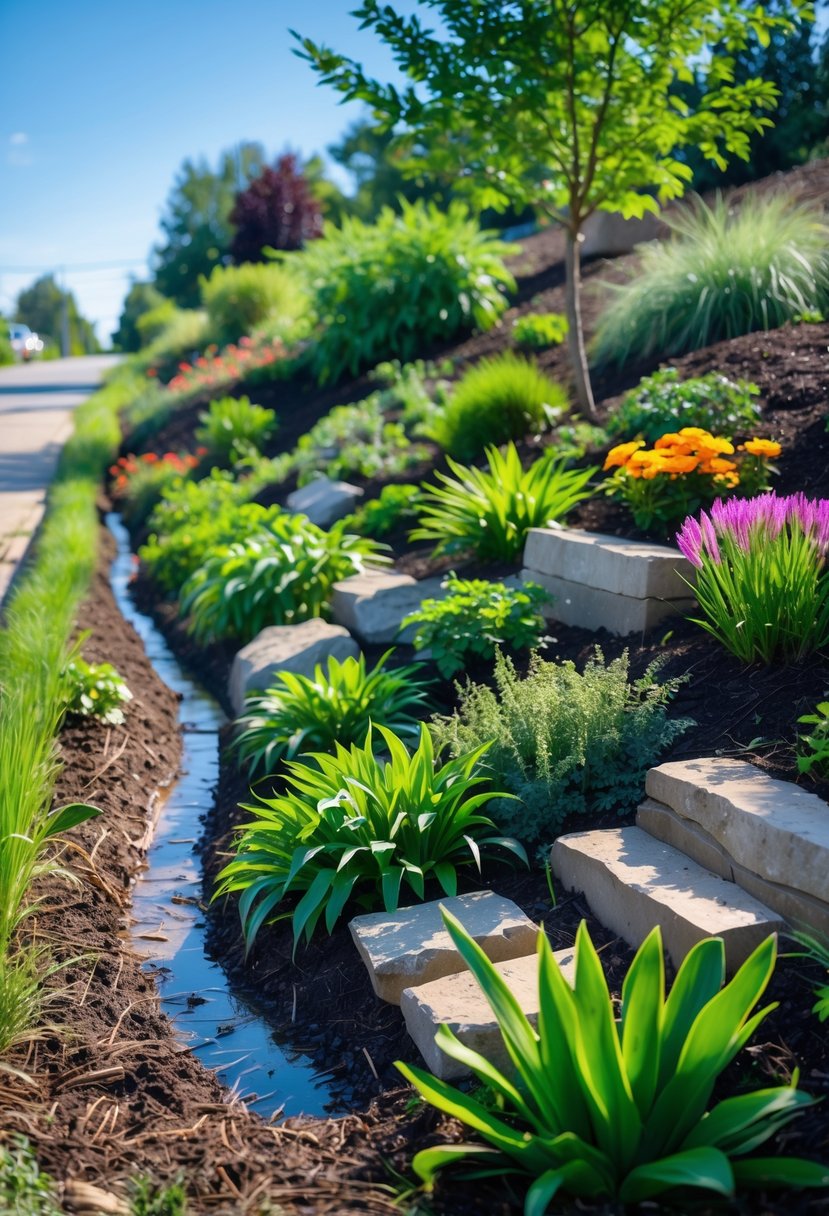
Try building a rain garden on your steep bank to catch water runoff. It’ll slow down rainwater and help keep soil where it belongs.
Rain gardens use native plants to soak up and filter water naturally. You get a pretty garden and help the environment at the same time.
Put your rain garden where water runs downhill. It’ll cut down on flooding and improve drainage in your yard.
For a how-to, check out this detailed guide on building a rain garden to control runoff.
24) Install stone steps with gravel in between
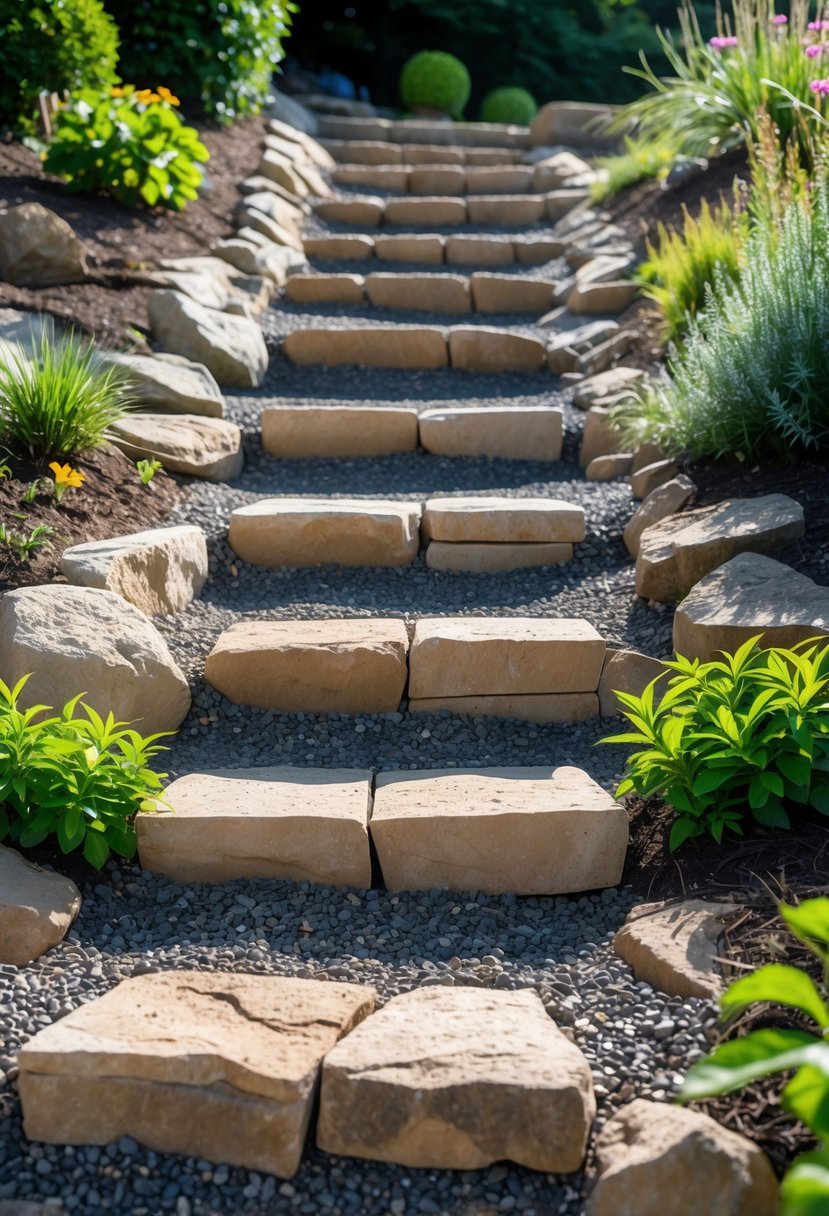
Add sturdy stone steps to your steep bank by setting large flat stones in place. Leave some space between each stone for gravel.
Gravel helps with drainage and stops water from collecting on the steps. It also looks great next to the stone.
To build, dig shallow holes for each stone and set them firmly. Fill the gaps with gravel for a safe, natural-looking path.
If you want more details, here’s a DIY guide to building stone steps on a slope.
25) Plant creeping juniper for erosion control
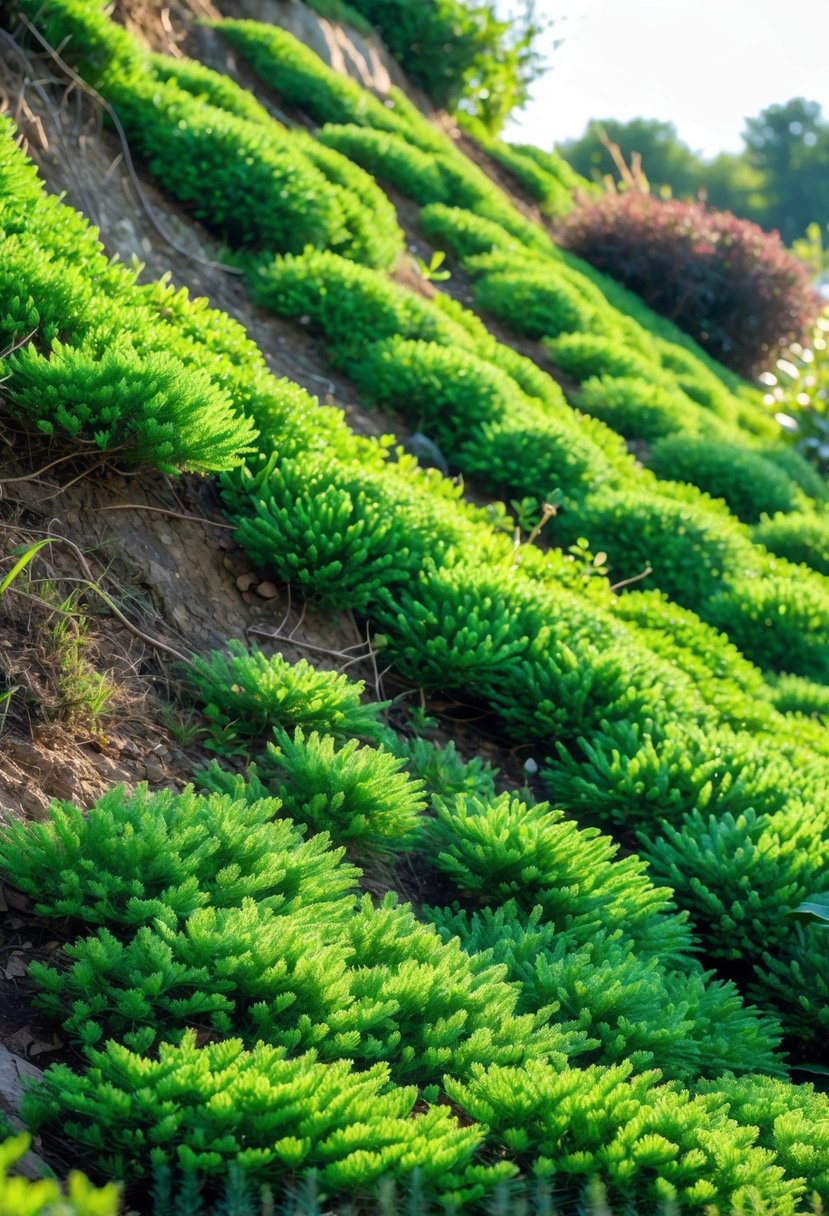
Use creeping juniper to keep your steep bank safe from erosion. This plant spreads low and wide, gripping the soil and holding it in place.
Creeping juniper grows thick on slopes, so plant them close together for the best results.
It’s a tough, low-maintenance plant that handles dry soil and heat. You don’t have to fuss over it much. If you want more info, check out how to plant creeping juniper on a slope.
Key Landscaping Principles for Steep Banks
When you tackle a steep bank, focus on keeping the soil in place and stopping erosion. The right plants and methods make your slope safe, stable, and, honestly, pretty nice to look at.
Soil Retention Techniques
If you want to stop soil from washing away, try using structures that hold it back. Terracing works really well for this.
Terraces create flat steps on a slope, so water slows down instead of rushing straight down. You can use wood, stone, or concrete blocks to build them.
Retaining walls also help a lot. These walls support the soil and let you create level spots for planting.
Remember to add proper drainage behind the walls. Without it, water pressure can build up and break them.
Mulch can make a big difference, too. It protects the soil from heavy rain and keeps moisture where you want it.
Bark, straw, or compost all work for covering your slope.
Slope Stabilization with Plants
Plants with strong, deep roots hold soil together on steep banks. They really help cut down on erosion.
Mix up your planting with ground covers, shrubs, and trees for the best results. Layers work better than a single type of plant.
Native plants are a smart choice. They’re already used to your local climate and usually need less attention.
Try grasses, creeping junipers, or lavender for ground cover. Shrubs like boxwood or spirea add some structure.
If you want trees, go for small, fast-growing ones like dogwood. They establish quickly and help stabilize the slope.
Plant in clusters and stagger them around the slope. This lets roots spread out and grab onto the soil.
Plants also soak up water, which keeps runoff and erosion in check. For more ideas, take a look at how to landscape a steep bank.
Common DIY Challenges and Solutions
Working on a steep bank isn’t always easy. You’ll probably deal with soil slipping and water running off too quickly.
If you handle these problems well, your garden will stay stable and healthy. Focus on controlling erosion and managing water to create a lasting garden space.
Managing Erosion on Slopes
Rain can wash away soil on a slope fast. To fight this, start by planting groundcovers or grasses with strong roots, like creeping thyme or native grasses.
These plants grab onto the soil and keep it from sliding away. You can also build terraces or retaining walls.
Terraces break up the slope into flatter sections, which slows water down and keeps soil put. Use stone, wood, or concrete blocks for walls.
Mulch helps a lot, too. Spread a 2-3 inch layer to protect soil from rain and slow down runoff.
Adding rocks or gravel along pathways can help keep soil in place and make things look nice, too.
Water Drainage Considerations
Water often pools or rushes down a steep slope, which can damage plants and cause erosion.
Try to give your garden proper drainage by adding shallow channels—people call them swales—that guide water gently downhill.
You might want to install a French drain or even just a simple perforated pipe to collect extra water and move it away from your garden.
If you spot places where water tends to gather, steer clear of planting there, or improve those spots with gravel and drainage pipes.
Arrange your plants by their water needs to help prevent water damage.
Put drought-tolerant plants at the top of the slope, and plant ones that love moisture lower down.
This setup lets water soak in naturally, instead of pooling or washing away your soil.
If you want more ideas for slope gardening and drainage, check out slope garden ideas.


