

Simple Garden Ideas on a Hill: 25 Easy and Creative Ways to Beautify Your Slopes
Gardening on a hill can feel a bit overwhelming at first, but honestly, it’s a fantastic way to make your outdoor space more unique. The slope lets you play with different levels, adding depth and a whole lot of character to your garden.

Simple garden ideas on a hill let you turn uneven land into a charming, usable space—no need for fancy tools or endless work. With a smart approach, your sloped garden might just become your favorite spot in the yard.
1) Create terraced flower beds to manage slope and add visual interest

If your yard has a hill, terraced flower beds let you use the space well. Terraces create flat spots, so rain doesn’t wash your soil away.
You can layer flowers on each level for a more colorful, interesting look. It brings your sloped yard to life.
Try sturdy materials like rot-resistant wood or stone for long-lasting terraces. You’ll also improve drainage and help your plants thrive.
If you want all the details, check out a guide on building terraced garden beds on a slope.
2) Use retaining walls with natural stone for stability and charm
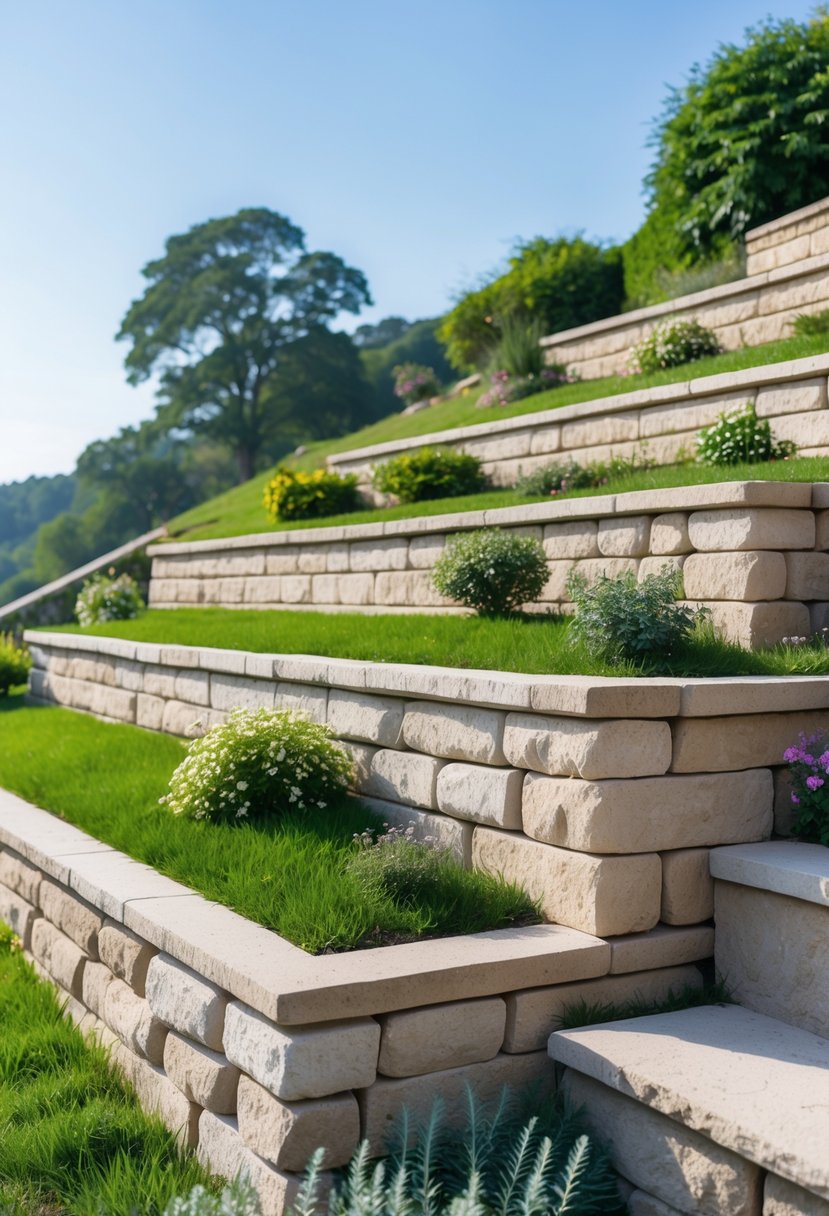
Add both style and function to your hillside by building natural stone retaining walls. These walls hold back the soil and help prevent erosion.
Natural stone has a cozy, timeless look. Its rough texture and earthy colors blend right in with your plants and landscape.
You can build your own natural stone wall to fit your style—there are lots of easy guides out there. If you’re curious, check out more natural stone retaining wall ideas.
3) Plant native ground covers like creeping thyme to prevent erosion
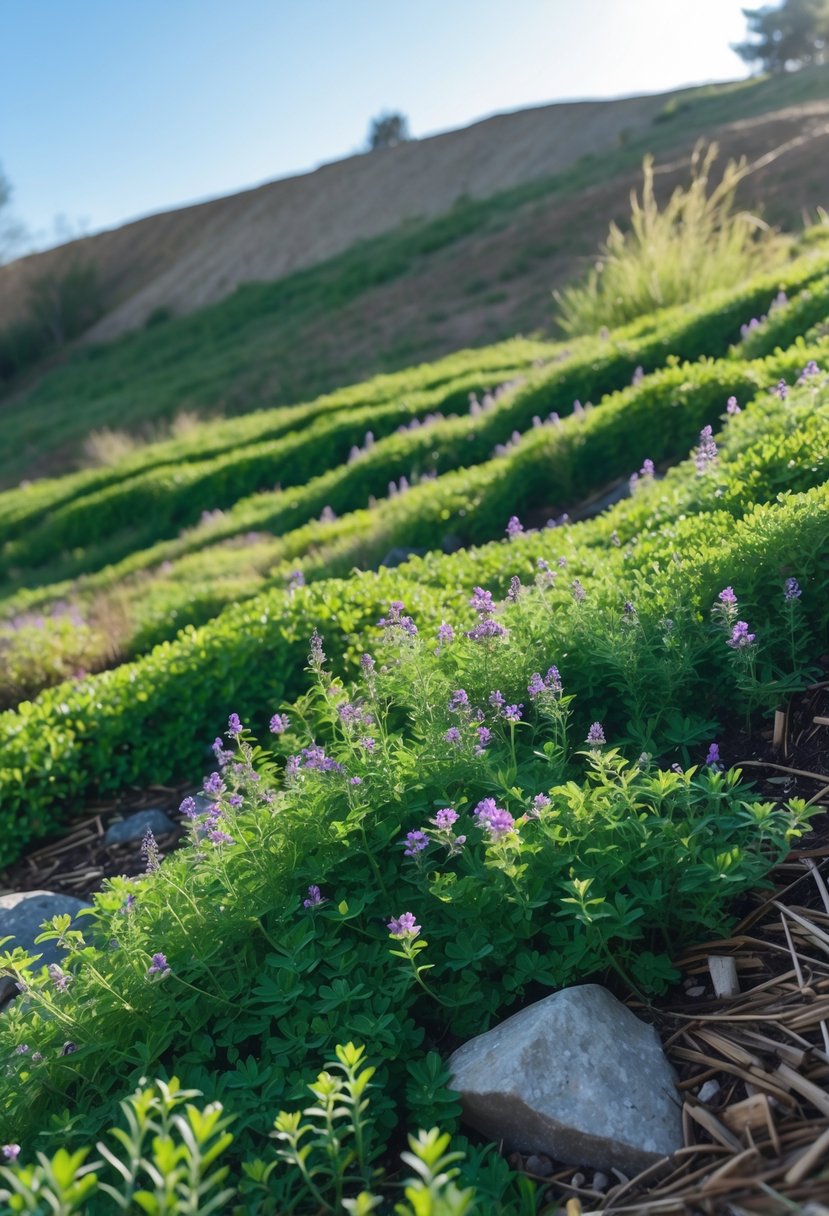
Planting native ground covers like creeping thyme keeps your hillside soil right where it belongs. Creeping thyme spreads fast and forms a dense mat, so rain can’t easily wash the dirt away.
It’s pretty easy to care for, too, and does well on dry, sunny slopes. The tiny flowers attract pollinators, and you can even use it in your cooking.
Creeping thyme gives your garden a natural, colorful boost while protecting the hill. If you want to know more about how it helps with erosion, take a look here.
4) Incorporate rock gardens with drought-tolerant succulents

Try making a rock garden with succulents for your hillside. Succulents barely need water, so they’re perfect for spots where watering feels like a hassle.
Rocks add texture and keep the soil from sliding away. They also look really natural and stylish.
Succulents come in all sorts of shapes and colors, so you can mix things up. It’s a low-maintenance way to save time and water, but still have a garden that stands out.
If you need inspiration, check out some succulent rock garden ideas.
5) Build simple wooden steps for easy hillside access

Make your hillside easier to climb by adding wooden steps. Pick sturdy, weather-resistant wood—pressure-treated works well.
Build a basic frame and fill the steps with gravel to help with grip. It’s a straightforward project and looks right at home in a garden.
Wooden steps blend in with the plants and rocks around your hill, adding a bit of rustic charm. If you want more guidance, check out how to build outdoor wood steps.
6) Use mulch generously to retain moisture on slopes

Mulch keeps your hillside soil moist by slowing down evaporation. On a slope, water tends to run off, so this really matters.
Spread mulch thickly to lock in moisture and shield the soil. You’ll also fight weeds at the same time.
To stop mulch from sliding, try heavier mulch or use rocks and edging. Want more info? Check out this guide on mulching slopes and inclines.
7) Add colorful perennials such as coneflowers and black-eyed Susans

Brighten up your hillside with colorful perennials like coneflowers and black-eyed Susans. These flowers are tough and handle heat and drought without fuss.
Both love the sun, so they’re ideal for a sunny hill. They bloom for ages, keeping your garden lively from summer into fall.
Pollinators like bees and butterflies flock to these plants, which helps your garden thrive. Pairing them creates a cheerful, eye-catching mix.
Need more ideas? Try this perennial plant combinations guide.
8) Plant ornamental grasses for texture and movement

Ornamental grasses add texture and a sense of movement to your hillside. When the wind blows, the whole garden feels alive.
You can mix tall, flowing grasses with shorter ones for more depth. There are so many options—some are bold, some are soft and feathery.
Most ornamental grasses barely need any care and handle dry slopes well. They soften hard lines and bring a natural vibe.
Want more inspiration? Check out these ornamental grasses garden ideas.
9) Install drip irrigation to efficiently water uneven terrain
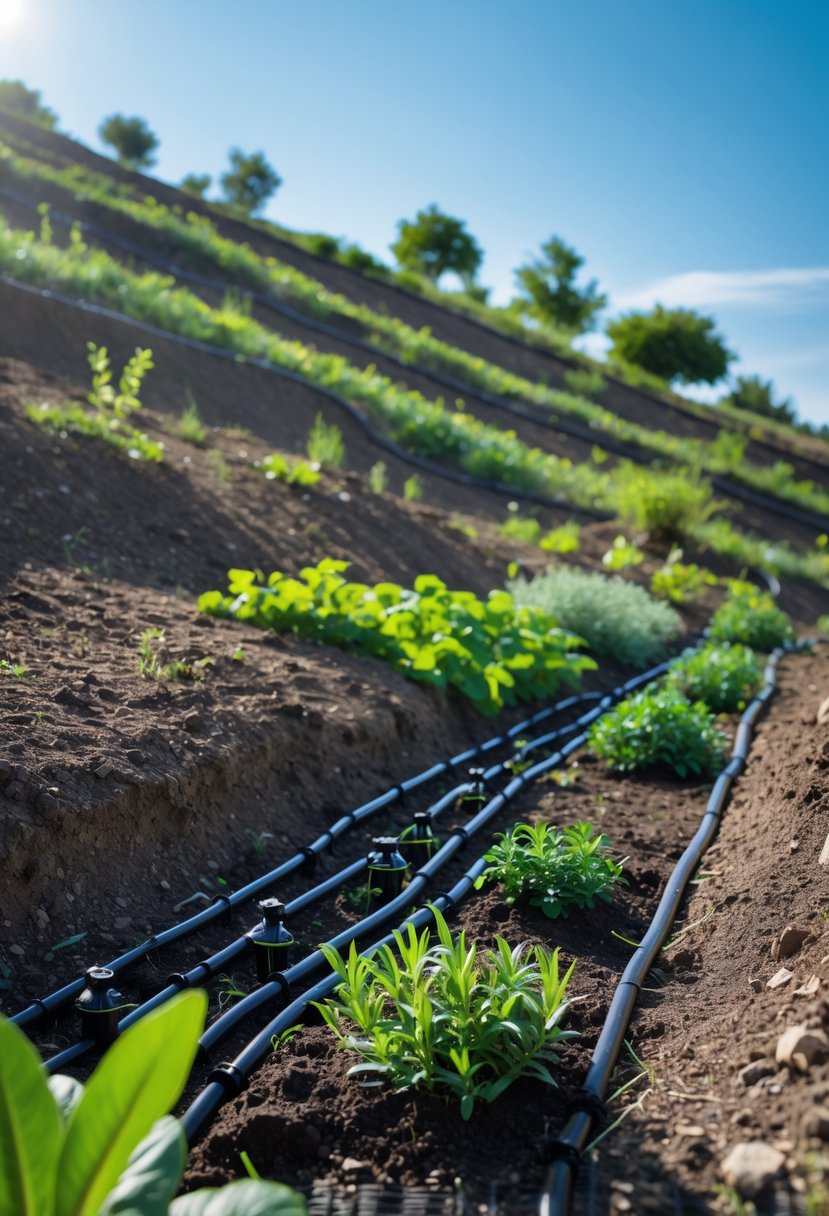
Save yourself time and water by putting in a drip irrigation system on your slope. Drip lines deliver water straight to plant roots, so you avoid runoff.
This keeps the soil moist where it matters most. Plus, it helps prevent erosion.
Drip irrigation gives you better control over watering each area of your garden. Setting it up isn’t too complicated, even on uneven ground.
For step-by-step help, check out a guide on installing drip irrigation in your garden.
10) Create a winding gravel path to soften the hill’s steepness

Add a winding gravel path to make your hill easier to walk. A zigzag design turns a steep slope into gentle, walkable sections.
Gravel drains water well and blends in with the landscape. You can line the path with flowerbeds for a cozy, welcoming look.
Building a path like this also helps with erosion. With some basic tools and gravel, you can create a practical and attractive addition.
For ideas, see how to build a gravel path on a slope.
11) Use raised beds to make planting easier on slopes

Raised beds let you make flat planting spots on a slope. This makes it way easier to plant and take care of your garden.
You can build raised beds with simple materials, and they keep soil from washing away. They also help with drainage and cut down on weeds.
Level out each bed to stop erosion and make sure your plants get the water and nutrients they need. Want a step-by-step guide? Here’s how to build raised beds on slopes, or check this guide.
12) Incorporate fairy garden elements like miniature houses on terraces

Add a bit of whimsy to your hillside by tucking fairy houses onto your terraces. These tiny houses fit perfectly on the flat spots and create a magical, playful vibe.
Miniature houses make your garden feel more inviting and a little mysterious. Try arranging them with small pathways or moss for a natural touch.
Terraces keep your fairy garden organized and visible from different angles. It’s fun to mix in moss, small flowers, or succulents for extra color and life.
Looking for inspiration? Check out fairy garden tips and decorations to get your imagination going.
13) Grow cascading plants like creeping Jenny along ledges

Try planting creeping Jenny along garden ledges if you want a bit more charm. Its bright, coin-shaped leaves spill over the edges in a lovely way.
Creeping Jenny thrives in shady, damp spots, so it’s great for ledges that don’t get much sun.
You’ll find it easy to care for, and it fills bare spaces with a splash of green and gold.
Let creeping Jenny soften those hard edges and give your garden a more natural, flowing look.
Need more advice? Check out how to plant, grow and care for creeping Jenny.
14) Use large boulders as focal points and natural seating

Add large boulders to your hillside and instantly get a natural, striking focal point. They really anchor the space and just feel right on a slope.
Flat-topped boulders make surprisingly good natural seats. You can perch on them and take in the view, no extra furniture needed.
Try placing boulders near garden paths or corners to guide people through your space. Surround them with plants to help everything blend together.
Looking for more ideas? Check out landscaping with boulders.
15) Plant herbs in sunny terraced spots for easy harvesting
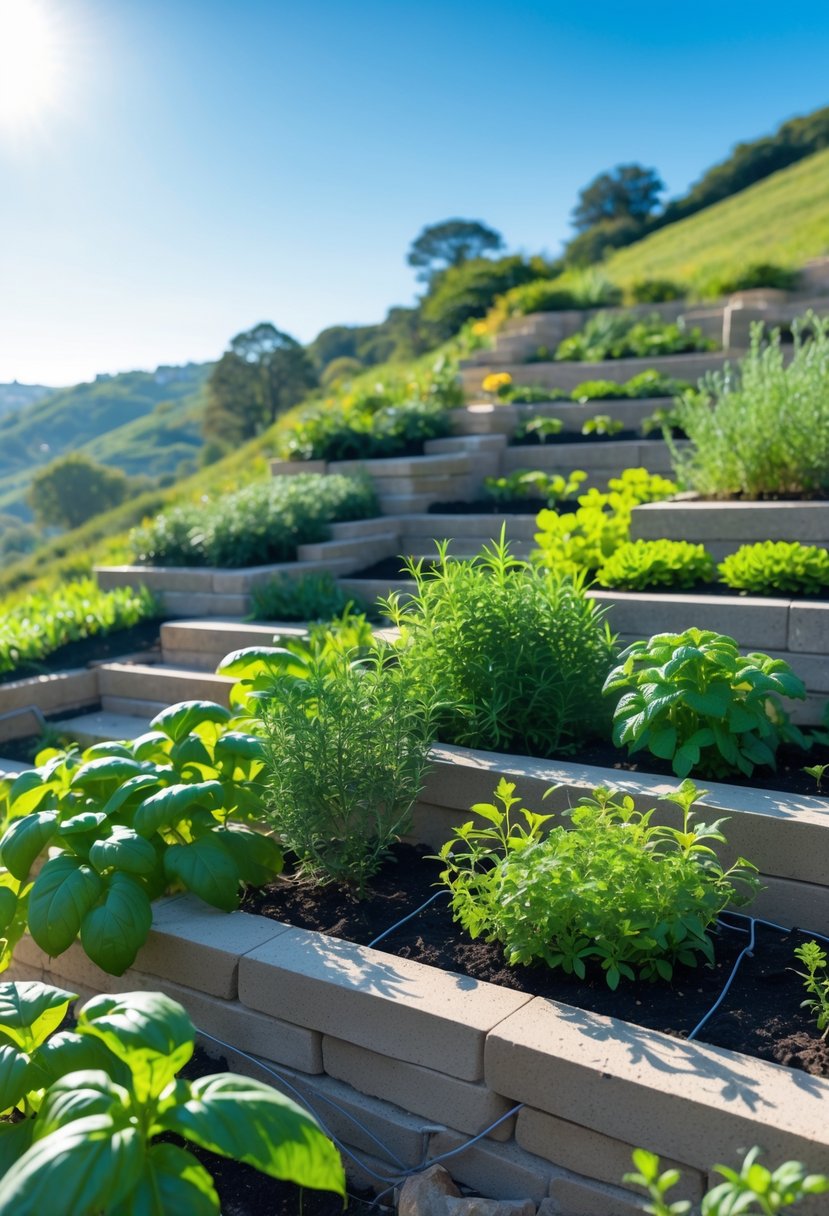
Use sunny terraced spots on your hill to grow herbs. It’s so much easier to reach the plants when they’re right there at different levels.
Basil, oregano, and thyme all love the sun and do well on terraces.
Terraces help with drainage and stop soil from washing away. They also make the garden look neat and organized.
You’ll love picking fresh herbs just steps away from your kitchen.
Want more tips? See growing herbs in small sunny spaces and check out 12 No-Fuss Herbs You Can Grow in Any Sunny Spot.
16) Introduce small fruit bushes like blueberries on gentle slopes

Try planting small fruit bushes like blueberries on gentle slopes. They help hold the soil in place and make use of space that might otherwise go unused.
Blueberries love well-drained soil, and a slope naturally provides that.
You won’t have to water as often since water runs off, which cuts down on root rot.
Fruit bushes on a slope are easier to harvest—less bending, more picking. Plus, you get fresh fruit and a pop of color.
Curious about other options? Look up small fruit bush ideas for tight spaces.
17) Use boxwood or dwarf shrubs to define garden edges

Mark garden edges on your hill with boxwood or dwarf shrubs. These plants shape up easily and keep the lines of your beds and paths crisp.
Boxwoods stay green year-round, so your garden never looks bare, even in winter.
If you want low borders that won’t block the view, go for dwarf varieties. They add structure without feeling overwhelming.
For layout inspiration, check out dwarf boxwood landscaping ideas.
18) Build a simple stone bench overlooking the view

Add a sturdy stone bench to your hillside for a peaceful place to unwind. Stone benches look right at home outdoors and don’t need much fuss to keep up.
Pick out some flat stones and stack them securely to build your bench.
Choose a spot with a good view—maybe somewhere you can catch the sunset. Sitting there, you’ll really get to appreciate your garden.
It’s a simple touch, but it makes the space feel more inviting. If you need a guide, check this step-by-step DIY guide for your garden.
19) Mix drought-resistant plants such as lavender and sedum

Choose drought-resistant plants like lavender and sedum for your hillside garden. These two handle dry spells with ease and won’t need constant watering.
Lavender brings a lovely purple bloom and that unmistakable scent. Sedum’s thick leaves hang onto water and stay green, even when it’s hot.
Mixing them gives you color, texture, and a border that’s easy to care for. They also help stop erosion by covering the soil with tough, spreading roots.
For more border ideas, take a look at this enduring garden border.
20) Incorporate wildflower mixes for a natural, low-maintenance look

Scatter some wildflower mixes on your hillside for a burst of color and a truly natural vibe. These mixes usually come with seeds that thrive together and suit your local weather.
Wildflowers attract bees, butterflies, and all sorts of pollinators. Once they’re growing, you won’t have to fuss over them much.
Pick native mixes to help local wildlife and keep things simple. Wildflowers adapt well to slopes and uneven ground, so they’re an easy win.
Want more wildflower inspiration? Check out creative wildflower garden ideas.
21) Add bird feeders and baths to attract wildlife

Attract more birds to your hillside by setting up bird feeders and baths. Birds need water to drink and bathe, and a bird bath gives them a safe place for both.
Put feeders where you can watch the birds, but keep them away from spots where cats or other predators can reach.
Keep the water in your bird bath fresh and clean. That way, you help the birds stay healthy and coming back.
Adding these little touches brings all sorts of birds to your garden. You get to enjoy the show and help local wildlife at the same time.
Need ideas for stylish bird baths? Have a look at bird bath landscaping ideas.
22) Use rain gardens at the bottom of your hill to manage runoff

Try building a rain garden at the bottom of your hill to soak up runoff. It’ll help stop flooding and keep your soil in good shape.
Rain gardens are basically shallow basins filled with plants, so water sinks in slowly instead of rushing away.
If your hill is steep, a rain garden works wonders without needing big construction projects. It’s a natural fix for water collecting at the bottom.
Want to learn more? Check out this guide on planting a rain garden on a hill.
23) Plant daylilies that thrive on slopes and need little care
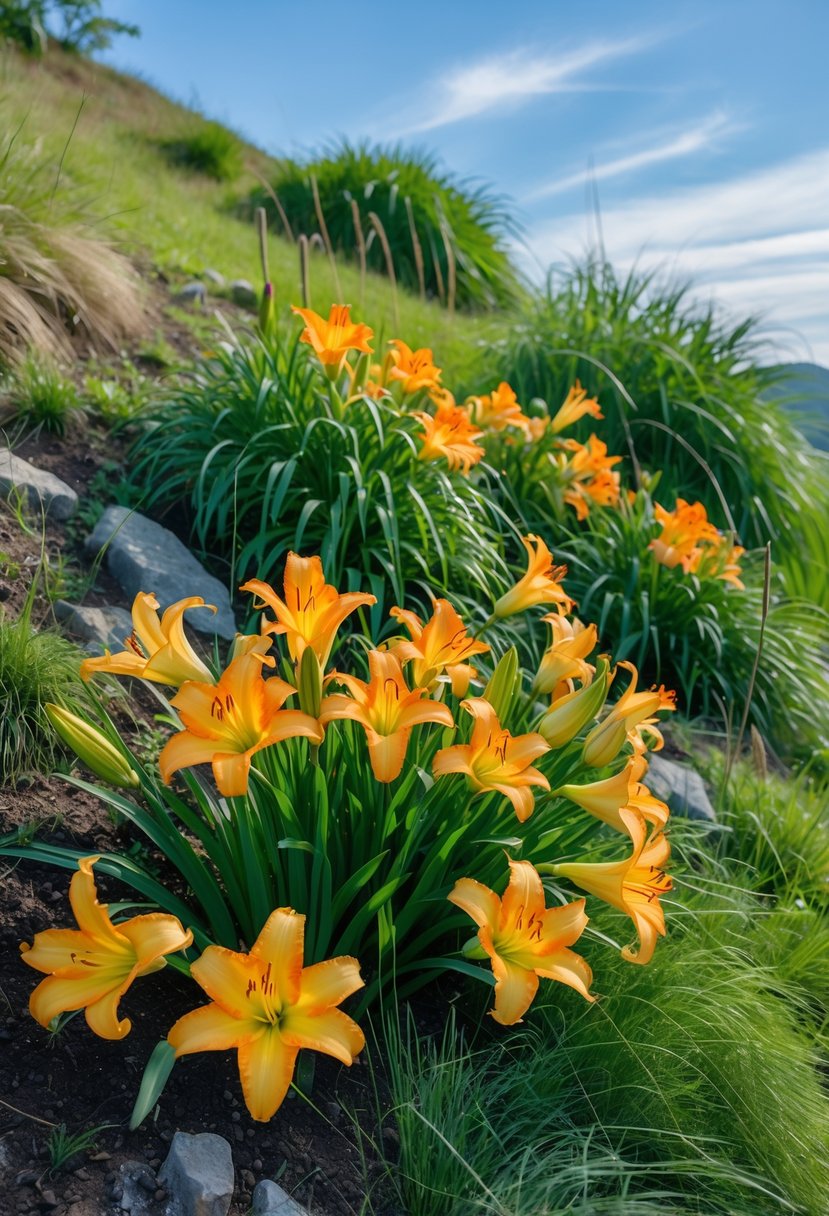
Grow daylilies on your hillside—they’re tough and handle slopes really well. Once established, they don’t need much attention.
Plant them in clusters, leaving 12 to 18 inches between each one to help stop erosion.
Daylilies bloom in all sorts of colors and add lasting beauty with almost no work.
They’ll thrive in lots of soil types and love the sun. For more on planting daylilies on slopes, see this guide.
24) Create a zig-zag garden path to reduce erosion

Build a zig-zag path on your hill to slow down water and help stop erosion. Breaking up the slope into smaller sections really works.
Use gravel or stone for your path—it looks great and makes it easier to walk up and down.
Try adding small catch basins at the turns to collect runoff water. This keeps your path stable and your plants happy.
A zig-zag path is both practical and adds a bit of style.
You can find simple guides online or at your local store.
For more ideas, check out zig-zag garden path tips.
25) Install solar lights along terraces for evening ambiance

Brighten up your hillside garden by adding solar lights along the terraces. These lights go in easily, and you don’t have to mess with any wiring—pretty handy for those tricky slopes.
Solar lights cast a soft glow, making your garden feel cozy and inviting after dark. They really show off the shape of your terraces and help keep pathways safe by lighting them up.
You’ll help the environment and save money by using eco-friendly solar lights. There’s a lot to choose from—string lights, little spotlights, and more—so you can match your garden’s vibe. If you want inspiration, check out creative ways to use solar lights along terraced gardens.
Benefits of Simple Garden Ideas on a Hill
Gardening on a hill can totally transform a tough spot into something useful and beautiful. When you keep it simple, you actually make the whole process less stressful and, honestly, a lot more fun.
You’ll save space, keep water moving where it should, and add some real style to your yard—without driving yourself crazy.
Maximizing Space
Hillside gardens give you a chance to use space you’d probably ignore otherwise. If you add terraces or retaining walls, you get flat spots for planting on those slopes.
That means more room for flowers, veggies, or herbs.
Vertical options like wall-mounted planters or stackable containers help you grow even more without crowding things. They also keep everything looking tidy.
When you maximize your garden space, you make better use of sunlight and make caring for your plants easier. With simple designs, you can turn a small or awkward hill into a surprisingly productive garden.
Improved Drainage
Slopes naturally drain water away, which is perfect for plants that hate soggy roots. That helps prevent root rot.
You can guide water with terraces or stone borders to keep soil where it belongs and stop erosion.
Mulch or ground covers on slopes help hold in moisture and protect roots. Good drainage means healthier plants and less hassle for you.
Enhanced Visual Appeal
A hill garden just looks different—in a good way. Terraced beds, rock gardens, and layered plants make the slope look organized and interesting.
You can pick a style—cottage, modern, Mediterranean, whatever suits you. Pathways and steps add both function and a little bit of charm.
Mixing up colors, textures, and plant heights turns your hill into a real focal point. Simple hillside designs can give your yard a fresh, eye-catching look that’s hard to ignore.
Check out this guide on gardening on a slope for more tips on handling hills in your garden.
Tips for Designing a Hill Garden
Designing a garden on a hill means you need to work with the land’s shape and pick plants that can handle the conditions. You’ll want to control erosion, add paths or terraces if you need them, and go for tough plants that hold the soil and thrive on slopes.
Working With Natural Slopes
Start by watching how water moves down your hill when it rains. That’ll help you figure out where to put terraces, paths, or retaining walls.
Terraces make flat spots where you can plant without worrying about soil washing away.
Try using rocks or logs to build low retaining walls that slow down water and cut back on erosion. Contour your garden beds to follow the slope’s curve so water soaks in instead of running off.
Make your paths winding, not straight, and use materials like gravel or flagstones that won’t get slippery. Steep, straight paths can be dangerous and just make erosion worse—so it’s best to avoid them.
Choosing Appropriate Plants
Go for plants with strong roots that really grip the soil, like ground covers and certain grasses.
Shrubs with deep roots can help too—they hold the dirt in place on slopes.
You might want to try creeping juniper, ornamental grasses, or maybe even some lavender.
If your slope dries out fast and gets a lot of sun, stick to plants that love those conditions. Here’s a handy link for dry, sunny spots.
For areas that stay shady and damp, ferns or hostas usually do the trick.
Mixing up different types of plants adds visual interest and helps control erosion better.
Think about how much maintenance you’re willing to do. If that hill is tough to reach or you just don’t want to fuss over it, low-care plants make life easier.
Looking for more ideas? Check out 18 Slope Garden Ideas for Planting on Hillsides.


