

Unique Garden Ideas on a Slope for Creative and Practical Landscaping
Gardening on a slope can feel a bit daunting at first, but honestly, it’s a great opportunity to create something special. Instead of treating your incline like a problem, why not use it to bring depth and personality to your outdoor space?
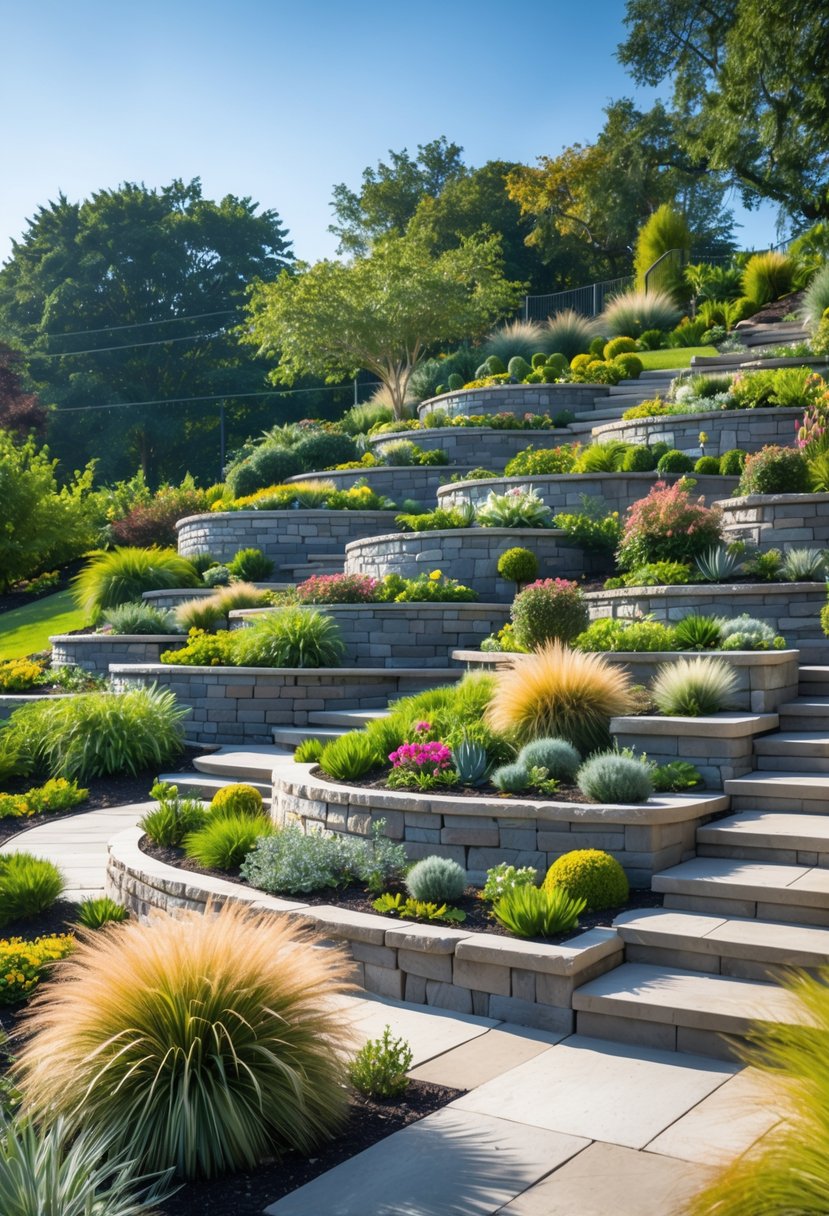
Unique garden ideas on a slope let you use uneven ground in creative ways, keeping your yard both beautiful and practical. With the right approach, your sloped garden could easily become your favorite spot to hang out and soak up some nature.
1) Terraced wooden retaining walls
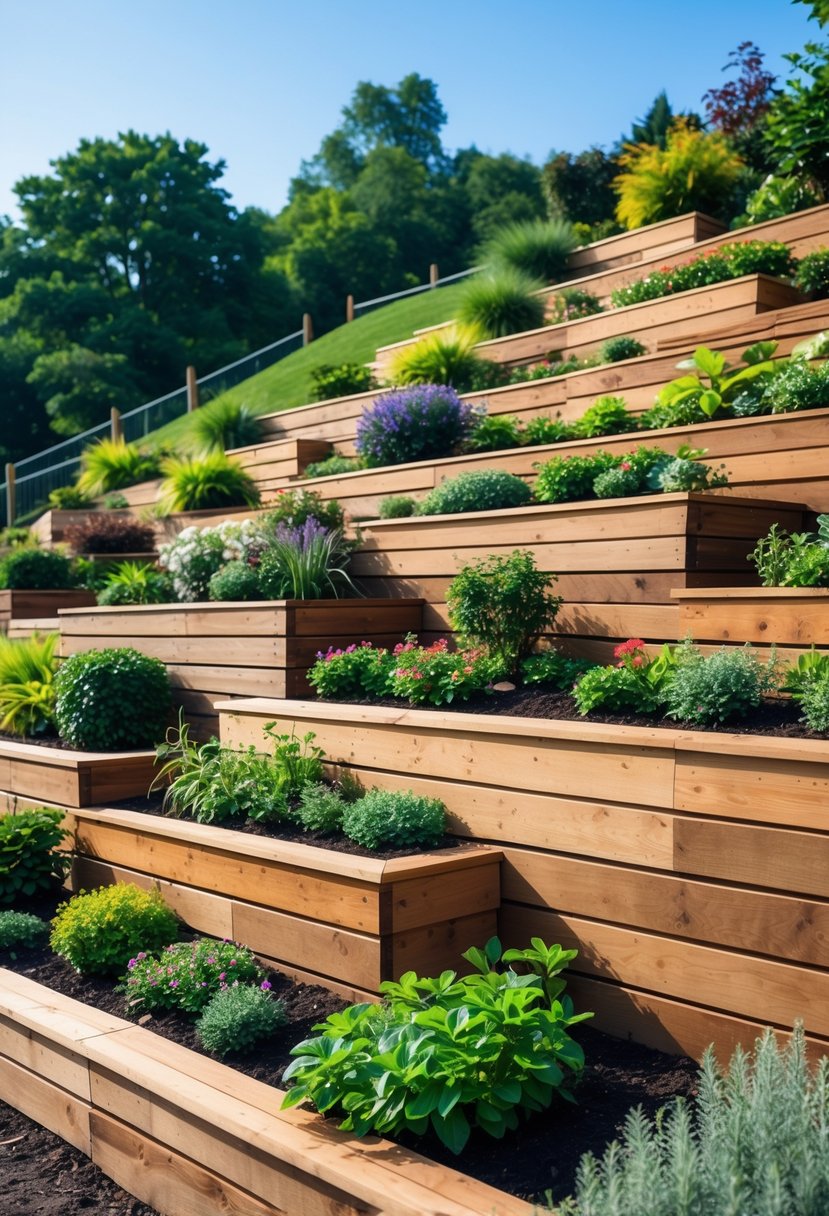
Try terraced wooden retaining walls to manage a sloped garden without much stress. These walls hold back soil and give your yard a tidy, layered vibe.
When you build terraces, you create flat spots for planting. That means you can grow flowers, veggies, or shrubs on each level.
Wood just feels right outdoors—it blends in and brings a cozy touch to the garden. You can check out more wood retaining wall designs if you want some inspiration.
2) Stone steps winding up the slope
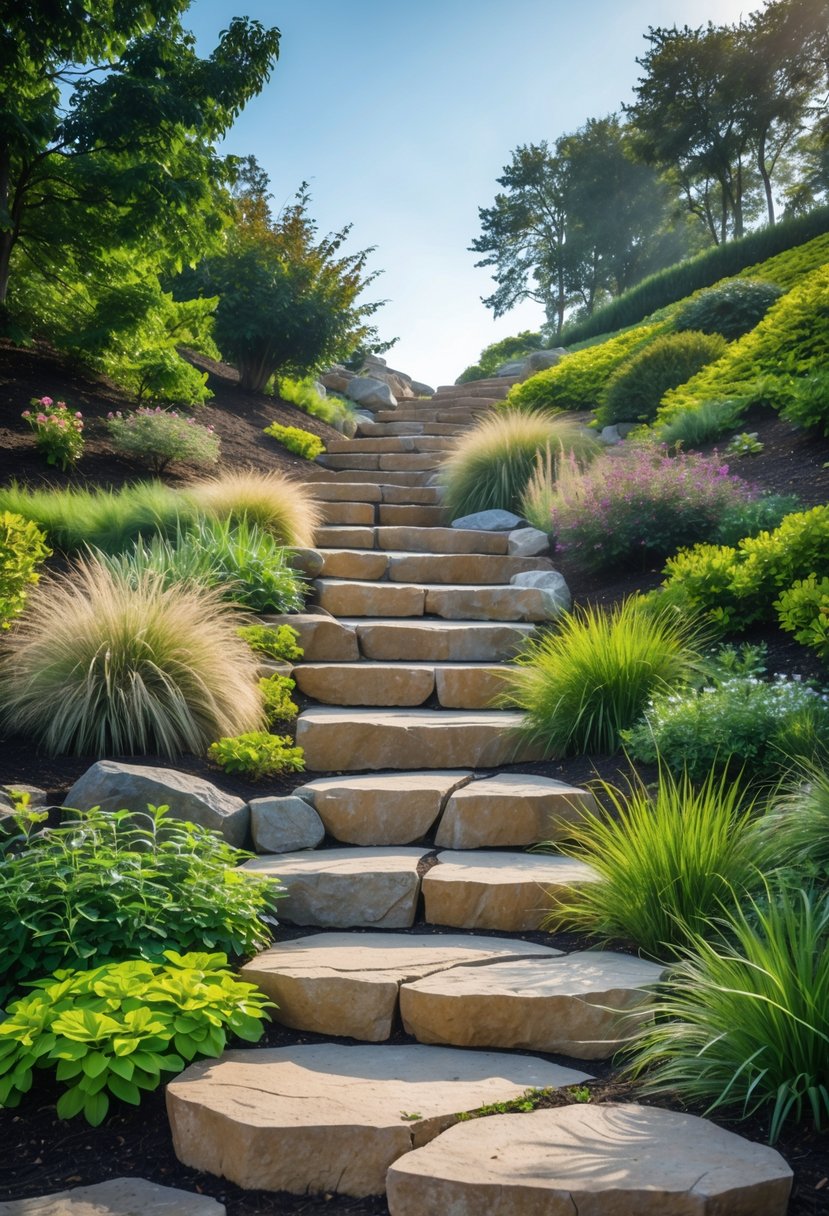
Stone steps add both function and style to your sloped garden. They make it easier to get around and give everything a more natural feel.
Pick stones like granite, slate, or limestone. These materials blend with plants and soil, making your garden feel peaceful.
Your steps don’t have to be straight—curvy, winding paths are way more interesting, aren’t they? Try groundcovers like creeping thyme between stones to soften the look and add some color.
Need ideas? Take a peek at these stone steps for more creative options.
3) Vibrant flower beds with colorful foliage
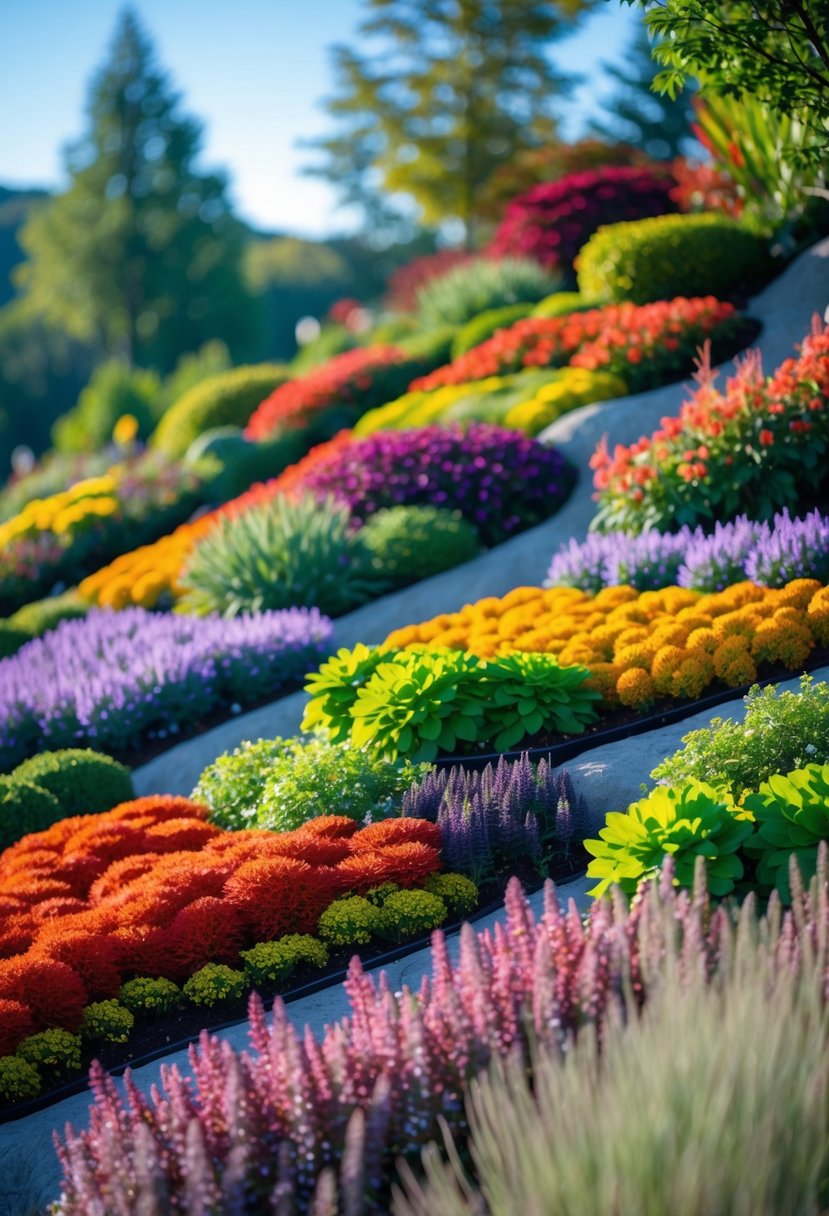
Brighten up a slope by planting flower beds packed with color. Choose flowers and foliage with lots of different shades—you’ll get a garden that really pops.
Arrange your plants in layers. Put taller flowers in the back and shorter ones in front to make the colors stand out.
Don’t skip plants with cool leaf shapes or bold colors. They add texture and keep things interesting.
For more colorful flower bed ideas, check out stunning garden flower bed ideas.
4) Succulent rock gardens
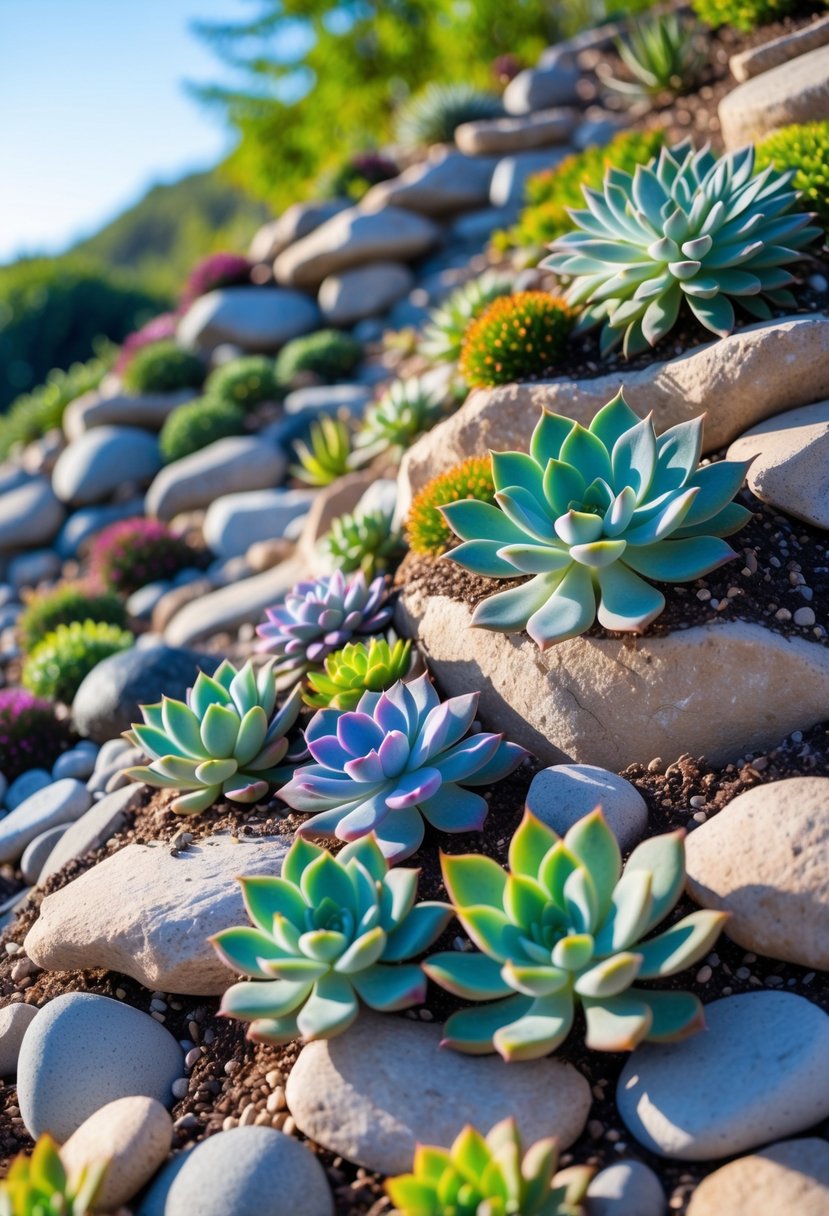
If you’ve got a slope, why not go for succulent rock gardens? They hold the soil in place and add loads of color and texture.
Succulents don’t need much water, so they’re perfect for spots where rain runs off fast. Mix up the shapes and colors to keep your garden interesting all year.
Add rocks to anchor the plants and give everything a natural look. Want more ideas? Check out this succulent rock garden on a slope.
5) Groundcover plants like creeping thyme
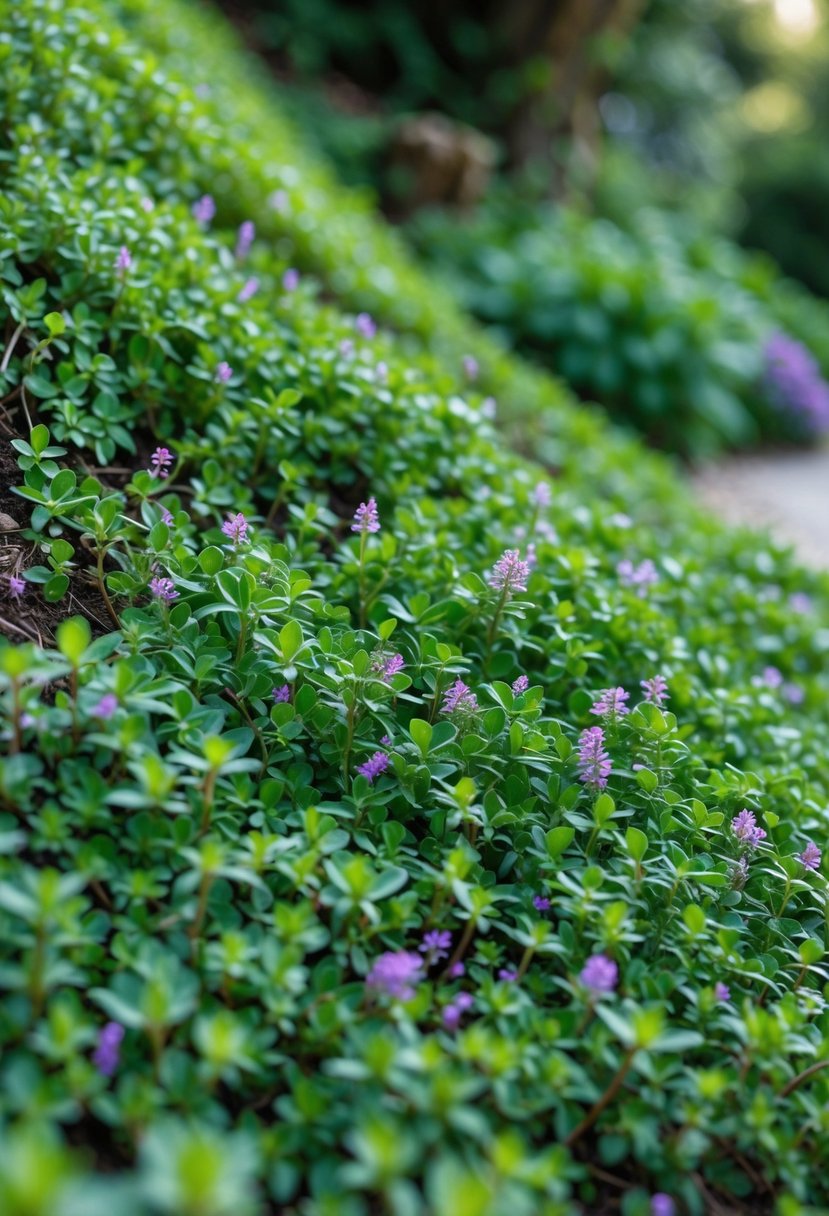
Try covering your slope with creeping thyme. It spreads quickly and forms a thick mat that keeps soil from washing away.
Creeping thyme loves sun and well-drained soil. Once it’s settled in, you barely have to do anything.
It also adds tiny purple flowers, which look great in any garden. If you want more low-maintenance ideas, check out creative creeping thyme landscape ideas.
6) Native grasses for erosion control
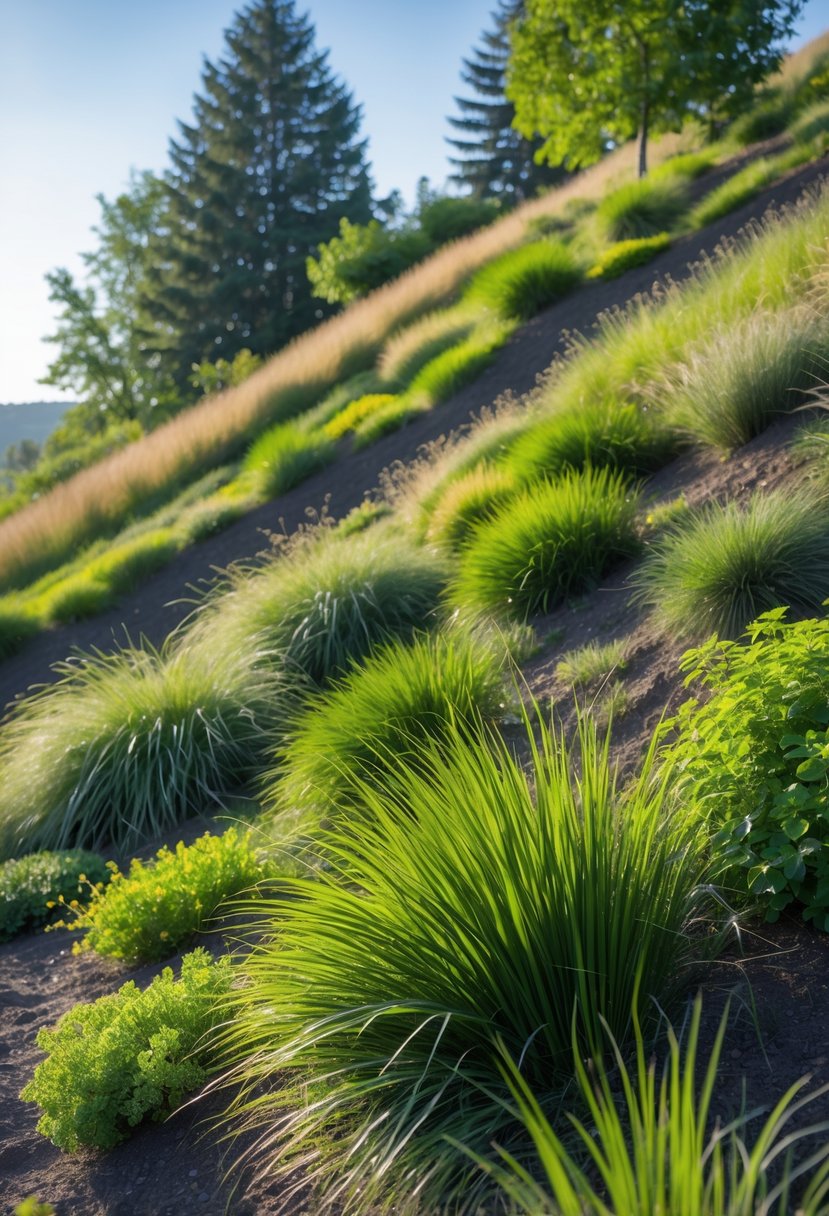
Plant native grasses on your slope to stop erosion. Their deep roots grip the soil and help keep everything in place.
Switchgrass and other native types thrive on slopes. Once they’re established, you won’t need to water them much.
Native grasses also attract local wildlife, which is a nice bonus. If you want to dig deeper, check out this guide on native grasses.
7) Miniature conifer trees
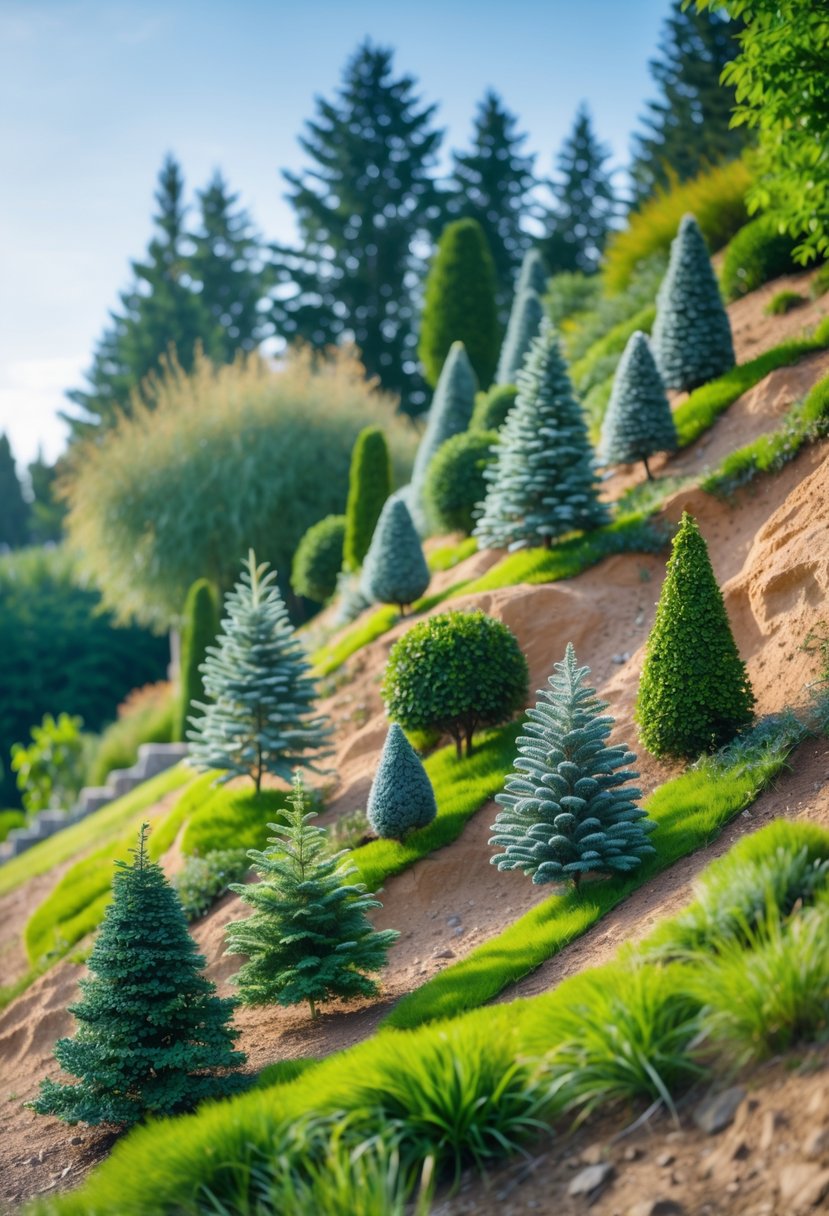
Miniature conifer trees bring color and texture to your slope. These little trees grow slowly and stay compact, so you don’t have to worry about them taking over.
You’ll find conifers in all kinds of shapes and shades—greens, blues, even golds. This makes it easy to mix and match for a cool pattern.
They’re also low-maintenance and keep their needles all year, so your slope looks lively even in winter. Curious about options? Here’s a guide on small conifers for small gardens.
8) Tiered raised beds for vegetables
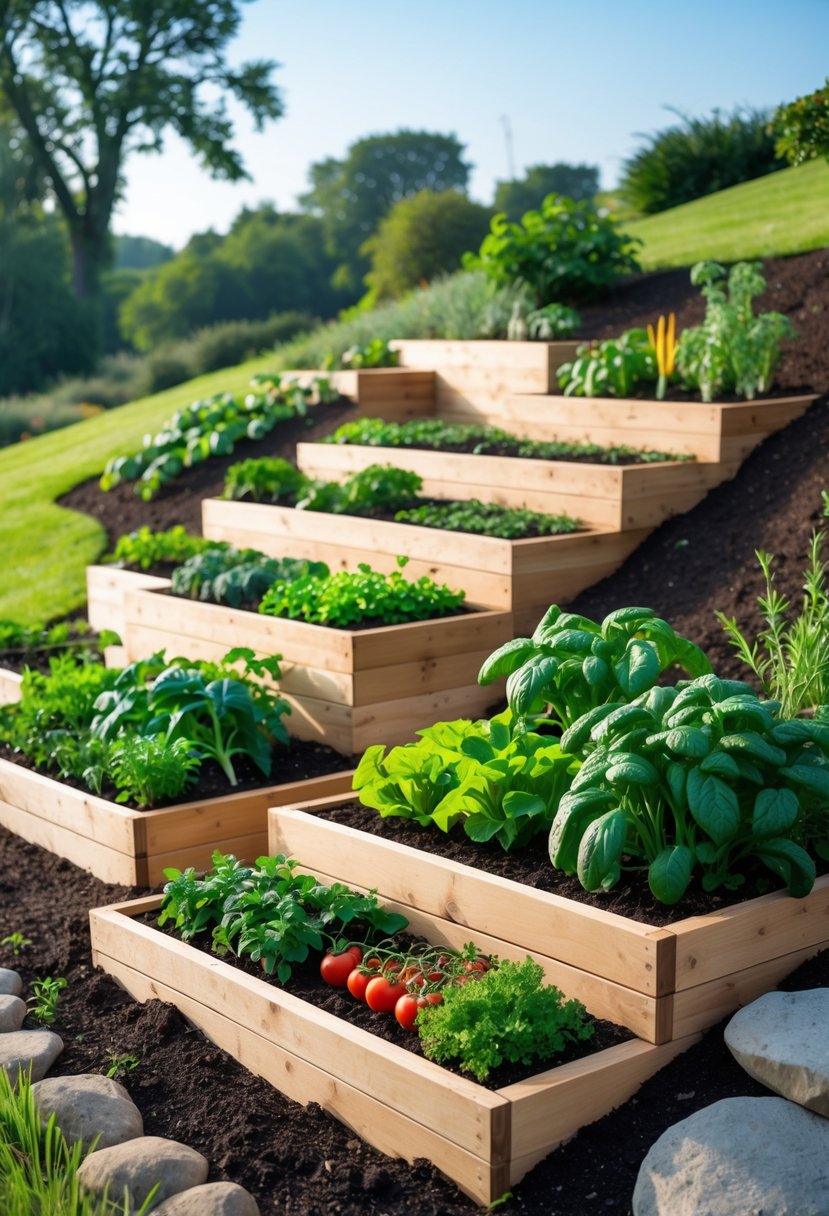
Tiered raised beds make growing veggies on a slope way easier. Stack the beds at different heights to create flat planting spots and keep soil from sliding away.
These beds put your plants within reach, so watering and picking are a breeze. Use wood, stone, or metal—whatever fits your style and budget.
Arranging veggies this way gives you more space and better drainage. For more tips, check out multi-level raised bed garden ideas.
9) Natural stone seating areas
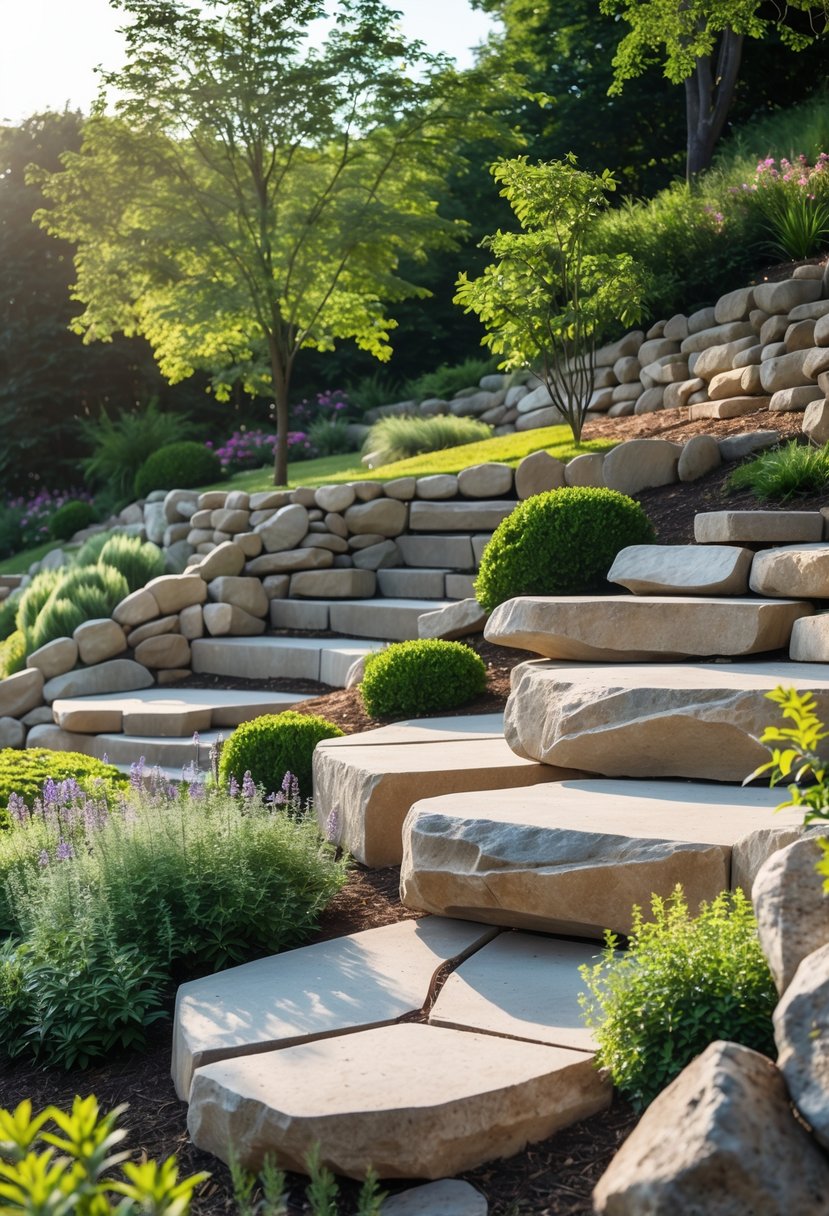
Add natural stone seating to your sloped garden for a cozy spot to relax and enjoy the view. Stones like limestone and granite look great and last forever.
Use stone walls to carve out flat areas on steep slopes. These spots work as seats or even small patios.
Stack the stones tightly for safety and sturdiness. A stone seating area blends right in with nature and adds charm. You can find more ideas here.
10) Water features like small cascading waterfalls
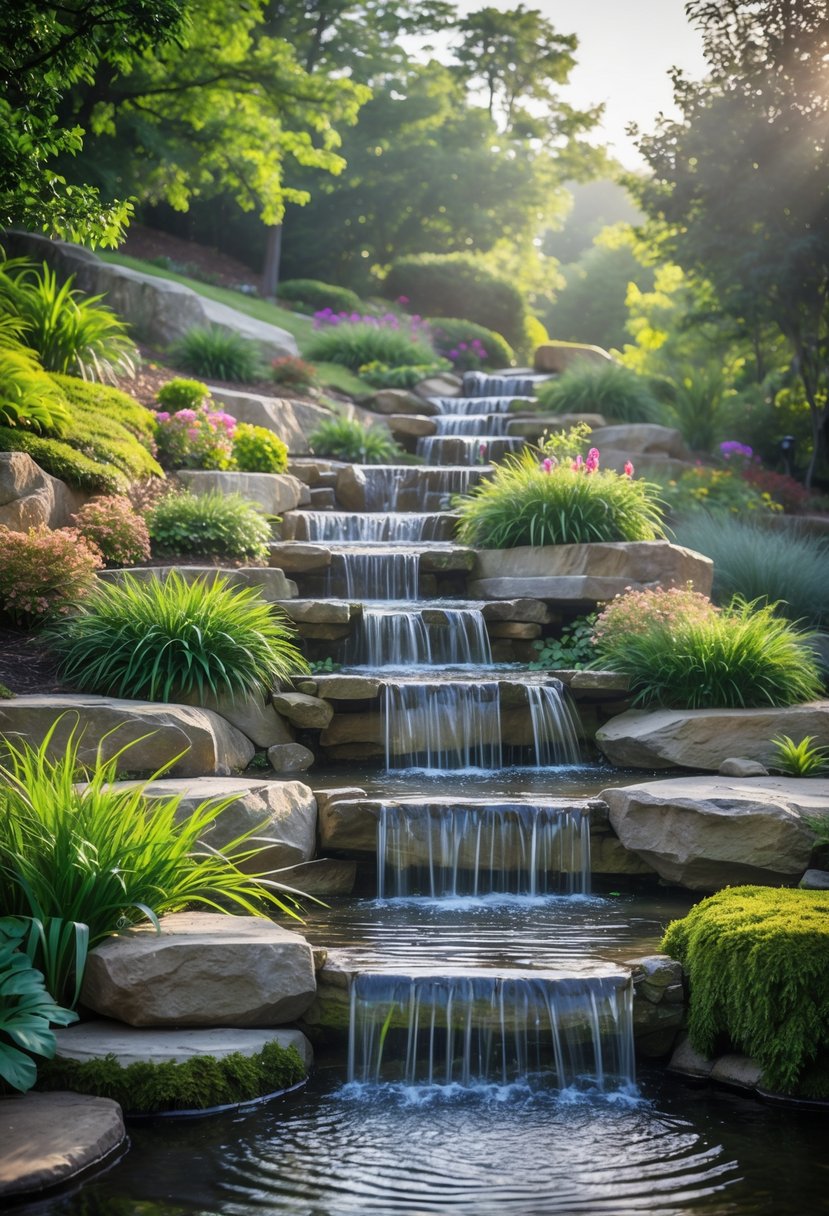
Turn your slope into a cascading waterfall for a touch of magic. Water naturally flows downhill, so it’s almost made for a peaceful water feature.
Use rocks or stones to build little tiers for the water to tumble over. The sights and sounds add calm to your space.
A small waterfall also helps manage water flow and can even cut down on erosion. For ideas, check out small cascading waterfalls.
11) Curved stone pathways
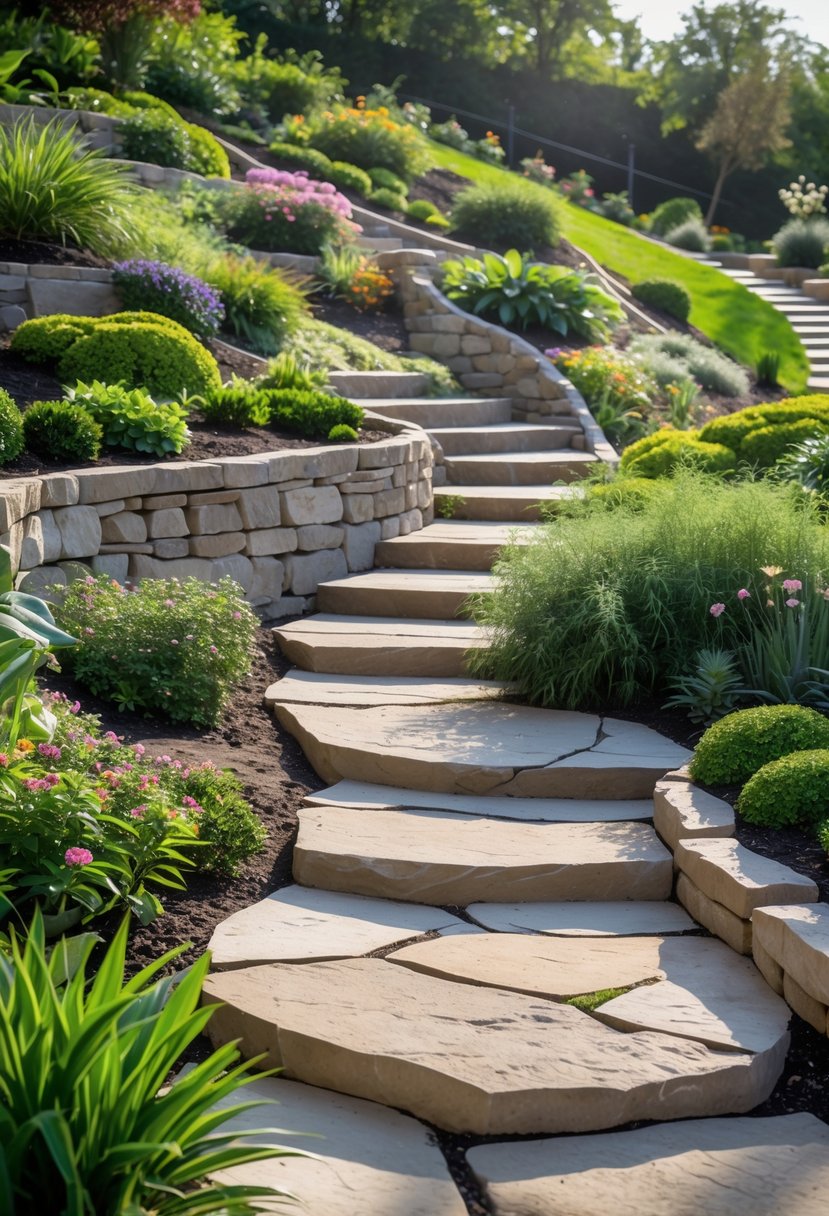
Curved stone pathways give your sloped garden a gentle, welcoming vibe. They guide people along, making it easier to move around uneven ground.
Lay stones or pavers to create winding trails that look good and help protect your soil from erosion.
Add some shrubs along the path for extra beauty and stability. If you want more inspiration, check out curved walkway designs—you’ll find some great examples out there.
12) Mixed shrub borders
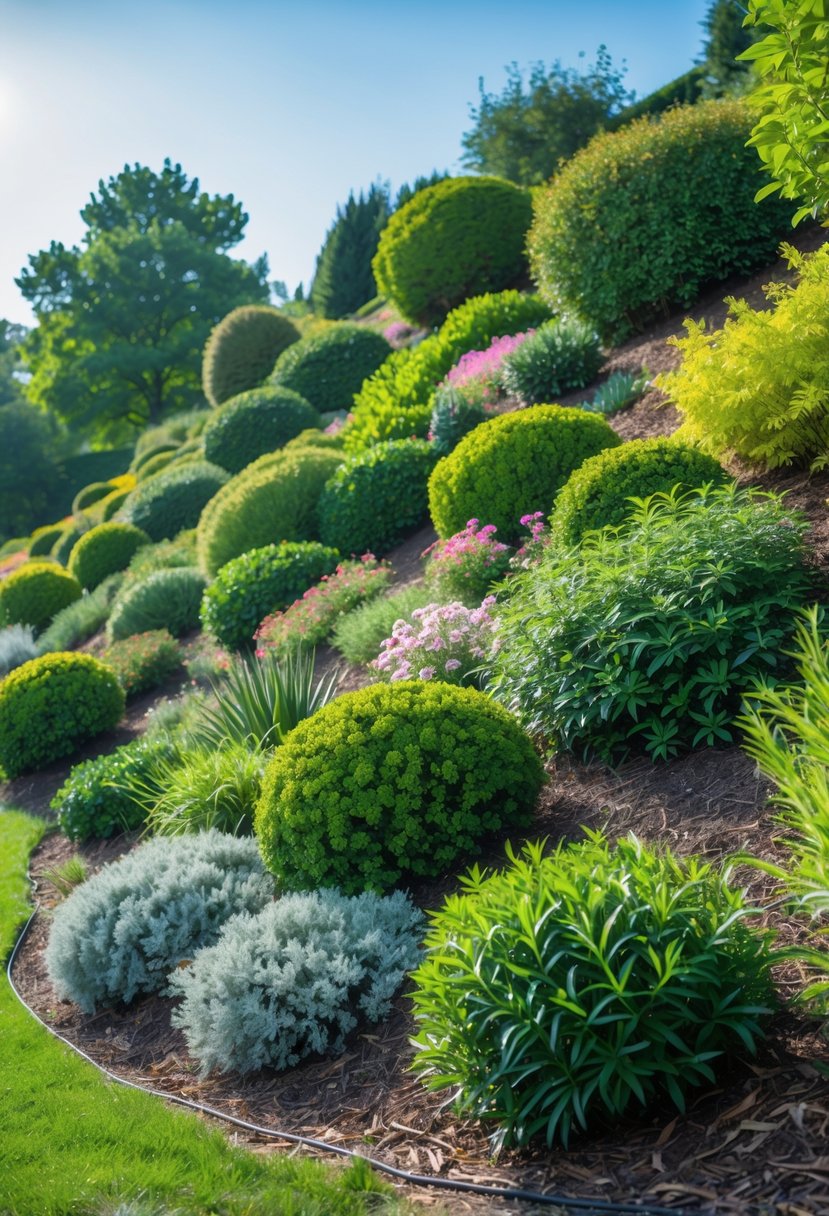
Mixed shrub borders work wonders on slopes, adding texture and color at different heights. Plant shrubs with flowers, cool foliage, or both for a lively look.
Evergreens like Golden Mop False Cypress keep your border looking sharp all year. Throw in flowering shrubs for color that changes with the seasons.
These borders help hold the soil in place, too. For more on designing mixed shrub borders, check out sloped yard garden ideas.
13) Wildflower meadows on gentle slopes
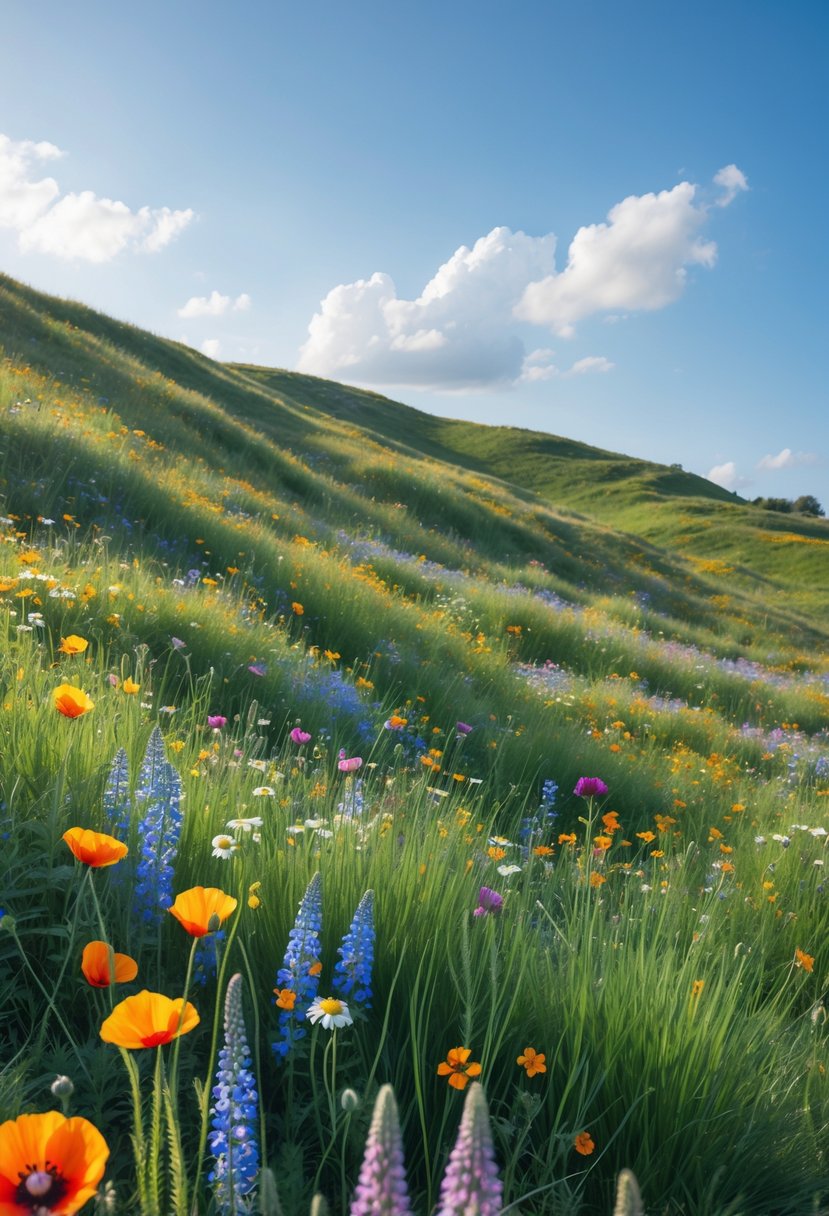
Try planting wildflowers on gentle slopes if you want to bring color and life to your garden without much effort. Wildflower meadows need less mowing, and their deep roots keep soil from washing away.
Pick native flowers that attract bees and butterflies. You’ll get a peaceful, natural look that changes every season—honestly, it’s pretty relaxing to watch.
Wildflower meadows work well on gentle slopes since they’re low-maintenance and just fit the land’s shape. If you need help, here’s a guide on planting wildflowers on a slope.
14) Vertical garden planters attached to fences
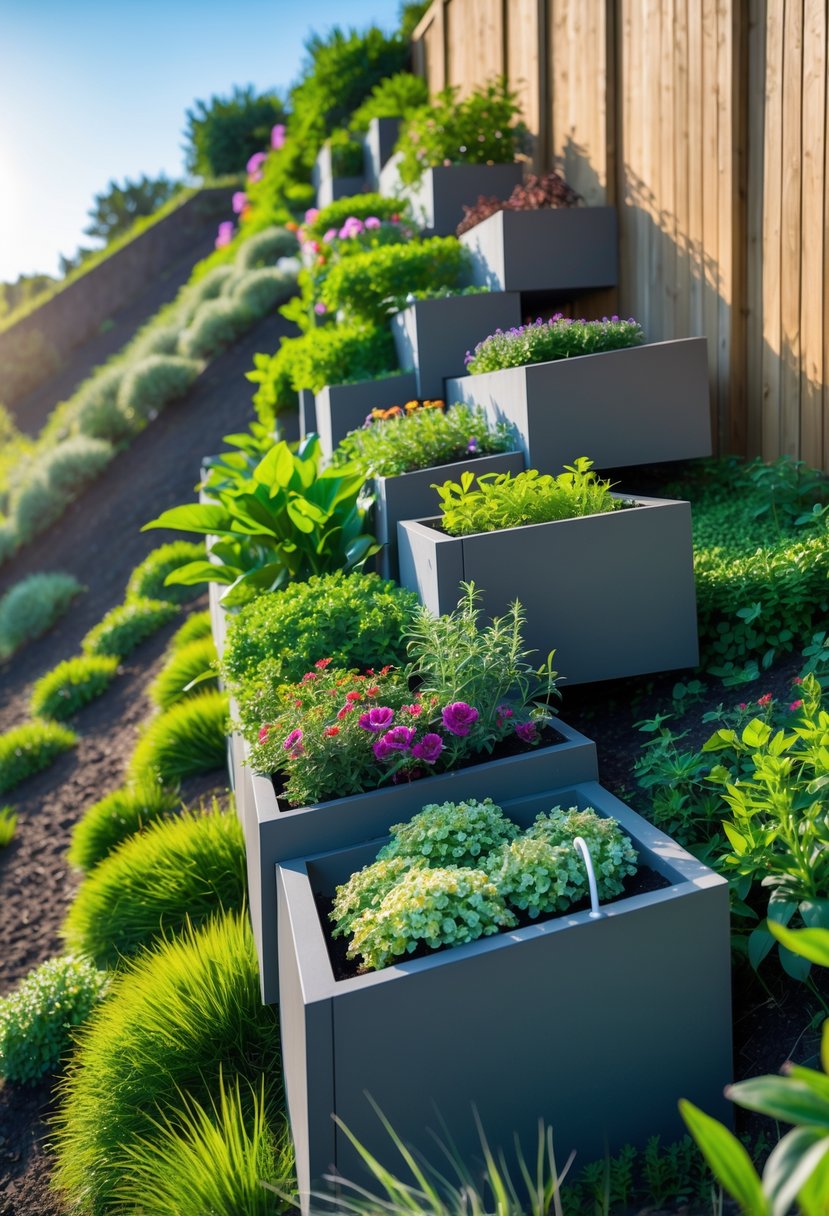
If you’re short on space, try attaching vertical garden planters to your fence on a slope. You can grow flowers, herbs, or small veggies without needing a flat patch of ground.
Just make sure you mount the planters securely and tilt them a bit for drainage. That way, your plants stay healthy and your fence doesn’t get soggy.
Using your fence for plants adds a burst of green and makes your slope feel lively. Get creative—wooden boxes or old containers work great.
Need more inspiration? Check out vertical garden fence hanging plants.
15) Hanging baskets on slope-facing walls
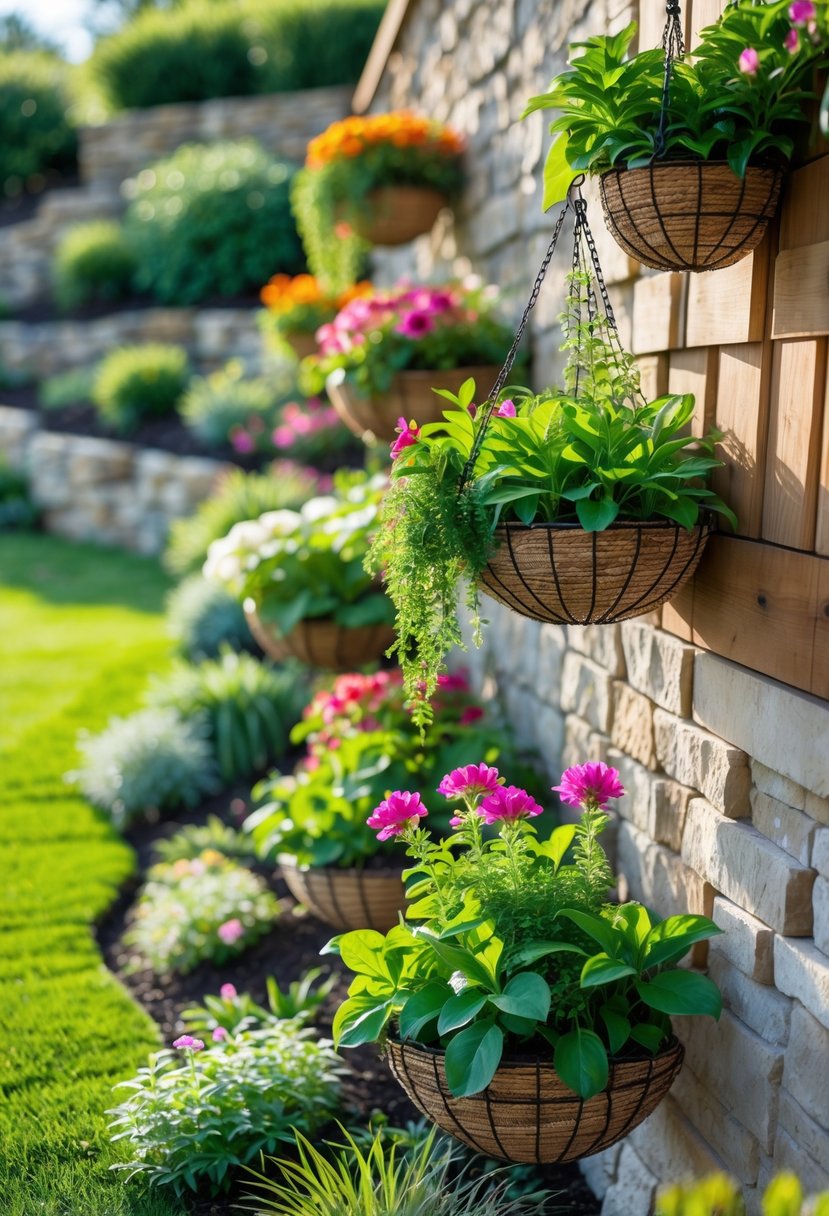
Brighten up slope-facing walls with hanging baskets. Hanging baskets add color and texture without taking up precious ground space.
Go for cascading plants to get a waterfall effect down the wall. It’s a simple trick that brings your garden to life with layers of flowers or greenery.
You can even grow herbs or small veggies in them. Hanging baskets make the most of vertical space on a slope.
Need ideas? Here are some creative hanging baskets on walls.
16) Stepped herb garden sections
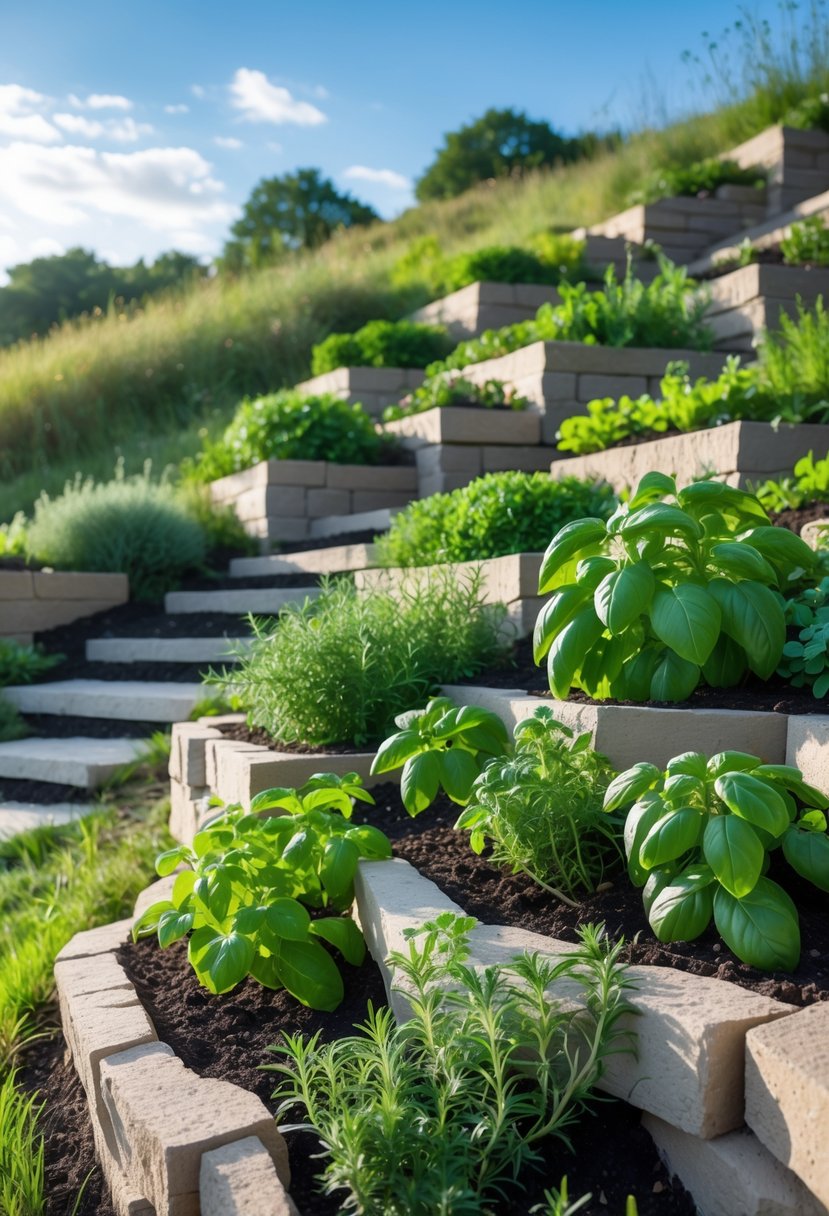
Try building stepped herb garden sections on your slope. Flat tiers make it easy to grow different herbs in their own spaces.
These steps keep soil in place and stop it from washing away. Each tier can hold herbs that like the same sunlight and water.
Put sun-loving herbs like rosemary up top. Grow shade-tolerant ones lower down.
Bricks or wood make building steps pretty straightforward. A stepped herb garden gives you fresh flavors and keeps your slope looking tidy.
For more, check out stepped garden design ideas.
17) Mulch-covered paths to prevent slipping
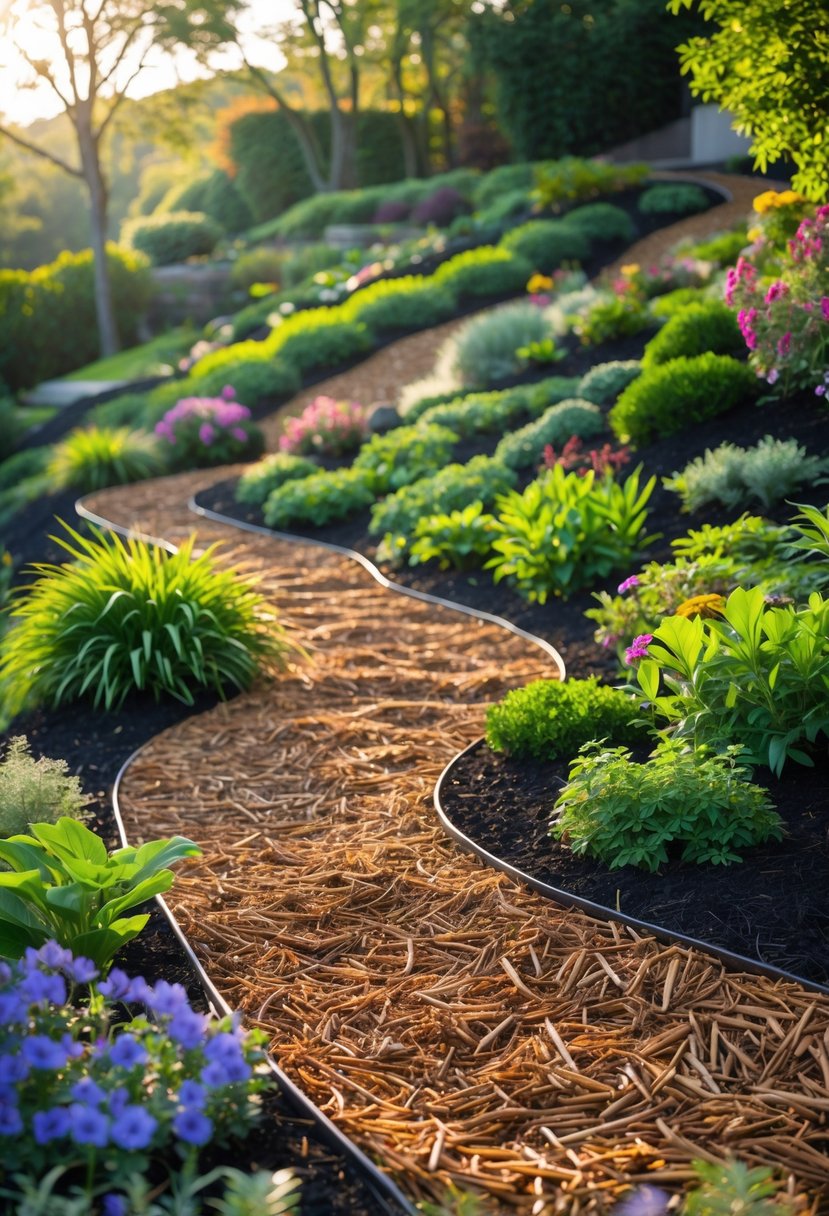
Covering paths on slopes with mulch keeps them safe. Mulch gives you a natural surface that helps stop slipping, even after rain.
Go for organic mulch like bark or wood chips for extra grip. It also looks good with most gardens.
Add edging along the path to keep the mulch where it belongs. Landscape fabric underneath helps block weeds.
Mulch paths feel soft underfoot and make your slope look cozy. For more tips, check out mulch garden path ideas.
18) Flowering vines on trellises
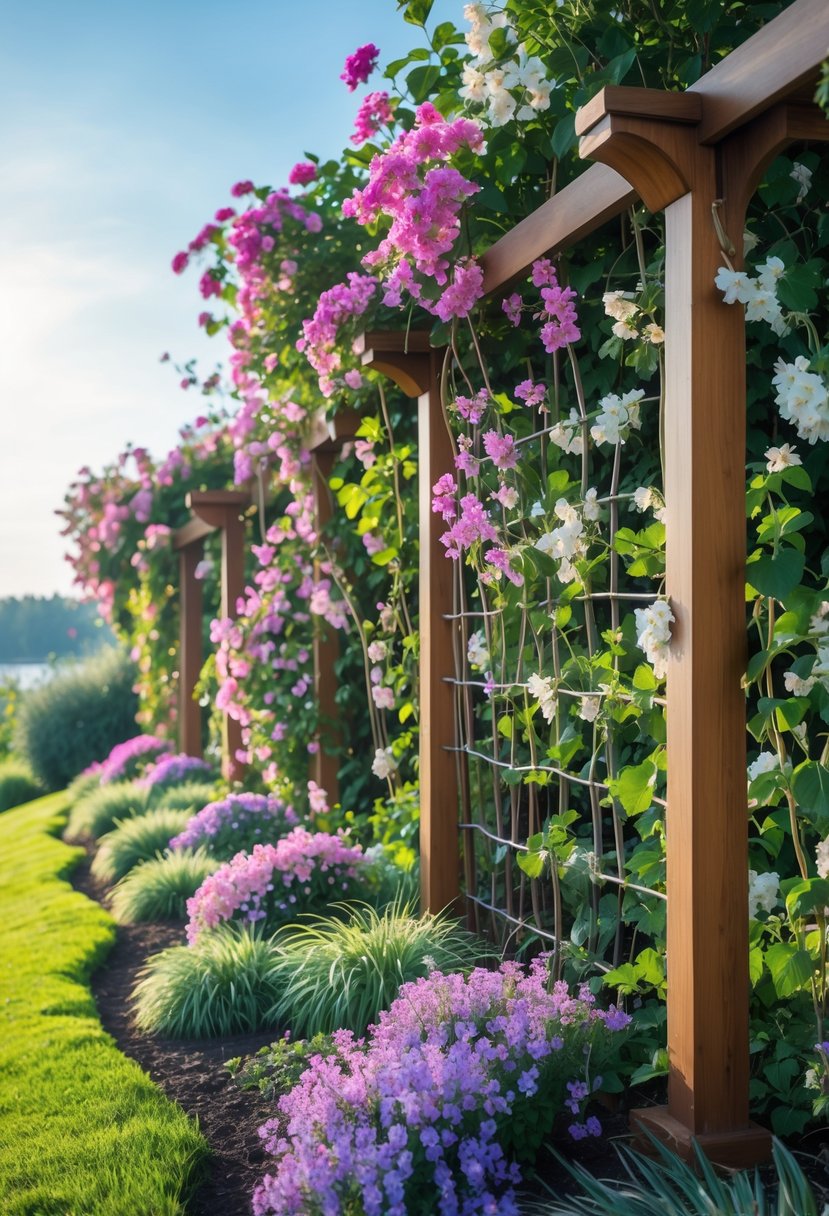
Try flowering vines on trellises to add color and life to your slope garden. You can grow vines that climb up and cover a trellis, creating a living wall that looks great and helps with erosion.
Pick vines that won’t get out of control, so you don’t end up with a jungle. The trellis gives your plants a place to climb without taking up much ground space.
This idea adds vertical interest and makes your garden feel lush. If you want more options, check out flowering vines for trellises and trellis designs.
19) Small orchard trees in terraces
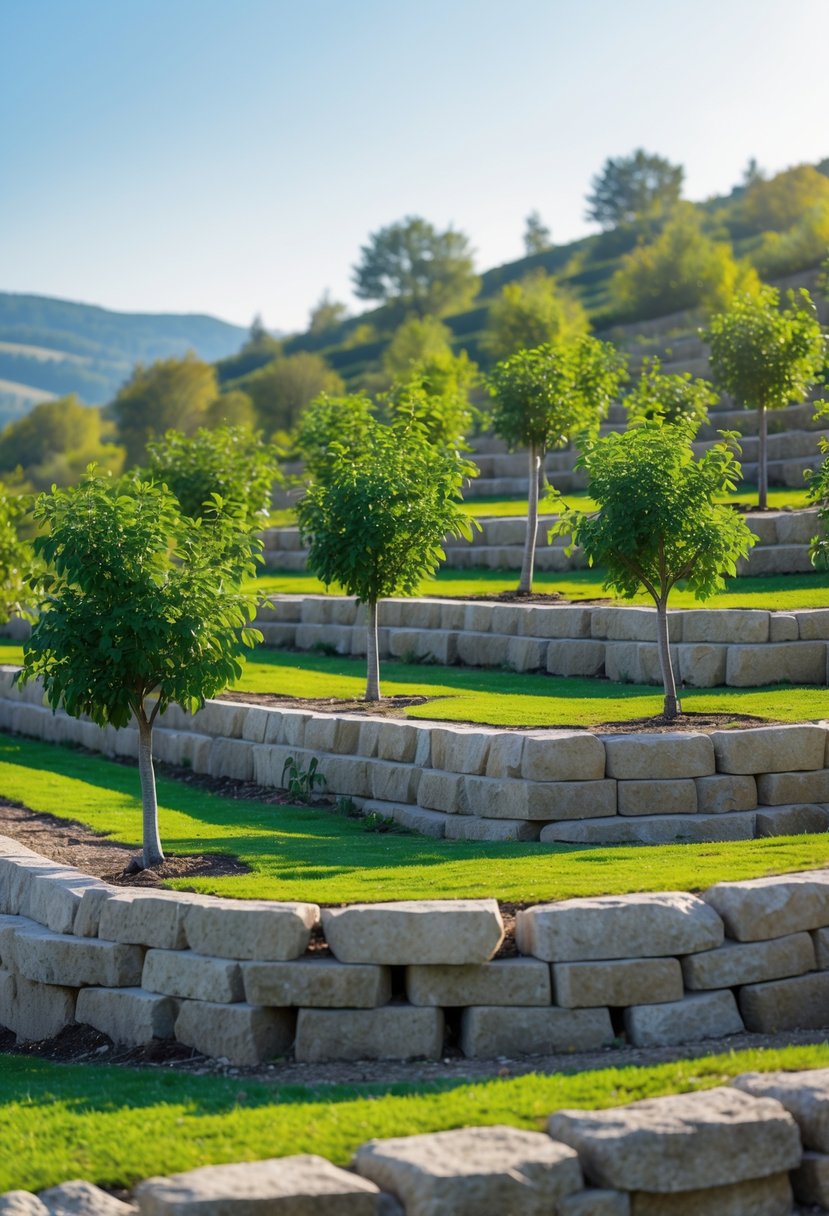
Planting small orchard trees on terraces makes the most of a sloped garden. Terracing stops soil from washing away and makes watering easier.
Pick dwarf or espalier fruit trees—they fit small spaces and are easier to care for. Terraces create flat spots, so you can harvest fruit without worrying about slipping.
Add companion plants between trees to attract pollinators and boost fruit. This way, you can grow fresh fruit even on a steep hill.
Curious about more? Check out this terraced garden ideas page.
20) Container gardens on tiered platforms
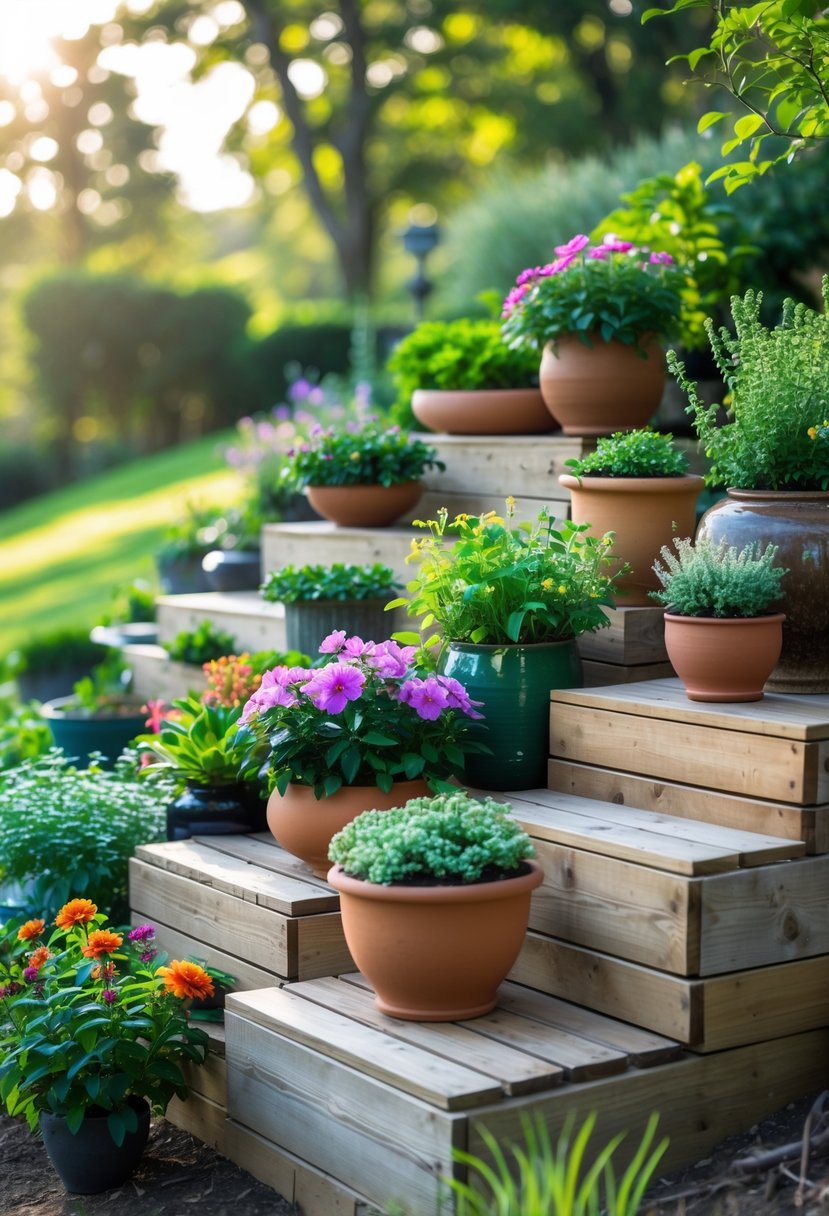
Try container gardens on tiered platforms to work with a slope. You can arrange pots on different levels for a tidy, organized look.
This setup lets you control soil and water for each plant. You can move pots around if you feel like changing things up.
Mix flowers, herbs, and small vegetables in containers for color and variety. No need to worry about uneven ground.
Stack wooden crates or build simple shelves for your tiers. This works great in small or awkward spaces.
For more ideas, check out tiered garden ideas.
21) Low-growing evergreens
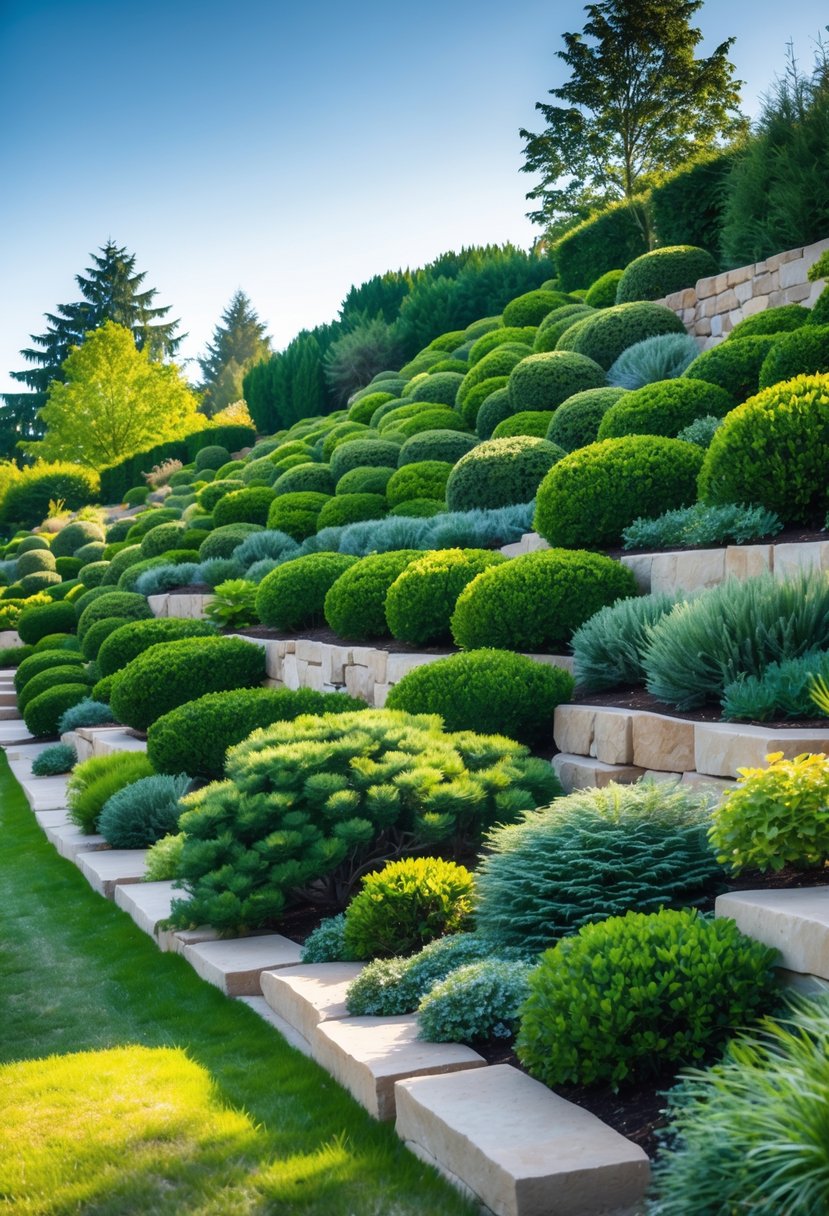
Low-growing evergreens work wonders on sloped gardens. They keep soil in place and add green all year—no more worrying about plants dying off when the seasons change.
Most of these evergreens spread out like a soft carpet. Your slope looks full without much fuss. Try dwarf varieties if you don’t want them to get too tall.
Low-growing evergreens make it easy to keep your slope neat and tidy. They blend well with rocks and other plants for extra texture.
Need more inspiration? Here are some low-maintenance slope plants.
22) Ornamental grasses with movement
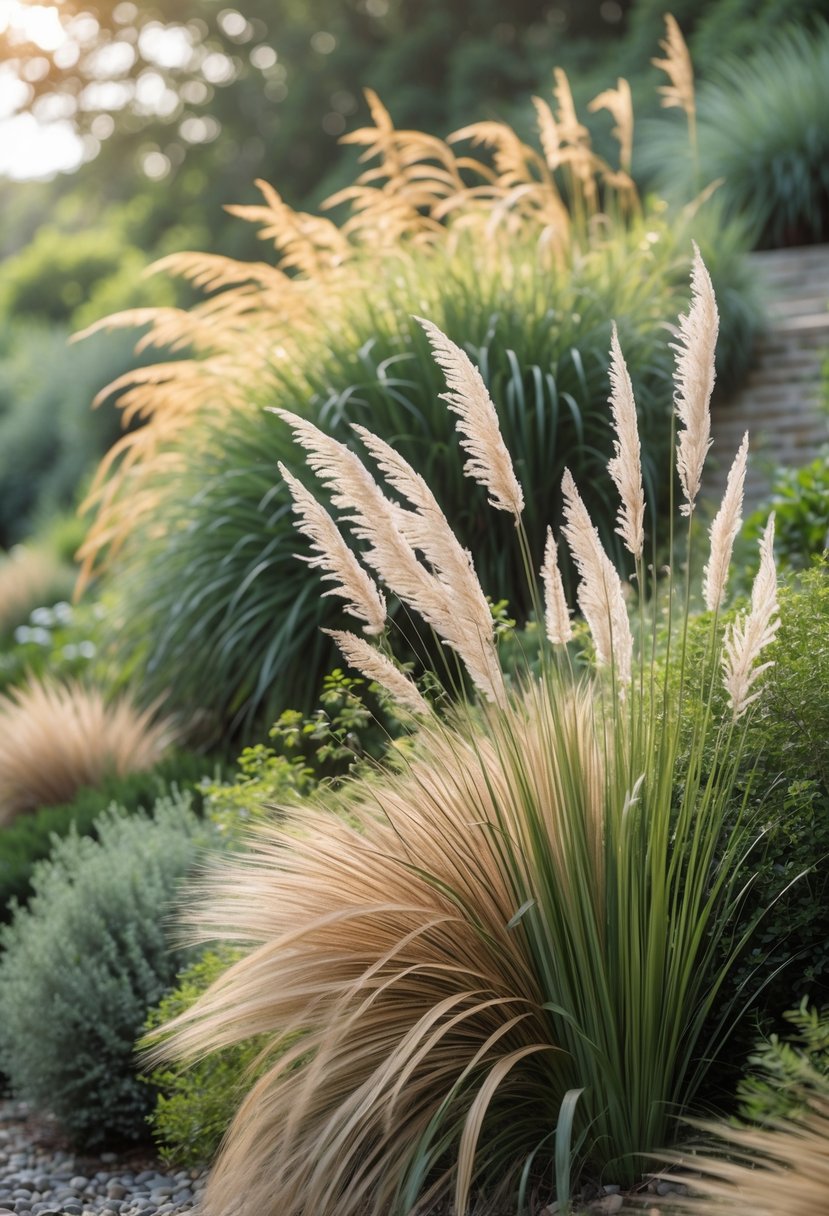
Ornamental grasses bring gentle movement to your slope garden. They sway in the breeze, giving steep areas a soft, lively look.
Different heights and textures create layers that make your garden feel full and dynamic. These grasses also have deep roots that help stop erosion.
Mix a few types for color and texture changes through the year. Using ornamental grasses gives your slope a relaxed, natural vibe.
Want to see more? Check out this ornamental grasses movement guide.
23) Sun-loving lavender patches
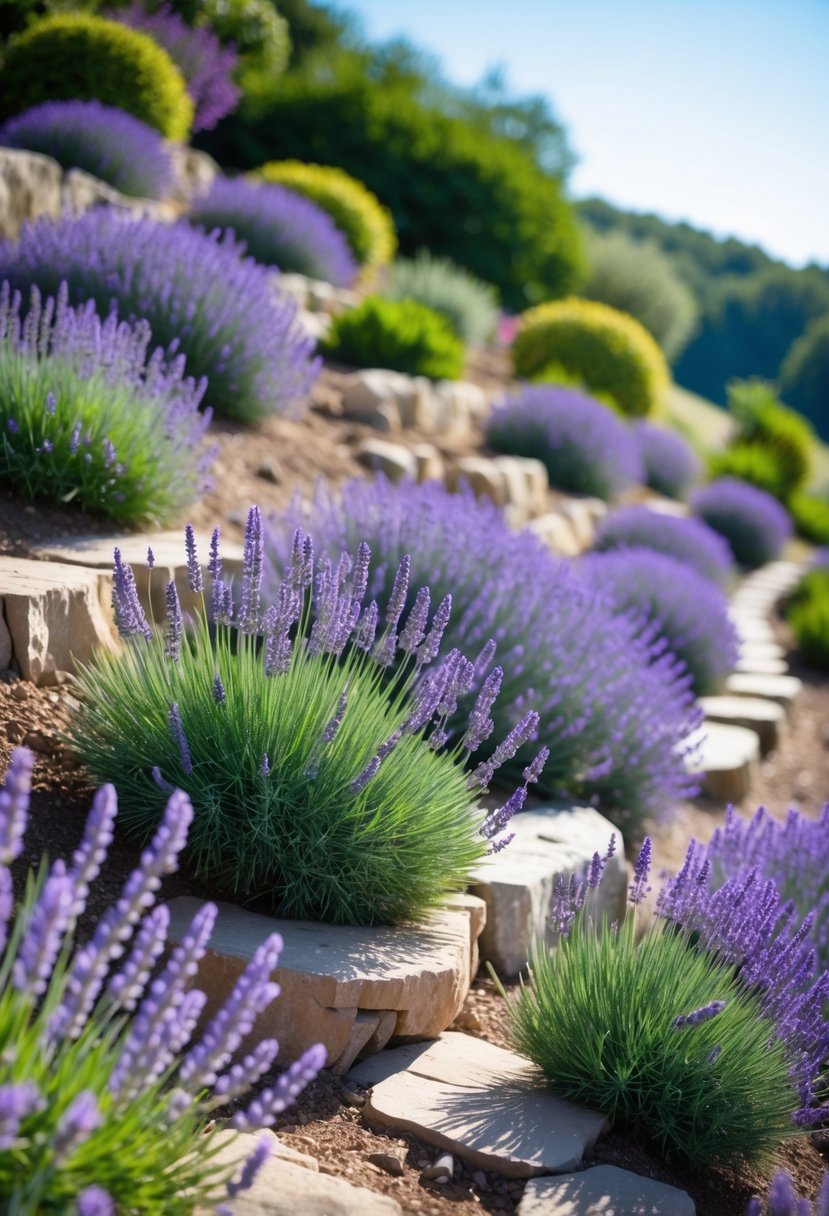
Lavender loves sunny spots, so it’s perfect for slopes that get lots of sun. Plant small patches of lavender for color and that amazing scent.
Lavender’s roots help control erosion on slopes. Just make sure the soil drains well—lavender hates soggy feet.
Trim your lavender now and then to keep it neat and healthy. You’ll end up with a tidy, inviting slope all year.
For more, here’s a guide to planting lavender on slopes.
24) Pollinator-friendly butterfly gardens
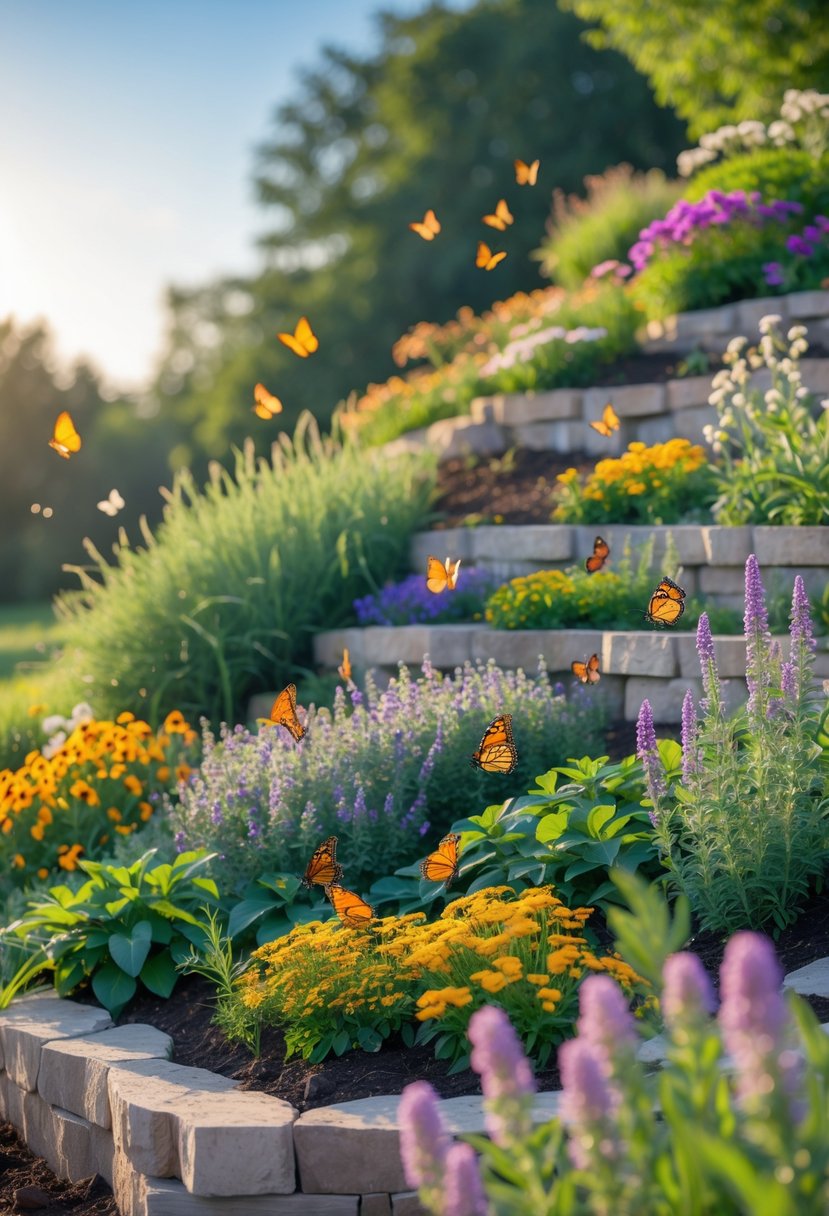
Turn your slope into a colorful butterfly garden by choosing nectar-rich flowers. Butterflies flock to bright blooms like milkweed, coneflowers, and lantanas.
Add some flat stones or shallow dishes with water so butterflies can rest and drink. Planting in groups makes your garden easier for them to spot.
Skip the pesticides to keep your garden safe for pollinators. For more ways to attract butterflies, check out 20 Butterfly Garden Ideas to Transform Your Yard into a Pollinator’s Paradise.
25) Recycled timber benches
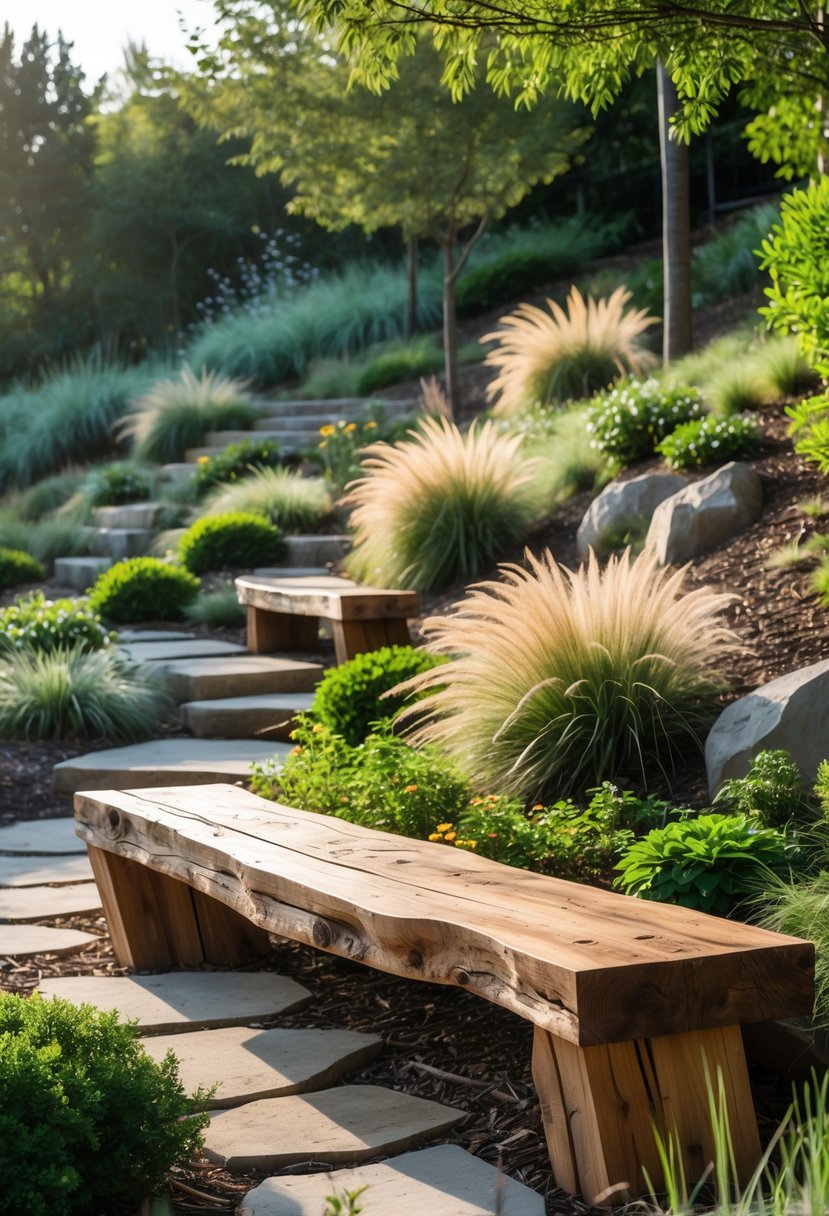
Add charm and function to your sloped garden with recycled timber benches. They fit right in on uneven ground and give your space a cozy, natural vibe.
Build a bench from reclaimed wood if you want to save money and be eco-friendly. You can make it any size or style you like.
These benches hold up well outdoors. Place one near a path or a nice view so you have a spot to relax.
Need ideas? Here are some creative reclaimed wood bench options.
Understanding Slope Dynamics
When you work with a sloped garden, you need to control how water and soil move. If you ignore this, you might lose precious soil or end up with drainage problems that hurt your plants—or even your house.
Soil Erosion Prevention
Soil on slopes tends to wash away when it rains or when you water. You can stop this by putting up physical barriers like terraces or retaining walls.
These slow down the water and keep soil in place. Plant roots do a lot too—they hold soil together.
Pick groundcovers, grasses, or shrubs that spread out and have strong roots. Mulching your garden adds another layer, so rain doesn’t pound the soil directly.
Try mixing plants and structures—build terraces, then plant between them for better soil protection. Make sure to space your plants so they cover bare dirt fast.
Drainage Solutions
Water always rushes downhill on slopes. If too much collects, it can wash away soil or flood the flat spots below.
Install drainage channels or French drains to guide water away from your plants. You can dig swales—just shallow ditches that slow water down and let it soak in.
If you use mulch or gravel on your garden paths, it helps water soak in instead of running off. Sometimes, changing the angle of the slope in certain spots slows down the water too.
Good drainage keeps soil healthy and stops your plants from getting swamped. If you want more ideas, check out smart ways to prevent erosion and fix drainage problems in sloped gardens. Take a look at how to make a garden on a slope for extra tips.
Designing for Accessibility and Visual Flow
Making a sloped garden easy to move around and nice to look at really matters. You want clear paths that feel safe and plant layers that guide your eyes naturally.
This way, you can actually enjoy every part of your garden without any hassle.
Pathways and Steps
Keep paths on a slope gentle and sturdy. Use gravel, stone, or brick for a firm, slip-resistant surface.
If the slope gets steep, switchback trails that zigzag up the hill work better than straight paths. Add steps where you need them—make them wide and not too tall, so they’re easy to climb.
Handrails or low walls on the sides give you some extra security. The space feels safer that way.
Try adding soft lighting or low plants along the edges of your paths. That way, you know where to walk even at night, and it just looks more inviting.
Layered Planting Concepts
Layered planting is all about arranging plants at different heights. Start by putting taller shrubs or small trees at the back or up at the top of your slope.
Then, fill the middle with plants of medium height. Let low-growing ground covers take over the front or bottom.
These layers help hold the soil in place, so you avoid erosion. They also guide your eyes up or down the slope in a way that just feels right.
Pick plants with a mix of colors, textures, and bloom times. That way, your garden stays interesting, even in the off-season.
Try to stick with native or drought-tolerant plants—they save you a lot of hassle and water.
If you group plants that need the same amount of sun and water, maintenance gets way easier. Watering and pruning won’t feel like such a chore.
If you want more ideas, check out sloped garden ideas.


