

Modern Garden Ideas On A Slope: 25 Creative and Easy Ways to Enhance Your Yard
Gardening on a slope might seem tricky at first, but honestly, it’s a great chance to build something unique outdoors. Don’t see your sloped yard as a hassle—it can actually become the standout feature in your garden.
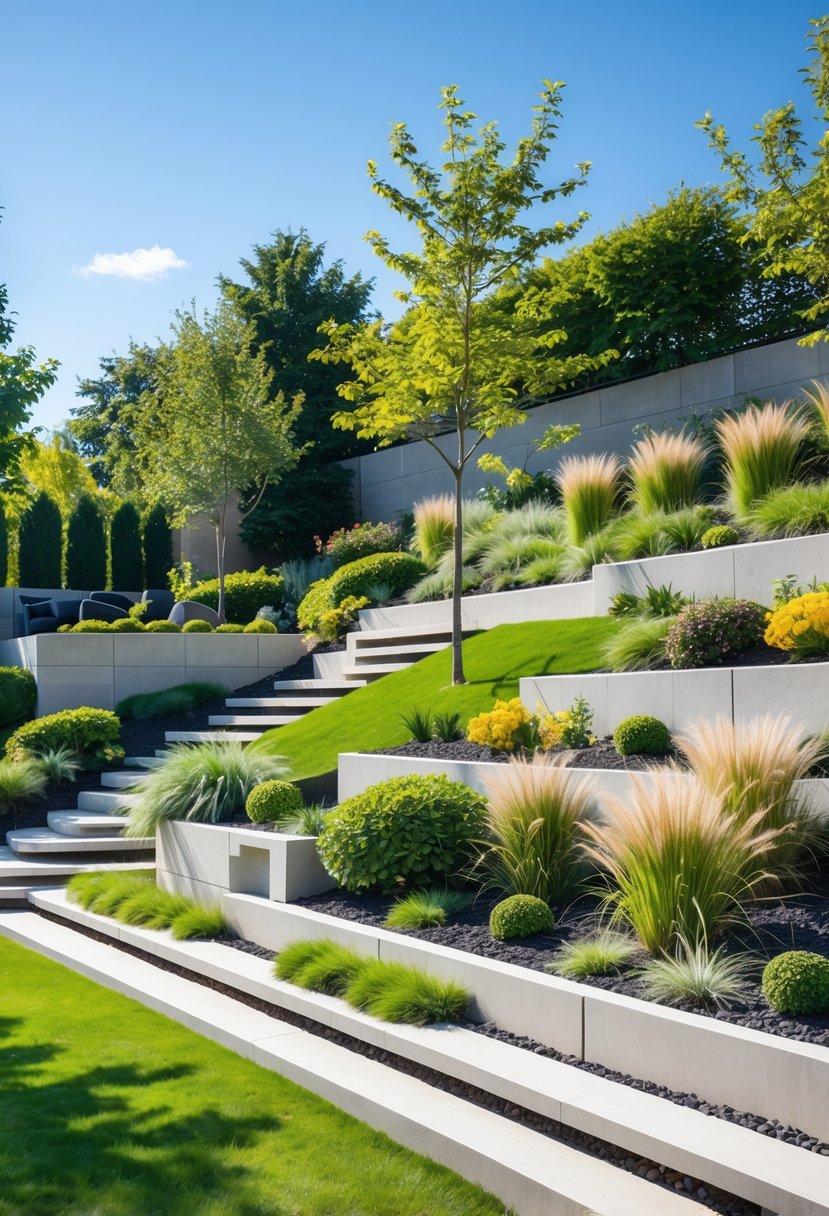
Modern garden ideas on a slope let you use uneven ground in clever ways that fit your landscape. These ideas can make your outdoor space more fun and beautiful, and they’re usually not hard to care for.
1) Create terraced garden beds with natural stone retaining walls
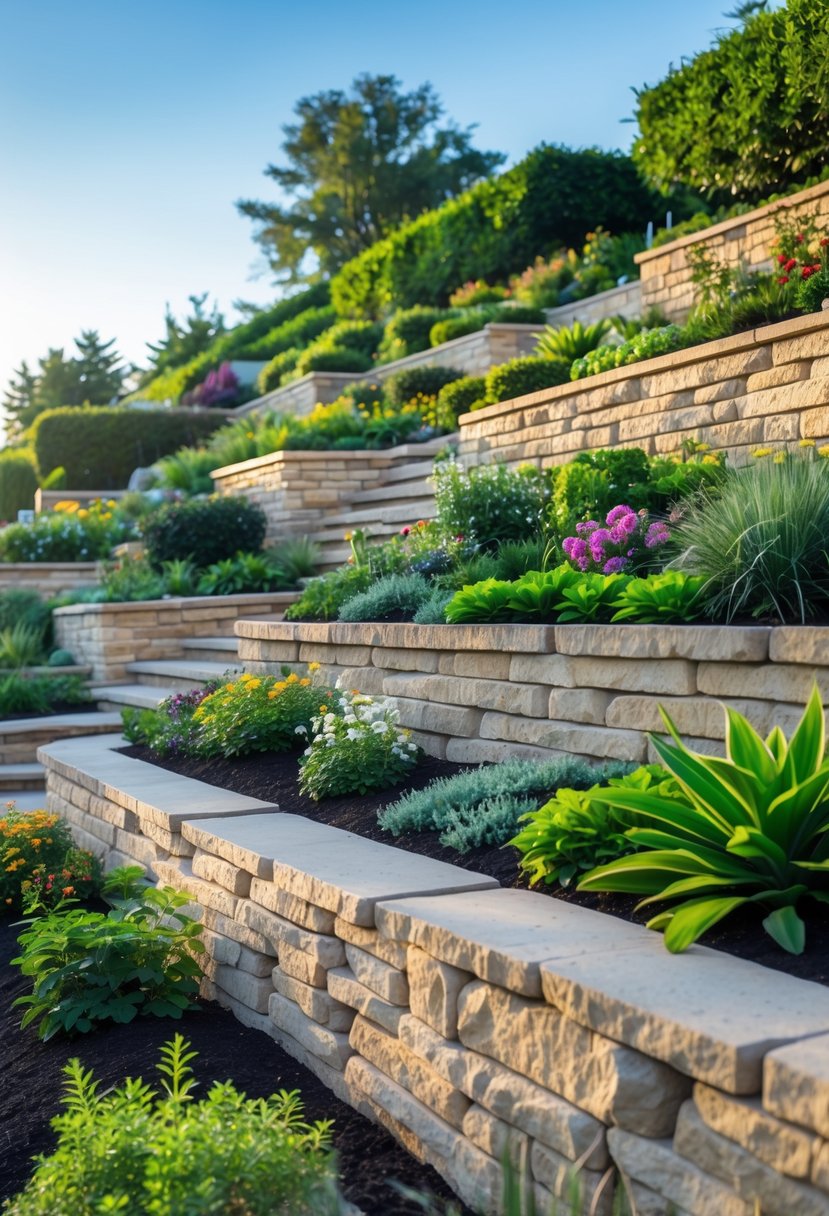
Try building terraced beds to make your sloped garden more usable. Natural stone retaining walls hold the soil steady and prevent erosion.
These walls also give your garden a classic, lovely look. You get flat spots perfect for planting flowers, veggies, or herbs.
When you use natural stone, your garden feels warmer and more timeless, plus it works better. It’s a great way to add both style and order to a steep yard.
Want more ideas? Check out natural stone retaining wall ideas for stunning backyard design.
2) Install a meandering stone staircase to add charm and accessibility
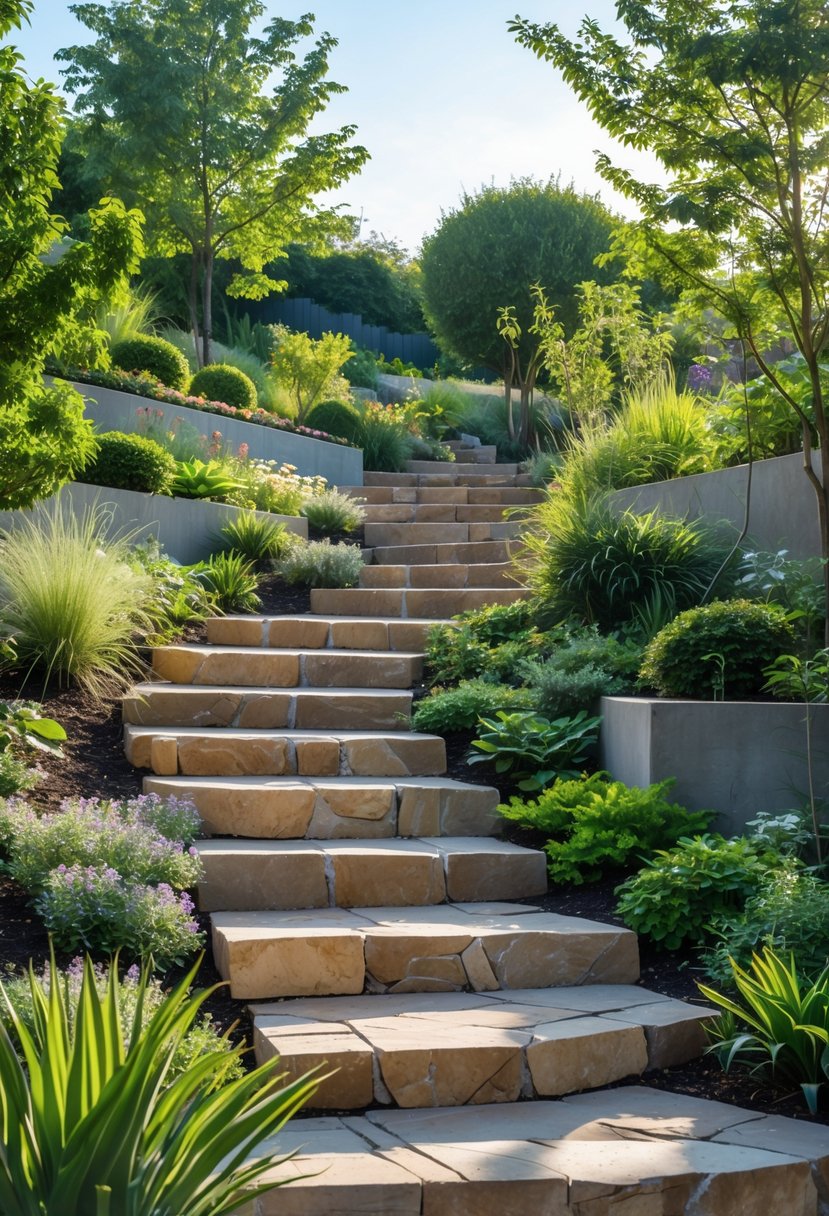
Add a meandering stone staircase to make your slope easier to walk on. The gentle curves feel natural and fit right into the garden.
Stone steps look great with plants and the earth. They also make things safer, especially if your slope is steep.
If you plan well, building a stone staircase isn’t too tough. You’ll find helpful tips for making a meandering stone path to guide you along.
Curious how to start? Take a look at meandering stone path ideas for your backyard.
3) Build a modern rock garden featuring succulents and alpine plants
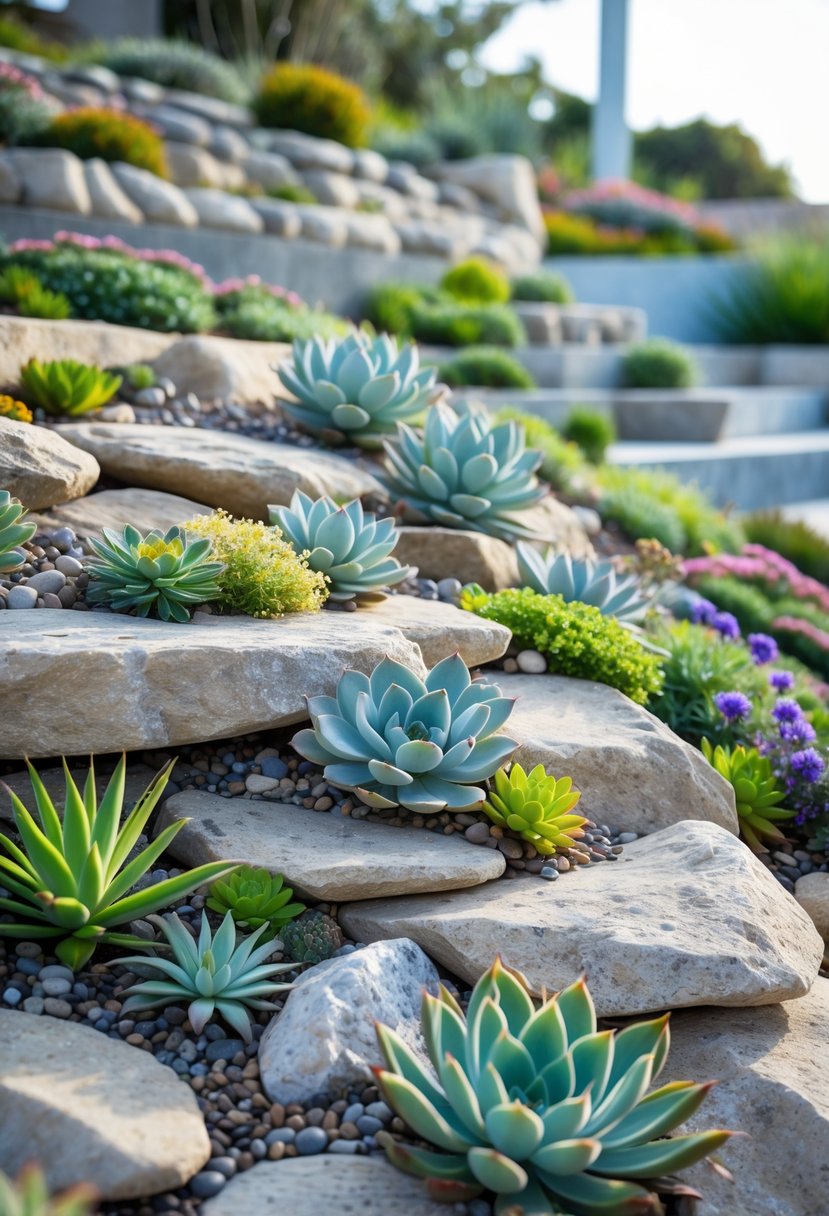
Try creating a modern rock garden on your slope with succulents and alpine plants. These plants love rocky, well-drained soil and don’t need much water, so they’re easy to look after.
Use sharp rocks or granite chunks for a wild, rugged vibe. Mix in mini plants like Sempervivum and Sedum to bring in texture and pops of color.
Raise parts of your garden to mimic a mountain slope. This adds depth and gives your plants different spots to thrive. Need inspiration? Check out these 15 brilliant succulent rock garden ideas.
4) Incorporate layered planting with contrasting textures and colors
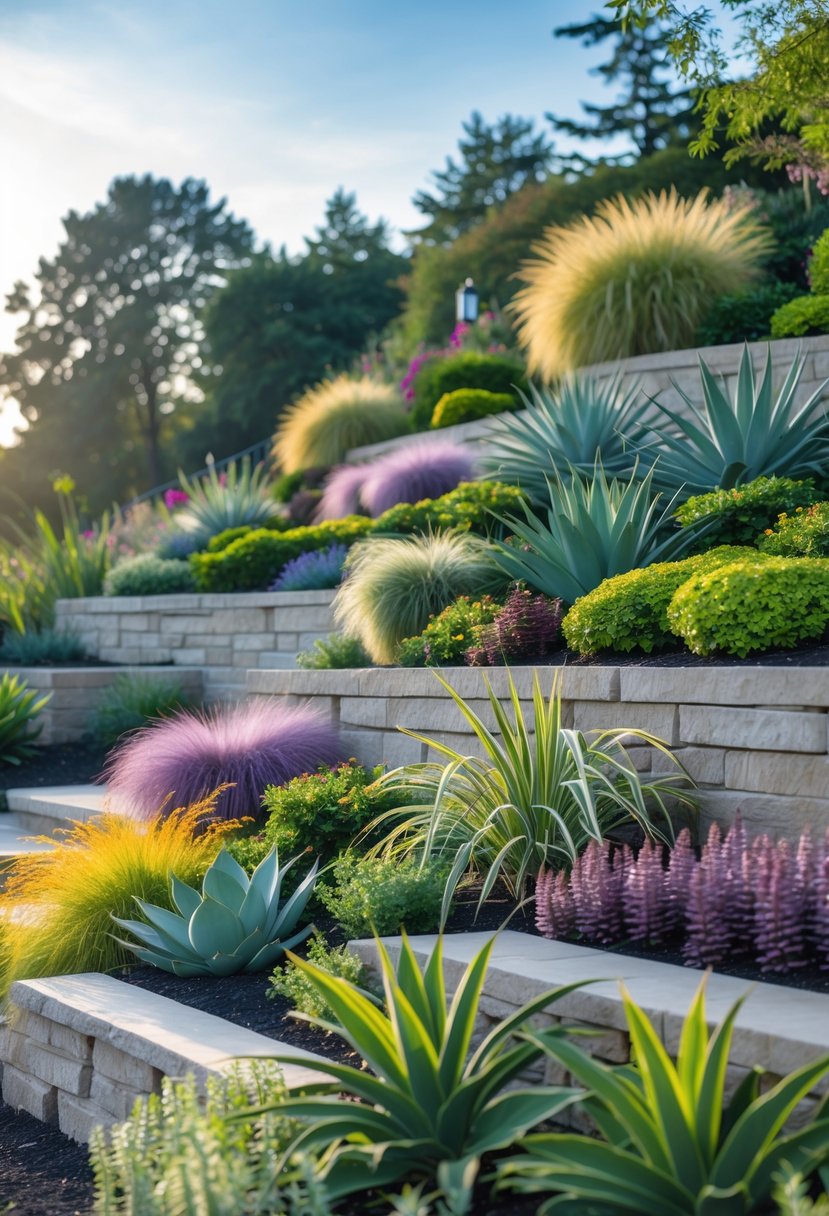
Layered planting can make your sloped garden way more interesting. Pick plants with different heights, colors, and textures to add some depth and energy.
Try mixing evergreens with blooming plants. Put smooth leaves next to spiky ones for a cool contrast.
Change up your plants with the seasons to keep your garden colorful all year long.
If you want more tips, check out how to design a layered garden.
5) Use raised wooden planters to define garden zones on the slope

Raised wooden planters help you break up your slope into clear garden zones. They keep soil where you want it and let you grow different plants in their own spaces.
Build them in tiers to match your hill’s shape. This neatens up your garden and makes watering and harvesting a breeze.
Choose weather-treated wood so your planters last longer outside. Wood planters bring a cozy, natural feel that works with lots of garden styles. If you’re curious, check out examples of tiered wooden planters for sloped gardens.
6) Add a water feature like a cascading waterfall or stream

Try adding a water feature like a cascading waterfall to bring a peaceful vibe to your sloped garden. The sound of water running can really calm things down and cool the area.
Go for a natural rock-lined cascade or maybe a modern geometric look. Both work well on slopes and add a sense of movement.
Even a small stream or fountain can become a lovely focal point. It’s a simple way to create a relaxing spot you’ll want to visit every day.
If you want to build one yourself, check out this guide on how to make a sloped yard waterfall.
7) Design a wildflower meadow to attract pollinators and soften hard landscaping
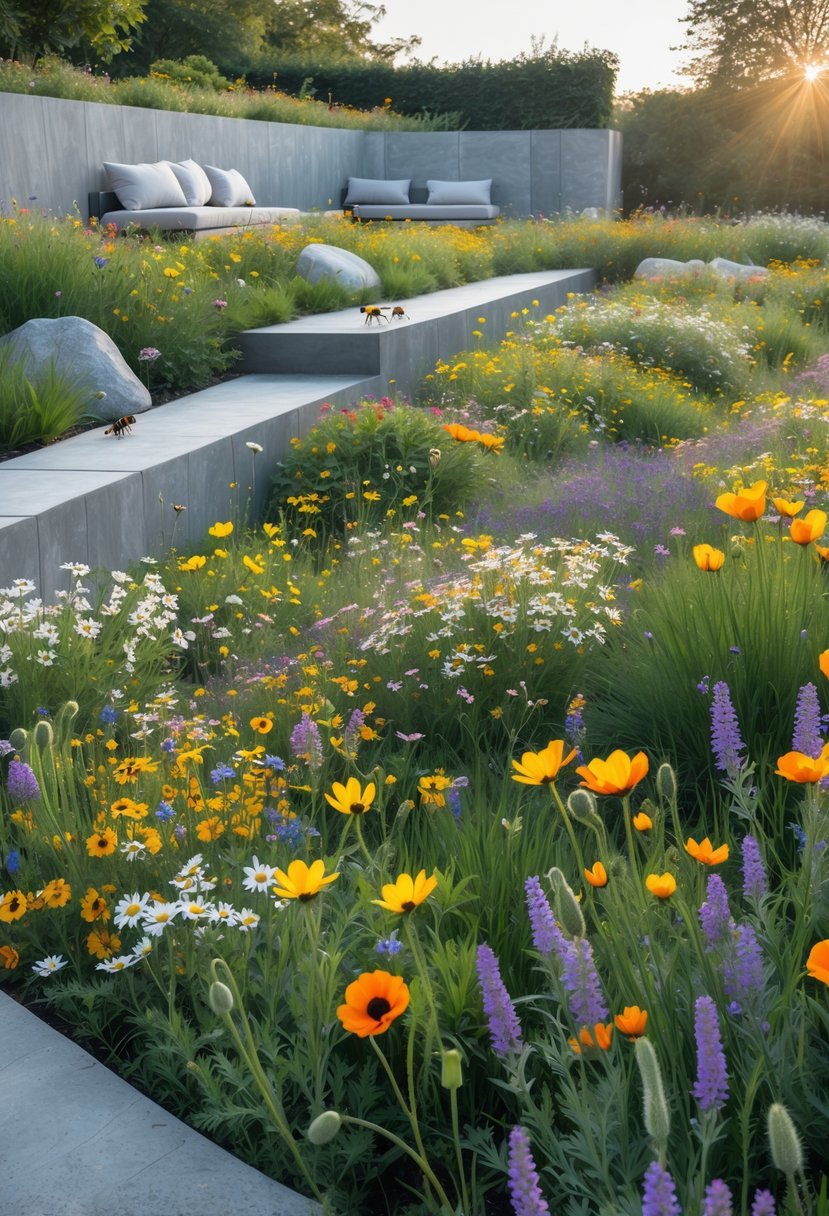
Plant a wildflower meadow on your slope for a splash of color and a boost of life. It softens up hard areas like stone or concrete.
Choose native wildflowers to attract bees, butterflies, and other pollinators. These plants usually need less water and are super easy to care for.
A wildflower meadow creates a relaxed, natural look that fits the shape of your slope. Even a small patch can brighten things up and bring in helpful insects. Want to learn more? Check out how to design one here.
8) Install LED garden lighting along paths and steps for ambiance
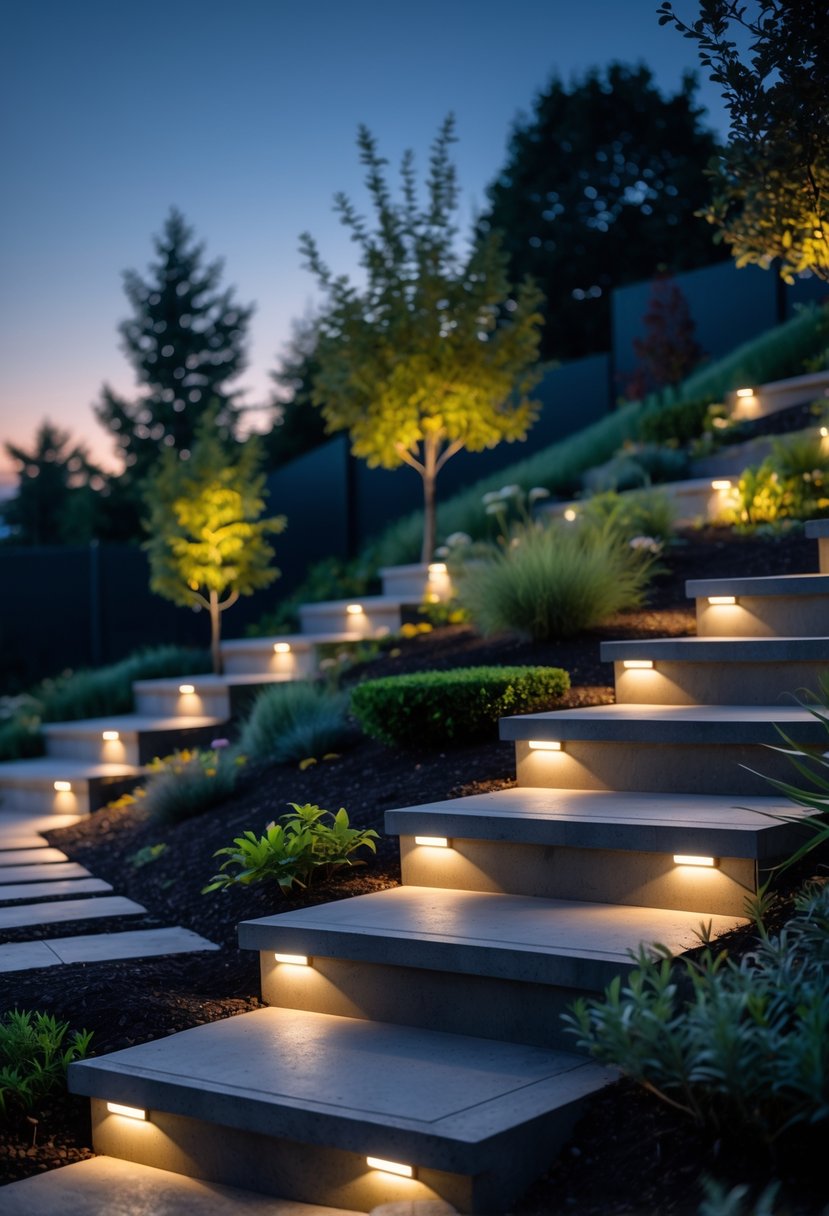
Put LED lights along your garden paths and steps to set a cozy mood. Lighting also makes it safer to walk around at night, which is extra helpful on a slope.
Pick solar-powered or low-voltage LED lights—they’re easy to set up and don’t use much electricity.
Place the lights near path edges or under railings to highlight your garden’s shape. This little touch gives your yard a modern and inviting vibe. Need help getting started? Here’s a step-by-step guide to installing LED garden lights.
9) Create a minimalist pathway using gravel and large stepping stones
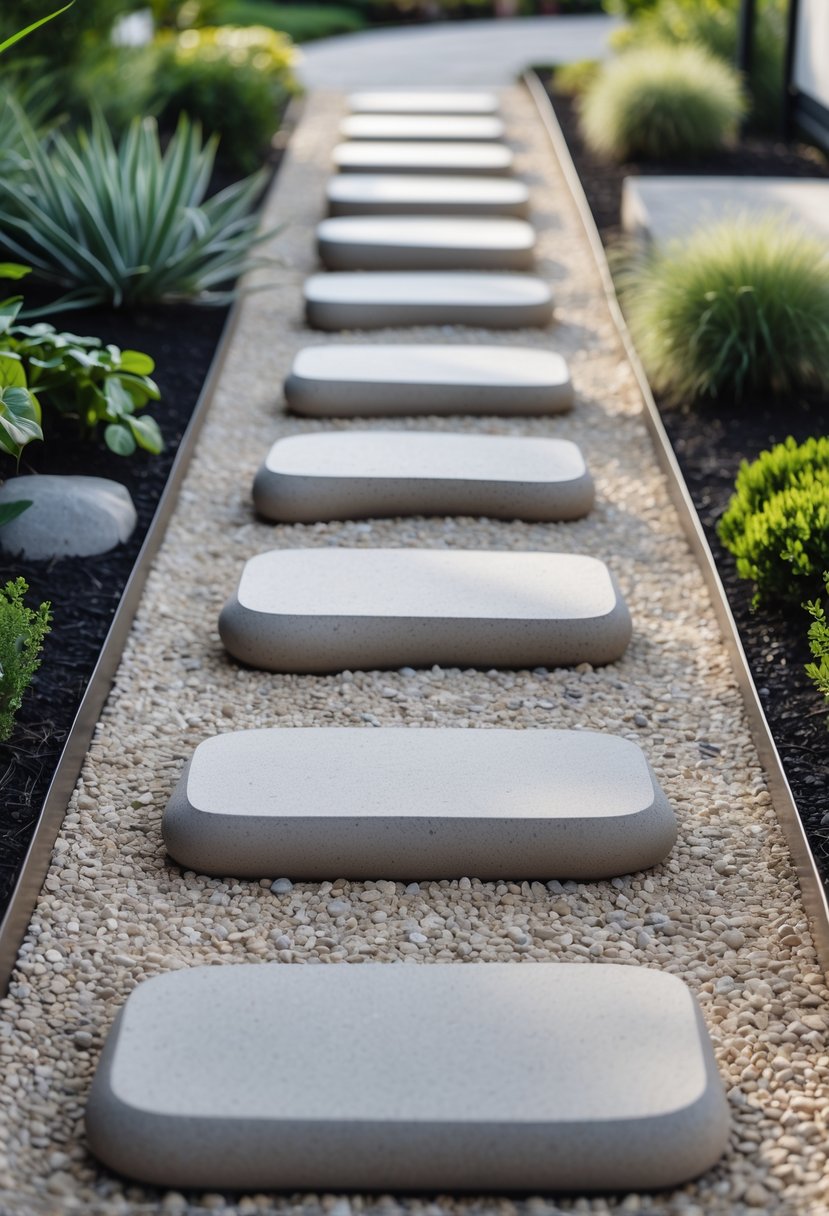
Lay out large stepping stones in gravel to give your sloped garden a simple, modern look. The stones offer solid spots to walk, and the gravel keeps things light and natural.
This style keeps your path neat and easy to care for. Filling the gaps with gravel or sand helps with drainage, which is handy on a slope.
Pair your pathway with simple plants or small shrubs to keep things calm and uncluttered. For more inspiration, check out 20 Creative Stepping Stone Walkway Ideas for Gardens.
10) Use bamboo fencing for privacy and an organic feel

Go for bamboo fencing if you want privacy on your garden slope but still want things to feel natural. Bamboo grows fast and makes a lush, peaceful barrier.
Bamboo fences fit right into modern garden styles, mixing nature with a bit of flair. They add warmth and texture without making your space feel closed off.
With bamboo fencing, your garden feels private but not boxed in. Simple and beautiful! Want to see more? Check out bamboo privacy fence options.
11) Plant evergreen shrubs to provide year-round structure
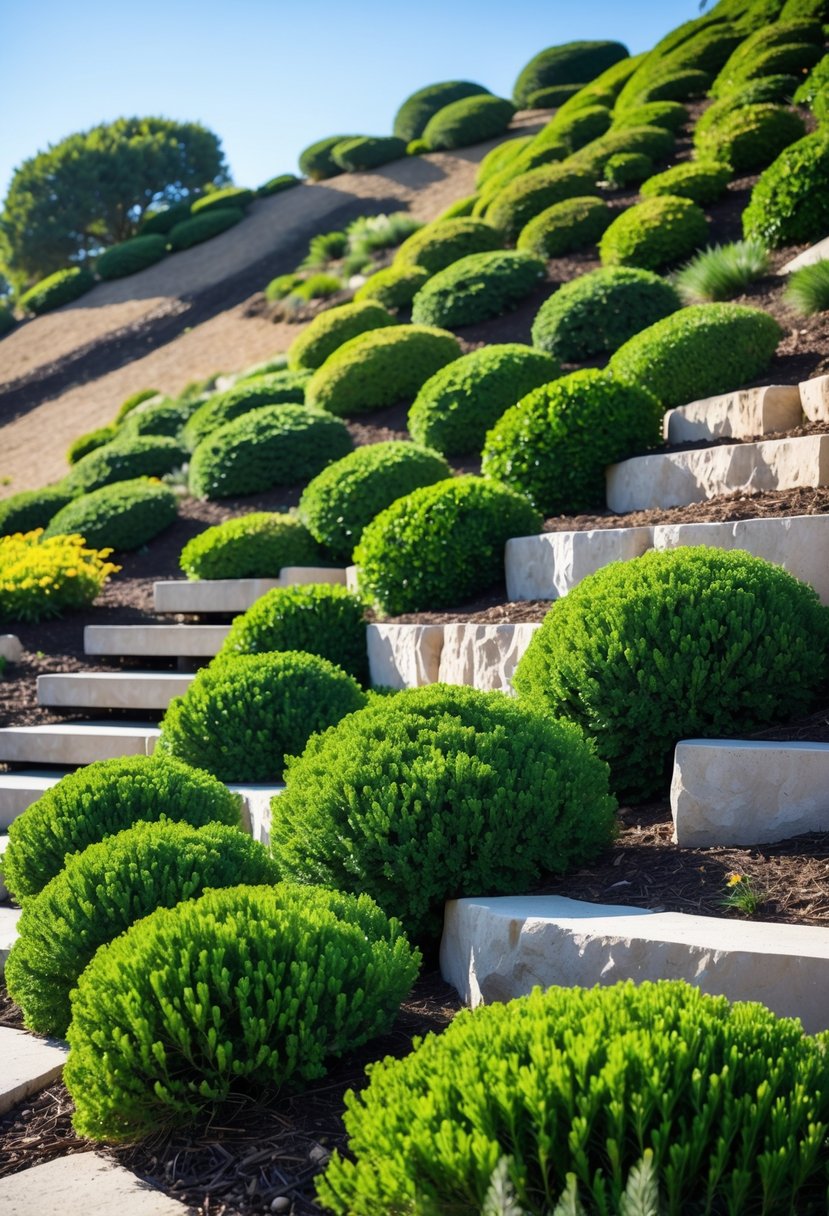
Evergreen shrubs work great on slopes if you want your garden to look good all year. They keep their leaves, so you always get color and shape—even in winter.
Use them to make natural borders or fill empty spots with green. Their roots also help hold the soil, keeping your garden steady and tidy.
Pick low-maintenance varieties that match your slope’s sun and soil. Need ideas? Find more evergreen shrubs that fit your needs here.
12) Incorporate a small seating area with sleek metal or concrete furniture

Add a cozy spot to your sloped garden with metal or concrete furniture. These materials are sturdy and look great with modern designs.
Concrete benches or metal chairs give you a clean, stylish place to sit that fits your garden’s natural curves. They can handle all kinds of weather, too.
Throw on some cushions for comfort. A small concrete table nearby is perfect for snacks or drinks.
This kind of furniture helps you carve out a quiet nook without taking up much space. Want more ideas? Check out stylish concrete bench designs.
13) Use gabion walls filled with stones for modern retaining structures

Gabion walls hold back soil on a sloped garden and look pretty cool doing it. You just fill wire baskets with stones, and suddenly you’ve got a strong, modern retaining wall.
They prevent erosion and instantly give your yard a crisp, updated vibe. Since they use natural materials, gabion walls fit right in with plants and other garden details.
Want to get creative? Turn gabions into benches or planters for extra function and style.
If you want more ways to use these stone-filled cages, take a look at gabion garden ideas that transform any outdoor space.
14) Add vertical gardens or living walls on slope-facing fences
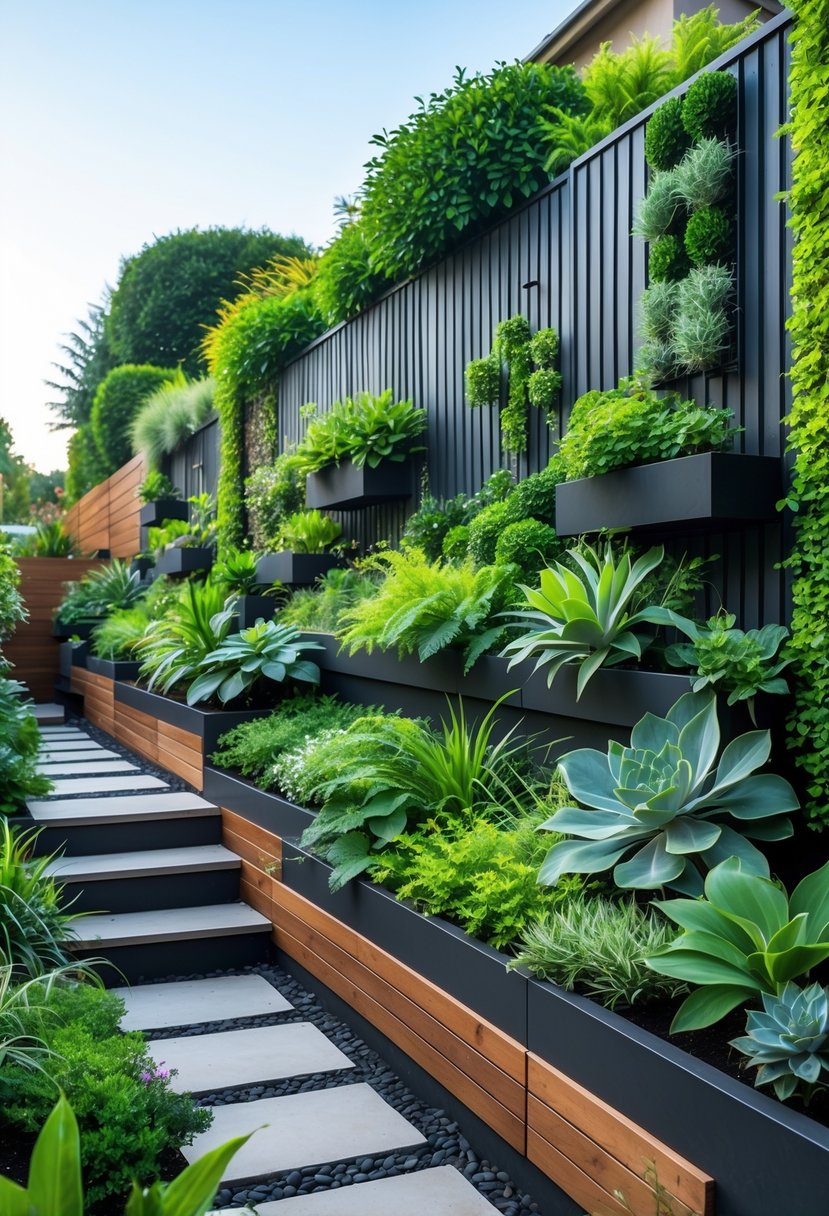
Why not use fences on a slope for vertical gardens? Living walls save space and bring lots of green to your yard.
Climbing plants or small planters can cover a fence, giving it a softer, more natural look. They also help break up the harsh lines of a sloped fence and even add a bit of privacy.
Vertical gardens brighten up plain spots and make things feel alive. Just remember to water often and swap out plants with the seasons.
If you’re looking for inspiration, you’ll find plenty of ideas for vertical gardens and living walls at garden.eco.
15) Mix ornamental grasses with perennials for movement and texture
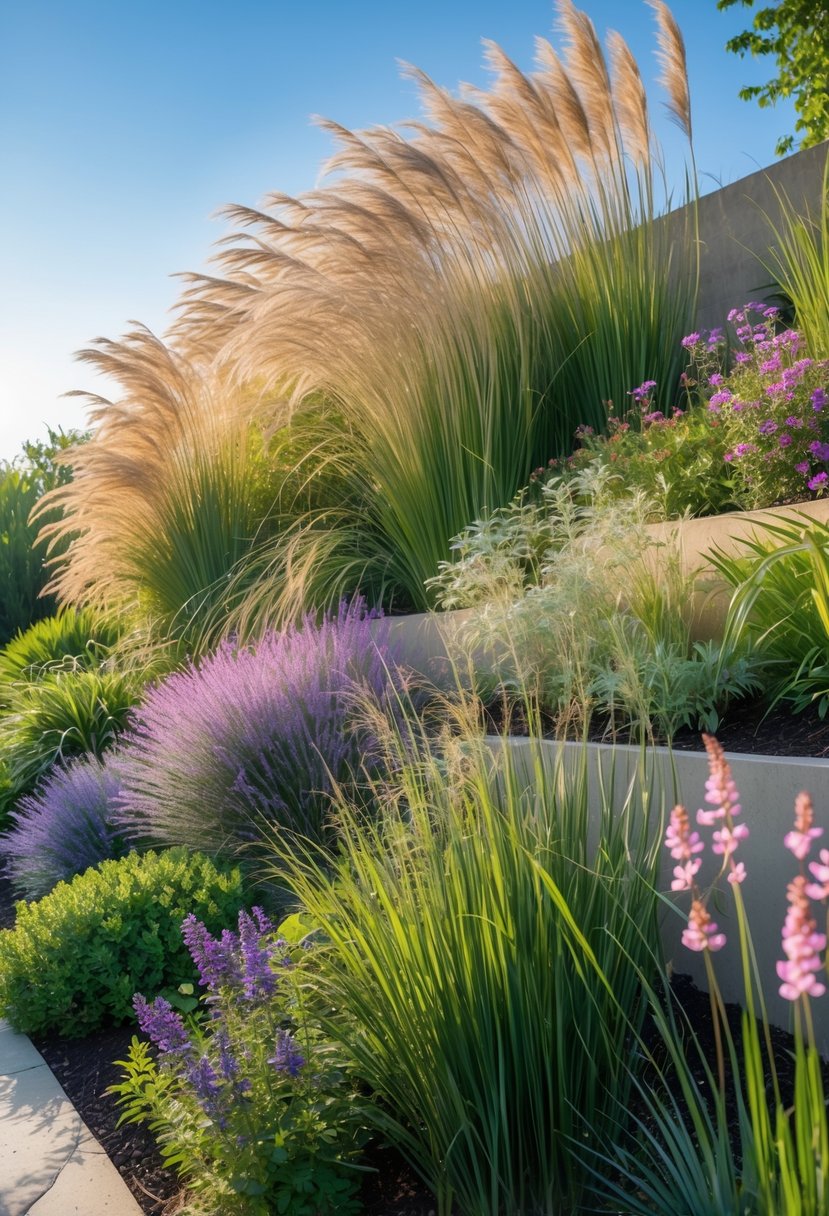
Mixing ornamental grasses with perennials brings a gentle sense of movement to your slope garden. The grasses sway in the breeze, making the whole area feel soft and lively.
Perennials add splashes of color, while grasses give you texture with their long, flowing leaves. This combo keeps your garden interesting through every season.
Pair low-maintenance grasses with bold flowers for a balanced look that works on uneven ground. Plus, it helps prevent soil from washing away.
Want more ideas? Check out 25 Ornamental Grasses for Adding Texture to Your Garden.
16) Install mulch or groundcover plants to reduce soil erosion

Stop soil erosion on a slope by adding mulch. Mulch keeps soil in place, locks in moisture, and shields plants from rough weather.
Groundcover plants work wonders too. Their roots grab the soil and slow down water running off the hill.
Pick groundcovers that spread fast and fit your climate. When you combine mulch with groundcover plants, you double up on protection for your sloped garden.
If you’re curious, learn more about the benefits of mulching and groundcovers for erosion control here.
17) Build a fire pit area with terraced seating for social gatherings
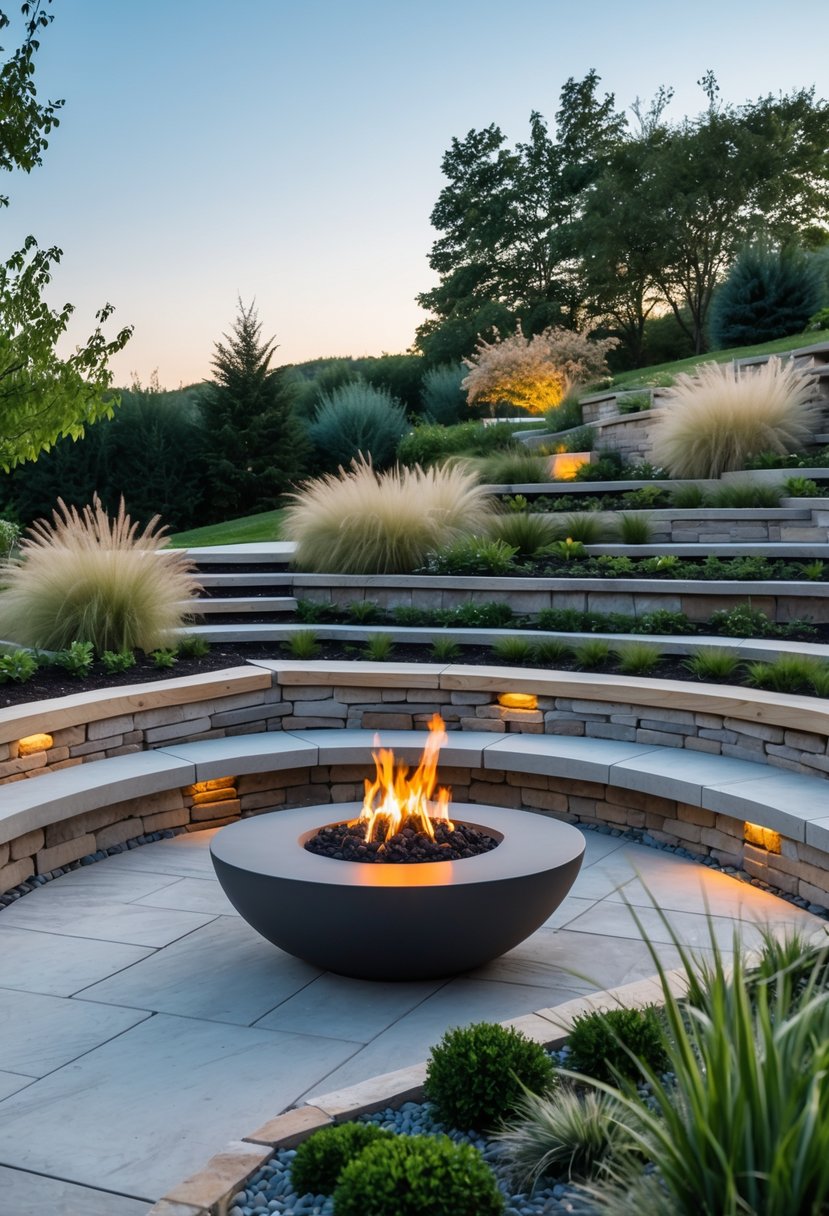
Use the slope to build terraces for seating around your fire pit. It’s a charming way to make your garden more inviting for friends and family.
Terraced seating shapes the space and keeps everyone comfy. Plus, everyone gets a good view of the fire.
Add some cushions or built-in benches to up the comfort. Suddenly, your sloped garden becomes the go-to spot for evening chats and cozy hangouts.
If you want more ideas for fire pit seating, check fire pit seating arrangements that work in any season.
18) Incorporate native plants that thrive on slopes for sustainability

Planting native plants on your slope keeps the soil where it belongs. Their roots grip the earth, cutting down on erosion and runoff.
Native plants fit your local climate, so once they’re settled, they don’t need much water or attention.
When you choose these plants, you help local wildlife and create a garden that basically takes care of itself. It’s a win all around.
Looking for the best native plants for your slope? Check out this guide on using native plants for sustainable slope gardening.
19) Place modern sculptural elements as focal points

Add modern sculptures to your slope to create eye-catching focal points. A bold, simple sculpture really pops against all the greenery.
Set sculptures on pedestals or stone plinths to help them catch the light and draw attention.
Try materials like metal or stone for that crisp, modern vibe. Sculptures bring personality and shape to your garden.
Want more tips? See 8 Garden Sculpture Placements That Create Focal Points.
20) Use interlocking concrete pavers for clean-lined walkways
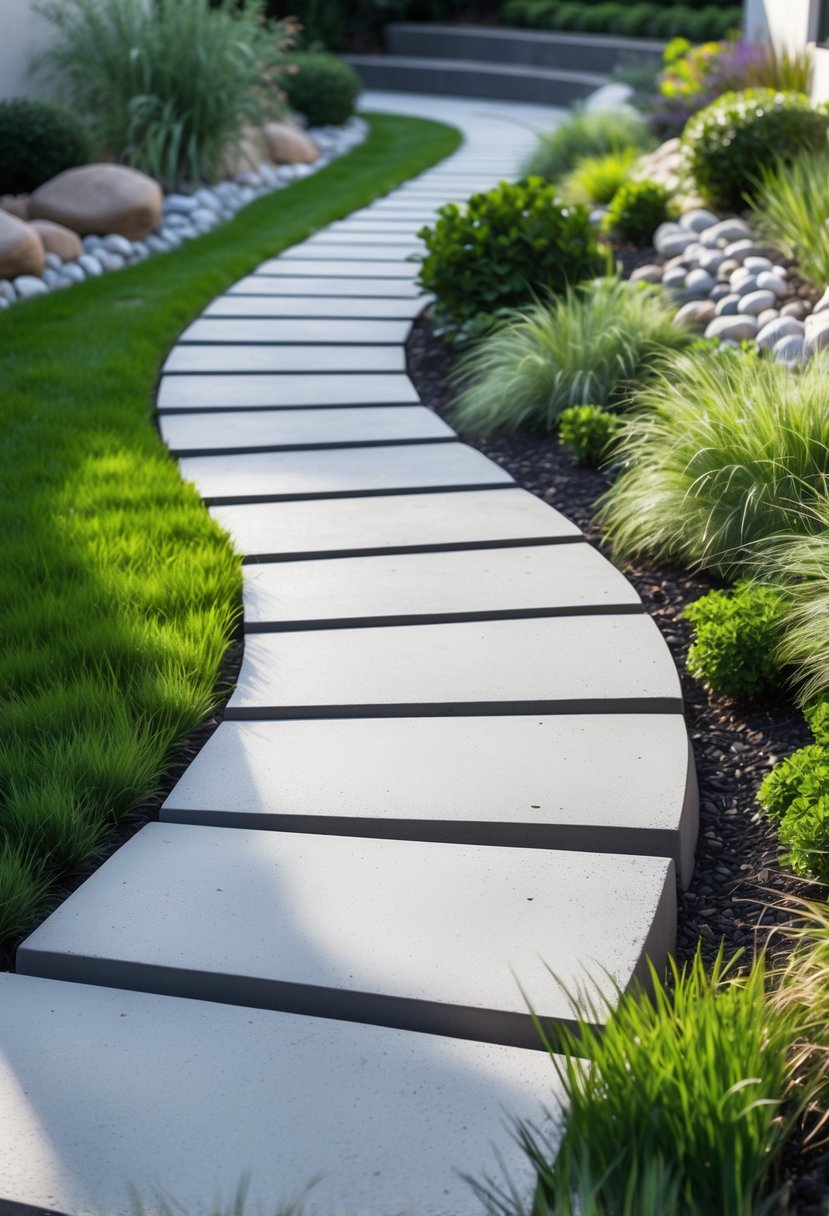
Build a neat, sturdy walkway on your slope using interlocking concrete pavers. These pavers snap together like puzzle pieces, making your path strong and steady.
If a paver gets damaged, just swap it out—no need to redo the whole path. That’s a relief, right?
Interlocking pavers come in lots of shapes and colors. You can pick something that fits your garden’s style exactly.
For more walkway ideas, check out interlocking concrete paver options for walkways.
21) Create a tiered herb garden with modern containers
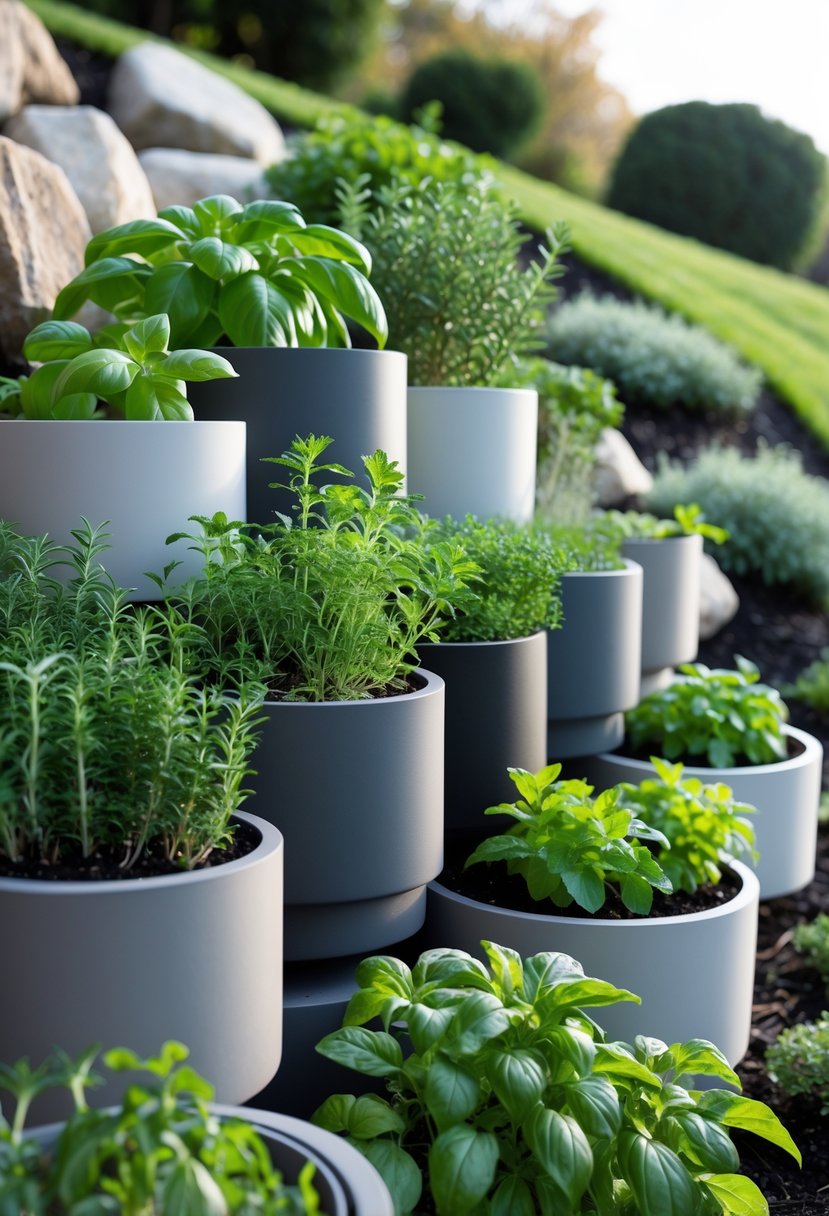
A tiered herb garden lets you make the most of a slope. You’ll grow a bunch of herbs while saving space.
Go for modern containers like sleek concrete pots or matte black planters. They give your garden a fresh, clean look.
Stack the containers in levels to keep herbs organized and easy to grab. It also makes the whole setup look tidy and cool.
This idea works inside or out and adds a nice touch to any slope. For more tips, see tiered herb gardens.
22) Plant drought-resistant plants like lavender and sedum
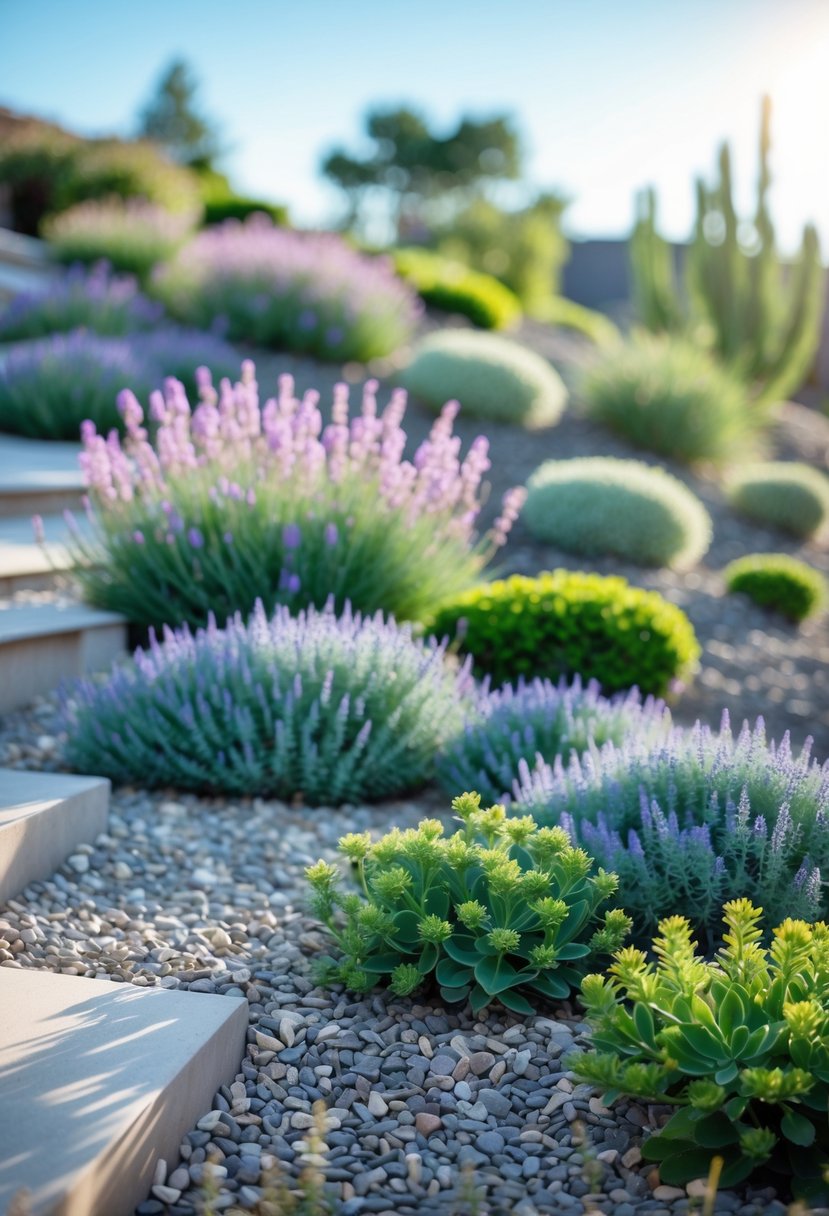
Choose drought-resistant plants like lavender and sedum to make your slope garden easier to manage. These tough plants need less water and thrive in dry spots.
Lavender brings color and a lovely scent, while sedum’s thick leaves store water for tough times. Both help keep soil in place on a slope.
When you plant drought-tolerant species, you save water and time. Plus, they make your hillside garden look beautiful and textured.
Want more ideas? Check out drought-tolerant gardening tips.
23) Install a rain garden to handle runoff naturally

Build a rain garden to catch water running off your slope. Rain gardens slow down stormwater and stop soil from washing away.
Plant native species in your rain garden to keep things looking good and help local wildlife. These plants even filter the water before it soaks in.
Rain gardens work especially well on slopes because they soak up water where it gathers. It’s a simple, eco-friendly way to manage runoff and keep your garden thriving.
Need a guide? Check out how to build a rain garden on a slope.
24) Set up a small outdoor art gallery on flat terraces

Use flat terraces on your slope as a mini outdoor art gallery. It makes the space feel unique and personal.
Hang weather-resistant art or use old frames for garden-themed pictures. You might even paint a garden mural on a wall if you’re feeling bold.
This adds color and style without eating up space. It’s an easy way to bring creativity into your garden.
For more inspiration, check out creative garden art ideas for small spaces.
25) Use a palette of monochromatic foliage colors for a sleek look

Pick plants with leaves in different shades of one color for a clean, modern feel on your slope. It keeps things simple but never boring.
Mix up leaf textures and shapes to add depth without using a bunch of colors. Greens, silvers, or even deep purples can all look stunning.
A monochromatic palette gives your garden a calm, polished look and makes the slope feel put together.
If you want ideas, see how to create a monochromatic color garden that balances harmony and variety with just one color.
Design Principles for Sloped Gardens
If you want a sloped garden that actually works, focus on managing water, picking materials that suit the land, and using levels to make it usable. Planning ahead helps stop erosion and keeps your space safe and fun to use.
Understanding Grading and Drainage
When you shape the slope properly, water flows away from your house and garden plants. If water pools, it can erode soil or even damage your space.
Try to create gentle slopes or flat terraces to slow water down a bit.
Add drainage solutions like French drains or swales. These features help move water safely off your slope.
Watch for natural dips or low spots where water tends to sit.
Set up your garden so water heads toward those drains, not over your soil or plants.
Choosing the Right Materials
Pick materials that hold soil in place and actually look good on a slope.
Retaining walls made from stone, concrete blocks, or timber can anchor soil and create flat spots for planting.
Use gravel or mulch between plants. These materials help cover bare soil and cut down on erosion.
Go for sturdy stuff that can handle pressure and changing weather.
Skip materials like loose gravel without edging—they’ll shift or wash away too easily.
Plants with tough root systems can help keep soil from moving.
Integrating Levels and Terracing
Terracing breaks up a slope into smaller, flatter sections. That makes gardening easier and keeps soil where it should be.
You can use retaining walls, raised beds, or even natural rocks to build terraces.
Make sure the terraces are wide enough for your plants and for walking.
Add stairs or little paths between levels so you can move around safely.
Try to follow the natural shape of your slope when you design terraces. It just feels more stable and looks better.
Multiple levels add interest and let you make the most of uneven ground.
If you want more ideas, check out this slope garden design guide.
Planting Strategies for Modern Slope Gardens
Managing a slope garden means you’ve got to think about easy-care plants, arranging them in a way that looks natural, and keeping soil from sliding away. All these details matter if you want a garden that looks good and doesn’t need much fuss.
Selecting Low-Maintenance Plants
Go for plants that don’t need much water or care. It’ll save you time and maybe some headaches too.
Drought-tolerant choices like lavender, sedum, or ornamental grasses work well. They can handle dry spots and less-than-perfect soil.
Evergreens give you color and structure all year. Ground covers like creeping thyme or vinca fill gaps and help block weeds.
Choose plants that suit your climate and soil—don’t fight nature if you don’t have to.
Focus on native species. They’re already adapted to your local conditions, so you’ll use less fertilizer and deal with fewer pests.
Mix it up with shrubs, perennials, and ground covers for a balanced look.
Creating Visual Flow With Plant Groupings
If you want your slope garden to look good, group plants in patterns that lead your eye across the hill.
Try repeating clusters of the same plant at different heights. It helps guide attention and just feels right.
Layer plants from low ground covers to medium shrubs and then taller ones. This adds depth and keeps things from looking flat.
Pick colors that blend or offer gentle contrast—maybe soft greens with pops of purple or yellow. It creates a nice rhythm and balance.
Use curved lines for your plant beds instead of sharp, straight edges. Curves soften the slope and make the space feel more inviting.
Soil Stabilization Techniques
Keeping soil in place on slopes is crucial if you want to prevent erosion and help your plants thrive. Try tossing some mulch around your plants—it cuts down on runoff and keeps the dirt moist.
You might want to build terraces or retaining walls using stones or wood. These slow down water, and honestly, they give you some flat spots for easier gardening.
Plant dense ground covers with strong roots, like creeping juniper or vinca. These tough plants really grip the soil.
If you’re dealing with a super steep slope, throw down some biodegradable erosion control mats. They’ll do the job until your plants fill in and take over.
Keep an eye out for bare patches. Whenever you spot them, just add more mulch or tuck in a few extra plants.
For more ideas, check out smart slope garden ideas.


