

Beautiful Garden Ideas on a Slope for Stunning Outdoor Spaces: 25 Easy Tips
Gardening on a slope might seem a bit daunting at first, but honestly, it’s a cool way to make your outdoor space stand out. Once you figure out how to work with the natural incline, you can turn your garden into something both eye-catching and practical.

Beautiful garden ideas on a slope help you make the most of uneven ground while adding charm and function to your yard. With just a few steps, you can transform your hillside into a space you’ll actually want to hang out in.
1) Create terraced garden beds with retaining walls

Try building terraced garden beds to give your sloped yard a fresh look. These beds use retaining walls that keep soil in place, so you get flat spots for planting.
Terraces cut down on soil erosion and help water drain better. Your plants end up happier, and your garden stays tidy.
You can pick from wood, stone, or concrete for your retaining walls. That way, you get to match your style and keep things sturdy. Want a step-by-step? There’s a good guide on making terraced beds here.
2) Use alpine plants for a natural mountain look

Go for alpine plants if you want that fresh, natural vibe. These tough little plants love well-drained soil, so they’re perfect for slopes.
They survive in rocky, dry spots—places where some plants just give up. Alpine plants come in all sorts of shapes and colors, so you’ll have year-round interest.
Mix in some small shrubs, evergreens, and flowers for variety. Toss in rocks and gravel too, and you’ll get that mountain look with barely any upkeep. Need more? Check out alpine garden tips for hardy plants and natural rock features.
3) Incorporate a rock garden with drought-tolerant plants

A rock garden adds texture and some serious interest to your slope. Rocks help keep soil where it belongs and bring in a natural feel.
Pick drought-tolerant plants like succulents, lavender, or ornamental grasses. They don’t need much water and love rocky, well-drained soil.
Mix up the size and shape of your rocks with the plants. That way, your slope looks lively, not boring.
Rock gardens are low-maintenance and just make sense for tricky spots. Want more inspiration? Here’s a whole list of drought-tolerant rock garden ideas.
4) Build stone steps to improve accessibility on the slope

Add stone steps so you can get up and down your slope without slipping. Stone looks great with the landscape and keeps soil from washing away after a storm.
Pick stones that match your garden’s style. Make each step level and wide enough to walk on comfortably.
If you need extra support, a handrail isn’t a bad idea. Stone steps make your garden easier to explore and add a neat, natural charm.
Curious about building them? There’s a handy guide for stone steps on a slope.
5) Add colorful flowering shrubs like hydrangeas

Brighten up your slope by planting colorful shrubs like hydrangeas. These come in pink, blue, and white, so you get a cheerful burst of color.
Hydrangeas hold soil with their roots and bloom for weeks, so your garden gets a long-lasting show.
Pair them with plants that like the same amount of sun or shade as your slope. You’ll get a balanced, inviting look that feels natural. Need more ideas? Check out hydrangea landscaping options.
6) Plant ornamental grasses for movement and texture

Ornamental grasses just bring a slope to life. They sway in the breeze and give your garden a calm, natural feel.
You can pick from all kinds of heights, colors, and textures. Mix them up for variety without much effort.
These grasses don’t ask for much, so they’re perfect for slopes where other plants might struggle. They also help with soil erosion and make everything look a bit more polished.
Try ornamental grasses for texture and movement. There’s a bunch of ideas for using them here.
7) Use cascading groundcovers like creeping thyme

Creeping thyme is awesome for slopes. It spreads fast and stays low, covering up bare patches.
Let it spill over rocks or edges to soften hard lines. Plus, it smells amazing and pulls in bees and other pollinators.
Creeping thyme is easy to care for and helps keep soil in place. Tuck it between stones or along paths for a lush, natural look.
Want more ideas? Check out these 17+ Creative Creeping Thyme Landscape Ideas.
8) Install a dry creek bed to manage water runoff

A dry creek bed is a smart way to control water on your slope. It channels rain downhill, so you don’t get erosion or puddles.
Use smooth rocks and pebbles to give it a natural look. It’s a simple feature, but it can pull your whole garden together.
You’ll need to plan out the size and where it goes, but it’s worth it. Done right, it protects your plants and keeps everything looking neat.
Check out this dry creek bed landscaping guide for more info.
9) Create tiered vegetable garden sections

Use your slope to set up tiered vegetable garden beds. This keeps soil from slipping and gives you more flat space for planting.
Each tier becomes its own little garden. You can grow different veggies on every level, which makes organizing a breeze.
Build retaining walls with wood, stone, or bricks to keep soil in place. Watering and harvesting get easier, too.
A tiered vegetable garden is practical and looks great. For more help, check out tiered garden ideas for sloped yards.
10) Add benches or seating terraces for relaxation

Benches make your slope garden a spot to actually sit and relax. You can build them right into walls or terraces, so they blend in with the landscape.
Seating terraces create flat areas where you can hang out comfortably. They also break up the slope, giving you new angles to enjoy your garden.
With benches or seating terraces, your outdoor space feels more welcoming. It’s just nicer to take a break and soak it all in. For more ideas, see garden terraces and bench options.
11) Use native wildflowers to attract pollinators

Plant native wildflowers to brighten up your slope. They’re easy to grow and just fit right in with the local landscape.
Wildflowers pull in pollinators like bees, butterflies, and even hummingbirds. Your garden stays lively and healthy.
These flowers usually need less care than fancy imports. They also add color and texture that change with the seasons.
Want a buzzing, colorful garden? Give native wildflowers a shot. Here’s a list of native wildflowers that attract pollinators.
12) Incorporate small fruit trees on terraces

Plant small fruit trees on your terraces. This setup cuts down on erosion and makes watering simpler.
Dwarf apples or citrus trees fit nicely and don’t take up much space, but you still get fresh fruit.
Terraces help with drainage, which fruit trees love. You can even tuck in some herbs or flowers for extra color and scent.
Turning a tricky slope into a productive, pretty garden just feels good. If you want more tips, check out this guide on planting fruit trees on a slope.
13) Use mulch and gravel paths between planting areas

Try making easy-to-walk paths on a slope with mulch and gravel. These materials keep the ground stable and block out weeds.
Wood chips or bark mulch feel soft under your feet and look like they belong in the garden. Gravel brings in some texture and drains water fast, so you won’t slip as easily.
Lay down landscape fabric and edging to keep your paths neat. This trick helps mulch and gravel stay put and gives your garden a tidy appearance.
Paths like these make it easier to care for your plants and enjoy a stroll through your garden. Want more ideas? Check out mulch paths and gravel ideas.
14) Install garden lighting along pathways and walls

Add lighting along pathways and walls to make your sloped garden safer and more inviting. Lights help you see where you’re going and avoid tripping at night.
Pick simple options like solar-powered stakes or LED strips—they’re a breeze to install. Soft, warm lights create a cozy feel and highlight your garden’s curves and shapes.
When you put lights along curved paths or walls, you add depth and show off your garden’s best features. A little lighting goes a long way in making your space usable and charming after sunset.
Need more ideas? Check out these garden path lighting suggestions.
15) Plant evergreen shrubs for year-round structure

Plant evergreen shrubs on your slope to keep things looking good all year. These plants stay green in winter, so your garden never feels bare.
Evergreens also hold soil in place on slopes and cut down on erosion. They make a steady backdrop for flowers or whatever you add in spring and summer.
Pick shrubs that fit your space—some grow tall, others stay low. Mix and match for a balanced, lively look.
Looking for ideas? Here’s a list of evergreen shrubs for year-round beauty.
16) Add a small water feature like a pond or fountain

Try adding a small water feature to bring some calm to your sloped garden. A simple pond or a bubbling fountain can fit almost any space.
Water sounds make the garden feel peaceful, and even a small feature can add a lot. You don’t need a huge yard to make it work.
Set up a fountain in a pot or a small pond with stones—it’s easier than you think. There are tons of ideas out there for any style or yard size.
If you want more inspiration, check out different backyard water features. Here are more small water feature ideas for your garden.
17) Use vines on trellises along the slope

Plant vines on trellises to add life and color to your slope. Clematis or other flowering vines climb up and cover the trellis, giving you a natural wall.
Trellises help control erosion too, since they hold soil in place when you set them along a slope.
You can build simple or decorative trellises, whatever fits your style. It’s a clever way to add height and interest without using much space.
Looking for inspiration? Check out these creative trellis ideas for vines and climbing plants.
18) Create a meadow-like section with mixed flowers and grasses

Turn part of your slope into a meadow by mixing grasses and flowers. Aim for about 60% native grasses and 40% flowering perennials for a natural, wild look.
This combo adds texture and color all year. Wildflowers attract pollinators, which keeps your garden healthy.
Pick flowers and grasses that match your climate. A meadow-like section keeps maintenance low and saves you time.
Want to know more? Check out tips for designing meadows with mixed plants.
19) Plant succulents and cacti in rock crevices
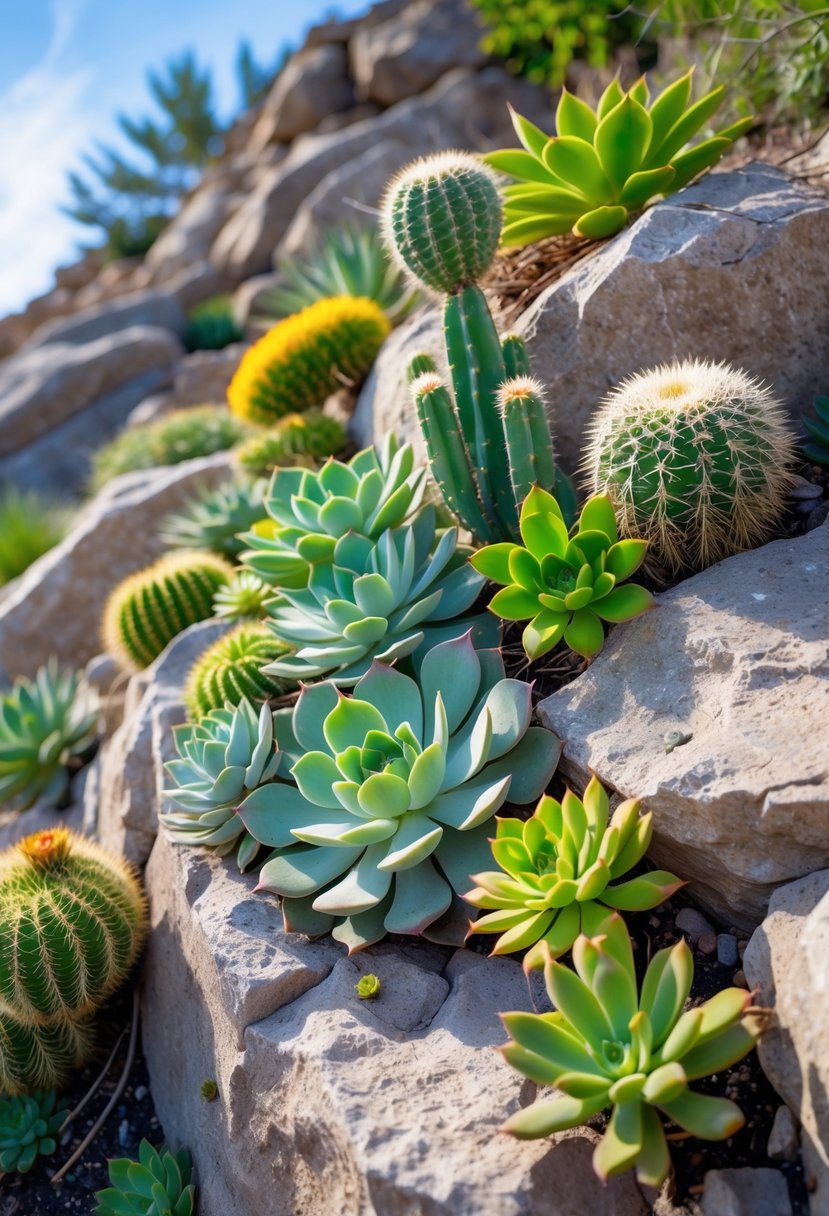
Tuck succulents and cacti into the little gaps between rocks on your slope. These plants love tight spaces and barely need any water, so they’re perfect for rocky spots.
By placing them in crevices, you protect them from wind and help prevent erosion. Plus, the mix of shapes and colors looks really cool.
Try Echeveria, Sempervivum, or small cacti for the best fit. This idea works great for a low-maintenance, eye-catching slope.
Need more tips? Check out ideas for planting succulents in crevices.
20) Add decorative boulders for focal points
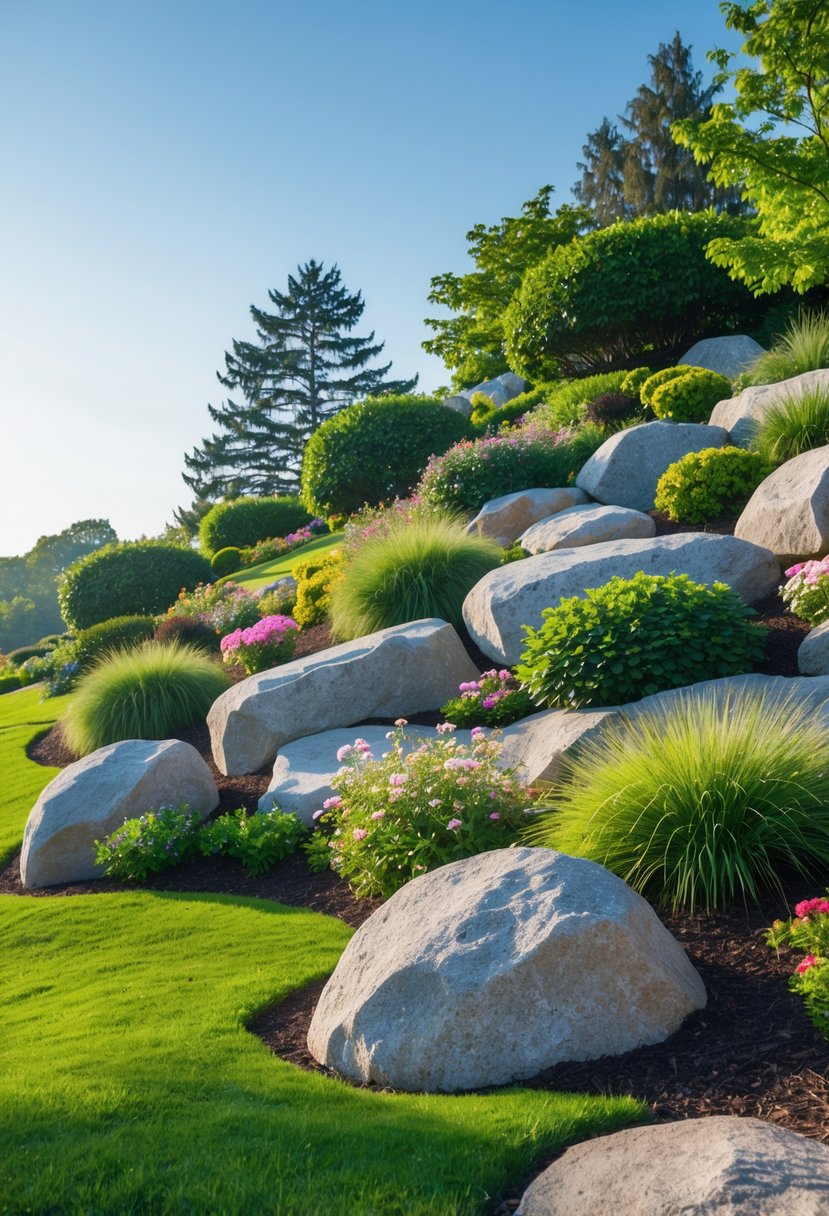
Place decorative boulders on your slope to create bold focal points. Big rocks add texture and naturally draw the eye.
Put boulders near paths or garden beds to guide where people look and keep the space balanced.
They look great with plants and garden lighting, helping your favorite features stand out. Boulders bring a little wild charm and help define the space.
Want more? Here are some landscaping with boulders ideas.
21) Include stair-step herb garden beds

Build stair-step herb beds to make your sloped garden neat and useful. These raised beds follow the slope, making planting and picking herbs way easier.
Each step holds a different herb—think basil, thyme, or rosemary. The setup drains water well and keeps soil from washing away.
Stair-step beds add some style and keep your garden organized. It’s a smart way to use a slope and grow fresh herbs for your kitchen.
You can find more stair-step garden bed ideas online.
22) Use moss and ferns for shaded slope areas

Try moss and ferns to make a soft, green carpet on shady slopes. Both thrive in low light and need barely any care.
Moss helps hold soil in place, which is great for stopping erosion.
Ferns bring texture and a splash of green to shaded spots. They come in all sorts of shapes and sizes, so mixing them keeps things interesting.
Together, moss and ferns create a peaceful, natural vibe on any shady slope. Want more ideas? Check out this guide on creating a shade garden with ferns and moss.
23) Install a retaining wall with built-in planter boxes

Add support and style to your sloped yard with a retaining wall that has planter boxes built in. The wall holds back soil, and the planters give you spots for flowers or small shrubs.
Planter boxes in the wall save space and keep things tidy. Pick materials like timber or stone to match your taste.
These walls stop erosion and add color and life to your garden. Want to see more? Check out retaining wall with planters ideas.
24) Plant bulbs for seasonal bursts of color

Brighten up your slope garden with bulbs for color all year. Plant tulips, daffodils, hyacinths, and other bulbs to make colorful spots that pop.
Layer bulbs to get a fuller look and have flowers bloom one after another. Use containers or garden beds if you want to move things around.
Bulbs are easy to care for and come back each year. They add a natural, cheerful touch to your slope with barely any effort.
Looking for more? See floral garden ideas using bulbs.
25) Integrate wild berries for edible landscaping

Add wild berries to your slope garden for something pretty and practical. Berries like raspberries or blackberries grow well on slopes and help keep the soil in place.
They bring color and texture, and you get to snack on fresh fruit from your own yard.
Plant berries along the slope for a natural look and a tasty harvest. Curious about how to start? Check out wild berry garden ideas to grow berries at home.
Design Principles for Sloped Gardens
When you’re designing a garden on a slope, think about layers that bring depth and a bit of magic to the space. Structures can help you handle the slope safely, plus they give you spots to walk or plant without too much hassle.
Maximizing Visual Interest with Levels
Adding different levels to your sloped garden stops erosion and, honestly, just looks great. Try building terraces or raised beds at a few heights.
Breaking up the slope this way makes the garden feel more organized, even if you’re not aiming for perfection.
Pick plants that fit each level. Maybe put taller shrubs or plants up top, and tuck in low ground covers at the bottom.
This combo brings in texture and color from all sorts of angles.
Toss in some rocks or small retaining walls to mark out each level. These help keep the soil where you want it and add a natural vibe.
Mixing plants with hardscaping gives your outdoor space a balanced, grounded look.
Integrating Pathways and Terraces
Pathways matter for safety and just getting around on a slope. Go for wide, flat paths—stone or gravel works well—so you’re not slipping everywhere.
You could add steps, but keep them shallow. No one wants to feel like they’re climbing a mountain just to check the roses.
Terraces do more than hold soil; they carve out flat spots for sitting or planting. Use retaining walls—stone, wood, or concrete all do the trick—to support these areas.
Make sure terraces stay level and sturdy, so they last.
Try working in curves in pathways or terrace edges. Curves soften the look, while straight lines sometimes feel too harsh on a hillside.
When you place paths and terraces thoughtfully, you can really enjoy every bit of your garden—without breaking a sweat.
If you want more inspiration for paths and terraces, take a peek at 15 Genius Sloped Garden Ideas.
Soil and Water Management on a Slope
Handling soil and water on a slope keeps your garden healthy and standing strong. You’ll want to stop soil from washing away, and make sure your plants get water without causing a mess.
Preventing Erosion Effectively
Erosion can wreck a sloped garden fast, stripping away soil and nutrients after a single storm. Use retaining walls or terraces to break up the slope into flatter spots.
This slows down water and keeps soil where it belongs.
Plant ground covers—creeping thyme or low shrubs work well—to anchor the soil. Their roots hold everything together and protect after rain.
Spread mulch to lock in moisture and shield the soil from heavy rain. On really steep parts, try rocks or gravel to slow water and keep the dirt in place.
Smart Irrigation Solutions
Watering on slopes takes some extra thought. You really don’t want to lose soil or waste water, right?
I always recommend drip irrigation for this. It sends water right where plants need it—slowly, straight to the roots.
You could try soaker hoses under a layer of mulch, too. That setup keeps water from racing downhill and making a mess.
Skip sprinklers that just spray everywhere. They tend to cause runoff and even erosion, which nobody wants.
Try watering in smaller doses, but do it more often. That way, the soil actually absorbs the moisture instead of letting it run off.
If you water early in the morning, you’ll lose less to evaporation. It’s a simple trick, but it works.
These little changes can keep your plants happy and help your slope hang onto its soil.
Curious about more ways to manage erosion or water? Check out this guide on landscaping a garden on a slope.


