

Easy Garden Ideas to Hide a Wall With 25 Creative and Friendly Tips
Got a plain or not-so-pretty wall in your garden? You might be looking for easy ways to dress it up. Walls can feel like a boring backdrop, but with a few simple tricks, you can turn them into a feature you actually like.
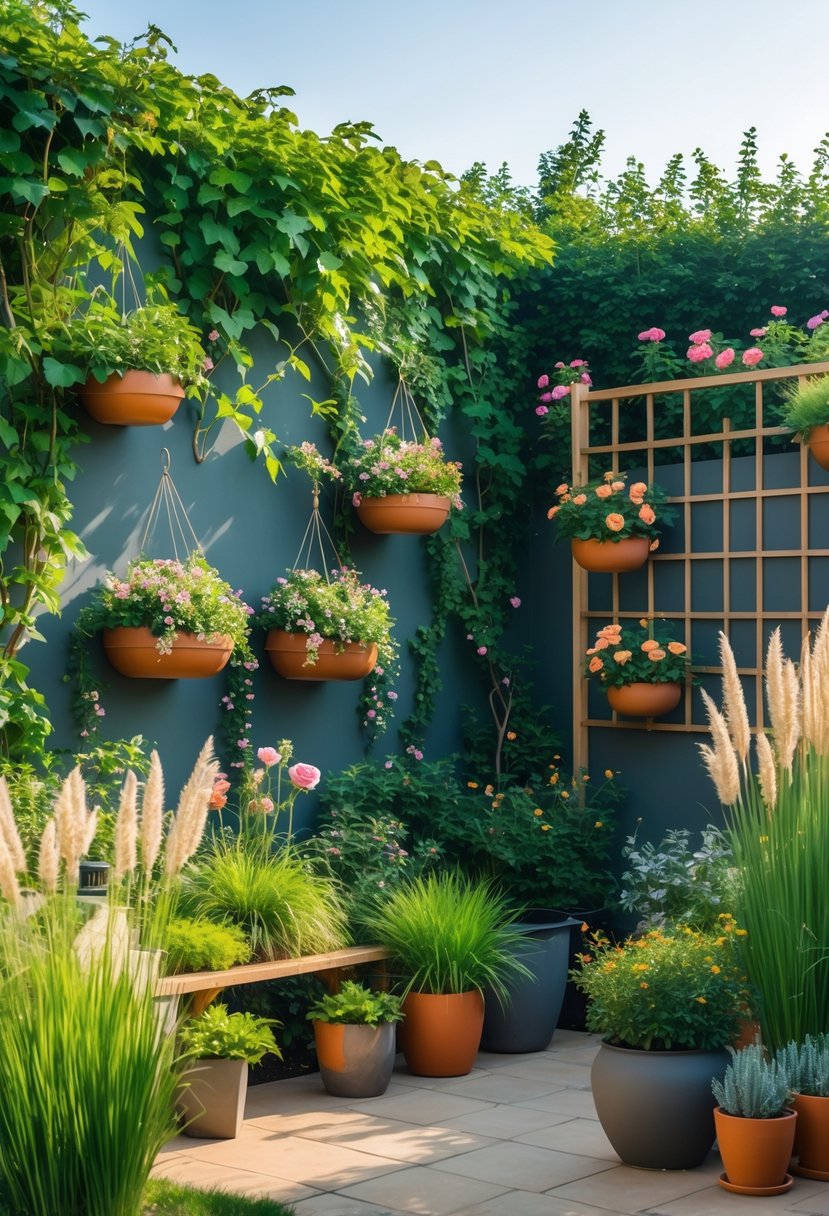
Easy garden ideas to hide a wall help you create a more inviting and beautiful area without a lot of work or expense. These tips can make your garden feel cozier and more private. You’ll get a splash of green and color in your yard without much hassle.
1) Grow climbing ivy to cover the wall naturally

Planting climbing ivy is one of the simplest ways to hide a plain wall. Ivy is tough and sticks to surfaces, spreading fast to create a lush green cover.
Just plant it at the base, water it regularly, and gently guide the vines up as they grow.
Ivy brings a calming, leafy vibe and makes your garden feel a bit more tucked away. Don’t plant it on cracked walls, though—it can sneak into those gaps. For more help, check out how to grow ivy on walls naturally.
2) Install a wooden trellis and train flowering vines
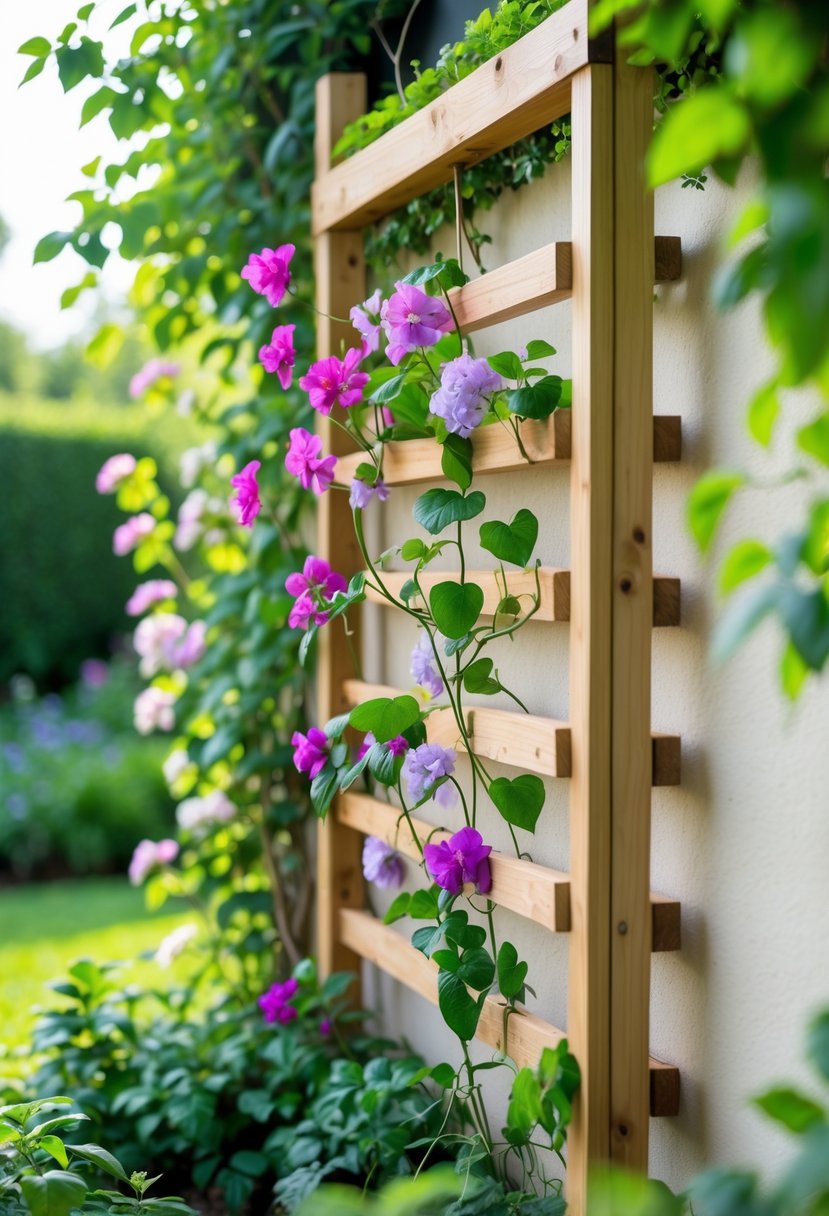
Stick up a wooden trellis and you’ll instantly add some vertical interest. It gives your garden a cozy, natural look and supports plants to grow upward instead of sprawling everywhere.
Pick flowering vines like roses or clematis—they’ll add color and energy to your wall. Tie the new growth gently to the trellis and watch them climb.
A trellis works well for privacy, too. You can make it fit your space by cutting it to the right size. Need inspiration? Take a peek at these DIY wooden trellis ideas for home gardens.
3) Hang colorful hanging planters on the wall

Brighten up a dull wall by hanging colorful planters. Mix and match pots in all sorts of sizes and colors for a playful look.
Hanging planters save you floor space and keep plants right where you can see them. Grow flowers, herbs, or even a few tiny veggies on the wall.
Use ropes or hooks to hang them—super easy indoors or outside. This little trick adds instant charm and greenery to your space.
Try pairing bold pots with leafy green plants for a wall that pops. It’s a quick way to hide empty spots and make your garden feel alive.
Want more ideas? Check out this handy guide: https://thegardenfixes.com/how-to-hang-planters-on-wall/
4) Create a vertical garden with pocket planters

Turn any wall into a green space with pocket planters. These have small pockets for herbs, flowers, or veggies—perfect for balconies or patios.
Hang a fabric pocket planter and you won’t lose any floor space. The pockets let you grow lots of plants while keeping your wall looking fresh.
You can buy pocket planters or make your own from old fabric or shoe organizers. Add drainage holes so water doesn’t build up. For more, see DIY Vertical Pocket Planters For Urban Homes and Gardens.
5) Paint a bright mural to add personality

Why not paint a bright mural to transform a plain wall? Pick colors and designs that make you smile.
A mural shows off your personality and adds a unique touch. You don’t need to be a pro—simple designs work just fine.
Even if you’re new to painting, you can find easy designs to try. A bit of paint and a free afternoon can totally change your garden wall.
Need ideas? Check out bright garden wall painting inspiration and tips.
6) Use bamboo screens for a quick natural cover
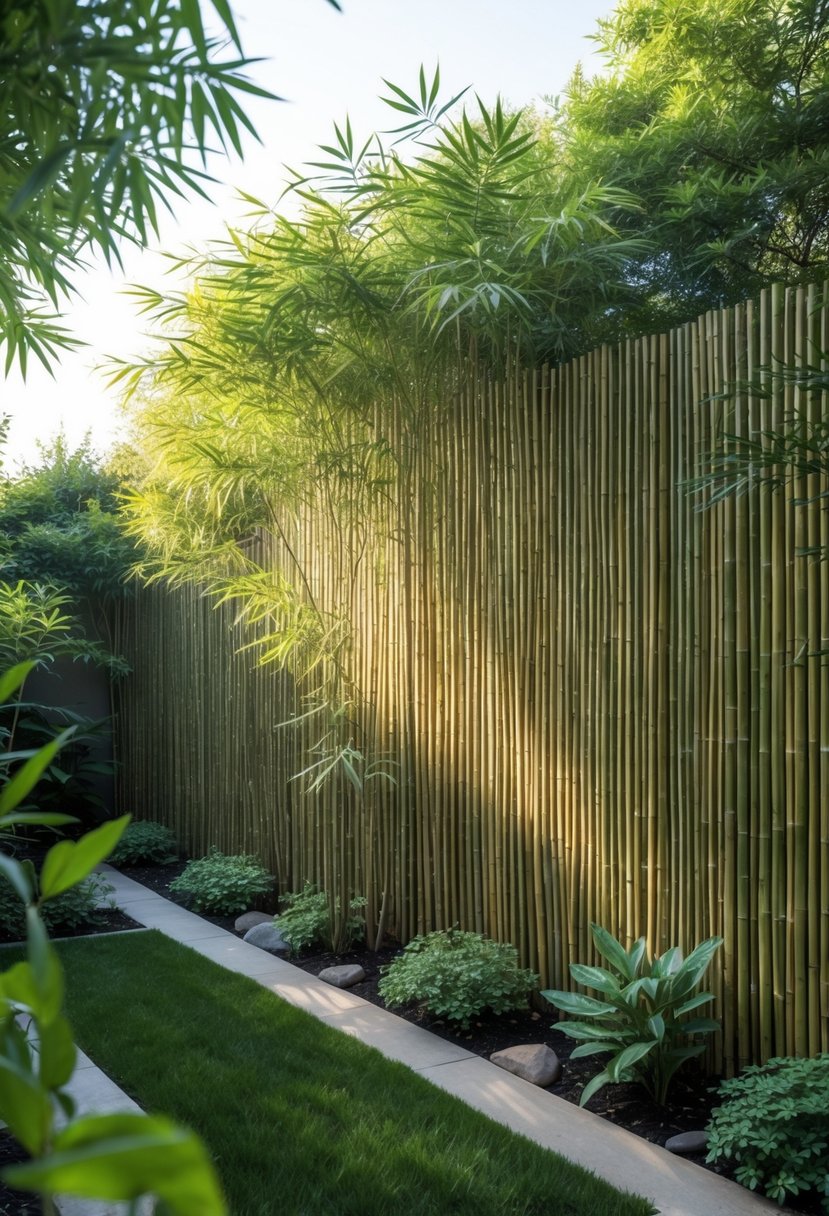
If you want a fast, natural fix, bamboo screens are a solid pick. Bamboo grows quickly and brings a fresh, green vibe.
Plant bamboo right in the ground or set up bamboo panels for a screen. It’s easy to install and fits with almost any garden style.
Bamboo stays green all year, so your space looks good and stays private. Check out more bamboo screen ideas for privacy here.
7) Attach lattice panels and let jasmine grow

Attach lattice panels to your wall and let jasmine take over. The lattice gives vines plenty of places to climb.
Weave jasmine vines through the holes to help them spread evenly. They’ll cover the space in no time.
As jasmine grows, it brings sweet fragrance and pretty blooms. Plus, the lattice adds some nice texture.
For more tips, see creative ways to use lattice in small garden spaces.
8) Build a DIY flower box ledge with seasonal blooms

Build a simple flower box ledge and you’ll instantly add life to a plain wall. Just use basic wood, nails, or screws to make a sturdy shelf below a window or along the wall.
Fill it with seasonal blooms and swap them out as the year goes by. You’ll always have something fresh and colorful on display.
This project is easy on the budget and brightens up your space. It’s also a fun way to show off your favorite plants. For more, check out DIY flower box ledge plans.
9) Place tall ornamental grasses in front
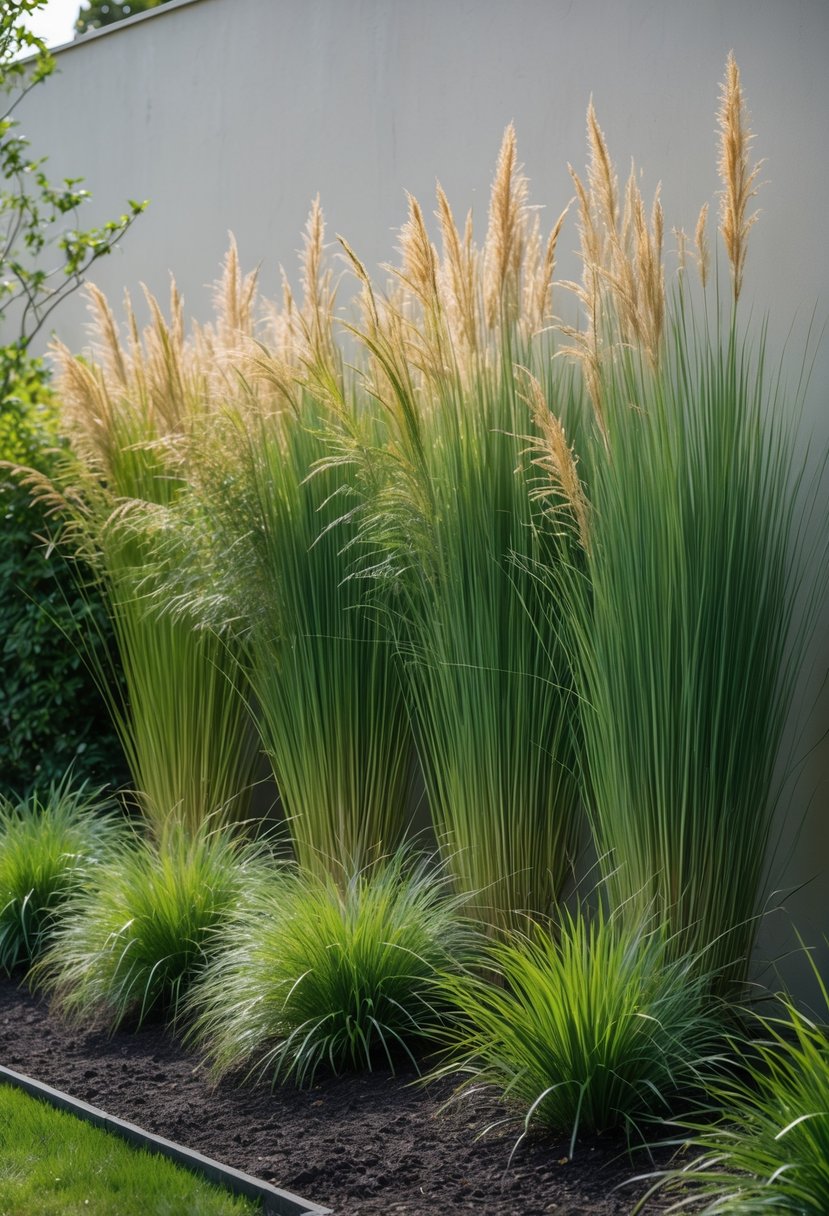
Plant tall ornamental grasses in front of your wall to hide it fast. These grasses grow quickly and add a soft, natural look.
Pick from different heights and colors—Pampas or Feather Reed grass work well as privacy screens.
Ornamental grasses barely need any care. They sway in the wind and give your garden a peaceful feel. You’ll blend your wall into the landscape without much effort.
For more options, check out this guide on tall ornamental grasses for privacy.
10) Set up an outdoor wall fountain for beauty and sound

Install an outdoor wall fountain to turn a plain wall into a calming spot. The sound of water running makes your garden feel peaceful.
Pick from modern or rustic styles to match your vibe. It’s a great way to relax and unwind after a long day.
Wall fountains don’t hog space, so they’re perfect for smaller gardens too. Adding one can really boost the look and feel of your outdoor area.
For more designs, check out 15 Outdoor Wall Fountain Ideas.
11) Hang decorative outdoor art pieces
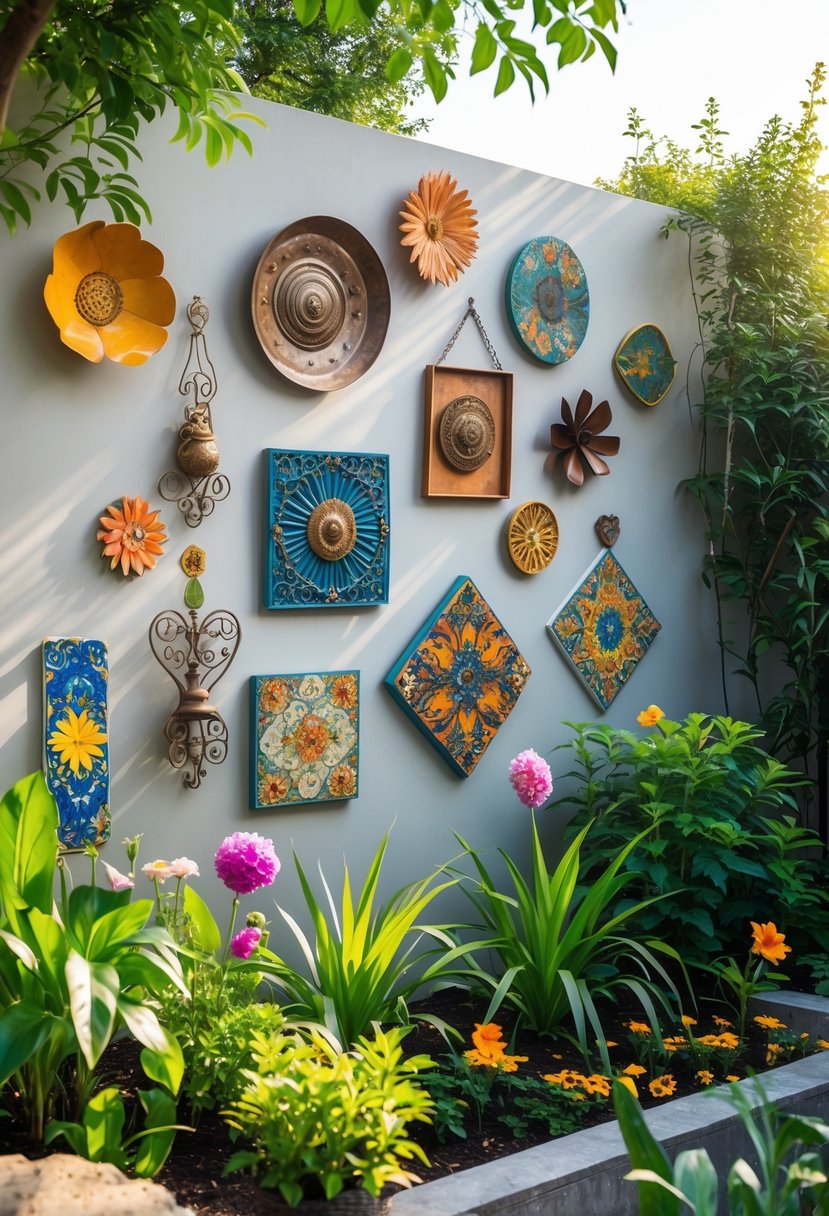
Hide a boring wall by hanging outdoor art pieces. Go for weather-resistant materials like metal or treated wood so your art lasts.
Try colorful designs or shapes that fit your garden’s style. Art adds interest and a bit of your own personality to the space.
You don’t need fancy tools to hang it—there are easy ways to hang art on stucco or siding without nails. For tips that work anywhere, check out ideas to hang outdoor wall art.
12) Plant a row of evergreen shrubs against the wall

Plant evergreen shrubs in a row to cover a wall fast. These keep their leaves all year, so your wall stays hidden even in winter.
Pick low-maintenance shrubs that suit your climate. Euonymus fortunei and aucuba are great if you want upright growth that fills the space.
Evergreen shrubs add color and texture, making your garden feel fresh and inviting. For more ideas, check out plants to hide a garden wall.
13) Add string lights and draping fabric for charm
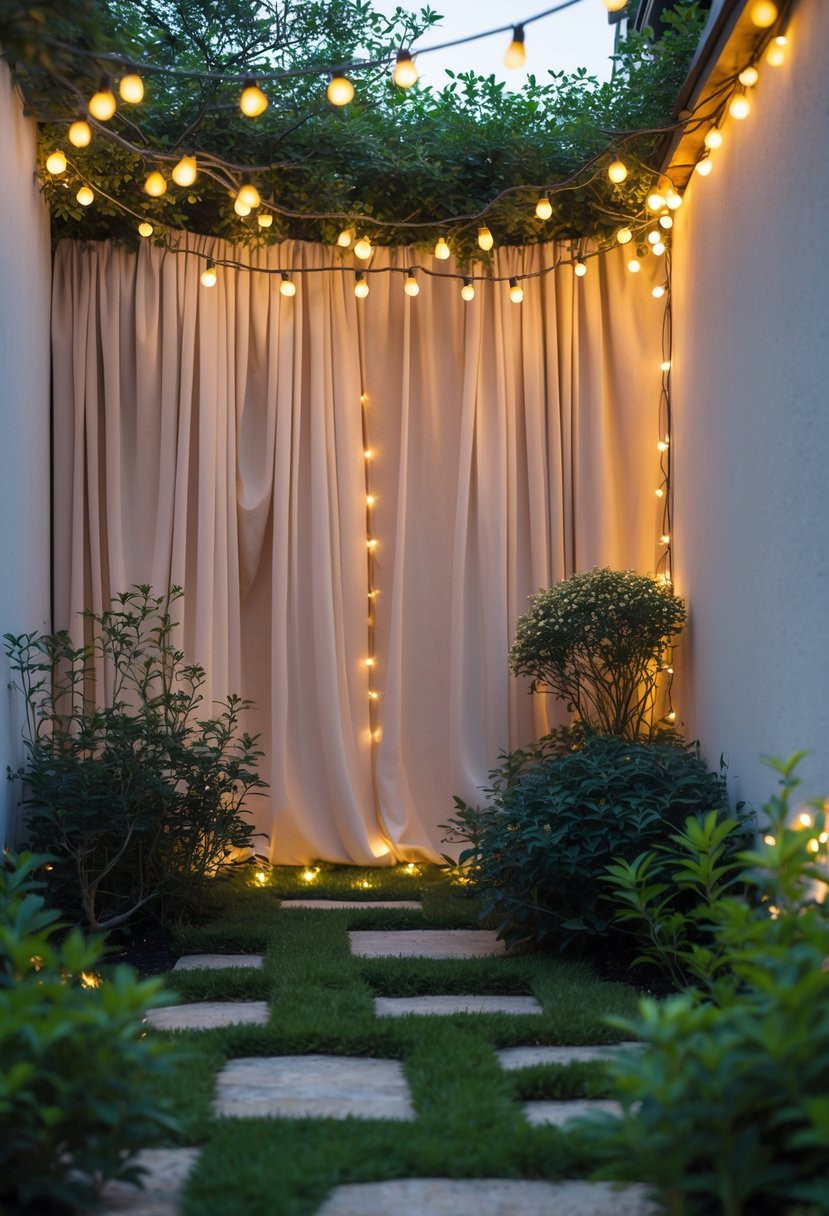
Try hanging soft fabric panels to hide a plain wall. Pick something light and sheer if you want a gentle vibe.
Now, weave string lights through the fabric. The lights create a warm glow and make the space feel cozy.
This simple combo turns any corner into an inviting spot for evenings outside. It’s really not hard to set up and gives your garden a bit of extra charm.
If you need some inspiration, check out this guide on patio string light ideas.
14) Use artificial boxwood panels for low maintenance

Cover a dull wall fast with artificial boxwood panels. These panels look like real greenery but don’t need water or sun.
Just snap them together or staple them up—super easy. Trim them to fit around corners or outlets if you need to.
Artificial boxwood stays green all year, inside or out. It’s a quick way to add a fresh look without the hassle of real plants.
Want to build one? Here’s a guide on How To Build A Faux Boxwood Wall.
15) Grow fast-growing clematis vines

If you want to cover a wall fast, clematis vines really do the trick. They burst out with bright flowers and bring lots of color.
You can train these vines on trellises or fences, and soon, you’ve got a wall full of lush leaves and blooms.
Clematis grows well in different light, so there’s probably a type that fits your space. They bloom more than once a year, so you get color for months.
Need ideas? Here’s a guide to fast-growing climbers for privacy.
16) Install a living wall panel kit with succulents

Cover up a blank wall with a living wall kit made for succulents. These kits come with frames that hold soil and plants, so setup is pretty straightforward.
Pick a spot with good light to help your succulents thrive. Most kits have simple instructions, so you don’t need fancy tools or skills.
Once you’ve got it up, the succulent panel adds cool texture and color. It’s a low-maintenance way to bring life to your wall.
Want to see how it works? There are plenty of guides on installing living wall kits with succulents.
17) Place potted lemon or olive trees strategically

Use potted lemon or olive trees to block plain or ugly walls. Place them where they hide the wall but still get enough sunlight.
Lemon trees bring a fresh, cheerful look with their green leaves and bright fruit. Olive trees add a touch of Mediterranean style with their silvery foliage.
Both types grow well in pots, and you can move them around if you want a new setup. Just make sure the pots drain well and the trees get plenty of sun.
If you’re curious about using olive trees in containers, check out these courtyard olive tree pot ideas.
18) Attach reclaimed wood planks for rustic appeal

Try attaching reclaimed wood planks to cover a plain wall. The wood’s natural grain and weathered look bring a warm, rustic vibe to your garden.
Using reclaimed wood is eco-friendly and gives your wall a one-of-a-kind look. Arrange the planks however you like—horizontal or vertical both work.
Don’t forget to seal the wood so it lasts outside. This simple project can totally change the feel of your garden.
Looking for more inspiration? Visit 10 Garden Ideas Using Reclaimed Wood.
19) Create a moss graffiti design for greenery

Try moss graffiti if you want to turn a plain wall green. Mix moss, water, and a couple of other things to make a paint you can use for words or shapes.
This method is eco-friendly and doesn’t hurt your wall. The living moss grows over time, adding a natural touch.
You won’t need any spray paint—just patience and a bit of creativity. For step-by-step help, check out how to make moss graffiti designs.
20) Build a bamboo or reed screen fence

Build a bamboo or reed screen fence to add privacy fast. These materials are lightweight and easy to handle.
Bamboo fences look natural and fit into almost any garden. Just buy pre-made panels or rolls and attach them between wooden posts.
Reed screens work the same way and do a great job covering plain walls. Both options are budget-friendly and add some green to your space.
If you want a quick fix, bamboo or reed screening is worth a try. Learn more about bamboo fences and screens here.
21) Plant climbing roses for fragrance and cover
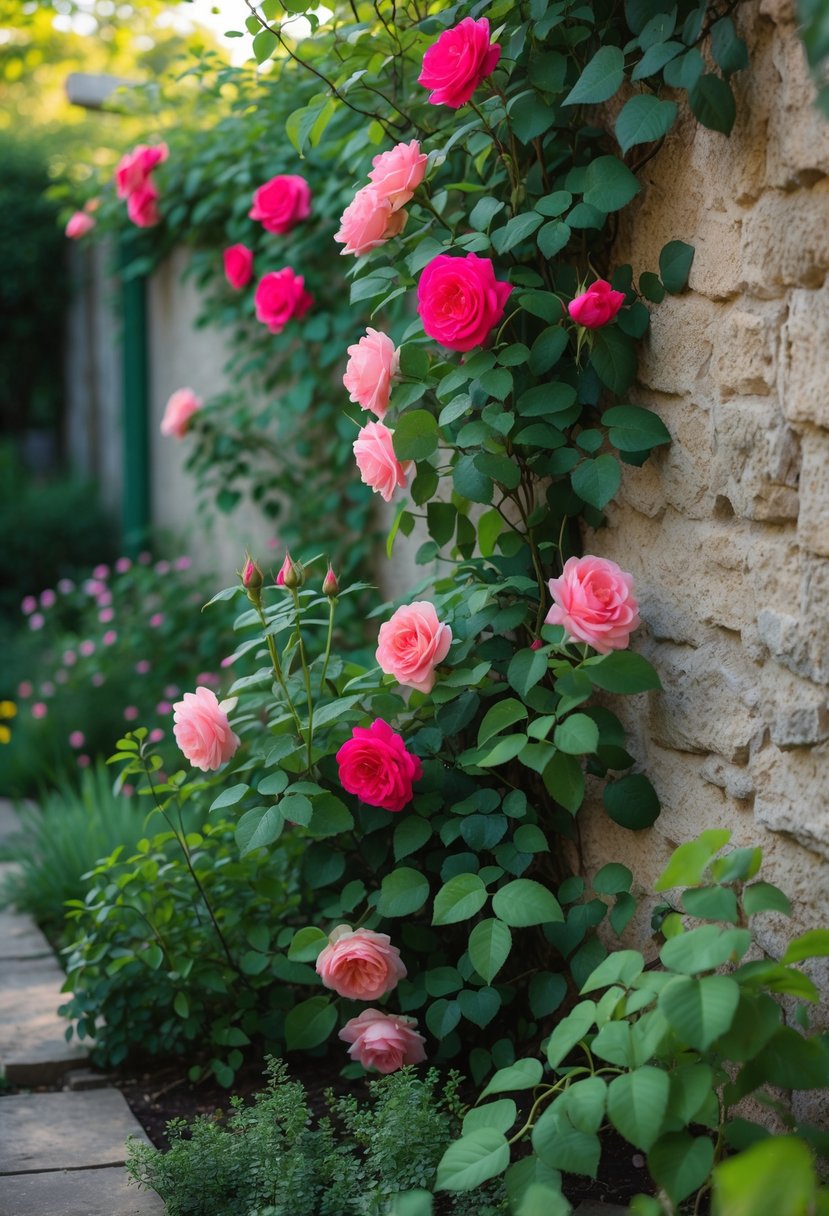
Plant climbing roses to hide a plain wall in no time. These roses grow fast and climb up walls or trellises, filling your garden with color.
Climbing roses also bring a lovely scent that makes your outdoor space feel extra special. Train them to cover fences, arbors, or even old walls.
There are lots of colors and scents to pick from, so you’re sure to find something you love. For more tips, check out climbing rose garden ideas.
22) Install metal grid panels for modern vine support
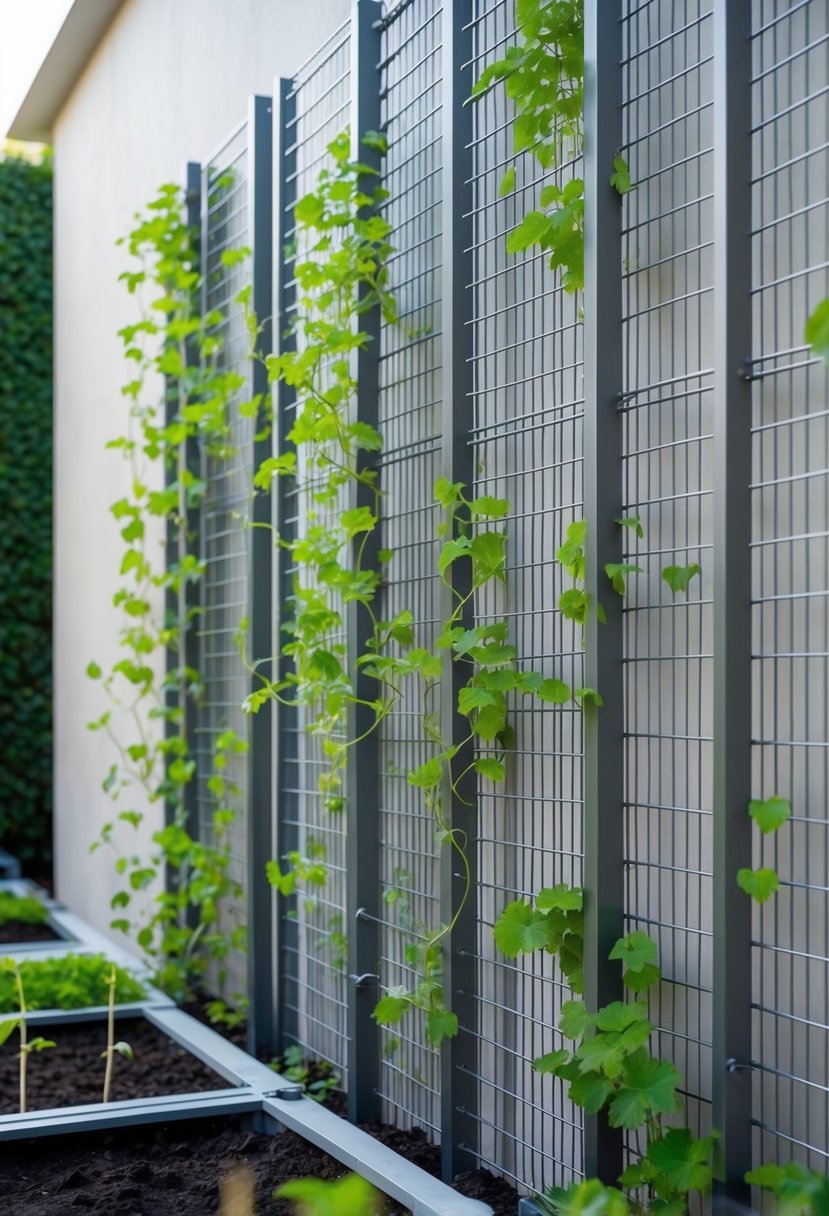
Install metal grid panels to cover a plain wall and support climbing vines. These panels can hold up even heavy plants like tomatoes, grapes, or passion fruit.
Metal grids are tough and won’t bend or break easily. They also give your garden a modern, clean look.
Because they’re simple to install, you can turn a bare wall into a green space pretty quickly. The open design helps your plants grow and makes picking fruit easier.
Try black metal grids for a sleek backdrop. For more ideas, check out metal gridwork structures for vine crops.
23) Grow honeysuckle for color and scent

Grow honeysuckle to cover a wall with color and a sweet scent. This plant climbs fast on fences, trellises, or walls, adding privacy and charm.
Honeysuckle blooms in shades from creamy white to yellow and pink. The fragrance fills your garden, especially in spring and early summer.
Plant it in a sunny spot with good soil, and trim it regularly to keep it healthy. Want more info? Here’s how to grow honeysuckle and care for it here.
24) Set up a mix of colorful potted plants on shelves

Arrange colorful potted plants on shelves to hide a plain wall. Mixing plants with different shapes and sizes makes things interesting.
Try leafy greens with blooming plants for a splash of color.
Put taller plants at the back and shorter ones in front so everyone gets some sun. Your wall will feel lively and full of life.
Need ideas for arranging them? Check out setups that balance plant size and color.
25) Install trellis with morning glory vines

Install a trellis and grow morning glory vines to hide a wall. Morning glories climb quickly and cover the trellis with bright, trumpet-shaped flowers.
A sturdy trellis gives these fast climbers the support they need, and your wall stays protected. Choose wood or metal—whatever fits your style.
Morning glories can reach 6 to 12 feet, so you’ll get a nice screen in no time. With a bit of care, your wall turns into a colorful garden feature.
Want to get started? See more morning glory trellis ideas.
Benefits of Hiding a Garden Wall
When you hide a garden wall, you change how your outdoor space feels and looks. It adds color, texture, and a calming vibe to your garden.
You’ll also get more privacy, so you can enjoy your yard without worrying about ugly views or nosy neighbors.
Improving Visual Appeal
Covering a plain or ugly wall brightens your garden right away. Use climbing vines or hanging baskets to add color and life.
These plants help the wall blend in, making it feel like a natural part of your garden.
You can also try decorative screens or outdoor art for more style and texture. Turning a dull wall into a feature gives your garden more character and makes it a place you actually want to hang out.
Plants with colorful or scented leaves add even more interest—and might even bring in birds or butterflies.
Enhancing Outdoor Privacy
Blocking a wall helps you shield your garden from outside views. Tall plants or evergreen screens can build a natural barrier you can count on all year.
You get to relax without feeling like someone’s peeking in. That’s honestly one of the best feelings in your own backyard.
Try placing planters with trees or shrubs right along the base of the wall. This breaks up the wall’s bulk and makes your space feel more private.
You can also hang outdoor curtains or set up garden screens. These add privacy but still let you control the light and airflow.
Suddenly, your garden becomes a quiet retreat—maybe perfect for reading, dinner, or just hanging out with family.
If you want more ideas to help your garden wall blend in, you might want to check out Garden Ideas to Hide a Wall. There’s some cool stuff there.
Common Mistakes to Avoid
When you’re trying to hide a wall, choosing the right plants and planning how you’ll care for them really matters. Picking the wrong options can make your space look crowded or just tough to keep up with.
Ignoring Maintenance Needs
If you grab plants without thinking about their care, your garden can get out of control fast. Some fast-growing types need constant trimming to stay neat.
Certain plants also want specific watering routines or particular soil. When you don’t match the plant to your garden’s conditions, it might not last—and then your wall’s back on display.
Always learn what each plant needs before you start planting. You’ll save yourself a headache by picking low-maintenance options that fit your climate.
That way, your garden stays good-looking without a ton of extra work.
Overcrowding Plants
So, packing a bunch of plants into a tiny spot might sound tempting if you want to hide a wall fast. Honestly, though, overcrowding just leads to trouble—poor airflow, plants fighting over nutrients, you name it.
When you squeeze plants too close together, they often grow weak. Sometimes they even get sick, and suddenly you’ve got gaps where the wall peeks through. Not exactly the lush look you were going for, right?
Try spacing your plants based on how big they’ll eventually get.
It helps to jot down a quick list of your plants, with their usual width and height. Then, arrange them so each one has breathing room.
That way, you’ll end up with a healthier, fuller screen—without the mess of crowding.
If you’re curious about more common problems like this, check out this 71 Shockingly Common Landscape Design Mistakes (& How to Fix) guide.


