

Creative Rock Garden Ideas On A Slope: 25 Fun and Easy Ways to Transform Your Yard
Got a sloped yard? Turning it into a rock garden can really make the most out of that tricky space.
Rock gardens bring texture and interest, plus they help manage soil and stop erosion on uneven ground.
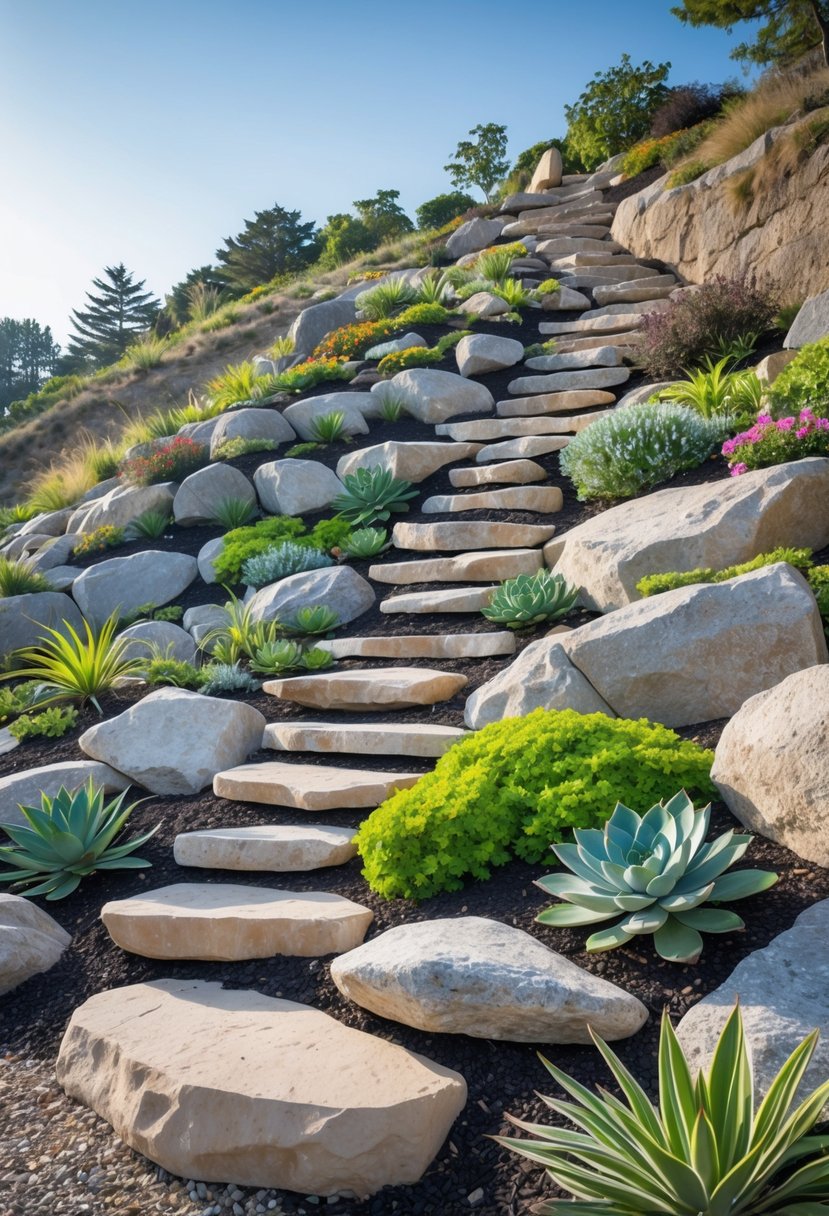
Creative rock garden ideas on a slope can turn a tough yard into a beautiful, low-maintenance spot you’ll actually enjoy.
Use rocks and plants to design a garden that matches your style and works with your land’s natural slope.
1) Terraced rock beds with succulents
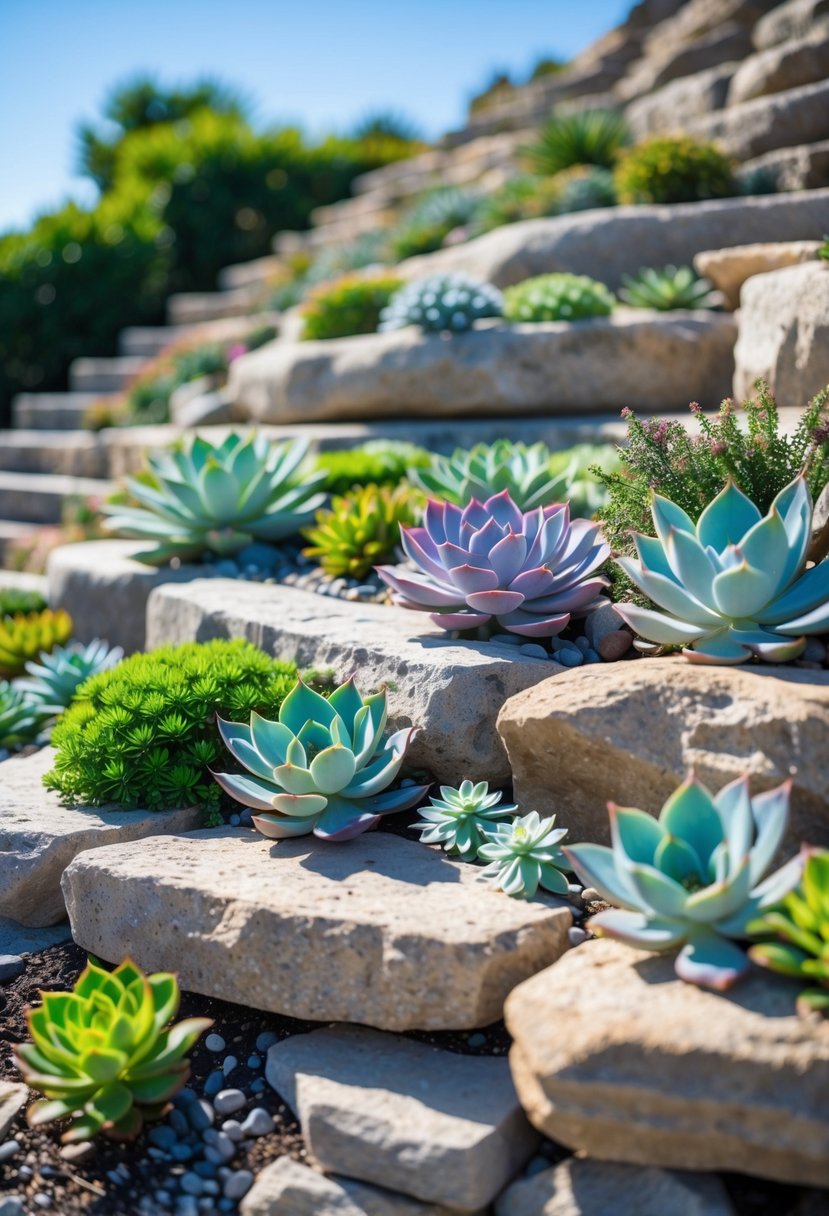
Terraced rock beds work great for slopes. Build small stone walls to create flat planting spots and stop soil from washing away.
Succulents thrive in these terraces since they don’t need much water and can handle dry patches.
Try mixing different shapes and colors to keep things interesting. The rocks hold moisture in the soil and give your slope more structure.
Terraces also make the slope easier to use and just look awesome. Need more ideas? Check out slope garden design ideas.
2) Layered rock walls with alpine plants

Build layered rock walls to turn your slope into a nice stepped garden. Use big rocks for the base and fill in with smaller stones.
Tuck alpine plants between the layers. These tough little plants love sunny, well-drained spots.
Alpine plants bring a soft, wild look to stone walls and need less water, so they’re easy to care for.
If you want a mountain vibe, this style fits right in. Mixing shapes and colors keeps it lively.
Find more tips on rock walls and alpine plants here.
3) Mixed gravel and large boulder accents
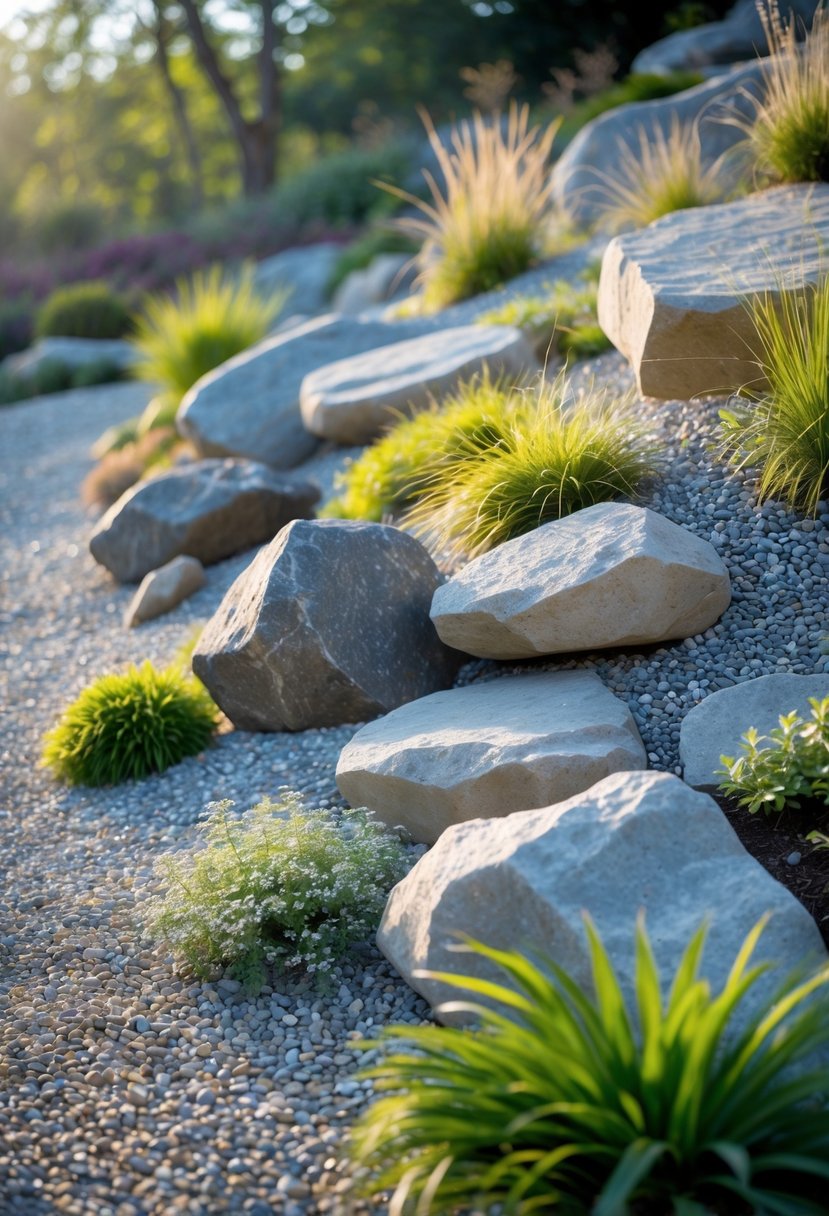
Try using a mix of gravel and big boulders for texture and depth on your slope. Gravel fills gaps and helps with drainage, while big rocks give your garden some drama.
Set large boulders firmly into the ground to anchor them and make them look like they belong.
Scatter different sizes of gravel around the boulders for a balanced, tidy feel. It also helps stop soil erosion on the slope.
This combo just works—practical and good-looking. Want more? Here are some creative rock ideas.
4) Sedum-filled crevices between rocks
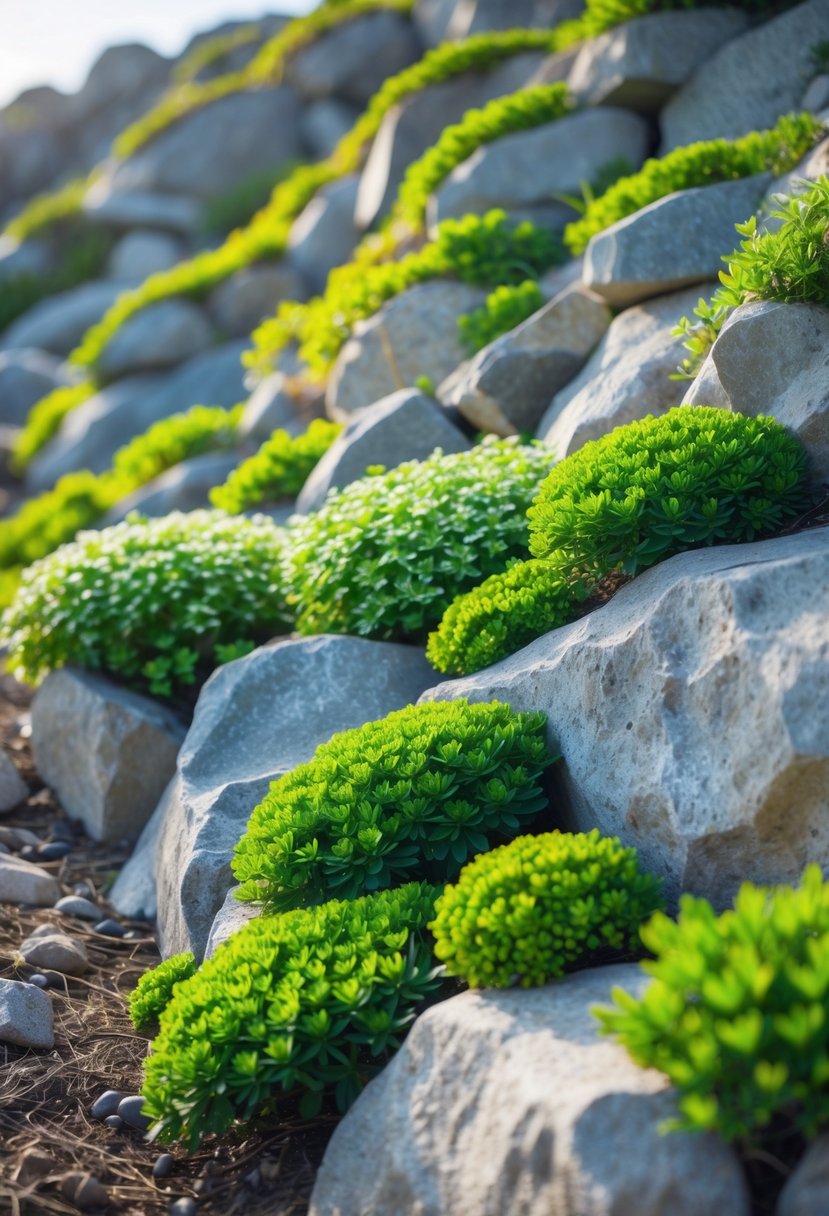
Tuck sedum plants into the narrow spaces between rocks on your slope. These crevices give a natural, rugged look.
Sedum is low-growing and barely needs water—super easy.
It also helps hold soil in place and fights erosion. The variety of colors and shapes keeps things interesting.
Use bare-root sedum for tighter spots. The roots settle in quickly between rocks.
For more, check out tips on creating a crevice garden.
5) Driftwood and stone combination

Mix driftwood with stones for a unique look on your slope. Driftwood adds natural texture and a rustic vibe, while stones bring structure and help prevent erosion.
Arrange driftwood among the rocks to create a beachy or forest feel. Use smooth pebbles or chunky rocks to balance the rough wood.
Pair with low plants and succulents for easy care. Try laying driftwood so it draws your eye up the slope.
Want more inspiration? Browse driftwood and rock garden ideas.
6) Mini waterfalls cascading over stones

Add a peaceful vibe to your garden by building a mini waterfall. Stack flat, smooth stones to make gentle steps for water to trickle down.
Let the water cascade naturally from one level to the next. The sound is calming and makes your slope feel like a retreat.
You don’t need much space or fancy gear for a mini waterfall. They fit into small corners and really amp up the atmosphere.
Mix in some plants to soften the rocks and add pops of color. It helps the water feature blend in.
Want to try it? Here are some mini waterfall ideas.
7) Stepping stone pathways through the garden
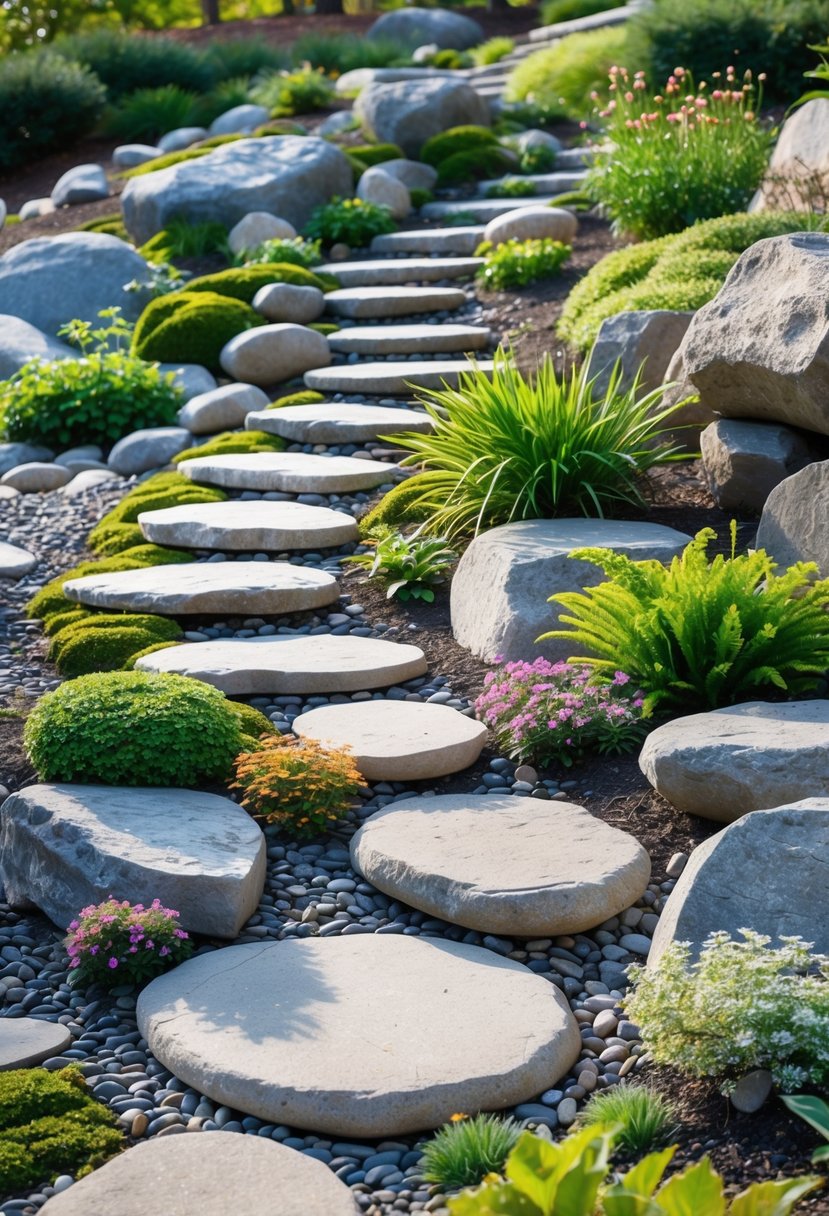
Stepping stone pathways add both charm and function to a sloped garden. They help you move around safely and highlight your plants.
Pick stones that match your style—natural ones blend in, while cut stones look neat and tidy.
Space them so you can walk comfortably. Go for a curved or straight path, depending on your layout.
Stepping stones make a clear walkway without covering up your soil. Plants can grow right up to the edges.
Need ideas? Check out these stepping stone walkway ideas.
8) Moss and fern rock pockets
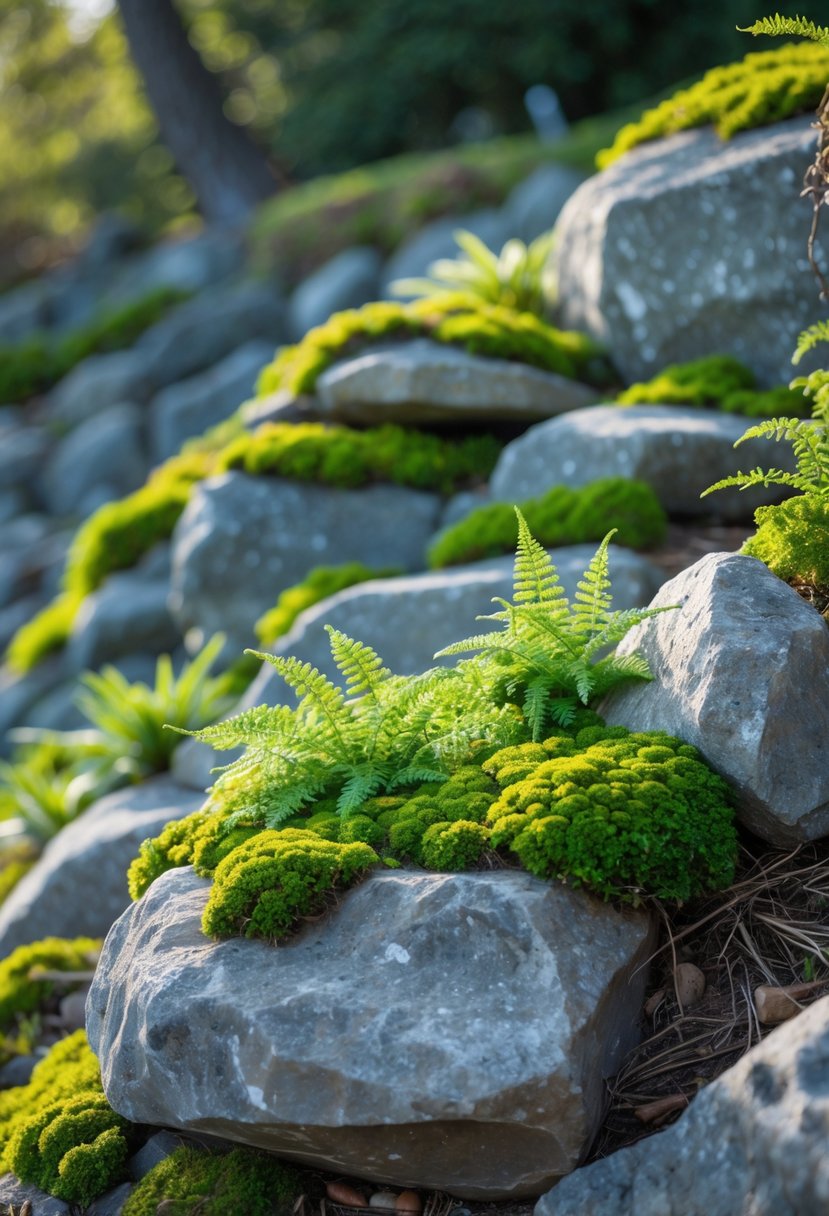
Carve out little pockets in your slope where rocks hold soil for moss and ferns. These plants love shady spots, so this works best under trees or on the north side.
Moss creates a soft, green carpet around the rocks. Ferns add texture and some height.
Together, they make the slope feel lush and natural. This setup keeps soil covered and stops erosion.
Moss and ferns need barely any water once they’re settled—super low maintenance. For more, check out peaceful hillside combos here.
9) Colorful flowering rock ledges

Brighten up rock ledges on your slope with colorful flowers. Pick plants that love rocky soil, like creeping phlox or rock cress.
Tuck flowers into cracks and crevices for a natural, charming look. These plants are easy to care for and add color all season.
Mix up the colors and textures so your rock ledges really pop. For more, check out alpine plants for rock gardens.
10) Rock and ground cover layering
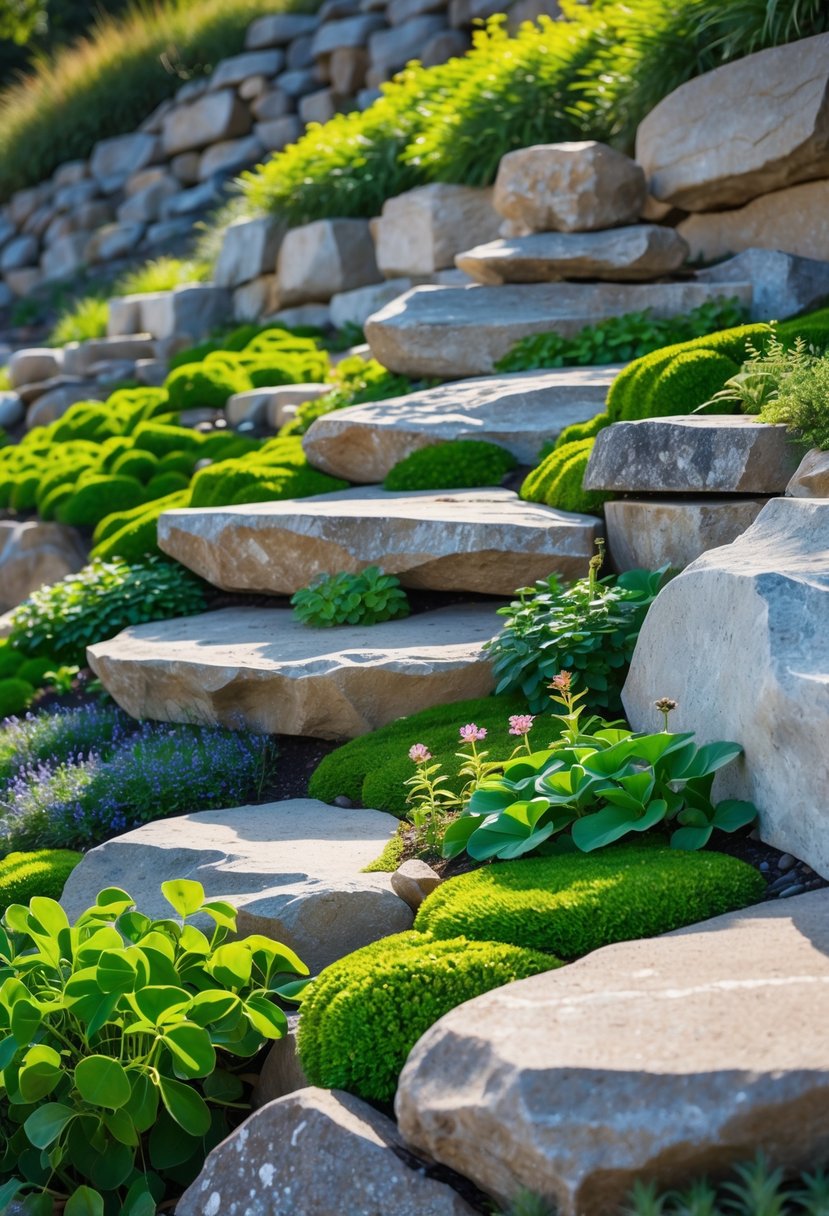
Layer rocks of different sizes on your slope to add depth. Start with big stones at the bottom and go smaller as you move up.
This keeps the soil in place and adds visual interest.
Add ground cover plants between the rocks to soften things up. Pick low-growing plants that spread fast.
They fill in gaps and make your garden look full and natural. This mix also helps with drainage and stops erosion.
For more, check out creative rock garden tips on a slope.
11) Natural stone retaining walls
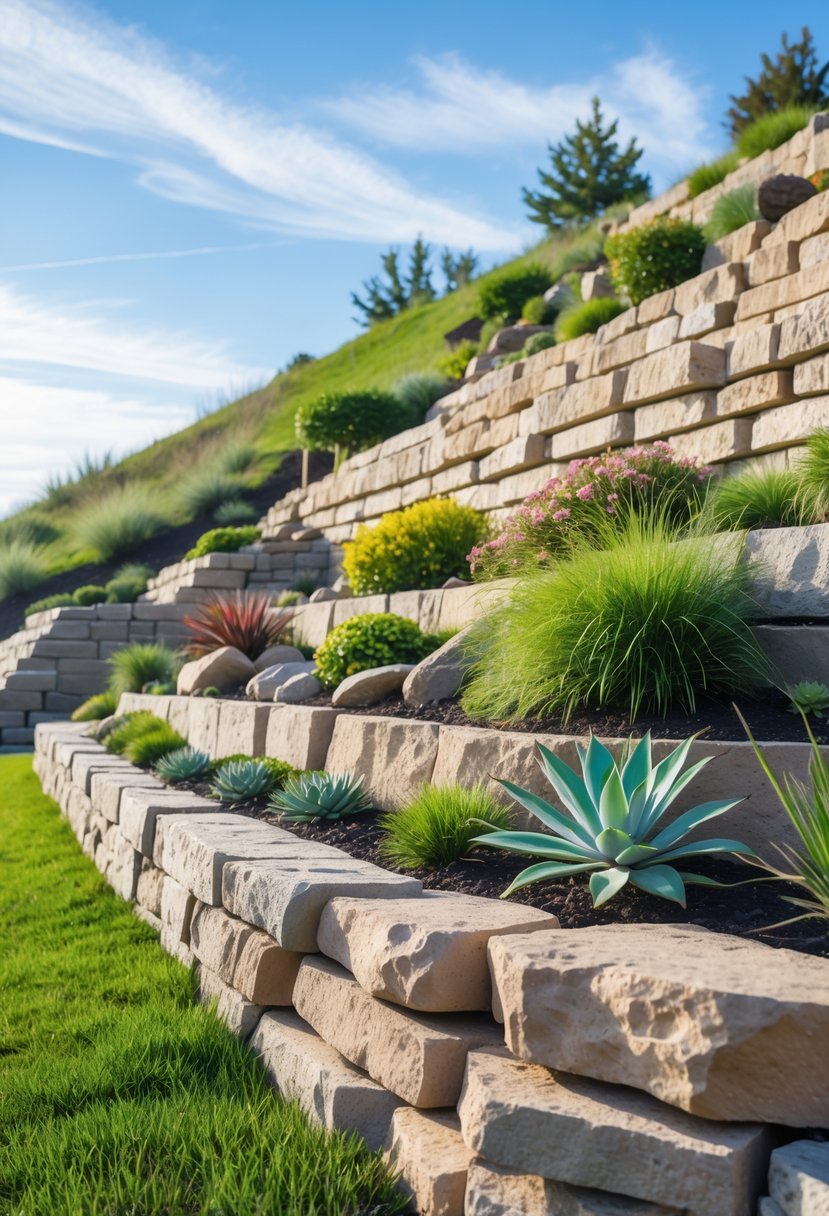
Natural stone retaining walls help you manage a slope. They stop soil from eroding and give you flat spots for plants or even a little seating area.
Pick stones that fit your style. These walls blend into the landscape and give your yard a classic look.
Building with natural stone means your wall will last for years. You can keep the design simple or get creative.
Check out more natural rock retaining wall ideas.
12) Stacked flat rocks with thyme ground cover

Stack flat rocks to make a low wall or border on your slope. These rocks look natural and help hold soil in place.
Plant thyme between the rocks as ground cover. Thyme is tough and loves sunny, well-drained spots.
As it grows, thyme softens the edges and brings a fresh green vibe. Plus, it smells great when you step on it.
This idea slows erosion and adds color without much work. Want more thyme ideas? Check here.
13) Succulent rock clusters with varied heights

Try grouping succulents in clusters at different heights to make your slope pop. Grab rocks in all sorts of sizes and build up little terraces or layers.
This way, your plants stand out and your garden gets some real depth. Plant the taller succulents up on the higher rocks, and tuck the smaller ones closer to the bottom.
You’ll be able to see everything without your plants getting lost in the crowd. Adding height like this also helps with water drainage.
If you need a nudge to get started, check out these succulent rock garden ideas.
14) Incorporated wooden sleepers with rocks

Try using wooden sleepers to add some structure to your sloped rock garden. Sleepers make great retaining walls and keep your soil and rocks right where you want them.
Lay down landscape fabric under the sleepers to block weeds from sneaking through the rocks. It helps the soil stay healthy, too.
A bit of wood stain on your sleepers protects them from weather damage and brings out the natural color of the wood.
Mixing sleepers and rocks gives your garden a layered, natural vibe that just works on slopes. If you want more ideas, check out these garden sleeper ideas.
15) Use of river rocks with drought-tolerant plants

Try mixing river rocks with drought-tolerant plants for a rock garden that can handle dry or hot conditions. These plants barely need water, so you can relax a bit.
River rocks lock in soil moisture and stop erosion on slopes. They also add a nice, natural texture.
Plant some grasses, succulents, or small shrubs among the rocks. This combo keeps your slope low-maintenance and interesting to look at.
Need inspiration? Check out creative ways to use river rocks with drought-tolerant plants in garden designs.
16) Zen rock garden with raked gravel

Go for a peaceful Zen rock garden on your slope with raked gravel. Start by spreading a layer of fine gravel or sand.
Arrange large rocks to look like mountains or islands. Use a rake to draw wave or ripple patterns in the gravel.
This setup keeps your slope tidy and brings a calm energy to your yard. Simple plants or moss around the rocks can add a touch of green without getting messy.
A Zen garden on a slope is just right if you want a low-maintenance spot to unwind. For more inspiration, check out zen rock garden ideas.
17) Small rock terraces with bright annuals

Build small rock terraces to break up a slope and create flat planting spaces. Use flat stones or retaining wall blocks for each level.
Fill those terraces with bright annual flowers for bursts of color. Marigolds, petunias, or zinnias are great picks since they bloom all season.
This design helps stop soil erosion and adds a lively vibe to your garden. Terraces also make it way easier to water and care for your plants.
Curious about more slope ideas? Check out small slope landscaping ideas.
18) Wildflower seed mix in rocky areas

Scatter a wildflower seed mix to bring color to rocky slopes. These seeds thrive in tough, rocky soil, so you don’t have to fuss over them once they’re established.
Wildflowers hold the soil in place, which is perfect for slopes. They attract bees and butterflies, so your garden feels alive and natural.
Pick a mix that matches your climate for the best results. Planting wildflowers in rocky areas can turn those tricky spots into something beautiful.
Find tips for choosing and planting wildflower seeds for slopes here.
19) Rock spiral design with layered plants

Try building a rock spiral on your slope for both style and function. Arrange rocks in a spiral shape that follows the curve of your land.
Plant layers of different heights and textures between the rocks. This gives your garden some real depth and keeps things interesting.
Choose plants that handle slopes and don’t need much water. Succulents and drought-tolerant types work really well.
Want more inspiration? Check out this spiral rock garden guide and spiral designs.
20) Boulder grouping for shade-loving plants

Group boulders together to create a cozy spot on your slope. Place them where shade-loving plants will thrive around their base.
This setup protects your plants and adds a natural touch to your garden. Mix up the boulder sizes for a look that feels more relaxed.
Fill the spaces between rocks with ground covers, ferns, or hostas. Your slope will look lush without needing much care.
Boulders bring visual variety and make the shaded area feel calm and inviting. You can learn more about using boulders with shade plants here.
21) Slate stone paths with wild sedges
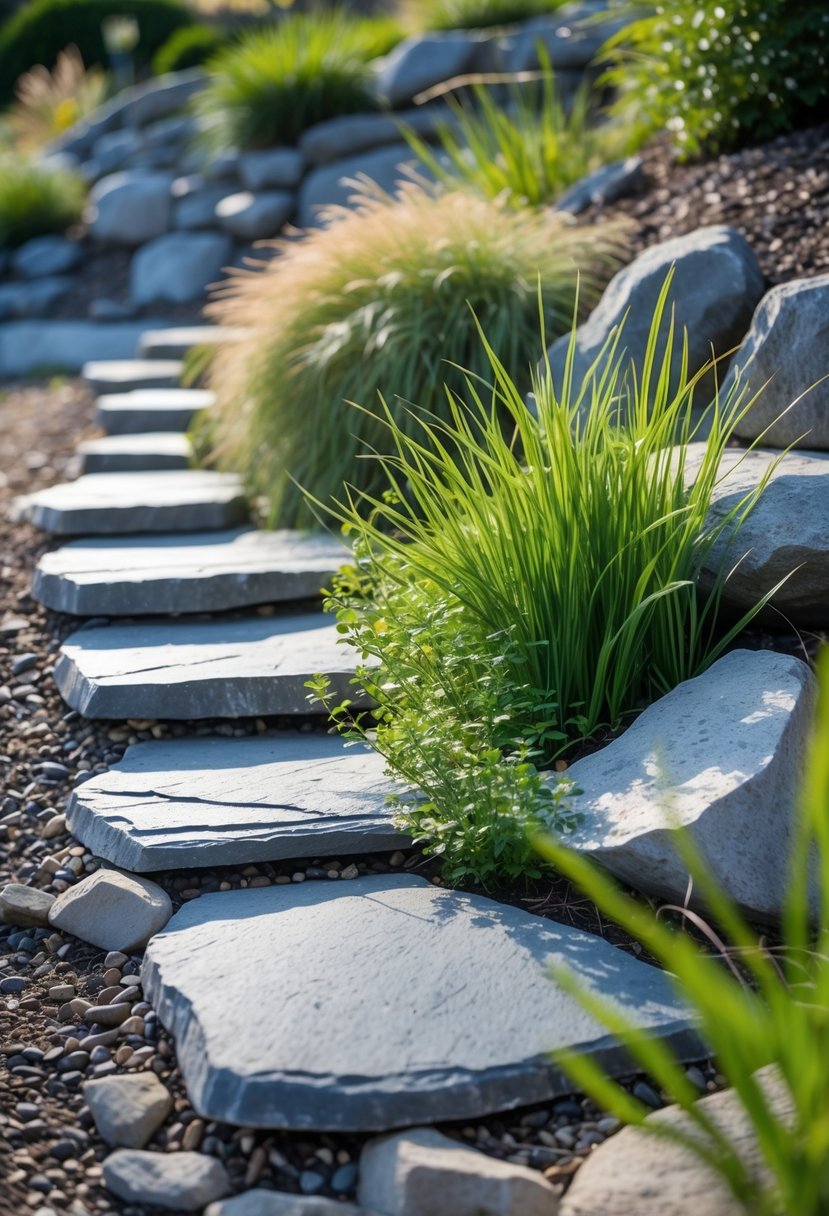
Lay down some flat slate stones to create a charming path on your slope. These stones make a smooth, natural walkway that fits right in.
Plant wild sedges along the path edges. They add soft, grassy movement and a wild touch.
Slate keeps the path sturdy, and sedges help blend the edges into the garden. You get a low-maintenance path that looks neat but not too formal.
If you want more ideas, take a look at slate rock landscaping pictures and ideas.
22) Rock garden tiers with creeping phlox
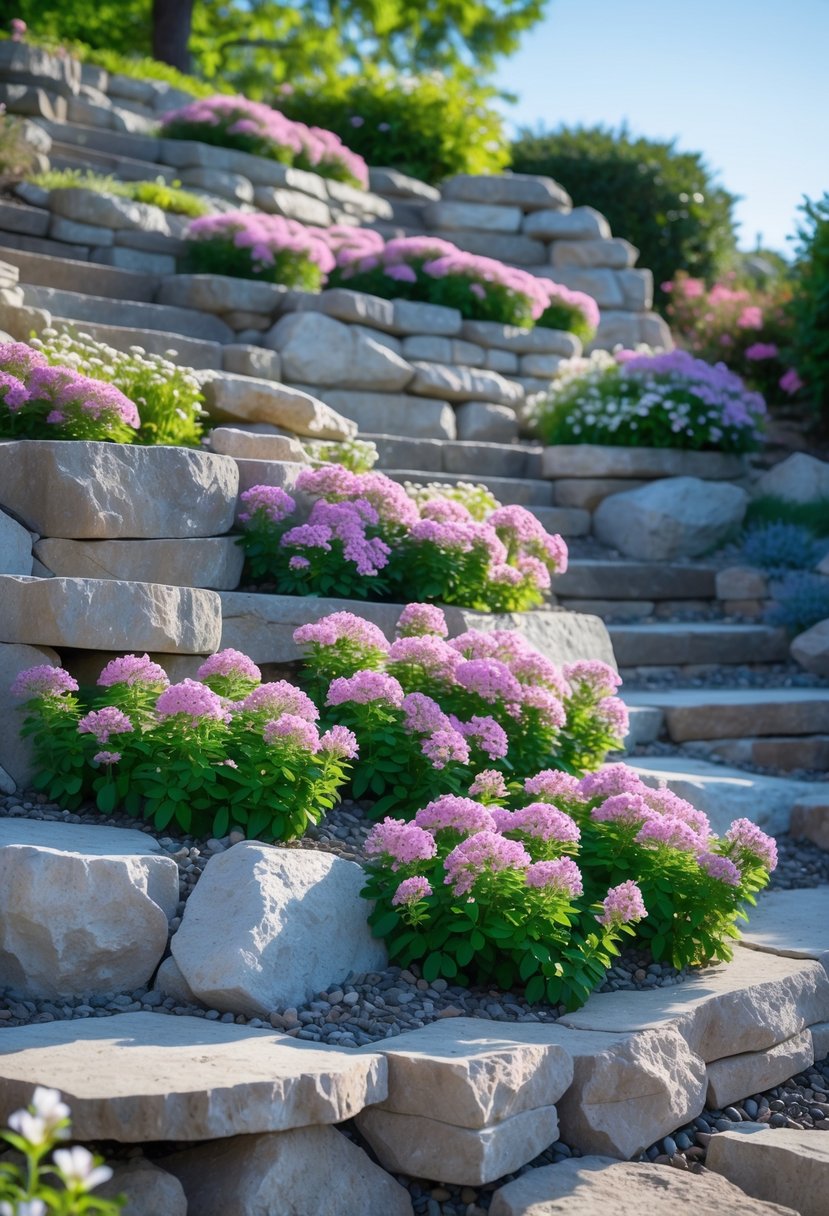
Build rock garden tiers on your slope using creeping phlox. This plant grows low and spreads fast, covering rocky areas with bright spring flowers.
Make small stone walls or terraces to hold soil and plants in place. Mix in other hardy plants for variety.
Make sure your soil drains well and gets sunlight so everything thrives. Tiers help manage the slope and make your garden easier to care for.
You’ll love watching flowers cascade over the rocks for weeks. For more tips, check out rock garden landscaping ideas for slopes.
23) Rustic stone benches nestled in rocks
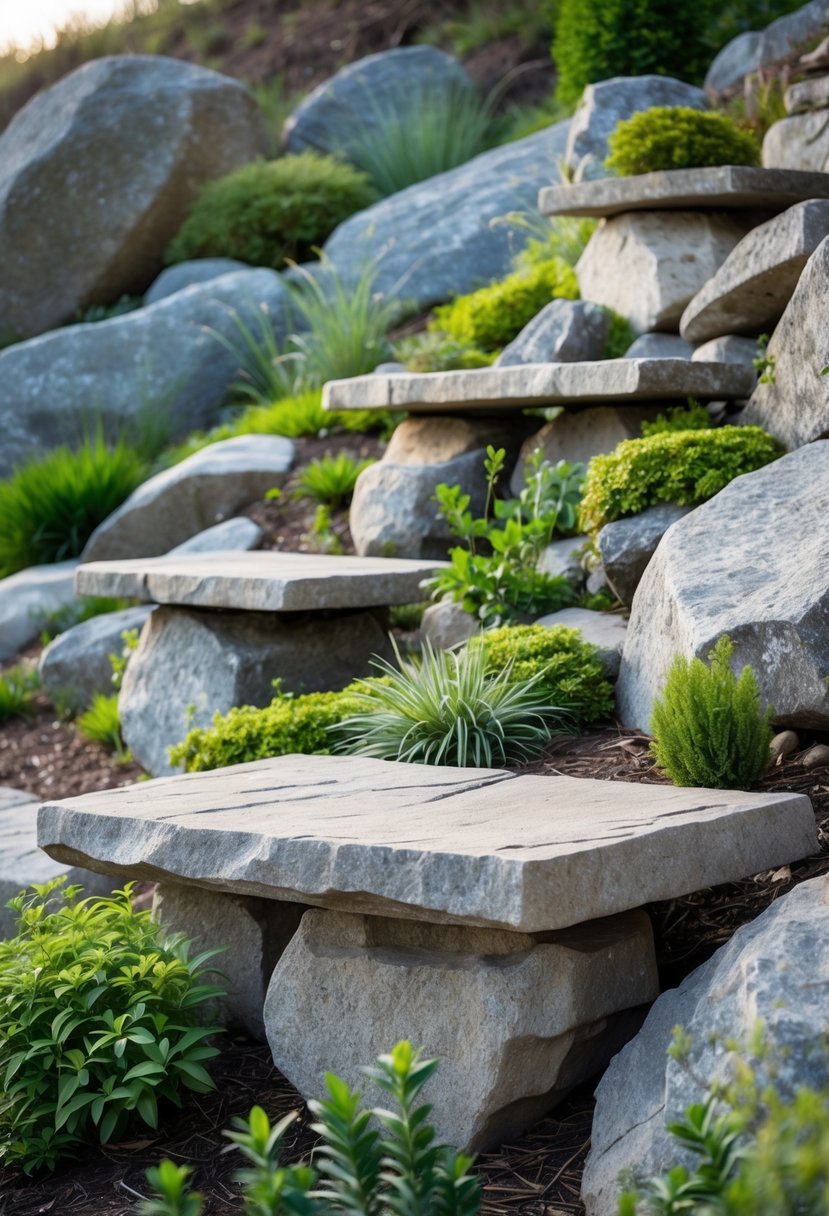
Add some charm to your slope by placing rustic stone benches among the rocks. These benches blend right in and give you a cozy spot to sit.
The rough texture and natural look make the benches feel like they’ve always belonged there. You’ll have a sturdy seat that stands up to any weather.
Tuck the bench into a rock alcove for a bit of privacy and a peaceful retreat. It’s a lovely spot to soak in your garden views.
For more inspiration, check out rustic stone bench designs.
24) Using lava rocks with cacti

Pair lava rocks with cacti for a bold, rugged look. The rough lava rocks match the spiky shapes of cacti perfectly.
Lava rocks keep the soil dry, which cacti love. They warm up quickly in the sun, helping your plants thrive on a slope.
Arrange the lava rocks around your cacti for a neat, tidy design. This combo gives your slope garden a stylish, untamed vibe.
Want more ideas? Check out lava rock landscaping.
25) Steep slope rock wall with native grasses

Build a rock wall on your steep slope to create flat, stable planting spots. Use big, sturdy stones for the base to keep things solid.
Plant native grasses between the rocks. They need less water and care, and they help hold the soil together, cutting down on erosion.
This mix of rocks and grasses brings a peaceful, natural look to your garden. It’s a simple way to make a steep yard both pretty and easy to keep up.
Find out more about using rock walls and grasses for slopes at rock garden ideas on a slope.
Design Principles for Rock Gardens on a Slope
When you set out to create a rock garden on a slope, you really have to think about where it’ll go, how it’ll look, and what happens when it rains. Start by finding the best spot that actually works with your yard’s shape.
Balance the garden’s appearance with practical needs like stopping soil from washing away. Try to follow the natural flow of the land, so the whole thing feels like it fits in and stays healthy.
Choosing the Right Location
Pick a slope that gets just the right amount of sunlight for the plants you want. South-facing slopes soak up more sun—perfect for succulents and plants that don’t mind dry spells.
North-facing slopes stay cooler and suit shade-loving plants better. Check the soil while you’re at it.
Soil that drains well gives you fewer headaches. If water just sits there, your plants won’t be happy and you’ll probably end up with erosion.
Look for places where you can tuck in small terraces or steps using rocks. These help keep soil from sliding and give you little level spots to plant.
If the slope’s super steep, you might want to skip it unless you’re up for building retaining walls or using more advanced supports.
Balancing Form and Function
You want your garden to look good, but also not be a pain to take care of. Start with a mix of rock sizes—big boulders for structure, smaller stones to fill in and add texture.
Group plants by how thirsty they are. Drought-tolerant ones do well near rocks where it dries out fast. Moisture-loving plants fit better in lower spots where water gathers.
Add stepping stones or paths so you can get around without trampling your plants. It’ll make maintenance way easier.
Try ground covers or mulch for erosion control. They protect the soil and add a splash of color.
Incorporating Natural Flow
Work with the slope’s natural curves instead of fighting them. Place rocks and plants along the land’s natural ups and downs.
Arrange rocks to gently guide water down the slope. That way, water doesn’t rush and wash everything away.
Plant in clusters or winding lines, not stiff rows. It just looks more natural that way.
This approach makes your rock garden feel like it’s always been there—like it belongs.
If you want more inspiration, here’s a guide on transforming slopes into serene spaces. Worth a look if you’re stuck.
Selecting Plants and Materials for Sloped Rock Gardens
When you’re building a rock garden on a slope, picking the right plants and rocks really matters. Go for plants that hold soil well and stones that stay put, so everything stays where you want it.
Best Groundcovers for Erosion Control
Choose groundcovers that spread fast and grip the soil tight. Creeping thyme, sedum, and creeping phlox work well here.
They grow low, cover the ground, and their roots help keep soil in place. These plants handle rocky, dry spots without much fuss.
They also add color and texture, and you won’t have to water them much. Alpine strawberries and bugleweed can work too—they’re tough and make things interesting.
Mixing groundcovers creates layers, which helps keep soil and rocks where they belong. Space your plants out and mulch around them to hold in moisture.
This gives young plants a better shot at thriving on your slope.
Rock Types That Work Well on Slopes
Go for heavy, rough-textured stones that won’t slide around easily. Granite, slate, and sandstone are solid choices.
Their weight and gritty surface help them stay put, even when it rains. I wouldn’t recommend smooth or lightweight stones like river rocks—they tend to wander downhill.
Arrange your rocks in terraces or walls if you want to create steps and hold the soil in place. Put the bigger rocks at the bottom for extra stability.
Mixing up sizes and shapes gives the area a more natural vibe. Just make sure to bury each stone at least a little so they lock in better.
This approach improves drainage and keeps soil erosion in check. Your slope will look good and hold together.
If you want more details on building a rock garden on a slope, check out hillside rock garden tips.


