

Low Maintenance Rock Garden Ideas On A Slope 25 Easy and Beautiful Designs
Thinking about a rock garden on a slope? It’s a clever way to boost your yard’s style without signing up for hours of work. Slopes are honestly a pain because water and soil just want to slide away, and most plants struggle to hang on.
A rock garden changes the game. Stones and tough plants work together, giving you a natural, low-maintenance spot that feels peaceful and looks great.
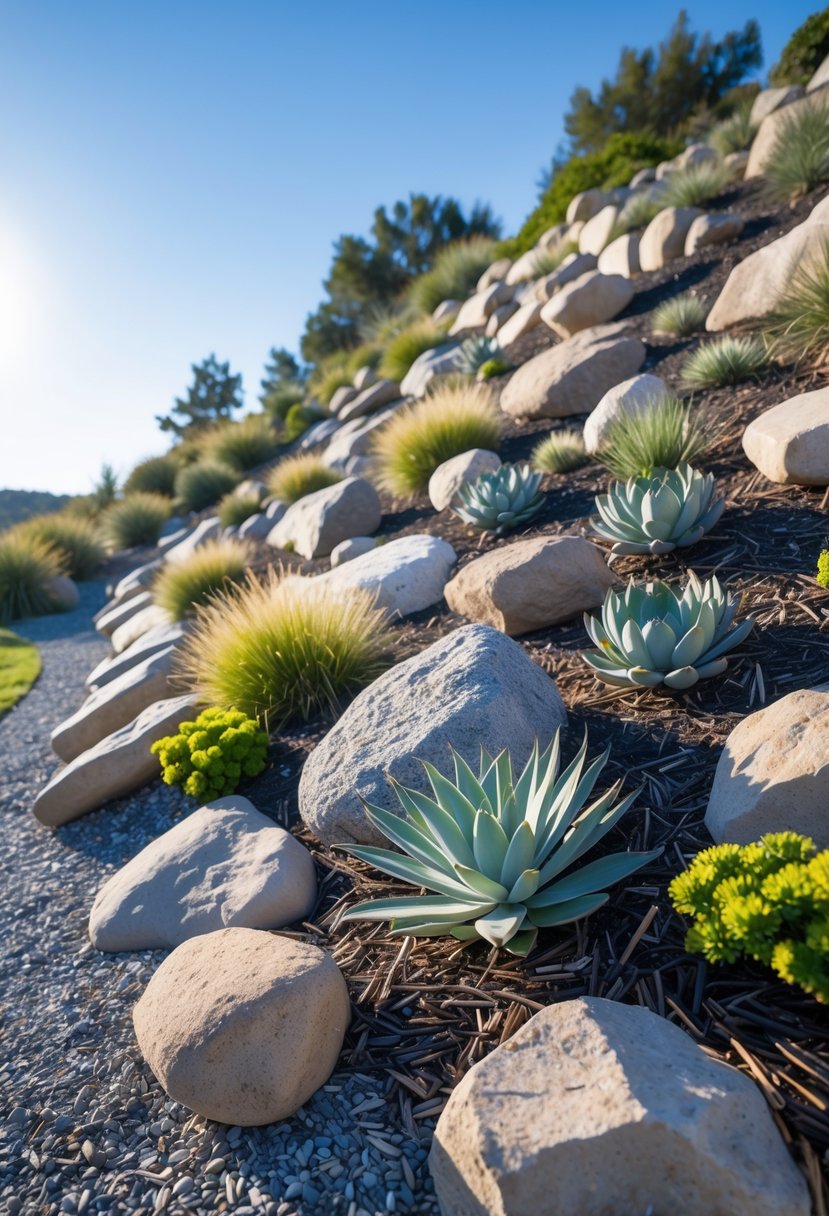
Low-maintenance rock gardens on slopes fight erosion and cut down on yard chores. You get to transform uneven ground into something beautiful and calm, and you won’t have to fuss over it every weekend.
If you’re curious about designing a rock garden for slopes, check out this guide to hillside rock gardens.
1) Use large, natural sandstone boulders for structure
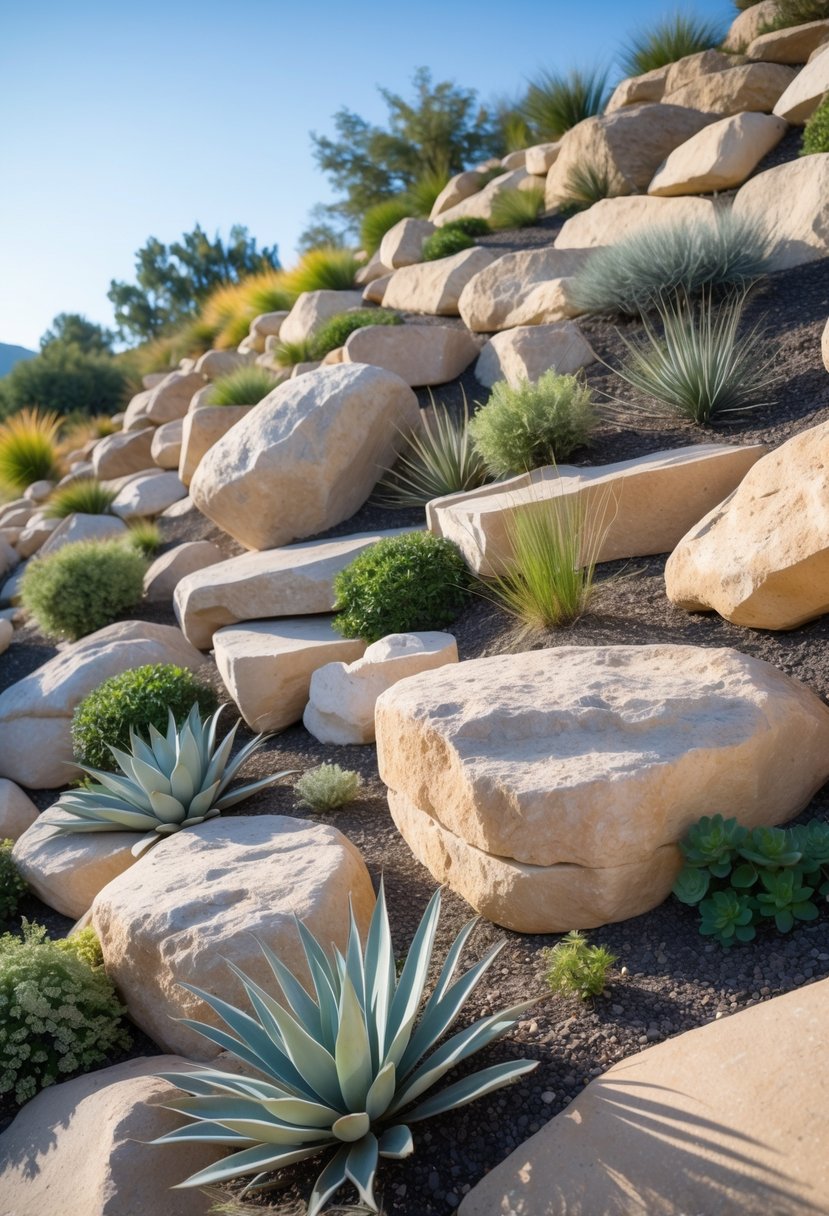
Grab some sandstone boulders and give your slope a solid, natural vibe. These big rocks hold soil in place and keep erosion in check, so you won’t have to worry as much about constant upkeep.
Mix in plants like agave or yucca—they don’t need much water and look great next to the stone. You’ll keep things low-maintenance and easy on the eyes.
Try arranging boulders to make paths or little seating spots. It breaks up the space and makes the slope more inviting. Want more inspiration? Peek at Dead-Simple Rock Garden Designs.
2) Plant drought-tolerant succulents like hens and chicks
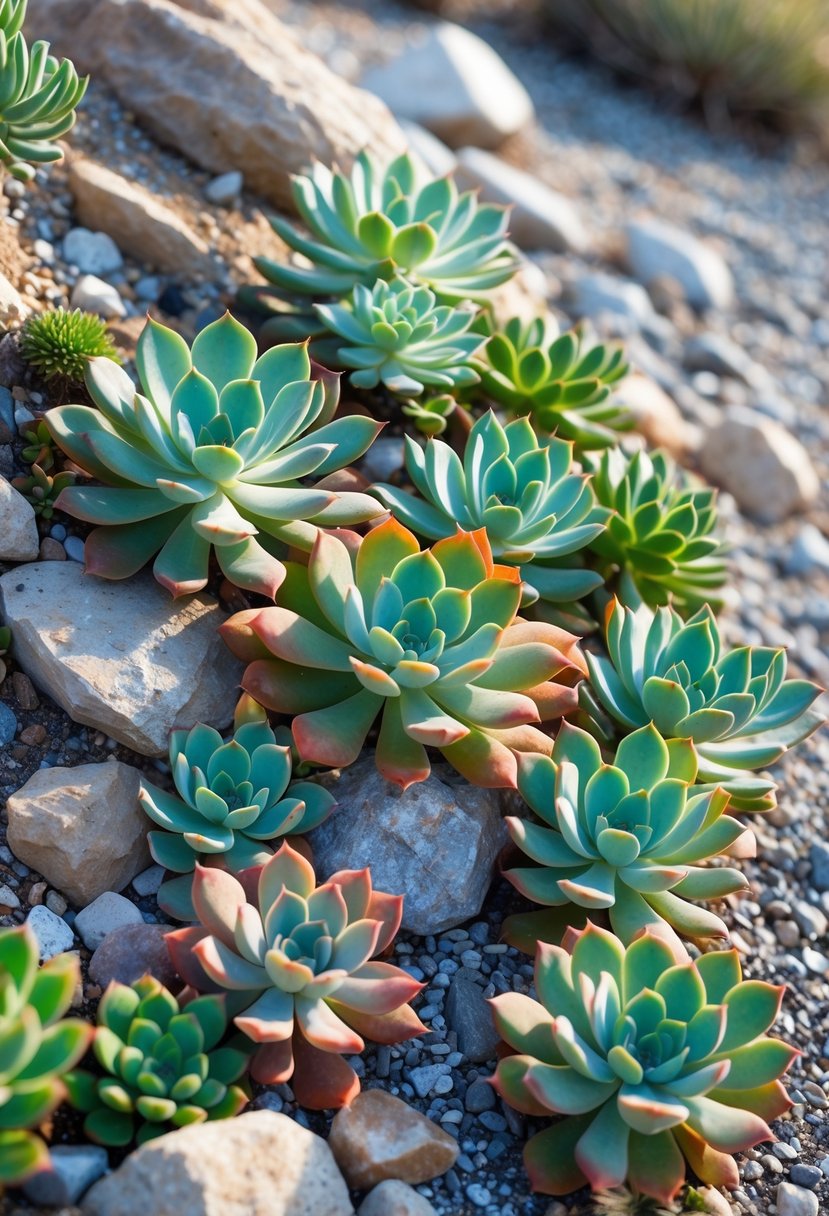
Pop in some hens and chicks for a super easy option. These succulents barely need any water and they’re tough as nails.
They grow in little rosettes and spread fast, so they’ll fill in gaps and help stop erosion. You won’t have to baby them at all.
Go with gritty, well-draining soil—nothing fancy, just what succulents like. Stick them in rock crevices or tuck them into containers. Want a quick primer? Here’s more about growing hens and chicks.
3) Incorporate creeping thyme as ground cover

Creeping thyme can handle bare spots like a champ. It grows low, spreads fast, and fills those awkward gaps between rocks.
This plant barely asks for anything—just a little water now and then. It even stands up to some foot traffic, so don’t stress if you step on it.
Creeping thyme brings in bees and butterflies, adding a bit of life to your garden. If you’re after a fresh, easy-care look, thyme’s a winner. More ideas for using creeping thyme are here.
4) Add small cacti oasis spots throughout the slope

Try making little oasis spots by grouping cacti around your slope. Cacti barely need any water, so they’re perfect if you want less work.
You can mix all sorts of shapes and sizes for a cool, desert vibe. It’s a simple way to keep things interesting.
Put these groups in sunny patches. They’ll thrive with almost no attention. For more cactus ideas, there are plenty of ways to get creative.
5) Use gravel or small rocks as natural weed suppressant

Toss down some gravel or small rocks to keep weeds out of your rock garden. These materials block the sun and make it tough for weeds to pop up.
Gravel helps water drain, so your plants won’t drown. You’ll get a tidy, healthy garden with way less effort.
A layer of small rocks acts as a natural barrier against weed seeds. It saves you time on weeding, and it’s easy to spread on slopes. Want more details? Check out natural weed suppression with gravel.
6) Terrace the slope to create flat planting areas
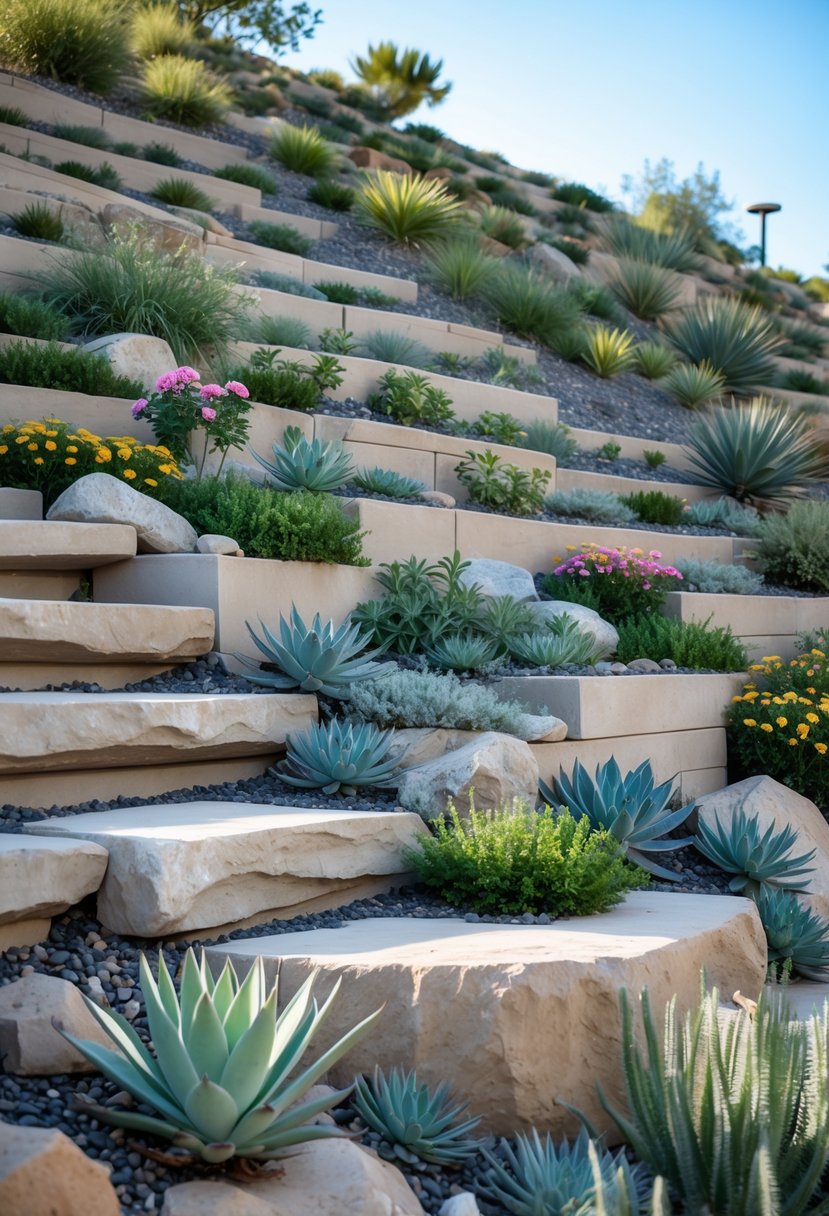
Terracing lets you turn a steep slope into flat, usable spots. It’s way easier to plant things this way, and it looks organized.
Use stone or wood to build up the terraces. They slow down water, so your soil stays put and your plants get what they need.
You’ll have more room to arrange your rock garden however you like. If you want to try building terraces, take a look at terraced garden bed ideas for slopes for inspiration.
7) Plant low-growing sedums in rock crevices
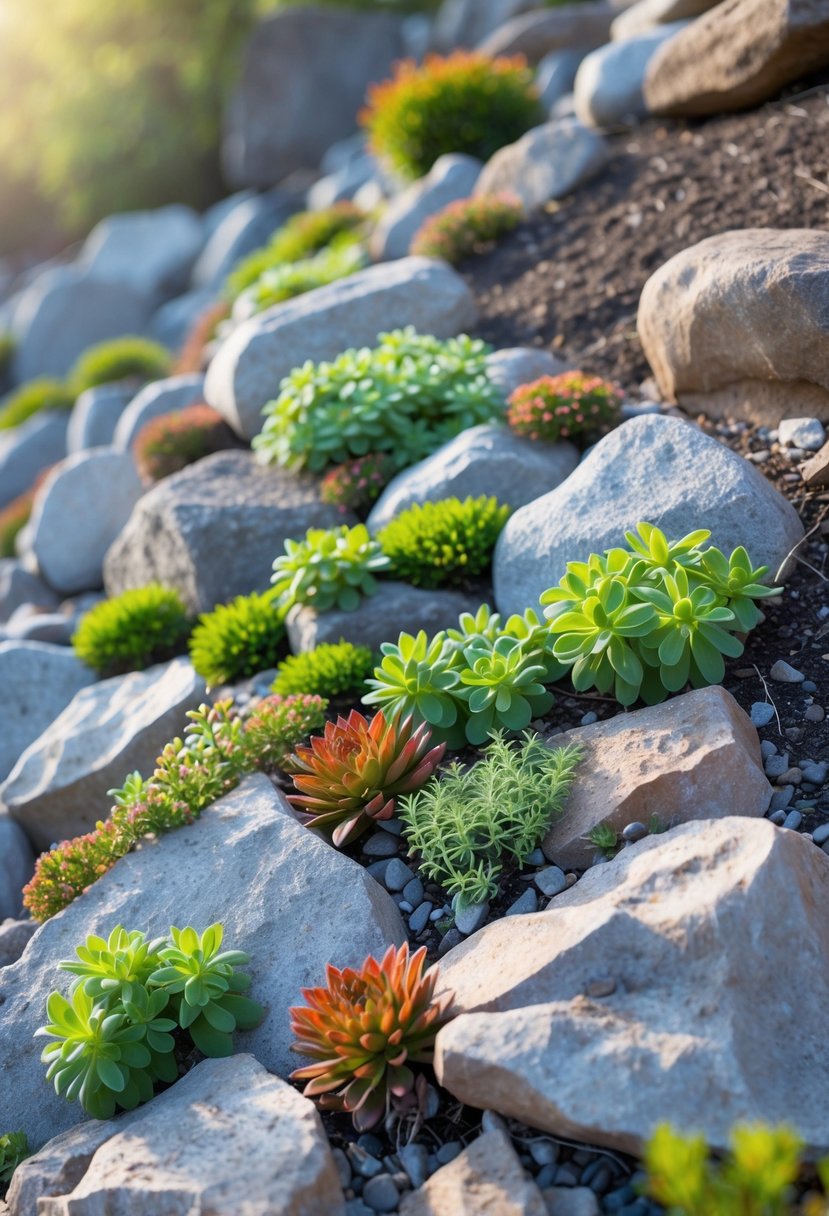
Low-growing sedums add color and texture in the cracks between your rocks. These plants are tough and don’t mind poor soil.
Their thick leaves store water, so you won’t have to fuss over them. Use a hammer and chisel to make planting pockets and pop sedums right in for a natural effect.
They’ll spread out over time and create a soft, colorful carpet. It’s a simple way to make your slope feel alive. For more on planting sedums, check out this guide.
8) Mix native plants for easy maintenance
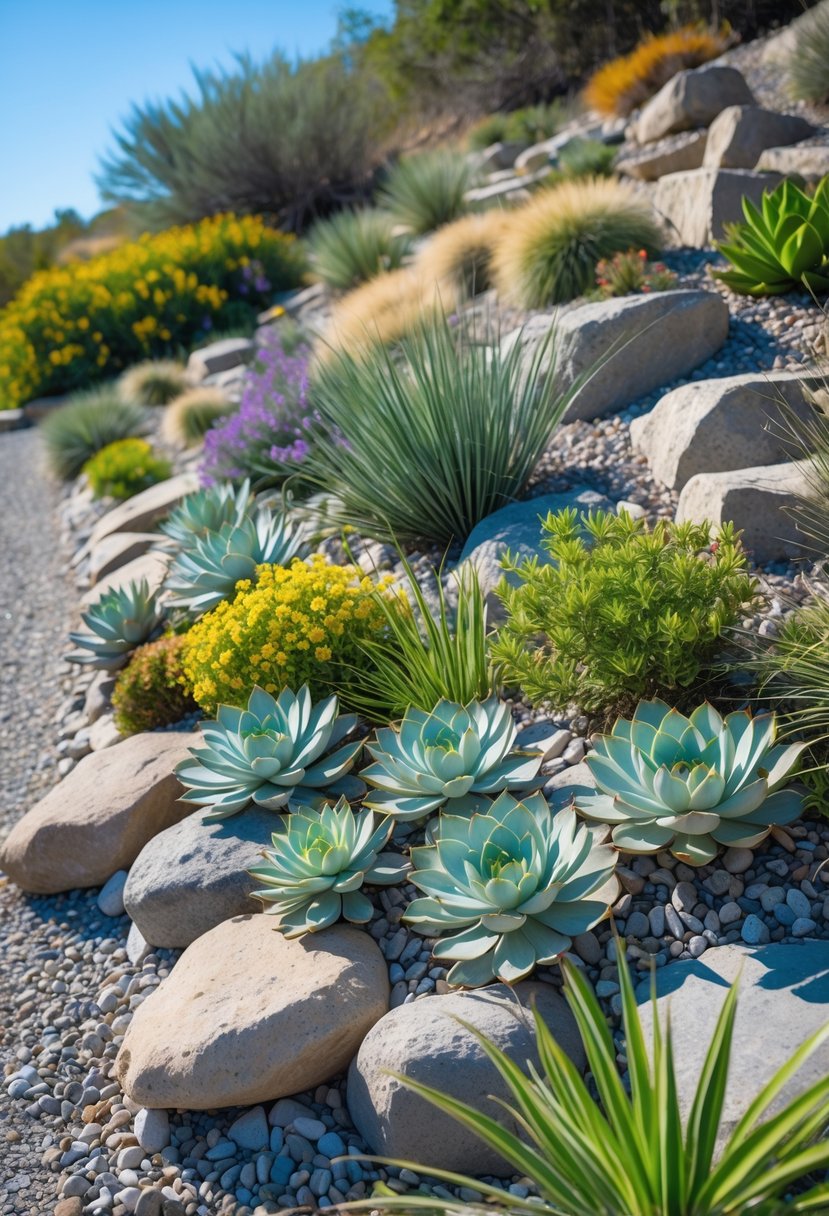
Go for native plants if you want things simple. These plants already know how to handle your local weather, so they won’t ask for much water or fertilizer.
Their roots dig in and help hold the soil, which is great for slopes. You can mix up native shrubs, grasses, and flowers for a variety of colors and shapes.
This combo gives your garden a natural look that fits right in with the rocks. Plants that thrive locally stick around and keep your garden healthy with barely any work. Need more ideas? Check out rock garden landscaping ideas for a low-maintenance yard.
9) Apply mulch around plants to retain moisture

Throw some mulch around your plants to help the soil keep its moisture. It slows down evaporation, so your plants stay hydrated longer.
Mulch also blocks weeds, which means less time spent pulling them out. Use organic mulch like wood chips or bark for the best results.
A good mulch layer protects roots from temperature swings, making your garden tougher and easier to maintain. Want more info? Here’s a guide on mulching and watering for rock gardens.
10) Integrate rainfall harvesting with rock placement
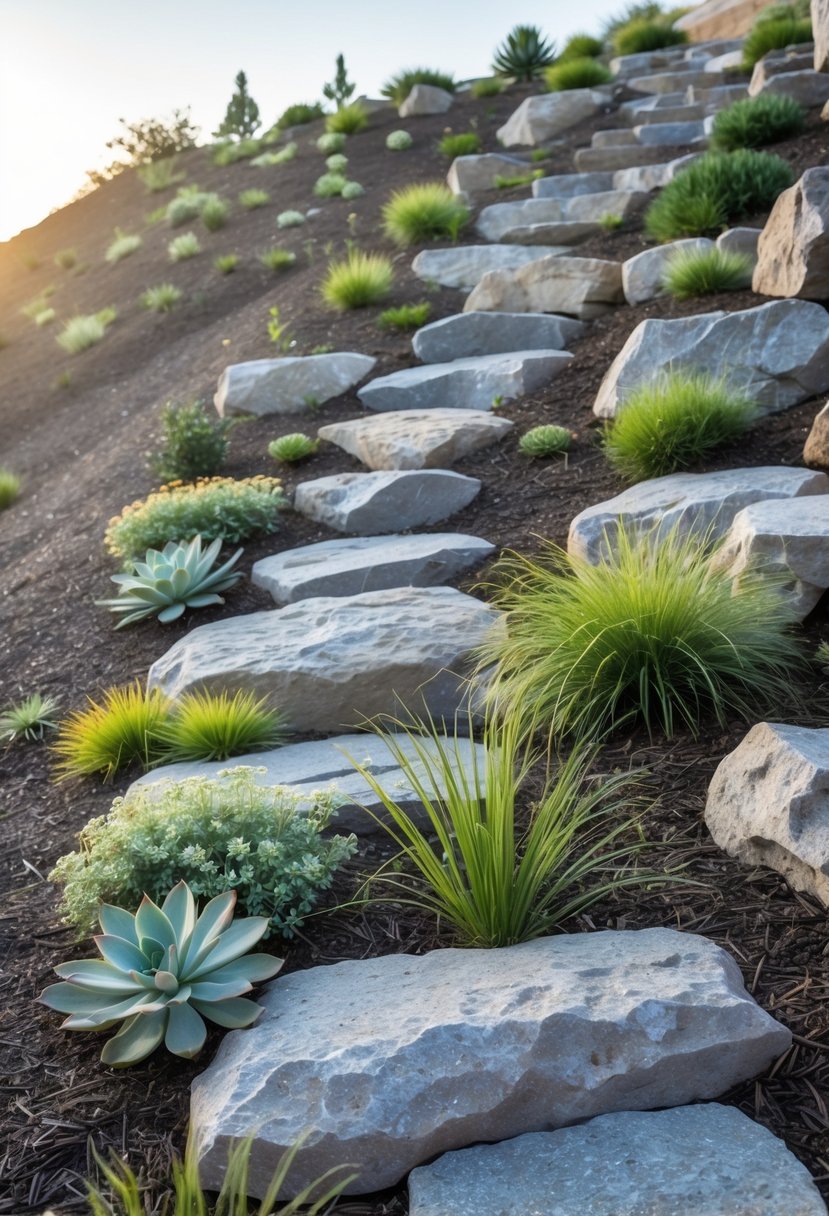
Take advantage of your slope by catching rainwater with rocks. Place them where water runs off fast to slow it down and let it soak in.
Use big rocks to block fast-moving water and smaller stones to guide rainwater to thirsty plants.
This trick saves water and keeps your garden healthy without extra effort. Plus, it helps stop erosion.
Curious about more water-wise rock garden designs? Check out How to Design a Low-Maintenance Rock Outcrop Garden.
11) Choose small evergreens like dwarf pines
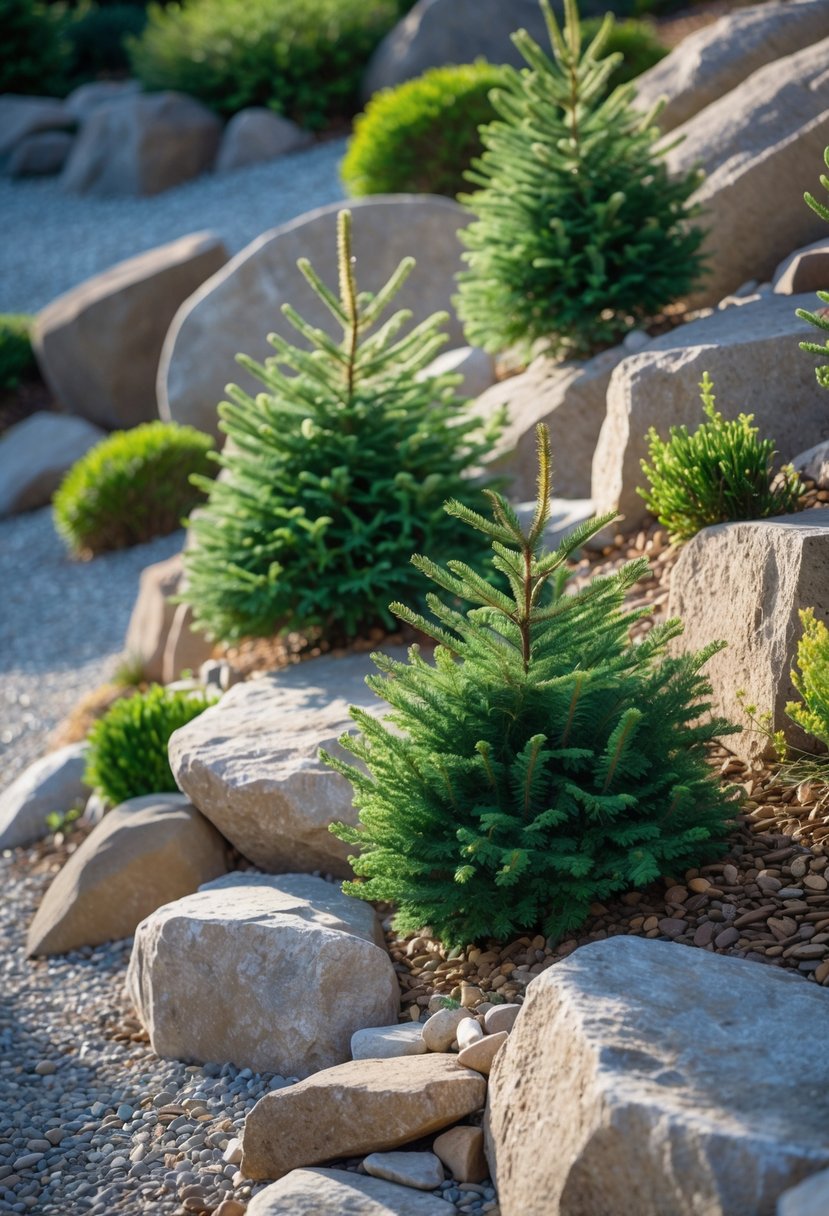
Add some small evergreens for year-round color and structure. Dwarf pines stay compact and barely need any attention.
Their roots grab onto the soil and help prevent erosion, which is a huge plus on a slope.
Dwarf pines look sharp with rocks and other easy-care plants. You get a tidy, natural garden without much work.
If you want more small evergreen tree ideas, there are plenty that’ll fit your space and style.
Want to dig deeper? Here’s a guide to small or dwarf evergreen trees.
12) Include aromatic herbs like lavender and sage
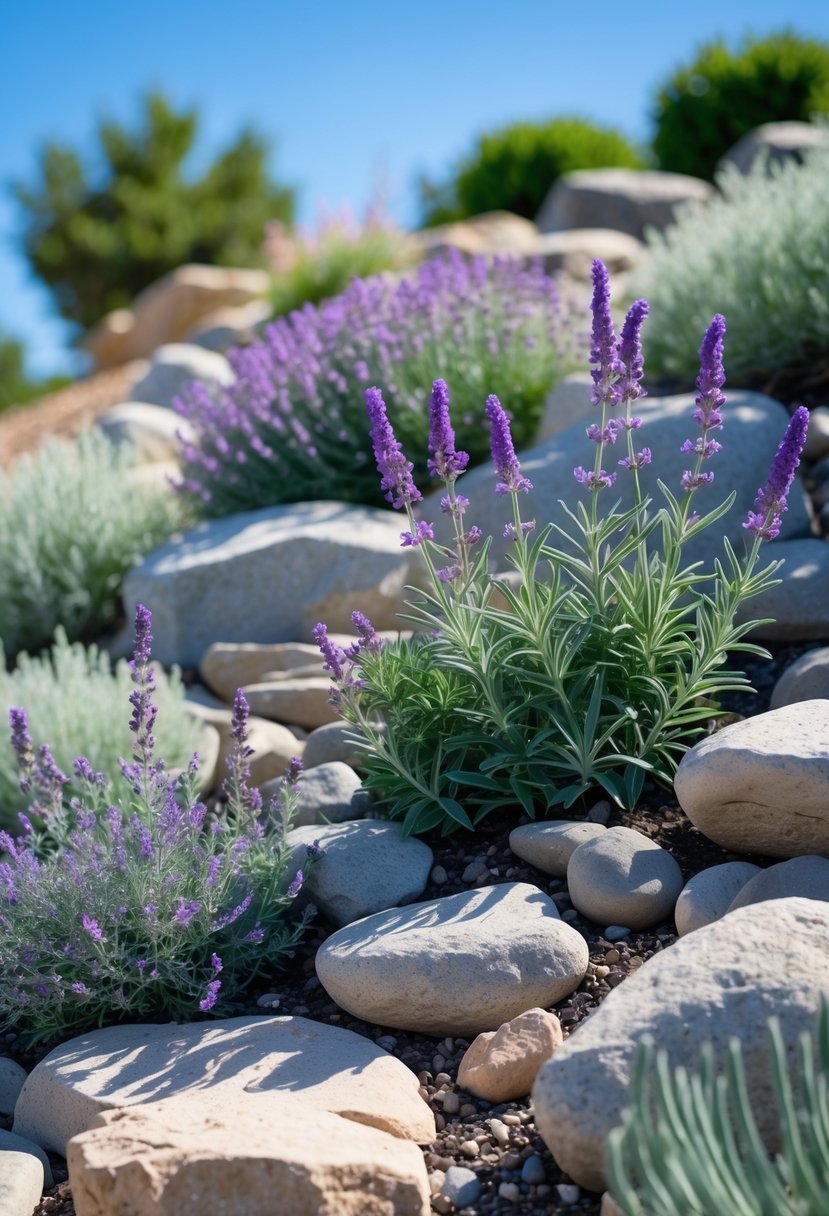
Try tossing in aromatic herbs like lavender and sage for your slope rock garden. These herbs smell amazing and really bring some color and texture to the space.
Lavender handles rocky, well-drained soil like a champ. Sage thrives in dry, sunny spots on a slope and doesn’t fuss much.
Once they settle in, both herbs barely need water. Bees will show up too, which is always good for your garden.
Adding these herbs keeps things inviting and low-key. If you’re curious, check out more lavender and rosemary garden inspiration.
13) Create a dry creek bed using smooth river rocks
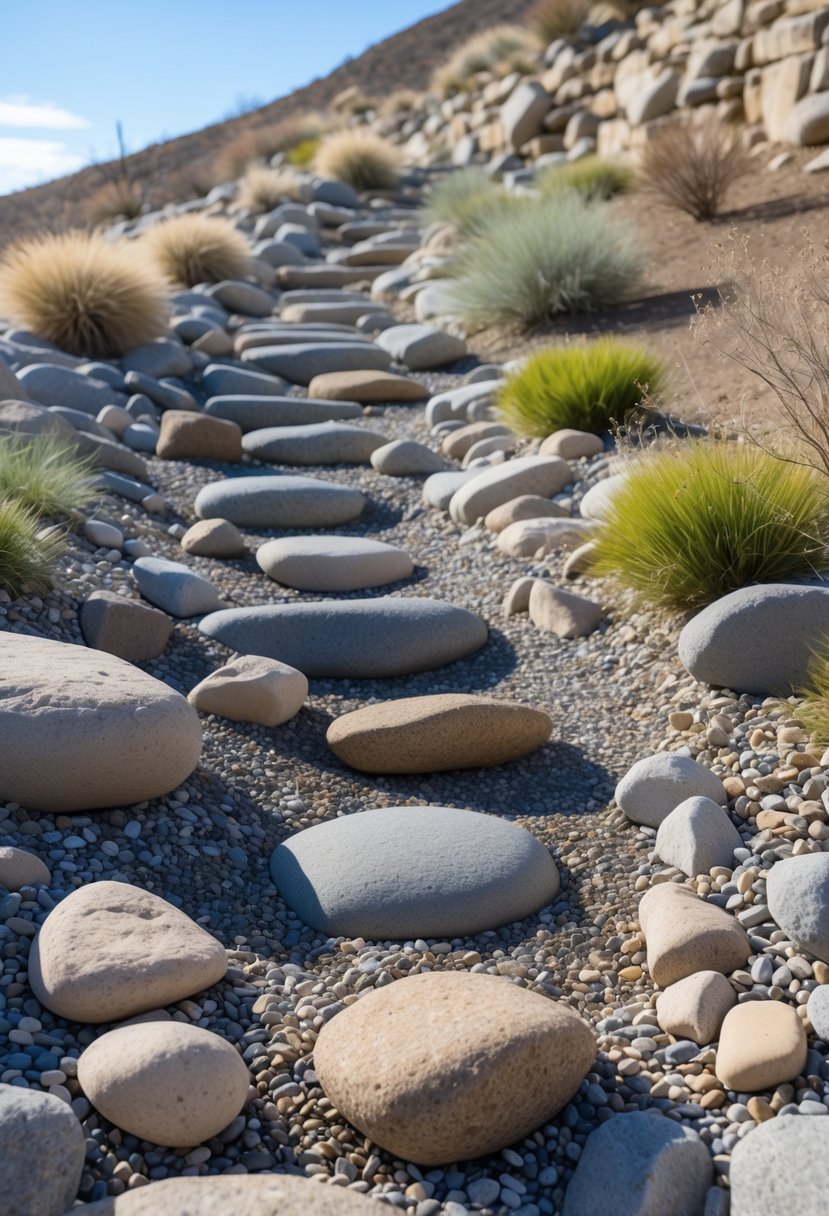
Give your slope some character with a dry creek bed made from smooth river rocks. These rocks come in all sorts of shapes and colors, so you can get a pretty natural vibe going.
A dry creek bed guides water runoff and helps stop erosion. It also adds some texture and just looks interesting without much upkeep.
I’d put the bigger rocks on the edges and fill the middle with smaller stones. This setup keeps looking good all year and matches nicely with drought-tolerant plants.
If you want more inspiration, check out dry river bed landscaping tips using river rocks.
14) Add ornamental grasses for texture

Try using ornamental grasses to bring some texture into your sloped rock garden. When the wind blows, these grasses move and make the whole area feel alive.
Pick low-maintenance options like Blue Fescue or Fountain Grass. They’re tough and don’t need much attention.
Grasses help keep soil in place and fight erosion. They also give your garden a laid-back, natural look. For more ideas, check out ornamental grasses for rock gardens.
15) Build a simple stairway with stone steps
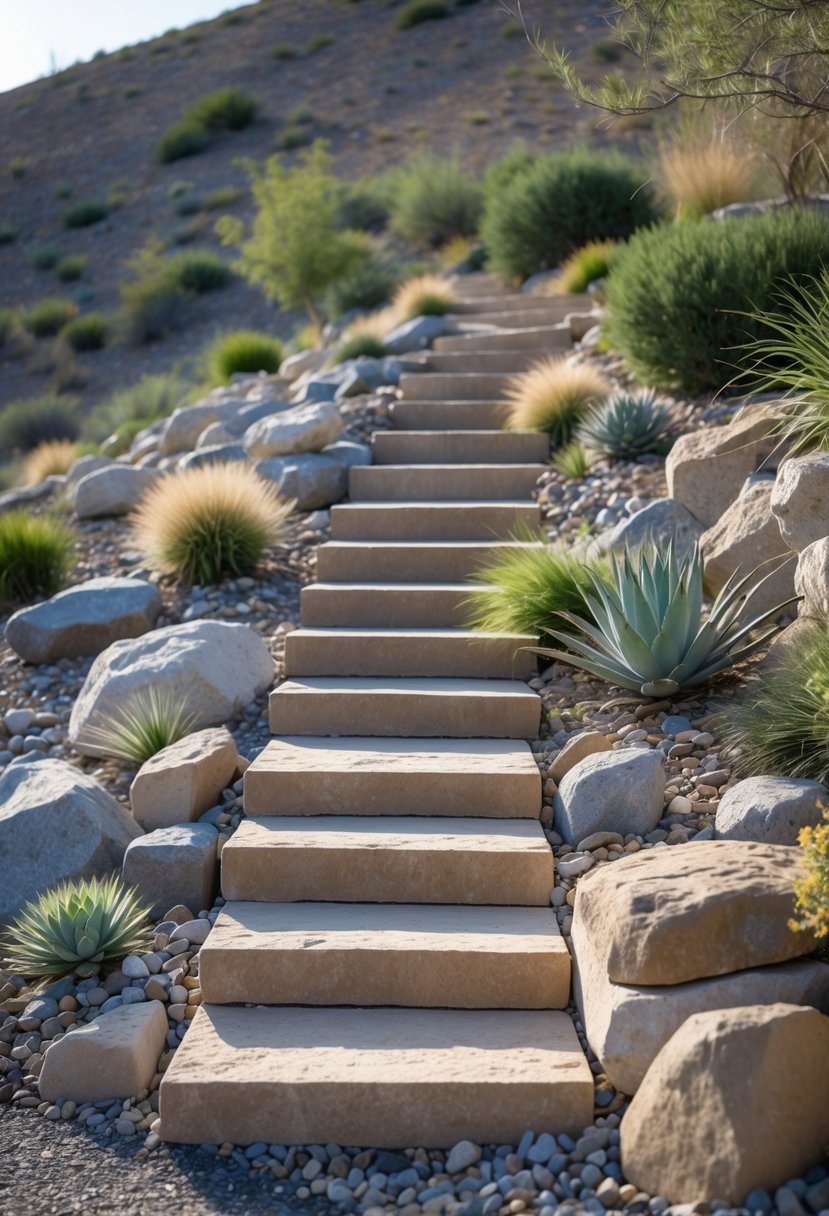
Try adding some stone steps to your slope for easier access. Natural stones or slabs work well and blend right in.
Pick out flat stones and level out the ground first. Toss in some gravel for drainage and use sand to keep everything steady.
Stone steps make your slope safer and bring a natural touch to the garden. If you want to see how it’s done, check out this step-by-step guide to building stone steps on a slope.
16) Use rock mulch in different colors for contrast
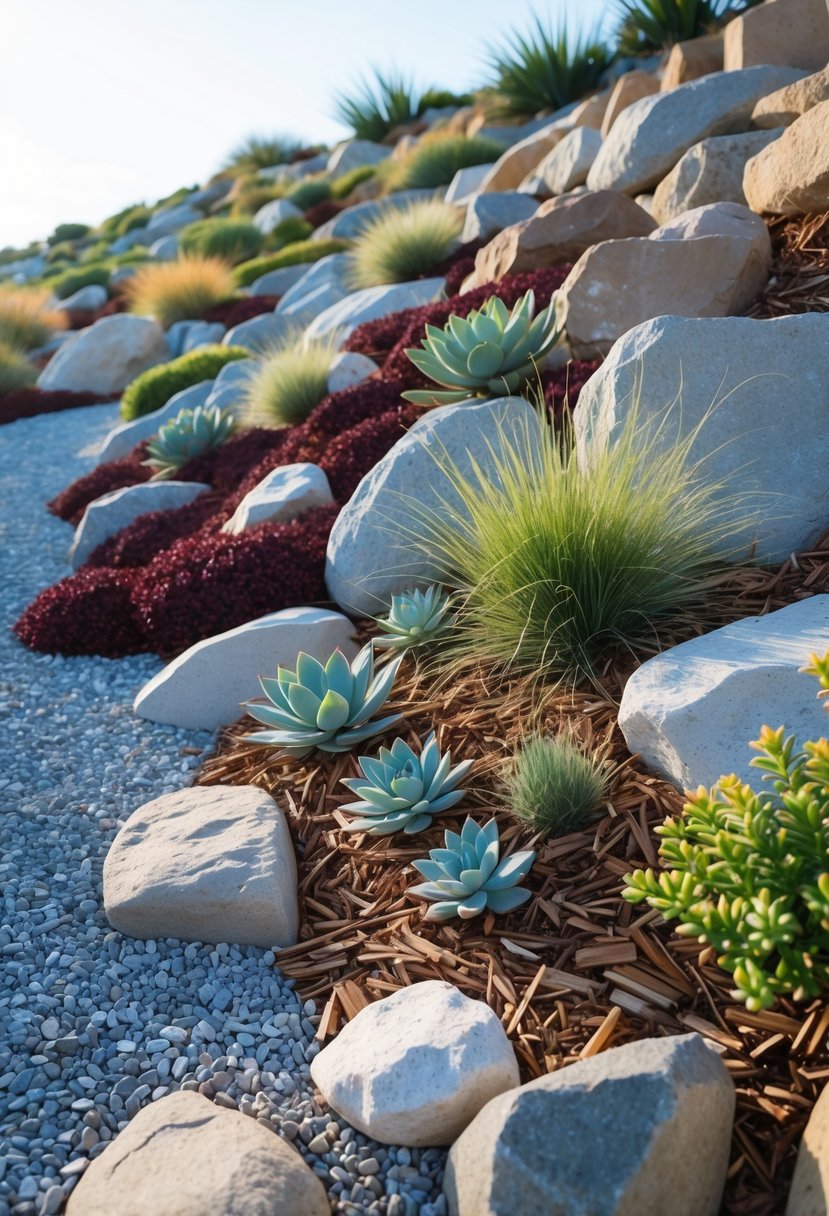
Try mixing up rock mulch in different colors to make your slope pop. You can use it to mark off areas or make certain plants stand out.
Blend light and dark rocks to create eye-catching patterns. This gives your garden a tidy, intentional look.
The variety in color and texture adds depth without making things complicated. For more on this, check out these rock and mulch landscaping ideas.
17) Plant bulbs such as crocus and allium among the rocks
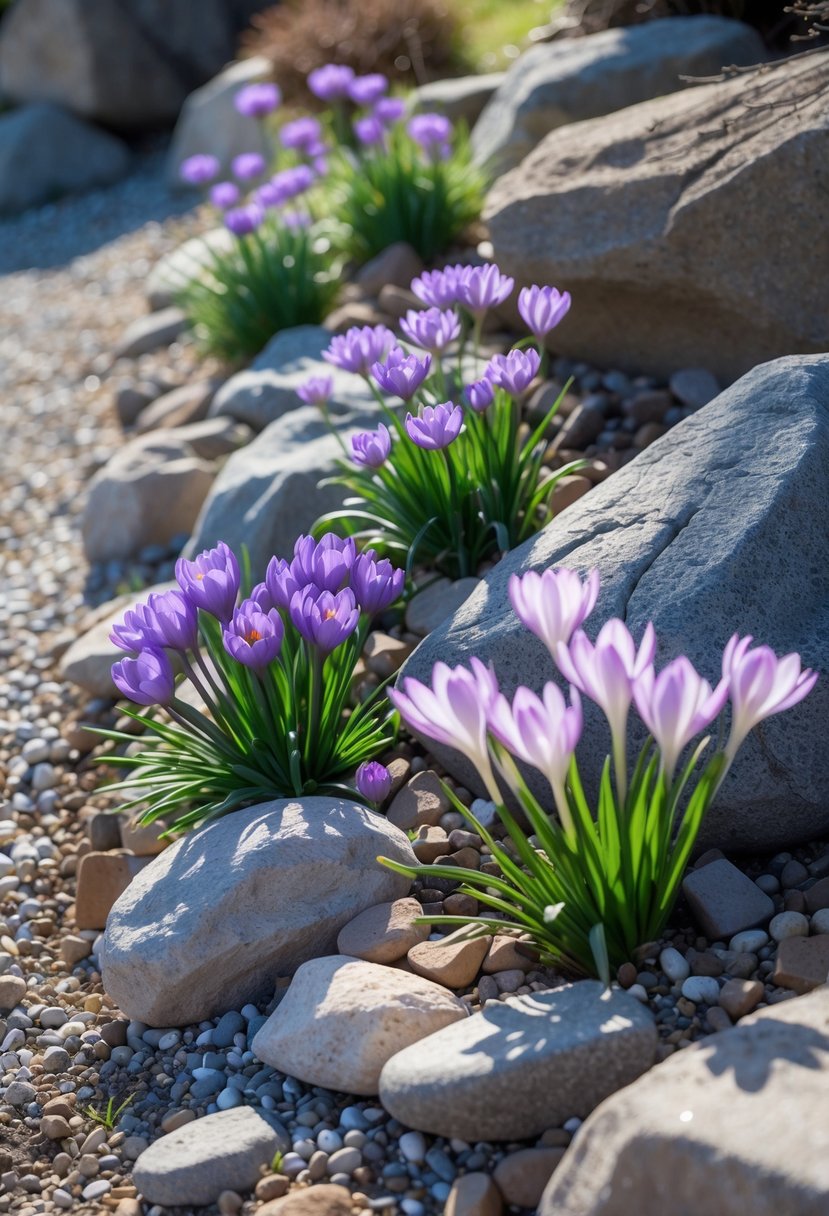
Pop some bulbs like crocus and allium into your rock garden slope for a burst of color. These bulbs love rocky, well-drained soil and show off bright flowers in early spring.
Tuck bulbs between stones for a natural effect. Once they’re settled, they barely need water.
Crocus gives you small, vivid blooms, while allium brings height and those cool round flower heads. Over time, both bulbs can spread out and give you even more flowers. For more tips, check out flowering bulbs for rock gardens.
18) Limit plant selection to slow growers

Stick with slow-growing plants for your slope rock garden. They don’t need much trimming and keep things looking neat longer.
Dwarf conifers or certain succulents work well since they won’t take over in a hurry.
Choosing these plants means less work for you. Your garden stays attractive with hardly any effort.
For more slow-growing options, check out rock garden plant selection.
19) Position rocks to direct water runoff naturally

Use rocks to guide water as it moves downhill. Put the larger ones where water flows the most to slow things down and stop soil erosion.
Arrange rocks so water drifts toward plants that want more moisture. Smaller rocks and gravel help spread water across the slope.
Directing water like this keeps your garden low-maintenance and healthy. It works well with drought-tolerant plants. If you want more info, check out using rocks for water management here.
20) Add a zen garden element with finely crushed gravel
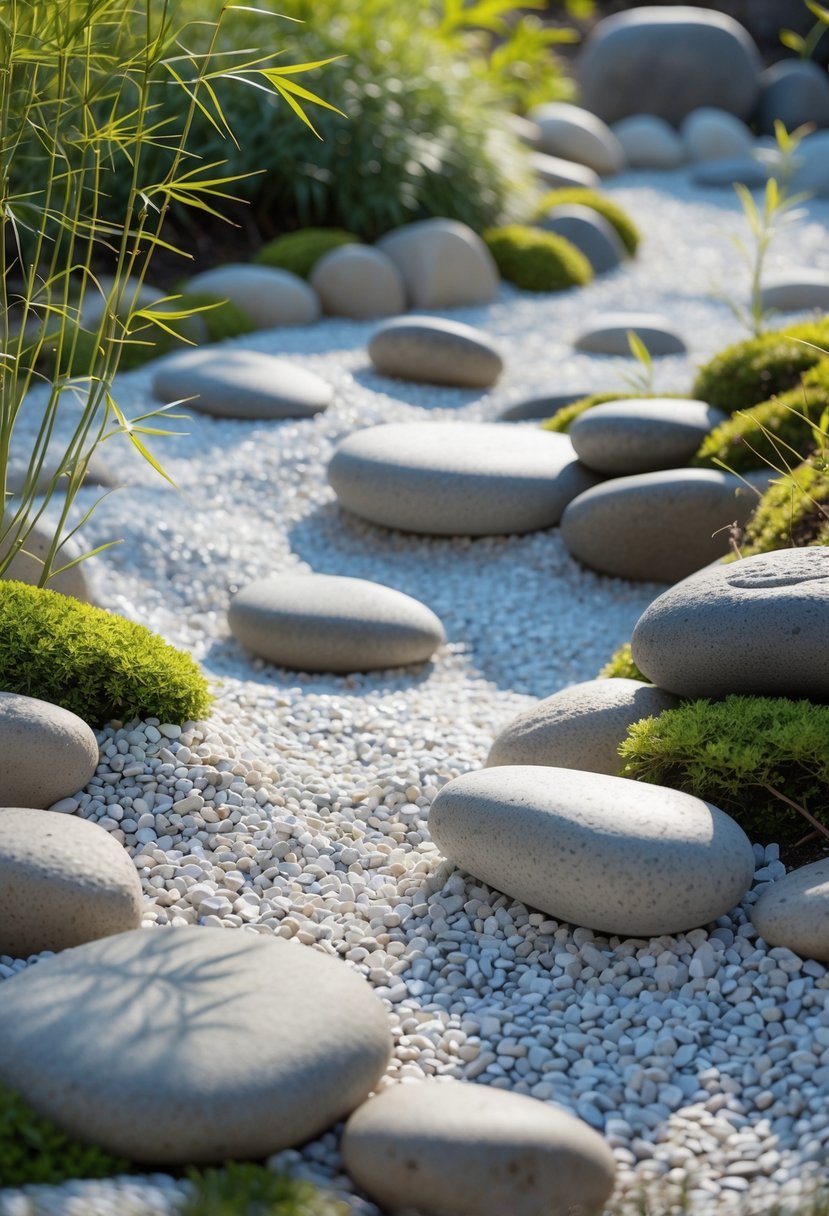
Try adding finely crushed gravel for a peaceful spot on your slope. This gravel looks a bit like the sand in classic Zen gardens and instantly gives your space a tidy, calm feel.
Use a rake to make smooth patterns or gentle waves in the gravel. It adds texture and looks good with almost zero effort.
Pair the gravel with a few larger rocks or some small plants for balance. This choice keeps your slope looking clean and relaxed.
For more ideas, check out how to create a low-maintenance Zen garden with gravel.
21) Incorporate succulents like sempervivum on sunny spots

Plant sempervivum—people call them “hen and chicks”—in the sunny parts of your slope. These succulents are tough and barely need any water, so they’re perfect if you want low maintenance.
They love rocky soil and slowly spread out, filling in the gaps over time. Their colorful rosettes give your garden a bit of flair without extra work.
Stick them where the sun really shines. That keeps the soil dry, just how sempervivum likes it. You’ll get a bright, cheerful look with hardly any fuss.
For more ways to use sempervivum, check out designing with sempervivum for unique succulent gardens.
22) Use hardy groundcovers like creeping phlox
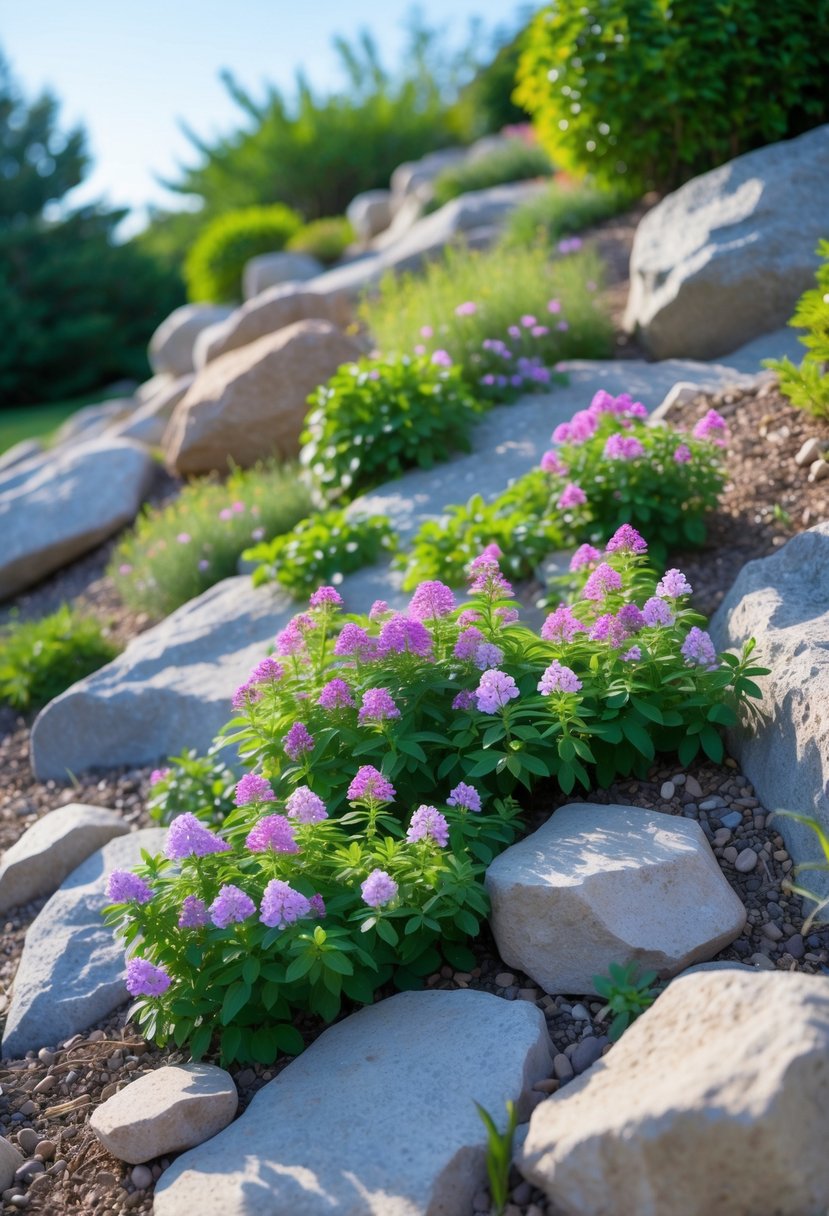
Try creeping phlox to cover slopes in your rock garden. It spreads out fast and holds the soil together, stopping erosion.
Creeping phlox brings a splash of color in spring with its bright flowers. It hugs the ground and fits right in with rocks.
This groundcover grows well in poor soil and sunny spots. Once it’s settled, you don’t really need to water it much.
For more ideas on ground covers, check out 5 creative ways to use phlox.
23) Build gentle terraces with natural stone retaining walls
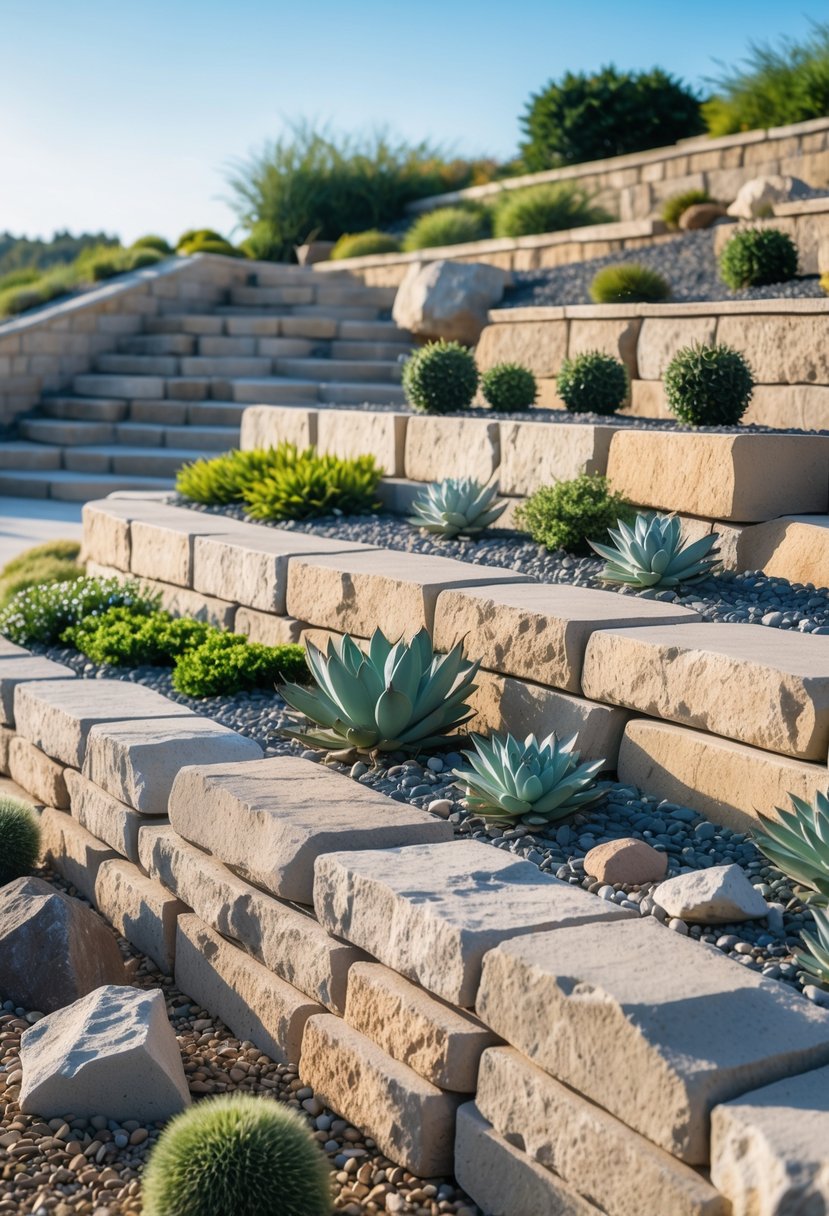
Make soft terraces on your slope with natural stone retaining walls. These walls hold the soil and give you flat spaces for planting or adding decorative rocks.
Natural stone looks great and lasts for ages. It also blends right in with the rest of your garden.
Low terraces help you manage water runoff and keep your slope stable. They give your rock garden a tidy, organized feel.
For more inspiration, check out these natural stone retaining wall ideas.
24) Install drip irrigation for minimal watering

Save yourself some time and set up drip irrigation in your slope rock garden. This system sends water right to your plants’ roots, slowly and efficiently. You end up using less water and your plants stay happy.
Drip irrigation really shines on slopes because it stops water from running off too fast. Your garden gets the moisture it needs, even if the ground’s uneven.
It’s easy to install and makes watering a breeze. For more info, check out this guide on drip irrigation for home gardens.
25) Choose plants that thrive in well-drained soil

If you’re building a rock garden on a slope, good drainage really matters. You’ll want to pick plants that don’t mind soil that dries out fast.
Go for drought-tolerant plants with deep root systems. Roots like that help keep the soil in place and make the most of whatever water they get.
Black-Eyed Susans and daylilies are solid choices. They grow tough in rocky, dry spots and don’t need much fussing over.
If you choose the right plants, your slope garden should stay healthy and look good with barely any maintenance. There are plenty of other plants out there that handle poor soil and tough conditions too, if you want to experiment.
Design Principles for Rock Gardens on Slopes
When you work with a slope, focus on getting the site ready, setting rocks in a natural way, and keeping soil from sliding away. These steps make your rock garden sturdy and nice to look at.
Sloped Site Preparation
Start by clearing weeds and any leftover debris from your slope. It’s way easier to plan where things go once you can actually see the ground.
Next, level out a few spots to make small terraces or flat areas. These help stop the soil from washing off and give your plants a solid place to grow.
Grab a shovel or hoe and build some steps or terraces, maybe four to six inches high. It doesn’t have to be perfect—just enough to slow down water and hold dirt.
Check your soil drainage by digging a few holes and filling them with water. If the water just sits there, mix in some sand or gravel to help it drain faster.
Good drainage keeps water from pooling and saves your plants from root rot. It’s not the most exciting part, but it pays off.
Rock Placement Techniques
Pick rocks that fit the size of your slope and match what’s already in your yard. Big rocks work best at the bottom to anchor everything, while you can use smaller stones to fill the spaces.
Bury rocks partly in the soil instead of just plopping them on top. That way, they stay put and look like they belong there.
Try grouping rocks together instead of putting them in neat rows. It’s more interesting and feels less forced.
Create layers by setting rocks at different heights. This adds some depth and keeps things from looking flat.
Flat rocks can make handy paths or borders, if you want to walk through your garden or just frame it a bit.
Erosion Control Strategies
Mix rocks with plants that have strong roots to keep soil from washing away. Ground covers like creeping thyme or sedum do a great job and don’t ask for much.
Spread mulch around your plants and rocks. It keeps the soil moist and helps cut down on erosion.
Organic mulch that breaks down slowly works best for this. You don’t have to reapply it constantly.
Build small retaining walls with stacked rocks if your slope is steep. These walls slow down water and keep your soil where it belongs.
If you want even more stability, set up a drip irrigation system. It keeps roots happy without washing out the slope.
You can find more ideas for managing slopes in this rock garden ideas on a slope guide.
Low-Maintenance Plant Selection
Pick the right plants and your slope rock garden almost takes care of itself. Look for plants that stay where you put them, don’t guzzle water, and can handle both sun and shade.
That way, your garden keeps looking good and you don’t have to work so hard.
Best Ground Covers for Slopes
Ground covers work wonders for slopes. They hold soil in place and fill up empty spots.
Choose ones that spread fast and don’t need much water. Here are a few you might like:
- Creeping thyme: Smells great and covers itself in tiny flowers.
- Sedum: A tough succulent that loves dry ground.
- Creeping juniper: Low and evergreen, so it adds color all year.
- Ajuga: Fast-growing, with colorful leaves and little flowers.
These ground covers keep the soil steady and look good doing it. Plus, they help keep weeds from taking over.
Choosing Drought-Tolerant Plants
Slopes usually drain water too quickly, so you’ll want plants that can handle dry soil. Go for varieties that store water or send roots deep to find moisture.
Here are a few solid picks for your rock garden:
- Succulents: Hens and chicks or stonecrop work well.
- Lavender: It smells amazing and shrugs off drought.
- Echinacea: These bright flowers barely need any watering.
- Russian sage: Tall, silvery, and full of purple blooms.
Drought-tolerant plants make life easier. You’ll spend less time watering, and your garden will still look great when it’s dry.
If you’re hunting for more ideas, take a look at this guide on rock garden plants for a colorful low-maintenance garden.


