

DIY Garden Ideas on a Hill: 25 Friendly Tips to Transform Your Sloped Yard
Gardening on a hill can seem a bit daunting at first, but honestly, it’s a chance to make your outdoor space unique. Whether your slope is just a gentle rise or feels like a mini-mountain, you’ve got plenty of ways to create a garden that pops and actually works with the land.

DIY garden ideas on a hill let you turn uneven ground into a lovely, usable space without breaking the bank. With a little planning, you can enjoy your garden while handling tricky stuff like water flow and soil sliding around.
1) Build terraced flower beds with retaining walls
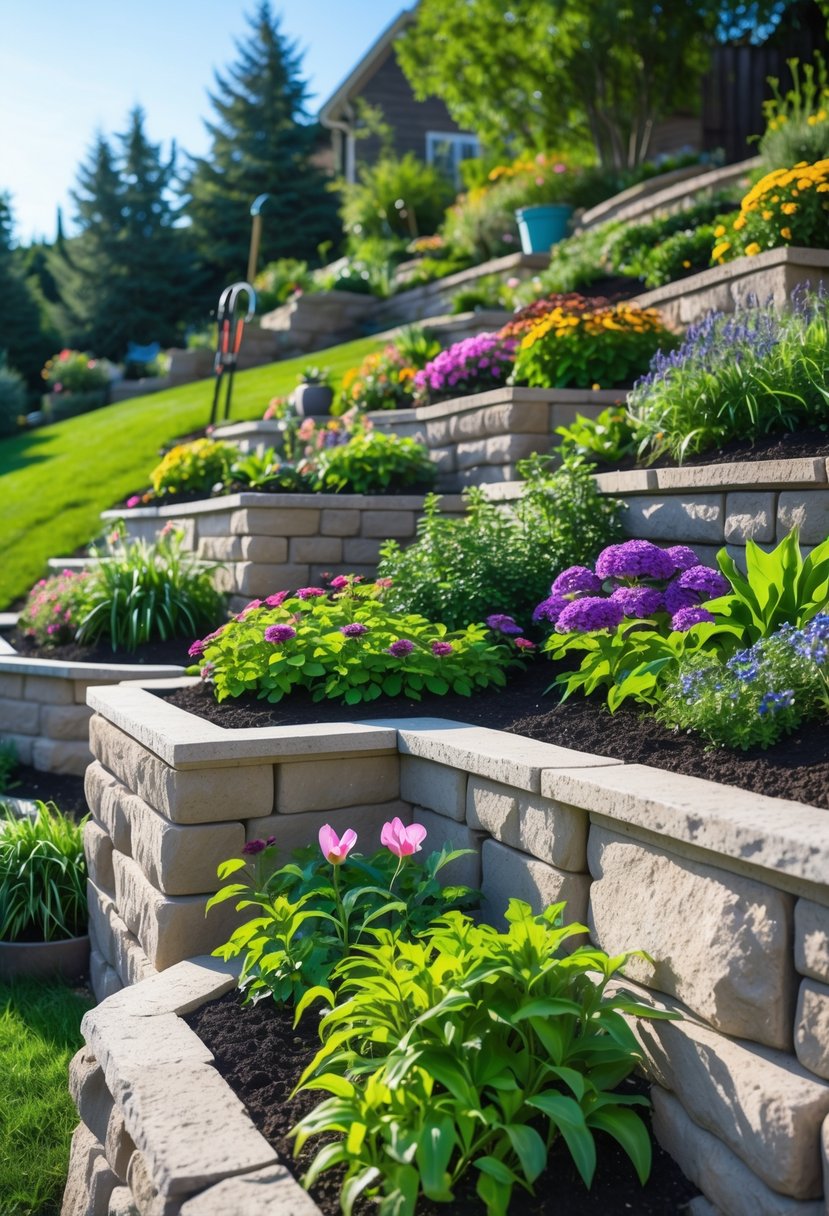
Try building terraced flower beds to turn that steep hill into a bunch of flat, plant-friendly spots. Retaining walls keep soil in place and give you level areas for flowers or veggies.
Pick materials that fit your vibe—stone, wood, or concrete all work. Just make sure your walls can handle the weight of the soil.
Terraced beds help water drain better and keep erosion in check. Pop in some plants like sedums or thyme between the stones for a softer, more natural look.
You can find more help on building terraced beds with retaining walls if you want to dig deeper.
2) Create a rock garden using native stones
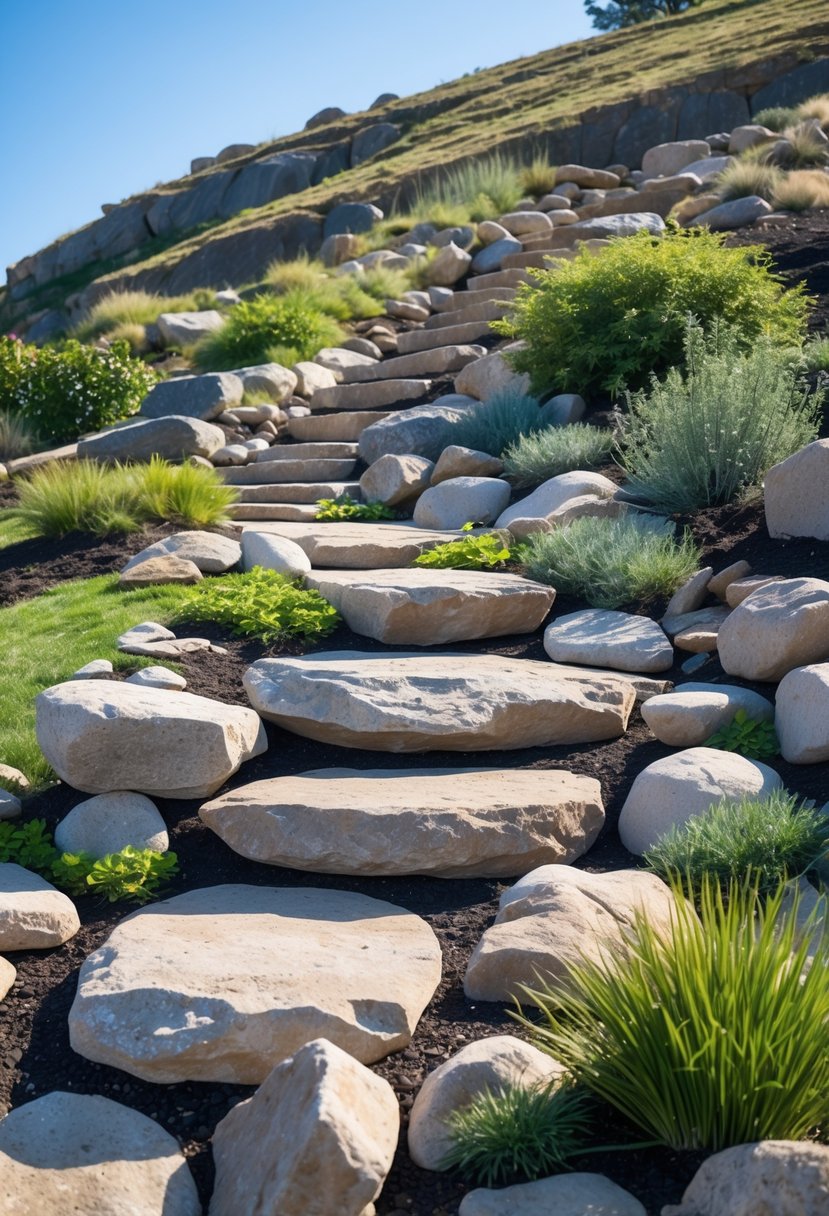
Try building a rock garden with stones you find nearby. Native rocks just feel right in the landscape and don’t need much fuss.
Start by putting bigger rocks at the bottom for a sturdy base. Then layer smaller stones higher up for a nice effect.
Tuck native plants between the rocks. They’ll hold the soil and add pops of color.
Using local stones and plants keeps things looking natural and pretty low-maintenance. You can check out more ideas for rock gardens with native materials here.
3) Plant cascading ground covers to reduce erosion

Cover your slope with cascading ground covers to slow down water and keep dirt where it belongs. These spreading plants fill in bare spots and help stop soil from washing away.
They’re perfect for slopes and even look good trailing over retaining walls. A living green blanket not only protects your yard but makes it look lush.
Pick ground covers that don’t need much babying once they settle in. You’ll find plenty of easy-care options out there.
Need ideas? Here’s a handy list of ground covers for erosion.
4) Install wooden steps for easy hill access
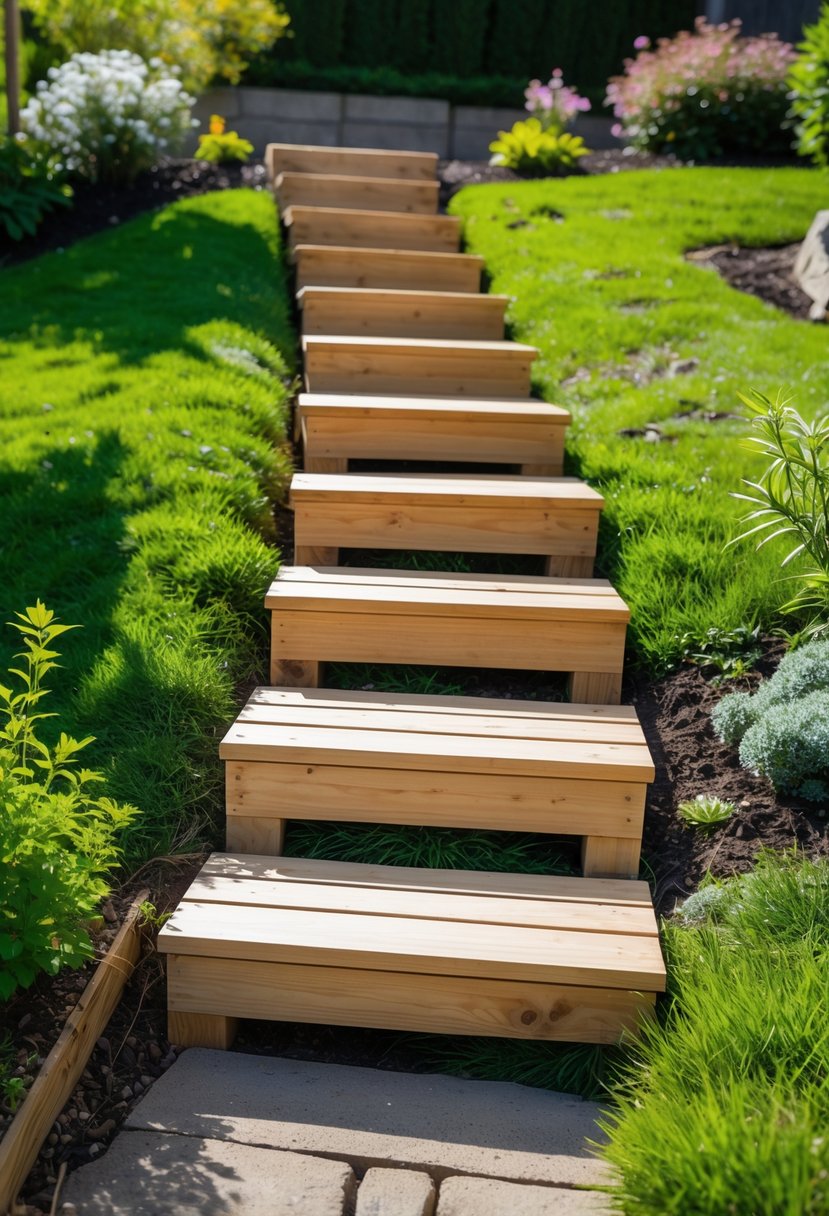
Put in some wooden steps to make climbing your hill less of a workout. Grab some wood boards and gravel—building simple steps isn’t as hard as you might think.
Measure your slope and mark out where each step goes. Keep them level and sturdy so you don’t slip.
Wooden steps give you safe access and a natural, warm look. If you want the step-by-step (pun intended), check out this guide on building outdoor wooden steps on a slope.
5) Use raised garden beds to level planting areas
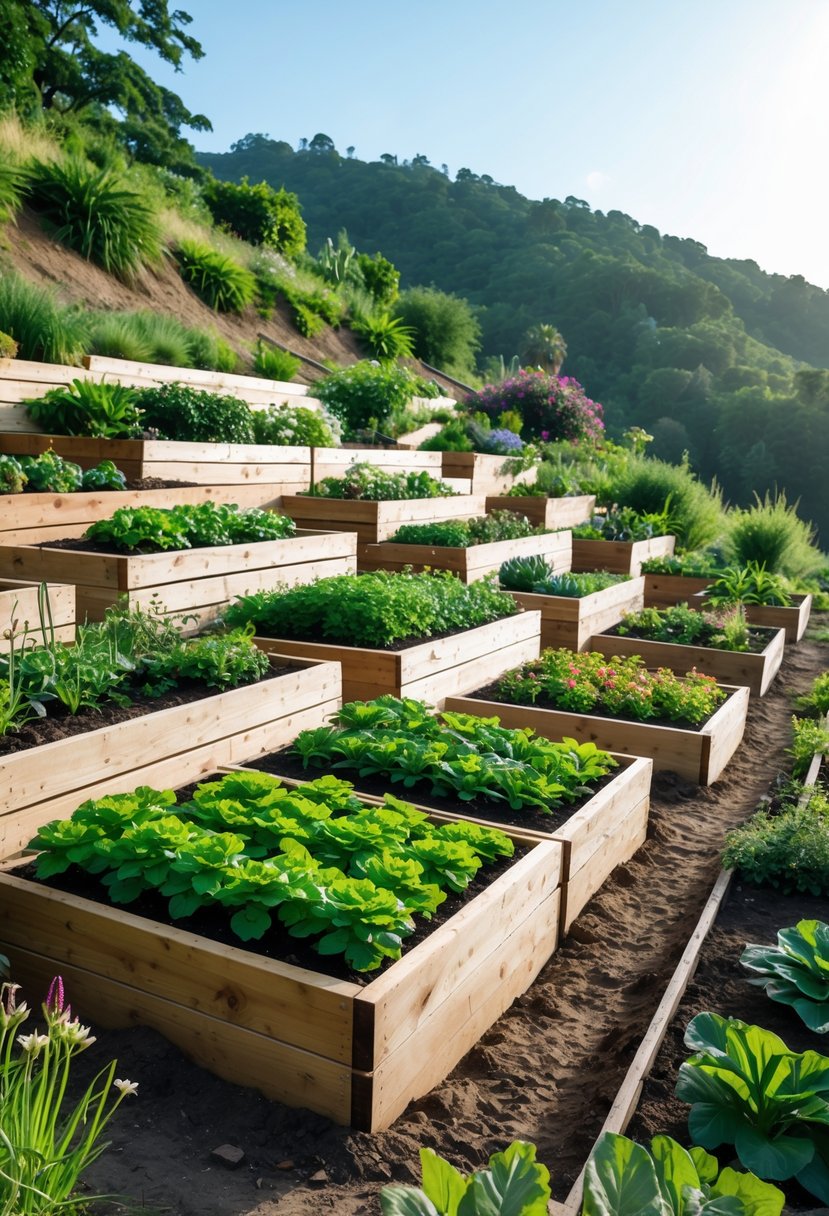
Raised garden beds are a game-changer for slopes. They let you create flat spots for planting, which keeps soil and nutrients from running off.
Build your beds so they follow the hill but stay level on top. Watering gets way easier since it won’t just rush downhill.
Raised beds also make it simpler to reach your plants. Your hillside garden looks tidier and feels more organized.
Want to try it? Here’s how to build a raised garden bed on a slope.
6) Add a winding gravel path for charm and function
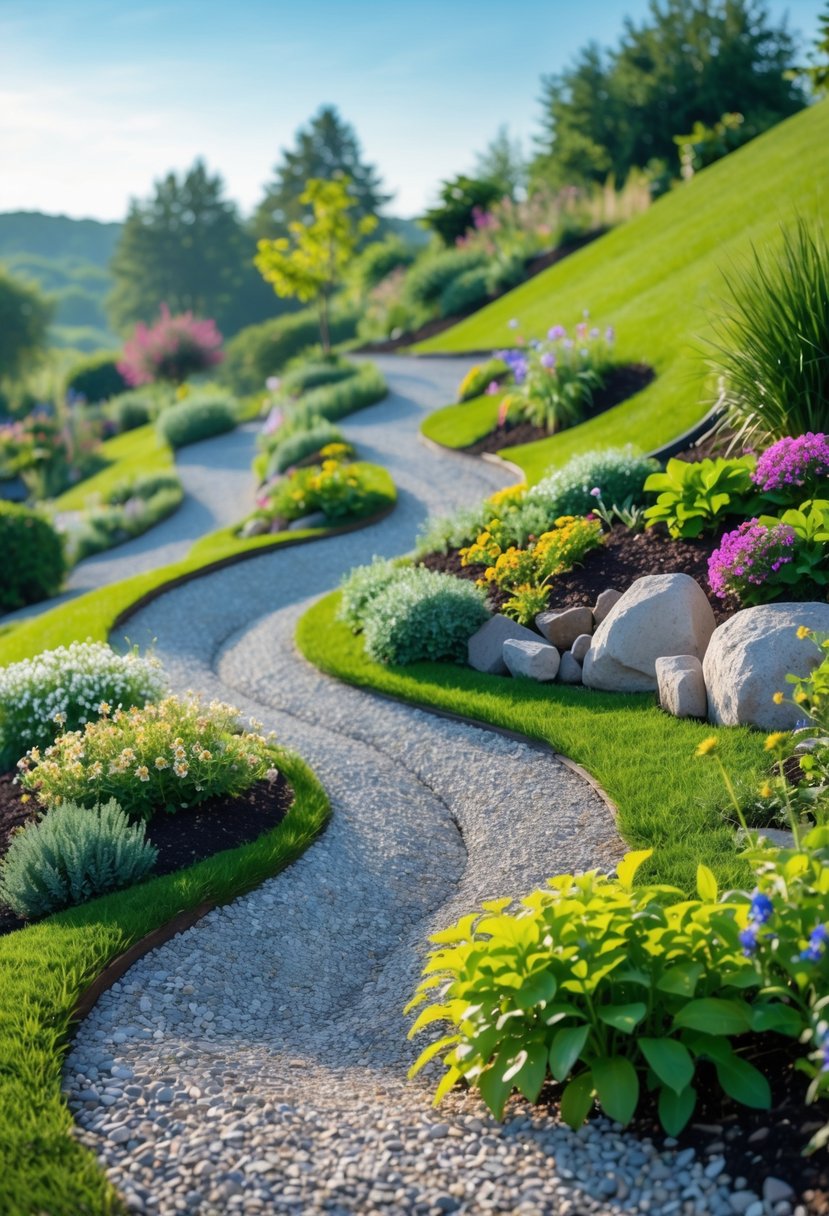
Lay down a winding gravel path to make your hill safer and a bit more magical. Paths help you move around without slipping and give your garden a relaxed, meandering feel.
A curved path slows you down and lets you enjoy new views as you walk. Gravel is easy to work with and keeps things low-maintenance.
Edge your path with small flowers or shrubs for extra personality. You can even toss in some stepping stones if you want more texture.
Need more inspiration? Check out ideas for winding gravel paths.
7) Plant drought-tolerant Mediterranean herbs
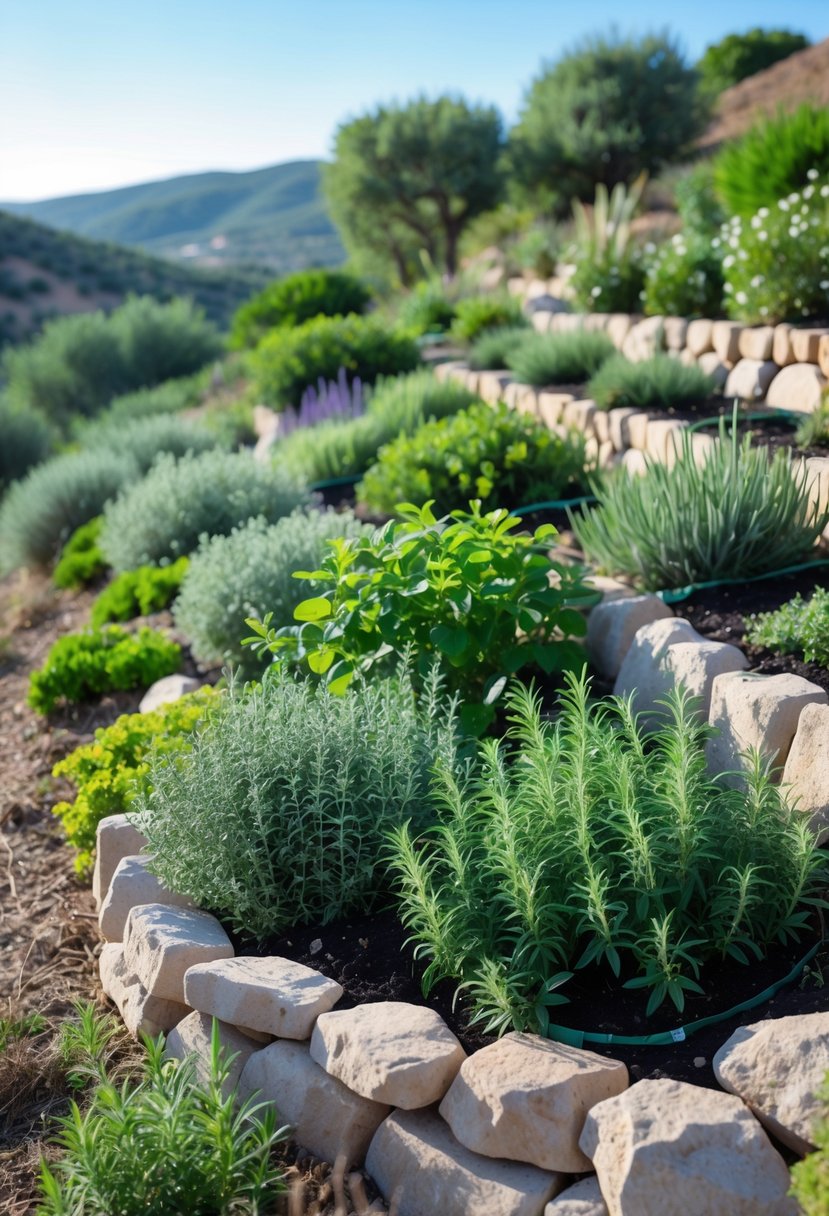
Try planting Mediterranean herbs like rosemary, thyme, and lavender. They thrive in dry, sloped spots and don’t need much water.
These herbs smell amazing and draw in bees and butterflies. Make sure you plant them in soil that drains well.
Terracotta pots or raised beds can help you control water and keep things tidy. These herbs are tough and love the sun.
Looking for more? Check out drought-tolerant options for a sunny hillside.
8) Incorporate colorful perennial borders on terraces
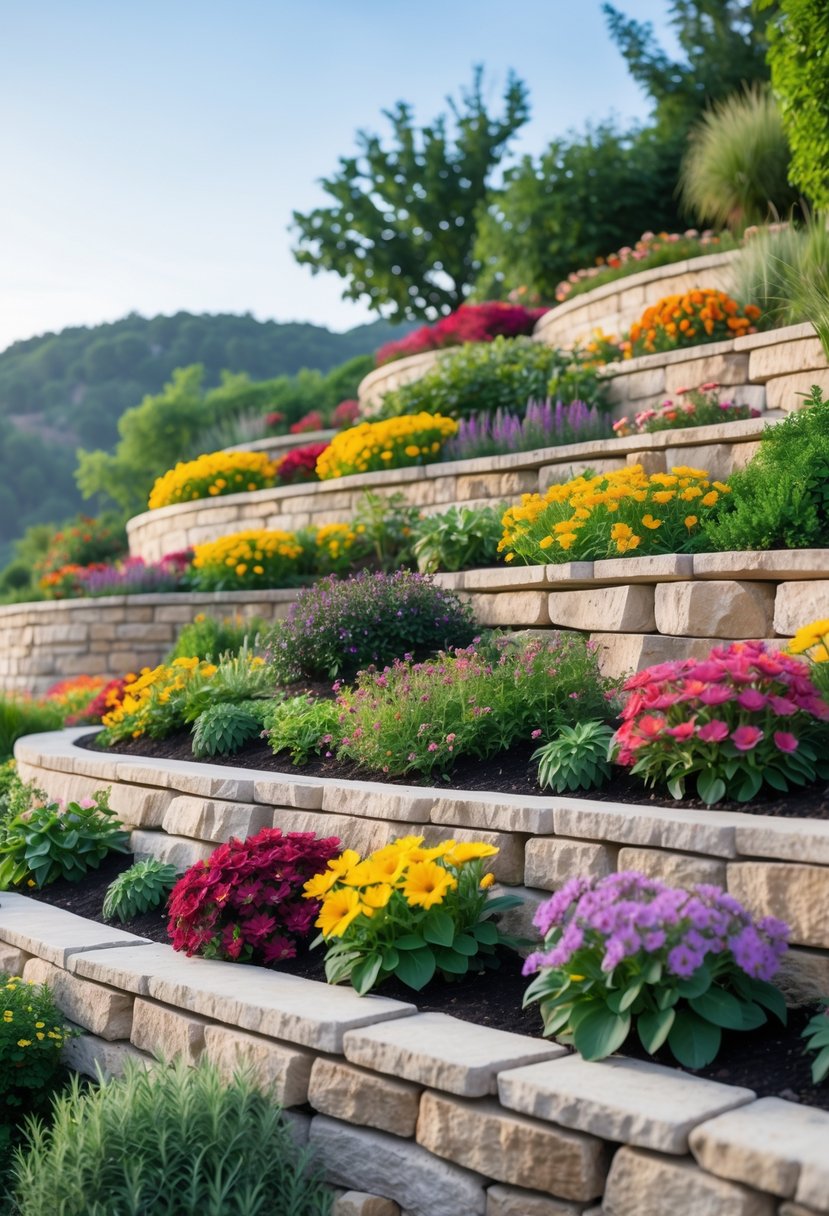
Line your terraces with perennial borders to brighten up the slope. Perennials come back each year, so you don’t have to replant all the time.
Mix up colors and leaf shapes to keep things interesting from spring to fall. Ornamental grasses bring in extra texture and movement.
If you want easy ideas, check out these perennial garden border tips.
9) Build a dry creek bed for drainage and interest
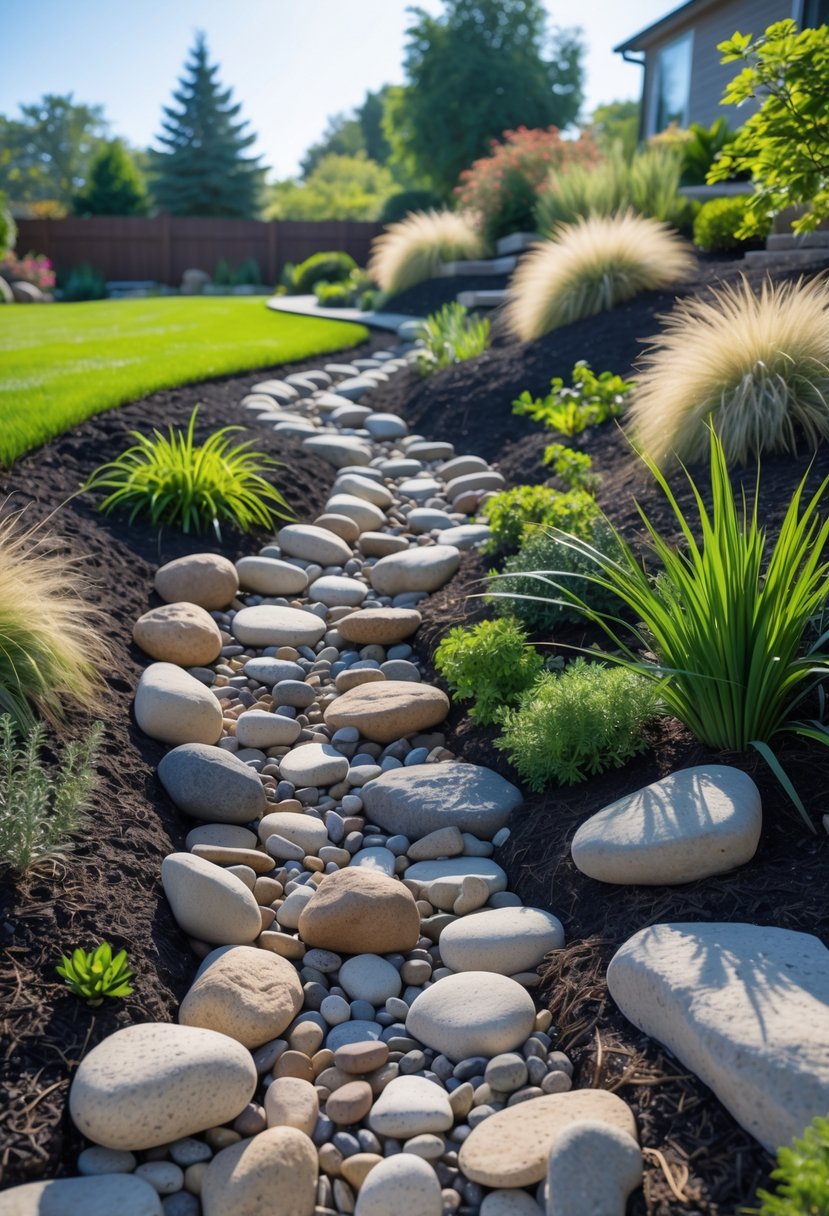
A dry creek bed can help you manage water runoff on your hill. It keeps soil from washing away when it rains hard.
Dig a shallow trench and line it with river rocks to guide water safely. You’ll get a peaceful, natural look at the same time.
Add shrubs or flowers along the edges for extra appeal. Dry creek beds need very little upkeep.
Curious how to start? Here’s how to Create a DIY Dry Creek Bed in Your Yard.
10) Use tiered planting with shrubs and flowers
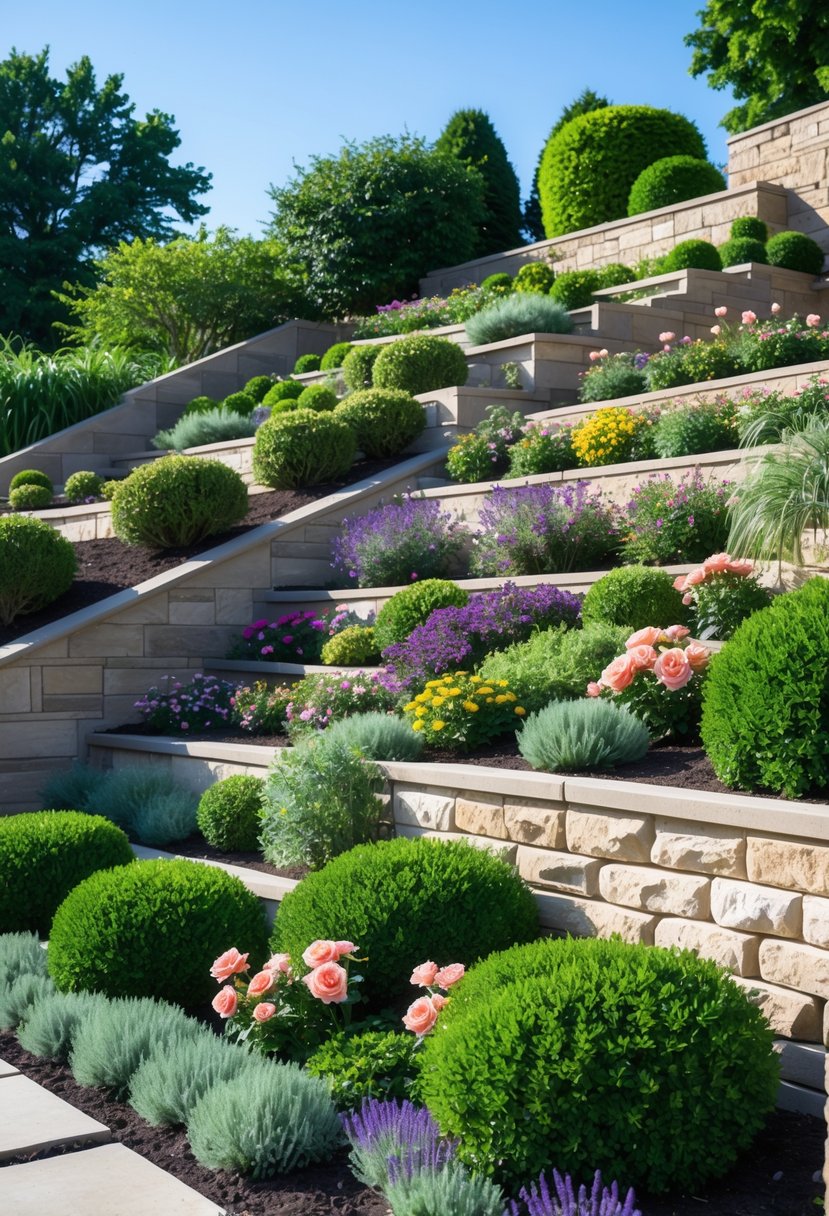
Go for tiered planting to make your hill look lush and layered. Stack planting beds at different heights for a cool effect.
Mix tall shrubs with shorter flowers for color and texture. Tiered beds also help stop erosion and keep things tidy.
Want more ideas? See some creative tiered planting inspiration here.
11) Add a small seating nook with a bench
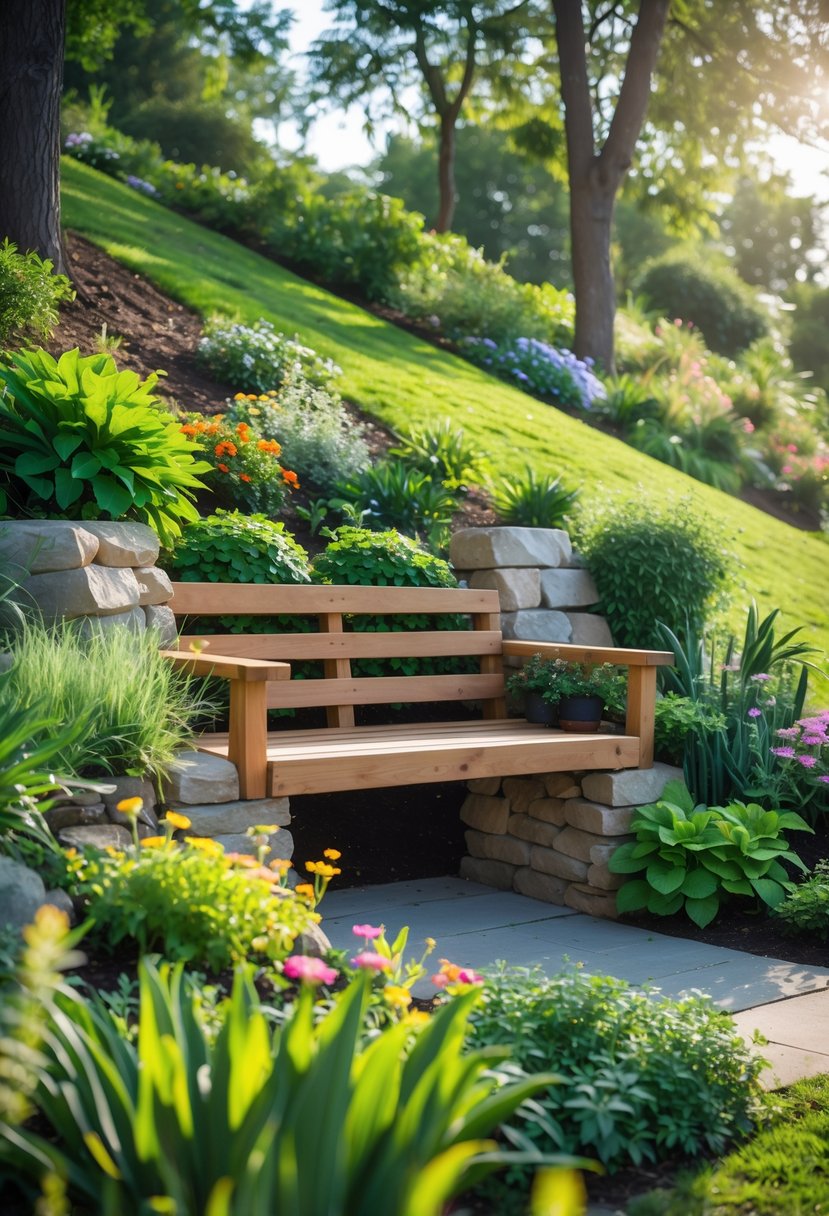
Pop a small bench somewhere on your hill to make a cozy spot for relaxing. Pick something sturdy and weatherproof that fits your space.
Set it where you get a nice view or some afternoon shade. Toss on a cushion if you want a little more comfort.
Surround your bench with potted plants or flowers. It’ll feel like a secret retreat.
For more inspiration, peek at these garden nook ideas.
12) Plant ornamental grasses for texture and movement
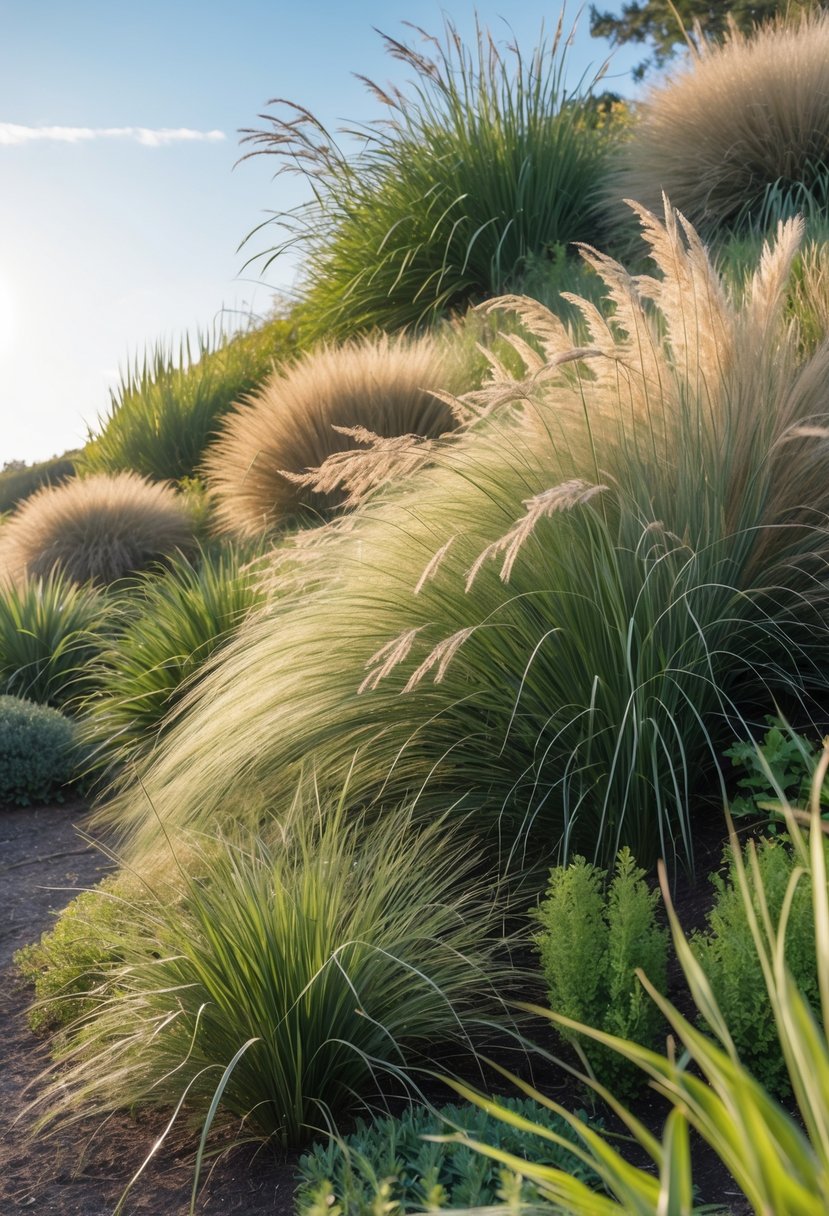
Ornamental grasses are fantastic for hills. They add texture and barely need any care.
You’ll notice how they sway in the breeze, bringing movement to your garden. Grasses come in all sorts of sizes and colors, so you can pick what you like.
They help keep soil in place, too. Adding ornamental grasses gives your hillside a soft, flowing vibe.
Check out more about how ornamental grasses can liven up your garden here.
13) Install a drip irrigation system on slopes
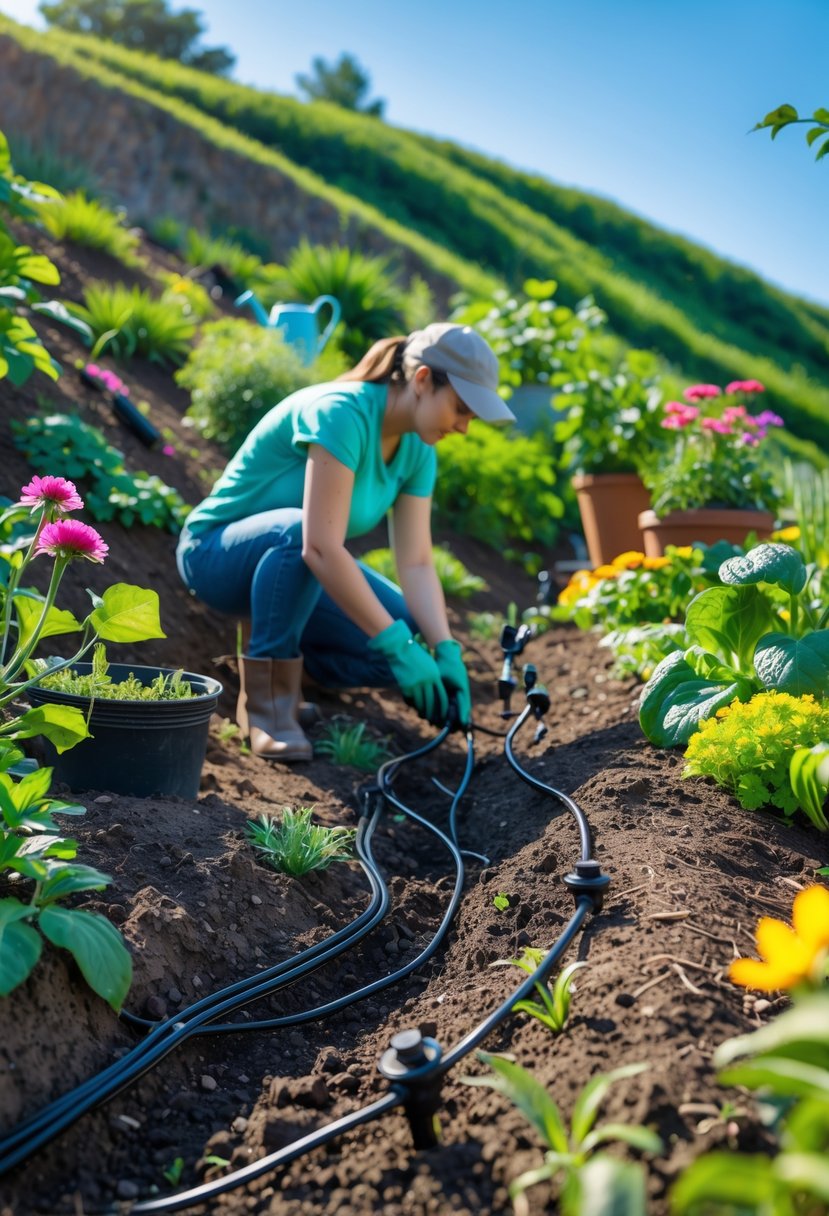
Set up a drip irrigation system to make watering your hill garden way simpler. Drip lines send water straight to the roots, which means less runoff and less soil loss.
Because water wants to run downhill, lay out your system so every plant gets enough. Use pressure regulators or emitters to control the flow.
Drip irrigation works great on slopes. It keeps your plants happy and cuts down on wasted water.
Want the details? Here’s a guide on installing drip irrigation on slopes.
14) Create a butterfly garden with nectar plants
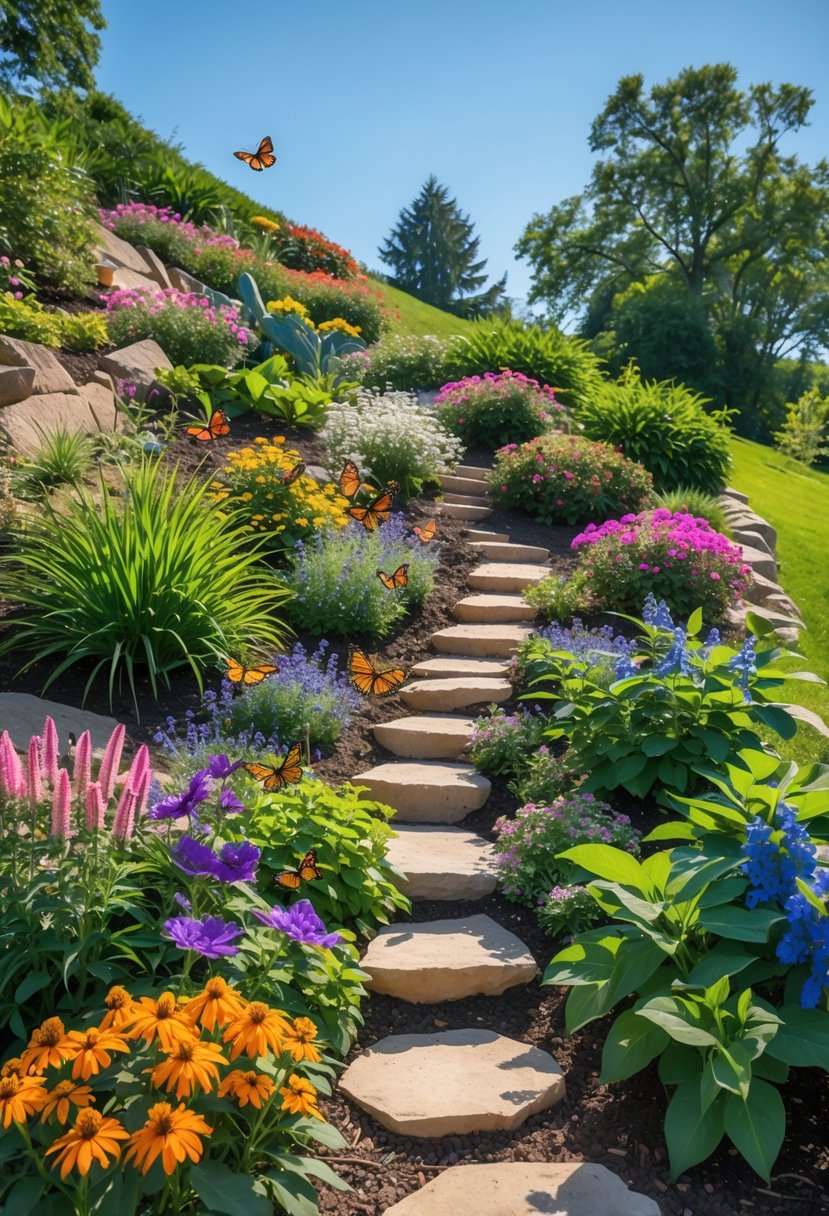
Why not add some beauty and life to your hill garden by making a butterfly garden? Pick nectar-rich plants like milkweed, coneflowers, and lantana to attract butterflies. These plants give butterflies the energy they need to fly and reproduce.
Plant flowers in clusters so butterflies can find food easily. Try adding a few shrubs or small trees for shelter. Butterflies love a safe place to rest and hide from wind or predators.
You don’t need a huge space. Even a small patch with the right plants brings color and movement to your hill. Want to learn more? Check out nectar plants and butterfly gardens at Plant Detectives.
15) Add a small pond or water feature on a flat terrace
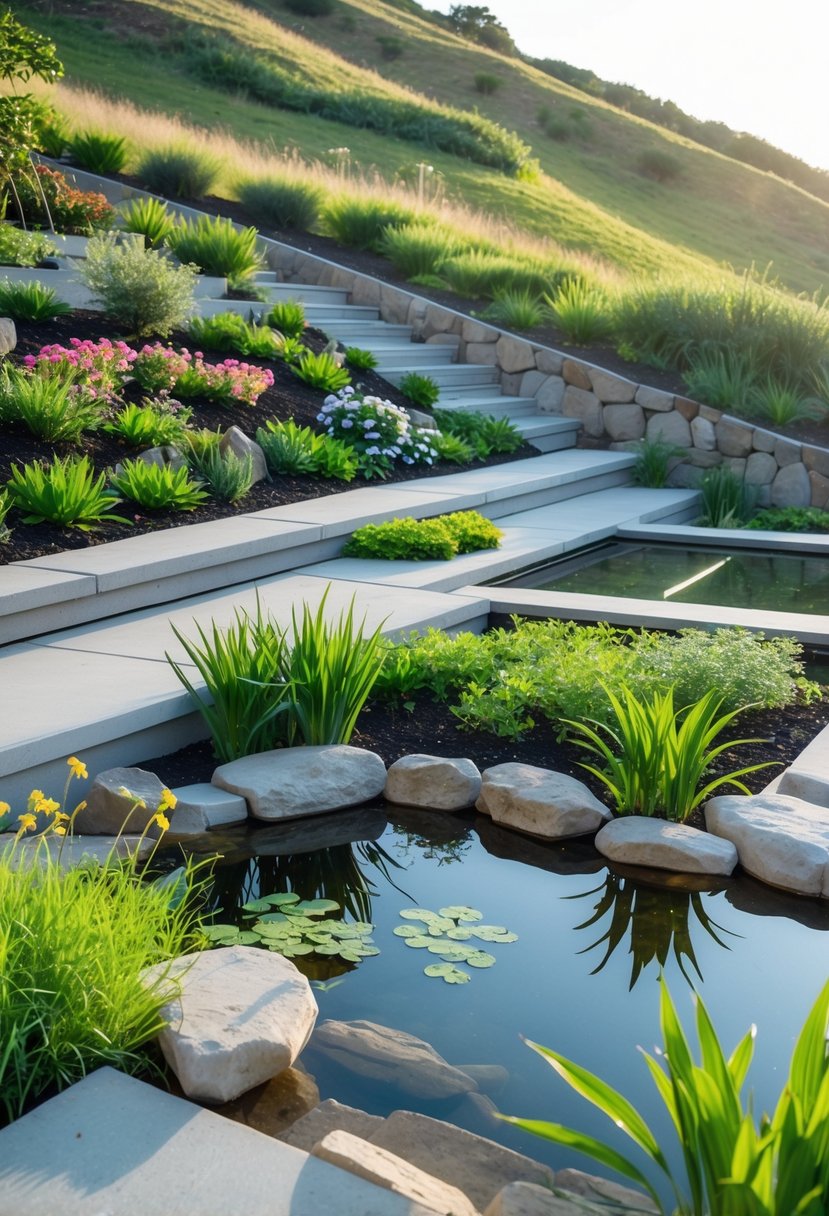
Adding a small pond or water feature on a flat terrace creates a peaceful spot in your hill garden. You don’t have to go big—even a simple container pond with a tiny pump brings soothing water sounds.
Pick a level area so water stays put. Surround the pond with plants or stones to help it blend in. Water features attract birds and butterflies, making your garden feel lively and calm.
Looking for inspiration? Check out easy DIY pond ideas to match your style and space.
16) Use stone retaining walls for stability and aesthetics
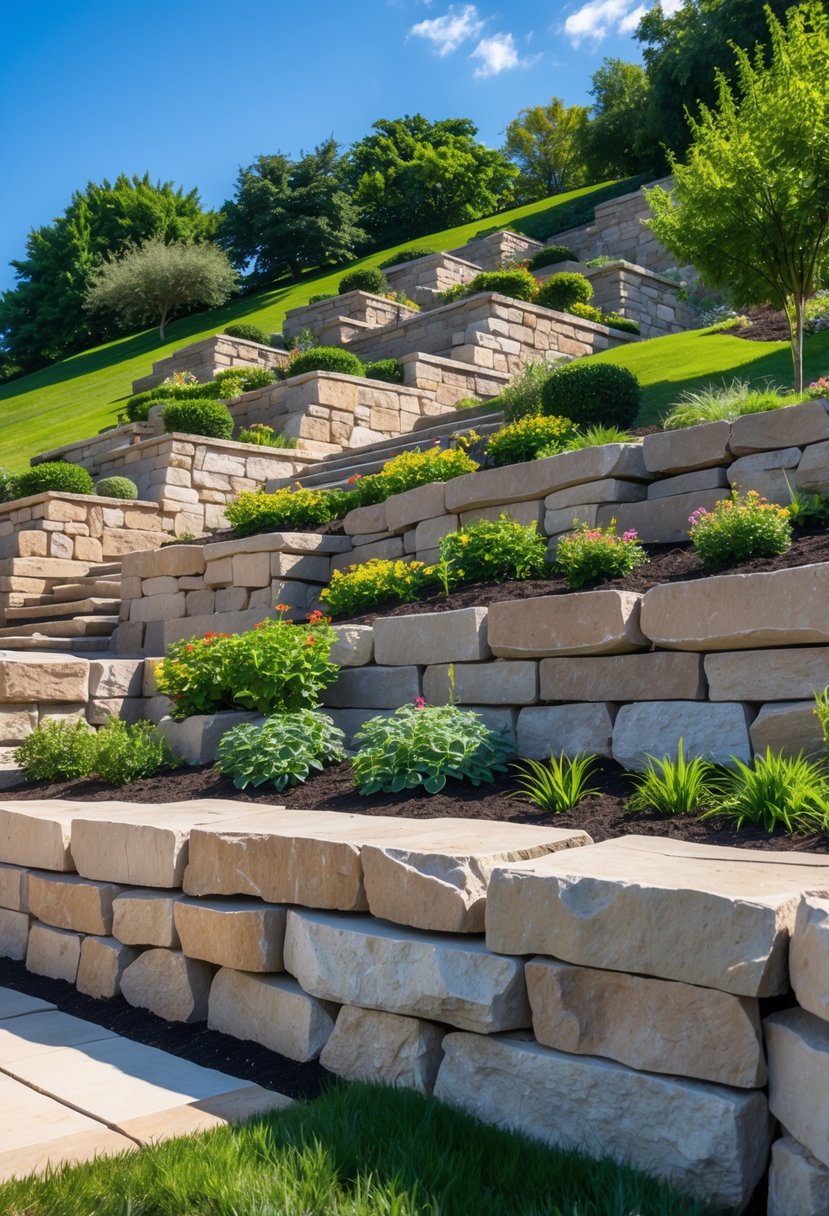
Use stone retaining walls to steady your hill garden. These walls stop soil from washing away when it rains.
Stone walls also give your yard a natural, charming vibe. Pick from rustic or modern styles, whatever suits you.
Building a stone wall creates flat spots for planting or relaxing. It’s both useful and attractive.
Need more ideas? Check out creative stone retaining wall options for sloped yards.
17) Plant layered shrubs for privacy and depth
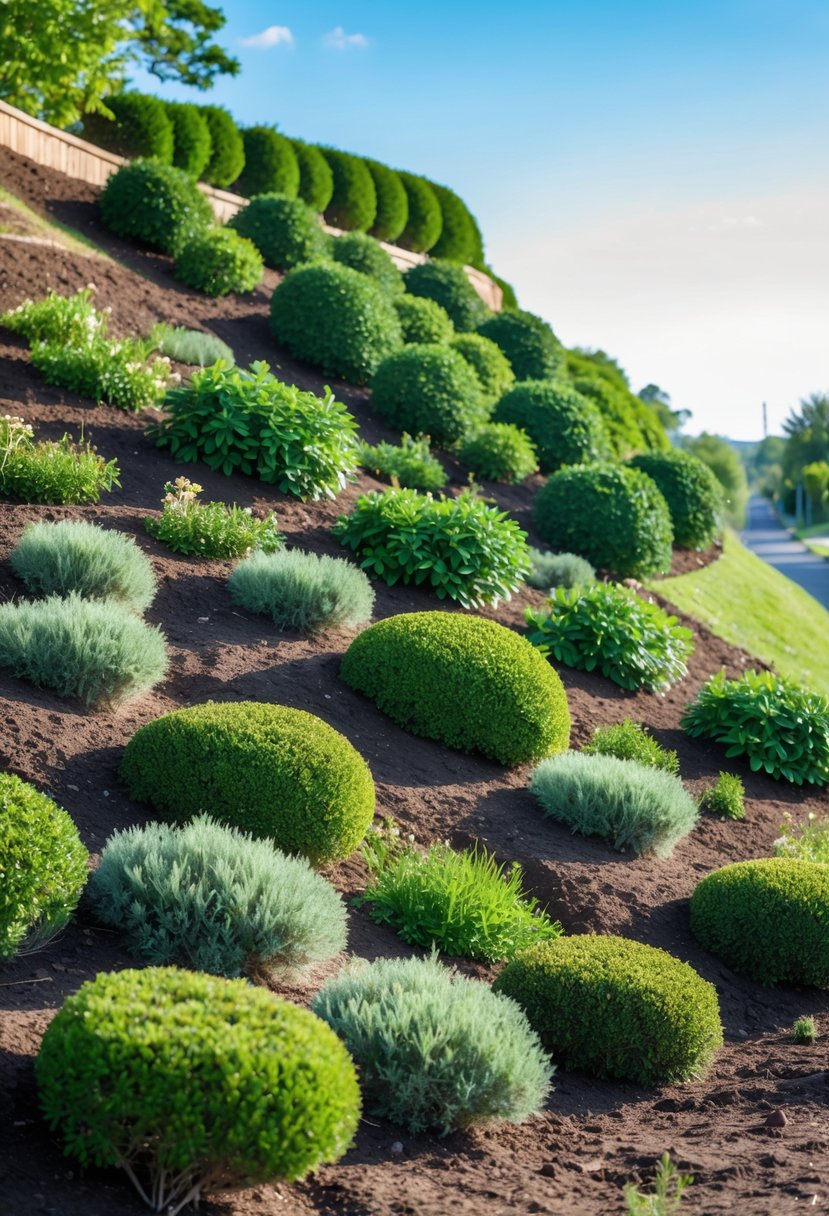
Try using layered shrubs to add privacy on your hill. Start with tall shrubs in back, then medium and low ones in front. This setup makes a living wall that looks great.
Layering adds depth and makes the garden feel bigger and more interesting. Mix shrubs with different heights and textures for a better effect.
This method helps prevent soil erosion and keeps plants stable on slopes. For more tips, check out layered shrubs for garden designs.
18) Add solar pathway lights along stairways
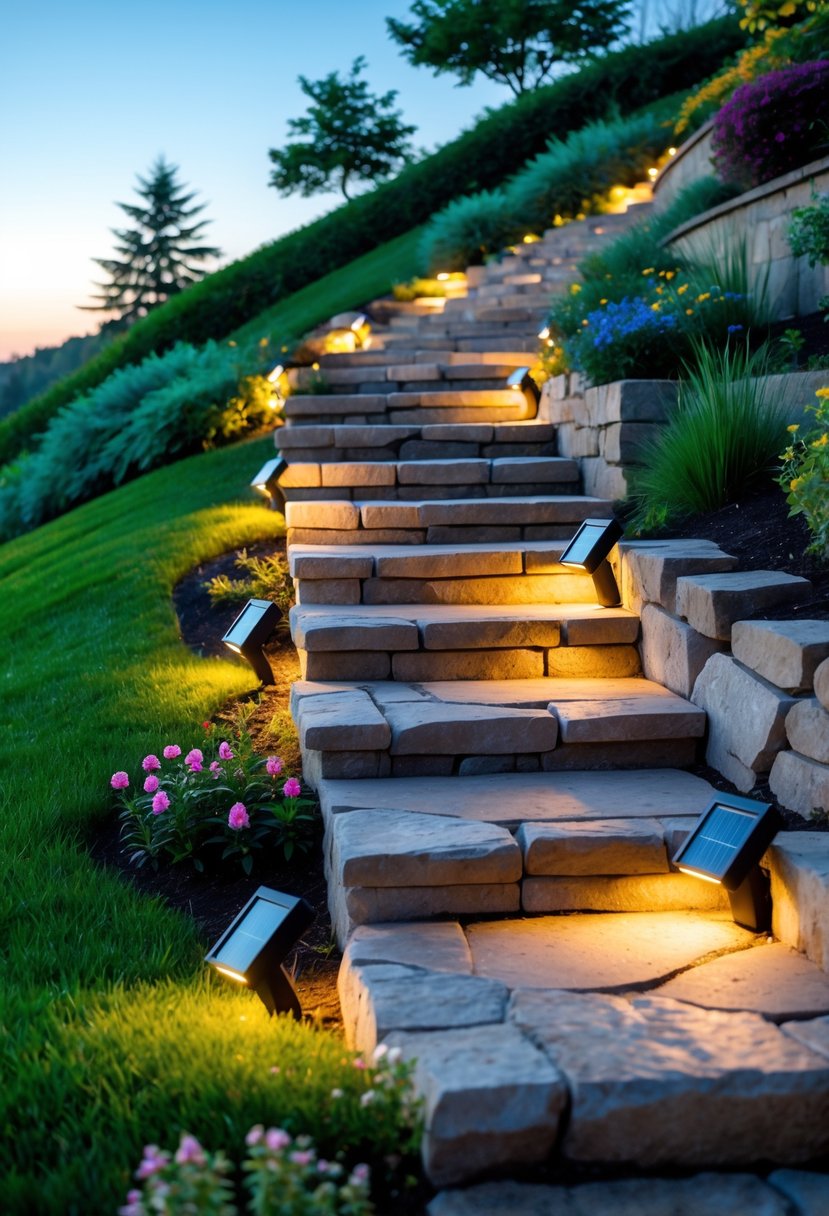
Brighten up your garden steps with solar pathway lights. These lights soak up sun during the day and glow automatically at night.
They make stairs safer after dark and add a soft, welcoming look to your garden. Installing them is a breeze—just push the stakes into the ground along your steps.
Solar step lights save energy since they run on sunlight. They handle all kinds of weather and need barely any upkeep.
Curious about more ideas? Check out this guide on creative hillside solar steps.
19) Build a pergola for shade and vertical interest
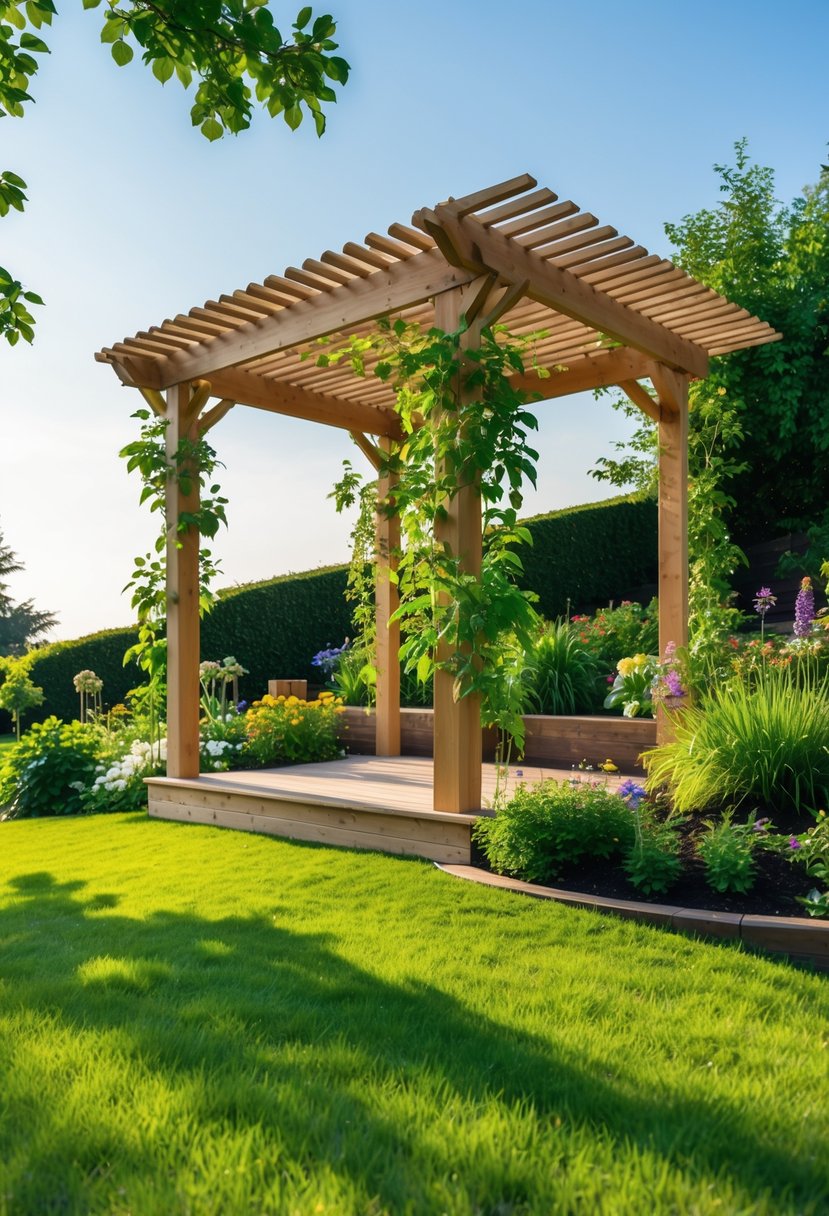
Add a pergola to your hill for shade right where you want it. It gives you a cool, comfy place to relax on sunny days.
A pergola also brings height and structure to your garden. Grow climbing plants up the beams for more greenery and color.
With a simple plan and a few tools, you can build one yourself. It’s a lovely way to add charm and function to your hillside.
For help, check out building a pergola and detailed DIY pergola design plans for beginners.
20) Use mulch to prevent soil erosion
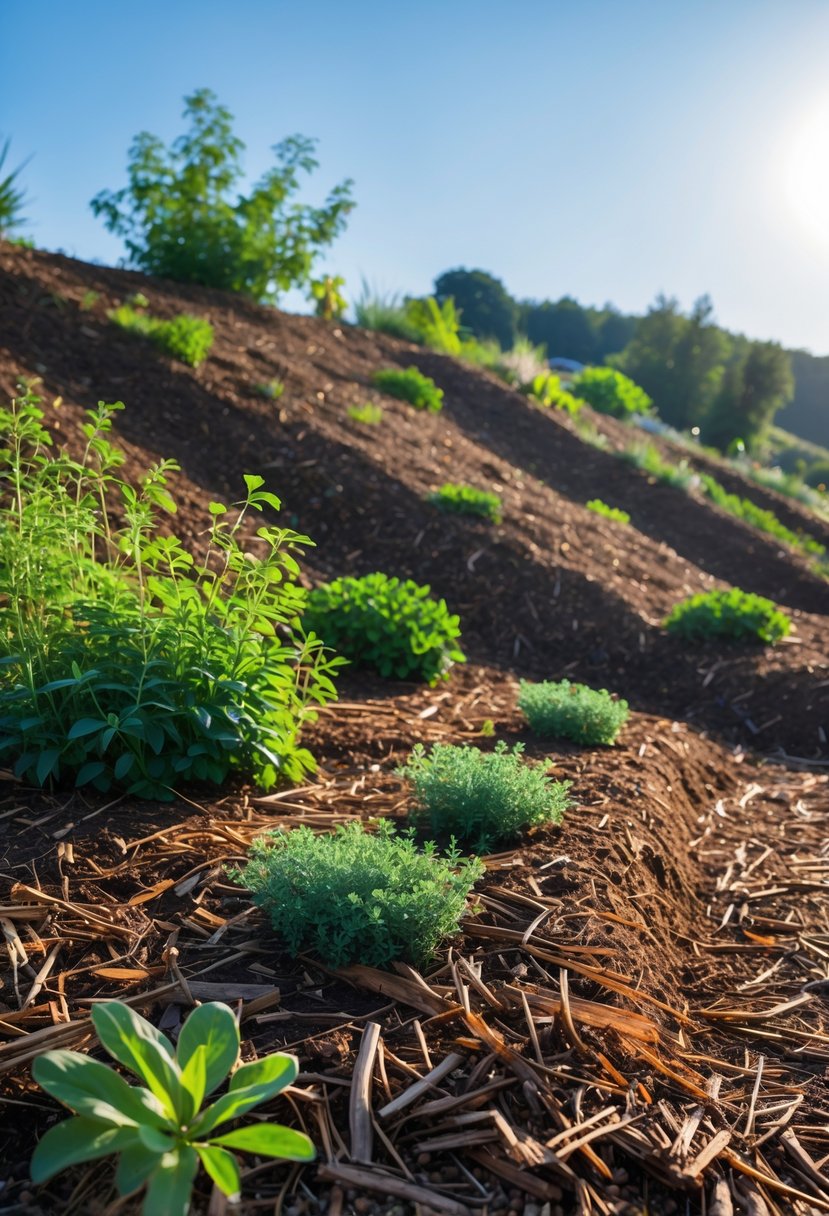
Mulch protects your hillside garden from soil erosion. Spread mulch over the soil and it acts like a shield during rain, keeping soil in place.
It also holds moisture so plants get the water they need. Spread mulch about 3 to 4 inches thick for best results.
Try using landscape fabric under the mulch to make it last longer and keep weeds down. This combo keeps your hill neat and protects the soil. For more ideas, check out creative hillside mulch options.
21) Plant flowering vines on trellises
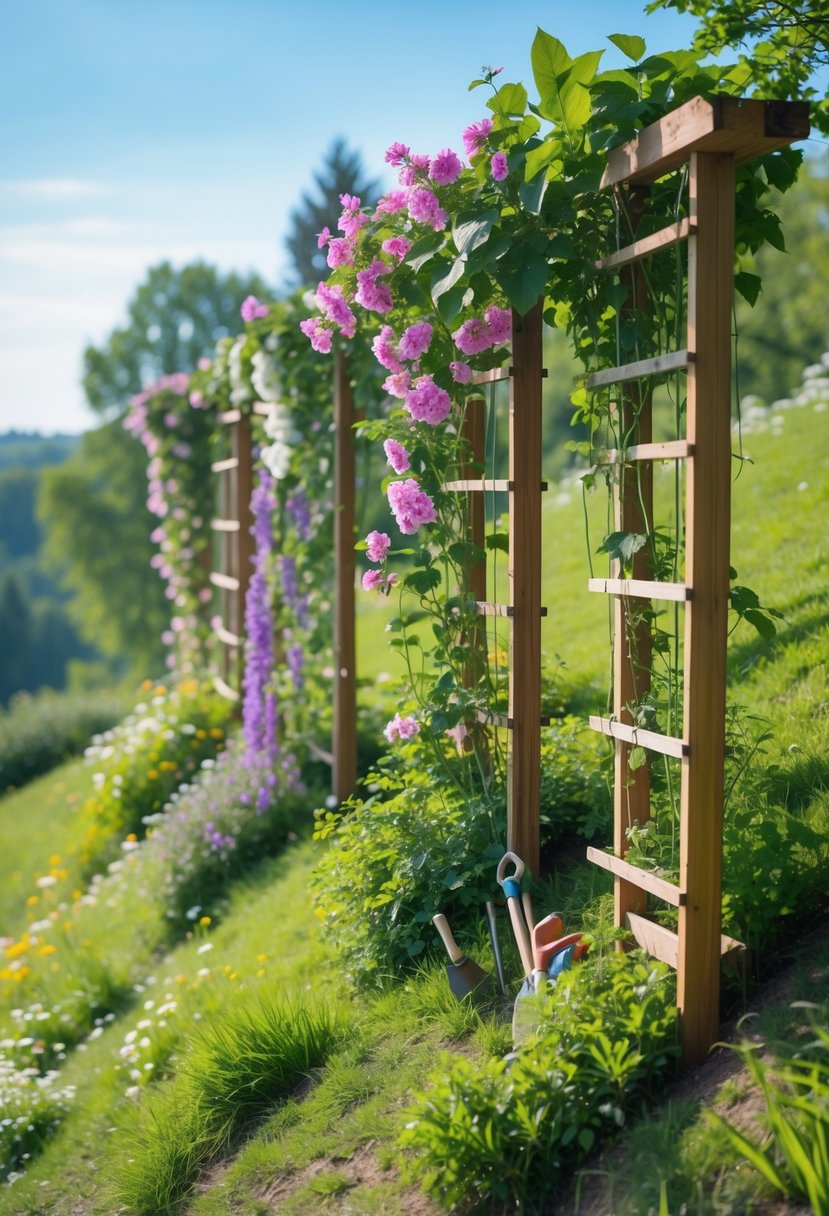
Let trellises support flowering vines on your hill. Trellises help vines grow up instead of sprawling everywhere, so your garden looks tidy and colorful.
Flowering vines add height and can brighten empty spots. Sometimes they even make a natural screen for privacy. Pick vines that don’t get out of control for easier care. For inspiration, check out small flowering vines for trellises.
22) Add birdhouses or feeders to attract wildlife
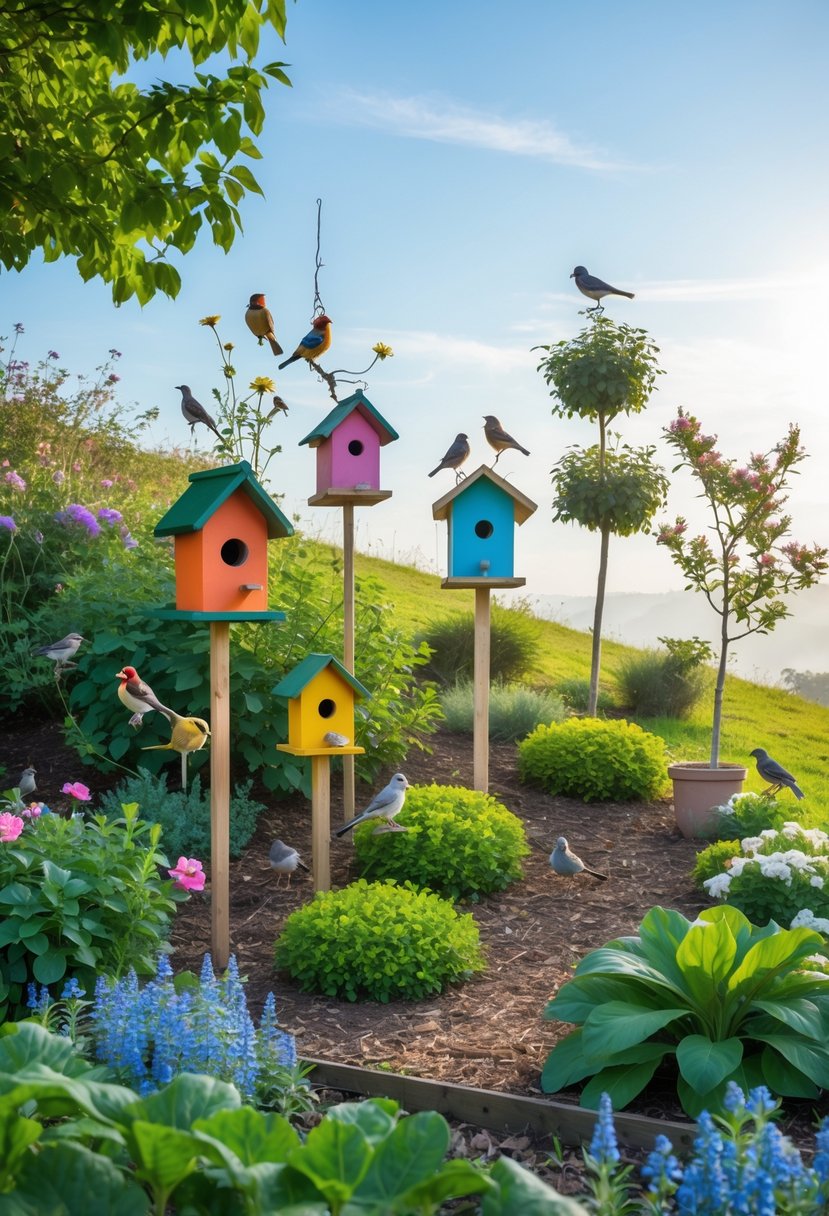
Bring more life to your garden hill by adding birdhouses or feeders. Birds get a safe place to rest and some food, especially when it’s tough to find.
Pick spots that are easy to see but protected from wind or predators. Native plants nearby make birds feel right at home.
DIY bird feeders are fun and add personality to your space. Try hanging a pine cone with peanut butter and seeds to attract different birds. For more creative ideas, see how to build birdhouses and feeders.
23) Create a vegetable garden with tiered beds
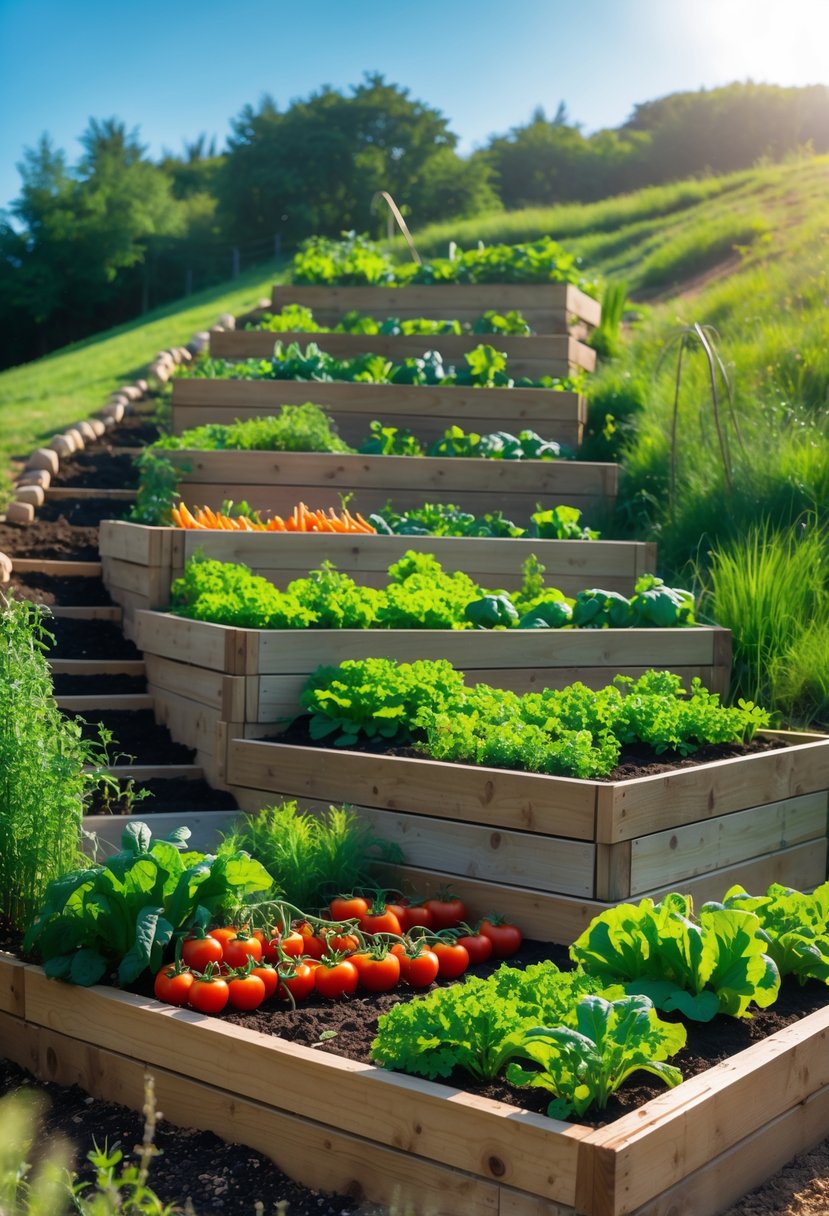
Turn your hill into a productive veggie patch with tiered beds. These layers let you grow lots of vegetables in a small space.
Tiered beds help water drain and keep soil from washing away. You can reach your plants more easily for watering and picking.
Choose vegetables that fit each tier’s sun and space. Your garden will look nice and stay healthy. For building tips, check out this guide on vegetable tiered gardens.
24) Use colorful annuals for seasonal bursts
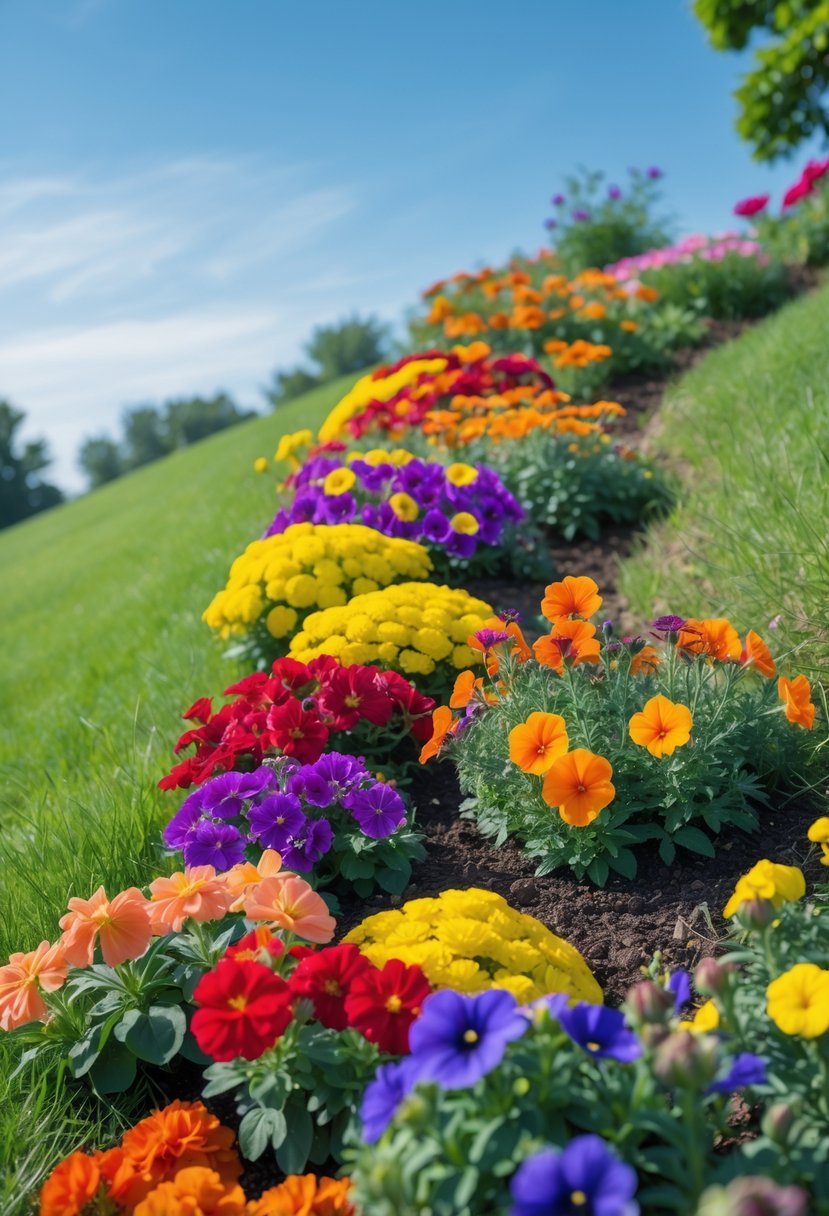
Add colorful annuals to your hill garden for bright pops of color. These flowers bloom all season, so your garden stays lively from spring to fall.
Annuals come in all sorts of colors and shapes. Mix and match for fun combos. You can even change things up every year.
Planting annuals on a slope is simple and helps stop soil erosion. Pick varieties that suit your climate for best results.
Want more tips? Check out ideas to use annuals in the garden.
25) Add a fire pit area on a flatter part of the slope
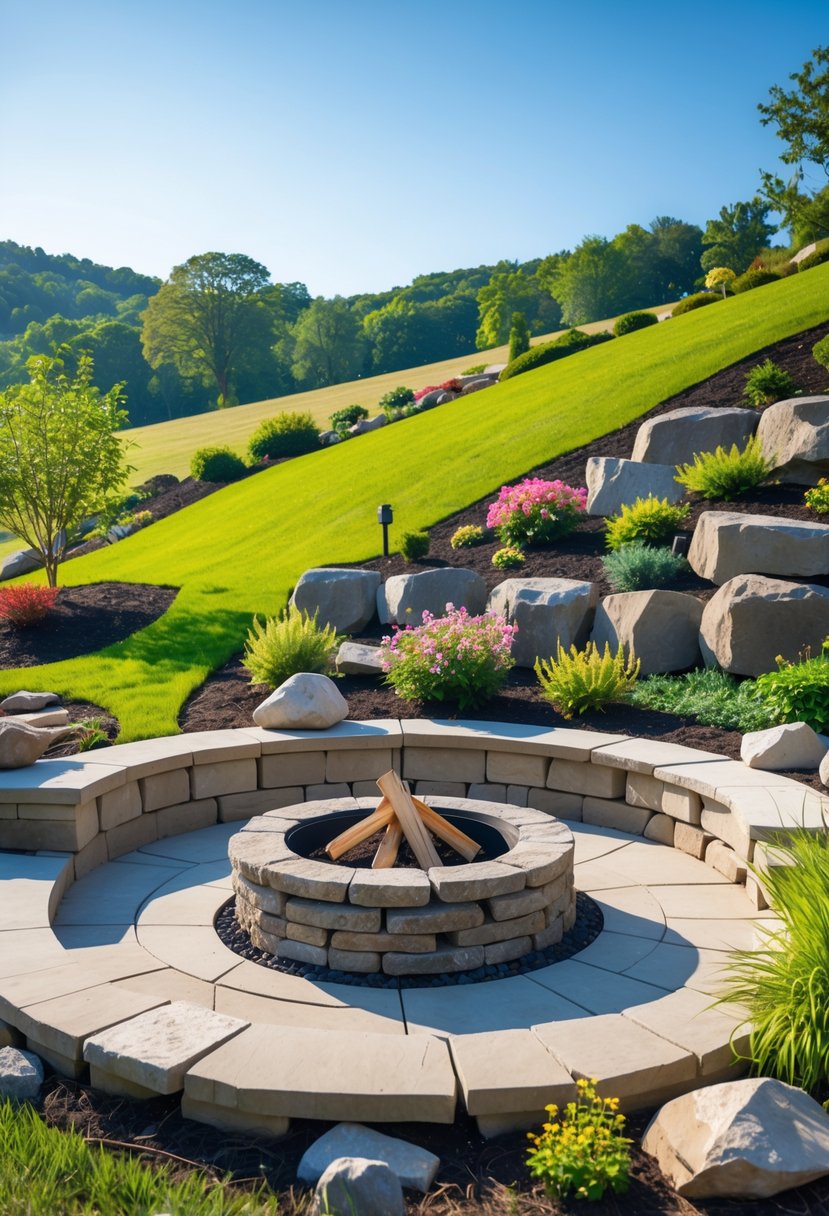
Find a flat spot on your hill and create a fire pit area. It’s safer and cozier for sitting around the fire.
If your slope is steep, dig out a flat space or build a platform with stones or wood. This keeps the fire pit steady and stops things from sliding.
Adding a fire pit on a flat part also gives you room for seats and paths. You’ll have a cozy spot for friends and family to gather. For inspiration, see how to build a fire pit on a sloped yard.
Understanding Hillside Gardening
Gardening on a hill means you have to think about how water moves and how soil stays put. Watch how much sun your plants get and how water drains around them. These details help your garden grow strong.
Soil Erosion Considerations
Soil erosion is a big challenge on hillsides. Rain can wash soil downhill and take nutrients away from your plants. Use terracing or build retaining walls to hold soil in place.
Pick deep-rooted plants like grasses or ground covers to keep the soil stable. Mulch helps reduce runoff and protects topsoil.
Focus on ways to slow water flow and keep soil from washing away. Small, level planting beds along the slope work better than one long steep area.
Sunlight and Drainage Factors
Sunlight changes depending on which way your hill faces. South-facing slopes get more sun, which is great for sun-loving plants. North-facing slopes stay cooler and shadier, so shade-loving plants do better there.
Drainage matters because water runs downhill fast. You want soil that drains well but holds some moisture. Raised beds or terracing help water soak in instead of rushing away.
Plan for spots where water collects or drains quickly. That way, you protect plants from drying out or getting too soggy. Managing sun and drainage helps your hillside garden thrive.
For more tips, visit how to garden on a slope.
Design Strategies for Sloped Gardens
If you’re dealing with a sloped garden, you’ll need to think about erosion control and easy access. You want the space to look inviting, sure, but you also want it to feel safe and practical.
Try using strong structures and clever layout ideas. They’ll help you manage water runoff and carve out comfortable pathways that actually make sense.
Terracing Tips
Terracing can totally transform a steep hillside into usable, flat planting spots. First, measure the slope’s length and angle—this helps you figure out how many terraces you’ll actually need.
Pick materials you like, whether that’s wood, stone, or concrete blocks. Build low retaining walls to keep the soil where it belongs.
Make each terrace wide enough so you can walk and garden comfortably—usually, 2 to 4 feet does the trick. On the flat areas, spread gravel or mulch to improve drainage and keep weeds down.
Try planting ground covers along the terrace edges. They’ll help stop soil from washing away.
Keep those terraces level so water doesn’t just rush off and take your soil with it. If you add drip irrigation or soaker hoses, you’ll help water settle in evenly instead of pooling up.
Pathway Placement
Think about where you usually walk so you can plan paths that actually make your garden easier to use. If you’ve ever slipped on a steep, straight path, you know how tricky those can be. Try zigzag or switchback paths instead—they break up the slope and make walking feel less like a workout.
Choose surfaces that won’t get slippery. Flagstone, gravel, or textured pavers work well. You might like the look of stepping stones spaced apart, with grass or ground cover peeking through.
If your garden slope feels a bit daunting, add handrails or raised edges for some peace of mind. These little touches can make a big difference.
Set your pathways so they don’t cast too much shade on your plants. Good drainage matters too, so keep that in mind when you’re laying things out.
Paths that lead to a bench or a favorite spot make your garden feel welcoming—almost like it’s inviting you to stay awhile.
Need more inspiration? Check out 20 Stunning Garden on a Hill Ideas.


