

Easy Garden Ideas On A Hill for Beautiful and Simple Landscaping
Gardening on a hill can feel a bit daunting at first, but honestly, it’s a cool opportunity. You get to shape an outdoor space that’s both beautiful and unique—maybe even a little fun.
You can really let your style shine by working with the slope, not against it.

Easy garden ideas on a hill focus on keeping things simple and making the most of the land’s natural shape. That way, you get to enjoy your garden without stressing over extra chores.
1) Build simple stone retaining walls
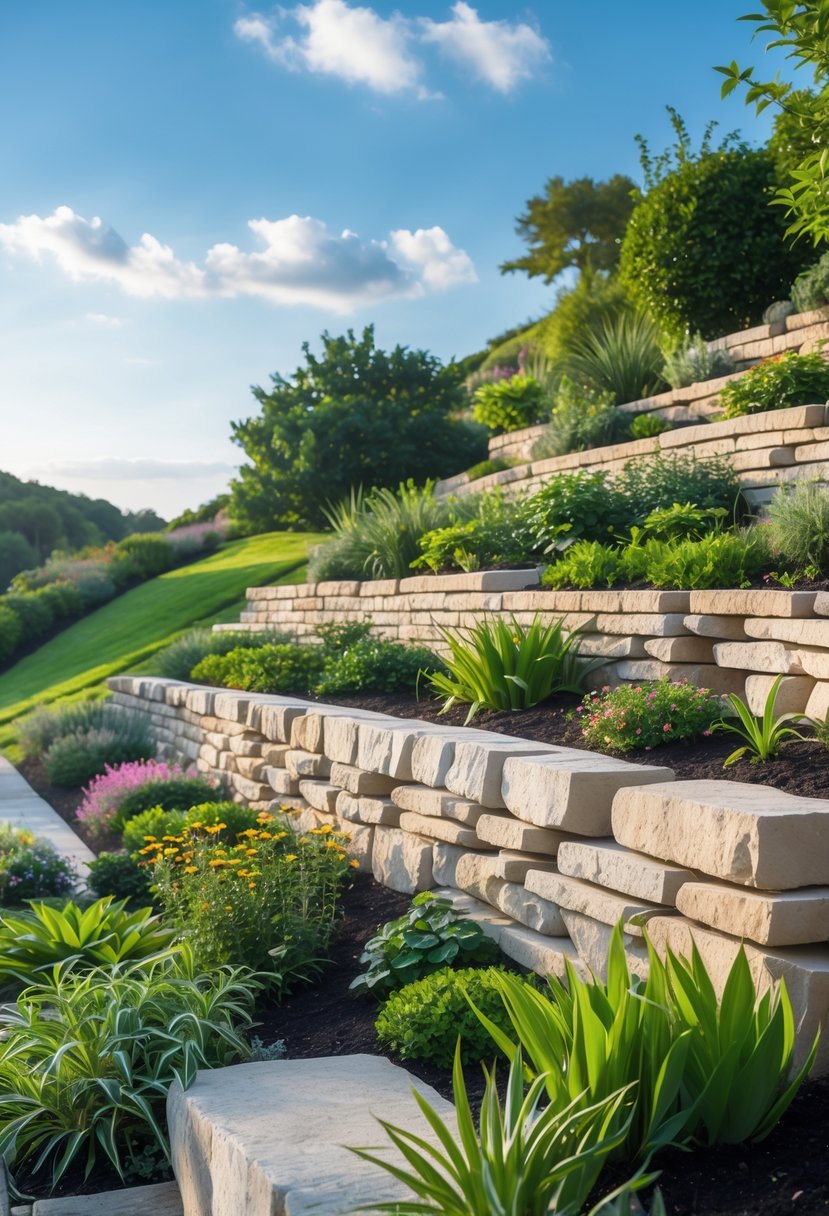
Try building stone retaining walls to wrangle that slope into something tidy and useful. Natural stones always look good and you can pick ones that fit your vibe.
These walls hold back soil and stop erosion. They also give you flat spots for planting or just hanging out.
You won’t need a bunch of fancy tools. If you want to keep things easy and budget-friendly, follow a step-by-step guide—2thesunnyside.com has a solid one.
2) Plant drought-tolerant succulents

Adding drought-tolerant succulents is a no-brainer for hillsides. These plants store water in their leaves, so you barely have to water them.
They come in all sorts of cool shapes and colors. Use them as ground cover or make one a focal point—whatever feels right.
Group them by needs to keep things simple. And since their roots grab onto the soil, they help control erosion too.
If watering the hill is a pain, succulents make life easier. Here’s a guide with some great picks for dry slopes.
3) Create tiered flower beds

You can transform a sloped hill with tiered flower beds. Tiers help with erosion and make watering less of a hassle.
Each level gives you a chance to plant something different. Build the tiers with stone or wood to keep soil where it belongs.
Mix up flower colors and heights for a more interesting look. If you need help, here’s a handy guide for building your own.
4) Use wooden steps for easy access

Try adding wooden steps if you want to actually get up and down your hill without tripping. They blend in well and add a rustic vibe.
Build them with wood planks and some gravel for grip. That keeps things safe, even if your hill feels steep.
Wood’s pretty easy to work with, especially for a DIY project. You can make steps that fit your space, not the other way around.
Wooden steps protect your plants and soil from getting stomped. Plus, they just look inviting.
If you want to try it, HGTV has a guide on outdoor wood steps.
5) Add colorful wildflowers
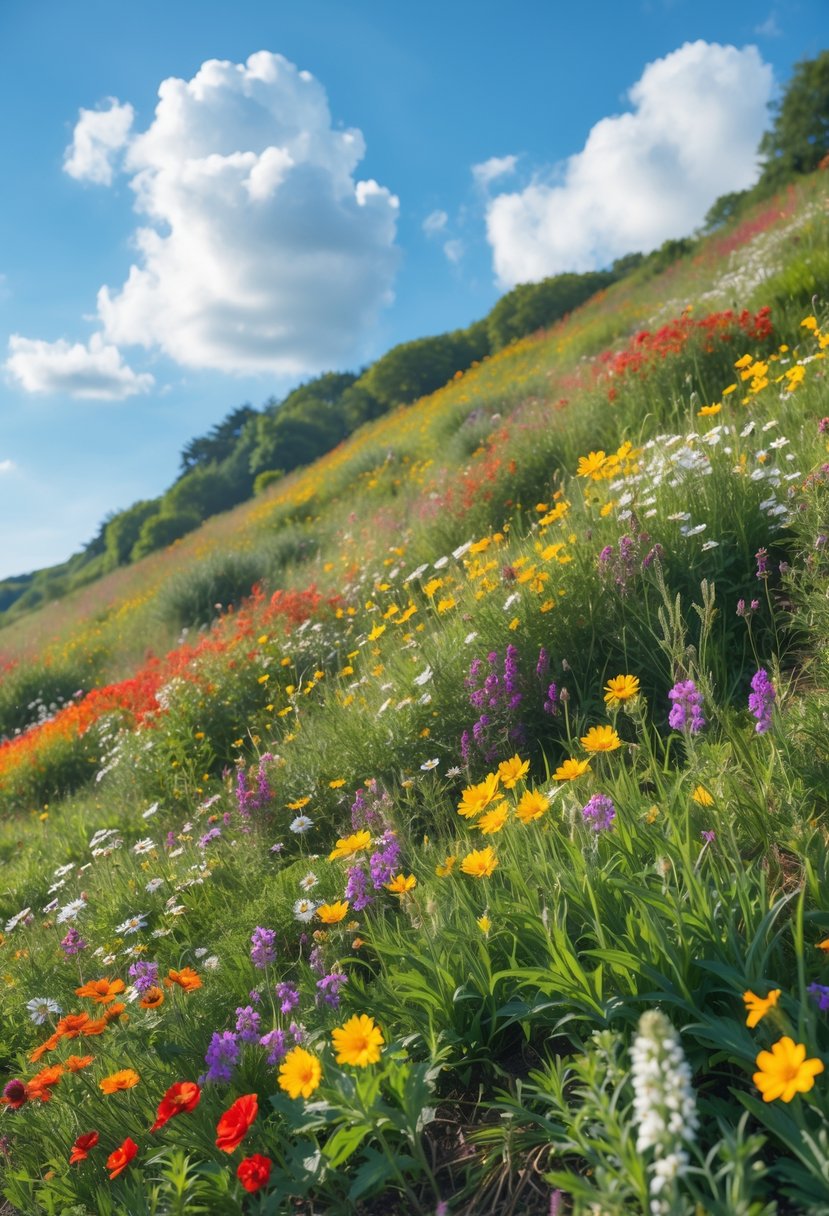
Bring your hillside to life with wildflowers. They’re easy to grow and actually do well on slopes.
Wildflowers’ roots hold the ground together, helping with erosion. Bees and butterflies love them, too.
Once they’re settled, you don’t have to fuss over them much. If you mix types, you’ll have color all year.
Pick native wildflowers for the best results. You can get started with tips from this wildflower garden guide.
6) Incorporate rock gardens
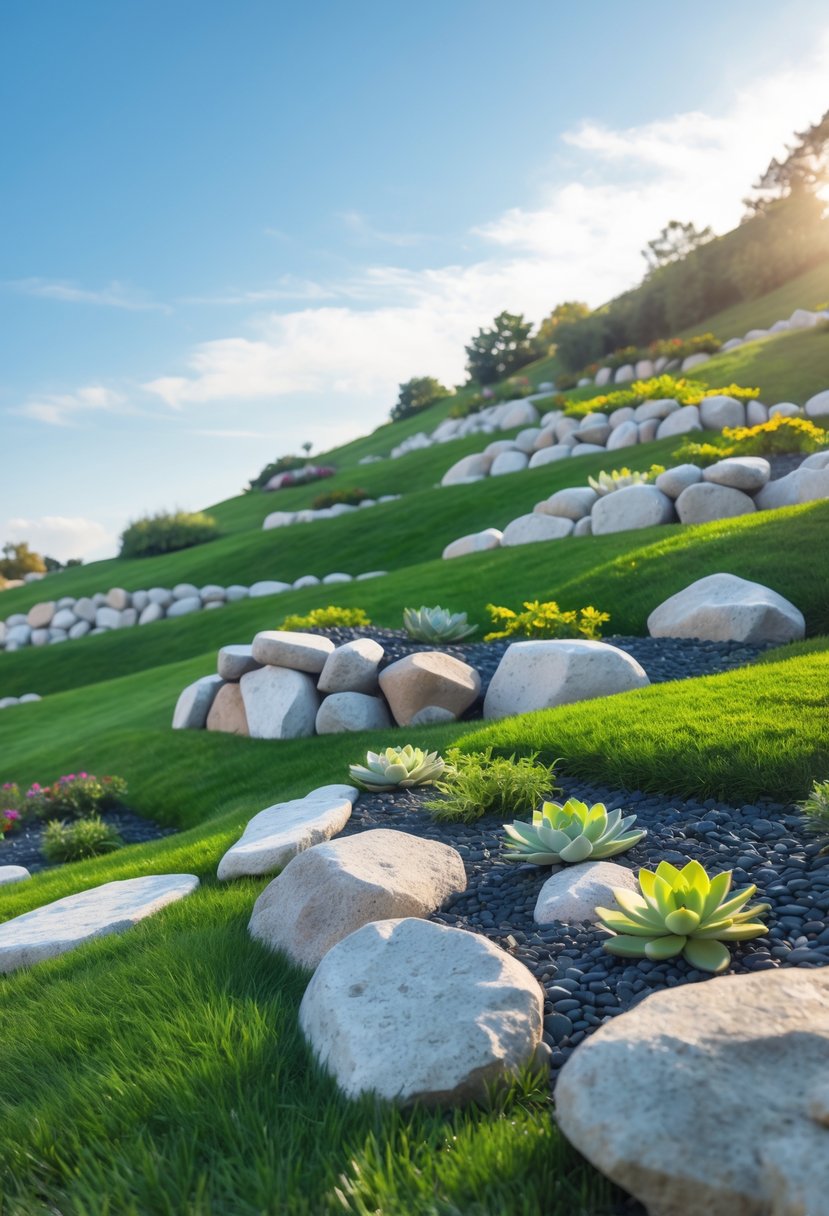
Rock gardens just make sense on a hill. Place rocks of different sizes to build up layers and keep soil from sliding away.
Add in plants that love rocky spots, like succulents or alpine flowers. They’re pretty low-maintenance.
Use rocks as borders to keep things tidy. It’s a nice way to show off your favorite plants, too.
For more ideas, check out these rock garden tips.
7) Install a drip irrigation system

A drip irrigation system can make watering your hill garden much easier. It sends water right to the roots, so you waste less and avoid runoff.
This setup saves you time and water. Even on a slope, it keeps moisture where you want it.
You just need some tubes and emitters to get started. Here’s a step-by-step guide if you’re not sure where to begin.
8) Build a small raised deck

If you want a spot to relax or have friends over, try building a small raised deck. It gives you a flat, sturdy place to hang out and take in the view.
You don’t need to be a pro or have fancy tools. Basic materials and a simple plan will do the trick.
Let the deck follow the slope for a natural look. Add built-in seats or planters to make it feel cozy.
If you want tips, check out this guide on building decks on uneven ground.
9) Use native grasses for erosion control

Try using native grasses to hold your hillside together. Their roots are tough and keep the soil from washing away.
Native grasses don’t need much attention. They spread out and make a thick ground cover.
Pick grasses that fit your local weather. They’ll do better and need less water.
Want to learn more? Check out info on using native grasses for erosion control.
10) Create a pebble pathway
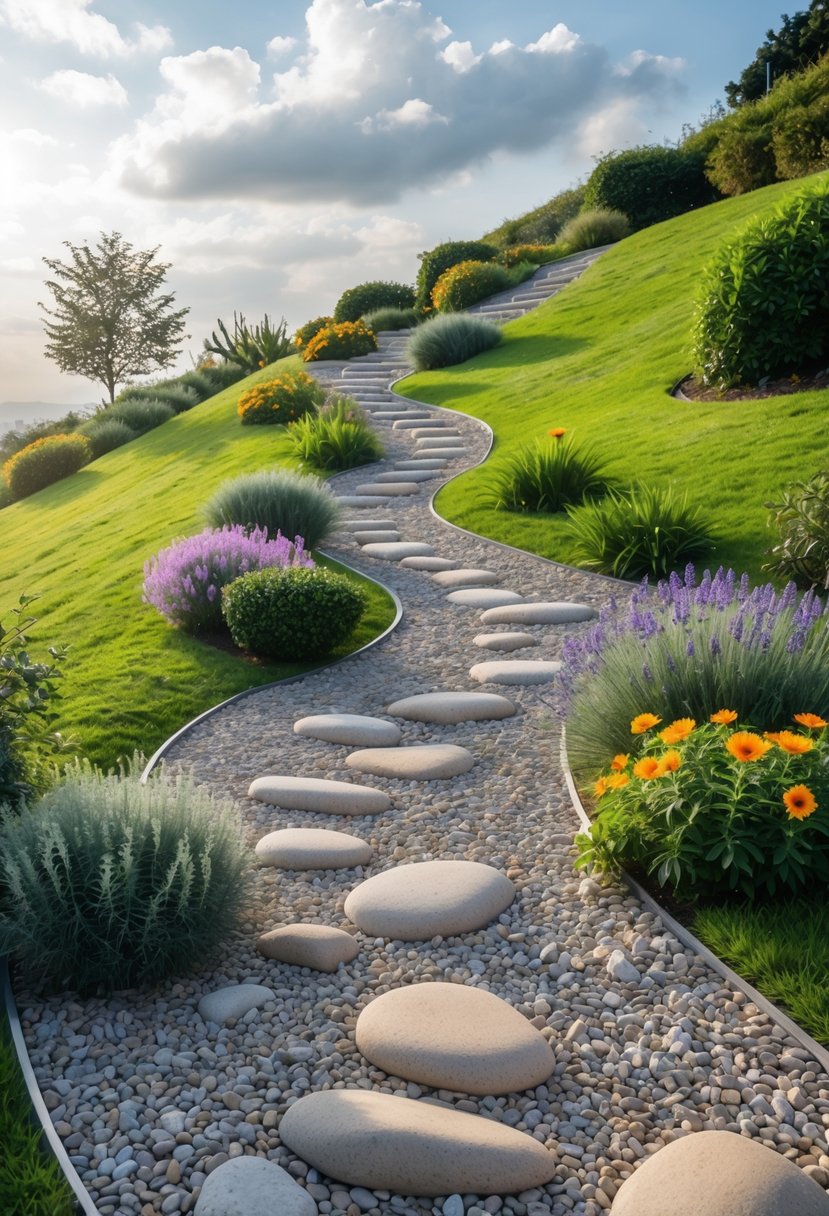
A pebble pathway adds charm and makes your hillside easier to walk. Pebbles are simple to use and look natural on a slope.
Clear the path, lay down weed fabric, and add some sand or mortar to keep the pebbles in place.
You can go basic or get creative with patterns. Walking barefoot on pebbles is actually kind of nice.
If you want to try it, here’s a guide to building a pebble garden path.
11) Plant lavender for fragrance

Lavender brings a soft, calming scent to your hillside. Every time you step outside, you’ll catch its sweet fragrance.
It loves good drainage, so slopes are just right for it. Plus, those purple blooms look beautiful and attract bees and butterflies.
Lavender’s easy to care for and really lifts the mood of your garden. Here’s a lavender hillside planting guide if you want to give it a try.
12) Use mulch to retain moisture
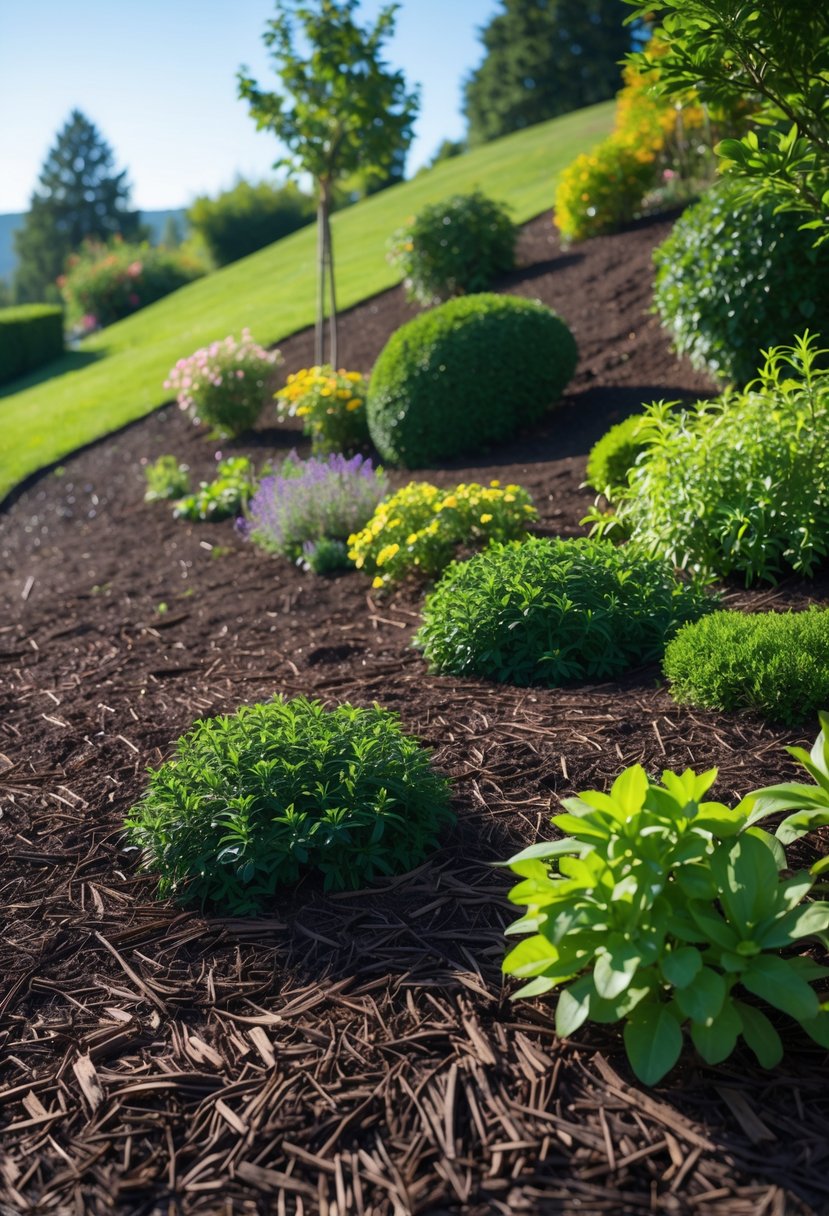
Mulch helps your hillside soil stay moist by slowing down water evaporation. Your plants won’t need as much watering.
It also keeps weeds in check, so your plants get more of what they need.
Spread 2-3 inches of natural mulch like bark or compost. It’s good for the soil and makes your garden look finished.
Mulch just makes everything easier. If you want more details, check out ideas on how to keep mulch on a hill.
13) Include trailing vines on walls

Try adding trailing vines to your garden walls. With vines growing down and over the edges, your hill feels fuller and those hard surfaces look a lot softer.
Pick vines like creeping phlox or trailing lobelia if you want extra color and texture. As they spill over the wall, they really liven up the space.
Trailing vines cover bare patches and help protect your walls from erosion. So you get a garden that’s both beautiful and stronger. If you need a little inspiration, check out trailing plants that cascade over garden walls.
14) Add bird feeders to attract wildlife
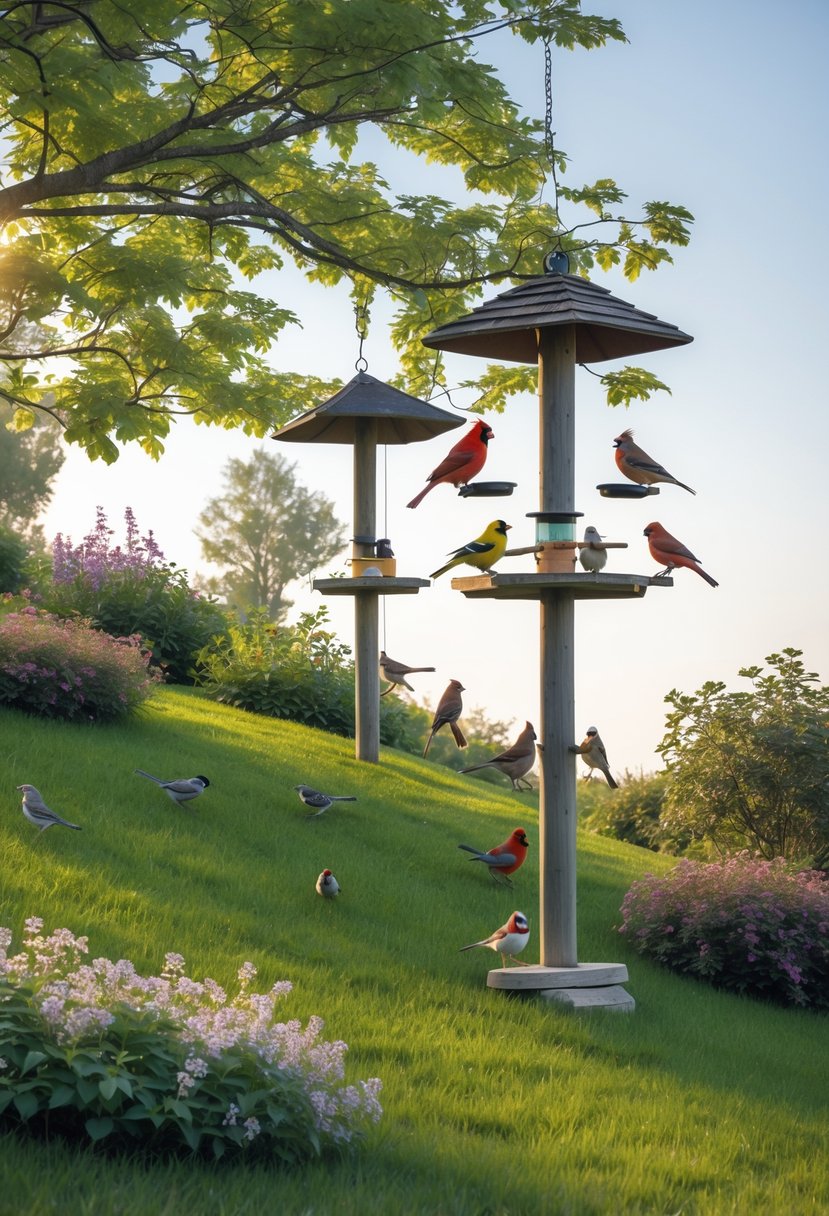
Want more wildlife in your hillside garden? Add some bird feeders. Different feeders attract different birds—tube feeders bring in finches, while platform feeders work for birds that like to feed on the ground.
Place feeders near trees or shrubs so birds have a safe place to rest and hide. You’ll probably find yourself watching them all the time.
If you use feeders with native seeds, you’ll help local birds thrive. Don’t forget a water source like a birdbath—birds get thirsty too.
For more tips, check out bird feeder station ideas.
15) Plant herbs like rosemary and thyme

Rosemary and thyme just love hillside gardens. They’re happiest in sunny places with well-drained soil, which is exactly what most slopes offer.
You can plant them in pots or straight into the ground; they don’t need much water and they’re pretty easy to take care of.
Try grouping Mediterranean herbs like these together since they all like the same things. That way, your garden stays healthy and maintenance is a breeze.
Plus, rosemary and thyme smell amazing and you can grab a handful for your next meal. If you want more ideas, check out herb garden design tips.
16) Install solar garden lights

Brighten up your hill garden by installing solar garden lights. Since they don’t need wiring, you can place them anywhere—even on slopes and uneven spots.
Solar lights soak up the sun during the day and switch on automatically at night. They make pathways safer and show off your garden’s best features.
Pick weatherproof solar stakes or lanterns to match your style. These lights use eco-friendly energy and barely need any upkeep. For more ideas, check out installing solar lights in your garden.
17) Use terracotta pots for container plants
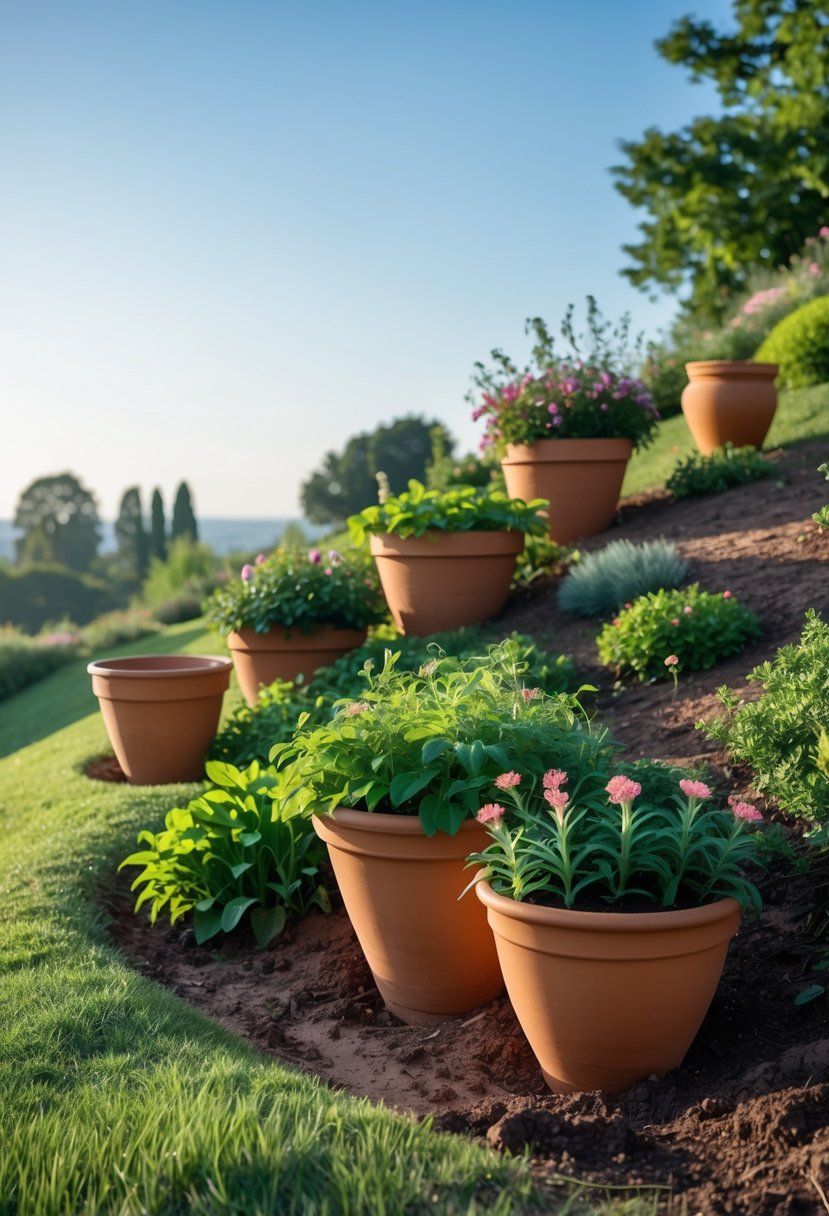
Terracotta pots work really well on hills. They’re light enough to move around but sturdy enough to stay put.
Grow flowers, herbs, or small veggies in them. The warm, earthy color of terracotta adds a nice touch to your garden.
These pots keep soil cool and let air reach the roots. Try stacking or grouping them for a layered effect on a slope.
Need ideas? Check out terracotta garden ideas and more ways to use terracotta pots.
18) Create a small patio with natural stone
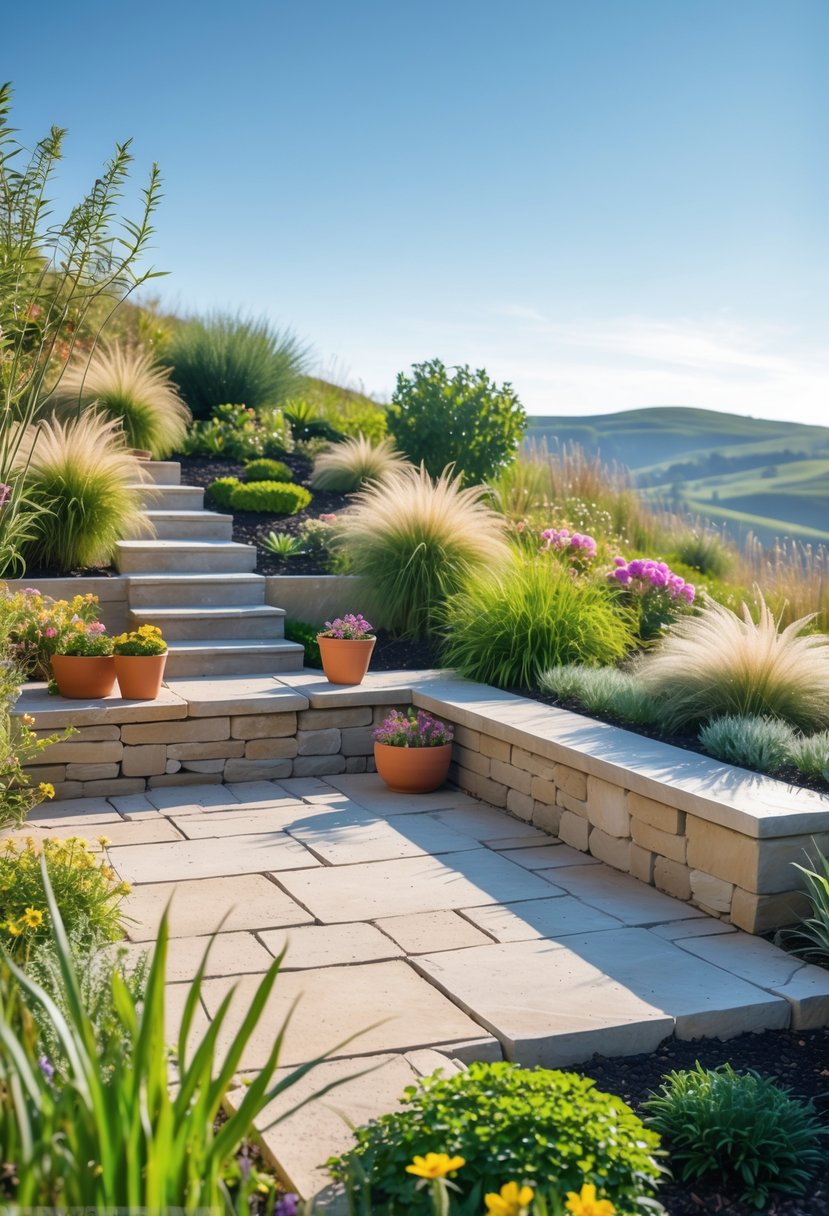
Add a charming patio to your hill using natural stones. Stones like limestone and granite look right at home outside and hold up well.
A small stone patio gives you a flat spot to relax or entertain on a slope. It’s a cozy place for a chair or two.
Stack the stones carefully so the patio stays stable over time. A well-built patio lasts for years and looks great. For more inspiration, check out small patio designs with natural stones.
19) Incorporate ornamental grasses

Ornamental grasses fit right in on hillsides. They add texture and movement without much fuss.
You can pick tall, swaying types or shorter groundcovers depending on your style. Grasses create a natural look and add gentle sounds when the wind blows.
They can give a little privacy or act as a soft barrier too. Using ornamental grasses makes your hillside feel calm and lively at once.
They work well with other plants and need very little care. For more ideas, see how to use ornamental grasses in your garden.
20) Plant ground covers like creeping thyme

Creeping thyme is perfect for hill gardens. It spreads fast and forms a thick mat to hold soil in place.
This plant loves full sun and well-drained soil, so it’s right at home on slopes. Tiny, fragrant flowers pop up and attract pollinators.
You won’t need to mow creeping thyme like grass. It handles drought and some foot traffic, too.
Plant it in spring or early fall, spacing plugs 6 to 12 inches apart for the best coverage.
You can learn more about planting ground covers like creeping thyme at Epic Gardening.
21) Use recycled materials for garden borders
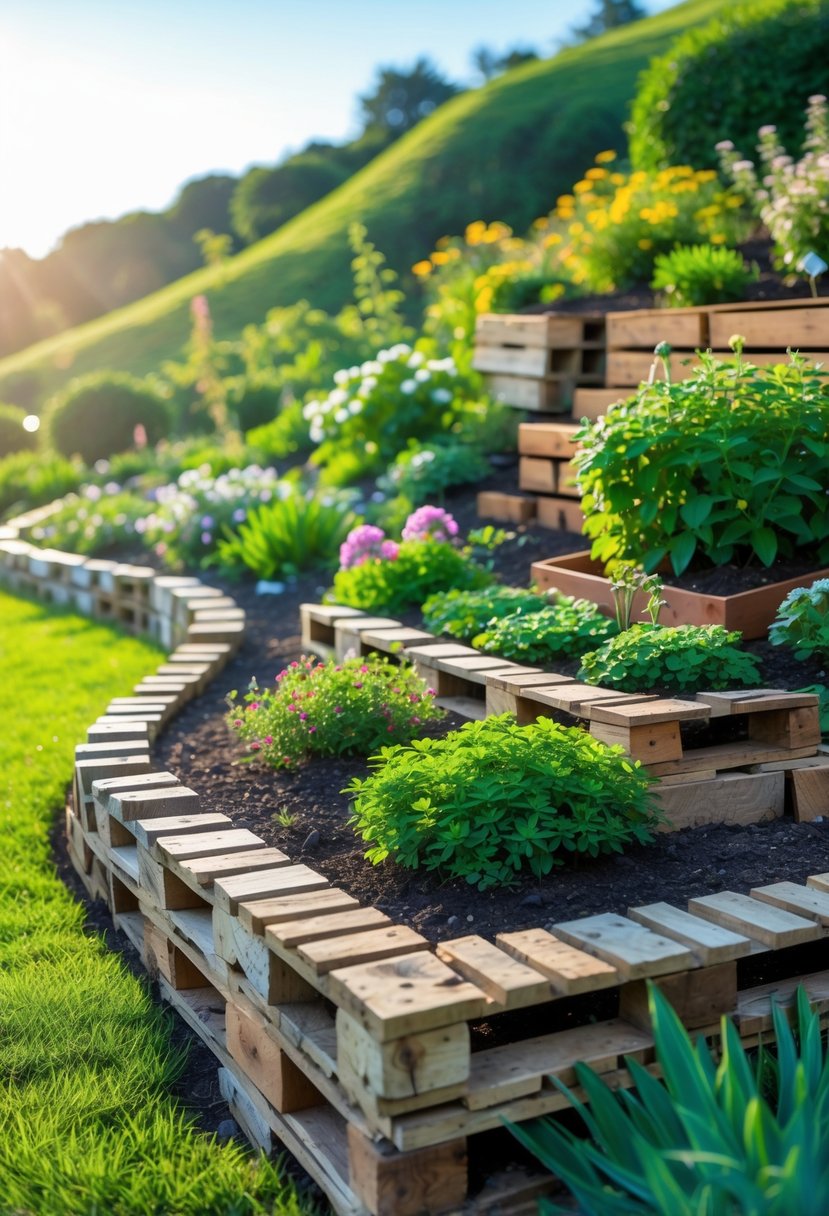
Try making garden borders with recycled materials like old bricks, wood, or bottles. These give your garden a unique look and help you save money.
Recycled borders work great on hills because they hold soil in place and help prevent erosion. Plus, it’s an eco-friendly way to add personality to your space.
Use reclaimed wood from old fences or pallets, or stack bricks and bottles for colorful edging. For more ideas, check out 20 DIY Garden Borders Using Upcycled Materials.
22) Add a bench with panoramic views
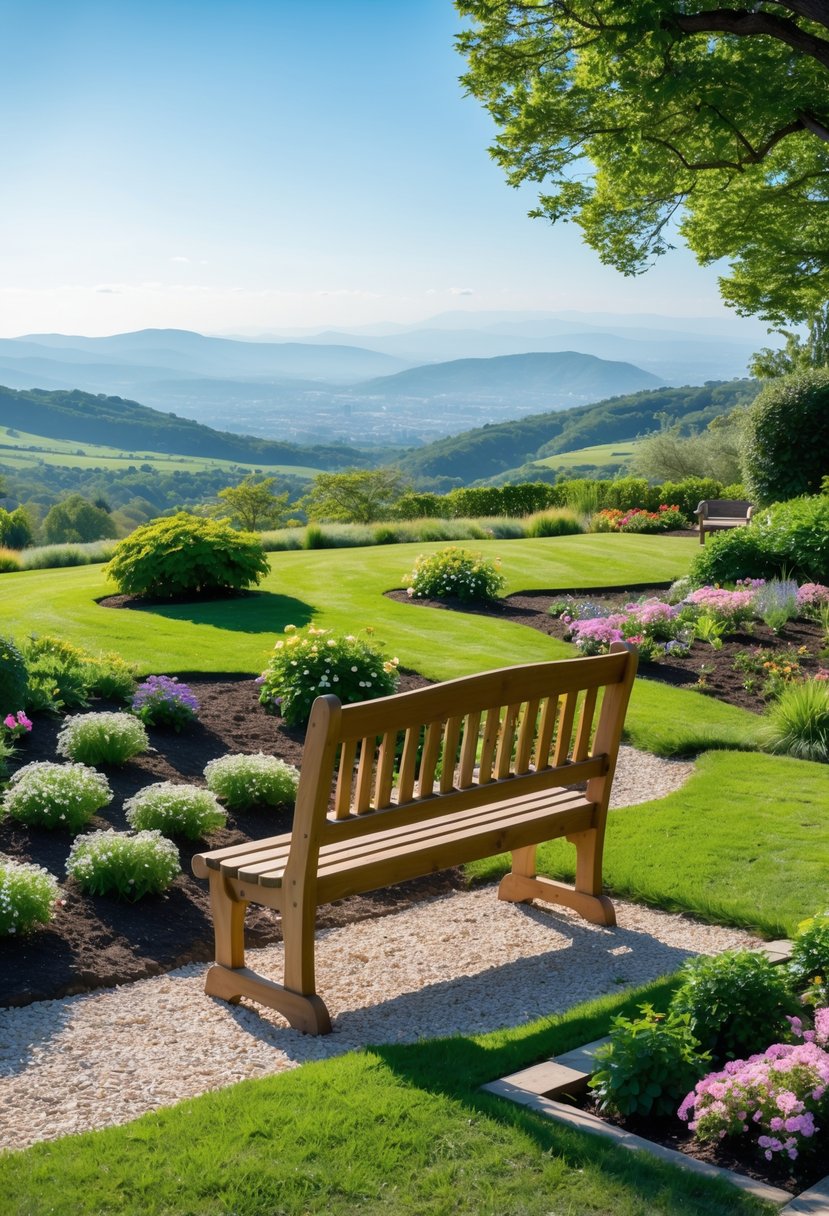
Set a bench on your hill to enjoy the view. Pick a spot where you can see the whole landscape—why not make the most of it?
Benches can be simple or built right into a deck or pathway. Add a cushion for extra comfort.
Try putting your bench near flowers or under a tree for a cozy nook. It’s a small addition, but it helps you spend more time outside.
For more seating ideas, check out hillside garden ideas with built-in seating.
23) Plant daisies for cheerful colors

Brighten up your hill garden with daisies. They bring cheerful color that pops against green grass.
Daisies are easy to grow and don’t need much care. If you want low-maintenance flowers, they’re a solid choice.
You’ll find all sorts of varieties—from classic white to bold, colorful types. Pick the ones that fit your style.
Daisies thrive in sunny spots, so they’re perfect for hills that get lots of light. For more on daisy types, see 30 types of daisies for a colorful garden.
24) Combine shrubs with perennials

Mixing shrubs with perennials makes your hillside garden feel full and colorful. Shrubs act as steady anchors, while perennials add changing flowers through the seasons.
Choose plants with different heights and colors for a balanced look. Pairing the right shrubs and perennials keeps your garden interesting all year.
If your hill is dry, try drought-tolerant plants for less work. For more inspiration, see how to mix shrubs with perennials for a low-maintenance garden.
25) Create a dry creek bed for drainage
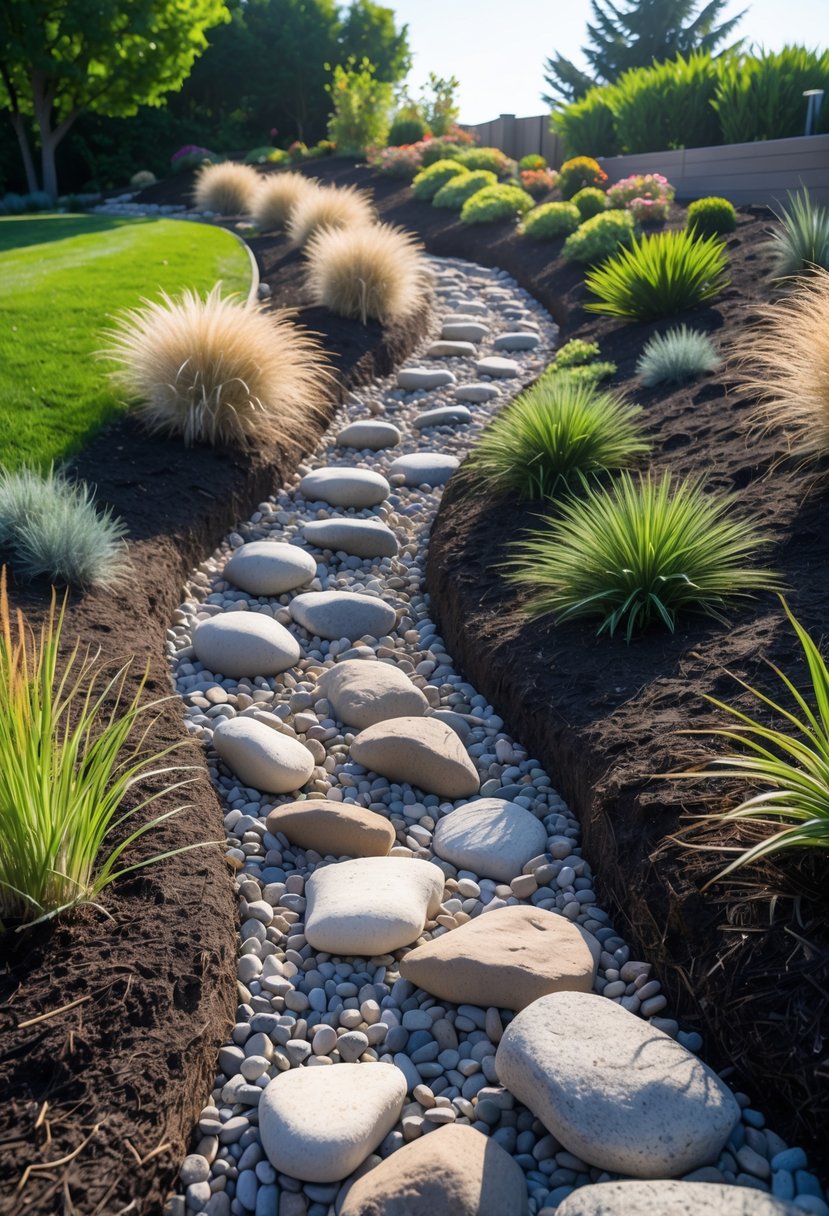
A dry creek bed helps you manage water flow on a slope. It guides rainwater where you want, so soil doesn’t wash away or pool in the wrong spots.
All you need are rocks, gravel, and a few basic tools. Even when it’s dry, a creek bed adds character and a natural look to your yard.
Plant drought-tolerant flowers or grasses along the edges to blend the creek bed into your garden. This simple project helps control erosion and keeps your hillside healthy.
For a step-by-step guide, check out how to build a DIY dry creek bed.
Key Considerations for Hillside Gardens
When you’re working with a hill, think about how you’ll keep soil in place, manage water flow, and pick plants that handle uneven ground. These choices help you build a garden that lasts and looks good—without too much hassle.
Soil Stability and Erosion Control
It’s so important to keep your soil from washing away. Terraces or retaining walls can really help hold soil in place on steeper slopes.
Try adding mulch or ground cover plants—they’ll protect the soil and keep things looking tidy. Plants with strong root systems, like grasses or low shrubs, do a great job anchoring the soil and reducing erosion.
Their roots spread out and keep everything stable. I’d avoid digging or disturbing the soil too much, since that just causes loose dirt to slide downhill.
Instead, add layers carefully and create stable spots for planting. It might take a little patience, but it works.
Water Drainage Strategies
Water rushes down hills fast, so flooding and dry patches can pop up. Make sure your garden has proper drainage paths.
Put gravel or rocks wherever water collects. Swales or shallow ditches can guide water gently across the garden.
This helps water soak in instead of just running off. Try using drip irrigation or soaker hoses, since they deliver water right to plant roots.
You’ll waste less water and cut down on erosion that way.
Choosing the Right Plants for Slopes
Go for plants that thrive on slopes and don’t need much fuss. Drought-resistant plants with deep roots usually handle hills just fine.
Ground covers like creeping thyme or sedum spread fast and hold soil in place. Shrubs such as lavender or ornamental grasses also work nicely.
Skip plants that need lots of water or super-loose soil. Pick tough varieties that can handle wind and uneven sun.
If you want your slope to look good and stay practical, mix flowers with grasses and shrubs. That way, you cover every part of the slope.
You can find more tips in this guide to gardening on a hill.
Common Challenges and Creative Solutions
Gardening on a hill? You’ll run into stuff like uneven sunlight and tricky access. Using smart designs and the right plants can help you handle those challenges and keep your hill garden easy to maintain.
Dealing With Sun Exposure Variations
Hillsides can have spots that get blasted with sun while others barely see daylight. You’ll need to match your plants to the right light levels or you’ll see weak growth or burnt leaves.
Put sun-loving plants at the top, especially if the slope faces south or west. For shady areas, try shade-tolerant picks like ferns, hostas, or astilbes.
Grouping plants by how much sun they need just makes life easier—and keeps them healthier. Mulch helps hold moisture on sunny slopes, and you can always toss in some shade structures or taller plants to protect the more sensitive spots.
With a little planning, your garden can thrive even if sunlight’s all over the place.
Easy Access Pathways and Terraces
Steep hills really can make walking through your garden a hassle. If you create gentle stepped terraces with retaining walls, you’ll find climbing gets much easier and you can keep soil where it belongs.
Try building flat planting beds using stone or wood retaining walls. These beds catch soil and give each plant its own space, which makes caring for them less of a chore.
Go for wide, stable paths made of gravel, pavers, or even wood stairs that follow the slope. If you add handrails or sturdy borders, you’ll feel safer and it’s easier to find your way around—no more awkward scrambling.
If you’re looking for more inspiration on terraces and pathways, check out these hill landscaping ideas.


