

Easy Garden Ideas on a Slope: 25 Friendly Tips to Transform Your Yard
Gardening on a slope can seem tricky at first, but honestly, it doesn’t have to be overwhelming. You can still create a beautiful outdoor space even if your yard isn’t flat.
With a few simple ideas, you’ll find it’s possible to make the most of your sloped garden without breaking the bank or spending all weekend working on it.
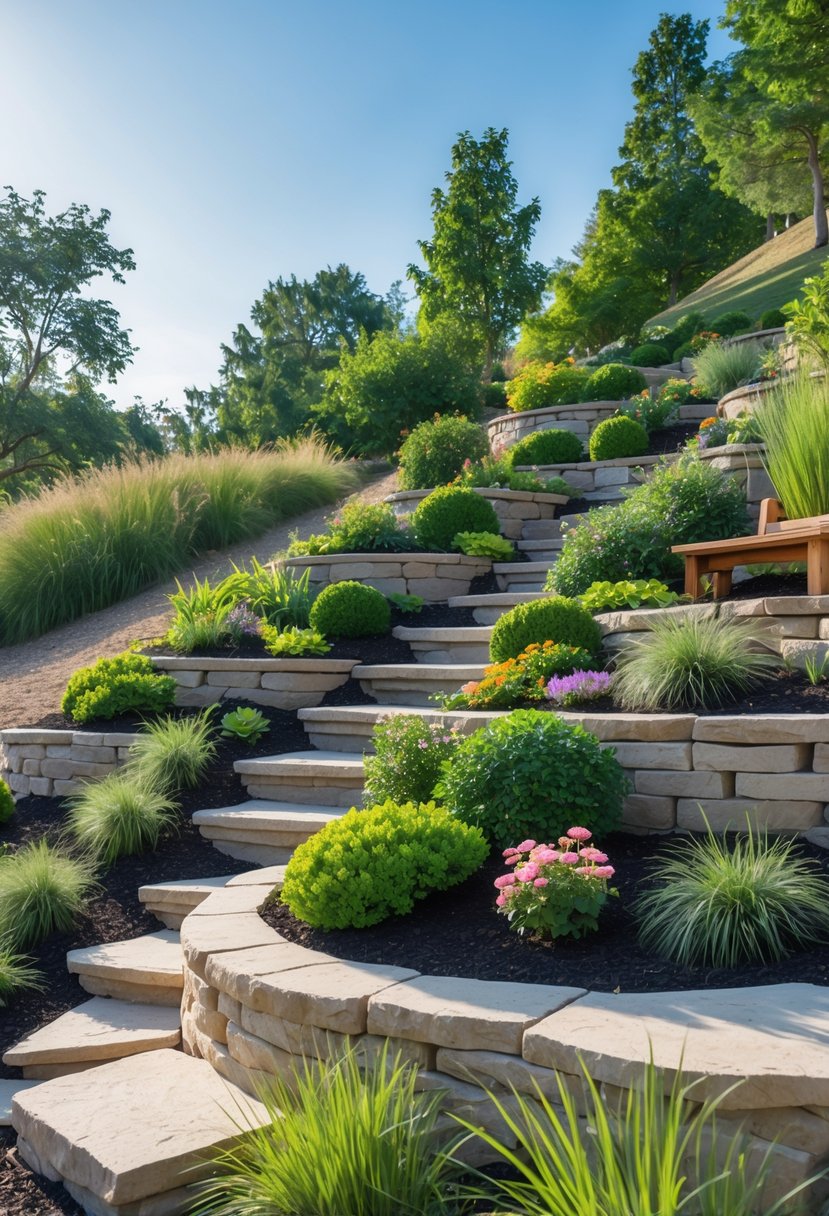
Easy garden ideas on a slope let you turn uneven ground into a nice, useful area where plants can thrive. You’ll find ways to prevent soil problems and add interest, making your garden look cared for and inviting.
These tips make gardening on a hill easier and, honestly, way more enjoyable.
1) Create terraced garden beds to prevent erosion
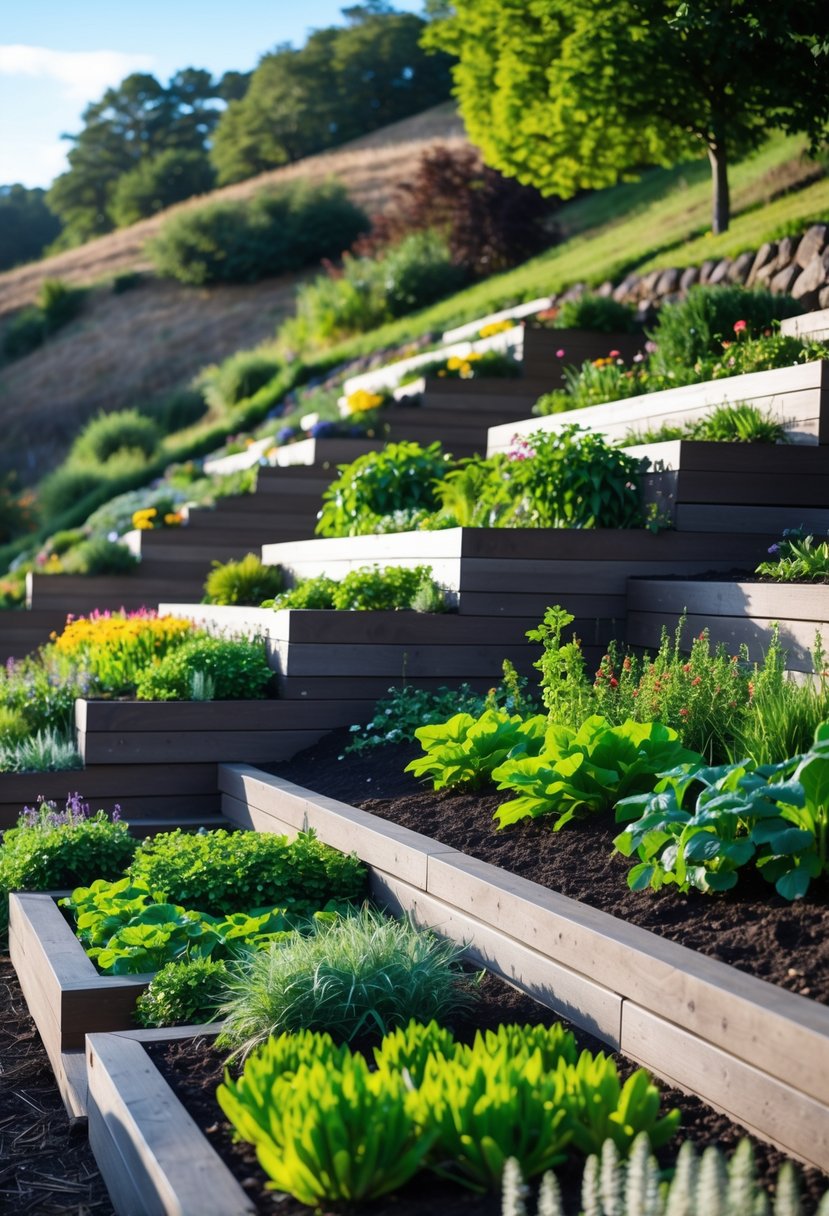
If your garden sits on a slope, terraced beds can stop soil from washing away. You build flat steps right into the hill, and these steps keep soil in place while slowing down water.
Terracing lets water soak into the ground instead of running off. You get more space for planting flowers, veggies, or herbs.
You can use wood, stone, or whatever materials you like for the terrace walls. It takes some work, but terraced beds protect your soil and give your garden a tidy, organized look.
Want to know how to build them? Create terraced garden beds on a slope
2) Plant deep-rooted groundcovers like creeping thyme
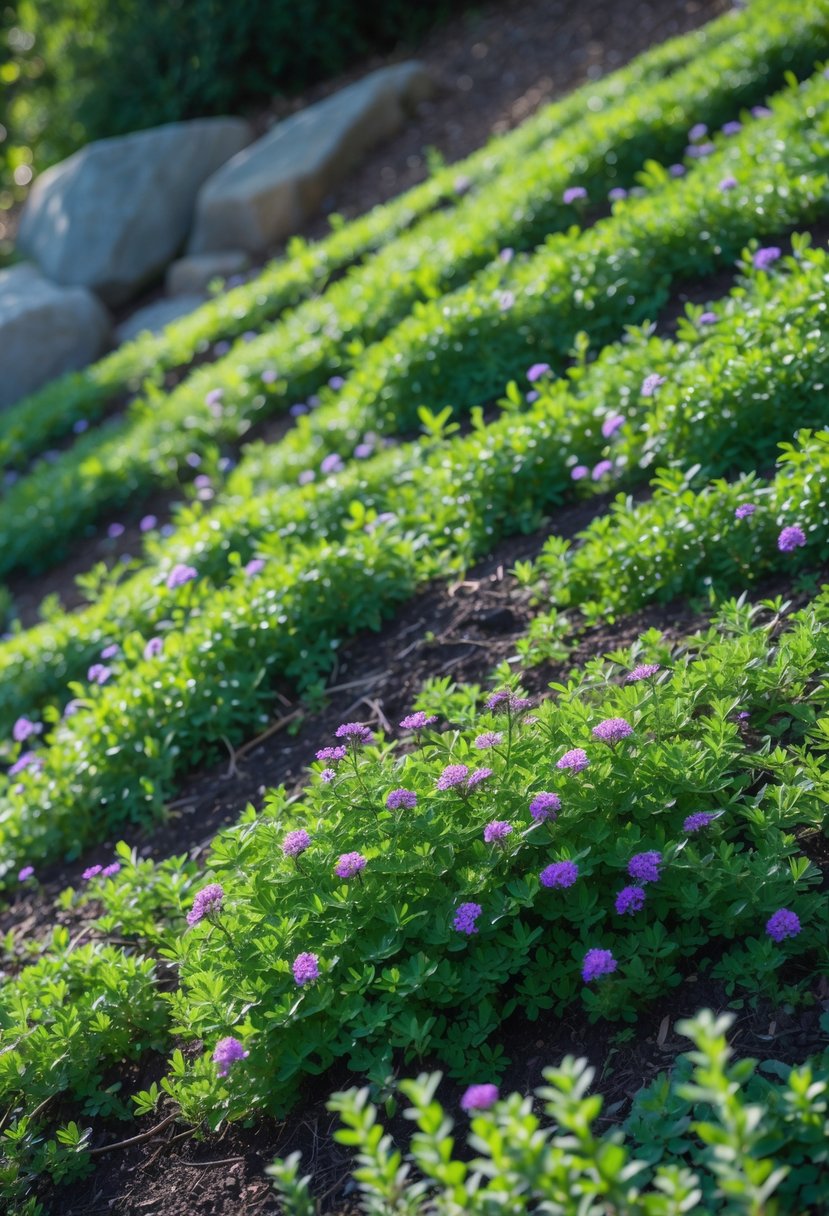
Try using creeping thyme to cover your slope. Its deep roots hold the soil and prevent erosion, making it a smart pick for steep areas.
Creeping thyme grows low and spreads fast, creating a soft green carpet with tiny, fragrant leaves and pretty purple flowers. Bees and other pollinators love it, which is always a bonus.
It’s easy to care for and does well in most conditions. You can start it from seeds or by dividing what you already have.
Using creeping thyme adds beauty and helps keep the soil where it belongs. Learn more about creeping thyme as a groundcover here.
3) Build stone retaining walls for structure and interest
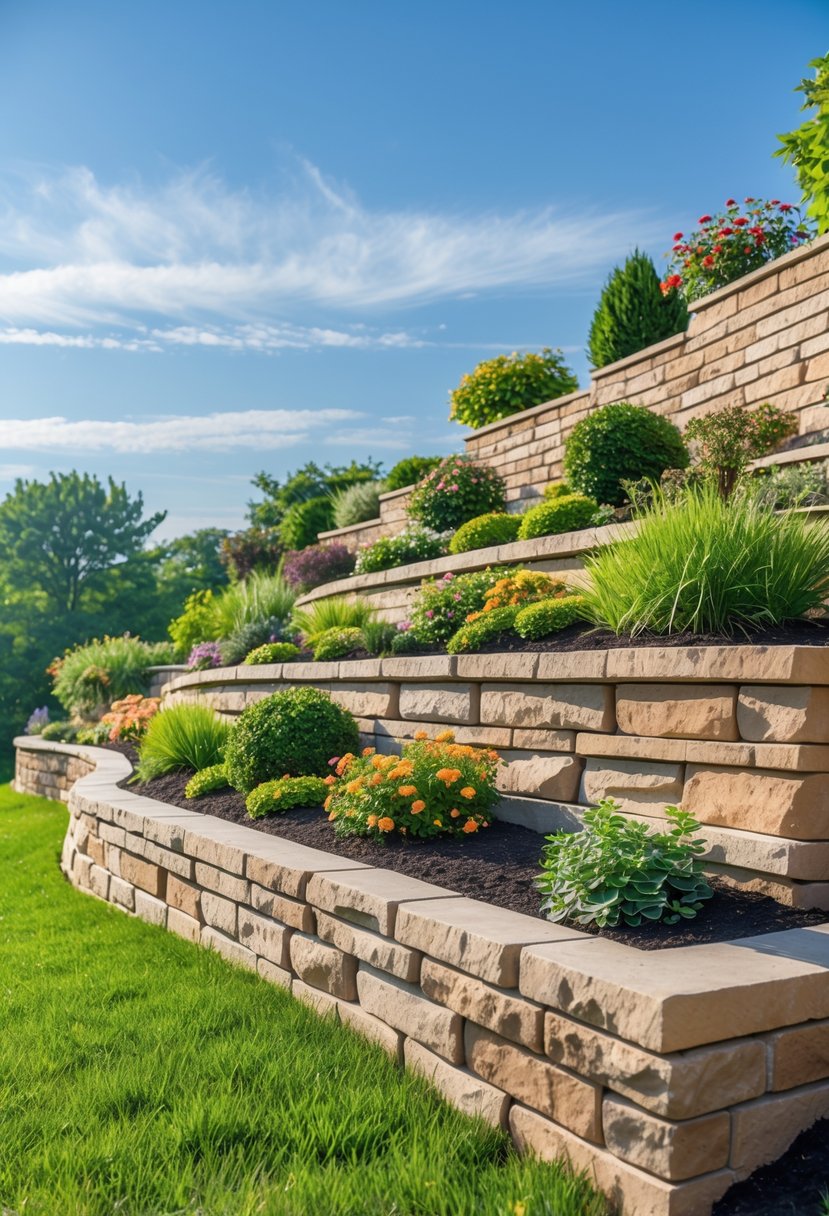
When you build stone retaining walls, you add both structure and charm to your sloped garden. These walls hold back soil, prevent erosion, and create flat spots for planting or sitting.
Natural stone, like limestone or granite, gives you a sturdy, lasting look. It blends with plants and adds a timeless vibe to your yard.
Stone walls make clear lines and layers, so it’s easier to organize and decorate. Want more inspiration? Check out 20 Creative Stone Retaining Wall Ideas for Sloped Backyards.
4) Use ornamental grasses for texture and soil stability

Ornamental grasses work wonders on slopes because they hold the soil with their spreading roots. After heavy rain, you’ll notice the soil stays put instead of washing away.
Grasses also bring texture and movement to your space. There are so many types and colors to choose from, so you can really show off your style.
They barely need any care—perfect if you want a low-maintenance option. Ornamental grasses add both beauty and function to your sloped garden. Here’s more on landscaping with ornamental grasses.
5) Add wooden steps for easy slope access
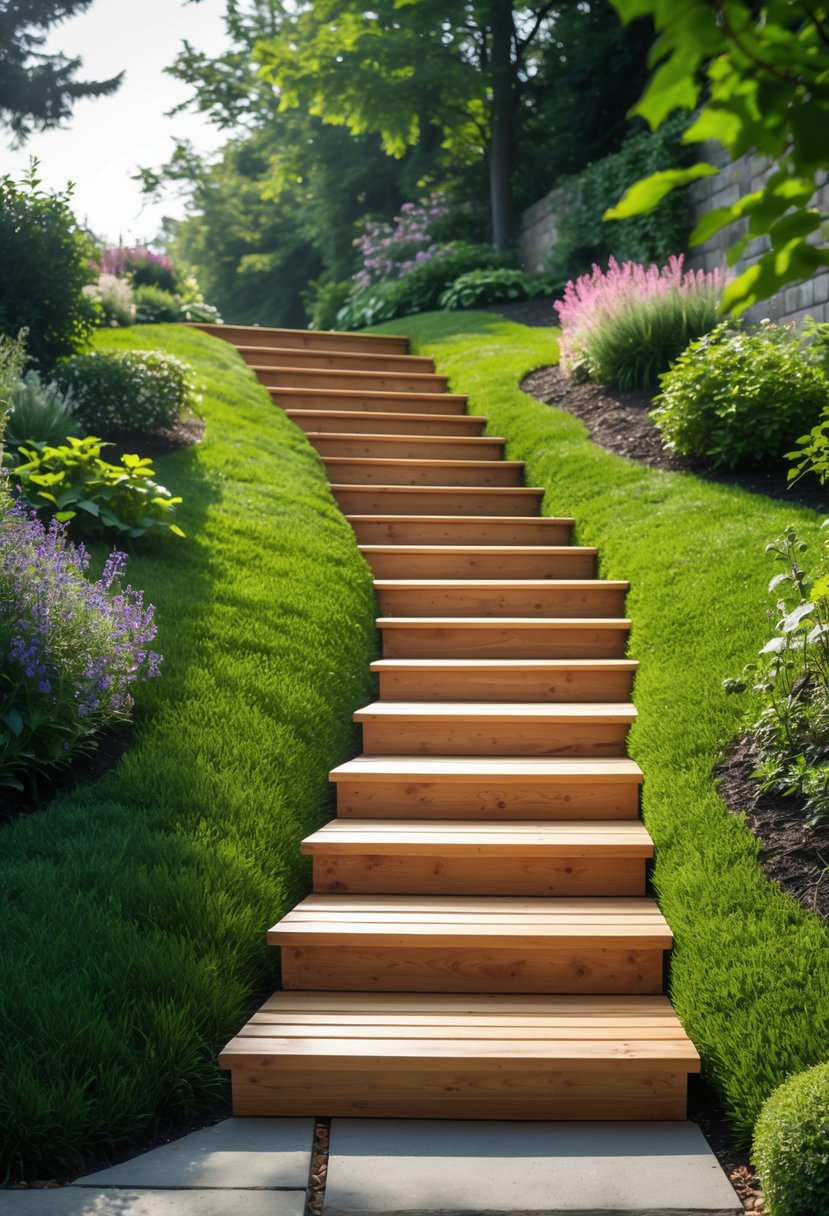
Put in wooden steps to make your sloped garden easier to walk on. Pressure-treated wood resists weather, so the steps last.
Building steps gives your yard a neat, natural look. You can leave them unfinished or paint them to match your style.
With just a little effort, wooden steps make it safer and easier to move up and down the slope. Want to try it? Here’s a step-by-step guide to building outdoor wooden steps on a slope.
6) Incorporate a rock garden with drought-tolerant plants
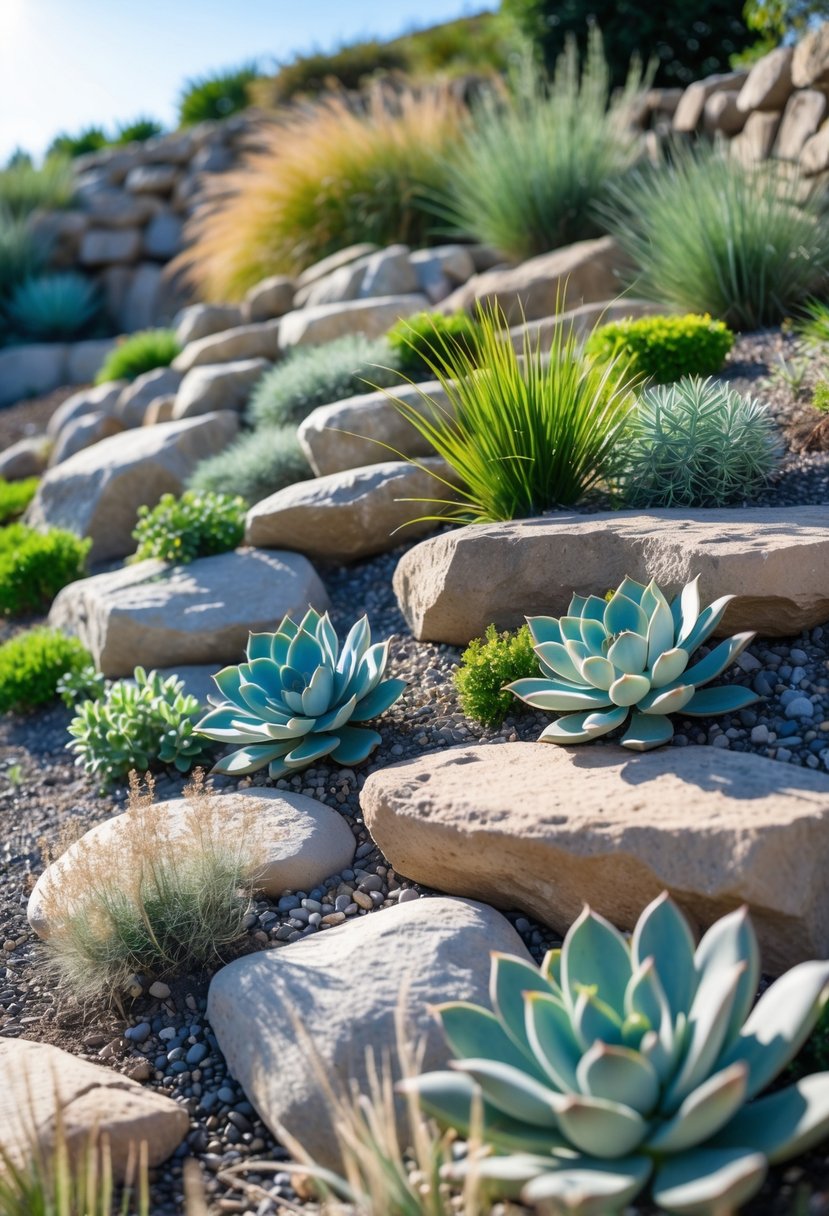
A rock garden fits perfectly on a slope, controlling erosion and looking natural at the same time. Arrange large stones and gravel to form layers that hold soil in place.
Pick drought-tolerant plants like succulents, lavender, or sedums. They don’t need much water and can handle the dry spots that slopes often have.
Mixing these hardy plants with rocks creates a low-maintenance garden. It stays good-looking with little effort and helps stop water from running off. For more ideas, see this guide on starting a rock garden.
7) Design cascading flowerbeds with colorful blooms
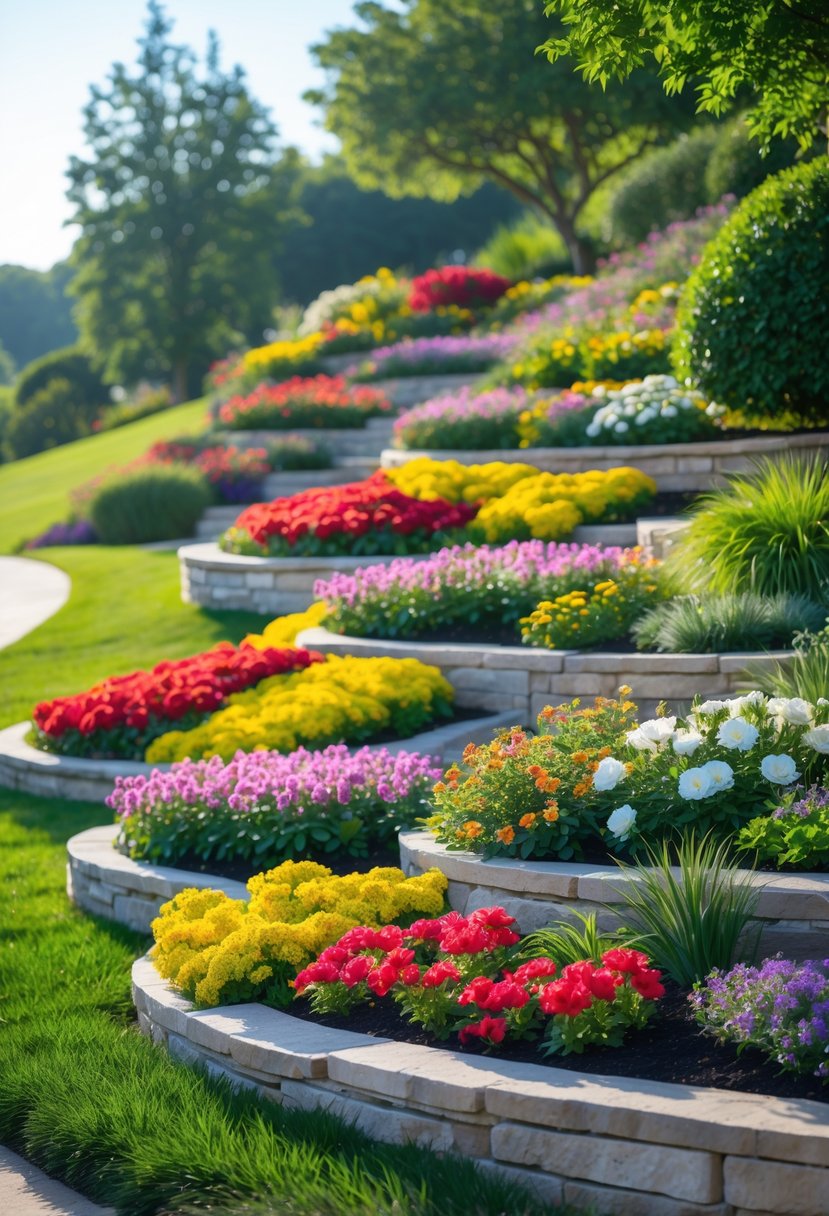
Use your slope to make cascading flowerbeds that flow down the hill. Plant taller flowers at the top and shorter ones below for a full, lively look.
Go for bright colors that pop together—mixing shades makes your flowerbed eye-catching, even from a distance.
Cascading beds show off your favorite flowers and make the most of your yard’s natural shape. Need inspiration? Check out cascading flower beds for tips on arranging flowers and colors.
8) Use native shrubs that thrive on slopes
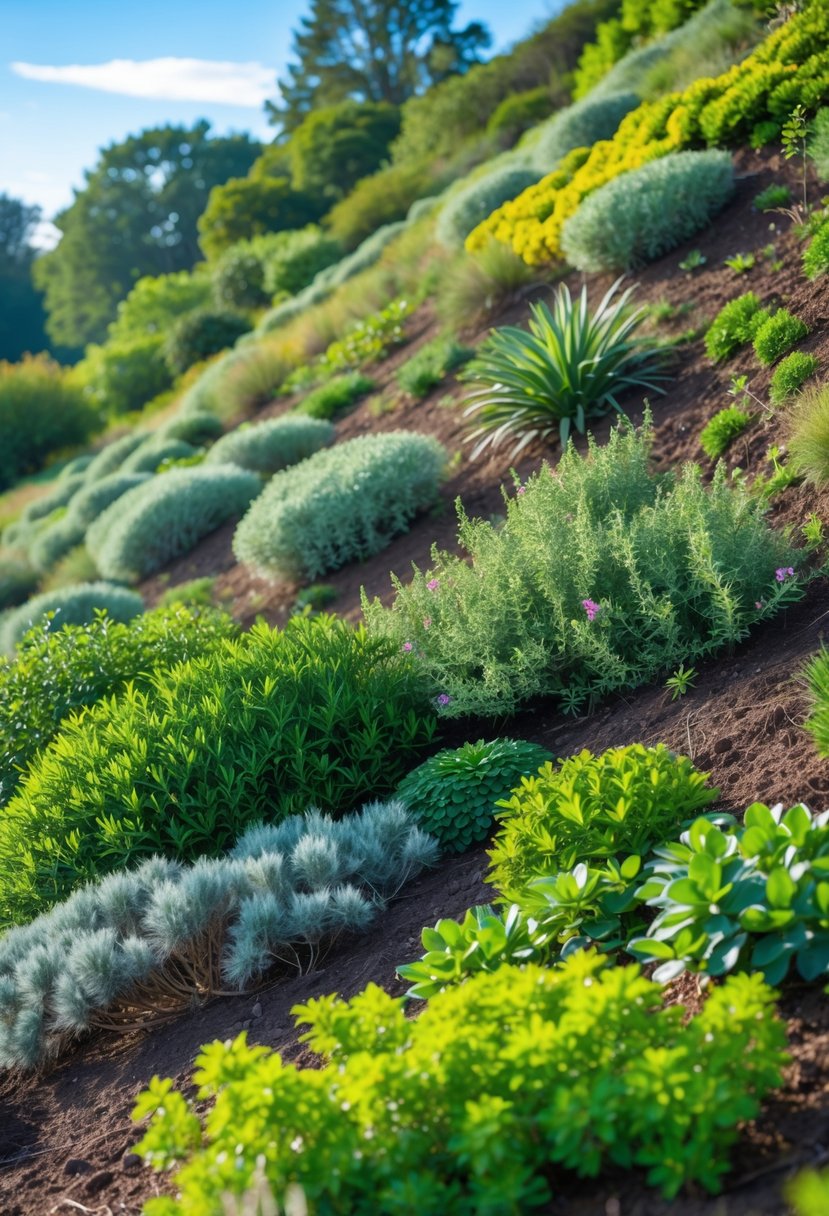
Pick native shrubs for your slope garden. These plants are used to your local soil and weather, so they grow well and help hold soil in place.
Native shrubs usually need less water and care once they’re settled in. You can find options for both sunny and shady slopes.
They support local wildlife like birds and pollinators. Try forsythia, spirea, or creeping juniper—they’re great for hills and look nice, too.
Using native shrubs helps keep your yard stable and pretty with less effort. Learn more about native shrubs for erosion control.
9) Install drip irrigation to conserve water

Save water by adding drip irrigation to your slope garden. It delivers water slowly and right to the roots, which helps stop runoff on hills.
Drip systems are easy to set up and work for any garden size. They also keep leaves dry, so your plants are less likely to get diseases.
Using drip irrigation means you waste less water, especially on slopes. Want to set it up? Check out drip irrigation tips for slopes.
10) Plant lavender for fragrance and slope coverage
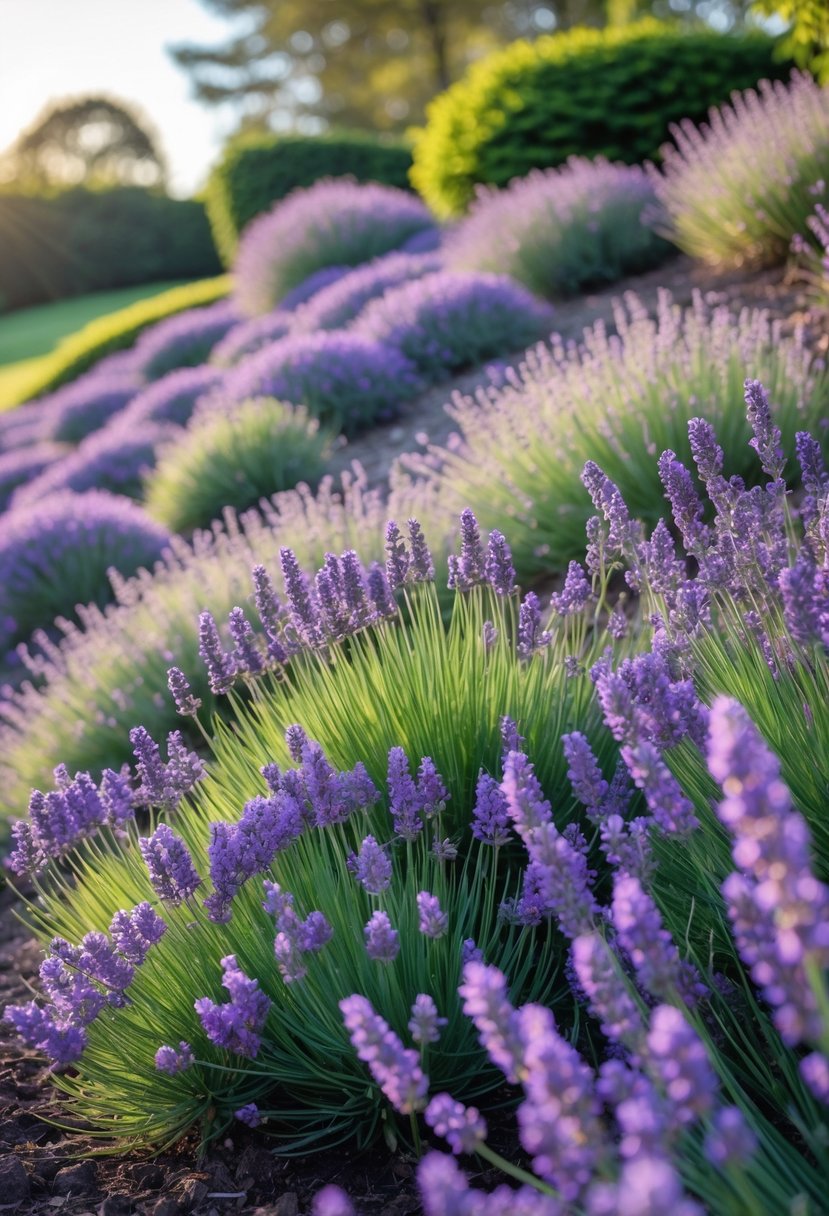
Plant lavender on your slope for color and that lovely scent. Lavender loves well-drained soil, which slopes naturally provide.
It covers the ground and helps slow down soil erosion. As it fills in, you get a calm, soft look with those classic purple blooms.
If you’re interested, here’s a guide on planting lavender on slopes.
11) Create a winding gravel path for charm and function
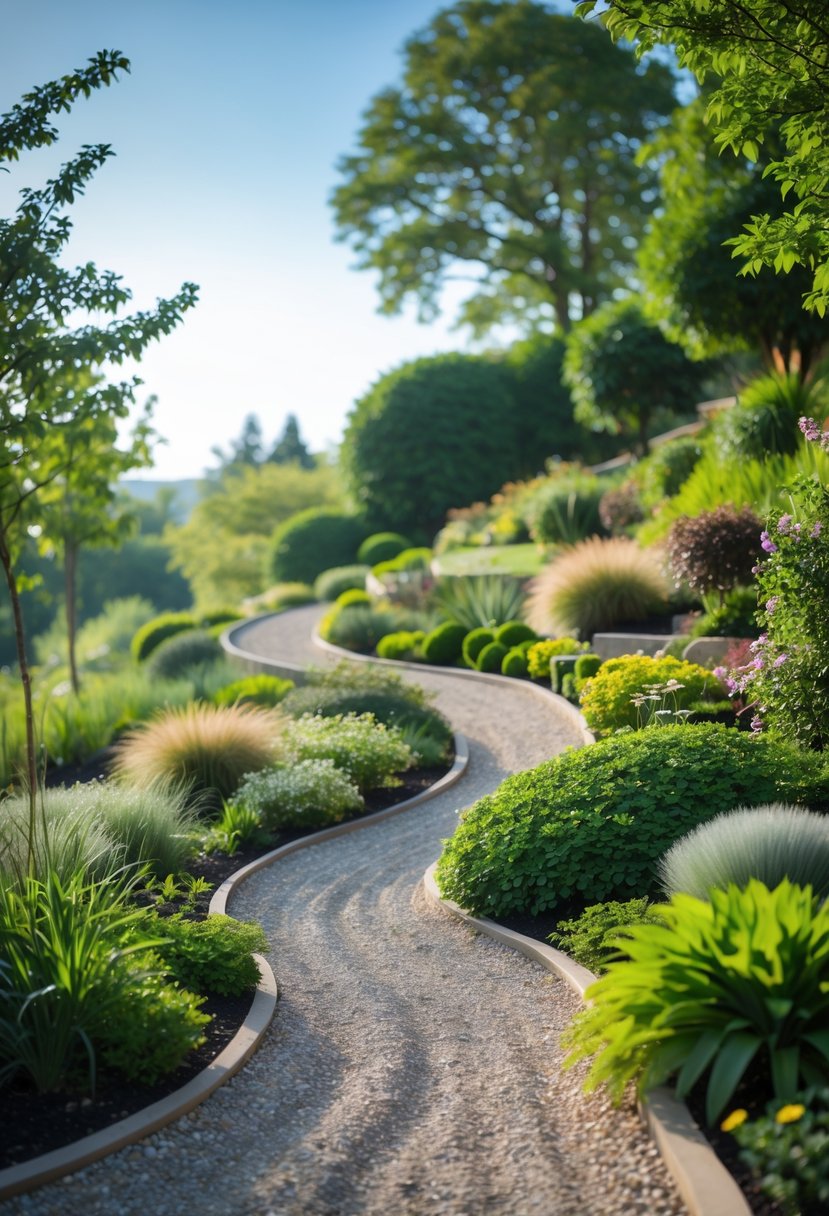
Add a winding gravel path for both charm and practicality in your sloped garden. It gently guides you through the space while adding a soft, natural touch.
Gravel paths are simple to build and don’t need much upkeep. You can mix in stepping stones for a little extra style.
Winding paths slow you down, so you actually enjoy the view as you walk. They also help prevent erosion by guiding foot traffic. For ideas, check out this guide on winding gravel pathways.
12) Use mulch to retain moisture and reduce weeds
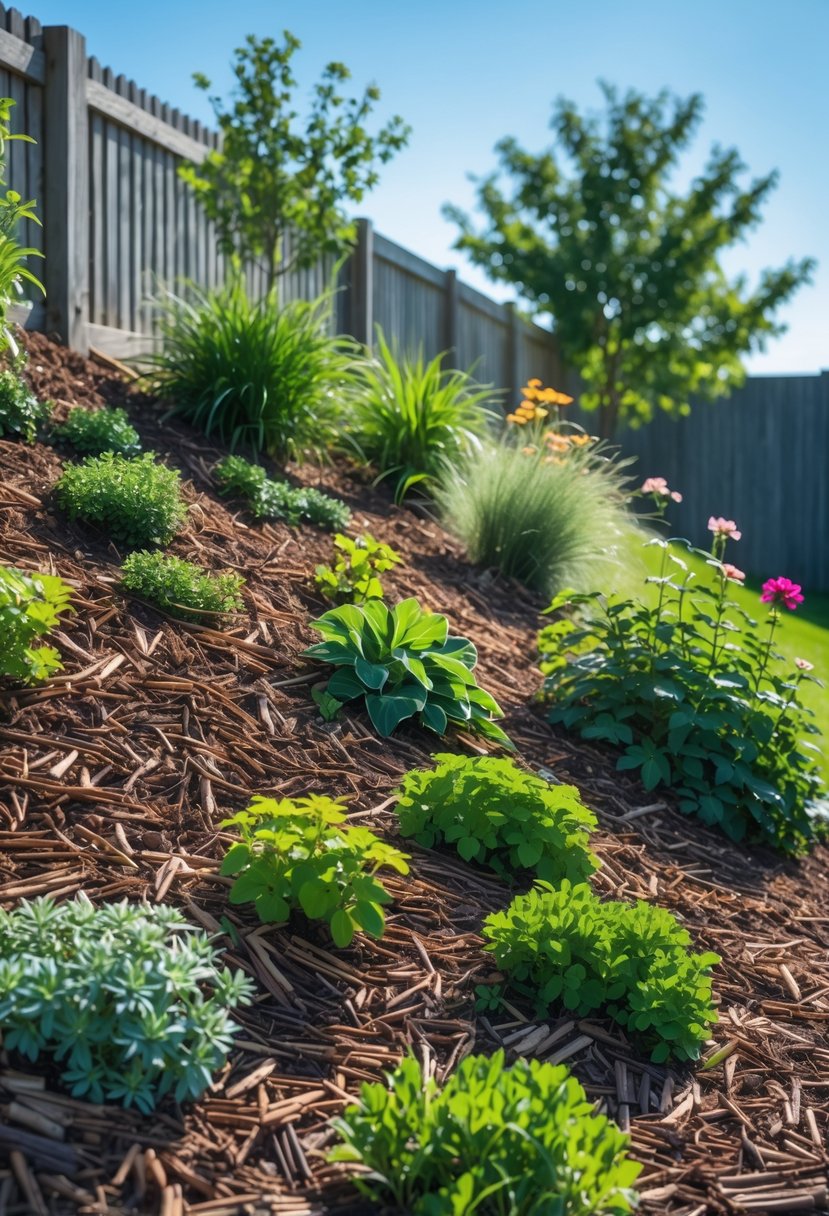
Mulch makes a slope garden so much easier to care for. It keeps soil moist by holding in water, so you don’t have to water as often.
It also blocks sunlight and stops weeds from taking over.
Just add 2-3 inches of organic mulch like straw, bark, or compost around your plants. It protects the soil and gives your garden a tidy look.
Mulch makes gardening less work and keeps your plants happier. Want more info? Here’s a guide on how to mulch for maximum moisture retention and weed prevention.
13) Grow ferns in shady sloped areas
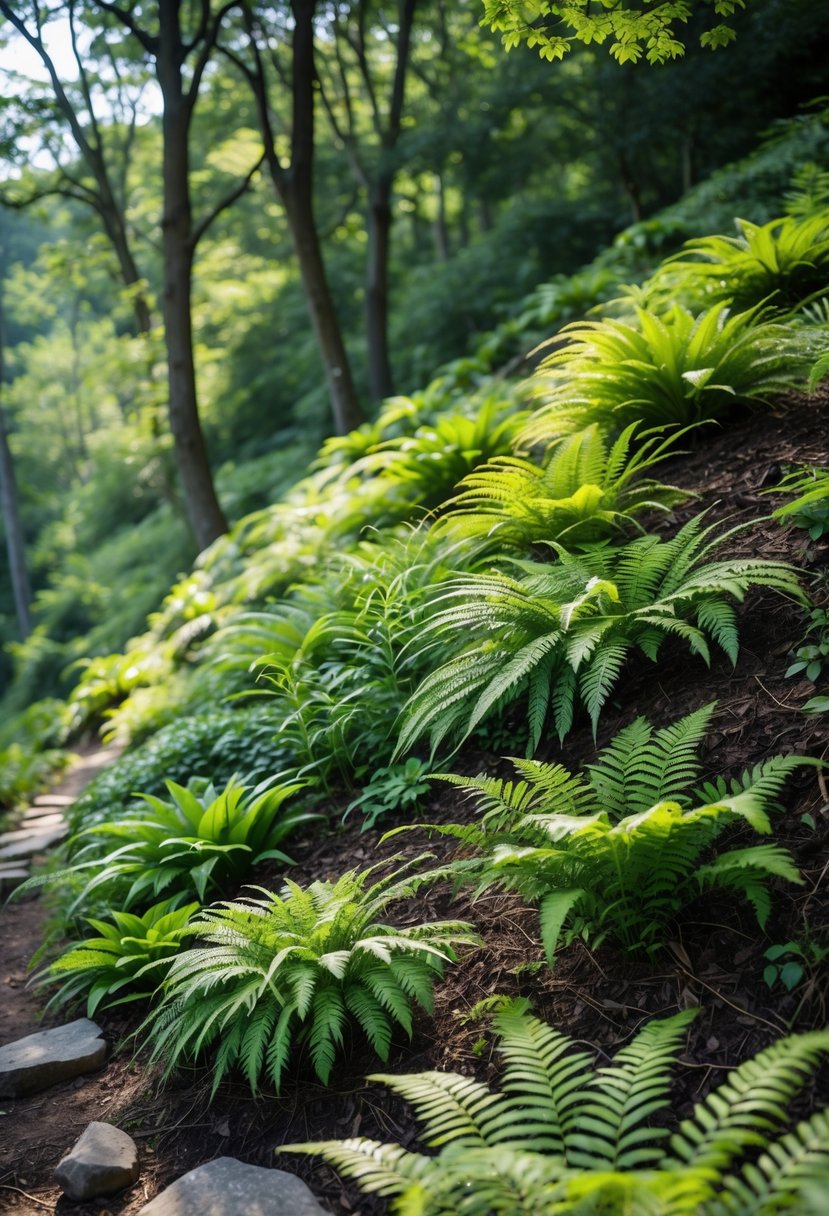
Ferns just thrive on shady slopes. They love low light and damp spots, and their roots grab onto the soil to help stop erosion.
Try ostrich, lady, or Japanese painted ferns if you want different colors and leaf shapes. Once they settle in, you barely need to fuss over them, and honestly, they make any slope look lush and wild.
If you’re trying to dodge slugs, ferns are a solid pick. They fill in those awkward, cool, shady corners where grass just gives up. For a little inspiration, check out tips on growing ferns on shaded slopes.
14) Add a small water feature to highlight the incline

A small water feature can make your slope feel special. You can set up a waterfall or let a gentle stream flow down the hill, using gravity to move the water for you.
Water features bring peaceful sounds and attract birds or frogs—sometimes even the occasional curious neighbor.
You don’t need to go big. Even a tiny pond or a simple fountain will make your slope pop. If you want ideas, check out water features for slopes and see what clicks.
Learn more about adding water features to slopes at farmfoodfamily.com.
15) Plant succulents in well-drained soil sections

If you want succulents to thrive on a slope, pick spots where water drains fast. Succulents hate soggy roots and need well-drained soil to stay healthy.
If your dirt feels heavy, just mix in some sand or gravel. That way, water runs off and roots stay dry.
Succulents store water in their leaves, so you can relax about watering. Choose sunny spots for the happiest plants.
Need more details? This guide on growing succulents in soil covers the basics.
16) Build raised planter boxes along the slope
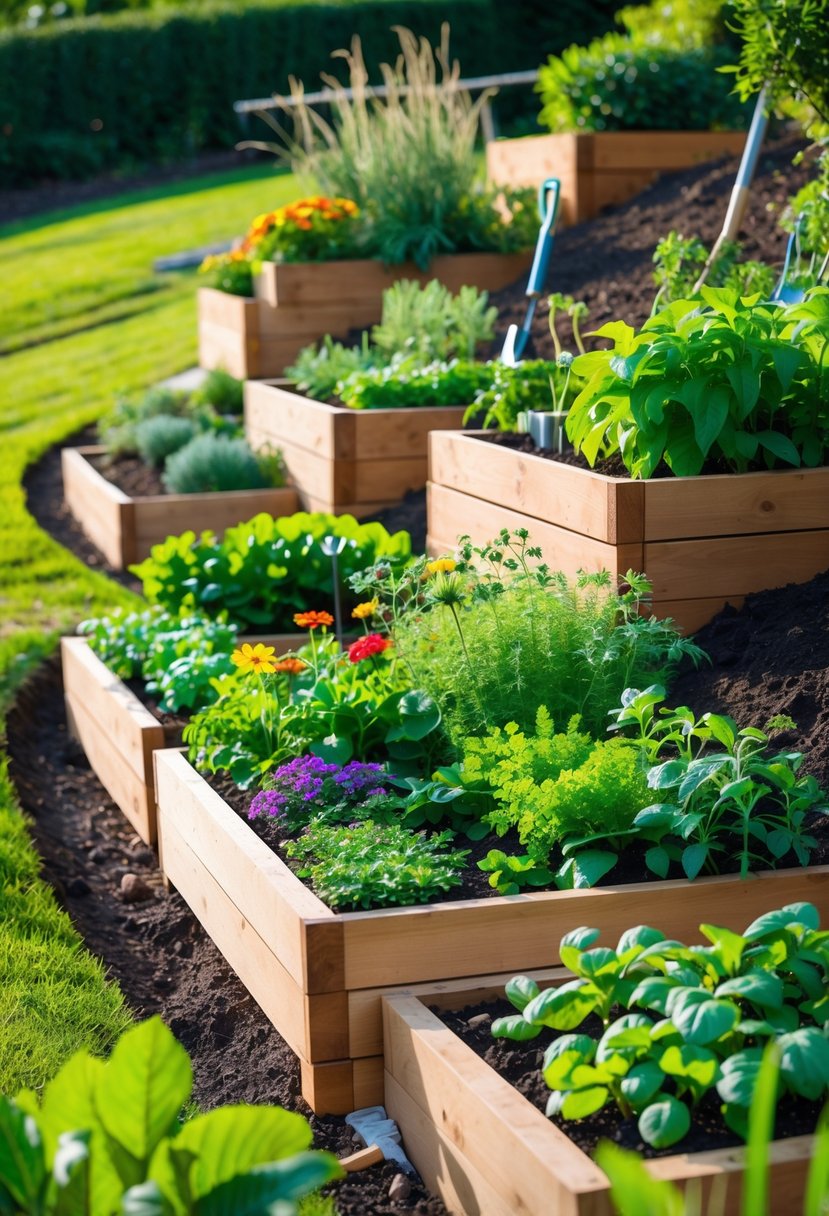
Try building raised planter boxes right on your slope. These boxes keep soil in place and help prevent erosion.
You only need some wood, nails, or screws to put together frames that fit your hill. It’s not as tricky as it sounds.
Space the boxes out to create flat planting spots. Water spreads better, and your plants will thank you.
Raised boxes also make it easier to reach your plants. It’s a neat way to tidy up your slope without much fuss.
Learn more about building raised planter boxes on a slope at Epic Gardening.
17) Use creeping juniper for erosion control

Creeping juniper can really help you keep soil from washing away. It hugs the ground and spreads out, grabbing onto the dirt.
This plant barely needs attention once it gets going. It looks great and keeps your slope steady.
Plant junipers closer together on steep slopes for better grip. If your slope is gentle, space them out a bit more.
Want tips on planting creeping juniper? Check them out here.
18) Mix flowering perennials for seasonal color
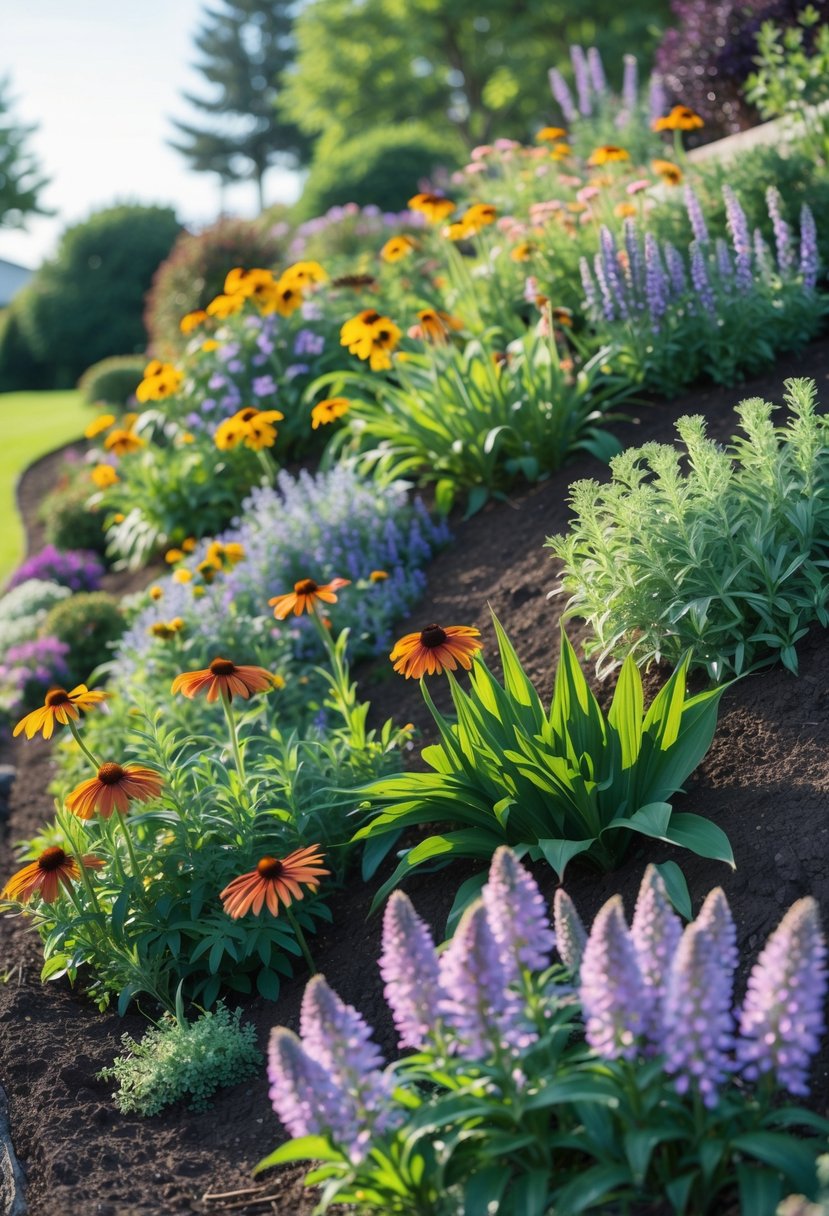
Mixing flowering perennials on your slope brings color from spring through fall. You’ll never get bored with the view.
Pick plants that bloom at different times and show off a bunch of colors. Some pop early, others later—your slope stays lively.
Choose perennials that match your slope’s sunlight and soil. Mixing them up keeps things interesting all year. For more inspiration, check out this guide on perennial plant combinations.
19) Install garden lighting along paths and terraces

Lighting up your garden paths and terraces makes it easy to see after dark. Plus, it gives your slope a cozy, welcoming vibe.
Try solar lights for quick setup—no wires needed. Low-voltage LEDs are another solid choice and safe to handle.
Put lights by steps and path edges for safety. Soft lighting also highlights your plants and garden features.
Need ideas? Here are some garden path lighting options.
20) Add vines on slope-safe trellises

Use trellises to bring greenery to your sloped garden without crowding the ground. Vines climb up, making the slope look fuller and more interesting.
Pick trellises that stay stable on uneven ground. That way, your plants stay safe, even in wind or rain.
Try flowering climbers or small-leafed vines—they add color and a bit of privacy too. For fun ideas, check out these easy trellis projects.
21) Plant hostas for shade-friendly slope gardening
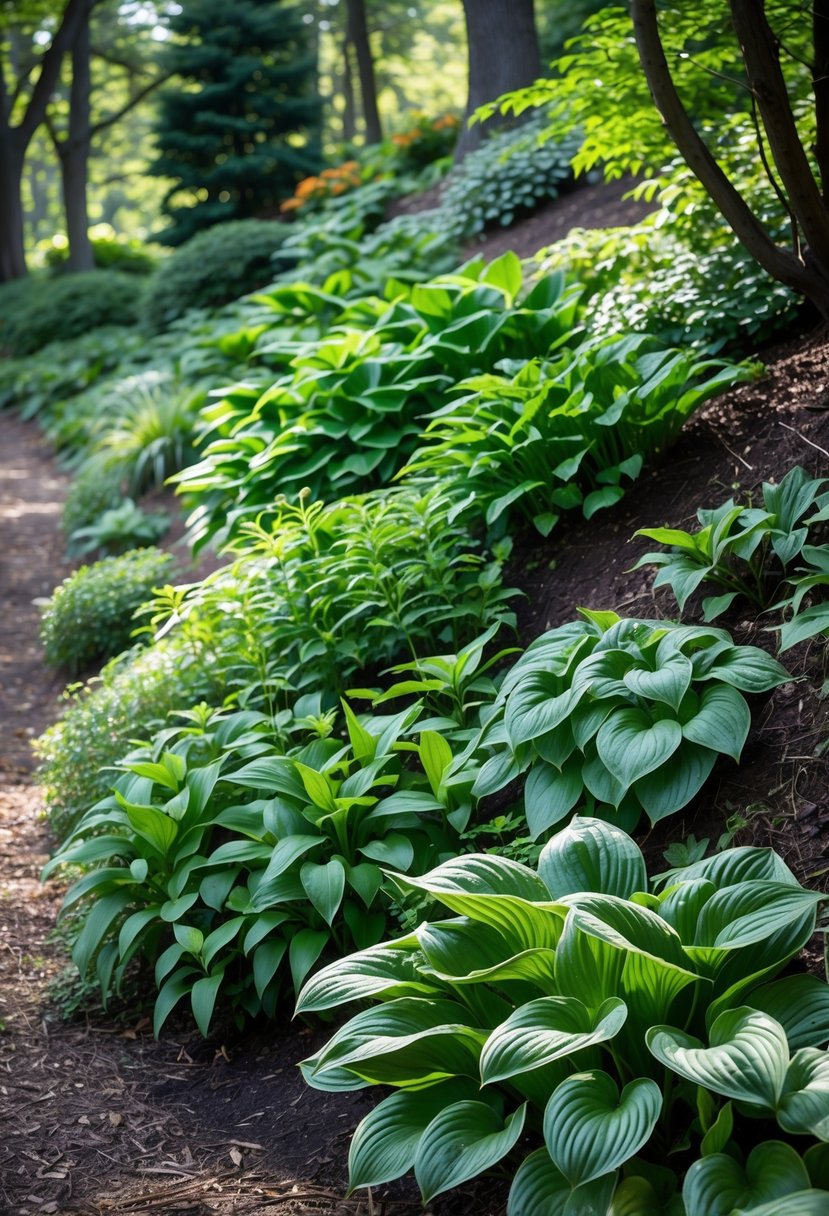
Hostas just love shady slopes. They fill in tough spots with big, lush leaves where sunlight is scarce.
Their broad leaves help keep soil in place, which means less erosion over time. That’s a win for your garden’s stability.
Mix up different hosta types for extra color and texture. They need hardly any care, so you can relax and let them do their thing.
Using hostas on your slope creates a cool, green retreat that stays lively through the seasons. Want more ideas? See how to make your shade spots beautiful here.
22) Use stone steps interspersed with ground covers
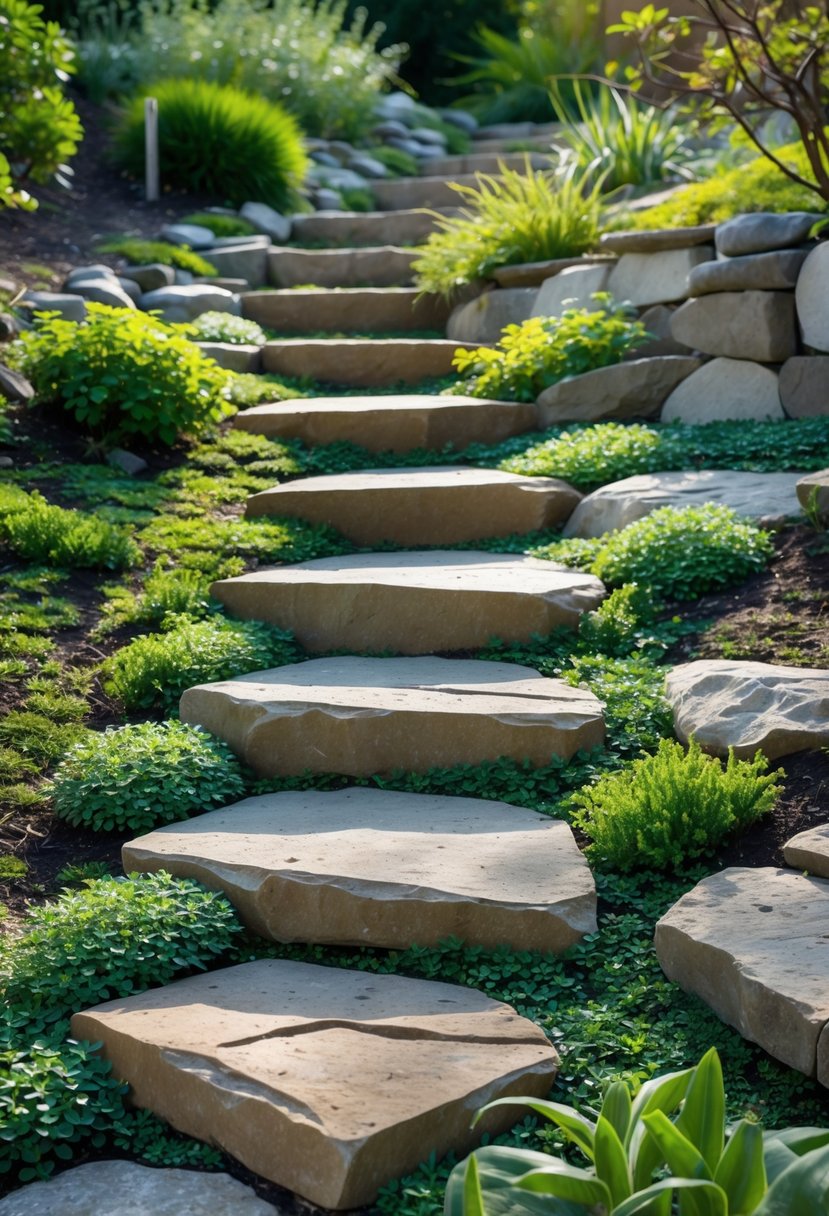
Build stone steps into your slope and tuck ground covers between them. This softens the hard stone and adds a splash of color.
Ground covers like creeping thyme or sedum fill in gaps and block out weeds. They give your path a natural, inviting look.
This combo also helps control erosion and keeps steps steady. For more inspiration, check out 23 Stylish Garden Steps Ideas for a Stunning and Functional Design.
23) Create a butterfly-friendly slope with milkweed and coneflowers

Turn your slope into a butterfly magnet by planting milkweed and coneflowers. Butterflies flock to these blooms for food and shelter.
Monarch butterflies especially need milkweed for their babies, while coneflowers bring color and extra nectar. It’s a win-win for you and the butterflies.
Group the plants together so butterflies can find food easily. This mix also helps local pollinators and makes your slope look wild and lovely. For more, check out butterfly-friendly garden ideas.
24) Build benches on flat terraces for rest spots
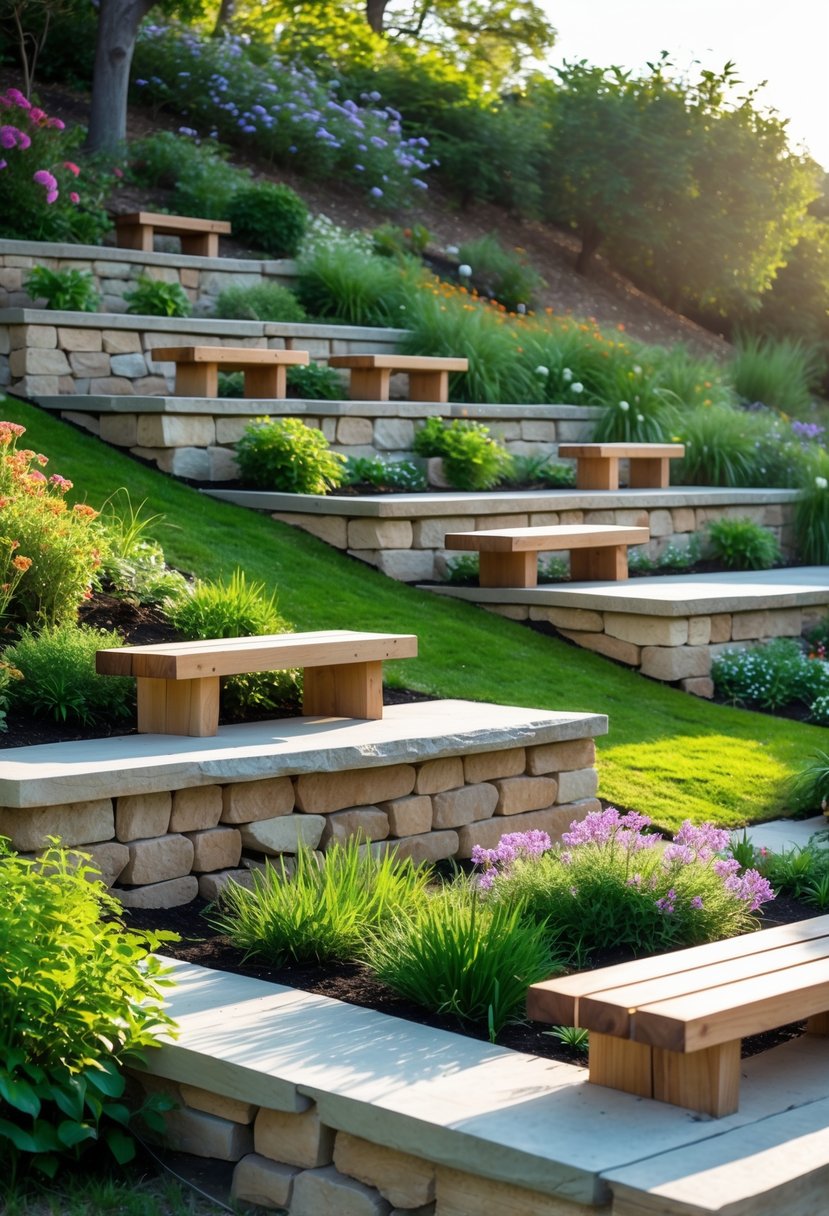
If your garden has a slope, try making flat terraces. On these flat spots, you can build simple benches for a comfy place to relax.
Benches on terraces give you a break and a nice view of your plants. Sitting on a flat bench feels way better than perching on a slope.
Building a bench doesn’t have to be fancy. Grab some basic wood and follow easy plans for a sturdy seat. Curious? Here are easy garden bench ideas and 26 DIY garden bench plans for rest areas.
25) Plant daylilies to add vibrant color
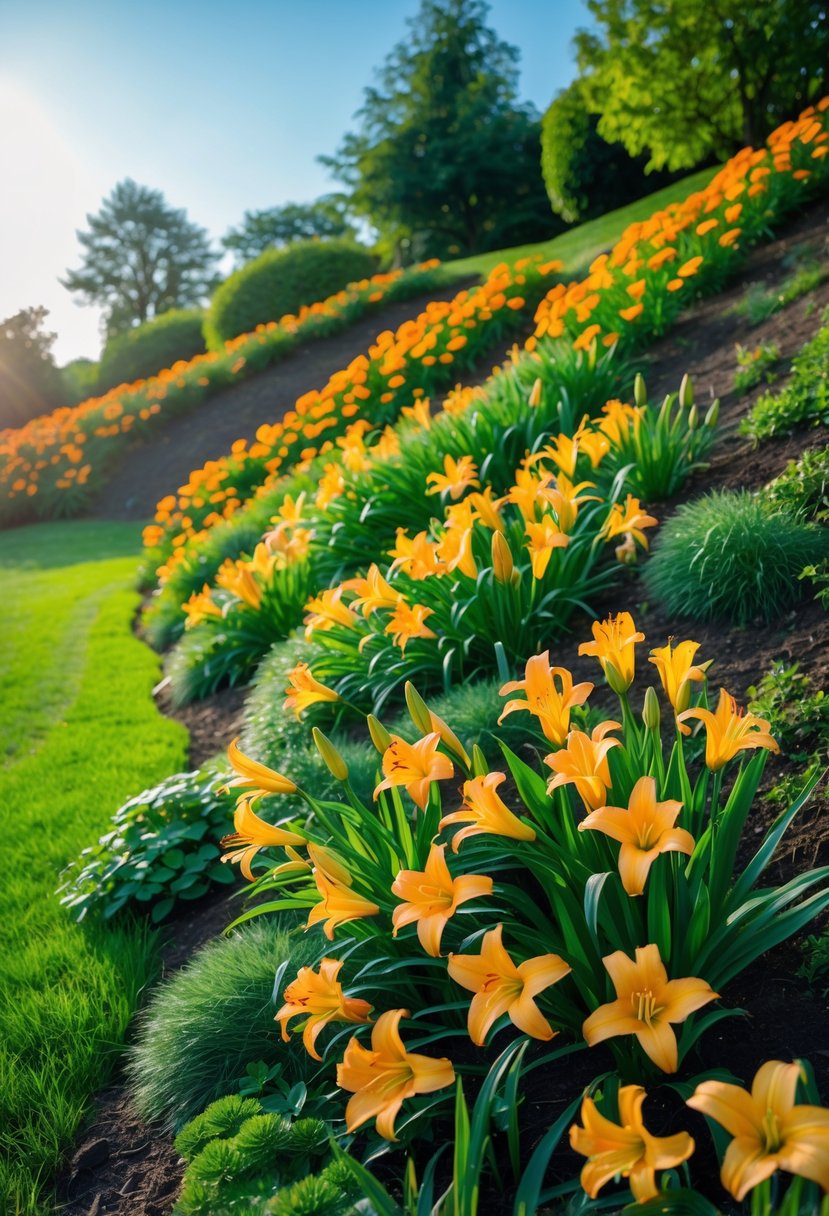
Daylilies bring a burst of color to slope gardens. They come in all sorts of shades and bloom for ages.
Daylilies are tough, need little attention, and their roots help hold the soil together. That’s pretty handy for sloped spots.
Plant them along the edge or in clusters for a lively, natural feel. Mixing different colors makes things even more fun. For more ideas, check out daylily landscaping ideas.
Understanding Slope Gardening
Gardening on a slope means you have to think about water running downhill and soil sliding away. Find ways to keep your soil in place and make sure water drains well.
That’s how your plants can really settle in and thrive, instead of washing away after the first big rain.
Soil Erosion Prevention
Soil erosion kicks in when rain or watering drags soil down a slope. You might notice roots sticking out and nutrients disappearing—plants really hate that.
You can fight this by building terraces. Just picture flat steps cut into the hill; they hold the soil right where you want it.
Another trick? Plant some ground cover plants with tough roots. These act like a living net, gripping the soil and keeping things stable.
Mulch helps too. It covers the ground, shields it from pounding rain, and slows down water running off.
Try adding stone or wooden retaining walls if you want extra support. These walls split the slope into chunks, making erosion much easier to handle.
Drainage Solutions
Water loves to race down slopes, and that can really mess with your garden. It either washes soil away or pools in weird spots.
You can take charge by installing drainage channels or French drains. These routes steer water away from your plants, which is honestly a relief.
Mulch slows down water and keeps the soil damp without drowning your roots. If the slope is really steep, try planting deep-rooted shrubs or trees—they soak up extra water.
Don’t just plant where water puddles. Spread your plants out so water can actually soak in everywhere.
If you want more ideas, check out this guide on how to make a garden on a slope.
Design Tips for a Sloped Garden
When you’re designing a garden on a slope, think about how everything fits together. You want balance, easy movement, and maybe a bit of personality.
Mix up different heights and shapes to keep things interesting. Pathways aren’t just practical—they add a little charm and help you get around safely.
Layering and Visual Flow
Start by arranging plants in layers. Put the tall ones up high, and let the shorter ones hang out at the bottom.
This setup helps water move gently down and keeps the soil from sliding away.
Group your plants by height and texture. It makes the slope look smooth and draws your eye downward without much effort.
Try mixing evergreens, flowering plants, and ground covers. That way, there’s always something interesting to see.
Terraces or low stone walls can lock in soil and give you flat spots for planting.
Think about how colors and shapes blend as you look down the slope. The right flow makes the whole area feel softer—maybe even more welcoming than you expected.
Incorporating Pathways
Paths really make a sloped garden easier to use. You might want to go for materials like gravel, stone, or even wood steps—they give you some grip and blend nicely with your plants.
Try to keep pathways wide enough so you can walk comfortably. Gentle curves work better than straight lines; they slow you down a bit and make climbing less of a chore.
Think about adding handrails or low walls next to steps if you want extra safety. Edging plants or a few small lights along the path can help guide you and actually make the space feel pretty cozy at night.
Why not plan for a few rest spots or benches along your paths? It’s a great way to stop, catch your breath, and take in the different views around your garden.


