
Simple Garden Ideas Cheap DIY: 25 Easy and Affordable Projects to Transform Your Outdoor Space
Starting a garden doesn’t have to break the bank or get complicated. With a few simple, budget-friendly projects, you can make your outdoor space feel welcoming and fresh.
It doesn’t matter if you’ve got a sprawling yard or just a tiny balcony—there are loads of ways to enjoy gardening without spending much at all.

Simple garden ideas cheap DIY let you add beauty and function to your space using easy-to-find materials and a bit of creativity. If you want to give your garden a personal touch while saving money, these ideas are for you.
Even small changes can completely shift the vibe of your garden. Sometimes it’s those little tweaks that make all the difference.
1) Pallet vertical planter

Grab an old wooden pallet and turn it into a vertical planter. You’ll save space, and it looks great propped against a wall or fence.
Just stand the pallet upright and either fill the gaps with soil or attach small pots. This setup works for herbs, flowers, or even small veggies.
If you’re feeling creative, paint the pallet for a pop of color or use chalkboard paint to label your plants. It’s cheap and takes about an hour to pull together.
Want step-by-step help? Check out this guide.
2) DIY tire flower pots

Old tires can become fun flower pots if you clean and paint them. Just pick bright colors to make them stand out.
Fill each tire with soil and plant cheerful flowers like marigolds or petunias. These planters are sturdy, eco-friendly, and cost almost nothing.
They last for years and add a quirky touch to any garden. If you want a guide, check out how to make tire flower pots.
3) Upcycled wooden crate planter

Old wooden crates make fantastic planters. They’re cheap, sturdy, and add a rustic vibe.
Line the inside with landscape fabric so the soil stays put but water drains out. Fill it up with potting soil and plant your favorite herbs or flowers.
Stack a few crates if you want a vertical garden—great for balconies or tight spaces. For more inspiration, look up crate planter projects online.
4) Bottle herb garden

Empty plastic bottles can become a mini herb garden. Just clean and cut them to make planters—they’re light, cheap, and easy to hang or set on shelves.
Recycled bottles save money and reduce waste. Grow herbs like basil, mint, or chives right in your kitchen or on a balcony.
Try hanging the bottles with ropes or arrange them in a wooden frame. It’s perfect when you want fresh herbs but don’t have much space.
Check out more about growing herbs in bottles here.
5) Painted rock garden markers
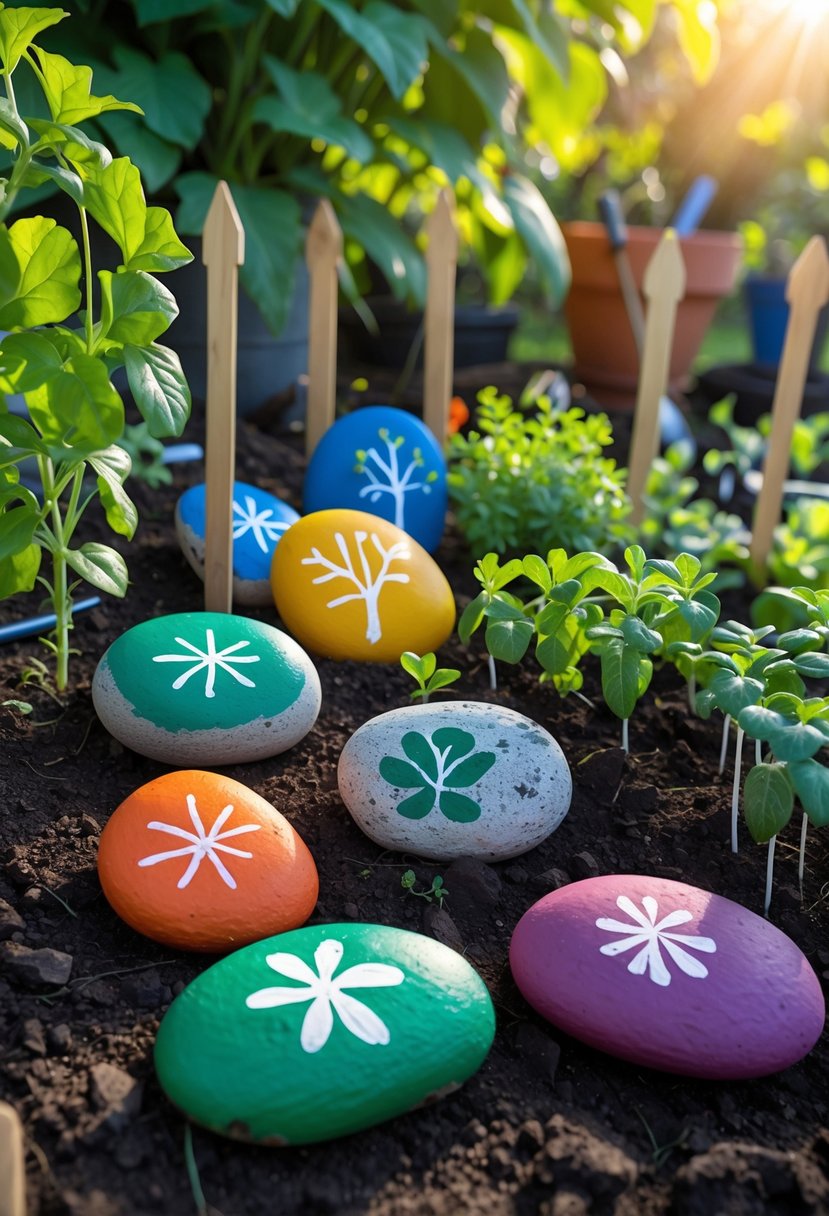
Painted rock markers are easy and cost almost nothing. Just find some smooth rocks and get creative with paint or markers.
Write your plant names on them and place them in your garden. They help you keep track of what’s growing and add a splash of color.
Painting rocks is relaxing, honestly. If you seal them, they’ll last for years. Want a tutorial? Here’s a budget-friendly guide.
6) Recycled tin can lanterns

Old tin cans can become charming lanterns for your garden. Use a hammer and nail to punch out patterns in the cans.
Drop in candles or LED lights and you get a cozy, warm glow. These lanterns are perfect for outdoor evenings or brightening up a little nook.
It’s a fun, cheap way to reuse stuff you’d toss out anyway. Here’s a step-by-step guide if you want to make your own.
7) Hanging mason jar planters

Turn simple mason jars into hanging planters by adding soil and your favorite small plants—think succulents or herbs.
Hang them with twine or wire in sunny spots. These planters save space and add a cozy touch to any garden or even indoors.
They’re cheap, easy, and you probably have the supplies already. For more ideas, check out DIY mason jar planters.
8) DIY self-watering planter

Make a self-watering planter using things you’ve got at home. Old plastic bottles or jars work well for this.
These planters slowly give your plants water as they need it, which is a lifesaver if you’re busy or forgetful.
It’s easy and barely costs a thing. Want to try it? Find step-by-step ideas for DIY self-watering planters at 7 DIY self-watering planters made from everyday things.
9) Macrame plant hangers

Macrame plant hangers add personal style to your garden without costing much. You just need some cord and a pot—nothing fancy.
Even beginners can make these, and there are loads of easy tutorials online. They bring a cozy, boho look to your indoor or outdoor space.
Hanging plants free up floor space, which is a big plus for small areas. If you’re curious, check out 16 easy DIY macrame plant hangers for beginners for ideas.
10) Homemade stepping stones

You can make homemade stepping stones with concrete mix, a simple mold, and a few decorations like pebbles or tiles.
It’s fun to create your own shapes and patterns. These stones brighten up your garden and make walking paths through flower beds or grass.
If you want more details, check out this DIY stepping stone guide.
11) Repurposed ladder plant stand

Turn an old ladder into a plant stand for your garden or house. It’s a simple way to add height and show off your plants.
Just clean up the ladder and add shelves or trays for your pots. This gives new life to something old and saves space.
A ladder plant stand fits nicely in small corners and really perks up any spot. For more tips, look up repurposed ladder plant stand projects.
12) Soda bottle drip irrigation

Use an empty soda bottle to water your plants slowly. Poke a few holes in the cap, cut off the bottom, then fill it with water and stick it upside down near your plants.
Water drips right to the roots—no need to water every day. It’s a cheap, simple way to keep your plants happy.
Want to try it? See how to make a soda bottle drip feeder for more info.
13) Cinder block flower bed

Build a flower bed with cinder blocks. They’re cheap, easy to stack, and you can shape them however you want.
Prep the ground, then arrange the blocks into a square or rectangle. Fill the inside with soil and plant your favorite flowers.
The holes in the blocks can hold extra plants too, which is pretty clever. For more ideas, check out cinder block flower bed DIY projects.
14) Egg carton seed starters

Got some empty egg cartons lying around? You can start seeds in them with almost zero effort. They’re cheap, eco-friendly, and honestly just the right size for small seedlings.
Just fill each cup with soil and pop in your seeds. The little compartments keep everything separated and tidy.
Once your seedlings get going, you can cut the carton apart and move each section to the garden without messing up the roots. That’s pretty handy.
You end up saving money by reusing what you already have. This method works for all sorts of vegetables and herbs. Want more tips? Check out starting seeds in egg cartons here.
15) T-shirt yarn garden twine

Cut up old t-shirts and turn them into garden twine. Just slice them into strips and stretch them out—you’ll get soft, stretchy yarn that ties up plants nicely.
This trick saves you money and keeps fabric out of the trash. Plus, the yarn is gentle on stems, so your plants won’t get hurt.
Use it to support climbers or secure covers. It’s a simple, eco-friendly hack that keeps your garden neat. More ideas for upcycled t-shirts in the garden if you want to get creative.
16) Milk jug watering can

Turn an empty milk jug into a watering can in just a few minutes. Clean the jug, then poke small holes in the cap with a heated needle. Now you can water your plants with a gentle sprinkle.
Pick a jug that fits your hand. Half-gallon jugs are nice for small pots, while gallon jugs cover more ground for bigger gardens.
Making your own watering can saves you cash and cuts down on plastic waste. If you want details, here’s a step-by-step guide.
17) Succulent wreath from scrap wood

Got scrap wood? You can make a cool succulent wreath with it. Cut the wood into small pieces or shapes to form a base.
Drill holes big enough for your succulents. That way, you can tuck them in without much soil.
Attach the succulents, and they’ll stay put with just a little water. This wreath adds charm to your garden or front door without costing much.
If you want a step-by-step, check out this DIY succulent wreath tutorial.
18) Mason jar solar lights

Light up your garden with mason jar solar lights. They soak up sun during the day and glow automatically at night.
Making these is easy and cheap. Grab some mason jars, solar lids, and a few simple supplies. Kids can totally help, so it’s a nice family project.
These lights bring a warm vibe to any outdoor space—no electricity needed. Set them on tables, hang them, or line your paths. Want a quick how-to? Check out DIY mason jar solar lights.
19) Tin can wind chimes

You can make wind chimes from empty cans pretty easily. Clean the cans and paint them in bright colors to fit your style.
Add beads, strings, or little charms for a variety of sounds when the breeze hits. It’s kind of fun to see what noises you get.
Recycled tin cans give your garden a personal touch and help the planet. If you want to try, here’s a tin can wind chimes guide.
20) Wooden spool garden table

If you spot an old cable spool, grab it—you can turn it into a garden table. Usually, you can find these for free or super cheap.
Just sand it down, maybe add some paint, and you’ve got a rustic table for your garden.
It’s a fast DIY that adds character to your outdoor space. Need ideas? Check out some wooden spool table inspiration.
21) Plastic spoon garden labels
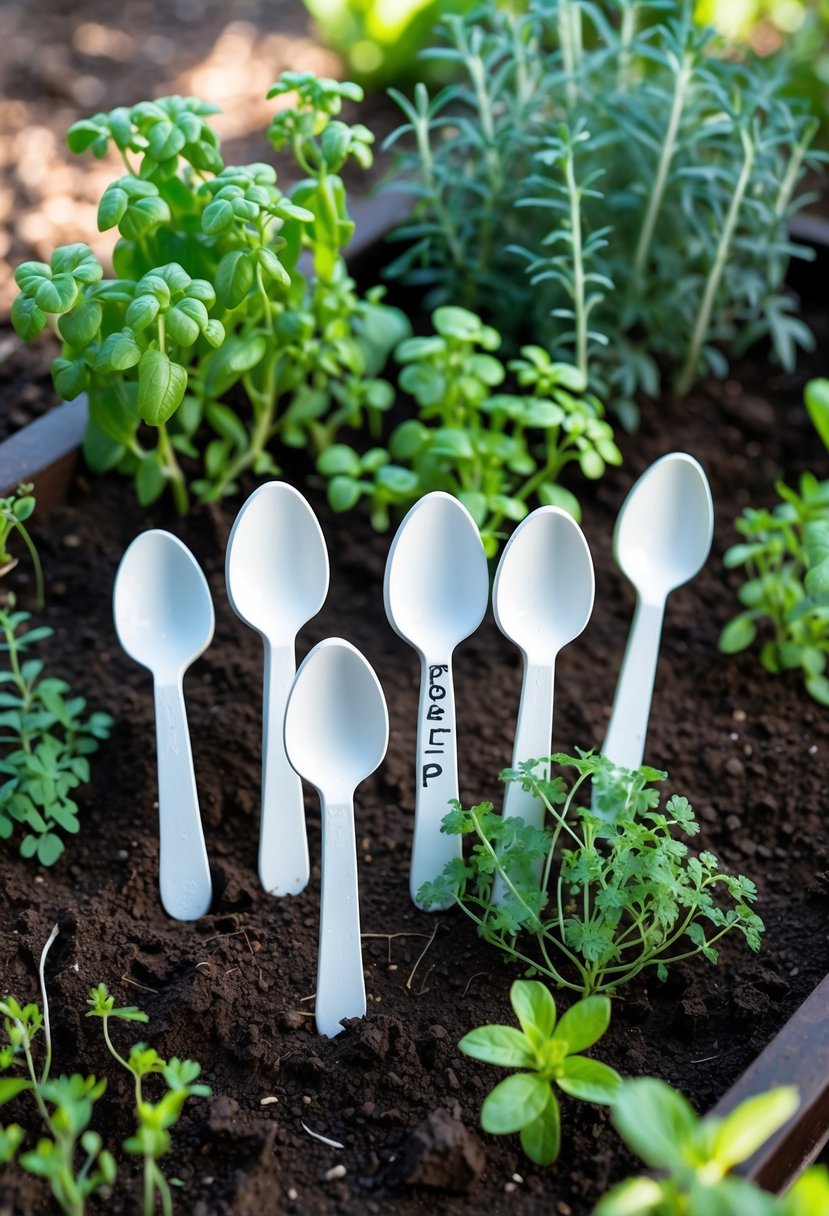
Use plastic spoons as garden labels. Write the plant name on the handle with a permanent marker or paint for some flair.
You can reuse spoons from takeout or grab a cheap pack from the store. Stick them in the soil next to your plants to keep track of what’s where.
Decorate the spoon heads with colors or patterns if you’re feeling artsy. It’s a quick, affordable way to personalize your garden. See more ideas for plastic spoon garden labels.
22) Eggshell seedling pots
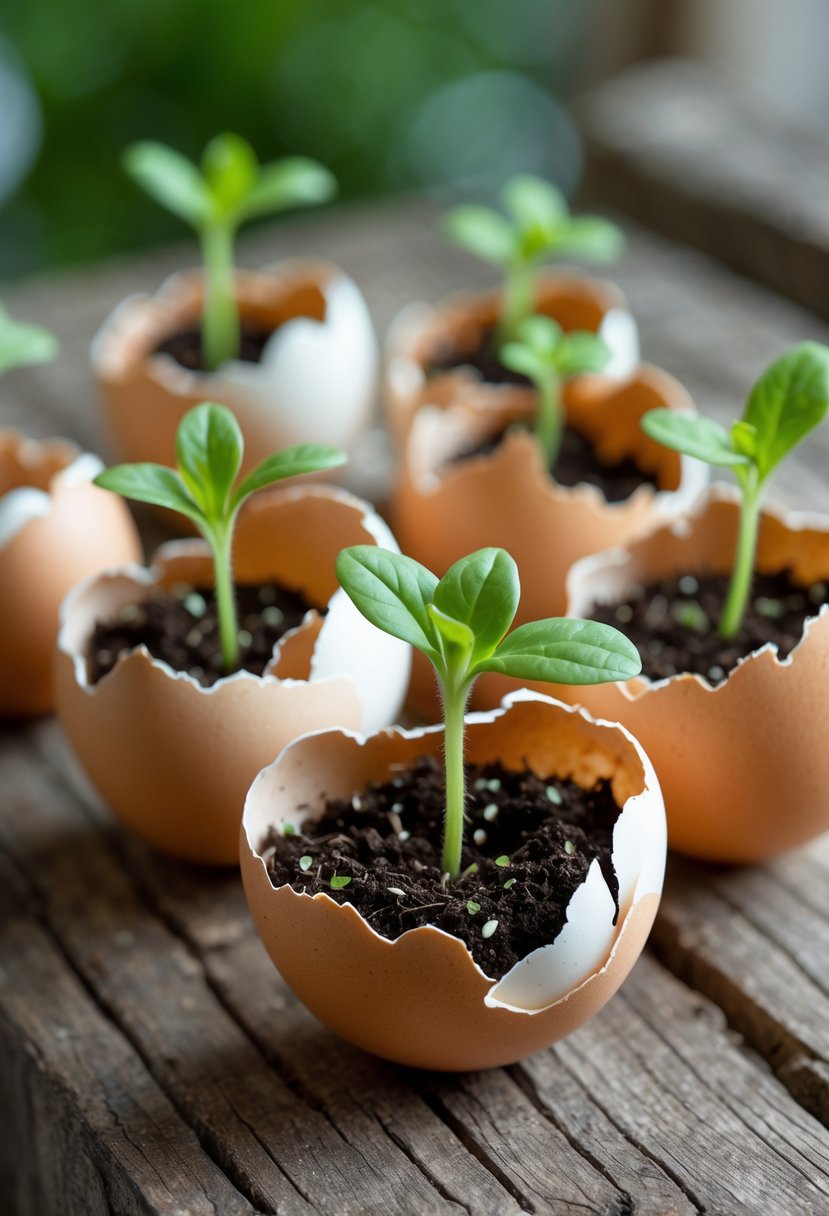
Save your eggshells and use them to start seeds. Crack the top off, clean it out, and fill it with soil. Drop in your seeds and keep them moist.
When your seedlings are ready, plant the whole shell in the garden. The shell breaks down and feeds the soil as it goes.
Eggshells are tiny, biodegradable pots that help your plants get a healthy start. It’s an easy way to cut waste and save money. Want to see how it’s done? Garden Betty has a guide.
23) Wine cork garden markers

Turn wine corks into garden markers in no time. Write your plant names on the cork with a waterproof marker.
Stick a skewer or toothpick into the cork and push it into the soil next to your plants.
It’s a cheap, eco-friendly way to organize your garden. Plus, they look pretty rustic and fun.
Want a step-by-step? Try these DIY wine cork garden markers.
24) Homemade compost bin from pallets

Old pallets make a super easy compost bin. You can usually find them for free or next to nothing.
Just stand four pallets up to make a box. That’s it—you’ve got a sturdy compost bin.
The gaps in the pallets let air flow, so your compost breaks down faster. It’s a great way to recycle pallets and reduce garden waste.
Need more details? There’s an easy DIY pallet compost bin guide out there.
25) Upcycled garden tool organizer

You can turn old stuff into handy garden tool organizers. For example, try using an old chair to hang your tools. It saves money and gives new life to things you might toss.
Wooden pallets or old pots work, too, and help you keep everything neat. Upcycling is a smart, affordable way to organize your garden gear.
Give it a shot if you want your tools ready and easy to grab. For more ideas, check out an upcycled garden tool organizer made from an old chair.
Benefits Of DIY Garden Projects
DIY garden projects let you save money, get creative, and make a space that feels like yours. You call the shots on materials, style, and what fits your vibe. Honestly, that’s what makes gardening feel personal and fun.
Cost Savings
When you take on garden projects yourself, you skip the high cost of hiring help or buying fancy stuff. Using recycled materials or things from around the house really keeps costs down.
You only buy what you actually need, which helps you avoid wasting cash on random tools or plants. A lot of these projects cost less than $20 if you stick to basics.
That means anyone can garden, even on a tight budget. Want ideas? Check out cheap and easy garden ideas to stretch your dollars.
Personal Satisfaction
Making your own garden projects feels good. Every planter or decoration you finish is something to be proud of.
Working with your hands is relaxing and helps melt away stress. Watching your garden change because of your effort is just plain satisfying.
You get to hang outside, connect with nature, and see your skills grow along with your plants. Your hard work turns into a spot for relaxing or hanging out with friends, and that feeling sticks with you.
Customization Options
When you DIY your garden, you get to design exactly what you want. You control the colors, shapes, and size of each project.
This means you can fit your garden to your space, whether it’s big or small. You can mix styles, features, or even quirky themes that show off your personality.
Want a vertical garden squeezed onto a tiny balcony? Or maybe you’re dreaming about rustic wooden benches? You build it your way, no need to settle.
You can tweak or add to your projects as your taste shifts or your needs change. Store-bought garden items rarely offer that kind of flexibility.
If you’re hunting for more ways to make your outdoor space feel like you, check out these budget-friendly garden projects.
Common Mistakes To Avoid In Budget Gardening
Trying to save money in your garden can backfire if you’re not careful. Picking the right materials and planning for ongoing care really helps keep things healthy and affordable.
Using Low-Quality Materials
Going for the cheapest soil, seeds, or tools might seem like a good idea at first. But honestly, low-quality materials just lead to headaches down the road.
Poor soil doesn’t have enough nutrients, so your plants struggle. Cheap seeds might not even sprout, or they grow into weak plants.
It’s better to invest in good-quality soil and seeds from the start. You can save a bit by buying seeds in bulk or swapping with other gardeners.
When it comes to tools, focus on getting a few reliable ones instead of a pile of cheap stuff that falls apart. Your garden will thank you, and you’ll spend less time fixing things.
Overlooking Maintenance Needs
Starting a budget garden isn’t just about saving money at the beginning. You’ll need to keep up with regular care if you want your plants to thrive.
If you skip watering, weeding, or pruning, you might end up with dead plants or a yard full of pests. That’s just a waste of time and money, right?
Set up a simple routine for watering and pulling weeds. Mulch helps lock in moisture and keeps weeds from taking over.
Keep your tools sharp and clean—it really does make the work easier. Just a bit of effort each week can save you a lot of hassle (and cash) down the road.
Want more advice? Check out this guide on common beginner gardener mistakes.


