

Unique Steep Bank Garden Ideas for Creative and Easy Landscaping Solutions
Having a steep bank in your garden might seem like a headache, but honestly, it opens up so many creative options. You might feel like it’s wasted space, yet with the right approach, that slope can turn into a highlight of your yard.

Unique steep bank garden ideas let you transform tricky slopes into outdoor spaces that are both attractive and practical. These ideas focus on keeping your garden safe, easy to care for, and visually fun—no matter how steep things get.
1) Terraced stone planting beds

Try using terraced stone beds to tidy up your steep bank. These beds carve out flat spots where plants can thrive without the soil sliding away.
Stone walls work as small barriers, holding back the earth and fighting off erosion.
You can fill each level with a mix of flowers, herbs, or vegetables. That layering adds depth and makes your garden more interesting.
Building terraced beds does take some elbow grease, but it pays off with a garden that’s easier to manage and way more eye-catching. If you want ideas to kick things off, check out terraced garden designs made with stone.
2) Winding gravel pathway with edging

A winding gravel pathway brings charm to your steep bank and breaks up the slope, making it much easier to walk.
Shape the path with gentle curves that follow your garden’s natural flow.
Use sturdy edging—think stone, wood, or metal—to keep the gravel from sliding downhill. Edging gives your path a crisp border and keeps things looking tidy.
Planting flowerbeds or low-growing plants along the edges softens the look and makes the walk feel cozy.
For more on keeping gravel in place, check out winding gravel pathway ideas.
3) Succulent garden on banks

If you want a low-maintenance garden, try planting succulents on your steep bank. Succulents store water in their leaves, so you won’t need to water them much. That’s perfect for slopes where water just runs off.
Succulents come in all sorts of shapes and colors, which helps you add texture and personality to your bank.
Choose a variety to create a one-of-a-kind, eye-catching display.
Their roots help hold the soil together, so planting succulents also helps control erosion. For more inspiration, check out 32 succulent garden ideas.
4) Wooden steps with handrails

Wooden steps fit right in on steep banks, blending with the natural vibe of your garden. They feel warm and welcoming—who doesn’t like that?
Adding handrails makes things safer, especially if the slope is steep. Handrails give you extra support going up or down.
Pick simple or decorative handrails to match your style. Make sure the wood is treated so it stands up to the weather.
Building wooden steps with handrails is a solid way to actually use your steep bank. For more ideas, check out wood garden steps examples.
5) Low-maintenance native plants
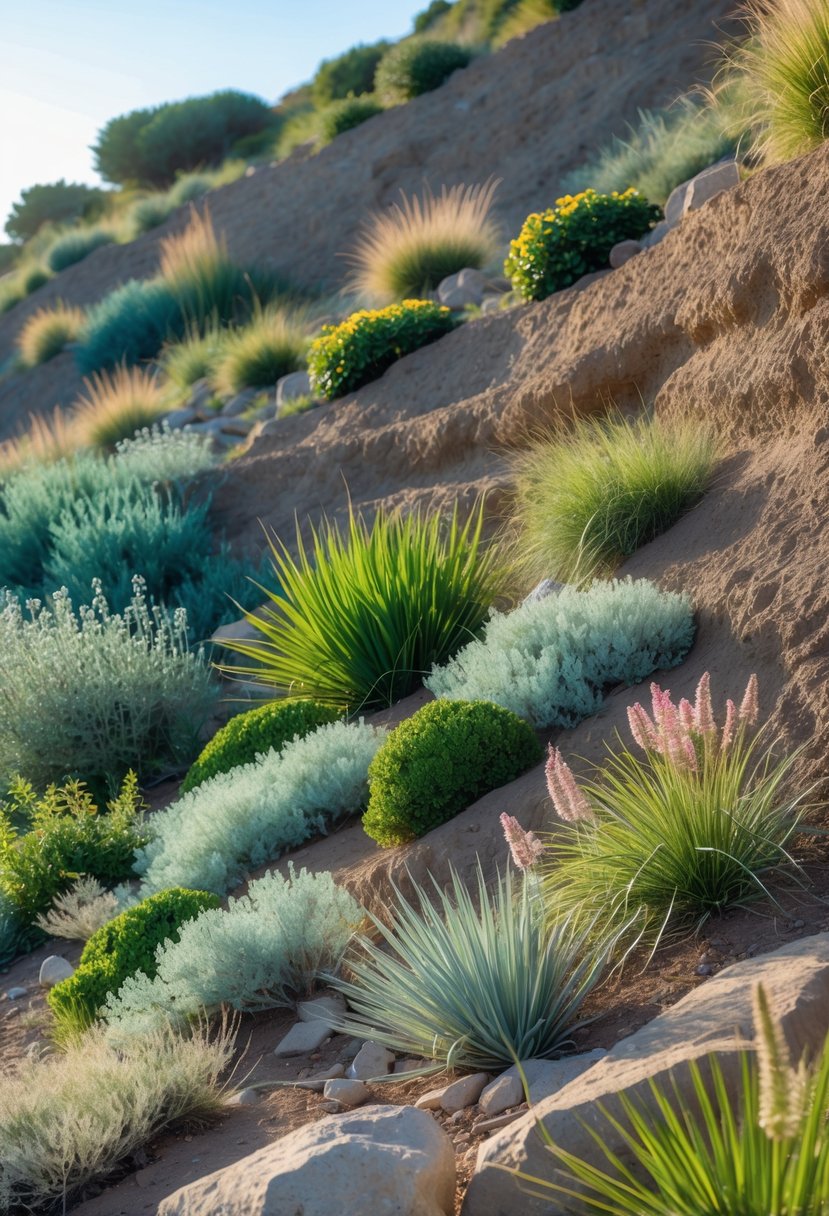
Pick native plants for your steep bank garden to save time and effort. These plants already know how to handle your local weather, so you won’t have to fuss over them.
Native plants also keep your soil healthy and stop erosion. Deep-rooted shrubs and grasses hold the bank together.
You’ll get a garden that attracts birds and pollinators, adding natural beauty. For ideas, take a look at landscaping sloped exteriors with native plants.
6) Rock garden with drought-tolerant species

Go for a rock garden on your steep bank and use drought-tolerant plants. These plants barely need water and can handle tough conditions. Sedums, lavender, and agave are all solid picks—they love rocky soil.
These plants add color and texture without making you work too hard. Rocks and stones help hold soil in place and bring a natural look.
Your slope will look more inviting and stay healthy with these tough plants. For more, check out this list of the best plants for a drought-tolerant rock garden.
7) Curved retaining walls with built-in seating
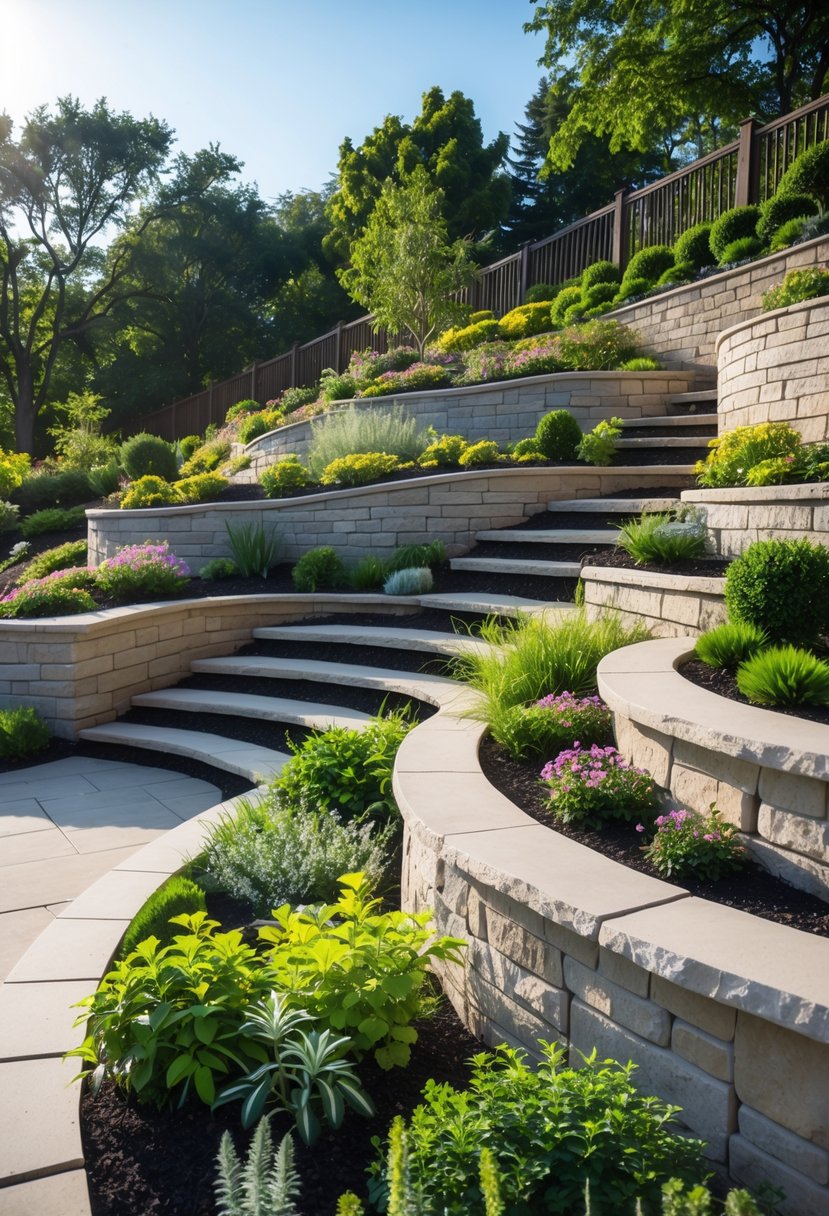
Add some flair and comfort to your steep bank with curved retaining walls. These walls follow the land’s natural shape, giving your garden a smooth, flowing look.
Top the wall with built-in seating so you have a spot to relax or chat with friends. It’s a cozy place for watching birds or just soaking in the fresh air.
You can even add lighting to the wall for evening use. For ideas, check curved retaining walls with seating here.
8) Waterfall feature cascading down slope

A waterfall feature uses the natural slope of your bank in a pretty clever way. Build tiered waterfalls so water flows smoothly from top to bottom.
That gentle sound and movement bring a peaceful vibe to your garden.
Surround the waterfall with rocks and ferns for a natural look.
A cascading waterfall helps control water flow, reduces soil erosion, and improves drainage on your slope.
If you want more ideas, check out how to create a waterfall in sloped yards here.
9) Colorful wildflower meadow patch

Turn your steep bank into a lively wildflower meadow. This adds color and means you won’t have to mow as much.
Pick native wildflowers that suit your area. They’ll attract bees and butterflies, bringing your garden to life.
Mixing flowers like bluebells, poppies, and black-eyed Susans gives you a natural, cheerful look. Plus, it helps control erosion in a gentle way.
A wildflower patch looks great and needs less work than grass. It’s a simple way to brighten your slope and support local wildlife. For planting tips, check out American Meadows.
10) Vertical garden wall panels

Vertical garden wall panels let you really make use of a steep bank. Grow your plants upward and keep things organized.
You can find panels in wood, metal, or whatever fits your style.
These panels make plant care a little easier, too.
Add flowering or climbing plants to brighten things up, or use them as a green privacy screen.
Vertical wall panels are a clever way to add life and color to your steep bank.
See more about vertical wall planters and modular systems here.
11) Raised herb planting boxes

Raised herb planting boxes help you make the most of steep slopes. They keep soil in place and make watering a breeze.
Plus, you get your herbs at arm’s reach—harvesting becomes simple and kind of fun.
Build your boxes from wood, stone, or even upcycled stuff if that’s your thing.
Stacking boxes at different heights gives you a nice tiered look.
Ready to try it? Check out some easy DIY raised herb garden ideas for inspiration. Growing fresh herbs on a slope doesn’t have to be hard.
Find more ideas for these boxes here.
12) Mixed evergreen and flowering shrubs

Mixing evergreen and flowering shrubs on your steep bank gives you year-round interest. Evergreens keep things full and green, even in the colder months.
Flowering shrubs bring pops of color and attract pollinators like bees and birds when it’s warmer.
Try plants like Mahonia repens for glossy leaves, flowers, and bright berries. Combining different shrubs keeps the slope stable and makes the garden feel balanced.
Mixing these shrubs is a smart move for beauty and function. For more ideas, check out banks and slopes planting.
13) Stepping stone path with groundcover

Try making a charming path on a steep bank with stepping stones surrounded by low-growing groundcover plants. This setup makes walking easier and brings more color and texture to your garden.
Pick plants like creeping thyme or moss that stay low and spread out. They fill the spaces between stones and help keep the soil from washing away.
This kind of path feels pretty natural and peaceful—almost like it’s always been there. If you want a simple green look that just blends with the slope, this is a solid choice.
For more inspiration, check out creative stepping stone garden paths with groundcover.
14) Outdoor fairy lighting along slope

Brighten up your steep bank garden by stringing some outdoor fairy lighting along the slope. Lights can highlight paths or plants and make the space feel cozy, even after dark.
Go for solar-powered fairy lights if you want an easy setup and no hassle with wires. Wrap them around trees or bushes for a gentle, magical glow.
The lights help you see where you’re going on uneven ground. Honestly, adding fairy lighting just makes your sloped garden feel a little more inviting—almost magical.
For more ways to use fairy lights outside, check out fairy lights in your garden.
15) Bird-attracting plant clusters

Try grouping plants together to give birds food and shelter. Planting berries, seeds, and nectar-rich flowers close to each other lets birds find what they need in one spot.
Go for native plants like cardinal flowers or milkweed to bring in local birds and butterflies. These clusters make your steep bank lively and full of movement.
Climbing plants nearby can add more nesting spots and cover. That way, your garden becomes a safe, welcoming place for birds all year.
Find more tips for bird-friendly gardens here.
16) Mulched terraced vegetable beds
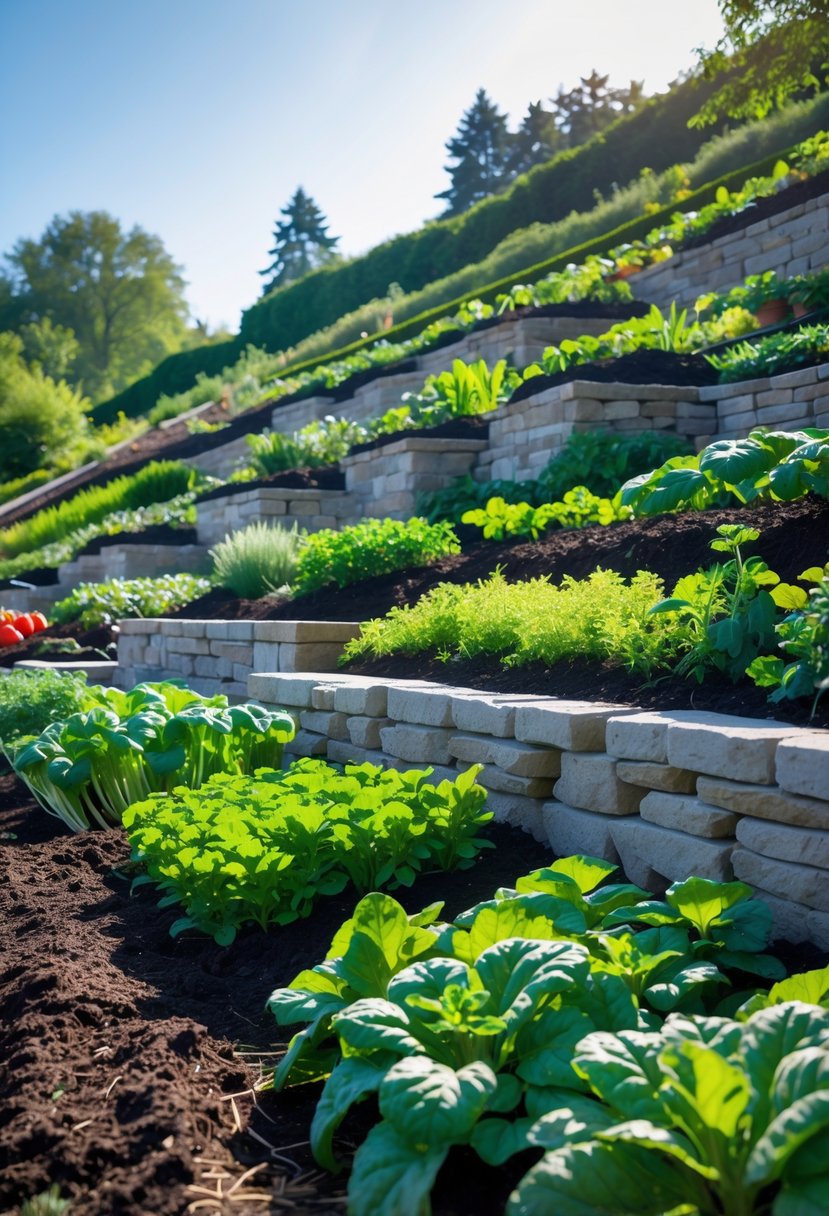
Build mulched terraced vegetable beds on a steep slope to make flat spaces for growing food. Terraces keep soil from sliding away and make watering a lot less tricky.
Mulch helps the soil hold moisture and blocks weeds. As it breaks down, it even improves soil health over time.
Use wood or stone for the terrace walls if you want a natural look that holds everything in place. This turns your steep bank into a neat and productive garden.
Learn more about terraced gardens and how to build them here.
17) Rustic log staircases
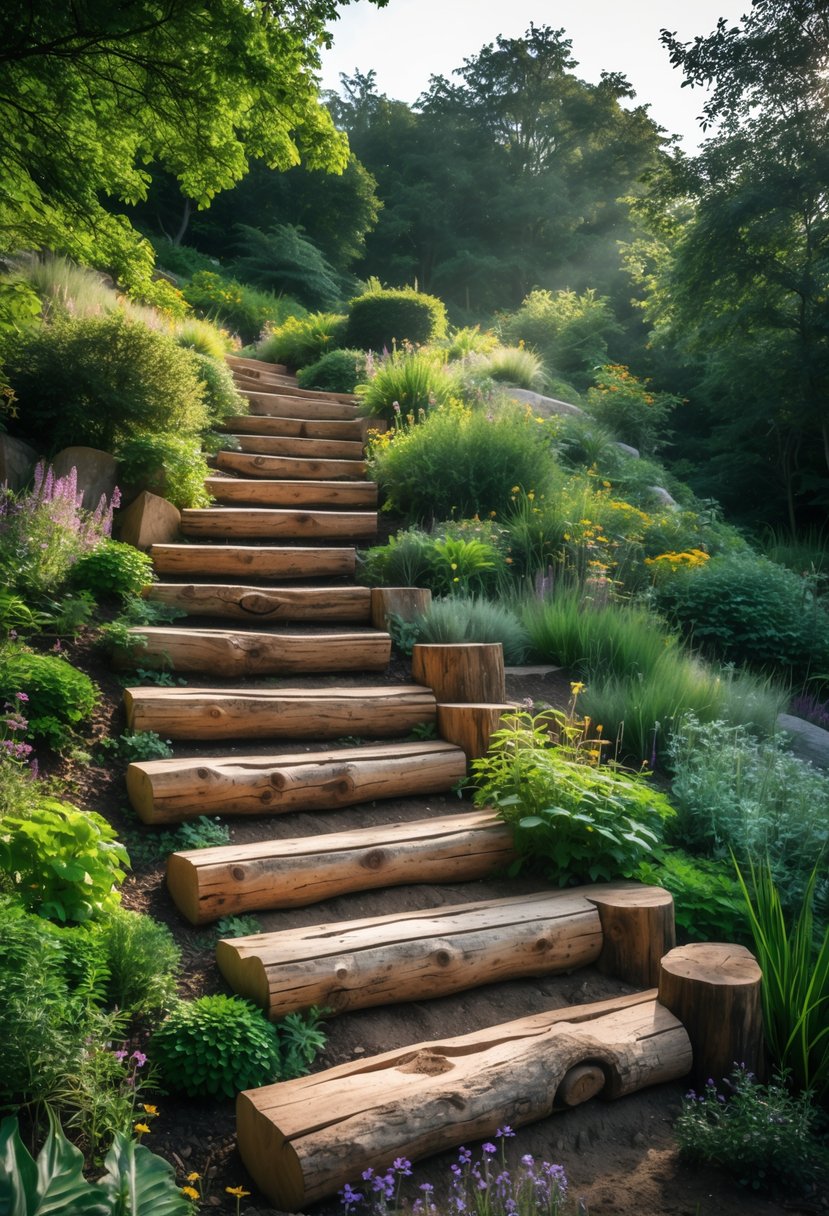
Use logs to build simple natural stairs on your steep garden bank. Each log’s shape brings its own character and charm to the space.
These stairs work well with woodland or cottage-style gardens. Pair the logs with gravel or stones for a sturdy, earthy feel.
You can build rustic log staircases yourself with found or cheap materials. They help stop erosion and just blend right in with nature.
For more inspiration, check out rustic log and stone steps.
18) Rain garden for slope drainage
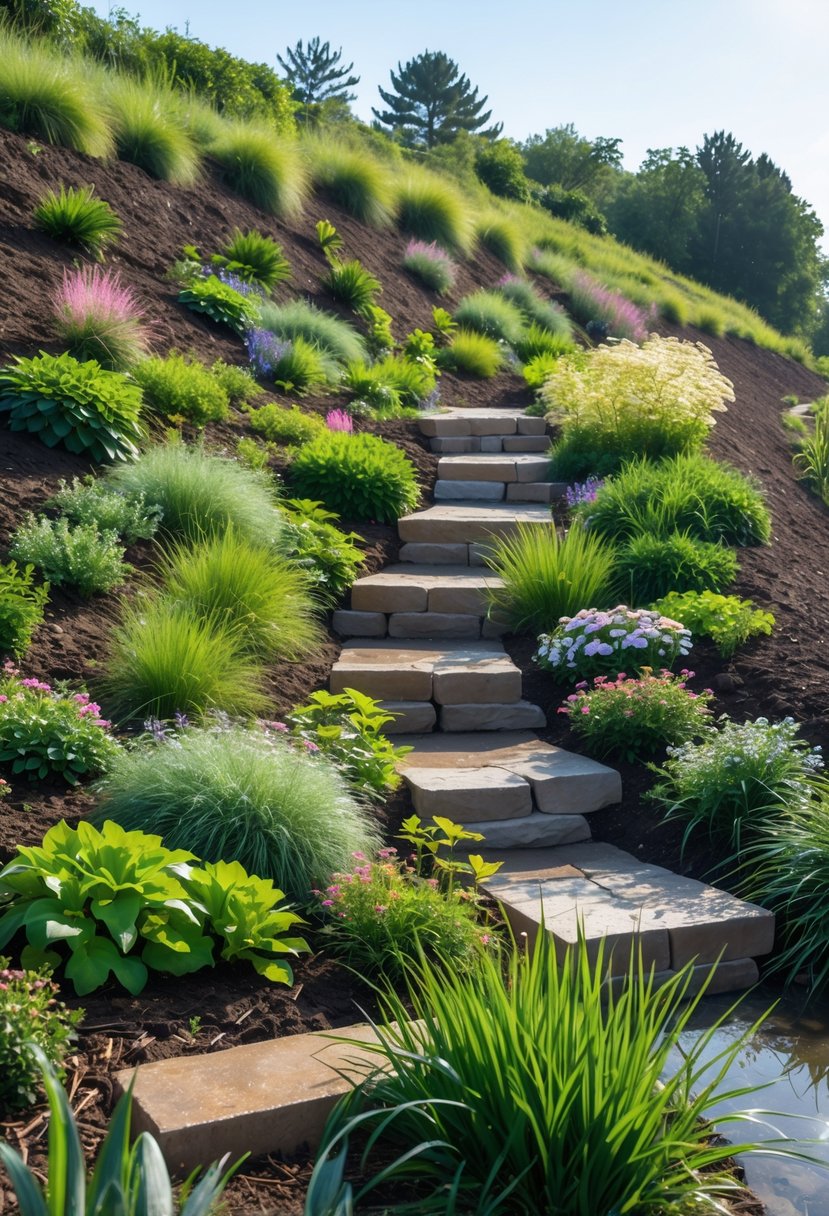
Add a rain garden to a slope to help manage water runoff. It collects rainwater and lets it slowly soak in, stopping erosion and keeping your garden healthier.
Make small pockets or terraces to hold water safely. Use stones and moisture-loving plants to keep things both pretty and practical.
Rain gardens also filter out pollutants before water heads to streams or drains. Adding one to your steep bank is a smart way to manage drainage while giving your yard a natural touch.
If you want more info, check out building a rain garden on a slope at greatgardenplans.com.
19) Decorative boulder placement
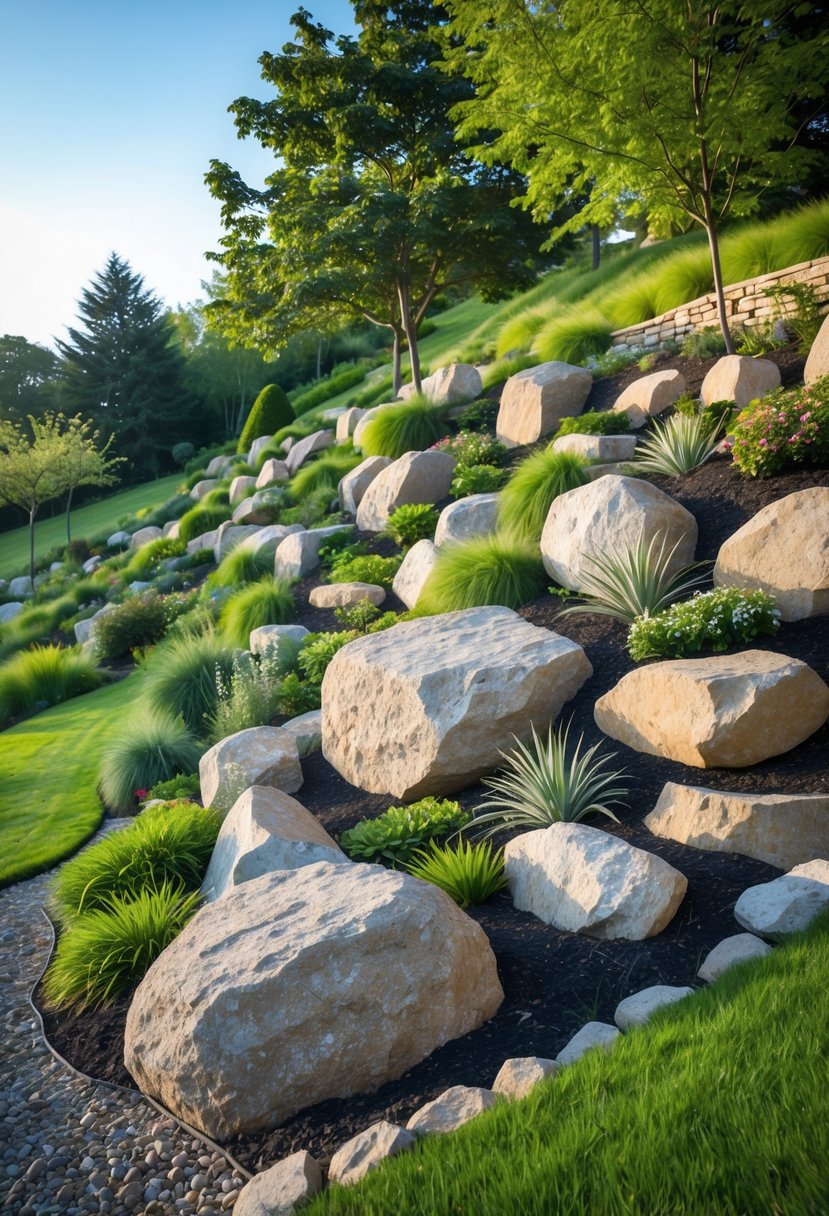
Try adding boulders to your steep bank garden for a strong, natural look. Place them thoughtfully to create focal points that catch your eye.
Boulders break up the slope and bring in texture. They also help control erosion by keeping the soil where you want it.
If you group different sizes together, you’ll get a more balanced, natural vibe. Mix boulders with plants or paths to make the space feel inviting and unique.
For more boulder ideas, check out landscaping with boulders.
20) Climbing vines on trellis

Grow climbing vines on a trellis to cover a steep bank in a lovely way. The trellis gives them something to grab as they grow upward.
This keeps your garden looking tidy and adds some vertical interest. It can even work as a natural privacy screen if you want a little more seclusion.
Pick vines like clematis or ivy for easy, fast growth. A simple bamboo or metal trellis works well and won’t cost much.
For more trellis options, check out this guide to garden trellis ideas.
21) Zen garden with raked gravel

A Zen garden with raked gravel brings calm to a steep bank. You can rake simple patterns—like ripples or spirals—into the gravel for a soothing, relaxed look.
Add a few rocks in just the right spots to give the garden balance and peace. This style doesn’t need much care, so it’s perfect for a slope.
Try including small paths or bamboo screens if you want a bit more privacy. A gravel Zen garden makes a peaceful spot for quiet moments.
For ideas, visit 39 Zen Garden Ideas: Create a Serene Outdoor Space.
22) Flowering groundcovers like creeping thyme

Plant flowering groundcovers like creeping thyme to bring color and texture to your steep bank garden. It grows fast and forms a thick mat, which helps stop soil erosion.
Creeping thyme is low-maintenance and loves full sun with well-drained soil. It also puts out small, fragrant flowers that pollinators really like.
By planting creeping thyme, you get a soft, green carpet that’s both beautiful and practical. It works great on slopes because it holds soil in place while making the garden look lush.
Learn more about using creeping thyme for slopes at 11 Simple Ground Cover Plants Ideal for Sloped Yards.
23) Outdoor fire pit area at slope base

Turn the bottom of a steep bank into a cozy fire pit area. That spot is usually flat or easy to level, so it’s perfect for gathering and relaxing.
Building the fire pit here keeps smoke contained and keeps heat away from plants higher up the slope. Using stone or brick around the pit makes a safe, attractive edge.
If you carve out a seating area in the hill, you get natural walls that hold warmth and give you a little privacy.
For more ideas, see fire pit options for sloped yards on Pinterest.
24) Integrated bench swings

Add an integrated bench swing to your steep bank garden for a relaxing spot with a view. You can build the swing into a terrace or hang it from a sturdy tree.
This saves space and keeps the garden feeling connected. Plus, there’s something just peaceful about a gentle swing outside.
Place the swing where you get soft shade or catch a breeze for the best comfort. Use natural wood so the swing blends right in with your garden.
For more garden bench inspiration, check out garden bench ideas.
25) Moss-covered rock stairs

Bring some old-world charm to your steep bank garden with moss-covered rock stairs. Moss thrives in shady, damp spots, so it’s a perfect match for stone steps.
The soft green moss makes the stairs feel peaceful and helps them blend into the landscape. Once moss gets established, it’s pretty low-maintenance.
These stairs give your path a calming, fresh look. If you want ideas on how to design or place them, check out moss garden and stone step inspiration.
Design Principles for Steep Bank Gardens
When you’re working with a steep bank, focus on using space efficiently, keeping the soil in place, and adding features that really catch the eye. These are the keys to a garden that’s both practical and beautiful.
Maximizing Vertical Space
Steep banks really open up a chance to grow plants vertically, not just across the ground. Try out terracing to carve out flat steps along the slope.
This gives you more spots to plant and honestly, it makes maintenance less of a headache.
Add vertical structures like trellises or wall-mounted planters to squeeze even more out of your space. Vines and climbing plants thrive in these setups.
Layer your plants—put the tall ones up top and tuck the shorter ones below. You get more depth, and every plant can catch enough sunlight.
Using vertical space means you can fit in more variety without ending up with a crowded mess.
Enhancing Erosion Control
Erosion control matters a lot for steep banks. You need to keep soil from sliding away during heavy rain or wind.
Pick plants with strong roots, like ground covers or sturdy shrubs, to lock the soil in place.
Try terracing or add retaining walls to slow down runoff and hold soil steady. Mulch any bare patches too, since that helps protect the slope.
Choose plants that actually like your slope’s conditions—some banks get super dry or stay shady all day. Plan for good drainage while you’re at it.
If you handle erosion well, your garden will stay healthy and put together for a long time.
Creating Focal Points
Focal points pull attention and turn a steep bank into something memorable. Toss in a big rock, a bench, or a garden sculpture to give your eyes somewhere to land.
Water features like a small waterfall or fountain bring in movement and sound. They can even help with moisture issues on the slope.
Put focal points where people will see them, like near a path or a bench. Bright flowers or quirky plants work as natural focal points too, and they don’t hog much space.
Maintenance Tips for Challenging Slopes
Keeping a steep bank garden going means you have to think about water and make sure you can get around safely. Both watering and easy access really cut down on effort and help protect your plants and soil.
Irrigation Solutions
Watering a steep slope is no joke—water rushes downhill fast and can wash away more than you want. You’ll want to save water and stop erosion at the same time.
Go for drip irrigation if you can. It puts water right at the roots, slowly, so the soil actually absorbs it.
Set up drip lines along terraces or snake soaker hoses under mulch—nobody needs to see them.
Try watering early in the morning. Plants soak up more before the sun gets hot and you lose less to evaporation.
Group plants with similar water needs together to keep things balanced. That way you won’t drown some while others dry out.
Mulch around your plants to keep the soil cool and moist longer. Organic mulch like wood chips or straw works best, in my experience.
Safe Access Paths
You need safe, steady ways to move around your slope. Good paths keep soil from getting damaged and just make garden work less of a hassle.
Build wide, flat paths. Add steps or terraces when you hit steep spots.
Try using gravel, flagstones, or even wood planks—these give you grip and help prevent slipping.
Put in handrails or edging so it’s obvious where the path goes. Having something to hold onto feels a lot safer when you’re working on a slope.
Design your paths to curve with the land instead of charging straight down. That way, water won’t just shoot downhill and erode your walkways.
If you want more ideas, check out low maintenance steep slope landscaping and terraced plantings and pathways ideas.


