

Simple Steep Bank Garden Ideas: 25 Easy Tips for Beautiful Slopes
Got a steep bank in your yard? It can definitely feel intimidating when you think about gardening. Maybe you wonder how to use that awkward space or keep plants alive up there. But honestly, with a few good ideas, you can flip that slope into a lovely, easy-to-manage garden you’ll actually want to spend time in.
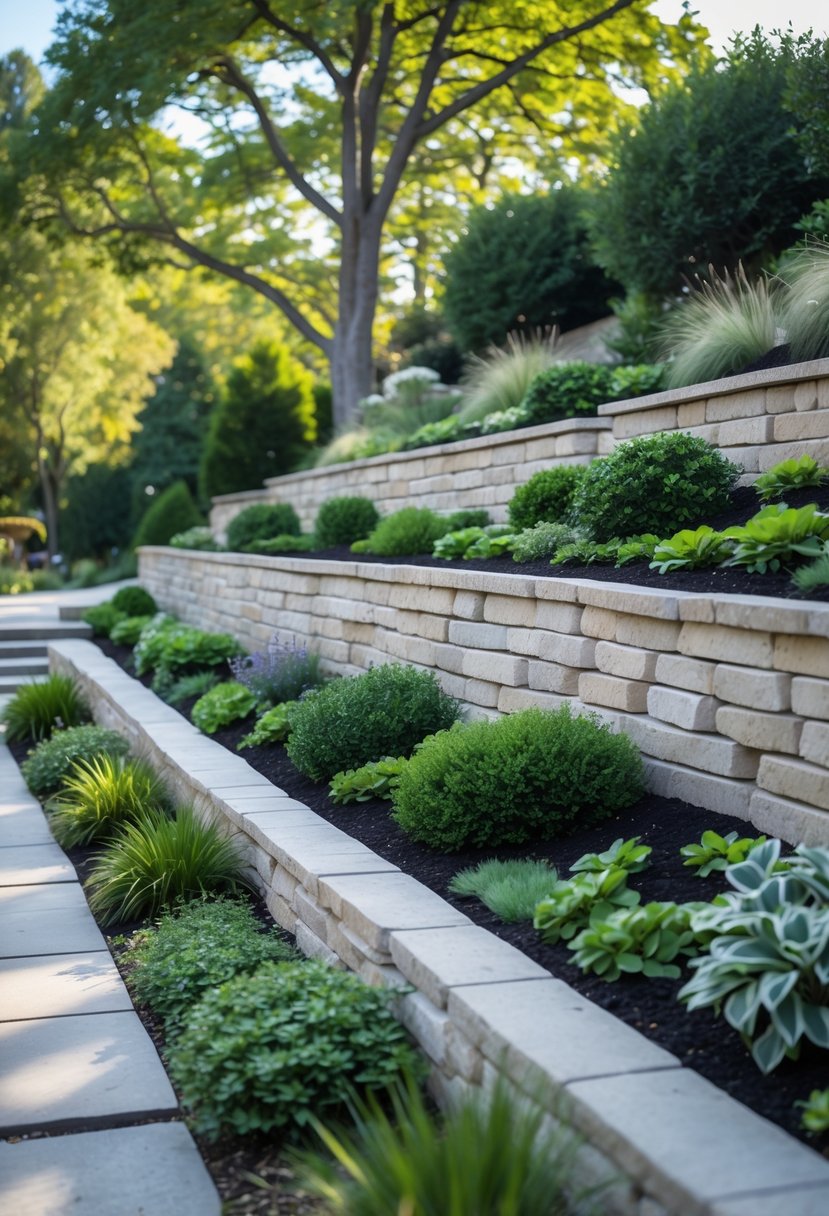
Simple steep bank garden ideas let you create a beautiful outdoor space without a ton of work or spending a fortune. These tricks help you use your land in smart ways so you get a garden that fits your style and needs.
If you want color, texture, or just a peaceful spot to chill, a steep bank can give you all that—surprisingly.
1) Create terraced planting beds to manage slope and add visual interest

Terraced planting beds solve the steep bank problem in a pretty clever way. When you build flat steps or levels, you keep soil from washing away during storms.
These terraces also help water drain better, so your plants actually have a shot at thriving.
Grab some wood, stone, or bricks—nothing fancy needed—and build up those flat areas. Now you’ve got more room for flowers, shrubs, or even a few veggies.
Terraces aren’t just practical—they look great, too. Suddenly, your slope feels like part of the garden, not just a problem spot.
For a straightforward how-to, check out this step-by-step guide to creating terraced landscape designs.
2) Build stone retaining walls for structure and soil retention

Stone retaining walls give your steep garden a solid, tidy look. They hold back soil and stop erosion, so your plants have a better shot on those tricky slopes.
You can stack stones using the dry-stack method—no mortar required. This keeps things looking natural and lets rainwater drain out.
Before you start, check your soil and think about drainage. Stone walls stick around for years and add a bit of old-school charm to your garden.
If you want detailed steps, check out this guide on building a stone retaining wall.
3) Plant creeping thyme for a fragrant ground cover
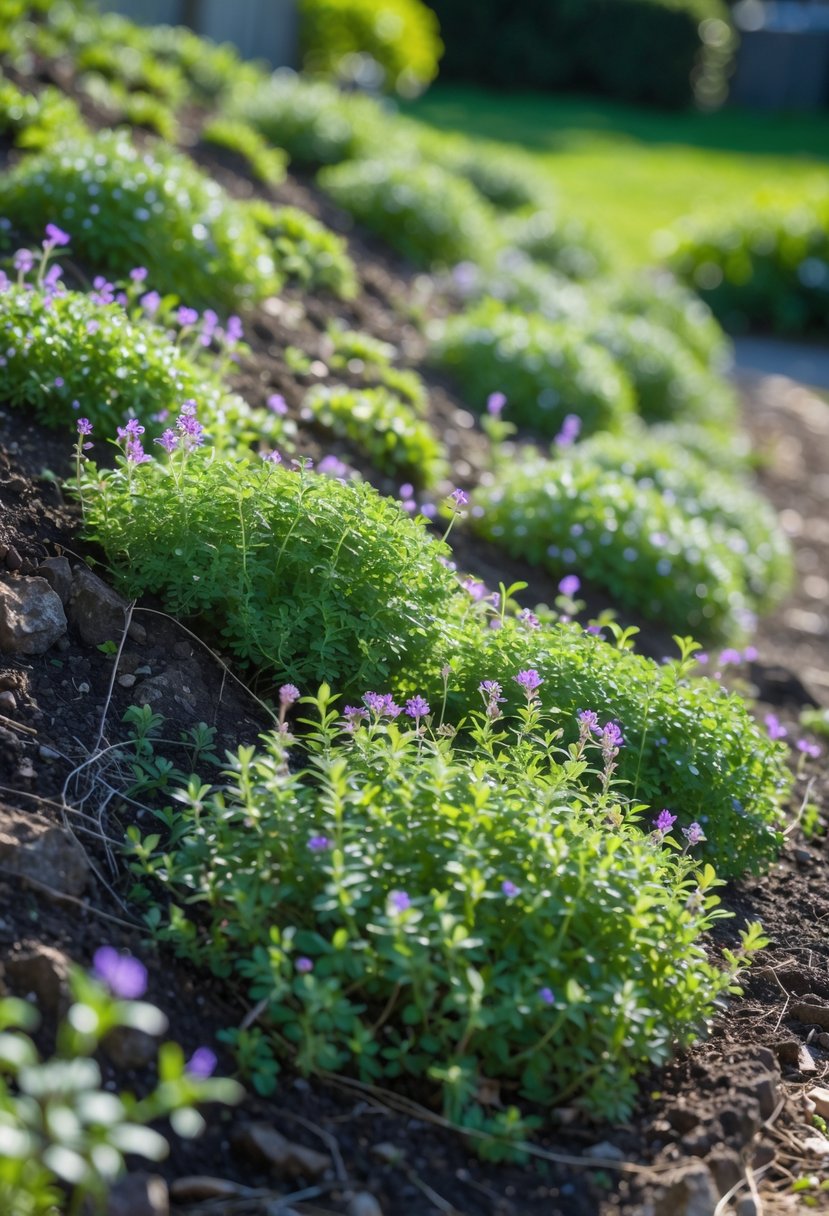
Try creeping thyme for a pop of color and a sweet scent on your steep bank garden. This plant hugs the ground, spreads fast, and covers bare spots.
Its tiny leaves smell great when you brush past them. Creeping thyme doesn’t mind hot, sunny spots and shrugs off drought.
Once it’s settled in, you hardly need to fuss over it. Plus, bees and butterflies love it, which just adds to the good vibes.
Learn more about how to grow creeping thyme as ground cover at How to Grow Creeping Thyme as Ground Cover.
4) Use sedum varieties to add color and prevent erosion

Sedum brings a burst of color to your steep bank garden. These low-growing succulents come in shades of green, red, and yellow, and they’re just plain easy to work with.
Sedum’s thick leaves store moisture, and its roots help keep soil from sliding away. It loves dry, sunny spots and doesn’t really need much attention.
Try mixing different sedum types for year-round color. You can use mats or clusters for quick coverage if you’re impatient (honestly, who isn’t?).
Check out more ways to use sedum for slope protection at 14+ charming sedum ground cover ideas.
5) Incorporate ajuga for vibrant foliage and ground coverage

Ajuga makes a smart pick for steep banks since it spreads fast and fills in bare patches. Its leaves show off shades of green, purple, and bronze—definitely not boring.
You don’t have to babysit ajuga. It grows in both sun and shade and needs barely any maintenance. It crowds out weeds by forming a thick mat.
Using ajuga on your slope gives you a lush, colorful look that sticks around all year.
Learn more about growing ajuga as ground cover here.
6) Add lavender for a low-maintenance, fragrant border
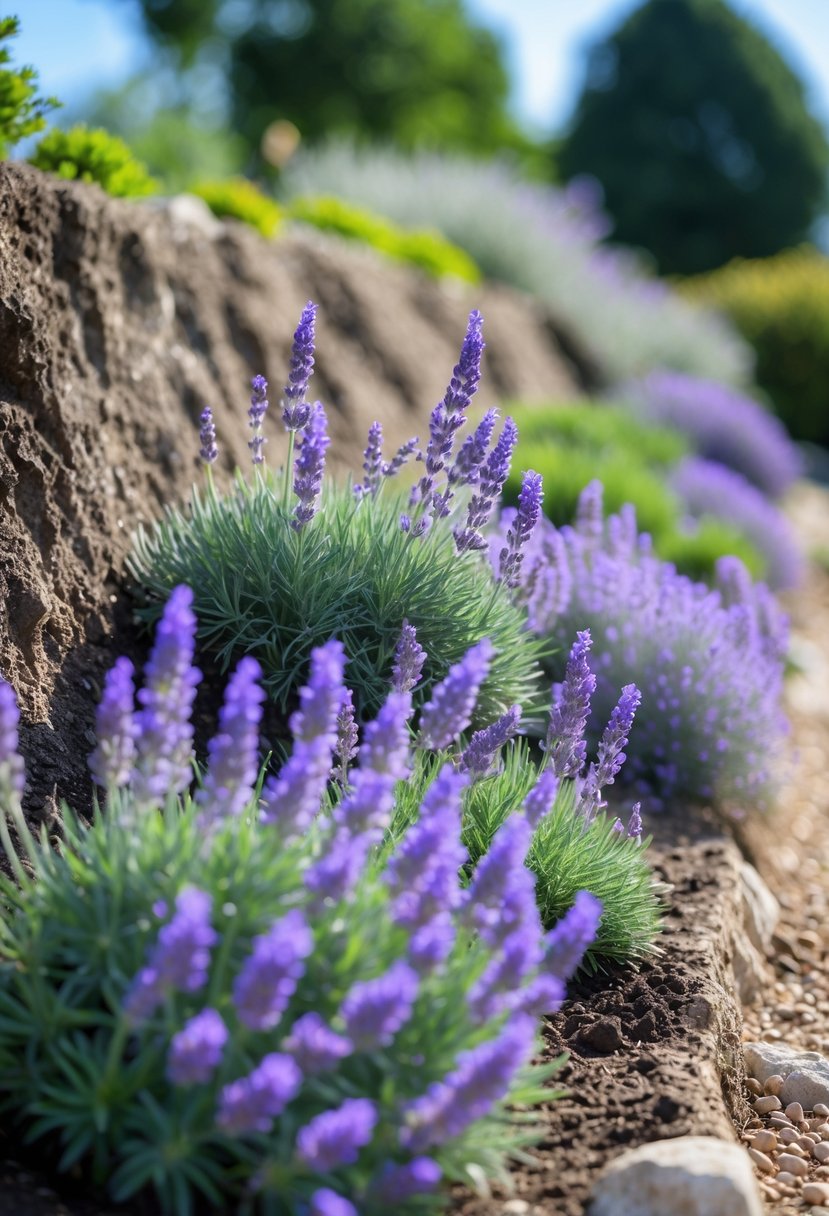
Lavender makes a gorgeous, easy-care border for your steep bank. It thrives in sunny spots and barely needs water once it’s established.
Those purple blooms add color and a relaxing scent. Lavender draws in bees and butterflies, so your garden feels even more alive.
If you want something that looks fantastic but doesn’t need much work, lavender is a winner. Mix up a few types to keep things interesting.
For inspiration, check out these lavender garden ideas.
7) Install natural stone pathways for accessibility and charm

A natural stone pathway makes it way easier to walk around your steep garden. Stones give you sturdy steps and help prevent slips.
Natural stone brings a rustic vibe that goes well with plants. Pick shapes and sizes that fit your style.
These paths last a long time and don’t need much attention. They keep your garden safe and interesting.
Want to build your own? Here’s a simple guide to stone path building.
8) Create a rock garden using drought-tolerant plants

Turn a steep bank into a rock garden that hardly needs watering. Start by placing rocks in different sizes to make things look natural and interesting.
Pick drought-tolerant plants like succulents, agave, or yucca. These guys handle dry soil and don’t ask for much.
Tuck the plants between rocks for texture and color. This setup helps with drainage and keeps maintenance low.
Need ideas? Check out simple rock garden ideas.
9) Use mulch layers to reduce soil erosion and retain moisture
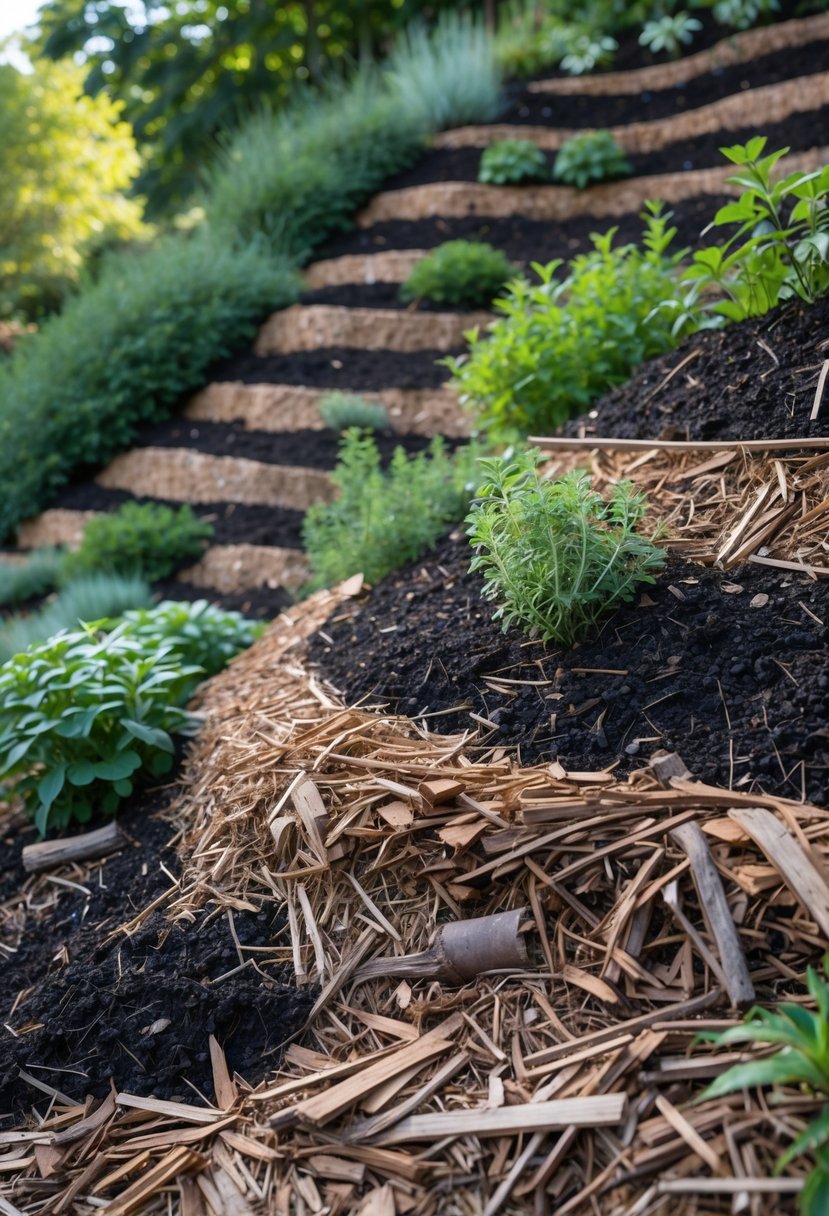
Mulch layers work like armor for your steep bank garden. They protect soil from heavy rain and stop erosion.
When you cover the soil, it slows water runoff and keeps everything in place. Mulch also keeps moisture in, so you don’t have to water as much.
Try organic mulch like straw or bark—it breaks down and adds nutrients to your soil.
Layering mulch improves soil health and blocks weeds. Your garden ends up stronger and easier to manage.
Find out more about the perks of mulch at using mulch to limit soil exposure and retain moisture.
10) Grow ornamental grasses for movement and texture
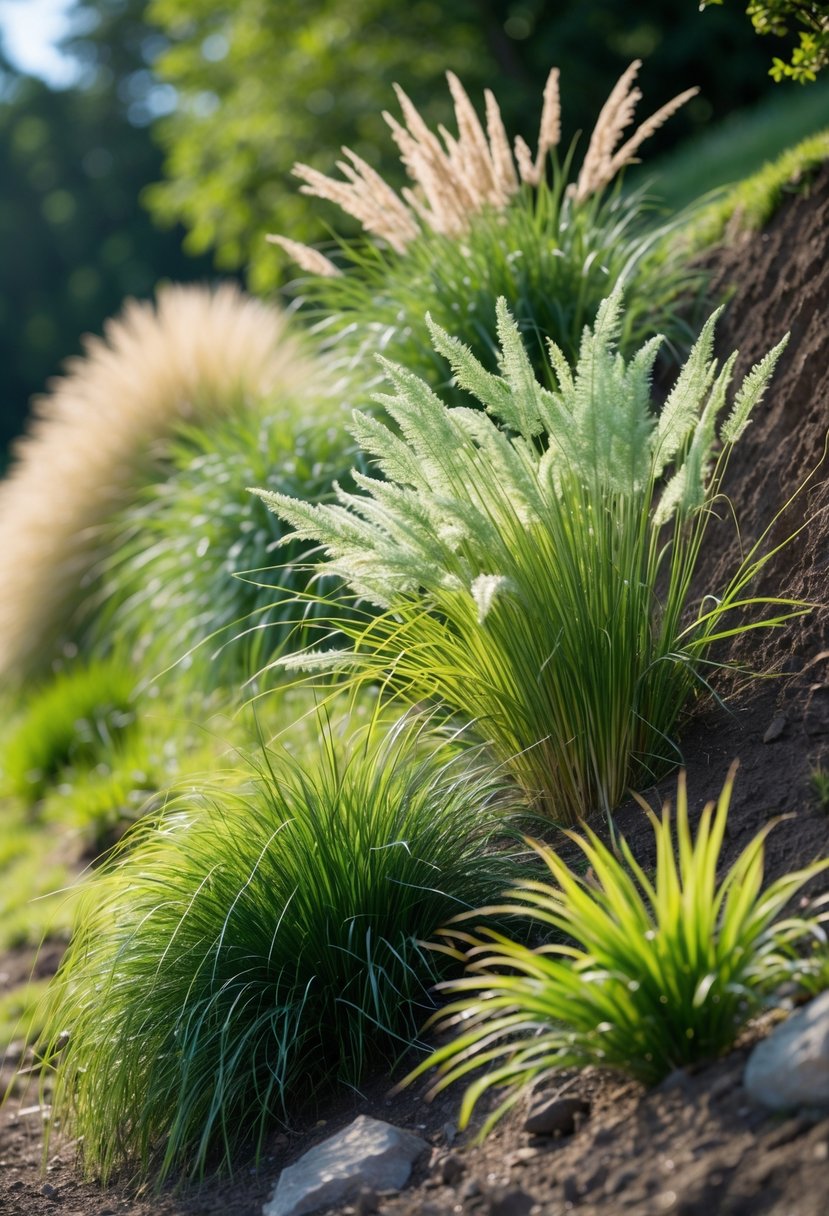
Ornamental grasses bring your steep bank to life. These plants sway in the breeze and add motion to your garden.
You’ll find grasses in lots of shapes and sizes. They add texture and break up boring stretches of ground.
Grasses are tough and don’t mind drought or rough conditions. They’re a smart pick for those hard-to-plant spots.
Check out more options at steep bank garden ideas.
11) Plant native wildflowers for easy care and pollinator support

Go for native wildflowers if you want a steep bank garden that’s simple to care for. These plants usually need less water and attention.
Wildflowers bring in bees, butterflies, and other helpful pollinators. Plus, they add bursts of color and energy to your yard.
Pick easy-to-grow native wildflowers for even less hassle. You’ll find plenty of lists to get you started.
For more, see this guide on easy-to-grow native wildflowers.
12) Install drip irrigation to efficiently water sloped areas
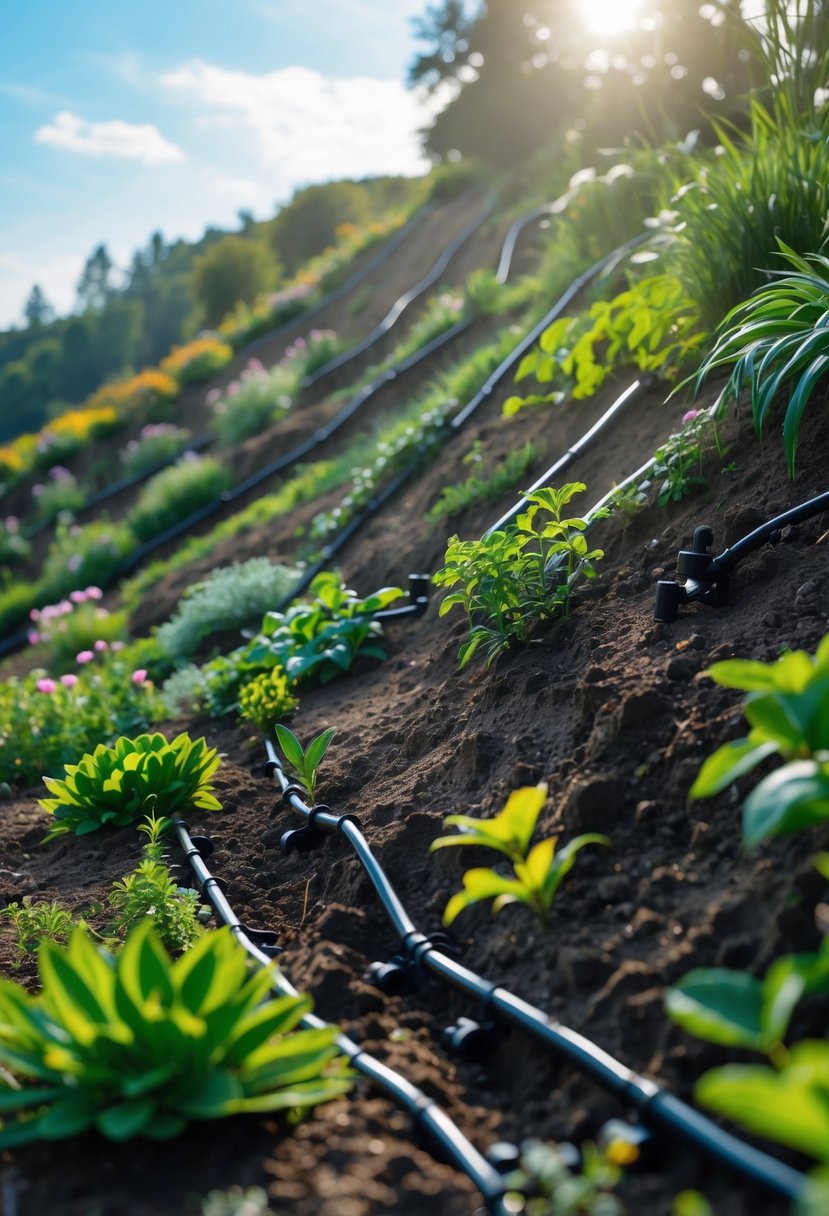
Set up drip irrigation to keep your steep bank garden happy without wasting water. This system delivers water right to the roots, so you don’t lose it down the slope.
Drip systems work well on hills because they control water flow, even on uneven ground. Use pressure-compensating emitters to make sure every plant gets enough.
Lay out drip lines in rows to spread moisture across the whole slope. Your plants will thrive, and you’ll barely notice the water bill.
Want to learn how? Check out DripWorks for tips on installing drip irrigation on slopes.
13) Use cascading plants like ivy for softening bank edges

Try cascading plants like ivy to soften the sharp edges of your steep bank. Ivy grows fast and spreads out, covering bare spots and giving you that lush, green vibe.
You’ll notice the bank looks smoother and blends in with the landscape. These cascading plants also help hold the soil, which means less erosion.
Ivy barely needs any attention, so if you want something easy, it’s a solid pick. If you’re curious, you’ll find more ideas for using ivy on slopes at banks and slopes ideas.
14) Create raised planter boxes on the slope for defined beds
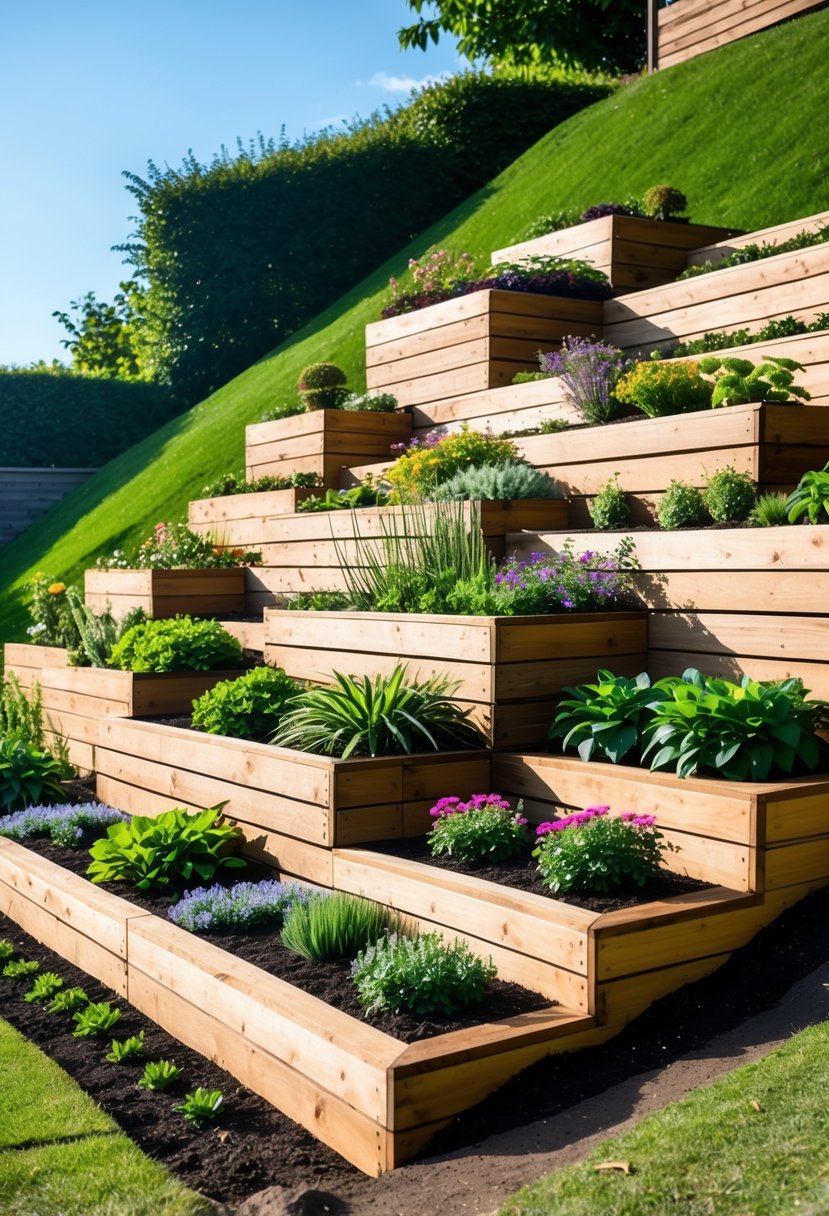
Build raised planter boxes right on your slope to make tidy, organized garden beds. These boxes keep soil where it belongs and help stop erosion.
With some wood and nails, you can put together planter boxes that fit your space. They make it easy to plant in rows and reach your plants from every side.
Raised boxes improve drainage and can make watering less of a hassle. If you want a neat look for your steep bank, this is a good way to go. For more, check out built-in hillside planter boxes.
15) Add steps made of timber or stone for easy access
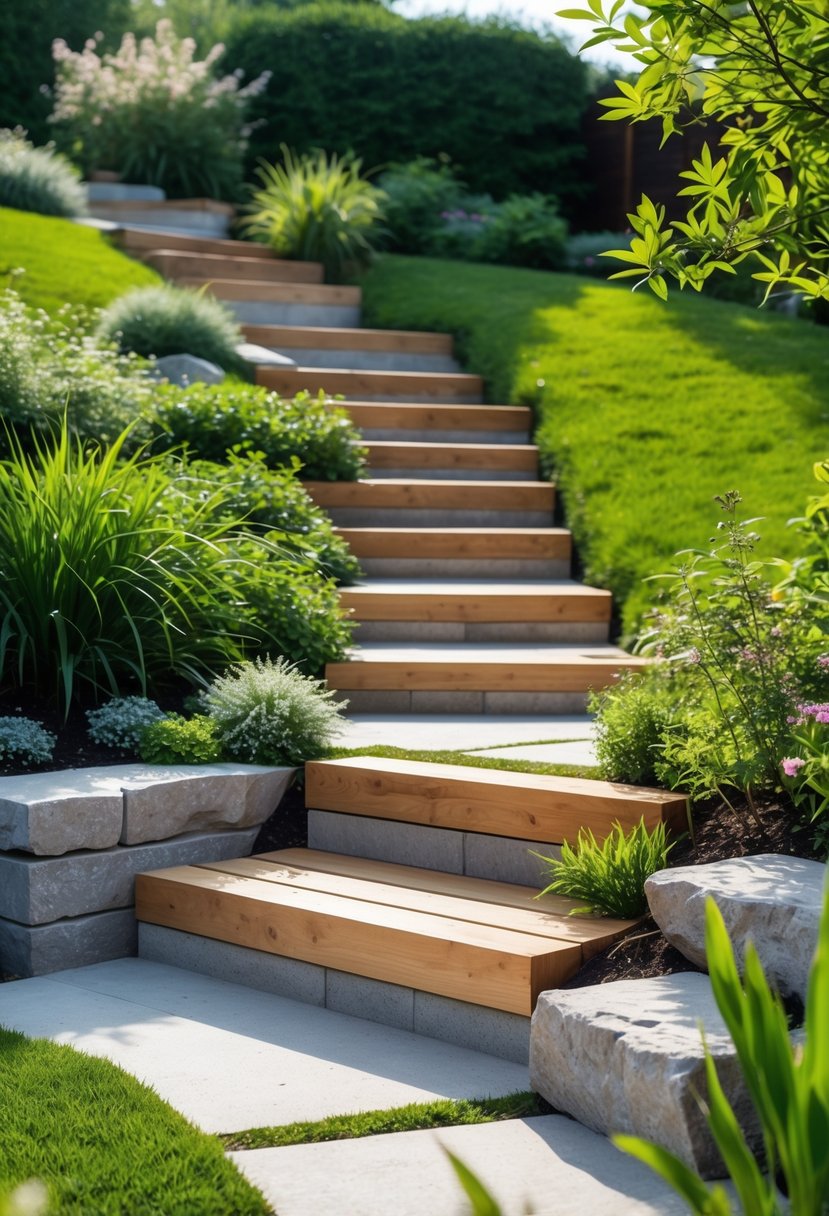
Put in steps made from timber or stone to make your steep bank usable. Natural stone gives a classic, sturdy look, while timber steps add warmth and a rustic touch.
When you build steps, you make it safer and much easier to move up and down the slope. They also lay out clear paths through your garden.
You don’t have to break the bank—simple materials and a little work get the job done. For inspiration, check out these DIY garden stair ideas.
16) Use hardy shrubs like boxwood to stabilize soil

Plant hardy shrubs like boxwood to help keep soil in place on your steep bank. Boxwoods grow dense roots that stop the ground from washing away.
These shrubs stay green year-round, so you get some color even in winter. Shape them into tidy hedges or let them mix with other plants.
Boxwoods don’t need much care, which is great if you want stability without fuss. For more ways to use boxwood, check out boxwood landscaping tips.
17) Incorporate ferns in shaded banks for lush greenery

Have a shady steep bank? Ferns are perfect for those spots. They thrive with little sunlight and add a rich, green color.
Ferns have soft, feathery leaves that make the area feel calm. They help cover bare soil and slow down erosion on slopes.
Try planting different fern varieties together for a layered look. Keep the soil moist—they do best with a bit of dampness. For more ideas, check out fern garden inspiration for shady places.
18) Plant dwarf conifers for year-round structure
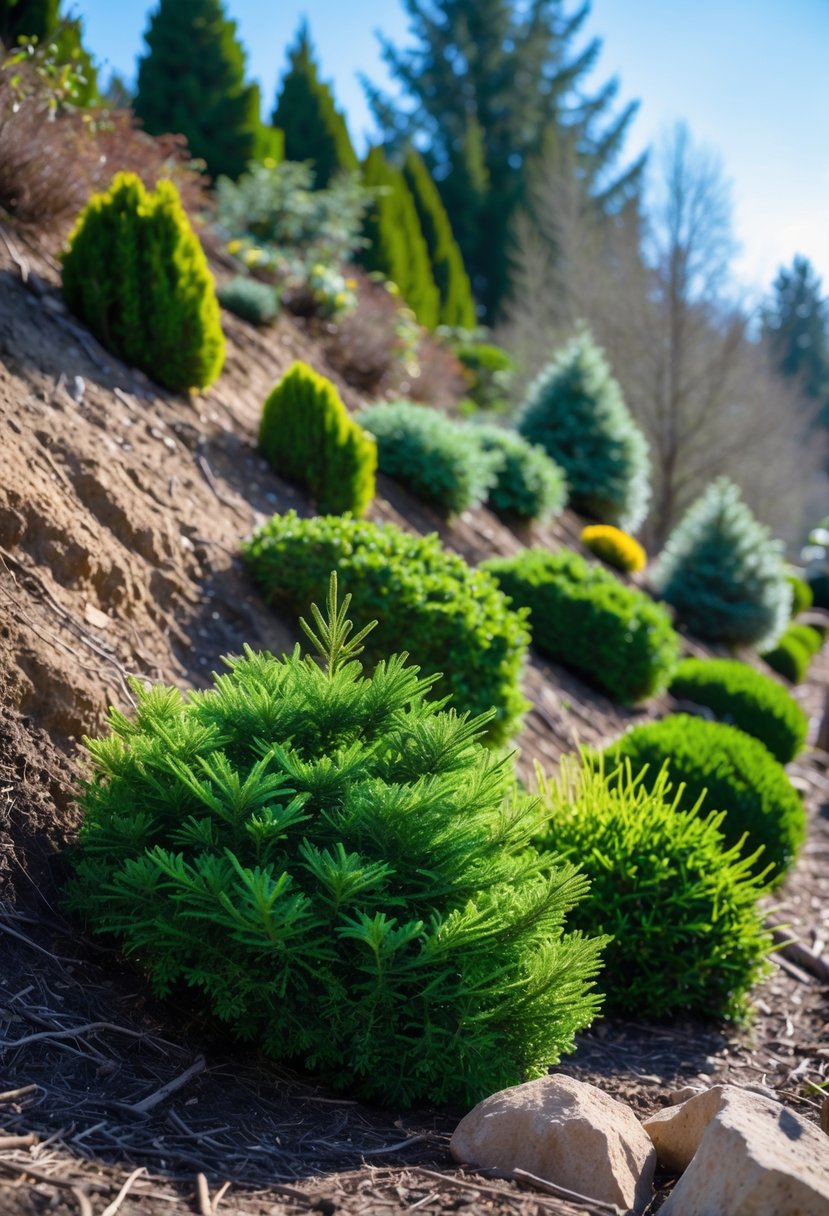
Add structure to your steep bank with dwarf conifers. These small evergreens grow slowly and stay compact, so they fit in tight spots.
Dwarf conifers keep their color and shape all year, even in the cold months. Their different shapes and textures bring some style without much effort.
If you want low-maintenance greenery that won’t take over, these are a smart choice. For more ideas, see dwarf conifers for small spaces.
19) Add decorative boulders to break up the slope visually

Use decorative boulders to break up your steep bank and make things more interesting. Boulders stop your eyes from just following the slope straight down.
Try grouping boulders or scattering them along the incline. You’ll get texture and a rugged look without much hassle.
They can even create little nooks or spots to sit and enjoy your garden. Boulders act as focal points that show off your garden’s style.
This approach helps the garden feel balanced and relaxed, working with the natural shape of the slope. For more, check out decorative boulders on slopes.
20) Use ground cover vinca for fast, dense growth

Try vinca as a ground cover for steep banks. It grows fast and spreads out, forming a thick green carpet over the soil.
Vinca stops erosion and blocks weeds from taking over. It’s low-maintenance and does well even in shade.
If you want an easy way to cover a slope, vinca is a strong option. For more info, see this guide on how to plant Vinca ground cover.
21) Design a small water feature to add tranquility
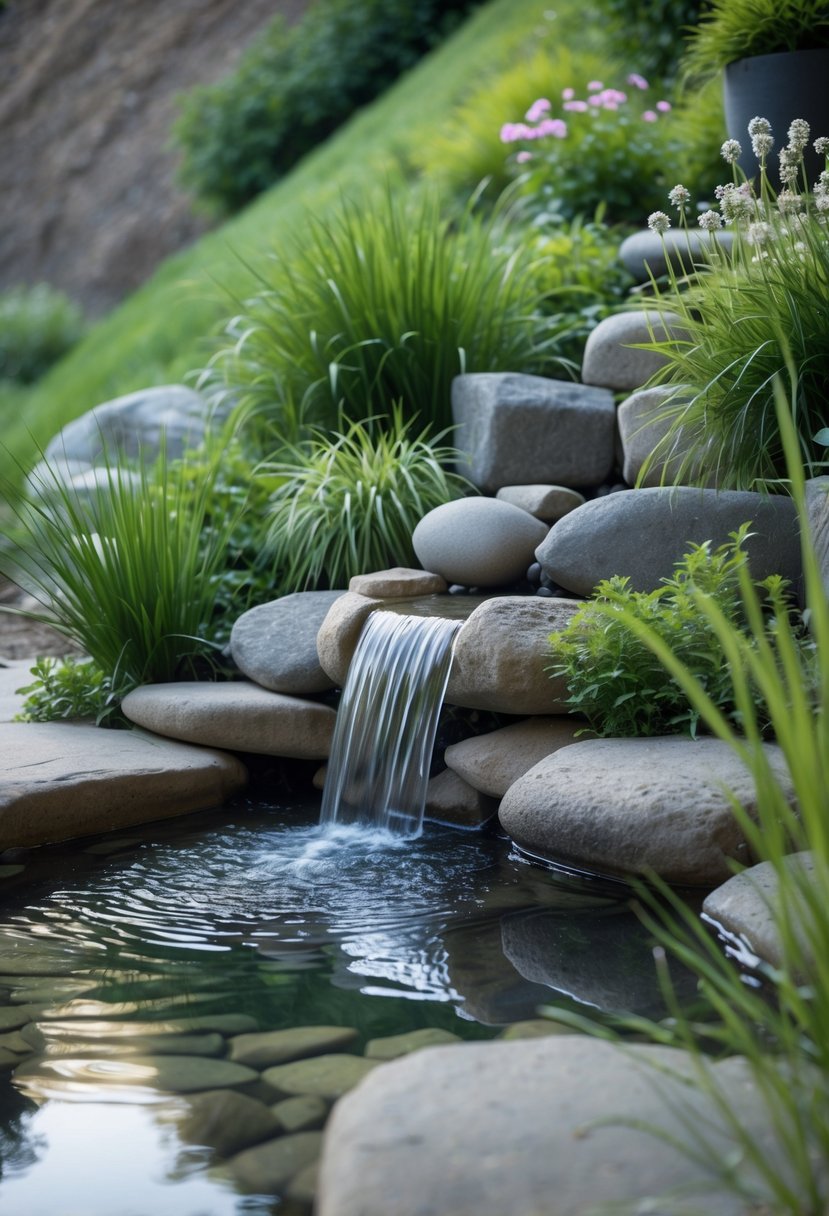
Build a small water feature on your steep bank for a peaceful vibe. Even a simple fountain, birdbath, or tiny waterfall adds soothing water sounds.
You can use basic containers like pots or buckets if space is tight. Add plants that love water to keep things looking natural.
Flowing water attracts birds and small wildlife, bringing your garden to life. For easy tips, check out small garden water features that won’t take much work.
22) Plant daylilies which thrive on slopes
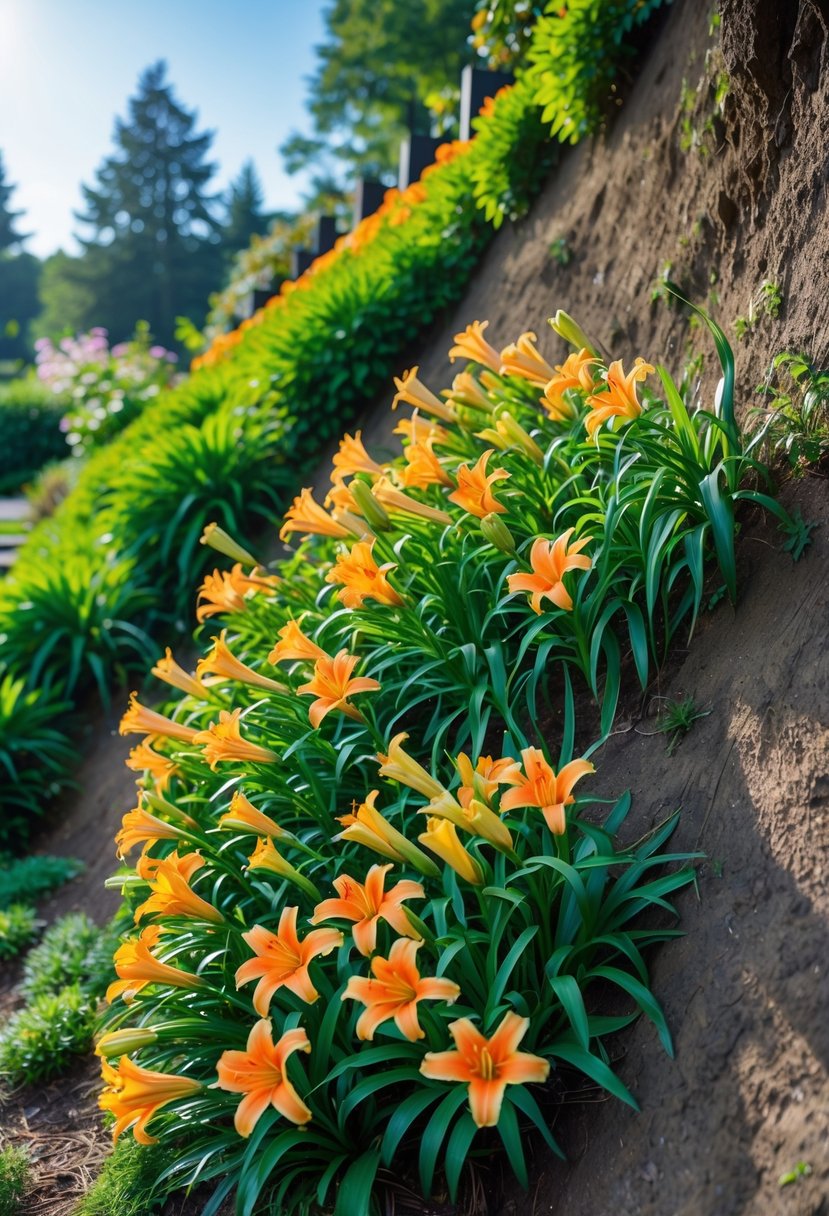
Daylilies work well on steep banks because they handle tough spots with ease. You don’t need to mow them, which makes things simpler.
Plant daylilies in clusters with space between each one. This spacing lets water soak in and helps prevent runoff.
Give your daylilies plenty of sun and prep the soil before planting. With a little care, you’ll get color and a stable slope. For more, check out planting daylilies on a hill at Weekand.
23) Use creeping juniper for erosion control and evergreen color

Try creeping juniper to keep soil in place on steep banks. This low-growing plant spreads out, making a thick green mat that stops erosion.
Creeping juniper stays green all year, so you get color even in the off-season. It barely needs any care once it’s settled in.
It grows best in full sun and rocky soil. If you want a natural, good-looking way to protect your slope, creeping juniper is a smart bet. Learn more about creeping juniper for ground cover.
24) Add a mix of sun and shade plants to diversify the garden

Mix sun-loving plants with shade-tolerant ones to make your steep bank more interesting. You’ll get a blend of colors and textures.
Find plants that can handle both sun and partial shade. These will fill in spots where sunlight shifts during the day.
With the right mix, your garden will stay lively no matter how the light changes. For more, check out this guide to sun and shade garden combinations.
25) Create a small seating nook with a bench for relaxation

Add a simple bench to your steep bank for a cozy resting spot. A small bench fits even in tight spaces and gives you a place to pause and enjoy the view.
Toss on some cushions to make it comfy. You could add a few potted plants nearby for a fresh, calm feel.
This little seating area can be your go-to spot for relaxing, reading, or just soaking in nature. It’s easy to set up and doesn’t need much space. For more nook ideas, check out 20 Garden Nook Ideas for Backyard.
Fundamental Considerations for Steep Bank Gardens
When you’re working on a steep bank, two things matter most: keeping the soil where it belongs and managing water the right way. Both help prevent erosion and keep your plants healthy.
Soil Stabilization Techniques
Keeping soil from washing away on a steep bank really matters, especially if you want your garden to last. Try planting things with strong roots—creeping thyme, sedum, or lavender work well.
These plants grab onto the soil and help keep it in place. Plus, they bring a bit of color and texture, which is always nice.
You might want to try terracing the slope, too. Build some small, flat steps or set up retaining walls.
Terracing gives your plants a sturdy spot to grow. It also slows down water as it moves downhill, so you get less erosion.
Mulch can make a big difference. Toss some bark or straw over the surface.
That layer of mulch protects the soil, locks in moisture, and softens the blow when it rains.
Drainage Solutions
Good drainage keeps water from pooling and making the slope unstable. If water piles up, the soil can start sliding away.
Install a French drain or dig a gravel trench at the bottom of your slope. These setups pull water underground and stop it from flooding the surface.
Try planting water-loving plants where the water naturally flows. They’ll soak up extra moisture and slow things down.
Don’t pack the soil too tightly. Loose dirt actually absorbs water better and can help stop runoff on steep slopes.
Low-Maintenance Design Tips
If you want to keep your steep bank garden easy to handle, focus on the right plants and smart erosion control. The choices you make now will save you a lot of work later—trust me.
Plant Selection for Sloped Banks
Pick plants that don’t mind dry, sunny spots and can hang on to a slope. Creeping thyme and sedum spread fast and keep the soil from slipping.
Tough shrubs like lavender or boxwood don’t need much water and can take some neglect.
Mix deep-rooted plants with shallow-rooted ones to lock the soil in place. Skip anything fussy or thirsty, like delicate flowers.
Native plants? Usually a solid pick since they’re already used to your area’s weather and soil.
Here’s a quick list if you need ideas:
- Ground covers: creeping thyme, sedum, ajuga
- Shrubs: lavender, boxwood, juniper
- Grasses: blue fescue, fountain grass
This combo fills out your garden and means you won’t have to water or weed as much.
Erosion Control Plants
You need plants with roots that really grab onto the soil, especially if you’re dealing with a steep bank. Grasses like switchgrass or feather reed grass do this well—their roots spread out wide underground.
Try adding low-growing shrubs like juniper or cotoneaster. These shrubs anchor the soil and help stop washouts. If you throw some mulch around them, you’ll give the soil even more protection from heavy rain.
When you’re choosing erosion control plants, look for ones that grow fast and cover the ground fully. This helps keep rain from washing the soil away.
Want extra support? Rock gardens or stone steps can help shore things up a bit.
If you’re curious about designing a garden that doesn’t need constant attention, check out this guide to low maintenance steep slope landscaping.


