

What Do Unhealthy Bamboo Roots Look Like? Signs to Watch For
When caring for your bamboo plants, it’s essential to keep an eye on their roots. Unhealthy bamboo roots often appear black, gray, or dark brown, while healthy roots should be white or reddish-orange.
If you notice a change in color, it can be a sign that your plant’s health is compromised.

Healthy roots are vital for the overall well-being of your bamboo, especially if you have them as indoor plants. When roots are soft, mushy, or spongy, this could indicate root rot or other issues that can threaten your plant’s vitality.
Understanding what unhealthy roots look like helps you take prompt action to save your bamboo.
Being aware of the signs of unhealthy roots allows you to maintain your plant’s health effectively.
By keeping an eye on root color and texture, you can ensure your bamboo thrives in your home environment. Your attention to detail can make all the difference in enjoying a beautiful, healthy indoor plant.
Identifying Unhealthy Bamboo Roots
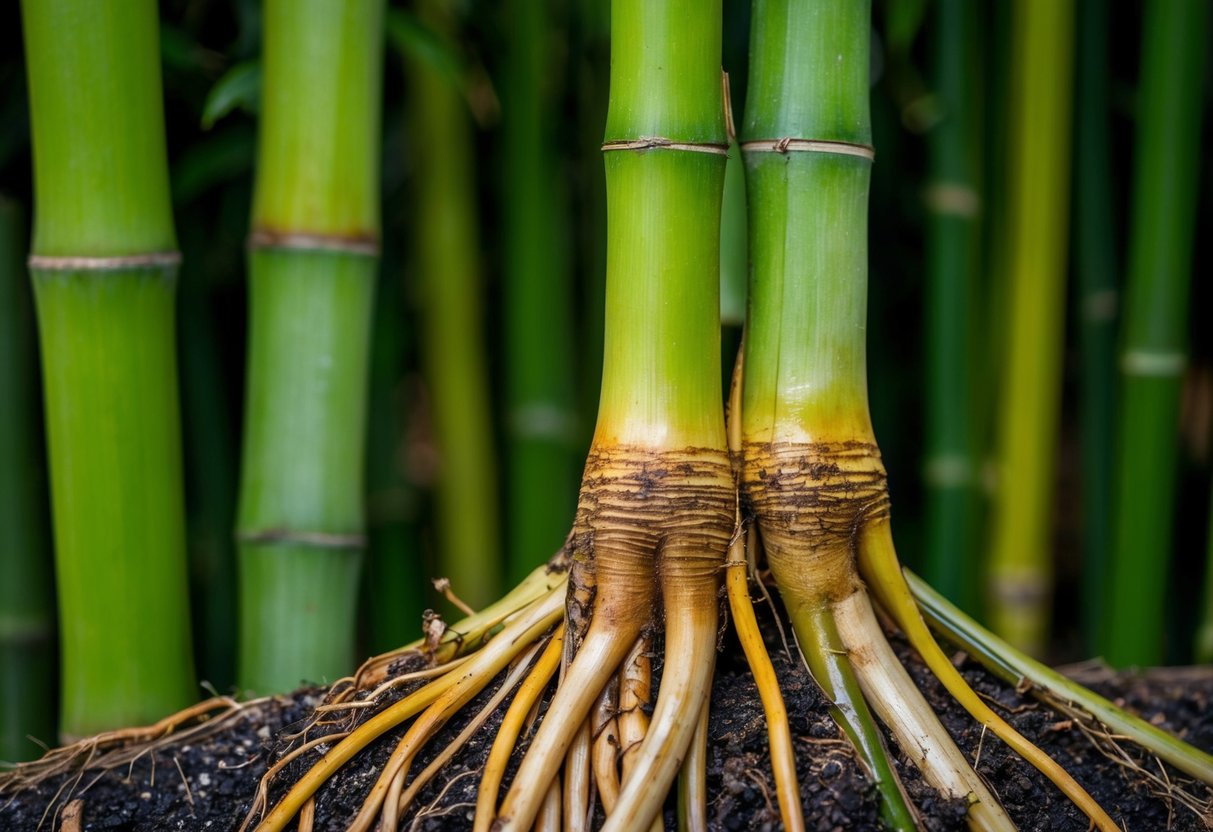
Recognizing unhealthy bamboo roots is crucial for maintaining the plant’s health. You can look for visual signs as well as use your senses to identify potential root problems.
Visual Signs of Unhealthy Roots
When you check the roots, begin by looking closely at their color. Healthy bamboo roots are usually white or light tan. If you notice black, gray, or dark brown roots, this is a clear sign of trouble.
Another important sign is the texture. Healthy roots feel firm and dense. On the other hand, roots that appear mushy or spongy indicate rot.
Additionally, check for branching structures. A lack of branching may suggest poor growth. If the roots look one-dimensional or thin, your bamboo could be suffering.
Sensory Indicators of Root Problems
Your sense of smell can also help in identifying root issues. If you detect a rotting odor when examining the roots, this may imply root rot. Healthy roots have little to no smell.
Feel the roots with your hands. Healthy roots should feel resilient and bouncy, while unhealthy roots feel soft. If they easily break apart, that’s another indicator of rot.
By paying attention to both visual signs and sensory indicators, you can better identify unhealthy bamboo roots and take action.
Common Causes of Bamboo Root Issues

When caring for bamboo, it’s crucial to recognize what can harm the roots. Environmental factors and the presence of diseases or pests can significantly affect the health of your bamboo roots.
Environmental Factors
One of the biggest issues you might face is overwatering. When bamboo roots sit in too much water, they can rot. This often leads to brown, mushy roots that signal trouble.
Make sure the pot drains well to avoid this.
On the flip side, underwatering can also be a problem. If your bamboo lacks water, its roots won’t absorb necessary nutrients. This might cause the leaves to yellow.
Additionally, chemicals like chlorine and fluoride in tap water can harm your bamboo. Both can lead to root stress. Use distilled or rainwater when possible.
Also, check the pot size. If the pot is too small, roots can become cramped, leading to poor growth. Ensure there’s good airflow around the roots to help them breathe properly.
Diseases and Pests
Fungal infections are a common threat. A noticeable sign is yellowing leaves, often linked to root problems. If you see algae on the soil surface, it could mean there’s excessive moisture, which encourages fungi.
Pests like mealybugs, mites, and aphids can attack your bamboo too. They suck nutrients from the plant, weakening the roots. Regularly check for any signs of infestation.
Lastly, poor drainage can cause many issues. If water doesn’t flow well through the soil, it can create a breeding ground for rot. Ensure that your bamboo has adequate drainage to keep the roots healthy.
Caring for Your Bamboo’s Roots
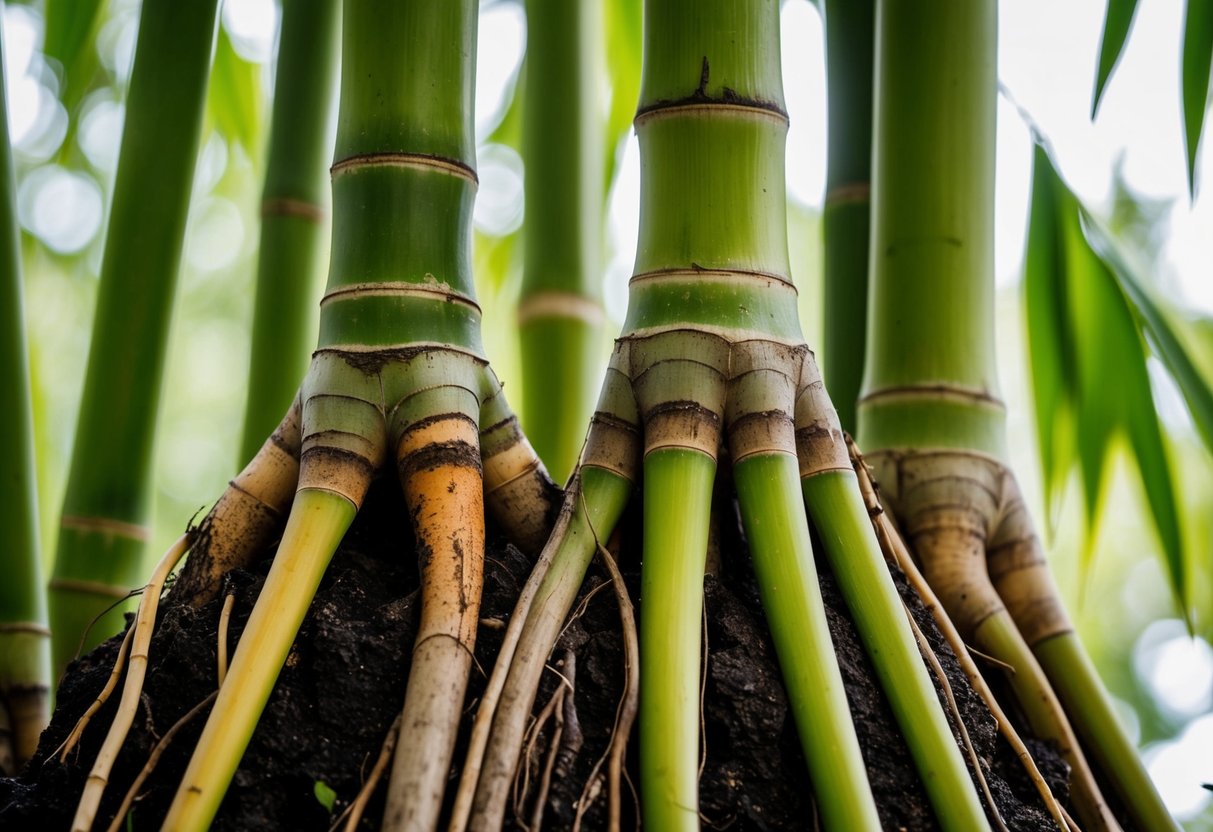
To maintain healthy bamboo roots, you need to focus on proper watering and create the right environment for growth. These two key elements help prevent issues like root rot caused by fungi such as Fusarium solani and Rhizoctonia solani.
Proper Watering Techniques
Proper watering is essential for keeping your bamboo roots healthy. Bamboo enjoys moist soil but can suffer from overwatering. Here are some tips:
- Watering Frequency: Water your bamboo when the top inch of soil feels dry. Depending on your climate, this may be once a week or more often during hot weather.
- Drainage: Ensure that the pot or area has good drainage to prevent standing water. This stops root rot, which can be caused by poor drainage.
- Signs of Overwatering: Yellowing leaves or mushy roots indicate too much water. If you see these signs, reduce your watering.
Using these techniques helps create a balanced moisture level that supports a thriving bamboo root system.
Choosing the Right Environment
The environment around your bamboo also plays a big role in root health. Follow these guidelines:
- Soil Choice: Use well-draining soil rich in organic matter. This helps retain some moisture while allowing excess water to escape.
- Light Requirements: Bamboo likes bright, indirect sunlight. Direct sunlight can dry out roots too quickly or scorch the leaves.
- Temperature and Humidity: Keep your bamboo in a warm spot with high humidity if possible. This helps maintain moisture in the soil and supports healthy growth.
By providing the right environment, you help your bamboo avoid diseases like lucky bamboo root rot and promote strong root health.
Special Considerations for Lucky Bamboo
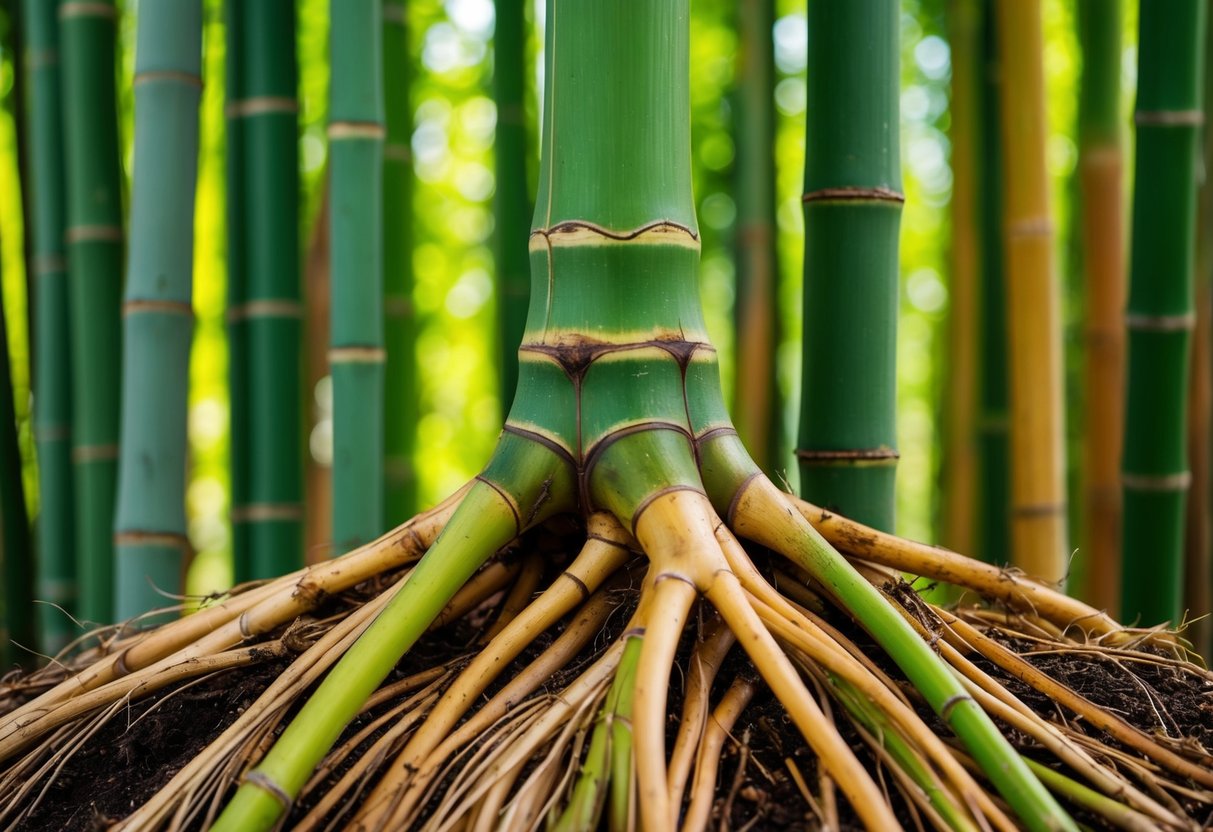
Caring for lucky bamboo, or Dracaena sanderiana, involves understanding its unique needs. Paying attention to root health, watering, and light exposure can help keep your plant thriving.
Unique Needs of Dracaena Sanderiana
Lucky bamboo thrives best in filtered light. Avoid direct sunlight as it can scorch the leaves.
Low-light conditions are suitable and can prevent stunted growth.
Watering is crucial. Too much water can lead to overwatered lucky bamboo, causing root rot, yellowing leaves, and wilting.
Always ensure your plant’s roots are submerged in clean water. Change the water every two weeks to avoid algae buildup.
Additionally, be mindful of the environment. Your lucky bamboo prefers room temperature and should not be exposed to drafts or sudden temperature changes.
This will help maintain its health and promote prosperity in your home.


