

What is the Best Fertilizer for Bamboo? Tips for Thriving Growth
If you want to grow healthy bamboo, choosing the right fertilizer is key. Bamboo thrives on specific nutrients that help it flourish, and finding the best fertilizer can make a big difference. A balanced fertilizer with a ratio of 5-3-3 is ideal for bamboo, providing the necessary nitrogen and micronutrients it needs for robust growth.
Understanding how and when to use fertilizer can take your bamboo gardening experience to the next level. Many gardeners prefer slow-release granules for convenience, while others opt for quick-release liquids that provide immediate results.
As you explore your options, consider what fits best with your gardening routine to ensure your bamboo is healthy and vibrant.
Get ready to dive deeper into the world of bamboo fertilization. From organic choices to specific NPK ratios, you’ll learn everything you need to nurture your bamboo plants successfully.
Understanding Bamboo Nutritional Needs

Bamboo plants grow quickly and need specific nutrients to thrive. Knowing the right balance of N-P-K (Nitrogen, Phosphorus, and Potassium) is essential to keep your bamboo healthy. It’s also important to recognize signs of nutrient deficiencies that could hinder growth.
The Importance of N-P-K Ratios for Bamboo
The N-P-K ratio is crucial for bamboo health. Nitrogen promotes lush green leaves and overall growth. For bamboo, a high nitrogen content helps prevent stunted growth.
A good N-P-K ratio for outdoor bamboo is usually around 20-5-5. This means there is a larger amount of nitrogen in the fertilizer compared to phosphorus and potassium. For indoor bamboo, you might want a balanced ratio, such as 2-2-2.
Using the right fertilizer at the right time can lead to stronger, healthier plants. It’s usually best to fertilize in the spring or early summer when your bamboo is actively growing.
Recognizing Nutrient Deficiencies in Bamboo
It’s vital to watch for signs of nutrient deficiencies in your bamboo. Yellowing leaves often indicate a lack of nitrogen, which can lead to poor growth. If you notice that your bamboo isn’t growing well or looks weak, it might be time to check its nutrient supply.
Phosphorus deficiencies may cause bamboo to have poor root development, making it more susceptible to stress. A lack of potassium can also affect overall health, leading to problems with disease resistance.
You might want to inspect your bamboo regularly. Healthy plants should have vibrant green leaves and robust growth. If you see changes, consider adjusting your fertilizer plan to meet your bamboo’s needs.
Selecting the Right Bamboo Fertilizer

Choosing the best fertilizer for bamboo involves understanding the options available and their effects on growth. You want to ensure optimal health for your plants. This section will guide you through different types of fertilizers and their specific benefits for bamboo.
Organic vs. Synthetic Fertilizers
When it comes to bamboo, you can choose between organic and synthetic fertilizers. Organic fertilizers come from natural sources, such as compost or bone meal. They improve soil health over time and are less likely to harm the environment.
On the other hand, synthetic fertilizers are chemically formulated and can provide immediate nutrients. For bamboo, look for a balanced fertilizer with a high nitrogen content, as bamboo thrives in nitrogen-rich environments.
Many gardeners prefer organic bamboo fertilizers because they promote sustainable gardening. However, if you want quicker results, a high-nitrogen synthetic fertilizer might be a good option. Evaluate your gardening goals to choose the right type.
The Benefits of Slow-Release Granules
Slow-release granules are a popular choice for bamboo because they provide a steady supply of nutrients over time. Unlike quick-release options, these granules break down slowly in the soil, reducing the risk of nutrient leaching and making them efficient for long-term use.
You typically want to apply these granules in the spring, allowing bamboo to absorb nutrients during its active growing season. This method minimizes the frequency of application, saving you time and effort.
When selecting a slow-release fertilizer, look for one that has a balanced NPK ratio, ideally with a high nitrogen component. This type of fertilizer is especially useful for maintaining consistent growth and vigor in your bamboo plants.
Liquid Fertilizers for Bamboo
Liquid fertilizers are another effective option for bamboo. They act quickly, delivering nutrients straight to the roots. If your bamboo shows signs of nutrient deficiency, liquid fertilizer can provide a fast remedy.
Choose a liquid fertilizer that is high in nitrogen for best results. This helps support healthy leaf growth and overall plant vitality. You can apply liquid fertilizers every 4-6 weeks, especially during the growing season.
Mix the liquid fertilizer according to package instructions, and water your bamboo thoroughly after application. This ensures that nutrients are absorbed well, promoting healthy growth. Liquid fertilizers are great for gardeners who want to see results quickly.
Fertilizing Techniques for Optimal Bamboo Growth

To help your bamboo thrive, it’s crucial to focus on when and how you fertilize. Understanding the best timing and effective application methods can lead to healthier plants and better growth.
Timing and Frequency of Fertilization
The best time to fertilize bamboo is in early spring, just as new shoots begin to emerge. This timing helps support the fresh growth. You may also consider a second application in mid-summer for continued support.
A light application in early fall is useful to prepare your bamboo for winter. Assess the soil moisture before each fertilization. If the soil is too dry, watering it first will help the fertilizer work better. Stick to a regular fertilization schedule to keep your bamboo healthy throughout the year.
Application Methods for Different Bamboo Types
There are several effective methods for applying fertilizer to bamboo. Topdressing is a popular technique where you spread fertilizer on the soil surface. This is easy and works well for many types of bamboo.
You might also use fertilizer spikes, which can be inserted into the ground near the bamboo. This method is convenient and allows slow release of nutrients. For better absorption, consider foliar feeding. This involves spraying a diluted fertilizer solution directly onto the leaves.
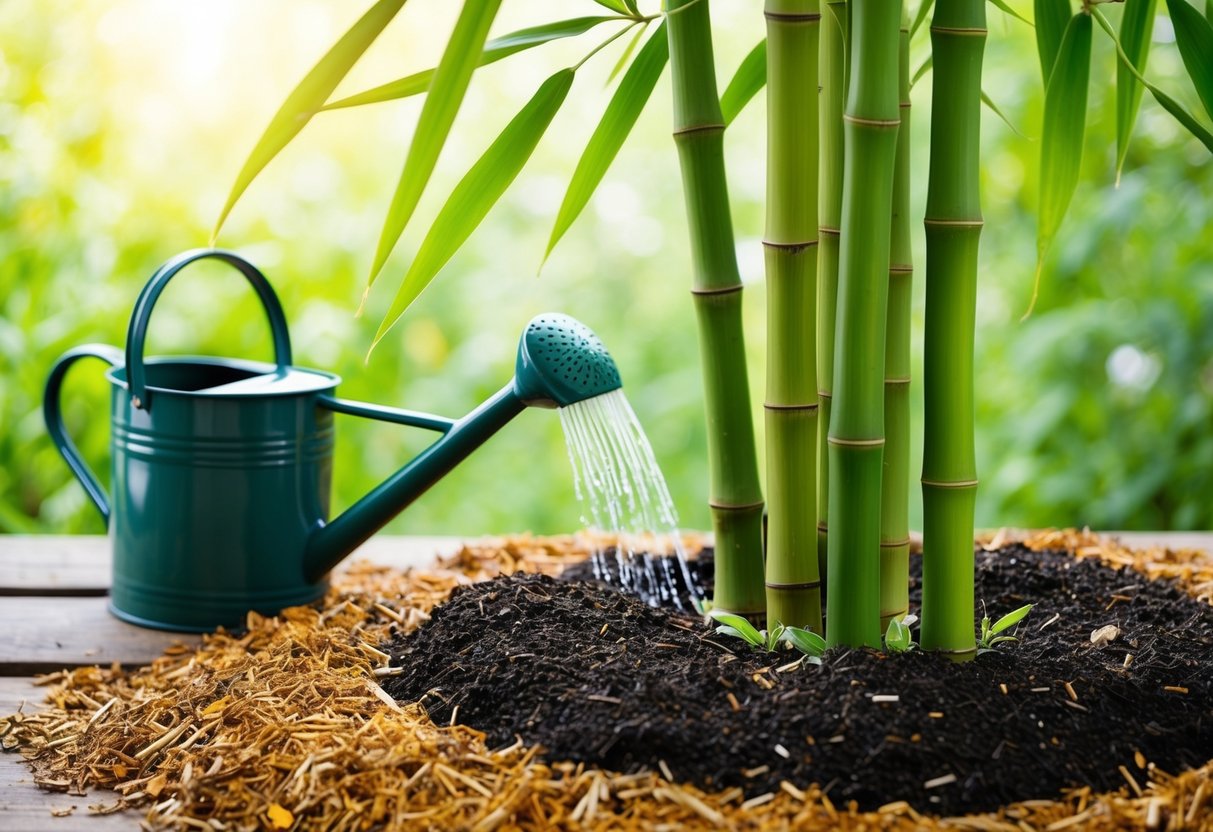
Using organic mulch around the base of your bamboo can also enhance growth. It helps retain soil moisture and adds nutrients as it breaks down. Choose the application method that best suits your bamboo type and growth conditions for optimal results.
Special Considerations for Bamboo Fertilization
When caring for bamboo, it’s important to understand how different types of plants and their environments affect fertilization. The needs of newly planted bamboo can differ greatly from those of established plants. Additionally, whether your bamboo is growing in containers or in a garden affects how you should approach fertilization.
Fertilizing Newly Planted vs. Established Bamboo
Newly planted bamboo requires careful attention to fertilization. Right after planting, avoid heavy fertilization. Instead, use a light, balanced fertilizer to help with soil preparation and to promote optimal growth. This allows the roots to establish without the risk of burning.
For established bamboo, you can apply fertilizers more liberally. These plants benefit from feeding in early spring and mid-summer, especially clumping bamboo and running bamboo. Using organic options can enhance vibrant foliage and strengthen stems, supporting healthy bamboo growth throughout the season.
Caring for Bamboo in Containers vs. Gardens
Potted bamboo plants have specific needs compared to those in a garden. In containers, the soil can quickly become depleted of nutrients. It’s essential to use a slow-release fertilizer to ensure your bamboo gets the nutrition it needs over time.
In contrast, bamboo grown in gardens has more access to nutrients from the soil. When fertilizing garden bamboo, focus on using fertilizers that match your bamboo species. This helps mitigate environmental stresses and supports healthy growth, whether it’s a tropical variety or a hardy type suited for cooler climates.
Preventing Over-Fertilization and Its Effects
Over-fertilizing can harm your bamboo, leading to weak stems and spindly growth. You should follow the recommended amounts based on your bamboo type. A simple rule is to start with less fertilizer and increase as necessary, especially for newly planted bamboo.
Monitor your plants closely. If you notice yellowing leaves or stunted growth, you might be over-fertilizing. Adjust your fertilization schedule and amounts. Keeping a consistent routine supports healthy bamboo without the risks associated with excess nutrients.


