

Low-Maintenance Garden Ideas on a Slope: 25 Easy Tips for Beautiful, Stress-Free Landscaping
Gardening on a slope can feel tricky, but honestly, it doesn’t have to be a huge hassle. Maybe you worry about keeping plants alive or stopping soil from sliding away, but it’s not as hard as it seems.
With the right ideas, you can turn a sloped yard into a beautiful spot that barely needs any extra effort. That’s a win, right?

Low-maintenance garden ideas on a slope let you enjoy your outdoor space without spending hours on chores. These tips focus on easy plants, clever design, and simple fixes that keep your garden sturdy and good-looking.
Before you know it, that sloped yard could be your favorite place to unwind.
1) Plant native wildflowers to attract pollinators and prevent erosion
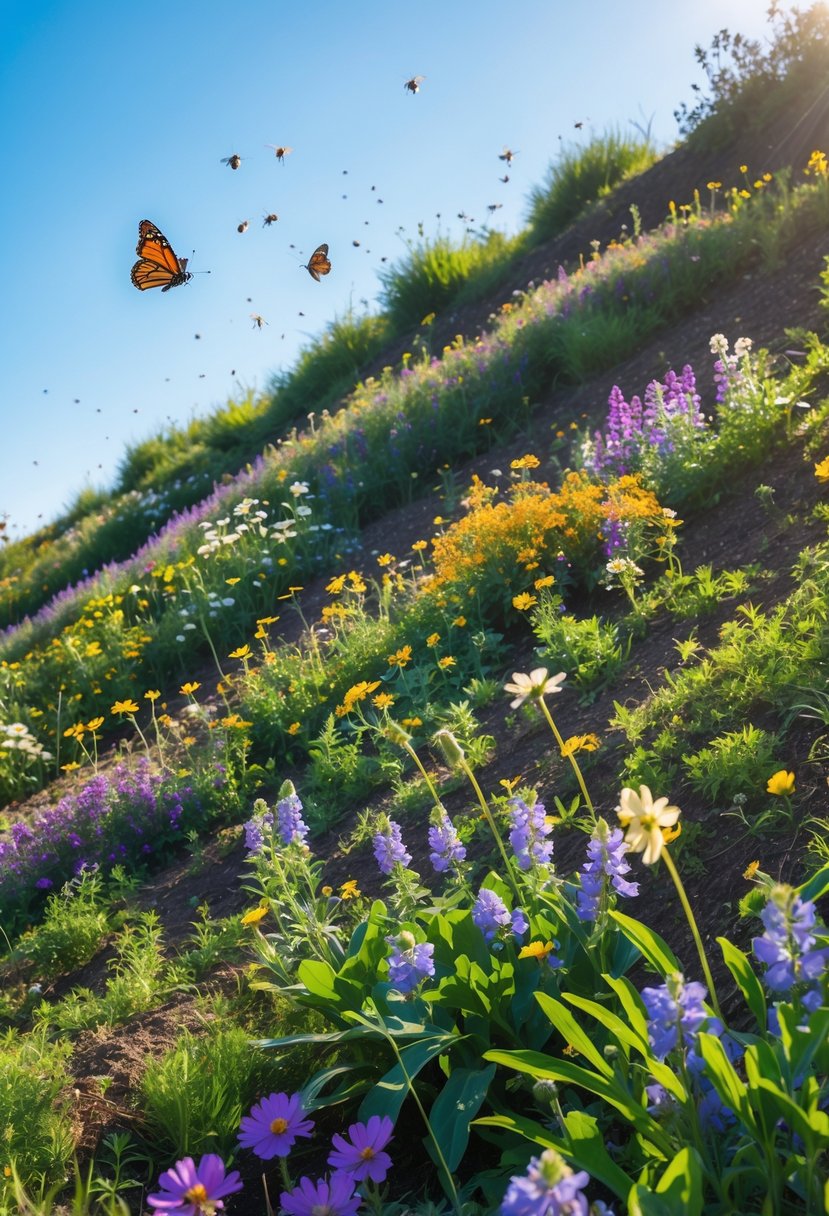
Try planting native wildflowers on your slope. Local bees and butterflies love them, and honestly, they’re just easier to grow.
Native flowers know how to handle your weather, so you won’t have to fuss over them. Their deep roots grab onto the soil, which means less erosion when it rains.
Once these wildflowers settle in, they barely need extra water or fertilizer. It’s a win for you and for the planet.
If you’re curious, you can find simple lists of native wildflowers that help pollinators and keep soil steady at positivebloom.com.
2) Create a rock garden with large stones and gravel for drainage
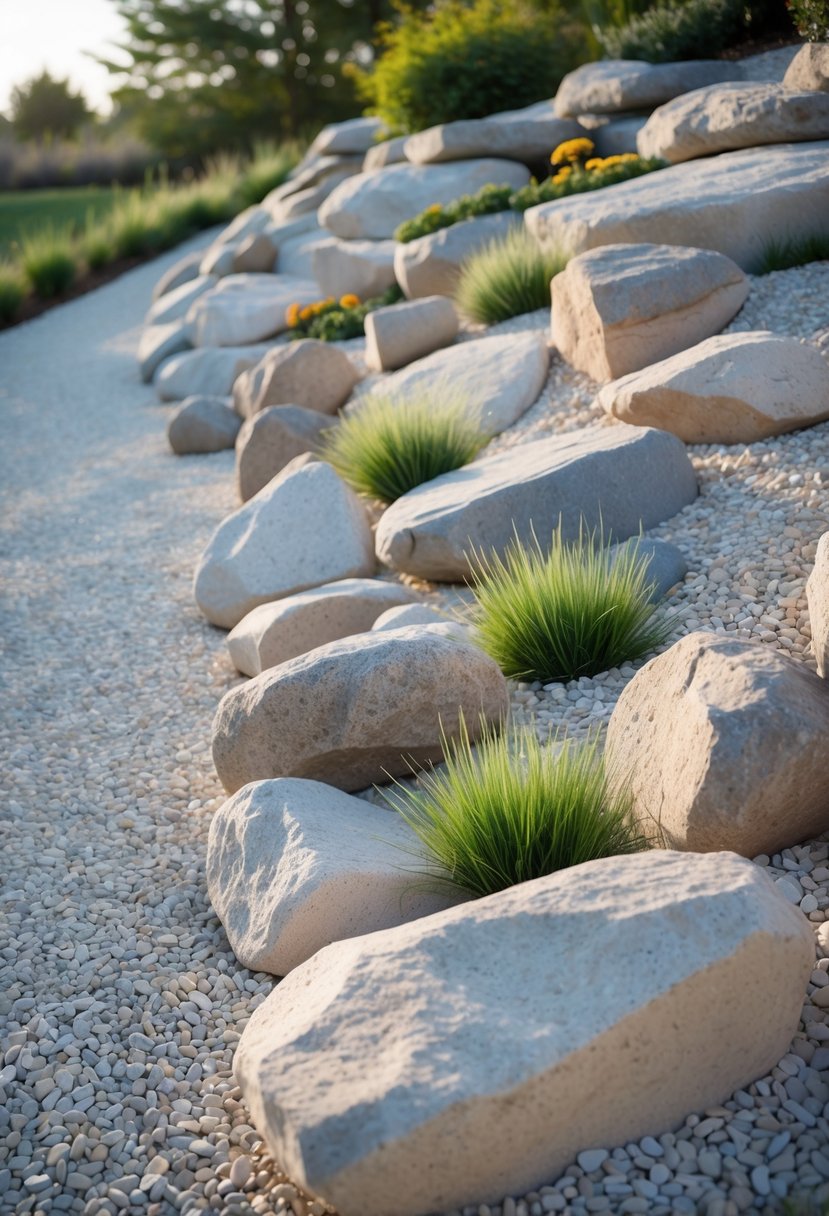
Use big rocks and gravel to help water drain off your slope. That way, your garden won’t get soggy or eroded.
Rocks add texture and always look at home on a hillside. Place the larger stones where water usually collects, then fill in with gravel to steer runoff.
This setup keeps your garden tidy and healthy with barely any work. If you tuck in drought-tolerant plants between the rocks, you’ll have even less to worry about.
Pick plants that don’t need much water, and your slope will stay green with almost no effort.
Want to try it? There’s a handy rock garden drainage guide to get you started.
3) Install terraced planting beds to slow runoff and maximize space

Terraced planting beds slow down water runoff on your slope. They keep soil in place and help your plants thrive.
You get more flat space to grow flowers or veggies, which makes everything easier to reach. No more scrambling up a steep hill just to weed.
Terraces also improve drainage, so your plants won’t get waterlogged. It’s a clever way to make your sloped garden both useful and pretty.
If you want to see how it’s done, check out this guide to building terraces.
4) Use drought-tolerant plants like sedum and lavender
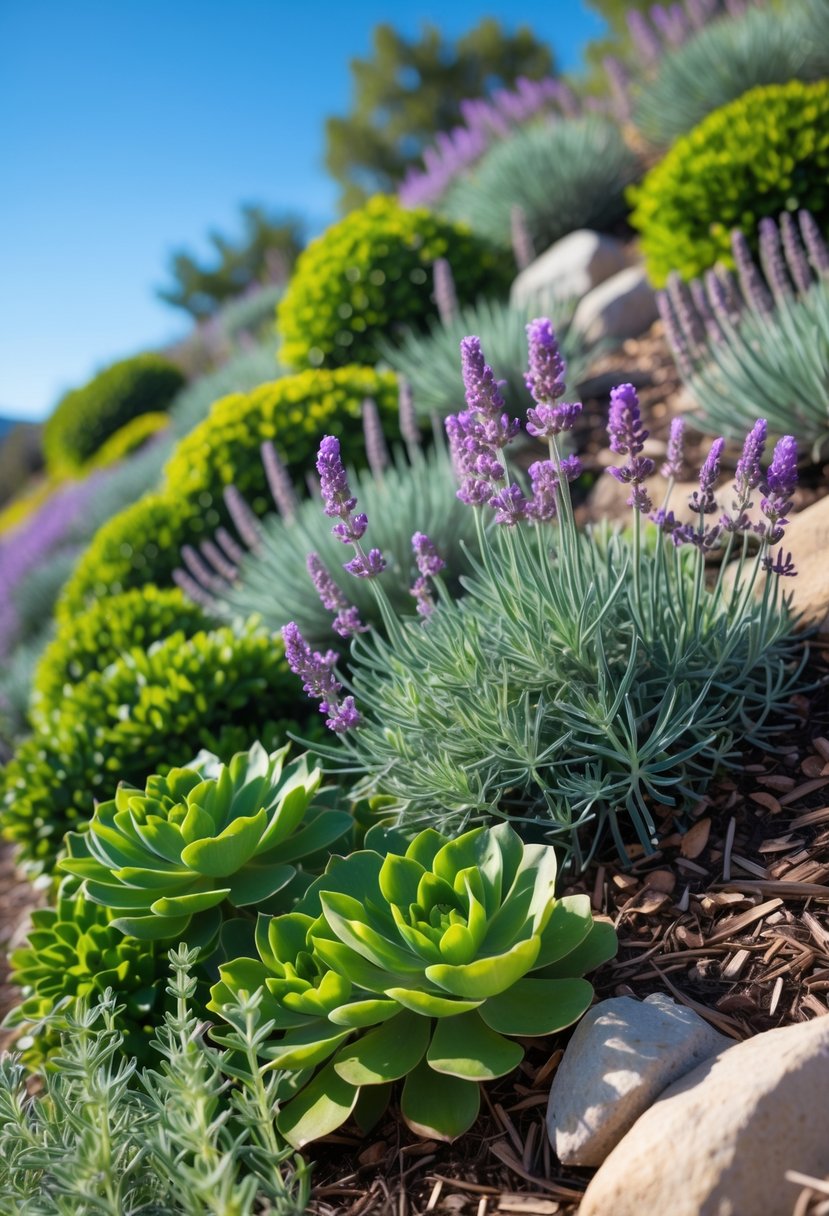
Try drought-tolerant plants like sedum and lavender for your slope. They don’t ask for much water, which means less work for you.
Sedum’s thick leaves store water, so it spreads quickly and covers ground without fuss. Lavender brings color and fragrance, plus it attracts pollinators.
Both handle heat and dry soil like champs, so you can have a beautiful garden with way less effort. Curious about more options? Check out The Pioneer Woman’s guide to drought tolerant plants.
5) Incorporate ornamental grasses such as blue fescue
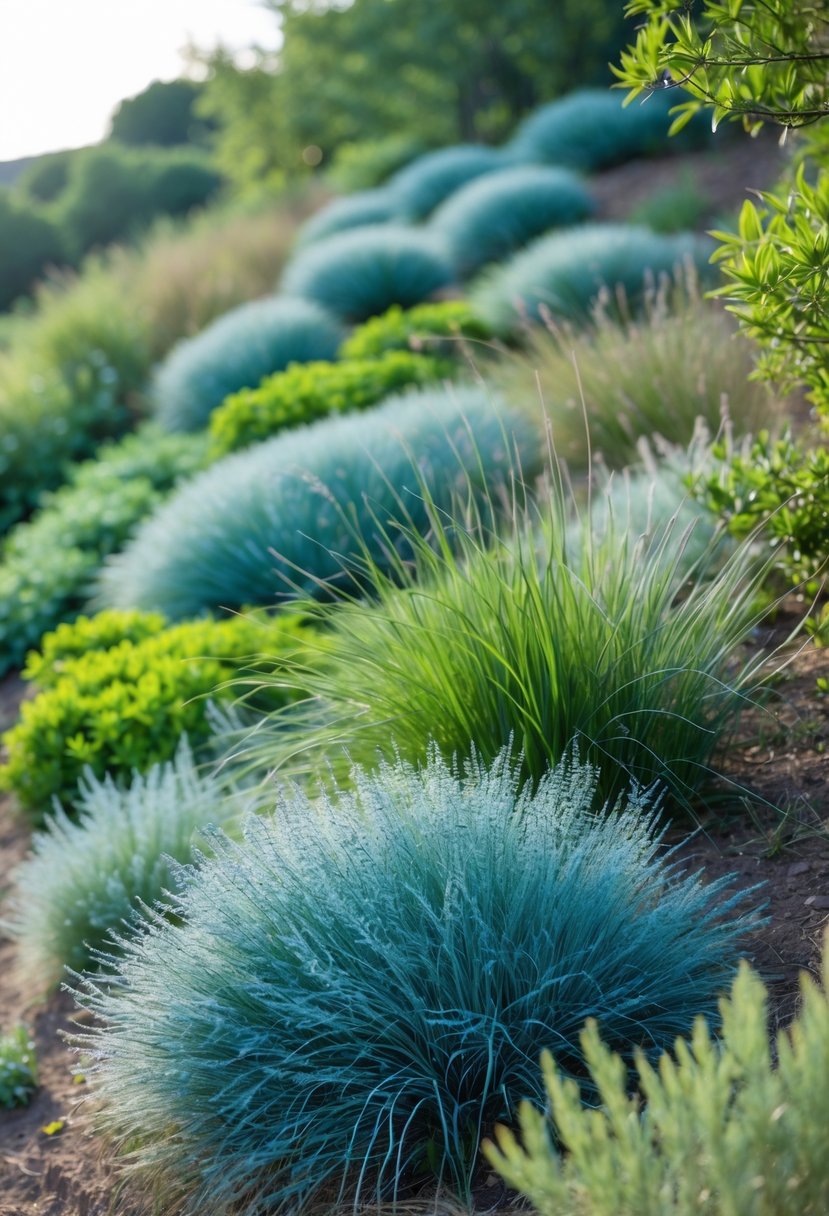
Add ornamental grasses like blue fescue for a no-fuss look on your slope. Blue fescue’s silvery-blue leaves offer color without demanding much attention.
This grass grows in tidy clumps and helps keep soil from sliding away. It works great in rock gardens or as part of a mixed border.
Blue fescue is drought-tolerant and adapts to most spots, so you don’t have to baby it. If you want to learn more, here’s a good blue fescue care guide.
6) Add creeping groundcovers like creeping thyme or ajuga
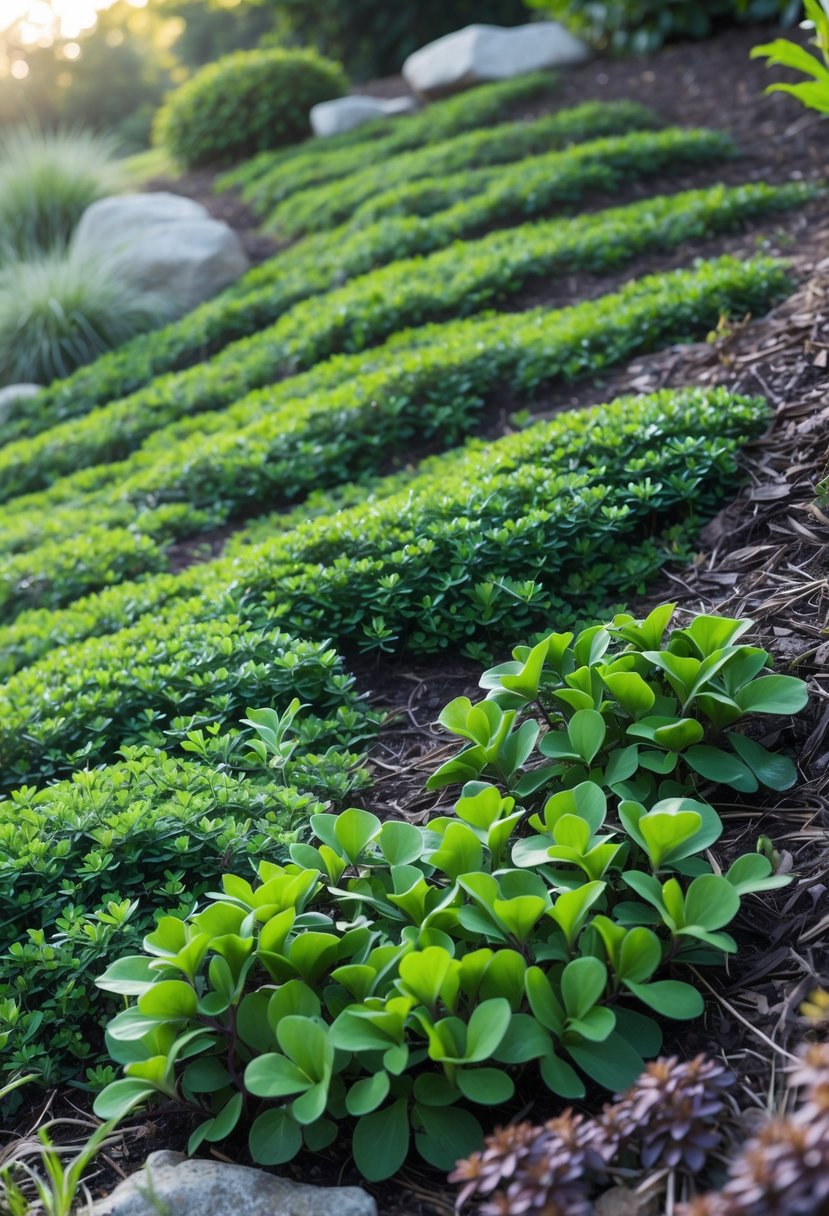
Cover your slope with creeping groundcovers like thyme or ajuga. These plants hug the ground and spread out, locking soil in place.
Creeping thyme smells amazing when you walk on it and survives dry spells. Ajuga brings splashes of color with its leaves and flowers, so your slope never looks dull.
Once they’re established, they barely need attention. They’ll handle sun or partial shade, making them a solid pick for a low-maintenance garden.
Want more ideas? Check out budget groundcover solutions.
7) Build retaining walls with natural stone for stability

Build retaining walls with natural stone to keep your slope steady. These walls hold soil back and stop erosion during heavy rain.
Natural stone looks great in any garden and doesn’t really need much upkeep. Just choose solid stones and stack them carefully.
Prep the base well and add gravel for drainage, and your wall should last ages.
If you want to know how, here’s an easy natural stone retaining wall guide.
8) Plant evergreen shrubs for year-round structure
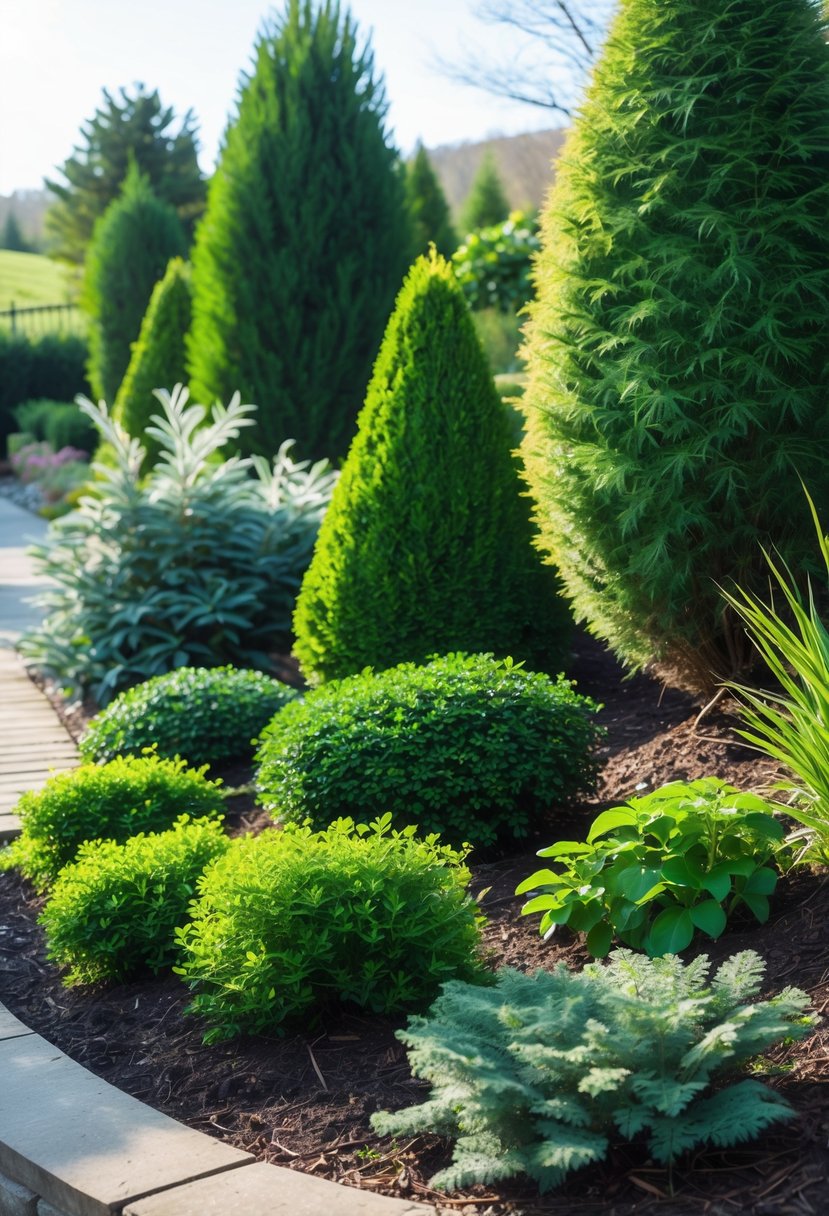
Evergreen shrubs keep your slope looking neat all year long. They bring steady color and shape, even when other plants go bare in winter.
Once you plant them, evergreens barely need trimming or watering. They help anchor the soil, too, which is a big plus for slopes.
Pick low-maintenance evergreens for a tidy, natural look with almost no effort. There are plenty that work in all sorts of climates and can add privacy or beauty to your yard.
Here’s a list of low maintenance evergreen shrubs if you need inspiration.
9) Use mulch to retain moisture and reduce weeds
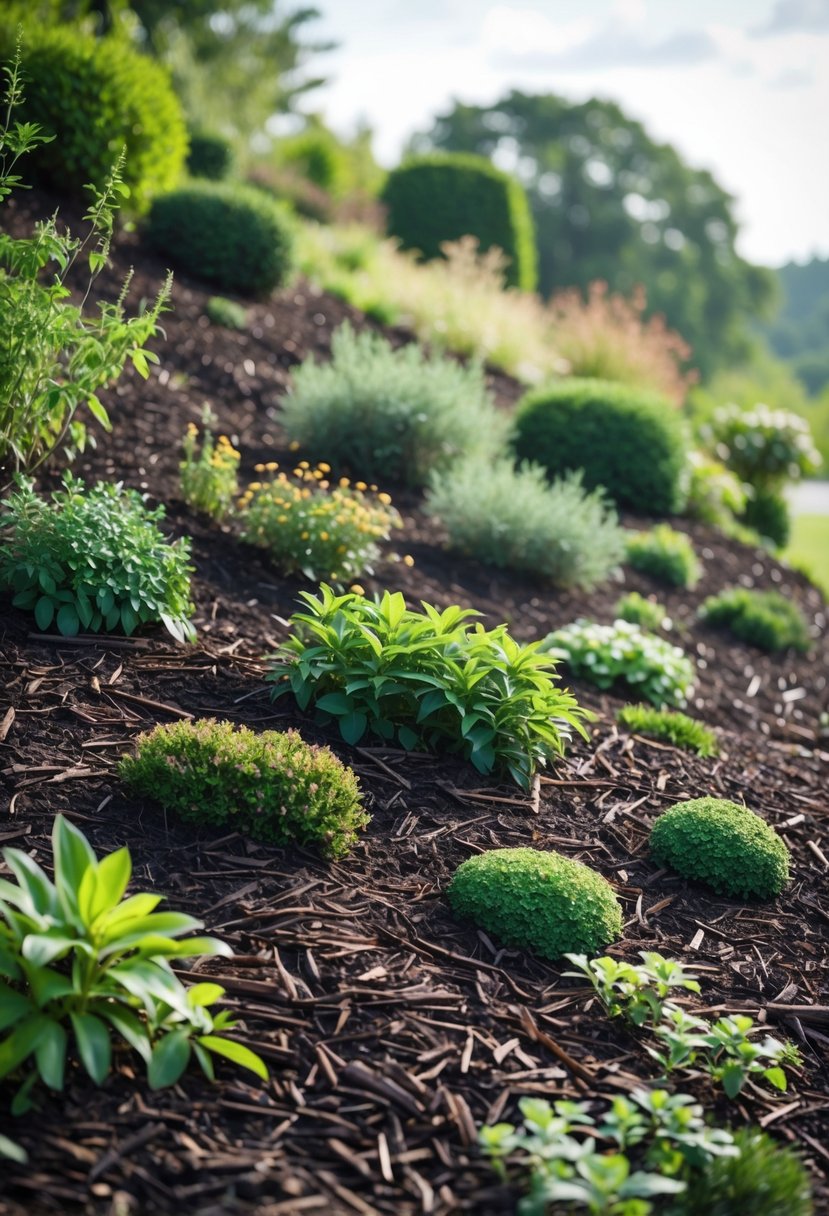
Mulch keeps water in the soil, which is super handy on slopes where water just wants to run off. By adding a layer of mulch, you won’t have to water as often.
It also blocks sunlight, so weeds can’t take over. That’s less weeding for you.
Go for organic mulch like straw, bark, or compost. Spread it about 2-3 inches thick to protect soil and keep your slope looking sharp.
Want to get it right? Here’s a simple mulch guide and another on how to mulch on slopes.
10) Plant deep-rooted plants like ornamental rye to secure soil
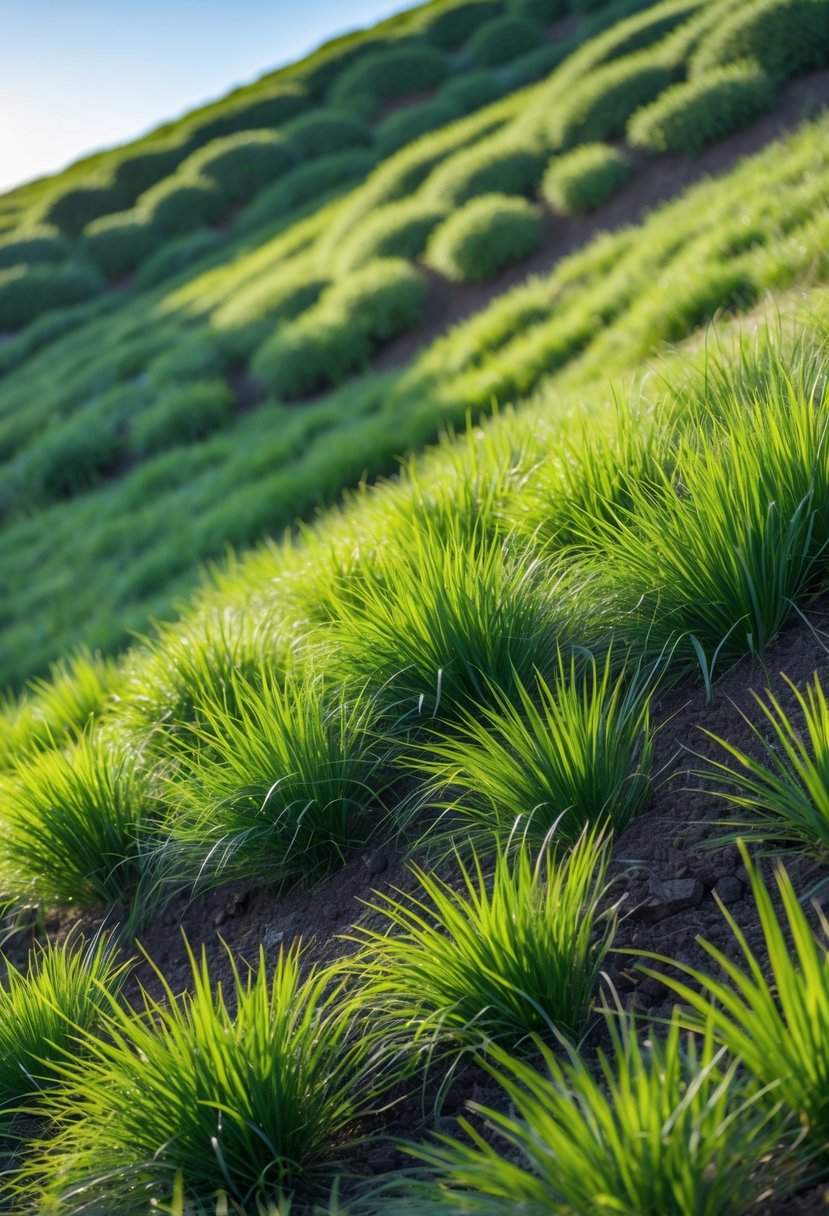
Plant deep-rooted plants like ornamental rye to keep your slope’s soil in place. These plants dig their roots deep, holding everything steady.
Ornamental rye looks good, too, with its tall leaves and seed heads. It adds some movement and texture to your garden.
You won’t need to do much for it—once planted, it can handle most weather without a fuss.
Adding deep-rooted plants is a simple way to make your slope both pretty and sturdy. For more ideas, check out this guide on plants for slopes.
11) Add a wildflower meadow patch for color and low maintenance
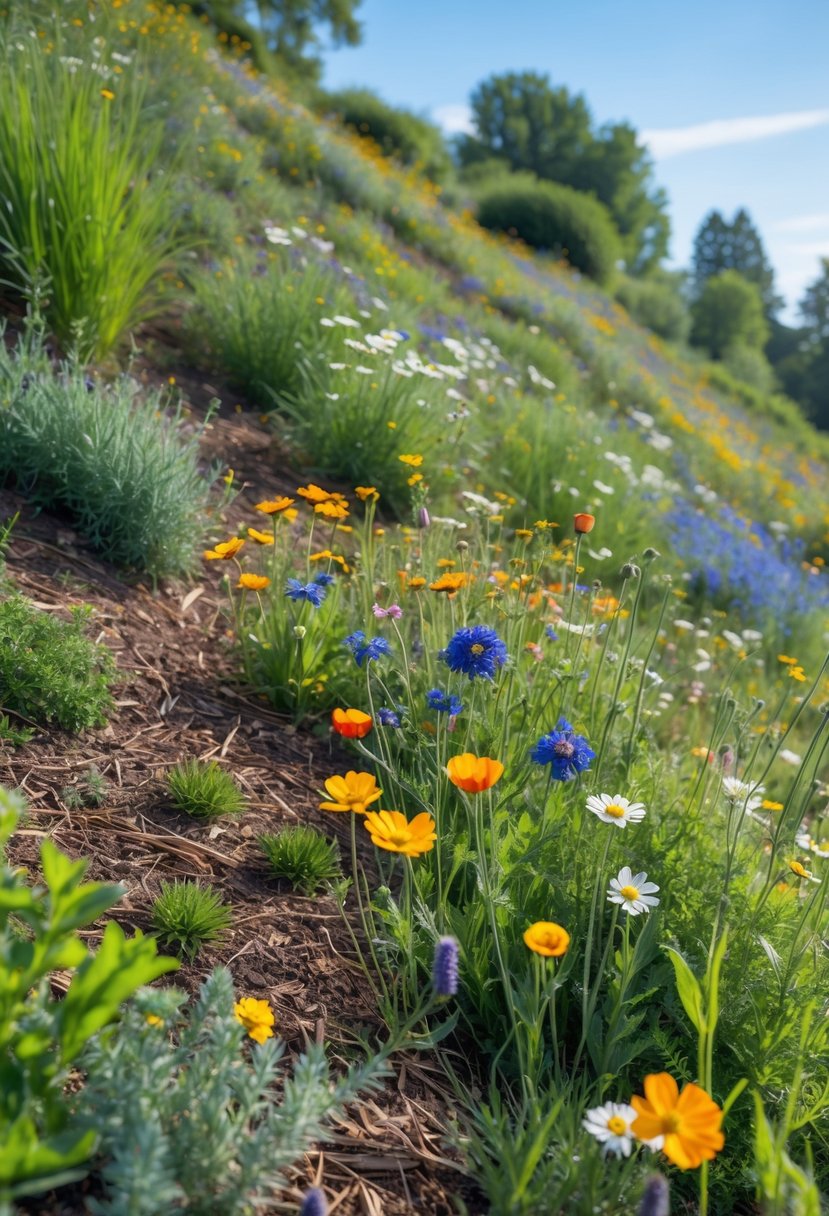
Try adding a wildflower meadow patch for instant color and zero stress. Wildflowers thrive on slopes and don’t ask for much.
Their roots hold the soil together, which helps prevent erosion.
You’ll get bees, butterflies, and birds stopping by—always a nice bonus.
Wildflower meadows are easy to start and fill empty spots with bright shades. Here’s a guide to starting a wildflower patch if you want to give it a shot.
12) Install drip irrigation to focus water on roots
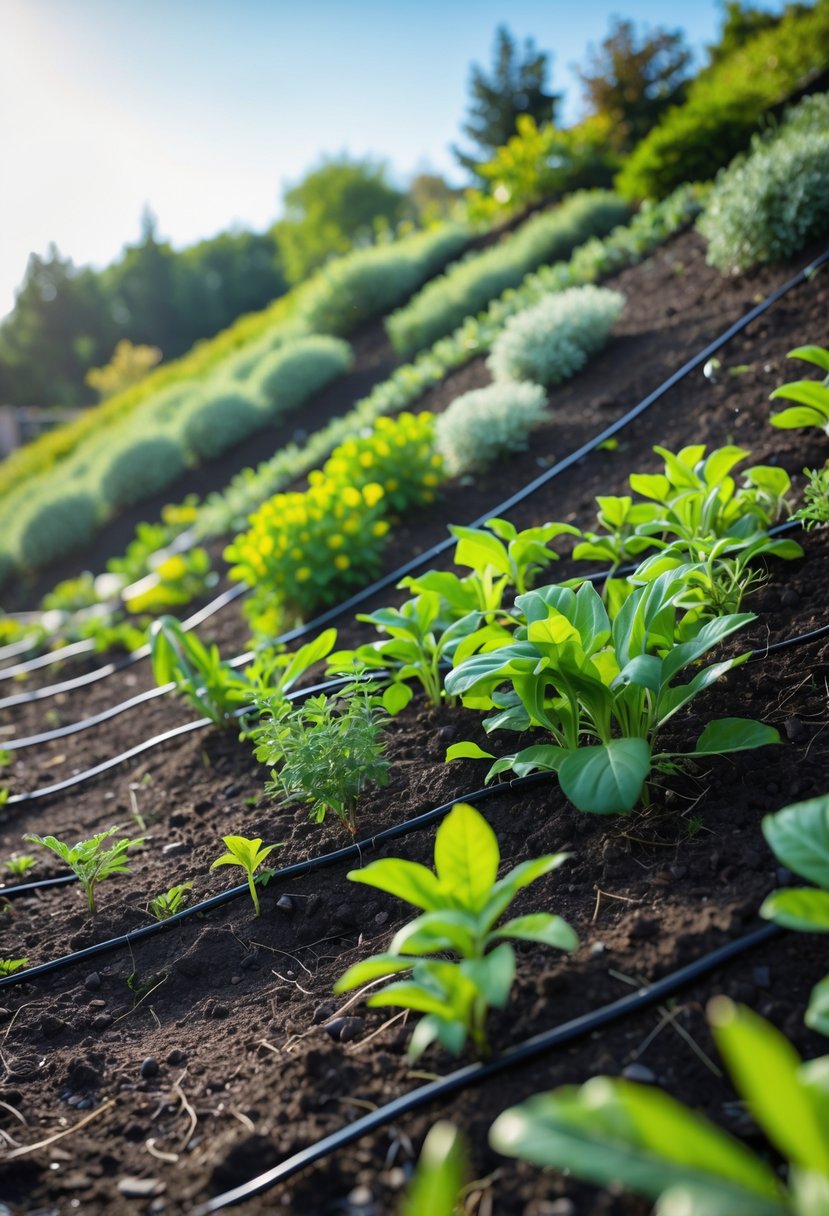
Drip irrigation delivers water right to your plants’ roots, nice and slow. That saves water, especially on slopes where runoff is a pain.
With drip irrigation, your plants get just the right amount of water—no more, no less. You won’t have to water every day.
It’s simple to set up and saves you time. Once it’s running, you can pretty much forget about it.
Need help setting it up? Here’s a step-by-step drip irrigation guide.
13) Use hardy succulents on rocky slopes

Rocky slopes can look amazing when you fill them with hardy succulents. These plants barely need water and shrug off poor soil.
Try succulents like sedums, jade plants, or graptopetalum. Their roots grab onto the ground and help keep the soil from washing away.
They bring all kinds of color and texture, and you don’t have to fuss over them. Pick out succulents that match your weather and sunlight.
That way, your slope basically takes care of itself. For more inspiration, check out this guide on low-maintenance succulents for rock gardens.
14) Create layered rock garden sections with tough perennials

Stacking rocks of different sizes on a slope builds natural-looking layers in your garden. It gives the soil some support and makes things more interesting.
Tuck tough perennials between the rocks. These hardy plants don’t need much watering and help stop erosion.
Pick perennials like sedum, creeping thyme, or rock cress. They fill in gaps and keep things colorful.
This mix keeps your slope low-maintenance and looking good year-round. Learn more about how to design rock gardens on slopes here.
15) Plant native ferns in shaded slope areas
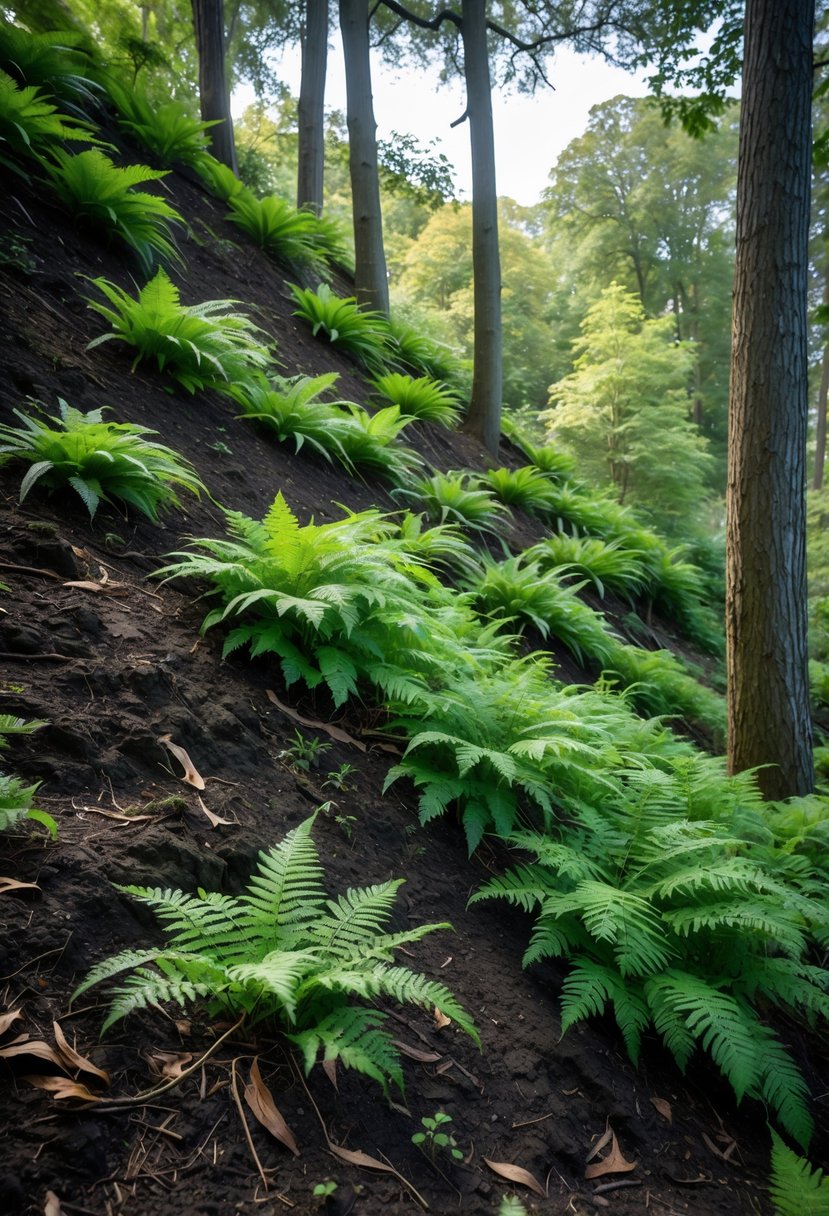
Shady slopes can really shine if you plant native ferns. These plants love low light and keep soil from slipping away.
Once you get them started, ferns don’t need much attention. They stay green all year and add a gentle, wild look.
Go for spreading ferns as ground cover, or choose tall ones for some height. They’re sturdy, easy, and bugs usually leave them alone.
Native ferns also give local wildlife a boost, offering shelter and food. Your slope ends up both beautiful and practical.
Learn more about using native ferns in shade here.
16) Grow daylilies, which are low-maintenance and colorful
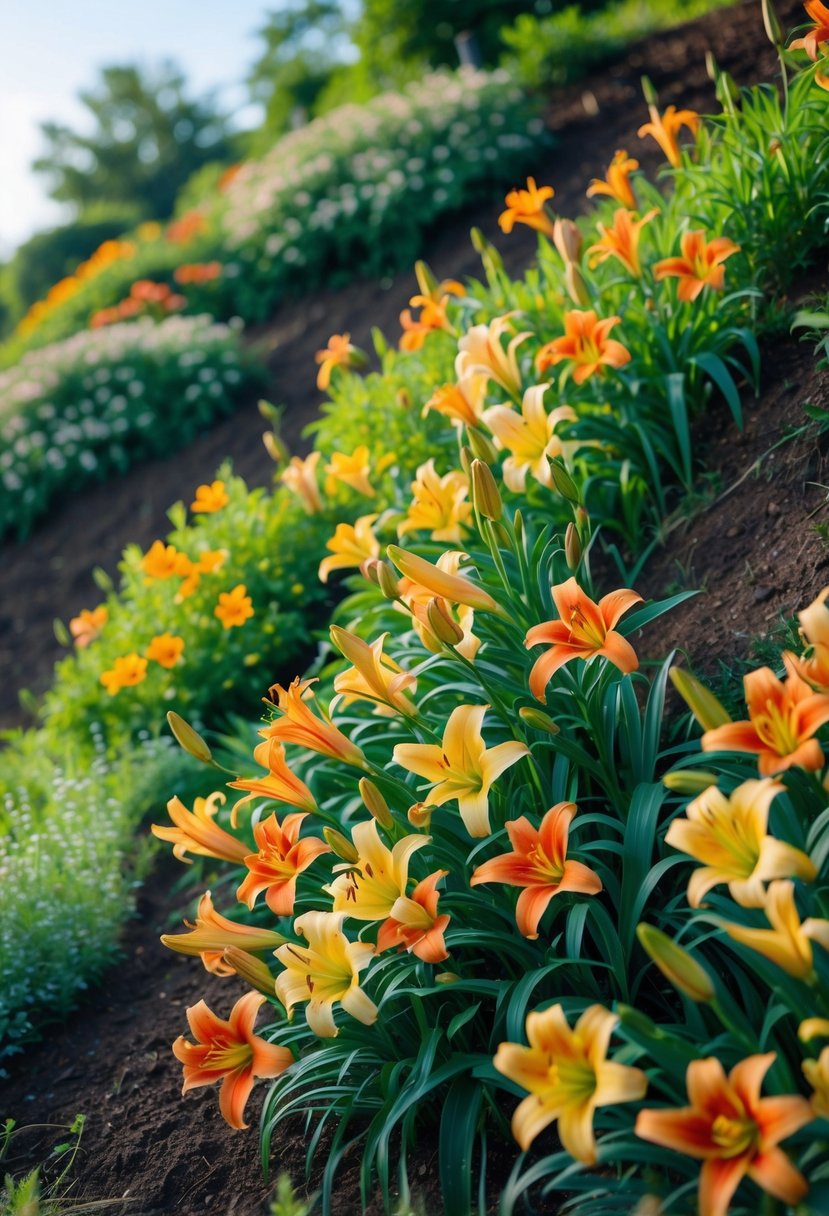
Daylilies bring bright color to slopes with hardly any effort. These flowers grow in all kinds of soil and don’t mind sun or light shade.
Once they’re settled, you barely have to do anything. Daylilies spread on their own, so you won’t need to replant.
Each bloom lasts just a day, but new ones pop up constantly, keeping your slope lively for weeks. They also stand up to pests and drought, saving you time.
You get a cheerful, easy garden that basically looks after itself. For more tips, visit Proven Winners on how to grow daylilies.
17) Add bunch grasses like fountain grass for texture
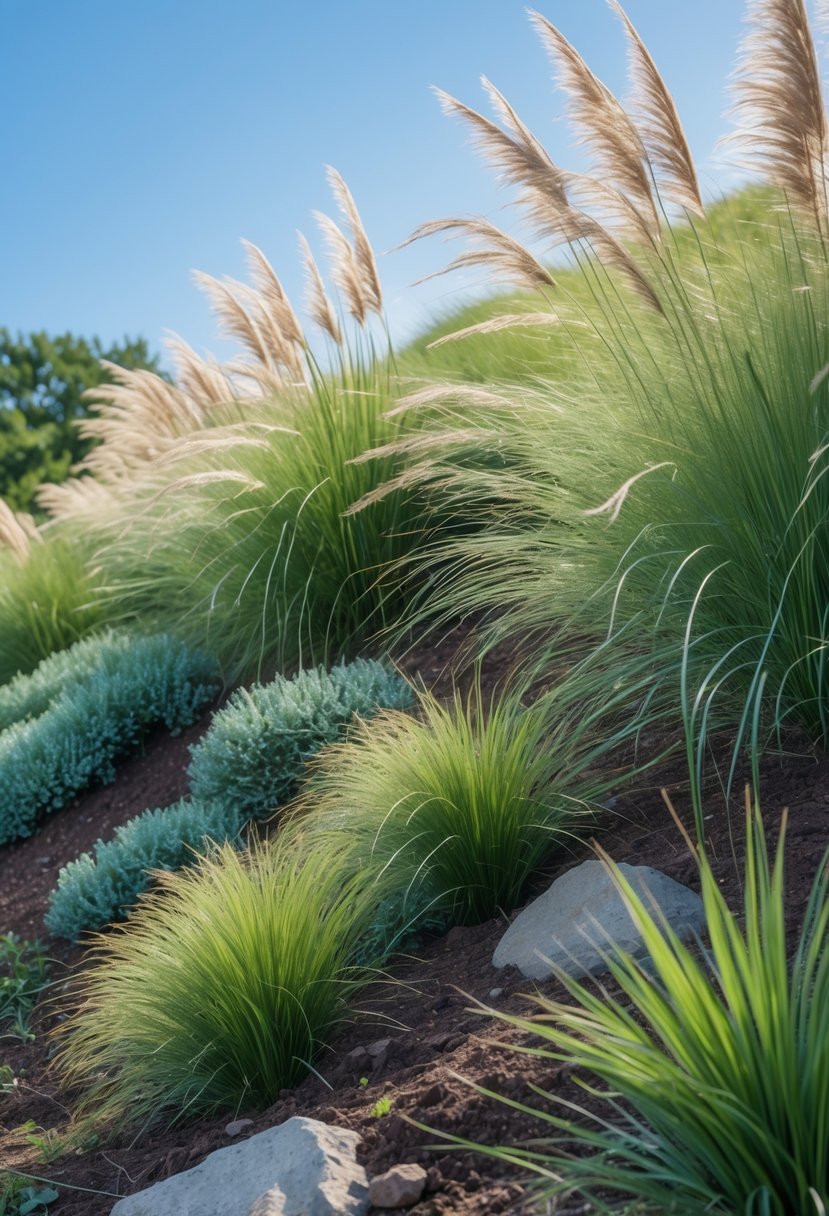
Add bunch grasses like fountain grass for some movement and softness on your slope. These grasses grow in clumps and give your garden a relaxed, flowing vibe.
Fountain grass is super easy to care for. It helps keep the soil in place and sways in the breeze, bringing your garden to life.
Once these grasses settle in, they barely need water. If you want a good-looking garden with minimal work, these are a solid pick.
Learn more about adding texture with ornamental grasses here.
18) Use sage plants for both beauty and drought resistance

Sage brings both color and texture to a slope. Its bright blooms stick around for ages.
If you want a garden that won’t keep you busy, sage is a good bet. It survives dry spells and doesn’t need much water.
Sage also draws in bees and butterflies, boosting your garden’s health. Plus, its strong scent fends off deer and rabbits.
With sage, you get a sturdy, pretty plant that doesn’t ask for much. It’s just right for slopes where watering is a pain.
Learn more about using sage for drought-resistant gardens at mymediterraneangarden.com/types-of-salvia.
19) Plant creeping juniper for erosion control and greenery
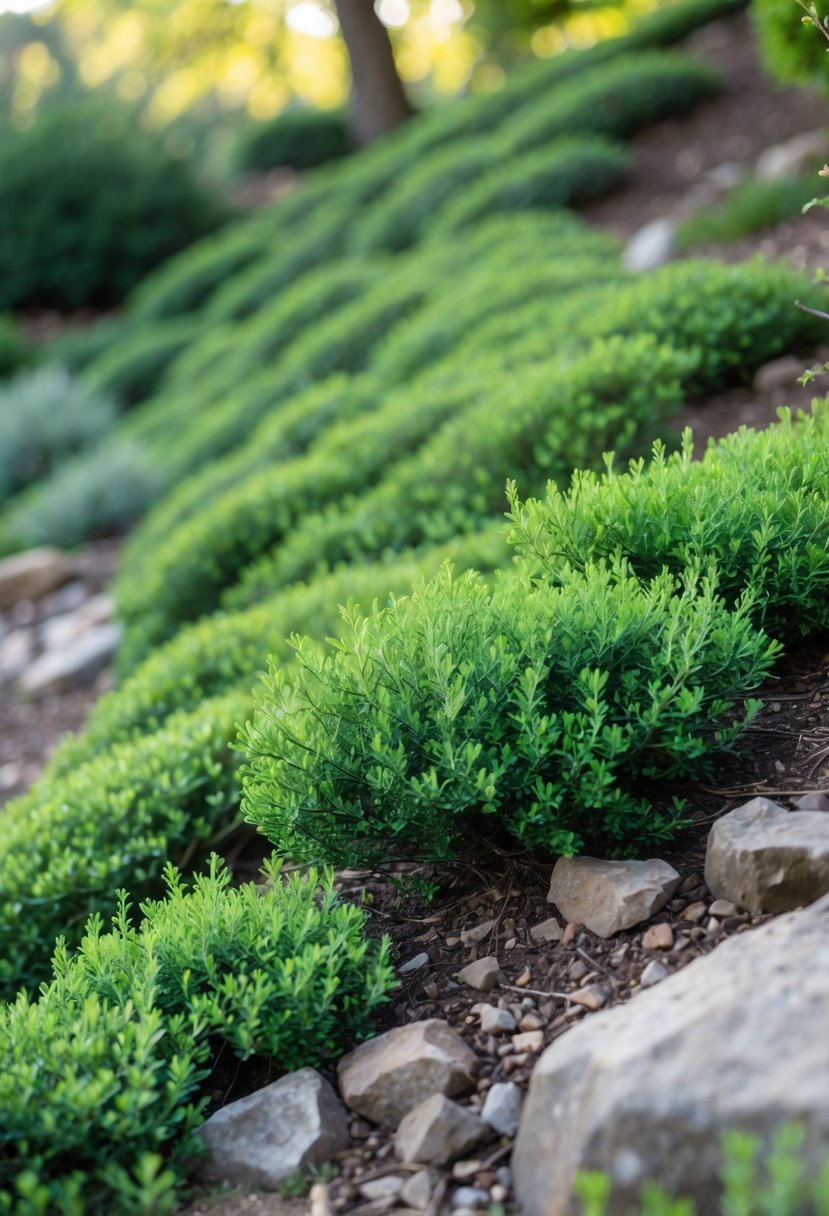
Creeping juniper covers slopes quickly and keeps soil from washing away. Its low, spreading habit makes it perfect for tricky hillsides.
Give it full sun and well-drained soil, and it’ll thrive with almost no help. Once established, creeping juniper handles dry spells easily.
The blue-green leaves stay colorful all year and even turn purplish in winter. You end up with a tough, low-maintenance plant that keeps your slope looking sharp.
Find tips on planting creeping juniper for slopes at how to plant creeping juniper on a slope.
20) Add low-maintenance herbs like rosemary and thyme
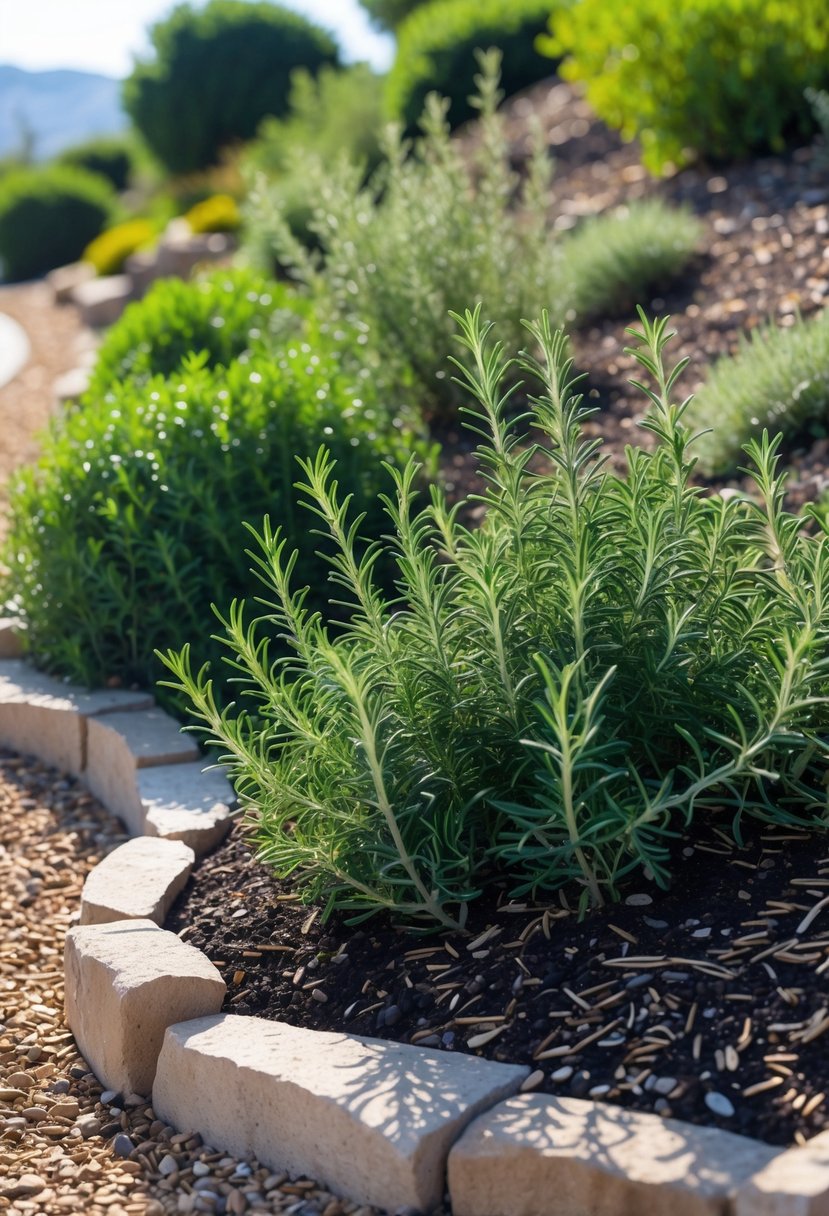
Rosemary and thyme are easy herbs to add to your slope. They love dry, sunny places and don’t need much fuss once they’re growing.
Their roots help hold soil together, which keeps your slope stable. These herbs also smell great and you can use them in the kitchen.
Choosing herbs like these keeps your garden simple and useful. For more ideas on growing these herbs, check out low-maintenance herb pairings that work well together.
21) Use gravel paths to reduce mowing and allow drainage
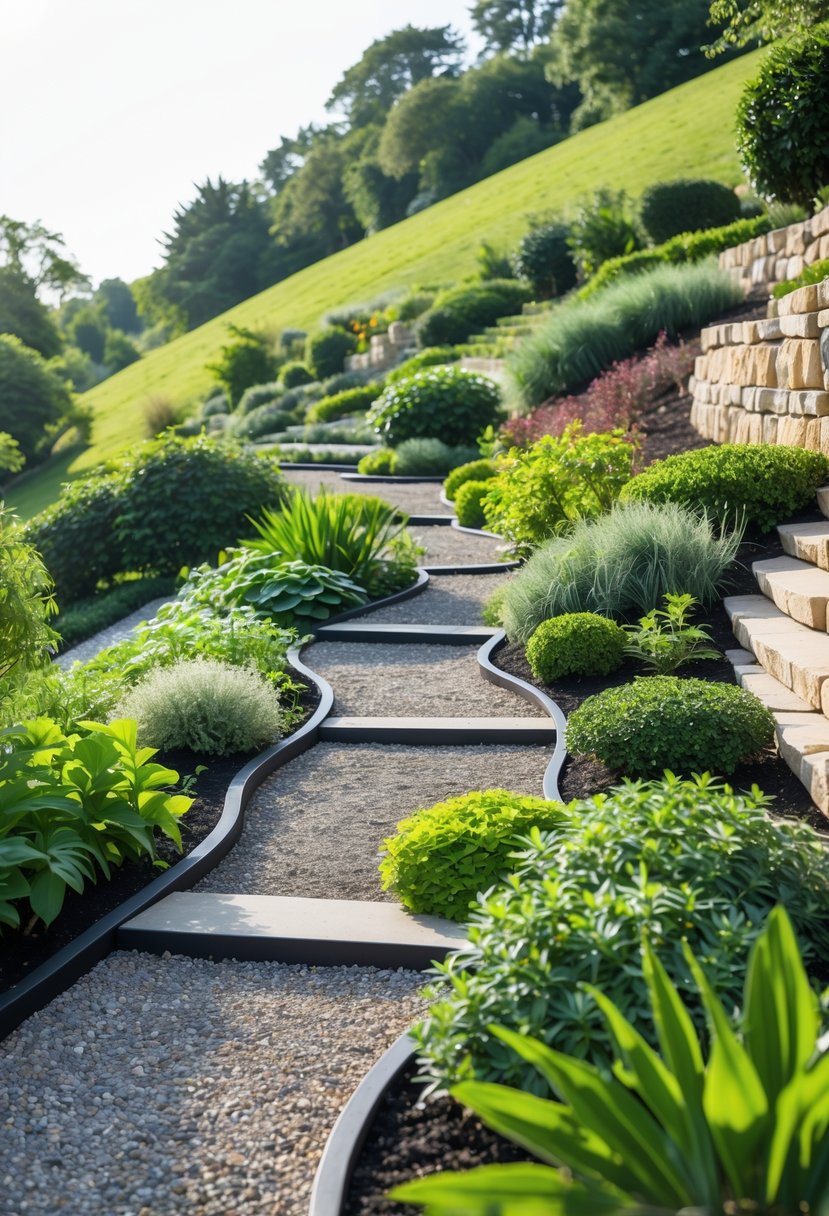
Gravel paths cut down on mowing and make slopes easier to handle. You’ll spend less time working and more time enjoying your garden.
Gravel lets rain soak right in, so you don’t have to worry about puddles or muddy spots. It keeps your paths safe and dry.
To keep gravel from sliding, add a geotextile grid or make a deep, stable base. These tricks help stop washouts.
Using gravel paths keeps your garden tidy and simple to maintain. Learn more about gravel drainage path ideas here.
22) Plant sedges in wet or damp slope areas
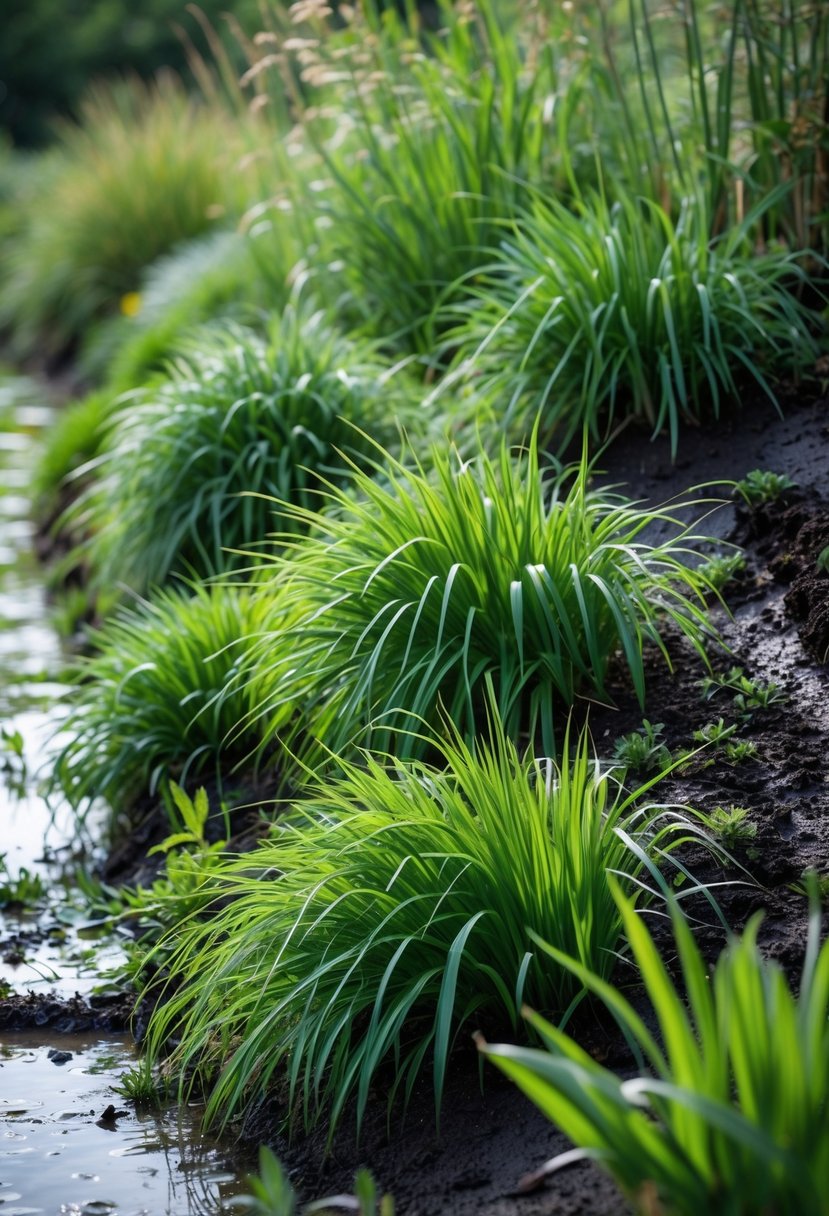
If your slope stays wet or soggy, plant sedges. These tough plants love damp spots and don’t mind slow drainage.
Sedges thrive where other plants might fail. They help keep soil in place and stop erosion.
Try Carex types like palm sedge—they work in sun or shade. Sedges bring texture and stay green most of the year, so your slope always looks lively.
For more ideas on using sedges on slopes, check out this helpful guide on fresh sedges for wet areas.
23) Incorporate boxwood shrubs for neat hedges
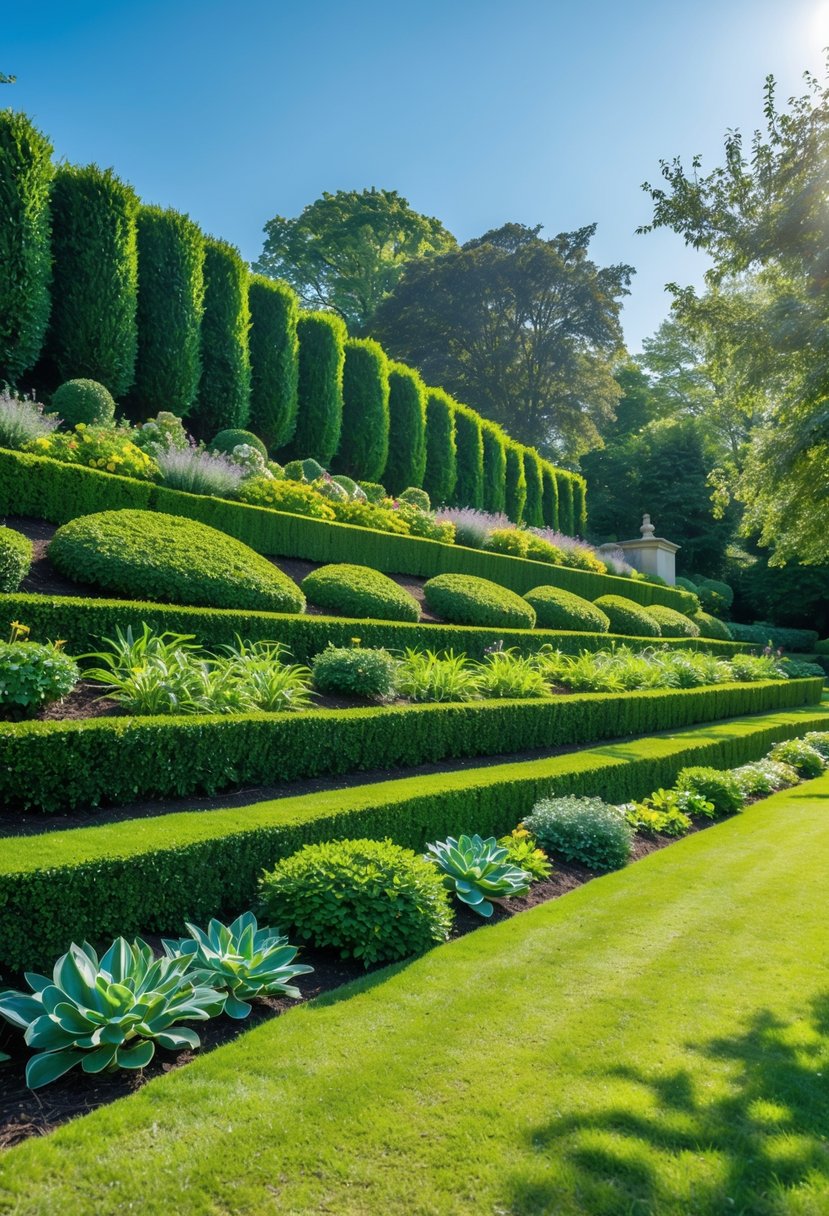
Boxwood shrubs let you create crisp, tidy hedges on a slope. They’re easy to care for and stay green all year.
You can shape boxwoods how you like, so your hedges always look neat. Their roots help keep soil from sliding.
Mix them with flowers or ground covers for extra interest. Boxwoods bring structure and charm, and you won’t have to fuss over them.
For more ideas, check out boxwood landscaping ideas.
24) Grow ornamental kale for winter interest

Ornamental kale brings bold color to your slope in winter. These plants shrug off the cold and keep looking good.
They come in shades of purple, white, and green, with ruffled leaves that stand out. Even when most plants are resting, kale keeps your garden lively.
Just plant them in well-drained soil and give them some sun. That’s about it—low effort, big impact.
Learn more about how to grow ornamental kale for winter color at House Beautiful.
25) Add small flowering shrubs like dwarf spirea

Dwarf spirea gives your slope pops of color without taking over. These shrubs stay small and neat.
They bloom with pretty flowers and have bright leaves that lift any garden. Dwarf spirea is low maintenance and draws in pollinators.
They thrive in sunny spots and don’t need much care. That makes them a smart pick for slopes where upkeep can be tough.
Try adding dwarf spirea to your slope for color and easy care. For more ideas, see dwarf spirea options and tips.
Design Principles for Sloped, Low-Maintenance Gardens
When you’re working with a sloped garden, you’ve got to think about keeping your soil in place. It’s also important to pick plants that get along and build paths that feel safe and easy to walk.
If you pay attention to these details, your garden will look great without demanding a ton of work.
Soil Retention and Erosion Control
Use ground covers and plants with strong roots to hold your soil steady. These roots really anchor things down, especially after a heavy rain.
Add terraces or retaining walls if you want flat spots for planting. Breaking up the slope like this makes the space easier to manage.
Spread mulch over bare soil to slow runoff and keep moisture in. Bark or wood chips work well for this.
Toss in some rocks or small boulders to slow water down and shield the soil. When your soil stays put, your plants are happier and you won’t need to fuss over maintenance as much.
Layered Planting Strategies
Start with low-growing ground covers at the bottom. They blanket the soil and keep weeds at bay.
Add medium-height plants next. Shrubs with deep roots really help hold soil further down.
Put taller plants or small trees up top to block wind and throw some shade.
Pick plants that don’t beg for water or constant care. Drought-tolerant picks like sedums, grasses, or lavender are solid options.
Try to group plants with similar water needs together—it just makes watering less of a chore.
Pathway Planning Tips
Keep paths gentle and easy to walk. Steep paths can get slick and aren’t much fun.
Use switchbacks—those zigzag paths—to cut down on steepness. They make climbing feel way easier.
Choose materials with good grip, like gravel, bark, or textured pavers.
Paths should be about 2-3 feet wide so you’re not squeezing by, and edging helps stop soil from spilling over.
Add steps where you need them on steeper bits. Low and wide steps are safest.
If you keep these ideas in mind, your paths should stay safe and easy to maintain.
You can check out more practical tips for low-maintenance slope gardens at how to design a low-maintenance slope garden.
Long-Term Care and Sustainability
If you want your slope garden to thrive for years, focus on good soil care and smart watering. Try to cut down on water waste and protect plants from erosion.
Mulching and Irrigation Solutions
Mulching really matters for slope gardens. Lay down organic mulch like wood chips or shredded bark to lock in moisture and stop weeds. Go for 2-3 inches deep, but don’t pile it right up against plant stems.
For watering, drip systems do the job best. They send water straight to the roots and help avoid runoff. Soaker hoses under mulch can also work for a slow, steady soak.
Check your irrigation setup now and then, especially after big storms. Make sure water’s reaching where it should, not washing soil away.
Using timers and sensors can help you dodge overwatering and save some time, too.
Choosing Drought-Tolerant Plants
Choose plants that actually handle dry soil and need barely any extra water. Native species usually thrive, since they already know your local climate and soil.
Try deep-rooted options like ornamental grasses, sedums, or lavender. These plants anchor the soil and bounce back during dry spells.
Once they settle in, you won’t have to trim or water them much. That just makes life a bit easier.
Skip thirsty plants that struggle on slopes. They’re a hassle and honestly, they might even make erosion worse.
Mixing groundcovers and shrubs helps control runoff too. Your garden stays full without a bunch of extra work.
Got a tricky slope? You might want to check out more ideas on low-maintenance slope gardening.


