

Bokashi Composting: A Practical Beginner’s Guide
Bokashi composting turns food scraps into fermented organic matter inside a sealed bucket. The process fits neatly into home composting and indoor composting routines because it takes little space, produces minimal odor when managed correctly, and accepts kitchen waste that many traditional compost piles cannot handle.
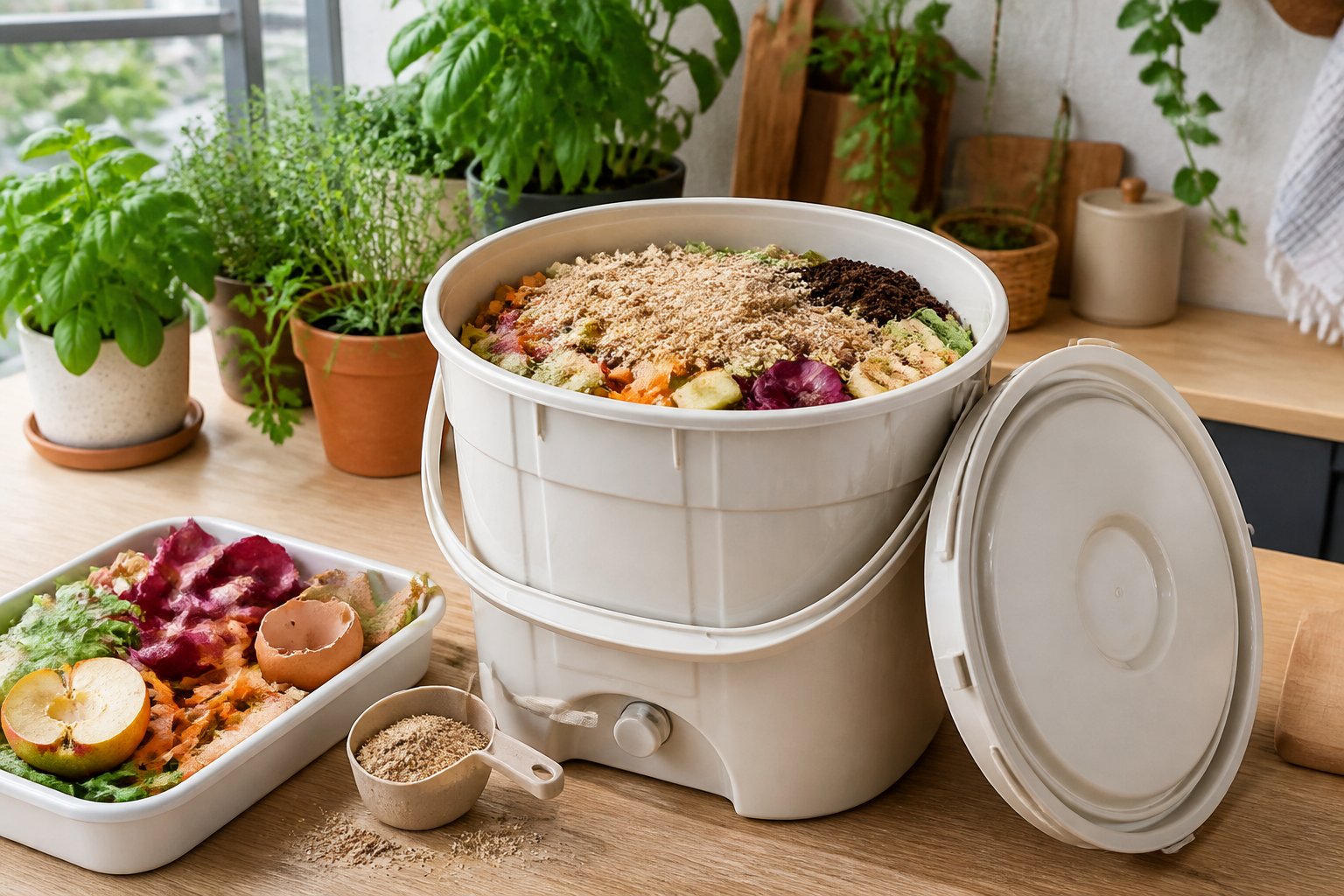
Bokashi composting gives you a practical way to process food waste at home, including cooked leftovers, meat, dairy, and other food scraps. The sealed fermentation stage creates pre-compost, which you later bury in garden soil or add to a compost pile so it can finish breaking down.
You can start with a bucket, bokashi bran, and a reliable sealing routine. Follow the steps below, then adjust the setup to suit your kitchen and available garden space.
How the Bokashi Method Works
The bokashi method preserves and ferments food scraps through anaerobic fermentation in an oxygen-free environment, creating fermented organic matter that finishes in soil.
Why Fermentation Is Different From Composting
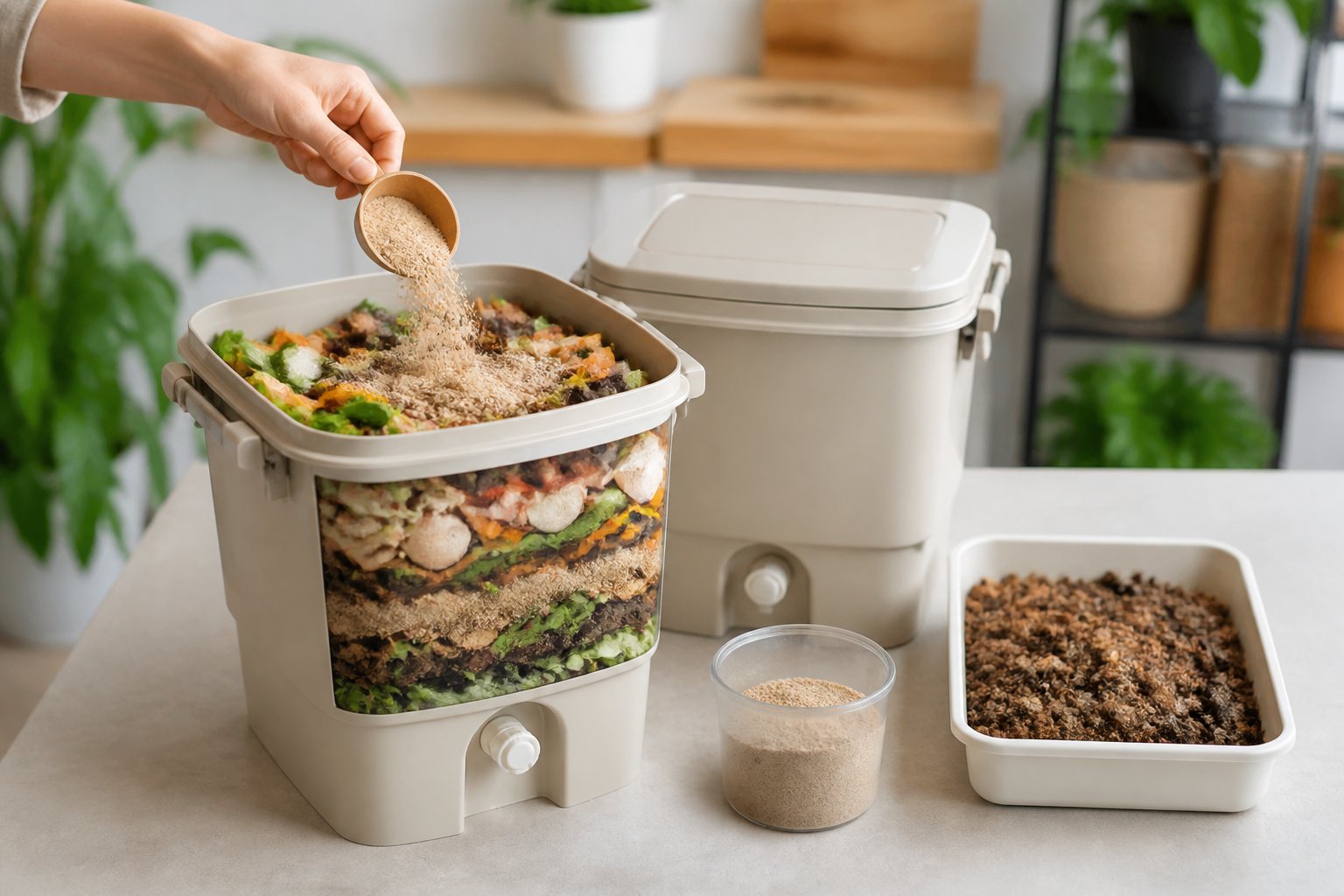
Traditional composting depends on aerobic decomposition, where oxygen-loving organisms break down organic matter. Bokashi fermentation uses a sealed container, inoculated bran, and beneficial microorganisms to pickle the material.
The bucket contents retain their original shape after fermentation. That appearance is normal. The material becomes bokashi pre-compost and needs contact with garden soil or a compost heap to complete decomposition.
What Effective Microorganisms Do
Effective microorganisms, often written as effective microorganisms (EM), include beneficial microbes such as lactobacillus, lactobacilli, yeast, yeasts, and related organisms such as saccharomyces. These cultures support fermentation by producing acids and other compounds that suppress putrefaction.
Many bokashi products use homolactic fermentation, in which lactic acid bacteria convert available sugars into lactic acid. The bran distributes these organisms across each layer of food scraps.
Why an Oxygen-Free Environment Matters
An airtight lid limits oxygen and keeps the fermentation process stable. Pressing each addition removes air pockets, while draining bokashi liquid prevents excess moisture from collecting at the bottom.
Loose seals, uncovered scraps, and skipped bran applications create conditions for rotting microbes. A correctly managed bucket smells acidic, sweet, or pickled, with no strong rotten odor.
Where Bokashi Began in Okinawa, Japan
Bokashi developed in Okinawa, Japan, through work associated with Dr. Teuro Higa at the University of the Ryukyus. His effective microorganisms approach brought together naturally occurring organisms for agricultural and household uses.
The Japanese term bokashi refers to fermented organic matter. Modern home systems apply that fermentation process in a compact bucket before the material enters soil.
What You Need to Start at Home
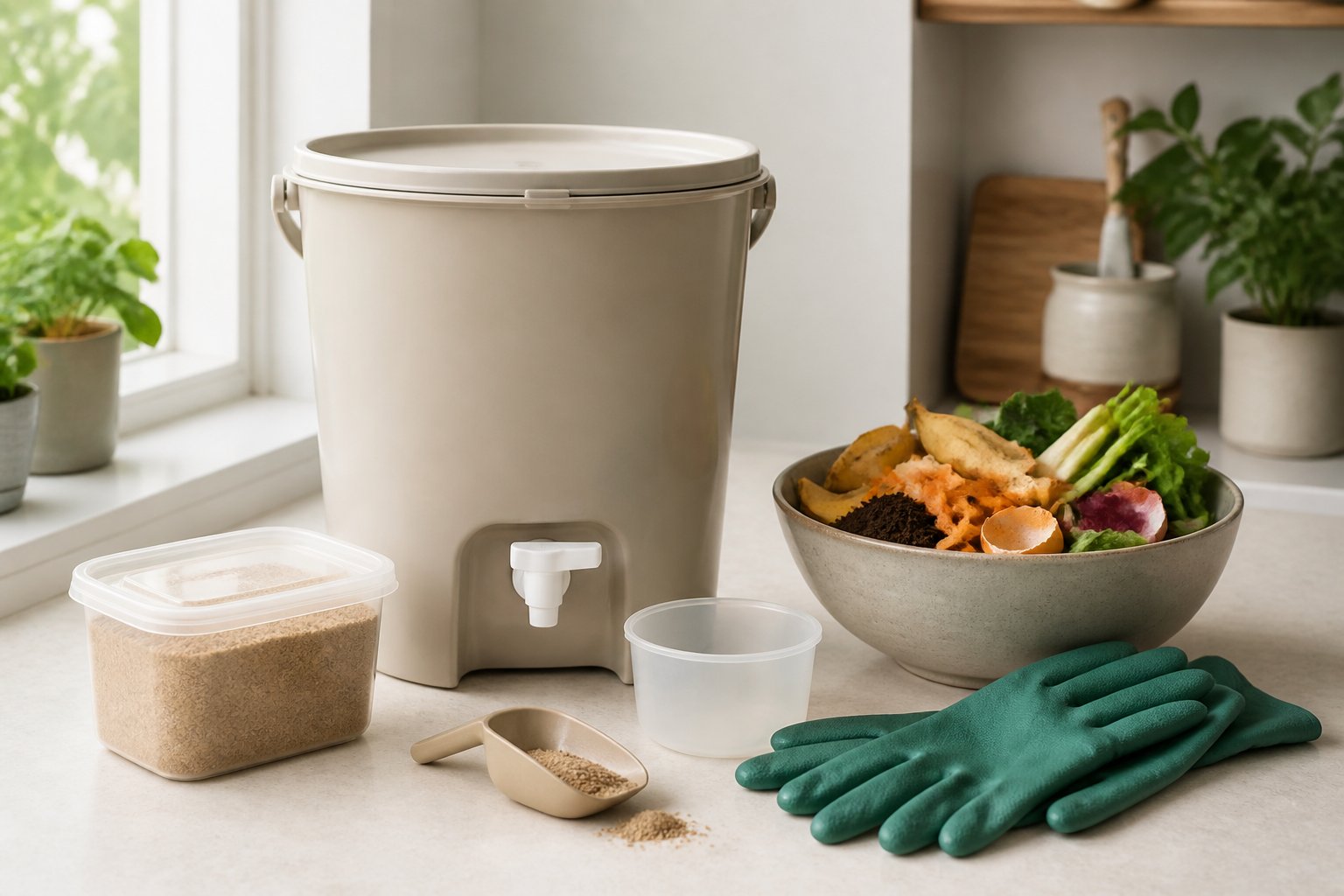
A bokashi composting system needs an airtight bucket, bokashi bran or another trusted bokashi inoculant, and a way to drain liquid from the fermenting material.
Choosing a Bokashi Bin or Bucket
A purpose-built bokashi bin includes an airtight lid, a drainage tray, and a spigot for bokashi liquid. These features make daily use cleaner and help you monitor moisture.
You can also make a system from an airtight bucket. A DIY version works when the lid seals firmly and the design allows liquid to drain. Keep the container indoors, away from direct sunlight and low temperatures.
What Is Bokashi Bran?
Bokashi bran is wheat bran or another carrier treated with molasses, water, and effective microorganisms. Some products use sawdust as the carrier. The sugar feeds the microbes while the bran spreads the inoculant across the food scraps.
Add bran each time you place a new layer in the bucket. A practical guide from bokashi composting instructions recommends 20 milliliters after each layer.
Is a One-Bucket or Two-Bucket System Better?
A one-bucket setup suits a small household with modest food waste. You fill the bucket, seal it, and leave the contents fermenting for about 14 days.
A two-bucket system keeps your routine moving. One airtight bucket ferments while you fill the second, which helps when your household produces enough kitchen waste to fill a container before fermentation ends.
Buying or Making a Bokashi Inoculant
Purchased bokashi inoculant provides a consistent mixture of bran and microorganisms. Homemade blends often combine wheat bran, molasses, water, and EM, yet moisture balance and microbial activity are difficult to verify.
Choose a fresh, dry product with clear storage instructions. Keep the package sealed between uses so humidity does not reduce its performance.
How to Ferment Kitchen Scraps Step by Step
Successful fermentation comes from small food-scrap layers, regular bran, firm pressing, and a tightly sealed lid.
Which Food Scraps Can Go in the Bucket?
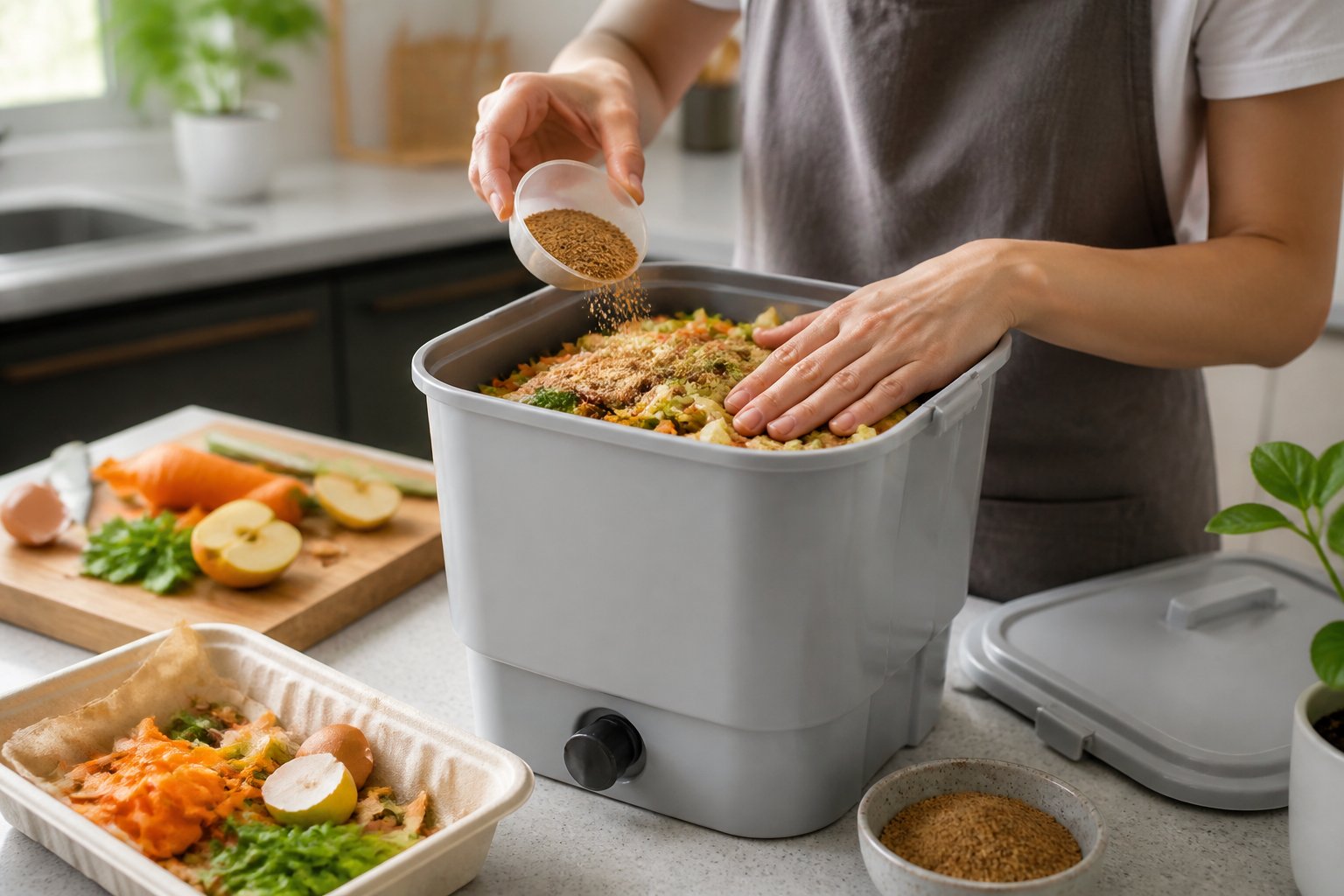
Bokashi accepts fruits, vegetables, citrus peels, bread, coffee grounds, tea bags, cooked meals, eggs, fish, meat scraps, yogurt, cheese, and small bones. Pickled food scraps and other fermented waste also fit the system.
Cut large pieces into smaller portions so the bran contacts more surface area. Drain excess liquid from soups and sauces before adding them.
What Should Stay Out of the Bin?
Keep excessive liquids, large bones, plastic, glass, metal, and packaging out of the bucket. Yard waste, thick branches, and heavily contaminated materials belong in another waste stream.
A small amount of paper towel may fit some systems, while glossy paper, treated materials, and synthetic fibers do not. When product instructions differ, follow the instructions supplied with your inoculant.
How to Layer, Press, and Seal Each Addition
- Add a layer of chopped kitchen scraps.
- Sprinkle bokashi bran evenly across the surface.
- Press the material firmly to remove trapped air.
- Wipe the bucket rim clean.
- Seal the airtight lid immediately.
Repeat the sequence each time you add organic waste. Drain collected liquid according to your bucket design, then replace the lid securely.
How Long the Full Bucket Needs to Ferment
Leave a full, sealed bucket for about 14 days at a stable indoor temperature. Keep the lid closed during this period so oxygen does not interrupt fermentation.
The fermented material still resembles the original food scraps when you open it. A pickled smell indicates healthy fermentation, while a strong rotten smell points to air exposure, insufficient bran, or excess liquid.
How to Finish and Use Fermented Material
Bokashi compost becomes usable soil amendment after the fermented material finishes breaking down in buried garden soil, a compost heap, or a suitable container.
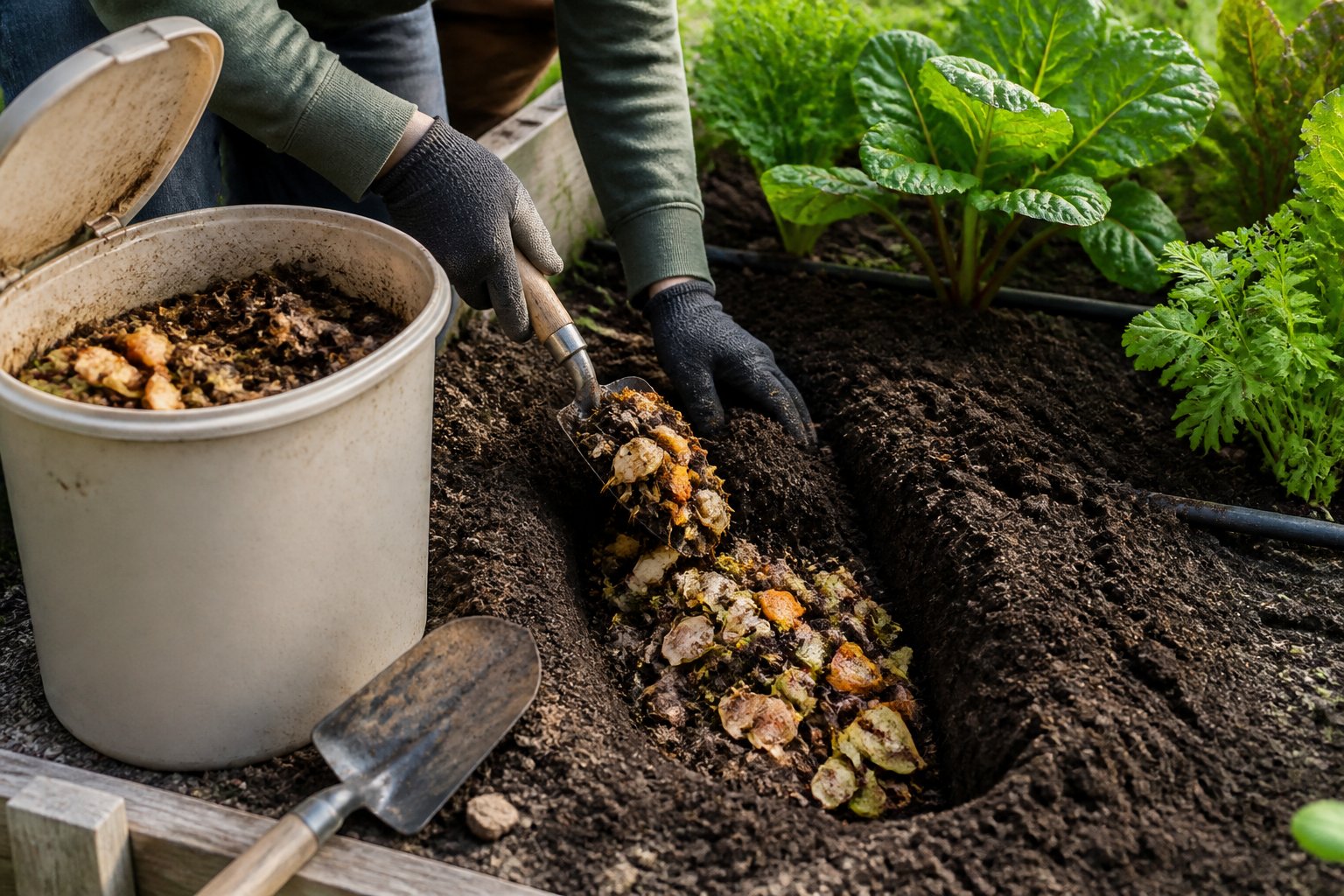
Burying Bokashi Pre-Compost in Garden Soil
Dig a compost trench deep enough to hold the fermented scraps and a generous soil covering. Empty the bucket into the trench, break up compacted pieces, and cover everything completely.
Leave the area undisturbed for roughly two to three months. The fermented organic matter will combine with garden soil and become nutrient-rich soil suitable for planting after the active breakdown period.
Adding It to a Compost Heap
Mix bokashi pre-compost into a compost pile or compost heap and cover it with brown materials such as dried leaves. The added carbon helps balance moisture and structure while outdoor organisms complete decomposition.
Turn the pile according to your usual composting routine. The fermented material contributes moisture and organic matter, so avoid adding it in a thick, wet mass.
Using Bokashi Tea and Leachate Safely
Drain bokashi tea, also called bokashi juice or leachate, from the bucket as directed. Dilute it thoroughly with water before applying it to garden soil or plants, because undiluted liquid can damage plant roots.
Use diluted liquid as a soil amendment or plant fertilizer. You can also follow local guidance for disposing of undiluted leachate through a drain.
Keeping Fermented Scraps Away From Plant Roots
Fresh bokashi pre-compost is acidic and active, so keep it away from living plant roots. In a container, place potting soil around and above the fermented material, then allow one to two months for it to settle.
Plant after the material has finished breaking down. Direct contact with fresh fermented scraps can stress houseplants and garden plants.
Bokashi vs. Other Composting Methods
Bokashi suits compact indoor food-waste management, while traditional, hot, and worm-based systems suit different materials and finishing conditions.
| Criterion | Bokashi | Traditional composting | Hot composting | Vermicomposting |
|---|---|---|---|---|
| Main process | Anaerobic fermentation | Aerobic decomposition | High-heat aerobic decomposition | Worm digestion |
| Meat and dairy | Yes | Usually excluded | Usually excluded | Excluded |
| Indoor use | Strong fit | Limited | Poor fit | Possible |
| Yard waste | Limited | Strong fit | Strong fit | Limited |
| Finished output | Pre-compost first | Finished compost | Finished compost | Vermicompost |
Bokashi vs. Traditional Composting
Bokashi ferments kitchen waste in a sealed bin, while traditional composting uses oxygen, moisture, and a balance of green and brown materials. Bokashi handles cooked food, meat, and dairy with less space.
Traditional composting suits households with yard waste, dried leaves, and enough room for a compost pile. Bokashi material still needs soil or a compost heap to finish.
When Hot Composting Makes More Sense
Hot composting works well when you have a steady supply of nitrogen-rich green materials and carbon-rich brown materials. A properly managed pile reaches temperatures that speed decomposition and help process larger amounts of yard waste.
Choose this approach when soil health, bulk compost production, and garden waste management are your priorities. Bokashi fits kitchens where space and food-scrap handling come first.
Can Bokashi Work With Vermicomposting?
Bokashi can complement vermicomposting after the fermented material has aged and its acidity has reduced. Add small amounts of finished or partially finished bokashi material to a worm bin only after burying or pre-composting it.
Worms process softened organic matter into vermicompost. Fresh bokashi scraps can be too acidic for a worm bin, so give them time in soil first.
Benefits and Limitations to Consider
Bokashi offers compact storage, indoor convenience, low odor with correct management, and the ability to process food waste that aerobic systems reject. It also produces bokashi tea and a pre-compost rich in organic matter.
You need a steady supply of inoculated bran, a dependable seal, and access to soil or another finishing system. The bucket does not produce finished compost on its own.
Making Bokashi a Reliable Kitchen-Waste Routine
A reliable composting-at-home routine depends on keeping the bucket near your food-preparation area, chopping large scraps, and adding bran every time you open the lid.
Drain the liquid regularly, press down each layer, and keep the lid closed between additions. Mark the date when the bucket becomes full so you know when the fermentation period ends.
If your household produces substantial food waste, use two buckets. Pairing bokashi with garden beds, a compost heap, or a neighbor’s soil space gives the fermented organic matter a clear next step and supports long-term soil health.
Frequently Asked Questions
How long does bokashi composting take?
The sealed fermentation stage takes about 14 days after the bucket is full. Burying the pre-compost in soil usually requires another two to three months before it becomes a stable soil amendment.
Does bokashi composting smell?
A healthy bokashi bucket smells acidic, pickled, or mildly sweet. A rotten odor indicates poor sealing, trapped air, too little bran, or uncollected leachate.
Can I put meat and dairy in a bokashi bin?
You can add meat, fish, dairy, cooked food, and small bones to a bokashi bin. Chop larger pieces and cover every layer with inoculated bran so fermentation stays active.
What does white mold in a bokashi bucket mean?
White mold can indicate active fermentation and is usually harmless. It often appears when the bucket fills slowly and contains more air, so press the contents and maintain a firm seal.
What should I do if I see green or black mold?
Green or black mold signals that the process needs correction. Add enough bokashi bran to cover the material, bury the contents under soil, and leave them for about four weeks before using the area.
Is bokashi tea safe to use on houseplants?
Diluted bokashi tea can be used around houseplants as a fertilizer. Never apply undiluted bokashi tea to potting soil, since its concentration can harm plant roots.


