

Beginner Vegetable Garden Layout: A Simple 4×8 Plan
A beginner vegetable garden layout works best when it gives you full sun, reachable planting areas, and enough room for each crop to grow without crowding. A single 4×8-foot bed provides a manageable starting point for fresh vegetables while keeping watering, weeding, and harvesting within an easy routine.
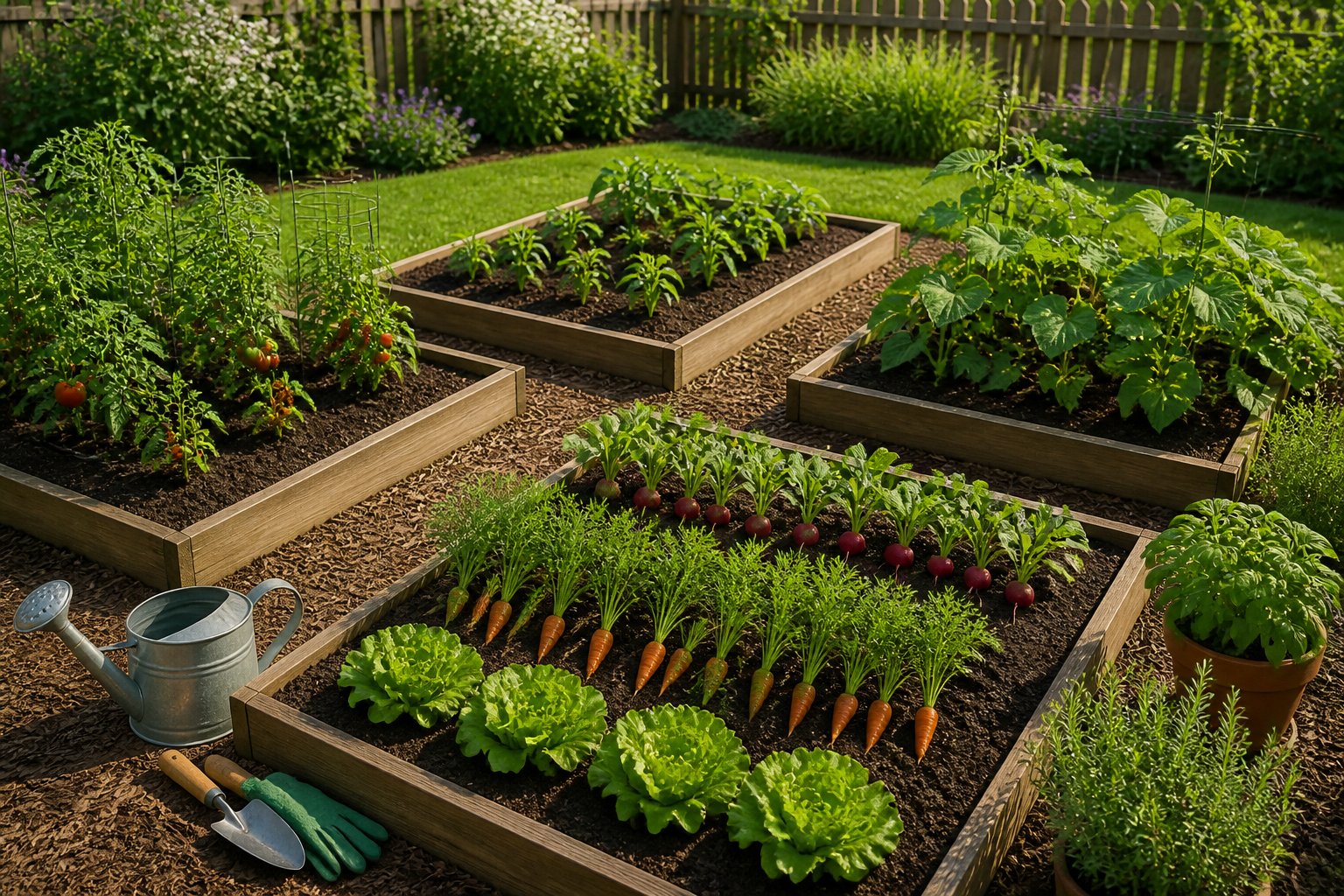
Plan one 4×8 bed with tall crops at the north end, compact crops in blocks, and open paths around every side so you can reach the soil without stepping into it. With a few reliable vegetables and staggered planting dates, your beginner vegetable garden can produce steadily through the season. Use this plan as your starting point, then adapt it to your sunlight, climate, and favorite foods. For more tailored ideas, explore these vegetable garden layout tips.
Choose the Right Site and Garden Type
Choose a level location with at least 6 to 8 hours of direct sun, good soil drainage, and easy access to water. Your garden type should match the space you have, the condition of your soil, and the amount of maintenance you want to handle.
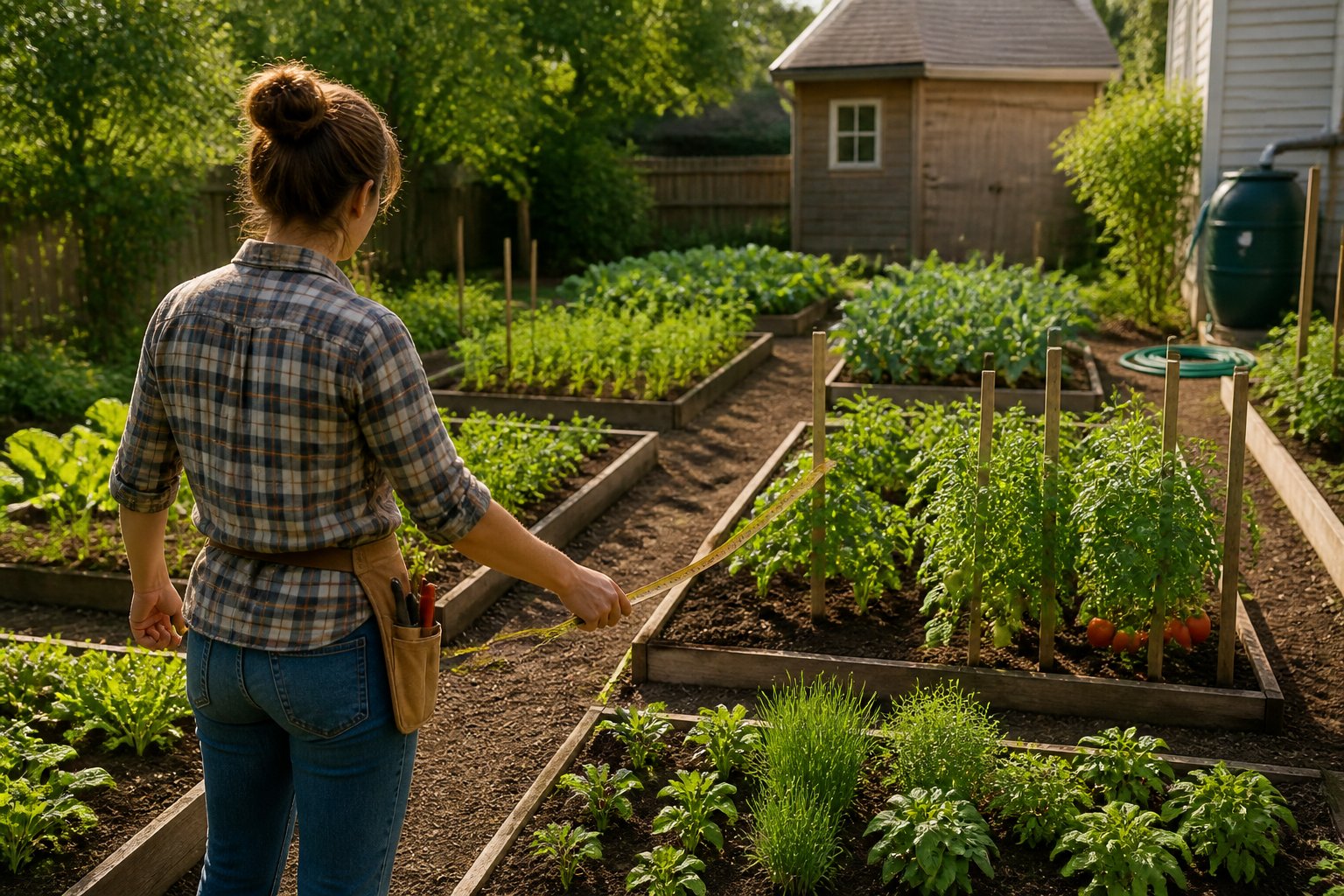
How Much Sunlight Does a Vegetable Garden Need?
Most fruiting vegetables need full sun, which means at least 6 to 8 hours of direct sunlight each day. Tomatoes, peppers, beans, cucumbers, and squash produce best in bright locations.
Leafy greens such as lettuce, spinach, and kale tolerate partial shade, especially in hot climates. Track the site from morning through late afternoon before you build, since a fence, tree, or house can cast seasonal shadows.
Raised Beds vs. an In-Ground Garden vs. Containers
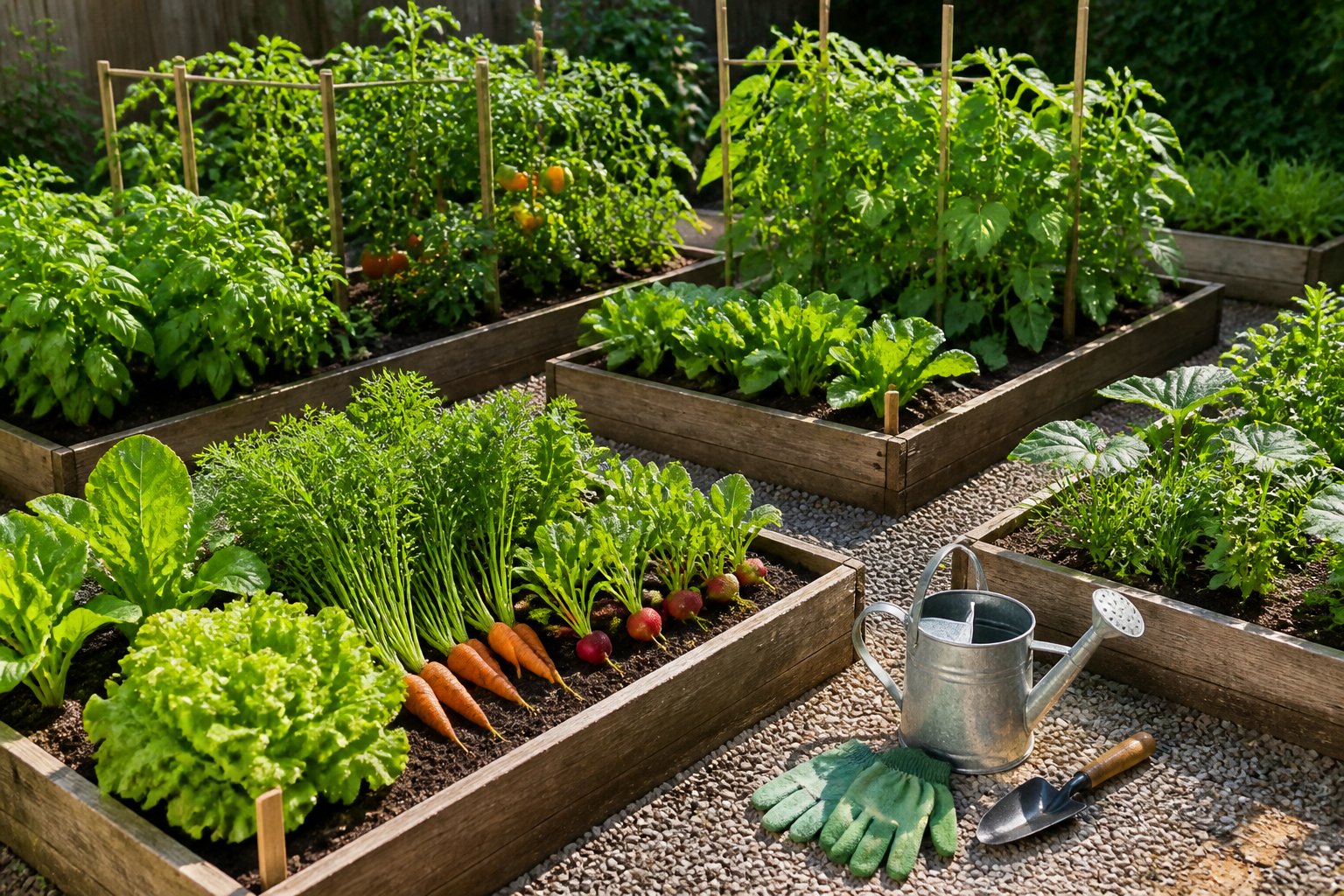
A raised bed garden offers defined boundaries, easier soil preparation, and convenient access. A 4×8 raised bed is a practical first choice because you can reach the center from both long sides without walking on the growing soil.
| Garden type | Best for | Main consideration |
|---|---|---|
| Raised bed | Poor drainage or compact spaces | Requires filling with quality soil and compost |
| In-ground garden | Large open yards | Needs thorough soil preparation |
| Container garden | Patios and balconies | Requires frequent watering |
An in-ground garden works well when your soil drains freely and can be improved with compost. A container garden suits first-time gardeners with limited yard space, though each container needs a drainage hole and regular watering with a watering can or hose.
How to Check Soil Drainage and Prepare the Soil
Dig a hole about 12 inches deep, fill it with water, and let it drain. Fill it again and watch whether water remains pooled for several hours. Persistent standing water signals a drainage problem that raised beds or a different site can address.
Remove grass and large roots, loosen compacted soil, and mix in finished compost before planting. A soil test helps you identify pH and nutrient needs. After planting, spread wood chips around paths and outside bed edges to reduce mud and keep weeds manageable.
A Simple 4×8 Bed You Can Plant This Season
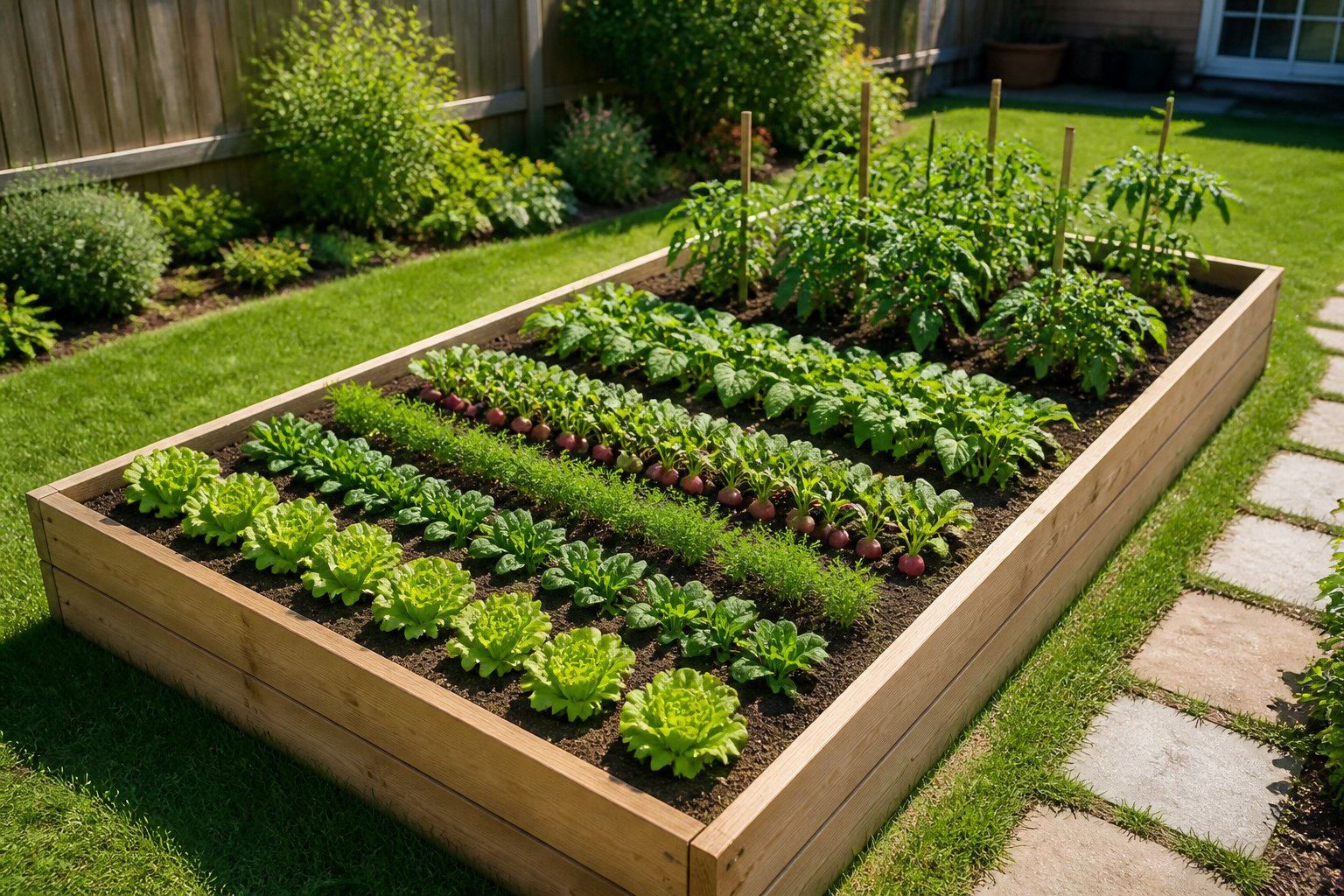
Divide your 4×8 raised bed into small planting zones, place tall crops along the north edge, and leave enough space for airflow between mature plants. This square foot garden approach keeps the garden organized while making plant spacing easier to follow.
How to Divide a 4×8 Raised Bed Into Planting Zones
Mark the bed into thirty-two 1×1-foot squares with string, thin boards, or a measuring tape. Treat each square as a planting zone, then group crops by size and harvest timing.
A balanced beginner basic vegetable garden layout could use:
- Four squares: two tomato plants, one plant per 2×2-foot area
- Four squares: two peppers, one plant per 1×1-foot square
- Four squares: bush beans, planted about 4 inches apart
- Four squares: leaf lettuce, planted about 6 inches apart
- Four squares: carrots, planted about 3 inches apart
- Four squares: radishes, planted about 3 inches apart
- Four squares: green onions, planted about 3 inches apart
- Four squares: Swiss chard, one plant per square
Reserve the northern end for tomatoes and peppers if they need support. Place quick crops such as radishes and lettuce in open spaces that you can replant after harvesting.
Where to Place Tall, Medium, and Short Crops
Put tall crops on the north side so their leaves cast fewer shadows across the bed. Tomatoes belong there, supported by cages, followed by medium-height peppers and chard.
Use the center for bush beans and compact leafy greens. Plant short root vegetables along the southern edge, where they receive light and remain easy to reach. Keep at least a few inches between mature plants whenever the seed packet recommends it, since crowded foliage restricts airflow.
A Beginner-Friendly Plant List and Spacing Guide
Use transplants for tomatoes and peppers when you want a faster start. Sow carrots, radishes, green onions, lettuce, and bush beans directly into prepared soil.
Check every seed packet for final spacing because varieties differ. In a square foot garden layout, block planting makes efficient use of space while maintaining clear boundaries. Thin seedlings early, especially carrots and radishes, so the remaining roots have room to develop.
Customize the Plan for Your Space and Favorite Crops
Adapt the basic vegetable garden layout by swapping crops within the same height and spacing category. Trellises, containers, and shaped beds let you grow more food while keeping paths open and plants easy to inspect.
How to Use Trellises for Small-Space Growing
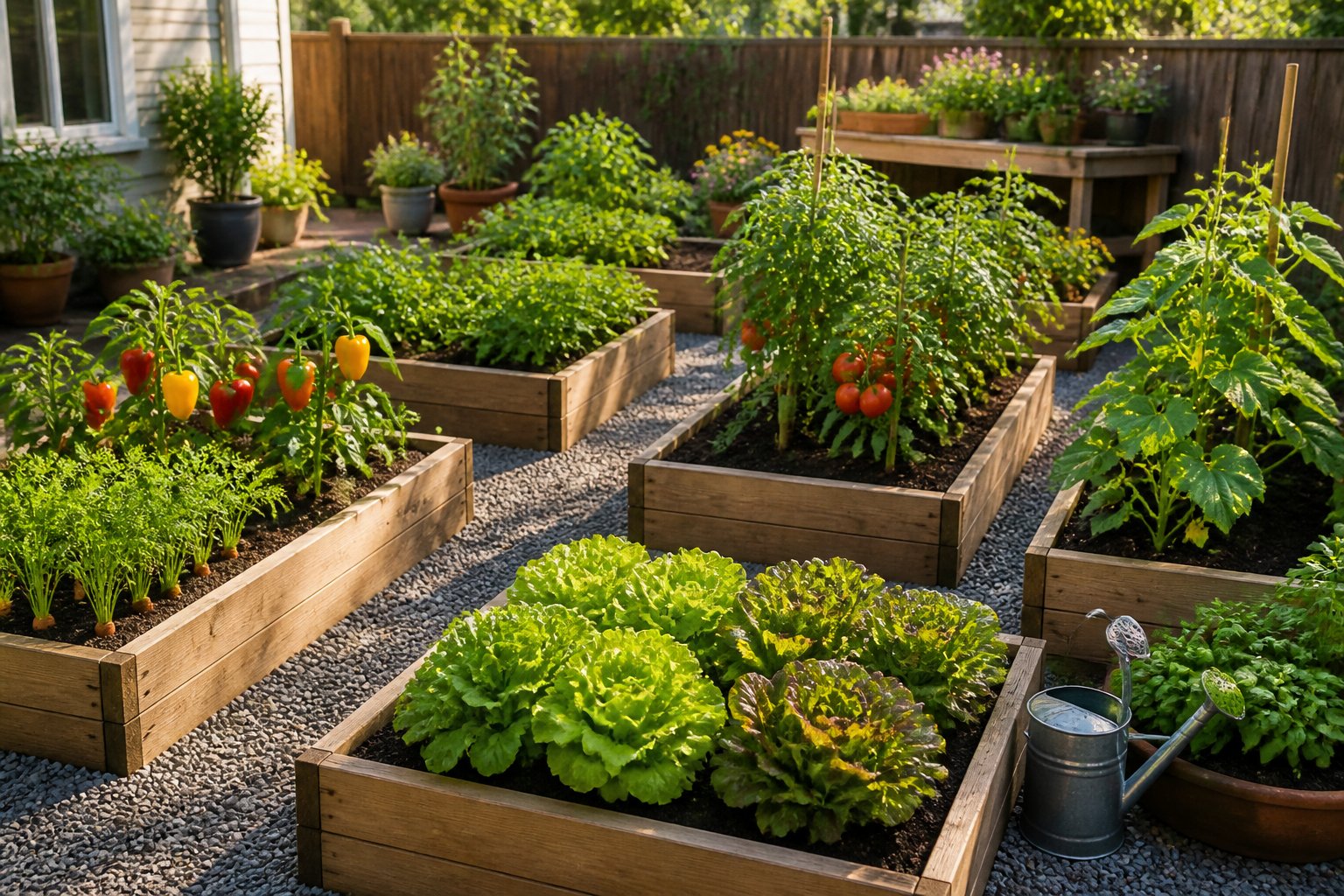
Place a trellis along the north edge or outside the bed so climbing plants do not shade shorter crops. Cucumbers, peas, and pole beans grow upward when tied to sturdy trellises, freeing ground space for lettuce, herbs, or radishes.
Install the support before planting. A stable frame prevents root disturbance later and keeps vines off wet soil. Check ties weekly as stems lengthen, and leave enough clearance for harvesting from the accessible side.
Easy Salad, Salsa, and Vertical Garden Variations
For a salad garden, replace the tomato and pepper zones with leaf lettuce, spinach, arugula, carrots, radishes, and herbs. Sow small amounts every few weeks to maintain tender leaves.
A salsa layout pairs tomatoes, peppers, green onions, cilantro, and basil. For a vertical garden, grow cucumbers or pole beans on a trellis and use the freed squares for chard or compact greens. Add parsley and chives along the edge as an herb border.
Strawberries fit well in containers or bed corners. Give zucchini, squash, and melons their own ground space because their vines spread beyond a 4×8 bed quickly.
When an L-Shaped or U-Shaped Bed Makes Sense
An L-shaped garden layout fits neatly around a patio, fence, or corner while preserving a central walking area. It works well when your available growing space has two intersecting sunny edges.
A U-shaped raised bed creates planting space along three sides with a central access area. Keep each bed arm narrow enough for you to reach the center without leaning across plants. These vegetable garden layouts suit larger yards and gardeners who want separate zones for herbs, salad crops, and fruiting vegetables.
Plant at the Right Time and Pair Crops Wisely
Use your local growing season, frost dates, and soil temperature to decide when each crop belongs in the bed. Cool-season vegetables start earlier, while warm-season crops wait for safe outdoor conditions and warmer soil.
Cool-Season and Warm-Season Crops at a Glance
Cool-season crops handle chilly spring or fall conditions. Suitable choices include:
- Spinach
- Arugula
- Kale
- Lettuce
- Beets
- Cabbage
- Broccoli
- Peas
- Radishes
- Potatoes
Warm-season crops need warmer air and soil. Tomatoes, peppers, eggplant, okra, corn, cucumbers, beans, and squash belong in the bed after frost danger has passed.
How Frost Dates and Soil Temperature Set Your Schedule
Find your average last frost date for spring and use it as a planning reference. Plant frost-tolerant crops before that date when local guidance supports it, then wait to transplant tomatoes, peppers, eggplant, and okra until cold nights have passed.
Soil temperature provides a second check. Seed packets list the temperature range needed for germination, so use a soil thermometer when spring weather feels unpredictable. A planting calendar for your area can help you coordinate seed sowing and transplants.
Simple Companion Planting Without Overcomplicating It
Group plants with similar water and sunlight needs, then leave adequate room for mature growth. This practical approach makes companion planting easier to manage than filling every space with a prescribed pairing.
Add marigolds or nasturtiums along the border for color and visits from pollinators. Basil fits near tomatoes, while herbs such as cilantro and parsley work beside salad crops. Treat companion plants as optional additions, and keep the vegetables as the main structure of your layout.
Keep a Small Garden Productive All Season
Consistent watering, a protective mulch layer, frequent harvesting, and staggered planting keep a small bed producing for longer. Refresh empty squares promptly after early crops finish.
Watering, Mulching, and Weed Control Basics
Water deeply at the soil surface when the top inch feels dry, aiming the stream at the base of each plant. Morning watering gives foliage time to dry and helps you spot wilted seedlings before heat intensifies.
Apply a 2- to 3-inch layer of organic mulch around established plants, keeping it slightly away from stems. Mulching slows evaporation and suppresses weeds. Pull small weeds while they are young, and loosen the surface carefully so you do not disturb shallow roots.
How Succession Planting Extends the Harvest
Succession planting means sowing a small amount of a fast crop every few weeks. Radishes, lettuce, spinach, carrots, and beans work well because you can harvest them in stages.
When a square of radishes finishes, remove the old plants, add a little compost, and sow another quick crop. Follow early spinach with beans or a fall planting of kale when your climate allows.
Use Crop Rotation to Protect Soil Health
Move plant families to different bed zones each year to reduce repeated pest and disease pressure. For example, place tomatoes and peppers in the former bean area, beans where leafy greens grew, and greens where fruiting crops stood.
Keep a simple crop rotation layout in a notebook or phone. Record each square’s crop, planting date, and harvest so next year’s garden layout starts with useful information.
Start Small, Learn Your Space, and Expand Next Year
A successful beginner vegetable garden layout gives you enough work to learn without creating more maintenance than your schedule allows. Start with one 4×8 bed, observe sun and drainage throughout the season, and record which crops you harvest and enjoy.
Use those notes to adjust plant spacing, replace weak performers, and expand only when your watering and harvesting routine feels comfortable. A beginner vegetable garden tips resource can help you refine the daily habits that keep the bed healthy.
Frequently Asked Questions
What is the best size vegetable garden for a beginner?
A 4×4 or 4×8 raised bed gives most first-time gardeners a manageable starting area. The 4×8 size offers enough room for variety while keeping every planting zone within reach.
What vegetables should beginners plant in a 4×8 raised bed?
Choose reliable crops such as tomatoes, peppers, bush beans, lettuce, carrots, radishes, green onions, and Swiss chard. Match each crop to the available sunlight and follow the spacing instructions on its seed packet.
How many hours of sun does a vegetable garden need?
Most vegetables need 6 to 8 hours of direct sun each day. Leafy greens tolerate less light, while tomatoes, peppers, and other fruiting crops need the brightest part of your yard.
What is the easiest vegetable to grow for a beginner?
Radishes, lettuce, bush beans, and green onions provide straightforward starting points. Tomatoes and peppers are also approachable when you plant healthy transplants and give them full sun.
What is the most common mistake first-time gardeners make?
Planting too much at once creates more watering, weeding, and harvesting work than many beginners expect. Start with one well-spaced bed, harvest regularly, and add new crops after you learn how your space behaves.


