
Top Soil vs. Garden Soil: Which Should You Use?
Topsoil and garden soil serve different purposes, even though the bags and bulk piles can look similar. Topsoil provides a base for filling, grading, and lawn work, while garden soil includes added organic matter and nutrients for planting.
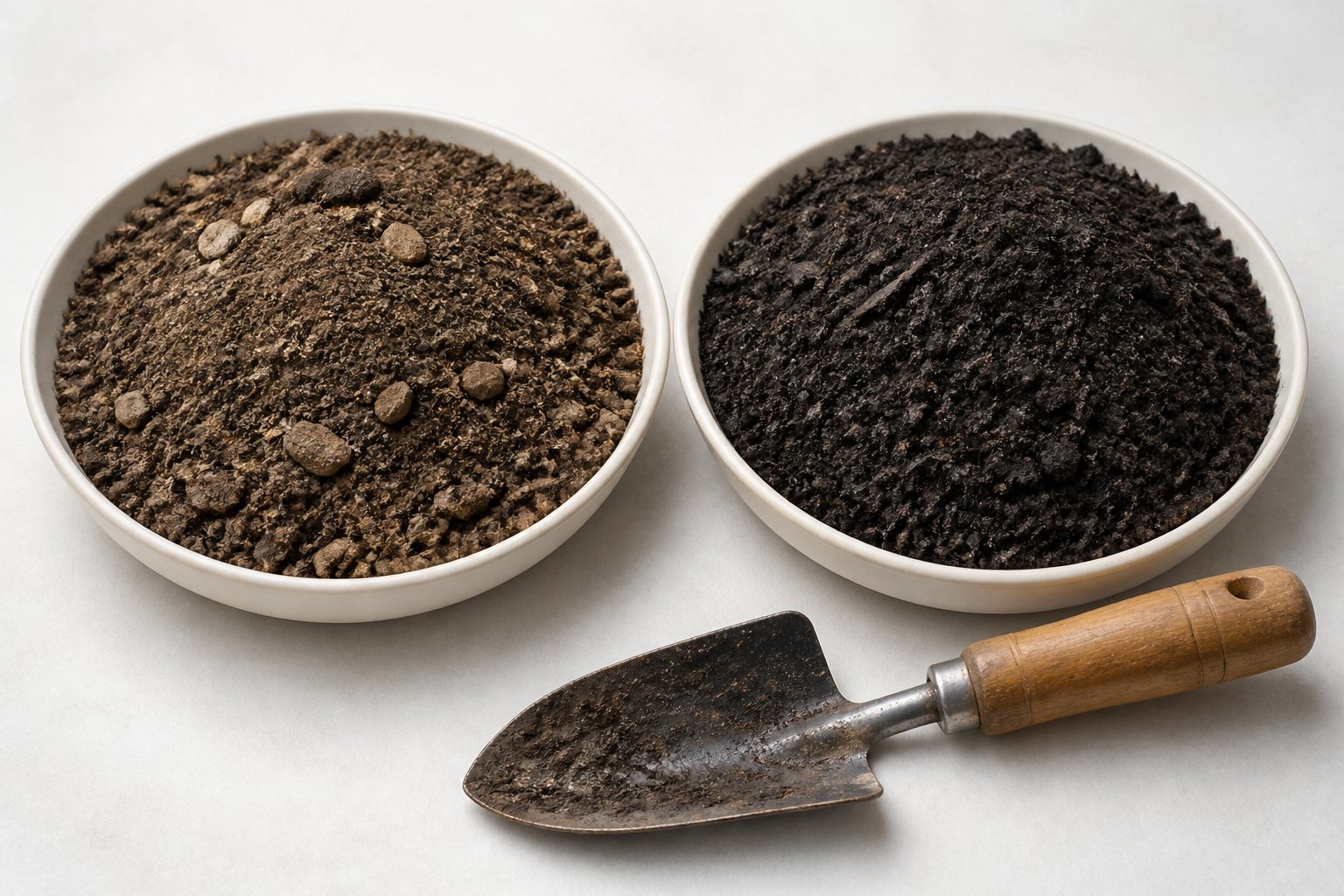
Choose topsoil for shaping and filling ground, and choose garden soil for vegetable gardens, flower beds, and other planting areas. The right material supports drainage, root development, and healthy plant growth while helping you avoid wasted labor and soil cost.
If you are preparing a new bed or improving your yard, compare the material’s texture, screening, organic matter, and intended use before you buy. You can also review these buying garden soil tips as you plan your project.
What Is the Difference Between Topsoil and Garden Soil?
Topsoil is a natural or blended upper soil layer used for landscaping, while garden soil is a formulated growing medium enriched with compost or other organic amendments. The difference between garden soil and topsoil comes down to composition, nutrient content, and the job each product is designed to perform.
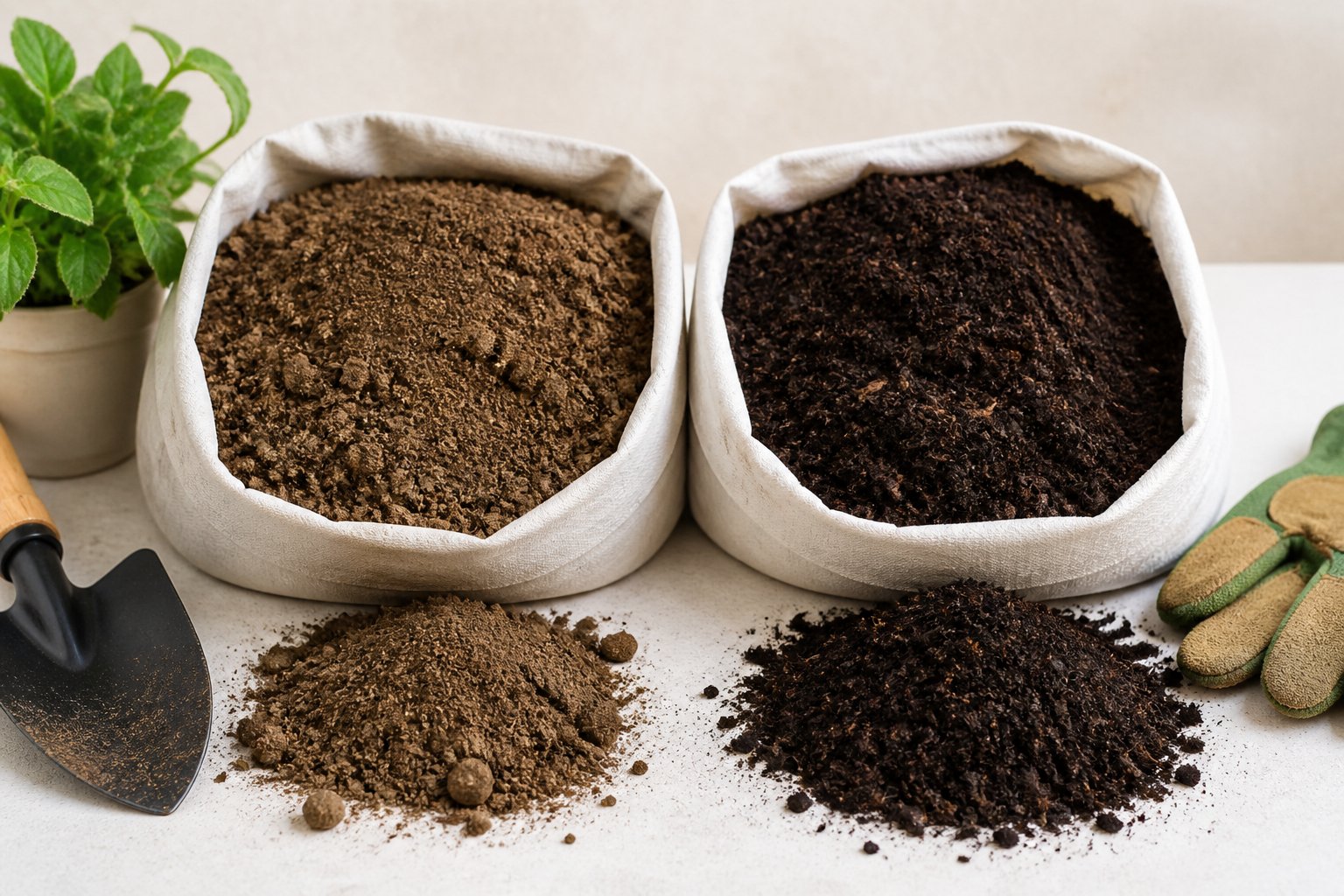
Topsoil may contain sand, clay, silt, loam, and some organic matter. Garden soil mixes those base materials with compost, aged manure, peat moss, or fertilizer to improve soil structure and nutrient availability.
| Criteria | Topsoil | Garden Soil |
|---|---|---|
| Primary use | Filling and grading | Planting |
| Nutrient content | Variable | Enriched |
| Organic matter | Variable | Added |
| Texture | Depends on source | Formulated |
| Best location | Ground-level projects | In-ground beds |
What Topsoil Is Made Of
Topsoil comes from the upper layer of soil or from a commercial blend of mineral material. Its soil composition may include sand for drainage, clay for moisture retention, and silt that contributes to a smoother texture.
Quality varies widely. Screened topsoil has stones and large debris removed, while unscreened material may contain roots, clumps, or construction waste. A loam soil blend offers a useful balance of drainage, water retention, and aeration for many yard projects.
How Garden Soil Mix Is Formulated
Garden soil mix starts with soil or topsoil and adds organic matter such as compost or aged manure. Some products include peat moss, bark, or fertilizer to support microorganisms, earthworms, fungi, and bacteria.
The label should identify the intended soil types and planting use. A vegetable garden mix may prioritize nutrient availability, while a flower-bed blend may emphasize moisture retention and loose soil structure.
How Nutrient Content, Drainage, and Moisture Retention Compare
Garden soil provides more predictable nutrient content because manufacturers add compost, organic amendments, or fertilizers supplying nitrogen, phosphorus, and potassium. Topsoil supplies a basic foundation, though its fertility depends on where it came from and how it was processed.
Drainage and moisture retention depend on the sand, clay, silt, and organic matter balance. Garden soil can improve water retention and aeration, while poorly blended material can become compacted or drain slowly. Check the product texture before purchasing, especially if your site already has poor drainage.
Which Soil Works Best for Your Project?
Topsoil suits lawn establishment, grading, and general landscaping, while garden soil supports plant growth in beds and vegetable plots. Your project’s root depth, drainage needs, and growing medium requirements should guide the purchase.
Lawns, Grass Seed, and Sod
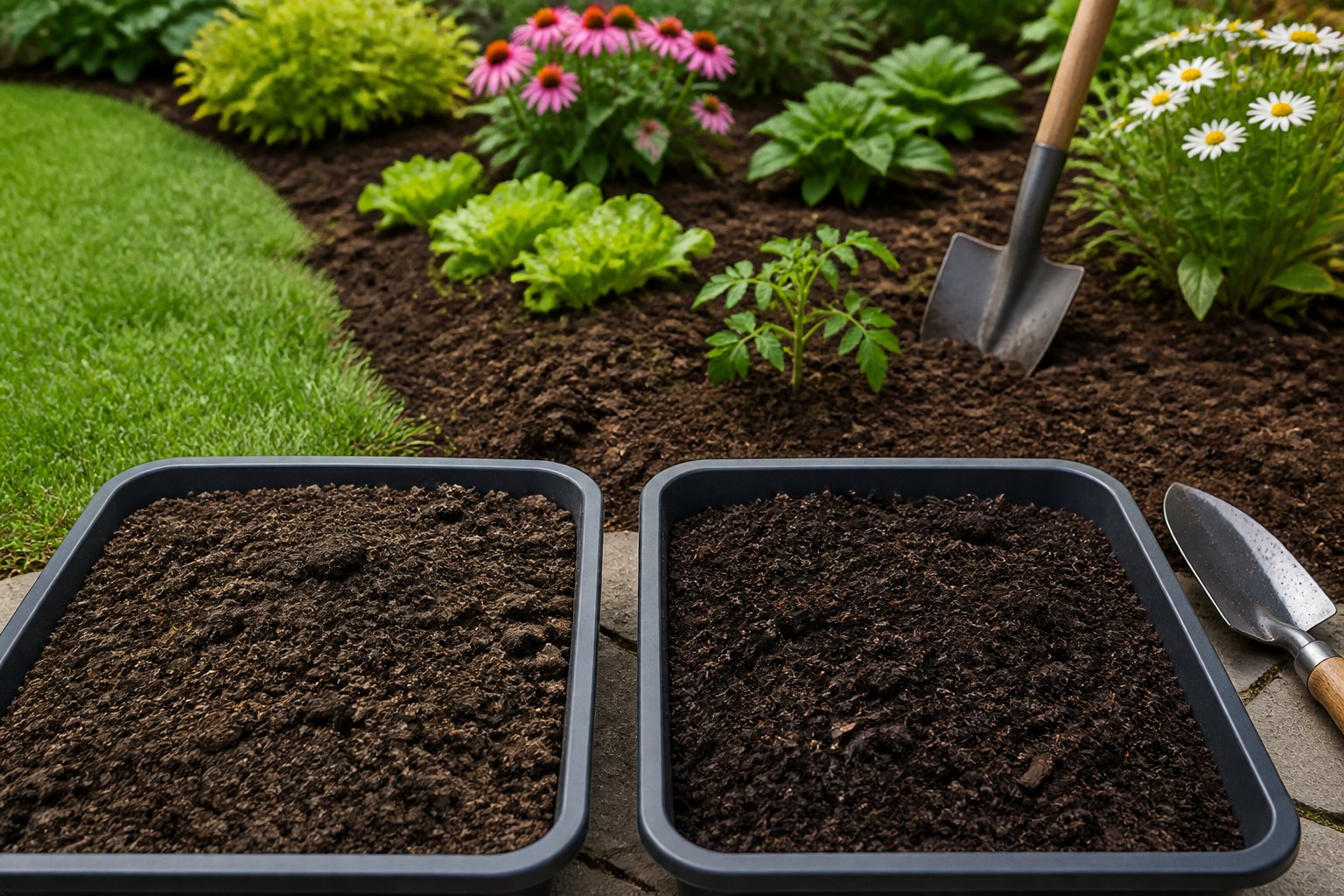
Use screened topsoil to fill low spots, create a smooth seedbed, or prepare ground for sod. A thin, even layer gives grass seed contact with the soil and helps sod establish roots.
For lawn installation, remove large stones and debris, correct grading, and avoid spreading material over saturated ground. Garden soil adds nutrients, though the added cost rarely makes sense across a large lawn area.
Vegetable Gardens and Raised Beds
Garden soil works well for vegetable gardens, vegetable plots, and raised beds because it supplies organic matter and a more plant-ready structure. Mix it with the existing native soil so roots can transition gradually into the surrounding ground.
For a new raised bed, combine quality topsoil with compost when you need a larger volume at a controlled cost. Review these garden soil preparation tips before planting.
Flower Beds, Shrubs, and Herbs
Garden soil benefits flower beds, flower gardens, shrubs, and herbs by providing a loose growing medium with improved nutrient availability. Blend it into the existing bed soil and match the texture to the plants’ drainage needs.
Shrubs need stable soil around deep roots, so avoid creating a sharply different layer beneath the planting hole. Compost and suitable organic amendments can improve the transition.
Containers and Planters
Use potting soil for containers and planters because it is lightweight and formulated for confined roots. Garden soil is too dense for many containers and can restrict aeration or drainage.
A garden soil mix belongs in in-ground beds and raised beds. Reserve topsoil for outdoor ground-level projects unless a product label specifically approves another use.
When Topsoil Is the Better Choice
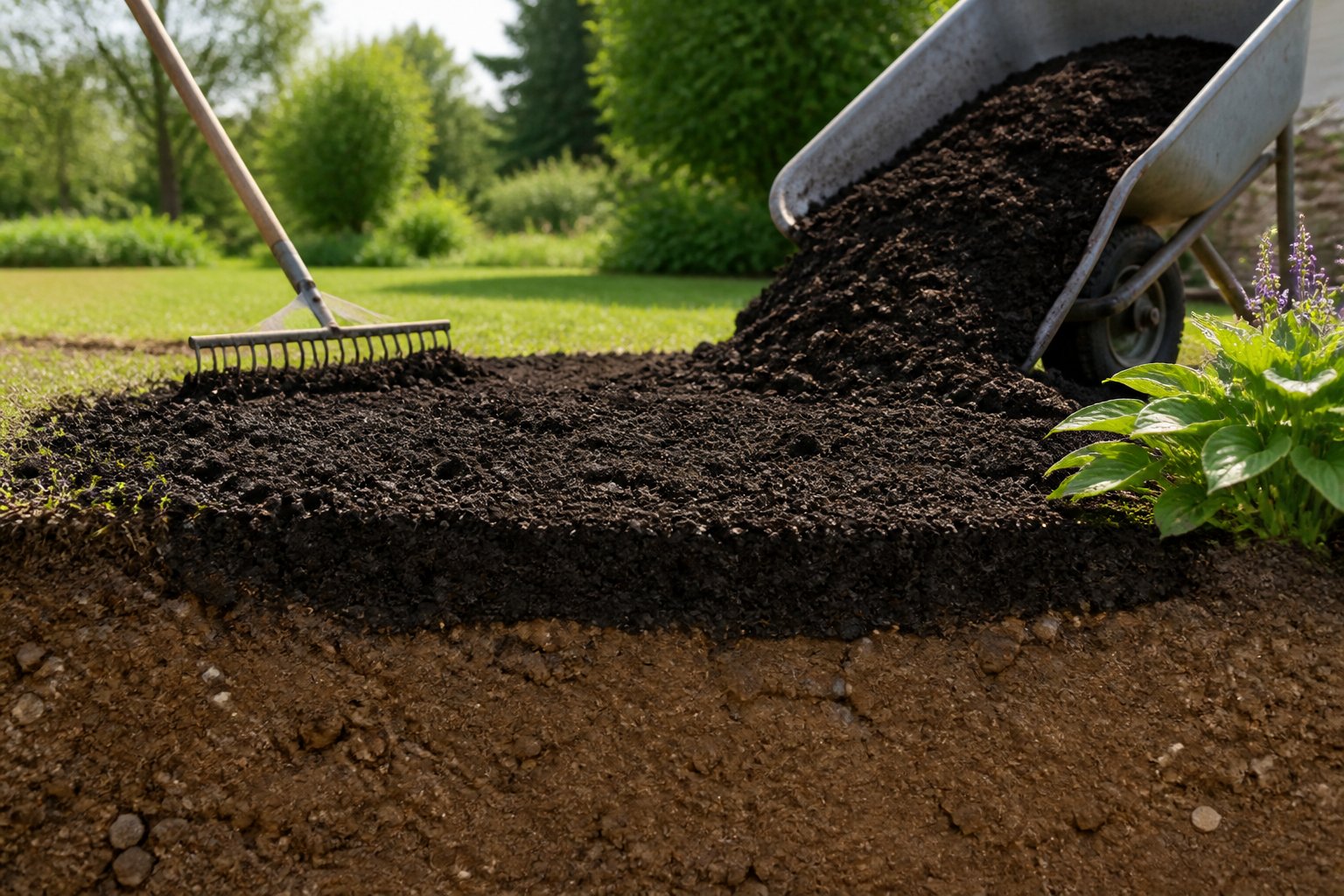
Topsoil is the better choice for filling holes, correcting grading, preparing lawns, and improving the volume of native soil. Choose screened, quality topsoil when you need a clean, workable base across a broad landscape area.
Filling Holes and Correcting Grading
Use topsoil to fill shallow holes, smooth uneven ground, and establish a gradual slope that directs water away from structures. Add it in manageable layers and lightly compact each layer to limit settling.
For deep depressions, use an appropriate fill material below the topsoil layer. Finish with quality topsoil so grass or landscape plants have a suitable surface for establishment.
Preparing a Lawn for Seed or Sod
Topsoil creates a clean base for grass seed and sod after you remove debris, loosen compacted ground, and establish the desired grade. Screened material spreads more evenly and gives roots fewer obstacles.
Rake the surface smooth before seeding or laying sod. Water carefully after installation so the soil stays moist while roots develop without becoming saturated.
Improving Existing Native Soil
Spread topsoil over depleted or uneven native ground, then incorporate it into the upper soil layer where practical. This approach improves depth and texture across a lawn or landscape bed.
Test the existing soil before adding large quantities. If poor drainage comes from compacted clay or an unsuitable grade, more topsoil alone will not solve the water problem.
When Garden Soil Is Worth the Extra Cost
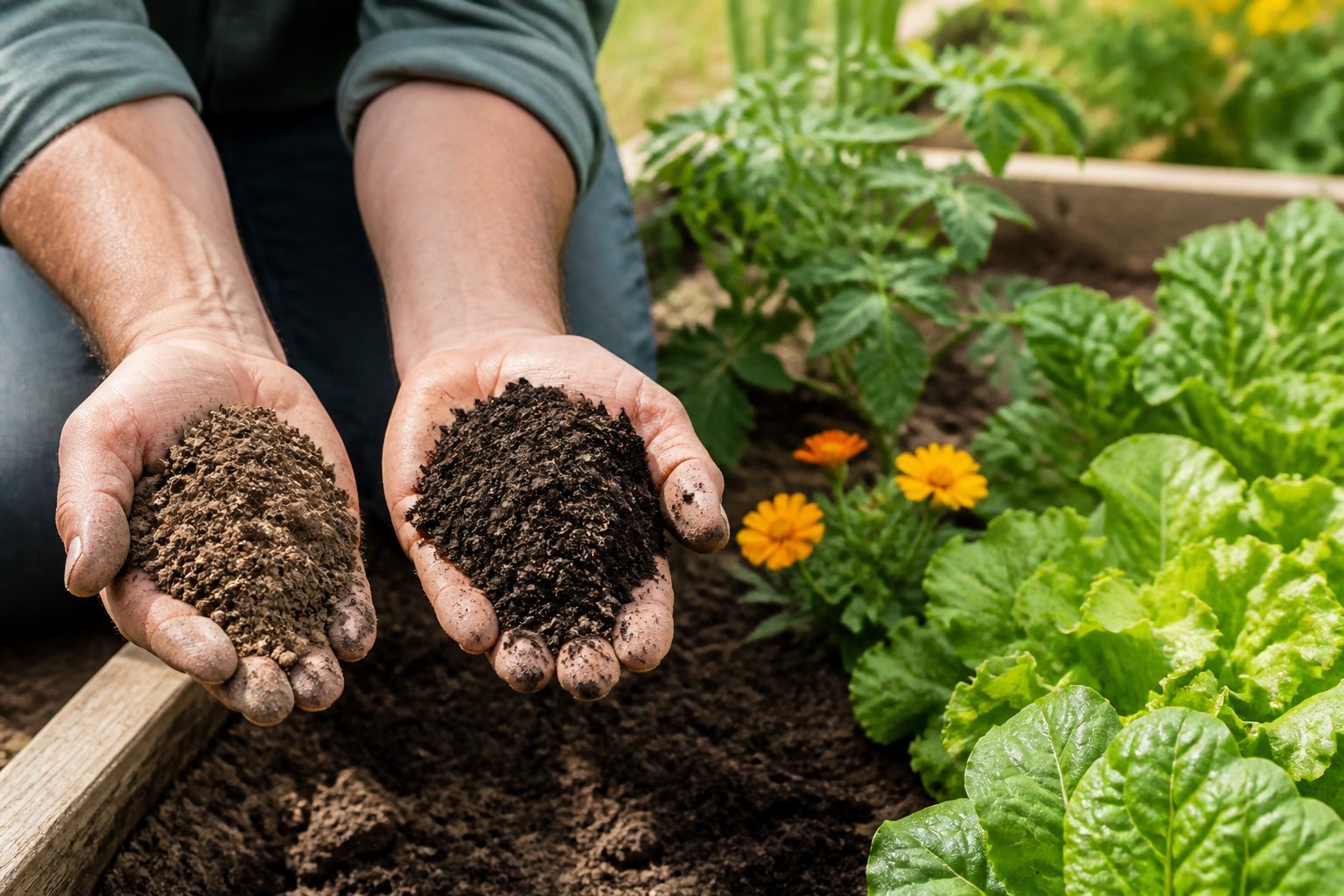
Garden soil is worth the extra cost when you are building planting beds that need added organic matter, improved fertility, and more predictable nutrient availability. The investment is most useful for vegetables, flowers, herbs, and raised beds.
Building Productive Planting Beds
Use nutrient-rich garden soil to fill new beds or refresh tired planting areas. Its blend of mineral soil and compost gives roots a more workable environment for early growth.
For large beds, calculate the required volume before buying bags. Bulk topsoil mixed with compost can reduce soil cost when you need substantial depth.
Improving Soil Fertility and Nutrient Availability
Compost, aged manure, and other organic amendments increase organic matter and support nutrient availability. Fertilizers can address specific nutrient deficiencies after a soil test identifies the need.
Avoid adding fertilizer by guesswork. Excess nutrients can damage plants and move into waterways, while the correct amendment improves fertility without creating an imbalance.
Choosing Organic Garden Soil and Amendments
Choose organic garden soil when the label identifies approved ingredients and clearly states how the product was amended. Look for compost, aged manure, or other listed organic matter instead of relying on the word “organic” alone.
Inspect the texture and smell before using a large quantity. Mature compost has an earthy smell and a crumbly texture; sour or strongly ammonia-like odors indicate unfinished material.
How to Check Soil Quality Before You Buy
Check soil quality by examining texture, screening, moisture behavior, and the product’s intended use before you purchase. A soil test adds useful information about pH and nutrient deficiencies when you are establishing a serious garden.
Why Texture and Screening Matter
Squeeze a damp sample in your hand and inspect how it breaks apart. Loam should hold together lightly and crumble with pressure, while heavy clay forms a sticky mass and very sandy material falls apart quickly.
Screened topsoil should be free of large stones, sticks, glass, and construction debris. Ask what screen size the supplier uses and whether the blend contains compost or other amendments.
When to Use a Soil Test
Use a soil test before fertilizing an established bed, correcting repeated plant problems, or planting a large vegetable garden. Testing reveals pH and nutrient levels that appearance cannot confirm.
A test also helps you avoid adding nutrients your soil already contains. Follow the laboratory’s amendment recommendations and retest after making major changes.
Avoiding Compaction, Weed Seeds, and Root Rot
Walk on prepared soil as little as possible, especially when it is wet. Compaction reduces aeration, slows drainage, and restricts root development.
Ask suppliers how the material was stored and processed. Weed seeds can arrive in poorly managed soil or unfinished compost, while excessive water retention can contribute to root rot. Improve drainage before planting if the soil remains saturated.
Match the Soil to the Job, Not the Label
Match the material to the job by checking its composition and intended use instead of relying on the label alone. Topsoil supports landscaping and lawn work, while garden soil mix supports planting and soil fertility.
Read the product description, inspect a sample, and calculate the volume you need. For larger projects, compare bulk topsoil plus compost with bagged garden soil, then choose the blend that provides the texture and fertility your plants require.
Frequently Asked Questions
Can I use topsoil as garden soil?
You can use topsoil in a garden bed after improving it with compost and testing its texture and fertility. Plain topsoil may lack the nutrient content and structure that vegetables and flowers need.
Can plants grow in topsoil alone?
Plants can grow in topsoil alone when it has suitable drainage, structure, and nutrient content. Results vary by product, so adding mature compost and testing for nutrient deficiencies gives you more control.
Can I mix garden soil and topsoil together?
You can mix garden soil and topsoil in in-ground beds to increase volume while retaining added organic matter. Blend them thoroughly so roots do not encounter a sharp change in texture.
Should I use topsoil or garden soil for grass seed?
Use screened topsoil for grass seed when you need to fill, grade, or create a smooth seedbed. Garden soil is useful for small lawn repairs when the existing soil needs added organic matter, though it costs more across large areas.
What should I use for a raised bed: topsoil, garden soil, or both?
Use a combination of topsoil and garden soil or compost for many raised beds. Topsoil supplies volume, while garden soil improves fertility and structure for root development.
Is garden soil the same as potting soil?
Garden soil and potting soil serve different growing environments. Garden soil is designed for in-ground beds, while potting soil is lighter and contains materials that support drainage and aeration in containers.


