

DIY Garden Ideas on a Slope: 25 Easy and Creative Ways to Beautify Your Yard
Tackling a sloped garden might seem overwhelming, but honestly, it’s a cool opportunity to do something different. You can plant, build, or just add a little flair—there’s no shortage of ways to make a slope work in your favor.
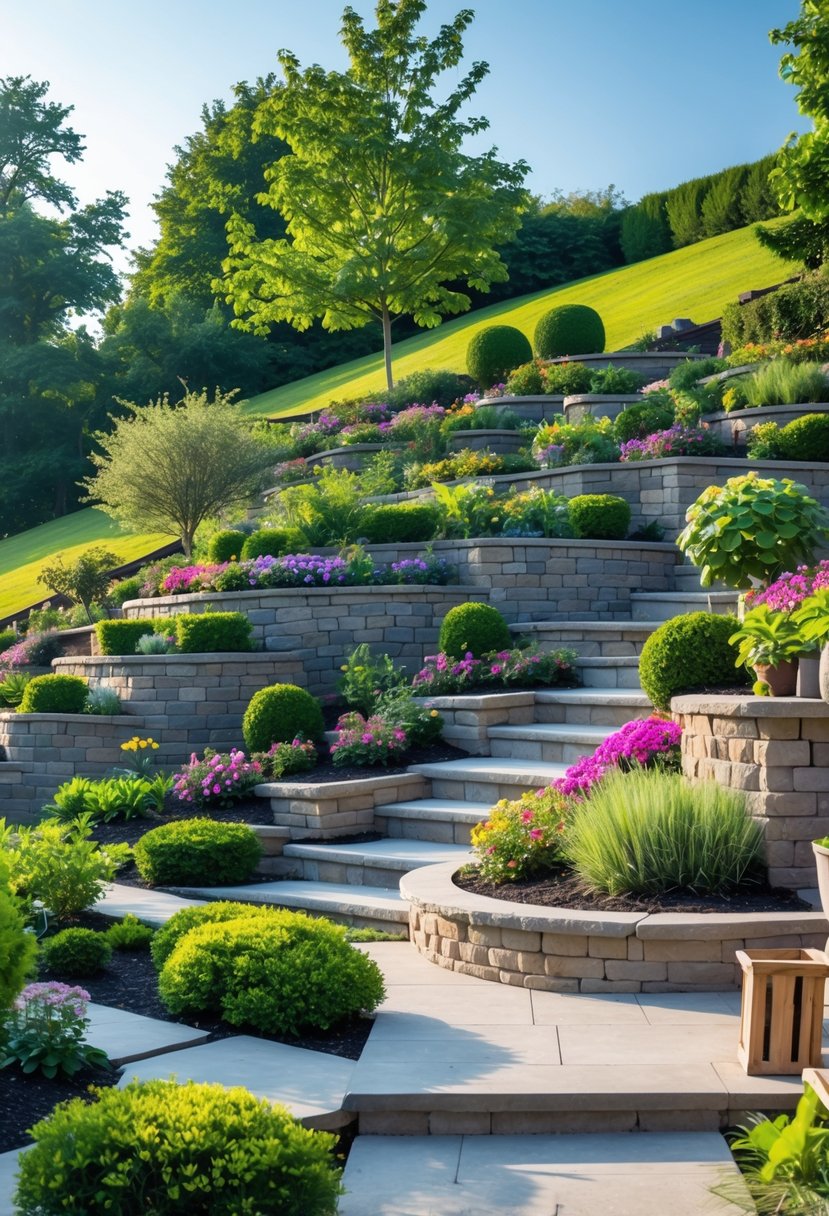
DIY garden ideas on a slope let you turn uneven ground into a space that actually fits your vibe. With just a bit of planning, you can get a lot out of your sloped yard—and still keep it easy to care for.
1) Create tiered garden beds using wooden retaining walls
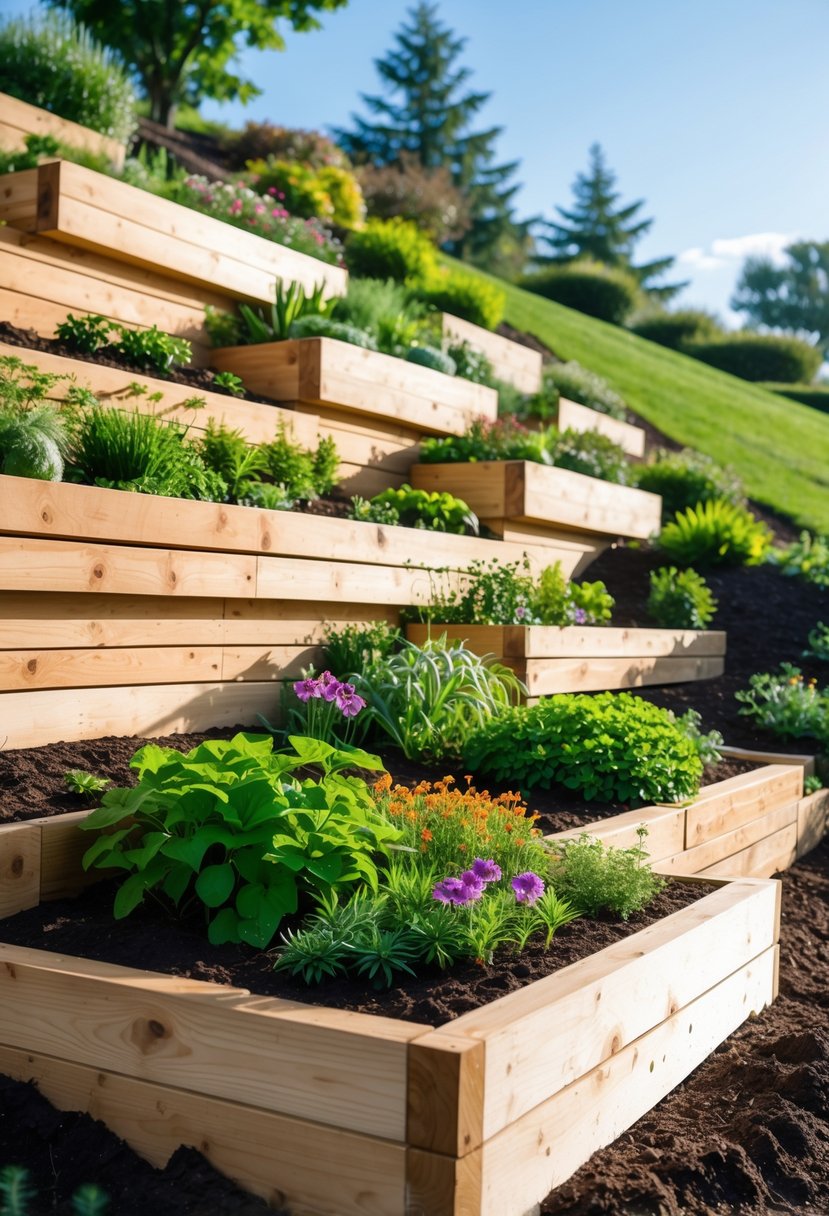
Build tiered beds and suddenly your slope becomes useful garden space. Just put in some wooden retaining walls to hold back the soil and make flat spots for planting.
Mark your levels with stakes and string to keep things even. Grab sturdy timber like treated wood or wooden sleepers for the walls.
These walls keep soil from washing away and help with drainage. They also give your garden a tidy, organized look.
If you’re not sure where to start, there are plenty of step-by-step guides for building tiered beds on a slope here.
2) Install stone steps to navigate the slope easily
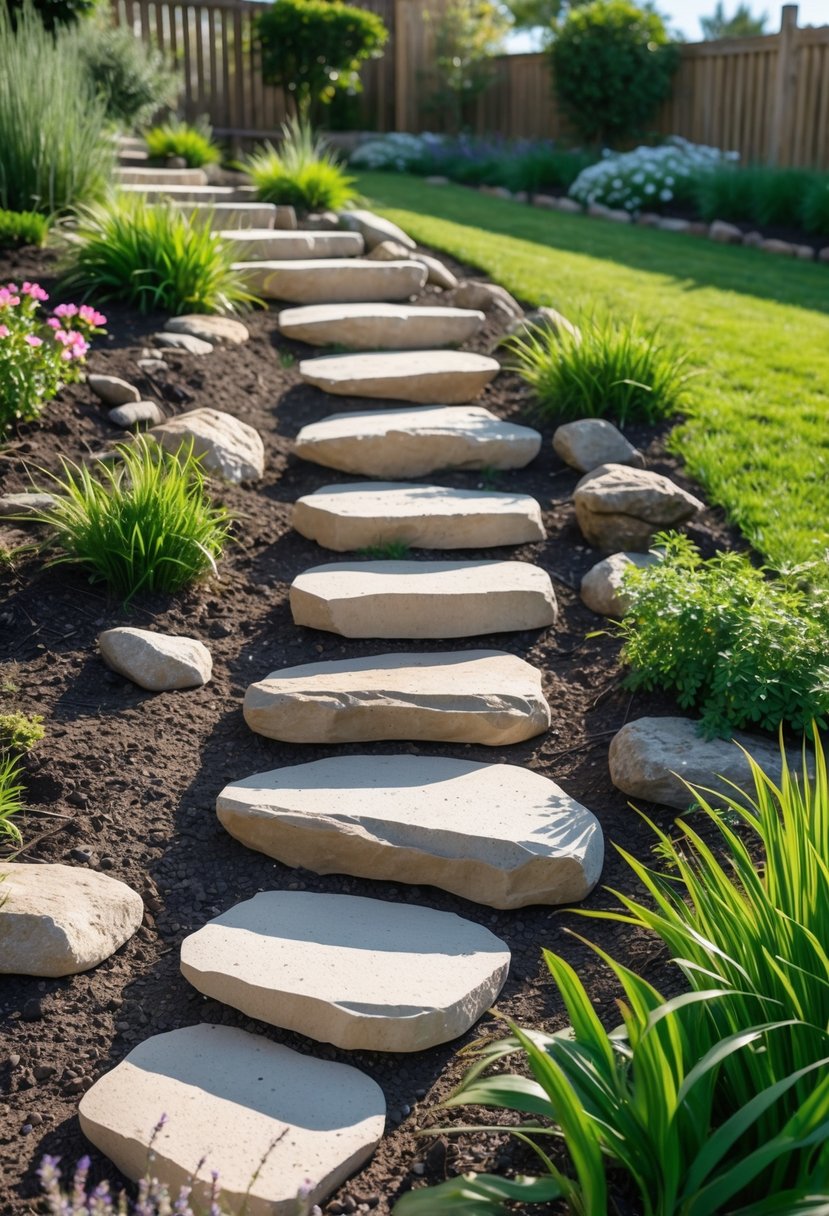
Stone steps make a sloped garden safer and way easier to walk through. You can build them with natural stones that match your yard’s style.
Adding stone steps helps slow down water and prevent soil erosion. You really just need some basic tools and a little patience.
If you want to try this, there’s a handy guide for building stone steps in your garden.
3) Use ground cover plants like creeping thyme to prevent erosion
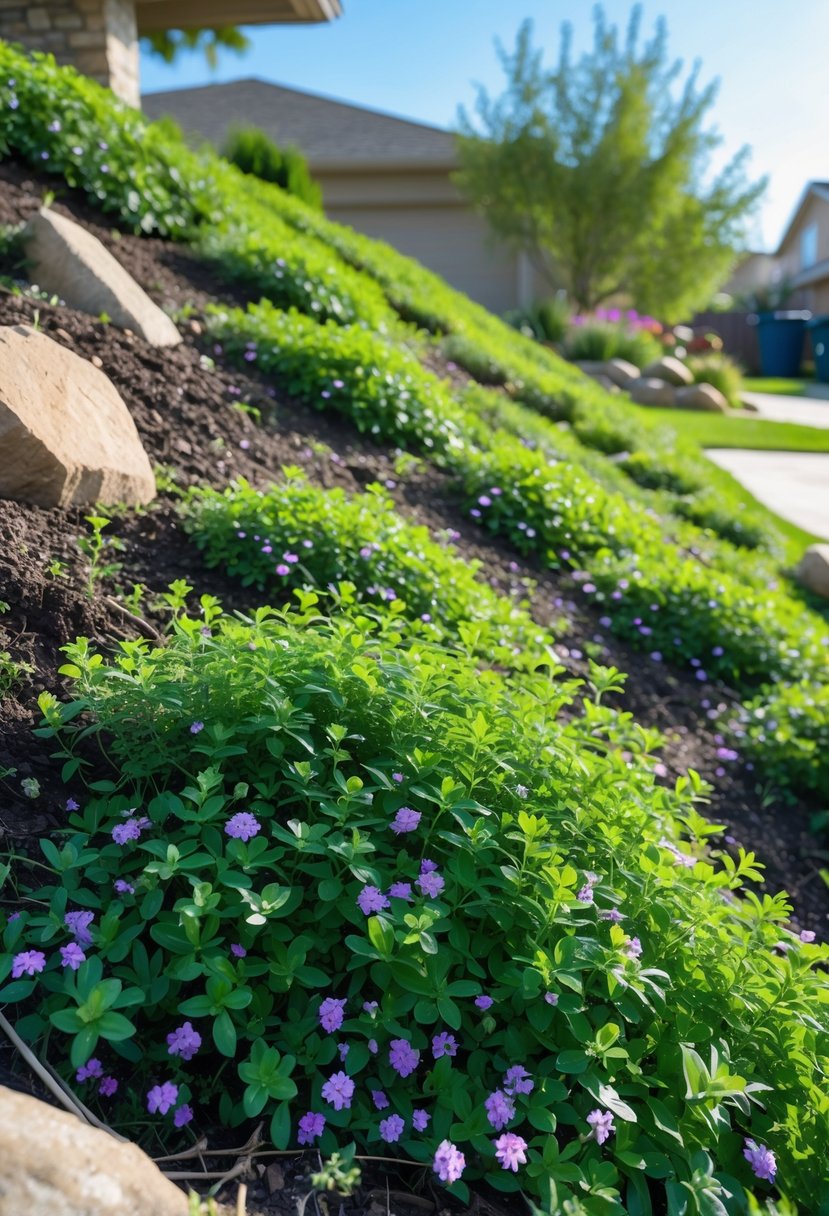
Planting creeping thyme is an easy way to protect your slope from erosion. Creeping thyme spreads fast and forms a thick mat that holds the soil in place.
It’s drought-tolerant and pretty low-maintenance once it gets going. The roots grip the soil, which really helps after heavy rain.
Plus, creeping thyme looks great with its green leaves and little flowers. You can read more about using creeping thyme for erosion control here.
4) Build a rock garden with drought-tolerant succulents
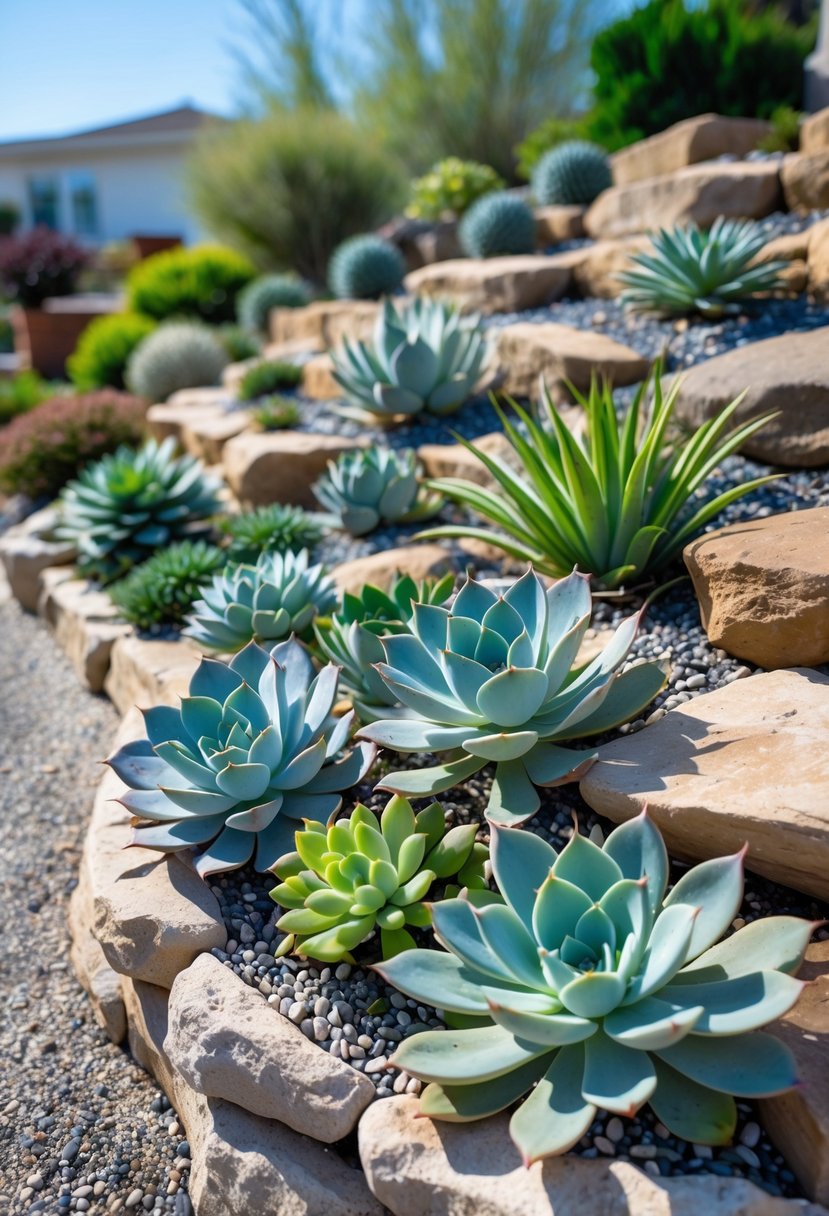
A slope is perfect for a rock garden with succulents. These plants don’t need much water, which is ideal for spots where water just runs off.
Place rocks around your succulents to keep soil in place and add some texture. Try mixing up the shapes and colors of your succulents for extra interest.
This kind of garden is super low-maintenance and still looks awesome. If you want inspiration, check out some simple succulent rock garden ideas.
5) Add a water feature, like a small cascading waterfall
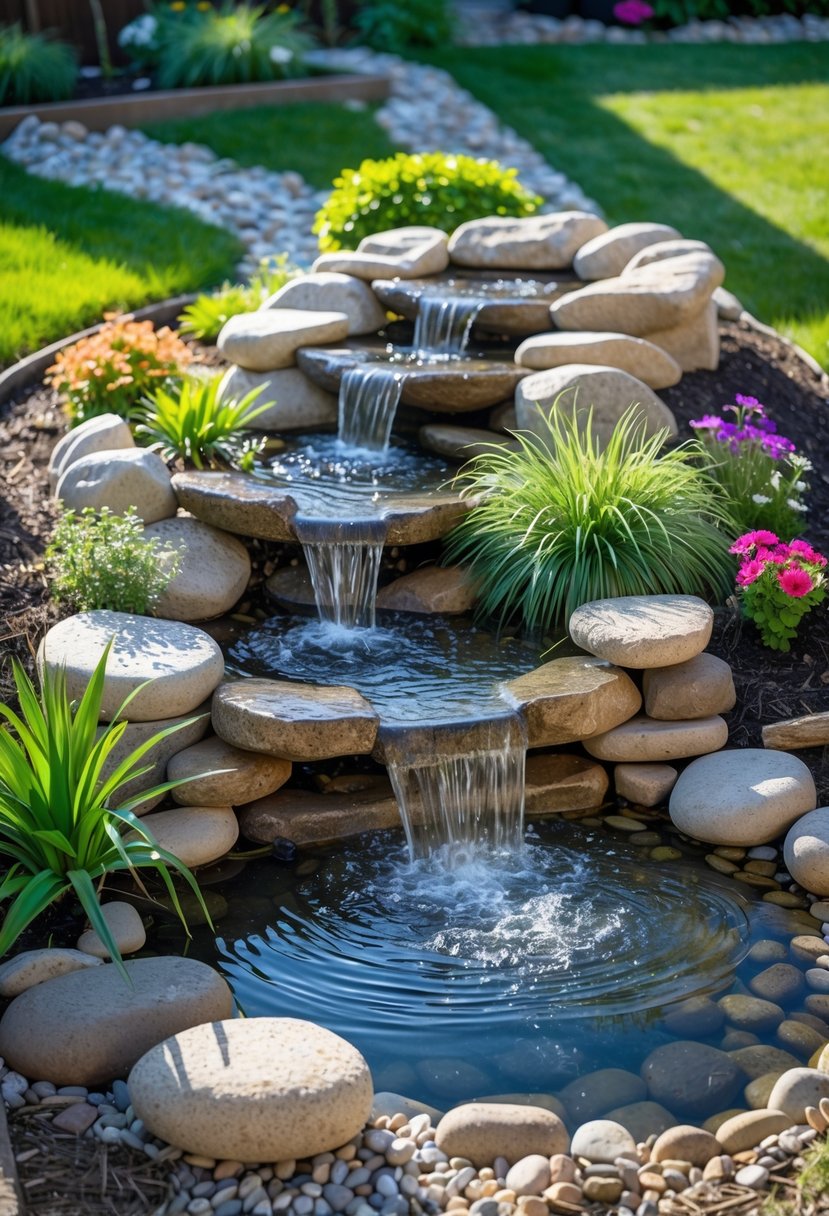
A small cascading waterfall can totally transform your sloped garden. Stack flat rocks to guide water from top to bottom and you’ll get that soothing sound everyone loves.
You don’t need a big area for a waterfall. Even a small spot can fit a natural-looking water feature.
Mix in some plants or moss for a softer look. Waterfalls also help slow down water and fight erosion on a slope.
If you want ideas, check out these small garden waterfall ideas.
6) Plant native grasses to blend with the natural landscape

Plant native grasses and your garden will blend right into the scenery. These grasses are tough and need less water than most other plants.
They do a solid job holding soil and stopping erosion. Native grasses also give your slope a soft, flowing look that changes with the seasons.
Look up native grass lists for your area to find easy options. This way, your garden stays healthy and looks good all year.
You can find more tips in this beginner’s guide to native grasses and sedges.
7) Incorporate colorful perennials such as lavender and coneflower

Brighten up your slope by planting perennials like lavender and coneflower. These plants love full sun and don’t mind dry soil, so they’re perfect for slopes.
Lavender and coneflowers need about the same care, so you can plant them together. Their colors attract bees and butterflies, which is always a bonus.
Perennials fill in spaces and bring color that lasts. For more on planting lavender and coneflowers, see this Lavender Companion Plants guide.
8) Use mulch generously to retain moisture and reduce weeds

Mulch keeps soil moist by locking in water, which is super helpful on a slope where water just runs off. Spread a couple inches of organic mulch like bark or straw around your plants.
This means you won’t have to water as much. Mulch also blocks weeds so you spend less time pulling them.
It’s a simple way to protect your soil and help your garden thrive. Need more info? Check out this guide on how mulch can reduce weeds and conserve water.
9) Build a DIY retaining wall with railroad ties
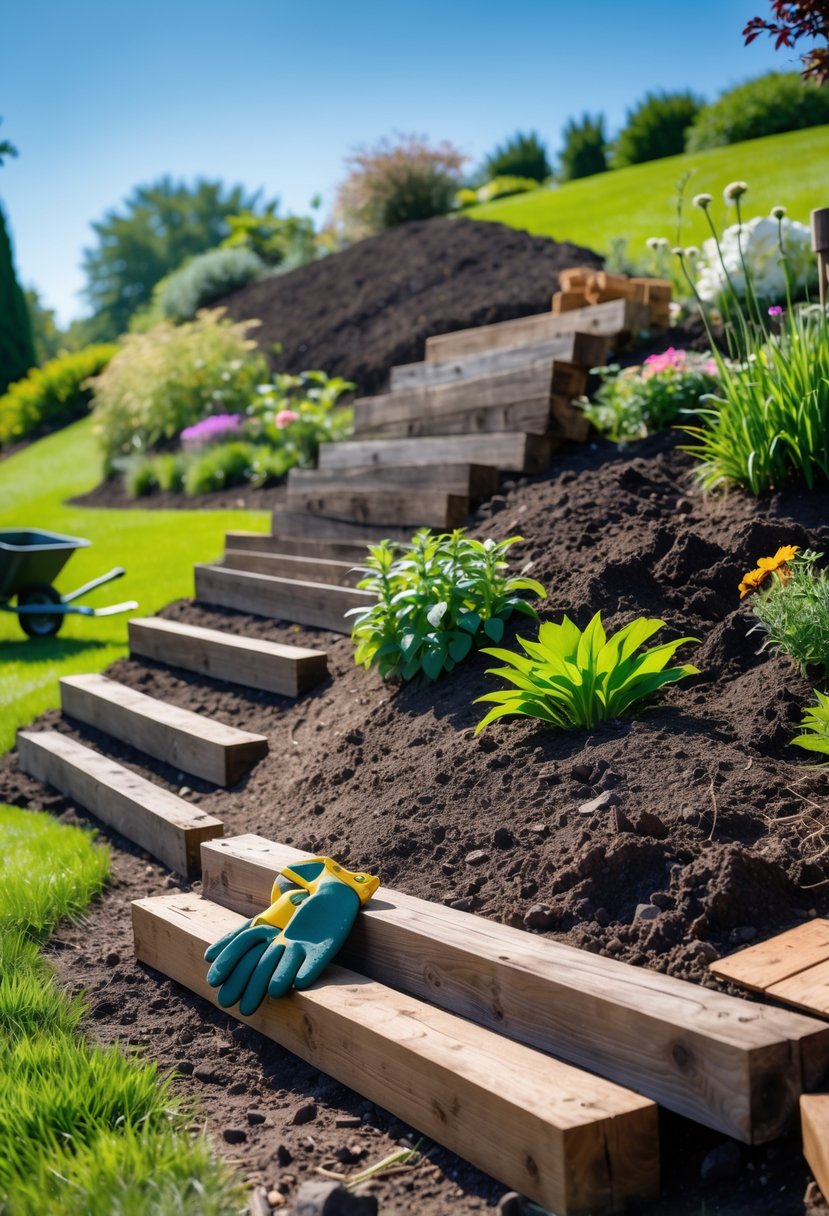
Railroad ties make a strong, simple retaining wall for your slope. Start by leveling the ground and digging a shallow trench for the ties.
Stack them up, making sure they’re lined up and secure. Use spikes or rebar to fasten them for extra strength.
This wall holds back soil and cuts down on erosion. It also brings a rustic look to your garden.
If you want to try it, here’s a guide on How to Build a Railroad Tie Retaining Wall.
10) Create a winding gravel path to add charm and accessibility

A winding gravel path adds both charm and function to your slope. Curved paths are easier to walk on and break up the steepness.
Gravel drains well and gives you good grip, so you’re less likely to slip. Throw in some stepping stones for extra stability and style.
Paths like this fit right into the landscape and connect different parts of your garden. For more how-to advice, check out this guide on building gravel paths on slopes.
11) Use raised beds with neat edging for growing vegetables
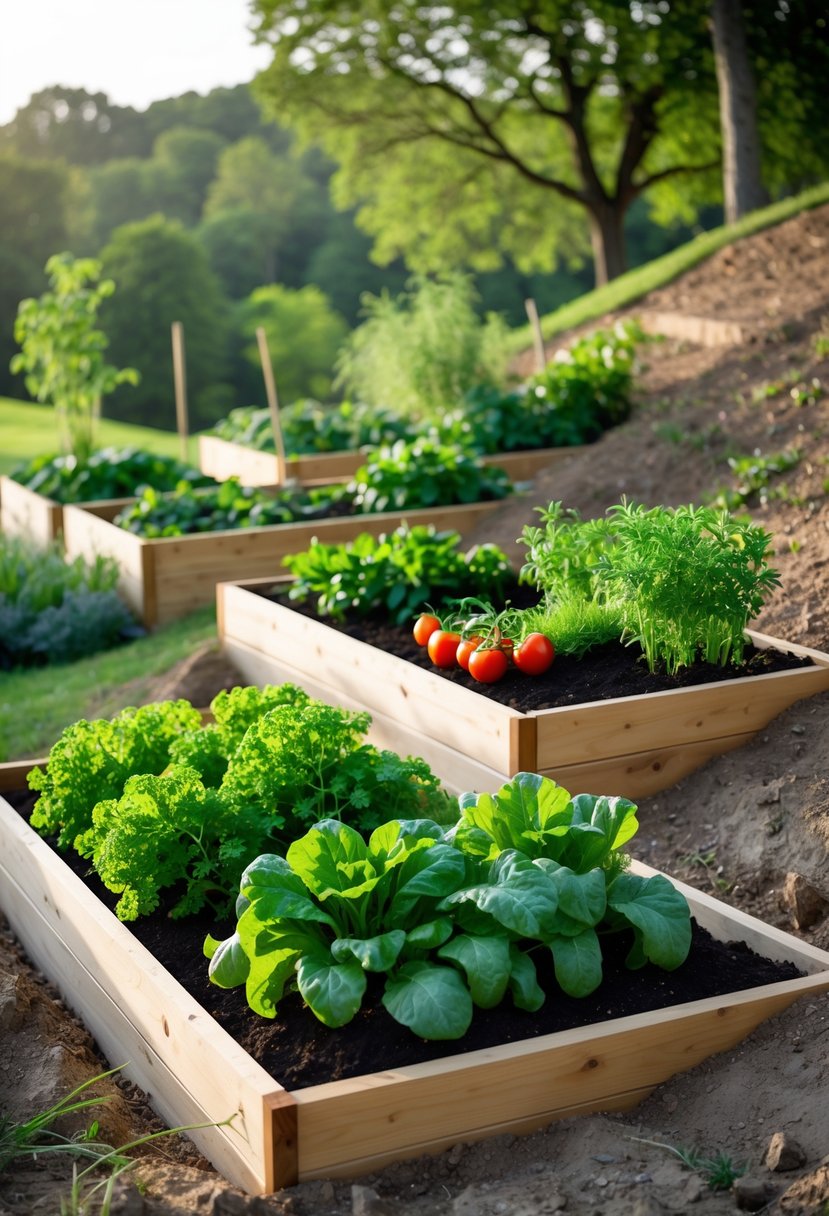
Raised beds make growing veggies on a slope way easier. They keep soil where it belongs and stop it from washing away during rain.
Add neat edging around your raised beds for structure. It helps keep grass and weeds out of your veggie patch.
Raised beds also make planting and picking veggies way more comfortable. For more design ideas, check out raised bed designs and raised garden bed ideas.
12) Plant shrubs with deep roots like juniper for slope stability
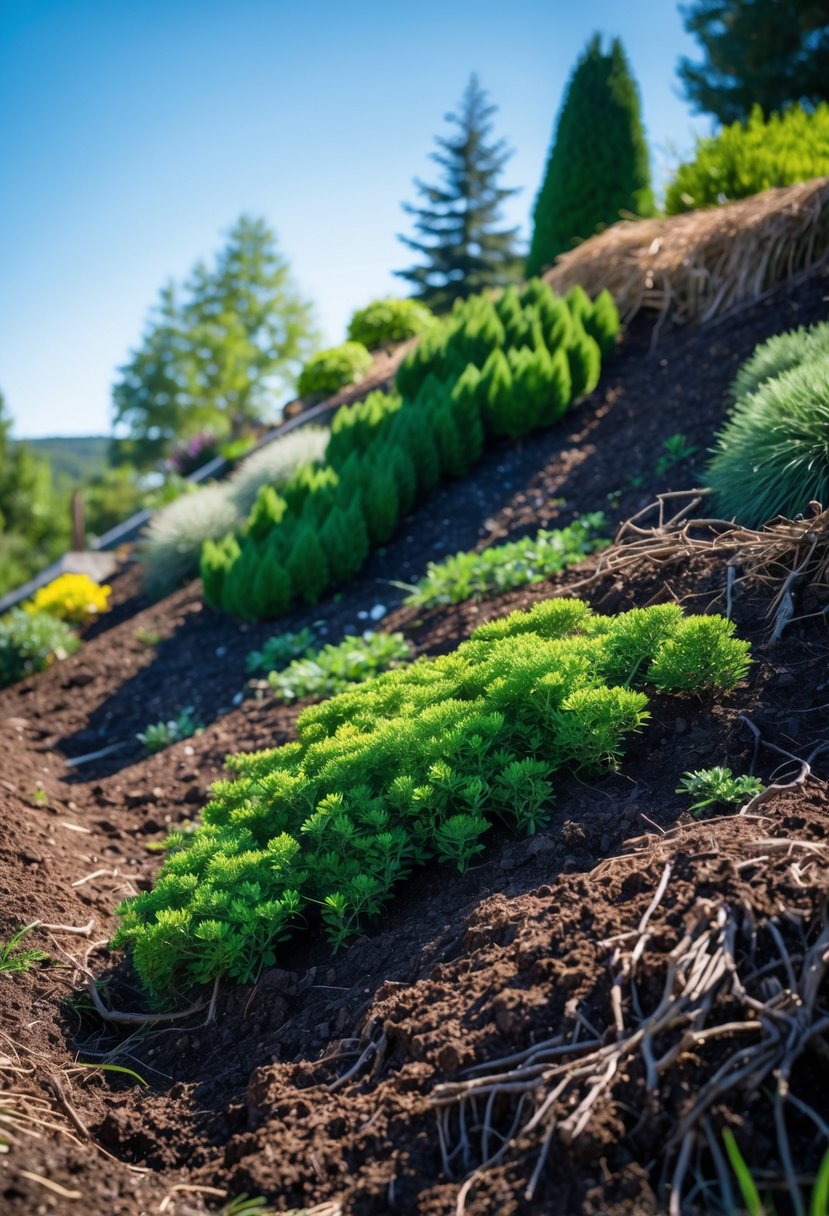
Planting deep-rooted shrubs like juniper keeps your slope steady. Juniper roots grow strong and spread out, holding soil in place even during heavy rain.
If your slope is steep, plant junipers closer together for extra grip. Once they’re established, they really don’t need much care.
These shrubs make your slope stable and green, and they look good without a lot of effort. For more on planting juniper, check out this guide on how to plant creeping juniper on a slope.
13) Add vertical interest with tall ornamental grasses
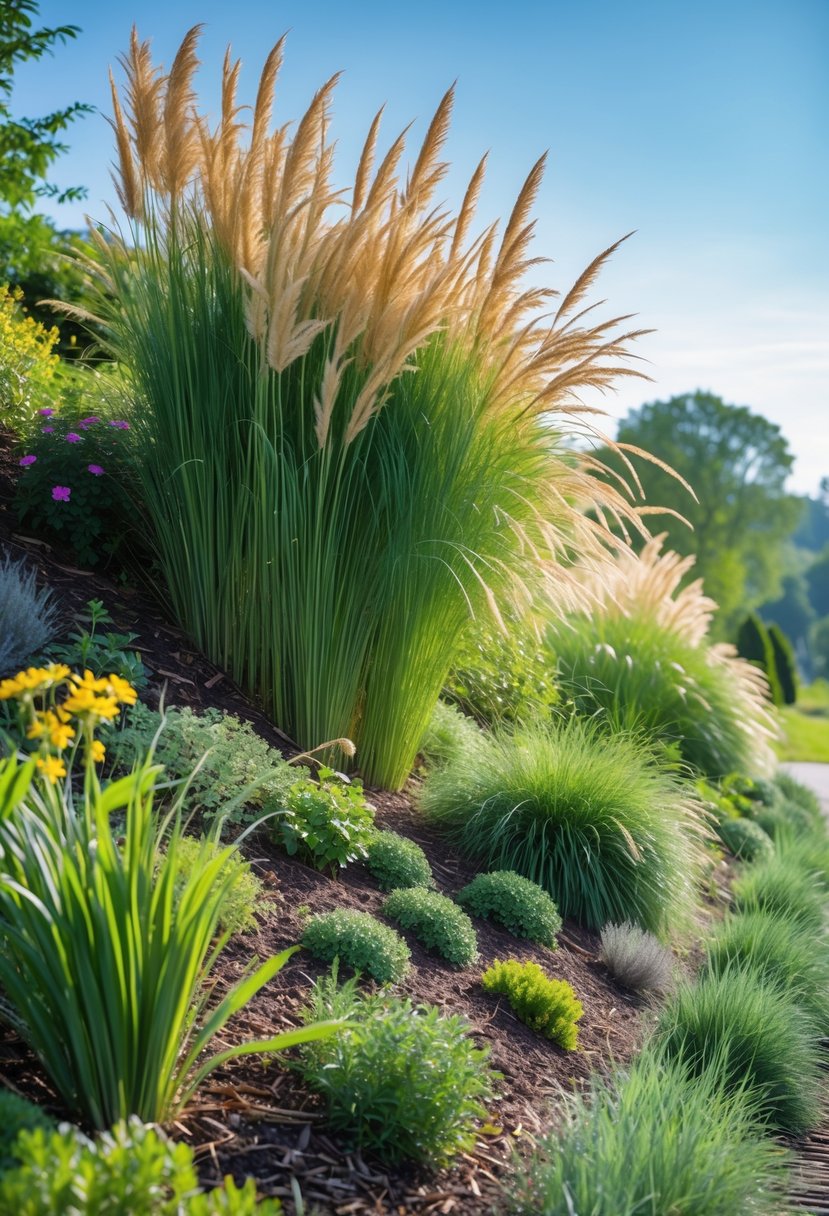
Try using tall ornamental grasses if you want to add height and texture to your slope garden. These grasses grow fast and can create a natural screen or a simple barrier.
They break up flat spaces and add depth. When the wind blows, the grasses sway and bring a calming vibe to the space.
If you pick drought-tolerant types, you’ll have less to worry about. Tall grasses make your garden look stylish with very little fuss.
Need ideas on which grasses to choose? Check out landscaping with grasses for inspiration.
14) Use hardy ferns for shady slope areas
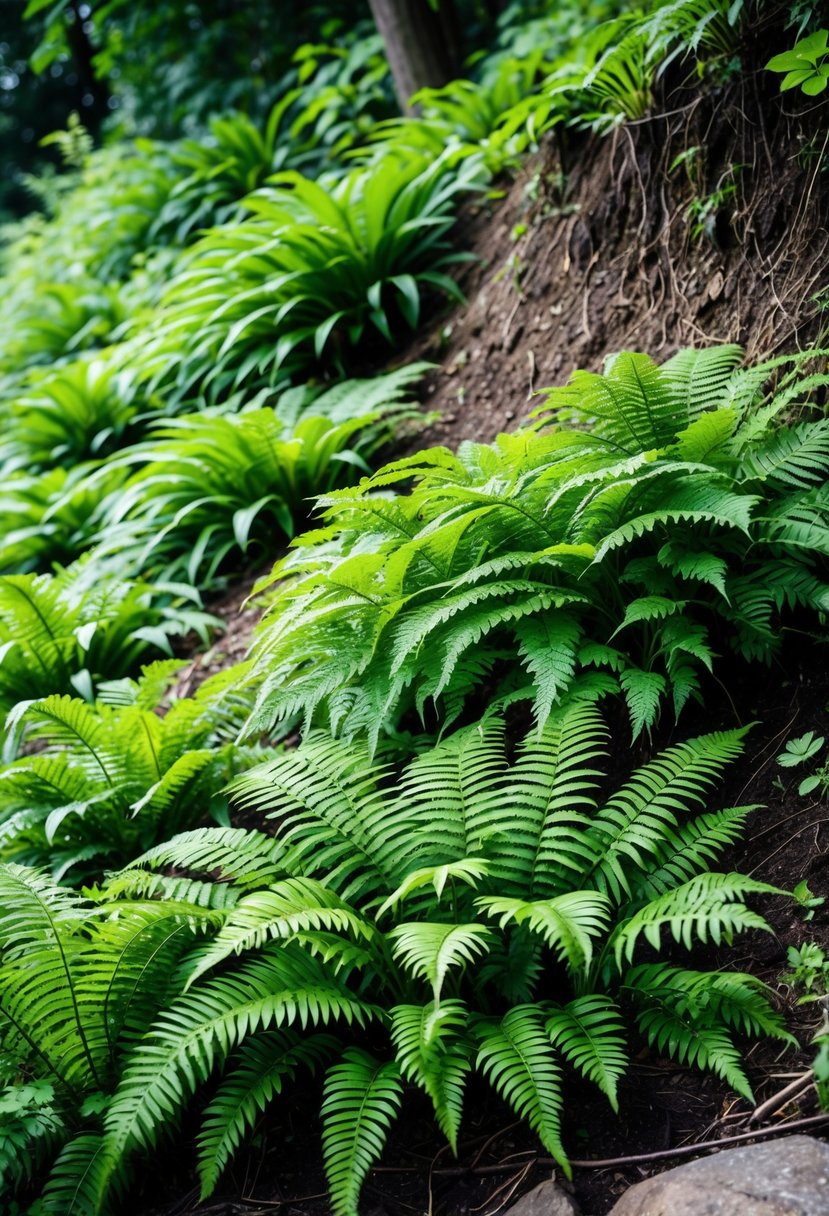
Ferns thrive on shady slopes where many other plants just don’t. Their roots grip the soil and help keep erosion in check.
Look for hardy varieties like ostrich ferns or lady ferns. These are low-maintenance and can handle shady, damp spots.
Ferns bring a soft, lush look that blends right in with the natural landscape. Plus, they don’t really attract pests, so your slope stays healthier with less effort.
Want more ideas for ferns in shade? Here’s a handy fern landscaping guide.
15) Build a bench into the hillside for a cozy seating spot
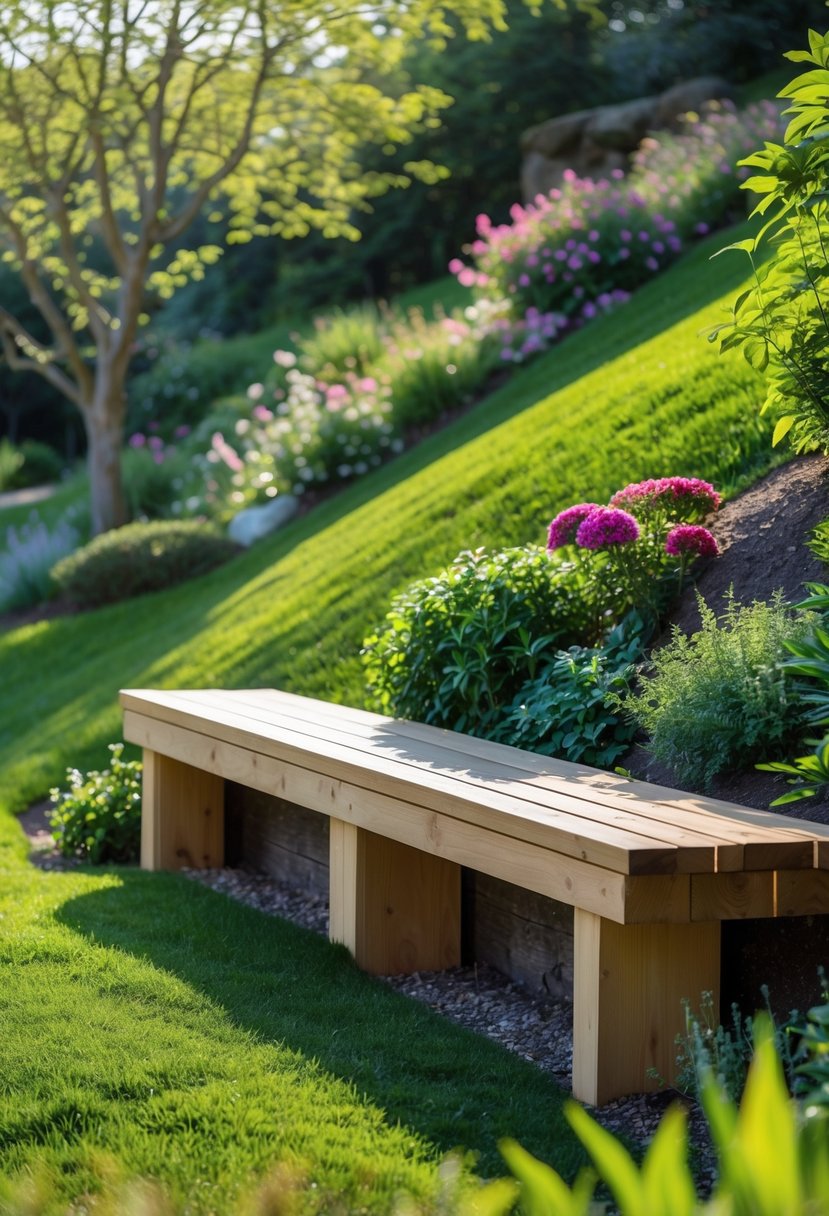
Try building a cozy bench right into your slope. The hill itself supports the bench, so it feels sturdy and looks charming.
Pick weather-resistant materials—treated wood or stone work well and last through all kinds of weather.
Toss on some cushions or pillows to make it extra comfy. You’ll have a nice spot to relax and enjoy the view.
This idea turns a tough slope into a practical seating area. For simple DIY plans, check out garden bench plans made for slopes.
16) Plant edible berries along the slope’s edge

Try planting edible berries like raspberries or blueberries along the edge of your slope. They help keep soil in place and add a pop of color.
You’ll get tasty snacks right from your yard. Just give the plants enough space and make sure they have good drainage so water doesn’t pool up.
Stone edging or small terraces help steady the soil and make picking berries easier. Your slope turns practical and pretty at the same time.
For more inspiration, look into creative ways to plant edible crops on slopes.
17) Install drip irrigation to water difficult slope sections

Try setting up drip irrigation to reach those tricky slope spots. Drip systems send water slowly right to the roots, keeping it from running downhill.
Drip irrigation controls water flow and helps prevent soil erosion. Lay drip lines along the hill’s contour for even watering.
You’ll save water and keep your plants happy without much waste. It might take a little planning, but it’s a smart fix for watering sloped gardens.
Want more help? Check out how to install drip irrigation on sloped landscapes.
18) Create a wildflower meadow section for bursts of color

Turn a slope into a lively wildflower meadow for color and movement. Wildflowers do well on slopes and barely need any fussing over.
A meadow brings in bees, butterflies, and all sorts of pollinators. Pick native wildflowers for the best results.
Plant flowers in clusters or patterns for eye-catching bursts of color. This simple idea lets you enjoy a space that changes with the seasons.
If you’re curious, here’s more about wildflower meadows here.
19) Use terracotta pots anchored on terraced levels
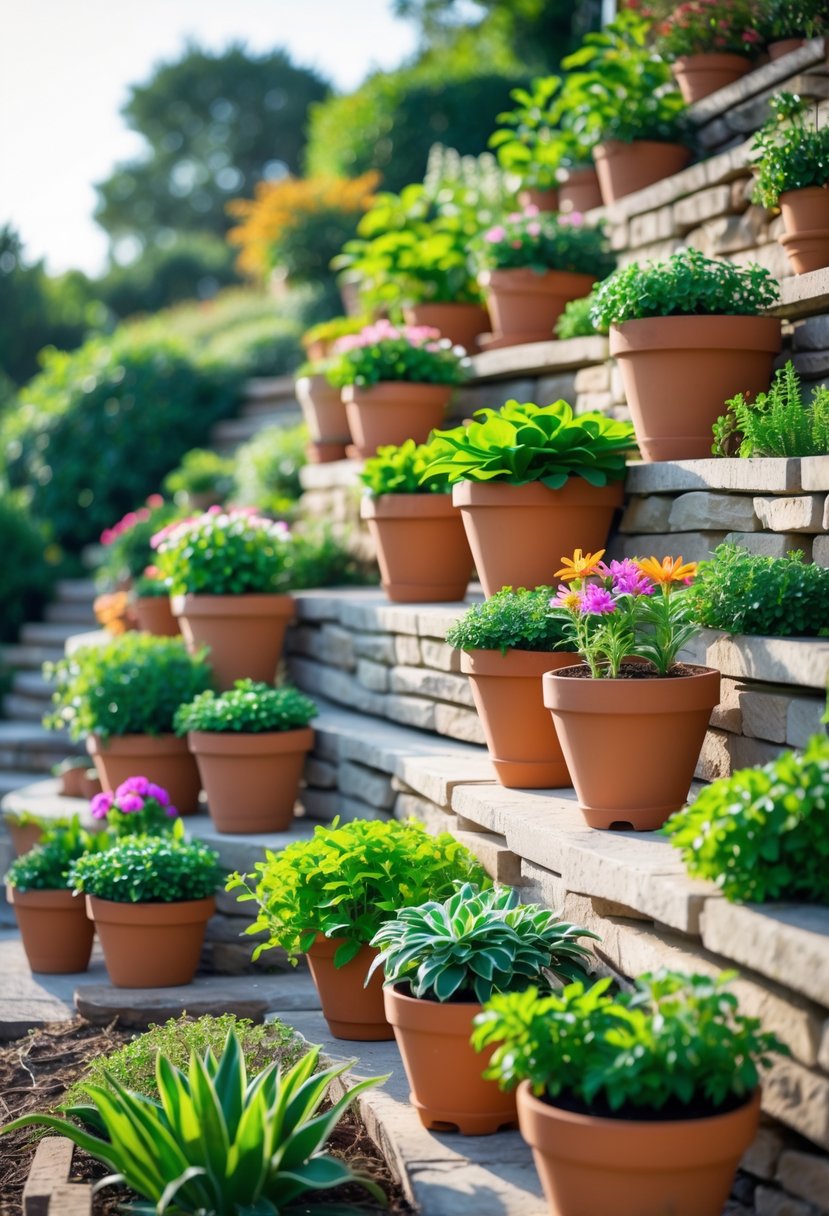
Add some charm by placing terracotta pots on terraced steps in your sloped garden. Set each pot on a flat spot or build little shelves to keep them steady.
Hammer in a rod or rebar to anchor them, so they don’t tip over. This lets you stack pots and create a tidy, layered look.
Terracotta works for flowers, herbs, or succulents and brings a warm, earthy feel. You’ll use your sloped space in a creative way.
Want more ideas? Visit gardenandcrafty.com for terracotta pot projects.
20) Add solar garden lights along pathways for ambiance
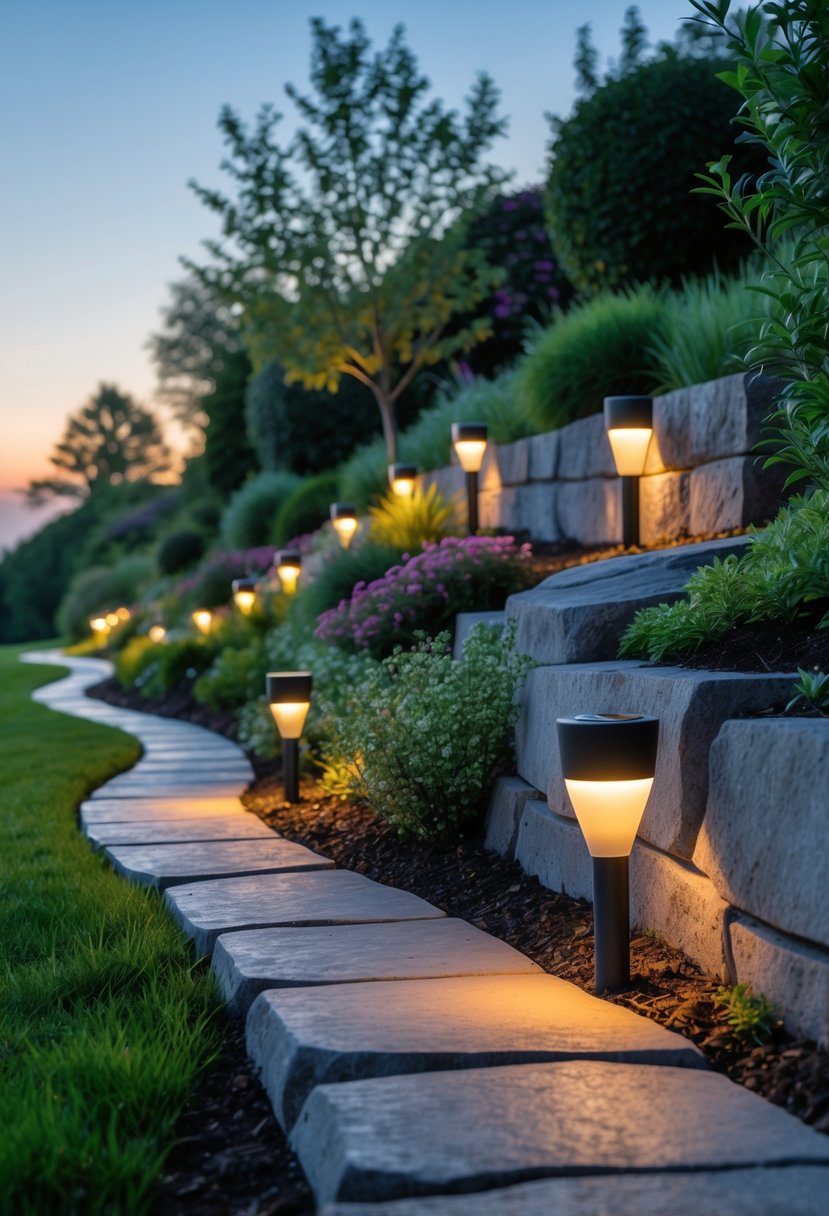
Brighten up your sloped garden paths with solar garden lights. They soak up the sun during the day and glow at night, making your space cozy and safe.
No wires needed—just stick them along your path and let the sun do the work. It doesn’t get much simpler than that.
Solar lights use clean energy, so you don’t have to worry about higher bills. They bring a warm, welcoming glow for evening strolls.
Check out more solar light ideas here.
21) Grow strawberries in a tiered hanging garden

Try growing strawberries in a tiered hanging garden if you’re short on space. Stack pots or planters in levels—it’s ideal for slopes or small spots.
Strawberries get plenty of sun and air this way. Picking berries becomes easy and, honestly, kind of fun.
Hanging planters keep things organized. Some even come with built-in watering, making care simple.
Try a DIY tiered strawberry planter for a fresh look and tasty fruit. For more, check out vertical and hanging strawberry garden ideas.
22) Build a DIY compost corner in a flat slope spot
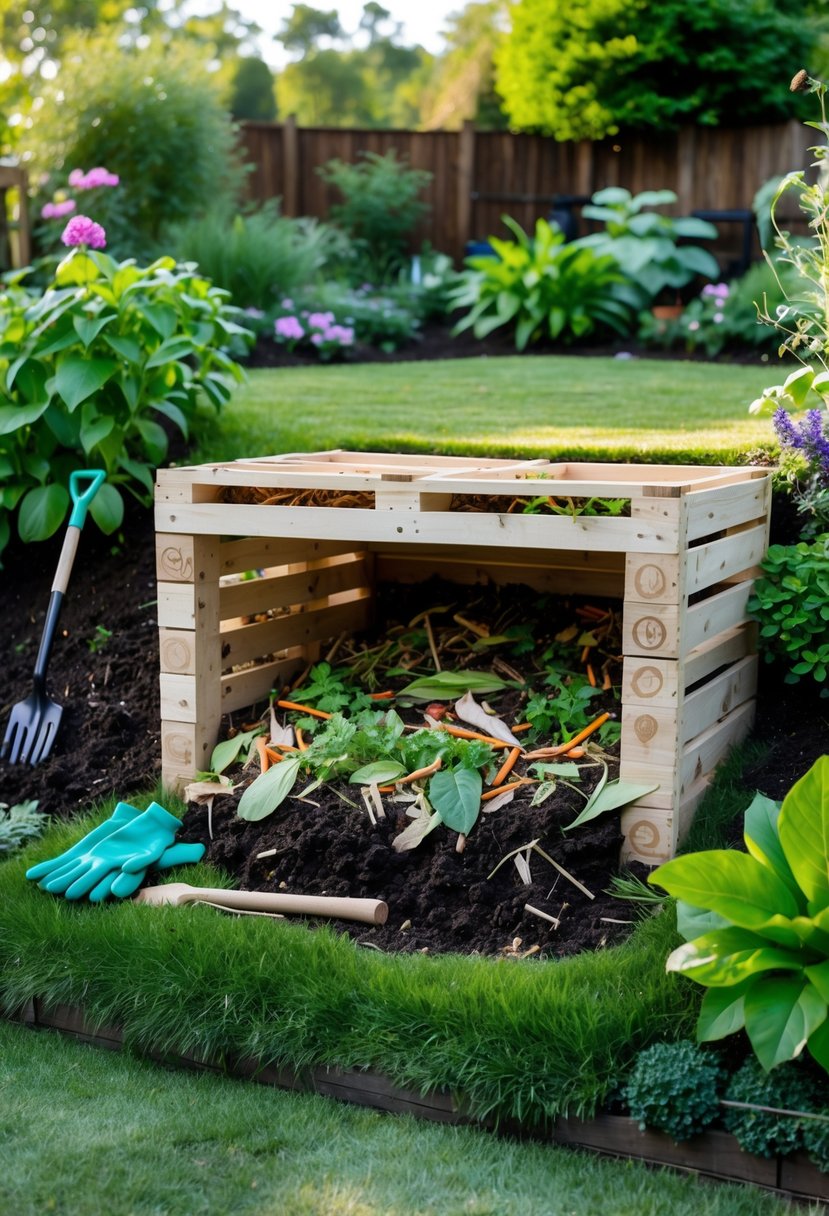
Pick a flat part of your slope to set up a compost corner. This spot keeps your compost bins steady and easy to reach.
Use wood pallets or cinder blocks to make a simple bin. The bin holds compost in place and lets air move through, which helps it break down faster.
A compost corner keeps your yard neater and turns kitchen scraps into rich soil. It’s a smart way to boost your garden.
Need steps? Look up ideas for building compost bins on slopes.
23) Use stepping stones embedded in moss for a fairy-tale look

Lay stepping stones right into soft moss to create a magical path on your slope. The moss fills in around the stones, giving a gentle, natural vibe.
This look turns your garden into a storybook trail. It’s easy to walk on and adds a hint of magic.
Use old bricks or natural stones for a simple, classic feel. Moss helps keep the stones steady and blends everything together.
Want more? Check out stepping stones and moss garden path ideas.
24) Create a butterfly garden with milkweed and bee balm

Draw in butterflies and bees by planting milkweed and bee balm on your slope. Monarch caterpillars only eat milkweed, so it’s a must. Bee balm’s bright blooms attract adult butterflies and bees for nectar.
Both plants like sunny spots and can handle dry spells, which slopes often have. You’ll end up with a lively, colorful garden buzzing with pollinators.
Need tips? See how to create a vibrant butterfly garden with milkweed and friends.
25) Incorporate a small herb spiral for easy harvest

Try a small herb spiral to make the most of your slope. It saves space and keeps harvesting herbs simple.
The spiral shape gives you different spots for sun- or shade-loving herbs. That means happier, healthier plants.
Building on a slope helps with drainage, so herbs won’t get waterlogged. Grow basil, thyme, or mint close together for a handy and tasty garden feature.
Want to build one? Here’s a step-by-step guide.
Understanding Slope Challenges
If you’re working with a sloped garden, you’ll need to watch water flow and soil stability. Water tends to wash away nutrients, and soil can slide downhill, which makes it tough for plants to settle in.
Sorting out these issues early gives your garden a better shot at thriving.
Erosion Control Basics
Erosion kicks in when rain or watering rushes down your slope, dragging soil along for the ride. That can leave your plants struggling because they suddenly don’t have the ground they need.
To control erosion, try slowing that water down a bit. Planting ground covers or grasses works well since their roots really hold onto the soil.
Mulch helps too—it shields the soil from pounding rain. You could also toss in some small trenches or lay rocks across the slope. Those barriers catch water and slow it down.
If you’re up for it, install a drip irrigation system. It gives water right to the roots, nice and slow, so you get less runoff and less erosion.
Soil Retention Techniques
Keeping soil from sliding off the hill is pretty much essential if you want your garden to do well. Lots of people build terraces or retaining walls for this. Flat sections hang onto soil better and give you some planting space.
You can use wood, stone, or bricks for terraces—whatever fits your vibe and your wallet. Just remember to pack the soil down and throw some landscape fabric under retaining walls for extra stability.
Deep-rooted shrubs or trees help too. Their roots dig in deep and act like anchors, which keeps things steady during heavy rain.
Mixing up these tricks usually gives your slope a solid base for plants. If you want more ideas, check out the comprehensive guide on slope gardening.
Designing for Safety and Accessibility
Working on a sloped garden means you’ve got to think about getting around safely. You don’t want anyone slipping or struggling just to enjoy the space.
Incorporating Walkways and Steps
Adding walkways and steps makes it so much easier to move through your garden. Go for non-slip stuff like textured stone, concrete, or wood with grip strips. Smooth surfaces? They get slick when wet, so maybe skip those.
Keep steps even, both in height and width. A rise of 6 to 7 inches and a tread of 11 to 12 inches usually feels comfortable. If you add handrails, you’ll give folks—especially older adults or anyone with balance issues—a lot more confidence.
Try laying out paths that curve along with the slope instead of going straight up. Gentle switchbacks make walking way less tiring and help keep accidents to a minimum.
Creating Level Terraces
Terracing transforms a steep slope into a bunch of flat, usable spaces. Use sturdy materials—stone, bricks, or treated wood—to build the retaining walls.
Make sure every terrace stays level and wide enough to walk around. Stability matters, so don’t skimp on the structure.
Put in proper drainage behind the terraces. Without it, water can build up and, honestly, nobody wants their walls slipping or collapsing.
Try planting ground covers along the terrace edges. They help stop erosion and, let’s be honest, the extra color looks great.
Level terraces let you set up garden zones. You can create flower beds, seating spots, or veggie patches. It’s just way easier to manage everything on flat ground.
If you want more slope ideas, check out the expert tips on steps and ramps in the garden.


