

Desert Plants: 10 Standout Species to Know
Desert plants bring structure, texture, and seasonal color to landscapes shaped by intense sun, limited rainfall, and fast-draining soil. Cacti, succulents, shrubs, trees, and wildflowers each use different adaptations to handle heat and drought.
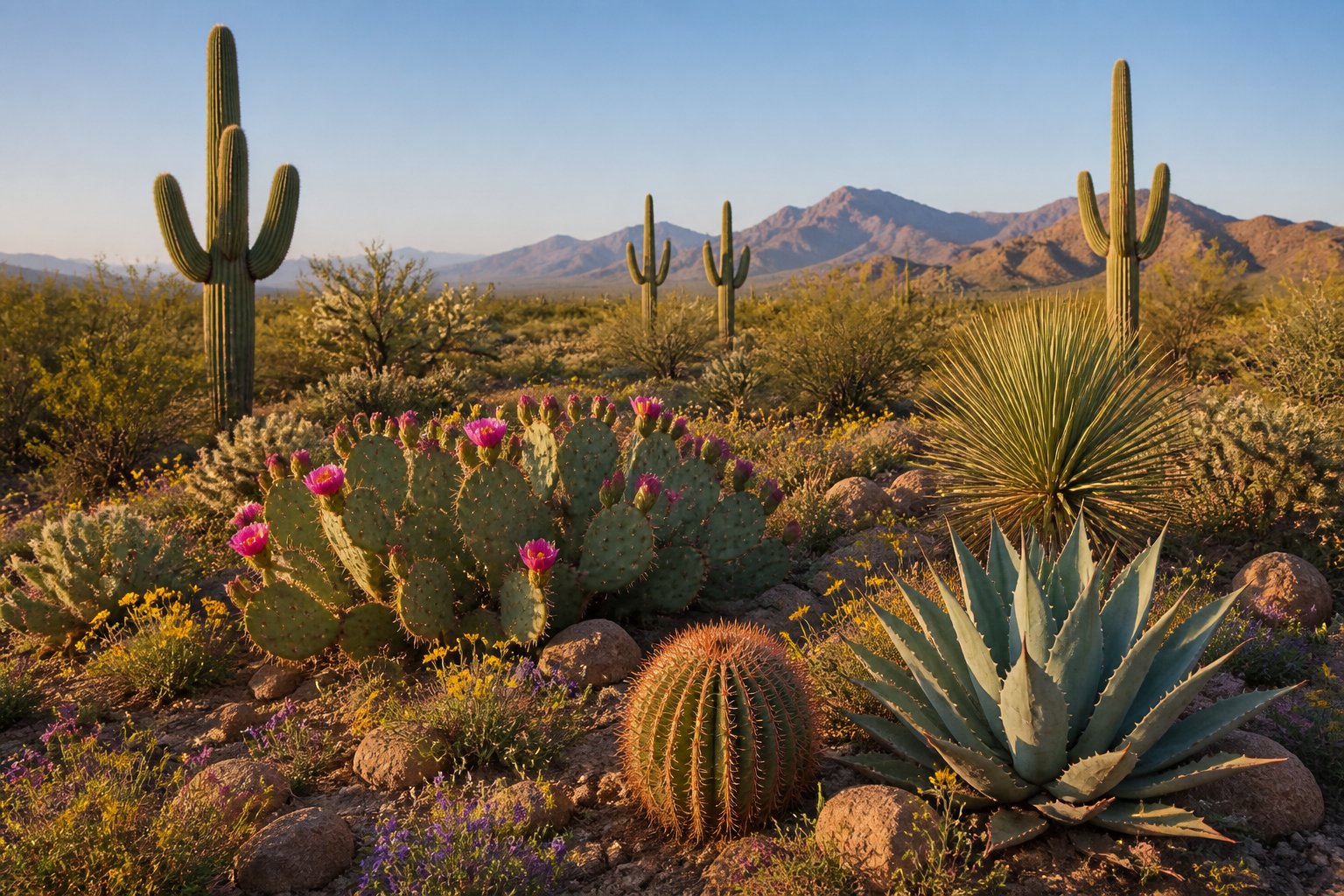
The best choice for your yard is a species matched to your local desert climate, sunlight, soil, and winter temperatures. Start with plants native to your region, then group species with similar watering needs. For more inspiration, explore these desert garden ideas before you plant.
1) Saguaro (Carnegiea gigantea)
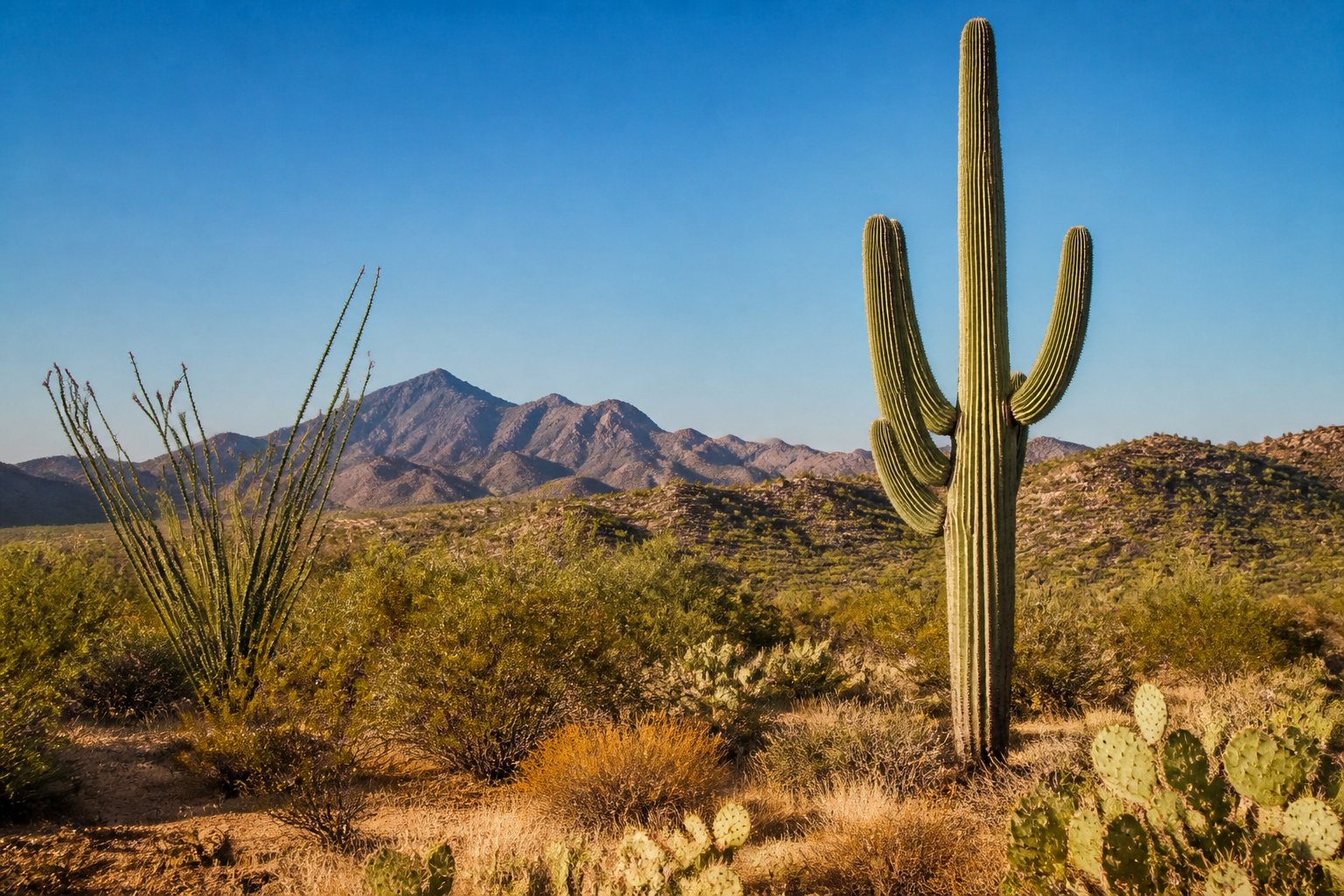
The saguaro is a towering columnar cactus recognized by its upward-curving arms and ribbed, water-storing stem. Native to the Sonoran Desert, it grows in Arizona, California, and northern Mexico.
White, trumpet-shaped flowers appear from April through June and attract pollinators such as bees and hummingbirds. Mature plants can reach 52 feet, though growth is slow.
Use a saguaro as a focal point in a spacious, full-sun landscape. Give it sharply draining soil and enough room for its eventual height. A protected planting site also helps shield young plants from frost and excess moisture.
2) Prickly Pear Cactus (Opuntia spp.)
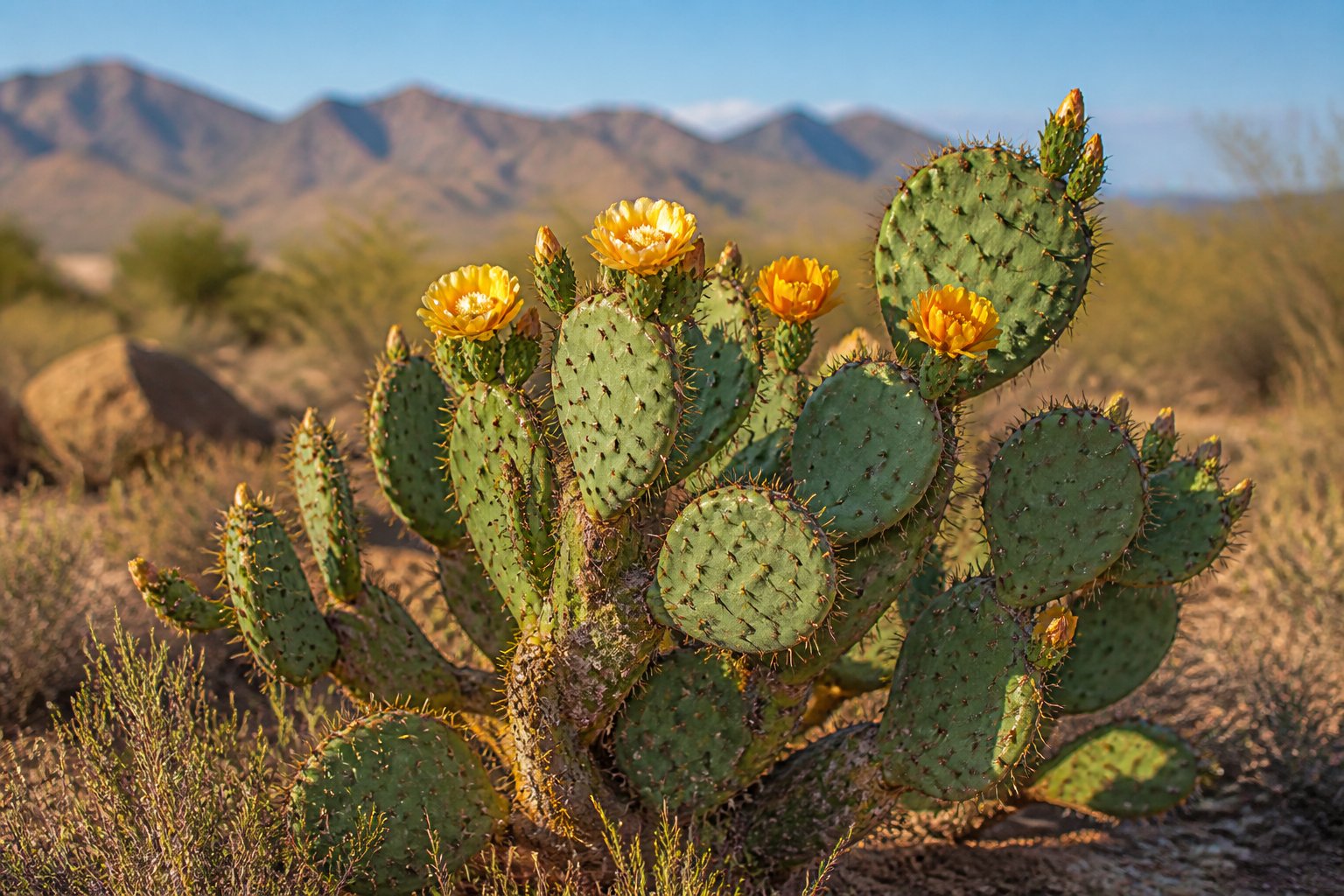
Prickly pear stands out through its flat, fleshy pads and colorful flowers. The pads store moisture, while spines protect the plant from browsing animals and intense exposure.
Depending on the species, blooms range from yellow to red or purple. Some plants also produce edible fruits called tunas. Prickly pear works well along dry borders, in rock gardens, and on sunny slopes.
Handle pads with thick gloves and long tools because fine bristles called glochids detach easily. Plant it in gravelly soil, leave space for spreading pads, and keep it away from paths where people brush against it.
3) Joshua Tree (Yucca brevifolia)
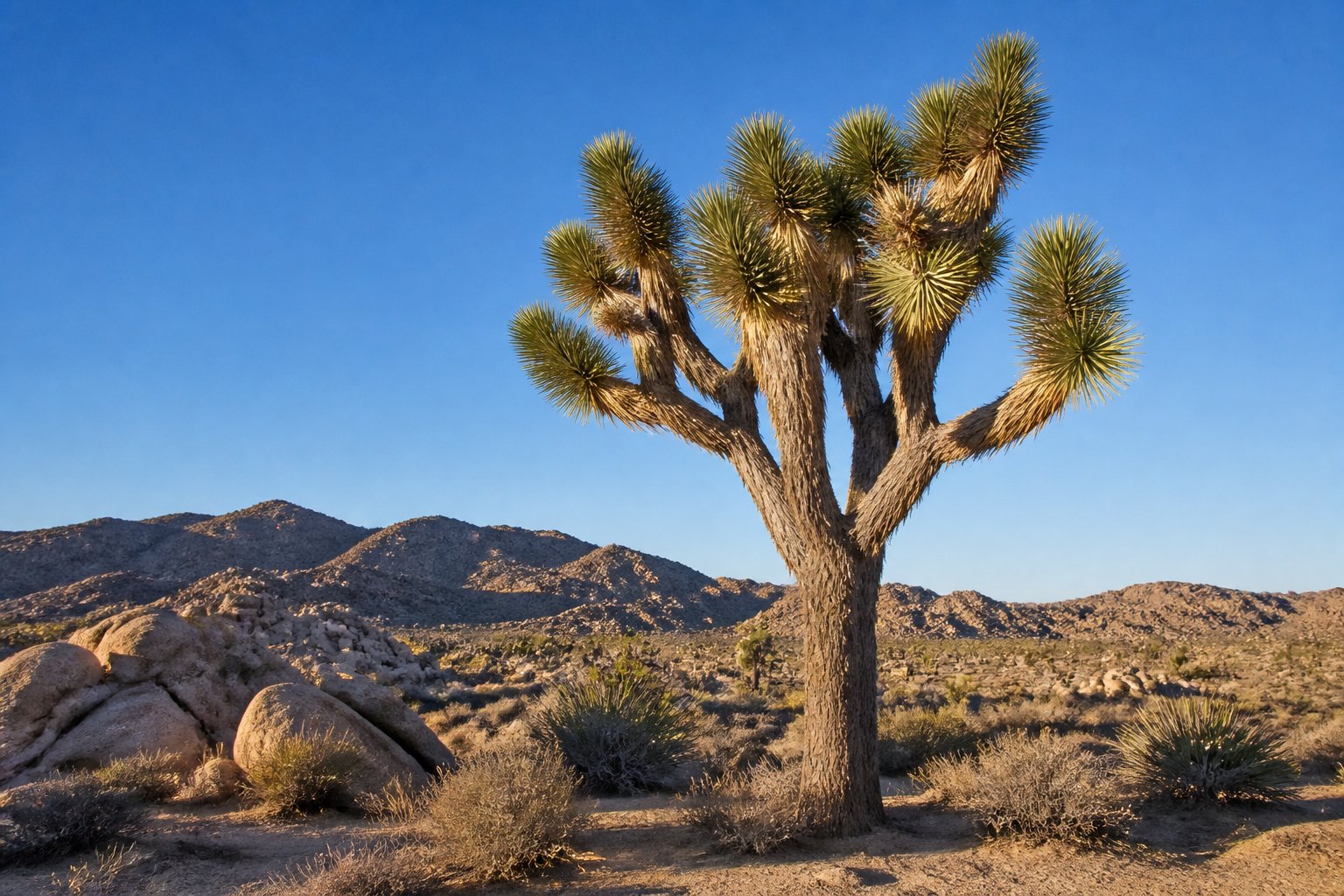
Joshua tree is a tree-form yucca with stiff, pointed leaves clustered at the ends of angular branches. It is strongly associated with the Mojave Desert and grows across parts of California, Nevada, Arizona, and Utah.
A broad root system helps the plant access moisture in arid ground. Mature specimens can reach 50 feet, although their slow growth requires patience.
Give this yucca full sun, excellent drainage, and room to develop its distinctive silhouette. Young plants need careful watering while they establish, followed by a much drier routine once their roots settle.
4) Barrel Cactus (Ferocactus spp.)
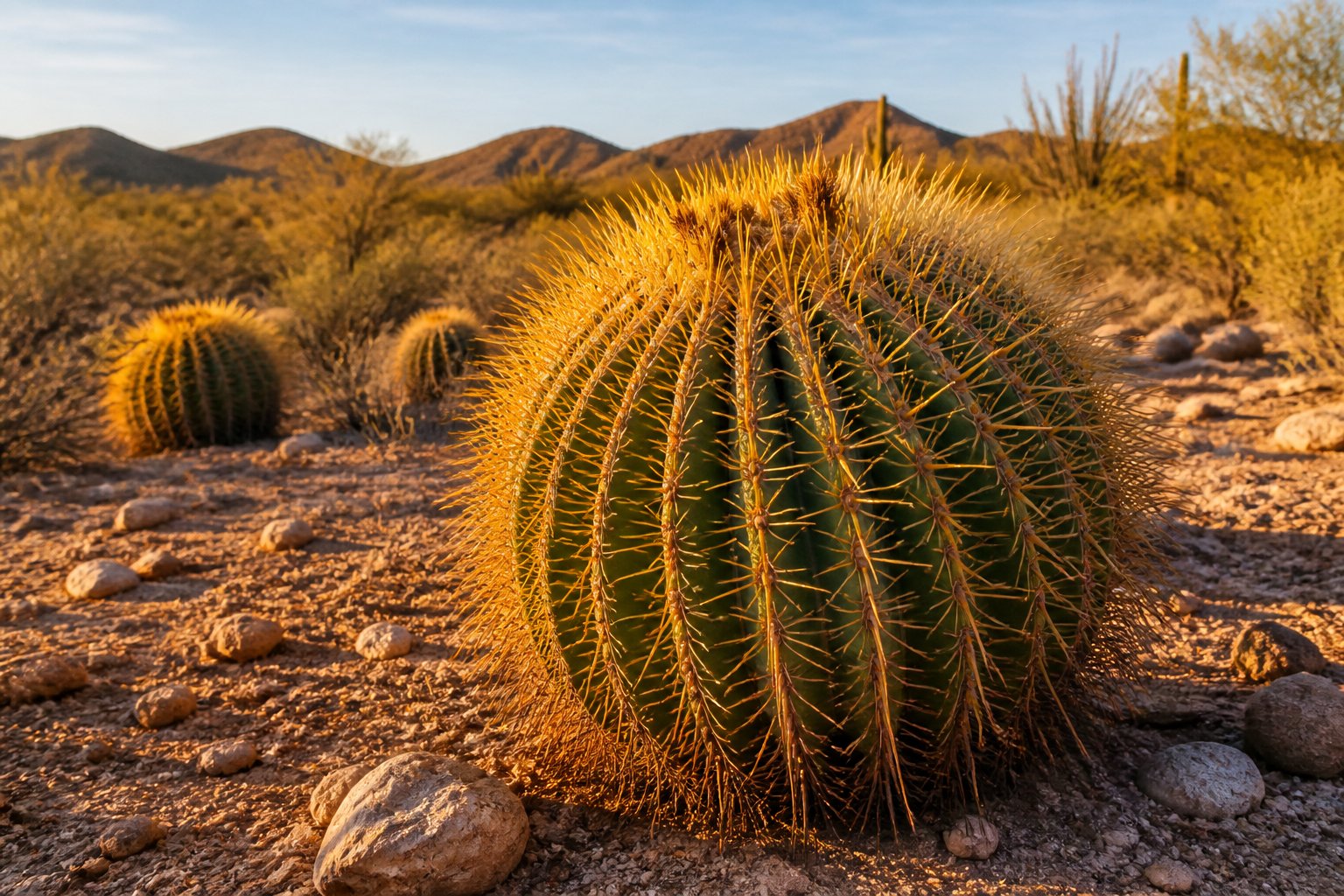
Barrel cactus provides a rounded, low-growing form with prominent ribs and dense spines. Golden barrel cactus is a popular specimen for rock gardens, containers, and xeriscapes.
Its spherical body stores water, while the ribbed surface expands after rainfall. Yellow flowers can form near the crown when the plant receives strong light and suitable growing conditions.
Choose a sunny location with sandy or gritty soil that drains quickly. Keep it away from walkways because the spines are sharp. Container growing gives you greater control over moisture and makes cold-weather protection easier.
5) Agave (Agave spp.)
Agave creates architectural interest through thick, pointed leaves arranged in a rosette. Many species have blue-green, gray, or green foliage, and some develop striking marginal stripes.
The leaves hold water and tolerate hot, dry conditions once plants establish. Agaves suit agave plant garden ideas that use gravel, boulders, and other low-water features.
Select a species suited to your mature size because some agaves spread widely. Wear gloves when handling them, and keep sharp leaf tips away from seating areas and narrow paths. Most require full sun and porous soil.
6) Ocotillo (Fouquieria splendens)
Ocotillo brings tall, wand-like stems and bright red flower clusters to hot desert landscapes. After rainfall, it quickly produces small leaves; during prolonged drought, those leaves drop to reduce water loss.
The plant’s narrow form works well as a vertical accent along walls, fences, and property boundaries. Hummingbirds visit its tubular flowers in spring and after favorable rains.
Plant ocotillo in full sun with excellent drainage. Water deeply during establishment, then allow the soil to dry between irrigation cycles. Avoid constantly wet ground, which encourages root problems.
7) Creosote Bush (Larrea tridentata)
Creosote bush is an evergreen desert shrub with resinous leaves, yellow flowers, and a distinctive rain-washed scent. It thrives in the Southwest and handles intense heat and prolonged drought.
Its extensive roots collect available moisture, while small, waxy leaves limit evaporation. Mature plants have been documented surviving temperatures up to 160°F.
Use creosote bush in naturalistic landscapes, wildlife gardens, and broad dry spaces. Give it room to spread and avoid frequent irrigation once established. Pruning is rarely needed beyond removing damaged or misplaced branches.
8) Desert Willow (Chilopsis linearis)
Desert willow supplies filtered shade and seasonal flowers through a graceful, small-tree form. Its narrow leaves reduce moisture loss, while pink, purple, or burgundy trumpet-shaped blooms attract pollinators.
This species suits patios, courtyards, and larger residential landscapes where you want a tree with a lighter canopy. It grows best in full sun and soil that drains well after irrigation.
Water deeply during the first growing seasons. Once established, desert willow tolerates dry conditions, though supplemental water during extreme heat supports flowering and foliage.
9) Organ Pipe Cactus (Stenocereus thurberi)
Organ pipe cactus forms clusters of upright, ribbed stems that resemble the pipes of an organ. It is native to the Sonoran Desert, including parts of Arizona and Mexico.
The stems store water and carry sharp spines. Fragrant flowers open at night, and the plant produces fruit after pollination. Mature specimens can reach about 16 feet.
Give organ pipe cactus full sun, gritty soil, and ample space for its clumping habit. It makes a dramatic focal plant in warm, frost-protected landscapes. Use gloves and sturdy tools for planting and maintenance.
10) California Poppy (Eschscholzia californica)
California poppy adds vivid orange, cup-shaped flowers to dry gardens and seasonal wildflower plantings. Its finely divided, blue-green foliage complements gravel, native grasses, and low shrubs.
Sow seeds in a sunny site with loose, well-drained soil. The plants flower during cool, moist periods and may go dormant as summer heat intensifies.
California poppy works especially well in naturalistic plantings because it reseeds under suitable conditions. Let some seed heads mature if you want new plants in following seasons, while removing them controls spread.
How Desert Plants Survive Arid Conditions
Desert plants survive through water storage, reduced leaf area, protective surfaces, specialized roots, and growth cycles timed to rainfall. These adaptations help them handle intense sun, hot days, cool nights, and long dry periods.
How do desert plants store and conserve water?
Succulents store water in fleshy stems, leaves, or pads, while cacti use ribbed tissues that expand after rain. Waxy coatings, small leaves, and seasonal leaf drop reduce evaporation.
Many desert plants also use shallow roots to capture brief surface moisture. Others develop deep or wide-ranging roots that reach water held lower in the soil.
Why do many desert plants have spines instead of leaves?
Spines help reduce water loss because they have far less surface area than broad leaves. They also shade parts of the plant and discourage animals from biting into moisture-rich tissue.
Cacti perform photosynthesis through green stems. Their spines provide protection while the stem handles food production and water storage.
How do root systems help desert plants find water?
Root systems let plants capture water quickly after short storms. A shallow, spreading network collects moisture near the surface, while a deep central root reaches lower soil layers.
Joshua trees and creosote bushes demonstrate how larger desert plants use extensive roots. Good drainage still matters because roots need oxygen and suffer when soil remains saturated.
Choosing Desert Plants for a Home Landscape
Choose plants by matching their light, mature size, cold tolerance, drainage, and irrigation needs to your property. A successful xeriscape groups plants with similar requirements and uses mulch or gravel to protect the soil surface.
Which desert plants are best for full sun?
Saguaro, barrel cactus, prickly pear, agave, ocotillo, creosote bush, and organ pipe cactus perform well in full sun when planted in suitable soil. California poppy also prefers strong light, especially during its active growing season.
Acclimate nursery plants gradually if they were grown under shade cloth. Sudden exposure to intense sunlight can scorch tender tissue.
Which species suit small gardens or containers?
Barrel cactus, compact agaves, smaller prickly pears, and selected succulents fit containers or small rock gardens. California poppy works in seasonal pots when the container drains freely.
Choose a pot with drainage holes and use a gritty cactus or succulent mix. A container gives you more control over winter protection, placement, and watering.
Why should you choose plants native to your local desert region?
Native plants are adapted to the temperature swings, rainfall pattern, soil conditions, and wildlife of their region. They also support local pollinators and reduce the need for supplemental irrigation after establishment.
Check your state or local native-plant lists before buying. A species suited to the Sonoran Desert may struggle in the colder Mojave Desert or in a humid coastal climate.
What soil and watering conditions do desert plants need?
Most desert plants need porous, fast-draining soil with gravel, coarse sand, or other mineral material. Heavy clay should be amended carefully or replaced in the planting zone so water does not collect around roots.
Water deeply during establishment, then let the soil dry according to the species and season. Frequent shallow watering encourages weak roots and creates conditions for rot.
Frequently Asked Questions
What are the most common desert plants?
Common desert plants include prickly pear, barrel cactus, saguaro, agave, ocotillo, creosote bush, and Joshua tree. Desert landscapes also include flowering species such as California poppy and small trees such as desert willow.
What are the best desert plants for landscaping?
The best choices include species that match your local climate and available space. Agave, prickly pear, barrel cactus, desert willow, and California poppy offer different forms for focal points, borders, shade, and seasonal color.
Which desert plants can be grown indoors?
Small barrel cacti, compact agaves, and other sun-loving succulents grow indoors beside a bright window. Use a drainage hole, gritty potting mix, and careful watering because indoor soil dries more slowly.
How can I identify a desert plant?
Identify a desert plant by examining its growth form, leaves or spines, flowers, stem structure, and habitat. Scientific names provide more reliable identification than common names, which can refer to several unrelated species.
Do desert plants need regular watering?
Desert plants need regular watering while they establish, then many require only occasional deep irrigation. Watering frequency depends on the species, season, soil drainage, container size, and local rainfall.


