

Tropical Indoor Plants for a Lush Home
Tropical indoor plants bring broad leaves, vivid color, and a relaxed atmosphere to your living space. Many selections adapt well to ordinary household conditions when you match their light, watering routine, and humidity needs.
Choose a plant that fits your room’s light first, then adjust watering and humidity around it. A bright window suits Bird of Paradise and Rubber Plant, while Chinese Evergreen and Heartleaf Philodendron handle gentler light.
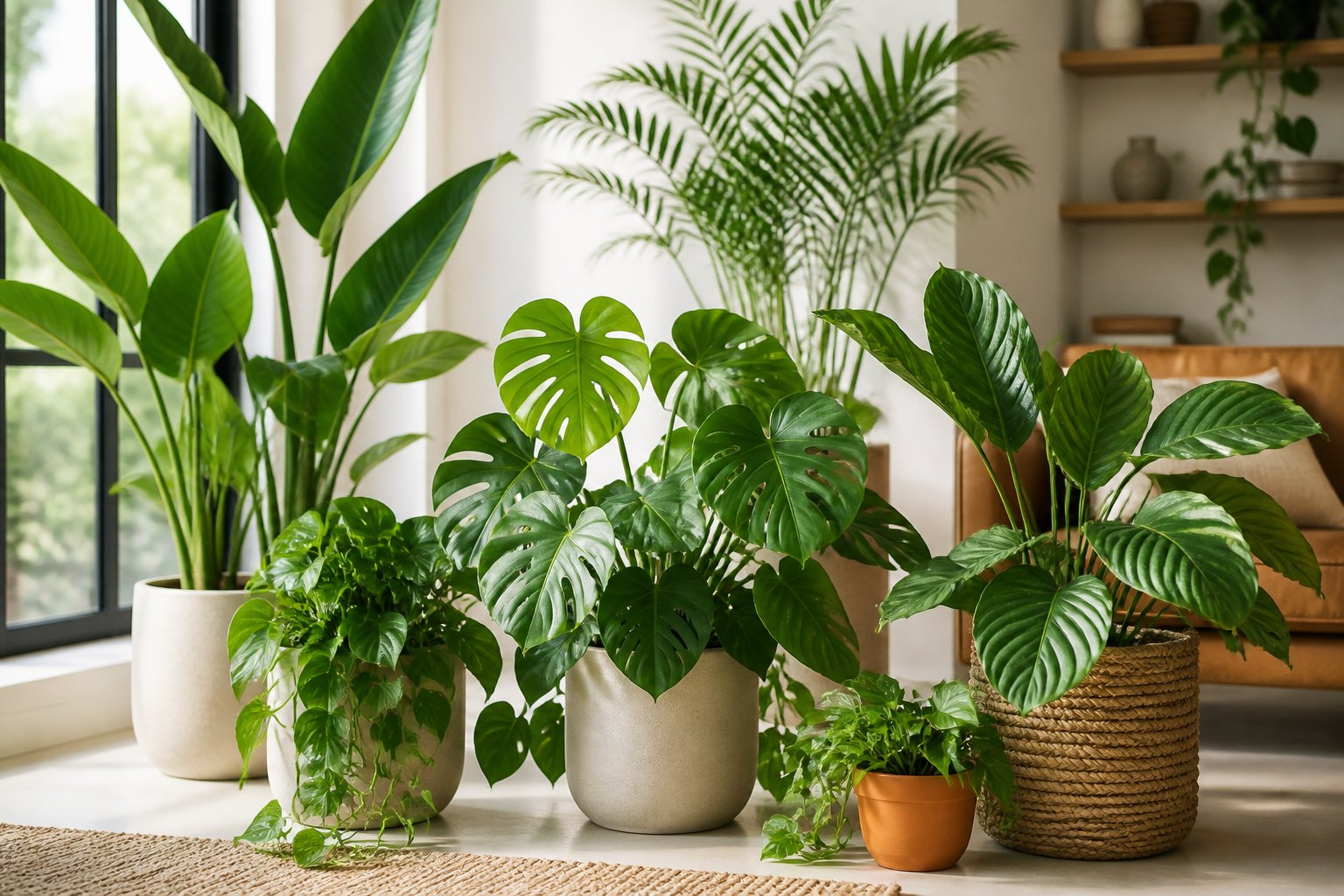
You can create a layered display with a tall floor plant, a tabletop variety, and a trailing vine. For more inspiration, explore these indoor garden ideas, then choose a plant you can maintain comfortably. A nursery or garden center can help you compare mature sizes and pet-safety labels before you buy.
1) Monstera Deliciosa
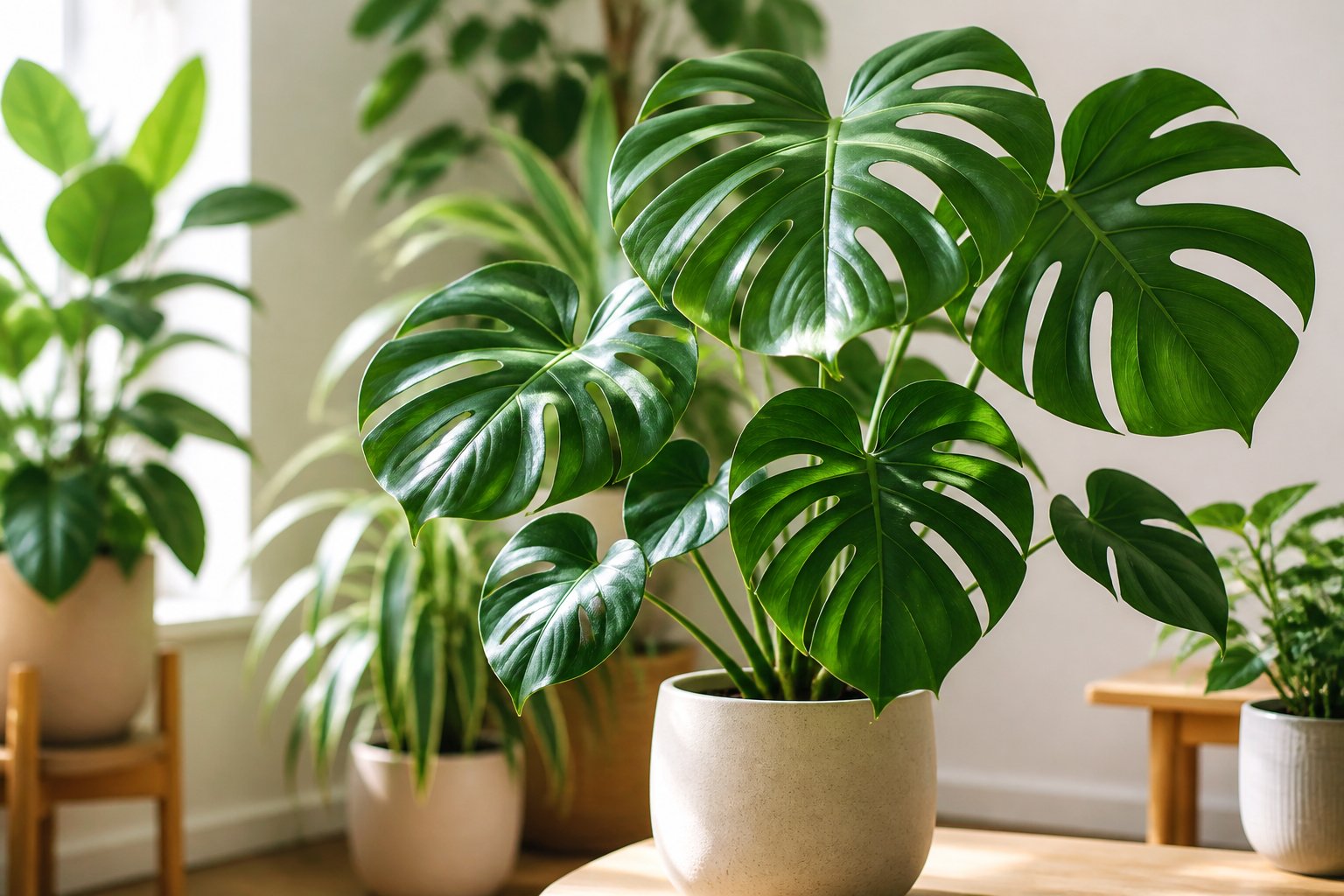
Monstera Deliciosa gives you dramatic, split leaves and strong vertical presence. Native to Central America, it appreciates warmth, humidity, and bright indirect light, though it tolerates lower light with slower growth.
Let the top layer of potting mix dry before watering thoroughly, then empty the drainage saucer. A moss pole or sturdy stake supports climbing stems, while a weekly leaf wipe keeps dust from dulling the foliage. Give this plant room to spread as it matures.
2) Heartleaf Philodendron
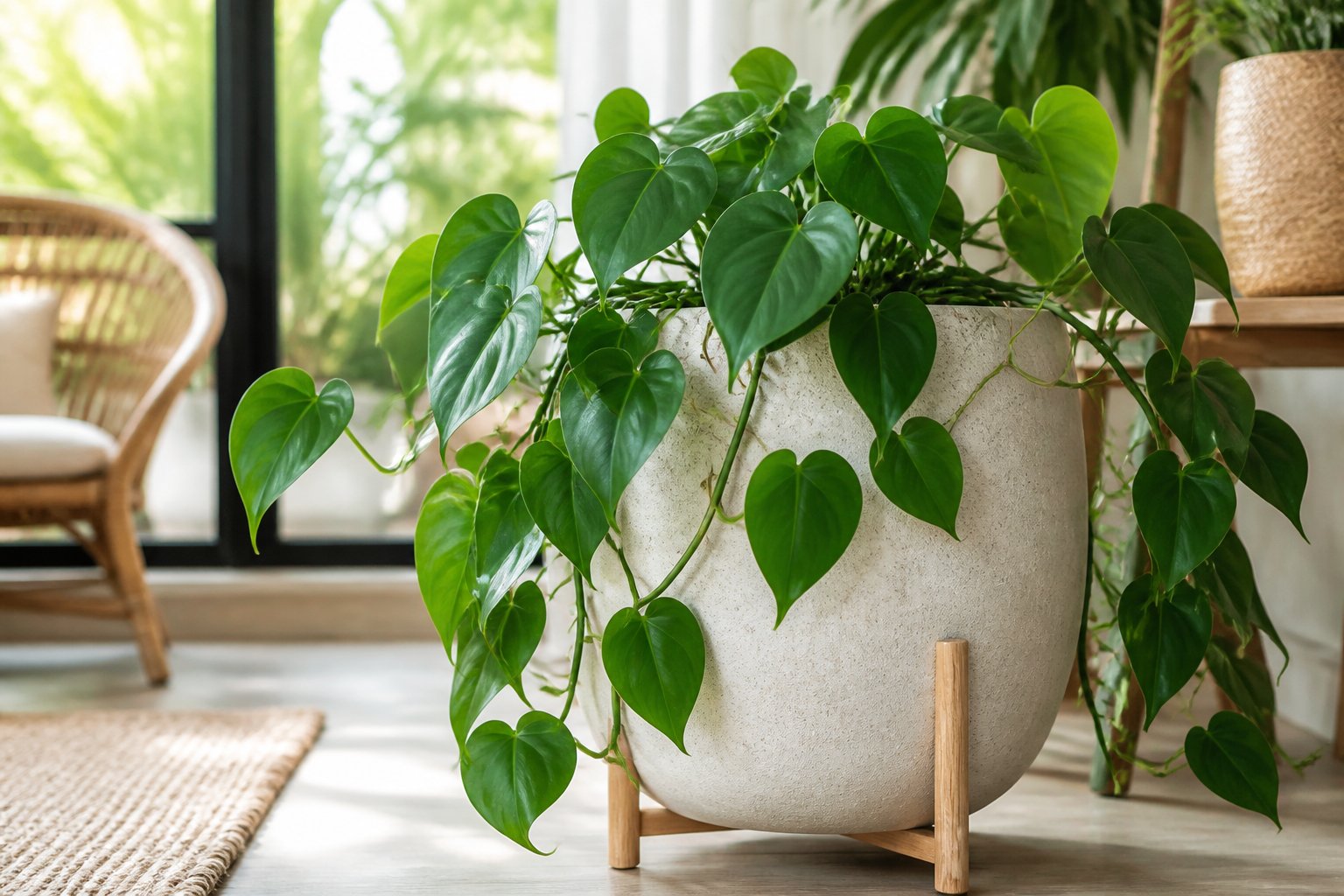
Heartleaf Philodendron is one of the easiest ways to add trailing greenery indoors. Its heart-shaped leaves grow well in indirect light, and the vines look attractive from a hanging basket, bookshelf, or tall plant stand.
Water when the upper portion of the soil feels dry. Pinching the growing tips encourages a fuller shape, while pruning gives you cuttings for propagation in water or fresh potting mix. Keep the leaves away from harsh afternoon sun, which can scorch them.
3) Peace Lily
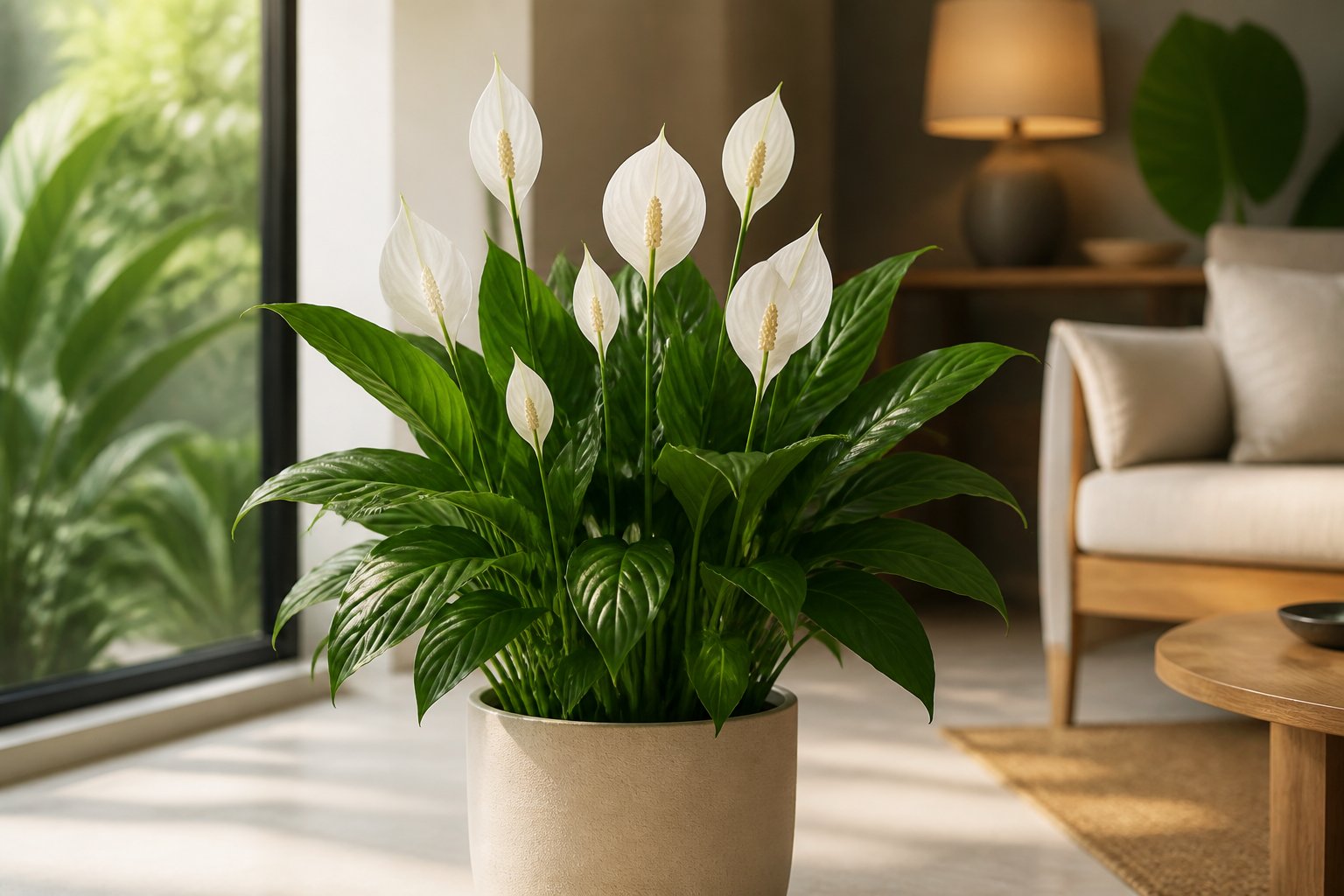
Peace Lily combines dark green foliage with elegant white blooms and performs well in indirect light. It prefers evenly moist soil, so check the pot every few days and water when the surface begins to dry.
A temporary droop signals thirst and often resolves after watering. Keep the plant away from cold drafts and intense direct sun. Regular misting helps in dry rooms, while occasional feeding during active growth supports new leaves and flowers. Peace Lily is toxic if chewed, so place it beyond pets and young children.
4) Bird of Paradise
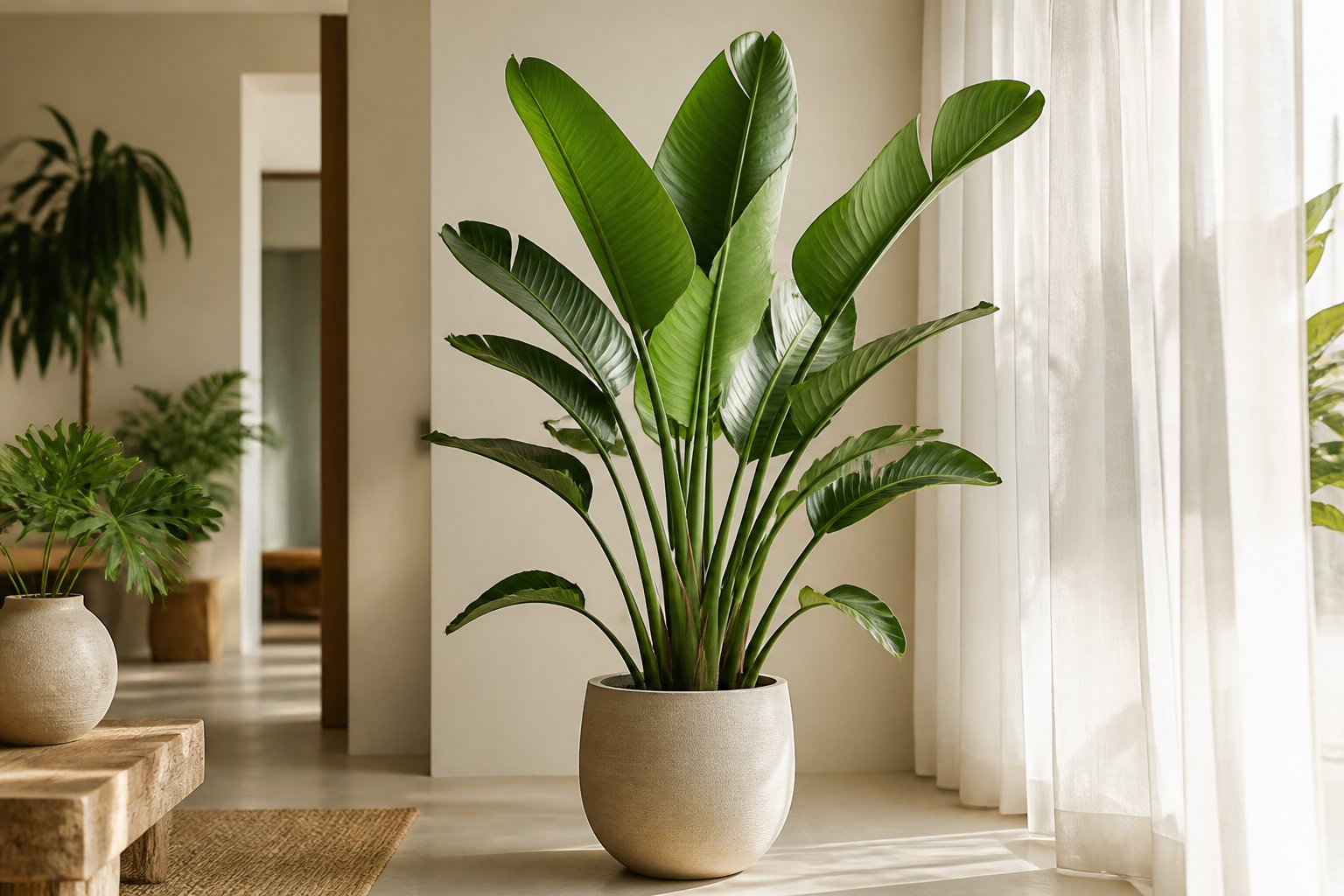
Bird of Paradise makes the strongest statement in a bright, spacious room. It comes from South Africa and needs abundant light, with several hours near a sunny window supporting sturdy growth.
Water consistently during active growth, allowing excess moisture to drain fully. Large leaves collect dust, so wipe them gently with a damp cloth. Indoor flowering can take years, and mature plants need generous floor space. Rotate the container every few weeks to keep growth balanced.
5) Anthurium
Anthurium supplies vivid color through glossy leaves and long-lasting red or pink spathes. Bright, indirect light encourages flowering, while direct midday sun can damage the foliage.
Use a loose, well-draining mix and water when the top layer dries slightly. Higher humidity supports healthy leaves, especially during dry winter months. Feed lightly during the growing season, and remove faded blooms at the base so the plant can direct energy toward fresh growth.
6) Alocasia Polly
Alocasia Polly is prized for arrow-shaped leaves marked with dramatic pale veins. It grows best in bright, filtered light, warm temperatures, and evenly moist soil with excellent drainage.
Check moisture closely because this plant dislikes both prolonged dryness and waterlogged roots. A humidifier works better than frequent leaf misting in very dry rooms. Keep it away from cold windows and heating vents, and inspect the undersides of leaves for spider mites.
7) Spider Plant
Spider Plant grows quickly under suitable indoor conditions and produces arching leaves with hanging baby plantlets. Green or striped varieties tolerate indirect light and adapt well to shelves, hanging baskets, and offices.
Water when the soil begins to dry, then let the container drain. Brown tips often follow mineral-heavy water, dry air, or inconsistent moisture. Trim damaged ends with clean scissors, and root the plantlets in water or soil once they develop small roots.
8) Parlor Palm
Parlor Palm brings soft, arching fronds to smaller rooms because it grows slowly and stays relatively compact. Indirect sunlight and moderate humidity suit this Central American native.
Allow the upper soil to dry before watering, and use a pot with drainage holes. Protect the fronds from strong direct sun, which can fade or scorch them. Remove fully brown leaves at the base, while leaving partially green fronds in place to support the plant.
9) Chinese Evergreen
Chinese Evergreen offers patterned foliage and dependable performance in low-light rooms. It needs indirect light, modest watering, and well-draining soil, making it a practical choice for offices and dim corners.
Water after the upper soil dries and reduce frequency during cooler, darker months. Wipe the leaves occasionally to remove dust and reveal their markings. Variegated cultivars retain stronger patterns with more indirect light, while deep-green forms handle lower light more comfortably.
10) Rubber Plant
Rubber Plant creates a polished focal point with broad, shiny leaves and a naturally upright form. Bright, indirect light supports strong growth, and occasional pruning encourages branching.
Let the soil dry partly between waterings, then saturate the root ball and drain the pot. Rotate the container so one side does not lean toward the window. Dust the leaves with a damp cloth, and wear gloves when pruning because the sap can irritate sensitive skin.
How to Choose Tropical Indoor Plants
Which light level does your room receive?
Bright, indirect light suits Monstera, Anthurium, and Rubber Plant, while Bird of Paradise prefers a sunnier window. Chinese Evergreen, Heartleaf Philodendron, and Peace Lily tolerate lower light, though growth and flowering slow when illumination is weak. An indoor grow light helps when windows provide limited brightness.
How much humidity can you realistically provide?
A humidifier gives you the most consistent support for moisture-loving plants such as Alocasia and Anthurium. Grouping plants together, using a pebble tray, and keeping foliage away from heating vents also helps. Good air circulation prevents persistently damp leaves from encouraging disease.
How large can the plant become indoors?
Check the mature spread before placing a tropical plant in a narrow room. Bird of Paradise and Monstera need open floor space, while Parlor Palm, Spider Plant, and Heartleaf Philodendron work well in compact arrangements. Leave room for climbing supports, trailing stems, and future repotting.
Are pets or young children in the home?
Confirm toxicity before bringing any plant inside. Philodendron, Peace Lily, Anthurium, Alocasia, Chinese Evergreen, and Rubber Plant require placement away from chewing pets and children. Use sturdy stands, secure pots, and accessible care routines so the plant remains safe and manageable.
| Plant | Light | Watering | Mature habit | Pet concern |
|---|---|---|---|---|
| Monstera Deliciosa | Bright indirect | Dry slightly | Large climber | Toxic if chewed |
| Heartleaf Philodendron | Low to bright indirect | Dry slightly | Trailing vine | Toxic if chewed |
| Peace Lily | Low to bright indirect | Even moisture | Compact clump | Toxic if chewed |
| Bird of Paradise | Bright light | Consistent growth-season watering | Large upright plant | Check label |
| Anthurium | Bright indirect | Moderate | Compact flowering plant | Toxic if chewed |
| Alocasia Polly | Bright filtered | Even moisture | Upright foliage | Toxic if chewed |
| Spider Plant | Indirect | Moderate | Arching, trailing | Generally pet-friendly |
| Parlor Palm | Indirect | Moderate | Slow, compact palm | Generally pet-friendly |
| Chinese Evergreen | Low to indirect | Infrequent to moderate | Upright foliage | Toxic if chewed |
| Rubber Plant | Bright indirect | Dry partly | Tall statement plant | Toxic if chewed |
Frequently Asked Questions
What are the best tropical plants for indoors?
Monstera Deliciosa, Heartleaf Philodendron, Peace Lily, Spider Plant, and Rubber Plant suit many homes because they adapt to common indoor conditions. Your room’s light and available space should guide the final choice.
Which tropical indoor plants grow well in low light?
Chinese Evergreen, Heartleaf Philodendron, Peace Lily, and Parlor Palm handle low to moderate indirect light. Growth slows in darker rooms, so move the plant closer to a filtered window or add a grow light when needed.
What are some good tropical flowering plants for indoors?
Anthurium and Peace Lily are reliable flowering choices for indoor displays. Anthurium prefers bright indirect light, while Peace Lily flowers with suitable indirect light, steady moisture, and adequate humidity.
What is the most low-maintenance tropical indoor plant?
Spider Plant is among the easiest choices because it tolerates routine indoor conditions and produces plantlets for propagation. Heartleaf Philodendron and Chinese Evergreen also suit beginners who prefer forgiving foliage plants.
How do I increase humidity for tropical houseplants?
Run a room humidifier near moisture-loving plants, group containers together, and keep them away from dry heat vents. Watering the soil correctly still matters because humidity does not replace drainage or a healthy root system.


