

Fall Gardening Tips for a Productive, Protected Garden
Fall gardening gives you a chance to harvest fresh food, add color to your yard, and prepare your beds for the next growing season. Cooler temperatures reduce stress on many plants, while autumn leaves and finished summer crops provide useful material for compost and mulch.
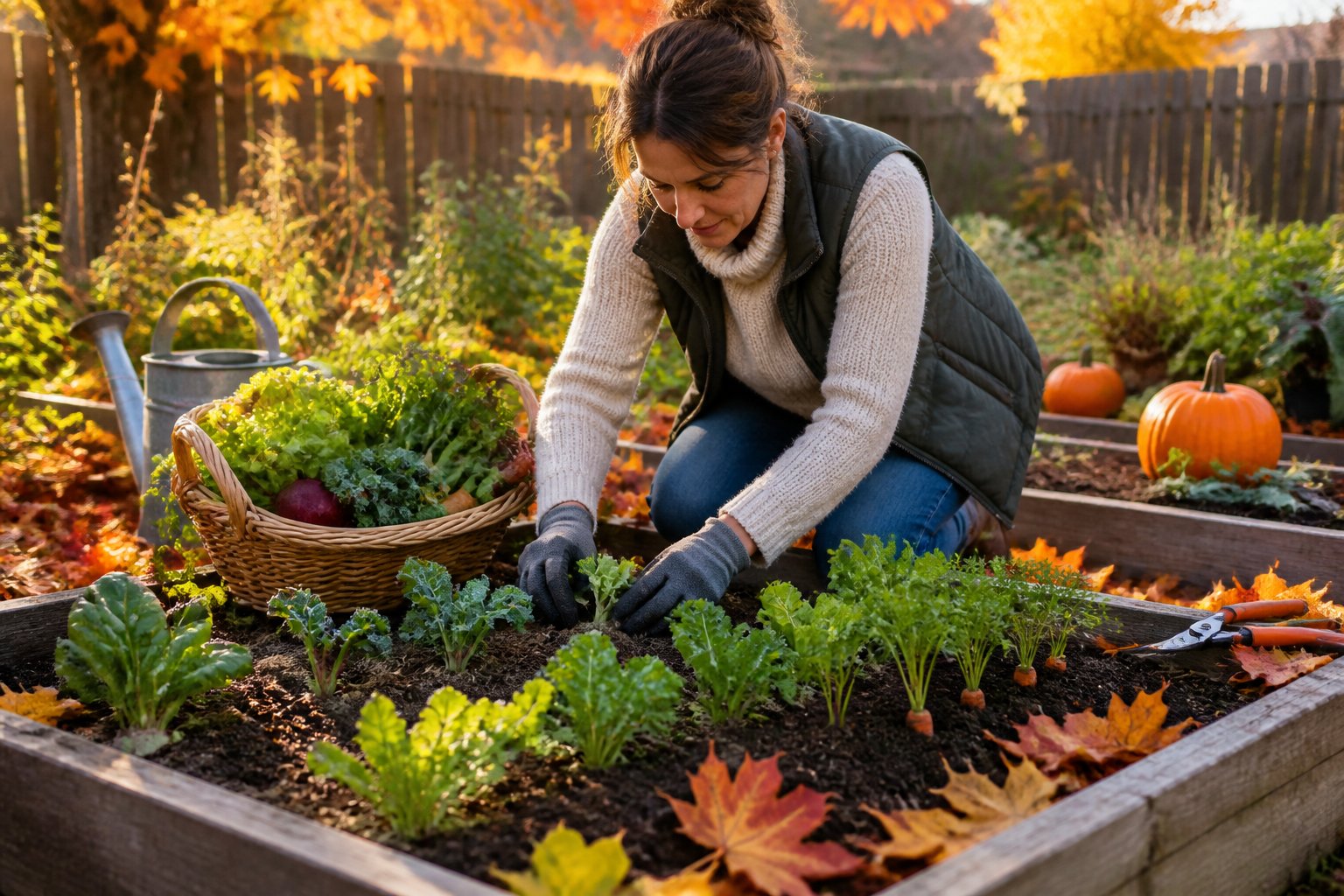
The best fall gardening tips begin with your local frost date, because every planting, harvest, and protection decision depends on how much cool weather remains. Use that date to plan productive crops, protect tender plants, and give your soil a head start for spring. You can also find more seasonal ideas in these autumn gardening tips.
Plan Around Your First Frost Date
Your first frost date provides the planning boundary for fall planting, though you should build in extra time for slower growth as daylight and temperatures decline. Count backward from the local frost date, choose fast-maturing varieties, and prepare row covers or cold frames before the forecast turns cold.
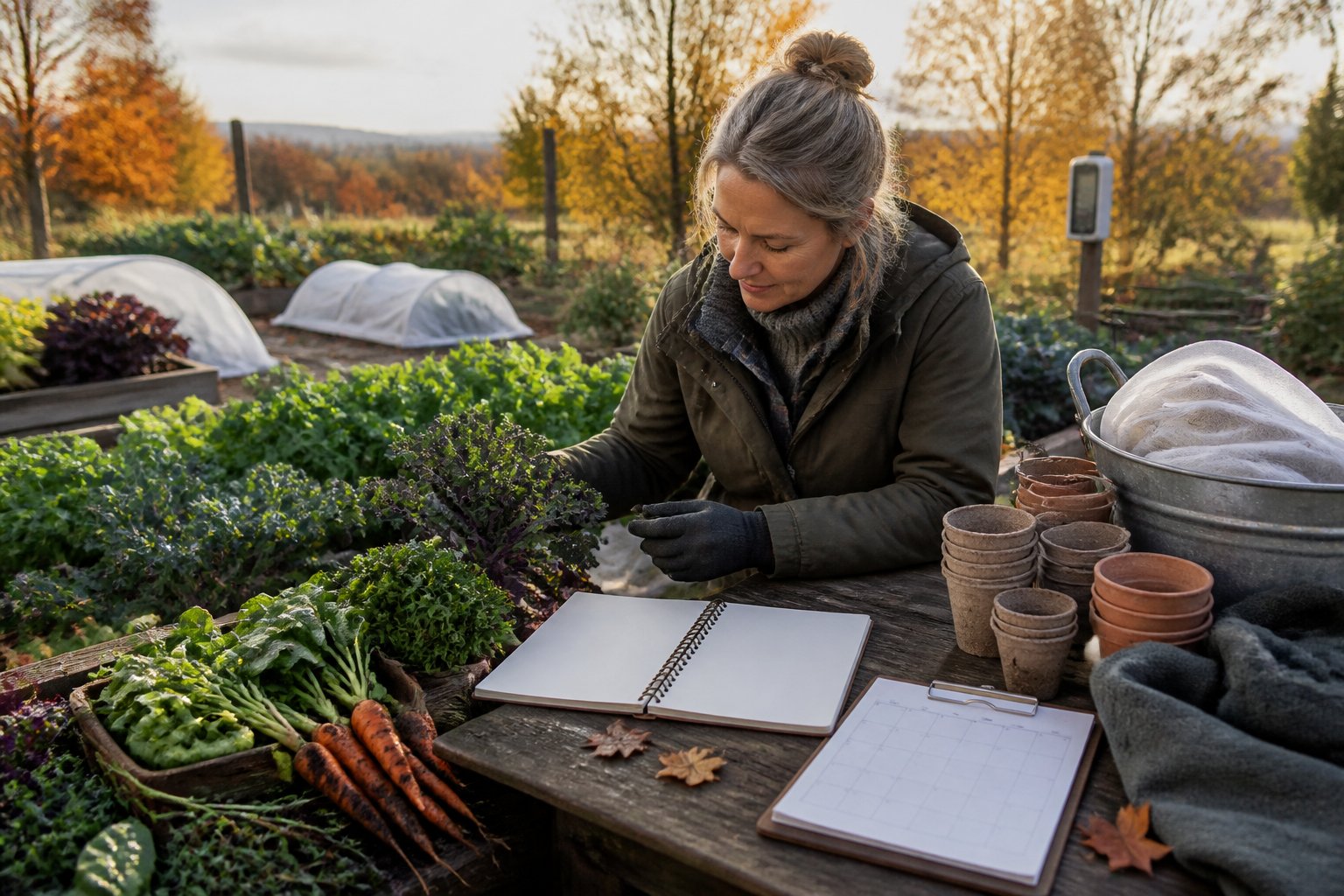
How to Calculate Your Fall Planting Window
Start with your average first frost date and subtract the crop’s listed days to maturity. Add a 7-to-14-day safety buffer for slower fall growth, cool soil, and harvest delays. A fall planting planner uses a 32°F threshold and a 50% probability level, so treat the result as a planning guide with margin, not a promise.
Planting windows also reflect crop type. Seeds need time to germinate, while nursery transplants already have a head start. Sow succession crops at intervals while warm weather remains, then shift toward hardy varieties as the first frost date approaches.
Which Crops Need Protection From Frost?
Tender plants such as tomatoes, peppers, basil, cucumbers, and warm-season beans need protection when frost threatens. Cover them before sunset with row covers, frost cloth, or an overturned container that does not press against foliage.
Cool-season crops such as kale, spinach, carrots, and many brassicas tolerate light frost. A cold frame or low tunnel extends harvests by buffering wind and freezing temperatures. Remove solid coverings after temperatures rise in the morning so plants receive light and ventilation.
What to Plant for Fall Harvests and Color
Fall planting works best when you combine quick crops for immediate harvests with cold-tolerant vegetables and flowers that keep beds attractive. Choose varieties suited to your remaining growing season, and use containers when garden space is limited.
Fast Leafy Greens and Root Vegetables
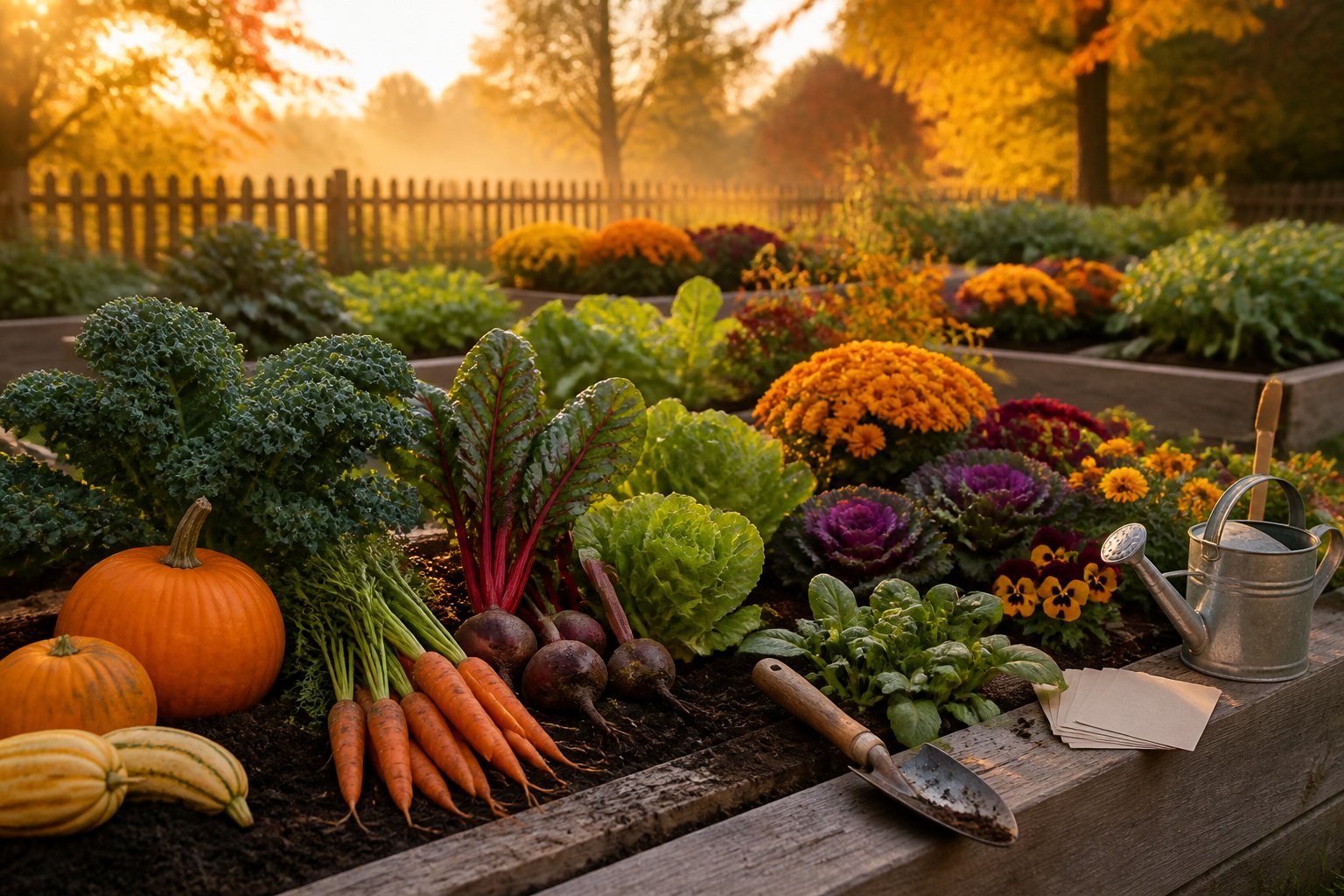
Leafy greens provide some of the quickest fall harvests. Plant lettuce, spinach, Swiss chard, arugula, and kale in fertile soil with steady moisture. Harvest outer leaves as plants grow so each planting continues producing.
Radishes mature quickly and help fill gaps between slower crops. Carrots, beets, onions, and turnips need more time, so plant them early in your fall window. Keep seedbeds evenly moist during germination, especially in raised beds that dry faster during late summer.
Cold-Tolerant Brassicas for Cool Weather
Brassicas perform well as temperatures cool. Broccoli, cabbage, cauliflower, and kohlrabi benefit from transplants when your frost date is approaching, while earlier plantings have more time to develop full heads.
Bush beans can provide a late harvest while warm weather lingers. Watch plants for cabbage worms, aphids, and other pests, and use handpicking, physical covers, or appropriate organic pest control practices when needed.
Flowers and Containers That Brighten Autumn
Pansies, ornamental kale, chrysanthemums, mums, and asters keep outdoor spaces colorful after summer annuals fade. Place them in window boxes, pots, and entry containers where you can combine contrasting foliage with late-season blooms.
Group containers near a sheltered wall to reduce wind exposure. Water newly planted flowers thoroughly, then check moisture when sunny days continue, since containers dry faster than garden beds.
Plant Garlic and Spring-Flowering Bulbs for Next Year
Plant garlic in fall after the soil cools but before it freezes solid. Set cloves in loose, well-drained soil with the pointed end up, then cover the bed with mulch after shoots emerge.
Fall is also prime planting time for spring-flowering bulbs such as tulips, daffodils, and hyacinths. Choose firm bulbs, plant them at the depth recommended on the package, and water the area once after planting if the soil is dry.
Refresh Beds Before You Replant
A productive fall bed starts with clean plant material, replenished soil, and a clear plan for the next crop. Remove disease sources, add mature compost, and reserve open space for succession planting or a cover crop.
Clear Spent Crops, Weeds, and Diseased Material
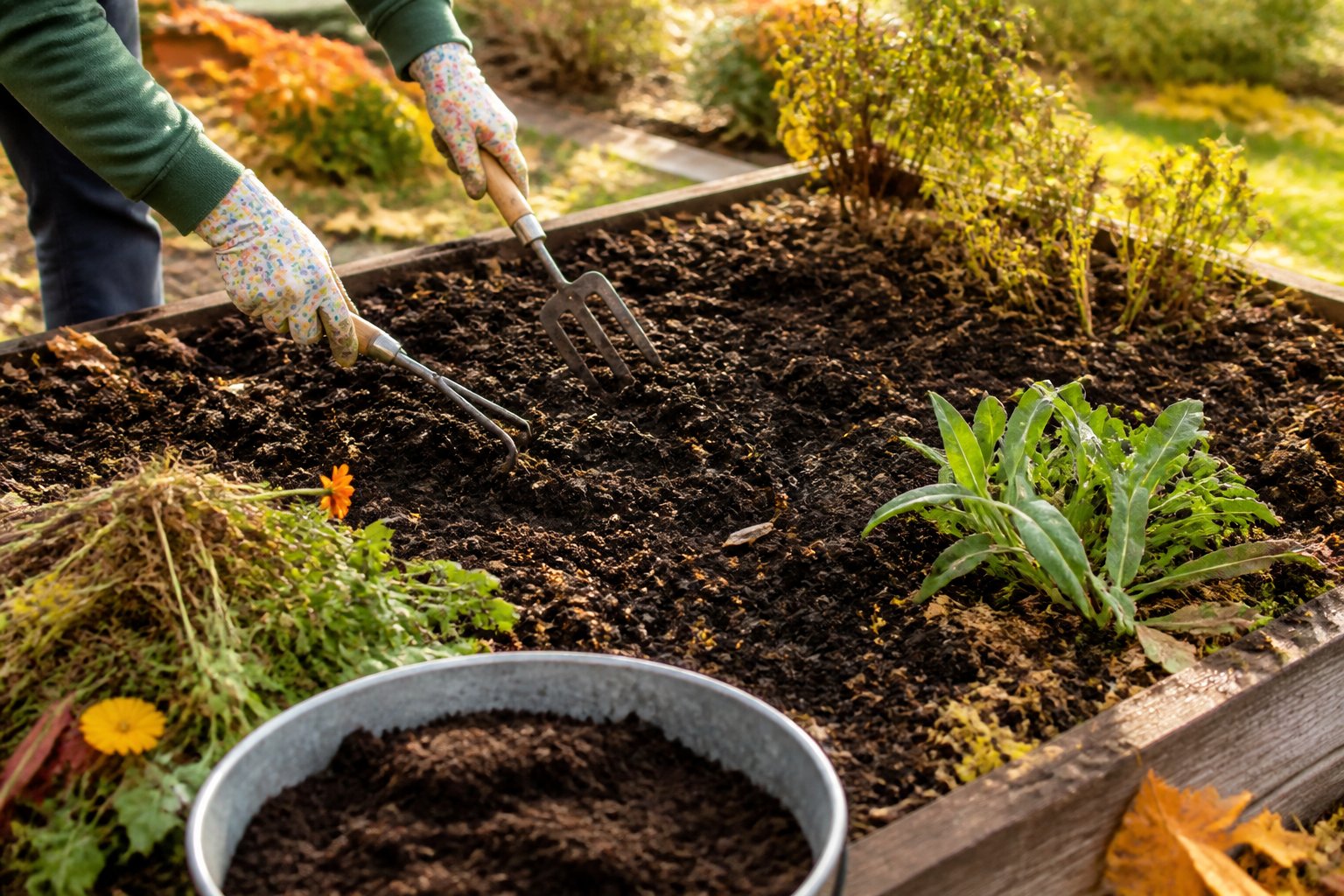
Pull finished annual vegetables once production drops, and remove weeds before they release seeds. Healthy plant residue can go into compost bins, while diseased leaves, infected stems, and pest-heavy material should leave the garden.
Inspect stakes, trellises, and irrigation lines as you clear each bed. This makes it easier to spot damaged equipment and reduces places where pests can shelter through winter. For a more detailed cleanup sequence, use these fall garden clean up tips.
Restore Soil With Compost and Organic Amendments
Spread finished compost over the bed and mix it lightly into the upper soil layer if you are preparing an area for immediate planting. A soil test can show whether you need lime, sulfur, or a specific organic fertilizer.
Use well-aged manure only, since fresh manure can damage roots and introduce weed seeds. Water refreshed beds deeply before sowing or transplanting, then add mulch after seedlings establish.
Use Succession Planting and a Cover Crop
Replace a harvested crop with a fast-growing fall vegetable while soil remains workable. This succession planting keeps roots active and gives you more harvests from the same space.
Cover crops such as cereal rye, oats, clover, or winter peas protect bare soil and contribute organic matter when managed properly. Select a species that suits your climate and plan when you will cut or incorporate it before spring planting.
Protect Plants, Soil, and Garden Wildlife
Protective fall care combines moderate mulching with selective cleanup and habitat preservation. Cover exposed soil, keep plant crowns clear, and leave useful stems and seed heads where they support beneficial insects and birds.
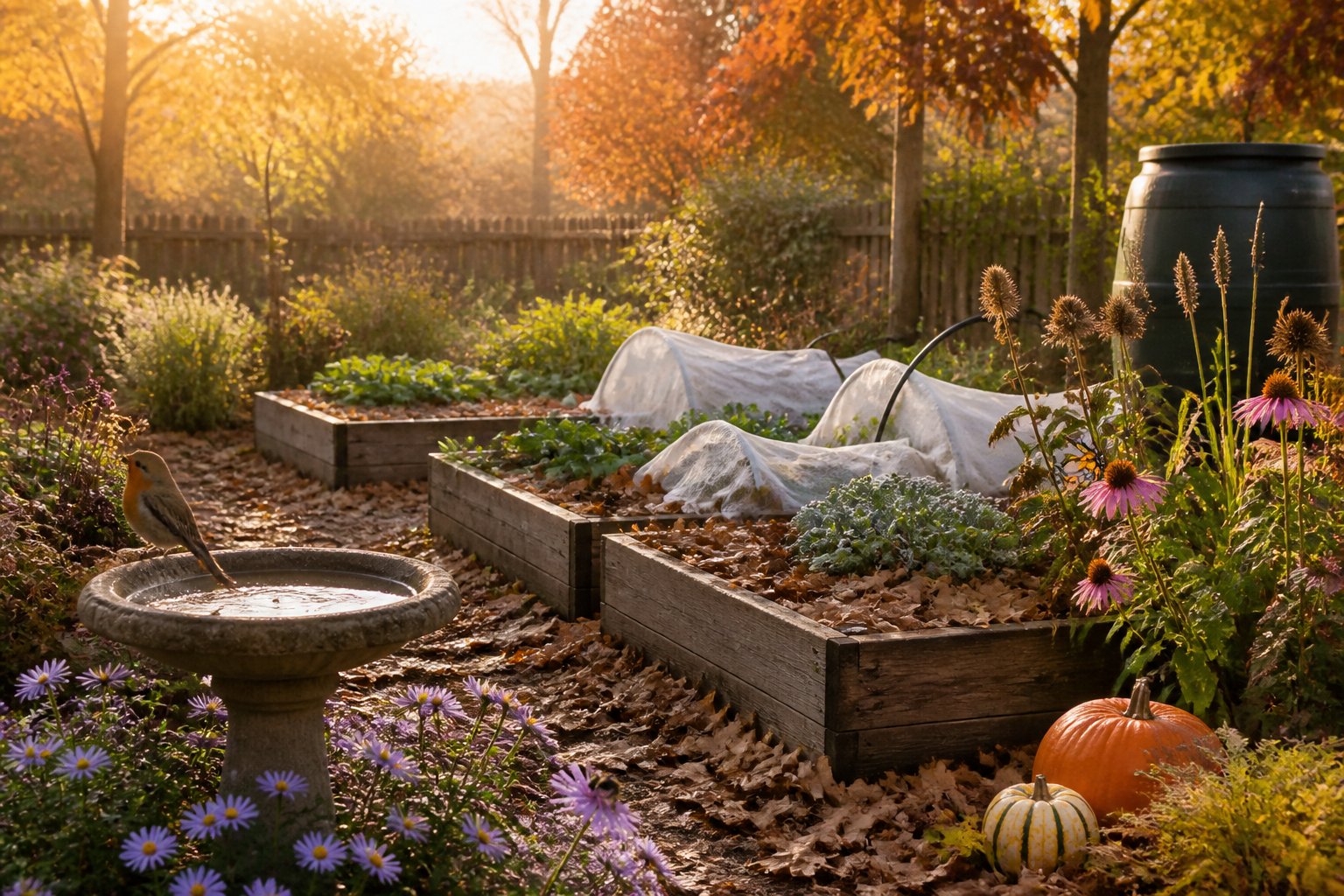
How to Mulch Without Smothering Plants
Apply mulch after the soil has cooled and moisture is adequate. A layer of shredded leaves, straw, or finished compost helps regulate soil temperature, reduce erosion, and protect roots from rapid temperature swings.
Keep mulch a few inches away from plant crowns, tree trunks, and shrub stems. Pressing mulch against bark or foliage traps moisture and creates conditions for rot and pests. Shred whole leaves before applying them so they do not form a dense, water-resistant mat.
What Plants Should You Not Cut Down in the Fall?
Leave sturdy perennial stems, ornamental grasses, and seed heads standing when they remain healthy and do not create a safety problem. Hollow stems and leaf litter provide winter shelter for beneficial insects, while seeds feed birds.
Cut back plants that show disease, collapse onto walkways, or threaten to spread aggressively. Remove infected material from the garden and keep healthy stems in a designated wildlife area when possible.
Support Pollinators and Beneficial Insects Through Winter
Keep late-blooming asters, goldenrod, and other nectar plants available as long as they flower. Avoid broad-spectrum pesticides when beneficial insects and pollinators are active.
Leave a small area of undisturbed leaf litter, stems, and bare soil for overwintering insects. Native plants and varied shelter also support birds and other wildlife. These wildlife garden tips can help you plan habitat with less intensive cleanup.
Prepare the Rest of the Garden for Winter
Winter preparation protects root systems, brings vulnerable plants indoors, and prevents stored equipment from deteriorating. Schedule major planting and dividing while the soil remains workable, then clean tools before storage.
Divide Perennials and Plant Trees and Shrubs
Divide crowded perennials during cool weather when plants have finished flowering and soil moisture is reliable. Replant healthy divisions at the same depth, firm the soil around their roots, and water thoroughly.
Fall also supports root growth for many trees and shrubs because cooler air reduces top growth while soil remains workable. Plant well before the ground freezes, spread mulch over the root zone, and keep mulch away from trunks and stems.
Move Houseplants and Protect Tender Plants
Move houseplants indoors before nighttime temperatures approach their tolerance limit. Inspect leaves, stems, and pot rims for insects, wash foliage, and isolate plants briefly if you suspect pests.
Protect tender plants with frost cloth, containers, or a sheltered location. Water plants before a freeze when the soil is dry, since hydrated roots handle cold conditions better than drought-stressed roots.
Clean Tools and Store Seasonal Equipment
Scrub soil from shovels, pruners, hoes, and trowels, then disinfect cutting tools after working with diseased plants. Dry metal surfaces and apply a light coat of oil to reduce rust.
Drain hoses, clean irrigation components, and store containers upside down where freezing water will not crack them. Sharpen pruners and mower blades before storage so they are ready for spring work.
Small Fall Steps Create a Stronger Spring Garden
Fall garden care becomes manageable when you work in short rounds: harvest finished crops, add compost, protect roots with mulch, and plant a few cool-season varieties. Leave healthy habitat for wildlife, store clean tools, and mark bulb or garlic locations before winter covers the beds.
A light garden reset now reduces spring congestion and gives soil time to settle. Keep a simple planting note with crop names, dates, and frost protection results so your next round of fall gardening starts with better timing.
Frequently Asked Questions
What month should I start a fall garden?
Start your fall garden by counting backward from your local first frost date, then add a 7-to-14-day buffer for slower growth. In many U.S. regions, that means planting during July, August, or September, while warmer climates may continue into October.
What should I put on my garden in the fall?
Apply mature compost to replenish organic matter, then use shredded leaves, straw, or another suitable mulch to protect exposed soil. Add well-aged manure or an organic fertilizer only when soil conditions or a soil test support the need.
How do I clean up a vegetable garden for winter?
Remove finished crops, weeds, fallen diseased material, and pest-infested debris. Compost healthy plant residue, refresh the soil with compost, protect remaining crops, and cover bare areas with mulch or a suitable cover crop.
What plants should I not cut down in the fall?
Leave healthy perennial stems, ornamental grasses, and seed heads standing to provide shelter and food for wildlife. Remove diseased plants and any growth that creates a hazard or spreads aggressively.
Can I plant vegetables after the first frost?
You can plant hardy vegetables after a light first frost when the soil remains workable, especially with protection from row covers or cold frames. Growth will be slow, so choose crops that tolerate cold and have enough time to establish before hard freezes.
What is the 70/30 rule in gardening?
The 70/30 rule is commonly used as a rough planning idea: devote about 70% of your garden space or effort to reliable, productive choices and 30% to experimentation. Treat it as a flexible guideline, adjusting the balance to your climate, available space, and gardening goals.


