

Hydroponics and Aquaponics: Which System Fits You?
Hydroponics and aquaponics give you two practical ways to grow food without soil. Hydroponics feeds plant roots with a carefully mixed nutrient solution, while aquaponics connects plant production with aquaculture so fish waste becomes part of the nutrient supply.
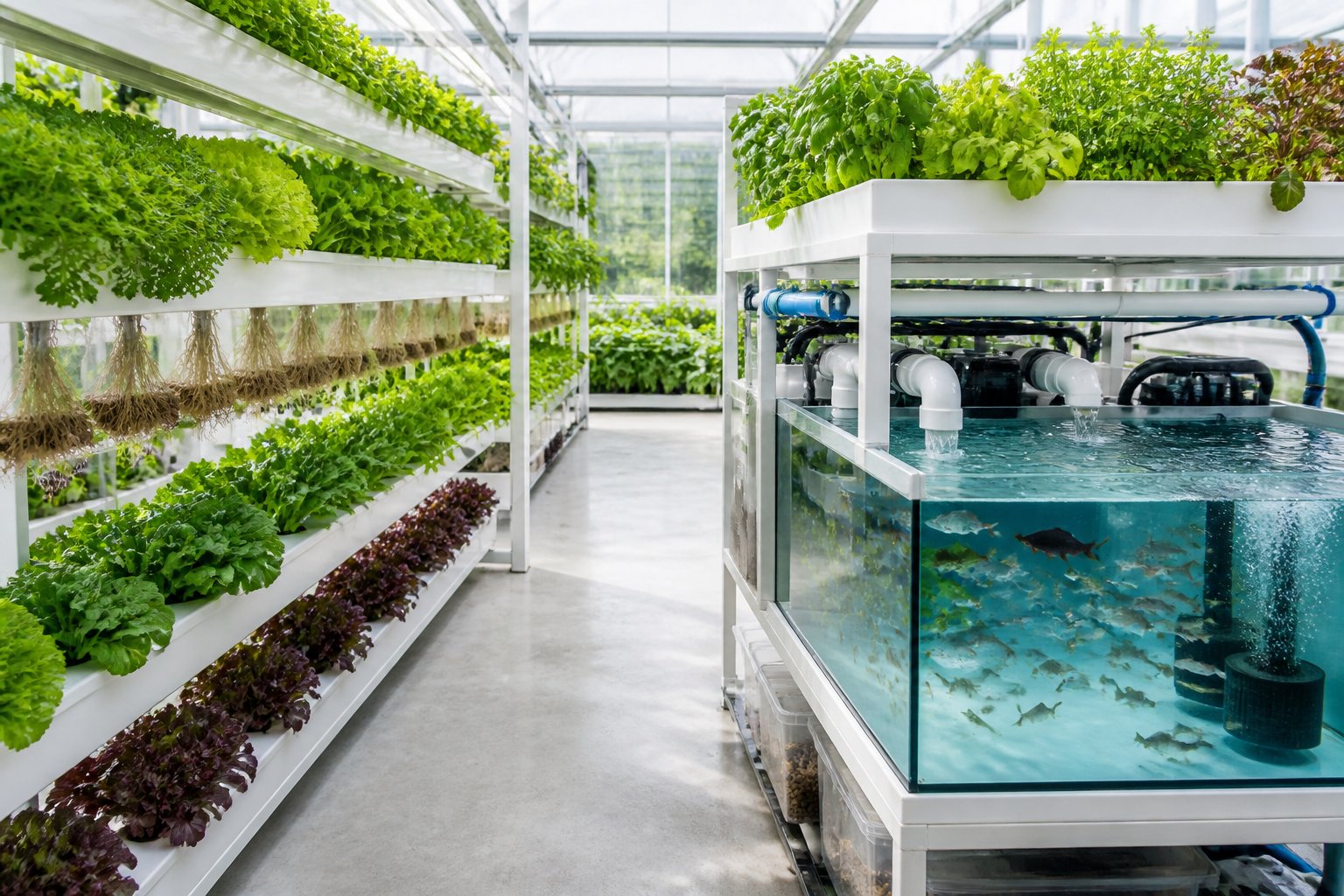
Choose hydroponics when you want precise control and straightforward plant production; choose aquaponics when you want a living food-production loop that includes fish. Your available space, daily routine, crop list, and interest in fish care will guide the better fit. Start with hydroponic gardening tips if you want to test a small setup before investing in a larger system.
What Is the Difference Between the Two Growing Methods?
Hydroponic growing supplies plants with a prepared nutrient solution, while an aquaponic system uses fish waste, beneficial bacteria, and circulating water to create nutrient-rich water for plants. Both methods support soil-free food production, yet their nutrient delivery and daily management differ.
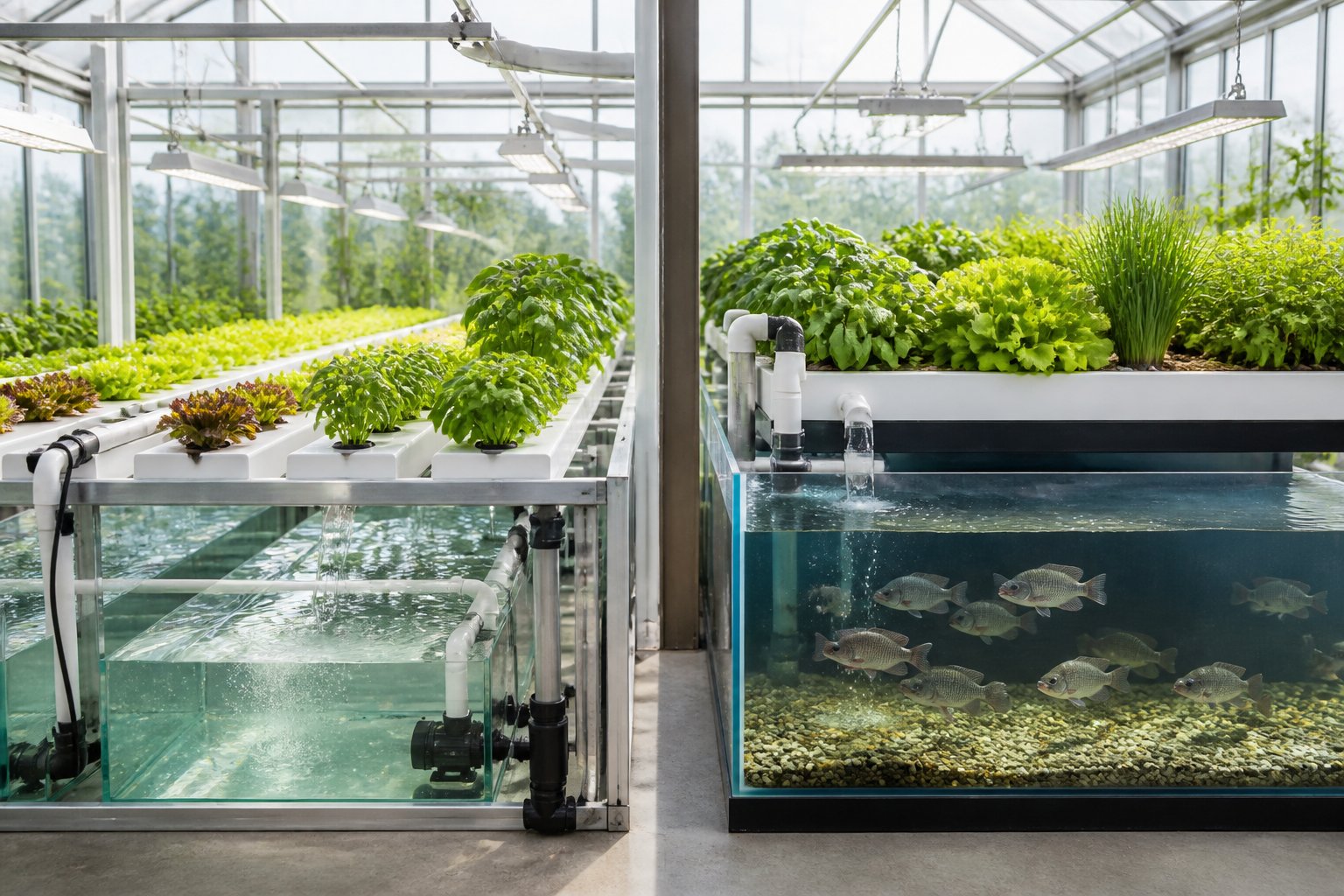
How Hydroponic Growing Delivers Plant Nutrients
Hydroponics places plant roots in water, mist, or a moist growing medium. You add synthetic nutrients or nutrient salts to the reservoir and adjust the mixture for the crop’s growth stage.
This gives you direct control over nitrogen, phosphorus, potassium, calcium, magnesium, and micronutrients. You can measure pH and electrical conductivity, replace the solution, and correct a nutrient imbalance without managing fish or a biological ecosystem.
How an Aquaponic System Links Fish, Bacteria, and Plants
Aquaponics combines aquaculture with hydroponic plant production. Fish live in a fish tank, and their waste enters the water as ammonia. Beneficial bacteria process that waste while plants absorb the resulting nitrogen compounds.
The plants clean the nutrient-rich water before it returns to the fish tank. This creates a closed-loop system in which fish, microbes, plants, aeration, and water flow support one another.
The Nitrogen Cycle Behind Aquaponic Gardening
Aquaponic gardening depends on nitrification. Bacteria convert ammonia into nitrite, then other bacteria convert nitrite into nitrate, which plants use as nitrogen.
You need time for this nitrogen cycle to establish before stocking fish heavily. Testing ammonia, nitrites, nitrates, dissolved oxygen, and pH helps you protect fish health while keeping plant growth steady.
| Comparison | Hydroponics | Aquaponics |
|---|---|---|
| Nutrient source | Nutrient salts | Fish waste and bacteria |
| Main living components | Plants and microbes | Fish, plants, and microbes |
| Control | High nutrient precision | Biological balance |
| Daily focus | pH, EC, and nutrients | Fish health and water quality |
| Food output | Plants | Plants plus fish |
How Do System Designs and Equipment Compare?
Hydroponic systems offer compact designs such as NFT, DWC, and aeroponics, while aquaponic systems add fish tanks, biofilters, grow beds, and solids management. Both require reliable pumps, suitable growing media, water flow, and oxygen.
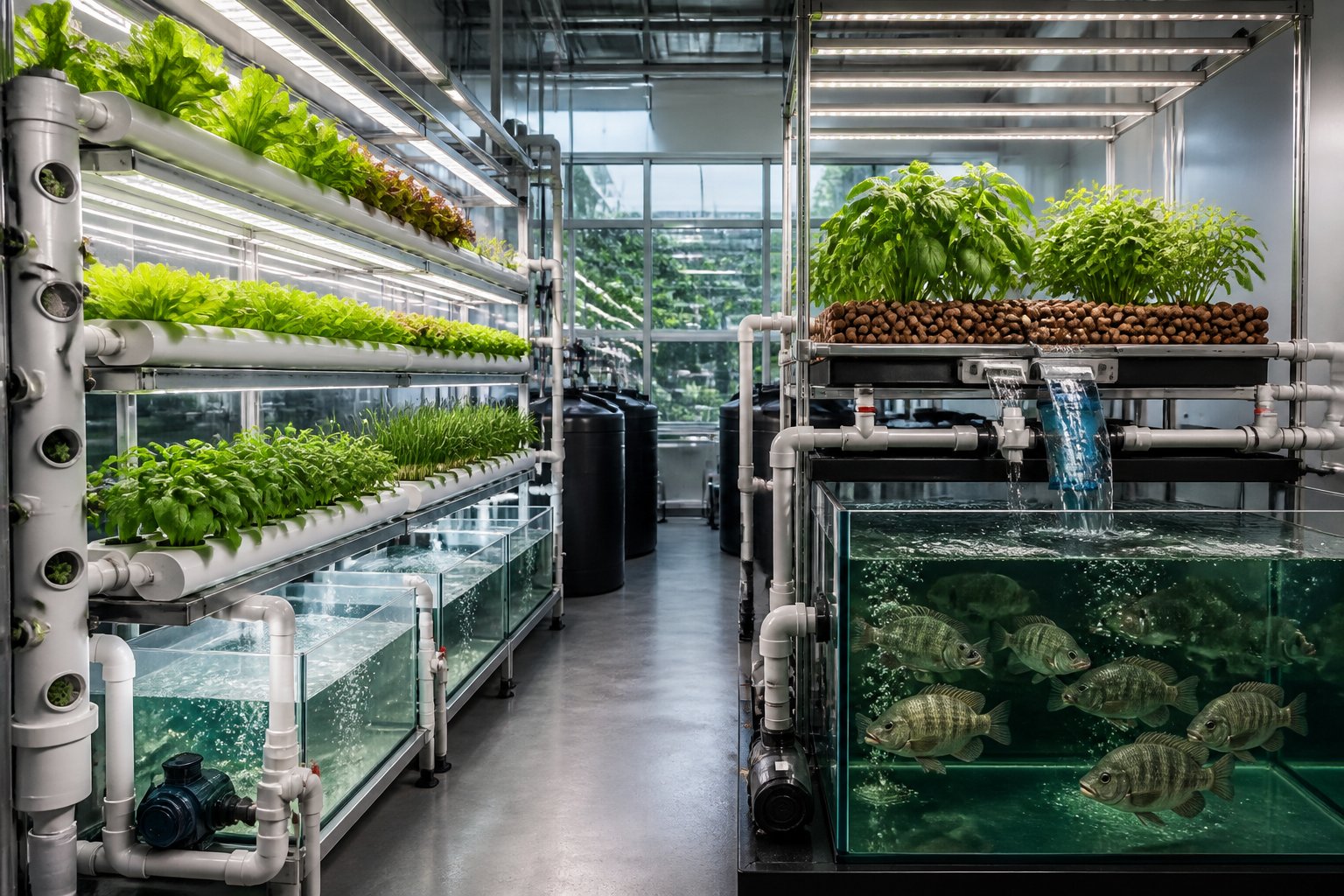
Hydroponic Designs: NFT, DWC, and Aeroponics
Nutrient film technique, or NFT, sends a shallow stream of nutrient solution through channels where plant roots hang. Deep water culture, or DWC, suspends roots in oxygenated water, often using air stones and a water pump.
Aeroponics sprays or mists nutrient solution onto exposed roots. It can deliver excellent oxygen access, though clogged spray nozzles and pump interruptions require quick attention.
Plant support comes from grow media such as clay pellets, perlite, rockwool, or coconut coir. Your choice depends on crop size, moisture retention, and how easily you want to inspect plant roots.
Aquaponic Designs: Media Beds, Rafts, and Channels
Media beds hold plants in clay pebbles or another inert growing medium. They provide space for roots and beneficial bacteria, and they can capture solid particles from fish water.
Raft systems float plants above deep water, with roots continuously submerged and aerated. Channel systems resemble NFT, although fine filtration becomes especially important because fish solids can obstruct narrow channels.
Core Components That Keep Water Moving and Oxygenated
A functional aquaponic setup includes a fish tank, grow area, sump, biofilter, water pump, plumbing, and aeration equipment. Hydroponic systems may use a reservoir, pump, channels, air pump, and growing trays.
Check water flow each day and keep backup aeration available for fish systems. A pump failure threatens plant roots in a hydroponic setup and can reduce oxygen quickly in an aquaponic fish tank.
Which Method Is Easier to Manage Day to Day?
Hydroponics is easier to manage when you want a plant-focused routine, while aquaponics requires fish care, water-quality testing, and biological balance. Your learning curve rises with the number of living parts in the system.
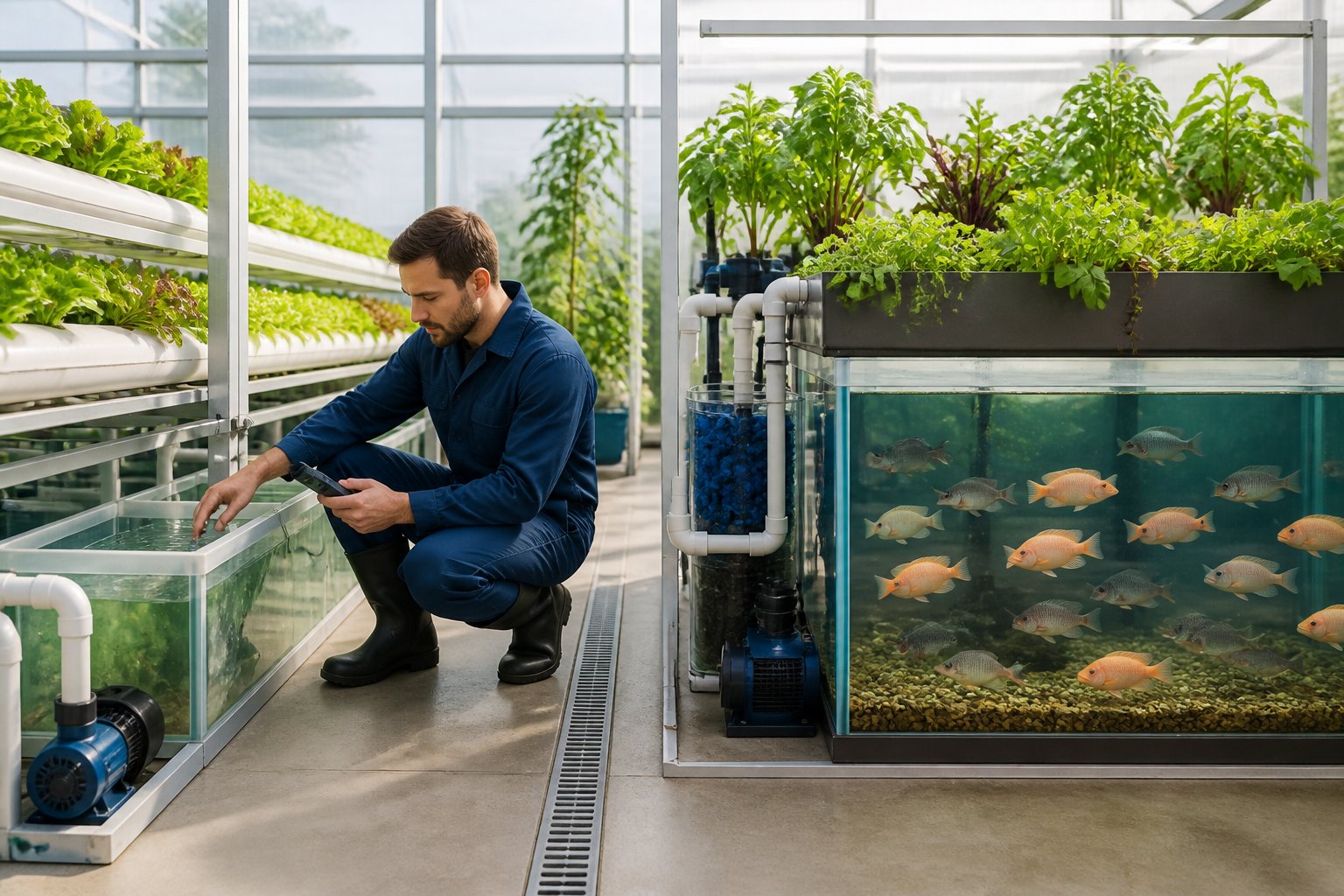
Nutrient Management, pH, and EC in Hydroponics
Hydroponic nutrient management centers on pH and EC, or electrical conductivity. You mix nutrients according to crop needs, check the reservoir, and watch for signs of excess nitrogen, phosphorus, potassium, calcium, magnesium, or micronutrients.
EC shows the solution’s total conductivity and helps you keep feeding consistent. Follow the nutrient manufacturer’s schedule, then adjust after observing plant growth instead of adding concentrated nutrients by guesswork.
Fish Health and Water Quality in Aquaponics
Aquaponics adds daily fish feeding and regular checks for ammonia, nitrite, nitrate, pH, temperature, and oxygen. Fish feed drives the nutrient cycle, so overfeeding creates water-quality problems and underfeeding limits plant nutrients.
Watch fish behavior as an early warning. Gasping near the surface, unusual inactivity, or uneaten feed calls for immediate testing and a review of aeration and filtration.
Common Problems: Algae, Imbalances, and Pump Failure
Light reaching nutrient-rich water encourages algae. Cover reservoirs, fish tanks, and exposed plumbing where practical, and remove algae before it blocks filters or consumes oxygen at night.
Nutrient imbalance affects leaves, roots, and fruiting. Pump failure interrupts nutrient delivery in hydroponics and water circulation in aquaponics, so inspect fittings, clean filters, and keep essential spare parts nearby.
Costs, Crops, and Sustainability Trade-Offs
Hydroponics usually offers a simpler path to plant production, while aquaponics adds fish infrastructure and a second harvest. Both systems can support sustainable agriculture through recirculating water, efficient space use, and controlled food production.
What Can You Grow in Each System?
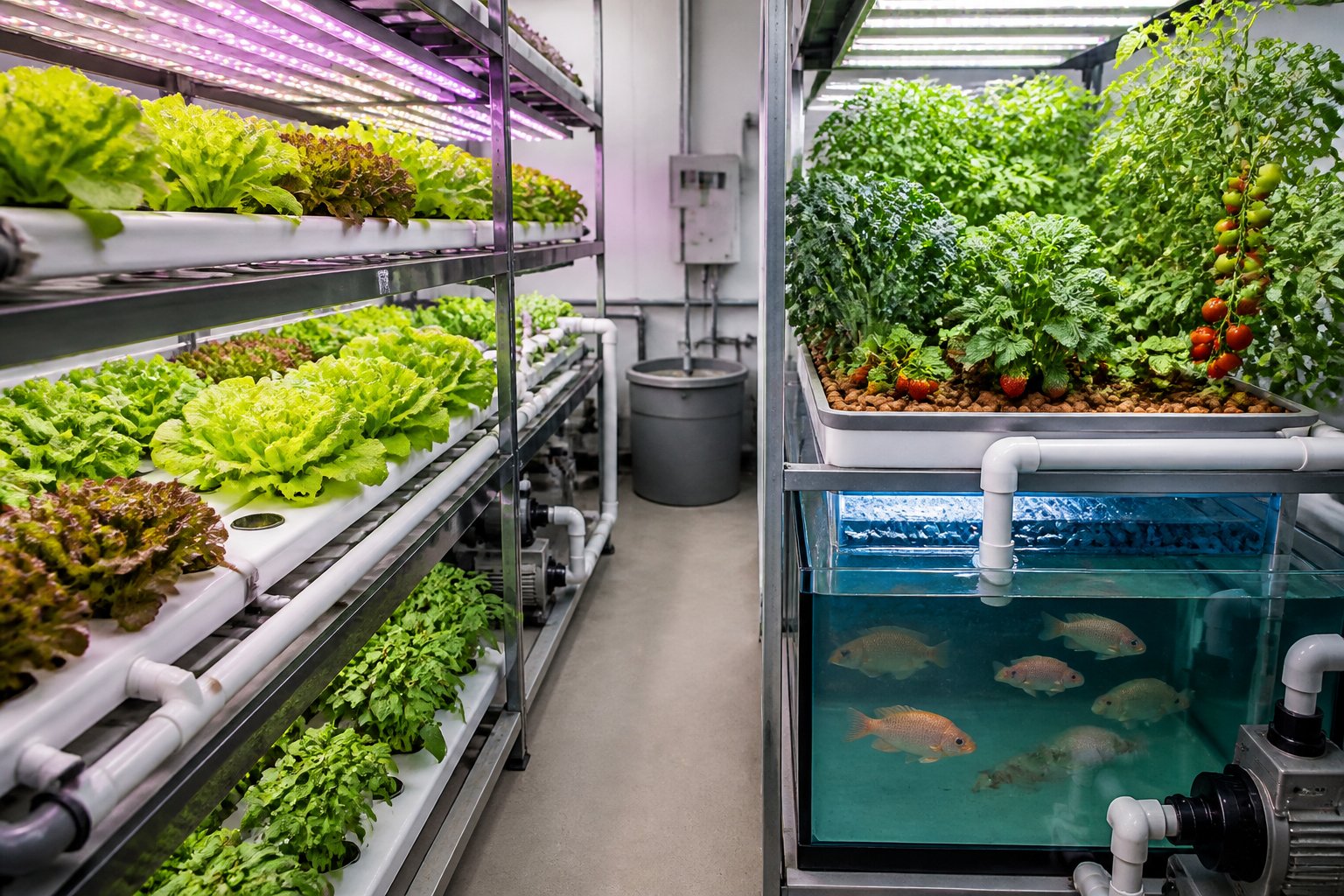
Hydroponics handles leafy greens, lettuce, spinach, kale, herbs, basil, mint, and microgreens with relatively simple equipment. With stronger lighting, trellising, and root support, you can grow tomatoes, cucumbers, peppers, and strawberries.
Aquaponics suits leafy greens and herbs especially well. Fruiting crops can grow successfully when fish biomass, filtration, lighting, and nutrient production support their higher demand.
For compact spaces, vertical hydroponic garden ideas can help you use height efficiently. Aquaponic layouts need room for the fish tank, plumbing, filtration, and access around the equipment.
Which Fish Work Best in an Aquaponic Setup?
Tilapia and catfish are common food fish because they tolerate aquaponic conditions and produce useful nutrients. Trout suits cooler water, while koi and goldfish work well when you want ornamental fish instead of fish for eating.
Match fish choice to water temperature, tank size, local regulations, and your intended harvest. Stocking density should follow filtration capacity and available oxygen.
Water Usage and Environmental Impact
Both systems recirculate water and reduce the need for soil-based irrigation. Aquaponics reuses fish waste as plant nutrition, while hydroponics gives you tighter control over fertilizer use and reservoir discharge.
Energy consumption remains a key consideration in indoor farming. Pumps, aeration, climate control, and grow lights affect environmental impact, especially in vertical farming, where lighting and climate control require substantial energy according to this analysis of vertical farming trade-offs.
Neither method automatically produces organic produce, because organic certification depends on approved inputs and production rules. Evaluate water use, electricity, replacement parts, feed, and waste together when comparing sustainable food production options.
Choose the System That Matches Your Goals
Choose hydroponics for precise plant growth, fast adjustments, compact equipment, and a plant-only harvest. Choose aquaponics when you want fish and vegetables in one circulating ecosystem and enjoy monitoring water biology.
A small hydroponic system fits a first experiment, kitchen herb garden, or controlled indoor crop cycle. Aquaponics suits you when daily fish care, testing, filtration, and system observation fit your routine.
Write down your crop list, available floor area, budget, expected maintenance time, and tolerance for equipment failure. Then select the simplest aquaponics systems or hydroponic design that meets those requirements.
Frequently Asked Questions
What is the difference between aquaponics and hydroponics?
Hydroponics feeds plants with a prepared nutrient solution, while aquaponics connects fish farming with plant production. Aquaponics relies on fish waste, beneficial bacteria, nitrification, and plant uptake to circulate nutrients.
Which is better for beginners, hydroponics or aquaponics?
Hydroponics is usually the easier starting point because you manage plants, water, pH, and nutrients without fish health concerns. Aquaponics becomes a good beginner choice when you want fish, have space for filtration, and will test water consistently.
Can fish live in hydroponic water?
Fish can live in water connected to a plant system when the system is designed as aquaponics and maintains suitable oxygen, temperature, pH, ammonia, and nitrite levels. Standard hydroponic nutrient solutions are formulated for plants and can harm fish.
Do aquaponic plants grow as fast as hydroponic plants?
Hydroponic plants often reach faster growth when nutrient concentrations are precisely controlled for the crop. Aquaponic plant growth depends on fish feed, bacterial conversion, stocking levels, filtration, and the balance between plant demand and available nutrients.
Is aquaponics more sustainable than hydroponics?
Aquaponics recycles fish waste and produces fish alongside plants, while hydroponics offers precise fertilizer control and efficient water recirculation. Sustainability depends on electricity, feed, equipment lifespan, water replacement, crop yield, and how responsibly you operate the system.
How does aeroponics compare with hydroponics and aquaponics?
Aeroponics suspends plant roots and delivers nutrient mist, giving roots strong oxygen access with little growing medium. Hydroponics uses nutrient solution directly, while aquaponics adds fish and a biological nitrogen cycle, making aeroponics more plant-focused and aquaponics more ecosystem-focused.


